Every year I try and make one new cookie for Christmas—that way I have a lot of “testers” to let me know if it’s a keeper or not. This year I’m trying Oatmeal Coconut Cookies!
Ingredients
1 cup shortening
1 cup sugar
1 cup packed brown sugar
2 large eggs, room temperature
1 teaspoon vanilla extract
2 cups all-purpose flour
1 teaspoon baking powder
1 teaspoon baking soda
1/4 teaspoon salt
1 cup old-fashioned oats
1 cup sweetened shredded coconut
Directions
In a large bowl, beat shortening and sugars until blended. Beat in eggs and vanilla. In another bowl, whisk flour, baking powder, baking soda and salt; gradually beat into sugar mixture. Stir in oats and coconut.
Divide dough into 4 portions. On a lightly floured surface, shape each into a 6-in.-long log. Wrap in waxed paper; freeze 2 hours or until firm.
Preheat oven to 350°. Unwrap and cut dough crosswise into 1/2-in. slices, reshaping as needed. Place 2 in. apart on ungreased baking sheets. Bake until golden brown, 10-12 minutes. Cool on pans 5 minutes. Remove to wire racks to cool completely.
Today would have been Georgia’s birthday. I miss her posts early in the morning. I am comforted that she passed peacefully in her sleep. Her absence is still felt and is still painful but hopefully the pain will fade and only the memories of this wonderful mother will remain.
An important date for one of the best states in the country is here — and you might not even know about it.
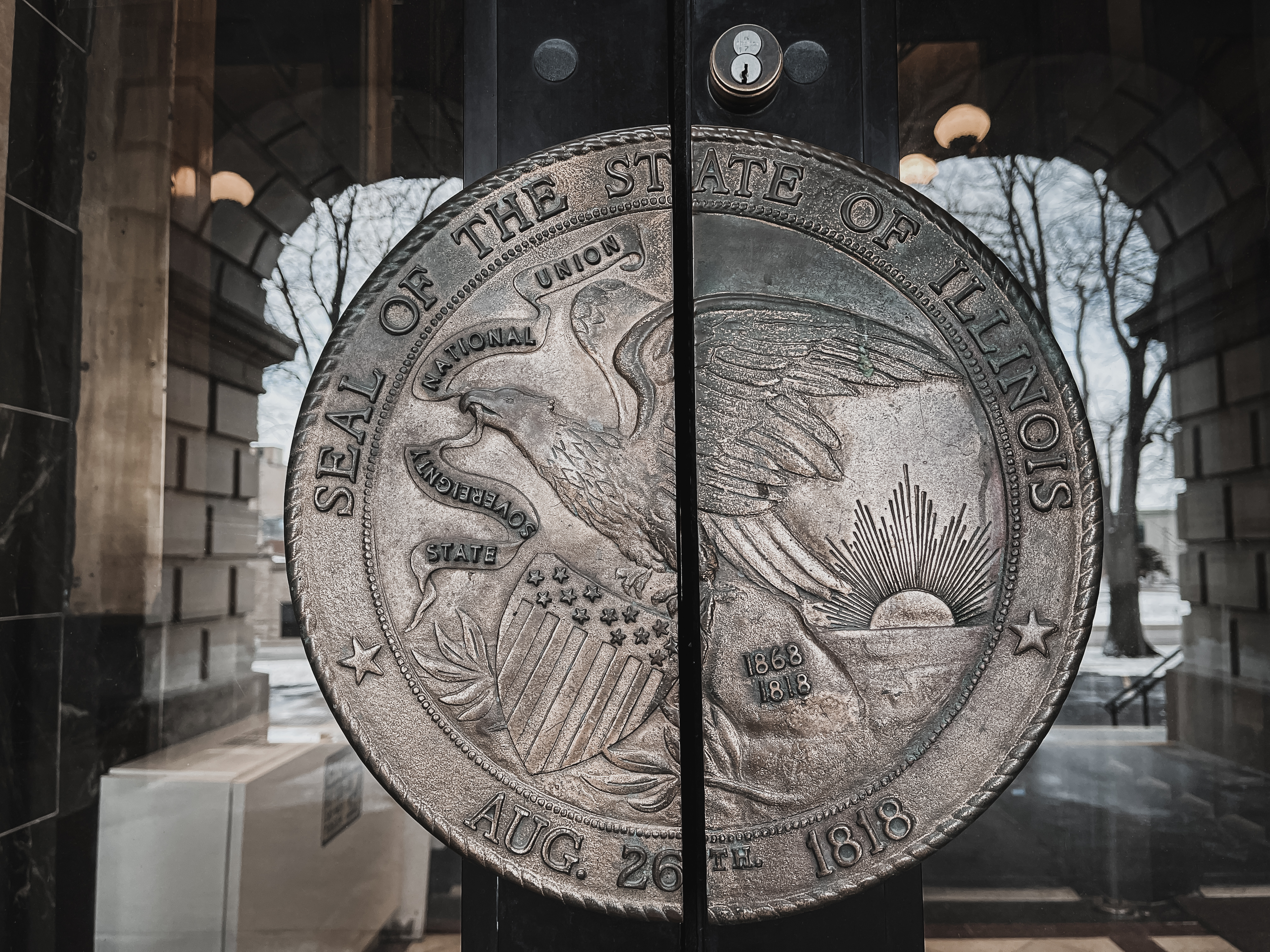
National Illinois Day, on Dec. 7, commemorates the history, art and culture owed to the iconic Midwest state. Here’s some information – both vital to know and amusing to share – about the state so you can think about what Illinois means to you.
Here are some facts about Illinois history and iconic culture:
In 1818, Illinois was admitted as the 21st state in the Union.
An 1874 state law forbade segregation and the Illinois Civil Rights Act of 1885 banned discrimination in public areas.
Four former-U.S. presidents have roots in Illinois: Ronald Reagan was born in Illinois; Abraham Lincoln and Ulysses S. Grant both moved to Illinois; and Barack Obama lived in Chicago for most of his life and served as an Illinois senator.
The origin of the term of Chicago as the “Windy City” is disputed by scholars, but it has been used to describe bloviating politicians, in addition to the weather. Interestingly, Chicago does not even rank in the top 10 of The Weather Station Experts’ list of the windiest U.S. cities – Amarillo, Texas, comes in first.
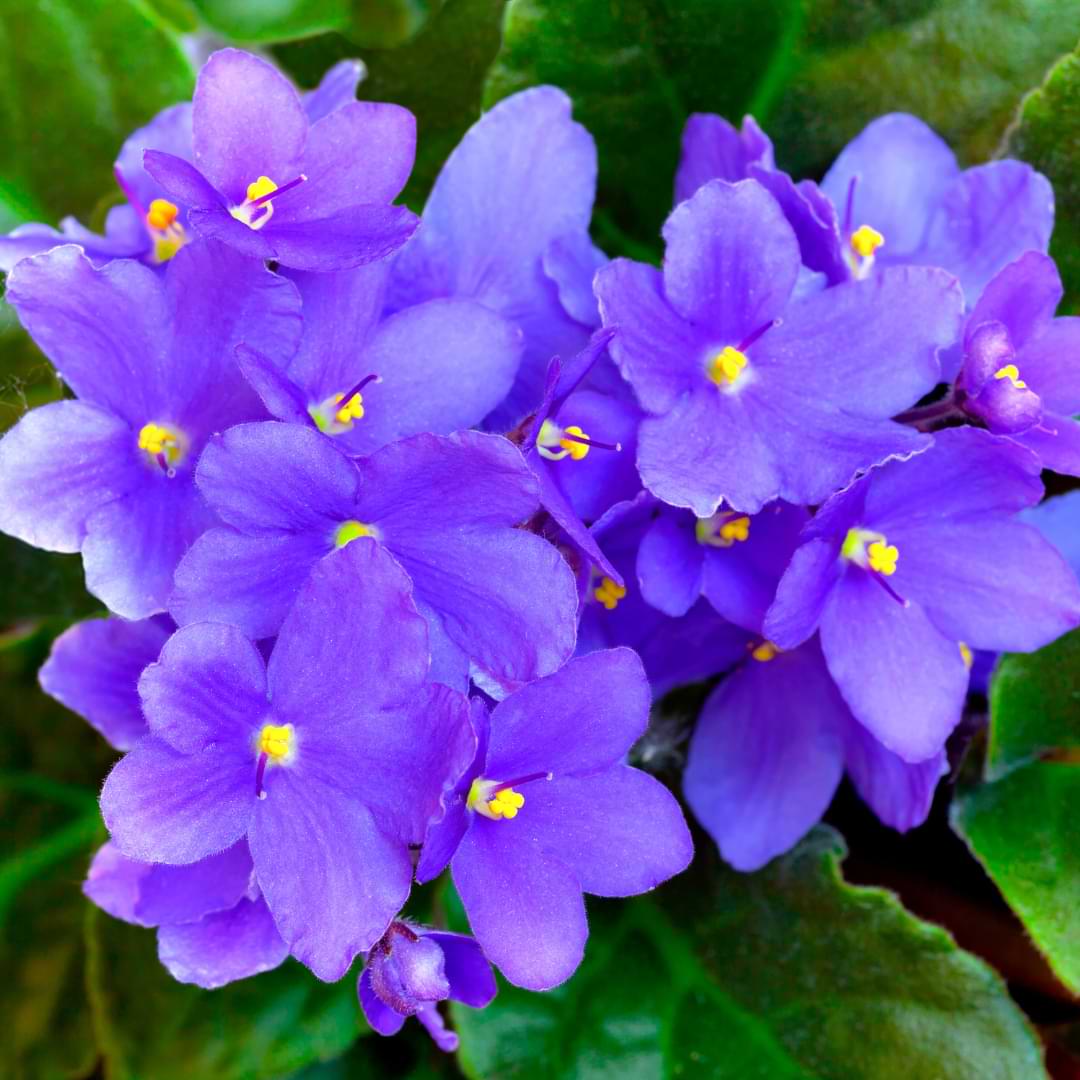
The Illinois state flower is a violet. The state bird is the cardinal. You probably didn’t know that the Illinois state snack is popcorn, and that the state pet is shelter dogs and shelter cats.
O’Hare International Airport consistently ranks in the top five, if not first, in lists of the busiest airports in the world.
Native American history
Hunter-gatherers from various nations first came to Illinois around 12,000 years ago, according to History.com. Illinois is named after the French settlers’ pronunciation of the Illiniwek Nation which was initially comprised of 12 smaller nations including the Cahokia, Peoria and Kaskaskia Nations.
The state of Illinois rests on the lands of the Peoria, Kaskaskia, Peankashaw, Wea, Miami, Mascoutin, Odawa, Sauk, Mesquaki, Kickapoo, Potawatomi, Ojibwe, and Chickasaw Nations. When Illinois became the 21st state in December of 1818, Native nations still legally owned a large portion of the state’s territory, according to the University of Illinois Urbana-Champaign.
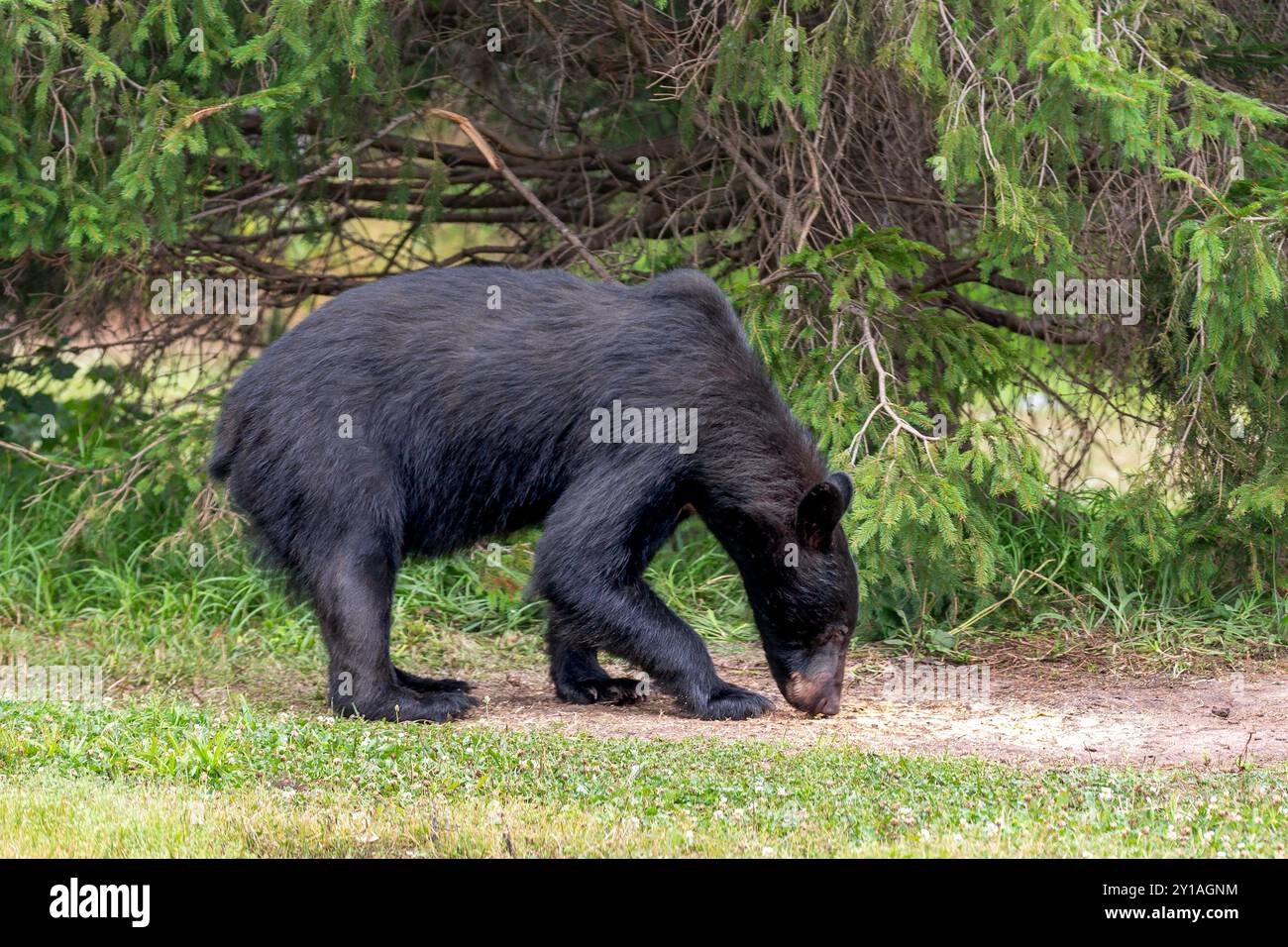
The American black bear, more commonly known simply as the black bear, is the smallest of the 3 bear species found in America. The brown or grizzly bear and the polar bear are larger in size; however, the black bear is still a huge mammal.
They can measure up to 2 meters in length and males can weigh over 400kg. When standing on their hind legs, they can reach a height of around 7 feet, although females are usually smaller and shorter than males.
Black bears can be distinguished from brown bears by their smaller size, longer ears and lack of a shoulder hump. Black bears also have shorter, more curved claws and are generally more timid animals. Typically they are black in color but depending on their location, their fur can be dark or light brown.
Black bears are found throughout North America but are more abundant in the northern states. Unlike brown bears, they prefer more densely forested habitats and rarely venture into open areas for long periods of time.
Interesting American Black Bear Facts
1. They are not always black in color
Some black bears can be a very light brown (or cinnamon) color and very rarely, completely white.
2. Black bears are shy and timid
Black bears will usually run away or climb up a tree rather than confront humans. This is mostly true but some individual black bears can be very aggressive, especially when threatened. They are however much less likely to attack compared to the brown or grizzly bears, which tend to be less weary and less approachable. Both these species, as well as the polar bear, will usually move on when left alone and black bears especially tend to flee when confronted by people.
3. They can eat over 10,000 berries in a day
When food is abundant, black bears will eat as much food as they possibly can, sometimes over 8kg of fruit and berries in a day. When berries and fruits are abundant, black bears will move to these areas and feed almost exclusively on these. They have an excellent sense of smell and this helps them locate ripping berries, nuts and fruits as well as bee hives, where they feed on the honey and bee larvae.
4. Black bears are skilled climbers
Black bears are excellent climbers and can easily access nuts and fruits before they fall to the ground. They have sharp, curved claws and this not only helps them when climbing but also makes ripping into trees logs or upturning boulders when searching for insects much easier. As well as being expert climbers, black bears are great swimmers and will cross fast flowing rivers to reach food on the other side.
5. They are incredibly strong animals
Black bears are up to 5 times stronger than the average human being.
6. American black bears are highly dexterous
They are capable of opening screw-top jars and manipulating door latches.
7. Their diet is predominantly vegetarian
Although they do eat meat, almost 70% of their diet is made up of plant matter.
8. Their sense of smell is 7 times more sensitive than a domestic dog
While American black bears have extremely sensitive noses, their eyesight and hearing is more comparable to that of a human.
9. Black bears are fast runners
Sprinting at around 40-50km/h, black bears can easily outrun humans.
10 They are mostly quiet animals
Although they tongue-click and grunt to communicate with one another, black bears do not growl or roar.
11. They den in spots that are well hidden
Black bear dens are usually made in caves, under tree roots or are dug into hillsides.
12. Females usually give birth during the hibernation period
During the breeding season, a male and female will remain together until just before the cubs are born. Females usually give birth in their den while in torpor; a similar state to hibernation. The cubs will then feed off their mother’s milk while she hibernates until spring arrives. Usually two cubs are born and they leave the den for the first time when their mother comes out of hibernation. Female black bears teach their cubs how to find food and survive in the wild until the cubs are around 17 months old and become fully independent. The father of the cubs does not actively help in raising his offspring but does protect the territory from other males, who may attack the cubs.
13. Black bear cubs are playful animals
Cubs will regularly wrestle and play with each other as well as their mother. This helps them develop essential skills to survive in the wild.
14. Black bears are very intelligent
Black bears can memorize their whole territory, they can make scratching sticks out of twigs and can easily break into locked food storage containers.
15. There are black bear hybrids
American black bears can reproduce with other bear species and produce hybrid offspring. Black bear and grizzly bear hybrids have been reported in the wild.
16. They are a key contributor to the ecosystem
Black bears are important contributors to the ecosystems in which they inhabit. Due to their large size, they create micro-ecosystems where they leave deep footprints or break small trees and plants. They are also key in controlling insect populations as well as important seed disbursers, encouraging new plant growth wherever the seeds in their stools germinate. Black bears also have very large home ranges which means they can increase plant diversity by traveling long distances and disbursing seeds which otherwise may not have reached or germinated in that area.
These sweet little air fresheners couldn’t be easier to make!
From Country Living:
One of these DIY Christmas tree-shaped air fresheners will keep a car, closet, or office smelling fresh. Added bonus—they are made with essential oils, so no nasty chemicals involved.
To make: Trace the shape of a wooden Christmas tree ornament on a scrap of fabric twice. Cut out and glue to the front and back of the ornament. Once dry, soak the fabric with an essential oil of your choice (we used cedar). Thread twine through the ornament loop for hanging.
Depending on which ornaments you can find at the dollar store, you can match your essential oil to the shape. For example, a gingerbread man ornament? Use ginger. Buy a candy cane? Use peppermint essential oil. And another nice oil for trees would be pine!
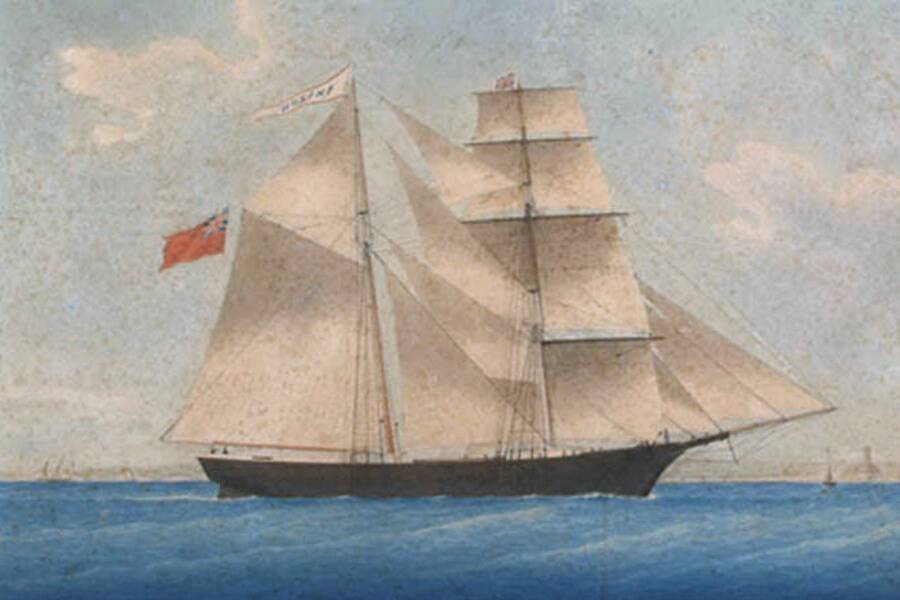
The Mary Celeste was discovered abandoned near the Azores Islands on December 5, 1872 — and to this day, experts are unsure about what happened to its crew.
On December 5, 1872, while sailing through rough weather, the Canadian brig Dei Gratia sighted a seemingly abandoned ship drifting through the Atlantic between Portugal and the Azores Islands. It was the Mary Celeste, an American brigantine that had left New York nearly a month prior.
When the crew of the Dei Gratia boarded the Mary Celeste, they found everything in perfect order. The crew’s clothes were even neatly packed away. Yet there was not a living soul to be found aboard the ship. The only possible clues that could explain the crew’s whereabouts were a disassembled pump in the hold and a missing lifeboat. And so began one of the most enduring mysteries of the sea.
The Crew Of The Dei Gratia Finds The Mary Celeste Abandoned At Sea
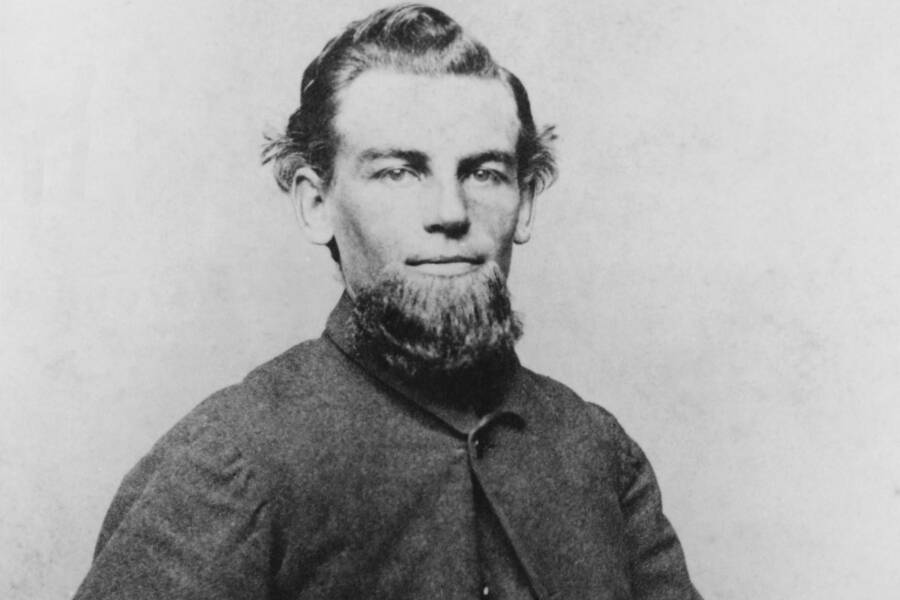
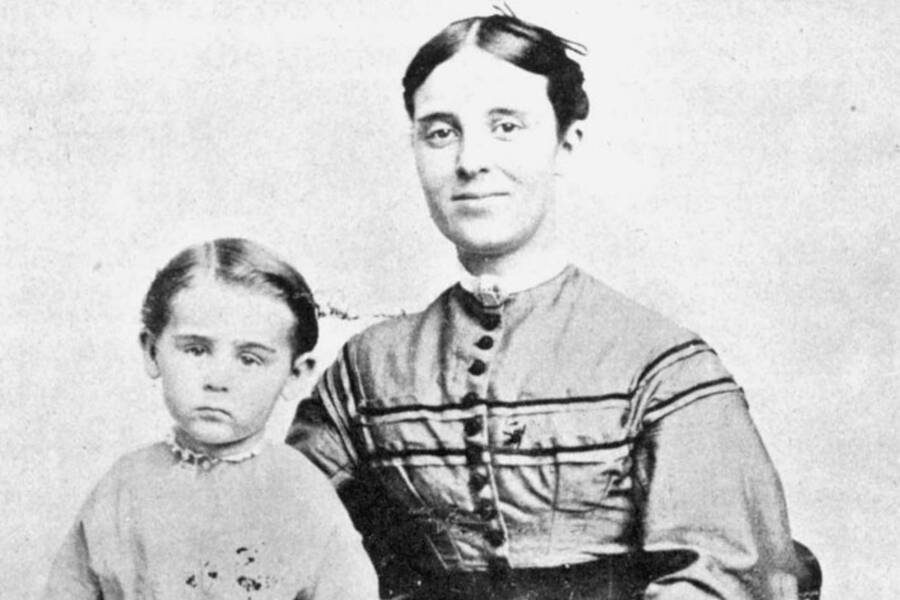
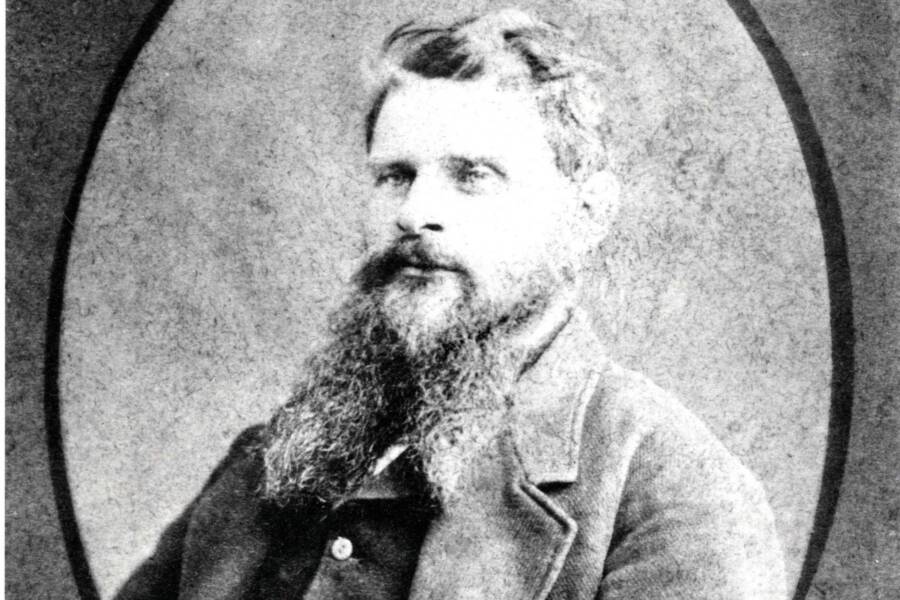
On Nov. 7, 1872, a merchant ship with a cargo of denatured alcohol left New York Harbor for Genoa, Italy. The Mary Celeste sailed forth, helmed by Captain Benjamin Briggs and his handpicked crew of seven men. Accompanying the sailors were Briggs’ wife and two-year-old daughter.
The ship and its crew spent two weeks at sea fighting against raging storms and treacherous seas before reaching the Azores. Captain Briggs chronicled the rough journey in his journal, but curiously, his log ended abruptly on Nov. 25, 1872, at 5 a.m.
The night prior, his log recalled, the ship and its crew had continued to face rough seas and winds of more than 35 knots, but by the morning they had come out on the other side unscathed with the island of Santa Maria in sight. All, it seemed, was well. But when the crew of the Dei Gratia came across the Mary Celeste just over one week later, on December 5th, they found it abandoned, drifting in the seas 400 miles east of the Azores.
Celeste and found the ship in near-perfect condition. Aside from a few feet of water in the ship’s bilge — the lowest point of the ship, which rests beneath the waterline — things seemed to be mostly in order. A few charts had been tossed about below deck, but the crew’s belongings were neatly tucked away, and the ship was stocked with enough food and water to last six months. The only thing missing was its crew.
Theories About The Disappearance Of The Crew Of The Mary Celeste
It made no sense that Briggs, an experienced seaman, would abandon a perfectly seaworthy ship. In fact, Daily Nautica reports, Morehouse had dined with Briggs in New York just before each of the men and their respective crews set sail, and he considered the man to be a friend. He knew just how capable of a captain Briggs was.
Morehouse and his crew towed the merchant ship with them to Gibraltar, where authorities conducted an investigation that ultimately yielded no conclusive results. At this point, several theories began to surface. English inspector Frederick Flood was the first to hypothesize about the disappearance of the crew. With the knowledge that Morehouse and Briggs were friends, the inspector suspected that the two captains may have concocted a scheme to defraud the insurance company and split the profit earned from the eventual sale of the Mary Celeste. Per the laws of the sea, the abandoned ship did now belong to Morehouse, after all. The inspector then theorized that Briggs had killed his crew and hidden himself away in the cargo hold of the Dei Gratia.
Flood’s theory, however, was full of holes. Briggs had in fact held property shares in the ship, so he would have gained nothing from the scheme. The theory also failed to account for Briggs’ wife and daughter.
The crew of the Dei Gratia eventually received payment. However, it was only one-sixth of the total $46,000 value of the Mary Celeste. Apparently, the authorities weren’t totally convinced of their innocence. Additional theories suggested that the crew had gotten drunk off the ship’s alcohol cargo and mutinied — but there were no signs of violence. Others said the ship must have been raided by pirates, yet no valuables were missing.
The mystery may very well have been left alone had author Arthur Conan Doyle not written the 1884 short story “J. Habakuk Jephson’s Statement,” a fictitious account of an ex-slave who captures a ship called the Marie Celeste. The story reignited interest in the ship, but as a theory, the story is entirely baseless.
Naturally, stories of sea monsters became associated with the missing crew, as did explanations of water spouts and, much later, extraterrestrial abduction. Yet for all of these theories, none of the evidence ever matched. Perhaps the most plausible theory was that vapors from the alcohol had blown the hatch cover off. Then, fearing fire, the crew abandoned the ship. However, the hatch cover was securely fastened, once again leaving no feasible explanation.
How A Documentarian May Have Solved The Mystery Of The ‘Mary Celeste’
In 2002, documentarian Anne MacGregor sought to investigate the story of the now-infamous ghost ship. “There are obvious limitations for historic cases,” she said. “But using the latest technology, you can come to a different conclusion.”
Per Smithsonian magazine, MacGregor enlisted the help of a physical oceanographer at the Woods Hole Oceanographic Institution in Massachusetts named Phil Richardson, and together they reconstructed the drift of the ghost ship and deduced that Briggs’ chronometer — which helps determine a vessel’s position at sea — had been faulty.
The Mary Celeste was hopelessly off course — 120 miles west of where it should have been. The captain thus expected to spot land three days earlier than he did. MacGregor also analyzed Flood’s notes from the time to determine that all had indeed been going as planned with the course of the Mary Celeste — until about five days before Briggs’ final log.
Significantly, Briggs’ logs and Flood’s notes show that the ship had changed course the day before it reached the Azores — Briggs was now sailing directly north towards Santa Maria Island. It’s possible the crew was seeking haven from the foul weather.
But even all of this wouldn’t make a captain abandon ship.
However, MacGregor also discovered that the ship had carried a load of coal on a previous voyage. Coal dust and debris from a recent refitting had potentially clogged the ship’s pumps, meaning any water that made it onto the ship’s lower decks didn’t have a way back out.
It’s possible that Briggs then decided that, with the ship off course, the crew’s best bet was to cut their losses and simply try to save themselves by abandoning ship and heading for the nearest piece of land. In this case, it was Santa Maria Island. Their lifeboat may have then tipped over, causing all ten of them to drown.
MacGregor’s theory is by no means universally accepted or even provable, but it at least lines up with the evidence (the disassembled pump, for example) in a way that other theories do not. Finally, some 130 years after the crew eerily vanished, the mystery of the Mary Celeste may finally have an answer.
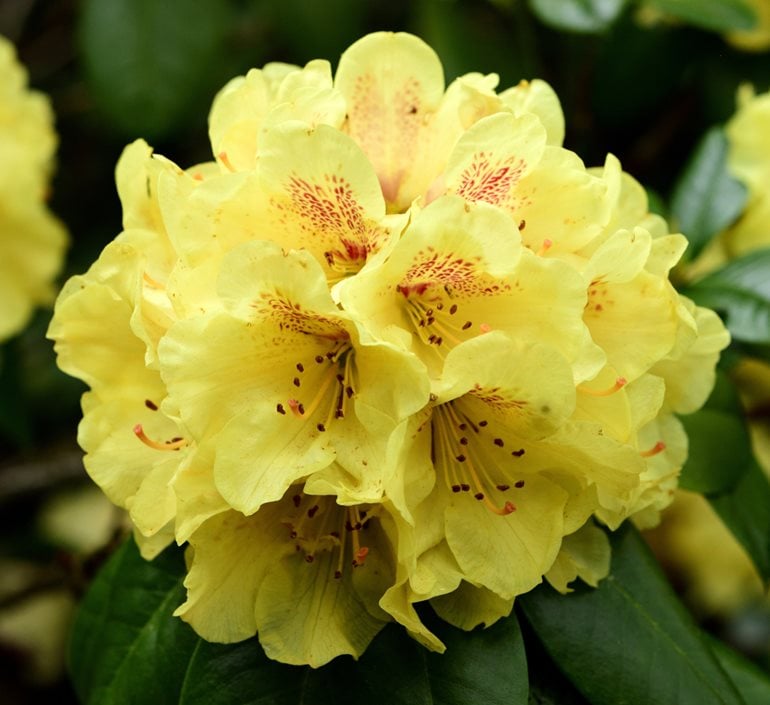
Rhododendron is a genus of more than 1,000 deciduous or evergreen flowering shrub species, with more than 25,000 cultivars and hybrids. They come in a wide range of sizes, flower colors and shapes, and many are North American natives. The bloom time is usually spring into summer, but some cultivars bloom in late winter or late summer. The growth rate and preferred conditions of rhododendron species vary widely. However, most prefer moist, well-draining soils, partial shade, and conservative fertilization. All rhododendrons are toxic to people and pets.
Rhododendron Plant Care
While rhododendron species vary in their care preferences, and many grow in a wide range of conditions, the typical main rhododendron requirements are:
Plant in fertile, well-draining, acidic soil.
Position in partial or dappled shaded.
Water to maintain even moisture, but avoid soggy soils.
Fertilize with a rhododendron formula annually only when soils are poor.
Light
In their native habitats, rhododendron grows in dappled woodland shade and under trees. Choose a location in partial shade where the plant isn’t exposed to the hot afternoon sun, which is especially important in a warmer climate.
Soil
Rhododendrons need moist, well-draining soils rich in organic matter. They’re sensitive to soggy, heavy clay, or compacted soil with poor drainage, which can lead to root rot. These shrubs prefer acidic soils with a pH between 4.5 and 6.0.
Water
Rhododendrons have shallow roots and require even moisture to thrive, especially during the first year after planting. Water the plant slowly and deeply around twice a week during the first growing season, not leaving the roots in standing water.
Even if the plant doesn’t show signs of drought stress, water established rhododendron every two to three weeks during dry spells. Adding a layer of mulch helps with water retention.
Temperature and Humidity
Temperature ranges vary depending on the rhododendron variety. Some tolerate heat and humidity, and others are cold-hardy. Most varieties don’t like strong winds and are sensitive to temperature extremes.
Fertilizer
If you plant your rhododendron in rich soil with plenty of organic matter, there’s usually no need to fertilize. In less fertile soil, use a formula for acid-loving rhododendron in late winter or early spring, following the label instructions.
It’s December! December is normally COOKIE month in my house, but I thought I’d start the month with an EASY holiday treat…Snowman Cupcakes! You can go through all the fuss of using homemade cake and frosting recipes or you can use box mixes and canned frosting and get right to the fun!
Ingredients
24 cupcakes (mixed and baked according to box directions—any flavor)
1 tub prepared WHITE frosting
Shredded coconut
Black food coloring
Orange food coloring
Directions
Frost cupcakes. Press shredded coconut into frosting.
Stir together 1 cup frosting and black food coloring in a bowl until desired shade is reached. Transfer to a piping bag fitted with a small round piping tip or a zip-top bag with a small hole cut in one corner.
Stir together ½ cup frosting and orange food coloring in a second bowl until desired shade is reached. Transfer to a second piping bag fitted with a small round piping tip or a zip-top bag with a small hole cut in one corner.
Pipe a carrot-shaped nose in the center of each cupcake. With the black frosting, pipe two eyes and five or six smaller dots for the mouth. Store cupcakes, covered, at room temperature up to 2 days.
An Act of Courage, The Arrest Records of Rosa Parks
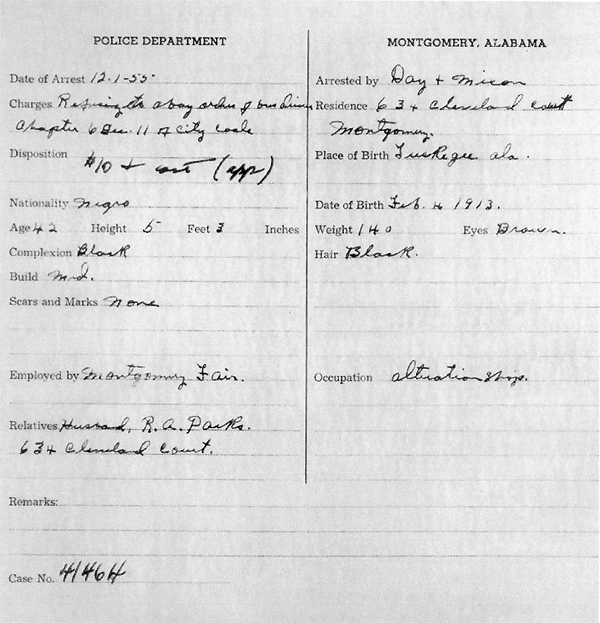
On December 1, 1955, during a typical evening rush hour in Montgomery, Alabama, a 42-year-old woman took a seat on the bus on her way home from the Montgomery Fair department store where she worked as a seamstress. Before she reached her destination, she quietly set off a social revolution when the bus driver instructed her to move back, and she refused. Rosa Parks, an African American, was arrested that day for violating a city law requiring racial segregation of public buses.
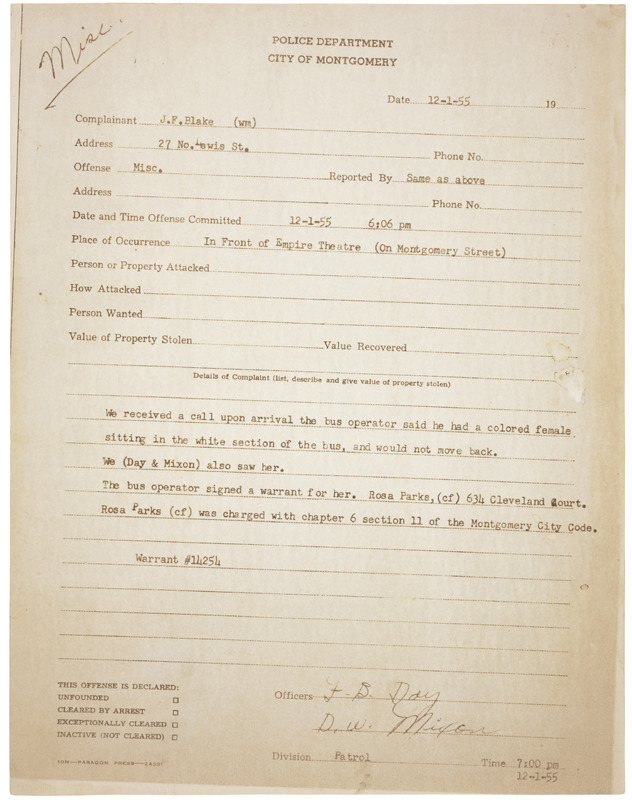
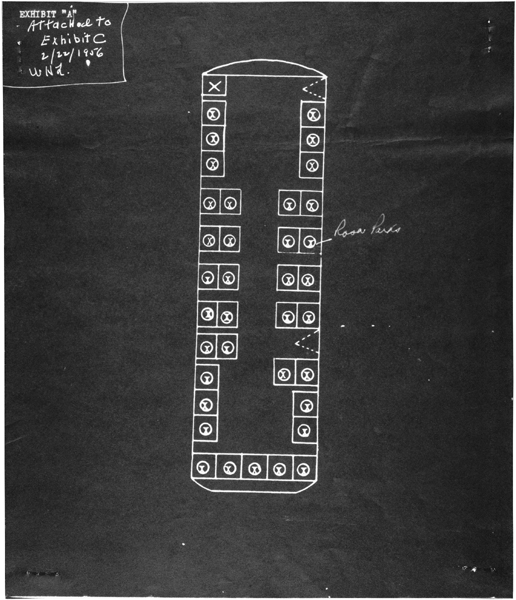
On the city buses of Montgomery, Alabama, the front 10 seats were permanently reserved for white passengers. The diagram shows that Mrs. Parks was seated in the first row behind those 10 seats. When the bus became crowded, the bus driver instructed Mrs. Parks and the other three passengers seated in that row, all African Americans, to vacate their seats for the white passengers boarding. Eventually, three of the passengers moved, while Mrs. Parks remained seated, arguing that she was not in a seat reserved for whites. James Blake, the driver, believed he had the discretion to move the line separating black and white passengers. The law was actually somewhat murky on that point, but when Mrs. Parks defied his order, he called the police. Officers Day and Mixon came and promptly arrested her.
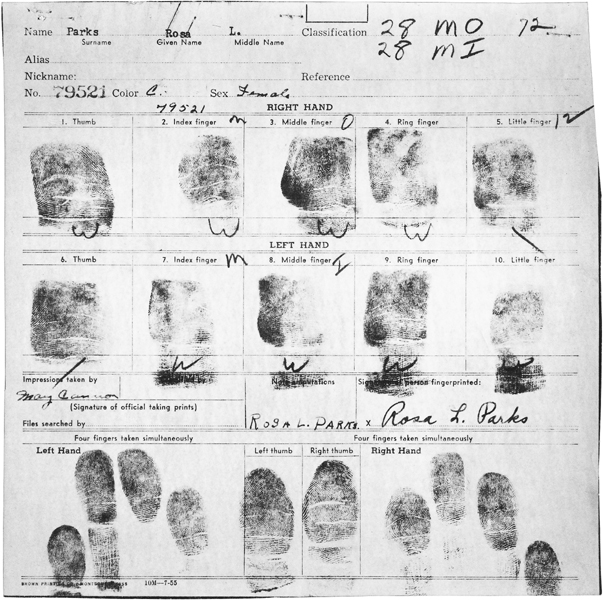
In police custody, Mrs. Parks was booked, fingerprinted, and briefly incarcerated. The police report shows that she was charged with “refusing to obey orders of bus driver.” For openly challenging the racial laws of her city, she remained at great physical risk while held by the police, and her family was terrified for her. When she called home, she spoke to her mother, whose first question was “Did they beat you?”
Mrs. Parks was not the first person to be prosecuted for violating the segregation laws on the city buses in Montgomery. She was, however, a woman of unchallenged character who was held in high esteem by all those who knew her. At the time of her arrest, Mrs. Parks was active in the local National Association for the Advancement of Colored People (NAACP), serving as secretary to E.D. Nixon, president of the Montgomery chapter. Her arrest became a rallying point around which the African American community organized a bus boycott in protest of the discrimination they had endured for years. Martin Luther King, Jr., the 26-year-old minister of the Dexter Avenue Baptist Church, emerged as a leader during the well-coordinated, peaceful boycott that lasted 381 days and captured the world’s attention. It was during the boycott that Reverend Martin Luther King, Jr., first achieved national fame as the public became acquainted with his powerful oratory.
After Mrs. Parks was convicted under city law, her lawyer filed a notice of appeal. While her appeal was tied up in the state court of appeals, a panel of three judges in the U.S. District Court for the region ruled in another case that racial segregation of public buses was unconstitutional. That case, called Browder v. Gayle, was decided on June 4, 1956. The ruling was made by a three-judge panel that included Frank M. Johnson, Jr., and upheld by the United States Supreme court on November 13, 1956.
For a quiet act of defiance that resonated throughout the world, Rosa Parks is known and revered as the “Mother of the Civil Rights Movement.”
The documents shown here relating to Mrs. Parks’s arrest are copies that were submitted as evidence in the Browder v. Gayle case. They are preserved by the National Archives at Atlanta in Morrow, Georgia, in Record Group 21, Records District Courts of the United States, U.S. District Court for Middle District of Alabama, Northern (Montgomery) Division. Civil Case 1147, Browder, et al v. Gayle, et al.
Set in the Deep South of the United States, Mississippi is a fascinating state to visit. It is known as much for its literature and music as its rich and at times raw history and heritage. While traveling around, visitors will come across everything from beautiful beaches and verdant fields and hills to glitzy casinos, college towns, and Civil War Battlefields.
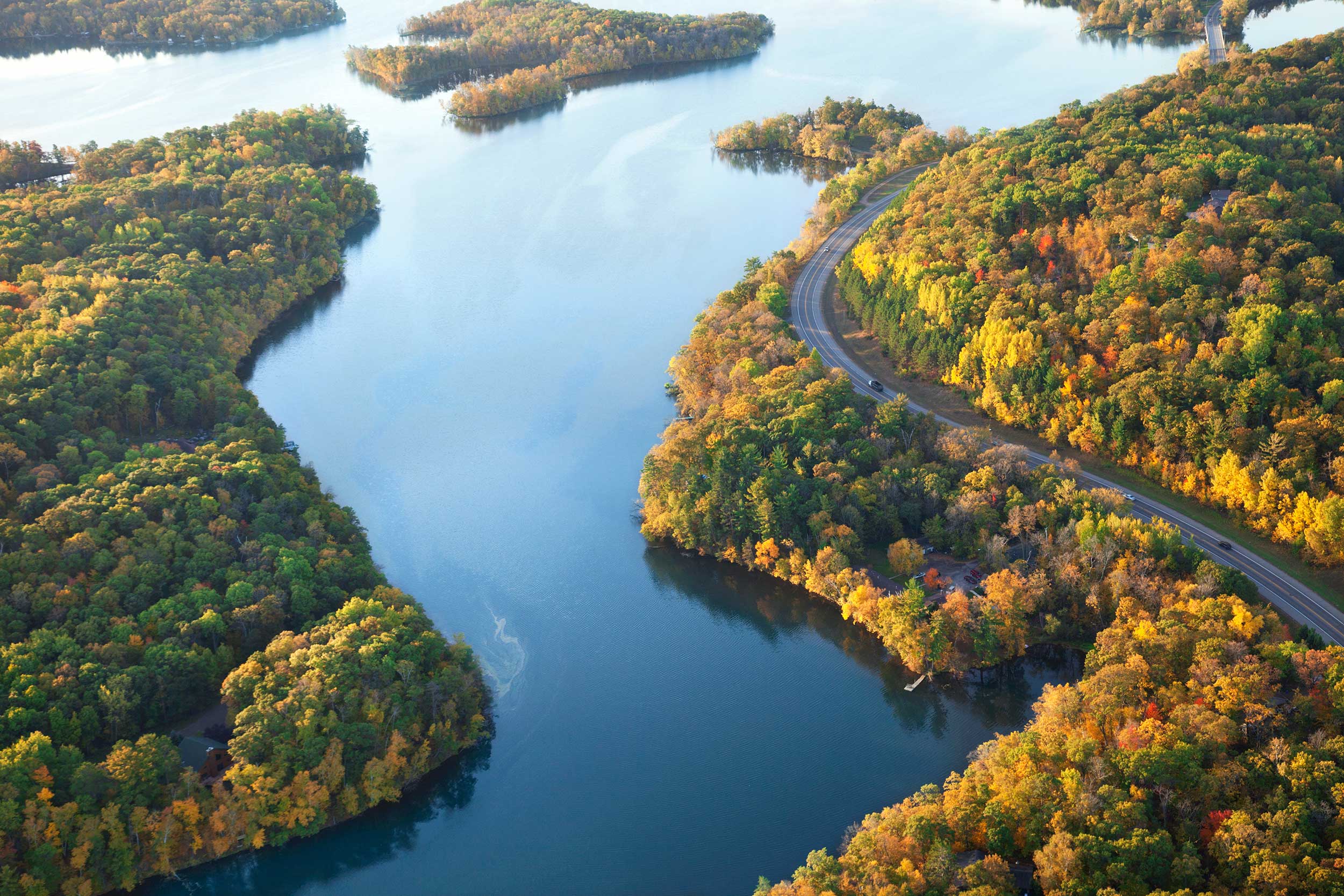
Dominating the state and defining its western border is the mighty Mississippi River that flows to the glittering Gulf of Mexico. In its delightful delta region, the beautiful music style known as the blues was developed.
Vicksburg
Perched atop a prominent bluff overlooking the Mississippi River, the small city of Vicksburg is set in a scenic spot. Located in the west of the state on the border with Louisiana, it is famed around the country for being the site of a long siege and battle that swung the American Civil War in favor of the North. While General Ulysses S. Grant’s infamous victory is still commemorated in its artworks, museums and traditions, there is much more to Vicksburg for visitors to enjoy. Besides this unique history and heritage, it also has a wonderfully well-preserved center full of beautiful old buildings and attractive streetscapes, as well as a handful of magnificent museums. Visitors to Vicksburg can also take a romantic carriage ride around its historical center or a delightful boat ride down the river, while some quality hiking can be had in the surrounding forests and hills.
Tunica
Long one of the most impoverished places in the whole of the US, the town of Tunica is nestled in the northwest of the state, just an hour’s drive to the south of Memphis, Tennessee. Following the introduction of gambling in the 1990s, its fortunes dramatically changed. People now flock to what is the third-largest gaming market after Las Vegas and Atlantic City. The popular resort town now boasts a wealth of grand and glamorous casinos, home to a myriad of slot machines, table games, and poker rooms. Each has an extensive array of rooms and suites for visitors to stay in, with everything from swimming pools and spas to gourmet restaurants and golf courses on offer. While most if not all people who visit Tunica come for its glitzy casinos and Las Vegas-style shows, the nearby Tunica RiverPark is home to some superb scenery, nature, and hiking trails. In addition, Memphis isn’t far away should you want a change of scene.
Oxford
As picture-perfect as they come, the pretty and pleasant city of Oxford lies amid the dense forests of Mississippi’s North Central Hills region. Named after the prestigious seat of learning in the UK, life in the town is dominated by the University of Mississippi and its large, lively student body.While the state’s most famous college town certainly has a wild side, it is also noted for its scenic and sophisticated central square and sweet Southern charm. As well as being home to lovely oak-shaded neighborhoods, the city showcases some astounding old architecture and historical sights, with many treasures found on its sprawling university campus. Due to its sizeable student population, Oxford also hosts a staggering array of concerts, conferences and cultural events, with new shows and performances taking place all the time. On top of this, The Square has plenty of great restaurants and bars where you can sample the town’s famous nightlife.
Gulf Islands National Seashore
Set just to the south of both Mississippi and Florida, the Gulf Islands National Seashore are a series of beautiful barrier islands. Home to lots of wonderful white sand beaches and wilderness, the breathtaking scenery offers untold outdoor recreation opportunities. Due to their serene and secluded settings, the islands are delightfully undeveloped and unspoiled, with stunning sands lying next to wild wetlands and intriguing forests. While the islands of Horn, Sand, Petit Bois, and East Ship boast the loveliest landscapes, they are also the toughest to get to: guests need to charter a boat to them before camping overnight amid the dunes. Thanks to the park’s pristine and protected nature, there are loads of excellent outdoor activities to enjoy, with hiking, cycling, and swimming particularly popular. Besides this, visitors can go snorkeling in the glittering Gulf of Mexico or snap photos of the diverse bird species inhabiting the barrier island.
Natchez Trace Parkway
Encompassing everything from steamy swamps and boggy bayous to epic overlooks, Indian burial mounds, and lots of exceptional scenery, the Natchez Trace Parkway is one of the most popular places to visit in Mississippi. Stretching from Nashville, Tennessee to Natchez, Mississippi, the 715 kilometer-long national parkway is fabulous to hike, cycle, or drive along, with lots of spectacular sights to stop off at on the way. Winding through wonderful woods and wilderness and past roaring rivers and reflective lakes, the scenic route follows what was once a Native American footpath. Later used by explorers and Ohio Valley farmers, it has been in use since pre-Colonial times. As such, numerous historic sights dot the route, with age-old battlegrounds and burial mounds found alongside marvelous monuments and museums. Besides its rich history, heritage, and culture, the Natchez Trace Parkway has sublime scenery, with sparkling waterfalls, phenomenal views, and dramatic landscapes all on show. Along the route in Mississippi, there are also some great towns and cities for visitors to stop off at, such as Tupelo, Jackson, and Natchez.
Tupelo
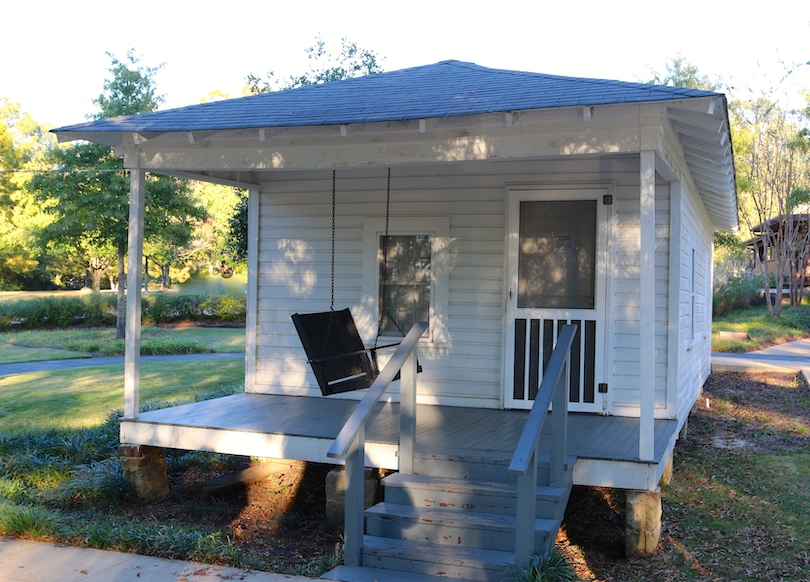
Lying in the northeast of the state, the small, sleepy city of Tupelo is primarily known for being the birthplace of one of the world’s most famous pop icons – Elvis Presley. While most of its main sights relate to ‘the King’, the town is a perfectly pleasant and peaceful place to visit, particularly if you’re traveling along the Natchez Trace Parkway. In the center of the city, visitors will find a thriving restaurant scene to delve into, as well as some magnificent murals that have added some much-needed color and life to the downtown area. Besides the Birthplace of Elvis Presley, there is also the Tupelo Buffalo Park and Zoo to check out, while a fun and festive flea market takes places the second weekend of every month. Just outside the city are a couple of American Civil War battlefields well worth visiting, as well as the Natchez Trace Parkway Visitor Center, which can point you towards all of the route’s most scenic tourist attractions.
Natchez
Set in the southwest corner of the state, Natchez lies perched atop a prominent bluff overlooking the Mississippi River. Lying on the border with Louisiana, the small city boasts a beautiful historic center full of astounding old antebellum homes that evoke images of the Old South. Before the Civil War, the small settlement was an important center of trade. As such, wealth and riches poured into its scenic streets. Nowadays, its charming center is a delight to visit, with horse-drawn carriage rides one of the most memorable ways to take in its grand collection of elegant homes and historical landmarks. While history and heritage are on show wherever you go, Natchez is very much a living city with a fun party atmosphere on the weekends. Besides stopping by its numerous bars and live music venues, the final stop of the Natchez Trace Parkway also has lovely nature and scenery for visitors to enjoy nearby.
Biloxi
Situated along the state’s scenic and sun-kissed shoreline, Biloxi is a popular place to visit due to its beautiful beaches and oceanfront casinos. While it can appear brash and blingy at first sight, the city has numerous sides to it, with a delightful historic center for visitors to explore. Most people, however, come for its glut of glitzy casinos, which look out over the glittering Gulf of Mexico and are home to innumerable slot machines and table games. Many of them have cowboy, tropical, or live music themes, with plenty of restaurants and entertainment also on offer. Besides gambling, gaming, and reveling in the city’s lively nightlife, visitors can also relax on the golden sands or enjoy sailing and watersports along the seafront. In addition, New Orleans is just an hour away should you want to combine your trip to Biloxi with a visit to ‘The Big Easy.’
Jackson
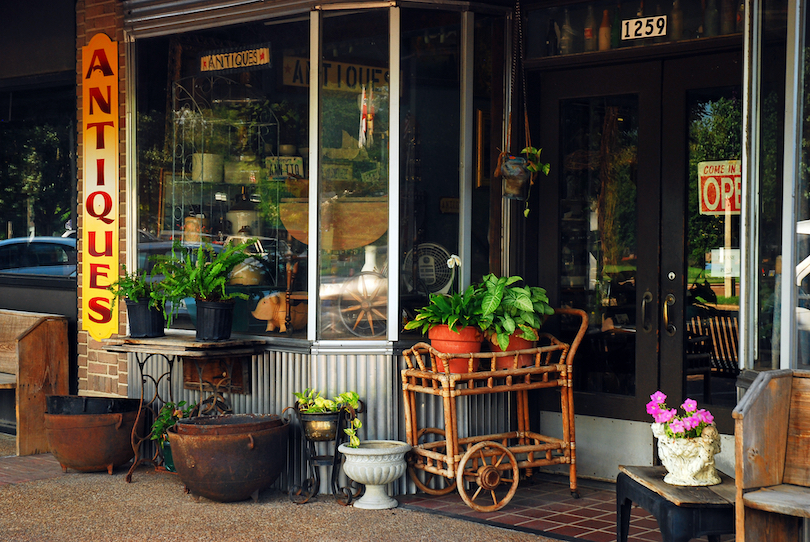
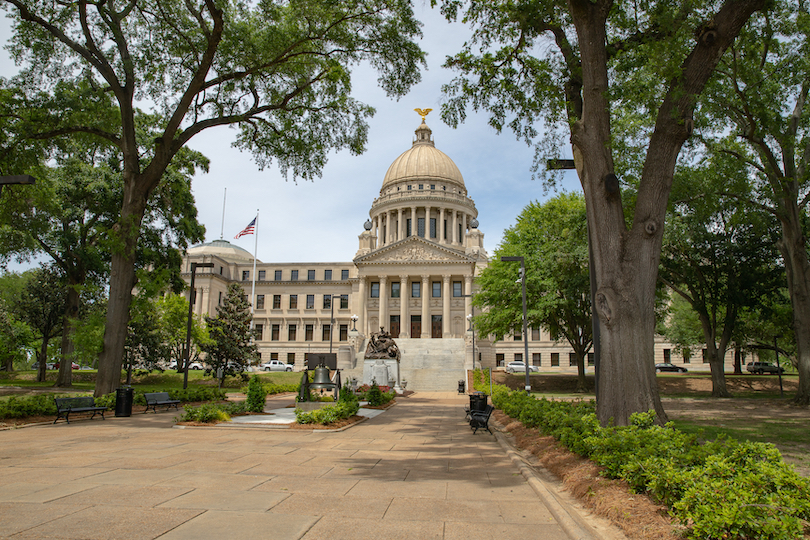
Although tourists often overlook it, Mississippi’s capital and largest city, Jackson certainly has enough going for it to warrant a visit. Set on the banks of the Pearl River, it boasts a brilliant live music scene and a handful of excellent museums and historic buildings. Its two main tourist attractions are the Museum of Mississippi History and the Mississippi Civil Rights Museum. While the former offers a fascinating look at the state’s history and culture, the latter highlights the fight for racial equality in Mississippi. Besides the magnificent museums, there is also the artsy Fondren District with all its boutiques and coffee shops to explore. As ‘The City with Soul’ is Jackson’s slogan, it should come as no surprise to learn that there’s a load of great live music to discover in its numerous bars and venues. Weekends are a particularly good time to visit: this is when blues, folk, and jazz can be heard on every street corner.
Clarksdale
Set on the banks of the Sunflower River, the small and slightly dilapidated city of Clarksdale has long been popular with tourists as it lies at the heart of the Delta blues scene. In the early 20th century, many African-American musicians developed the blues here before migrating north and performing in cities such as Chicago and New York. This captivating past is now explored in depth at the delightful Delta Blues Museum, while markers and monuments relating to the mesmerizing music and its most-distinguished musicians can be found around town. In addition, big-name blues acts regularly perform in the scattering of bars and clubs, while a handful of cultural events and festivals take place during the year. As it lies just a couple of hours’ drive from most of the main blues sights, Clarksdale also makes for a great base if you want to explore the Mississippi Blues Trail. On top of this, both the lively college town of Oxford and the major city of Memphis aren’t far away if you want to explore the rest of what the region has to offer up.


/3163292_HighRes-resize-56a48d5c3df78cf77282f002.jpg)





:max_bytes(150000):strip_icc()/rhododendron-growing-guide-7109537_01b-34450d9a857047e5a2d0b2a99eb1fa1c.jpg)
:max_bytes(150000):strip_icc()/rhododendron-growing-guide-7109537_01-84c0118c7af14efd816625d51fa19650.jpg)




 Sew Colorful