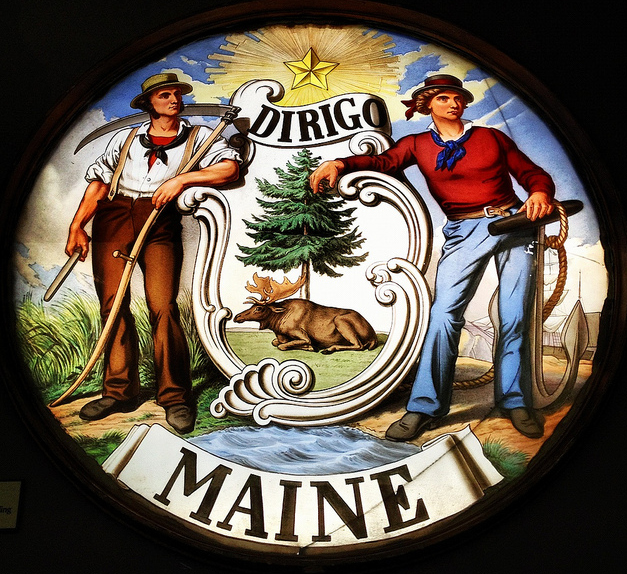
The state motto of Maine is “Dirigo” which is Latin for “I Direct” or “I Lead.” This motto was adopted in the first session of the Legislature of the State of Maine in the summer of 1820 following the day Maine entered the Union on March 15, 1820. The reference is to the “Polar Star” which represents the new State of Maine and so the motto, Dirigo, is an extended metaphor as the Polar Star is the mariner’s guide so is the state meant to be the “citizens’ guide.”
The simple, one-word, Latin motto appears on Maine’s coat of arms, which appears on both the state seal and state flag.
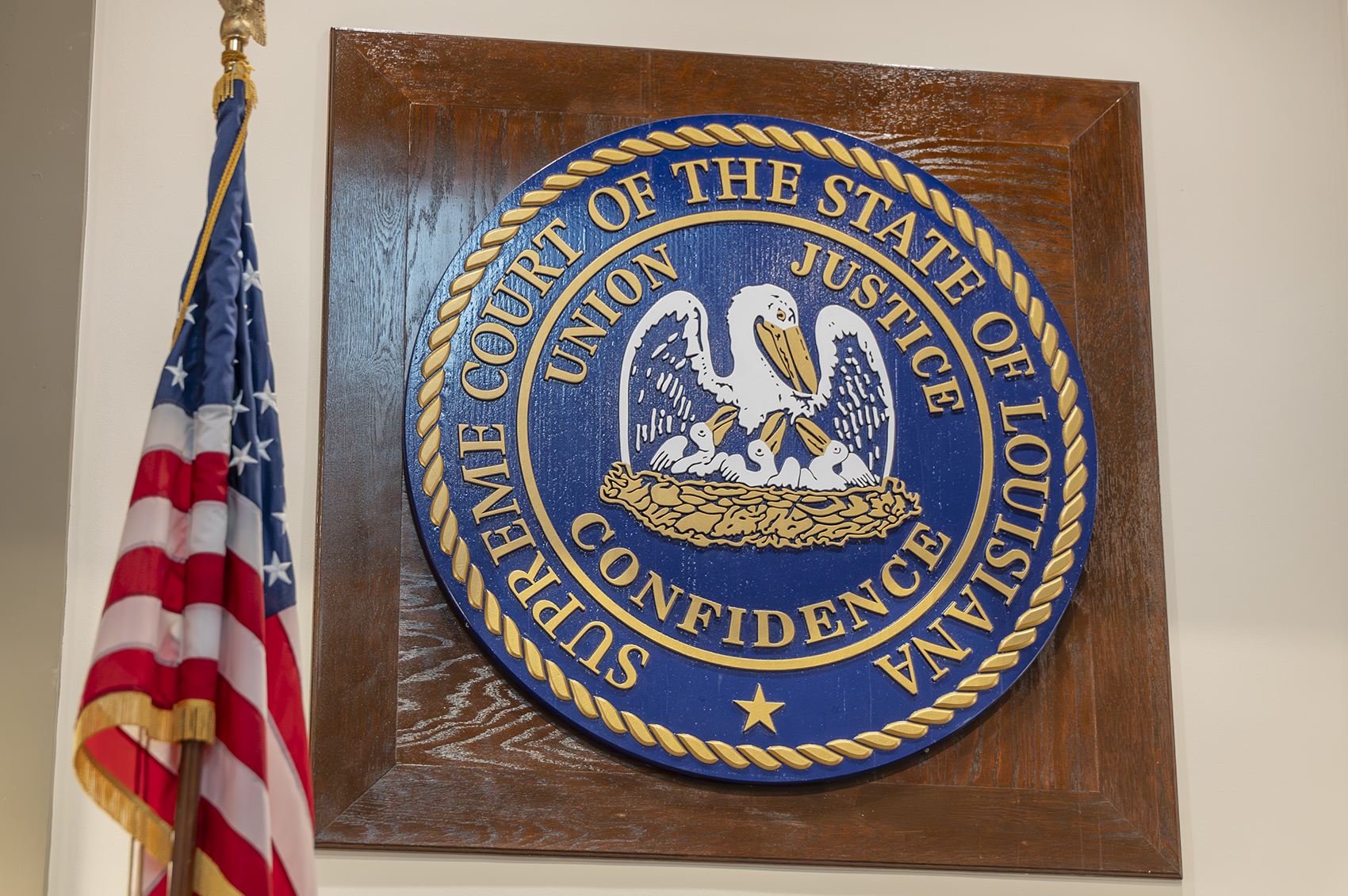
Theriot has read volumes of historic letters written by Governor Claiborne. And after seeing the frequent use of the three words in the motto, Theriot has opinions about their significance and meaning.
Union – “He used that term union to convince the people of Louisiana to join the United States. It also meant certain things like self-government and individual freedoms.”
Justice – “He was a big law and order guy, but he believed in fairness and individual freedoms.”
Confidence – “He was trying to impress upon the local inhabitants a level of confidence in the American system of government. He was also asking the people that he governed to have confidence in him.”
Kentucky’s official state motto is “United we stand, divided we fall” and it appears on the state flag and the great seal of Kentucky. Kentucky also has a Latin motto which was recognized officially in 2002. The Latin motto “Deo gratiam habeamus” translates to “Let us be grateful to God.” This phrase appears in the preamble to the constitution of the Commonwealth of Kentucky.
The state motto of Kansas is “Ad astra per aspera,” which is Latin for “Through hardships to the stars.” Adopted in 1861, this motto reflects the state’s historical struggles and its determination to overcome challenges. It encapsulates the pioneering spirit and resilience of the people of Kansas, emphasizing their pursuit of lofty goals despite facing adversities. The phrase is a testament to the optimism and perseverance that have been integral to the state’s identity throughout its history.
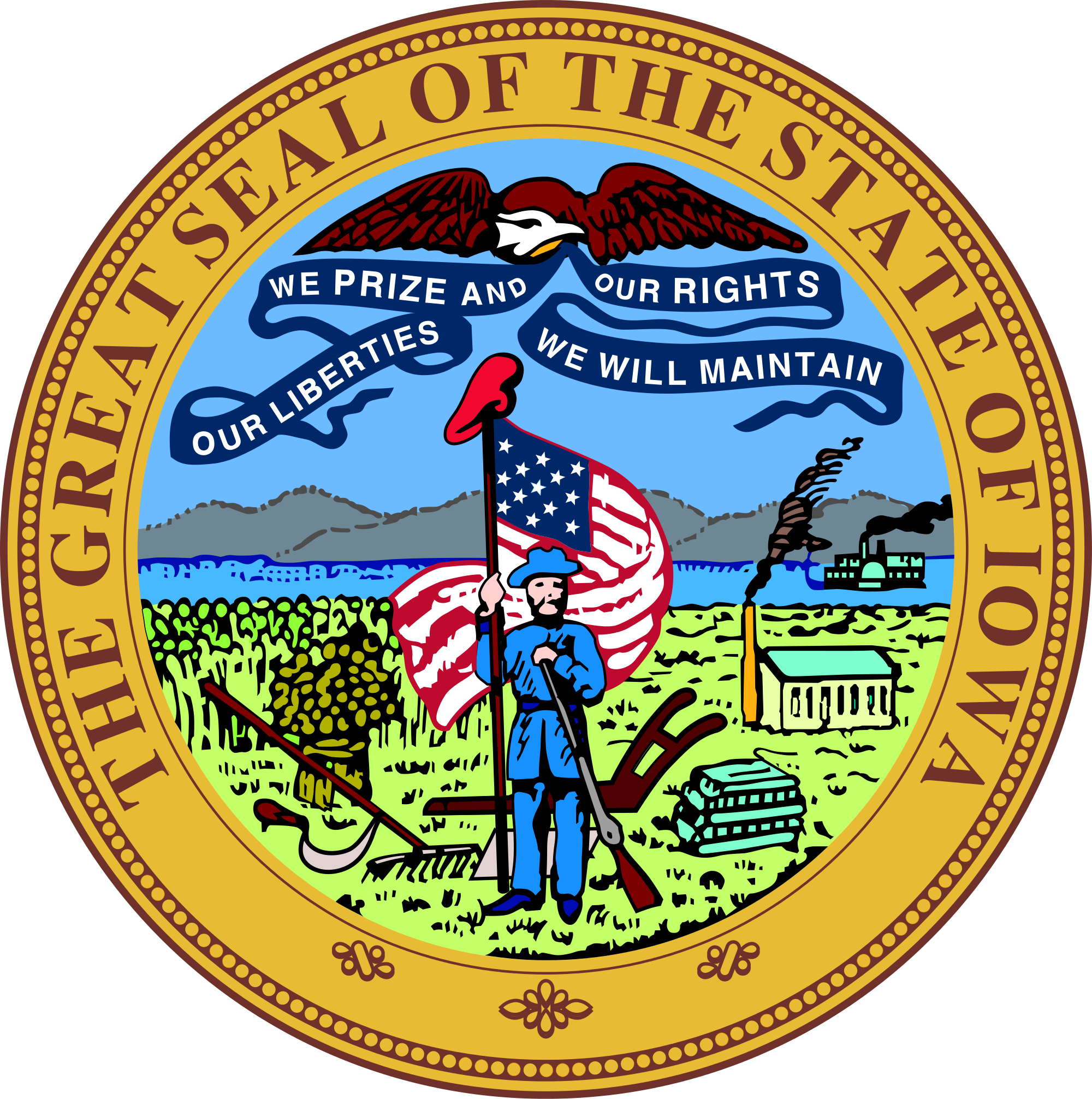
Iowa’s state motto is Our Liberties We Prize And Our Rights We Will Maintain. The first Iowa General Assembly adopted it in 1847, just 58 days after Iowa achieved statehood. At 53 characters, it is the longest state motto in the United States.
The motto appears on the Great Seal of Iowa, carried on a scroll by the bald eagle at the top of the seal’s design. It also appears on the Iowa state flag, designed by Dixie Cornell Gebhardt in 1921. Iowa is one of the few states whose motto is clearly visible on both the seal and the flag.
The motto divides into two parallel statements joined by And. The first half — Our Liberties We Prize — is a declaration of value: Iowa’s citizens hold their civil liberties dear. The second half — Our Rights We Will Maintain — is a declaration of commitment: those rights will be defended. Prize and Maintain are carefully chosen words. To prize something is to hold it in high regard; to maintain it is to actively keep it intact.
The phrase is written in the first person plural. It is not a statement about abstract ideals or distant government. It is a statement from the people of Iowa about what they themselves value and intend to protect. For a state founded on the frontier in 1846, that directness was deliberate.
The word rights carried specific weight in 1847. Iowa entered the Union as a free state, and the question of what rights citizens could claim and defend was central to American political life in the years leading to the Civil War. The motto’s language is assertive rather than decorative.
The Indiana state motto was adopted in 1937. The Indiana Department of Administration explains the meaning behind the Indiana motto as such:
“‘The Crossroads of America’ signifies the importance of waterways, railroads, highways and other transportation facilities in the state, viewed by many as some of the finest in the nation.”
The importance Indiana puts on paths of transportation has roots all the way back to the early 1800s when the major cross state Cumberland Road (today US Route 40) was built.
The official state motto of Illinois is “State Sovereignty, National Union.”
This motto was controversial after the Civil War when national unity was of prime importance. However, the Illinois legislature commanded that the motto remain the same, but the new design for the state seal and flag positioned the scroll so that “National Unity” is at the top. It remains unchanged and appears on the Illinois state seal and state flag.
This Idaho state motto is Latin for “It is Perpetual”. The Idaho motto was adopted in 1891 as an element of the state seal.
The Idaho motto has its roots in a sentence made by Pietro Sarpi (1522-1623) a Venetian theologian and mathematician. His last words before he died were: “Esto perpetua”, meaning: “Mayest thou (Venice) endure forever”.
The editor of the 1920, “History of Idaho: The Gem of the Mountains”, James H. Hawley says:
“Miss Emma Edwards of Boise, now Mrs. Emma Edwards-Greene, who designed the State seal, says that the words Esto Perpetual ‘breathe the prayer that the bounty and blessing of this land may forever benefit its people.’”
Emma Edwards-Greene translated the Idaho state motto as “It is perpetuated” or “It is forever”.
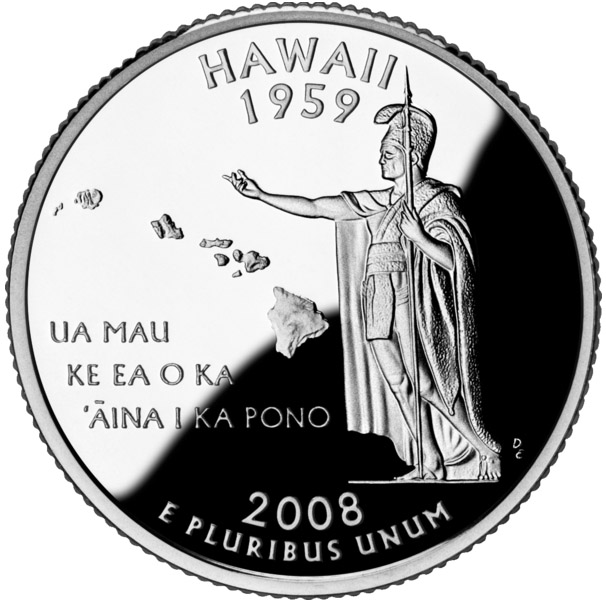
The state seal of Hawaii features the official state motto: “Ua Mau ke Ea o ka ‘Āina i ka Pono;” native Hawaiian translating as “The life of the land is perpetuated in righteousness” (Hawaiian is also officially recognized as the state’s native language).
Hawaii’s state motto is also featured on the U.S. Mint’s commemorative quarter for Hawaii.
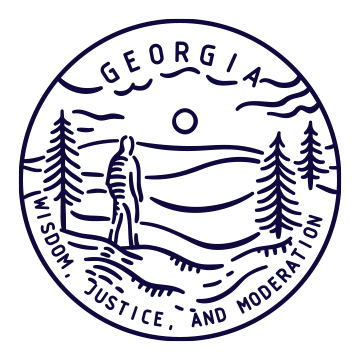
The southern state of Georgia, nicknamed “The Peach State,” has more than one motto, though one is much more accepted than the other. Many believe the state motto of Georgia is “Wisdom, Justice, Moderation,” since that straightforward message appears on the side of the state’s two-sided state seal, which has remained unchanged since 1799. The other side of the seal, though, has the inscription “Agriculture and Commerce,” offering a choice of mottoes.
When early state legislators approved Georgia’s two-sided seal on 8 February 1799, succinct instructions were laid out regarding its appearance. The front of the seal depicts a three-columned structure holding up the state’s “Constitution.” Each pillar is decorated with a banner: “Wisdom,” “Justice” and “Moderation.” The three pillars also represent the three established branches of state and federal government — the legislative, judicial and executive branches, respectively.
Historians point to Plato as the source of the chief state motto of Georgia. The Greek philosopher wrote in Republic that these pillars, along with “Courage,” form the basic construction of civilized government. Though courage is not represented by a pillar or by name, a single armed soldier, standing at attention between “Justice” and “Moderation” is said to represent this other quality.
The other side of the seal, however, boldly proclaims “Agriculture and Commerce” around the perimeter. For this reason, many believe this is another of Georgia’s mottoes, even though Tennessee has chosen this for its official motto. At the center of this proclamation on the back of the seal is a picture depicting a tall ship bearing a U.S. flag and two smaller expedition boats, with a farmer and distant lumberyard beside them.
No official state motto of Georgia was actually selected, however. In fact, just a few dozen states have an official motto. The only change that has occurred to Georgia’s state seal since 1799 was in 1914, when legislators changed the date on both sides of the seal to read “1776” — the year of American independence. Until then, the seal read “1799,” for when the state joined the union.