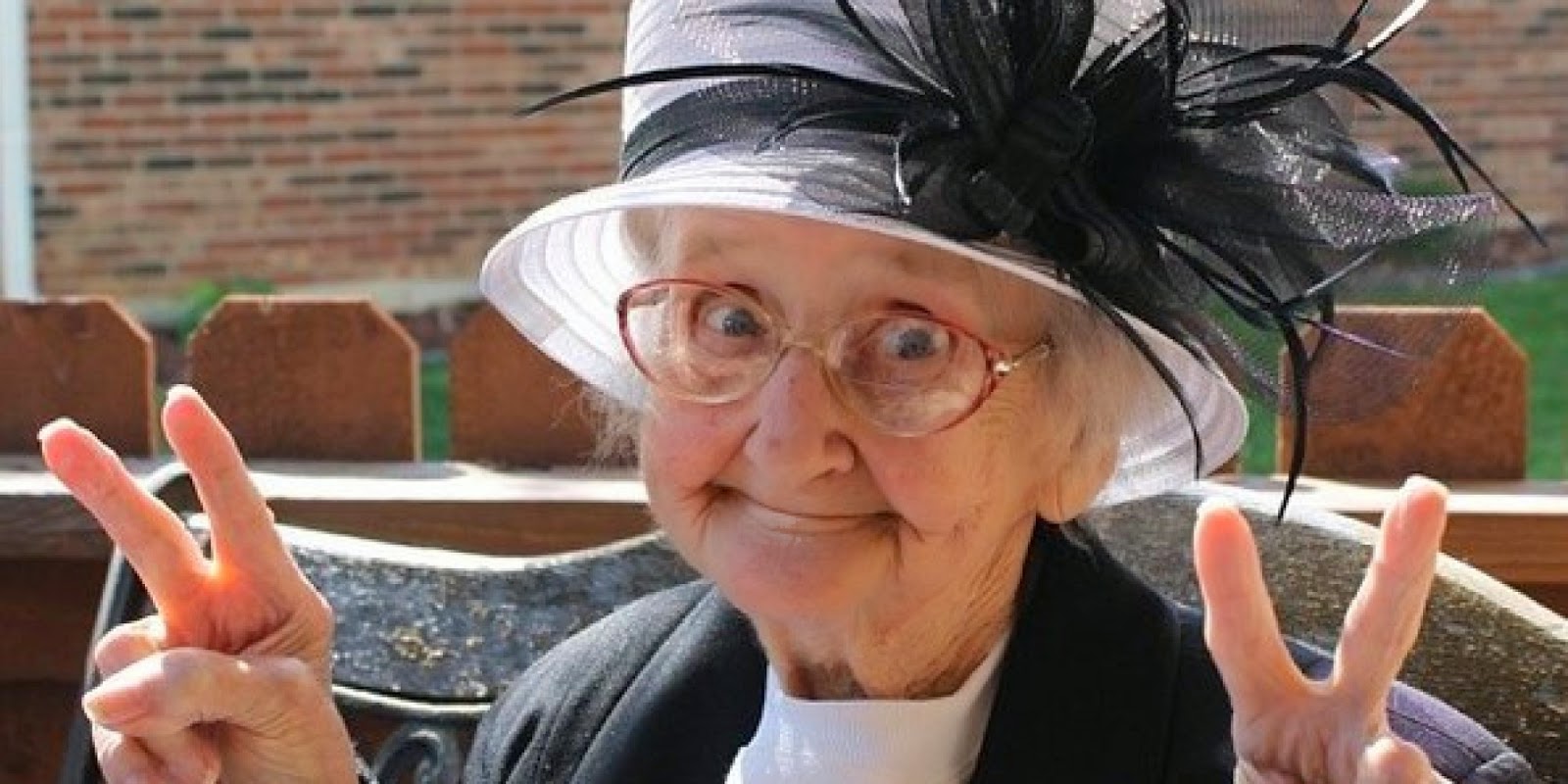
Today is National (yup, another one) Gorgeous Grandma Day. I could post pictures of gorgeous older women, who most likely had botox or plastic surgery in search of being glamorous at whatever age they are. But that’s not my style…LOL. I would rather present pictures and memes of Grandmas being Grandmas and not wannabe sex objects. So let’s celebrate Grandmas and LAUGH today, because I think laughter IS sexy!
How about some finger foods to start off? These Santa Hats are slices of banana, grapes and strawberries with a mini marshmallow to top off the skewer. Easy peasy!
Or maybe watermelon trees?
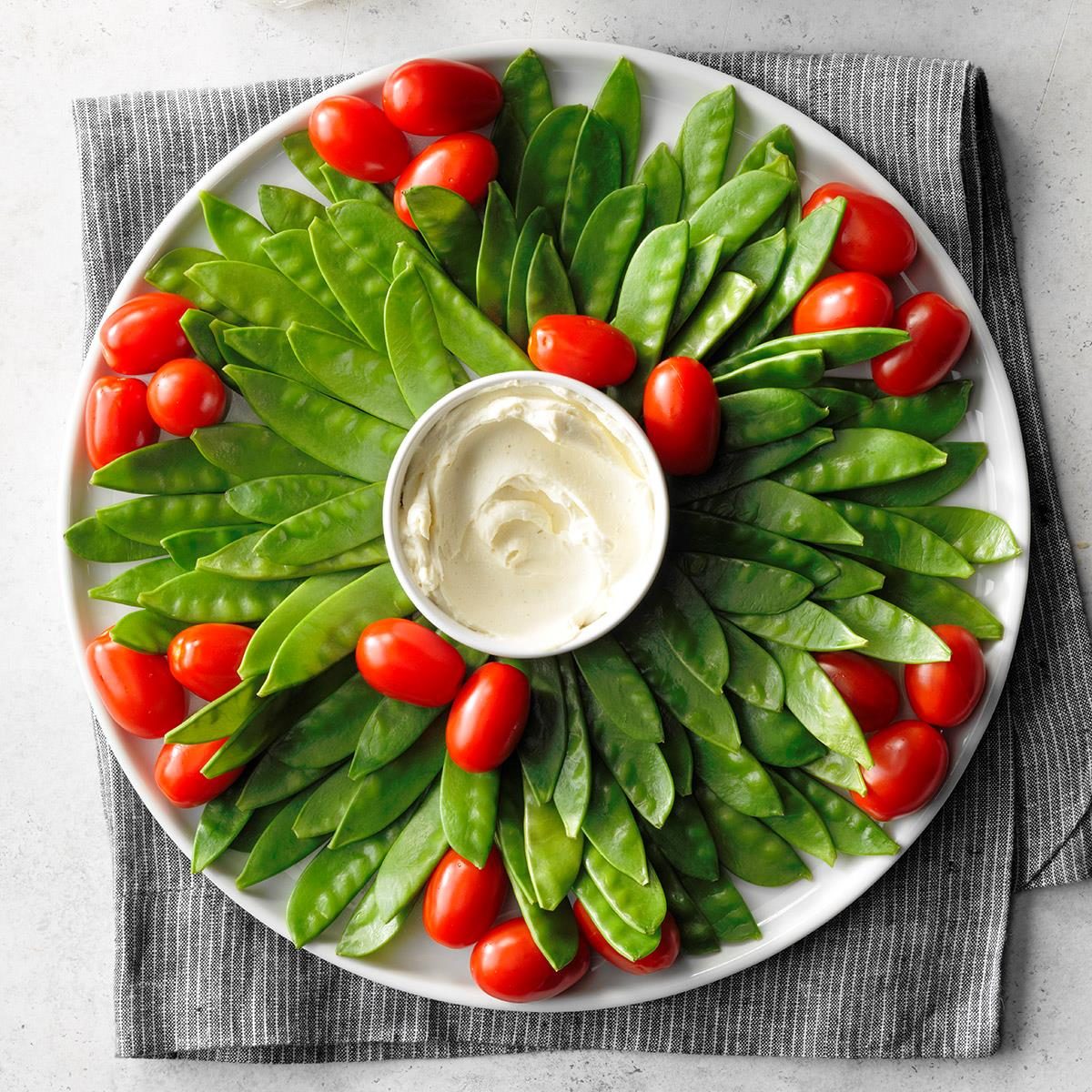
A gorgeous wreath couldn’t be simpler! Some crisp green pea pods with cherry tomatoes and a fresh dip!
Cheese balls are very versatile! They can be shaped into snowmen or ornaments!
But today’s recipe is for a Christmas Tree Pull-Apart Bread.
Christmas Pull Apart Bread
Ingredients
1 can pizza dough
4 ounces cream cheese
1 cup mozzarella cheese
7 ounces basil pesto
2 tablespoons butter
1 minced garlic clove
Fresh chopped parsley
1/2 cup red bell pepper
Mini pepperoni
Fresh rosemary sprigs
Marina sauce
Directions
Unroll a can of pizza dough out on a flat surface, and cut the dough into 36 squares with a pizza cutter.
In a bowl, add cream cheese, mozzarella cheese, and basil pesto and stir them together.
Add a spoonful of the cheese and pesto mixture to each pizza dough square, and pinch the corners together. Close up the seam on your dough square to form a ball around the mixture, and place the ball seam-side down on a parchment paper-covered sheet pan. As you place the mixture-filled dough on the sheet pan, place the dough balls in the formation of a Christmas tree.
Bake the completed Christmas tree for 15 minutes at 400˚. While the Christmas tree is baking, combine butter and minced garlic in a small bowl and melt the mixture in the microwave for about 20 seconds.
When the Christmas Tree Pull-Apart Bread comes out of the oven, brush it with your fresh garlic butter.
Top your bread with chopped fresh parsley, chopped red bell pepper, and mini pepperoni. Tuck sprigs of fresh rosemary under the edges of your Christmas tree for a final festive touch. Pair with a bowl of marinara sauce for dipping.
And lastly, what could be more fun than a snowball fight in July?
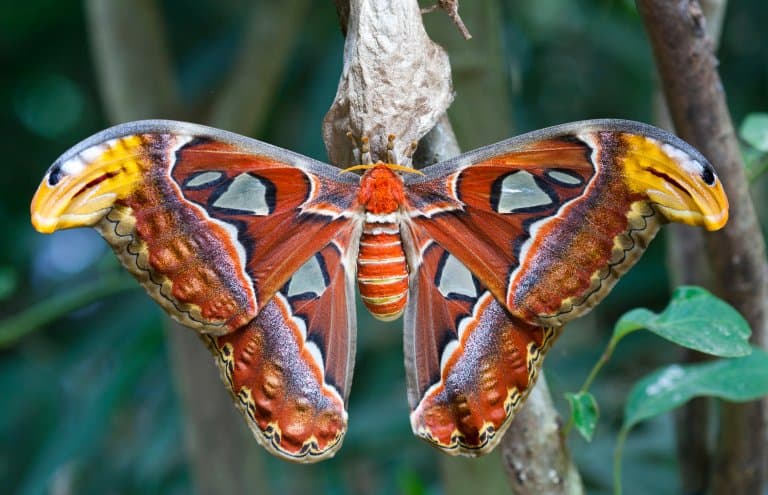
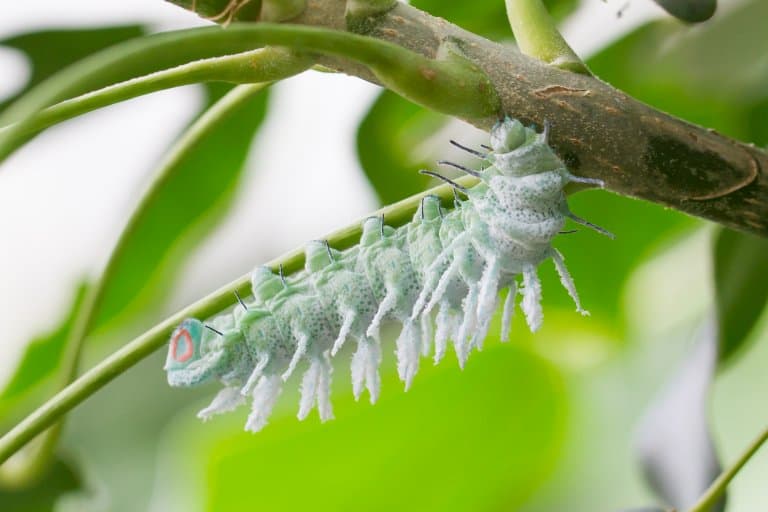
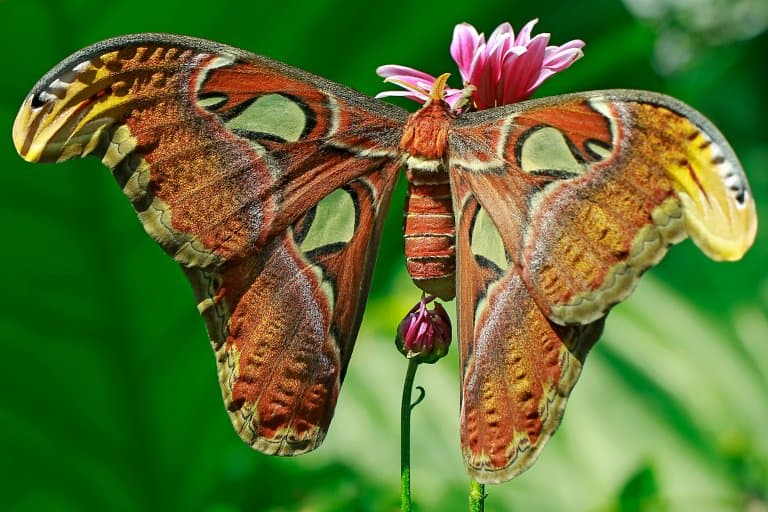
In Cantonese, it’s known as the “Snake’s Head Moth” and is said to resemble a cobra. In Indonesia, locals call it Kupu Gajah: the elephant, or “large” butterfly. And large it is!
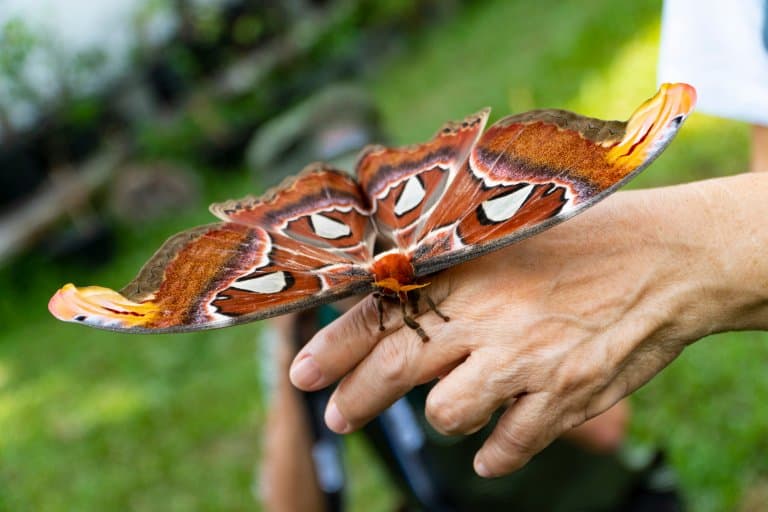
This is one of the largest insects in the world, and one of the top three biggest moths. Named after a Titan of Greek mythology, the Atlas moth lives up to its name.
It’s a member of the Saturnids: a family known for their dazzling colors and enormous size, and it certainly doesn’t let the family down.
Atlas moths inhabit tropical forests and shrub lands across South and Southeast Asia.
They have the largest wing area of any moth, and its body is disproportionally small in comparison to its wings. This surface area gives it an advantage when it comes to defending against predators, but it makes the animal cumbersome in flight. As such, it prefers to relax for its short life as an adult moth, only taking action in defense or response to the smell of a mate.
These gentle giants can cause havoc in a citrus plantation, but they’re becoming very popular for their silk. This has led to a lot of research being done to figure out what they like to eat and the best living conditions for them. They also have some cool defense mechanisms!
Let’s take a look at some of the things that make this huge insect so special.
Interesting Atlas Moth Facts
They are the third largest moth in the world
Their wingspan can measure up to 9.4 in and only the white witch (Thysania agrippina) and Attacus caesar moth have surpassed it. The white witch (Thysania agrippina) holds the record with an incredible 12 in wingspan.
They don’t eat
At least, once they emerge as adults, that’s the end of their feeding.
The mature moths have vestigial mouth parts that are small and useless, and as such, the adult stage will only live long enough to mate, which is usually no longer than a couple of weeks.
Atlas moths fly as little as possible
This means that they’re reluctant to use up their precious energy, and with such cumbersome wings, flying is quite resource-intensive. Instead, they spend most of their time within a short distance of the site of their emergence.
At night, or in the evening, they use their huge antennae, each one built like an FM radio antenna, to pick up on pheromone cues from the opposite sex.
Their wing motion is a species feature
Most insects have a rigidity to their wings that aids them in flight. In moths, the beating of a wing involves twisting and bending, which makes the motion very hard to analyze. Researchers trying to figure out the mechanics behind a moth’s flight found it too complex to compare against non-deformable wing simulations.
It’s thought that the nature of a wing’s motion in insects is so unique that it can be used to tell species apart. There’s still quite a lot that doesn’t make sense with these wing motions, and unlocking the mysteries might help engineers design new technologies.
They have a high mortality rate
Moths, like most (if not all) insects, reproduce using what’s known as R-strategy.
This is basically the scatter-gun approach to making babies, where an animal gets out as many eggs and offspring as possible and hopes for the best.
In Atlas moths, this translates to an 89% mortality rate, with most larvae dying not long after hatching from their eggs.
Their silk is prized
Though the silk from the silkworm tends to be produced in longer strands, it’s said that Atlas moth silk is stronger and more durable as a textile.
These properties have led to the cocoons being traditionally used as coin purses in parts of Taiwan, and have led also to more contemporary applications in shoes, jackets, lampshades and scarfs.
This has led to a lot of information on how to rear them
Despite the fact that each species has a supporting role in the sustainability of the ecosystem we live in, it seems like the world only takes an interest in one if there’s a financial gain to be made from it.
Fortunately for the Atlas moth, the quality of its silk has prevented it from being considered a pest – even though it eats a bunch of mango leaves – and instead, great care has been placed in the healthy rearing of captive specimens, to the point where there are entire catalogues of information on how to design the best artificial diet for them.
This information is primarily designed to help people get the best possible silk out of the caterpillars, but it’s also interesting for hobbyists and researchers alike.
The larvae have butt canons
When threatened, the caterpillars of this moth have a very irritating defense.
There are special glands in the abdomen that contain histamine, a compound responsible for allergy symptoms (the one that you take antihistamines to suppress), that, in response to a threat, explode out of pressurized channels to deter predators.
They also look like poo
The bizarre-looking caterpillar of the atlas moth is thought to mimic bird feces as a way of avoiding predation. It produces a waxy white secretion that does make it look a lot like something even less appetizing than a caterpillar.
This wax also functions as a physical barrier against ants and parasites and presumably helps the animal maintain hydration.
Atlas moths even mimic snakes
The adult moth has a dappled and enormous wing area that is said to resemble a snake.
When attacked, they’ve been known to thrash around on the ground, apparently mimicking an uncurling serpent. They’re also known to play dead, blending in with the leaf litter of the forest.
Their local name in Cantonese translates to “snake’s head moth” because of the protrusions on the wings resembling a snake’s head.
If you have never seen the Flying Duck orchid in real life, you can be forgiven for thinking that it is a fake. This is because it is hard to imagine Mother Nature trying to copy or impersonate one of its own creatures? But it is a fact that the flowers of this species of orchid bear uncanny resemblance to a flying duck. It is a small species of orchid that is found in eucalyptus woodland of Australia along its eastern and southern coastline. The scientific name of this orchid is Caleana Major after the name of a botanist George Caley.
The complex flower of this species of orchid is tiny, only 15-20mm in size. But it has a peculiar shape that makes it look like a duck in flight. Most of the plants have reddish, brown, and purplish flowers even though in some cases these flowers can also be green. Chances are that you may miss out on seeing this species of orchids even after visiting the right places in Southern and Eastern Australia. The peculiar color of the flowers of this orchid makes the plant to mix and blend well with the surroundings. Scientists say that the flower has evolved in such a way so as to help this species of orchids to attract its pollinators. We humans see the head of the flower in the shape of a duck but male sawfly sees it as a female sawfly. It gets attracted to it and makes an attempt to mate with it.
Facts about the Flying Duck Orchid
Habitat: Eastern and Southern Australia
Scientific name: Caleana major
Other common names: Flying Duck orchid
The flower has a labellum that is in the shape of the beak of the duck. The length and breadth of this labellum is such that it serves as a perfect place for sitting for the male sawfly. As the male sawfly sits on it, it sends signals to the body of the flower to set the trap in motion. This trap makes the insect get into a place and by the time it is free, it has to pollinate the flower. This process of propagation is referred to as pseudocopulation by the scientists. The roots of this species of orchid have a symbiotic relationship with a fungus that is native to the places where it is found in Australia. This is one of the reasons why this unique species of orchid is very difficult to grow inside homes. It is this fungus that protects the plant from several infections. When this fungus is not present in the medium, it is difficult to save the plant from dying down because of these infections.
There are two more petals of this uniquely shaped flower of Flying Duck orchid. Both of them look more like sepals and they are curved back to look exactly like the wings of a duck ready to take a flight. This orchid plant is perennial in nature but it flowers only during spring or early summer.
Flying Duck orchid has the pride of being on the postage stamp of Australia.
This month’s offering for Weird Wednesday is the Oklahoma Prairie House. This article was an interview in The Guardian of the home’s designer Herb Greene by Rowan Moore. The piece appeared February 2020.
It starts – for me, and for others intrigued by the work of Herb Greene – with a house shaped like a chicken. On the windblown plains of Oklahoma, as framed in a small number of photographs, this strange creature stands, feathered with wood, huddled but proud, both of its place and alien, the repeating slanted lines of its planks echoing those of the tall grasses around it. Odd wattles hang from its head. A jaunty steel and aluminum car port, like something from a 1950s motel, takes a running jump at its flank, then morphs into an angular peak that surmounts the whole composition.
The Prairie House, built for Greene and his young family in 1961, pops up from time to time in architecture books, usually presented as a diverting proposition, an image of a future not chosen. Clearly something is going on, but what, exactly? With a book, Renegades, about the school of which Greene was part, coming out this month, it seemed like a good occasion to ask him.
“I was trying to make it poignant,” says Greene, now 90 and living in California, via Skype. “I was reading Alfred North Whitehead, a genius philosopher, who showed how some ‘event’ like your shoelace could relate to another, like the moon. I wanted to refer to diverse feelings.” And so the house is intensely personal and individual while also connecting to the extra-human. “I wanted it to look like it really came from Oklahoma,” he says. “I wanted to make it like a creature that hung over the prairie.” It’s not supposed to look like poultry, exactly, more some non-specific beast: “I don’t much like it being called a chicken, but I’ll take it.”
You can’t talk to Greene, or about him, without also talking about the dazzlingly original Bruce Goff, an omnivore of crosscultural inspirations – he loved Gaudí, Debussy, Japanese prints, Balinese music – a man who could collage boulders and oil rig parts into architecture that felt both archaic and futuristic. From 1943 to 55, Goff ran the School of Architecture at the University of Oklahoma, in accordance with his belief that “education should be a matter of bringing something creative and individual out of the student”. He also wanted to draw on American sources – the landscape, Native American art, the pioneer spirit – more than imitate European models.
Greene, on first learning about Goff in an architectural journal, immediately upped and left his architectural studies in Syracuse, New York, and headed off to Oklahoma. “I met my very first genius,” he says. “When he moved his eyes, it was special.” Greene hated the way that, on the east coast, architecture schools had to follow one or another modernist master. “Harvard followed Gropius,” he says. The Illinois Institute of Technology in Chicago “followed Mies. But Goff said everyone was different.” Greene would go on to work and teach with Goff.
Greene, like Goff, cross-fertilizes architecture with other art forms. Paintings – in which he likes to riff on a detail from (for example) Vermeer or Cartier-Bresson – have long been central to his work. He also learned from Goff the idea of taking individual clients’ “existential qualities” and making them “into a meaningful composition of architecture”. It might be, as it was in Greene’s Joyce Residence of 1959, his client’s collection of antique furniture and stained glass. It might be some quirk of their character, or something as simple as their favorite color. Whatever the clue or cue, the design would in some way incorporate it, reflect it and be spun from it.
Since human emotions are complicated, so too would be the architectural expression. The Prairie House seeks to communicate vulnerability and even pain, as well as shelter and wonder. It is timber inside as well as out, with shingles roughly installed by Greene’s students, which, as he later wrote, “speak of human scale, warmth, softness and vibratory activity”. It is a wooden nest or cave traversed by vertiginous metal stairs. The house both wards off and embraces the weather, turning its narrower end westward to deflect the prevailing wind, but also offering a generous semicircular window towards the sunset.
Once, says Greene, someone got off a tour bus and asked in all seriousness if a tornado had hit the house. Some female visitors, by contrast, “came out with tears in their eyes”. Goff gave what might have been, for Greene, the ultimate accolade: standing on one of the internal galleries, he looked down and said: “It looks like pure feeling.”
Greene, as it turned out, only lived for a year and a half in his most famous creation. He has done much else in his long career, designing other remarkable buildings, teaching, painting and writing. His 1981 book Building to Last: Architecture As Ongoing Art proposes a public architecture of “armatures”, which would be decorated by the carvings, glasswork, tiles or other artefacts of non-professional members of the public, “citizen artists” and “citizen craftspeople”. He now thinks this is his most important idea.
With the benefit of some decades of hindsight, Greene’s work looks pioneering. His lo-tech responses to the climate have been seen as an early version of sustainable design, and its freeform shapes have become fashionable in the hands of Frank Gehry and others. Greene demurs. “I just did things because they were obvious,” he says. “Gehry,” he adds, “is a genius, but I don’t like the work. He has all the curves but they don’t serve the structure of the building.”
Whatever his place in the unfolding history of architecture, Greene is a singular soul, a rare combination of creative courage and intellectual reflection. Younger architects have yet to find all the answers to questions about environmental design and the relation of buildings to the people who use them. Despite Greene’s modesty, his projects still have plenty to teach.
SOURCE: The Guardian
Sat 29 Feb 2020 12.00 ESTLast modified on Wed 23 Sep 2020 10.26 EDT
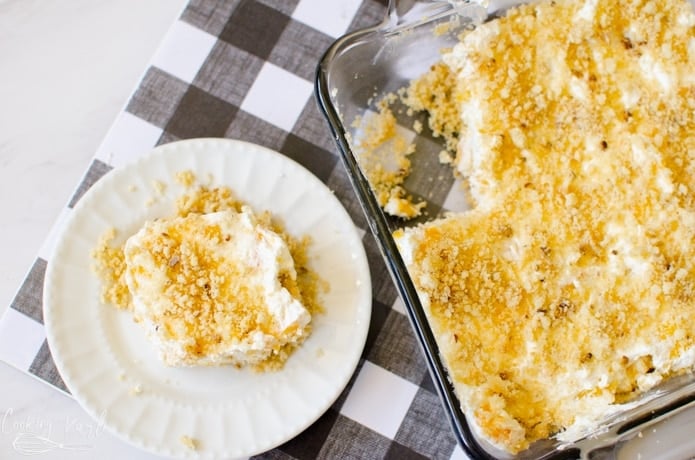
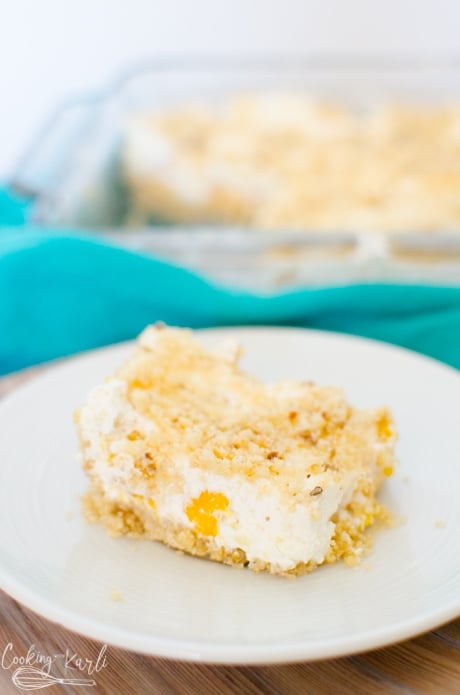
Today’s offering is a great light summer dessert recipe: No Bake Peaches & Cream Dessert!
No Bake Peaches ‘n Cream Dessert is packed full of fresh peaches, a peach infused creamy filling with a sweet Pecan Cookie Crust.
Ingredients
2 1/2 cups peaches peeled, diced
1/2 tbsp lemon juice
1/4 cup sugar
1 1/2 cups crushed pecan sandies cookies approx 15 cookies
3 tbsp butter melted
1 tbsp corn starch
1 tsp vanilla
1 8 oz tub cool whip
Instructions
Combine the diced peaches, lemon juice and sugar. Let sit for 1 hour.
Combine the crushed cookies and melted butter. Press into the bottom of a 9×9 inch pan. Refrigerate until needed again.
Once the hour is up, you should have at least 1/2 cup of ‘syrup’. It’s okay if you have more. If you don’t have 1/2 cup, let it sit a little longer until you have 1/2 cup.
Whisk the cornstarch into the peach syrup. Microwave for 1 minute. The syrup will thicken. Cool to room temperature.
Fold the thickened syrup into the cool whip. Add the vanilla and diced peaches. Stir until complexly mixed.
Spread onto the crust and garnish with more cookie crumbs if desired.
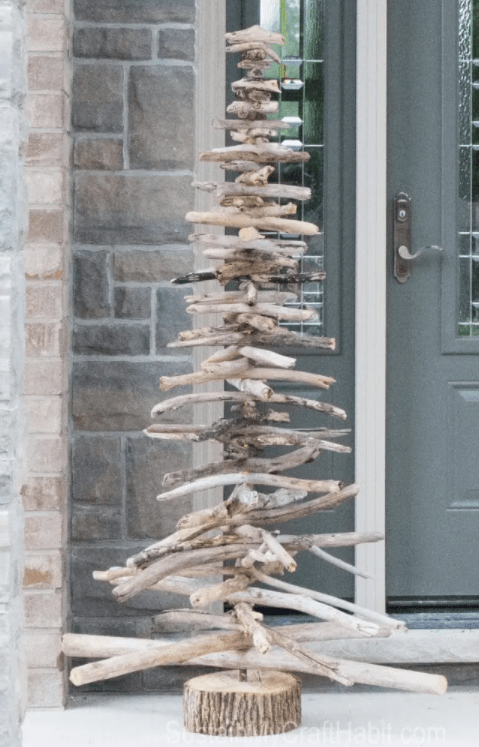
While you’re out at the beach this summer, why not collect pieces of driftwood to make your own Christmas Tree! I will be attempting this (on a smaller scale) with tree branches since the woods are full of them!
Materials
thick pieces of driftwood in various lengths for example 4″ to 4′
a central support rod like rebar, shower curtain
a strong base to hold up the central support rod like a small branch stump
a drill with a bit that’s a little larger than the diameter of the central support rod
How to Make a Driftwood Christmas Tree:
The concept for this type of tree is pretty simple:
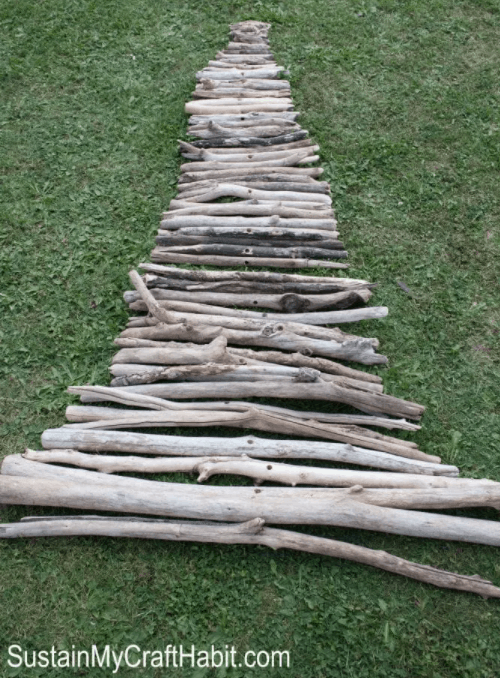
Arrange your driftwood from longest to shortest having enough pieces to reach your desired height.
Drill holes in the mid-point of each piece of driftwood, making sure the holes are large enough for your center rod to go through.
Prepare the central support rod by drilling an appropriately sized hole in the small branch stump and then inserting the rod inside.
Starting with your longest, spear each piece of driftwood until you are done. And voila, you have a tree! You can even add a starfish to the top and some twinkle lights!
Today is the anniversary of the plane crash that killed John F. Kennedy Jr., his wife and sister-in-law. Like most tragedies involving celebrities, this incident has sparked controversies and conspiracy theories. I am presenting 2 articles—one from History.com and one from Biography.com. detailing the “official” story. At the end of those pieces, I also provide a link to site disputing a lot of the “reported” facts. The author reveals some very interesting details.
FROM: HISTORY.COM
On July 16, 1999, John F. Kennedy, Jr.; his wife, Carolyn Bessette Kennedy; and her sister, Lauren Bessette, died when the single-engine plane that Kennedy was piloting crashed into the Atlantic Ocean near Martha’s Vineyard, Massachusetts.
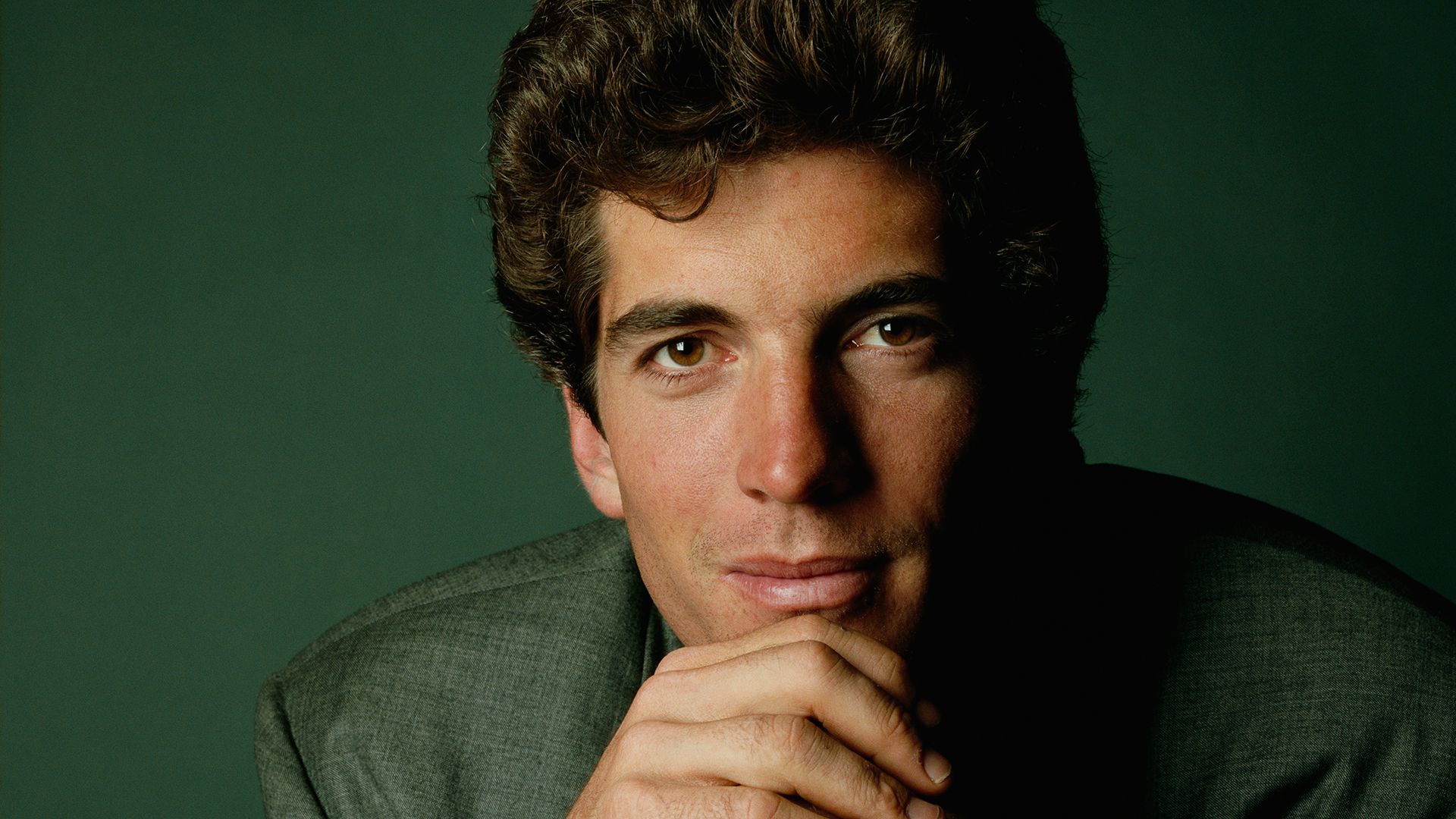
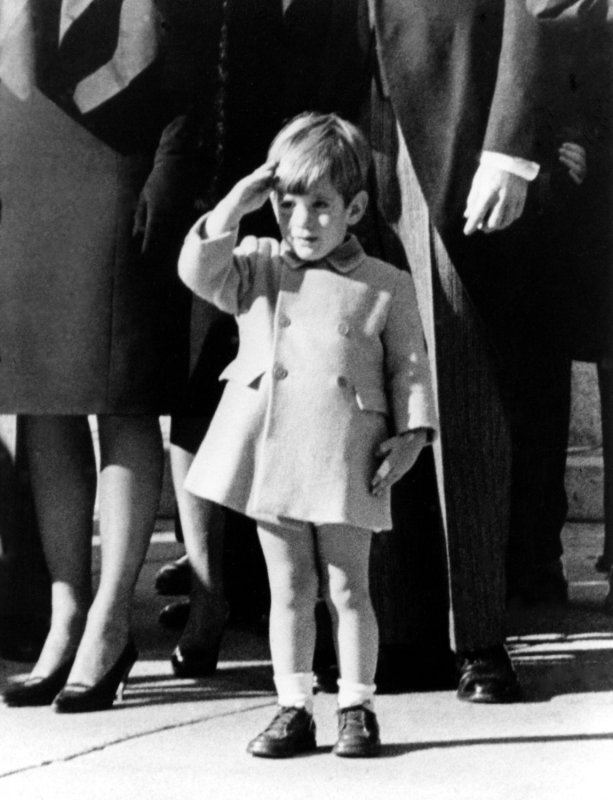
John Fitzgerald Kennedy, Jr., was born on November 25, 1960, just a few weeks after his father and namesake was elected the 35th president of the United States. On his third birthday, “John-John” attended the funeral of his assassinated father and was photographed saluting his father’s coffin in a famous and searing image. Along with his sister, Caroline, he was raised in Manhattan by his mother, Jacqueline. After graduating from Brown University and a very brief acting stint, he attended New York University Law School. He passed the bar on his third try and worked in New York as an assistant district attorney, winning all six of his cases. In 1995, he founded the political magazine George, which grew to have a circulation of more than 400,000.
Always in the media spotlight, he was celebrated for the good looks that he inherited from his parents. In 1988, he was named the “Sexiest Man Alive” by People magazine. He was linked romantically with several celebrities, including the actress Daryl Hannah, whom he dated for five years. In September 1996, he married girlfriend Carolyn Bessette, a fashion publicist. The two shared an apartment in New York City, where Kennedy was often seen inline skating in public. Known for his adventurous nature, he nonetheless took pains to separate himself from the more self-destructive behavior of some of the other men in the Kennedy clan.
On July 16, 1999, however, with about 300 hours of flying experience, Kennedy took off from Essex County airport in New Jersey and flew his single-engine plane into a hazy, moonless night. He had turned down an offer by one of his flight instructors to accompany him, saying he “wanted to do it alone.” To reach his destination of Martha’s Vineyard, he would have to fly 200 miles—the final phase over a dark, hazy ocean—and inexperienced pilots can lose sight of the horizon under such conditions. Unable to see shore lights or other landmarks, Kennedy would have to depend on his instruments, but he had not qualified for a license to fly with instruments only. In addition, he was recovering from a broken ankle, which might have affected his ability to pilot his plane.
At Martha’s Vineyard, Kennedy was to drop off his sister-in-law Lauren Bessette, one of his two passengers. From there, Kennedy and his wife, Carolyn, were to fly on to the Kennedy compound on Cape Cod’s Hyannis Port for the marriage of Rory Kennedy, the youngest child of the late Robert F. Kennedy. The Piper Saratoga aircraft never made it to Martha’s Vineyard. Radar data examined later showed the plane plummeting from 2,200 feet to 1,100 feet in a span of 14 seconds, a rate far beyond the aircraft’s safe maximum. It then disappeared from the radar screen.
Kennedy’s plane was reported missing by friends and family members, and an intensive rescue operation was launched by the Coast Guard, the navy, the air force, and civilians. After two days of searching, the thousands of people involved gave up hope of finding survivors and turned their efforts to recovering the wreckage of the aircraft and the bodies. Americans mourned the loss of the “crown prince” of one of the country’s most admired families, a sadness that was especially poignant given the relentless string of tragedies that have haunted the Kennedy family over the years.
On July 21, navy divers recovered the bodies of JFK Jr., his wife, and sister-in-law from the wreckage of the plane, which was lying under 116 feet of water about eight miles off the Vineyard’s shores. The next day, the cremated remains of the three were buried at sea during a ceremony on the USS Briscoe, a navy destroyer. A private mass for JFK Jr. and Carolyn was held on July 23 at the Church of St. Thomas More in Manhattan, where the late Jackie Kennedy Onassis worshipped. President Bill Clinton and his wife, Hillary Rodham Clinton, were among the 300 invited guests. The Kennedy family’s surviving patriarch, Senator Edward M. Kennedy of Massachusetts, delivered a moving eulogy: “From the first day of his life, John seemed to belong not only to our family, but to the American family. He had a legacy, and he learned to treasure it. He was part of a legend, and he learned to live with it.”
Investigators studying the wreckage of the Piper Saratoga found no problems with its mechanical or navigational systems. In their final report released in 2000, the National Transportation Safety Board concluded that the crash was caused by an inexperienced pilot who became disoriented in the dark and lost control.
From: Biography.com
JFK Jr. got his pilot’s license only a year prior to the crash
On the morning of July 16, Kennedy reconciled with Bessette over the phone, writes C. David Heymann in American Legacy: The Story of John & Caroline Kennedy. The plan for the evening was to fly to Hyannis Port, Massachusetts, via a stop at Martha’s Vineyard to drop off Lauren. Kennedy and Bessette were scheduled to attend the wedding of Kennedy’s cousin, Rory Kennedy.
Kennedy and Lauren left Manhattan for the Essex County Airport in New Jersey – where Kennedy’s high-performance Piper Saratoga light plane was waiting – a little after 6:30 p.m. Carolyn arrived separately, sometime after 8 p.m. Coinciding with sunset, the Federal Aviation Administration cleared the plane for takeoff at 8:38 p.m.
Kennedy, who attained his pilot’s license a year previous, was in the pilot’s seat of the plane he purchased less than three months prior. The Bessette sisters sat side by side behind him. Following takeoff, Kennedy checked in with the control tower at Martha’s Vineyard, but the plane was reported missing after it failed to arrive on time.
The weather and Kennedy’s ‘failure to maintain control of the airplane’ were factors in the accident
Following an exhaustive search, fragments of the plane were discovered on July 19. A day later divers found the remains of the shattered plane strewn over a broad area of seabed. The search ended July 21, when the three bodies were recovered from the ocean floor.
The National Transportation Safety Board determined pilot’s error was the probable cause of the crash, due to Kennedy’s “failure to maintain control of the airplane during a descent over water at night, which was a result of spatial disorientation. Factors in the accident were haze and the dark night.” Autopsies conducted on the evening of July 21 revealed the victims had died upon impact.
And now for the alternate theory…
One of the interesting details that was reported early was a witness describing seeing a bright flash in the sky (a bomb perhaps?) and that of a beacon being spotted in a totally different location from where the plane was eventually found. (Perhaps to ensure that rescue would be too late?) Both accounts have “disappeared”. There are additional questions and problems with the generally accepted “official” story detailed in this person’s article. He includes a conversation with the local (?) newspaper that carried the report of the bright flash of light in the sky–and his inability to obtain any information from the newspaper about the witness. This is a long article with a lot of contradicting details and explanations.
A must-have herb in a culinary garden, oregano is easy to grow and perfect for beginners. Started in spring, oregano grows well in containers or even as ground cover along a path. Here’s how to plant, grow, and harvest oregano—plus how to use oregano!
Belonging to the mint family, or Lamiaceae, oregano is a woody perennial plant. It’s a robust herb with a peppery bite and a minty aroma. In the Greek language, the word oregano means “joy of the mountain” and it’s certainly a popular herb for any Mediterranean cuisine.
Oregano adds savory flavor to pizza, tomato sauce, and really anything tomato as well as cooked summer vegetables such as zucchini and eggplant, a Greek salad, kabobs, roasted potatoes, white beans, a vinaigrette, and any egg dish.
The perennial herb produces long trailing stems which looks pretty spilling over a container or as a bright green leafy ground cover, especially along a path. White flowers bloom in late summer.
Oregano also makes a good companion plant in the vegetable garden.
Planting
Oregano loves the sun, so ensure that your placement has full sun for strong flavor. Offer partial shade if growing in hot climates.
Plant anytime in the spring, once you’re well past chance of frost. Some folks plant later in the season for assured warm weather. The soil should be around 70ºF.
For a head start, plant the seeds/cuttings 6 to 10 weeks before the last spring frost. (See local frost dates.)
Oregano can easily be started from seeds, though you can also use cuttings from an established plant.
Before planting, mix in several inches of organic matter such as compost. If you’re growing in containers, use a quality potting mix.
Plant 8 to 10 inches apart. The plants will grow 1 to 2 feet tall and spread about 18 inches.
Growing
Allow oregano plants to grow to about 4 inches tall and then pinch or trim lightly to encourage a denser and bushier plant. Regular trimming will not only cause the plant to branch again, but also avoid legginess.
Oregano doesn’t need quite as much water as most herbs. As the amount of watering depends on many variables, just water when the soil feels dry to the touch. Remember that it’s better to water thoroughly and less often.
If you have a container, water until the water comes out of the drainage holes in the bottom of the container.
At the end of the season, you can move pots indoors for the winter; cut dead stems in the spring before new growth. In warmer climates, protect plants with mulch.
To ensure the best-quality plants, thin out plants that are 3 or 4 years old in the early spring. Oregano is self-seeding, so the plants will easily grow back.
You can divide the plants in late spring if you want to put one indoors.
Recommended Varieties
Greek oregano (Origanum vulgare var. hirtum) for cooking.
Common oregano for decoration (its white-lavender flowers look pretty in the garden and are also used in wreaths).
Harvesting
Harvest the leaves with sharp shears as you need them, once the plant is several inches tall. This will encourage new growth. Just don’t harvest more than one-third of the plant at a time.
The most flavor-filled leaves are found in mid-summer, right before the flowers bloom.
You can freeze the leaves to use during the winter. Oregano leaves store well and are easily dried. Keep them in an airtight container once dried.
Gardening Products
Wit and Wisdom
Oregano tea relaxes nerves and settles an upset stomach.
Fresh oregano is a great antibacterial agent and loaded with antioxidants as well as an excellent source of fiber, vitamin K, iron, vitamin E, and calcium. It was once used in many old-fashioned herbal remedies.
Oregano plants are said to symbolize “substance.”
Cooking Notes
Crush or chop oregano leaves by hand before adding them to a dish in order to release the flavorful essential oils contained within. For cooked dishes, it’s best to add oregano leaves at the end of cooking process or they won’t hold up well.
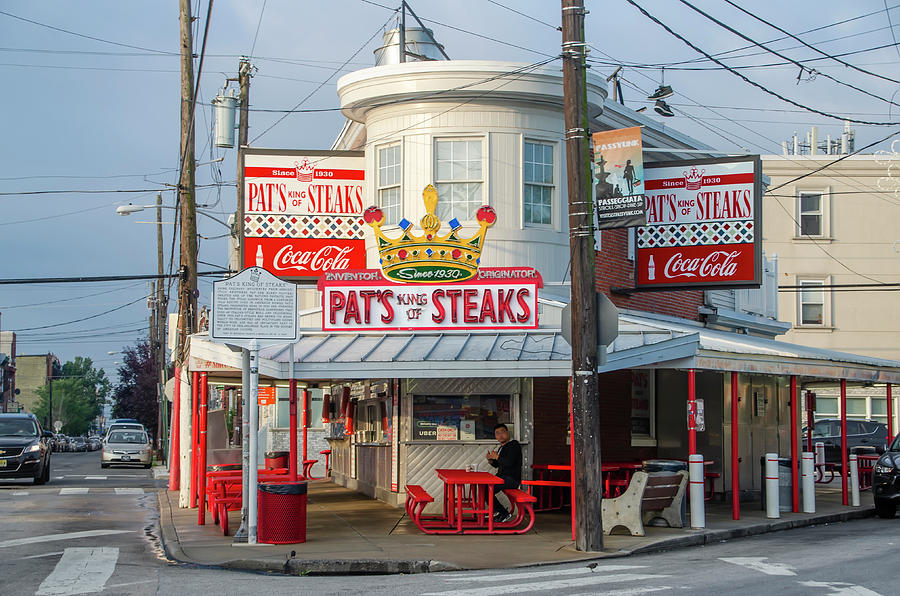
Philadelphia has a well-earned reputation as a great sandwich city. How many other cities, after all, can lay claim, as Philadelphia does, to the invention of three iconic sandwiches? According to Visit Philadelphia, the city’s sandwich trinity is comprised of the hoagie, the roast pork sandwich, and the Philly cheesesteak, with their respective creations most likely occurring in that order. The roast pork sandwich, for instance, had its genesis in Italy, but the Philadelphia version was created by Domenico Bucci in 1930 in a South Philly eatery that’s now named for his son: John’s Roast Pork.
The hoagie is the only one of the three iconic sandwiches without a verifiable origin story. One theory, related by Visit Philadelphia, credits its birth around the turn of the 20th century to Italian-American dock workers at the Hog Island shipyard who reportedly referred to their oversized sandwiches as “hoggies”; a name that evolved into hoagies. If this is true, then members of Philadelphia’s thriving Italian-American community were responsible for inventing all three of the city’s iconic sandwiches. Italian migration to the city spiked during the latter half of the 19th century, notes The Encyclopedia of Greater Philadelphia, with many newcomers settling in South Philadelphia where at least two of the three sandwiches were born.
As for the Philly cheesesteak, its origin elicits almost no arguments. Just about everybody in Philadelphia — outside rival cheesesteak restaurants — agrees about who invented this comfort food masterpiece and when.
It all started in 1930, when Pat Olivieri began operating a hot dog cart near the Italian Market in South Philadelphia, Philadelphia Magazine relays its oral history of the city’s most famous sandwich. As the story goes, one lunchtime that same year, Olivieri was in the mood for something else to eat and sent his brother to a local butcher shop for meat. Olivieri cooked the chopped beef on his cart’s grill, scooping it into an Italian roll with onions, according to Pat’s King of Steaks website (the namesake restaurant that Olivieri subsequently established across from the old hot dog stand). A passing cab driver was intrigued and asked for the same thing. Per the restaurant’s site, the cab driver reportedly said, “Hey … forget ’bout those hot dogs, you should sell these,” after scarfing the sandwich down.
From this propitious incident, a legend was born … or was it? The origin story for the Philly cheesesteak is noticeably absent of one crucial ingredient: Cheese. As Philadelphia Magazine explains, the Philly steak sandwich didn’t include cheese until the 1940s when a boozy restaurant manager at Pat’s King of Steaks named “Cocky Joe” Lorenza decided to add some provolone. That’s when the authentic Philly cheesesteak was born.
Nowadays, observes Visit Philadelphia, there are several acceptable Philly cheesesteak cheese options, including Cheeze Whiz and American cheese. Each has its share of diehard partisans, but given the history, provolone remains the most traditional option.
By Chris Sands/Aug. 26, 2022
Pat’s note: Hubby prefers a chicken cheesesteak and I prefer a regular one minus the cheese, sauce and onions…LOL. Plain Jane out.











:max_bytes(150000):strip_icc():format(webp)/christmastreebread-2092f659a12d456aa4c402559d0c972e.png)










/growing-oregano-plants-1402818-11-ce2a0899a12e4767a5ec71340464f508.jpg)



 Sew Colorful