Wake Up Phil!

Today is Groundhog Day…again…lol…to quote Bill Murray in Groundhog Day.  This article by Brandon Specktor and Claire Nowak at Reader’s Digest highlights 16 things you might not know about groundhogs!

First things first: Groundhogs are lousy weather predictors

As the myth of Groundhog Day goes, if a groundhog sees its shadow on February 2, winter will last another six weeks. And while Punxsutawney Phil’s handlers maintain 100 percent accuracy in his seasonal predictions, the numbers tell a different story. Stormfax calculated that Phil has seen a 39 percent forecasting success rate since 1887. According to a Canadian groundhog study, this is just 2 percent higher than the average groundhog success rate of 37 percent (the most accurate hog-nosticators in the study resided in Yellowknife, Canada, and had a 50 percent accuracy rate). In other words, a gambling man would be better off flipping a coin.

Groundhogs have a different secret talent

What do groundhogs have in common with sleazy construction workers? They both whistle at potential mates. It’s because of this odd adaptation that groundhogs are also known as “whistle-pigs” (and lecherous day laborers known simply as “pigs”).

They have other nicknames too

Groundhogs are members of a group of large ground squirrels called marmots, but they’re also called land beavers and woodchucks. Surprisingly, the latter moniker has nothing to do with wood, Scientific American explains. It’s believed to be taken from the Algonquian name for the same animal: “wuchak.”

Groundhogs are vegetarians

The Groundhog Diet consists mainly of grass, herbs, and plants like dandelions, daisies, and goldenrods. They also have an eye for human crops, like carrots and corn, which puts them on farmers’ most-wanted lists. And yes, they do occasionally eat tree bark, as we all hoped woodchucks would.

They call North America home

Most groundhogs live in the eastern and central United States, although you can find them in Canada and even Alaska. They tend to settle down on the edge of a forest or woodland, near an open field, where they’ll likely construct their underground burrows. But you may also spot them climbing trees.

They make great architects

Groundhogs build pretty impressive homes. Their underground burrows include multiple “rooms” with different purposes, including a sleeping chamber, a nursery chamber, and a waste chamber (what we would call a bathroom). The entire burrow can stretch anywhere from eight to 66 feet long.

Sleeping is their favorite hobby

Few animals are as dedicated to hibernating as groundhogs. Known as “true hibernators,” they snooze from late fall to late winter or early spring, which can mean up to as many as six months of deep sleep, depending on their climate. During this time, their body temperatures can drop below 20 degrees Celsius (68 degrees Fahrenheit), and their heart rates slow from 80 beats per minute to just five.

They’re surprisingly romantic

Despite their intense hibernation habits, there’s evidence that male groundhogs wake up early (after about three months) to start looking for potential mates. “Typically, there’s a male that has a territory that includes several female burrows. And there’s some competition for that territory,” Stam Zervanos, retired professor of biology at Pennsylvania State University, told National Geographic. “They try to defend that territory, and they go from burrow to burrow to find out if that female is still there.” Groundhogs start visiting females as early as February and then go back to sleep until mating season starts in March. Putting relationships before sleep? That’s what we call dedication.

It wasn’t always called Groundhog Day

If you can’t find yourself a groundhog to ogle this February 2, simply step outside and recite this old English rhyme:

If Candlemas be fair and bright,
Come, Winter, have another flight;
If Candlemas brings clouds and rain,
Go, Winter, and come not again.

Modern Groundhog Day evolved from Europe’s Candlemas Day, a celebration of light both literal (the days are growing longer) and religious (Candelmas invokes Jesus’s first visit to the Temple in Jerusalem). It’s an old knight’s tale that the weather on Candlemas will be the exact opposite of the weather six weeks hence—yet somehow, centuries later, a few lines of scientifically suspect verse remain the basis of an annual holiday.

Groundhogs weren’t always the holiday’s honored animal

About halfway between the winter and spring solstices, Candlemas has long been a day of seasonal speculation, though the designated animal weatherman varies from culture to culture. Records from Penn State University Libraries show that medieval cults favored bears, holding parties by their dens, gussied up in grizzly costumes and waiting for a bear to lumber out from hibernation and check the weather. English and German Catholics celebrated a similar tradition with sacred badgers. When badgers proved hard to come by for Pennsylvania’s German settlers in the early 1800s, colonists adapted their old-country tradition to an abundant New World animal: the groundhog.

You’re not supposed to eat the groundhog … anymore

On February 2, 1886, The Punxsutawney Spirit newspaper declared the first official Groundhog Day celebration, hosted by a group of town elders dubbed the Groundhog Club. For this club, marmots were more than furry meteorologists; they were a delicacy. In addition to its Groundhog Day ceremony, the club hosted a summertime groundhog hunt and picnic. On the menu: cooked groundhog meat (described by locals as “a cross between pork and chicken”) and something called “groundhog punch,” a combination of vodka, milk, eggs, orange juice, “and other ingredients.” For a time, marmot meat was the regional cuisine. That began to change in 1887, when a groundhog named Punxsutawney Phil was born. To hear his handlers tell it, he has evaded the dinner plate for over 100 years and counting.

Punxsutawney Phil is immortal—allegedly

A typical groundhog will live six to eight years in the wild. Punxsutawney Phil, the official groundhog of America’s largest Groundhog Day celebration (and costar in the hit movie Groundhog Day), has been alive since, uh, 1887. Or so his website says. To what does Phil owe his impossibly impressive 134 years? A magical elixir called, yet again, “groundhog punch”—presumably not the same recipe of vodka and eggs that its original authors quaffed. According to the lore-keepers of the modern Punxsutawney Groundhog Club, Phil is fed a single sip of groundhog punch every summer, instantly granting him another seven years of life. (In other words, the opposite of vodka.)

What does an “immortal” marmot do for fun? Drink and read

Phil has seen a lot in the past century, and he is less sheltered than you’d expect from someone who literally lives with his head in the ground. During Prohibition, for example, Phil publicly threatened to impose 60 weeks of additional winter if he wasn’t allowed a drink. Phil has cooled down significantly these days. For that, we can likely thank his wife, Phyllis. Together, Phil and Phyllis enjoy a quiet life together at the Punxsutawney Memorial Library, where they live during the 364 days not spent looking for their shadows.

Groundhog Day sent tourism in Gobbler’s Knob’s skyrocketing

While Gobbler’s Knob—home of Punxsutawney Phil—has seen its share of tourism every Groundhog Day since the tradition began, actor Bill Murray and his holiday-themed film truly put it on the map. Following the 1993 release of Groundhog Day, starring Bill and Phil, Gobbler’s Knob started seeing crowds as large as 35,000 people on February 2 (for comparison, the population of Punxsutawney at the time was less than 7,000). Two years later, Phil was invited as a guest on The Oprah Winfrey Show.

Bill Murray and Andie MacDowell had Phil’s back in court—or would have, had it come to that.

In a 2013 news story barely discernible from the sort of satire that runs in The Onion, an Ohio lawyer demanded that Punxsutawney Phil pay for a fraudulent weather prediction—with his life. “On or about February 2, 2013, at Gobbler’s Knob, Punxsutawney Phil did purposely, and with prior calculation and design, cause the people to believe that spring would come early,” Ohio prosecutor Michael Gmoser wrote in a cheeky open letter. “Contrary to the Groundhog Day report, a snowstorm and record low temperatures have been and are predicted to continue in the near future, which constitutes the offense of Misrepresentation of early spring, an Unclassified Felony, and against the peace and dignity of the state of Ohio.”

The punishment for this crime? “The death penalty.”

Absurdly, the saga continued when a Pennsylvania law firm openly responded to Gmoser, arguing that the Ohio attorney had no authority to prosecute in Punxsutawney. Furthermore, Phil had a formidable team of character witnesses behind him, as starring in Groundhog Day had helped Phil forge “lifelong and loyal friendships with the lesser supporting cast, including Bill Murray, Andie MacDowell, and Chris Elliot,” the firm wrote. “It is believed that Punxsutawney Phil has already been in contact with Mr. Murray, Ms. MacDowell, and Mr. Elliot, all of whom allegedly pledged to ‘have his back’ should legal action be necessary.” (It wasn’t.)

Robo-groundhogs may be the future

We’ve come a long way from eating groundhogs, but their safety is still not guaranteed. On Groundhog Day 2014, New York City Mayor Bill de Blasio accidentally dropped Staten Island groundhog Charlotte, resulting in internal injuries that killed her a week later. In 1999, Canadian groundhog celebrity Wiarton Willie died the Sunday prior to Groundhog Day, but the news was scandalously withheld until February 3. Stories like these, compounded by the increasingly large crowds at Gobbler’s Knob, prompted PETA to suggest an alternative: Replace Punxsutawney Phil with a robot groundhog.

While fears of a cyber-marmot uprising fill your head, consider Washington, D.C.’s cheaper solution: Potomac Phil, the city’s anointed groundhog since 2014, is a taxidermied thrift shop purchase. Strange? Sure.

(PAT’S NOTE: Everything in D.C. is phony!)

SOURCE: READER’S DIGEST

Brandon Specktor and Claire Nowak

Scarlet Tanager

Scarlet Tanager (Piranga olivacea) is one of the most strikingly beautiful birds in the North American forest. With their vibrant red plumage and jet-black wings, they stand out like beacons against the green foliage.

These migratory birds are a common sight in the eastern United States during the summer breeding season.

Breeding Male

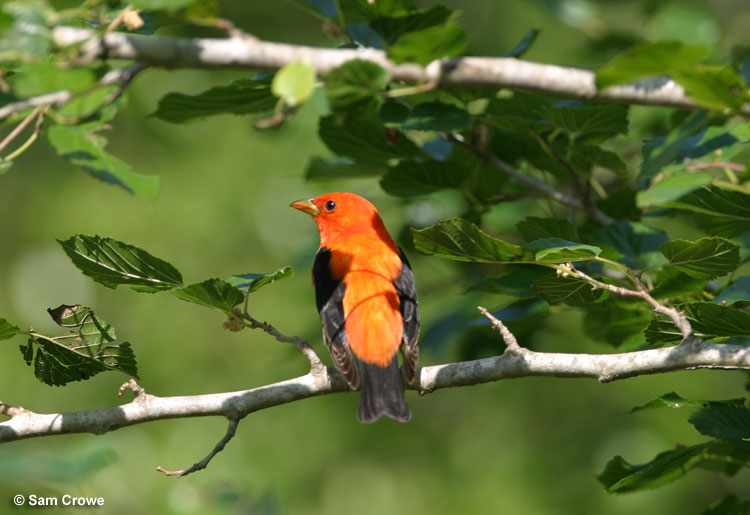
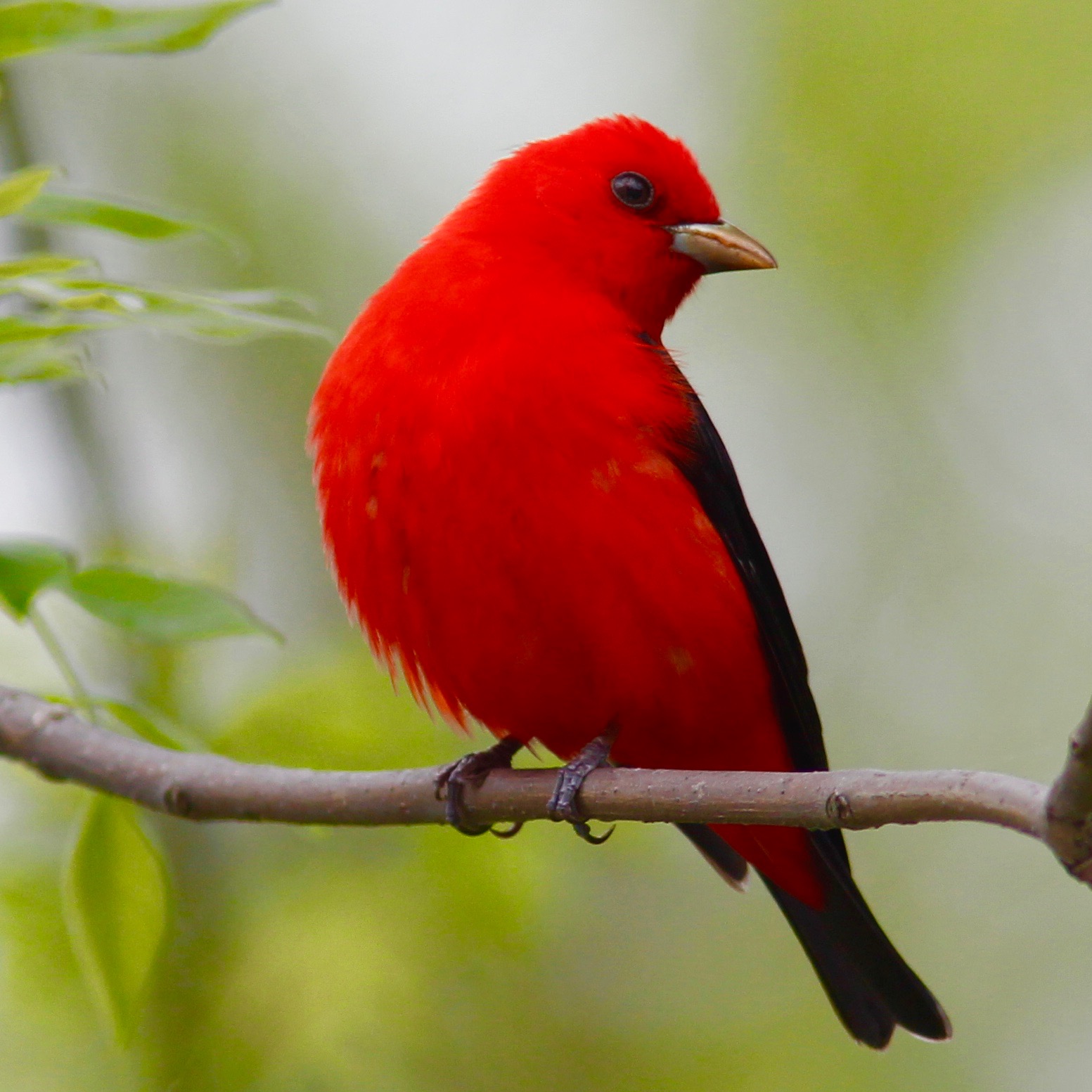
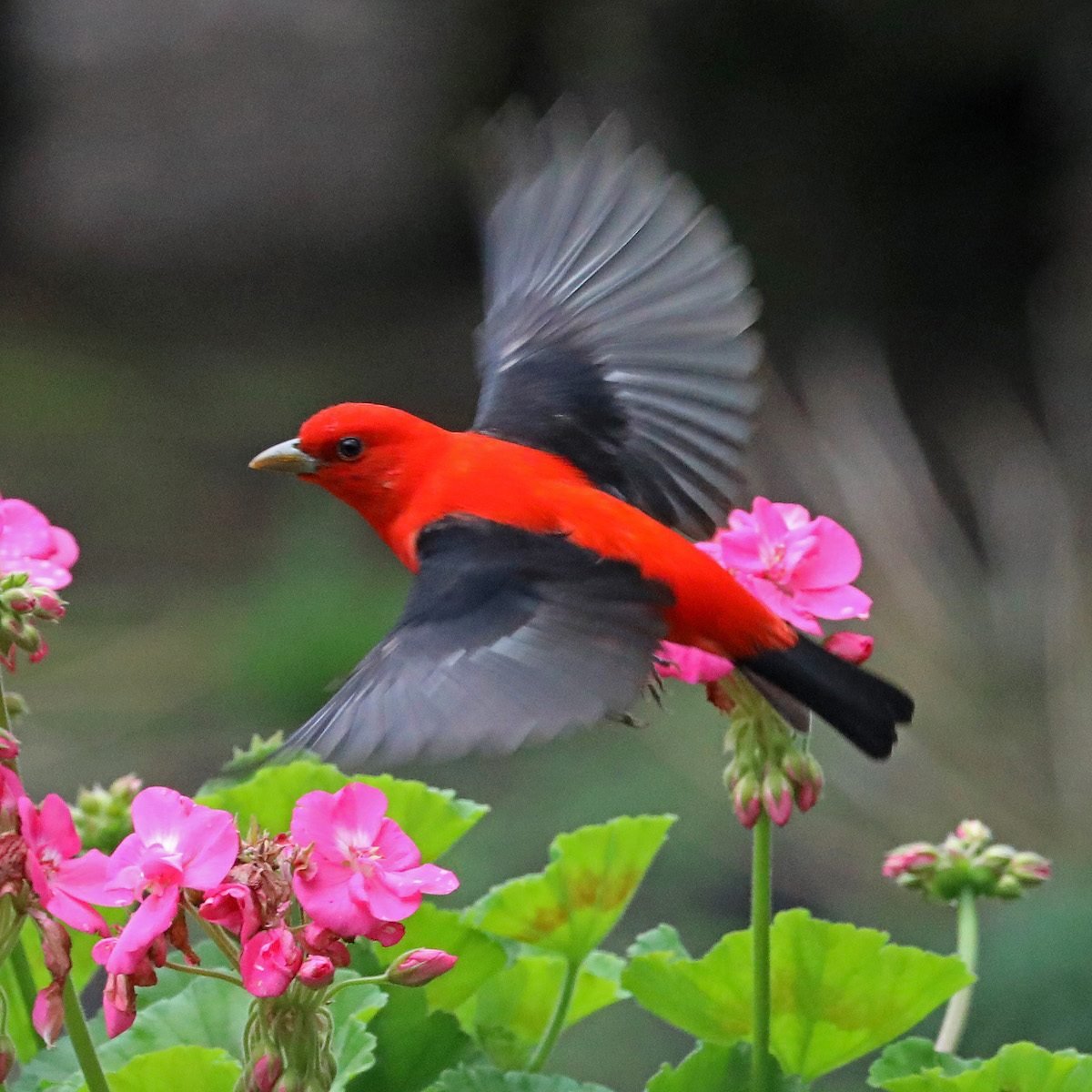
Male Scarlet Tanagers have intense crimson-red plumage with black tails and wings. During the non-breeding season, they will molt to more modest colors and resemble a female bird, although they will retain the black wings and tail. They have black eyes and gray bills.

Female

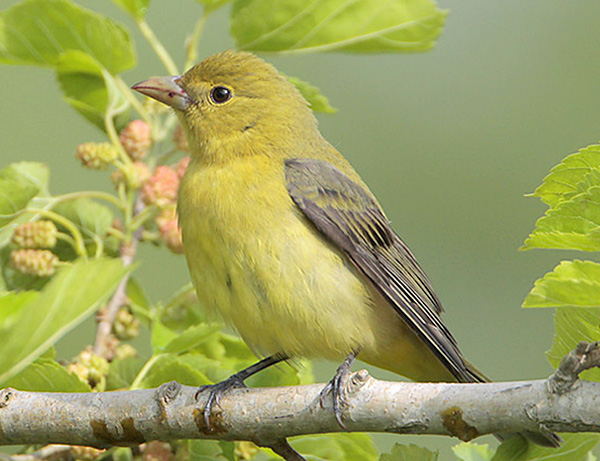
Female Scarlet Tanagers are completely different from their male counterparts and sport dull olive-yellow and olive-green colors. Their wings and tails are darker. Females also have black eyes and gray bills.

Juvenile

Immature and juvenile Scarlet Tanagers are similar to females and are also olive-green above and yellowish below. They leave the nest around 9-15 days after hatching and the parents take care of them for only 2 more weeks after that.

Overall, birds from either sex grow to be about the same size and measure 6.3-6.7 inches in length, weigh around 0.8-1.3 ounces, and have a wingspan of 9.8-11.4 inches.

Habitat

Scarlet Tanagers mostly inhabit mature deciduous or mixed forests but you can also meet them in young successional woodlands, parks, and suburban areas that have a lot of shade trees. For successful breeding, they require at least 10-12 hectares of unfragmented forest.

They build their nest 50 feet or more above the ground on a branch that is shaded by leaves or branches and is away from the trunk. They prefer deciduous trees, especially oak. The nest itself is a flimsy cup made of small twigs, plant stalks, grasses, and other fine plant material.

Diet

Scarlet Tanagers are omnivores, although they prefer to eat insects. In summer, their diet primarily consists of various insects and invertebrates, such as moths, bees, beetles, caterpillars, ants, butterflies, flies, plant lice, termites, grasshoppers, snails, earthworms, spiders, and dragonflies.

You might see them walking along high branches, and on rare occasions on the ground, or clinging to tree trunks and probing the bark, snatching up insects as they go.

They snap up insects from leaves and flowers while hovering or perching, swallowing smaller ones whole but killing larger ones by pressing them against the tree. The birds catch flying insects from mid-air.

The other, but a smaller part of their diet consists of plant matter, specifically fruit, berries, and buds. Some of their preferred food items from this category are mulberries, sumac, huckleberries, blackberries, raspberries, and others. They resort to eating berries and other plant matter when insect populations are low.

Behavior

Scarlet Tanagers are social, but also territorial when it comes to their territories and nests during the breeding season. Males sing to defend their territories, including nests and foraging areas, which can sometimes end in confrontations and chasing.

They are monogamous birds that take care of their younglings, although they switch partners every season, and their parental care lasts for only two weeks after their offspring leave the nest. Males feed their females during nesting season.

Scarlet Tanagers are a prey item to many predators, both aerial and terrestrial. They respond differently to different threats. Tanagers swoop, mob, chase, and call at most predators, but in the case of crows and Merlins, they become quiet and alert, trying to remain unseen.

Range (and seasonal changes)

Scarlet Tanagers range in the eastern part of North America and northern and western South America. They can be seen in eastern Central America during migration.

These birds are not year-round residents and migrate based on the season. They breed in the eastern part of North America, from the southernmost reaches of Canada to northern Georgia, Alabama, Mississippi, western Carolinas, and Arkansas as far as the deciduous forests go. They migrate mostly at night across the Gulf of Mexico to South America.

Wing shape

Scarlet Tanagers are quite stocky and have short and broad tails, and short but strong wings proportionate to their body. They fly straight with rapid wingbeats to catch insects from the air or hover near branches, trunks, and leaf clusters to snatch up insects.

Fun Facts

When Scarlet Tanagers catch a bee, wasp, or hornet, they scrape it against the tree to remove their stinger.

Scarlet Tanagers face many threats caused by exposure, lack of food, predation, forest fragmentation, and parasitism. For example, Cowbirds lay eggs in their nests if the tanagers don’t notice, and the tanagers can’t tell the difference and raise the Cowbird’s offspring along with their own.

Many cultures and beliefs hold Scarlet Tanagers and tanagers overall in high regard. They’re believed to be sacred birds, a symbol of good luck, hope, and new beginnings.

The oldest known Scarlet Tanager lived to be at least 11 years and 11 months old. However, in the wild, their life expectancy is usually lower.

Vocalization

Scarlet Tanager’s song is a beautiful series of 4-5 chirruping phrases that have a warbling quality to them. Males sing from a higher perch to defend their territory and whereas females sing as well, then their song is softer and has fewer syllables.

Scarlet Tanagers have many different calls for different purposes. The most common and distinctive one is a higher-pitched chick followed by a lower burr sound. They screech when intruders are near and give more indistinctive chips and twitters when nesting, feeding, and communicating.

Source: Birdzilla

Ice Castles

(I found this article from Fox News dated January of 2022!)

What’s the only thing cooler than a castle? An ice castle. Figuratively and literally, these ice castles and other impressive winter displays are among the best of the bunch. Read on for some of the most breathtaking ice castles and sculptures in the country. FYI: Unless specified or noted as a free attraction, check the website listed for entrance fees, which vary depending on age and day.

Ice Castles New Hampshire, North Woodstock, New Hampshire  

In the majestic White Mountains, journeyers will be treated to a fairy-tale display of ice castles from mid-January until mid-February depending on the weather conditions. All of the castles are hand-constructed and hand-placed by ice artists using hundreds of thousands of icicles, and you’ll also see tunnels, ice caves and ice slides. Illuminated by LED lights, visitors can also opt for a horse-drawn sleigh ride or the “Enchanted Forest Walk.”    

Ice Castles in Lake George, New York  

Prepare to be amazed in the Empire State. In Lake George, you’ll be treated to ice displays with LED lights and colors at the Festival Commons at Charles Wood Park. This new winter event is expected to be open from January to early March, weather permitting. Each hand-built castle is said to take thousands of hours to create, and each castle is approximately a whopping one acre in size.

Ice Castles in Midway, Utah 

It’s to Utah we go for yet another Ice Castles experience. This one, situated in the scenic foothills of the Wasatch Mountains at the Soldier Hollow Nordic Center — a one-time Winter Olympics venue — is Ice Castles’ original outpost. Guests will be amazed by ice-carved slides, fountains, caverns and narrow slot canyons, crafted completely in ice and inspired by the natural slot canyons for which the Southwest is known. For a special outing, hop aboard a horse-drawn sleigh ride through the Wasatch Valley for ice-ing on the cake. Ice Castles in Midway, Utah, typically opens in late December or early January and remains open through late February.

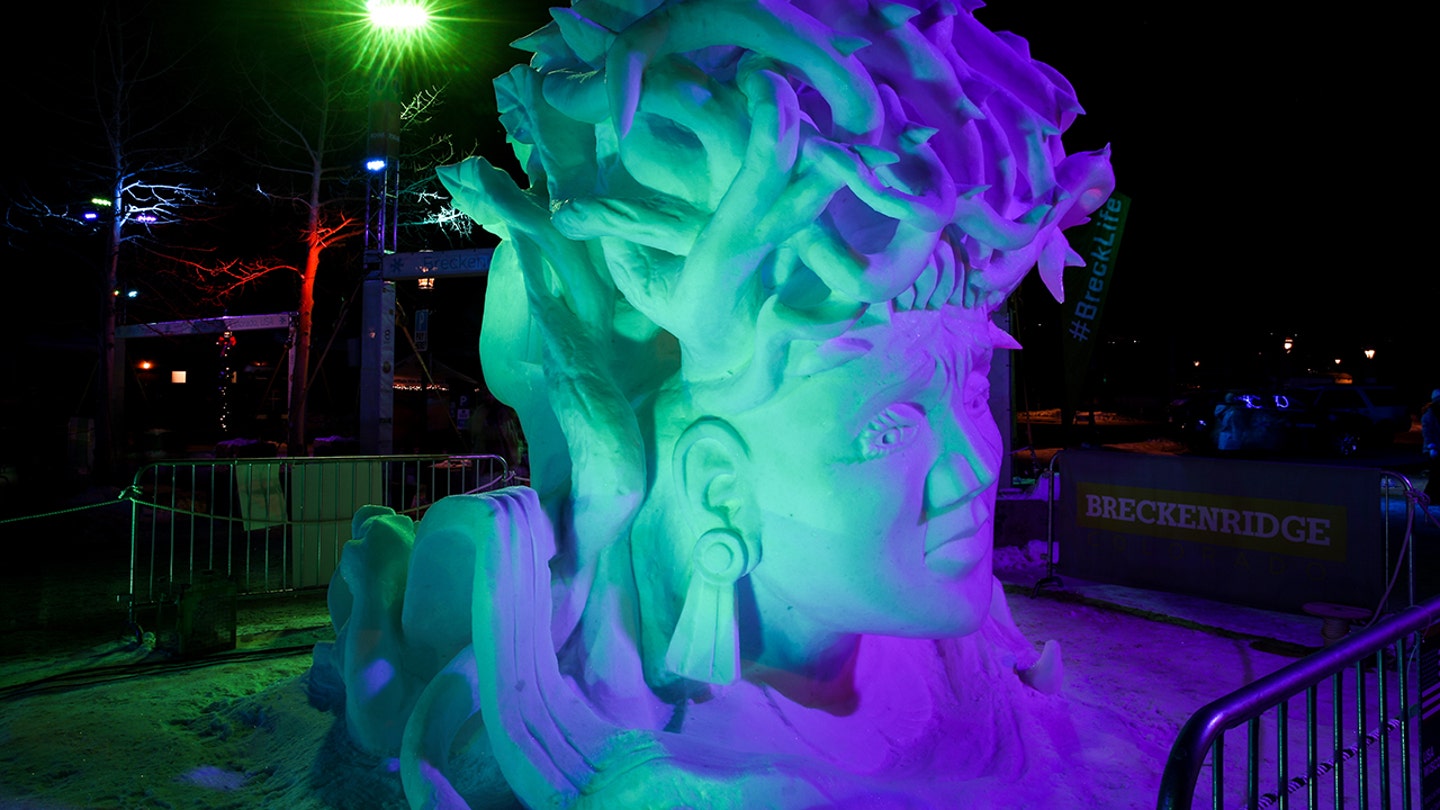
International Snow Sculpture Championships in Breckenridge, Colorado

Not familiar with Breckenridge’s International Snow Sculpture Championships? Once you start scoping out videos from the mesmerizing event, good luck leaving the YouTube vortex. The celebrated snow-sculpting competition brings together 12 teams from around the globe to hand-carve 20-ton blocks of snow into larger-than-life art. Making these pieces even more impressive is the fact that competitors can only use hand tools. The carving week takes place Jan. 24-28, 2022, and viewing week for this unique outdoor art gallery is Jan. 28-Feb. 2, 2022. 

Ice Castles in New Brighton, Minnesota

Head to Long Lake Regional Park in the Twin Cities suburb of New Brighton, and you’ll be greeted with quite the frozen sight to behold. As you marvel at the castle, take note of the various caverns, tunnels, crawl spaces, slides and fountains, all handcrafted from individually placed icicles. To up the ante, there’s also a sculpture garden with fairy-tale-themed ice sculptures linked by a light grove along a wooded trail to the castle. Ice Castles in Minnesota historically opens in early January and stays in place through early March, weather permitting.

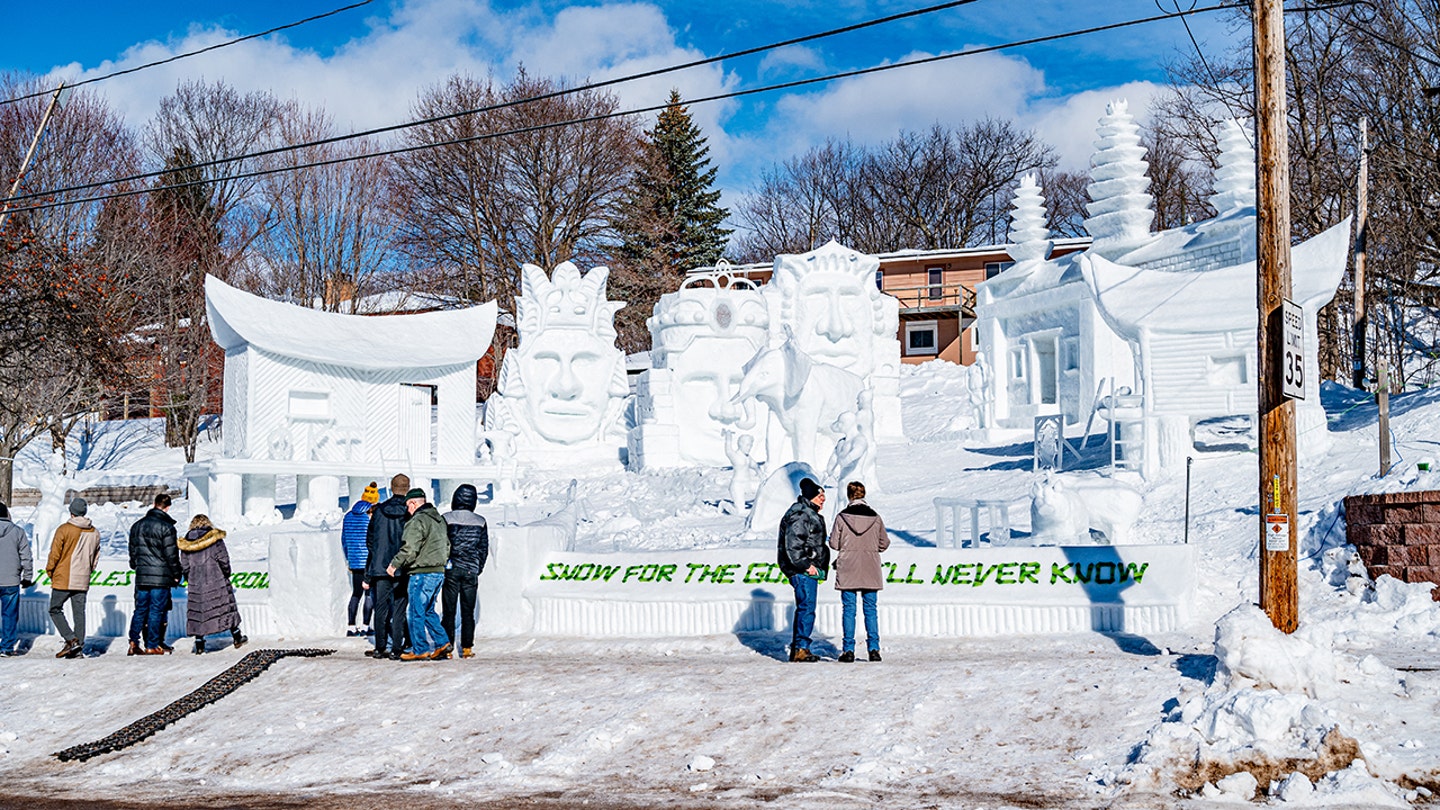
Michigan Technological University’s 100th Winter Carnival in Houghton, Michigan

From Feb. 9 to Feb. 12, 2022, Michigan’s Upper Peninsula will host this free-to-visit carnival that’s sure to dazzle folks of all ages. Every year, the carnival has a different theme, and students put on quite the spectacle through highly detailed snow and ice sculptures.  Some of the largest sculptures take a month to create, and smaller statues are built overnight. There are also broomball games, comedy skits and the carnival’s queen coronation to enjoy.

Ice Castles in Lake Geneva, Wisconsin 

A crazy-cool citadel awaits at Geneva National Resort and Club in this so-called “Newport of the west,” where you can ooh and ahh at caverns, arches, ice slides, an ice maze, crawl tunnels, the arctic alcove (a popular spot for proposals) and more. To boost your holiday activities quota, you can take a horse-drawn sleigh ride along the shoreline of Lake Como. Due to the shorter winter season in Lake Geneva, Ice Castles in Wisconsin typically doesn’t open until late January and only remains open through late February, weather permitting.

Winter Carnival Ice Palace in Saranac Lake, New York

This free attraction alone is well worth a visit to the charming mountain town of Saranac Lake. At the winter carnival, the ice palace is the pièce de résistance, erected on the shore of Lake Flower’s Pontiac Bay and built similarly as it was in 1897, the first year the palace revealed its shimmering, glimmering self. Using ice harvested from Lake Flower with 1,500 blocks stacked atop each other, this ice display is built by volunteers. Visible for the duration of the carnival Feb. 4 to 13, 2022, heavy equipment is now used to help make the labor easier, but the communal spirit of neighbors coming together to make something special is ever–present.

Samoset Glacier Ice Bar & Lounge in Rockport, Maine

Yes, grown-ups can enjoy a good old-fashioned ice castle excursion, but for some adults-only fun, it’s tough to outshine this ice bar and lounge put together by ice sculptors and designers who devote weeks to chiseling down 300-pound blocks of ice to fashion bars, seats, tables, ice luges, couches and sculptures. Fire lamps and faux-fur cushions round out the mix as you sip on hits like a “snowball martini or “Old Man Winter” and warm up with New England clam chowder and chili. There’s live music at night and the bar will be open Jan. 14-15 and Jan. 21-22, 2022, with free access for hotel guests and $25 for outside visitors.

Ice Maze at CityCenterDC in Washington, D.C.

Our nation’s capital recently welcomed the return of the Ice Maze at The Park at CityCenterDC, a mixed-use development and public park. The free, interactive experience surpassed its previous ice records, with a 130,000-pound clear ice maze accompanied by multicolored lights. This year, the maze was created by 10 international award-winning sculptors and ran in mid-December for three days. Ice activations have been a tradition at CityCenterDC for the past five years, and an announcement will come in 2022 as to what surprise guests can expect in the new year.

SOURCE: By Perri Ormont Blumberg Fox News

Published January 16, 2022

Golden Girls Little Known Facts

In honor of Betty White’s birthday this month, let’s delve into some little known facts about The Golden Girls from PARADE.

The Golden Girls cleaned up during awards seasons

Throughout The Golden Girls‘ 1985-1992 run, they racked up 68 Emmy nominations and 11 wins; the series was ranked No. 69 on the Writers Guild of America’s list of 100 Best-Written TV Series of All Time.

Bea Arthur actually detested cheesecake

Despite Dorothy, Rose, Blanche and Sophia always bonding over the creamy dessert, in real life, Arthur was not a fan of cheesecake at all.

The Golden Girls house wasn’t actually in Miami

The iconic Golden Girls house was actually based on a Brentwood, Los Angeles ranch-style home. Producers had a replica made of the front of the property at the then-Disney-MGM Studios in Orlando, Florida, which was used for exterior shots. The home is estimated to be valued at nearly $3 million.

The Property Brothers want to renovate The Golden Girls property

Drew and Jonathan Scott dropped the idea-bomb on The Kelly Clarkson Show in October 2019 after discussing the Property Brothers‘ renovation of The Brady Bunch house. ”So, we’re thinking next, the Golden Girls house,” Drew quipped. He also volunteered to play Blanche if a reboot was ever on the table!

Betty White and Bea Arthur drew on real-life grief for some heartwrenching scenes

Both White and Arthur each lost their mothers while filming Season 1 of The Golden Girls, but wouldn’t take time off. Director Lex Passaris recalled, “We were ready to shut down the show for as long as they needed, but both ladies said, ‘No. We need to work.'”

Betty White channeled true heartbreak for another poignant scene

While filming the episode “The Heart Attack,” White drew from the death of her beloved husband, Allen Ludden, when she was in character as widow Rose Nylund. “Everyone thinks Estelle’s character Sophia is dying, so it was particularly poignant,” Passaris said. “Rose tells a story about her husband Charlie’s death, and Betty’s basically talking about Allen. Betty’s voice kind of cracked and she took a breath and said to me, ‘I’d give anything to have that year of my life back again.'”

Estelle Getty spent three hours in the makeup chair to become Sophia Petrillo

Makeup artist Maurice Stein revealed that Getty, who was younger than White and Arthur, took three hours to transform into the petite, heavily creased Sicilian spitfire. “When she first sits down in the chair, she’s just Estelle, a nice, lovely lady. But as the makeup goes on, she becomes this snappy old lady, wise-cracking and crusty,” he said. “She seems to slum down in her chair and really get into character. By the time she gets up from her chair, I have Sophia on my hands.”

Getty was only 63 and playing 20 years older—and she didn’t want to age offscreen. She got a facelift in between Season 2 and Season 3, driving the makeup team into a tizzy.

Bea Arthur didn’t like to dine alone

McClanahan once said that Arthur refused to go to dinner between shoots unless White walked with her. Arthur’s son confirmed the anecdote years later, noting, “Betty would pick my mom up in the driveway, or my mom would pick her up.”

Betty White thought Bea Arthur couldn’t stand her

Despite Arthur and White dining together between shoots, White didn’t think Arthur liked her, and McClanahan didn’t think so either. “Bea came from a New York stage point of view,” McClanahan admitted. “She always had what we call ‘the fourth wall.’ And Betty came from a television point of view: She would flirt with the audience, and pull her skirt up and say, ‘Hi sailor.’ But Bea never acknowledged the audience.” McClanahan said she could never be totally sure why Arthur sometimes got grumpy about White because Arthur never told her—but she did note that White “adored” Bea.

Estelle Getty struggled with crippling anxiety

Stage fright was an understatement when it came to Getty. McClanahan once said of her costar, “She had an awful time remembering her lines because she would freeze and panic. The day before tape day, you could see a big difference in her. She’d be walking around like Pig-Pen under a black cloud. By tape day, she was unreachable.” White concurred and marveled of Getty’s skill despite her anxiety battle. “You thought, ‘She’s never going to be able to take a step on that stage.’ She’s one of the reasons for the success of the show with young people. They get such a kick out of little Estelle telling big Bea off!”

Betty White was almost cast as Blanche Devereaux instead of Rose Nylund

“You get a lot of scripts mailed to you and not too many of them are good, but when this one came along it just hit the spot and they sent it to each of us,” White recalled in 2010. “They sent it to me with the idea of me doing Blanche. Jay Sandrich, who was our director for most of the Mary Tyler Moore shows, said, ‘If Betty plays another nymphomaniac they are going to think it is Sue Ann Nivens all over again.’ He said, ‘Why don’t we switch them?'”

Betty White, Bea Arthur and Rue McClanahan all knew each other before being cast as The Golden Girls

Before Rose, Dorothy and Blanche, the core Golden Girls cast had worked together in various series. “The first table read was an experience. I had worked with Bea, I had done a couple of guest shots on Maude. I had worked with Rue on Mama’s Family,” White said. “Estelle was a new one to all of us. She came from New York after her hit. We all sat down for the first table read and somebody read a line and then somebody else read a line.” She added, “It was the most exciting…We all began to look at each other because there wasn’t any first reading feeling about it. It was like we had been working together forever. I still get goosebumps thinking about it.”

Bea Arthur didn’t have patience for what she believed to be fashion crimes

McClanahan revealed that Arthur loathed backward baseball caps. “That really got to her,” McClanahan said. “We were interviewing directors one time and if someone came in with a baseball cap worn backwards, he didn’t stand a chance.”

Bea Arthur came through for Rue McClanahan in a big way

“She took care of me the Thanksgiving my mother died the first year of Maude,” McClanahan recalled. “It was unexpected. My mother was young, and I was young. I went back to Oklahoma for the funeral and I was devastated. When I came back to California, I was grieving so. I heard from Bea and she said, ‘I’m having Thanksgiving dinner and you come over here immediately.’ I went over to her home in Santa Monica and she put me to bed, and tucked me in and brought me dinner. She calmed me down and I felt safe for the first time. You don’t forget things like that.”

There were rumors of a reboot with Betty White

Those rumors, however, were mostly unfounded. Stan Zimmerman, a writer for Season 1 of The Golden Girls, explained, “It is not a rumor. [Fellow Golden Girls writer] James Berg and I did write a pilot script called Silver Foxes. It is NOT a reboot of The Golden Girls. But it is inspired by the show, a show that we were lucky enough to have written on during the first season of the show.” Saturday Night Live alum Cheri Oteri was attached to the project, which was to be about a group of aging gay men living together in Palm Springs, California, inspired by the classic series—and there was even a one-line role in the works for White. “Unfortunately, we cannot get one network executive to read [the script],” Zimmerman said, “or even a producer to pass it to them. We have found ageism and homophobia alive and well in Hollywood. Hopefully a groundswell of support from the viewing public will get an outlet like Hulu or Amazon to make it.”

The iconic “Thank You for Being a Friend” wasn’t producers’ first choice for The Golden Girls theme song

“They approached the publishing company for Bette Midler‘s song, ‘Friends,’ but it was too expensive. Eventually of the producers remembered Andrew Gold’s song, ‘Thank You For Being A Friend,'” Jim Colucci, author of Golden Girls Forever: An Unauthorized Look Behind the Lanai revealed. “They licensed it and hired a session singer named Cynthia Fee. Even though the recording session was slated to last for an hour, she did it in one or two takes—maybe 20 or 30 minutes—and planned on never thinking of it again. The irony is that thanks to unions, every time your song gets played, you get paid. So this job she did on a random weekday in 1985 has put her kids through college.”

Bea Arthur didn’t like the jabs about Dorothy’s appearance

“Bea was offended. When the writers called Rose [Betty White] dumb or Blanche [Rue McClanahan] a slut or Sophia [Estelle Getty] old, it could roll off those women’s backs because they were not like their characters,” Colucci said. “Unfortunately, the things that were said about Dorothy were that she was big and ugly. And that wears on an actress after a while.” The “Dorothy bashing” was one of the reasons Arthur would ultimately exit the series.

Bea Arthur almost wasn’t Dorothy Zbornak

Arthur wasn’t producers’ first choice for the sassy substitute teacher, in part because of her iconic role as the liberal titular Maude Findlay, especially after her character got an abortion before Roe v. Wade was passed. However, Colucci claimed that writer and creator Susan Harris insisted, “I wrote this role for Bea and I want Bea.” As it turned out, Arthur initially didn’t want to be Dorothy, either, because she thought the character was too similar to Maude, but McClanahan claimed in My First Five Husbands … And The Ones Who Got Away that she talked her into taking the role.

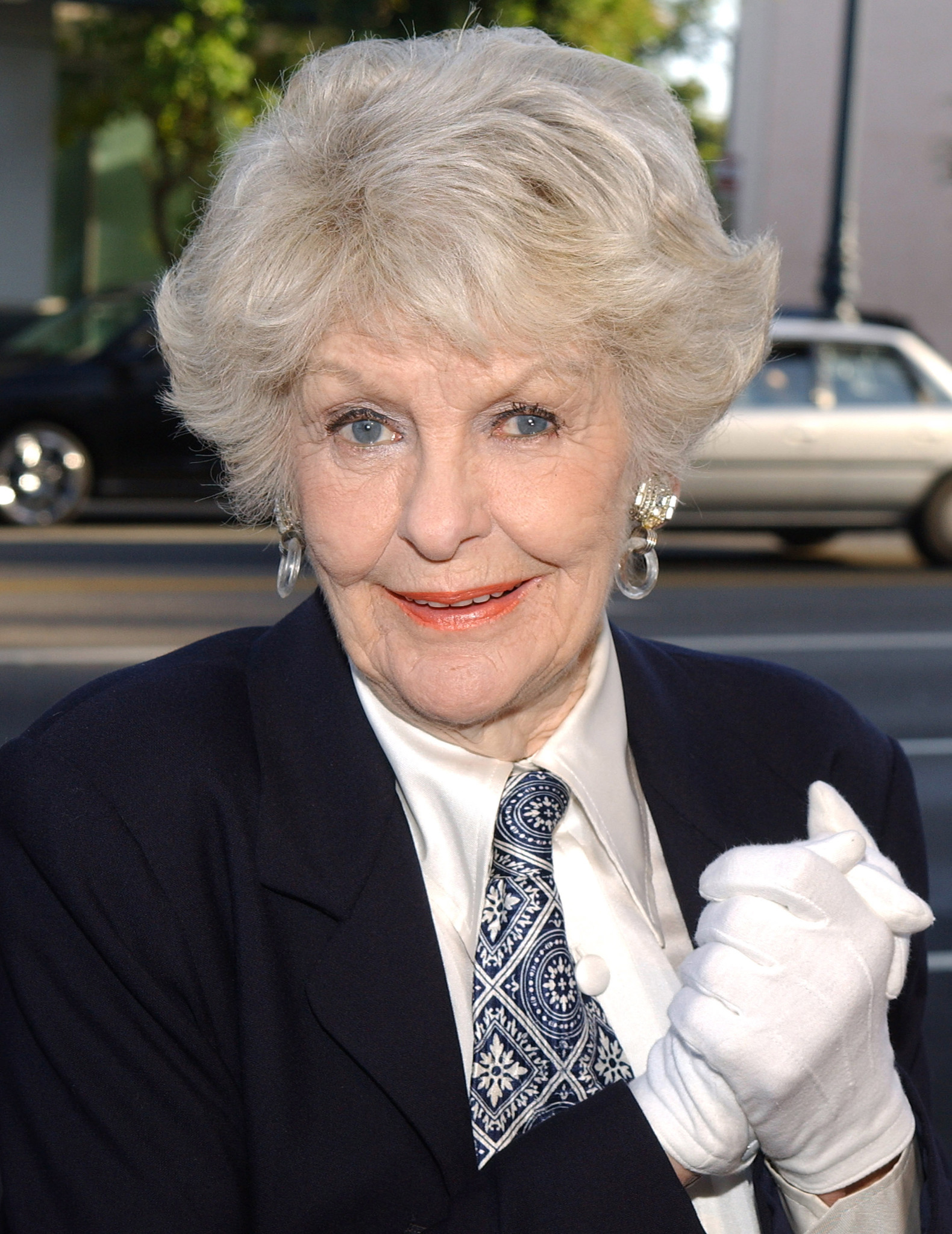
Elaine Stritch almost played Dorothy

Elaine Stritch auditioned for Dorothy Zbornak and almost got the role. Stritch went in for a reading, but cursed during her audition—and irked the writer and lost the part to Arthur. To hear her tell it: “I blew it!”

The Golden Girls concept started out as a joke

Colucci said that The Golden Girls began as a gag sketch for advertisers featuring Everybody Loves Raymond star Doris Roberts in 1984. “They did this schtick where they were confused thinking there was a show on NBC called Miami Nice: ‘Oh, it must be about old people in Miami. That does sound nice.’ When people laughed, the president of the network thought, ‘There might be something there.'”

They had a groundbreaking gay main character…until they didn’t

The Golden Girls had one Golden Guy, albeit very briefly: Coco, a gay housekeeper and cook (and former drag performer), played by the late Charles Levin. He appeared in the pilot, where he made huevos rancheros for the girls. When the series’ pilot ended up being five minutes too long, unfortunately, Coco bore the brunt of it on the cutting room floor—especially since Getty was such a hit with audiences when she delivered her iconic one-liners. Coco disappeared from most of the pilot and from the rest of the show, though The Golden Girls did still have a lot of progressive episodes centered around LGBTQ+ issues, including the AIDS crisis.

Blanche Devereaux’s accent evolved over time

McClanahan is originally from Oklahoma, and producers originally had her keep her natural accent to play Blanche in the pilot. However, in later episodes, the southern belle’s twang was much more pronounced and exaggerated, a move that McClanahan said was a combined idea between her and director Paul Bogart.

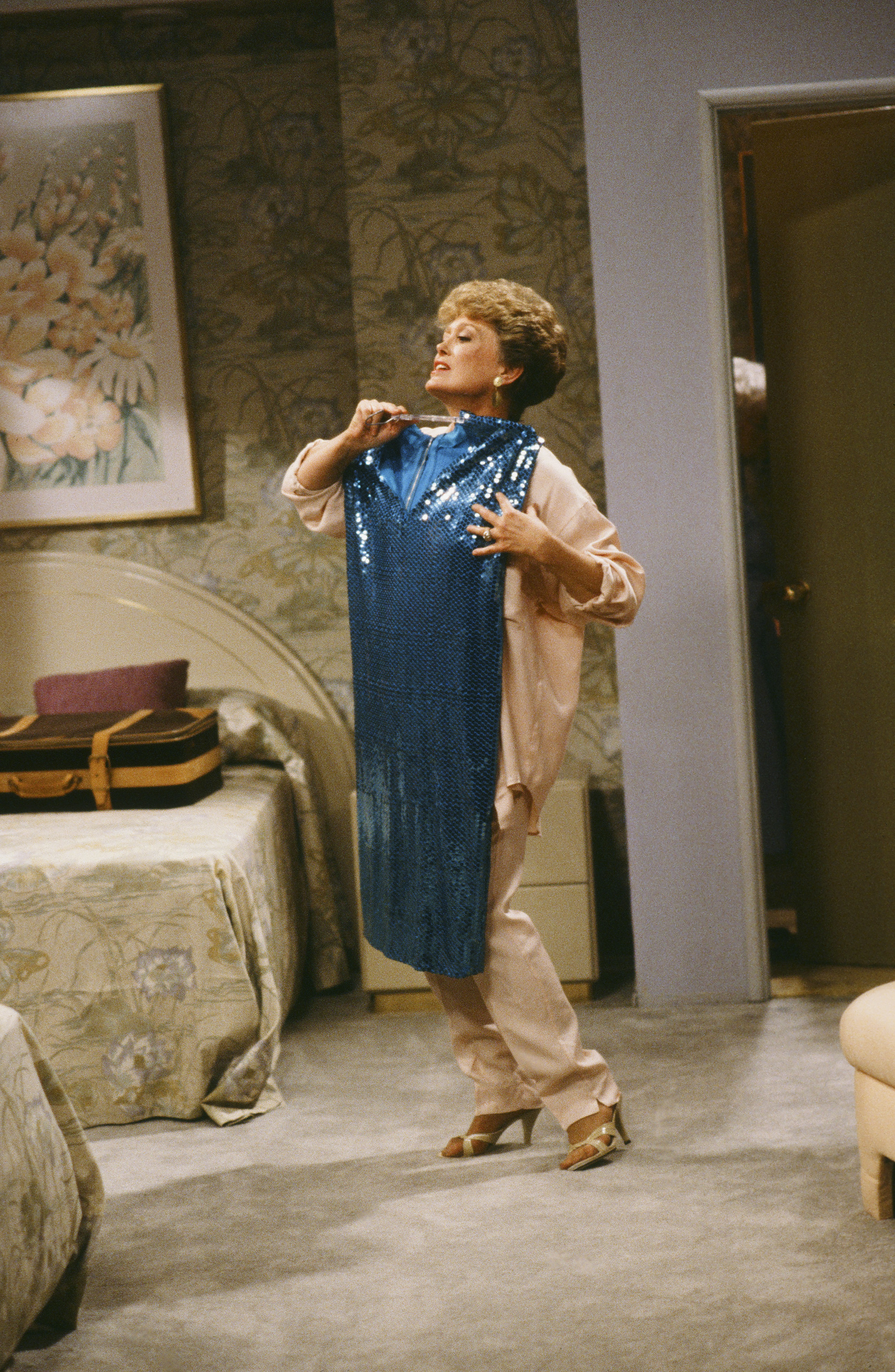
Rue McClanahan kept a lot of Blanche’s outfits

In her memoir, McClanahan revealed that she was allowed to keep about 500 of her costumes from The Golden Girls—and she somehow had all the closet space she needed for them in a Manhattan apartment.

Rue McClanahan had her own lingerie line

Blanche Devereaux would approve! McClanahan developed and sold her own lingerie line called A Touch of Rue, which was sold on QVC—and inspired by her adventurous and sultry character.

Bea Arthur made a major contribution to the LGBTQ+ community

Arthur bequeathed $300,000 to the Ali Forney Center, a long-term housing center for LGBTQ+ youth, in her will. She had previously hosted shows with proceeds benefiting the center.

The Golden Girls and The Golden Palace had serious star power

The Golden Girls had guest stars with serious pedigrees at the time, including Bob Hope, Alex Trebek, Merv Griffin, Sonny Bono, Lyle Waggoner, Julio Iglesias and Burt Reynolds, who played themselves in cameos, as well as a young George Clooney, who played a detective investigating the ladies’ jewel thief neighbors. Jerry Orbach played a former flame of Dorothy’s and Mickey Rooney made an appearance as Sophia’s boyfriend. Mario Lopez guest-starred as an immigrant student Dorothy tutored. LA Law star Alan Rachins made an appearance as a love interest for Blanche. Debbie Reynolds played a prankster pal for Dorothy, Rita Moreno played a neighbor and none other than Quentin Tarantino guest-starred in two episodes as an Elvis Presley impersonator. In the finale, Dorothy marries Blanche’s uncle, Lucas, played by Leslie Nielsen.

The Golden Palace, a brief spinoff of The Golden Girls, also starred a young Don Cheadle and Cheech Marin and had a guest appearance from none other than Jack Black.

The same actor played two different boyfriends for Rose Nylund

Actor Harold Gould played Rose Nylund’s boyfriend, Arnie, in Season 1 episode “Rose the Prude.” He later had a recurring role as Rose’s longtime love, Miles Webber.

The Golden Girls performed for the Queen Mother

The Queen Mother—Queen Elizabeth II’s mom, for those of you unfamiliar with royal titles—was such a huge fan of The Golden Girls that she invited the cast to perform live for her and the British royals in London. “It was very exciting,” White gushed. “The Queen was lovely. We were told not to address her unless we were addressed. She was up in a box and she came down on stage after with Princess Anne. She said, ‘Lovely, pretty girls,’ and I said, ‘Not bad bodies,’ and she said ‘Oh, no, not bad bodies!'”

Estelle Getty was sensitive about what she would and wouldn’t joke about onscreen

White wrote in her book If You Ask Me (And Of Course You Won’t)that Getty would never use death for a laugh, explaining, “Estelle Getty was so afraid of dying that the writers on The Golden Girls couldn’t put a dead joke in the script.” Getty herself once explained that death wasn’t her only no-go, noting, “I have a thing about gratuitous pain. Why would you make fun of somebody who’s fat or who’s cross-eyed or who’s bald? And I won’t do gay-bashing jokes.”

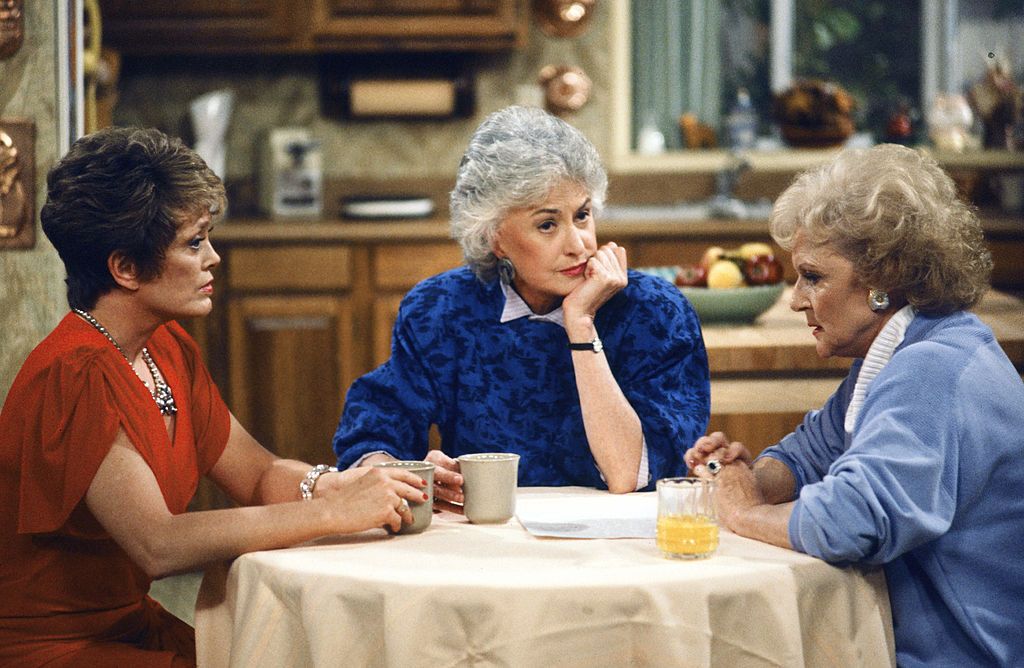
Only three characters could sit at the kitchen table

The set wasn’t big enough for all four characters to sit side by side, and producers and directors didn’t want any of The Golden Girls to have their backs to the camera, which is why one of them often sat on a stool near the table. Additionally, Arthur was always seated in the center of whoever was at the table because she was tall and had priceless facial expressions.

Estelle Getty wanted Sophia to be Jewish, not Italian

Estelle Getty wanted to play Sophia as a Jewish woman like herself—which may well have worked, as Bea Arthur was also raised Jewish.

Bea Arthur wanted to leave while the going was good

Arthur’s son, Matthew Saks, said that her decision to leave The Golden Girls wasn’t a very complicated one, and that while she did appear on The Golden Palace later, she was reluctant to do so. “I think she got tired of it. She just thought it was time to leave the show,” he said. “She wanted to leave a year before, but the others asked her to stay for a final year and she did. And then, of course, they did The Golden Palace without mom on it. She came and did one episode, though. I don’t think she really wanted to do that. But she did. Her logic was also that these shows ran their course. Something suffers, whether it’s the production, the writing. It loses its magic.”

SOURCE: PARADE

Forget-Me-Not

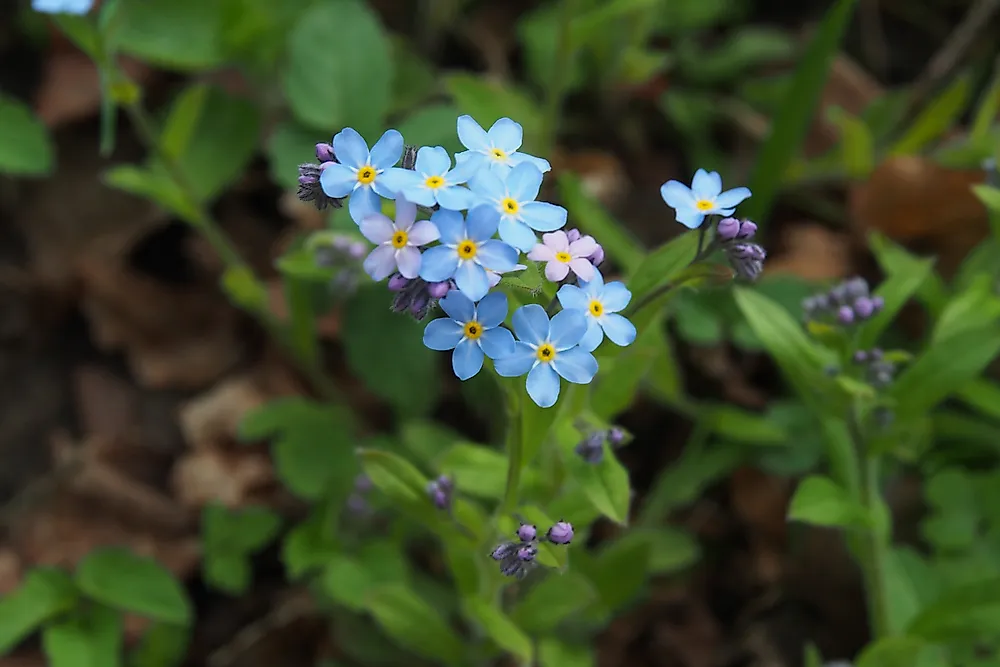
The official state flower of Alaska is the wild native alpine forget-me-not. It was adopted in 1917 and belongs to the species Myosotis alpestris that is part of a few plant families with true blue flowers. The flower grows throughout the state of Alaska, especially in rocky regions of the mountains. It is unclear why the pioneers of the state chose the forget-me-not as the state flower, but given its distribution in the state, it was a natural fit. The poem “Forget me not” by Esther Birdsall Darling states that the flower is one thing that is cherished in the state, and by choosing it, the people of Alaska are ensuring that the state is forever remembered.

Characteristics Of the Flower

The forget-me-not is quickly identified because of its sky blue color, and the five blue petals appear vividly against the green grass. The stem is between 6 to 12 inches long and contains several flowers. The flower is about half an inch wide with a yellow center. Fine hair-like fibers cover both the flower and the stem.

Symbolic Meaning of The Forget-me-Not

The forget-me-not flower is a plant that is spoken of in Alaska when people are talking about faithfulness. In the past, women would wear the flowers as a sign of devotion to their lovers and that they are always thinking of their husbands when they are not around. Others use the flower as a symbol of remembrance of a loved one in the event of death although this tradition has faded over time. The abundance of the forget-me-not in Alaska is an experience that one will not easily forget and therefore represents the wild nature and beauty of the state. A legend in Germany states that a lord and his lady were walking along a river bank. The lord was about to give the flowers to the lady when he fell into the river, he tossed the flowers to his lady and shouted “Forget me not!” in German. He was dragged by the river never to be seen again, and the flowers were the only thing that reminded the woman of the lord.

Care And Cultivation

The alpine forget-me-not grows in wet areas because they thrive in damp soil. They are found in rocky environments, wooded areas and under bushes. They reach maturity in late spring and early summer, but bloom from spring to fall.

SOURCE: WORLDATLAS.COM

Alaska Chilkat Bald Eagle Preserve

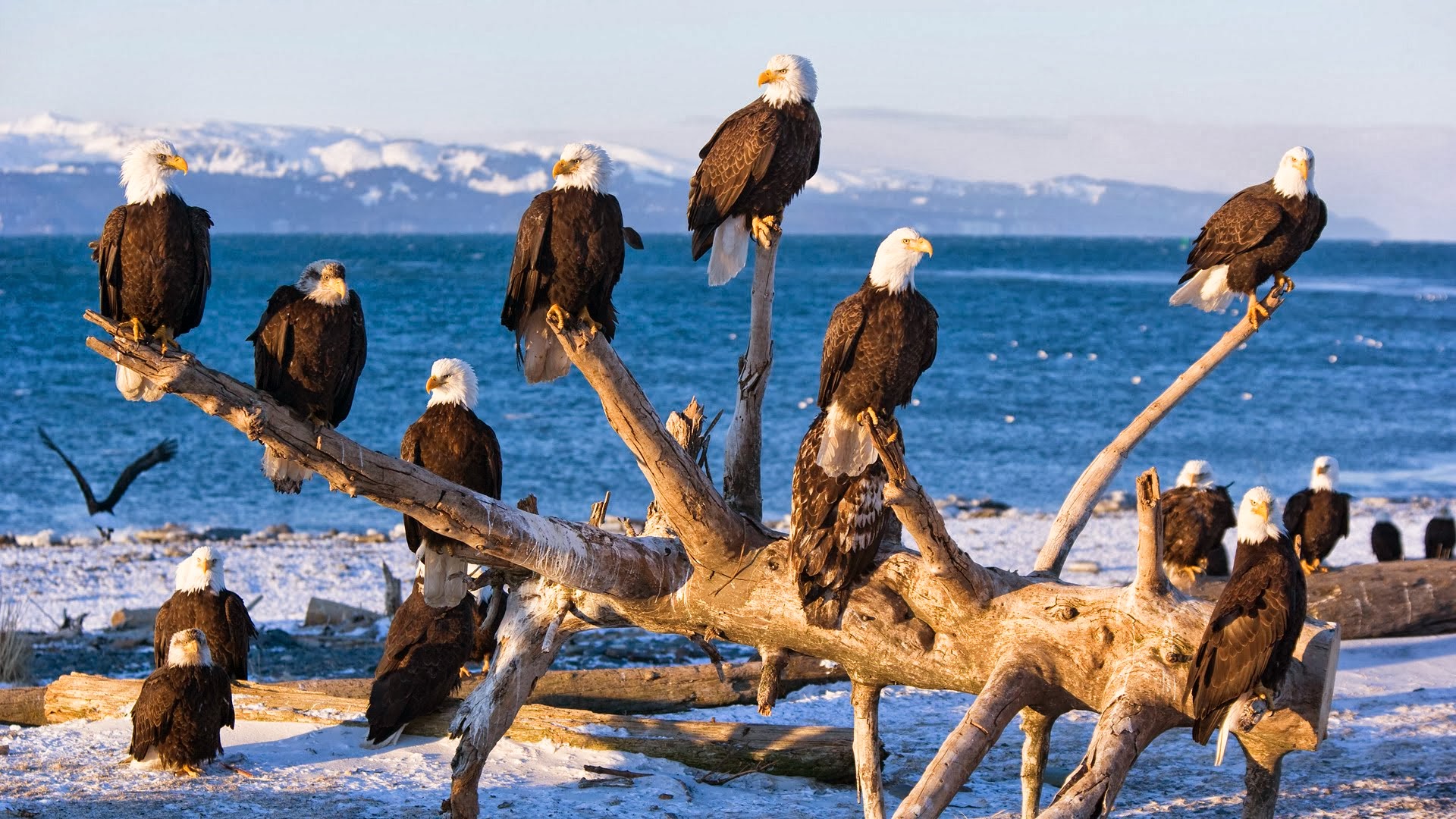
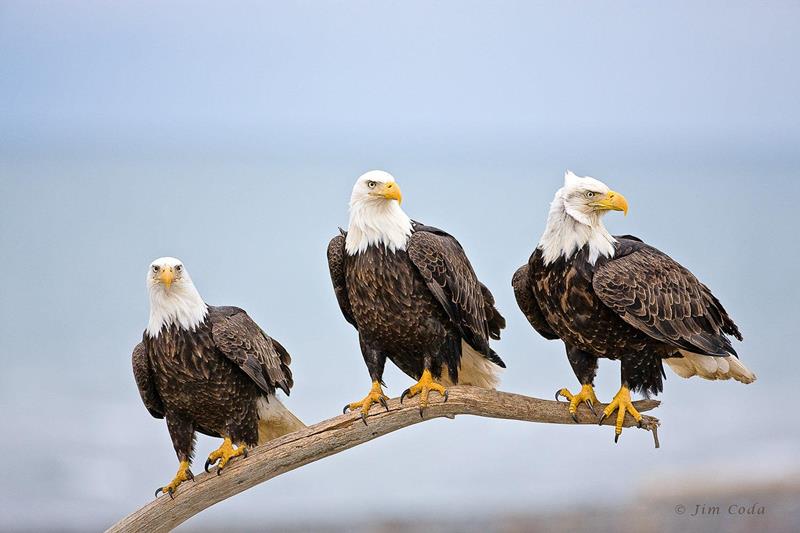
Want to see a hundred bald eagles in a single glance? Spy a couple dozen roosting in a lone tree? Listen to the hair-raising chorus of their weird, trilling calls? Visit the Alaska Chilkat Bald Eagle Preserve—site of the largest gathering of bald eagles in the world. Each October and November, between 3,000 and 4,000 bald eagles descend upon this 48,000-acre preserve centered on river bottomlands a few miles north of Haines to feast on late runs of salmon.

When these eagles converge, photographers travel from all over the world to capture images of the iconic birds jousting over chum and coho spawners. They perch in trees, land on gravel bars, and wing across a stunning Southeast Alaska vista. Even without the birds, the preserve anchors a pristine riverine wilderness traversed by a paved road minutes from a friendly small town with full services. The Chilkat River Valley forms a natural travel corridor between the interior and the coast, attracting moose, beavers, coyotes, wolves, brown and black bears, mountain goats on the ridges, forest birds, plus long distant migrants like trumpeter swans and Arctic terns.

Where Will You Find the Most Bald Eagles?

A vast sand-and-gravel “flat” where the Tsirku and Kleheni rivers merge with the Chilkat serves as the main viewing area, located along the Haines Highway between Mile 18 and 24. With thousands of fish finning and dying among a myriad of shallow channels that remain open well into winter, the zone draws thousands of eagles seeking a late-season snack. It is considered critical habitat for the species in the region, and the preserve was formed in 1982 with a mission to help protect this space. Eagles can be found throughout the preserve, however, with an estimated 300 to 400 of the birds in the area throughout the year.

Tips For Visiting the Park:

Best viewing will be from four main pullouts between Mile 18 and Mile 24, but eagles might be anywhere along the river.

The Council Grounds pullout at Mile 19 features pit toilets, informational displays, a boardwalk, viewing scopes and a two-mile river-side trail. Go there first.

Please pull completely off the road to view or photograph bald eagles! Keep watch for other eagle enthusiasts so awestruck that they simply brake in middle of the highway and leap out with doors ajar. (Yes, this actually happens—a headache for park rangers.)

Stay within the designated areas to avoid stressing individual birds. They need space to roost and feed.

Much of the preserve is not easily accessible, but during summer, rafting and jet boat tours are a great way reach remote spots along the river.

For more information, purchase the book Where Eagles Gather, the Story of the Alaska Chilkat Bald Eagle Preserve, Haines, Alaska by Joe Ordonez, which features incredible photographs of the area.

Attend the Alaska Bald Eagle Festival held annually in November by the American Bald Eagle Foundation.

SOURCE: ALASKA.ORG

Purple…Carrots?

(You all know me by now…if it’s weird, I’m interested!  I found this article on the Organic Facts website.)

Purple Carrot: Nutrition & Benefits

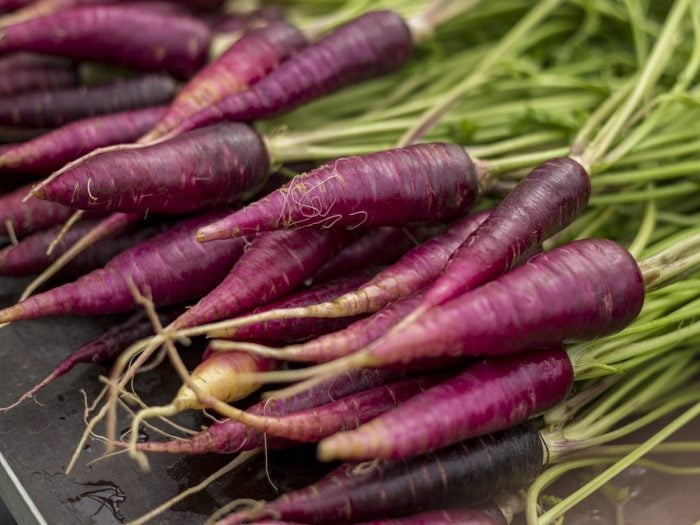
While many people have never heard of – or eaten – a purple carrot, they are deliciously sweet additions to many different meals. The taste of the purple carrots is not the only reason to eat them because they are also packed with a good amount of nutrients and health benefits!

What is a Purple Carrot?

A purple carrot is a color variant of traditional carrots, which bear the scientific name Daucus carota subsp. sativus. While most people in the US and UK are familiar only with orange carrots, purple carrots are far more commonly found in the East, particularly in China and India. However, they were first cultivated more than 1,000 years ago in the region of Afghanistan, and they spread from there. What many people don’t realize is that purple carrots were actually the original form of these globally popular vegetables. Paler colors only originated later, once the carrots were grown in different regions. These uniquely colored carrots are high in anthocyanin, which gives them their characteristic color and a surprisingly sweet taste.

The larger the carrots, the larger the central core, where most of the nutrients are stored, which results in more sweetness. Although the exterior of these carrots may be purple, the center is often yellow or orange. Purple carrots can be used in the same ways as any other carrots – in soups, stews, salads, sandwiches, stir-frys, and as a raw snack. While they aren’t as readily available in the US and UK as they are in Asia, they can easily be found in specialty grocery stores and import stores.

Purple Carrot Nutrition

Purple carrots have a similar nutrient profile to other types of carrots, with a few important distinctions. These carrots are a rich source of dietary fiber, vitamin C, potassium, manganese, and vitamin K. There is a low level of calories – only 25 calories per cup – and only 5 grams of carbohydrates. When it comes to antioxidants, however, purple carrots have a good lutein and beta-carotene content. Purple carrots also contain more phenolic compounds, such as anthocyanins, than any other carrot variety, except for black carrots.

Purple Carrot Health Benefits

The most impressive health benefits of purple carrots include its effects on weight loss, chronic disease, cardiovascular disease, inflammatory conditions, vision, and circulation, among others.

Weight Loss

Purple carrots are particularly prized for their place in a weight-loss diet. This low-calorie, low-fat, and high-fiber vegetable is an excellent way to fill yourself up without compromising your dietary goals. Furthermore, digesting all of that fiber can help to speed up your metabolism, which can help with passive fat-burning if you’re trying to shed pounds.

Cardiovascular Disease

With high levels of dietary fiber and antioxidants that can help protect the integrity of the cardiovascular system, purple carrots are great for heart health. The fiber can help to lower overall cholesterol levels, which will lower your risk of atherosclerosis, heart attacks, and strokes, as well as cardiovascular diseases. The vitamin C in these carrots is also critical for the strength of the artery and blood vessel walls.

Reduces Inflammation

Research has shown that anthocyanins, which are found in high concentrations in purple carrots, can help relieve many different inflammatory conditions, including arthritis, gout, headaches, and even hemorrhoids.

Improves Vision

Although purple carrots contain less beta-carotene than orange and yellow varieties, there is also a significant amount of lutein and zeaxanthin in these carrots, all of which can help to improve vision. These antioxidants will reduce oxidative stress in the retina, preventing macular degeneration and lowering your risk of cataracts. ]

Improves Circulation

There is a decent amount of iron in purple carrots, which is great for boosting circulation, but the presence of vitamin C and other antioxidants will also help to prevent breakage and blockage within the circulatory system, ensuring that all your metabolic processes continue normally.

Treats Chronic Disease

The high level of anthocyanins found in these colored carrots means that they are excellent antioxidants; these compounds are able to seek out and neutralize free radicals, which are responsible for cellular mutation and other forms of chronic disease, such as heart diseases, and rheumatoid arthritis.

How to add Purple Carrots to your diet?

Adding purple carrots to your diet is very easy and healthy as well. Here are some simple ways to add them to your diet.

Purple carrot salads: You can dice some purple carrots and add to any salad of your choice

Roasted purple carrots: Slice the carrots and roast them with some olive oil, salt, and pepper

Stir-fries: You can add purple carrots to while making any stir fry along with your favorite vegetables or meats

Carrots and hummus: You can serve sliced purple carrots alongside hummus

Soups and stews: Purple carrots can be added while preparing any soup or stew

There are many ways to enjoy purple carrots, so start cooking and enjoy!

SOURCE: ORGANIC FACTS

JOHN STAUGHTON

African Violets

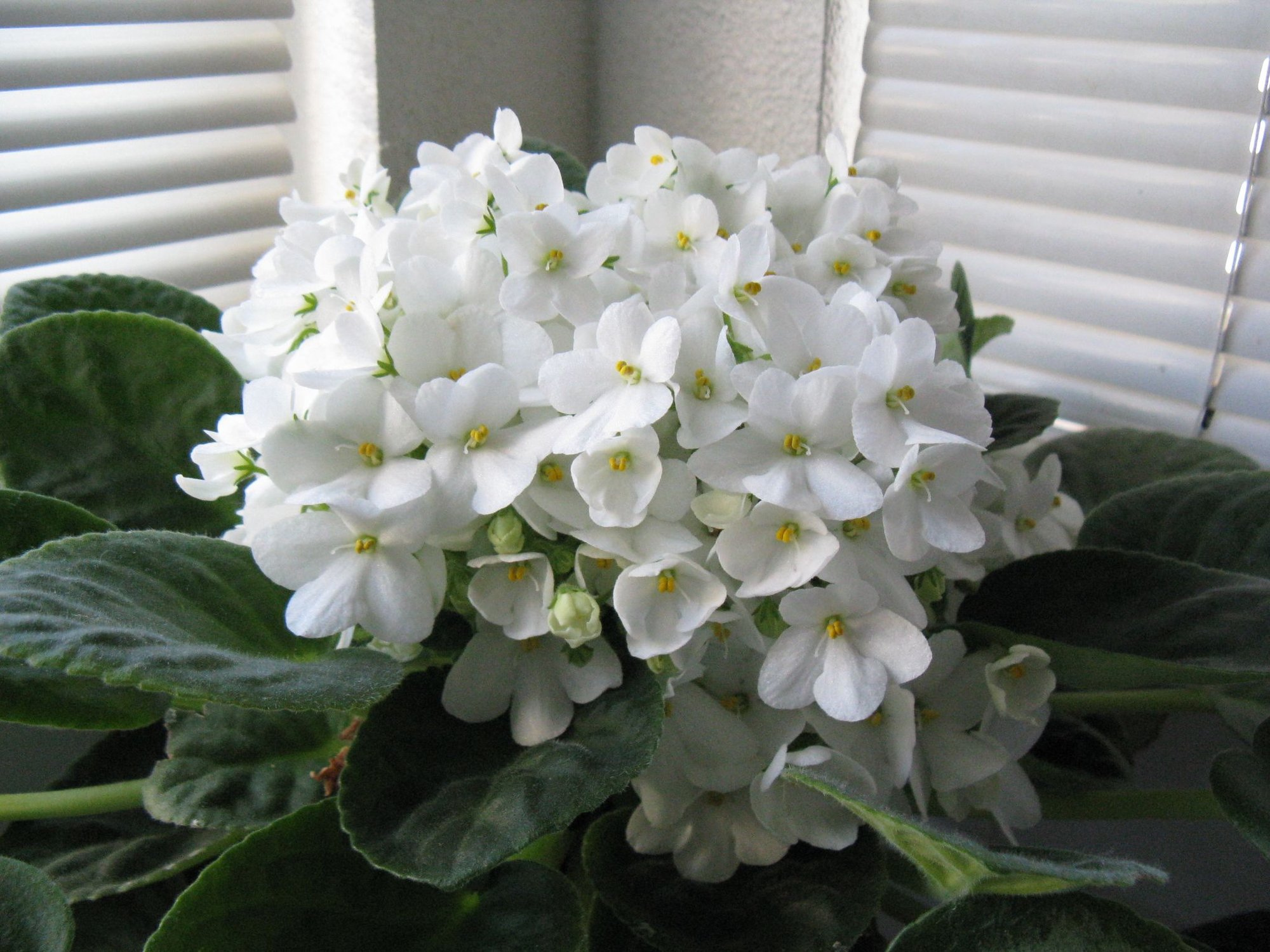
African violets are one of the world’s most popular houseplants and for good reason. These compact, low-growing plants flower several times a year, and they are available in a multitude of leaf forms and colors. African violets are distinguished by a rosette of thick, fuzzy leaves and violet-like flowers that bloom just above the evergreen foliage.

Don’t be put off by their reputation for difficulty: providing you follow a few simple rules, African violets should thrive indoors. With a little experience, it’s possible to keep these slow-growing plants in flower nearly all year round and grow them to the size of dinner plates.

African Violet Care

African violets will thrive in bright, warm and humid conditions. Keep water from touching their leaves or it will leave brown spots. Remove dead flowers and leaves as soon as you see them to encourage a healthier plant. Regularly check the soil for excess moisture. This will encourage rot. Growing these houseplants is really a matter of balance; you have to make sure that the different factors that go into their cultivation all are weighted against each other. They should be kept in moist enough conditions that they don’t dry out, yet still exposed to a fresh breeze to avoid letting them get too stuffy, and exposed to sunlight without damaging their leaf tips. Don’t be discouraged if your African violets suffer some damage—it’s all part of the process.

Light

African violets do well in bright but not direct sunlight. They are commonly grown under fluorescent lights placed 12 to 15 inches above the leaves. If the leaves start getting light green, your plant is getting too much light, while thin and dark green leaves or a leggy plant indicate too little light.

Soil

A well-drained potting mix is essential for African violets. Poor drainage can cause root rot, in which the plant becomes waterlogged and its leaves begin to fall, so make sure that the plant is never allowed to be exposed to standing water for an extended period of time.

Water

Keep soil moist with warm water and strive for high humidity. Do not allow water to contact the leaves of the plant to prevent damage, other than light misting. Water from below, or push the water spout into the soil when watering. Don’t allow the plant to sit in water.

Temperature and Humidity

African violets like warm and humid conditions and thrive at 70 degrees Fahrenheit. Do not allow the temperature to fall below about 60 degrees Fahrenheit. Do your best to keep the plants away from any drafts in the home.

Fertilizer

Feed with an African violet fertilizer every other week during the spring and summer. For the amount to use, follow product label instructions.

Types of African Violets

The original plants, the S. ionantha, were introduced in Germany in 1893. Shortly after, the S. confusa were introduced when a grower at the nursery noticed subtle differences among some of the plants. Since then, thousands of varieties have been produced. Today, African violets are available in single and double flowers, frilled and different shaped flowers. Their flowers come in all different colors, and the plants have widely varied leaf shapes. They come in both single crown and also multi-crown, trailing plants. These are just a few examples.

‘Persian Prince’ is a miniature-sized plant with scalloped medium green leaves and semidouble dark purple flowers.

‘Lyon’s Lavender Magic’ is standard size with medium green foliage, and white with light purple colored star-shaped flowers that can be single or semi-double and frilled.

‘Hawaiian Pearl’ is a standard size plant with dark green foliage and has a semi-double star shape flower that is ivory with a dark lavender/rose band.

‘Summer Twilight’ has variegated leaves with frilled lilac-purple flowers that have a white edged border.

‘Lonestar Snowstorm’ has variegated leaves with single white frilled flowers.

‘Little Maya’ has dark green foliage with deep crimson red flowers.

SOURCE: THE SPRUCE

Mandarin Dragonets

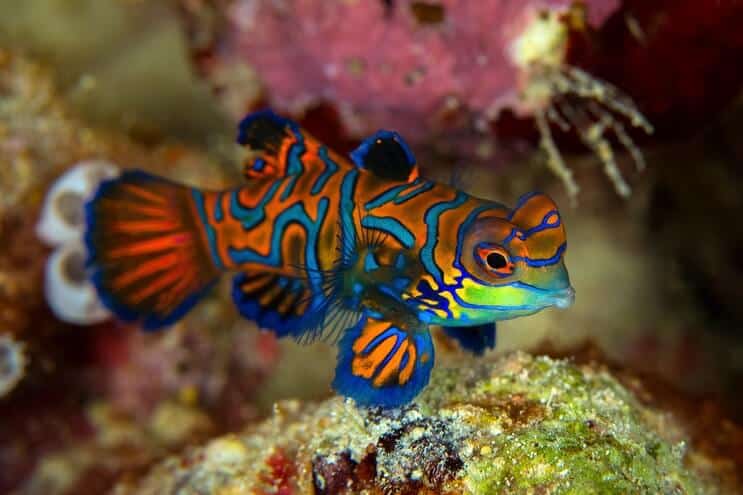
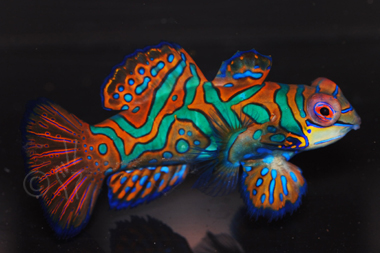
The mandarin fish is the most beautiful member of the genus Synchiropus. It is also one of the most breathtaking marine fish ever found in our oceans. It looks more like an intricate painting than it does a fish, with its entire body made up of wavy alternating lines of orange, blue and green.

While commonly known as the mandarin goby and the mandarin fish, its true name is the mandarin dragonet. It is similar to the scooter blenny (Synchiropus ocellatus) in this respect.

Mandarin Dragonets Have Particular Needs

Due to its natural beauty, this fish is heavily collected from throughout the Indo-Pacific. I’ve visited wholesalers with tanks upon tanks filled with mandarin fish, with the vast majority sure to perish within a month.

Sadly, these fishes do very poorly in captivity. They have special dietary needs that are not met by the vast majority of hobbyists. Most pick one up and simply assume they’ll get by like the rest of their fish. This could not be further from the truth. Most hobbyists cannot provide the mandarin with the proper food, and they end up starving to death.

Tank Size

Mandarin dragonets reach a maximum of 4 inches in length. They require a tank no smaller than a 30-gallon if they are accepting prepared foods.

If they are not eating anything you offer them, then you need a large established aquarium with a lot of live rock at a 75-gallon minimum per mandarin.

Temperament

Mandarins are peaceful fish that are well-suited to community tanks. They are only aggressive towards conspecifics, i.e., other mandarins and dragonets like the psychedelic dragonet and the scooter dragonet.

Diet

Getting a mandarin to take prepared foods is one of the most challenging tasks for a hobbyist. In the wild, they are carnivores that constantly scan live rock for small crustaceans such as copepods and munnid isopods. This is all they eat in the wild, and this is where the problem lies. They just don’t eat prepared foods.

Thankfully, there are solutions.

Use a Large, Well-Established Tank

The easiest solution is to house them in a well-established 75-gallon or larger aquarium that is full of copepods. This, then, requires no feeding as the mandarin will simply graze on the existing copepod populations. Smaller tanks cannot have large enough populations to feed a mandarin long-term. They’ll be wiped out in a matter of weeks.

Train Your Mandarin to Accept Prepared Foods

For this, you need frozen and live brine shrimp, preferably adults.

First, get them feeding on live brine shrimp, which is simple enough to do.

Then, mix in frozen artemia with the live ones. Once they start feeding on frozen artemia, slowly scale back on the amount of live brine shrimp you feed.

Eventually, you’ll be able to feed them exclusively on frozen brine shrimp.

But your work isn’t over yet. You need to get them on something nutritious like mysis shrimp, krill and a good pellet.

Start mixing in mysis with the frozen brine.

Do the same for all the other foods.

Breeding

Mandarin dragonets have been bred in captivity. They are pelagic spawners, which means the male and female both rise up into the water column to release eggs and sperm. Raising their larvae is a tough job that requires live rotifers, live brine shrimp and phytoplankton cultures.

Identifying Males and Females

If you want a pair of mandarins, buy a male and a female and put them together. The very first dorsal spine in males is very elongated and can be seen clearly. Females lack an elongated spine.

SOURCE: PETHELPFUL

What Shall We Make Today?

I’ve found some wonderful flavored popcorn recipes and decided to share the recipes one a month for the year!  This month’s offering is Parmesan Ranch!

Ingredients

3 tablespoons freshly grated or shredded Parmesan cheese

¾ teaspoon garlic salt

¾ teaspoon onion powder

¾ teaspoon dried parsley

½ teaspoon salt

¼ teaspoon dried dill

Freshly ground black pepper, to taste

6 tablespoons unsalted butter

½ cup unpopped popcorn kernels, OR 12 cups freshly popped popcorn, unseasoned

Instructions

Measure Parmesan, garlic salt, onion powder, dried parsley, salt, dried dill, and black pepper into a mini food processor (or blender). Pulse until all ingredients are ground into a fine powder. Set aside.

Cube butter and melt (either in a glass measuring cup in the microwave or in a small saucepan on the stove). Allow to sit for a few minutes.

To pop 6 cups of popcorn at a time in the microwave, pour ¼ cup popcorn kernels in a clean paper sack (I use a 12 ⅜ X 6 ⅛ X 4″ brown paper lunch bag). Fold over the top several times. Microwave on high until there is a 2-second pause between pops (all microwaves vary, but this will probably take around 2 minutes, give or take 30 seconds). Shake the bag so that any unpopped kernels roll to one corner. Tear a tiny hole in that corner and shake out kernels. Pour popped popcorn into a large bowl. Repeat entire process one more time for a total of 12 cups popcorn.

Use a spoon to skim the foam from the surface of the melted butter and discard. Slowly drizzle the clear, yellow, melted butter over the popcorn in the bowl, occasionally stirring with a large spoon to make sure that all of the popcorn is evenly coated. Stop pouring out the melted butter once you reach the milky solids in the bottom of the cup/pan (you may discard these or reserve for use in another recipe).

Sprinkle the popcorn with the Ranch Popcorn Seasoning, carefully stirring and tossing so that the popcorn gets evenly coated. Taste as you go…you may choose to use some or all of the Parmesan/herb mixture, and at the end, you may season with additional salt and/or pepper, to taste, if desired. Serve immediately.

These are TIPS & TRICKS from the insanelygood.com website:

Tips + Tricks

There are a couple of easy secrets-to-success behind this Ranch Popcorn Seasoning.

By grinding the Ranch Popcorn Seasoning into a powder, it distributes the flavors and coats the popcorn more evenly than would be accomplished by simply mixing everything together.

Also, the purpose of only using the clear, bright yellow layer of melted butter is that you’re essentially drizzling your popcorn with clarified butter. And since clarified butter is pure butterfat — with excess water and milk proteins removed — your popcorn is less likely to become wet and soggy. Yay!