What Shall We Make Today?

Today’s offering is Peanut Butter Fudge Ice Cream Cake!

Ingredients

3 cups chocolate crisp rice cereal (such as Cocoa Krispies)

1/2 cup salted dry-roasted peanuts, finely chopped

1/3 cup butter, melted

1/2 cup creamy peanut butter

4 cups vanilla ice cream, softened

Cool Whip

Hot fudge topping

Coarsely chopped salted dry-roasted peanuts

Directions

Stir together cereal, finely chopped peanuts, and butter in a medium bowl. Press mixture into bottom and up sides of a lightly greased 9-inch glass pie plate. Freeze until solid, 15 to 30 minutes.

Microwave peanut butter in a small microwave-safe bowl on HIGH until melted and smooth, about 30 seconds. Let stand at room temperature 10 minutes, stirring occasionally.

Place ice cream in the bowl of a heavy-duty stand mixer; beat on medium-low until smooth, about 30 seconds. Drizzle peanut butter into ice cream, beating on low just until incorporated, about 30 seconds.

Spread ice cream mixture into frozen pie shell. Cover and freeze until firm, 8 hours, or up to 24 hours.  Before serving, remove pie from freezer, and leave out at room temperature 10 minutes. Spread whipped cream evenly over pie. Drizzle with fudge topping, and sprinkle with coarsely chopped peanuts.

ENJOY!

Keys to the Kingdom

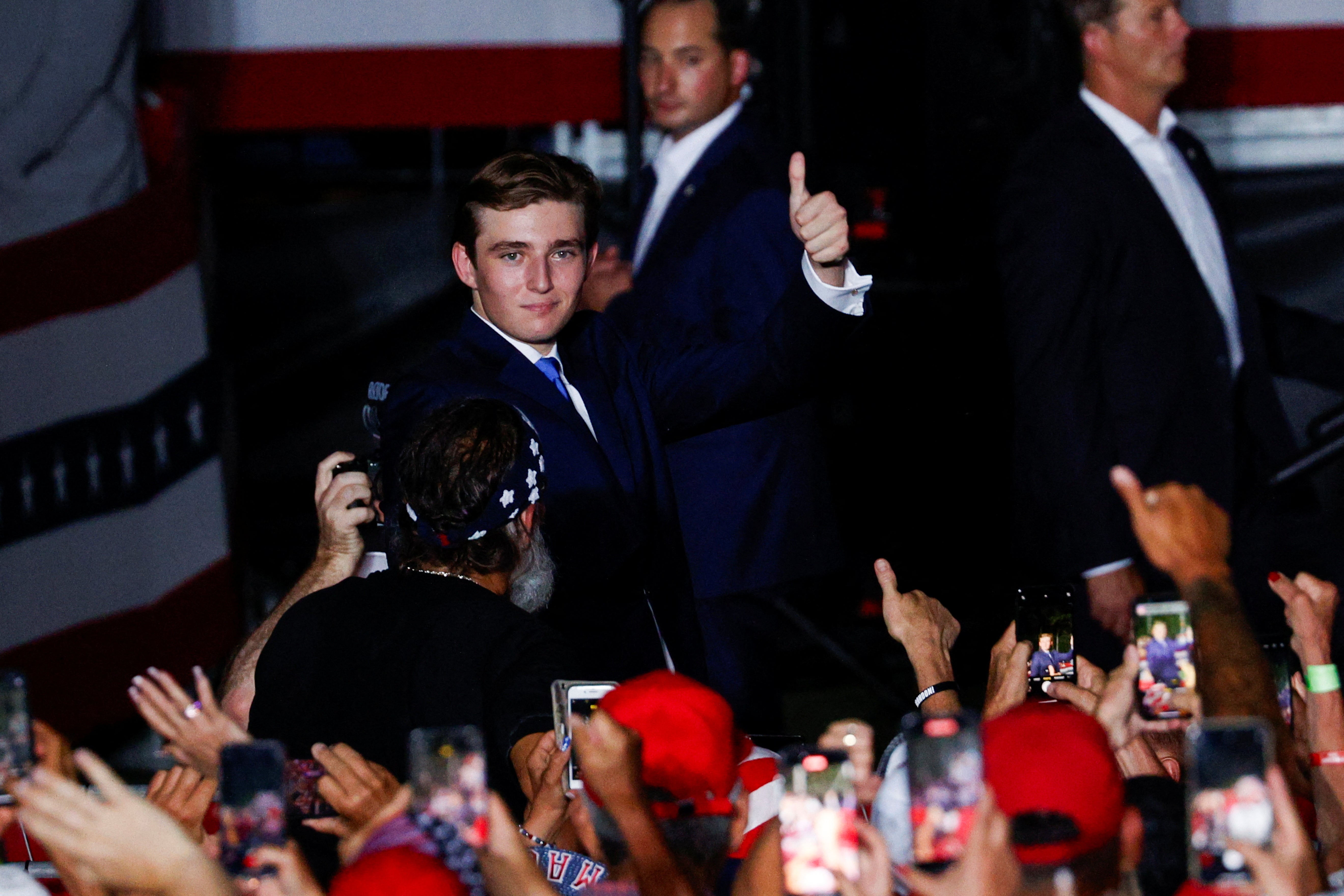
Barron Trump played a pivotal role in his father’s reelection last year, but not a lot is known about the youngest son of Donald Trump.  His parents, particularly his mother Melania, prefers to guard him closely.  Will he follow in his father’s footsteps, inheriting the keys to the kingdom?  Who knows.  But he is already influencing events and drawing attention.  I found this article about him on Biography.com.

From Biography.com:

Growing up, Barron learned to speak English and Slovene, the language of his mother’s home country, Slovenia. He is fluent in both tongues and also speaks French.

Barron was raised inside his father’s New York City high-rise Trump Tower, where he had an entire floor to himself. Accordingly, Barron has always known a life of luxury. In an interview with Parenting, Melania revealed Barron really liked planes and helicopters when he was little and that, as a hands-on mom, she cooked his breakfast and prepared his lunches. She also believed in encouraging his creativity—even when he would draw on the walls. “His imagination is growing and important,” she said. “If he draws on the walls in his playroom, we can paint it over.”

Although it’s unclear if he’ll follow his family into the real estate business, Barron did like to build cities and airports using Lego bricks and Magna Tiles growing up. He also has his own aesthetic. “He likes clean and white,” Melania told Parenting. “He builds big projects. He has a big imagination, and it’s very impressive. He loves to build something and tear it down and build something else. He is very detailed at drawing. We travel often, and he remembers everything he sees.”

Melania also told the magazine she calls Barron “Little Donald” because his personality is so similar to that of his father. “He is a very strong-minded, very special, smart boy. He is independent and opinionated and knows exactly what he wants,” she said.

She also noted that Barron spent a lot quality time with his father, mostly at his Mar-a-Lago residence in Palm Beach, Florida, where they played golf, ate dinner together, and enjoyed family time.

Donald Trump’s election to the U.S. presidency in 2016 brought a new level of exposure to the family, already well-known for Donald’s real estate holdings, reality TV series, and other business ventures. But Barron didn’t immediate follow his father to Washington D.C. after the inauguration. Instead, the boy stayed at Trump Tower with his mother for almost the first five months of his father’s presidency in order to finish his studies at the Columbia Grammar and Preparatory School on the Upper West Side. He and his mother moved into the White House on June 11, 2017, and Barron began attending St. Andrew’s Episcopal, a prep school in Maryland.

Barron became the first son of a president to reside in the White House since John F. Kennedy Jr. in 1963. Although he stayed out of the spotlight for the most part, he did turn up for some of the White House’s holiday-themed events in 2017, including the annual Easter Egg Roll in April, where he joined his parents in signing cards for members of the American Armed Forces. He also supported his father’s pardoning of the turkeys before Thanksgiving and, soon after, stepped out with his mom on the North Portico to receive the official Christmas tree from Wisconsin, which went up on display in the White House’s Blue Room.

On October 14, 2020, Melania confirmed that, like her and Donald, Barron tested positive for COVID-19. Although Barron initially tested negative, the first lady revealed that her “fear came true when he was tested again and it came up positive.” Melania continued: “Luckily he is a strong teenager and exhibited no symptoms. In one way, I was glad the three of us went through this at the same time so we could take care of one another and spend time together. He has since tested negative.”

After leaving the White House in 2021, Barron moved with his mother and father to Mar-a-Lago. In August 2021, it was announced that Barron had enrolled in private school at the Oxbridge Academy in Palm Beach, Florida. Both of his parents attended his graduation in May 2024.

Soon after, his father said in an interview that Barron was still considering multiple schools to obtain his undergraduate degree. “He’s applied to colleges and gets into everywhere he goes. He’s very sought after from standpoint,” Donald said. According to People, a source said it’s possible that his mother, Melania, “will follow him wherever he goes to school.” Barron ultimately selected New York University and is studying in the Stern School of Business. He began classes there in September 2024 and reportedly lives off-campus. He commutes to campus from nearby Trump Tower.

Barron towers over both of his famous parents and, according to his father, stands at 6 feet, 7 inches tall. Donald has attributed Barron’s impressive frame to all the food his late grandmother Amalija Knavs cooked for him. He has also remarked about Barron’s potential future in sports. “I said you’re gonna be a basketball player. He said, ‘Well, I like soccer, dad, actually,’” he said at a 2024 campaign event. “I thought… at your height, I like basketball better, but you can’t talk them into everything.”

Barron’s 18th birthday in March 2024 led to debate about how the media should cover him now that he is a legal adult. However, Chelsea Clinton, the daughter of former President Bill Clinton and Hillary Clinton, has defended Barron, saying he has a right to privacy. “I think he’s a private citizen. I feel so strongly that if you are a private citizen, you have an unimpeachable right to privacy, and I think the media should leave him alone,” she said.

In May 2024, news broke that Barron had been selected to serve as an at-large delegate for the state of Florida at the Republican National Convention later in July, which would have marked his first foray into the political realm. However, the office of Melania Trump announced two days later that he “regretfully declines to participate” at the convention because of prior commitments.

SOURCE: BIOGRAPHY.COM

RED

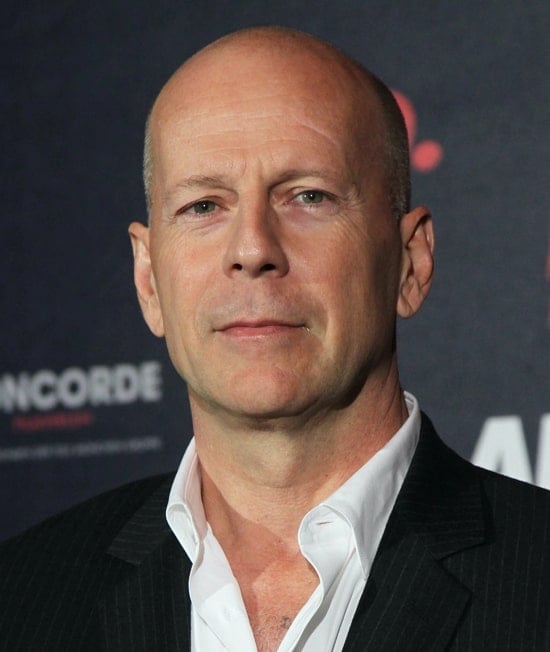
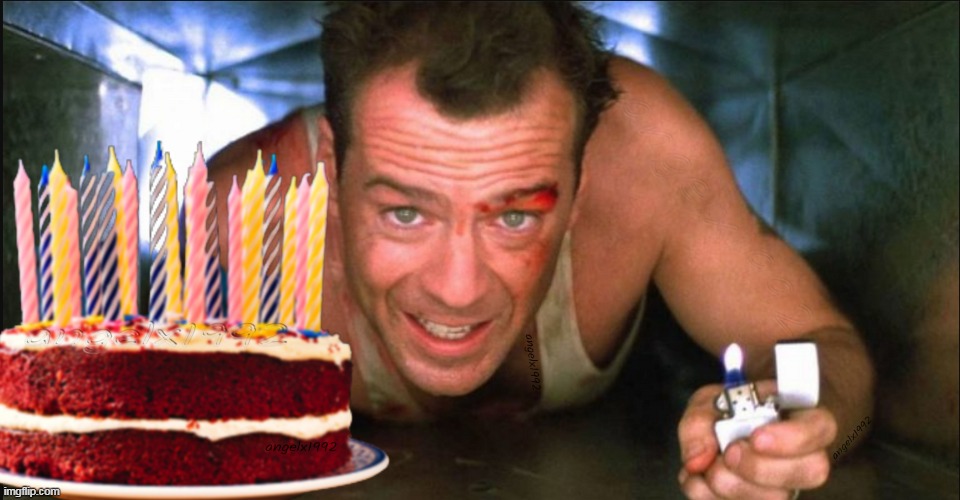
One of my favorite actors celebrates his birthday today—Bruce Willis!  Born in 1955, Willis has created many memorable characters and iconic comedic lines. (“Welcome to the party, pal!”) Mental Floss had an article detailing some fascinating facts about him.

From: Mental Floss:

 On March 30, 2022, Bruce Willis’s family members, including ex-wife Demi Moore and their three daughters, posted a joint statement to their social media accounts announcing that Willis would be retiring from acting due to a recent health diagnosis.

“Bruce has been experiencing some health issues and has recently been diagnosed with aphasia, which is impacting his cognitive abilities,” the statement read. “As a result of this and with much consideration, Bruce is stepping away from the career that has meant so much to him.”

From his turns as unlikely action hero John McClane in the Die Hard series to smaller supporting roles in 1994’s Pulp Fiction and 1995’s Nobody’s Fool, Willis has consistently surprised audiences with his eclectic career choices. For more on Willis, including his recording career and how he made movie history with 1988’s original Die Hard, keep reading.

1. Bruce Willis was born in West Germany.

Walter Bruce Willis, the son of a military man, was born on March 19, 1955, while his father was stationed in Idar-Oberstein, West Germany. Just two years later, parents David and Marlene Willis moved to Carneys Point, New Jersey, where he spent part of his time in both high school and at Montclair State University trying his hand at acting. After his sophomore year, Willis decided to leave college and head to New York City to pursue a performing career.

2. Bruce Willis may have been one of the best bartenders in New York City.

While auditioning for acting roles and scoring the occasional break—he appeared in an off-Broadway play, Heaven and Earth, in 1977—Willis tended bar at Chelsea Central on New York City’s Upper West Side. According to actor John Goodman, who knew Willis before either of them became famous, Willis was notable even then. “Bruce was the best bartender in New York,” Goodman told The New York Post in 2017. “He kept an entire joint entertained all night. He just kept the show going. He was amazing.”

3. Bruce Willis was cast in Moonlighting even though ABC thought the role was “uncastable.”

Willis had done only some stage work and bit parts in movies like 1980’s The First Deadly Sin with Frank Sinatra and 1982’s The Verdict with Paul Newman before he went in to audition for ABC’s Moonlighting, a send-up of detective dramas. At the time, the role of David Addison was proving so difficult to cast that the network was looking to pay creator Glenn Gordon Caron, director Bob Butler, and co-star Cybill Shepherd to abandon the project. Then Willis auditioned, beating out 3000 other hopefuls and securing the part. The series ran from 1985 to 1989.

4. Thanks to Die Hard, Bruce Willis changed Hollywood salaries forever.

While doing Moonlighting, Willis spent his hiatus shooting feature films like 1987’s Blind Date with Kim Basinger. But it was 1988’s Die Hard that cemented him as a big-screen attraction. The action film about a New York City cop trapped in a Los Angeles skyscraper with his estranged wife and a group of terrorists was a hot commodity, and 20th Century Fox agreed to pay Willis the then-astronomical sum of $5 million for the role. (Richard Gere and Clint Eastwood were also considered.) At the time, major stars like Tom Cruise and Michael J. Fox were getting roughly $3 million a picture. The payday for Willis had other performers taking notice, and salaries reportedly went up as a result.

“It was an enormous amount of money at the time,” Willis told Entertainment Weekly in 2007. “And I was a TV actor! The day after I signed the deal, every actor in Hollywood’s salary went up to $5 million.”

5. The Bruce Willis movie Hudson Hawk was based on a song.

Following Die Hard, Willis was a proven box office commodity that could help projects get made. In 1991, he starred in Hudson Hawk, a critical and commercial disappointment about a jewel thief with a love of music who is hired to steal from the Vatican. The film was based in part on a song written by musician Robert Kraft in 1981. Kraft knew Willis, then a bartender and actor, and shared it with him. Over the years, the two continued to shape the song, adding characters and stories. Eventually, it wound up in the hands of screenwriters Stephen De Souza and Daniel Waters.

6. Bruce Willis all but disappeared in Nobody’s Fool.

In contrast to conventional wisdom of the era, Willis parlayed his success as an action hero into opportunities to work with actors and directors he found interesting—even if it meant taking a small supporting role. (Willis spent just 22 minutes onscreen in 1994’s Pulp Fiction as boxer Butch Coolidge.) For 1995’s Nobody’s Fool, he passed on his normal $15 million fee to take $1400 a week since it meant working with Paul Newman. (Newman had forgotten the then-unknown Willis was a bit player in Newman’s 1982 film, The Verdict.) Because Willis felt so strongly Nobody’s Fool was Newman’s film, he opted out of having his photo included in the press kit and his name wasn’t in the production notes.

7. Bruce Willis had his own cartoon series.
In 1996, Willis lent his voice to Bruno the Kid, a syndicated animated series about an 11-year-old spy named Bruno who convinces his handlers he’s really an adult. “Bruno” was Willis’s nickname growing up as well as the name of his musical alter ego. In 1987, Willis released an album, The Return of Bruno, along with a cable special. The cartoon lasted one season.

8. Bruce Willis never finished shooting one of his movies.

In 1997, Willis started shooting Broadway Brawler, a romantic comedy about a washed-up hockey player falling in love. Just 20 days into shooting, Willis used his powers as producer to fire director Lee Grant, Grant’s husband and producer Joe Feury, cinematographer William Fraker, and wardrobe designer Carol Oditz—all reportedly over creative differences. The problems continued even after replacement director Dennis Dugan was brought on board. Rather than continue to waste money on the $28 million movie, studio Cinergi opted to shut it down. Cinergi’s parent company, Disney, absorbed the production costs in exchange for Willis agreeing to star in three Disney movies: Armageddon (1998); The Sixth Sense (1999), Willis’s biggest hit to date; and The Kid (2000).

Happy Birthday Pal!

SOURCE:MENTALFLOSS

New Jersey State Mammal: Horse

I couldn’t find a specific breed of horse for New Jersey, just the general term “horse” due to its importance in agriculture and economy.  So, I decided to focus on New Jersey Horse Rescue.

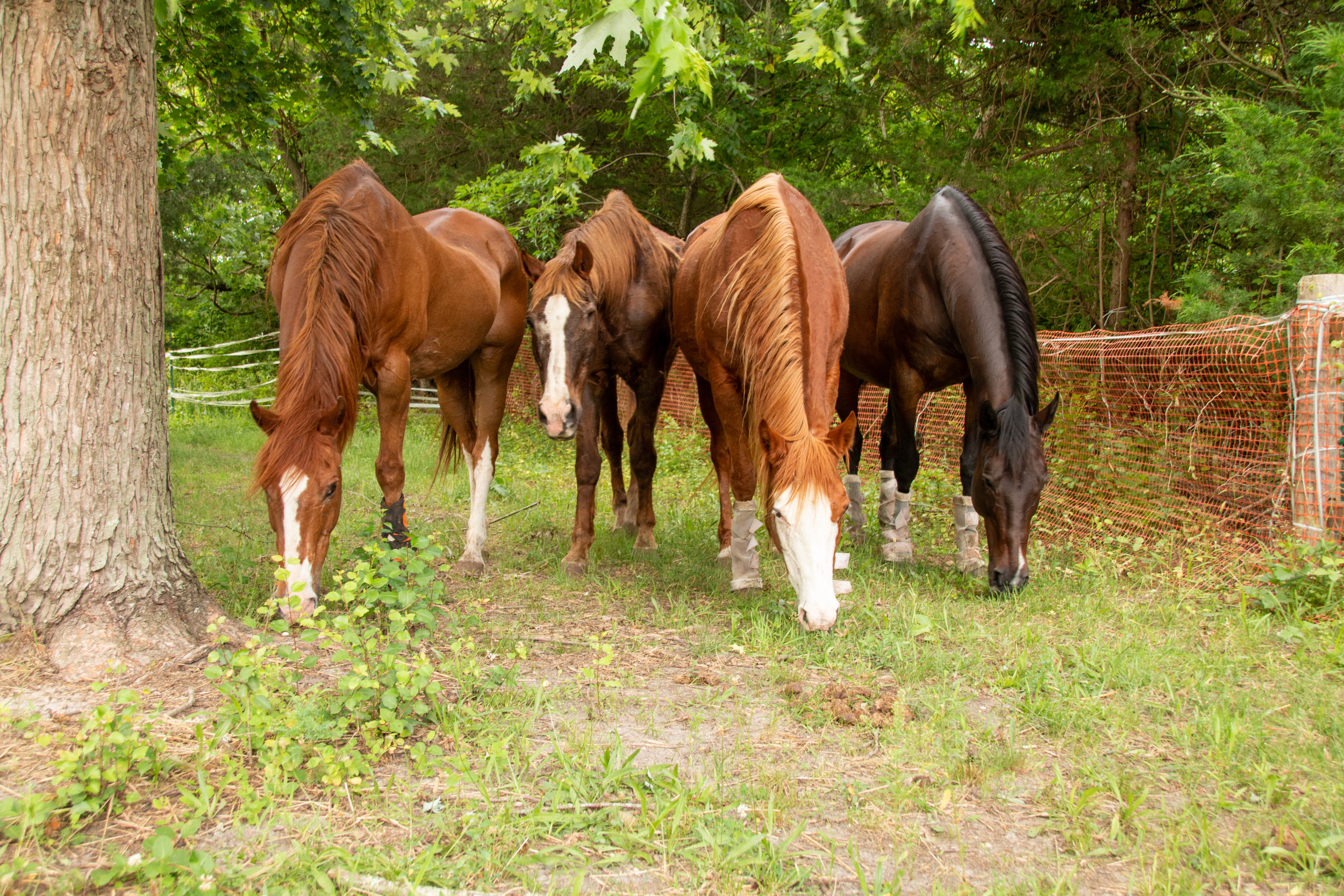
South Jersey Horse Rescue is a 501c3 non-profit horse rescue and rehabilitation facility.  Our mission is to provide a loving sanctuary to abandoned, neglected, abused, and slaughter bound horses. 

Donations pay for food, medicine, and veterinary services. We also use donations to buy horses at auction that would otherwise be sold to kill brokers, people who buy horses to sell them for meat in Mexico and Canada. About 90% of the horses that go through the slaughter lot are in perfect health.

What We Do

We evaluate and rehabilitate then re-home the horses we rescue. We do have some permanent residents, but strive to adopt out as many animals as possible to loving forever homes. We are 100% volunteer run and operate solely on donations.

We have been chosen for Secret Santa powered by our friends at Special Horses, Inc.

Please see link and donate to our rescue horses’ letters to Santa

https://specialhorses.company.site/South-Jersey-Horse-Rescue-c26120097

The rescue may have to close and our equine residents need your help!

Want to help us save the rescue? We are raising money to buy our property from the bank. We have made a great deal of progress with the help of our supporters just like you! We have had slow and steady negotiations. Fingers crossed we will be able to work this out and buy the property. We hope to have good news soon for those of you who have volunteered, donated, and sent well wishes. Any bit of support means the world to those who are here daily caring for our lovely rescues. We will do anything to keep providing a safe landing for those animals who need us most!

We have been at this property doing our life saving work as a rescue for over 14 years. Our fearless leader Ellen and her trusty staff have helped adopt and rehome over 400 horses, ponies, and donkeys. We are still rescuing animals and will do anything it takes to save our beloved rescue.

WEBSITE: https://www.southjerseyhorserescue.com/

Happy St.Patty’s Day

I found a great article on thefactfile.org website detailing amazing facts about St. Patty’s Day. 

From: thefactfile.org:

St Patrick’s Day is celebrated each year on March 17th. The day is the observation of the death of St Patrick, the patron saint of Ireland. With these 30 St Patrick’s Day facts, let’s uncover more about this great festival which is celebrated all over the world.

1. St Patrick was born in 385 AD in a place believed to be Banna Venta Berniae, a town in Roman Britain (his exact place of birth is however uncertain). He died during the fifth century in the year 461 AD at Saul, Downpatrick, Ireland.

2. St Patrick’s Day commemorates the arrival of the Christianity in Ireland. It happened in the year 432.

3. Patrick was born to Roman parents (Calpurnius and Conchessa). He was not Irish, instead, he was English. His given name was Maewyn Succat. Thus, technically we would be celebrating “Maewyn Day” instead of the “St Patrick’s Day” if his name was not changed. He wrote a book–Confessio–during his last years.

4. At the age of 16, St Patrick was kidnapped and was taken to Ireland. He was kidnapped by a group of Irish raiders who were attacking his family’s estate. He worked there for 6 years tending sheep and then escaped and became a priest.

5. St Patrick’s Day is also known as the ‘Feast of Saint Patrick’ and the ‘Day of the Festival of Patrick’. Patrick studied and received his training in the religion for more than 12 years after he escaped from the captivity of the Irish raiders.

6. Saint Patrickused Shamrock (a young sprig of clover) to teach the pagans about the Holy Trinity. The shamrock is now the official flower of Ireland. It is associated with St Patrick.

7. St Patrick’s Day has been observed by the Irish asa religious holiday for more than 1,000 years.

8. ‘Blue’ was the color associated with St Patrick before the adoption of green as the color for the festival. The color blue was featured both in the royal court and on ancient Irish flags. In 1798, the color green became officially associated with the day.

9. The first Patrick’s Day paradewas held in Waterford (the oldest and the fifth most populous city in the Republic of Ireland) in 1903.

10. More than 100 Saint Patrick parades are held across the United States. Almost 12% of Americans claim Irish ancestry. More people of Irish ancestry live in the United States than in Ireland.

11. One claim in history deeply associated with St Patrick is that he banished all the snake from Ireland. However, this claim is not true because it has been discovered that the chances of survival of snakes in Ireland are minimal because of the cold conditions of the region. However, some say that the snakes represent the pagans he converted to Christianity.

12. In 1762, the first New York City parade took place. With over 150,000 participants, the St Patricks Day parade in New York is the world’s oldest civilian parade and the largest in the United States. And more than 3 million spectators line the parade route which is 1.5 miles long. The parade takes more than 5 hours to come to an end.

13. On this day, Catholics attend church in the morning and then watch a St Patrick’s Day parade.

14. The Chicago River (the system of rivers and canals has a combined length of 156 miles) is dyed green on this day (since 1962). However, the first year when the river was dyed green, 100 pounds of vegetable dye was released into the river. This kept the river green for almost a week. However, today, they use only 40 lbs of the green dye to color the river for the day to keep the environmental damages in check. Now, the dye lasts for about 5 hours.

15. Guinness (an Irish dark beer that originated in the brewery of Arthur Guinness) sale almost doubles on St Patrick’s Day as compared to the regular days when 5.5 million pints of it is sold.

16. The200th anniversary of St Patrick’s Day was marked in Sydney Opera House by making it green.

17. Thefirst St Patrick’s Day celebration in the United States was held in Boston in 1737.

18. On this day, people usually eat corned beef and cabbage, and they wear green. However, corned beef is an English dish and not Irish.

19. Wearing green attire or shamrock is also a St Patrick’s Day tradition. It is one of Irish tradition to pinch someone who is not wearing green on the day.

20. Between 1903 and 1970 most pubs in Ireland were closed because St Patrick’s Day was a religious holiday. However, the holiday was reclassified as a national holiday and the nation started drinking even on this day. Drinking on this day has become a strong St Patrick’s Day tradition.

21. St Patrick’s Day is a national holiday in both Ireland and North Ireland. It is a provincial holiday in the Canadian province of Newfoundland.

22. World’s shortest St Patrick’s Day parade is held in Arkansas, which runs for a total of 98 feet.

23. More than 450 churches are named for St Patrick in the United States. And 5.5 million tourists visit St. Patrick’s Cathedral in New York City every year.

24. St Patrick’s Day is one of the most celebrated festivals in the world. Others may includeLa Tomatina — Buñol, Spain; Holi — Celebrated by Hindus Around the World; Carnaval — Rio de Janeiro, Brazil; Lantern Festival — Pingxi, Taiwan. 

25. St Patrick’s Day parades began in North America in the 17th century but they did not spread to Ireland until the 20th century.

26. St Patrick’s Day is not celebrated on March 17 when it falls within the Holy Week (the week just before Easter, Holy Week in 2018 will begin on Sunday, 25 March and ends on Saturday, 31 March). This once happened when the day coincided with Palm Sunday in 1940 and then again in 2008. The celebration of the Day is adjusted in such a scenario. In 1940 it was observed on 3 April and in 2008 it was observed on 15 March. Now, until 2160, St Patrick’s Day will not fall under the Holy Week.

27. St Patrick’s Day is celebrated in countries including Canada, Australia, Japan, Singapore, Russia and other countries of the Irish Diaspora (refers to Irish people and their descendants who live outside Ireland).

28. More than 1 million people take part in the St Patrick’s Festival (between March 15th and 17th) in Dublin every year.

29. John Fitzgerald Kennedy the 35th president of the United States of America worn a green tie for photographs when Ireland’s ambassador to the US, Thomas Kiernan, turned up at the White House with a bowl of shamrock on 17 March.

30. Finding a four leaf clover on St Patrick’s Day is considered lucky as you only have one chance in 10,000. Generally, you will find a three leaf clover.

SOURCE: THEFACTFILE.ORG

Plum Island

From HOWSTUFFWORKS.COM:

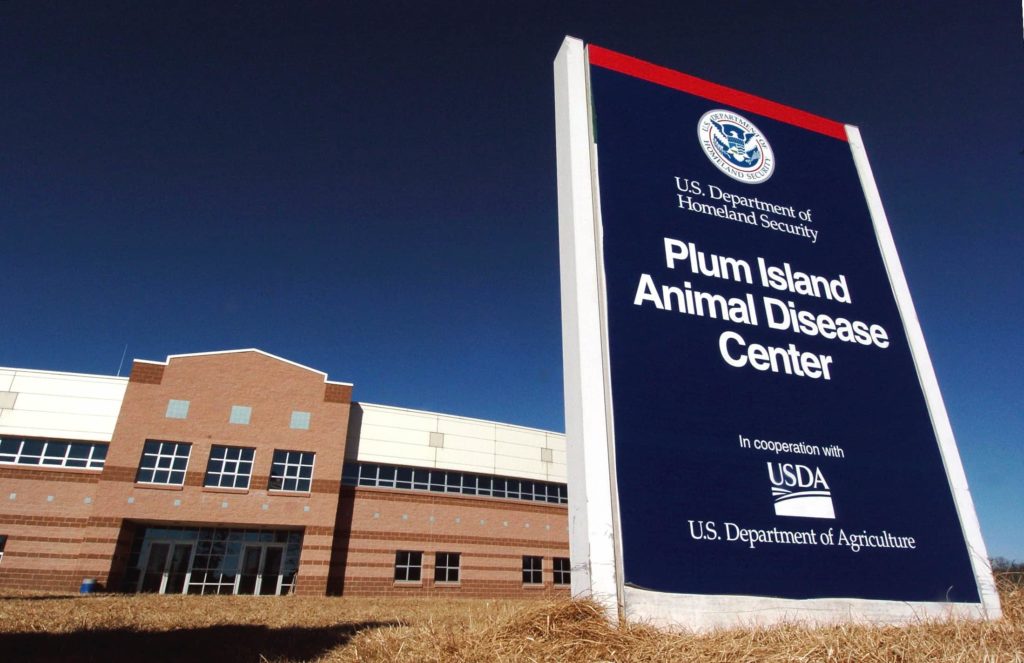
For years, plenty of wild rumors and conspiracy theories have swirled around an 840-acre (340-hectare) speck of land a mile-and-a-half off New York’s Long Island, home to a high-security federal research facility that Internet-fueled urban legends have made into the East Coast’s equivalent of Area 51. Some have speculated that animal-human hybrids and biological warfare weapons are being developed inside the Plum Island Animal Disease Center, opened by the U.S. Department of Agriculture (USDA) in the 1950s and under the control of the U.S. Department of Homeland Security since 2003.

“I’ve had questions about Nazi scientists, alien technology and genetically-modified monsters,” says John Verrico, a spokesman for Homeland Security’s Science and Technology Directorate.

But inside the security fences and biocontainment area checkpoints (described in the unredacted parts of this 2007 government report), government researchers work to stave more tangible threats — foreign animal diseases such as foot-and-mouth disease and African swine fever, which have the potential to wreak havoc with the U.S. food supply if they ever spread across the nation’s farms.

In the U.S., which hasn’t had an outbreak of foot-and-mouth disease since 1929, an outbreak of the highly contagious affliction could cause “billions and billions of dollars” in economic losses, Verrico says, because infected farm animals would have to be culled from herds and destroyed. Meat exports would come to a halt until the disease was eradicated, and consumers might face shortages of meat and dairy products. Farmers who produce animal feed would be harmed as well. A 2001 outbreak in the U.K. cost that nation the equivalent of more than $10 billion, according to the BBC.

That longstanding danger led Congress to authorize the Department of Agriculture to create a laboratory to fight animal diseases back in the 1950s, with one major condition — the facility had to be located on an island, to reduce the danger of pathogens or infected animals escaping and spreading to farms, according to this September 1956 booklet. Plum Island, the site of the U.S. Army’s Fort Terry from 1879 to 1948, fit that criteria.

A Super Prison for Deadly Animal Diseases

A 1971 New York Times article described the facility as a “Devil’s Island for the deadliest animal disease germs known to man,” and described the elaborate security measures. They included round-the-clock patrols along the island’s perimeter (intended to warn away boaters who might be attracted by the pristine beaches), buildings with airlocks to keep bacteria and viruses from escaping, and holding tanks to sterilize the waste water from mandatory showers taken by staffers before leaving at the end of the work day. In part because of the risk of a terrorist attack on the facility, in 2003 it was transferred to the Department of Homeland Security, even though agriculture researchers continue to work there, and additional measures such as door sensors and alarms were added, as this 2007 Government Accountability Office report describes.

An al-Qaida operative who was arrested in 2008 in Afghanistan had a handwritten list of various potential targets in the U.S. that included Plum Island, according to the U.S. Department of Justice.

Despite all the security measures, the Plum Island facility doesn’t work in secrecy. “We actually don’t do any classified work at all,” Verrico says. “Our scientists publish reports on everything we do.”

Plum Island houses the only foot-and-mouth disease vaccine bank in North America, which maintains a variety of vaccines that have been developed to combat the more than 60 different strains of the disease. Those vaccines could be deployed in the event that the disease began to spread in the U.S., Canada or Mexico. “It’s regularly updated,” Verrico explains.

Additionally, if an animal becomes sick and develops suspicious lesions or other possible signs of the disease, tissue samples are sent to Plum Island for analysis, Verrico says. Veterinarians come to Plum Island for training.

Work at Plum Island was instrumental in the conquest of rinderpest, a deadly cattle disease that is one of the only the two diseases — smallpox is the other — that have been totally eradicated, Verico says.

Scheduled for Shutdown in 2023

Although the Plum Island facility and its 400-person workforce have been an important part of the nation’s defenses against animal diseases for decades, it’s scheduled to shut down by approximately 2023. It gradually will be replaced by the National Bio and Agro-Defense Facility, a $1.25 billion project under construction in Manhattan, Kansas. That facility will be larger than Plum Island and be able to conduct more studies simultaneously. It also will have added layers of security to enable it to function as a level 4 laboratory, meaning that it will be able to study animal diseases that have the potential to be transmitted to humans. It will be the first large-animal facility capable of such research, Verrico says. Advances in security measures will make it unnecessary for it to be located offshore.

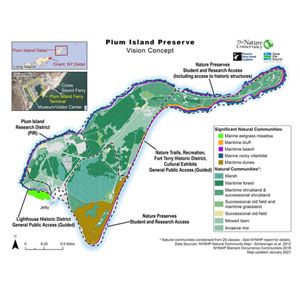
What will happen to Plum Island after the animal disease center shuts down isn’t yet clear. The U.S. General Services Administration already has advertised the island and its buildings for sale, in keeping with a provision tucked into the 2009 economic stimulus package that requires it to be auctioned off to defray the construction cost of the Kansas facility and/or Homeland Security’s new headquarters complex.

But local environmentalists don’t want to see Plum Island turned into a waterfront housing development or golf resort. Because the island has been off-limits to development for so many years, much of it has reverted to its natural state and become a refuge for birds and animals, according to Chris Cryder, an outreach coordinator for the Preserve Plum Island Coalition, composed of environmental organizations in New York, Connecticut and Rhode Island. The coalition advocates setting aside 80 percent of the island as a preserve.

In the winters, for example, Plum Island is a haven for 600 harbor and gray seals, who migrate from Canada to forage for food there, Cryder says. It also provides habitat for avian species such as the piping plover and roseate tern. Over the past six decades, “there’s been relatively little disturbance of nature because of the high security operation there,” Cryder explains.

Environmental groups filed a lawsuit in 2016, seeking to prevent the government from going ahead with a sale, on the grounds that it hadn’t complied with requirements of various federal environmental laws. After GSA unsuccessfully sought to get the suit dismissed, the agency announced in August that it would hold off on the sale in order to prepare a new environmental impact statement to augment the review it had done in 2013. In an interview, Roger Reynolds, senior counsel for Connecticut Fund for the Environment, describes the initial study as “remarkably inadequate.”

Now That’s Interesting

Last year, a portion of Plum Island’s power system was utilized by the departments of Homeland Security, Defense and Energy to conduct tests simulating a cyber-attack on U.S. electrical grids, according to the Wall Street Journal.

Plum Island FAQs

Is Plum Island open to the public?

Its beaches are open to the public, but there are no stationed lifeguards in Newbury or Newburyport. The beach at Sandy Point State Reservation is open to the public for swimming and sunbathing.

Did Lyme disease come from Plum Island?

No, but there have been rumors that state otherwise because the island is located near the coast of Lyme, Connecticut, where the first outbreak of Lyme was recorded in 1975.

Can you swim at Plum Island?

You can swim at the beach at Sandy Point reservation.

SOURCE: HOWSTUFFWORKS.COM

Andrew Jackson

Today is Andrew Jackson’s birthday and I found this wonderful article on him, on the funwithhistory.com website.

13 Facts About Andrew Jackson

Andrew Jackson, the seventh President of the United States, is a figure of both admiration and controversy in American history. Born into humble beginnings in the Carolinas, he rose to prominence through his military heroics during the War of 1812 and later became known as “Old Hickory” for his unyielding character. Jackson’s presidency, marked by confrontations like the Nullification Crisis and the Indian Removal Act, left a lasting impact on the nation. In this exploration of Andrew Jackson’s life and legacy, we delve into some key facts that illuminate his journey from orphaned youth to one of the most influential figures in American history.

Andrew Jackson Facts

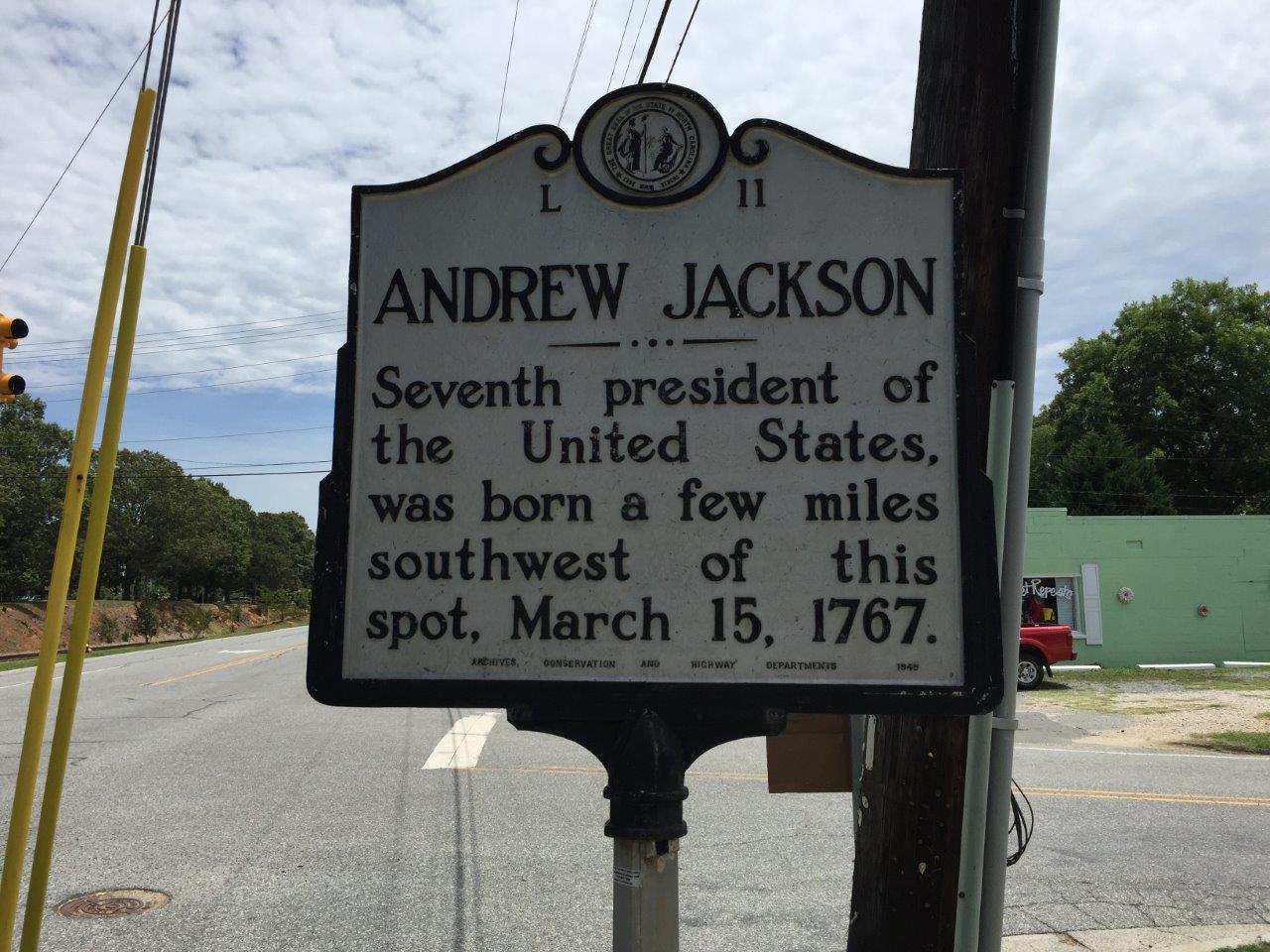
1 Born in the Carolinas in 1767

Andrew Jackson’s exact birthplace is disputed, but it is generally believed that he was born in the Waxhaws region, which straddled the border of North and South Carolina. This region was a rural and frontier area during the 18th century, and Jackson’s humble beginnings shaped his character and worldview.

2 Orphaned at a young age

Jackson faced considerable adversity in his early life. His father, Andrew Jackson Sr., died in a logging accident just a few days before Andrew’s birth. Tragically, his mother, Elizabeth Jackson, died of cholera when he was only 14 years old. This left him an orphan, and he and his older brother, Robert, had to fend for themselves. These early hardships instilled in Jackson a strong sense of self-reliance and resilience that would define his life.

3 Self-taught lawyer

Despite having limited access to formal education, Jackson was a determined and self-motivated individual. He worked as a saddle maker, schoolteacher, and even a law clerk before teaching himself the law. He eventually moved to Nashville, Tennessee, in 1788 and established a successful law practice. His legal career played a crucial role in his rise to prominence in Tennessee and his later entry into politics. Jackson’s success as a lawyer showcased his intelligence and determination, which would serve him well in his future endeavors, including his military and political career.

4 Military hero during the War of 1812

Andrew Jackson gained national prominence for his military leadership during the War of 1812. He was appointed as a major general in the United States Army and commanded American forces in the Southern theater of the war. His most famous victory came in the Battle of New Orleans in 1815, where he successfully defended the city against British forces. This victory made him a national hero and propelled him into the political spotlight.

5 Nicknamed “Old Hickory”

He earned the nickname “Old Hickory” due to his tough and resilient personality. It was given to him by his soldiers during his military campaigns, reflecting his unyielding and often stern demeanor. Jackson was known for his strong will and determination, and this nickname stuck with him throughout his life.

6 Seventh President of the United States

He was elected as the seventh President of the United States and served two terms from 1829 to 1837. He was the first president to hail from west of the Appalachian Mountains, symbolizing a shift in political power away from the Eastern elite. Jackson’s presidency is often associated with the rise of Jacksonian democracy, characterized by an emphasis on the common man’s role in government. However, it was also marked by controversy, including his confrontations with the Second Bank of the United States and the Indian Removal policy.

7 Faced the Nullification Crisis

During Andrew Jackson’s presidency, the Nullification Crisis emerged as a major challenge. It revolved around the issue of tariffs imposed by the federal government, which disproportionately affected Southern states, particularly South Carolina. In 1832, South Carolina declared that it had the right to nullify or reject federal laws within its borders, including the tariffs. Jackson vehemently opposed this assertion of state sovereignty and believed it could lead to the dissolution of the Union. He responded with the Nullification Proclamation and the Force Bill, which authorized the use of military force to enforce federal laws in South Carolina. Ultimately, a compromise was reached, and the crisis was defused, but it highlighted the tension between states’ rights and federal authority.

8 Signed the Indian Removal Act

In 1830, Andrew Jackson signed the Indian Removal Act into law, which provided for the forced removal of Native American tribes from their ancestral lands in the Southeastern United States to lands west of the Mississippi River. This policy resulted in the tragic Trail of Tears, during which thousands of Native Americans, primarily from the Cherokee Nation, died due to exposure, disease, and starvation during their forced relocation. Jackson’s support for this policy remains a deeply controversial and dark chapter in American history.

9 Opposed the Second Bank of the United States

Andrew Jackson was a vocal opponent of the Second Bank of the United States, viewing it as a symbol of corruption and elitism. He believed the bank had too much power and favored the wealthy over the common people. In 1832, Jackson vetoed the recharter of the bank, effectively causing its demise. This decision had a profound impact on American financial policy, leading to a period of economic instability known as the “Bank War.”

10 Survived an assassination attempt

In January 1835, while Jackson was President, he survived an assassination attempt. A disturbed house painter named Richard Lawrence approached Jackson with two pistols and attempted to shoot him. Both pistols misfired, and Jackson, known for his physical toughness, proceeded to physically attack Lawrence with his cane. The attempt on his life cemented Jackson’s image as a strong and resilient leader, and he remained unharmed.

11 Engaged in several duels

Andrew Jackson was involved in several duels during his lifetime, reflecting the dueling culture of the time. Notable among these was his duel with Charles Dickinson in 1806. The dispute arose over insults exchanged between Jackson and Dickinson. During the duel, Dickinson fired the first shot, which struck Jackson in the chest, near his heart. Jackson, despite being wounded, managed to stay standing and calmly took aim at Dickinson, firing and fatally wounding him. The bullet that struck Jackson remained lodged in his chest for the rest of his life, causing him occasional pain. Jackson’s willingness to participate in duels was emblematic of his fiery temperament and his strong sense of personal honor.

12 Controversial marriage to Rachel Donelson Robards

Andrew Jackson’s marriage to Rachel Donelson Robards was a subject of controversy during his political career. Rachel had been previously married to Lewis Robards, but they had separated before her relationship with Jackson began. However, due to a legal technicality, their divorce was not finalized when Jackson and Rachel married in 1791. This led to accusations of adultery and social ostracism against Rachel. The controversy surrounding their marriage was used against Jackson in political campaigns, and it caused him considerable personal anguish.

13 Legacy includes populism and the forced removal of Native Americans

Andrew Jackson’s legacy is complex and polarizing. He is often remembered as a champion of the common people and a symbol of Jacksonian democracy, which emphasized increased political participation for white males without property qualifications. However, his legacy is also marked by controversy and criticism. His role in the forced removal of Native American tribes, such as the Cherokee on the Trail of Tears, is widely condemned as a tragic and inhumane chapter in American history. Additionally, his opposition to the National Bank and his assertion of executive power contributed to political division during his presidency. Jackson’s strong-willed personality and his impact on American politics and government continue to be subjects of debate among historians and scholars.

SOURCE: FUNWITHHISTORY.COM

What Shall We Bake Today?

Today’s offering is in honor of St. Patrick’s Day—Shamrock Snacks!

Ingredients

pretzel sticks

mini pretzel twists

Rolo candy

green M&Ms (such as Dark Chocolate Mint M&M’s or Milk Chocolate M&Ms)

Directions

Preheat the oven to 250 degrees.

Place three mini pretzels and one pretzel stick in a shamrock shape on a parchment paper-lined cookie sheet.

Place a Rolo candy in the middle of the pretzels. Repeat with as many treats as you’d like to make.

Bake for 2 minutes at 250 degrees in the oven until the chocolate is just starting to melt, but not all the way melted.

Gently press a green M&M in the middle of Rolo so that the chocolate connects all four pretzels.

Freeze until the chocolate is set, then enjoy! Yup, that’s all it takes to make these cute shamrock snacks!

To store leftovers, just keep them in a covered container for up to a few days.

ENJOY!

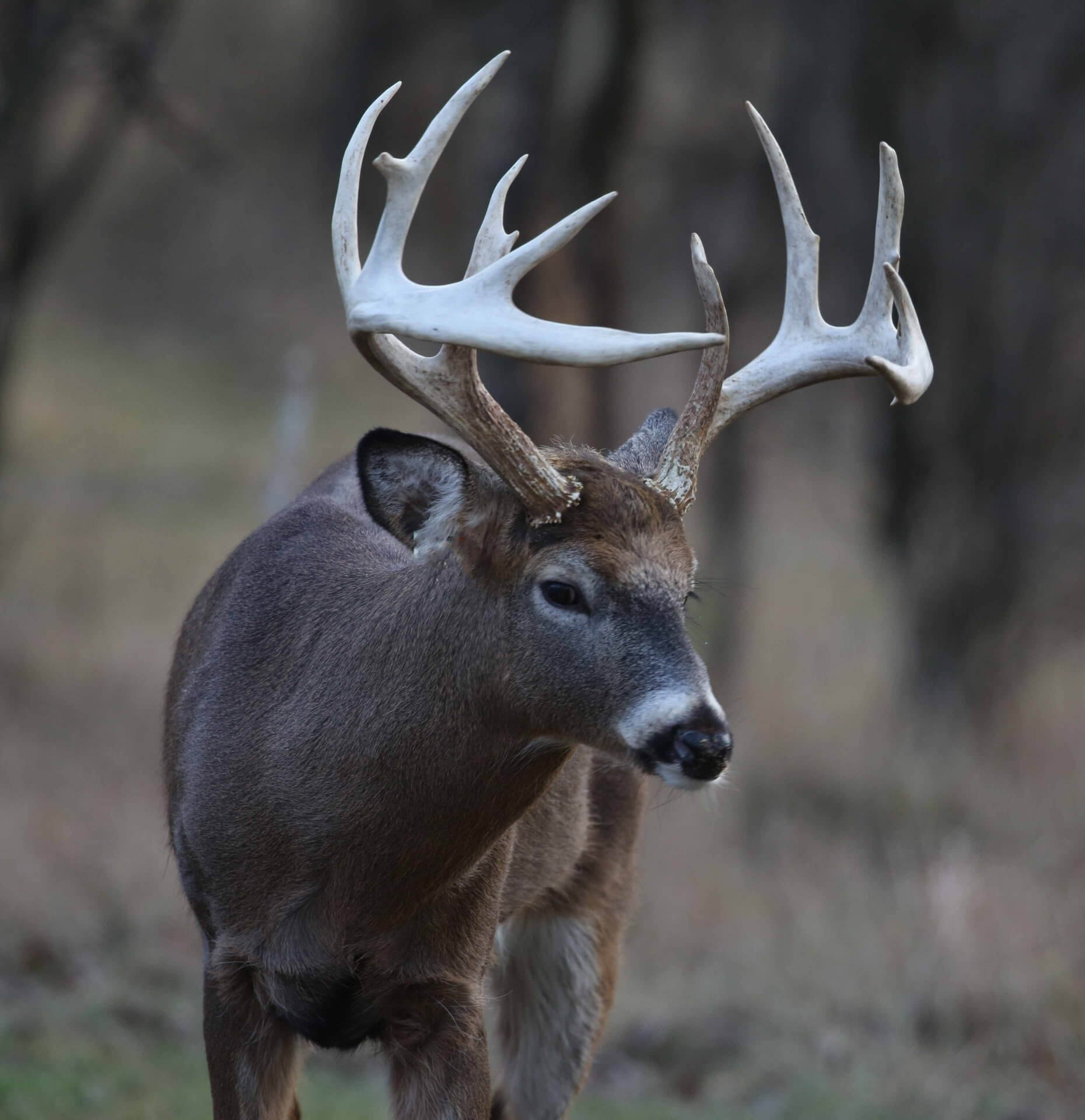
New Hampshire State Mammal: White Tailed Deer

New Hampshire is yet another state that has the white-tailed deer as their state mammal.  Lacking any new information about the deer, I thought I’d go in another direction—a crafty one.  Did you know you can make things from the antlers?? Deer naturally shed these yearly so, if you’re lucky, you can find some discarded antlers in the woods.

If you find a lot of antlers, you can make this wreath.

Or, perhaps this chandelier.

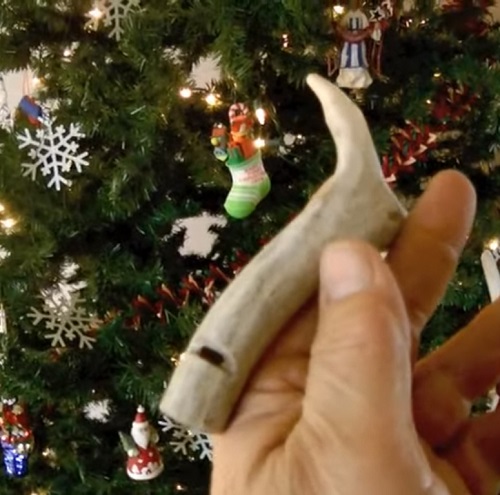
Maybe this deer whistle is more to your liking.

You can find the instructions for these crafts and other craft ideas at brightstuffs.com.