Peter Pan

Today is Kelsi Ballerini’s birthday. She was born in 1993 and this song, Peter Pan, is one of my all-time favorite songs.  When I first heard it, I thought it epitomized my son—never settling down, never getting serious about a girl and a future.  And then he met my future daughter-in-law…and all that changed.

The smile, the charm, the words, the spark
Everything, you had it
I guess I had a naive heart, ’cause boy, I let you have it
You said I was your only
Never thought you’d leave me lonely

[Pre-Chorus]
You’re just a lost boy, with your head up in the clouds
You’re just a lost boy, never keep your feet on the ground

[Chorus]
Always gonna fly away
Just because you know you can
Never gonna learn there’s no such place
As Neverland, you don’t understand
You’ll never grow up
You’re never gonna be a man
Peter Pan

[Verse 2]
Deep down, I knew that you were too good to be true
But every piece and part of me wanted to believe in you
Now it’s happily ever never
I guess now I know better

[Pre-Chorus]
You’re just a lost boy, with your head up in the clouds
You’re just a lost boy, never keep your feet on the ground

[Chorus]
Always gonna fly away
Just because you know you can
Never gonna learn there’s no such place
As Neverland, you don’t understand
You’ll never grow up
You’re never gonna be a man
Peter Pan
Oh, whoa, mm

[Bridge]
You’re just a lost boy, yeah, I know who you are
And you don’t know what you lost, boy
Too busy chasin’ stars

[Chorus]
And you’re always gonna fly away
Just because you know you can
Never gonna learn there’s no such place
As Neverland, you don’t understand
You’ll never grow up (Oh, you’ll never grow up)
You’re never gonna be a man
You’re never grow up (Grow up)
Yeah, you’re never gonna be a man
Peter Pan
Never gonna be a man

Tennessee State Animal: Raccoon

Interesting Raccoon Facts

1. Their bandit mask may reduce glare and help with night vision

The black contrasts with the white fur around the rest of a raccoon’s face, which help them see clearly. This is similar to how some athletes wear black stickers under their eyes to absorb light and reduce glare than could obstruct vision. Although that’s just one theory, another is that the subtle differences help them identify each other. One thing is for sure, their famous mask plays into their reputation for mischief!

2. Many raccoon babies starve in the winter

Unlike many mammals in their habitats, raccoons don’t hibernate. They instead spend extended periods of time in their dens during cold weather. Young raccoons, with very little body fat, are very vulnerable during these periods, and many don’t make it through the winter.

3. They’re great at climbing

Raccoons have cool hands (more on that later) and their strength and agility make them very good at getting up trees. Or houses, or barns, or the walls of a Toronto office building.

4. They’re excellent swimmers

Despite being land animals, raccoons are deft swimmers. They’re even competent hunters in the water, chasing down amphibians and even fish.

5. Raccoons are solitary, but tolerant

As raccoons age, they tend to drift off from their mothers, but there are some accounts of long-term bonding that remains. When there’s plenty of food available, they will happily share, and generally seem to have little trouble around one another outside of some territorial behaviors.

6. Raccoons have a wide range of vocalizations

For a solitary animal, they’re remarkably communicative. Raccoon noises include chittering, purring, barks, snorts and snarls, all able to get the message across with clarity.

7. They’re toilet-trained

They don’t just poo anywhere, raccoons pick latrine sites and stick with a few of them. Unfortunately, often times these latrines are the roofs, decks and unsealed attics of local human populations.

8. There’s a crab eater and a pygmy version

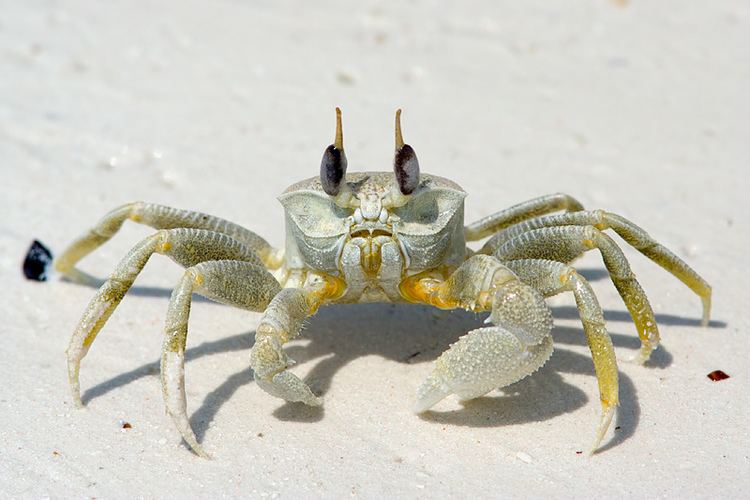
While the most common and well-known species of raccoon is what most people refer to as “the raccoon” (also known as the ‘common raccoon’) there are in fact two other species. Procyon lotor is the best-known, but there is also P. cancrivorus and P. pygmaeus whose names translate to “crab eater” and “pygmy” respectively.

If their names weren’t already clues enough, crab-eater raccoons hunt for crabs and other crustaceans in the marshy and jungle areas of South America, and the pygmy raccoon is a smaller island version of the other two, endemic to Cozumel Island in the Mexican Caribbean.

With raccoons, their size is inversely proportional to their cuteness, so it’s particularly tragic that the smallest of all the Procyons is critically endangered. The destruction of their mangrove habitat by human intervention is mostly responsible for their decline, but the introduction of house cats has further decimated their populations. These dangerous effects have also affected their close cousin the Dwarf Cyoti, a member of the same family.

9. They’re hard to tame

While baby racoons are sweet and adorable, when kept among humans past sexual maturity they almost always become hard to handle. An adult raccoon is a much more aggressive, territorial and troublesome animal, so they don’t make good pets. In fact, in some places, escaped pet raccoons have led to their rise as an invasive species, and is consequently responsible for the need to trap and kill countless individuals in eradication programs.

10. They’re named after their hands

Both the Quebeqi and the Spanish-speaking colonists who named raccoons independently referred to the hands of the animal. The word aroughcoune roughly translates to “the one that scratches with his hands”, and mapachtli in Spanish refers to “the animal with the hands”. This is because the hands of a raccoon are distinctly human-like.

11. Raccoons douse their food

‘Lotor’ from their scientific name ‘Procyon lotor’ is Latin for ‘washer’. This comes from their behavior of dabbling for food underwater along shore-lines, where they pick up food, and appear to examine it and remove unwanted parts. This gives them the appearance of ‘washing their food’.

12. They’re adaptable

The success of most mammals in adapting to new environments is commonly a by-product of a small set of useful adaptations: aggression, language, fingers, intelligence and an omnivorous diet. Raccoons, like people, have most of these things. Animals who can eat anything, frighten anything, communicate clearly, and manipulate the world with dexterous appendages tend to do quite well in almost any setting. Raccoons are a great example of this, which is why they’re currently taking over the world.

13. They’re invasive!

At least, some are. In Europe, there has been a recent boom in raccoon populations, and they’re not at all welcome. Unfortunately, as cute as they are, they eat pretty much everything, and present a legitimate threat to various small vertebrates and plant species wherever they set up shop. Sadly, there are now EU-mandated eradication programs in place to get rid of them, which is a necessary evil, and one which conservationists really don’t like.

SOURCE: FACTANIMAL.COM

DIY: Fabric Book Covers

Supplies for Making Fabric Book Covers

The first thing you need to make fabric book covers is obviously the fabric. It’s the perfect thing for a fabric remnant that’s not big enough for making a pillow but you love enough to put on display. Medium weight fabrics work best (you want a fabric that’s heavy enough that you can’t see through it but also isn’t too bulky). You’ll also need a pair of sharp fabric scissors, a tape measure,  ⅝″ roll of Stitch Witchery, and an iron.

Step 1. Cut and Iron Your Fabric Piece

Measure height of your book and the “wrap-around” width of it from edge to edge with the book closed (19″ in this case):

Next, cut a piece of fabric that’s 1 ½” taller than your height measurement and 8” wider than your width measurement. If you have wrinkles in your fabric, iron them out.

Step 2. Fold & Iron The Long Edges

Lay your fabric out on an ironing board with the unfinished side facing up. Iron a ¾” fold along the entire length of both the top and bottom edges of the fabric:

Once you’re done ironing, your piece of fabric will look like this:

Step 3. Bond the Edges

Next, take a length of the Stitch Witchery and place it under one of the fabric folds that you just created starting 4” in from each end (so your Stitch Witchery piece should be 8″ shorter than the fabric length):

To activate the Stitch Witchery adhesive, place a damp cloth on top of the fold with the Stitch Witchery tucked inside and press with an iron on the “wool” setting for about 20 seconds. Continue bonding the fold down the length of the fabric piece and then repeat on along the length of the second folded edge.

Step 4. Create The Book End “Pockets”

The last step is to create pockets that the book cover can fit into on both ends to keep it in place. To do this, fold your fabric over 4″ from the end and place a 4″ piece of Stitch Witchery inside the t0p of the fold (it’s hard to see the Stitch Witchery but if you look closely you can see a white gauzy area where it’s placed). Bond the fabric using an iron and damp cloth as described above.

Repeat this with three other 4″ Stitch Witchery pieces – one for the top of the fold and one for the bottom of the fold on each end of the book cover. The finished ends of your book cover will look like this when you’re done:

Place the ends of your book into your beautiful new fabric cover – you’re done!

National New Hampshire Day!

This article on USNews lists 25 fun things to do in New Hampshire.  I’m only bringing a few, but check out the link at the end to see more if you’re so inclined!

From USNews:

New Hampshire may be a small state, but it’s packed full of attractions and activities for visitors. From its 18 miles of coastline to the centrally located Lakes Region to the looming White Mountains up north, New Hampshire offers plenty of opportunities for outdoor recreation. Then there are the unique and family-friendly amusement parks, historic sites and thought-provoking museums to explore while vacationing in the Granite State.

With skiing in the winter, summer fun by the lakes and leaf peeping in the fall, this state is a year-round destination. Here are some of the best things to do and see in New Hampshire.

McAuliffe-Shepard Discovery Center

Concord’s must-visit McAuliffe-Shepard Discovery Center honors two New Hampshire residents: Alan B. Shepard Jr., who in 1961 was the first American to travel into space, and Christa McAuliffe, a teacher aboard the Space Shuttle Challenger that tragically exploded just after it launched in 1986. Visitors to this family-friendly attraction can learn about space travel and science through hands-on exhibits, demonstrations and planetarium shows.

Concord, the capital of New Hampshire, has plenty of hotel chains and budget-friendly lodging. If you’re looking for something different and historic, consider The Centennial Hotel, located in a 19th-century Victorian mansion.

Santa’s Village

Just as the name suggests,Christmas-themed Santa’s Village is a celebration of the jolly old fellow himself, as well as all things that make the holiday special, from elves and reindeer to sleighs and sweet treats. Family-friendly rides at this amusement park in Jefferson include the Reindeer Carousel, Christmas Ferris Wheel, Santa’s Express Train and Yule Log Flume. There’s also a water park that’s open in the summer, with slides, gentle fountains of water and water spray zones.

Visitors have noted how clean and charming this amusement park is. Typically Santa’s Village is open daily in the summer, with limited weekend hours in the late spring and from Labor Day through Christmas. Be sure to check the Santa’s Village website for operating hours before you visit. One budget-friendly option for overnighting nearby is the Coos Motor Inn in Lancaster, located just over 5 miles north.

Polar Caves

The Polar Caves in Rumney were formed by a moving glacier 50,000 years ago. Visitors can pass through nine distinct boulder caves on a self-guided tour, while enjoying the cooler temperatures on a hot summer day. Squeeze through the many named granite spaces and features, such as Orange Crush and the narrow path of Devil’s Turnpike. The caves are linked by a series of wooden boardwalks and stairs, and all cave entry is optional.

Be prepared to crawl, twist and get a little dirty if you choose to make your way through the natural obstacles, say past travelers. Visitors can also feed the fallow deer and ducks at the on-site animal park. Polar Caves is open seasonally, from mid-May through mid-October. Nearby Fairfield Inn & Suites by Marriott Plymouth White Mountains offers daily free breakfast.

Kancamagus Highway

The Kancamagus Highway is a 34.5-mile National Scenic Byway that stretches from Lincoln to Conway in the White Mountains. This portion of state Route 112 is a wildly popular scenic drive in the autumn for its plentiful vistas of colorful fall foliage. Many pull-off points allow for stretching legs along this curvy, wooded highway, where you can take in views of mountains, waterfalls and rivers. Plan a stop at Russell-Colbath Historic Site, a museum that demonstrates what life in the region might have been like in the 19th century.

Along the highway, there are also parking lots at trailheads that allow you to traverse through the woods on foot. Past road-trippers note that cell service is very limited in this remote area. You won’t really find any motels or hotels along this stretch of rural road that reaches 2,855 feet in elevation, though there are several White Mountain National Forest campgrounds right off of the highway as well as many overnight options in Lincoln and Conway.

Portsmouth

Explore the charming Seacoast city of Portsmouth. Stroll the brick sidewalks of its lively downtown – featuring a vibrant restaurant scene, galleries, shops and historic buildings. Picnic or relax on a bench in 10-acre waterfront Prescott Park among gorgeous gardens and summer events like concerts, movies and theater performances. History lovers will enjoy hopping aboard the USS Albacore Museum, a decommissioned submarine that set a world record for speed in the 1960s. Or, opt for a tour of the Moffatt-Ladd House & Garden, a Georgian-style mansion that once housed General William Whipple, a signer of the Declaration of Independence.

Though many attractions in town are seasonal, wintertime visitors still find plenty to delight in as Portsmouth has been named one of the prettiest and coziest towns in America to visit during the winter. Each year, the town’s holiday festivities include a vintage trolley shuttle, an ice skating rink, a candlelight stroll, a gingerbread house contest and exhibition, and more. For lodging, consider the luxurious Wentworth by the Sea; The Inn Downtown, a boutique apartment-hotel with chic rooms in an early 19th-century building; or Ale House Inn, housed in a former brewery warehouse from the 1800s.

SOURCE: USNEWS.COM

Why Do Fish Travel in Schools?

From Scubadiving.com:

I am completely enclosed, suspended in a sphere of clear warm water smaller than my office. I am not surrounded by bricks and mortar, but living walls made of thousands of silvery bodies. The schooling silversides are so thick that I can’t see the surrounding coral canyon they’ve filled on this Cayman reef. As swiftly as I was engulfed, I am spat back into the bright blue world as the fish sweep past me to escape a marauding tarpon.

Shoals and schools of fish are similar, but there are differences. A shoal is any gathering of fish (single or mixed species), something about 50 percent of all fish species does at some point. Strictly, schools are much tighter formations, where the fish are fully synchronized, usually dominated by a single species of a similar size. Many schooling fish are silvery, which keeps them safe, not only because those scales reflect the water, making them harder to see, but they also dazzle and confuse predators. To us, these defensive maneuvers are an enchanting spectacle; the fish dance as if they are a single, giant creature.

As effortlessly balletic as it looks, these coordinated and unrehearsed mass twists and turns are challenging. It is not something a group of people could do. It used to be thought that fish’s unique lateral line sense, which allows them to feel vibrations in water, was the main control. But recent studies show that vision is the dominant sense in synchronized schools. Fish that school typically have eyes mounted on the sides of their head; the exact spacing of individuals, and the precise and unified movement are controlled mainly by eye contact.

Many schools form for defense. The main protective advantages of safety in numbers are: Each member of the school has less chance of being eaten since predators struggle to pick out an individual, and when faced with a predator, most individuals can take evasive action before it gets close, based on the movements of the other fish. The closer the fish pack together and the more unified their movements, the safer they are, which has driven the evolution of this complex behavior.

Not all gatherings are for protection. Fish also form shoals to feed, migrate, rest, court and spawn. Some herbivorous species of damselfish live alone and aggressively defend the gardens where they farm algae—even against divers. Other species can’t raid these gardens alone, but many species of surgeonfish, parrotfish and rabbitfish will shoal to use the weight of numbers to gain access.

Many nocturnally active species, like snappers, grunts, sweetlips and bigeyes, are commonly seen resting in mixed groups during the day. These shoaling fish are often horizontally striped, a pattern thought to signal peaceful cooperation in the fish world. (Vertical bars are often associated with aggression and territoriality.)

Smaller reef fish tend to spawn regularly, but larger species reproduce less frequently, often gathering in large numbers just a few times each year to spawn. Large, solitary reef predators like Nassau groupers and bohar snappers are classic examples of species that gather impressively for spawning events. Sadly, this is a sight that is vanishing from the oceans, because these gatherings make it easy for people to net large numbers of fish, often wiping out the entire adult population of a species from a reef system in one fell swoop.

As photographers, our best shots will emphasize the togetherness of the fish. We want tight formations of neat, repeated shapes to make our pictures pop. However, the one thing guaranteed to mess up pleasing arrangements is getting too close! Shooting schools requires that we unlearn the golden rule of underwater photography and keep a bit of distance (in relative terms, anyway) to maintain those fantastic formations in our photos. What benefits the fish is also good for our photos.

SOURCE: SCUBDIVING.COM

Know-It-All Tuesdays: Animal Trivia Continued (46-60)

46. Question: How many species of sea urchin are there?

47. Question: What is a group of camels called?

48. Question: Which aquatic mammal has the most extended lifespan?

49. Question: Which bird is considered the fastest?

50. Question: How many heart chambers does a cockroach have?

51. Question: What animal lays the largest egg?

52. Question: What is thought to be the oldest breed of dog?

53. Question: How many species of ants exist on Earth?

54. Question: What does a male penguin often gift its female counterpart to win her over?

55. Question: Why are flamingos pink?

56. Question: What color is a giraffe’s tongue?

57. Question: What animal has stripes on its skin as well as its fur?

58. Question: How do sea otters keep from drifting apart while they sleep?

59. Question: What kind of turtle can’t retract into its shell?

60. Question: What does a snake use to taste and smell?

How did you do?

ANSWERS:

46. 950

47: A caravan

48. Bowhead whale

49: Peregrine falcon

50: 13

51: An ostrich

52: Greenland sled dog

53: 12,000+

54: A pebble

55: Their diet is rich in algae, shrimp and crustaceans

56: Purple, black or blue, with a pink base

57: Tiger

58: They hold hands

59: Sea turtle

60: The roof of its mouth

Till next time…stay sharp!

Donut Dollies

Nebraska Filly brings all sorts of interesting stories and notions to the blog and this one raised my curiosity—Donut Dollies—female volunteers in the war efforts.

From All That’s Interesting:

Meet The Donut Dollies, The Unsung Women Who Gave Out Sweet Treats On The Front Lines

By Jaclyn Anglis

Inspired by a simple idea from female volunteers in 1917, the work of the Donut Dollies spanned decades and helped boost the morale of American soldiers during World War II and beyond.

Throughout history, the roles that American women have played during times of war have often been overlooked and misunderstood. The Donut Dollies are no different. As a group of female Red Cross volunteers, the Donut Dollies officially began traveling with American soldiers during World War II. On a surface level, their roles seemed simple: provide wholesome entertainment and a “taste” of home to the young men fighting for their country.

But the Donut Dollies had so much more to offer than just sweet treats.

Who Were The Donut Dollies?

After the attack on Pearl Harbor on December 7, 1941, the Red Cross quickly mobilized to supply aid to wounded soldiers as needed. One aspect of this aid was maintaining troop morale. Enter the Donut Dollies. Though the history of female wartime volunteers “who fried donuts and dodged bombs” actually dates back as far back as 1917, this practice was far more casual and relaxed during World War I.

By World War II, the American Red Cross sought out a very exclusive group of women to be Donut Dollies. Experts say the standards for these female volunteers were even higher than the standards of the actual military.  These women were required to be at least 25 years old, college-educated, and able to provide recommendation letters and pass physical exams. Oh, and they also needed to have an “outstanding personality.”

Only one out of six applicants made the final cut.

Once a new Donut Dollie was officially accepted, she would receive immunizations, get fitted for Red Cross uniforms, and undergo several weeks of basic training in the history, policies, and procedures of both the Red Cross and the U.S. Army. She also received a very specific dress code on how to wear her uniform — no earrings, hair ornaments, “brilliant nail polish” or “excessive use of cosmetics.”

After a Donut Dollie completed her training, she was sent overseas, where she would often operate a “Clubmobile,” which was basically a mobile army clubhouse that was able to travel directly to soldiers stationed at faraway bases or camps in the field.  These single-decker green buses were outfitted with the equipment Donut Dollies needed to make fresh donuts right on the spot for hungry troops.

The Donut Dollies Of World War II

During World War II, the Doughnut Corporation of America loaned 468 donut machines to the Red Cross. Each machine could yield about 48 dozen donuts per hour. Yet as the war raged on, the machines proved to be inefficient at keeping up with the high demand for the fried treats.  One volunteer, Clara Schannep Jensen, wrote in a letter to her family back home: “The day before yesterday we spent the whole day making doughnuts. They were pretty good, too.”

Eventually, the Red Cross was forced to open up a handful of centralized bakeries in order to keep the Clubmobiles stocked. According to one report from late 1944, a total of 205 women had served well over 4.6 million donuts to soldiers in Great Britain. As Jensen noted in another letter to her family: “[I] have quite a responsible job and am quite thrilled that they felt I could handle it.”

In addition to donuts, the Clubmobiles were also stocked with cigarettes, magazines, chewing gum, and newspapers that provided an additional sense of normalcy for all of the homesick soldiers.  To make up for the fact that those in the field were unable to visit more permanent recreation clubs in cities such as London, the buses were also equipped with speakers in order to play music out loud.  The back portions of the Clubmobiles could also open up into makeshift lounges, fitted with seats where soldiers could sit and talk amongst themselves and perhaps even flirt with the beautiful young women who made the donuts.

The Donut Dollies Of Vietnam And Korea

After World War II, Donut Dollies offered their services during the Korean War and the Vietnam War as well. A total of 899 Donut Dollies served in South Korea from 1953 to 1973. “Everywhere we went, we took donuts, fresh baked daily by Korean bakers, for the troops,” said volunteer Patricia Lorge. “This was, no doubt, meant to bring a little bit of home to the troops.” She added, “We went to the troops; we visited small, isolated locations, where they didn’t have a chance to go anywhere or relax.” Meanwhile, 627 women served as Donut Dollies in Vietnam from 1962 to 1973. During the Vietnam War, however, the focus began to shift from donuts to recreational activities.

“We really did not make donuts and deliver them to the field in Vietnam,” volunteer Debby MacSwain said. “In fact, I only saw one donut during my year-long deployment. It was given to me by an Army Sergeant and I ate it!” But even though the Donut Dollies stopped making their namesake pastries, they were certainly no less busy than they were before. They provided a wide range of entertainment, including sing-a-longs, ping pong, and pool tournaments. They were ready to serve up smiles — even when they didn’t feel like smiling themselves.

The Challenges And Dangers

“As ‘Donut Dollies’ our job was to lift the guys’ spirits,” said Jeanne Christie, who volunteered during the Vietnam War. “That was easier said than done. We brought a little bit of home with us, we’d listen to them. We’d play games and records at the base rec centers.” However, she acknowledges that the experience was far from perfect. “It wasn’t easy being a Donut Dollie,” Christie admitted. “Some people thought we were just there to tease men. We were wrong, or bad, because we were over there. If you got pregnant, it was your fault, you asked for it.”

That was certainly a lot of pressure, especially since according to the book Beyond Combat: Women and Gender in the Vietnam War Era, the Donut Dollies were expected to be “nonsexual symbols of purity and goodness.” Add that to the pressure of trying to help fearful soldiers while feeling fearful of their own safety. After all, three young women had their lives cut short during their time serving the war effort overseas in Vietnam.

Hannah E. Crews died in a Jeep accident, Virginia E. Kirsch was killed by a U.S. soldier who was high on drugs, and Lucinda Richter died from a degenerative nerve disease known as Guillain-Barre Syndrome.

While Vietnam volunteer Linda Sullivan Schulte was lucky enough to avoid any serious issues overseas, she explained, “We all had incidents like getting gassed, watching occasional rockets come into the base, and sniper fire.” While the number of men who lost their lives on the battlefront far outnumbered the women, the Donut Dollies also showed tremendous courage and selflessness during times of vast national uncertainty.

Their Legacy Today

While donuts are a quintessential American culinary experience, the Donut Dollies are also an American phenomenon — full of phenomenal women. Inspired by a simple idea from female volunteers during World War I, the work of the Donut Dollies spanned decades thanks to the tenacity and kindness of American women. So they surely deserve recognition for their work in the same way that troops do. While nurses treated the physical injuries, Donut Dollies tended to psychological wounds. Long before the vocabulary surrounding PTSD came to be widely accepted, the Donut Dollies were there to listen, there to support, and there to try to understand. While they may not have brandished guns or crawled through the trenches, these women held the line on the emotional battlefield.

SOURCE: ALLTHATSINTERESTING;  Jaclyn Anglis

What Shall We Bake Today?

Since this is Back-to-School month, I’ll be sharing cookies and lunchbox treats recipes! The first is Toffee Crunch Cookies!

Ingredients

1 cup (2 sticks) butter

1 cup light brown sugar

1 cup white sugar

1 teaspoon vanilla extract

2 eggs

2 cups all-purpose flour

1/4 teaspoon salt

1/4 teaspoon baking soda

1 (10-ounce) bag toffee candy bits

1 cup oatmeal

1 cup sweetened flake coconut

1 cup chopped almonds (I’m going to try walnuts or pecans)

Directions

Preheat oven to 350 degrees F.

Cream together the butter, sugar and vanilla. Beat the eggs slightly; then add to the butter mixture and mix well. Sift flour, salt and baking soda; then add slowly to the moist ingredients and mix thoroughly. Mix in the toffee bits, oatmeal, coconut and nuts.

Drop dough by the teaspoonful onto an ungreased baking sheet and bake for 15 minutes.

ENJOY!