What Shall We Bake Today?

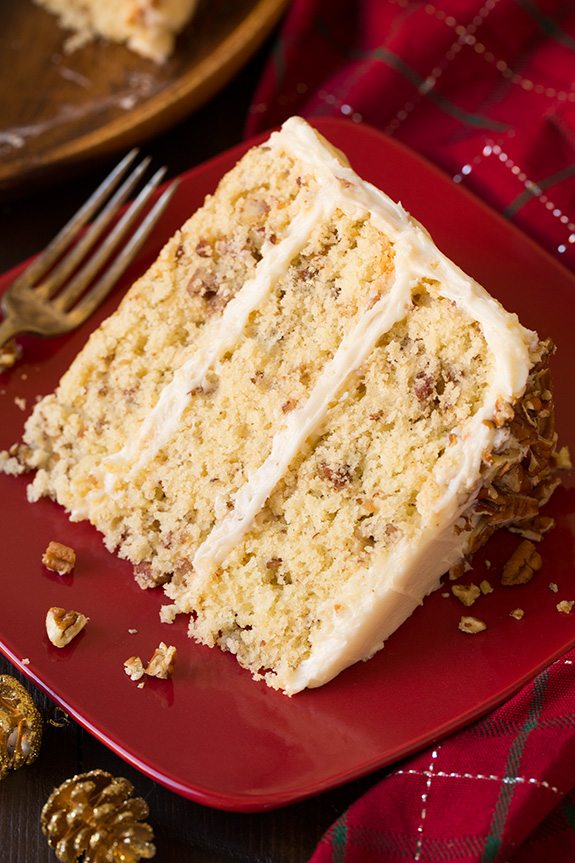
Since this is Back-to-School month, I’ll be sharing cookies and lunchbox treats recipes! The first is Toffee Crunch Cookies!

Ingredients

1 cup (2 sticks) butter

1 cup light brown sugar

1 cup white sugar

1 teaspoon vanilla extract

2 eggs

2 cups all-purpose flour

1/4 teaspoon salt

1/4 teaspoon baking soda

1 (10-ounce) bag toffee candy bits

1 cup oatmeal

1 cup sweetened flake coconut

1 cup chopped almonds (I’m going to try walnuts or pecans)

Directions

Preheat oven to 350 degrees F.

Cream together the butter, sugar and vanilla. Beat the eggs slightly; then add to the butter mixture and mix well. Sift flour, salt and baking soda; then add slowly to the moist ingredients and mix thoroughly. Mix in the toffee bits, oatmeal, coconut and nuts.

Drop dough by the teaspoonful onto an ungreased baking sheet and bake for 15 minutes.

ENJOY!

South Dakota State Animal: Coyote

The historical presence of the coyotes in the South Dakota

You must keep in your mind that the coyotes are native animals of the state. Prior to the 1980s, they were mainly found in the western side of the state and in the counties at the border region of the Missouri River. With the increase in the size of their population, they started expanding to the other sides of the state. Now, coyotes are available in almost all the counties of the state. They have actually expanded their range in every nook and corner of the USA.

Once it was estimated that there are almost 80 to 90,000 coyotes available in the state of South Dakota only. The population of the coyote is mainly concentrated along the drained beds of the river. Now, they are also freely roaming among human beings in the Urban and semi-urban areas of the state. Being territorial animals, they like to establish their homes in good territory. Male coyote covers at least 10 to 20 square mile in their home range while female coyote covers only 10 to 15 square mile in their home range.

Diet and Habitat of the Coyotes in South Dakota

Coyotes are the native wild animals of the state. You can mainly find them in wooded areas, along the rivers, and in areas having very tall grass or brush. Coyotes have also now shifted towards the cities of the state as they can find here plenty of food, and many places to hide. Now, you can even witness them in many big metropolitan cities like New York City, Chicago, etc.

In these cities, these animals don’t like to confront human beings and are very timid and usually run away once they encounter people. Coyotes in South Dakota rely on a variety of fruits for their diet like Birds, eggs, mice, bugs, rabbits, squirrels, garbage, pet food, bird seeds, etc. In some cities, coyotes have been highly helpful in controlling the population of rodents, squirrels, and rabbits.

Ecological Importance of the Coyotes in the South Dakota

Coyotes play a significant ecological role in South Dakota’s ecosystems. As predators and scavengers, they contribute to the balance and health of the environment in various ways:

Regulation of Prey Populations

Coyotes help regulate the populations of their prey species, which can include rodents, rabbits, and small mammals. By keeping these populations in check, coyotes prevent overgrazing of vegetation and help maintain the health of plant communities.

Cascading Effects

The presence of coyotes can lead to cascading effects throughout the ecosystem. When coyotes suppress the populations of smaller predators such as foxes and raccoons, it can reduce the predation pressure on smaller mammals and birds that they would otherwise target. This can indirectly benefit other species and even plant communities.

Carrion Disposal

Coyotes are efficient scavengers, consuming carrion. By doing so, they help recycle nutrients back into the ecosystem, which can benefit soil fertility and nutrient cycling.

Seed Dispersal

Coyotes can aid in seed dispersal by consuming fruits and then dispersing the seeds in their scat across the landscape. This can contribute to plant diversity and the distribution of plant species.

In essence, coyotes are a crucial component of South Dakota’s ecosystems, playing a role in maintaining the delicate balance of nature. Their interactions with other species and their impact on food webs contribute to the overall health and functionality of the environment. Conservation efforts often focus on maintaining healthy predator populations like coyotes as part of broader strategies for preserving biodiversity and ecological stability.

SOURCE: WILDLYANIMALS.NET

The Munsters

Today would have been Yvonne De Carlo’s birthday (born in 1922 and passed away January 8, 2007.  Although she was famous for playing Lily Munster, I would definitely have trouble picking her out without all that make-up.  She was quite lovely!

I found this article on Mental Floss detailing things we might not know about The Munsters:

From Mental Floss:

The Munsters premiered on September 24, 1964,and was an immediate ratings success. The wacky antics of childlike patriarch Herman and his unusual (but not really scary) family originally ran for two seasons (70 episodes), but has remained on the air in some form ever since in syndication. Here are some behind-the-scenes facts about the goings-on at 1313 Mockingbird Lane.

1. THE SHOW WAS CREATED BY THE SAME TEAM BEHIND LEAVE IT TO BEAVER.

Joe Connelly and Bob Mosher’s credo while producing and writing for the classic family sitcom Leave it to Beaver was “write what you know.” Between them they had six children and they based a lot of their plots on their own home lives. They used this same philosophy when they created a sitcom about a suburban blue-collar family that just happened to be comprised of monsters. They didn’t want children to be frightened of the characters (as they might be when watching Frankenstein or Dracula during the Saturday afternoon “Creature Feature”), so they made Herman a typical working dad who carried a lunch box to work every day and who imparted homespun wisdom to his young son. The mother was caring and nurturing, even if she did serve rolled hyena foot roast for dinner, and an aging grandparent (who had a laboratory in the dungeon) lived with the family. All in all, a nice slice of down-home Americana.

2. THE CHOICE OF MONSTER CHARACTERS WAS STRICTLY INTENTIONAL (AND ROYALTY-FREE).

Universal Studios owned Universal Television, which owned The Munsters. Universal Studios also owned the copyrights to most of the classic monsters, including Dracula, the Wolf Man, and Frankenstein’s monster. The studio had been running their old classic horror films on television since the 1950s and found that there was still an impressive audience for these decades-old monster movies. When Connelly and Mosher pitched their series idea, CBS executives knew that they had one advantage that ABC lacked with The Addams Family: the ability to use the Universal monster characters. The Munsters regularly topped The Addams Family in the ratings, mainly because of the instant identifiability of (and built-in fan base for) Dracula, Frankenstein’s bride, et al.

3. HERMAN AND GRANDPA HAD THEIR COMEDY TIMING DOWN PAT BEFORE THE SHOW BEGAN.

Fred Gwynne and Al Lewis played so well off one another because they’d had a couple years of practice. They’d co-starred as Officers Francis Muldoon and Leo Schnauser on the hit sitcom Car 54, Where Are You? from 1961 until 1963. The two remained close friends long after The Munsters was cancelled.

4. “LILY” WAS ORIGINALLY “PHOEBE.”

She was also played by a different actress. In the unaired pilot, Mrs. Munster was played by Joan Marshall. But when the show was picked up as a series, CBS brass worried that Marshall’s look and onscreen demeanor were too similar to Carolyn Jones’ portrayal of Morticia Addams on rival network ABC. The producers were asked to recast the role, and along with a new actress came a new name for the character.

5. THE NEW “LILY” WASN’T EXACTLY WELCOMED BY HER CO-STARS AT FIRST.

Fred Gwynne and Al Lewis were not pleased when they heard that Yvonne De Carlo had been hired to replace Joan Marshall. They’d never met the film actress, but they were intimidated by her reputation as a Hollywood glamour queen. “She was a bona fide movie star,” Al Lewis recounted in a 2003 interview for A&E’s Biography, “and we didn’t think she would fit in with our brand of comedy. We were wrong.”

6. THEIR ONSCREEN CHEMISTRY WAS GREAT, BUT ALL WAS NOT ROSY BEHIND THE SCENES.

De Carlo’s comedic timing was great and she fit in fine while the cameras were rolling, but in between scenes she kept mainly to herself in her trailer. She often held up production while having minute adjustments done to her hair (she went through five different hairdressers during the show’s two-year run), makeup, and nails, which aggravated the cast and crew.

7. EDDIE WAS ALSO RECAST AFTER THE PILOT.

Nate “Happy” Derman played wolf-boy Eddie Munster in the pilot, but his growling, clawing characterization was a little too lycanthropic for the network’s taste. He was replaced by Butch Patrick, who played Eddie more like a pointy-eared version of Beaver Cleaver.

8. MARILYN WAS PLAYED BY TWO DIFFERENT ACTRESSES.

But in this case it was the actress’s decision, not the producers’: New York-based Beverley Owen played Marilyn for the first 13 episodes, but she was desperately unhappy working in California and missed her fiance, who was back on the east coast. Gwynne and Lewis intervened on her behalf and talked to the producers to get her released from her contract. She went home, got married, and eventually got a role on the soap opera Another World, which was filmed in New York.

9. PAT PRIEST GOT THE ROLE IN PART BECAUSE OF HER SIZE.

Pat Priest, the daughter of Treasurer of the United States Ivy Baker Priest, was not only blonde (brunette Owen had worn a wig as Marilyn), she was also the same height and had almost the exact same measurements as Owen. Which meant that all of the existing “Marilyn” costumes and accessories fit her perfectly, so there would be no need to spend money on a replacement wardrobe once she was hired.

10. HERMAN’S COSTUME WAS A PERSONAL TORTURE CHAMBER FOR FRED GWYNNE.

Even though Gwynne would eventually reminisce that Herman was one of his favorite characters, the time he spent on The Munsters set was often fairly miserable, thanks to the various devices necessary to transform him into the lovable Frankenstein monster. On his feet he wore asphalt paver’s boots with four-inch soles, and his thighs, arms, and torso were covered in 40 pounds of foam rubber padding. He contended with back pain daily caused by the weight of the suit and inflexibility of the shoes. His head was fitted with a foam latex piece to flatten the top of his head and then he had to endure two hours in the makeup chair. He perspired freely under the heavy costume and hot studio lights and lost 10 pounds in one month despite consuming gallons of lemonade between takes. The producers eventually rented a compressed air tank and would poke the nozzle inside Gwynne’s collar to blow cool air on him.

11. THE COSTUME HAD ONE BENEFIT: IT EXCUSED GWYNNE FROM PERSONAL APPEARANCES.

As The Munsters gained popularity, its stars received more and more requests to appear at various functions. The producers, of course, sent the actors out as often as possible since such appearances not only promoted the show, they also propelled the sales of the various Munsters merchandise that saturated the market at the time. Only Fred Gwynne was able to relax on his days off (for the most part), since the time and expense required to get him into character outweighed the publicity value of cutting ribbons at supermarket openings. One of the rare times he played Herman in public was alongside Al Lewis in the 1964 Macy’s Thanksgiving Day Parade. Gwynne confessed to TV Guide that he’d been taking slugs from a bottle of whiskey the entire time, because he “had to get bombed so I could say ‘hello’ to the little kiddies for 40 blocks.”

12. THE MUNSTER KOACH WAS BUILT BY THE SAME COMPANY THAT CREATED THE BATMOBILE.

Hollywood custom car builder George Barris used three Model T Ford bodies to construct the 18-foot-long Munster-mobile. The brass radiator and fenders were hand formed and the velvet upholstery was “blood red.” It took 21 days to complete at a total cost of $18,000.

SOURCE: MENTAL FLOSS

What Shall We Make Today?

The last entry in our No-Bake Goodies series is Chocolate Peanut Butter Cookies.

Ingredients

2 cups sugar

1/2 cup butter or margarine, cubed

1/2 cup 2% milk

3 tablespoons baking cocoa

Dash salt

1/2 cup creamy peanut butter

1 teaspoon vanilla extract

3 cups old-fashioned oats

Directions

In a large saucepan, combine the first 5 ingredients. Bring to a boil, stirring constantly. Cook and stir 3 minutes.

Remove from heat; stir in peanut butter and vanilla until blended. Stir in oats. Drop mixture by tablespoonfuls onto waxed paper-lined baking sheets. Refrigerate until set. Store in airtight containers.

ENJOY!

Hoopoe

The Eurasian hoopoe (Upupa epops ) is the most widespread species of the genus Upupa. It is a distinctive cinnamon colored bird with black and white wings, a tall erectile crest, a broad white band across a black tail, and a long narrow downcurved bill. Its call is a soft “oop-oop-oop”. It is native to Europe, Asia and the northern half of Africa. It is migratory in the northern part of its range. It spends most of the time on the ground probing for grubs and insects. The clutch of seven to eight eggs is laid in an existing cavity. The eggs are incubated by the female and hatch asynchronously. Some ornithologists treat the African and Madagascar hoopoes as subspecies of the Eurasian hoopoe.

Appearance

The Eurasian hoopoe is a cinnamon-colored bird with black and white wings, a tall erectile crest, a broad white band across a black tail, and a long narrow down curved bill. The bird has broad and rounded wings capable of strong flight which are larger in the northern migratory subspecies. The hoopoe has a characteristic undulating flight, which is like that of a giant butterfly, caused by the wings half-closing at the end of each beat or a short sequence of beats.

Eurasian hoopoes are widespread in Europe, Asia, and North Africa, and northern Sub-Saharan Africa. Most European and north Asian birds migrate to the tropics in winter. Those breeding in Europe usually migrate to the Sahel belt of sub-Saharan Africa. The African populations are sedentary all year. Eurasian hoopoes require bare or lightly vegetated ground on which to forage and vertical surfaces with cavities (such as trees, cliffs, or even walls, nestboxes, haystacks, and abandoned burrows) in which to nest. These requirements can be provided in habitats such as heathland, wooded steppes, savannas and grasslands, as well as forest glades.

Habits and Lifestyle

Eurasian hoopoes are active during the day spending most of the time on the ground probing for grubs and insects. They are solitary foragers who typically feed on the ground. More rarely they will feed in the air, where their strong and rounded wings make them fast and maneuverable, in pursuit of numerous swarming insects. More commonly their foraging style is to stride over relatively open ground and periodically pause to probe the ground with the full length of their bill. The rest of the time is typically spent sunbathing by spreading out their wings and tails low against the ground and tilting their head up; they often fold their wings and preen halfway through. They also enjoy taking dust and sand baths. The typical call of these birds is a trisyllabic ‘oop-oop-oop’. Other calls include rasping croaks, when alarmed, and hisses. Females produce a wheezy note during courtship feeding by the male.

Diet and Nutrition

Eurasian hoopoes have a carnivorous (insectivorous) diet. They eat mostly insects, although small reptiles, frogs, and plant matter such as seeds and berries are sometimes taken as well.

Mating Habits

Eurasian hoopoes are serially monogamous, meaning they form pair bonds that last for a single breeding season. They are solitary and territorial breeders. The male calls frequently to advertise his ownership of the territory. Chases and fights between rival males (and sometimes females) are common and can be brutal. Birds will try to stab rivals with their bills, and individuals may be occasionally blinded in fights. The nest of Eurasian hoopoes is usually located in a hole in a tree or wall. It has a narrow entrance and may be unlined, or various scraps may be collected. The female alone is responsible for incubating the eggs. Clutch size varies with location and can contain from 4 to 12 eggs. The incubation period lasts between 15 and 18 days, during which time the male feeds the female. The chicks hatch with a covering of downy feathers. By around day 3 to 5, feather quills emerge which will become the adult feathers. The chicks are brooded by the female for between 9 and 14 days. The female later joins the male in the task of bringing food. The young fledge in 26 to 29 days and remain with the parents for about a week more.

Fun Facts for Kids

  • It is suggested that hoopoes received their name from their common ‘oop-oop-oop’ call. However, an alternative explanation of the English and scientific names is that they are derived from the French name for the birds, huppée, which means crested.
  • When foraging Eurasian hoopoes beat larger prey items against the ground or a preferred stone to kill them and remove indigestible body parts such as wings and legs.
  • Hoopoes have well-developed anti-predator defenses in the nest. The preen gland of the incubating and brooding female is quickly modified to produce a foul-smelling liquid, and the glands of nestlings do so as well. These secretions are rubbed into the plumage. The secretion, which smells like rotting meat, is thought to help deter predators, as well as deter parasites and possibly act as an antibacterial agent. From the age of 6 days, nestlings can also direct streams of feces at intruders and will hiss at them in a snake-like fashion. The chicks also don’t hesitate to strike with their bill or with one wing.
  • Hoopoes are distinctive birds and have made a cultural impact over much of their range. They were considered sacred in Ancient Egypt, and were “depicted on the walls of tombs and temples”.
  • Hoopoes were seen as a symbol of virtue in Persia, while across much of Europe these birds were thought of as thieves, and harbingers of war in Scandinavia.

SOURCE: ANIMALIA.BIO

Thriller

Today would have been Michael Jackson’s birthday (born in 1958 and passed away June 25, 2009). I liked a lot of his music but Thriller is a unique and memorable song for me.

[Verse 1]
It’s close to midnight
And something evil’s lurking in the dark
Under the moonlight
You see a sight that almost stops your heart
You try to scream
But terror takes the sound before you make it
You start to freeze
As horror looks you right between the eyes
You’re paralyzed

[Chorus]
‘Cause this is thriller, thriller night
And no one’s gonna save you
From the beast about to strike
You know it’s thriller, thriller night
You’re fighting for your life inside a killer
Thriller tonight, yeah
Ooh

[Verse 2]
You hear the door slam
And realize there’s nowhere left to run
You feel the cold hand
And wonder if you’ll ever see the sun
You close your eyes
And hope that this is just imagination (Girl)
But all the while
You hear a creature creepin’ up behind
You’re out of time

[Chorus]
‘Cause this is thriller, thriller night
There ain’t no second chance
Against the thing with forty eyes, girl
Thriller (Ooh), thriller night
You’re fighting for your life
Inside a killer, thriller tonight

[Bridge]
Night creatures call
And the dead start to walk in their masquerade
There’s no escaping the jaws of the alien this time
(They’re open wide)
This is the end of your life, ooh

[Verse 3]
They’re out to get you
There’s demons closing in on every side (Ooh)
They will possess you
Unless you change that number on your dial
Now is the time
For you and I to cuddle close together, yeah
All through the night
I’ll save you from the terror on the screen
I’ll make you see

[Chorus]
That this is thriller, thriller night
‘Cause I can thrill you more
Than any ghoul would ever dare try
Thriller (Ooh), thriller night
So let me hold you tight
And share a killer, thriller, chiller
Thriller, here tonight
‘Cause this is thriller, thriller night
Girl, I can thrill you more
Than any ghoul would ever dare try
Thriller (Ooh), thriller night
So let me hold you tight
And share a killer, thriller (Ow)

[Outro: Vincent Price & Michael Jackson]
I’m gonna thrill you tonight
Darkness falls across the land
The midnight hour is close at hand
Creatures crawl in search of blood
To terrorize y’all’s neighborhood (I’m gonna thrill you tonight)
And whosoever shall be found
Without the soul for getting down
Must stand and face the hounds of hell
And rot inside a corpse’s shell
I’m gonna thrill you tonight
Thriller, ooh, babe (Thriller)
I’m gonna thrill you tonight (Thriller night)
Thriller, oh, darling (Oh, baby)
I’m gonna thrill you tonight (Thriller)
Ooh, babe (Thriller night)
I’m gonna thrill you tonight (Thriller)
Oh, darling (Oh, baby)
Thriller night, babe (Thriller night, babe)
Ooh
The foulest stench is in the air
The funk of forty thousand years (Thriller night, thriller)
And grisly ghouls from every tomb
Are closing in to seal your doom
And though you fight to stay alive
Your body starts to shiver (I’m gonna thrill you tonight)
For no mere mortal can resist
The evil of the thriller

Happy Birthday Michael!

Sawfish

Sawfish are cartilaginous fish that belong to the order Rhinopristiformes, a group of rays containing families that amusingly appear to have been named according to items found in a luthier’s workshop. They share their order with guitarfishes, wedgefishes and banjo rays, all of which are benthic, marine predators with flattened bodies. They are sometimes known as carpenter sharks.

Bizarrely, the sawfish is equipped with a greatly elongated rostrum studded with a lethal set of outwards-facing ‘teeth’. Sawfish are generally found in shallow waters below 10m in depth, and like to diet on fish, crustaceans and mollusks. They are also among the largest of fish species, reaching at least 7 and half meters long.

Their strange shape, enormous size and preference for shallow, inshore waters have, somewhat unsurprisingly, garnered the curiosity and admiration of humans for thousands of years. Sadly the 5 species of sawfish are classified as either criticallyendangered or endangered due to being hunted for their fins, teeth or saw, as well as habitat destruction. They are protected by law in both Australia and the USA, which means it’s illegal to catch, collect, buy or sell any part of a sawfish with heavy fines for those that break the rules.

Interesting Sawfish Facts

1. Sawfish are equipped with a versatile weapon

The famous rostrum of the sawfish is primarily used to incapacitate and capture prey. It can be swept sideways like a sword to injure or kill, and is also used to pin unfortunate fish to the sea floor so they can be eaten head-first, a feeding strategy thought to disable any defensive spines their quarry might possess.

2. Their ‘saw’ contains between 14-37 denticles on each side

The sharp ‘teeth’ are not actually teeth in a traditional sense, and are called denticles – which are highly specialized scales. It’s common for the denticle count to be different on each side, and if they lose a one, it does not grow back again.

3. The rostrum is a multi-purpose survival tool

Packed into the rostrum of every sawfish are thousands of tiny organs called electroreceptors, which are able to pick up the tiny electrical currents produced by living organisms. Using this sixth sense to help them acquire their target from up to 40 centimeters away, sawfish swipe their lethal saw through the water to strike their prey with deadly accuracy.

4. When danger threatens, sawfish aren’t afraid to fight back

Sawfish have been observed in the wild using their rostrums to fend off large predators. The teeth lining the sides of the rostrum are extremely sharp, and although sawfish are placid towards divers, people are regularly injured while attempting to catch them for profit.

5. Sawfish are rays, not sharks- but saw-sharks exist too!

Both sawfish (order Rhinopristiformes) and saw-sharks (order Pristiophoriformes) are equipped with remarkably similar toothed rostrums, and use them to locate and capture prey in very similar ways. At first glance, sawfish and saw-sharks appear to be closely related, but in reality, they are distant cousins and only share a taxonomic Class.

6. They give birth to live young

Like many chondrichthyan species, sawfish eggs develop and hatch inside the body of their mother, resulting in live birth. This reproductive strategy is called ovoviviparity, and allows sawfish to avoid leaving their developing eggs in the open where they are at risk of predation.

7. Unlike most marine fish, sawfish can adapt to varying levels of salinity

Sawfish are capable of travelling freely between oceanic, estuarine and freshwater habitats. Some sawfish species have more affinity towards fresh water than others- the large tooth sawfish spends a great deal of time in lakes and rivers, and even gives birth there.

8. Sawfish can clone themselves

Occasionally, in the absence of any male individuals, female small tooth sawfish give birth to male offspring that are genetically identical to themselves; these cloned individuals are thought to account for around 3% of the population. This process is known as facultative parthenogenesis, and is thought to be a survival tactic that allows isolated females to establish new populations.

9. Fishing nets pose a huge danger to sawfish

The shape of their rostrum, as well as the behavior of sweeping it sideways defensively or while hunting, puts sawfish at extreme risk of entanglement in fishing nets. Of particular danger are passive nets that are left unattended, and also old, discarded ‘ghost’ nets.

10. Their value to humans makes them a target for poachers

Sawfish are one of the many chondrichthyan species relentlessly hunted for shark fin soup, and their rostrum is highly valued in traditional medicine. This is a big problem for sawfish populations- their value increases as their numbers dwindle, causing a feedback loop that leads to even more poaching.

11. Sawfish have had strong cultural significance for thousands of years

Beliefs surrounding sawfish vary greatly throughout the world, but they are commonly regarded as symbols of strength, protection and natural balance. European sailors feared the sawfish; they wrongly believed them to be highly dangerous and capable of sinking ships with their fearsome saws.

SOURCE: FACTANIMAL.COM

South Carolina State Flower: Yellow Jasmine

Yellow jessamine (Gelsemium sempervirens) became our official state flower in March 14,1924. Because it is native to our state, it is also called Carolina jessamine. Other names include trumpet vine, evening trumpet flower, and both yellow jasmine and Carolina Jasmine. (Jessamine and jasmine are two variations of the same word, and both are acceptable and accurate names for this plant. Here we refer to it as jessamine since that is how it is spelled in Joint Resolution No. 534, which established the flower as an emblem of South Carolina nearly a century ago.)

Jessamine is an evergreen vine that climbs trees, fences, and latticework all over our state. It blooms in very late winter or early spring, offering the first hope of warm weather to come! This flower loves sun and can grow quite fast given plenty of space and moist, well-drained soil.

When the US Mint decided to release quarters for each of the states, it was decided that Yellow Jessamine would appear on South Carolina’s quarter, along with the palmetto tree and the Carolina Wren (our state bird).

Important* – Although jessamine’s delicate, funnel-shaped blossoms are beautiful and fragrant, these flowers are poisonous! Touching them can produce an allergic reaction, and eating them can be fatal. Be careful not to mistake them with flowers such as honeysuckle, which contain a sweet and unharmful nectar.

SOURCE: SCIWAY.NET

Unsolved Mysteries Series

I found this series on the Parade website.  It describes 50 still (as of the published date of the article) unsolved mysteries.  Each month we’ll look at one or two.

From: Parade.com:

Get ready to have the hair on the back of your neck stand up when you read this round-up of the strangest unsolved mysteries of our time. Beware: Some of these unsolved mysteries contain graphic violent content and should be read with discretion.

50 Strangest Unsolved Mysteries

  1. The Body on Somerton Beach

In December 1948, a body was found on Somerton Beach in Adelaide, Australia. The body was a man who was dressed impeccably in a suit with polished shoes and his head was slumped against a wall. Authorities thought the cause of death was heart failure or more likely poisoning but, no trace of poison was found in the autopsy.

There wasn’t a wallet or any type of identification on the man and all the tags from his clothing were cut out. The fingerprints that the authorities took of him were also unidentifiable. They even put a photo of the body in the newspapers and still, no one could identify who the man was. Four months later after the body was found, detectives found a hidden pocket that was sewn on the inside of his trousers. Inside the pocket was a rolled-up piece of paper from a rare book called the Rubáiyát. The piece of paper had the words “Tamám Shud” on it which means “it has ended.” After months of looking for the exact book, authorities decide to bury the Somerton Man without identification. Although a cast was taken of the bust and he was embalmed to preserve him.

Eight months later, a man walked into the police station. He claimed that just after the body was found, he found a copy of the Rubáiyát in the back of his car that he kept parked near Somerton Beach. He thought nothing of it until he read about the search in a newspaper article. Sure enough, the book had a part of the final page that was torn and it matched the piece of paper that was found in the Somerton Man’s trousers. Inside the book were a phone number and some sort of strange code.

The phone number led the authorities to a woman named Jessica Thompson who lived nearby. During her interview, she was very evasive and even claimed she was going to faint when she saw the bust of the Somerton Man but denied knowing him. However, she said she did sell the book to a man named Alfred Boxall. Unfortunately, Alfred Boxall was still very much alive at the time and still had the copy of the Rubáiyát that Jessica had sold him. The code that was found ended up being even more unhelpful and as of today, it has still yet to be cracked.

To this day, the man on Somerton Beach has yet to be identified.

SOURCE: PARADE.COM

SOLVED?

From: sciencetimes.com:

Many theories circulated suggested that the individual known as Somerton Man was either a Cold War spy or a betrayed lover.

However, a researcher claims to have solved the puzzle after more than 70 years. According to Professor Derek Abbott of the University of Adelaide, Somerton Man was Carl Webb. Furthermore, he was an electrical engineer from Melbourne, not a Russian agent.

Together with American genealogist Colleen Fitzpatrick, Abbott conducted her research. The two examined DNA evidence from hairs found in a plaster cast that detectives had created of the man’s face more than 50 years prior.

Fitzpatrick explained that she and Abbott began their search for Abbott’s relative by building his family tree, starting with a match in a DNA database (a so-called DNA-cousin to Somerton guy). They continued this process until they located Abbott’s relative.

At the time, the family tree included roughly 4,000 people. They calculated that Webb was born in 1905, but according to Abbott, he was eventually recognized “as a person with no death record.”

Abbott added that they had proof that the Melbourne guy’s wife went to South Australia and that he split from her, so it’s possible he came to find her.

Fitzpatrick said the finding solved the decades-long mystery. This has been one of the most intriguing cases in Australia’s history, and identifying the man as Webb will also unravel the mysteries surrounding his death.

How Did the Somerton Man Died?

After examining the Somerton man, the physician concluded that the guy had passed away from heart failure sometime after two in the morning. However, the physician did not think that the heart failure was a natural cause. He concluded that the mystery guy had been poisoned with a toxin that was both fast-acting and fast-disappearing, making it impossible to find the source.

For his part, Professor Abbott thinks that some of the case’s most peculiar elements might not be as weird as they first seem. He doesn’t think the Somerton Man was poisoned, for example.

According to him, pathologists in the Victorian age were trained that if there were no apparent reason for the death, they would often recommend a poison. He noted that there was no evidence of poisoning, so it would not be accurate to conclude that it was the case.

He added that the man’s spleen was three times larger than it should have been during the autopsy. The doctor surmised that the man may have died from cancer, bacterial or viral infections, or positional asphyxia, among other possible causes of death.

SOURCE: SCIENCETIMES.COM

Catahoula Leopard Dog

Some dogs are easy-going companions. Others are natural-born workers, always ready for action. Then there’s the Catahoula Leopard Dog—a breed with a personality as bold as its name. Get ready to uncover what makes this breed one of the most intriguing in the canine world.

Louisiana Recognizes It as the Official State Dog

Declared Louisiana’s official state dog in 1979, the Catahoula Leopard Dog has deep historical roots in the region. This breed is used for hunting and herding, and it showcases impressive intelligence and resilience. Its official recognition reflects its significance in Louisiana’s culture, particularly in rural and working communities.

Catahoula means “sacred lake” in the Choctaw language, referencing the Catahoula Parish in Louisiana. This name highlights the breed’s connection to indigenous history and the swampy landscapes where it thrived. Some historical accounts suggest the breed was originally called the Catahoula Cur.

Eyes Can Be a Striking Mix of Colors

Heterochromia, a rare genetic trait, often occurs in Catahoulas and creates one-of-a-kind eye colors. Some have “glass eyes” that appear blue or white. Others display amber, green, or a mix in one eye. These variations enhance their mysterious, piercing gaze, making them even more captivating.

One Of the Most Unique Coat Patterns

Swirls and brindle stripes combine to make this breed instantly recognizable. In addition, the Catahoula Leopard Dog’s coat can display blue, red, black, or chocolate merle patterns. Because of this, no two Catahoulas look identical, making their appearance as distinctive as a fingerprint.

The Catahoula Leopard Dog’s Coat Is Water-Resistant

The Catahoula Leopard Dog’s coat is not only striking but also functional. Their short, dense fur helps repel water, allowing them to move through wet environments comfortably. This characteristic is especially beneficial in the wet and muddy terrains they are often found working in.

The American Kennel Club Does Not Recognize It

Despite its long history and working capabilities, the American Kennel Club (AKC) has not officially recognized the breed. Instead, organizations like the United Kennel Club and the National Association of Louisiana Catahoulas (NALC) uphold breed standards.

Requires A Job to Stay Happy

A daily routine with problem-solving exercises keeps the Catahoula Leopard Dog engaged and reinforces its instincts. The breed may become restless and destructive without this mental and physical stimulation. High-energy tasks like agility courses or herding trials are essential to prevent boredom.