If You’re Going Through Hell, You Must Be in Pennsylvania

In May of 1962, the town council of Centralia, Pennsylvania met to discuss their new landfill.

Earlier in the year, Centralia had built a 50-foot-deep pit that covered an area about half the size of a football field to deal with the town’s problem with illegal dumping. However, the landfill was getting full and needed clearing before the town’s annual Memorial Day celebration.  At the meeting, council members proposed a seemingly obvious solution: burning out the landfill.

At first, it seemed to work. The fire department lined the pit with an incombustible material to contain the fire, which they lit on the night of May 27, 1962. After the landfill’s contents were ash, they doused the remaining embers with water.  However, two days later, residents again saw flames, and then again, a week later on June 4. Centralia firefighters were baffled as to where the recurring fire was coming from. They used bulldozers and rakes to stir up the remains of the burned garbage to try to locate the concealed flames.   Finally, they discovered the cause.

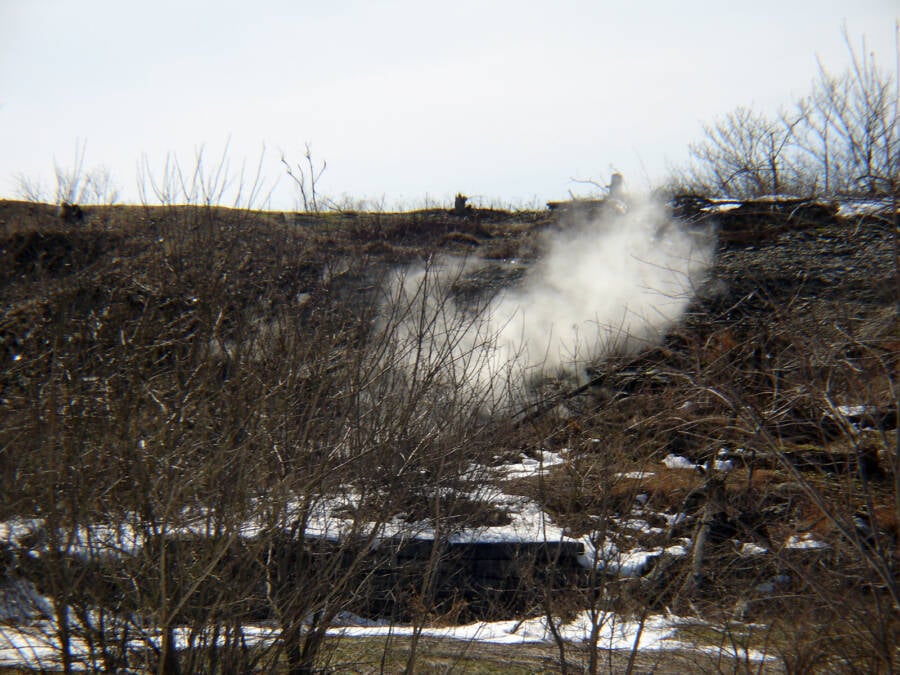
At the bottom of Centralia’s trash pit, next to the north wall, was a hole 15-feet wide and several feet deep. Waste had concealed the gap. As a result, it had not been filled with fire-retardant material.  And the hole provided a direct pathway to the labyrinth of old coal mines over which Centralia was built.  Soon, residents began complaining of foul odors entering their homes and businesses, and they noted wisps of smoke coming out of the ground around the landfill.

The town council brought in a mine inspector to check the smoke, who determined that the levels of carbon monoxide in them were indeed indicative of a mine fire. They sent a letter to the Lehigh Valley Coal Company (LVCC) stating that a “fire of unknown origin” was burning under their town.  The council, the LVCC, and the Susquehanna Coal Company, which owned the coal mine in which the fire was now burning, met to discuss ending the fire as quickly and cost-effectively as possible. But before they reached a decision, sensors detected lethal levels of carbon monoxide seeping from the mine, and all Centralia-area mines were immediately shut down.
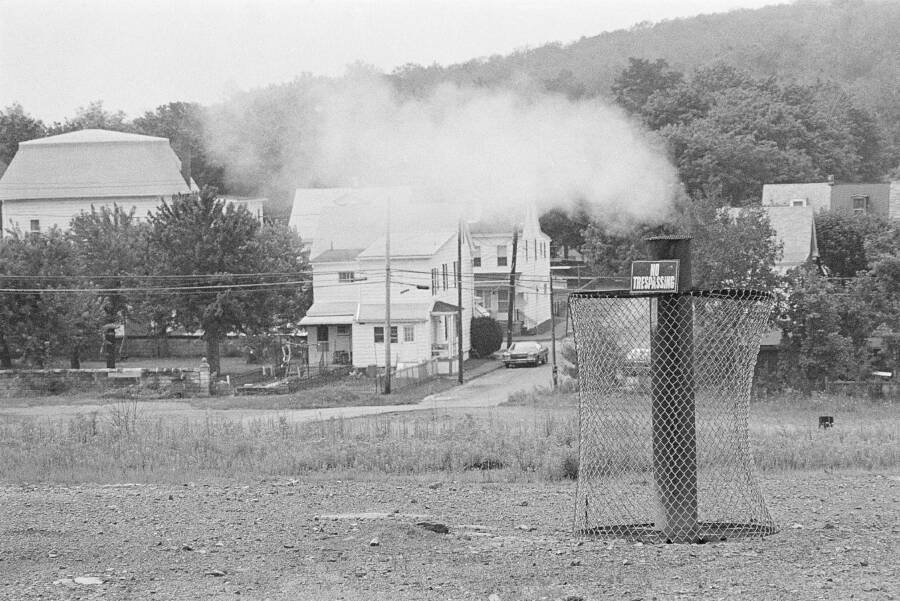
 The commonwealth of Pennsylvania tried to stop the spreading of the Centralia fire several times, but all attempts were unsuccessful.

The first project involved excavating beneath Centralia. Pennsylvania authorities planned to dig out the trenches to expose the flames so they could extinguish them. However, the plan’s architects underestimated the amount of earth that would have to be excavated by more than half and eventually ran out of funding.   The second plan involved flushing out the fire by using a mixture of crushed rock and water. But uncommonly low temperatures at the time caused the water lines to freeze, as well as the stone grinding machine.  The company also worried that the amount of mixture they possessed could not completely fill the warren of mines, so they elected to fill them only halfway, leaving ample room for the flames to move.  Eventually, their project also ran out of funding after going almost $20,000 over budget. By then, the fire had spread by 700 feet.

But that didn’t stop people from going about their daily lives, living above the hot, smoking ground. The town population was still about 1,000 by the 1980s, and residents enjoyed growing tomatoes in the midwinter and not having to shovel their sidewalks when it snowed.

In 2006, Lamar Mervine, the then-90-year-old mayor of Centralia, said people learned to live with it. “We’d had other fires before, and they’d always burned out. This one didn’t,” he said.

Twenty years after the fire started, however, Centralia, Pennsylvania began to feel the effects of its eternal flame underground. Residents started passing out in their homes from carbon monoxide poisoning. The trees began to die, and the ground turned to ash. Roads and sidewalks began to buckle.  The real turning point came on Valentine’s Day in 1981, when a sinkhole opened up underneath 12-year-old Todd Domboski’s feet. The ground was searing and the sinkhole was 150-feet deep. He only survived because he was able to grab ahold of an exposed tree root before his cousin arrived to pull him out. In the 1980s, Pennsylvania ordered everyone out to raze the town’s buildings and the federal government even revoked its ZIP code.

By 1983, Pennsylvania had spent more than $7 million trying to put out the fire with no success. A child had almost died. It was time to abandon the town. That year, the federal government appropriated $42 million to purchase Centralia, demolish the buildings, and relocate the residents.  But not everybody wanted to leave. And for the next ten years, legal battles and personal arguments between neighbors became the norm. The local newspaper even published a weekly list of who was leaving. Finally, Pennsylvania invoked eminent domain in 1993, by which point only 63 residents remained. Officially, they became squatters in houses they had owned for decades.

Even so, that didn’t put an end to the town. It still had a council and a mayor, and it paid its bills. And over the next two decades, residents fought hard to stay legally.  In 2013, the remaining residents — then fewer than 10 — won a settlement against the state. Each was awarded $349,500 and ownership of their properties until they die, at which point, Pennsylvania will seize the land and finally demolish what structures remain.

Mervine recalled choosing to stay with his wife, even when offered a bailout. “I remember when the state came and said they wanted our house,” he said. “She took one look at that man and said, ‘They’re not getting it.’”  “This is the only home I’ve ever owned, and I want to keep it,” he said. He died in 2010 at the age of 93, still illegally squatting in his childhood home. It was the last remaining building on what was once a three-block-long stretch of row houses.

Fewer than five people still live in Centralia, PA. Experts estimate there is enough coal underneath Centralia to fuel the fire for another 250 years.  And the abandoned Route 61 that leads into the town center was also given new life for many years. Artists transformed this three-quarter-mile stretch into a local roadside attraction known as the “graffiti highway.”

Even as the pavement cracked and smoked, people came from around the country to leave their mark. By the time a private mining company purchased the land and filled the road with dirt in 2020, nearly the entire surface was covered by spray paint.

Today, Centralia, Pennsylvania is better known as a tourist attraction for people looking to glimpse one of the plumes of noxious smoke rising from beneath the earth. The surrounding forest has crept in where a once-thriving main street was lined with long-demolished stores.

“People have called it a ghost town, but I look at it as a town that’s now full of trees instead of people,” resident John Comarnisky said in 2008.

“And truth is, I’d rather have trees than people.”

The Last Laugh…

Some people ALWAYS have to have the last word or the last laugh.  These people think they have figured out just how to do that. 

I was hoping for a pyramid…

well this sucks…

Even celebrities got in on the act…

Rodney Dangerfield

Mel Blanc

And there’s the tongue in cheek ones…

now I know something you don’t…

If you go through life with a name like “Yeast,” you’ve probably already heard every bread joke known to man. If you can’t beat ’em, join ’em.

nobody consulted me…

damn it’s dark down here…

I’m with stupid…

I see dumb people…

Good Night, Harry

Harry Houdini’s grand illusions and daring, spectacular escape acts made him one of the most famous magicians of all time. Houdini was actually born Erich Weisz on March 24, 1874, in Budapest, Hungary. One of seven children born to a Jewish rabbi and his wife, Weisz moved with his family as a child to Appleton, Wisconsin, where he later claimed he was born. When he was 13, Weisz moved with his father to New York City, taking on odd jobs and living in a boarding house before the rest of the family joined them. It was there that he became interested in trapeze arts.

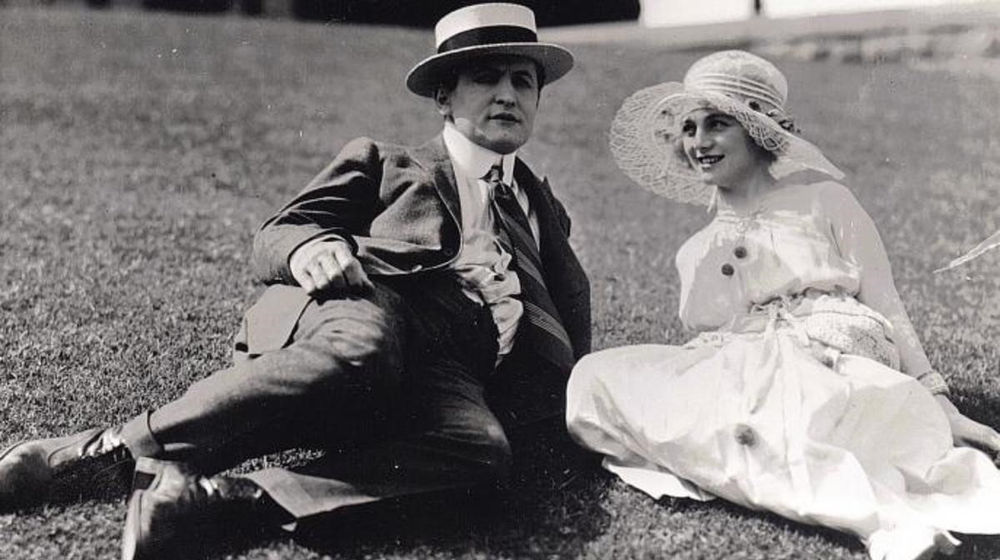
In 1894, Weisz launched his career as a professional magician and renamed himself Harry Houdini, the first name being a derivative of his childhood nickname, “Ehrie,” and the last an homage to the great French magician Jean Eugène Robert-Houdin. (Although he later wrote The Unmasking of Robert-Houdin, a study that set out to debunk Houdin’s skill.) Though his magic met with little success, he soon drew attention for his feats of escape using handcuffs. In 1893, he married fellow performer Wilhelmina Beatrice Rahner, who would serve as Houdini’s lifelong stage assistant under the name Beatrice “Bess” Houdini.

In 1899, Houdini’s act caught the attention of Martin Beck, an entertainment manager who soon got him booked at some of the best vaudeville venues in the country, followed by a tour of Europe. Houdini’s feats would involve the local police, who would strip search him, place him in shackles and lock him in their jails. The show was a huge sensation, and he soon became the highest-paid performer in American vaudeville.

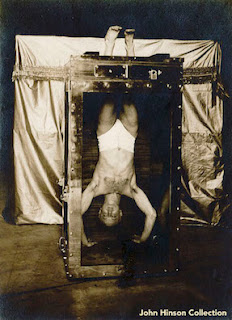
Houdini continued his act in the United States in the early 1900s, constantly upping the ante from handcuffs and straight jackets to locked, water-filled tanks and nailed packing crates. He was able to escape because of both his uncanny strength and his equally uncanny ability to pick locks. In 1912, his act reached its pinnacle, the Chinese Water Torture Cell, which would be the hallmark of his career. In it, Houdini was suspended by his feet and lowered upside-down in a locked glass cabinet filled with water, requiring him to hold his breath for more than three minutes to escape. The performance was so daring and such a crowd pleaser that it remained in his act until his death in 1926.

Houdini’s wealth allowed him to indulge in other passions, such as aviation and film. He purchased his first plane in 1909 and set out to become the first person to man a controlled power flight over Australia in 1910. While he did it after a few failed attempts, it later was revealed that Houdini was likely beaten to the punch by just a few months by a Capt. Colin Defries, who made a short flight in December 1909.

Houdini also launched a movie career, releasing his first film in 1901, Merveilleux Exploits du Célébre Houdini Paris, which documented his escapes. He starred in several subsequent films, including The Master Mystery, The Grim Game and Terror Island. In New York, he started his own production company, Houdini Picture Corporation, and a film lab called The Film Development Corporation, but neither was a success. In 1923, Houdini became president of Martinka & Co., America’s oldest magic company.

As president of the Society of American Magicians, Houdini was a vigorous campaigner against fraudulent psychic mediums. Most notably, he debunked renowned medium Mina Crandon, better known as Margery. This act turned him against former friend Sir Arthur Conan Doyle, who believed deeply in spiritualism and Margery’s sight. Despite his activism against spiritual charlatanism, Houdini and his wife did in fact experiment with otherworldly spiritualism when they decided that the first of them to die would try to communicate from beyond the grave with the survivor. Before her 1943 death, Bess Houdini declared the experiment a failure. 

Though there are mixed reports as to the cause of Houdini’s death, it is certain that he suffered from acute appendicitis. Whether his demise was caused by a McGill University student who was testing his will by punching him in the stomach (with permission) or by poison from a band of angry Spiritualists is unknown. What is known is that he died of peritonitis from a ruptured appendix on October 31, 1926, at the age of 52, in Detroit, Michigan.

After his death, Houdini’s props and effects were used by his brother Theodore Hardeen, who eventually sold them to the magician and collector Sidney H. Radner. Much of the collection could be seen at the Houdini Museum in Appleton, Wisconsin, until Radner auctioned it off in 2004. Most of the prized pieces, including the Water Torture Cell, went to magician David Copperfield.

The Houdini Seances

The reason I am including Houdini in the whole Halloween themed month is the Houdini seances.  In 1927, the year following Houdini’s death, Bess Houdini held the first of several seances in an attempt to contact her deceased husband. Harry had told her he would deliver a message to her in the form of a secret code that would be known only to her, if he were able to do so, from the other side.

She attempted to make contact privately, and she also offered a $10,000 reward to anyone who might be able to deliver the message to her. A medium named Arthur Ford was apparently able to meet the challenge, and Bess publicly accepted the results. Ford stated that he had been able to receive the coded message, which contained the words “Rosabelle believe.”

In January 1929 Bess and Ford participated in a seance in which Houdini purportedly came through. However, this was soon decried in the newspapers as a hoax, with allegations that Houdini’s secret code had already been revealed and that Ford was a fraud. Eventually, Bess did withdraw her support of Ford, and stated that she did not believe he had been able to communicate with her husband.

She continued to hold seances, however, with the final one taking place on Halloween night, October 31, 1936, the tenth anniversary of Houdini’s death. The event was a rather elaborate production staged on the roof of the Knickerbocker Hotel in Hollywood, with an audio recording released later. At the end of it, Houdini had failed to come through, and Bess announced that she had officially given up her efforts to reach him.  Although Bess apparently finally turned out the light, believers everywhere continue to seek a message from the Great Houdini, with seances held on Halloween night each year.

October 31, 1936

“I now reverently turn out the light. It is finished. Good night, Harry.”

— Bess Houdini

What Shall We Make Today: Halloween Edition

The best Halloween themed dessert by far is Dirt Cake.  It’s easy to make and lots of fun to be creative with your presentation.

Dirt Cake

1 16-oz package of Oreos (crushed)

¼ cup butter, softened

1 8-oz cream cheese, softened

1 cup powdered sugar

2 pkgs instant vanilla pudding (3.9-oz size)

3 ½ cups milk

12 oz cool whip

Place the Oreos in a Ziploc bag; close.  Using a rolling pin, gently crush the cookies.

In one bowl, cream the butter, the cream cheese and the powdered sugar. 

In another (large) bowl, beat the pudding mixes and milk.  Then fold in the whipped cream and make sure the whipped cream is thoroughly incorporated.  Gently mix the butter/cream cheese/powdered sugar mixture into the pudding/milk/whipped cream mixture.

Layer the creamed mixture with the cookie crumbs in a compote dish. Add gummy worms if desired.

OR…

You can use a 13 x 9 dish and create a graveyard. Milano cookies make great headstones.

Spooky Haunts: A Haunting in Tennessee

Most Halloween stories are simply fun, but there are a few made more memorable by an element of authenticity. Such is the case with the legend of the Bell Witch, a tale that’s been a part of Southern folklore for almost two centuries.

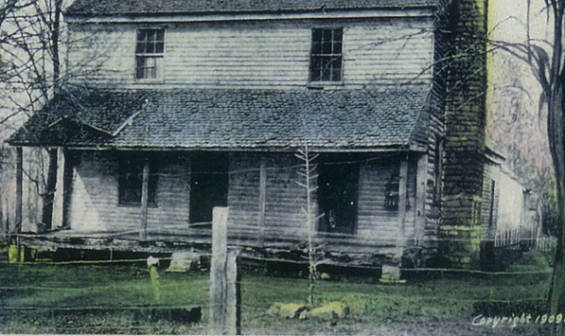
The story begins in 1817, when a farmer named John Bell moved from North Carolina to a 230-acre farm in Robertson County, Tennessee, a rural area not far from the Kentucky border. Legend has it that soon after arriving, Bell and his family began hearing strange noises: rattling chains, choking sounds and heavy knocking on the walls. Eventually, the family heard voices, or rather, a single voice belonging to the witch for which the story is named.

Frightened, Bell told members of the local community, and people from all around the area had soon heard about the ghostly occurrences. Some neighbors stayed overnight at Bell’s cabin so they could experience it for themselves. While some narratives claim that the ghost was a male slave whom Bell had killed in the past, others say it was someone he had cheated in North Carolina who had come back from beyond the grave for revenge. The most popular theory though is that the witch was a neighbor called Kate Batts who had a strong dislike for Bell and his daughter, Betsy.  

So widely spread was the news about The Bell Witch that people came from hundreds of miles around hoping to hear the spirit’s shrill voice or witness a manifestation of its vile temper. When word of the haunting reached Nashville, one of its most famous citizens, General Andrew Jackson, decided to gather a party of friends and journey to Adams to investigate.

The General, who had earned his tough reputation in many conflicts with Native Americans, was determined to confront the phenomenon and either expose it as a hoax or send the spirit away. A chapter in M. V. Ingram’s 1894 book, An Authenticated History of the Famous Bell Witch – considered by many to be the best account of the story – is devoted to Jackson’s visit:

Gen. Jackson’s party came from Nashville with a wagon loaded with a tent, provisions, etc., bent on a good time and much fun investigating the witch. The men were riding on horseback and were following along in the rear of the wagon as they approached near the place, discussing the matter and planning how they were going to do up the witch. Just then, traveling over a smooth level piece of road, the wagon halted and stuck fast. The driver popped his whip, whooped and shouted to the team, and the horses pulled with all of their might, but could not move the wagon an inch. It was dead stuck as if welded to the earth. Gen. Jackson commanded all men to dismount and put their shoulders to the wheels and give the wagon a push, but all in vain; it was no go. The wheels were then taken off, one at a time, and examined and found to be all right, revolving easily on the axles. Gen. Jackson after a few moments thought, realizing that they were in a fix, threw up his hands exclaiming, “By the eternal, boys, it is the witch.” Then came the sound of a sharp metallic voice from the bushes, saying, “All right General, let the wagon move on, I will see you again to-night.” The men in bewildered astonishment looked in every direction to see if they could discover from whence came the strange voice, but could find no explanation to the mystery. The horses then started unexpectedly of their own accord, and the wagon rolled along as light and smoothly as ever.

According to some versions of the story, Jackson did indeed encounter The Bell Witch that night:

Betsy Bell screamed all night from the pinching and slapping she received from the Witch, and Jackson’s covers were ripped off as quickly as he could put them back on, and he had his entire party of men were slapped, pinched and had their hair pulled by the witch until morning, when Jackson and his men decided to hightail it out of Adams. Jackson was later quoted as saying, “I’d rather fight the British in New Orleans than to have to fight the Bell Witch.”

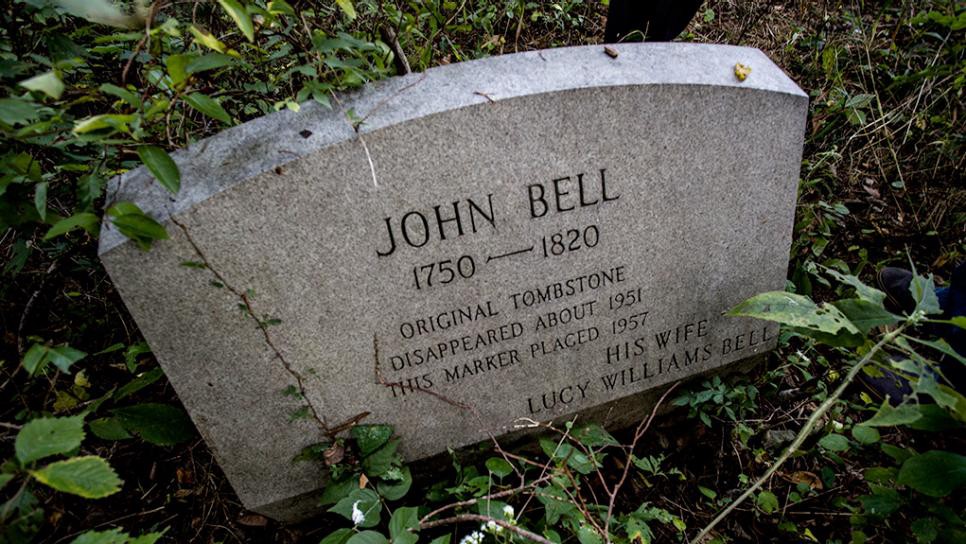
The torment of the Bell house continued for years, culminating in the ghost’s ultimate act of vengeance upon the man she claimed had cheated her: she took responsibility for his death. In October 1820, Bell was struck with an illness while walking to the pigsty of his farm. Some believe that he suffered a stroke, since thereafter he had difficulty speaking and swallowing. In and out of bed for several weeks, his health declined. The Tennessee State University in Nashville, Tennessee, tells this part of the story:

On the morning of December 19, he failed to awake at his regular time. When the family noticed he was sleeping unnaturally, they attempted to arouse him. They discovered Bell was in a stupor and couldn’t be completely awakened. John Jr. went to the medicine cupboard to get his father’s medicine and noticed it was gone with a strange vial in its place. No one claimed to have replaced the medicine with the vial. A doctor was summoned to the house. The witch began taunting that she had place the vial in the medicine cabinet and given Bell a dose of it while he slept. Contents of the vial were tested on a cat and discovered to be highly poisonous. John Bell died on December 20. “Kate” was quiet until after the funeral. After the grave was filled, the witch began singing loudly and joyously. This continued until all friends and family left the grave site.

The Bell Witch left the Bell household in 1821, saying that she would return in seven years time. She made good on her promise and “appeared” at the home of John Bell, Jr. where it is said, she left him with prophecies of future events, including the Civil War, and World Wars I and II. The ghost said it would reappear 107 years later – in 1935 – but if she did, no one in Adams came forward as a witness to it.

Some claim that the spirit still haunts the area. On the property once owned by the Bells is a cave, which has since become known as The Bell Witch Cave, and many locals claim to have seen strange apparitions at the cave and at other spots on the property.

As it’s told today, most of the story behind the Bell Witch comes from a book written by Martin Van Buren Ingram more than 70 years after the alleged incidents took place. The book was called “An Authenticated History of the Bell Witch,” but, unfortunately for fans of the supernatural, no one else has been able to authenticate what Ingram wrote.

Another thing that makes this particular yarn so chilling is that you can visit the rural Tennessee location where it all (allegedly) took place.  The property that John Bell once owned has been turned into a tourist attraction. There’s a cave on the property that is said to be especially haunted. Tours are offered during the summer and also in the fall, from Labor Day through Halloween. They include a hike into the cave and a chance to walk through a replica of the cabin that Bell and his family called home.

A few rational explanations of The Bell Witch phenomena have been offered over the years. The haunting, they say, was a hoax perpetrated by Richard Powell, the schoolteacher of Betsy Bell and Joshua Gardner, with whom Betsy was in love. It seems Powell was deeply in love with the young Betsy and would do anything to destroy her relationship with Gardner. Through a variety of pranks, tricks, and with the help of several accomplices, it is theorized that Powell created all of the “effects” of the ghost to scare Gardner away.

Indeed, Gardner was the target of much of the witch’s violent taunting, and he eventually did break up with Betsy and left the area. It has never been satisfactorily explained how Powell achieved all these remarkable effects, including paralyzing Andrew Jackson’s wagon. But he did come out the winner. He married Betsy Bell.

While most people will enjoy the spooky thrill of seeing the places where this famous story supposedly took place, if not everyone in the family likes the idea of getting scared, there are other options. The people who run the Bell tours also have canoes and kayaks for rent. Visitors can paddle down an especially scenic section of the Red River near Adams and get picked up by a shuttle bus that returns them to Bell’s.

Bell’s Cave is a fun destination for those who want to get into the Halloween spirit, and it’s a bonus that the site is located in a beautiful part of the state filled with natural attractions.

Frankensteins

Yes, that’s NOT a typo.  There have been several nominees for Frankensteins in my opinion.  But first a warning: some of these segments are quite gruesome, and if you are a dog lover—perhaps watch Young Frankenstein instead and have a few laughs.

Jonathon Dippel

Was “mad scientist” and alchemist Johann Konrad Dippel the inspiration and original model of Mary Shelley’s Victor Frankenstein? Although Mary Shelley never mentioned Dippel or a castle in Germany in any of her previously known writings, the similarities are astonishing.

Johann Konrad Dippel was born in 1673 and died in 1734. He wrote over seventy works and treatises on mathematics, chemistry and philosophy, most written under the pseudonym of Christianus Democritus, with his texts now buried in various academic collections.  Dippel was an alchemist, trying to turn base metals to gold, and searching especially for the Philosopher’s Stone and the Elixir Vitae, the secret to extended, if not eternal life.

Dippel was an early chemical manufacturer. He created a concoction called “Dippel’s Oil” or “Dippel’s Animal Oil” used primarily as an agent in the tanning of animal hides, from where it most likely gets its name, and in cloth coloring. It was also said to be useful in calming the pangs and distempers of pregnancy. Whether it was to be used topically, digested, or as an aromatic, is unclear. Its chemical composition with ingredients like Butyronitrile Methylamine and Dimethylpyrrole Valeramide would suggest that ingesting any significant amount would not be very healthy.

Dippel’s connection to Frankenstein comes from his days at the castle on the hilltop near Darmstadt above the Rhine River Valley below Mainz. Johann Dippel was resident there for a time when the castle had fallen vacant of its lordly Franckenstein family owners after the Reformation and the War of European Succession. Dippel tried unsuccessfully to induce the Landgrave of Hesse to deed him the castle in exchange for Dippel’s providing the duke with the secret of everlasting life, the infamous elixir.

He never did come up with a successful Elixir of Eternal Life while at Darmstadt and eventually moved on, with the locals rather chasing him away like those pitchfork wielding villagers in the Universal Frankenstein movies. His permanent acquisition of the castle was opposed and the legends of his making his oil and formulas from the body parts of human corpses was likely an early form of conspiracy theory, born from his boiling animal bones to get ingredients, mixed with the castle’s time as a prison where prisoners were buried in pauper’s graves, and it was hinted that he dug them up to make his concoction, and therefore an easy connection to digging up the dead to bring eternal life.

Dippel moved on from the castle at Darmstadt, still ever seeking his life sustaining elixir, but in the end it may have had the opposite effect. He died of complications of chemical poisoning, either from his close work with some very toxic substances over time, or perhaps sampling his own elixir formula, which may have had the opposite effect than the one intended.

Andre Ure

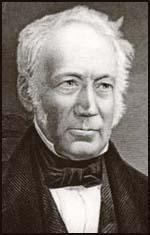
Andrew Ure was born on May 18, 1778, in Glasgow, United Kingdom. The son of a wealthy cheesemonger, he received an expensive education, studying at both Glasgow University and Edinburgh University. He received his MD from the University of Glasgow in 1801 before spending a brief time with the army, serving as a surgeon. In 1803, he finally settled in Glasgow; becoming a member of the Faculty of Physicians and Surgeons.

In 1804, at the newly formed Andersonian Institution (now the University of Strathclyde), Ure became a professor of chemistry and natural philosophy. He gave evening lectures on chemistry and mechanics, which he encouraged the average working man and woman to attend. With audiences of up to 500, his lectures inspired the foundation of numerous mechanical institutions throughout Britain.

During this same time, Ure worked as a consultant for the Irish linen board. There he devised his alkalimeter for volumetric estimates of the true alkali contents of various substances that were being used in the linen industry. By this time, he had successfully earned himself a reputation as a highly competent practical chemist.

It was at Glasgow University where Andrew Ure became acquainted with James Jeffray, a professor of anatomy and physiology. Jeffray was a renowned teacher, attracting over 200 students to his classes each year. An innovative surgeon, he is credited (along with Edinburgh obstetrician James Aitken) with the invention of the chainsaw for use in the excision of diseased bone. As a teacher in anatomy, a field that was growing in demand, his options for teaching instruments were limited. The only legal supply of material for dissection was the bodies of hanged criminals. On November 4, 1818, Ure joined Jeffray in the dissection of one such criminal.

Matthew Clydesdale was a weaver, arrested and found guilty of murdering a 70 year old man in a drunken rage. He was sentenced to death by hanging, and on November 4, 1818, that execution was carried out. Upon his death, his body was placed in a cart and transported up to Glasgow University and into the Anatomy Theatre.

During this time, people, especially scientists, were fascinated with electricity. In fact, in 1780, Italian anatomy professor, Luigi Galvani, discovered that by utilizing sparks of electricity he could make a dead frog twitch and jerk. This discovery quickly led to others experimenting with electrical currents on other animals. Shows were made where scientists would electrify the heads of pigs and bulls.

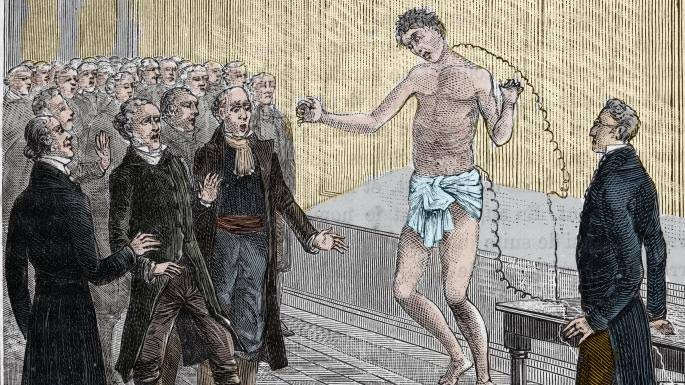
James Jeffray and Andrew Ure would take that experiment one step further. The crowd gathered in the Glasgow University Anatomy Theatre where they would learn what would happen when electricity was exposed to a deceased human body.

With his galvanic battery charged, the experiments commenced.

Incisions were made at the neck, hip, and heels, exposing different nerves. Ure stood over the body, holding two metallic rods, charged by a 270 plate voltaic battery. Those rods, when placed to the different nerves, caused the body to convulse and writhe. When the rods were touched to Clydesdale’s diaphragm, his chest heaved then fell. “When the one rod was applied to the slight incision in the tip of the forefinger,” Ure later described to the Glasgow Literary Society, “the fist being previously clenched, that finger extended instantly; and from the convulsive agitation of the arm, he seemed to point to the different spectators, some of whom thought he had come to life.”

The experiment lasted about an hour. Ure wrote his account of the experiment, and even delivered a lecture. Ure and Jeffray did not bring Matthew Clydesdale back to life, though they did not believe it was a failure on their methodology. Instead, Ure believed that if his death had not been caused by bodily injury, there was a possibility that his life could have been restored. He also noted that if their experiment had succeeded in bringing him back to life, it would not have been celebrated. After all, he was a murderer.

The story eventually took on a life of its own. Memories and accounts differed, and one such account is that of Peter Mackenzie. In 1865, Mackenzie claimed to have been present at the Glasgow University Anatomy Theatre that day. He claims that Ure had actually been successful, and Clydesdale had been brought back to life. To abate the risen fear among the crowd, one of the scientists grabbed a scalpel and slit his throat. Clydesdale fell down, once again, dead.

Robert Cornish

Tales of Mad Scientists have been in existence for centuries now. And while many are criticized for being wacky, inhumane and downright psychopathic many can also be celebrated for making breakthroughs within various scientific fields–especially within the field of medicine where procedures today have origins from millennia ago; in medieval times and before them in prehistory. One such tale with a more modern spin comes from the 1930s in Berkley, California where an American called Robert Cornish attempted to bring the dead back to life.

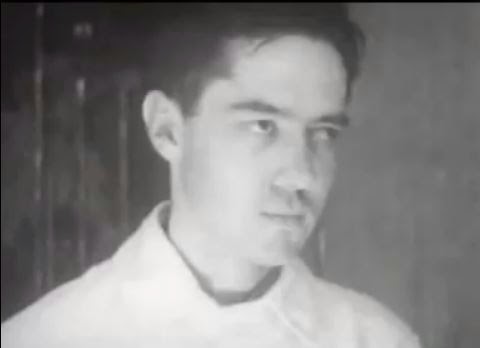
Cornish was a medical phenomenon, graduating at 18 from the University of California and gaining a Doctorate at 22. He was a handsome chap but his eccentricity was soon apparent as one of his invention concepts was a pair of spectacles to allow the reading of newspapers underwater. This may illustrate his intelligence; however as to gain a patent in those times was considered very noteworthy and could propel a person to fame. Cornish worked at the Department of Experimental Biology at a University when he began to get notoriety for something of a darker nature than underwater specs.

Dog-lovers read no further. Cornish began an experiment to cure the undead but not permitted to use human beings he had to operate on dogs. The doctor organized a public demonstration which Time magazine witnessed. He named his patients – five fox terriers – Lazarus after the mythical figure brought back to life by Jesus.

Robert Cornish tried many different techniques before gaining moderate success with the following. He would suffocate the animals first with either Nitrogen or ether. He would wait no more than five minutes after the heart had stopped to try and resuscitate. To do this he found a way to keep the blood circulating by using a piece of wood called a teeterboard, a type of see-saw to rock the patient up and down to maintain the circulation of blood.

Before re-animation, he would inject the creature with a concoction of saline, oxygen, adrenaline, blood as well as anti-coagulants and coagulants. Oxygen would be blown into the mouth via a rubber tube. Bear in mind this was in the 1950s when CPR and techniques of the sort were in their infancy meaning his methods were extremely right-field.

The first three dogs were revived but showed little signs of life after. The best result was Lazarus II who was in a coma for eight hours before passing again. The fourth dog – Lazarus IV – came back to life albeit blind and brain-damaged, Cornish reported that she recovered to near full strength in a matter of months. Lazarus V was the same but returned to normality in shorter time. These are the words of Doctor Cornish only however and were not confirmed by Time or anyone else it appears. Despite these factors, Cornish hailed his experiments a success.

The mad-cap doctor was heavily criticized and eventually fired from the UCLA Laboratory when protestations about the canine killings reached their ears. He was forced to do his experiments in the confines of his own abode and with pigs rather than dogs.

Requiring funding, Robert Cornish tried to clear his name by convincing people that his work was vital. This was through a movie titled ‘Life Returns’. Cornish played himself as does one of the Lazarus dogs. It uses a familiar aspect to pull at the heartstrings of the audience, with the doctor attempting to resurrect his son’s dead dog. It was the only way his son would love him again after all. The film was far from a success and ergo did nothing to improve the reputation of the doctor.

His next plan was to find a human patient. He searched the jails and found a willing convict called Thomas McMonigle, an inmate of San Quentin prison, convicted of killing a fourteen-year-old girl. The government declined the request on compassionate grounds. There is another rumor however which seems to be justified by newspaper reports from the time. This relates to the courts fearing a ‘double jeopardy’ clause. Death by the gas chamber which would have released the convict from his conviction and therefore he would have been a free man.

Vladimir Demikhov

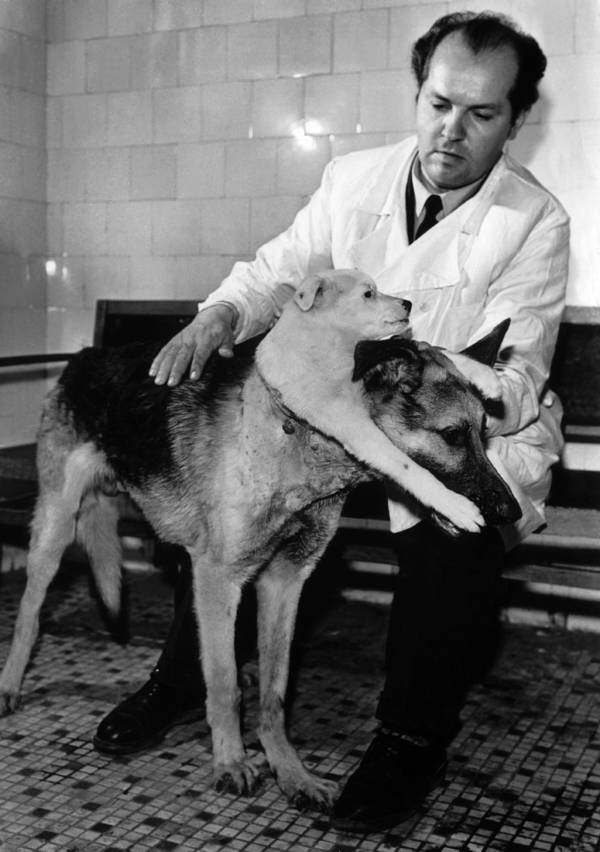
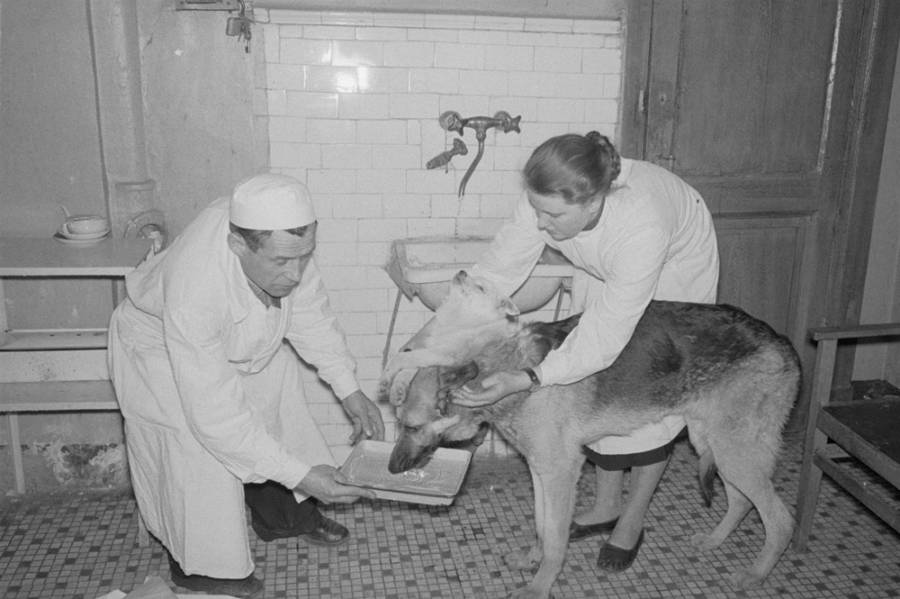
Calling Soviet doctor Vladimir Demikhov a mad scientist may be undercutting his contributions to the world of medicine, but some of his radical experiments certainly fit the title. Case in point — though it may seem like myth, propaganda, or a case of photoshopped history — in the 1950s, Vladimir Demikhov actually created a two-headed dog.

Even before creating his two-headed dog, Demikhov was a pioneer in transplantology — he even coined the term. After transplanting a number of vital organs between dogs (his favorite experimental subjects) he aimed, amid much controversy, to see if he could take things further: He wanted to graft the head of one dog onto the body of another, fully intact dog.

He was “successful”. In the above picture, laboratory assistant Maria Tretekova lends a hand as noted Russian surgeon Dr. Vladimir Demikhov feeds the two-headed dog he created by grafting the head and two front legs of a puppy onto the back of the neck of a full-grown German shepherd.

{{SHUDDER}}

I can’t leave the reader with such horrible images…let’s end with some happy, funny ones instead.

Spooky!

As I’ve previously mentioned I worked in a factory for most of my young adult life. It was close to my parents’ home, and because we were paid piece rate, if you were good and fast, you were rewarded with all kinds of opportunities to learn different jobs and work with different people.  In the overlock department, I met Maria.  She was a friendly, recently married, young Portuguese woman. Her English was excellent and she often translated for the many older Portuguese women who worked there.  I worked alongside her while she hemmed sleeves and I ran the binding machine.

One night, I had the strangest dream about Maria and I walking in the woods.  There were trees and grass and I was holding the hand of a young boy—and so was she.  As we walked, I realized it wasn’t woods, but a cemetery.  That was the entirety of the dream.  At work the next day I told her about the dream.  She said I was weird, we laughed and forgot about it. Two years had passed and Maria and I remained friends.  I helped throw her baby shower at work when she got pregnant.  Within two years after that, I was also married and had a son—just like Maria.

Life went on pretty much as usual for a while at the factory.  We sewed, filled orders, pretty much routine stuff.  Then one day disaster struck my life—my estranged husband died.  His parents had him cremated, refused to pick up his ashes and didn’t even tell me about it for several days.  We had no services for him.  We simply moved on.  The following year I began evening classes at a local college in preparation for making a better life for my son and I. 

And then one Tuesday morning, the Portuguese ladies were all upset when we arrived.  Several of the husbands of the ladies all worked together at the same construction company laying pipe.  There’d been an accident—a cave in—and 2 men had died.  Maria’s husband was lost.

Maria didn’t come back to work for 2 weeks, but I remember the morning that she did.  She came into the overlock room and I saw her look around till she saw me.  She marched right up to me.  “How did you know?” she screamed at me.  I took a step back, honestly not remembering the dream till that moment.  The cemetery…the 2 little boys…and us. 

JACK

I was scouring websites looking for pumpkin carving tips and I found these at Taste of Home!

1. You Don’t Need Fancy Tools

A simple $7 kit is sufficient for most classic jack-o’-lanterns and veggie carving projects, says Marc Evan and the crew at Maniac Pumpkin Carvers, who specialize in extraordinarily detailed etchings that are nothing short of stunning. For detailed work, you can use paring knives, linoleum cutters and precision blades. Rely on household items to step up effects. Lemon zesters are great for varying textures on your pumpkin. Melon ballers are useful for hollowing out a pumpkin or to create scooped-out balls that can later be pinned onto a pumpkin as eyes or a beaded necklace, says Evan. Scrubber sponges are optimal for smoothing out the surface (that is, if you plan on sculpting like Michelangelo).

2. Opt for an Imperfect Gourd

Most of us go to the pumpkin patch, or let’s be real, Wal-Mart, looking for the roundest and smoothest pumpkin. Don’t be afraid to get one that’s more visually interesting or even misshaped—as long as it doesn’t have any soft spots, according to Masterpiece Pumpkins‘ Gene Granata, who has been expertly carving pumpkins for more than 20 years. If you have a pattern, bring it with you. That way you can find the pumpkin that suits the shape of the pattern you’re going to carve. For the freshest pumpkin or one with the most staying potential, look for one that’s solid to the touch with a strong, sturdy stem.

3. Open From the Bottom

Here are a couple hacks that will simplify the job. Granata recommends always cutting open the bottom instead of the top around the stem. “When you pull that plug out, a lot of the seeds and stringy stuff comes out with it. Half your job of cleaning out the pumpkin is already done,” he says. Wipe down the exterior of the pumpkin before carving. If you’re creating a classic jack-o’-lantern, cut from the top so you can easily slip a candle (but beware it’ll dry out your pumpkin quicker) or battery-operated tea light into it.

4. Extra Scooping Saves Time

Scrap the walls of the pumpkin with a big metal spoon or the scooper from the classic carving kit until the walls are an inch thick. “This one is really important, especially for people who carve from stencils and patterns,” Granata says. How can you tell when you’ve scraped enough? Have inch-long dressmaker pins or thin screws ready to poke through a cut-out region to test the thickness. Or you can tape your template onto the pumpkin from the start and add pins all around the pattern. That way when you’re scraping down the inside, you can feel exactly when the thickness is right. “That will probably cut your carving time in half,” according to Granata.

5. Trace the Design

Thoroughly clean the face of your gourd. Then use sewing transfer paper (found in most arts-and-crafts stores) to replicate the pattern or design onto the pumpkin. Put the transfer paper between your design and the pumpkin, and make sure the transfer paper is facing down onto the squash. Use masking tape to tape down the design on the corners and the sides. Then trace the design with a ballpoint pen. “You can draw that whole pattern on there and now it’s on the pumpkin, waiting to be carved,” Granata says.

6. Be Patient While You Carve

You probably can’t wait to see your creative carving idea to come to life. So you’re likely carving and pulling the pieces out as you go. But to preserve your art’s stability, you should do the opposite and leave the pumpkin intact. Granata says, “It will help keep the whole thing stable and keep it from breaking. Then when you’re done and want to see the design, reach into the inside and gently poke the pieces from the inside out of the pumpkin. Things will come out way easier. If something gets stuck, go back with your tool and revisit the corners. Then you should have no problems.”

7. Save It for Later

Evan advises that if you’re carving something incredibly intricate like your favorite TV character of the year and need an extra day to complete it, wrap it tightly in plastic wrap and refrigerate.

8. Let the Kids Join In

If you’re in charge of carving, include your kids on the action with a few easier tasks like scooping out the pumpkin guts and separating the seeds from the stringy stuff.

For a simple yet spooky project, have your little helpers embellish a pumpkin without carving or sharp tools. Instead, decorate using glitter or stickers. Water-based paint such as acrylic or tempera works nicely on pumpkins, Evan says.

Some of the fabulous pumpkins done by pumpkin carvers:

Arachnophobia

Let’s be honest…no matter how valuable spiders are to our ecosystem…they give me the creeps! {{SHUDDER}} Setting those feelings aside, here are some amazing facts about spiders!

Spiders have blue blood – just like snails and octopuses.

Spider silk is liquid at the beginning and only becomes solid in the air.

Spiders only have muscles to pull their legs inwards. But some spiders do not have the opposite extensor muscles. Therefore, they move them outwards by pumping blood into them.

There are different types of spiders in which the female eats the male before, during or after copulation. The Black Widow is the best-known representative of sexual cannibalism.

Around 35,000 different types of spiders are known worldwide.

The Sydney funnel-web spider’s venom can be used after a stroke to prevent brain damage.

In total, all spiders eat around 800 million tons of prey each year. By contrast, whales only estimate up to 500 million tons of biomass.

Some spiders live together on a web after mating.

Jumping spiders can even see the ultraviolet spectrum. Their highly developed eyes ensure that they can jump from branch to branch without fail.

The water spider (Argyroneta aquatica) spins a dense web out of its silk, which is used as a diving bell.

Antarctica is the only continent where no spiders exist.

 Tidarren sisyphoides is a spider species of the family of tangle web spiders. The females of this species are one hundred times larger than males.

The Goliath birdeater’s bite claws are almost one inch (2.5 centimeters) long.

The Sydney funnel-web spider (Atrax robustus) is the most poisonous spider in the world. A dose of just 0.2 grams per kilogram of body weight is fatal to the victim.

New Guinea fishermen use the web of the golden orb-weaver (Nephila) for fishing because it is extremely tear-resistant.

In August 2008, the world’s largest spider web was discovered in Texas. In the Lake Tawakoni nature reserve, it spanned several bushes and trees and was built by around 250 spiders. It measures 180 meters in length.

The Colombian spider Patu digua is the smallest known spider in the world with a body size of up to 0.014 inches (0.37 millimeters).

Annually, more people die from being hit by a champagne cork than from the bite of a venomous spider.

In order to kill a spider, a woman in Kansas burned down her house.

The spider species Caeristris darwini spins the largest webs in the world. Their size can reach more than 30 square feet (2.8 square meters).

A bite of the Brazilian wandering spider can cause men an erection that lasts for hours.

The silk of the spider species Caeristris darwini is the toughest biomaterial in the world – ten times stronger than a comparable strand of Kevlar.

In order to better investigate the effects of a black widow’s poison, the scientist Allan Walker Blair voluntarily let the dangerous spider bite him.

The Huntsman spider (Heteropoda maxima) is the largest spider species in the world. Adult males usually have a span of up to 12 inches (30 centimeters). In Australia, a specimen estimated at 15.7 inches (40 centimeters) was discovered in 2017.

The spider species Amaurobius Ferox belongs to the genus of matriphages. This means that the spider female’s children eat their own mother after hatching from their eggs.

Martin Goodman – one of the founders of Marvel – thought Spider-Man was a bad idea because people do not like spiders.

Australia is home to some of the world deadliest animals. You can find the deadliest snake, spider, octopus and fish there. Nevertheless only a few people are killed by that animals and even more people are killed by horses each year than by Australia’s deadliest animals combined.

The fear of spiders is called arachnophobia.

Bolas spiders do not spin webs to catch prey. Instead, they use a long line of silk ended with a spot of sticky glue. It contains pheromones to simulate a potential sexual partner for certain insects. If prey comes too close to the mucus ball, the bola spider moves the silk line to catch the prey animal, much like a fishing line.

The ogre-faced spider has developed a very special hunting technique. It weaves a net between its four front legs and then dangles above places where prey are likely to pass through. If a prey is within range, it throws the net over it extremely fast.

With a leg span of up to 11.8 inches (30 centimeters), the Goliath birdeater (Theraphosa blondi) is the largest tarantula species in the world. It occurs exclusively in the tropical rainforests in northern Brazil, Venezuela, Guiana, and Suriname.

Spiders had a tail 100 million years ago.

There are about 300 species of spiders that can mimic the behavior, appearance or even fragrance of ants. Few of them deceive their prey in this way and then attack them from behind.

The largest jumping spider in the world is almost one inch (2.5 centimeters) long and can skip eight times its body length.

Jumping spiders weave a dense, non-sticky net under which they position themselves to being protected from bad weather like in a tent.

Jumping spiders do not use their silk to build a web, but as a tether when jumping.

Spiders are not insects, but arachnids.

There is only one known type of spider that has no eyes. Sinopoda scurion is a Huntsman spider and was discovered in a cave in Laos where there is no daylight.

Not all spiders have eight eyes. There are also some species that have only six, four or even just two eyes.

The spider species Cebrennus rechenbergi, also called cartwheeling spider, moves partly in a rolling flic-flac movement. It is then twice as fast as with normal movement.

Disclaimer: I need a happy spider picture to cleanse my brain…

Amityville: The House, the Horror and the Hoax

Thirty miles outside of New York City, nestled in the Long Island town of Amityville, stands the house forever linked to the Amityville Horror phenomenon. On November 13, 1974, the estate was the scene of mass murder. It was the middle of the night, when 23-year-old Ronald DeFeo Jr. killed six of his relatives with a .35 caliber rifle while they were asleep: parents Louise and Ronald DeFeo Sr., siblings 18-year-old Dawn, 13-year-old Allison, 12-year-old Marc, and nine-year-old John Matthew.

Though he confessed to his deeds, DeFeo’s defense would later attempt to enter an insanity plea. DeFeo claimed he was guided by malevolent voices in his head and couldn’t control his behavior.  It was this claim, and the murders themselves, that spawned the notion that 112 Ocean Avenue itself was haunted — and that the DeFeo family as a whole were victims of the house. However, a look at DeFeo Jr.’s life provides an alternative reading of the events.

With an abusive father and passive mother, the boy’s troubled childhood led to substance abuse as an adult. He not only lashed out at his father but once even threatened him with a gun. The parents hoped letting him live at home and with a weekly stipend would help. DeFeo Jr. barely held a job.

On the day in question, DeFeo Jr. left work and went to a bar. He kept calling his home to no avail and complained to patrons about it. He eventually left, only to return at 6:30 a.m. — when he yelled, “You got to help me! I think my mother and father are shot!”

Authorities found all six family members dead in their beds, shot with a rifle at around 3:15 a.m., and positioned on their stomachs. There was no sign of struggle, nor that they were drugged. No local reports of gunshots were logged, with only the DeFeo dog barking away.

DeFeo Jr. changed his alibi several times, from claiming he was at the bar during the time of the murders to mob hitman Louis Falini killing his family while forcing DeFeo Jr. to watch. He eventually confessed that he gunned his own family down, and stood trial on Oct. 14, 1975.

Though attorney William Weber tried to enter an insanity plea, the prosecution argued DeFeo Jr. was a mere drug addict who was well aware of what he was doing that night. He was convicted on six counts of second-degree murder and sentenced to six concurrent sentences of 25 years to life.

But it wasn’t until after the Lutz family moved into the house in December of 1975 that the purported haunting of the Amityville Horror house allegedly set in. George and Kathy Lutz believed their purchase of the 4,000-square-foot house at $80,000 was a steal — but moved out 28 days later after terrifying incidents allegedly forced them to flee.

From green slime purportedly oozing from the walls and eyes peering into the house from outside to foul odors and Kathy allegedly levitating in bed, it was a rather disquieting month. George claimed he woke up at 3:15 a.m. each night — the exact time of death of the DeFeo family members.

Jay Anson’s 1977 book The Amityville Horror was based on these reported events and served as the foundation for the 1979 film of the same name, which was remade in 2005. The book became a bestseller, while the film grew into a classic — and legions of horror aficionados flocked to town.

The Lutz family claimed they experienced supernatural activity.  George Lutz had a history of dabbling in the occult, so they asked a priest came to bless the house. The priest allegedly heard a voice scream “Get out!”.  He told the Lutzes to never sleep in that particular room in the house.  Other paranormal activity they experienced: a nearby garage door opening and closing; an invisible spirit knocking a knife down in the kitchen; a pig-like creature with red eyes staring down at George and his son Daniel from a window; George waking up to wife Kathy levitating off their bed; sons Daniel and Christopher also levitating together in their beds.

Anson’s book used 45 hours of the family’s recorded interviews as a basis. And one of the three Lutz children, Christopher Quaratino, confirmed that the hauntings happened. However, he also said that the events were exaggerated by his stepfather, George Lutz. After telling their story, George and Kathy took a lie detector test to prove their innocence. They passed; but the couple was bogged down in legal and financial issues, which prompted skeptics to believe they had the motive to create a fantastical story to sell to the public.

The Lutz’s former lawyer William Weber — who fell out with them over money issues — came out in 1979, claiming the three of them came up with the horror story “over many bottles of wine.”   Son Daniel, who lives a quiet life in Queens, New York as a stonemason, claims the house ruined his life and that he continues to have nightmares to this day.

Murderer Ron, who’s still alive and serving six 25-year-life sentences at a New York correctional facility, claimed he heard voices urging him to kill his family. He has since changed his story multiple times.

Ultimately, the house remains just that — a house. It has changed hands for decades, with nothing but price fluctuations and a change in address serving as notable incidents. But even after the Amityville Horror house’s address changed, the public fascination never let up. To this day, countless people still yearn to get inside the Amityville Horror house just to get a taste of its supposed terrors.