NOTE: If you are squeamish, this is NOT the do-it-yourself project for you.
So, let’s say a king or other high-ranking official has died. The embalmers would slit open the body and remove nearly all the organs. These would be placed in ceremonial jars called canopic jars.
A few of the important organs, like the heart and the kidneys, were left in place. The embalmers apparently thought the brain was useless (he’s a king or other official after all…lol) because in most cases, the brain matter was scrambled or shredded with small hooks inserted through the nostrils and pulled out through the nose using tiny spoons. (The brain was then thrown away.)
Next the embalmers packed the body in oil of cedar (similar to turpentine) and natron, a special mineral with high salt content. These chemicals slowly dried the body out, a process which took anywhere from 40-70 days.
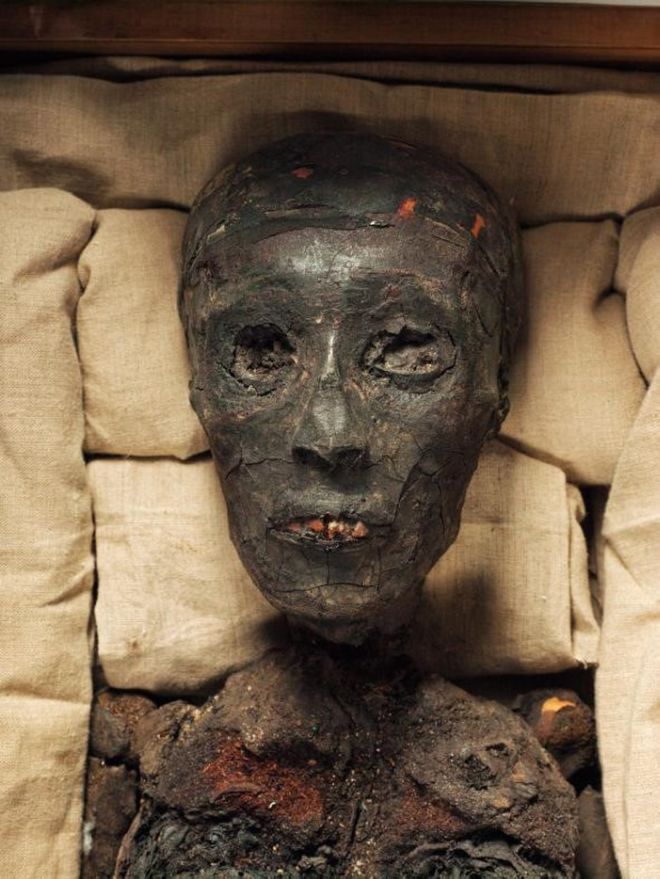
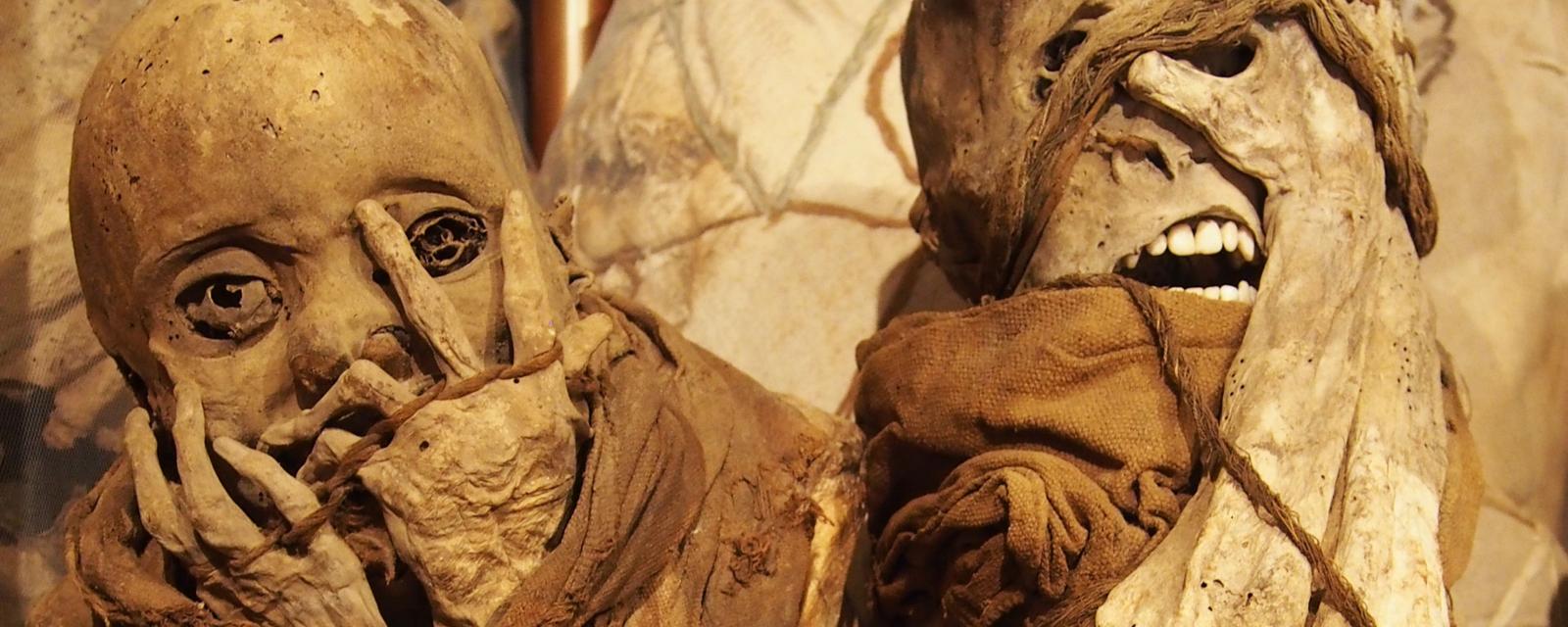
The body was then completely dried out and “preserved” but that process rendered it shrunken and wrinkled like a prune. The next step was to stuff the mouth, nose, chest cavities, etc. with sawdust, pottery, cloth and other items to fill it back out and make it look more human. In many cases, the eyes were removed and replaced with artificial ones.
Then the embalmers doused the body with a waterproofing substance similar to tar, which protected the dried body from any moisture. (In fact, the word mummy comes from the Persian word mumiai which means pitch or asphalt and was originally used to describe the preservatives themselves, not the corpse that had been preserved.)
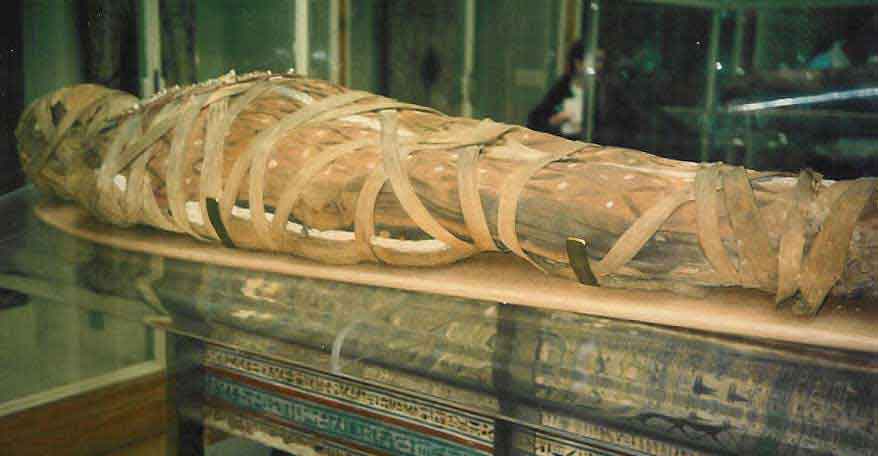
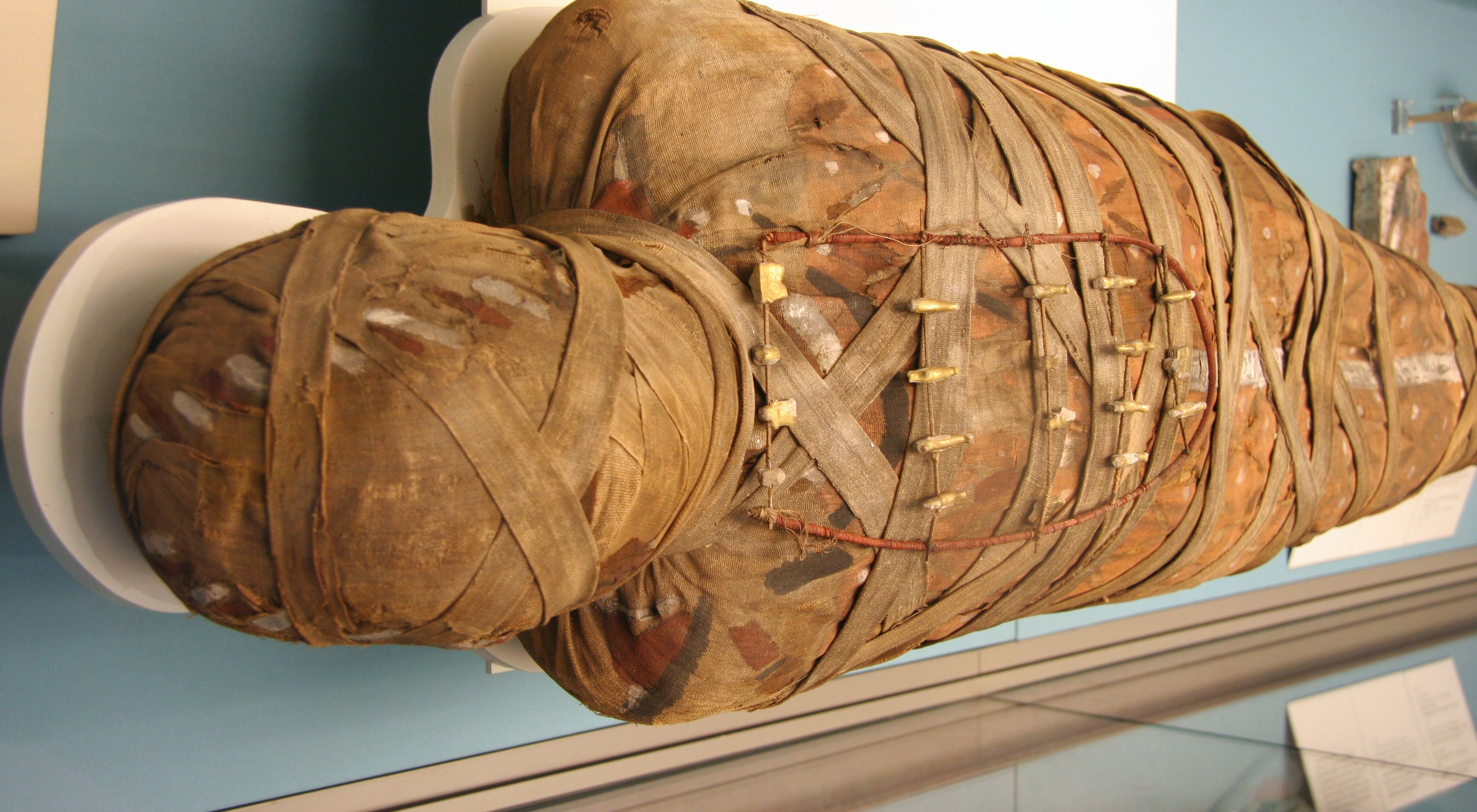
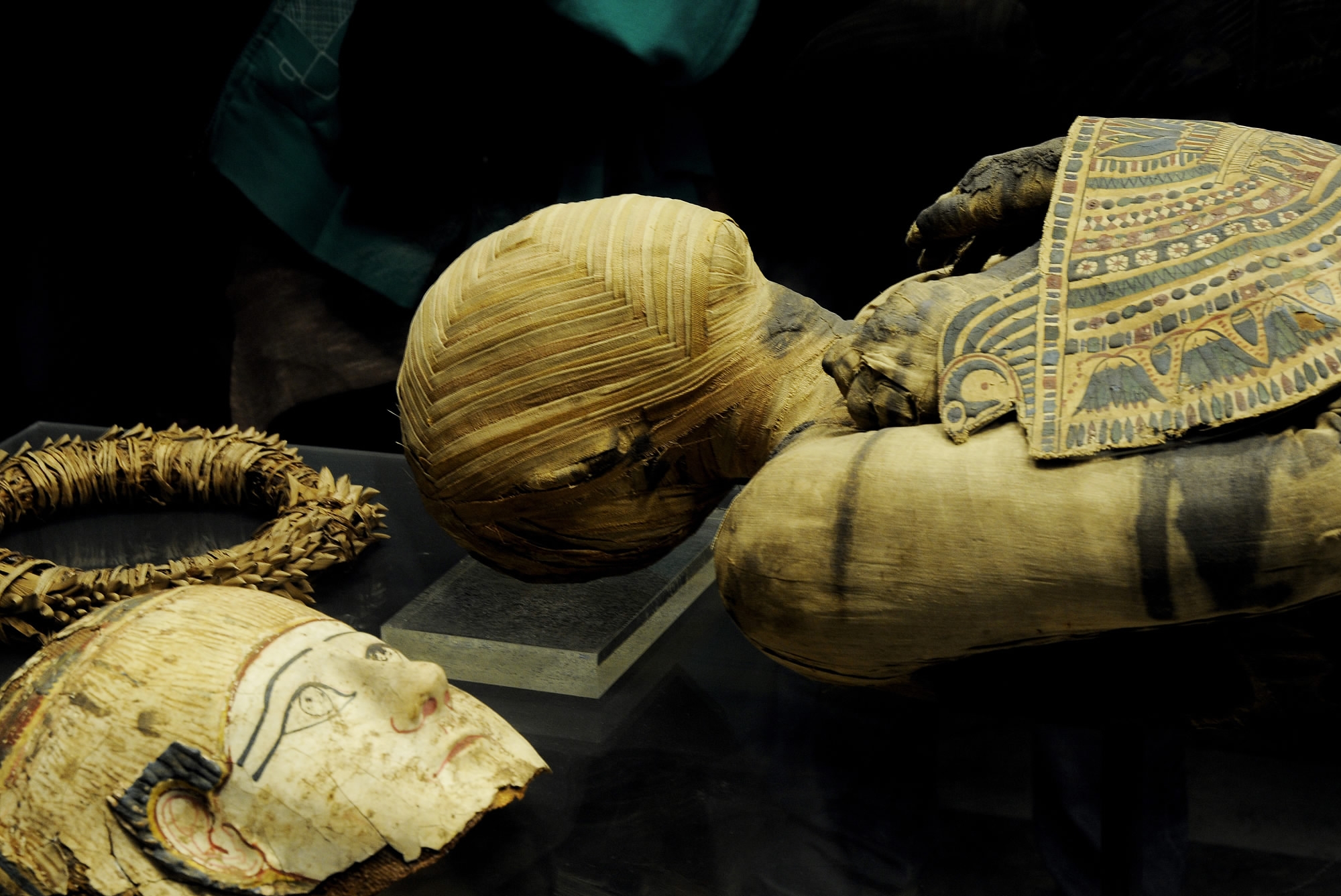
Finally, the body was carefully wrapped in narrow strips of linen, and a funerary mask resembling the deceased was placed on the head. Afterward it was laid in a large coffin that was carved and painted to look like the deceased, and the coffin was placed in a tomb outfitted with the everyday items the deceased would need in the afterlife.
If you’re like me, you probably thought mummies were only royalty or high ranking officials, but that was not true. Once embalmers got a fairly good working procedure for mummification, it wasn’t just kings and officials who were being mummified. Nearly everyone in Egyptian society who could afford it, was having it done. By the end of the 7th century AD, the country contained an estimated 500 MILLION mummies! Egyptians from the 1100’s onward thought of them more like a natural resource than the bodies of distant relatives, and treated them as such.
For over 400 years, mummies were one of Egypt’s largest export industries. As early as 1100, Arabs and Christians ground them up for use as medicine, which was often rubbed into wounds, mixed into food, or stirred into tea. By 1600, you could buy a pound of mummy powder in Scotland for about 8 shillings.
But by then, medicinal mummy use began to decline, as many doctors started questioning the practice. “Not only does this wretched drug do no good to the sick,” the French surgeon Ambrose Pare wrote, “…but it causes them great pain in their stomach, gives them evil smelling breath, and brings on serious vomiting which is more likely to stir up the blood and worsen hemorrhaging than to stop it.” He recommended using mummies as fish bait.
By the 1800’s, mummies were imported only as curiosities, where it was fashionable to unwrap them during dinner parties.
Mummies were also one of the first sources of recycled paper. During one 19th century rag shortage (in the days when paper was made of cloth fibers, not wood fibers), one Canadian paper manufacturer imported Egyptian mummies as a literal source of raw materials. He unwrapped the cloth and made it into sturdy brown paper, which he sold to butchers for wrapping food. The scheme died out after only a few months, when employees in charge of unwrapping the mummies came down with cholera.
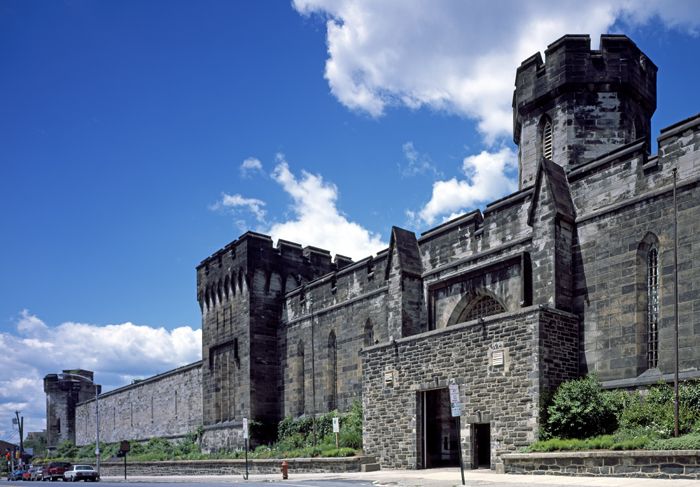
Eastern State Penitentiary in Philadelphia, Pennsylvania, is well known for several reasons. It was one of the most expensive prisons ever built in the world and utilized a radical philosophy. It housed some of America’s most notorious criminals, and it is said to be the most haunted prison in the country.
The idea of a new type of prison system came about in 1787, just four years after the American Revolution was over when important men were gathered at the home of Benjamin Franklin to discuss prison reform. At that time, the Walnut Street Jail was located directly behind Independence Hall, and the conditions there were terrible.
Men, women, and children who had committed all manner of crimes, from petty theft to murder, were jailed together on what amounted to little more than dirty pens, which were overcrowded, disease-ridden, cold, dangerous, and generally unsupervised. Abuse by both jailers and fellow inmates was common, and food, heat, clothing, or protection was only provided if the inmate could afford the price. Rape, robbery, and beatings were common practices, and it wasn’t unusual for prisoners to die from cold or starvation.
These abuses led to the formation of the Philadelphia Society for Alleviating the Miseries of Public Prisons, which met at Benjamin Franklin’s house to discuss improvements and alternatives. One member, a prominent Philadelphia physician and signer of the Declaration of Independence, named Benjamin Rush, called for “a house of repentance” rather than prisons, where the name “penitentiary” came from. Rush proclaimed that radical change was needed and believed that crime was a “moral disease.” Further, he suggested that a “house of repentance” would be a place where prisoners could meditate on their crimes, experience spiritual remorse, and undergo rehabilitation. The plan was built around the idea of solitary confinement that would allow criminals to meditate on their crimes and involved no corporal punishment. The other men agreed, and the method, which became known as the Pennsylvania System, would be utilized at Eastern State Penitentiary and other facilities throughout the world.
The men soon convinced the Commonwealth of Pennsylvania and started their work at the Walnut Street Jail. In 1790, a small “Penitentiary House” with 16 solitary cells was built. The inmates were segregated by sex and crime, vocational workshops were instituted to occupy the prisoners’ time, and much of the abusive behavior was abolished. But the facility was still overcrowded, and as the city’s population increased, so did the crime.
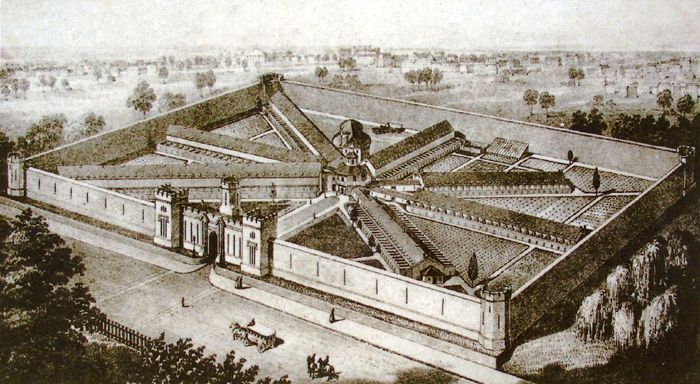
Though it would be decades before a new prison was built, the ground was broken for the Eastern State Penitentiary in a cherry orchard outside the city in 1822. Designed by British-born architect John Haviland, the penitentiary would be unlike any seen before with seven single-level cell block wings radiating from a central surveillance hub, from which one guard could see down all of the cell blocks. Haviland was inspired by English prisons and asylums built beginning in the 1780s and gave it a neo-Gothic look. The building’s imposing facade was meant to be intimidating, although its battlements and windows were fake. Its interior was designed much like a church.
Though it was seven years before it would be completed, the penitentiary opened in 1829. With an initial capacity for 250 inmates, every prisoner would have his own 8 x 12-foot cell, which featured central heating, a flush toilet, running water, a shower/bath, a skylight, and a private exercise yard.
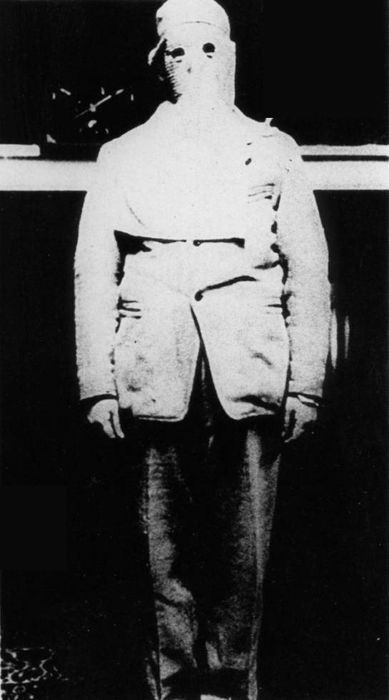
From the minute the inmates entered the facility, they were kept isolated. They were escorted into the prison with an eyeless hood placed over their heads. Afterward, the isolation continued so they could contemplate their crimes and read the Bible, which would lead to penitence and reformation.
To accomplish this goal, inmates could not mingle with other prisoners or continue relations with friends and family outside. When they were outside their cells, they were required to wear masks to hide their faces in their private exercise yards, which they were allowed to use one hour per day, with minimized interactions with the guards. During their time in their cells, they worked on prison projects such as shoemaking or weaving. Their only contact was with the warden, who was required to visit every inmate every day, and the overseers who were mandated to see each inmate three times a day. But even this communication was made through a small portal where meals and work materials were passed.
But just two years later, in 1831, it was already clear that the penitentiary would have to hold more criminals. Soon, second floors were added to all of the wings. This same year, the first female prisoner was confined in the penitentiary.
In 1832, the first inmate made his escape from the prison. For some reason, this inmate was not entirely confined to solitude and served as the warden’s waiter. He made his escape by lowering himself from the roof of the front building. He was later captured and returned but escaped in the same way in 1837.
By the 1870s, the prison needed more space, and four new cell blocks were added in 1877 between the existing wings. Before long, the individual exercise yards were eliminated, and inmates exercised together, but they were still required to wear masks and be silent.
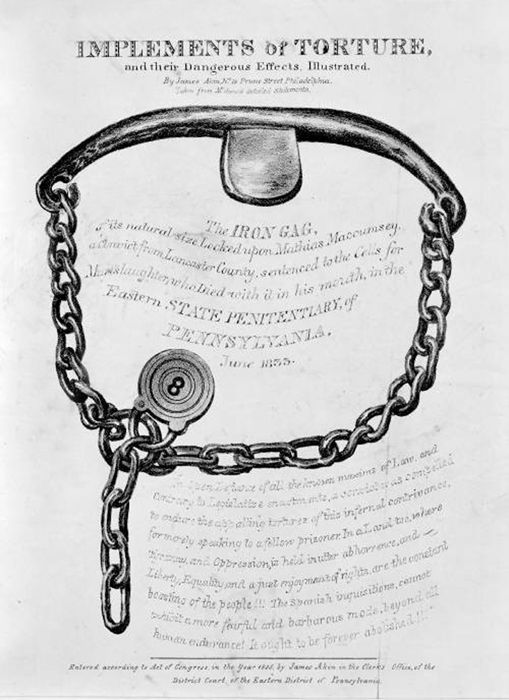
Though the reform plan of the Pennsylvania System called for no corporal punishment, this was not the case. Guards and councilors were known to have designed various physical and psychological torture regimens for various infractions. One of these, called the “water bath,” subjected inmates to being doused with water outside during winter months and then hung on a wall until ice formed on their skin. Another torture called the “mad chair”, in which prisoners were bound tightly for days until their circulation was cut off. The “iron gag” involved tying an inmate’s hands behind the back, with a chain trapped to an iron collar in the mouth, which caused the tongue to tear and bleed.
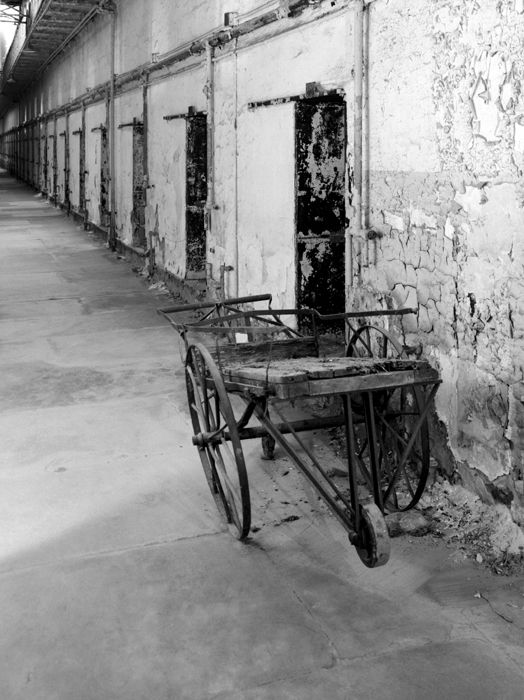
Under Block #14 was dug an underground cell that was called the “Hole.” Here, inmates would stay locked, sometimes for weeks, with no light, no human contact, with only bread and water to eat.
In January 1970, the prison closed, and the inmates were sent to the State Correctional Institution at Graterford. After a riot at a prison in Holmesburg, the prison again housed some of those inmates. In 1971 it was officially closed forever.
Over the course of its 142 years, the penitentiary held some 75,000 inmates, including Prohibition-era gangster Al Capone, and notorious bank robber Willie Sutton. More than 100 inmates escaped during this time, but all were recaptured, except for Leo Callahan.
While the prison was operating, two guards and several inmates were murdered within the walls. Other prisoners committed suicide, and hundreds of others died from disease and old age.
Named a National Historic Landmark in 1965, the prison sat abandoned after it was closed, during which time it was heavily vandalized, and trees began to grow in the buildings.
The City of Philadelphia purchased the property intending to redevelop it. Proposals included demolishing the building to use the site as a criminal justice center, a mall, or a luxury apartment complex. But in 1988, a task force successfully petitioned the city to stop pursuing development, and in 1994, the Pennsylvania Prison Society opened the prison for historic tours.
Today, the Eastern State Penitentiary, kept in a state of “preserved ruin,” continues to operate as a museum and historic site. It is open year-round for tours, and special events are held throughout the year.
In addition to its long history, the penitentiary is said to be the most haunted prison in the United States. For years, it has been investigated by paranormal groups and has been featured in several television shows. These investigators, staff, and visitors have reported dozens of paranormal activities and numerous sightings of ghostly entities.
One of the first stories told of ghostly activity was by famed Chicago gangster Al Capone, who was housed in the prison for eight months in 1929-1930. Though he had the nicest cell in the prison, which included a desk, a lamp, paintings, and a radio, he said he was haunted by the ghost of James Clark, who was one of the victims of the St. Valentine’s Day Massacre in Chicago. Allegedly, Capone screamed every night in fright, screaming at “Jimmy” to go away and leave him alone.
In the 1940s, both prisoners and guards began to have several unusual experiences and unexplained sightings. Many of these events involved spooky shadows and unexplained noises.
Today, many people have reported that Cellblock 12 is an area of high paranormal activity, where cackling and whispers are heard, and the apparition of a prisoner is seen. In Cellblock 6, shadowy figures are often seen sliding along the walls, and the sounds of whispers, screams, and laughter have been heard.
In Cellblock 4, many have seen ghostly anguished faces and hearing loud whispers. On one occasion, a locksmith working in this area who was removing an old lock from a cell door had a vivid experience. He described having felt as if he was overcome by a massive force, and was unable to move or speak, while distorted forms swirled around the cellblock, one of which appearing to beckon to him.
Many people have reported seeing the silhouette of a guard in one of the watchtowers.
On the third floor of one cell block, numerous visitors say they’ve heard the sound of cell doors suddenly opening and then slamming shut.
The catwalk is an area where many paranormal events have occurred. Here, a shadow figure was caught on a video, people have felt extreme temperature fluctuations, and one visitor captured a male voice saying “I’m lonely” on an EVP.
Visitors and staff report disembodied screams, cries of pain, sadistic laughter, and whispers throughout the prison. Others have reported the sounds of cell door handles jiggling, furniture being dragged across floors, large objects rolling on the roof, and ghostly footsteps.
Many have seen sudden orbs or streaks of light appearing, felt unseen people tapping them on the shoulder, get overwhelming sensations of being watched, and in general have feelings of dread.
As you can see from the above photo, (I am on the left) I love Halloween and costumes. My own mother didn’t recognize me when I showed up at her door for Trick or Treat. My father? he knew right away…lol…
And it doesn’t matter if you’re dressing a little one up for Halloween, or you need a costume for yourself, costumes can be expensive! But a little creativity and a dollar store can turn ordinary into extraordinary!
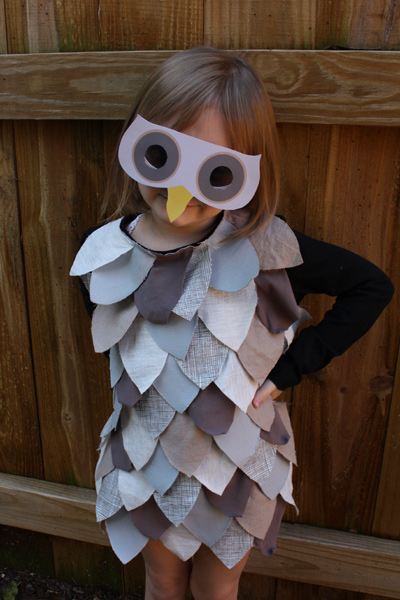
This OWL costume requires no sewing (you can sew the feathers on, but gluing is fast and easy.)
You cut the “feathers” out of old t-shirts or (dollar store to the rescue!) get some of their vinyl tablecloths—in any colors you want—and cut the feathers out of those. If you’re using those instead of gluing, you can simply tape them! The mask is simply glued to a pair of sunglasses.
Click here to download the template for mask and feathers: Download file
If you want to make any sort of bird feet, you’ll need rubber gloves, old shoes, some stuffing and a glue gun.
For making any sort of a hat, here is a great picture of how to make an inexpensive base that can be covered with anything.
Want to be an octopus? The legs from tights (from the dollar store!) can be stuffed and tied to a belt to wear around the waist.
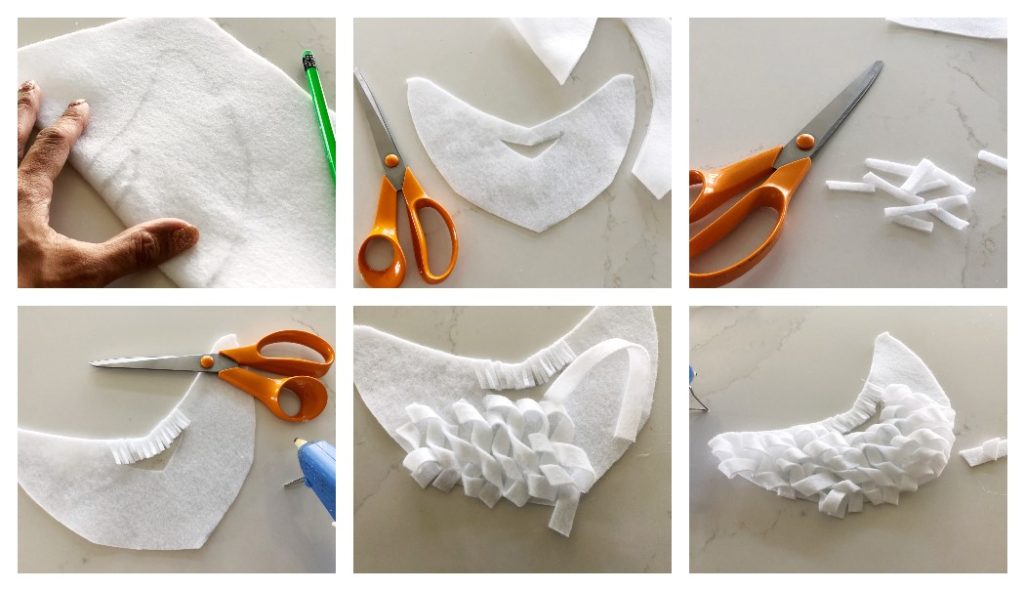
Do you need a beard and mustache for your costume? They can be expensive, but with felt, a string and some glue…it’s not expensive at all!
If you’re choosing to be an animal with a mane and a tail (think horse, lion or even unicorn) you could get yarn and cut and tie a lot of lengths together…or you could purchase pompoms from the dollar store. You may need more than one depending on the fullness you desire.
Wanna be a Minion? Grab a yellow knit cap and some black pipe cleaners. The glasses can be made with some black fabric and aluminum foil wrapped around cardboard tubes.
And speaking of cardboard tubes…paint them yellow/orange and glue them to a matching colored shirt to be mac & cheese!
Now if you’re thinking more high tech, and you need a jetpack (LOL), this is a very clever idea. And it can be upgraded! Plastic soda bottles are painted, then fastened to a strap around the chest. (Adding a clock dial and changing the color and adding more straps certainly kicks this up a notch!)
If you’re okay with using shirts you won’t wear again, you can make a giraffe costume. There are 2 ways to do this. First, get a shirt and pants (if you’re fanatical about having a total costume, lol) in a red/orange/brown color. Then simply use masking tape to create the look. This method should not render the clothes unusable afterwards. The second method will. Get a white shirt and white sweatpants. Use masking tape to create the giraffe block pattern, then PAINT the unmasked parts with red/orange/brown paint. Once dry, remove the masking tape.
One of the easiest and most clever costumes is the one you don’t have to wear! It’s a jellyfish. You get an umbrella, festoon it with twinkle lights and colored streamers. You can wear a black outfit while you stroll with the umbrella!
I saved this one for last—it’s not cheap or easy I would imagine—I just thought it was just so AWESOME!!!
Located in Yazoo City, this cemetery was created around 1856. It is the burial site of the famed Witch of Yazoo. Legend tells of an old woman who lived near the Yazoo River who was found tormenting fishermen. A sheriff chased her through the swamp and caught up with her just in time to watch her sink into quicksand and drown. With her last breath, she cursed the town, saying, “In 20 years, I will return and burn this town to the ground!”
On May 25, 1904, the town did indeed burn down. A total of 324 buildings were wiped out. When the townspeople approached the grave of the famed witch, the chains that normally surrounded the grave were apparently broken in two.
Bachelor’s Grove
This small abandoned cemetery is known for being one of the most haunted locations in the country. The land in this area south of Chicago was first settled in the 1820s, and the graveyard was set aside in 1864. It is reportedly home to a large amount of paranormal phenomena, including a phantom house, spirit orbs, disappearing cars, and full-bodied apparitions. According to legend, during the Prohibition era, the remains of those slain by gangsters were found in the cemetery’s adjacent lagoon, along with some illicit firearms.
The most famous apparition is known as the “Madonna of Bachelor’s Grove.” She is a lady dressed in white who often appears holding an infant on moonlit nights. In 1991, members of the Ghost Research Society conducted an investigation of the site. During the investigation, one investigator managed to capture an image of a woman who appeared to be sitting on a tombstone. The apparition was not present during the investigation and only appeared later when they developed the film.
Chestnut Hill Cemetery
During the late 1800s, disease ravaged a family in Exeter, RI. After a farmer’s wife and two daughters passed from the same mysterious illness, he and the townsfolk began suspecting vampirism was at work. They exhumed the bodies of his wife Mary and daughters Mary and Mercy. While the remains of both Marys were decomposing normally, Mercy’s remains looked strangely well-preserved, leading them to believe she was a vampire. In one story, they desecrated her grave, cut out her heart, and burned it. They mixed the ashes with water and served it to the farmer’s son Edwin, but that failed to cure his disease, which we now know was tuberculosis.
After Mercy’s passing and exhumation, people have reported seeing her ghost rise from the grave and wander through the graveyard. Others have seen orbs and heard strange sounds near her grave. Though the vampire myth persists, most now believe that the ghost is a result of the grave desecration.
Resurrection Cemetery
This Roman Catholic cemetery was consecrated in 1904 and officially opened in 1912. It is also the alleged home of “Resurrection Mary.” According to one of the legends about this ghost, Mary was attending a dance at the Oh Henry Ballroom one night in the 1930s. After getting into an argument with her boyfriend, she decided to walk home. She never made it, instead becoming the target of a hit-and-run somewhere near the cemetery. In another version of the story, based on the real passing of Mary Bregovy in 1934, Mary was slain in a car accident and haunts Resurrection Cemetery because she is interred there.
Since then, there have been many sightings of Mary. She appears on the side of the road or at a nearby dance hall. She asks for a ride home – her “home” being the place she was laid to rest in the Resurrection Cemetery. After the car stops in front of the graveyard, she gets out and disappears.
St Louis Cemetery
This is actually three cemeteries, with the first and second being the oldest. Built in 1789, St. Louis Cemetery No. 1 is the oldest existing cemetery in New Orleans and is considered one of the most haunted cemeteries in the world. The cemetery is composed mostly of above-ground mausoleums like most cemeteries in the area because of New Orleans’ high water table level. Notable residents of St. Louis No. 1 include Homer Plessy of Plessy v. Ferguson fame and Voodoo priestess Marie Laveau.
Laveau is said to haunt the graveyard, wandering the alleys chanting audible Voodoo curses on trespassers. She has also been said to take the form of a black cat with fiery red eyes. The ghost of her familiar, a giant black snake, also protects Laveau’s grave from those who would mock her.
Vandalism in recent years (including an incident where Laveau’s tomb was painted pink) has caused the archdiocese to ban public access to the cemetery. Only registered tour groups and the families of those buried are allowed to visit.
Greenwood Cemetery
According to legend, this cemetery was originally a Native American burial ground before white settlers started burying their deceased there in the 1830s. The graveyard was officially established in 1857.
A variety of supernatural manifestations have been reported at Greenwood. The ghosts of Confederate soldiers whose bodies supposedly were dumped in a hillside have been seen, appearing near what is now a war memorial. Another often reported ghost is that of the “Greenwood Bride,” a woman in a wedding dress whose fiancé was slain.
Bonaventure Cemetery
This Southern Gothic cemetery was formally established in 1846. While it is not the oldest cemetery in Savannah, GA, it is allegedly the most haunted. It was originally part of the massive Bonaventure Plantation owned by Colonel John Mullryne in the 1760s, then changed hands several times until it became a private cemetery in 1802. Bonaventure was sold to the city of Savannah in 1907.
Today, visitors report hearing the sounds of ghostly voices at a party echoing through the graveyard. Additionally, the grave of Gracie Watson is said to be haunted. Many have heard the sounds of a young girl crying, and the statue has been reported to weep blood.
cemetery in Salem
This cemetery is linked to the Salem Witch Trials of 1692. Here, Giles Corey was executed by being pressed to death for refusing to stand trial.
As the stones were added one by one on top of his chest, he maintained his innocence. His ghost is said to haunt the cemetery to this very day.
Westminster Presbyterian Cemetery
This Baltimore graveyard is the final resting place of Edgar Allen Poe. Established in 1786 as the Westminster Presbyterian Cemetery and located next to Westminster Hall, both the hall and cemetery are said to be haunted.
The apparition of Poe has been seen in the graveyard, perhaps lamenting his untimely demise. The notorious “Skull of Cambridge” is also buried here. Said to be the head of a slain minister, the skull allegedly emits screams that can drive people mad.
Oakland Cemetery
Standing in the center of the city since the 1850s, Oakland Cemetery survived General Sherman’s burning of Atlanta during the Civil War. From the house on top of the hill, General Hood watched the Battle of Atlanta in 1864.
In total, nearly 7,000 Confederates are buried here, including 3,000 unknown people marked by a large lion statue. It is said that late at night, you can still hear the soldiers answering roll call.
Cemetery in Kansas
This cemetery is purported to be a gateway to hell. As the story goes, somewhere in the cemetery is a stairway that leads directly into the underworld. On Halloween night it appears, and the devil emerges from the darkness. By skeptical accounts, the gateway is probably just part of an urban legend created by a professor at the University of Kansas and first published in a student newspaper in the 1970s. Since then, there has been plenty of vandalism and trespassing at the cemetery by those seeking a paranormal experience. Still, the cemetery was featured in the show Supernatural and is a pretty creepy looking place, even if it isn’t really a gateway to hell. Then again, you never know…
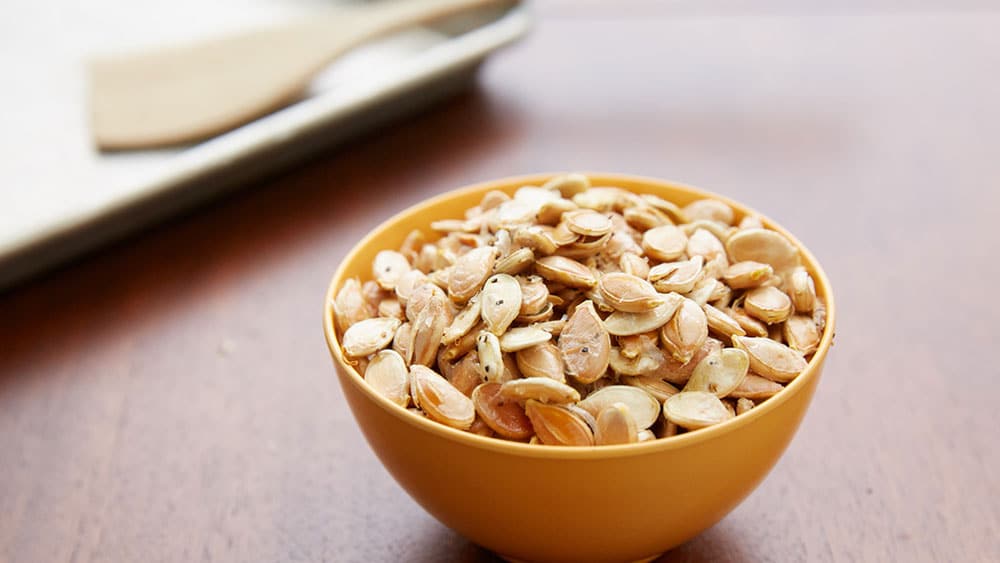
If you’re planning on carving a pumpkin this year, or you want to cook and puree a pumpkin for pies or bread, save the seeds! According to WebMD, pumpkin seeds are a rich source of protein, unsaturated fatty acids, vitamins, and minerals that reduce risk factors of chronic diseases, including cancer.
Any pumpkin you can get your hands on will do the trick. Pie Pumpkins, also called Sugar Pumpkins, will have more flesh if you’re planning to eat the pumpkin too. Some say they have crisper seeds than carving pumpkins, but both can be used.
Harvesting the seeds may be the only complicated part of the whole process, and it’s not that bad (promise!).
What You’ll Need
a sharp knife
an ice cream scoop (a large, sturdy spoon will work too)
a colander or strainer
a towel
Step-by-Step Instructions
Step 1: If you’ll be carving your pumpkin for Halloween, cut a hole about 6 inches in diameter in the bottom of your pumpkin. Use the ice cream scoop or your hands to scrape out the pumpkin guts. Try to separate the flesh from the seeds as much as possible before collecting the seeds in your strainer. It’s a messy job, but it’s worth it.
Step 2: If you’re planning to roast your pumpkin, simply cut the pumpkin in half and scoop out the seeds from the flesh with a sturdy serving spoon or ice cream scoop.
Step 3: Thoroughly rinse your seeds under cold running water. You can even set your colander in a bowl of water and most of the seeds will float to the top. Either way, you’ll need to get your hands in there to further separate rest of the pumpkin bits. Spread the clean seeds on a towel and pat dry. At this point you can do a quick boil in salt water before roasting for extra crispiness, but there isn’t always time for that so this recipe takes the seeds straight to the oven.
How to Roast Pumpkin Seeds
Roasted Pumpkin Seeds requires only three ingredients and 15 minutes of prep time (and just over 30 minutes total time!). Now that you know how to clean and prepare the seeds, let’s break down the rest of the recipe.
What You’ll Need
15x10x1-inch baking pan
Wooden spoon
Ingredients
1 cup pumpkin seeds from fresh pumpkin
2 teaspoons melted butter
Salt and pepper to taste
Step-by-Step Instructions
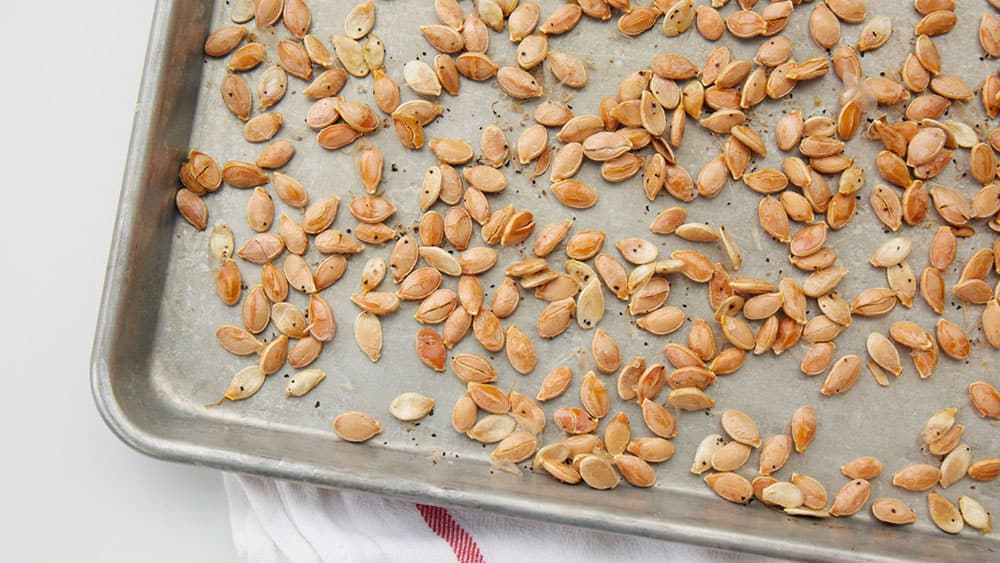
Step 1: Heat oven to 350°F. Clean and prepare seeds (as instructed above), then spread seeds in an ungreased 15x10x1-inch baking pan. Toss with melted butter until coated. Sprinkle with salt and pepper to taste.
Step 2: Bake 15 to 20 minutes or until light golden brown and crisp, stirring once during baking.
Step 3: Cool in baking pan 10 minutes or until completely cooled before serving.
How to Roast Pumpkin Seeds in the Microwave
If you’re really in a rush, you can “roast” your pumpkin seeds in the microwave. Place them in a single layer in a glass pie plate. Microwave them for about 2 minutes and then stir. Microwave again for 2 to 3 minutes, stirring after each minute, until the seeds are dry and crunchy.
How to Season Pumpkin Seeds
A simple sprinkle of salt and drizzle of olive oil or melted butter always do the trick, but there are so many seasonings that bring out the best in pumpkin seeds. You can keep it basic, go sweet or even spicy.
For each cup of raw seeds, evenly coat with…
Italian
2 tablespoons melted butter + 1/4 cup grated Parmesan + 1/2 teaspoon Italian seasoning
You can eat pumpkin seeds on salads, soups, in desserts or (most likely) straight from the roasting pan into your mouth. And you can eat the pumpkin seed shells too! Once cooked, the outer hull is just as edible as the seed inside — and is a good source of zinc.
NOTE: There are pumpkin seeds and there are pepitas.
Pepita is the Spanish word for pumpkin seed, and you’ll see pepitas on just about every chef-driven restaurant menu these days. It’s a pretty trendy ingredient, to say the least. However, if you’ve ever had one of those delicious little pepitas, you’ll know that they are very different from what comes out of your jack-o-lantern. They’re tender, greenish and don’t have hard white shells like regular pumpkin seeds do. And you can’t just remove the shells off of a pumpkin seed and get a pepita — they actually come from certain types of pumpkins (thin-skinned Styrian or oilseed pumpkins) that have shell-free seeds.
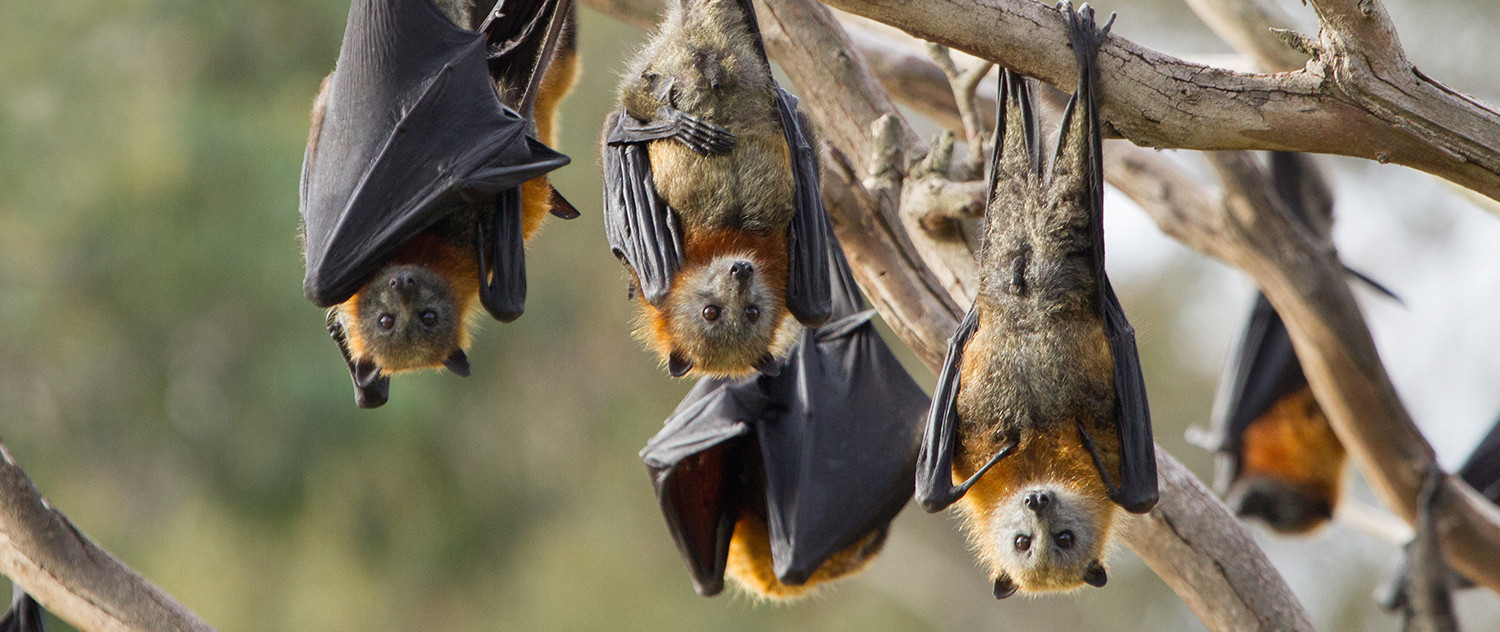
We have had bats in our home while we were building on several occasions—none were pleasant. In fact, the frequency of their “visits” led me to purchase a fine mesh net on a stick that I call the Bat Catcher. Hubby’s gotten quite adept with it, while I cower, hair covered, in a corner somewhere. And while they aren’t the most cute or lovable animals in the world, they do play an important role in the environment. Bats are often considered “keystone species” that are essential to some tropical and desert ecosystems. Without bats’ pollination and seed-dispersing services, local ecosystems could gradually collapse as plants fail to provide food and cover for wildlife species near the base of the food chain.
Consider the great baobab tree of the East African Savannah. It is so critical to the survival of so many wild species that it is often called the “African Tree of Life.” Yet it depends almost exclusively on bats for pollination. Without bats, the Tree of Life could die out, threatening one of our planet’s richest ecosystems.
Read on for more amazing facts!
A small colony of bats can eat over one ton of insects in one year, or more than 600 million bugs. A single bat can eat more than 600 bugs in one hour, which is like a person eating 20 pizzas a night.
According to Bat Conservation International, 150 big brown bats can eat enough cucumber beetles in one summer to save farmers a billion dollars a year. Those beetles would have created 33 million larvae, which are what attack the crops
There are over 1,100 bat species in the world—only rodents have a greater number of species.
Some seeds will not sprout unless they have passed through the digestive tracts of a bat. Additionally, bats spread millions of seeds every year from the ripe fruit they eat. Approximately 95% of the reforestation of the tropical rain forest is a result of seed dispersal from bats
Bats live on every continent except Antarctica. They are found almost as far north as the Arctic Circle and as far south as Argentina and the southern-most tip of South Africa.
Bats are not blind and, in fact, many bats can see quite well; some species can even detect ultraviolet light. They also have excellent echolocation, which means, contrary to urban legend, they would not get tangled in people’s hair. (still gonna cover up my hair, thank you)
Bats can hear frequencies between 20 Hz and 120,000 Hz. Humans can hear between 20 Hz and 20,000 Hz. Dogs can hear between 40 Hz and 60,000 Hz.
Bat droppings, called guano, are one of the richest fertilizers. Bat guano was once a big business. Guano was Texas’s largest mineral export before oil! During the U.S. civil war, bat droppings were used to make gunpowder.
Bat wings are made from finger bones covered by thin layers of skin. The wing membranes of a bat make up about 95% of its body surface area. A bat’s wing membrane helps the bat regulate body temperature, blood pressure, water balance, and gas exchange.
A bat uses 30-60 days of stored energy to wake up out of hibernation. That is why it is so important to not disturb hibernating bats.
Bats make up a quarter of all mammals found on earth.
Scientists in several countries are trying to copy the enzymes found in vampire bat saliva to treat heart conditions and stop the effects of strokes in humans.
Bats have an extraordinary long lifespan for their size- they are known to live to around 20 years, and at least one brown bat was documented to have lived 30 years.
Bats can find their food in total darkness. They locate insects by emitting inaudible high-pitched sounds, 10-20 beeps per second and listening to echoes.
More than half of the bat species in the United States are in severe decline or listed as endangered. In addition to loss of habitat, one of the direst threats comes from white nose syndrome, a disease that has decimated bats in the U.S. and Canada. The Nature Conservancy collaborated in a recent breakthrough, successfully treating and releasing infected bats.
Most bats have only one pup a year, making them extremely vulnerable to extinction. Bat mothers can find their babies among thousands or millions of other bats by their unique voices and scents.
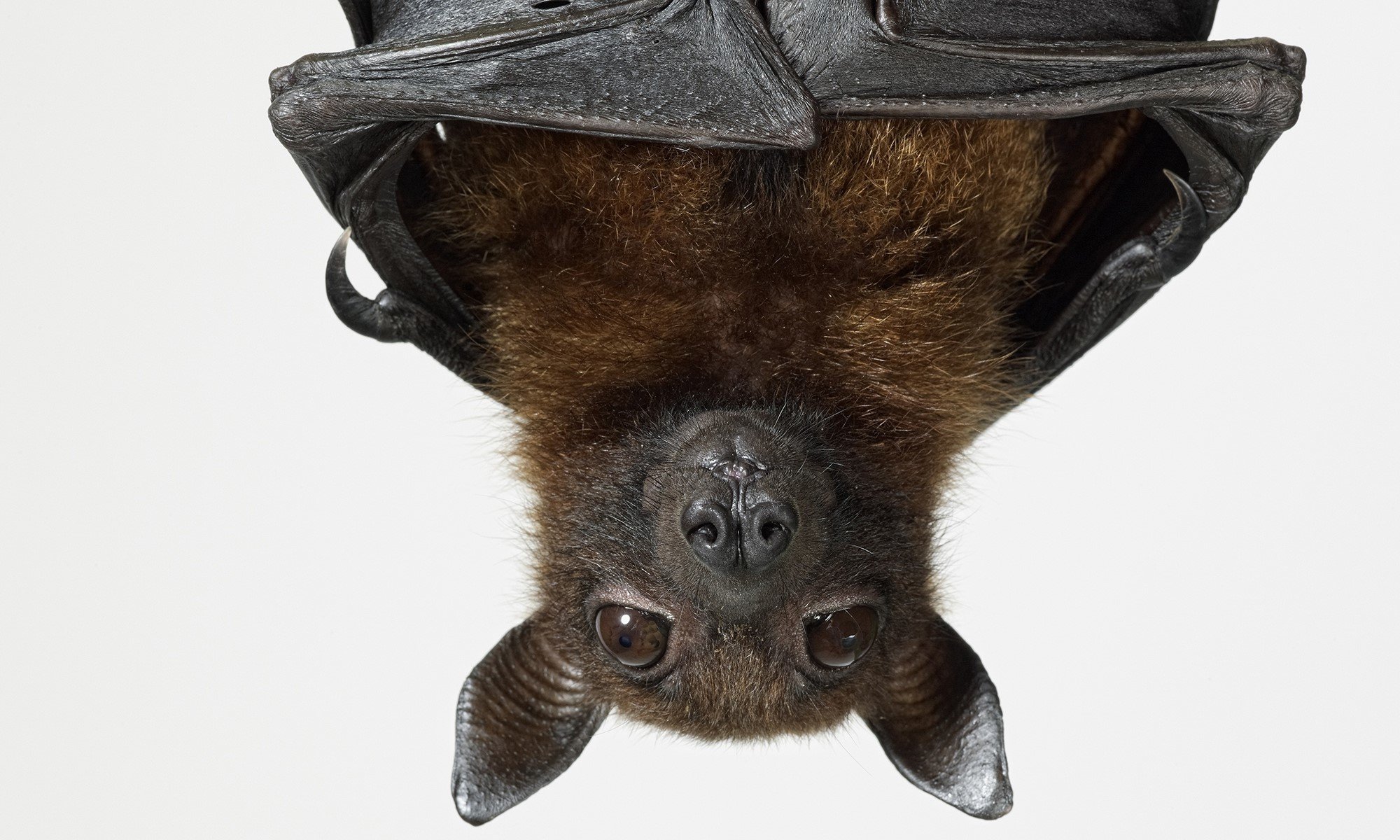
The world’s largest bat is the “flying fox” that lives on islands in the South Pacific. It has a wingspan of up to 6 feet. The world’s smallest bat is the bumblebee bat of Thailand, which is smaller than a thumbnail and weighs less than a penny.
More than 300 species of plants depend on bats to survive in many tropical and desert ecosystems. These include plants that humans eat, like the agave used to make tequila, as well as banana, peach, and mango trees.
To survive the winter some species of bat migrate, others hibernate, and yet others go into torpor (regulated hypothermia that can last from a few hours to a few months)
The bat has a very long tongue that it uses for feeding and pollination. When not in use the tongue is wound up around the rib cage.
About five to six liters of blood flow in our body, which supplies our organism with oxygen and other nutrients every second. However, blood is much more than just a red fluid in our body. Human blood does a Herculean effort every day and has a lot of interesting facts to offer. So, it is time to take a closer look at our blood. Here are some incredible facts about blood that you have probably never heard of.
The human heart pumps about one million barrels of blood during an average lifetime. That is enough to fill more than 3 super tankers.
When it becomes extremely hot in Melbourne, the lions in the zoo are given frozen blood.
The average price of one liter of black ink is higher than the price of one liter of human blood.
It would require 1,200,000 mosquitoes to exsanguinate the blood out of a human. In Paraguay, pistol dueling is legal as long as both parties are registered blood donors
When Komodo dragons bite their prey, they release a poison that, among other things, inhibits blood clotting. So, if their prey is not killed immediately, the dragons can then track it down and feed on it after it has died from blood loss as well as from the other bacteria contained in the poison.
The vampire bat has an enzyme that prevents its victims’ blood from clotting on wounds. As a result, the victims lose more blood that the vampire bats can then feed on.
In addition to the known blood types of the AB0 system, there is a fourth, very rare variant. It is colloquially called the Bombay blood group, since only about 20,000 people worldwide have this blood group, almost all of whom come from India.
From water depth of 33 feet and more there is no more red light. For this reason, blood looks green at this depth.
Our blood accounts for seven per cent of our body weight.
James Harrison is a record holder in blood donations. He donated his blood over 1,000 times.
From 1920 onward, Alexander Alexandrovich Bogdanov tried to discover a medical fountain of youth by performing blood transfusions on himself and injecting himself with the blood of younger people. One blood transfusion, however, was contaminated with malaria and tuberculosis, which eventually killed Bogdanov.
On average, it takes about 45 seconds for a single drop of blood to circulate from the heart, all around the body, and back to the heart again.
The word “blood” is mentioned at least once in every Shakespeare piece.
Human blood contains about 0.2 milligrams of gold.
For a long time, it was tradition in Ireland that one liter of Guinness beer was given for each liter of donated blood.
The first successful blood transfusion took place in 1660 and was between two dogs.
The reflex that we automatically lead a small wound to our mouth is an innate protective mechanism. The saliva in our mouth helps the blood to coagulate and kills bacteria.
A newborn has just 234 milliliters of blood in its body.
AB0 isn’t the only blood grouping system. There are currently 39 systems recognized by the International Society of Blood Transfusion.
Saddam Hussein had a Koran, written with his own blood.
Rhnull (rhesus factor zero) is the rarest blood type in the world. So far, only 40 people worldwide are known to have this blood group.
The increased use of the drug “Sumatriptan” can lead to a green coloration of the blood.
The US presidential limousine “The Beast” even contains blood reserves in the president’s blood type.
In Japan, people believe that your blood type affects your personality. For this reason, the Japanese version of Facebook has a drop-down menu for the blood type.
Dr. Karl Landsteiner first identified the major human AB0 blood groups in 1901.
Gnats are especially attracted by people with blood type O.
When donating blood, the human body burns an additional 650 calories.
Adult humans have roughly 20 to 30 trillion red blood cells at any given time, constituting approximately 70% of all cells by number.
Renfield-Syndrome is characterized by an obsession with drinking blood.
A pumping heart can squirt blood as far as 30 ft.
You can lose as much as 1/3 of your blood and still survive.
The human body has about 60,000 miles of blood vessels.
In the time it takes to turn a page, you’ll lose 3 million blood cells and make 3 million more.
Red blood cells live for 4 months. In that time, they make 75,000 trips to the lungs and back.
The Rh factor in blood occurs more frequently in Europeans (40-45%).
Blood is thicker than water. Blood has a specific gravity of 1.06. Water is 1.0.
Identical twins have the same blood type.
Average number of industrial compounds and pollutants found in American blood and urine is 91.
Almost everyone is familiar with the movie image of Dracula, the smooth but sinister Transylvania count, elegantly dressed in evening clothes and a cape, who throws his disguise aside to reveal fearsome fangs that strike for the neck of his innocent victim. The vampire Count Dracula is the supreme creation of Irish writer Bram Stoker, now a century old yet showing no signs of losing his popularity.
Bram Stoker
But Stoker did not dream up his Dracula entirely from nothing, for historians have fixed on a plausible and horrific original for Dracula himself and there are many well-attested accounts of vampirism in modern and ancient times. Vampires are certainly not a product of the 17th century, as belief in the undead preying on the living has been extremely widespread, both in time and geography. The ancient Babylonian bloodsuckers were known as Ekimmu and according to Jewish tradition, the first woman on earth actually became a vampire, Lilith – before the creation of Eve.
Vampire Princess (depiction)
They are known in folklore and legends from Africa, East Asia, Australasia, the Near East, the Americas and, of course, Europe. In Romania, from whence the probable original model for Dracula arose, according to folk tradition: “…there was once a time when vampires were as common as blades of grass, or berries in a pail, and they never kept still, but wandered round at night among the people.”
Vampires are real enough, at least in terms of ancient communities’ beliefs, but what about Dracula himself? Remarkably, there are good grounds for believing that Bram Stoker based him on a real character, Vlad the Impaler, the ruler of Wallachia in modern Romania in the mid-15th century AD.
Vlad The Impaler
Vlad bore a family Christian name, his father also being a Vlad, while “the Impaler” was a nickname he earned from his horrific behavior. He was born in Transylvania in 1431, becoming the heir to the neighboring princedom of Wallachia in 1437, after his father expelled the previous ruler. When the Ottoman Empire was completing it’s takeover of Greece, Wallachia became a strategic border state; the Turkish sultan took as hostages the young Vlad and his brother Radu in 1442 to ensure Wallachian loyalty.
Regardless, the Wallachians undertook a series of campaigns against the Turks, with some success, until the older Vlad was put to death after falling out with his allies, the Hungarians. The younger Vlad escaped captivity and embarked on a long campaign to regain his father’s throne, now occupied by a distant relative. His efforts finally bore fruit in 1456 with the assassination of his rival, and he became the Prince of Wallachia. Vlad’s subjects were soon to find out that their new ruler intended to crush any lingering opposition. He called a meeting of nobles and after testing them, and their making it abundantly clear how little they thought of the various Princes and Kings, he had his armed guards seize all 500 hundred, leading them outside, where they were impaled on sharpened stakes, along with their wives and servants, and left to rot.
Bran Castle
Vlad’s cruelty became famous, as he turned against Transylvania, land of his birth, because of its economic control of Wallachia. He led a series of raids on the major towns from 1457 to 1460, massacring vast numbers of men, women, and children, with torture being followed up by slow impaling. Moreover, Vlad showed every sign of enjoying these horrors. According to a German pamphlet printed in 1499, he was perfectly at home sitting down to watch the death throes of his victims at the town of Brassoc: “All those whom he had taken captive, men and women, young and old, children, he had impaled on the hill by the chapel, and all around the hill, and under them he proceeded to eat at table and enjoyed himself in that way.”
Prince of Wallachia
But, appalling though the deeds of Vlad the Impaler undoubtedly were, where does the Dracula connection come in? Vlad was the son of Vlad Dracul. The Dracul part was a nickname with a double meaning – “dragon” and “devil.” The official version was probably “dragon,” since the elder Vlad had been invested with the Order of the Dragon in 1431. Thereafter, Vlad Dracul minted coins with a dragon symbol and flew a flag bearing a dragon. The alternative meaning of his name, “devil,” was not unwelcome, for his rule was based on fear.
Dracula means “son of Dracul,” and Vlad the Impaler actually signed himself “Dracula” on official documents. Perhaps he relished the idea of being known as the son of the devil. This may have been uppermost in the mind of the court poet Michel Beheim in 1463, when he composed an epic entitled “Story of a Bloodthirsty Madman Called Dracula of Wallachia.” Technically, he WAS a vampire, for he reportedly dipped his bread in the blood of his victims at his macabre feasts of the dying.
As in all of history, all tyrants come to an end eventually. After many years of fighting the Turks and overwhelming them with his wholesale slaughter, they left Vlad’s brother Radu behind when they retreated. Radu soon gained support among the aristocracy, who could not forgive Vlad’s massacres of their fellow nobles, while Vlad’s army faded away once the threat of the Turks had been lifted.
Vlad the Impaler’s Poenari Fortress
Vlad escaped to Hungary, where he was captured, tried on false charges, and confined for 12 years until Radu’s death, when Vlad agreed to subject himself to Hungarian control, converted to Catholicism and married a Hungarian princess. He regained his throne in 1476 but, in a final battle against an army of Wallachian nobles supported by the Turks, he was himself impaled by a lance. The Turks cut off his head and delivered it to the sultan, where it was put on display as proof that their deadly foe was finally vanquished.
Snagov Monastery (where Vlad’s headless corpse is alleged to be buried)
Vampires definitely existed in the strongly held beliefs of past people concerning the dead. Dracula was not a vampire in the folklore tradition, but he was certainly bloodthirsty in more ways than one!!!
When I was 19, my aunt, my cousin, and I planned and hosted an awesome Halloween party. My aunt and I worked together at the same factory, so our lunch times were spent planning and designing costumes, deciding on foods and decorations and the most important part—“games”.
We got a large oblong box from the shipping department and an empty cardboard roll from the fabric from the cutting room. We shaped and painted the box into a coffin and painted the roll gold and attached it as a handle. (We planned to put this on the coffee table and fill it with tubs of ice and drinks.)
Next, I made a life sized, stuffed dummy and a black hooded robe. For a face, I pulled a rubber skeleton mask over the head, then pulled the hood up. We sat the dummy—nicknamed Mr. Bones—in a chair behind the wet bar in my aunt’s basement. We planned to place him next to the stereo system and every time I changed the cassette (yup, that long ago!) I would playfully smack him and say, “Hey Mr. Bones!”
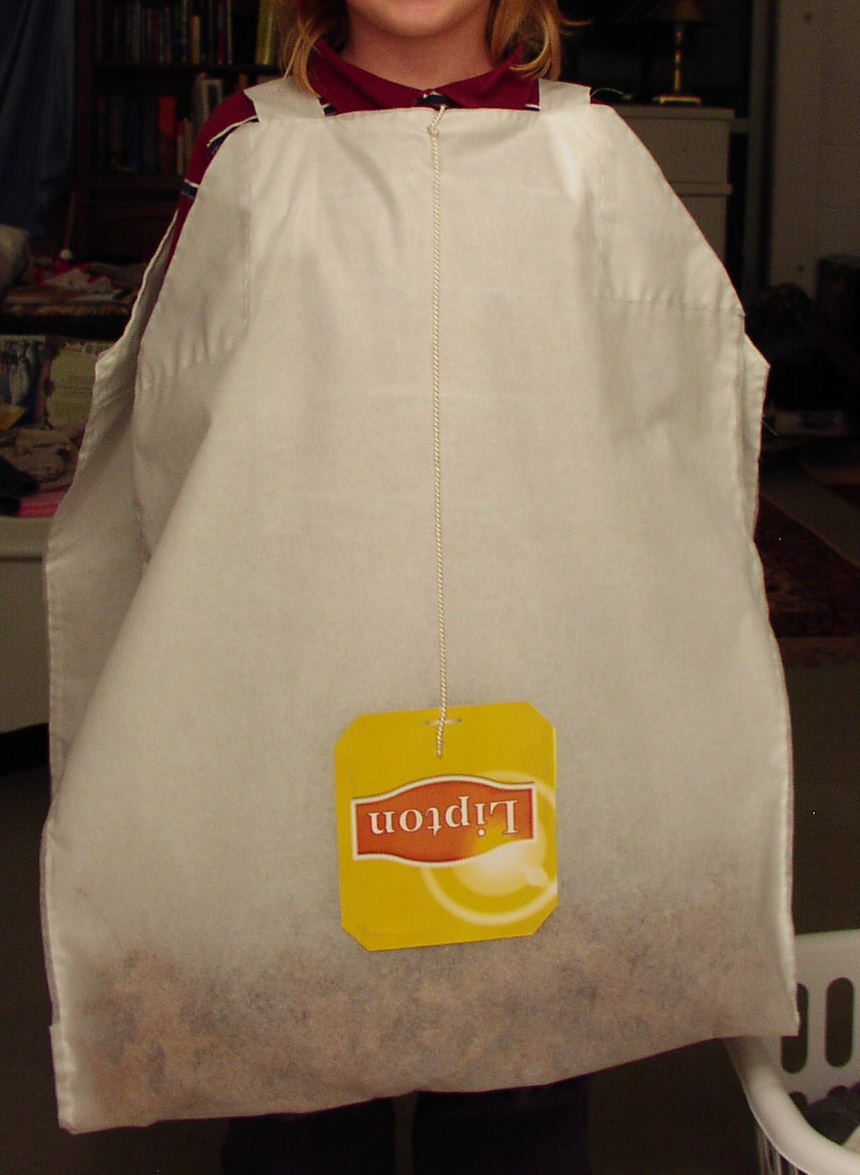
The night of the party, the basement was appropriately filled with cobwebs and flickering lights, hands crawling out from under the chairs and a cauldron in the corner with dry ice creating a little swirling mist. Our guests did not disappoint with their costumes! One of my cousins was a Lipton tea bag…
Another was a classic nerd…
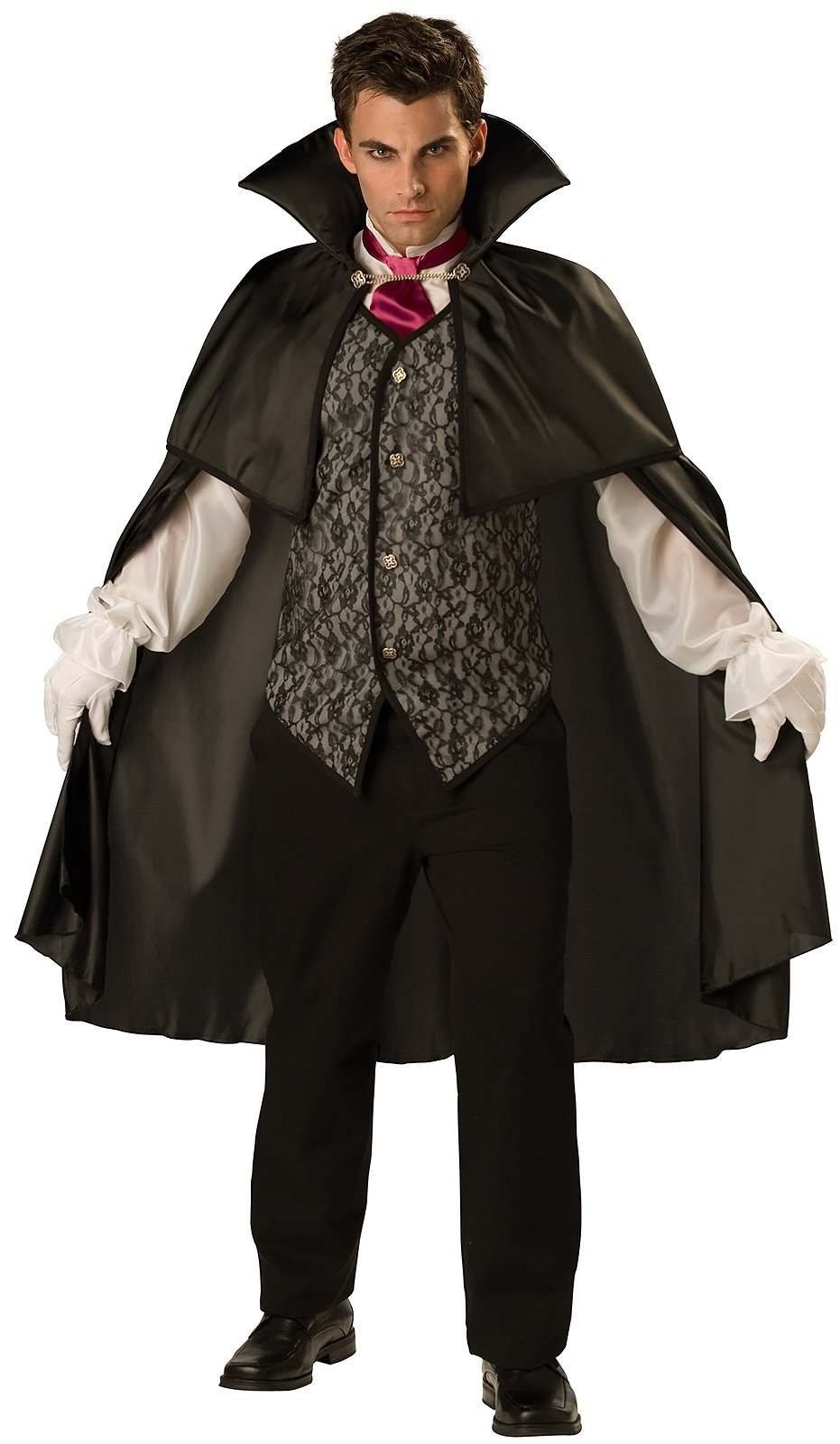
We also had cheerleaders, nurses, werewolves and vampires.
The height of the party was a scavenger hunt outside, with prizes for the top three scores. The hunt, however, was just an excuse to get everyone out of the house, so we could pull a switch. My boyfriend, who supposedly couldn’t make it to the party, waited till he saw everyone scatter outside with their flashlights. He then snuck in the house. We took the mask and robe off the dummy and he put them on. Then he took Mr. Bones’ place behind the bar and waited.
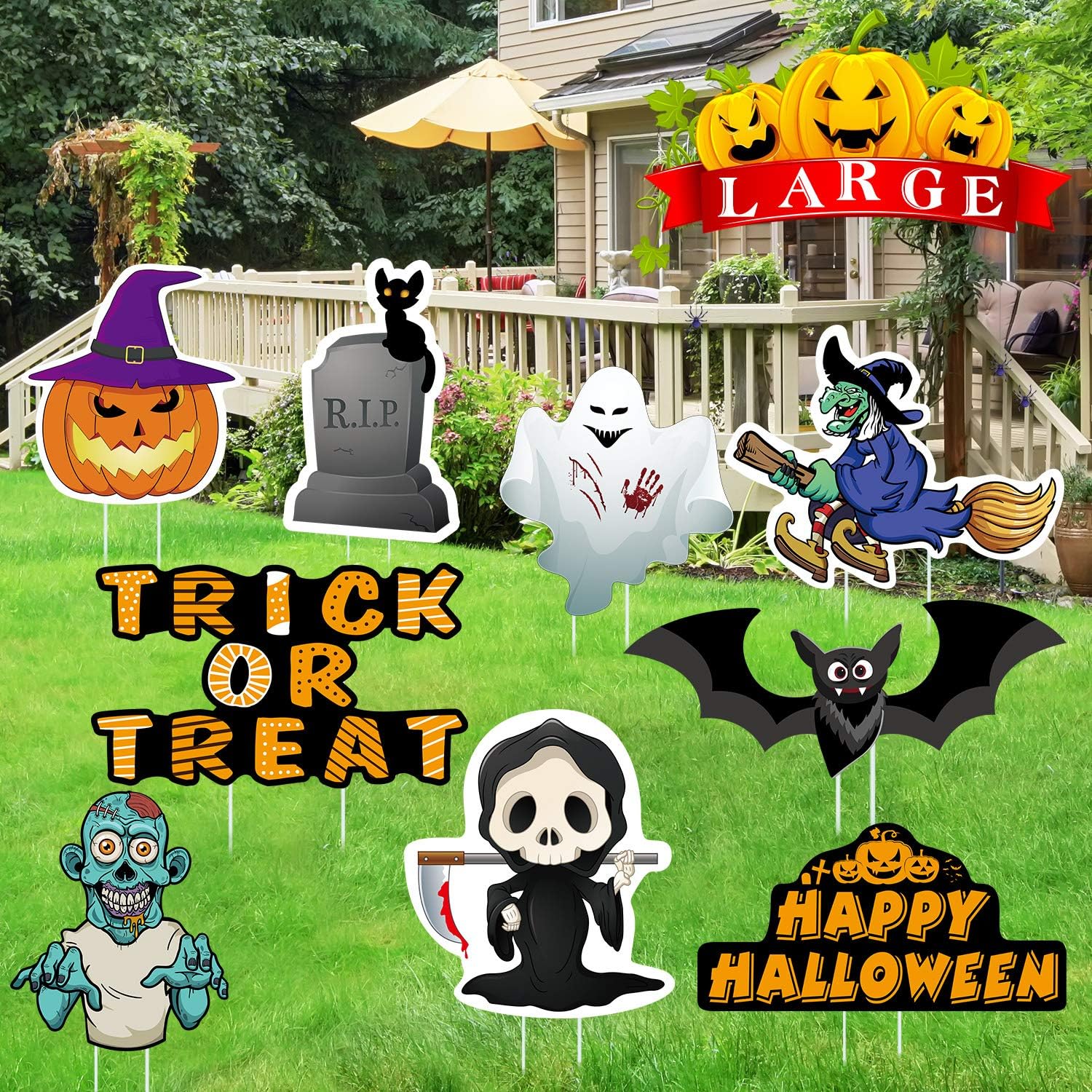
Since we had a 30-minute time limit on the scavenger hunt he didn’t have to wait too long. We were amazed at the items the scavengers toted with them. One had the neighbor’s welcome mat, another had a Beware of the Dog sign, and one even brought a High School sign with him. (Which was amazing, since the clue was for a “sign” and we had over a DOZEN Happy Halloween signs in the front yard just for that reason.)
While we were tallying the scores to determine the winner of the scavenger hunt, I asked one of my friends to change the music behind the bar, so we could dance. When she started to go around the bar, I said, “don’t forget to say hi to Mr. Bones!” She tapped him playfully as I had done and said, “What’s up Mr. B?”
My boyfriend opened his eyes and hissed, “Happy Halloween Linda!”
She screamed and scrambled over the bar. The rest of the group stood stunned, while my aunt, my cousin, my boyfriend and I cracked up.





























 Sew Colorful