



The kukui is a ‘canoe plant’ brought by Polynesian voyagers. Early settlers carried essential plant species in their double-hulled canoes during Pacific voyages. Kukui was among the most important plants they transported to Hawaii. Archaeological evidence shows kukui cultivation in Southeast Asia dating to 13,000 BC. Polynesians spread the tree throughout Pacific islands. The species originated in Malaysia or Indonesia, not Hawaii.
Voyagers selected kukui for its versatility. The tree provided numerous resources crucial for survival. Seeds were easy to transport and grew quickly. This made kukui ideal for establishing new settlements. The oily nuts served as the primary light source before Western contact. Hawaiians strung candlenuts on palm leaf midribs. They burned the nuts one at a time, each providing light for several minutes. Stone lamps also burned kukui oil.
Fishermen applied kukui oil to calm water surfaces. The oil spread across choppy water, creating a clear view beneath. This helped fishermen see their nets and catch fish. A Hawaiian proverb states ‘Pupuhi kukui—malino ke kai’ meaning ‘spewed kukui nuts—calm seas.’
The nuts provided food when roasted and ground into paste called ‘inamona. The oil treated sunburn and wounds. Tree bark made black dye for tapa cloth. The durable wood formed canoes and storage containers.
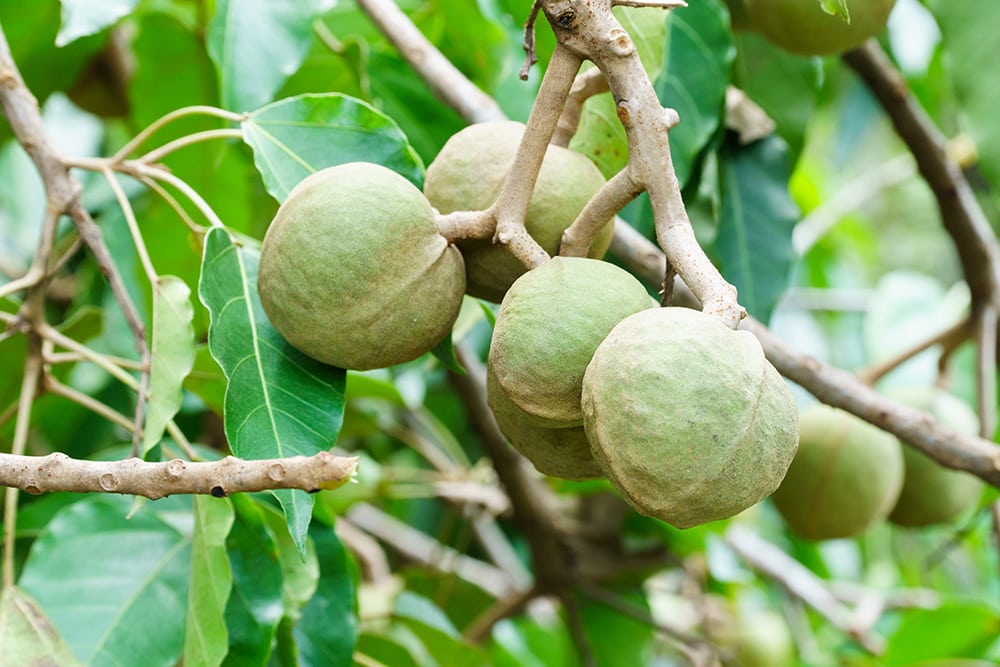
The silvery-pale green foliage stands out from other Hawaiian trees. Young leaves and branches have star-shaped hairs that create a whitish appearance. This distinctive coloring helps identify kukui forests from a distance. Large heart-shaped leaves have three to five lobes. The leaves measure four to eight inches long with toothed edges.
Small creamy-white flowers appear in dense clusters at branch ends. The flowers bloom primarily in winter and spring. Walnut-sized fruits turn from green to brown when ripe.
The kukui symbolizes enlightenment, protection, and peace in Hawaiian culture. Its role as a light source connects it to guidance and illumination. The tree represents the resourcefulness of ancient Hawaiians who used every part of the plant. Kukui also honors Polynesian voyaging heritage and the plants that enabled settlement of remote Pacific islands alongside symbols such as the Hawaii state flag.
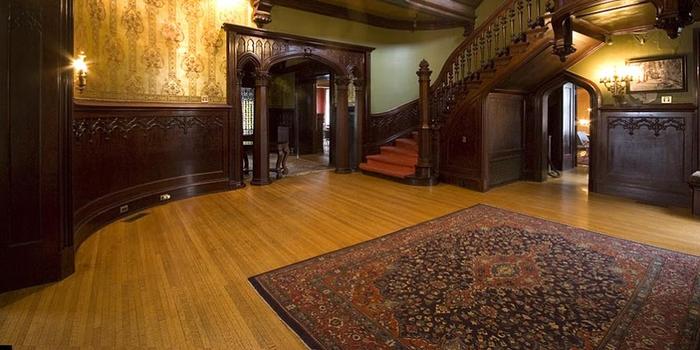
This month’s weird building comes from Nebraska! Nicknamed The Castle, George and Sarah Joslyn completed one of Nebraska’s greatest homes—a 35-room Scottish Baronial mansion atop a hill on Omaha’s outskirts in 1903.

The four-story house was completed at a cost of $250,000—about $9 million in modern currency. The pace of construction—18 months—was amazing, given the rich use of carved wood, stained glass, chiseled stone, mosaic tiles, and wrought iron. The Castle and the outbuildings were built of Kansas Silverdale limestone.
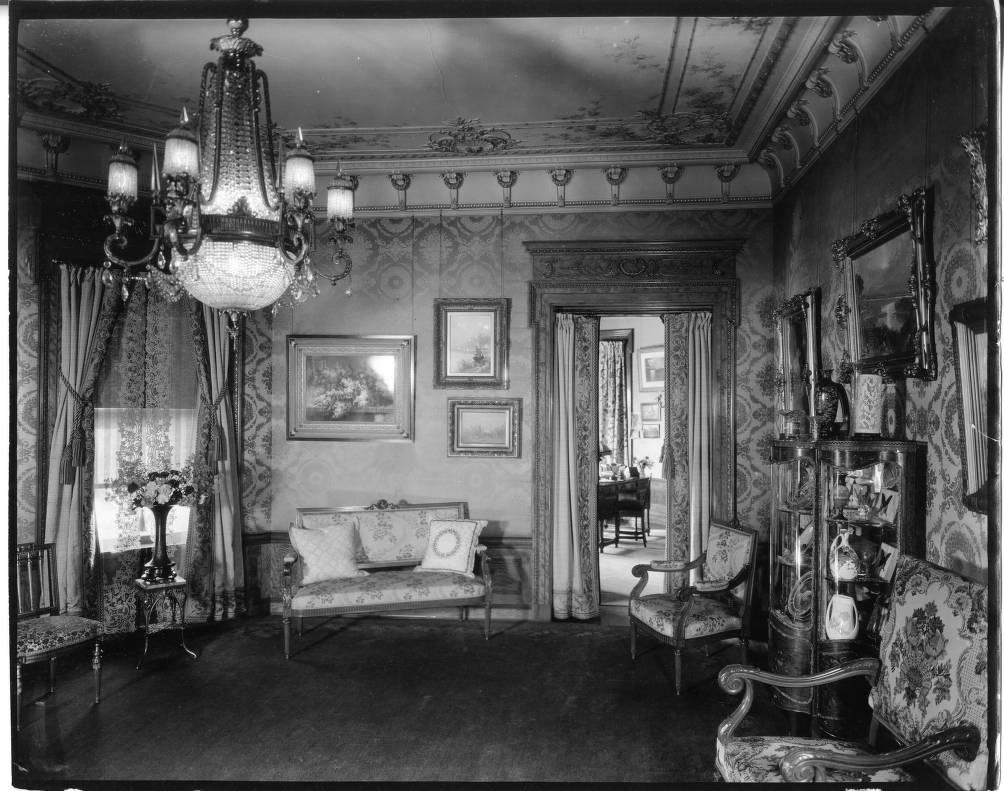
The Castle includes a reception hall, music room, ballroom, a library and gold drawing room. The basement at one time housed a bowling alley. With the addition of a music room in 1907, the house totaled 19,360 square feet. The interior of the home’s conservatory was designed by famous Chicago-based landscape architect Jens Jensen in 1913.
George Joslyn died in 1916, in his sixties. Sarah lived on the 5.5-acre estate until her death in 1940 at age 88. From 1944 to 1989, the home served as the headquarters of the Omaha Public Schools’ administrative offices. During their residency, many changes were made to the Castle to accommodate the staff including installation of a modern central heating and cooling system, an elevator, and separate male and female restrooms.
To preserve the integrity of this architectural treasure, the State of Nebraska took possession and in 2010, Joslyn Castle & Gardens, a 501©3 non-profit organization, purchased the Castle and grounds from the state.

The castle is an Omaha Landmark Historic Structure and on the National Register of Historic Places for National Significance. The grounds are part of the Nebraska Statewide Arboretum.
The Joslyn Castle is an example of Scottish Baronial Revival architecture, a romantic outgrowth of the 19th-century Gothic Revival movement. Examples of Scottish Baronial hallmarks include crow-stepped gables, crenellations, and small turrets or bartizans, and the style can be found in innumerable public and private buildings of this era throughout Great Britain, the United States, and Canada.
Much has been made of the influence of architect John McDonald’s Scottish ancestry on the choice of Scottish Baronial style for the Castle, but the reality is more complex. The Joslyns, like other Gilded Age millionaires, chose a style that would lend an air of old money and sophistication to their newly found wealth and position.
The specific idea of a Castle for their home might have originated in Joslyn’s youth from Union Pacific Railroad tycoon Jay Gould’s greatly admired home, Lyndhurst, with its medieval towers and extensive greenhouses. A third influence was likely that of another “Castle”, the Chicago home of Marshall Field’s founder, Potter Palmer. In the 1890s, the Joslyns would have attended Columbian Exposition receptions inside the Potter’s Castle with its crenelated towers and sumptuous historic revival interiors.
Lynhurst may look like a Castle, but it bears little resemblance to the drafty stone ruins of Europe. Like other gilded age mansions it was built with both dramatic ostentation and state of the art domestic technology.
The gracious hall opening up to adjoining rooms with pocket doors, the carved rare woods, the sweeping staircase, the stained glass windows, a ballroom, an Aeolian pipe organ, and historically-themed rooms were coupled with telephones, central heating, gas, electricity, a refrigeration room, and indoor plumbing with bathrooms for each bedroom, one with an elaborate shower.
The result was conspicuous consumption rooted in tradition announcing the Joslyns were a couple not only of cultivated tastes, but power and influence.

SOURCE: JOSLYNCASTLE.COM

How many versions of the flag have there been?
How many hours a day can the flag be displayed?
What do the colors of the flag represent?
Was the current design professionally designed?
How long has the current version been used?
True or False: A snippet of the flag that inspired Francis Scott Key was sold at an auction.
What day celebrates our Flag?
What is the proper procedure to dispose of a damaged flag?
Can a flag that has touched the ground still be displayed?
How many flags have made it to the moon?
.jpg)
How did you do?

ANSWERS:
There have been 27 versions of the American Flag.
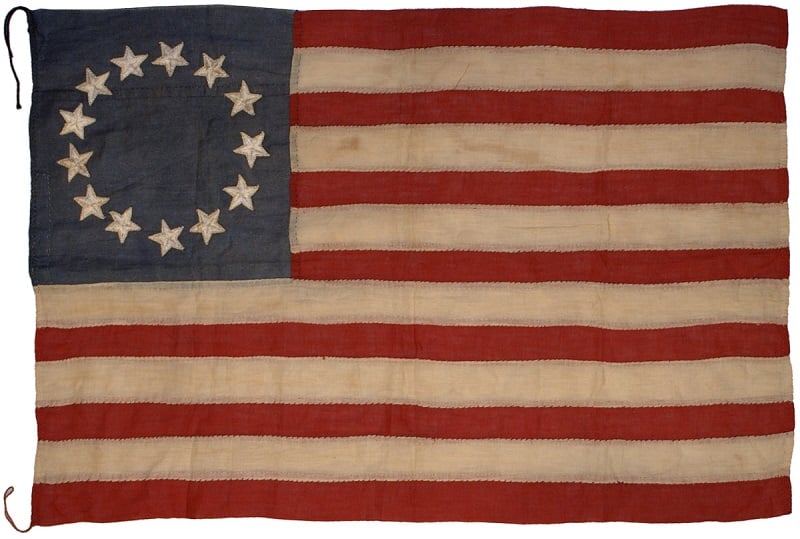
From the 1777 original that had 13 stars and 13 stripes for the American colonies, there have been many changes and iterations of the flag. Each time a state was added to the union, a star was added. We, of course, now stand with 50 stars and 13 stripes.
The Flag can be displayed for all 24 hours.
While it is Federal law that the flag should be displayed from sunrise to sunset (unless there’s inclement weather), there are measures that can be taken to show the flag for all 24 hours. All that needs to be added is proper illumination of the flag so it can be seen in the dark.
The colors were chosen carefully.
The Red, White and Blue did not just happen by accident. The founding fathers wanted the colors to have meaning, not just look visually pleasing. Red symbolizes hardiness and valor, white symbolizes purity and innocence and blue represents vigilance, perseverance and justice.

The current design wasn’t professionally made.
Rather, it was then 17-year-old high school student, Robert G. Heft, of Lancaster, Ohio who submitted the design in a contest in 1958. It was chosen out of over 1,500 submissions by President Dwight Eisenhower.
The current Flag is the only one to have lasted more than 50 years.
As stated above, there have been many changes to the design of the American Flag. But the one we currently observe is the longest running iteration of the symbol, likely because no states have been added to the union since 1959.
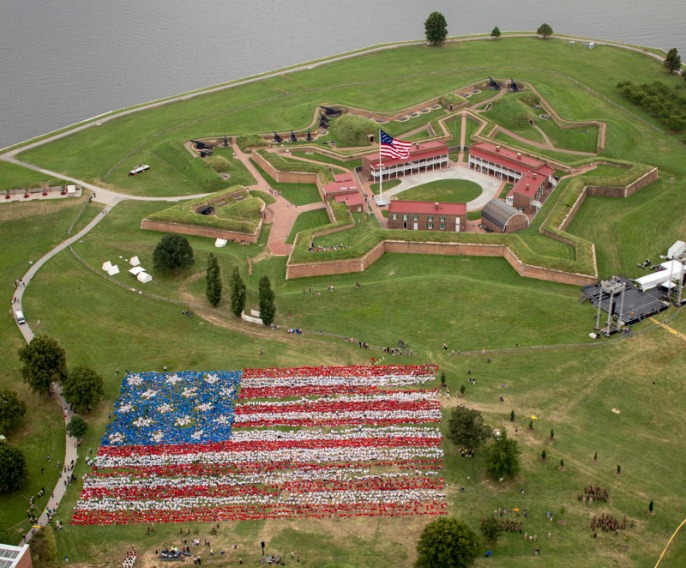
A snippet of the Flag the Star Spangled Banner was written about was sold in 2011.
The flag that flew at Ft. McHenry, immortalized by Francis Scott Key, is still around. A 2″ x 5″ swatch of it was sold at an auction in 2011 for a whopping $38,000. The rest of the flag is on display at Smithsonian’s National Museum of American History.
A snippet of the Flag the Star Spangled Banner was written about was sold in 2011.
The flag that flew at Ft. McHenry, immortalized by Francis Scott Key, is still around. A 2″ x 5″ swatch of it was sold at an auction in 2011 for a whopping $38,000. The rest of the flag is on display at Smithsonian’s National Museum of American History.
The Flag has a national day of recognition.
Flag Day, which celebrates the anniversary of the Flag Resolution of 1777, was established by the Proclamation of President Woodrow Wilson on May 30th, 1916 after years of local celebrations.
Flags should be disposed of in a “dignified manner.”
If an American Flag is damaged beyond repair and you need to dispose of it, you can burn it with dignity. Many municipalities around the country conduct flag burnings on Memorial Day or the Fourth of July where you can participate.

The Flag can touch the ground and still be used.
There is a myth that once a flag touches the ground it needs to be burned or disposed of. That’s not entirely true. If a flag is soiled or touches the ground, it can be washed and dry cleaned and continue to be used.
Six American Flags have made it to the moon.
You have probably seen Neil Armstrong on the moon with an American Flag, but he is not the only one to plant one on the surface of the moon. Five additional Apollo missions, 12, 14, 15, 16, and 17, ended with an astronaut placing a flag on the moon.
Till next time…stay sharp!


June is officially the start of summer, so I browsed recipe friendly picnics cookies/desserts. I found this one –Butterscotch Toffee Cookies—and they look scrumptious!
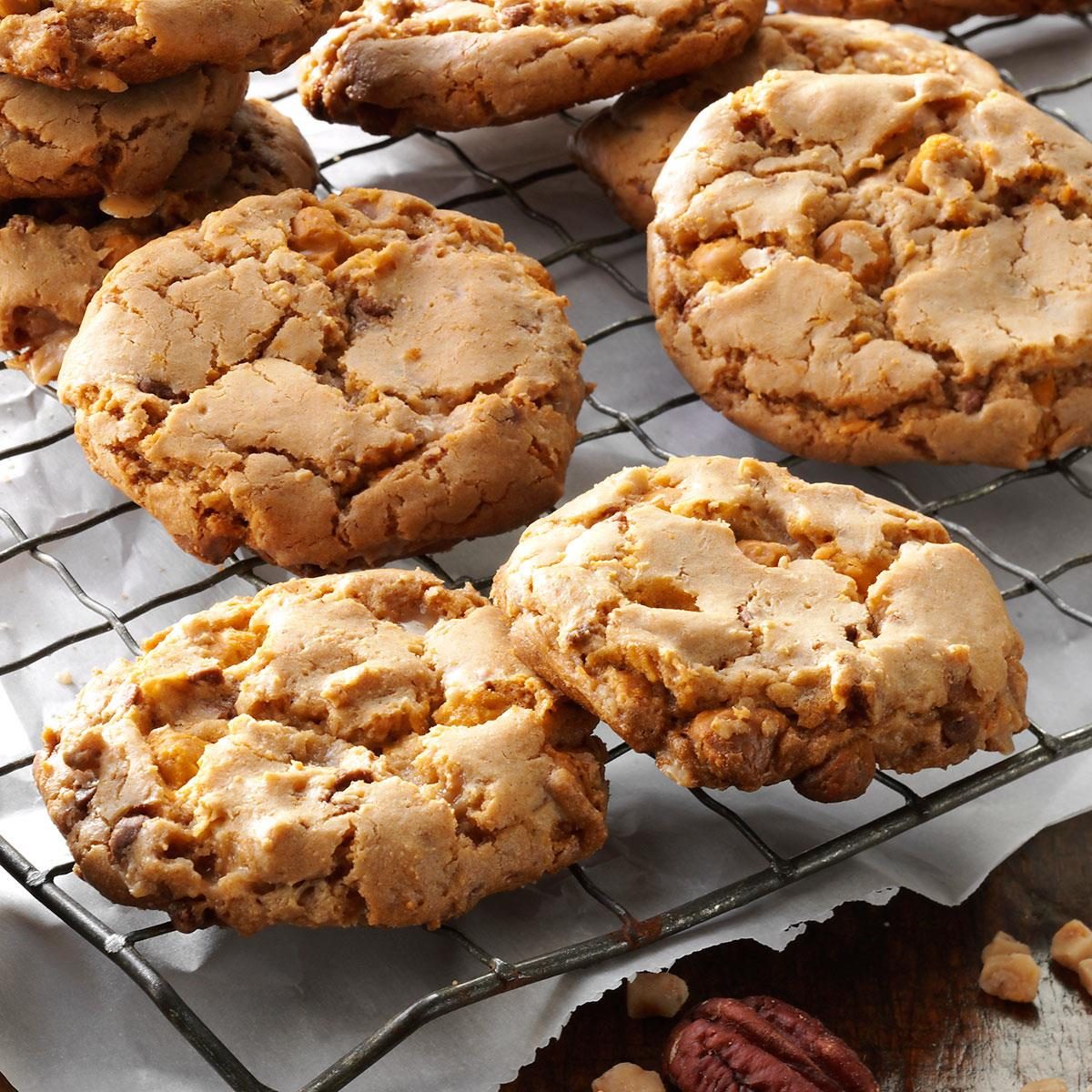
Ingredients
2 large eggs, room temperature
1/2 cup canola oil
1 package butter pecan cake mix (regular size)
1 package (10 to 11 ounces) butterscotch chips
1 package (8 ounces) milk chocolate English toffee bits
Preheat oven to 350°. In a large bowl, beat eggs and oil until blended; gradually add cake mix and mix well. Fold in chips and toffee bits.
Drop by tablespoonfuls 2 in. apart onto greased baking sheets. Bake until golden brown, 10-12 minutes. Cool 1 minute before removing to wire racks.
ENJOY!

If you’re going to visit Oklahoma, Trip Advisor recommends these destinations!
Bricktown
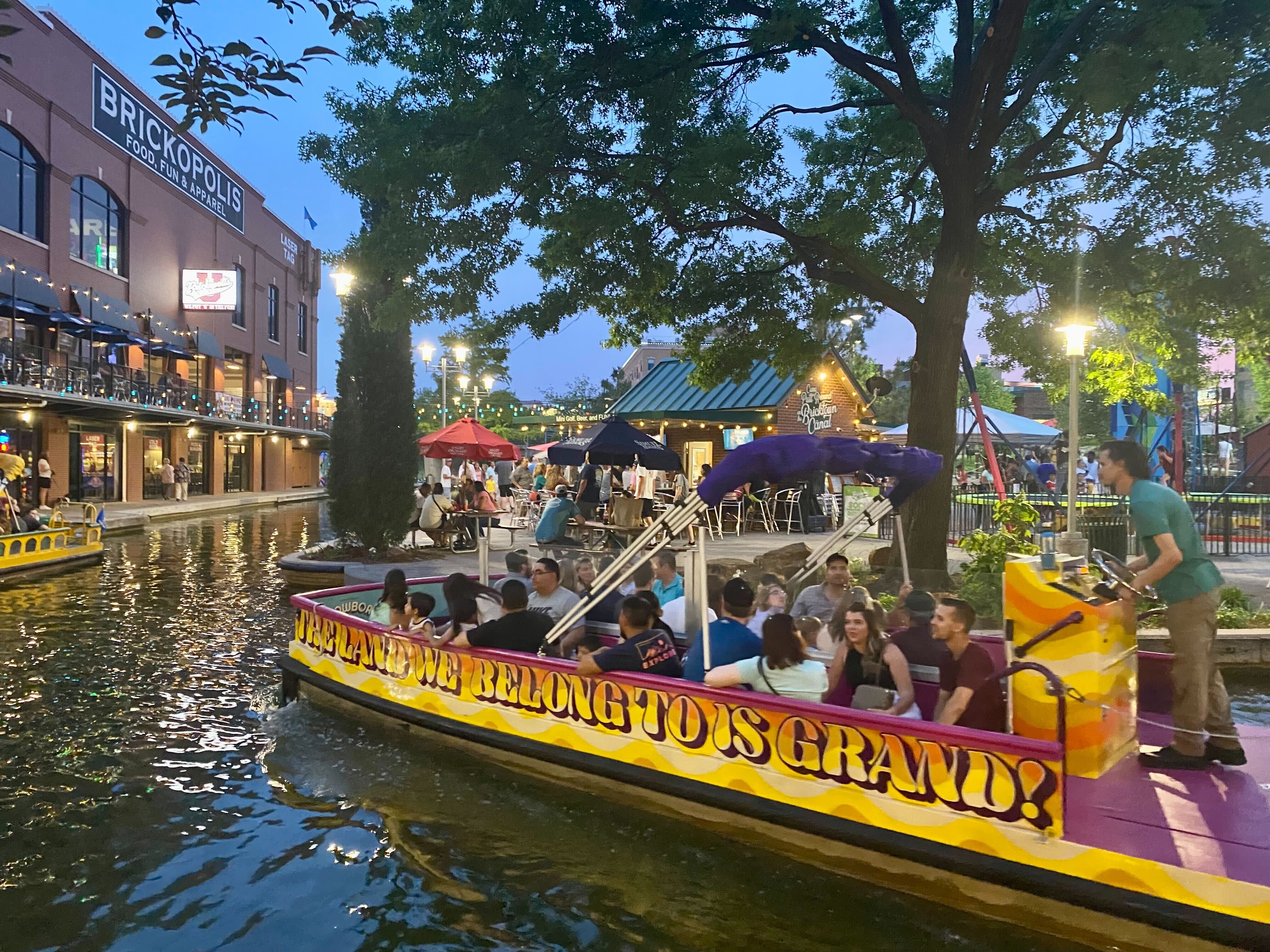
Bricktown, just east of Oklahoma City’s downtown business district, is the city’s original warehouse and distribution center turned entertainment district. You can go shopping, drink at a bar, dine at one of the many restaurants, and stroll along the Bricktown River Walk Park at your own pace. You can also catch a baseball game at the Chickasaw Bricktown Ballpark or have fun on the sands of Bricktown Beach on summer days. The area is home to a plethora of public art, museums, and galleries, making it one of Oklahoma City’s most vibrant arts districts and a great attraction year-round.
National Cowboy and Western Heritage Museum

The National Cowboy & Western Heritage Museum is America’s premier institution of Western history, art and culture. Founded in 1955, the Museum, located in Oklahoma City, collects, preserves, and exhibits an internationally renowned collection of Western art and artifacts while sponsoring dynamic educational programs to stimulate interest in the enduring legacy of the American West. More than 10 million visitors from around the world have sought out this unique museum to gain better understanding of the West: a region and a history that permeates our national culture.
Philbrook Museum of Art

This vast art museum, housed in an Italian style villa, has numerous exhibits from European, American, Asian, Native American and African artists and is surrounded by acres of lush gardens.
Beavers Bend State Park and Nature Center

The Cave House

The Cave House in a landmark in Tulsa. It was built in 1924, as a Chicken Restaurant. Built during prohibition, it was a place you could quench your thirst! It not only has quirky architecture, but it probably best known for its stories, full of interesting and sometimes amusing information. It is a great date, or family adventure, and as the owner I love to share it! It is best to call, or message ahead, as I do not have regular hours. Due to scheduling for private tours and groups, and because travelers request all days and times, I try to schedule according to requests as best as I can. The cost is $15.00 and kids under 13 years are $7.50.
Myriad Botanical Gardens

Myriad Botanical Gardens is one of Oklahoma City’s most beloved public spaces, offering its visitors a 15 acre natural escape in the heart of downtown. A half-acre children’s garden, an off-leash dog park, splash fountains, and paths for walking and jogging provide guests young and old with a place to seek solitude with nature, or seek community and the company of others. The Gardens offers a variety of horticultural education programs for adults and children. The centerpiece attraction of the Gardens is the Inasmuch Foundation Crystal Bridge Conservatory. Its unique design has earned attention and praise in the architectural community. It is 224 feet long, 70 feet in diameter, and is covered by 3,028 sections of translucent, double-layered acrylic panels. After an 18-month, $11 million renovation, it reopened to the public on November 18, 2022.
SOURCE: TRIPADVISOR.COM
:max_bytes(150000):strip_icc()/shutterstock_464199479_0-09163d4437ff4e8e8ceec3e300ecdad8.jpg)
Matthew Shafer (born June 6, 1974), is also known by his stage name Uncle Kracker. So, Happy Birthday Matthew! This is one of my favorite songs.

This craft is SUPER EASY and won’t wreck your budget either!
Materials to make an Uncle Sam Gnome
Craft Sticks, Jumbo – Dollar Tree
Cotton Mop Head – Dollar Tree
Americana Acrylics by DecoArt – Santa Red, Titanium White, Victorian Blue
DecoArt Galaxy Glitter – Clear Ice Comet
DecoArt Designer’s Brush Set
Wooden Ball – 1” in diameter
Wooden Stars – Dollar Tree
Glue Gun and Glue Sticks – Dollar Tree
Scissors
Pencil
Ruler

To begin the Dollar Tree Craft Stick Uncle Sam Gnome, gather all supplies. To create Uncle Sam’s hat, base coat three jumbo wooden sticks with Santa Red Americana acrylic craft paint, two jumbo wooden sticks with Titanium White acrylic craft paint, and two jumbo sticks with Victorian Blue Americana acrylic craft paint. Let dry, and apply a second coat, if necessary. Using scissors, trim one blue and one unpainted jumbo craft stick to the width of the hat and assemble with a glue gun and glue sticks. NOTE: You can use liquid craft glue for this project, but you will have to wait for it to dry.

Basecoat three wooden stars with Titanium White acrylic craft paint. Let dry, and apply a second coat, if necessary. TIP: Attach small wooden shapes to your work surface with a circle of scotch tape on the back so they stay put while painting.

Cut approximately 24 individual strings from the cotton mop head with scissors. This mop has enough strings that you can make at least 3-4 gnomes.

Flip the Uncle Sam hat over and attach 12 cotton mop head strings along the base of the bottom wooden stick with a glue gun and glue sticks. Glue 12 additional cotton mop head strings on a second layer.

To finish the Dollar Tree Craft Stick Uncle Sam Gnome, flip the hat back over and attach the wooden ball to Uncle Sam’s beard with a glue gun and glue sticks to create the gnome part of this project. Glue the three wooden stars onto the hat band.

Using a paintbrush and a dabbing motion, add the DecoArt Galaxy Glitter Clear Ice Comet to the three wooden stars to add some additional sparkle to those stars and stripes. Dabbing this heavily-loaded glitter acrylic medium onto the wooden stars allows for maximum coverage. Set aside to allow the glitter to dry.

SOURCE: CREATIVELYBETH.COM
Pat’s note: The instructions do not include a hanger for the back, which I would want. Also, there are no measurements given, but using a 1 inch wooden ball makes me think this is not large enough for a door hanger. When I make this, I will make it large enough to hang on my door and report back as to dimensions.
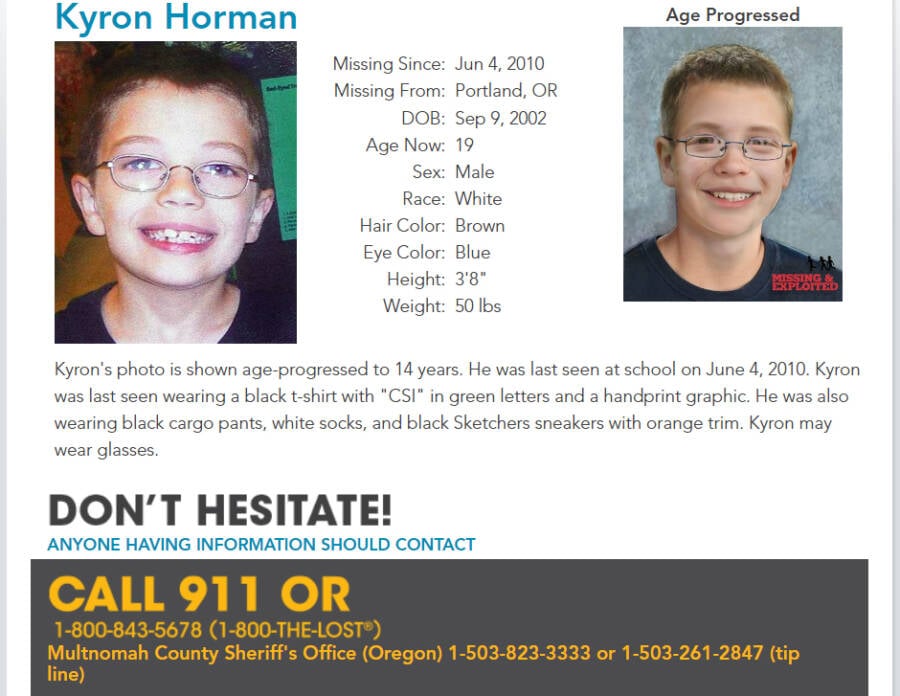
Today is the 16th anniversary of a young boy’s—Kyron Horman—disappearance from a school in Portland Oregon. No trace has ever been found. The story below written last year.
From: thatoregonlife.com:
June 4, 2025, marks the 15th anniversary of the disappearance of Kyron Horman, a 7-year-old boy who vanished from Skyline Elementary School in Northwest Portland, Oregon. Despite extensive investigations, no trace of Kyron has ever been found. Now, Multnomah County’s newly elected District Attorney, Nathan Vasquez, has announced a renewed investigation into the case, giving new hope to Kyron’s family, friends, and everyone worldwide whose hearts and souls his sweet smile has touched.

A Renewed Investigation
District Attorney Vasquez issued a statement to the media, reaffirming his office’s dedication to the case:
“As we approach the 15th anniversary of Kyron Horman’s disappearance, I want to reaffirm my continued commitment to this case. When I met with Desiree Young as the incoming District Attorney, I assured her that open communication would be a priority. My office has begun a thorough and methodical review of the case with fresh eyes.
This is a painstaking process involving tens of thousands of pages of reports, records, and other evidence. We have a dedicated team assigned to the case and I am now being regularly briefed on its current status and what steps may follow.
At this time, I will not comment on the substance of the investigation. Our focus remains where it has always belonged—on Kyron and his family. We hope to share further updates this fall.”
The Multnomah County Sheriff’s Office continues to consider the case active, working alongside the District Attorney’s Office and the FBI to pursue investigative leads. (KVAL)
The Day Kyron Disappeared
On the morning of June 4, 2010, Kyron attended a science fair at Skyline Elementary School with his stepmother, Terri Horman. She reported last seeing him walking toward his classroom at approximately 8:45 a.m. However, Kyron was marked absent that day, and his family realized he was missing when he did not return home on the school bus.
The initial search for Kyron became the largest in Oregon’s history, involving over 1,300 volunteers and multiple law enforcement agencies. Despite these efforts, no substantial evidence was found as to Kyron’s whereabouts or what truly happened to him that day.
Focus on Terri Horman
Terri Horman, now known as Terri Vazquez, has remained a person of interest in the case. She has denied any involvement in Kyron’s disappearance and has not been charged, despite allegedly failing two polygraph tests and refusing a third. Kyron’s mother, Desiree Young, has publicly expressed her belief that Terri knows more than she has disclosed.
In 2012, Young filed a civil lawsuit against Terri, alleging her involvement in Kyron’s disappearance. The lawsuit was later dropped to avoid interfering with the ongoing investigation.
Recently, Young sat down for an extensive interview with United Search Corps, an organization dedicated to addressing the heartbreaking crisis of missing and murdered individuals.
Ongoing Investigation and Community Involvement
The renewed investigation under District Attorney Vasquez includes a dedicated team reviewing extensive case files and evidence. Advancements in digital forensics and geospatial technology are being utilized to aid the investigation.
A $50,000 reward remains available for information leading to the resolution of Kyron’s disappearance. Tips can be submitted to the Multnomah County Sheriff’s Office at 503-988-0560 or via email at tips@mcso.us.

Desiree Young continues to advocate for her son, participating in public events and speaking engagements to keep attention on the case. Her efforts have inspired community support and ongoing interest in finding answers.
Looking Ahead
As the 15th anniversary approaches, the renewed investigation offers a glimmer of hope for Kyron’s family and the community. District Attorney Vasquez’s commitment to a thorough review signifies a continued pursuit of justice in one of Oregon’s most perplexing missing person cases.
The community remains vigilant, and authorities encourage anyone with information to come forward, emphasizing that even the smallest detail could be crucial in solving the case.

June is a BIG month for weddings! If you’ve got one coming up and you’re not sure what to buy the happy couple as a wedding gift…this article I found on People.com can help! …with what NOT to buy!
From People:
A recent bride is seeking community after receiving an “extremely odd” wedding gift.
The Redditor took to the platform’s “Wedding Shaming” forum after one of her oldest friends gifted her and her partner “surprise vinyl toys” for their big day — despite her never having expressed interest in the collectible figures.
To make the gesture even more peculiar, the poster said that she “didn’t ask for gifts” and simply requested their friends’ “presence as it was a small party and we were well aware that our guests were required to take time off to be with us.”
“It just felt extremely odd and not an appropriate wedding gift,” she added of the toy, clarifying that it wasn’t even the popular Labubu doll that has taken over the internet.
While the bride ultimately brushed off the odd encounter and planned to re-gift the toys to her young nieces, she asked other recent brides in the thread if they’d had similar experiences with unconventional gifts. She was not disappointed with the responses.
In the comments, Redditors recounted their experiences receiving everything from a handful of tomatoes to a pair of scissors, ill-fitting bed sheets, a dirty banana stand, and even a piece of dried coral that someone had spray painted turquoise.
:max_bytes(150000):strip_icc():focal(999x0:1001x2)/wedding-gifts-073024-c3b5f3b10ec244c2a102d2bbb565a130.jpg)
One user in particular said that their mother-in-law’s friend had gifted them a bag of junk to celebrate the couple’s nuptials.
“Among the refuse we got: a dingy old jewelry box covered in crayon scribbles, one chipped bowl, a fake Amber necklace with beads the size of chestnuts, and stained pillow covers,” the user wrote.
In another case, one newlywed had her best friend, who was also in her wedding party, gift her a “weird pewter butterfly wine stopper” — even though the bride doesn’t drink alcohol. And while she was “perplexed” upon unwrapping the accessory, she never brought it up again.
“One of my co-workers gave me a word processing program on a Zip drive and several books related to our field. I’m pretty sure mine was the only wedding he’s ever been to. It was strange, but also very endearing!”
One bride recalled receiving a “hideous chunky chrome frame that still had a piece of the previous bridal gift wrap attached to it and a set of four coffee mugs with apples on them that had a to: from: card inside. Yes the gift giver was the original to:. If you’re going to re-gift at least be sly about it.”
For others, however, a gift that seemed ridiculous at first soon became something they reached for quite often.
As another user explained, “I had an aunt gift us the brightest colored handmade bowl cushions. You set your hot bowl of soup in them so you can carry it. They go with nothing that we own and are an absolute eyesore. We use them frequently.”
SOURCE: PEOPLE.COM
 Sew Colorful