Hawaii State Tree: Kukui

The kukui is a ‘canoe plant’ brought by Polynesian voyagers. Early settlers carried essential plant species in their double-hulled canoes during Pacific voyages. Kukui was among the most important plants they transported to Hawaii. Archaeological evidence shows kukui cultivation in Southeast Asia dating to 13,000 BC. Polynesians spread the tree throughout Pacific islands. The species originated in Malaysia or Indonesia, not Hawaii.

Voyagers selected kukui for its versatility. The tree provided numerous resources crucial for survival. Seeds were easy to transport and grew quickly. This made kukui ideal for establishing new settlements. The oily nuts served as the primary light source before Western contact. Hawaiians strung candlenuts on palm leaf midribs. They burned the nuts one at a time, each providing light for several minutes. Stone lamps also burned kukui oil.

Fishermen applied kukui oil to calm water surfaces. The oil spread across choppy water, creating a clear view beneath. This helped fishermen see their nets and catch fish. A Hawaiian proverb states ‘Pupuhi kukui—malino ke kai’ meaning ‘spewed kukui nuts—calm seas.’

The nuts provided food when roasted and ground into paste called ‘inamona. The oil treated sunburn and wounds. Tree bark made black dye for tapa cloth. The durable wood formed canoes and storage containers.

The silvery-pale green foliage stands out from other Hawaiian trees. Young leaves and branches have star-shaped hairs that create a whitish appearance. This distinctive coloring helps identify kukui forests from a distance. Large heart-shaped leaves have three to five lobes. The leaves measure four to eight inches long with toothed edges.

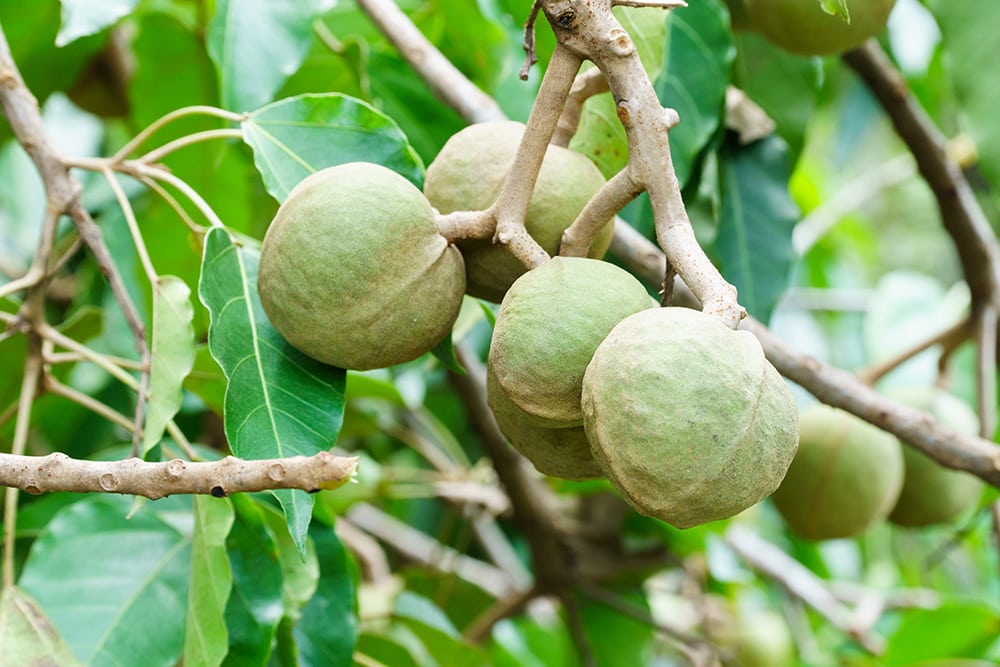
Small creamy-white flowers appear in dense clusters at branch ends. The flowers bloom primarily in winter and spring. Walnut-sized fruits turn from green to brown when ripe.

The kukui symbolizes enlightenment, protection, and peace in Hawaiian culture. Its role as a light source connects it to guidance and illumination. The tree represents the resourcefulness of ancient Hawaiians who used every part of the plant. Kukui also honors Polynesian voyaging heritage and the plants that enabled settlement of remote Pacific islands alongside symbols such as the Hawaii state flag.

Georgia State Tree: Live Oak

General Information about Live Oaks:

The Quercus virginiana is also known as the Southern live oak tree.

The live oak tree is a southern symbol of strength.

The live oak tree is the state tree of Georgia.

The U.S.S. Constitution reportedly received its nickname, “Old Ironsides,” during the War of 1812 because of its live oak hull. The hull was so tough that the cannon balls of the British war ships literally bounced off it.

Live oak trees are planted in historical cities for their character and appearance.

Live oak trees weigh over 55 pounds per cubic foot when air dried.

Live Oak Tree Fruit:

Live oak trees product sweet edible acorns that turkeys, ducks, jays, quail, deer and other animals like to feed on.

Live oak trees start producing acorns when they are around 20 years old.

Live Oak Tree Growth & Life:

Live oak trees can live for hundreds of years!

The name live oaks came from the fact that they remain green and “alive” throughout the winter when other oak trees are dormant and leafless.

The name live oak came from the fact that they remain green and “alive” throughout the winter when other oak trees are dormant and leafless.

Live oak trees can grow in forests, in front of buildings such as schools, parking lots, gardens, backyards and more.

Live oak trees also grow by oceans. They do great resisting the salt spray.

Live oak trees support many types of epiphytic plants (including Spanish moss to a point); giving live oak trees more character.

The live oak tree grows 1 inch of caliper and around 2-4 feet overall per year when young.

A mature live oak tree can draw up to 50 gallons+ per day through it’s tap root deep in the ground.

Live Oak Tree Uses:

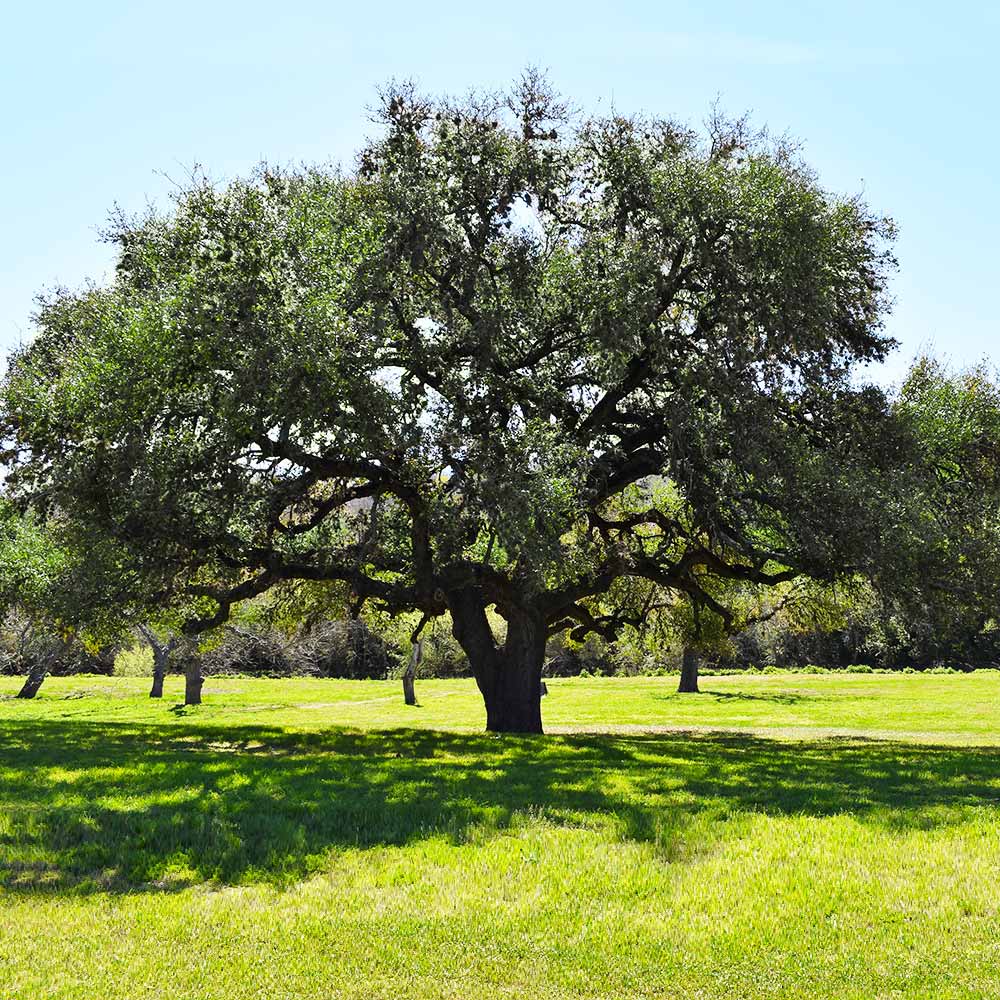
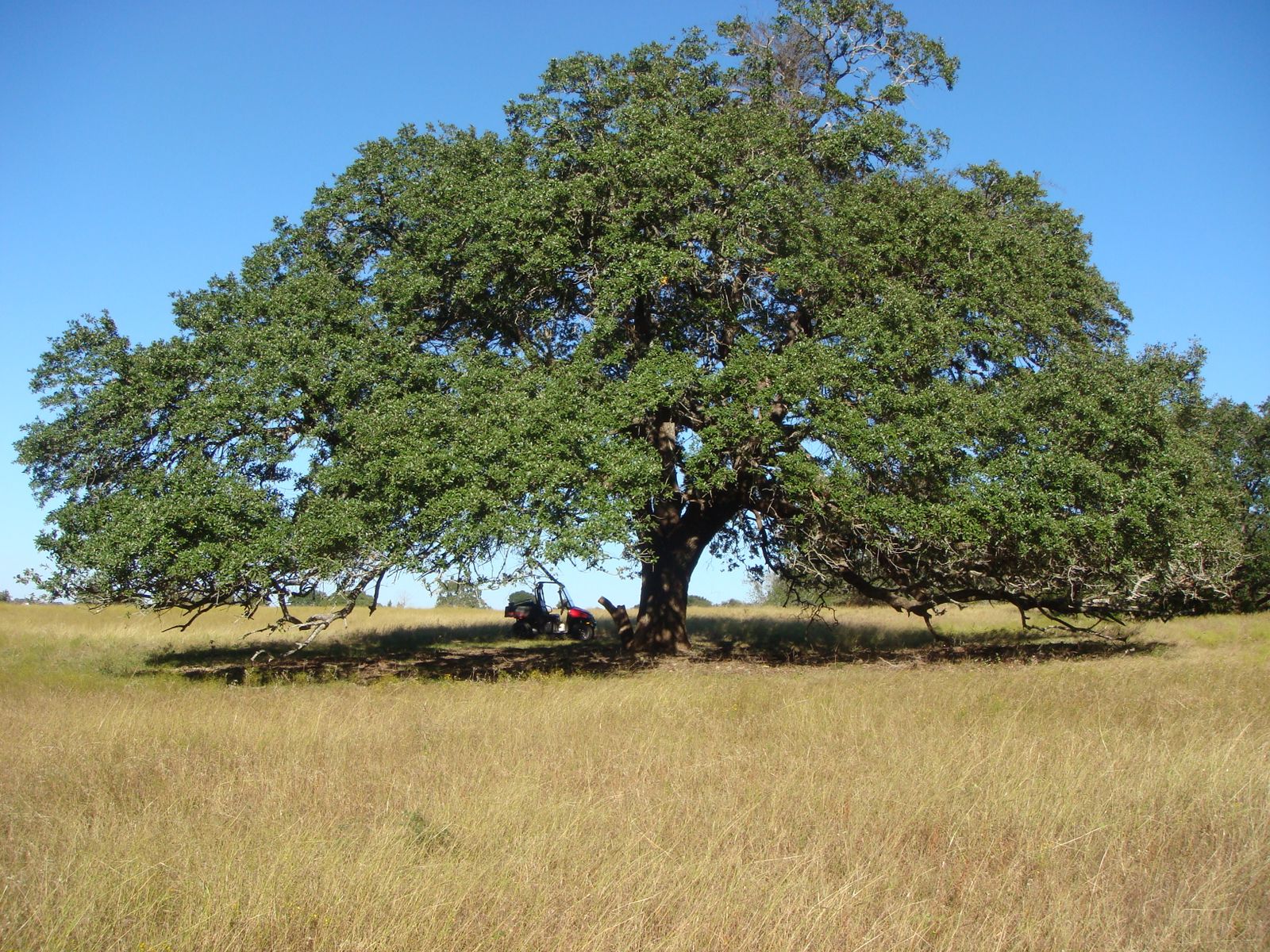
The live oak tree is the broadest spreading of the oaks producing an abundance of shade.

Live oak tree wood is very strong and tough and is often used for structural beams and posts.

Live oak trees were used in colonial times to make ships for the navy.

Florida State Tree: Sabal Palm

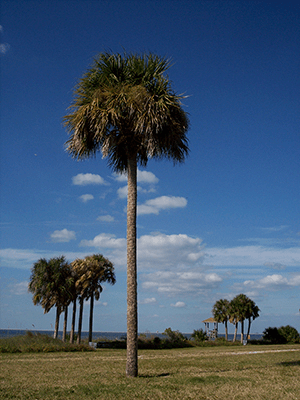
Nothing says Florida like a palm tree, so it’s fitting that the state tree is sabal palm. Oddly enough though, the sabal palm is not a true tree, and as a palm, is more closely related to grasses.

The sabal palm, also known as the cabbage palm, was designated the state tree in 1953 and occurs on the Florida state seal. There were actually years of debate before the sabal palm was selected as the state tree. Other trees up for consideration were the royal palm, slash pine, and longleaf pine.

Early Floridians had a variety of uses for the sabal palm. The bud of the tree is edible and is known as “heart of palm” and swamp cabbage, the trunk and fronds were used to build shelter, and various fibrous parts were used to make cordage.

Cabbage palm (Sabal palmetto) is native to Florida, grows throughout the state, and continues to grow north along the coast to North Carolina. It happens to also be the state tree of South Carolina. Cabbage palm is found growing in pine woodlands, hammocks, and on river banks. These plants are fairly tolerant of salt spray on foliage but are intolerant of salt in the root zone.

Cabbage palms have curved, fan-shaped palm leaves with blades that are 3 to 4 feet long and petioles (leaf-stalks) that are 3 to 6 feet long. A full, round canopy forms atop a trunk that is 10 to 16 inches in diameter and grows to 40 feet tall. Branched inflorescences are produced in late spring and usually grow beyond the leaves, containing thousands of tiny, creamy-white, fragrant flowers that attract bees. Black fruits are produced in late summer and are consumed by wildlife. The immature leaves—sometimes called the “heart”—are edible and have a cabbage-like flavor.

Delaware State Tree: American Holly

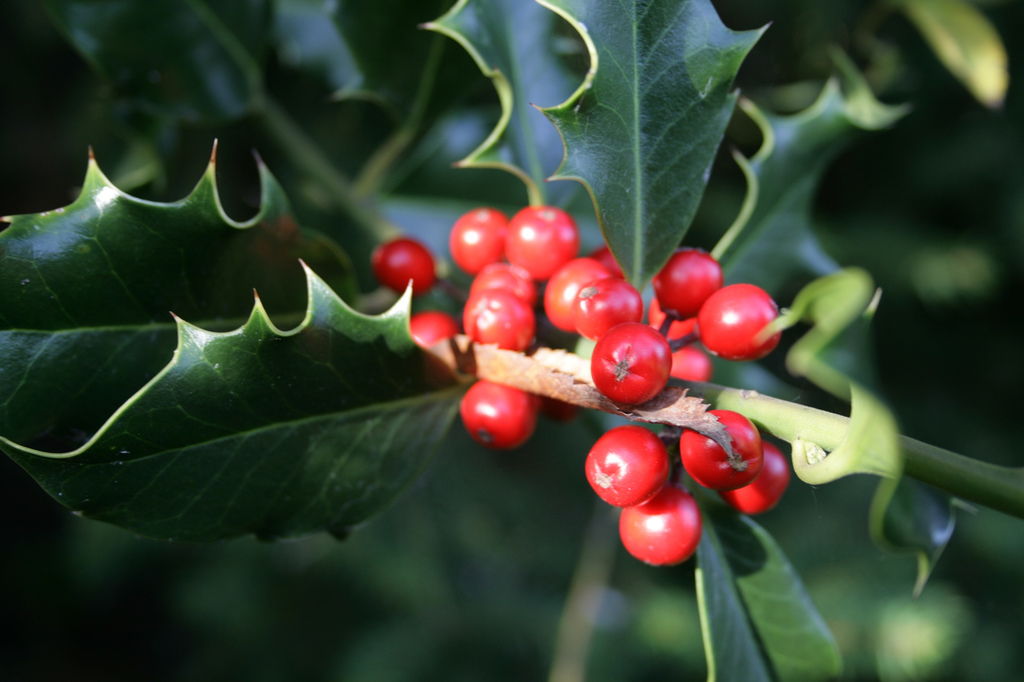
The American Holly is considered one of the most popular trees in the world. Due to extensive cultivation of the American Holly by nurseryman and gardeners alike, there are currently over 1000 different cultivars, with more being patented every year (Holly Society of America).

The tree is ridiculously tough. The American Holly is widely known as the hardiest broadleaf evergreen. Native specimens found throughout the Appalachian Mountains have been found to withstand temperatures of -10°F, while cultivated varieties have been naturalized in Ohio down to -20°F. The tree is also not picky in terms of soil requirements. American Holly will grow in nearly all soils. This fact is evident given that its native range extends from Massachusetts to Florida to Texas. American Hollies grow on mountain tops, in river valleys, on flood plains, and along coastlines. This range of habitats and conditions means the American Holly does not take great risks in its habit of growth. The tree has a slow to medium growth rate.

The tree also reproduces the “old fashioned way;” male and female flowers are produced on separate plants (dioecious reproduction). A male pollenizer must be nearby in order to produce the beautiful red berries we are all familiar with on female trees.

Throughout history, the appeal of bright red berries and lustrous evergreen leaves drove the popularity of the English Holly. From the Roman and Druid winter solstice traditions to the eventual European Christian traditions, the symbolism and colorful nature of the evergreen holly in the dead of winter was constant. It is little wonder that when the European colonists landed in the New World, they brought their love of holly among their many traditions.

 Prior to their arrival, American Holly leaves had been used by Native Americans to make tea to treat cough, and berries had been used to make buttons. But Europeans brought demand for American Holly to a whole new level. They recognized American Holly as an obvious substitute for their English holly (Ilex aquifolium) holiday traditions, and decorative and landscape usage soon exploded. Today the popularity of the American Holly is as strong as ever.

Connecticut State Tree: White Oak

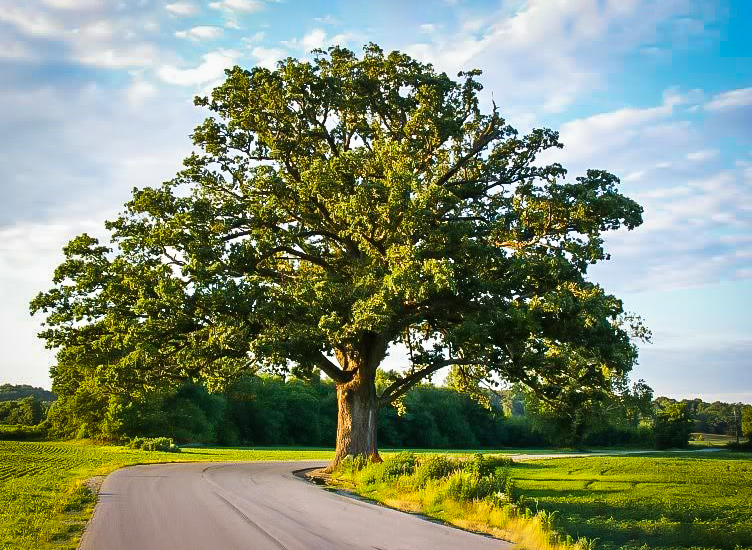
The white oak tree (Quercus alba) is one of the continent’s predominant native hardwood tree species appearing throughout Eastern North America’s forests.

While it will not disappoint as a design feature, oaks are among the most valuable native trees we can plant. The white oak provides a habitat and food for countless species of wildlife. The white oak is the best tree to plant to attract butterflies and it supports hundreds of species of caterpillars. If you want to support pollinators and attract birds, planting white oaks will ensure that will happen. Besides being important for the environment, the tree makes barrels and ages various spirits such as bourbon, whiskey, and wines.

If you have the room and the time to commit—it can live 500 years—the white oak tree is a beautiful and invaluable addition to a landscape for its aesthetic value and role in the local ecosystem.

How to Identify White Oak Trees

White oaks are easy year-round by their height, rounded canopy, and big trunk. They are large trees that grow to 50 to 75 feet tall with rounded canopies. It has a large trunk, often 3 to 5 feet around. The tree’s bark is a light, scaley gray that flakes off in small pieces if picked.

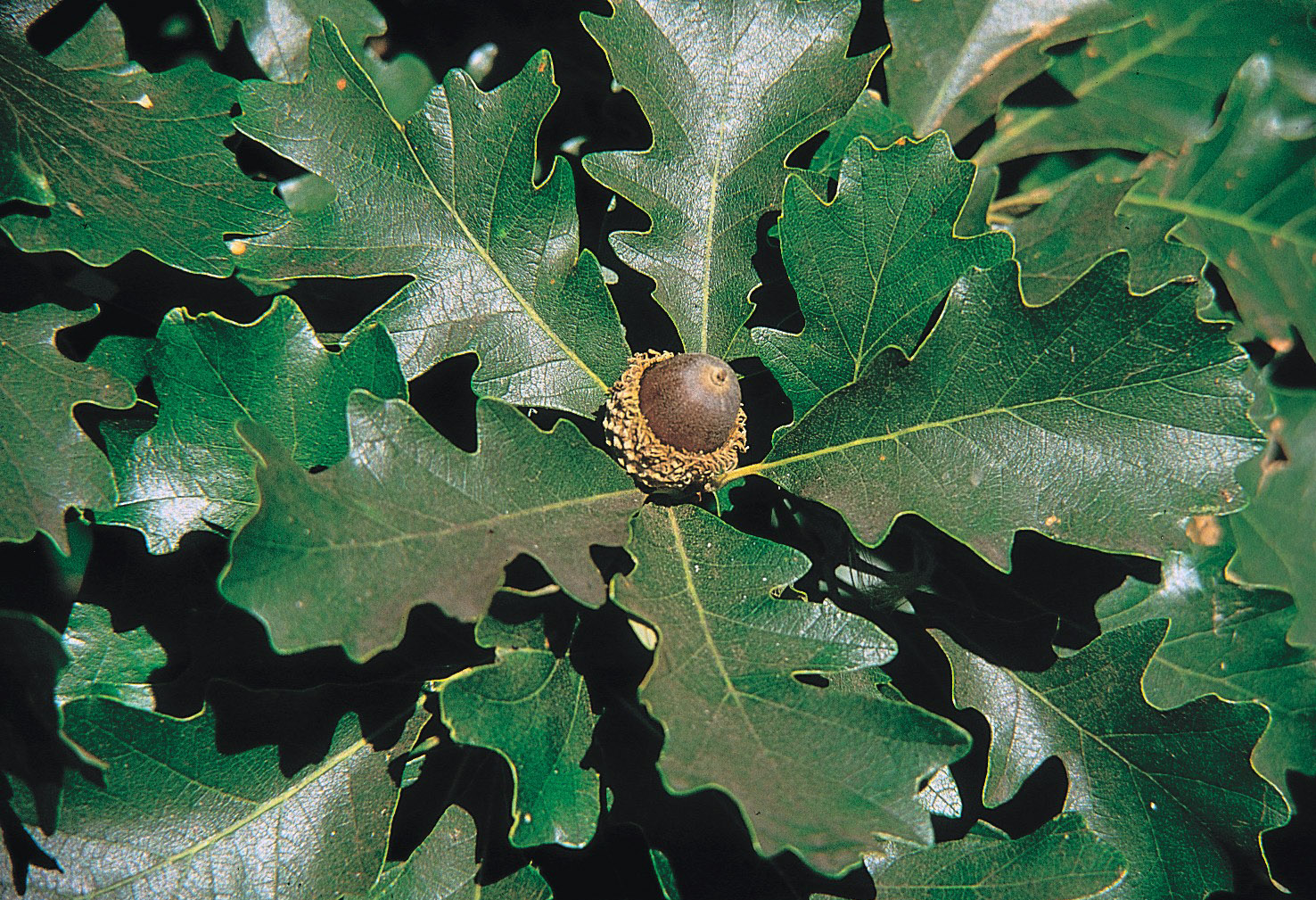
The foliage of the white oak is very recognizable; it has simple, alternating, lobed leaves that are 5 to 9 inches long with rounded tips. In spring and summer, the leaves are dark green on the top with a white or pale green underside. In the fall, the leaves turn reddish brown and linger on the branches late into winter.

White Oak Tree Care

White oaks grow slowly while often living for centuries if planted in conditions that allow them to remain healthy. If you follow these few steps, you should have no issues starting your white oak’s long life in the right direction:

Plant your white oak tree in a location where it will receive full sun.

Provide your tree with soil that is acidic to neutral and well-draining.

Do not over-fertilize your white oak.

Water your newly planted oak often to establish a strong root system.

Colorado State Tree: Blue Spruce

The magnificent Colorado blue spruce (Picea pungens) is the official state tree of Colorado. School children of the state voted to name blue spruce as the state tree on Arbor Day in 1892, however it was not until 1939 that the Colorado blue spruce was officially adopted as the tree symbol of Colorado.

Known for its stately, majestic, symmetrical form and its beautiful silver-blue color, the Colorado blue spruce was first discovered on Pikes Peak in 1862 by botanist C.C. Parry, and named by George Engelmann in 1879. Blue spruce (Picea pungens Engelm) is also the state tree of Utah.

Sometimes called the silver spruce, the Colorado blue spruce ranges in color from green to blue to silver. In Colorado, it grows in small, scattered groves or singly among ponderosa pine, Douglas fir, alpine fir and Englemann spruce.

California State Tree: Giant Sequoia & Coast Redwood

There are two related native species of redwood trees, the Coast Redwood and giant Sequoia, which share the designation of State Tree. Both date back to the dinosaur era and are known for their impressive statistics.

The Coast Redwood is the tallest tree in the world. They are 400 feet high, 100 feet wide and grow 2-10 feet a year. Weighing 1.4 million pounds, they live 2,000 years. Needing plenty of winter rain and summer coastal fog, they live best within 50 miles of the Pacific Ocean, from Oregon to Monterey, California.

The giant Sequoia are the largest trees by volume (52,508 cubic feet) in the world. They grow 300 feet high, weigh 2.7 million pounds and have a 40 foot trunk diameter and 31 inch thick bark. Sequoias need fire for their seeds to grow and live 3,000 years. They are found along a 250-mile stretch of the central western Sierra Nevada at 4,000-8,000 feet elevation.

Why does a Giant Sequia need fire? Without fire, conditions did not favor growth and survival of young sequoias. Before the arrival of European settlers in the mid-1800s, successful establishment of mature sequoias depended on fires intense enough to kill the tree canopy in small areas, allowing enough light for young sequoias to grow and thrive. Giant sequoias are a pioneer species—they are among the first to take root after a disturbance occurs. Another consequence of the lack of periodic fire is that burnable material, or fuel, accumulates. When trees and shrubs become more dense and logs, sticks, and fallen leaves or needles build up on the ground, higher severity fire is more likely to occur. When fire burns more often, it thins out younger trees, and reduces fuel on the ground.

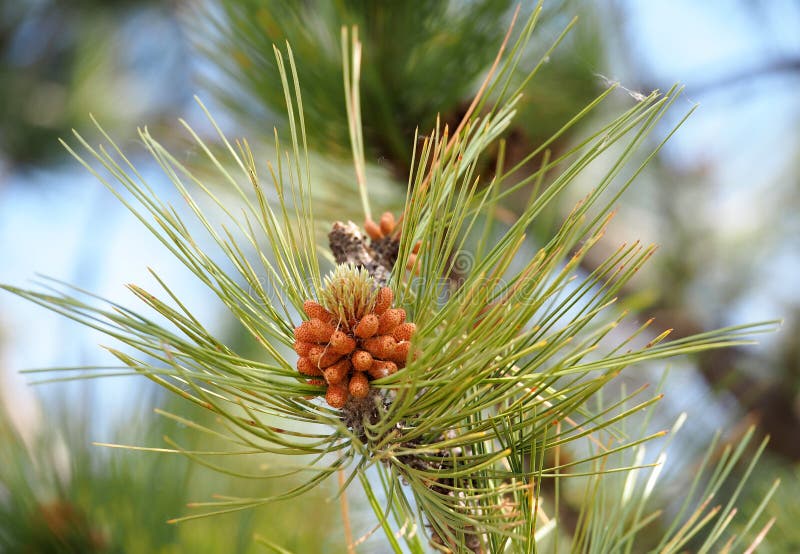
Arkansas State Tree: Loblolly Pine

How to Identify the Loblolly Pine

The loblolly pine has several distinctive features that make it easy to recognize once you know what to look for.

Needles in bundles of three, typically 6 to 9 inches long.

Cones usually 3 to 6 inches long with a slightly rounded shape, often with small prickles on the scales.

Bark on mature trees is thick and deeply furrowed, with reddish-brown plates; younger trees have smoother, flaky bark.

A straight trunk with a conical crown in young trees; older specimens develop a broader crown and can become irregular.

Height at maturity typically 60 to 100 feet in natural stands; plantation-grown trees may exceed 100 feet under ideal conditions.

Ecological and Economic Importance

Loblolly pine plays major roles both ecologically and economically.

Wildlife habitat: Provides cover and nesting sites for birds, squirrels, and other wildlife; seeds are food for small mammals and birds.

Erosion control: Fast early growth and extensive root systems help stabilize soil on disturbed and sloping sites.

Timber and pulp: Loblolly is the backbone of the southern timber industry–used for lumber, plywood, pulp, and biomass.

Carbon sequestration: Its rapid growth makes loblolly valuable for carbon capture in reforestation and timber production.

Understanding these roles helps prioritize care actions that preserve both tree health and their broader benefits.

Arizona State Tree: Palo Verde

The Arizona State Tree, Palo Verde, holds a significant place in Arizona’s identity as an official state symbol. Designated as the Arizona State Tree by legislative action, the Palo Verde stands out for its botanical significance and distinctive features.

Known for its vibrant green bark and beautiful yellow flowers, the Palo Verde tree is deeply intertwined with the Sonoran Desert landscape. Its ability to thrive in arid conditions, with its unique ability to conduct photosynthesis through its green bark, symbolizes resilience and adaptation. This tree not only beautifies the Arizona landscape but also plays a crucial role in supporting the desert ecosystem by providing shade, shelter, and sustenance for various wildlife species. The Palo Verde tree is a testament to Arizona’s commitment to preserving its natural heritage and the delicate balance of its environment.

The Palo Verde was chosen as the official state tree of Arizona due to its deep-rooted significance in the state’s history and culture. As a native tree to the desert landscape, the Palo Verde represents the essence of Arizona’s ecosystem and environmental importance.

Known for its unique green bark and vibrant yellow blossoms, the Palo Verde stands out in the arid landscape, offering not only a visual spectacle but also serving a vital role in providing shade during scorching summer days. As a drought-tolerant species, its presence helps in conserving water in the region’s delicate ecosystem. The tree supports various wildlife species, from birds to insects, creating a diverse habitat that contributes to the overall biodiversity of the state.

Alaska State Tree: Sitka Spruce

Picea sitchensis, commonly known as the Sitka Spruce, is part of the Picea genus in the Pinaceae family, which includes other conifers like pines, firs, and larches. This species is noted for its tall stature, rapid growth rate, and the quality of its wood. The name “sitchensis” refers to Sitka, Alaska, where this tree was first described to science. It is by far the largest species of spruce and the fifth-largest conifer in the world, and the third-tallest conifer species.

The Sitka Spruce has a native range along the Pacific Coast of North America, stretching from northern California through Oregon, Washington, British Columbia, and into Alaska. It’s particularly dominant in the coastal temperate rainforests where it benefits from the moist, foggy conditions, growing from sea level up to about 3,000 feet in elevation. This range makes it the most widely distributed spruce in western North America.

Historically, Sitka Spruce has been significant for both indigenous peoples and later settlers. Native American tribes used its wood for constructing canoes, homes, and tools due to its strength and lightweight nature. With European settlement, its use expanded significantly, especially for shipbuilding, aircraft construction during World War II (due to its excellent strength-to-weight ratio), and later for musical instruments like guitars and violins because of its resonant qualities. The tree’s ecological importance in the coastal ecosystems, providing habitat for numerous species, has also been recognized, leading to its protection in various natural reserves and parks.

Sitka Spruce is adapted to USDA Hardiness Zones 6 through 8, reflecting its preference for the mild, wet winters and cool summers of its native coastal range. Its lifespan can be quite impressive, often living between 500 to 700 years, with some specimens potentially reaching up to 1,000 years in optimal conditions. This longevity is supported by its ability to grow in harsh, wind-swept environments and its resistance to many diseases that affect other spruces.

Sitka Spruce (Picea sitchensis): Characteristics

Growth Habit: An evergreen conifer that can grow to be one of the tallest trees in the world, reaching heights up to 300 feet with a straight, narrow trunk. Its crown is conical in youth, becoming more irregular with age.

Bark: Young trees have thin, gray bark that becomes thicker, furrowed, and reddish-brown as it matures, providing a protective layer against environmental stresses.

Needles: Features sharp, stiff needles that are approximately 1 to 1.5 inches long, with a glossy, dark green color. They are arranged spirally around the twig, giving the tree a dense, feathery appearance.

Cones: Produces cylindrical cones that hang down from the branches, typically 2 to 4 inches long. Initially green, they turn brown when ripe, with thin, flexible scales that release winged seeds.

Root System: Develops a strong, deep root system capable of anchoring the tree in the often wet, unstable soils of its coastal habitat, but it can also have superficial roots for nutrient uptake.

Adaptability: Thrives in moist, well-drained soils of coastal regions but can tolerate a variety of soil types, provided there’s adequate moisture. It prefers the cool, humid conditions of its native range.

Growth Rate: Known for its rapid growth, especially in youth, making it one of the faster-growing conifers in its habitat, which is beneficial for reforestation but can pose challenges in managed landscapes.

Wood Quality: The wood is light, strong, and with excellent acoustic properties, making it sought after for musical instruments, aircraft construction, and high-quality lumber.

Ecological Role: Plays a crucial role in coastal ecosystems, providing habitat for wildlife, stabilizing soil, and influencing local microclimates through its canopy’s shade and moisture retention.

Cultural Significance: Historically used by Indigenous peoples for various purposes and later by settlers for shipbuilding and other constructions due to its superior wood quality. Its towering presence has also been a symbol of the Pacific Northwest’s natural grandeur.

SOURCE: AMERICANGARDNER.NET