Sleepy Hollow

The Legend

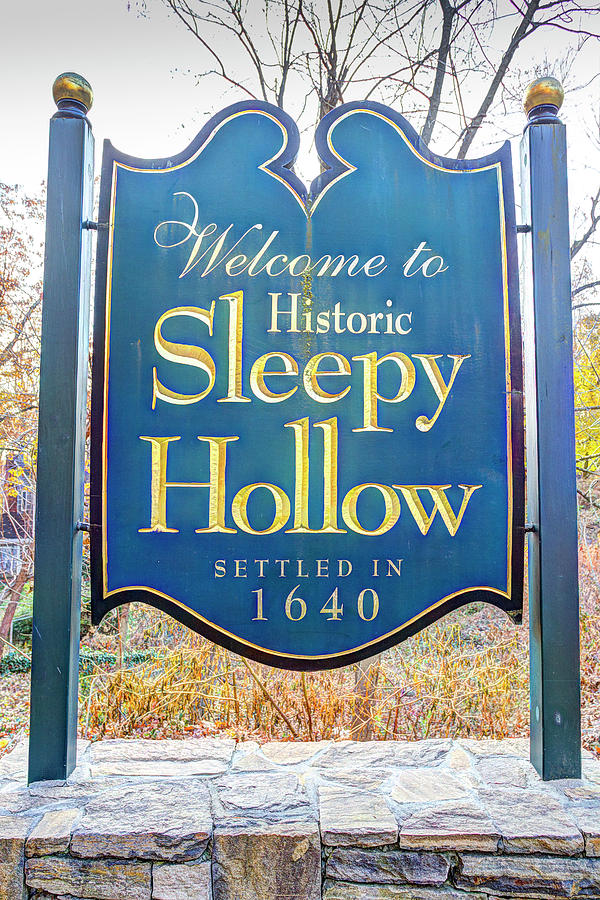
Sleepy Hollow is a village in the town of Mount Pleasant, in Westchester County, New York.  The village is known internationally through “The Legend of Sleepy Hollow”, an 1820 short story about the local area and its infamous specter, the Headless Horseman, written by Washington Irving, who lived in Tarrytown and is buried in Sleepy Hollow Cemetery.

The “Legend” relates the tale of Ichabod Crane, a lean, lanky and extremely superstitious schoolmaster from Connecticut. Throughout his stay at Sleepy Hollow, Crane is able to make himself both “useful and agreeable” to the families that he lodges with. He occasionally assists with light farm work, helping to make hay, mend fences, caring for numerous farm animals, and cutting firewood. Besides his more dominant role as the Schoolmaster, Ichabod Crane also assists the various mothers of the town by helping to take care of their young children, taking on a more “gentle and ingratiating” role. Crane is also quite popular among the women of the town for his education and his talent for “carrying the whole budget of local gossip,” which makes him a welcomed sight within female circles.

 As a firm believer in witchcraft and the like, Crane has an unequaled “appetite for the marvelous,” which is only increased by his stay in “the spell-bound region” of Sleepy Hollow. A source of “fearful pleasure” for Crane is to visit the Old Dutch wives and listen to their “marvelous tales of ghosts and goblins,” haunted locations, and the tales of the Headless Horseman, or the “Galloping Hessian of the Hollow, as they sometimes called him.” Throughout the story, Ichabod Crane competes with Abraham “Brom Bones” Van Brunt, the town rowdy and local hero, for the hand of 18-year-old Katrina Van Tassel, the daughter and sole child of wealthy farmer Baltus Van Tassel. Ichabod Crane, a Yankee and an outsider, sees marriage to Katrina as a means of procuring Van Tassel’s extravagant wealth. Brom, unable to force Ichabod into a physical showdown to settle things, plays a series of pranks on the superstitious schoolmaster. The tension among the three continues for some time, and is soon brought to a head. On a placid autumn night, the ambitious Crane attends a harvest party at the Van Tassels’ homestead. He dances, partakes in the feast, and listens to ghostly legends told by Brom and the locals, but his true aim is to propose to Katrina after the guests leave. His intentions, however, are ill-fated, as he fails to secure Katrina’s hand.

Following his rejected suit, Ichabod rides home on his temperamental plough horse named Gunpowder, “heavy-hearted and crestfallen” through the woods between Van Tassel’s farmstead and the farmhouse in Sleepy Hollow where he is quartered at the time. As he passes several purportedly haunted spots, his active imagination is engorged by the ghost stories told at Baltus’ harvest party. After nervously passing a lightning-stricken tulip tree purportedly haunted by the ghost of British spy Major André, Ichabod encounters a cloaked rider at an intersection in a menacing swamp. Unsettled by his fellow traveler’s eerie size and silence, the teacher is horrified to discover that his companion’s head is not on his shoulders, but on his saddle.

In a frenzied race to the bridge adjacent to the Old Dutch Burying Ground, where the Hessian is said to “vanish, according to rule, in a flash of fire and brimstone” before crossing it, Ichabod rides for his life, desperately goading Gunpowder down the Hollow. However, while Crane and Gunpowder are able to cross the bridge ahead of the ghoul, Ichabod turns back in horror to see the monster rear his horse and hurl his severed head directly at him with a fierce motion. The schoolmaster attempts to dodge, but is too late; the missile strikes his head and sends him tumbling headlong into the dust from his horse.

The next morning, Gunpowder is found eating the grass at his master’s gate, but Ichabod has mysteriously disappeared from the area, leaving Katrina to later marry Brom Bones, who was said “to look exceedingly knowing whenever the story of Ichabod was related”. Indeed, the only relics of the schoolmaster’s flight are his discarded hat, Gunpowder’s trampled saddle, and a mysterious shattered pumpkin. Although the true nature of both the Headless Horseman and Ichabod’s disappearance that night are left open to interpretation, the story implies that the Horseman was really Brom (an extremely agile rider) in disguise, using a Jack-o’-lantern as a false head, and suggests that Crane survived the fall from Gunpowder and immediately fled Sleepy Hollow in horror, never to return but to prosper elsewhere, or was killed by Brom (which may be unlikely, since Brom was said to have “more mischief than ill-will in his composition”). Irving’s narrator concludes the story, however, by stating that the old Dutch wives continue to promote the belief that Ichabod was “spirited away by supernatural means”, and a legend develops around his disappearance and sightings of his melancholy spirit.

In a Postscript (sometimes unused in certain editions), the narrator states the circumstances in which he heard the story from an old gentleman “at a Corporation meeting at the ancient city of Manhattoes“, who didn’t “believe one-half of it [himself].”

The Village

Located 25 miles north of New York City along the eastern shore of the Hudson River, The Village of Sleepy Hollow offers a unique blend of natural beauty and urban amenities along with world-renowned historic landmarks and modern attributes.

While an unusual name, “Sunnyside” is a name for a home in Sleepy Hollow. Washington Irving took over ownership of the structure in the year of 1835. At that time, it was nothing more than a small, ordinary cottage. He and his family worked hard to renovate the structure, and took great pride in the final project. This home is a beautifully designed structure that sits on the bank of a river – the Hudson to be exact. You can get a good look at the river by a small, secret path that leads from the home to the banks of the river. It has been said that apparitions have appeared, doing various tasks. It is believed that the nieces of Irving are often seen tidying up the home. Many have claimed to have seen Irving himself.

If you would like to visit the grave of the famous Washington Irving, you can do so at the Sleepy Hollow Cemetery. While there, you can also discover the final resting places of the following famous individuals: Andrew Carnegie, William Rockefeller, Walter Chrysler, and even the notable Elizabeth Arden. It has been said, on more than one occasion, that an apparition has been seen among the graves. Many who have walked through the cemetery often express the fact that they hear silent whispering which cannot be explained.
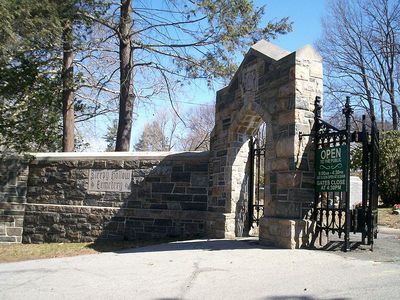
Old Dutch Church and Burial Ground – The burial grounds that are located at the Old Dutch Church are said to be among one of the oldest ones in all of the United States. It is said that the popular “Headless Horseman” can be clearly seen making his route through and around these burial grounds. When visiting here, you can see some very popular names on the grave stones. These include Eleanor Van Tassel Brush, who Washington Irving used a personality called “Katrina” from his story. Abraham Martling, who was reflected as the character “Brom Bones” can also be discovered here.

Patriot’s Park – If you go to the area that is between the cities of Sleepy Hollow, and Tarrytown, you will discover a park. During the American Revolutionary War, the Americans captured a soldier that was of Hessian decent. He was immediately executed by way of beheading. An apparition that lacks a head is often said to linger throughout the park grounds. Irving took this legend of the soldier that is headless for his tale.
The Hand Print Remains

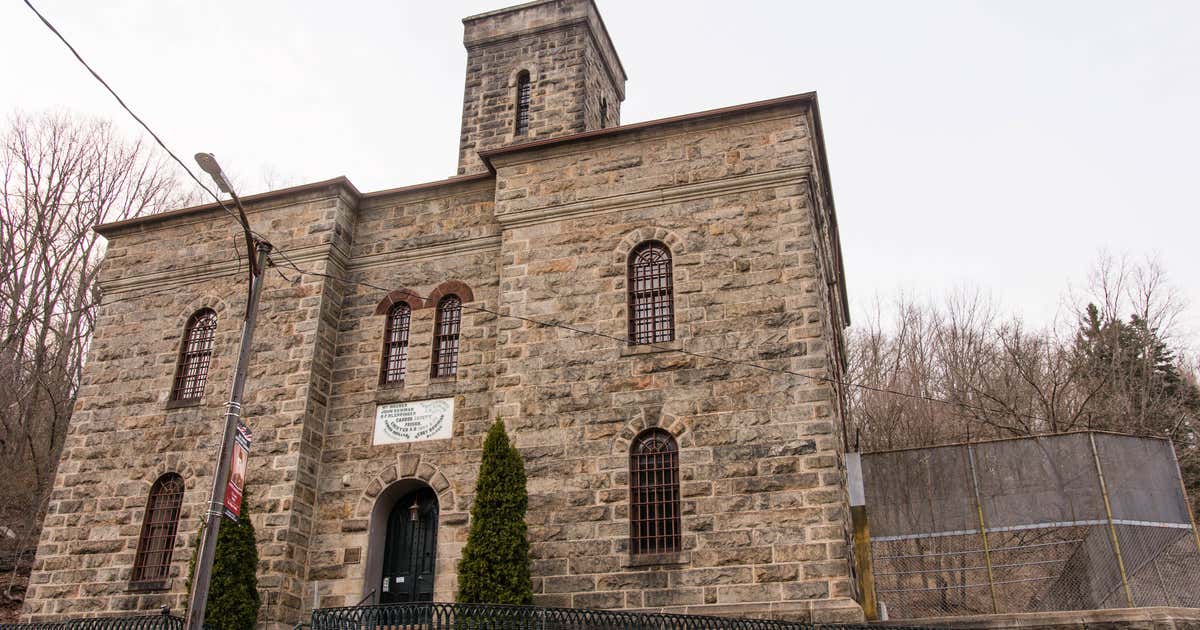
Resembling a fortress standing guard over the town of Jim Thorpe (formerly known as Mauch Chunk), the historic Old Jail Museum is a beautiful two-story stone structure. The prison was opened in 1871 and through the years held the worst murderers and criminals imaginable, many of whom left their mark… literally. After hundreds of inmates passed through the doors, it was closed in 1995 and then purchased by Tom McBride and his wife, Betty Lou, of Jim Thorpe.

The building itself contains approximately 72 rooms, including 27 cells, basement dungeon cells used as solitary confinement until 1980, women’s cells on the 2nd floor, and the warden’s living quarters across the front of the building.

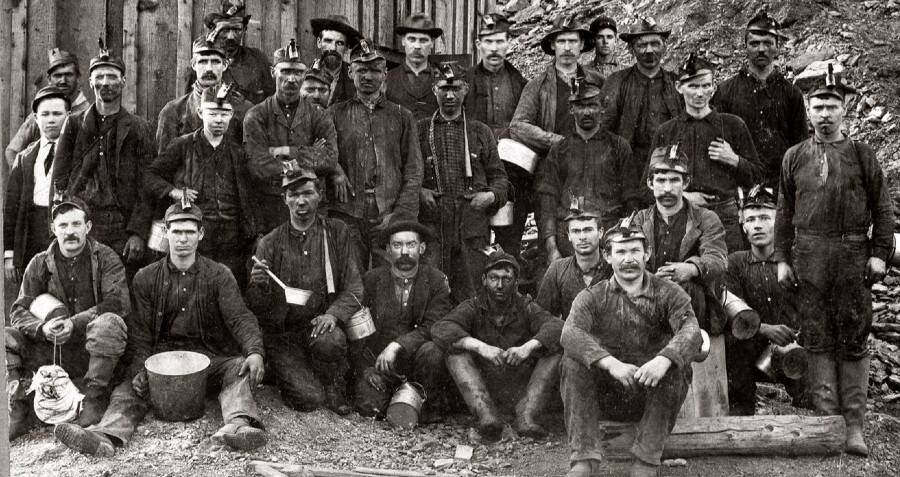
The building is best known as the site of the hanging of seven Irish coal miners known as Molly Maguires in the 1800’s. The Molly Maguires were a secret organization, composed mainly of Irish Catholics, that started one of the first labor movements in the country. Since the Irish were not well regarded by society at that time, one of the only jobs they could get in PA was working in the local coal mines. It was intense physical labor where workers only got pennies for their long hours.  They bought all their own work equipment from the bosses, and had to pay rent to the coal bosses who owned their houses. The Molly Maguires, who had enough of the slave-labor conditions, murdered the coal management while vandalizing the mines and mining equipment. They were arrested, tried, and later found guilty.

On June 21, 1877, today known as the Day of the Rope, Alexander Campbell, Edward Kelly, Michael Doyle and John Donohue were hanged at the same time on gallows erected inside the Old Jail Museum cell block. On March 28, 1878, Thomas P. Fisher was hanged here, and on January 14, 1879, James McDonnell and Charles Sharp were also hanged on the same gallows.

The Handprint

Before their hanging, the men proclaimed their innocence and today historians believe many of the condemned men were falsely accused of murder. Before his hanging, one of the men, thought to be Alexander Campbell, put his hand on the dirty floor of his cell and then placed it firmly on the wall proclaiming, “This hand print will remain as proof of
my innocence.” That hand print is visible today for everyone to view. Past wardens tried to eradicate it by washing it, painting it, and even taking down part of the wall and re-plastering it. But the hand print still remains.

Besides the hand print, visitors will experience a number of supernatural occurrences including shadows, footsteps and loud bangs from the solitary confinement cells. Legends say that these are the spirits of inmates or the ghost of the warden himself “checking up”. In the warden’s apartment objects will move near the old kitchen area, assumed to be the warden’s wife because she cooked for the prisoners herself. The Old Jail Museum is open for ghost tours at various times of the year—but makes an excellent Halloween adventure!

Source: https://www.trytoscare.me/legend/old-jail-museum-jim-thorpe-pa/

Eastern State Penitentiary, Philadelphia

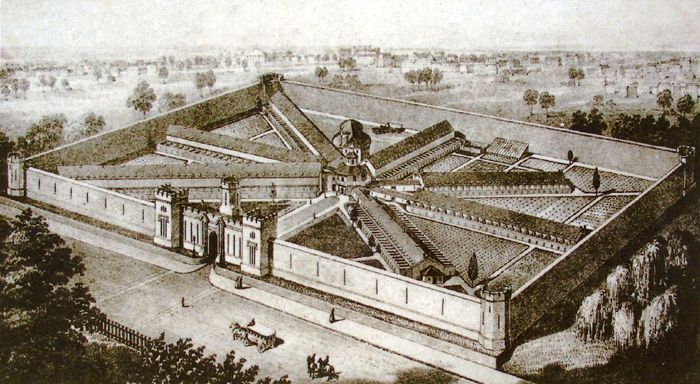
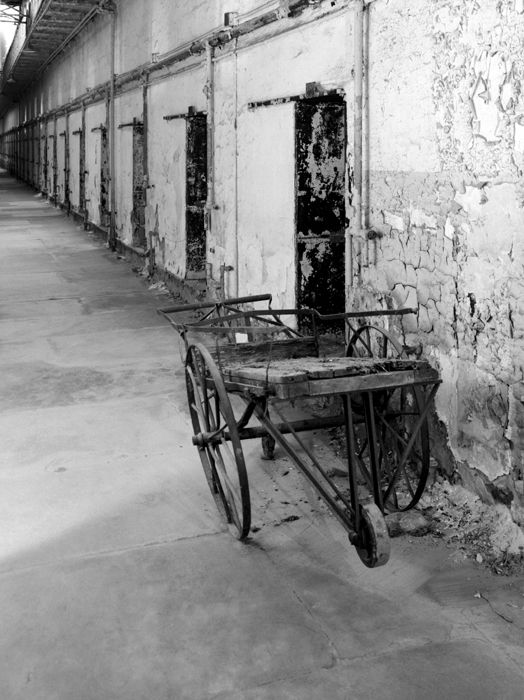
Eastern State Penitentiary in Philadelphia, Pennsylvania, is well known for several reasons. It was one of the most expensive prisons ever built in the world and utilized a radical philosophy. It housed some of America’s most notorious criminals, and it is said to be the most haunted prison in the country.

The idea of a new type of prison system came about in 1787, just four years after the American Revolution was over when important men were gathered at the home of Benjamin Franklin to discuss prison reform. At that time, the Walnut Street Jail was located directly behind Independence Hall, and the conditions there were terrible.
Men, women, and children who had committed all manner of crimes, from petty theft to murder, were jailed together on what amounted to little more than dirty pens, which were overcrowded, disease-ridden, cold, dangerous, and generally unsupervised. Abuse by both jailers and fellow inmates was common, and food, heat, clothing, or protection was only provided if the inmate could afford the price. Rape, robbery, and beatings were common practices, and it wasn’t unusual for prisoners to die from cold or starvation.

These abuses led to the formation of the Philadelphia Society for Alleviating the Miseries of Public Prisons, which met at Benjamin Franklin’s house to discuss improvements and alternatives. One member, a prominent Philadelphia physician and signer of the Declaration of Independence, named Benjamin Rush, called for “a house of repentance” rather than prisons, where the name “penitentiary” came from. Rush proclaimed that radical change was needed and believed that crime was a “moral disease.” Further, he suggested that a “house of repentance” would be a place where prisoners could meditate on their crimes, experience spiritual remorse, and undergo rehabilitation. The plan was built around the idea of solitary confinement that would allow criminals to meditate on their crimes and involved no corporal punishment. The other men agreed, and the method, which became known as the Pennsylvania System, would be utilized at Eastern State Penitentiary and other facilities throughout the world.

The men soon convinced the Commonwealth of Pennsylvania and started their work at the Walnut Street Jail. In 1790, a small “Penitentiary House” with 16 solitary cells was built. The inmates were segregated by sex and crime, vocational workshops were instituted to occupy the prisoners’ time, and much of the abusive behavior was abolished. But the facility was still overcrowded, and as the city’s population increased, so did the crime.

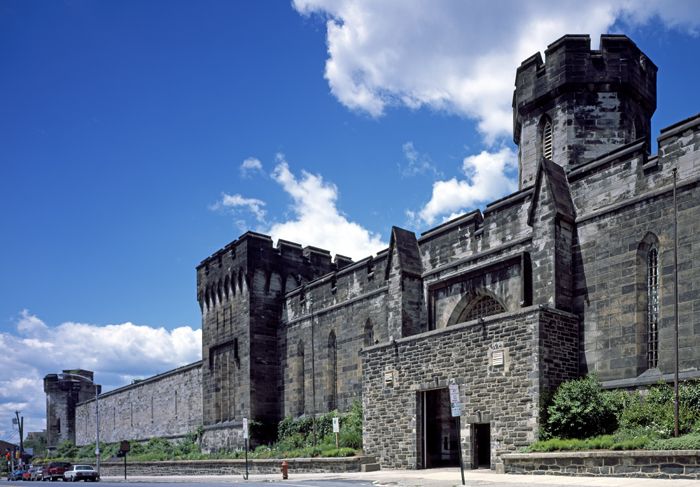
Though it would be decades before a new prison was built, the ground was broken for the Eastern State Penitentiary in a cherry orchard outside the city in 1822. Designed by British-born architect John Haviland, the penitentiary would be unlike any seen before with seven single-level cell block wings radiating from a central surveillance hub, from which one guard could see down all of the cell blocks. Haviland was inspired by English prisons and asylums built beginning in the 1780s and gave it a neo-Gothic look. The building’s imposing facade was meant to be intimidating, although its battlements and windows were fake. Its interior was designed much like a church.

Though it was seven years before it would be completed, the penitentiary opened in 1829. With an initial capacity for 250 inmates, every prisoner would have his own 8 x 12-foot cell, which featured central heating, a flush toilet, running water, a shower/bath, a skylight, and a private exercise yard.

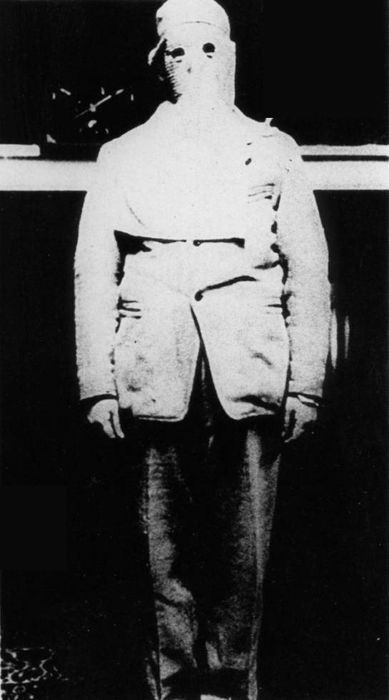
From the minute the inmates entered the facility, they were kept isolated. They were escorted into the prison with an eyeless hood placed over their heads. Afterward, the isolation continued so they could contemplate their crimes and read the Bible, which would lead to penitence and reformation.

To accomplish this goal, inmates could not mingle with other prisoners or continue relations with friends and family outside. When they were outside their cells, they were required to wear masks to hide their faces in their private exercise yards, which they were allowed to use one hour per day, with minimized interactions with the guards. During their time in their cells, they worked on prison projects such as shoemaking or weaving. Their only contact was with the warden, who was required to visit every inmate every day, and the overseers who were mandated to see each inmate three times a day. But even this communication was made through a small portal where meals and work materials were passed.

But just two years later, in 1831, it was already clear that the penitentiary would have to hold more criminals. Soon, second floors were added to all of the wings. This same year, the first female prisoner was confined in the penitentiary.

In 1832, the first inmate made his escape from the prison. For some reason, this inmate was not entirely confined to solitude and served as the warden’s waiter. He made his escape by lowering himself from the roof of the front building. He was later captured and returned but escaped in the same way in 1837.

By the 1870s, the prison needed more space, and four new cell blocks were added in 1877 between the existing wings. Before long, the individual exercise yards were eliminated, and inmates exercised together, but they were still required to wear masks and be silent.

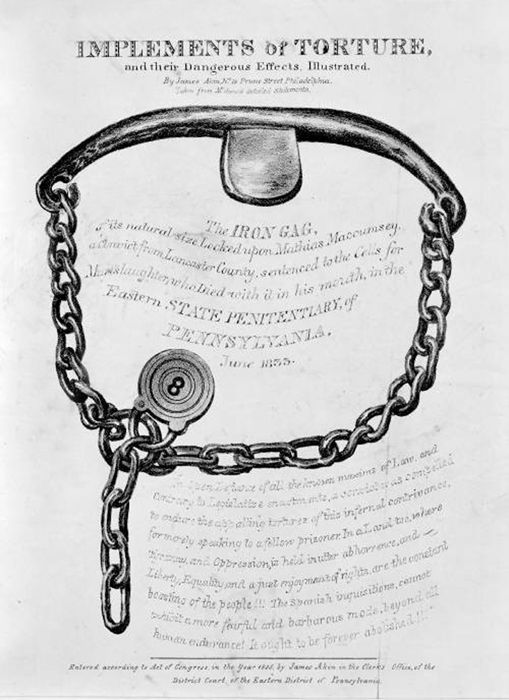
Though the reform plan of the Pennsylvania System called for no corporal punishment, this was not the case. Guards and councilors were known to have designed various physical and psychological torture regimens for various infractions. One of these, called the “water bath,” subjected inmates to being doused with water outside during winter months and then hung on a wall until ice formed on their skin. Another torture called the “mad chair”, in which prisoners were bound tightly for days until their circulation was cut off. The “iron gag” involved tying an inmate’s hands behind the back, with a chain trapped to an iron collar in the mouth, which caused the tongue to tear and bleed.

Under Block #14 was dug an underground cell that was called the “Hole.” Here, inmates would stay locked, sometimes for weeks, with no light, no human contact, with only bread and water to eat. 

In January 1970, the prison closed, and the inmates were sent to the State Correctional Institution at Graterford. After a riot at a prison in Holmesburg, the prison again housed some of those inmates. In 1971 it was officially closed forever.

Over the course of its 142 years, the penitentiary held some 75,000 inmates, including Prohibition-era gangster Al Capone, and notorious bank robber Willie Sutton. More than 100 inmates escaped during this time, but all were recaptured, except for Leo Callahan.

While the prison was operating, two guards and several inmates were murdered within the walls. Other prisoners committed suicide, and hundreds of others died from disease and old age.

Named a National Historic Landmark in 1965, the prison sat abandoned after it was closed, during which time it was heavily vandalized, and trees began to grow in the buildings.

The City of Philadelphia purchased the property intending to redevelop it. Proposals included demolishing the building to use the site as a criminal justice center, a mall, or a luxury apartment complex. But in 1988, a task force successfully petitioned the city to stop pursuing development, and in 1994, the Pennsylvania Prison Society opened the prison for historic tours.

Today, the Eastern State Penitentiary, kept in a state of “preserved ruin,” continues to operate as a museum and historic site. It is open year-round for tours, and special events are held throughout the year.

In addition to its long history, the penitentiary is said to be the most haunted prison in the United States. For years, it has been investigated by paranormal groups and has been featured in several television shows. These investigators, staff, and visitors have reported dozens of paranormal activities and numerous sightings of ghostly entities.

One of the first stories told of ghostly activity was by famed Chicago gangster Al Capone, who was housed in the prison for eight months in 1929-1930. Though he had the nicest cell in the prison, which included a desk, a lamp, paintings, and a radio, he said he was haunted by the ghost of James Clark, who was one of the victims of the St. Valentine’s Day Massacre in Chicago. Allegedly, Capone screamed every night in fright, screaming at “Jimmy” to go away and leave him alone.

In the 1940s, both prisoners and guards began to have several unusual experiences and unexplained sightings. Many of these events involved spooky shadows and unexplained noises.

Today, many people have reported that Cellblock 12 is an area of high paranormal activity, where cackling and whispers are heard, and the apparition of a prisoner is seen. In Cellblock 6, shadowy figures are often seen sliding along the walls, and the sounds of whispers, screams, and laughter have been heard.

In Cellblock 4, many have seen ghostly anguished faces and hearing loud whispers. On one occasion, a locksmith working in this area who was removing an old lock from a cell door had a vivid experience. He described having felt as if he was overcome by a massive force, and was unable to move or speak, while distorted forms swirled around the cellblock, one of which appearing to beckon to him.

Many people have reported seeing the silhouette of a guard in one of the watchtowers.

On the third floor of one cell block, numerous visitors say they’ve heard the sound of cell doors suddenly opening and then slamming shut.

The catwalk is an area where many paranormal events have occurred. Here, a shadow figure was caught on a video, people have felt extreme temperature fluctuations, and one visitor captured a male voice saying “I’m lonely” on an EVP.

Visitors and staff report disembodied screams, cries of pain, sadistic laughter, and whispers throughout the prison. Others have reported the sounds of cell door handles jiggling, furniture being dragged across floors, large objects rolling on the roof, and ghostly footsteps.

Many have seen sudden orbs or streaks of light appearing, felt unseen people tapping them on the shoulder, get overwhelming sensations of being watched, and in general have feelings of dread.

Source: Legends of America

Haunted Cemeteries

Glenwood Cemetery

Glenwood Cemetery in Mississippi

Located in Yazoo City, this cemetery was created around 1856. It is the burial site of the famed Witch of Yazoo. Legend tells of an old woman who lived near the Yazoo River who was found tormenting fishermen. A sheriff chased her through the swamp and caught up with her just in time to watch her sink into quicksand and drown. With her last breath, she cursed the town, saying, “In 20 years, I will return and burn this town to the ground!”

On May 25, 1904, the town did indeed burn down. A total of 324 buildings were wiped out. When the townspeople approached the grave of the famed witch, the chains that normally surrounded the grave were apparently broken in two.

Bachelor’s Grove

This small abandoned cemetery is known for being one of the most haunted locations in the country. The land in this area south of Chicago was first settled in the 1820s, and the graveyard was set aside in 1864. It is reportedly home to a large amount of paranormal phenomena, including a phantom house, spirit orbs, disappearing cars, and full-bodied apparitions. According to legend, during the Prohibition era, the remains of those slain by gangsters were found in the cemetery’s adjacent lagoon, along with some illicit firearms.

The most famous apparition is known as the “Madonna of Bachelor’s Grove.” She is a lady dressed in white who often appears holding an infant on moonlit nights. In 1991, members of the Ghost Research Society conducted an investigation of the site. During the investigation, one investigator managed to capture an image of a woman who appeared to be sitting on a tombstone. The apparition was not present during the investigation and only appeared later when they developed the film.

Chestnut Hill Cemetery

During the late 1800s, disease ravaged a family in Exeter, RI. After a farmer’s wife and two daughters passed from the same mysterious illness, he and the townsfolk began suspecting vampirism was at work. They exhumed the bodies of his wife Mary and daughters Mary and Mercy. While the remains of both Marys were decomposing normally, Mercy’s remains looked strangely well-preserved, leading them to believe she was a vampire. In one story, they desecrated her grave, cut out her heart, and burned it. They mixed the ashes with water and served it to the farmer’s son Edwin, but that failed to cure his disease, which we now know was tuberculosis.

After Mercy’s passing and exhumation, people have reported seeing her ghost rise from the grave and wander through the graveyard. Others have seen orbs and heard strange sounds near her grave. Though the vampire myth persists, most now believe that the ghost is a result of the grave desecration. 

Resurrection Cemetery

This Roman Catholic cemetery was consecrated in 1904 and officially opened in 1912. It is also the alleged home of “Resurrection Mary.” According to one of the legends about this ghost, Mary was attending a dance at the Oh Henry Ballroom one night in the 1930s. After getting into an argument with her boyfriend, she decided to walk home. She never made it, instead becoming the target of a hit-and-run somewhere near the cemetery. In another version of the story, based on the real passing of Mary Bregovy in 1934, Mary was slain in a car accident and haunts Resurrection Cemetery because she is interred there. 

Since then, there have been many sightings of Mary. She appears on the side of the road or at a nearby dance hall. She asks for a ride home – her “home” being the place she was laid to rest in the Resurrection Cemetery. After the car stops in front of the graveyard, she gets out and disappears.

St Louis Cemetery

This is actually three cemeteries, with the first and second being the oldest. Built in 1789, St. Louis Cemetery No. 1 is the oldest existing cemetery in New Orleans and is considered one of the most haunted cemeteries in the world. The cemetery is composed mostly of above-ground mausoleums like most cemeteries in the area because of New Orleans’ high water table level. Notable residents of St. Louis No. 1 include Homer Plessy of Plessy v. Ferguson fame and Voodoo priestess Marie Laveau.

Laveau is said to haunt the graveyard, wandering the alleys chanting audible Voodoo curses on trespassers. She has also been said to take the form of a black cat with fiery red eyes. The ghost of her familiar, a giant black snake, also protects Laveau’s grave from those who would mock her.

Vandalism in recent years (including an incident where Laveau’s tomb was painted pink) has caused the archdiocese to ban public access to the cemetery. Only registered tour groups and the families of those buried are allowed to visit.

Greenwood Cemetery

According to legend, this cemetery was originally a Native American burial ground before white settlers started burying their deceased there in the 1830s. The graveyard was officially established in 1857.

A variety of supernatural manifestations have been reported at Greenwood. The ghosts of Confederate soldiers whose bodies supposedly were dumped in a hillside have been seen, appearing near what is now a war memorial. Another often reported ghost is that of the “Greenwood Bride,” a woman in a wedding dress whose fiancé was slain.

Bonaventure Cemetery

This Southern Gothic cemetery was formally established in 1846. While it is not the oldest cemetery in Savannah, GA, it is allegedly the most haunted. It was originally part of the massive Bonaventure Plantation owned by Colonel John Mullryne in the 1760s, then changed hands several times until it became a private cemetery in 1802. Bonaventure was sold to the city of Savannah in 1907.

Today, visitors report hearing the sounds of ghostly voices at a party echoing through the graveyard. Additionally, the grave of Gracie Watson is said to be haunted. Many have heard the sounds of a young girl crying, and the statue has been reported to weep blood.

cemetery in Salem

This cemetery is linked to the Salem Witch Trials of 1692. Here, Giles Corey was executed by being pressed to death for refusing to stand trial.

As the stones were added one by one on top of his chest, he maintained his innocence. His ghost is said to haunt the cemetery to this very day.

Westminster Presbyterian Cemetery

This Baltimore graveyard is the final resting place of Edgar Allen Poe. Established in 1786 as the Westminster Presbyterian Cemetery and located next to Westminster Hall, both the hall and cemetery are said to be haunted.

The apparition of Poe has been seen in the graveyard, perhaps lamenting his untimely demise. The notorious “Skull of Cambridge” is also buried here. Said to be the head of a slain minister, the skull allegedly emits screams that can drive people mad.

Oakland Cemetery

Standing in the center of the city since the 1850s, Oakland Cemetery survived General Sherman’s burning of Atlanta during the Civil War. From the house on top of the hill, General Hood watched the Battle of Atlanta in 1864.

In total, nearly 7,000 Confederates are buried here, including 3,000 unknown people marked by a large lion statue. It is said that late at night, you can still hear the soldiers answering roll call.

Cemetery in Kansas

This cemetery is purported to be a gateway to hell. As the story goes, somewhere in the cemetery is a stairway that leads directly into the underworld. On Halloween night it appears, and the devil emerges from the darkness. By skeptical accounts, the gateway is probably just part of an urban legend created by a professor at the University of Kansas and first published in a student newspaper in the 1970s. Since then, there has been plenty of vandalism and trespassing at the cemetery by those seeking a paranormal experience. Still, the cemetery was featured in the show Supernatural and is a pretty creepy looking place, even if it isn’t really a gateway to hell. Then again, you never know…

Source:

https://www.ranker.com/list/creepy-us-cemeteries/christopher-myers

COUNT DRACULA

Almost everyone is familiar with the movie image of Dracula, the smooth but sinister Transylvania count, elegantly dressed in evening clothes and a cape, who throws his disguise aside to reveal fearsome fangs that strike for the neck of his innocent victim. The vampire Count Dracula is the supreme creation of Irish writer Bram Stoker, now a century old yet showing no signs of losing his popularity.

Bram Stoker

But Stoker did not dream up his Dracula entirely from nothing, for historians have fixed on a plausible and horrific original for Dracula himself and there are many well-attested accounts of vampirism in modern and ancient times. Vampires are certainly not a product of the 17th century, as belief in the undead preying on the living has been extremely widespread, both in time and geography. The ancient Babylonian bloodsuckers were known as Ekimmu and according to Jewish tradition, the first woman on earth actually became a vampire, Lilith – before the creation of Eve.

Vampire Princess (depiction)

They are known in folklore and legends from Africa, East Asia, Australasia, the Near East, the Americas and, of course, Europe. In Romania, from whence the probable original model for Dracula arose, according to folk tradition: “…there was once a time when vampires were as common as blades of grass, or berries in a pail, and they never kept still, but wandered round at night among the people.”

Vampires are real enough, at least in terms of ancient communities’ beliefs, but what about Dracula himself? Remarkably, there are good grounds for believing that Bram Stoker based him on a real character, Vlad the Impaler, the ruler of Wallachia in modern Romania in the mid-15th century AD.

Vlad The Impaler

Vlad bore a family Christian name, his father also being a Vlad, while “the Impaler” was a nickname he earned from his horrific behavior. He was born in Transylvania in 1431, becoming the heir to the neighboring princedom of Wallachia in 1437, after his father expelled the previous ruler. When the Ottoman Empire was completing it’s takeover of Greece, Wallachia became a strategic border state; the Turkish sultan took as hostages the young Vlad and his brother Radu in 1442 to ensure Wallachian loyalty.

Regardless, the Wallachians undertook a series of campaigns against the Turks, with some success, until the older Vlad was put to death after falling out with his allies, the Hungarians. The younger Vlad escaped captivity and embarked on a long campaign to regain his father’s throne, now occupied by a distant relative. His efforts finally bore fruit in 1456 with the assassination of his rival, and he became the Prince of Wallachia. Vlad’s subjects were soon to find out that their new ruler intended to crush any lingering opposition. He called a meeting of nobles and after testing them, and their making it abundantly clear how little they thought of the various Princes and Kings, he had his armed guards seize all 500 hundred, leading them outside, where they were impaled on sharpened stakes, along with their wives and servants, and left to rot.

Bran Castle

Vlad’s cruelty became famous, as he turned against Transylvania, land of his birth, because of its economic control of Wallachia. He led a series of raids on the major towns from 1457 to 1460, massacring vast numbers of men, women, and children, with torture being followed up by slow impaling. Moreover, Vlad showed every sign of enjoying these horrors. According to a German pamphlet printed in 1499, he was perfectly at home sitting down to watch the death throes of his victims at the town of Brassoc: “All those whom he had taken captive, men and women, young and old, children, he had impaled on the hill by the chapel, and all around the hill, and under them he proceeded to eat at table and enjoyed himself in that way.”

Prince of Wallachia

But, appalling though the deeds of Vlad the Impaler undoubtedly were, where does the Dracula connection come in? Vlad was the son of Vlad Dracul. The Dracul part was a nickname with a double meaning – “dragon” and “devil.” The official version was probably “dragon,” since the elder Vlad had been invested with the Order of the Dragon in 1431. Thereafter, Vlad Dracul minted coins with a dragon symbol and flew a flag bearing a dragon. The alternative meaning of his name, “devil,” was not unwelcome, for his rule was based on fear.

Dracula means “son of Dracul,” and Vlad the Impaler actually signed himself “Dracula” on official documents. Perhaps he relished the idea of being known as the son of the devil. This may have been uppermost in the mind of the court poet Michel Beheim in 1463, when he composed an epic entitled “Story of a Bloodthirsty Madman Called Dracula of Wallachia.” Technically, he WAS a vampire, for he reportedly dipped his bread in the blood of his victims at his macabre feasts of the dying.

As in all of history, all tyrants come to an end eventually. After many years of fighting the Turks and overwhelming them with his wholesale slaughter, they left Vlad’s brother Radu behind when they retreated. Radu soon gained support among the aristocracy, who could not forgive Vlad’s massacres of their fellow nobles, while Vlad’s army faded away once the threat of the Turks had been lifted.

Vlad the Impaler’s Poenari Fortress

Vlad escaped to Hungary, where he was captured, tried on false charges, and confined for 12 years until Radu’s death, when Vlad agreed to subject himself to Hungarian control, converted to Catholicism and married a Hungarian princess. He regained his throne in 1476 but, in a final battle against an army of Wallachian nobles supported by the Turks, he was himself impaled by a lance. The Turks cut off his head and delivered it to the sultan, where it was put on display as proof that their deadly foe was finally vanquished.

Snagov Monastery (where Vlad’s headless corpse is alleged to be buried)

Vampires definitely existed in the strongly held beliefs of past people concerning the dead. Dracula was not a vampire in the folklore tradition, but he was certainly bloodthirsty in more ways than one!!!

Source: Ancient Mysteries

Good Night, Harry

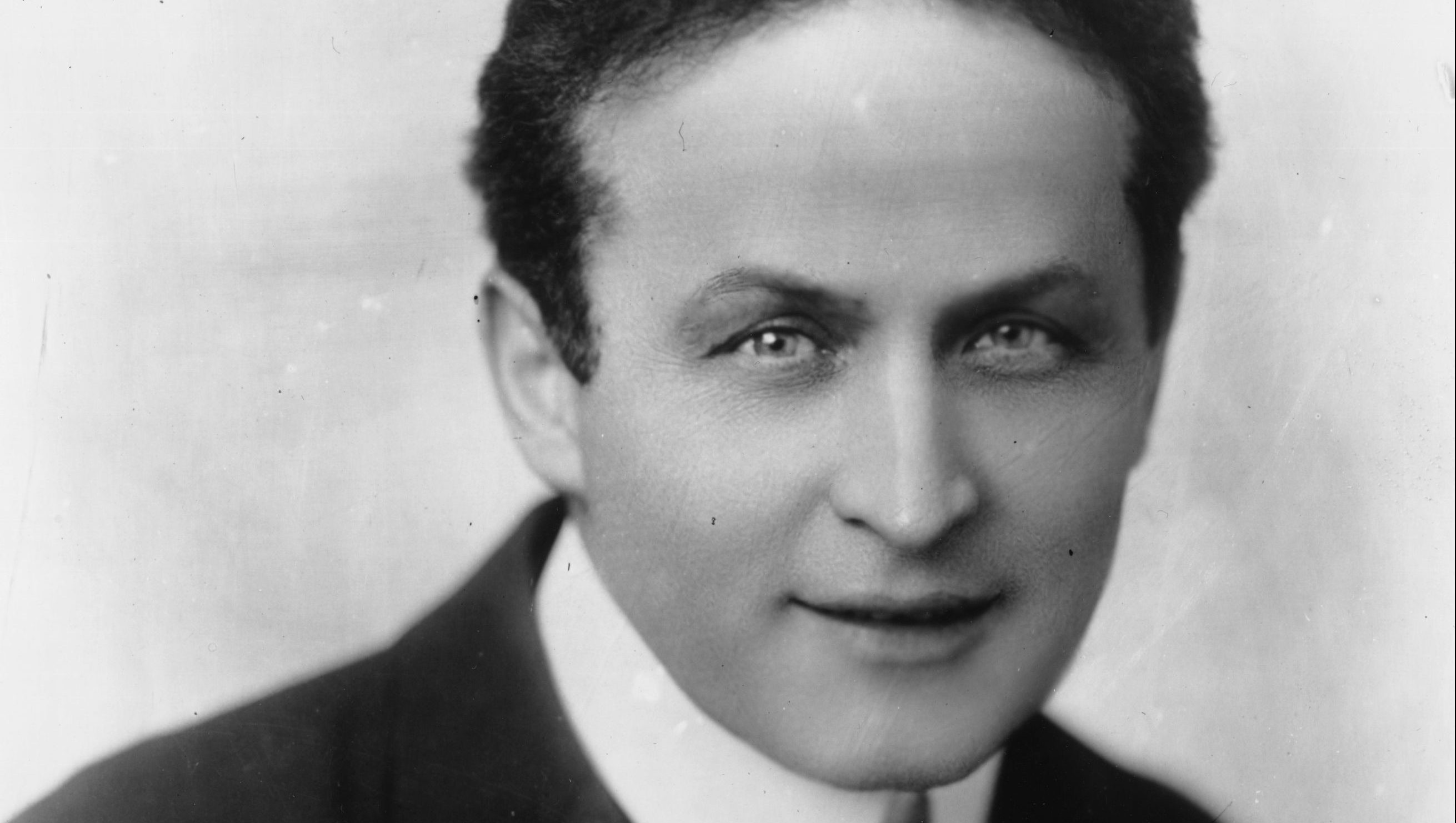
Harry Houdini’s grand illusions and daring, spectacular escape acts made him one of the most famous magicians of all time. Houdini was actually born Erich Weisz on March 24, 1874, in Budapest, Hungary. One of seven children born to a Jewish rabbi and his wife, Weisz moved with his family as a child to Appleton, Wisconsin, where he later claimed he was born. When he was 13, Weisz moved with his father to New York City, taking on odd jobs and living in a boarding house before the rest of the family joined them. It was there that he became interested in trapeze arts.

In 1894, Weisz launched his career as a professional magician and renamed himself Harry Houdini, the first name being a derivative of his childhood nickname, “Ehrie,” and the last an homage to the great French magician Jean Eugène Robert-Houdin. (Although he later wrote The Unmasking of Robert-Houdin, a study that set out to debunk Houdin’s skill.) Though his magic met with little success, he soon drew attention for his feats of escape using handcuffs. In 1893, he married fellow performer Wilhelmina Beatrice Rahner, who would serve as Houdini’s lifelong stage assistant under the name Beatrice “Bess” Houdini.

In 1899, Houdini’s act caught the attention of Martin Beck, an entertainment manager who soon got him booked at some of the best vaudeville venues in the country, followed by a tour of Europe. Houdini’s feats would involve the local police, who would strip search him, place him in shackles and lock him in their jails. The show was a huge sensation, and he soon became the highest-paid performer in American vaudeville.

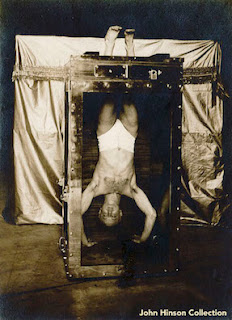
Houdini continued his act in the United States in the early 1900s, constantly upping the ante from handcuffs and straight jackets to locked, water-filled tanks and nailed packing crates. He was able to escape because of both his uncanny strength and his equally uncanny ability to pick locks. In 1912, his act reached its pinnacle, the Chinese Water Torture Cell, which would be the hallmark of his career. In it, Houdini was suspended by his feet and lowered upside-down in a locked glass cabinet filled with water, requiring him to hold his breath for more than three minutes to escape. The performance was so daring and such a crowd pleaser that it remained in his act until his death in 1926.

Houdini’s wealth allowed him to indulge in other passions, such as aviation and film. He purchased his first plane in 1909 and set out to become the first person to man a controlled power flight over Australia in 1910. While he did it after a few failed attempts, it later was revealed that Houdini was likely beaten to the punch by just a few months by a Capt. Colin Defries, who made a short flight in December 1909.

Houdini also launched a movie career, releasing his first film in 1901, Merveilleux Exploits du Célébre Houdini Paris, which documented his escapes. He starred in several subsequent films, including The Master Mystery, The Grim Game and Terror Island. In New York, he started his own production company, Houdini Picture Corporation, and a film lab called The Film Development Corporation, but neither was a success. In 1923, Houdini became president of Martinka & Co., America’s oldest magic company.

As president of the Society of American Magicians, Houdini was a vigorous campaigner against fraudulent psychic mediums. Most notably, he debunked renowned medium Mina Crandon, better known as Margery. This act turned him against former friend Sir Arthur Conan Doyle, who believed deeply in spiritualism and Margery’s sight. Despite his activism against spiritual charlatanism, Houdini and his wife did in fact experiment with otherworldly spiritualism when they decided that the first of them to die would try to communicate from beyond the grave with the survivor. Before her 1943 death, Bess Houdini declared the experiment a failure. 

Though there are mixed reports as to the cause of Houdini’s death, it is certain that he suffered from acute appendicitis. Whether his demise was caused by a McGill University student who was testing his will by punching him in the stomach (with permission) or by poison from a band of angry Spiritualists is unknown. What is known is that he died of peritonitis from a ruptured appendix on October 31, 1926, at the age of 52, in Detroit, Michigan.

After his death, Houdini’s props and effects were used by his brother Theodore Hardeen, who eventually sold them to the magician and collector Sidney H. Radner. Much of the collection could be seen at the Houdini Museum in Appleton, Wisconsin, until Radner auctioned it off in 2004. Most of the prized pieces, including the Water Torture Cell, went to magician David Copperfield.

The Houdini Seances

The reason I am including Houdini in the whole Halloween themed month is the Houdini seances.  In 1927, the year following Houdini’s death, Bess Houdini held the first of several seances in an attempt to contact her deceased husband. Harry had told her he would deliver a message to her in the form of a secret code that would be known only to her, if he were able to do so, from the other side.

She attempted to make contact privately, and she also offered a $10,000 reward to anyone who might be able to deliver the message to her. A medium named Arthur Ford was apparently able to meet the challenge, and Bess publicly accepted the results. Ford stated that he had been able to receive the coded message, which contained the words “Rosabelle believe.”

In January 1929 Bess and Ford participated in a seance in which Houdini purportedly came through. However, this was soon decried in the newspapers as a hoax, with allegations that Houdini’s secret code had already been revealed and that Ford was a fraud. Eventually, Bess did withdraw her support of Ford, and stated that she did not believe he had been able to communicate with her husband.

She continued to hold seances, however, with the final one taking place on Halloween night, October 31, 1936, the tenth anniversary of Houdini’s death. The event was a rather elaborate production staged on the roof of the Knickerbocker Hotel in Hollywood, with an audio recording released later. At the end of it, Houdini had failed to come through, and Bess announced that she had officially given up her efforts to reach him.  Although Bess apparently finally turned out the light, believers everywhere continue to seek a message from the Great Houdini, with seances held on Halloween night each year.

October 31, 1936

“I now reverently turn out the light. It is finished. Good night, Harry.”

— Bess Houdini

Spooky Haunts: A Haunting in Tennessee

Most Halloween stories are simply fun, but there are a few made more memorable by an element of authenticity. Such is the case with the legend of the Bell Witch, a tale that’s been a part of Southern folklore for almost two centuries.

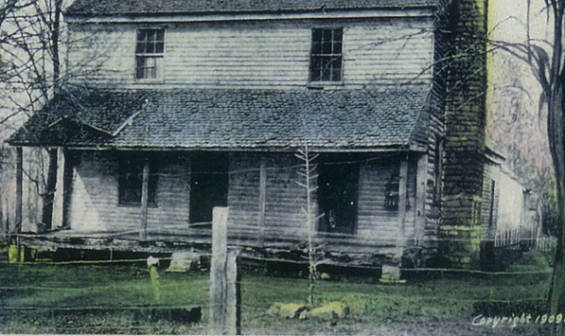
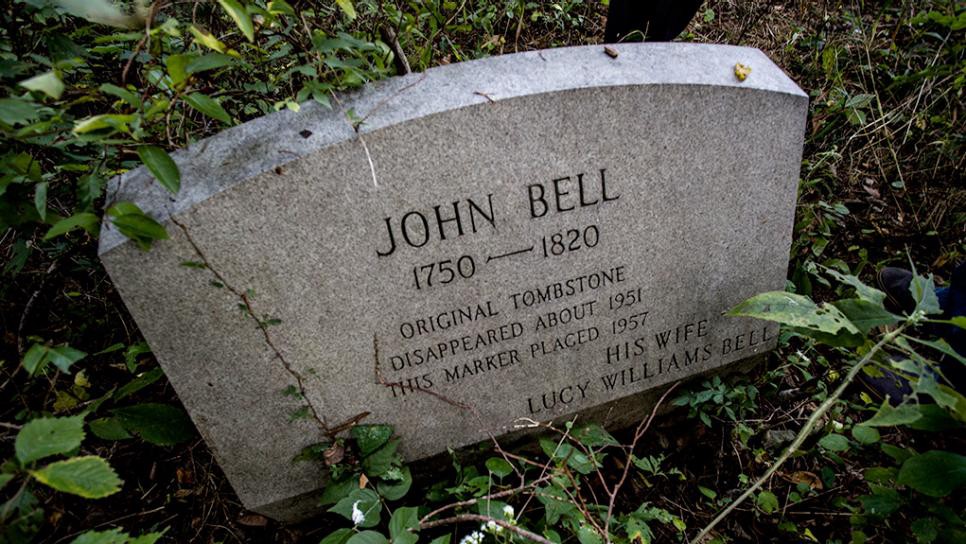
The story begins in 1817, when a farmer named John Bell moved from North Carolina to a 230-acre farm in Robertson County, Tennessee, a rural area not far from the Kentucky border. Legend has it that soon after arriving, Bell and his family began hearing strange noises: rattling chains, choking sounds and heavy knocking on the walls. Eventually, the family heard voices, or rather, a single voice belonging to the witch for which the story is named.

Frightened, Bell told members of the local community, and people from all around the area had soon heard about the ghostly occurrences. Some neighbors stayed overnight at Bell’s cabin so they could experience it for themselves. While some narratives claim that the ghost was a male slave whom Bell had killed in the past, others say it was someone he had cheated in North Carolina who had come back from beyond the grave for revenge. The most popular theory though is that the witch was a neighbor called Kate Batts who had a strong dislike for Bell and his daughter, Betsy.  

So widely spread was the news about The Bell Witch that people came from hundreds of miles around hoping to hear the spirit’s shrill voice or witness a manifestation of its vile temper. When word of the haunting reached Nashville, one of its most famous citizens, General Andrew Jackson, decided to gather a party of friends and journey to Adams to investigate.

The General, who had earned his tough reputation in many conflicts with Native Americans, was determined to confront the phenomenon and either expose it as a hoax or send the spirit away. A chapter in M. V. Ingram’s 1894 book, An Authenticated History of the Famous Bell Witch – considered by many to be the best account of the story – is devoted to Jackson’s visit:

Gen. Jackson’s party came from Nashville with a wagon loaded with a tent, provisions, etc., bent on a good time and much fun investigating the witch. The men were riding on horseback and were following along in the rear of the wagon as they approached near the place, discussing the matter and planning how they were going to do up the witch. Just then, traveling over a smooth level piece of road, the wagon halted and stuck fast. The driver popped his whip, whooped and shouted to the team, and the horses pulled with all of their might, but could not move the wagon an inch. It was dead stuck as if welded to the earth. Gen. Jackson commanded all men to dismount and put their shoulders to the wheels and give the wagon a push, but all in vain; it was no go. The wheels were then taken off, one at a time, and examined and found to be all right, revolving easily on the axles. Gen. Jackson after a few moments thought, realizing that they were in a fix, threw up his hands exclaiming, “By the eternal, boys, it is the witch.” Then came the sound of a sharp metallic voice from the bushes, saying, “All right General, let the wagon move on, I will see you again to-night.” The men in bewildered astonishment looked in every direction to see if they could discover from whence came the strange voice, but could find no explanation to the mystery. The horses then started unexpectedly of their own accord, and the wagon rolled along as light and smoothly as ever.

According to some versions of the story, Jackson did indeed encounter The Bell Witch that night:

Betsy Bell screamed all night from the pinching and slapping she received from the Witch, and Jackson’s covers were ripped off as quickly as he could put them back on, and he had his entire party of men were slapped, pinched and had their hair pulled by the witch until morning, when Jackson and his men decided to hightail it out of Adams. Jackson was later quoted as saying, “I’d rather fight the British in New Orleans than to have to fight the Bell Witch.”

The torment of the Bell house continued for years, culminating in the ghost’s ultimate act of vengeance upon the man she claimed had cheated her: she took responsibility for his death. In October 1820, Bell was struck with an illness while walking to the pigsty of his farm. Some believe that he suffered a stroke, since thereafter he had difficulty speaking and swallowing. In and out of bed for several weeks, his health declined. The Tennessee State University in Nashville, Tennessee, tells this part of the story:

On the morning of December 19, he failed to awake at his regular time. When the family noticed he was sleeping unnaturally, they attempted to arouse him. They discovered Bell was in a stupor and couldn’t be completely awakened. John Jr. went to the medicine cupboard to get his father’s medicine and noticed it was gone with a strange vial in its place. No one claimed to have replaced the medicine with the vial. A doctor was summoned to the house. The witch began taunting that she had place the vial in the medicine cabinet and given Bell a dose of it while he slept. Contents of the vial were tested on a cat and discovered to be highly poisonous. John Bell died on December 20. “Kate” was quiet until after the funeral. After the grave was filled, the witch began singing loudly and joyously. This continued until all friends and family left the grave site.

The Bell Witch left the Bell household in 1821, saying that she would return in seven years time. She made good on her promise and “appeared” at the home of John Bell, Jr. where it is said, she left him with prophecies of future events, including the Civil War, and World Wars I and II. The ghost said it would reappear 107 years later – in 1935 – but if she did, no one in Adams came forward as a witness to it.

Some claim that the spirit still haunts the area. On the property once owned by the Bells is a cave, which has since become known as The Bell Witch Cave, and many locals claim to have seen strange apparitions at the cave and at other spots on the property.

As it’s told today, most of the story behind the Bell Witch comes from a book written by Martin Van Buren Ingram more than 70 years after the alleged incidents took place. The book was called “An Authenticated History of the Bell Witch,” but, unfortunately for fans of the supernatural, no one else has been able to authenticate what Ingram wrote.

Another thing that makes this particular yarn so chilling is that you can visit the rural Tennessee location where it all (allegedly) took place.  The property that John Bell once owned has been turned into a tourist attraction. There’s a cave on the property that is said to be especially haunted. Tours are offered during the summer and also in the fall, from Labor Day through Halloween. They include a hike into the cave and a chance to walk through a replica of the cabin that Bell and his family called home.

A few rational explanations of The Bell Witch phenomena have been offered over the years. The haunting, they say, was a hoax perpetrated by Richard Powell, the schoolteacher of Betsy Bell and Joshua Gardner, with whom Betsy was in love. It seems Powell was deeply in love with the young Betsy and would do anything to destroy her relationship with Gardner. Through a variety of pranks, tricks, and with the help of several accomplices, it is theorized that Powell created all of the “effects” of the ghost to scare Gardner away.

Indeed, Gardner was the target of much of the witch’s violent taunting, and he eventually did break up with Betsy and left the area. It has never been satisfactorily explained how Powell achieved all these remarkable effects, including paralyzing Andrew Jackson’s wagon. But he did come out the winner. He married Betsy Bell.

While most people will enjoy the spooky thrill of seeing the places where this famous story supposedly took place, if not everyone in the family likes the idea of getting scared, there are other options. The people who run the Bell tours also have canoes and kayaks for rent. Visitors can paddle down an especially scenic section of the Red River near Adams and get picked up by a shuttle bus that returns them to Bell’s.

Bell’s Cave is a fun destination for those who want to get into the Halloween spirit, and it’s a bonus that the site is located in a beautiful part of the state filled with natural attractions.

Spooky!

As I’ve previously mentioned I worked in a factory for most of my young adult life. It was close to my parents’ home, and because we were paid piece rate, if you were good and fast, you were rewarded with all kinds of opportunities to learn different jobs and work with different people.  In the overlock department, I met Maria.  She was a friendly, recently married, young Portuguese woman. Her English was excellent and she often translated for the many older Portuguese women who worked there.  I worked alongside her while she hemmed sleeves and I ran the binding machine.

One night, I had the strangest dream about Maria and I walking in the woods.  There were trees and grass and I was holding the hand of a young boy—and so was she.  As we walked, I realized it wasn’t woods, but a cemetery.  That was the entirety of the dream.  At work the next day I told her about the dream.  She said I was weird, we laughed and forgot about it. Two years had passed and Maria and I remained friends.  I helped throw her baby shower at work when she got pregnant.  Within two years after that, I was also married and had a son—just like Maria.

Life went on pretty much as usual for a while at the factory.  We sewed, filled orders, pretty much routine stuff.  Then one day disaster struck my life—my estranged husband died.  His parents had him cremated, refused to pick up his ashes and didn’t even tell me about it for several days.  We had no services for him.  We simply moved on.  The following year I began evening classes at a local college in preparation for making a better life for my son and I. 

And then one Tuesday morning, the Portuguese ladies were all upset when we arrived.  Several of the husbands of the ladies all worked together at the same construction company laying pipe.  There’d been an accident—a cave in—and 2 men had died.  Maria’s husband was lost.

Maria didn’t come back to work for 2 weeks, but I remember the morning that she did.  She came into the overlock room and I saw her look around till she saw me.  She marched right up to me.  “How did you know?” she screamed at me.  I took a step back, honestly not remembering the dream till that moment.  The cemetery…the 2 little boys…and us. 

The Cecil (Suicide) Hotel (Part 2)

Considering all of the deaths and suicides that have taken place at the Cecil Hotel, might there be a horrific history from the 1700’s giving rise to phantoms and ghosts or auras, if you will? People seem to be attracted to certain “spots” around the world, saying things such as “I don’t like the energy coming off of that place” or “there is something dark that draws me here.” Most people use that metaphorically but might there actually be something to it? Hmmm….there is blood in that soil!

The Tongva are an indigenous people of California from the Los Angeles Basin and the Southern Channel Islands, an area covering approximately 4,000 square miles. In the pre-colonial era, the people lived in as many as 100 villages and primarily identified by their village name. The name Tongva is the most widely circulated name and gained popularity in the late 20th century. Others choose to identify as Kizh and disagree over use of the term Tongva.

Southern CA Native American Tribal Territories

On October 7, 1542, an exploratory expedition led by Spanish explorer Juan Cabrillo reached Santa Catalina in the Channel Islands, where his ships were greeted by Tongva in a canoe. The following day, Cabrillo and his men, the first Europeans known to have interacted with the Gabrieleño people, entered a large bay on the mainland, which they named “Baya de los Fumos” (“Bay of Smokes”) on account of the many smoke fires they saw there. This is commonly believed to be San Pedro Bay, near present-day San Pedro.

Present day San Pedro Bay

The Gaspar de Portola expedition in 1769 was the first contact by land to reach Tongva territory, marking the beginning of Spanish colonization. Franciscan padre Junipero Serra accompanied Portola. Within two years of the expedition, Serra had founded four missions, including Mission San Gabriel, founded in 1771 and rebuilt in 1774, and Mission San Fernando, founded in 1797. The people enslaved at San Gabriel were referred to as Gabrieleños, while those enslaved at San Fernando were referred to as Fernandeños.

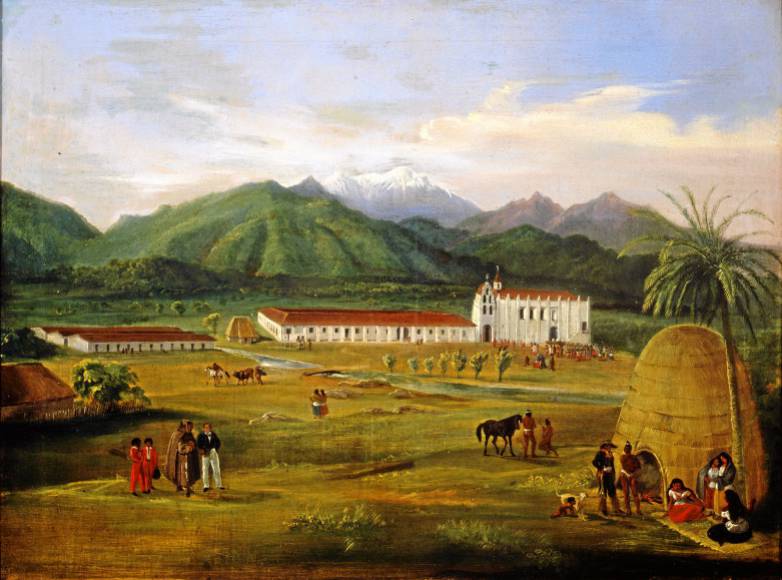
Painting of Mission San Gabriel by Ferdinand Deppe (1832) showing a Gavrieleno kiiy thatched with tule, a giant species of sedge grass.

There is much evidence of Tongva resistance to the mission system. Many individuals returned to their village at time of death. Many converts retained their traditional practices in both domestic and spiritual contexts, despite the attempts by the padres and missionaries to control them. Traditional foods were incorporated into the mission diet and lithic and shell bead production and use persisted. More overt strategies of resistance such as refusal to enter the system, work slowdowns, abortion and infanticide of children resulting from rape, and fugitivism were also prevalent. Five major uprisings were recorded at Mission San Gabriel alone.

It is estimated that nearly 6,000 Tongva lie buried on the grounds of Mission San Gabriel from the mission period.

Two late-eighteenth century rebellions against the mission system were led by Nicolás José, who was an early convert who had two social identities: “publicly participating in Catholic sacraments at the mission but privately committed to traditional dances, celebrations, and rituals.” He participated in a failed attempt to kill the mission’s priests in 1779 and organized eight foothill villages in a revolt in October 1785 with Toypurina, who further organized the villages, which “demonstrated a previously undocumented level of regional political unification both within and well beyond the mission.” However, divided loyalties among the natives contributed to the failure of the 1785 attempt as well as mission soldiers being alerted of the attempt by converts or neophytes.

Toypurina, José and two other leaders of the rebellion, Chief Tomasajaquichi of Juvit village and a man named Alijivit, from nearby village of Jajamovit, were put on trial for the 1785 rebellion. At his trial, José stated that he participated because the ban at the mission on dances and ceremony instituted by the missionaries, and enforced by the governor of California in 1782, was intolerable as they prevented their mourning ceremonies.

Felipe de Neve y Padilla (1724–1784) was a Spanish soldier who served as the 4th Governor of the Californias, from 1777 to 1782. Neve is considered one of the founders of Los Angeles and was instrumental in the foundation of San Jose and Santa Barbara.

Statue of Felipe de Neve, Spanish colonial Governor of Las Californias, in the Los Angeles Plaza. The inscription reads: “Felipe de Neve (1728-84). Governor of California 1775-82. In 1781, on orders from King Carlos III of Spain, Felipe de Neve selected a site near the River Porciuncula and laid out the town of El Pueblo de La Reina de Los Angeles, one of two pueblos he founded in Alta California.

In June 1788, nearly three years later, their sentences arrived from Mexico City, Nicolás José was banned from San Gabriel and sentenced to six years of hard labor in irons at the most distant penitentiary in the region. Toypurina was banished from Mission San Gabriel and sent to the most distant Spanish mission.

Resistance to Spanish rule demonstrated how the Spanish Crown’s claims to California were both insecure and contested. By the 1800s, San Gabriel was the richest in the entire colonial mission system, supplying cattle, sheep, goats, hogs, horses, mules, and other supplies for settlers and settlements throughout Alta California. The mission functioned as a slave plantation.

Felipe de Neve Library, Los Angeles

Some might wonder…..could there be a Tongva burial ground on the site of the Cecil Hotel? Could it be the ghosts of the earliest settlers of that land returning? A sense of despair that somehow seeps in while people are sleeping? Who can say? Do YOU believe in ghosts?

The Cecil (Suicide) Hotel

Nestled within the busy streets of downtown Los Angeles lies one of the most infamous buildings in horror lore: the Cecil Hotel. Since opening its doors in 1927, the Cecil Hotel has been plagued with unfortunate and mysterious circumstances that have given it a perhaps unparalleled reputation for the macabre. At least 16 different murders, suicides, and unexplained paranormal events have taken place at the hotel — and it’s even served as the temporary home of some of America’s most notorious serial killers.

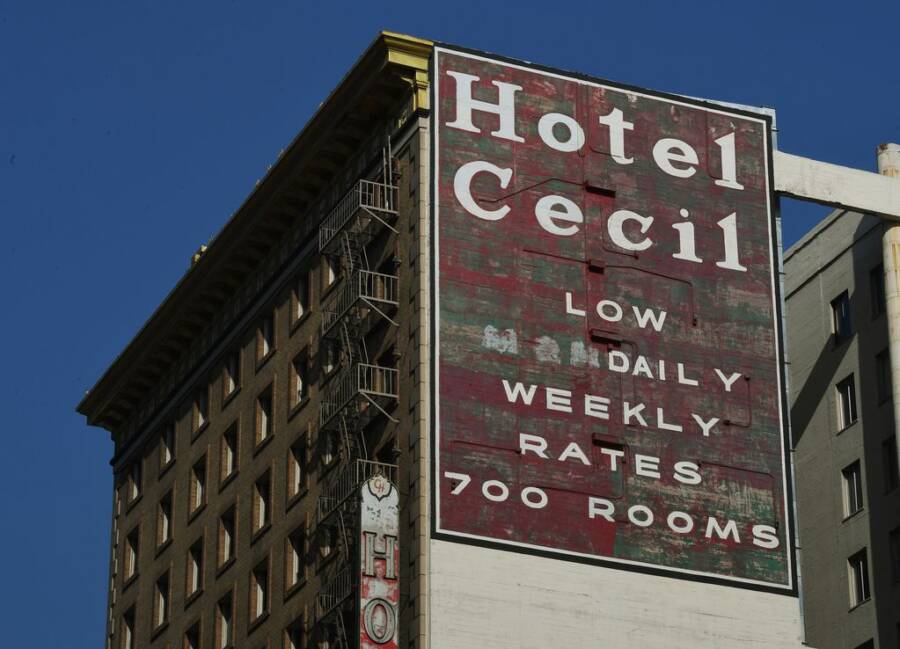
The original sign on the side of Los Angeles’ Cecil Hotel

The Grand Opening Of The Cecil Hotel

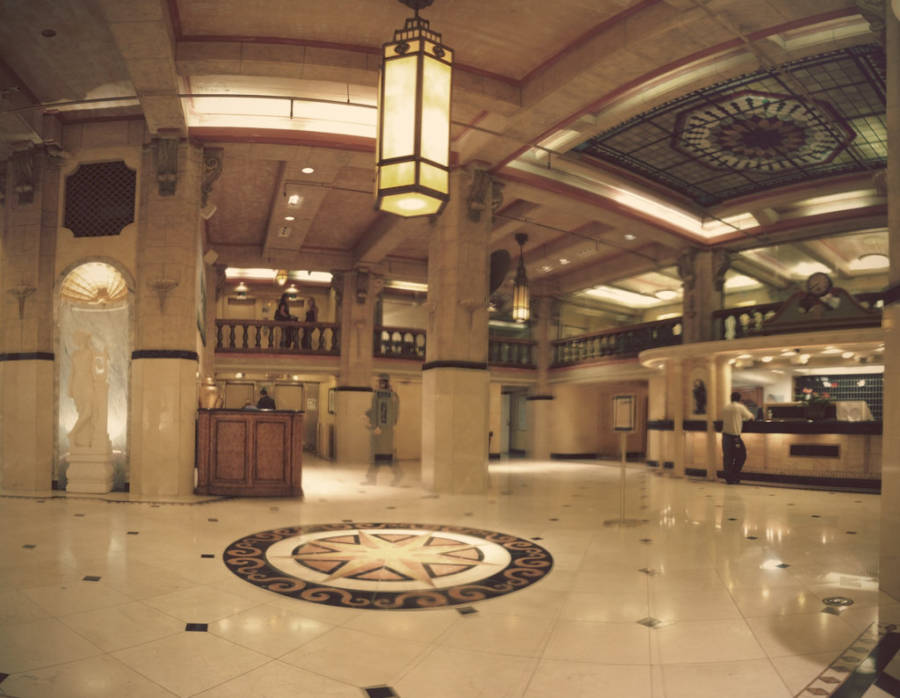
The Cecil Hotel was built in 1924 by hotelier William Banks Hanner. It was supposed to be a destination hotel for international businessmen and social elites. Hanner spent $1 million on the 700-room Beaux Arts-style hotel, complete with a marble lobby, stained-glass windows, palm trees, and an opulent staircase.

The marble lobby of the Cecil Hotel, which opened in 1927

But Hanner would come to regret his investment. Just two years after the Cecil Hotel opened, the world was thrown into the Great Depression — and Los Angeles was not immune to the economic collapse. Soon enough, the area surrounding the Cecil Hotel would be dubbed “Skid Row” and become home to thousands of homeless people.

The once beautiful hotel soon gained a reputation as a meeting place for junkies, runaways, and criminals. Worse yet, the Cecil Hotel ultimately earned a reputation for violence and death.

Suicide And Homicide At “The Most Haunted Hotel In Los Angeles”

In the 1930s alone, the Cecil Hotel was home to at least six reported suicides. A few residents ingested poison, while others shot themselves, slit their own throats, or jumped out their bedroom windows.

In 1934, for example, Army Sergeant Louis D. Borden slashed his throat with a razor. Less than four years later, Roy Thompson of the Marine Corps jumped from atop the Cecil Hotel and was found on the skylight of a neighboring building. The next few decades only saw more violent deaths.

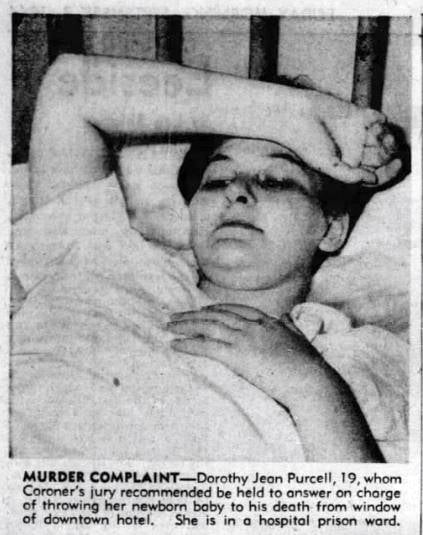
In September 1944, 19-year-old Dorothy Jean Purcell awoke in the middle of the night with stomach pains while she was staying at the Cecil with Ben Levine, 38. She went to the bathroom so as not to disturb a sleeping Levine, and — to her complete shock — gave birth to a baby boy. She had no idea she had been pregnant.

A newspaper clip about Dorothy Jean Purcell, who threw her newborn baby out of her hotel bathroom window

Mistakenly thinking her newborn was dead, Purcell threw her live baby out the window and onto the roof of the building next door. At her trial, she was found not guilty of murder by reason of insanity and she was admitted to a hospital for psychiatric treatment.

In 1962, 65-year-old George Giannini was walking by the Cecil with his hands in his pockets when he was struck to death by a falling woman. Pauline Otton, 27, jumped from her ninth-floor window after an argument with her estranged husband, Dewey. Her fall killed both her and Giannini instantly.

Outside Los Angeles’ Cecil Hotel

Police initially thought the two had committed suicide together but reconsidered when they found Giannini was still wearing shoes. If he had jumped, his shoes would have fallen off mid-flight. In light of the suicides, mishaps, and murders, Angelinos promptly dubbed the Cecil “the most haunted hotel in Los Angeles.”

A Serial Killer’s Paradise

While tragic calamities and suicide have contributed heavily to the hotel’s body count, the Cecil Hotel has also served as a temporary home for some of the grisliest murderers in American history. In the mid-1980s, Richard Ramirez — murderer of 13 people and better known as the “Night Stalker” — lived in a room on the top floor of the hotel during much of his horrific killing spree.

After killing someone, he would throw his bloody clothes into the Cecil Hotel’s dumpster and saunter into the hotel lobby either completely naked or only in underwear — “none of which would have raised an eyebrow,” writes journalist Josh Dean, “since the Cecil in the 1980s… ‘was total, unmitigated chaos.’” At the time, Ramirez was able to stay there for a mere $14 per night. And with corpses of junkies reportedly often found in the alleys near the hotel and sometimes even in the hallways, Ramirez’s blood-soaked lifestyle surely raised nary an eyebrow at the Cecil.

Richard Ramirez was ultimately convicted of 13 counts of murder, five attempted murders, and 11 sexual assaults

While some episodes of violence in and around the Cecil Hotel are attributable to known serial killers, some murders have remained unsolved. Such stories of violence are not simply a thing of the past. One of the most mysterious deaths ever to take place at the Cecil Hotel happened as recently as 2013.

Elisa Lam

In 2013, Canadian college student Elisa Lam was found dead inside the water tank on the roof of the hotel three weeks after she had gone missing. Her naked corpse was found after hotel guests had complained of bad water pressure and a “funny taste” to the water. Though authorities ruled her death as an accidental drowning, critics believed otherwise.

Before her death, surveillance cameras caught Lam acting strangely in an elevator, at times appearing to yell at someone out of view, as well as apparently attempting to hide from someone while pressing multiple elevator buttons and waving her arms erratically.

After the video surfaced publicly, many people began to believe that the rumors of the hotel being haunted might be true.

Horror aficionados began drawing parallels between the Black Dahlia murder and Lam’s disappearance, pointing out that both women were in their twenties, traveling alone from L.A. to San Diego, last seen at the Cecil Hotel, and were missing for several days before their bodies were found.

Thin though these connections may sound, the hotel has nevertheless developed a reputation for horror that defines its legacy to this day.

After a brief stint as the Stay On Main Hotel and Hostel, the hotel closed. It underwent a $100 million renovation and was turned into $900 to $1,200-a-month “micro apartments.”

https://allthatsinteresting.com/cecil-hotel-los-angeles

—————-

On December 14, 2021, Cecil Hotel Apartments opened. The 600 units range between 160 and 175 square feet and the common areas include bathrooms and kitchens, which is similar to the hotel’s earlier days. It also offers guarded entry and case management services on-site.

The rooms are exclusively available to rent by low-income Los Angelenos who earn between 30% and 60% of the area’s median income of $24,850 annually. With rent ranging between $900 and $1,200 a month, tenants can use Section 8 housing vouchers to help pay. Three months after it reopened, the building was boarded up against unwanted visitors and discreetly serves its visitors.

Might there be another reason for all the deaths, spawned much further back in history? Stay tuned for part 2 of The Cecil Hotel…..