As I’ve previously mentioned I worked in a factory for most of my young adult life. It was close to my parents’ home, and because we were paid piece rate, if you were good and fast, you were rewarded with all kinds of opportunities to learn different jobs and work with different people. In the overlock department, I met Maria. She was a friendly, recently married, young Portuguese woman. Her English was excellent and she often translated for the many older Portuguese women who worked there. I worked alongside her while she hemmed sleeves and I ran the binding machine.
One night, I had the strangest dream about Maria and I walking in the woods. There were trees and grass and I was holding the hand of a young boy—and so was she. As we walked, I realized it wasn’t woods, but a cemetery. That was the entirety of the dream. At work the next day I told her about the dream. She said I was weird, we laughed and forgot about it. Two years had passed and Maria and I remained friends. I helped throw her baby shower at work when she got pregnant. Within two years after that, I was also married and had a son—just like Maria.
Life went on pretty much as usual for a while at the factory. We sewed, filled orders, pretty much routine stuff. Then one day disaster struck my life—my estranged husband died. His parents had him cremated, refused to pick up his ashes and didn’t even tell me about it for several days. We had no services for him. We simply moved on. The following year I began evening classes at a local college in preparation for making a better life for my son and I.
And then one Tuesday morning, the Portuguese ladies were all upset when we arrived. Several of the husbands of the ladies all worked together at the same construction company laying pipe. There’d been an accident—a cave in—and 2 men had died. Maria’s husband was lost.
Maria didn’t come back to work for 2 weeks, but I remember the morning that she did. She came into the overlock room and I saw her look around till she saw me. She marched right up to me. “How did you know?” she screamed at me. I took a step back, honestly not remembering the dream till that moment. The cemetery…the 2 little boys…and us.
Considering all of the deaths and suicides that have taken place at the Cecil Hotel, might there be a horrific history from the 1700’s giving rise to phantoms and ghosts or auras, if you will? People seem to be attracted to certain “spots” around the world, saying things such as “I don’t like the energy coming off of that place” or “there is something dark that draws me here.” Most people use that metaphorically but might there actually be something to it? Hmmm….there is blood in that soil!
The Tongva are an indigenous people of California from the Los Angeles Basin and the Southern Channel Islands, an area covering approximately 4,000 square miles. In the pre-colonial era, the people lived in as many as 100 villages and primarily identified by their village name. The name Tongva is the most widely circulated name and gained popularity in the late 20th century. Others choose to identify as Kizh and disagree over use of the term Tongva.
Southern CA Native American Tribal Territories
On October 7, 1542, an exploratory expedition led by Spanish explorer Juan Cabrillo reached Santa Catalina in the Channel Islands, where his ships were greeted by Tongva in a canoe. The following day, Cabrillo and his men, the first Europeans known to have interacted with the Gabrieleño people, entered a large bay on the mainland, which they named “Baya de los Fumos” (“Bay of Smokes”) on account of the many smoke fires they saw there. This is commonly believed to be San Pedro Bay, near present-day San Pedro.
Present day San Pedro Bay
The Gaspar de Portola expedition in 1769 was the first contact by land to reach Tongva territory, marking the beginning of Spanish colonization. Franciscan padre Junipero Serra accompanied Portola. Within two years of the expedition, Serra had founded four missions, including Mission San Gabriel, founded in 1771 and rebuilt in 1774, and Mission San Fernando, founded in 1797. The people enslaved at San Gabriel were referred to as Gabrieleños, while those enslaved at San Fernando were referred to as Fernandeños.
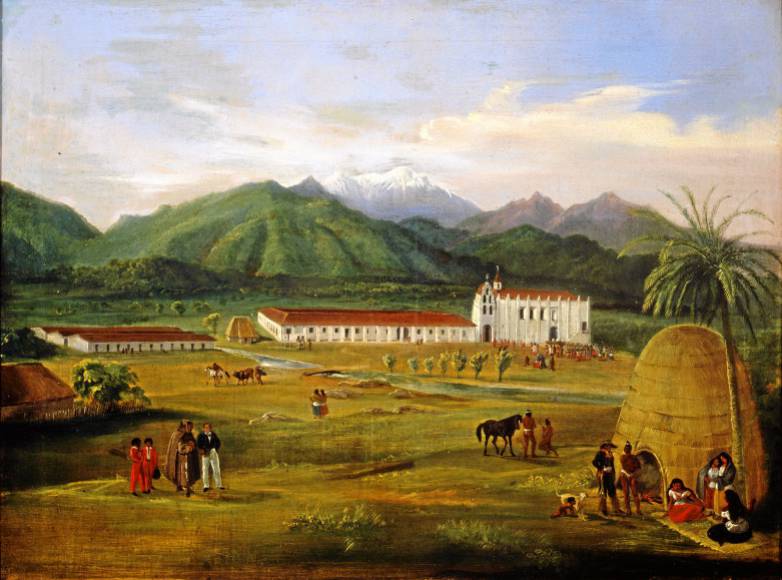
Painting of Mission San Gabriel by Ferdinand Deppe (1832) showing a Gavrieleno kiiy thatched with tule, a giant species of sedge grass.
There is much evidence of Tongva resistance to the mission system. Many individuals returned to their village at time of death. Many converts retained their traditional practices in both domestic and spiritual contexts, despite the attempts by the padres and missionaries to control them. Traditional foods were incorporated into the mission diet and lithic and shell bead production and use persisted. More overt strategies of resistance such as refusal to enter the system, work slowdowns, abortion and infanticide of children resulting from rape, and fugitivism were also prevalent. Five major uprisings were recorded at Mission San Gabriel alone.
It is estimated that nearly 6,000 Tongva lie buried on the grounds of Mission San Gabriel from the mission period.
Two late-eighteenth century rebellions against the mission system were led by Nicolás José, who was an early convert who had two social identities: “publicly participating in Catholic sacraments at the mission but privately committed to traditional dances, celebrations, and rituals.” He participated in a failed attempt to kill the mission’s priests in 1779 and organized eight foothill villages in a revolt in October 1785 with Toypurina, who further organized the villages, which “demonstrated a previously undocumented level of regional political unification both within and well beyond the mission.” However, divided loyalties among the natives contributed to the failure of the 1785 attempt as well as mission soldiers being alerted of the attempt by converts or neophytes.
Toypurina, José and two other leaders of the rebellion, Chief Tomasajaquichi of Juvit village and a man named Alijivit, from nearby village of Jajamovit, were put on trial for the 1785 rebellion. At his trial, José stated that he participated because the ban at the mission on dances and ceremony instituted by the missionaries, and enforced by the governor of California in 1782, was intolerable as they prevented their mourning ceremonies.
Felipe de Neve y Padilla (1724–1784) was a Spanish soldier who served as the 4th Governor of the Californias, from 1777 to 1782. Neve is considered one of the founders of Los Angeles and was instrumental in the foundation of San Jose and Santa Barbara.
Statue of Felipe de Neve, Spanish colonial Governor of Las Californias, in the Los Angeles Plaza. The inscription reads: “Felipe de Neve (1728-84). Governor of California 1775-82. In 1781, on orders from King Carlos III of Spain, Felipe de Neve selected a site near the River Porciuncula and laid out the town of El Pueblo de La Reina de Los Angeles, one of two pueblos he founded in Alta California.
In June 1788, nearly three years later, their sentences arrived from Mexico City, Nicolás José was banned from San Gabriel and sentenced to six years of hard labor in irons at the most distant penitentiary in the region. Toypurina was banished from Mission San Gabriel and sent to the most distant Spanish mission.
Resistance to Spanish rule demonstrated how the Spanish Crown’s claims to California were both insecure and contested. By the 1800s, San Gabriel was the richest in the entire colonial mission system, supplying cattle, sheep, goats, hogs, horses, mules, and other supplies for settlers and settlements throughout Alta California. The mission functioned as a slave plantation.
Felipe de Neve Library, Los Angeles
Some might wonder…..could there be a Tongva burial ground on the site of the Cecil Hotel? Could it be the ghosts of the earliest settlers of that land returning? A sense of despair that somehow seeps in while people are sleeping? Who can say? Do YOU believe in ghosts?
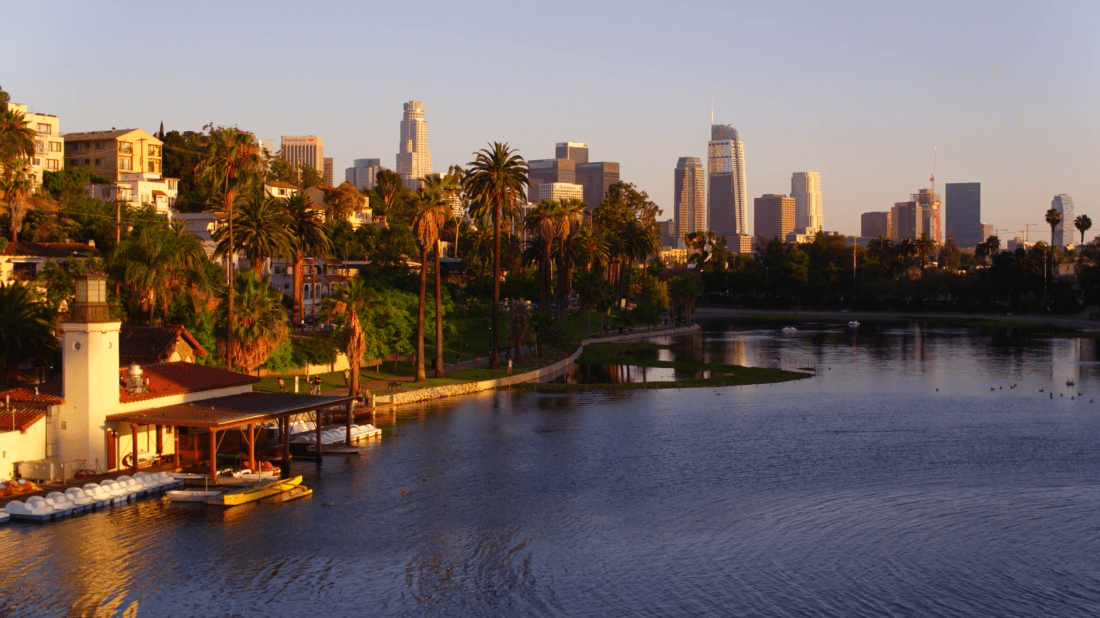
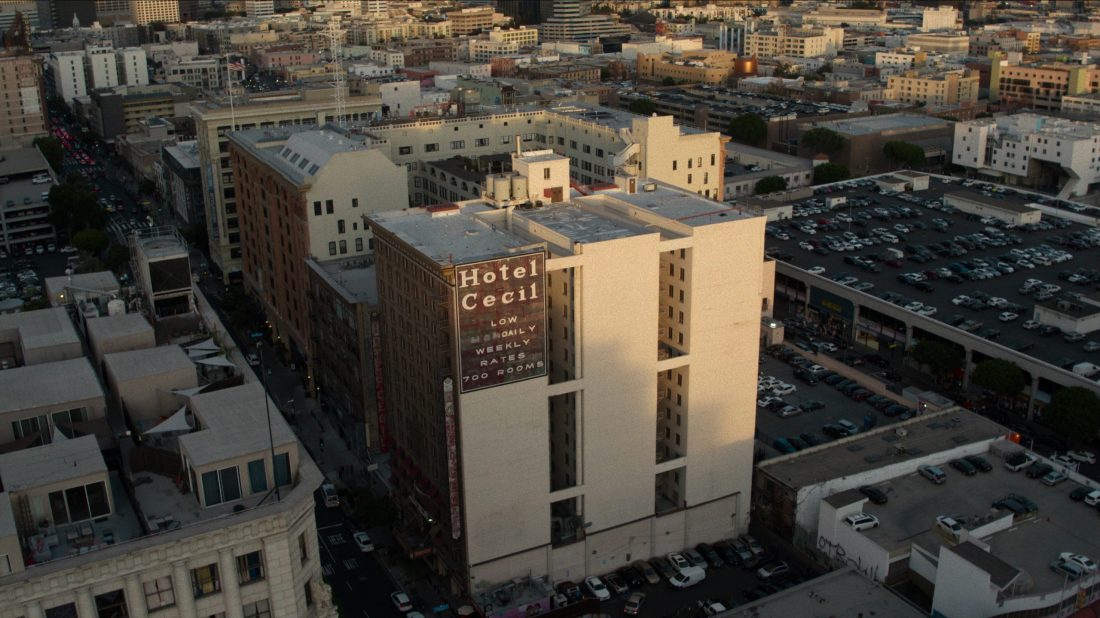
Nestled within the busy streets of downtown Los Angeles lies one of the most infamous buildings in horror lore: the Cecil Hotel. Since opening its doors in 1927, the Cecil Hotel has been plagued with unfortunate and mysterious circumstances that have given it a perhaps unparalleled reputation for the macabre. At least 16 different murders, suicides, and unexplained paranormal events have taken place at the hotel — and it’s even served as the temporary home of some of America’s most notorious serial killers.
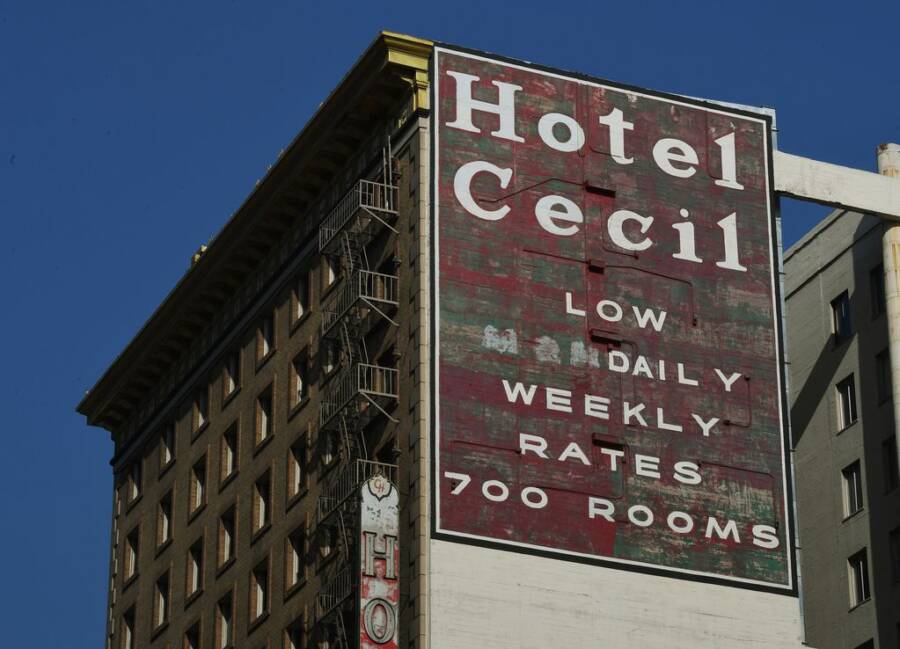
The original sign on the side of Los Angeles’ Cecil Hotel
The Grand Opening Of The Cecil Hotel
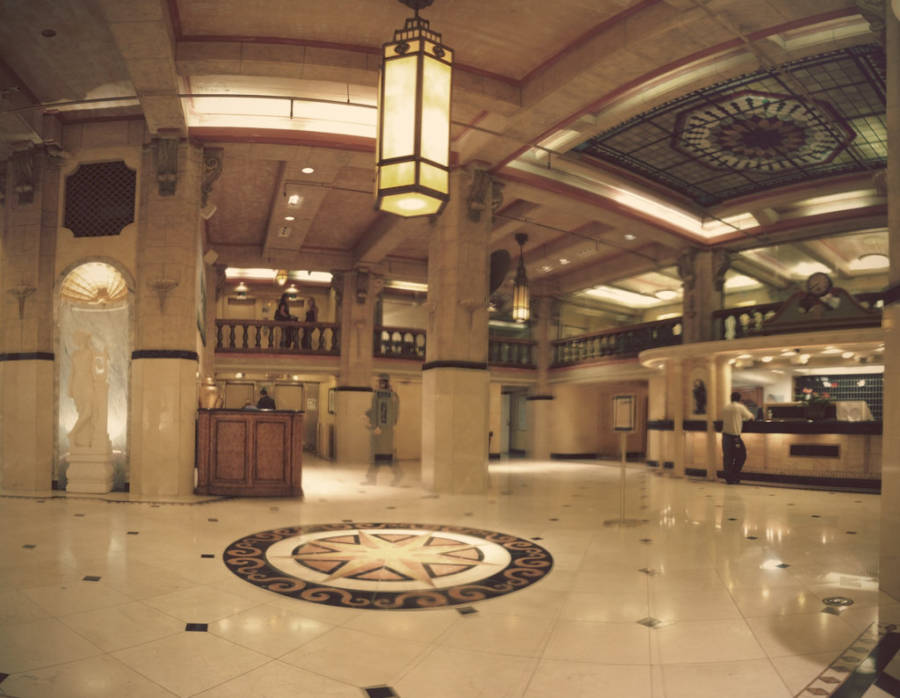
The Cecil Hotel was built in 1924 by hotelier William Banks Hanner. It was supposed to be a destination hotel for international businessmen and social elites. Hanner spent $1 million on the 700-room Beaux Arts-style hotel, complete with a marble lobby, stained-glass windows, palm trees, and an opulent staircase.
The marble lobby of the Cecil Hotel, which opened in 1927
But Hanner would come to regret his investment. Just two years after the Cecil Hotel opened, the world was thrown into the Great Depression — and Los Angeles was not immune to the economic collapse. Soon enough, the area surrounding the Cecil Hotel would be dubbed “Skid Row” and become home to thousands of homeless people.
The once beautiful hotel soon gained a reputation as a meeting place for junkies, runaways, and criminals. Worse yet, the Cecil Hotel ultimately earned a reputation for violence and death.
Suicide And Homicide At “The Most Haunted Hotel In Los Angeles”
In the 1930s alone, the Cecil Hotel was home to at least six reported suicides. A few residents ingested poison, while others shot themselves, slit their own throats, or jumped out their bedroom windows.
In 1934, for example, Army Sergeant Louis D. Borden slashed his throat with a razor. Less than four years later, Roy Thompson of the Marine Corps jumped from atop the Cecil Hotel and was found on the skylight of a neighboring building. The next few decades only saw more violent deaths.
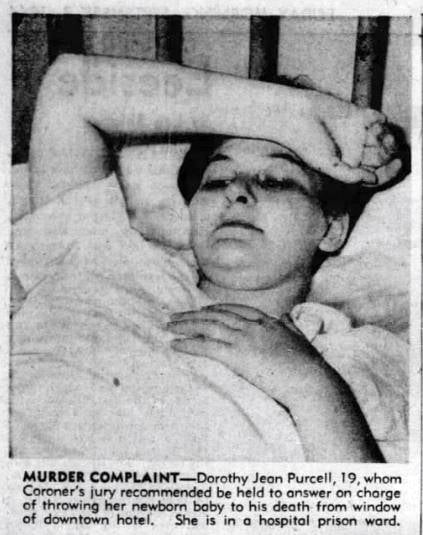
In September 1944, 19-year-old Dorothy Jean Purcell awoke in the middle of the night with stomach pains while she was staying at the Cecil with Ben Levine, 38. She went to the bathroom so as not to disturb a sleeping Levine, and — to her complete shock — gave birth to a baby boy. She had no idea she had been pregnant.
A newspaper clip about Dorothy Jean Purcell, who threw her newborn baby out of her hotel bathroom window
Mistakenly thinking her newborn was dead, Purcell threw her live baby out the window and onto the roof of the building next door. At her trial, she was found not guilty of murder by reason of insanity and she was admitted to a hospital for psychiatric treatment.
In 1962, 65-year-old George Giannini was walking by the Cecil with his hands in his pockets when he was struck to death by a falling woman. Pauline Otton, 27, jumped from her ninth-floor window after an argument with her estranged husband, Dewey. Her fall killed both her and Giannini instantly.
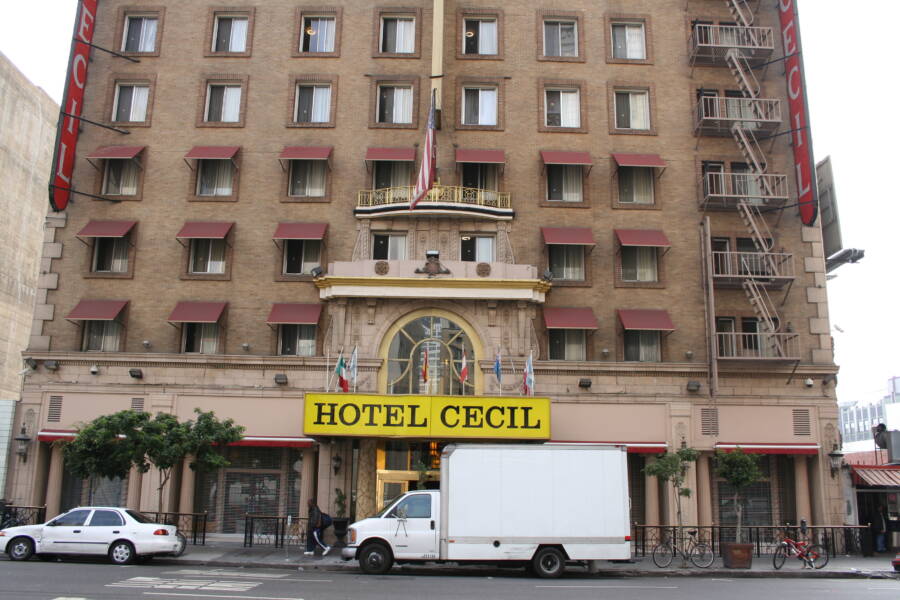
Outside Los Angeles’ Cecil Hotel
Police initially thought the two had committed suicide together but reconsidered when they found Giannini was still wearing shoes. If he had jumped, his shoes would have fallen off mid-flight. In light of the suicides, mishaps, and murders, Angelinos promptly dubbed the Cecil “the most haunted hotel in Los Angeles.”
A Serial Killer’s Paradise
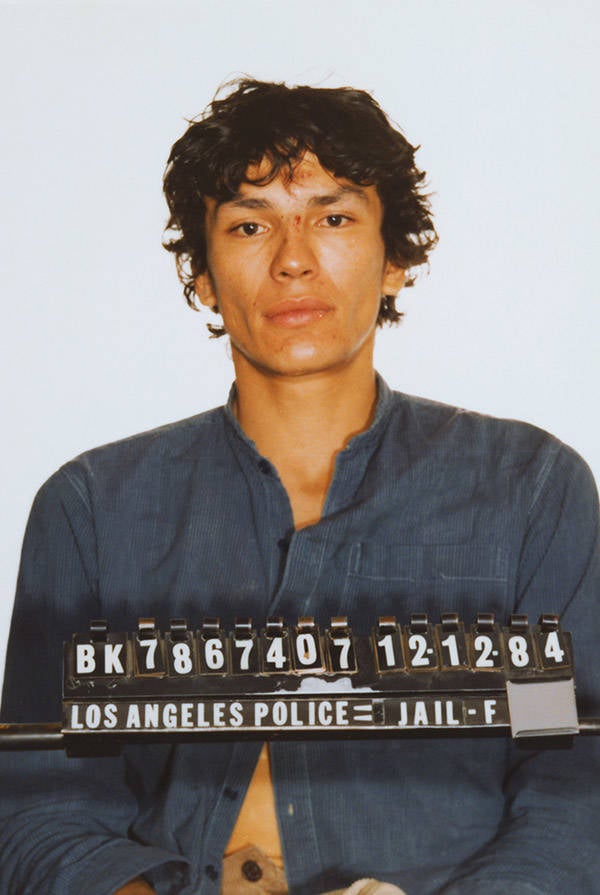
While tragic calamities and suicide have contributed heavily to the hotel’s body count, the Cecil Hotel has also served as a temporary home for some of the grisliest murderers in American history. In the mid-1980s, Richard Ramirez — murderer of 13 people and better known as the “Night Stalker” — lived in a room on the top floor of the hotel during much of his horrific killing spree.
After killing someone, he would throw his bloody clothes into the Cecil Hotel’s dumpster and saunter into the hotel lobby either completely naked or only in underwear — “none of which would have raised an eyebrow,” writes journalist Josh Dean, “since the Cecil in the 1980s… ‘was total, unmitigated chaos.’” At the time, Ramirez was able to stay there for a mere $14 per night. And with corpses of junkies reportedly often found in the alleys near the hotel and sometimes even in the hallways, Ramirez’s blood-soaked lifestyle surely raised nary an eyebrow at the Cecil.
Richard Ramirez was ultimately convicted of 13 counts of murder, five attempted murders, and 11 sexual assaults
While some episodes of violence in and around the Cecil Hotel are attributable to known serial killers, some murders have remained unsolved. Such stories of violence are not simply a thing of the past. One of the most mysterious deaths ever to take place at the Cecil Hotel happened as recently as 2013.
Elisa Lam
In 2013, Canadian college student Elisa Lam was found dead inside the water tank on the roof of the hotel three weeks after she had gone missing. Her naked corpse was found after hotel guests had complained of bad water pressure and a “funny taste” to the water. Though authorities ruled her death as an accidental drowning, critics believed otherwise.
Before her death, surveillance cameras caught Lam acting strangely in an elevator, at times appearing to yell at someone out of view, as well as apparently attempting to hide from someone while pressing multiple elevator buttons and waving her arms erratically.
After the video surfaced publicly, many people began to believe that the rumors of the hotel being haunted might be true.
Horror aficionados began drawing parallels between the Black Dahlia murder and Lam’s disappearance, pointing out that both women were in their twenties, traveling alone from L.A. to San Diego, last seen at the Cecil Hotel, and were missing for several days before their bodies were found.
Thin though these connections may sound, the hotel has nevertheless developed a reputation for horror that defines its legacy to this day.
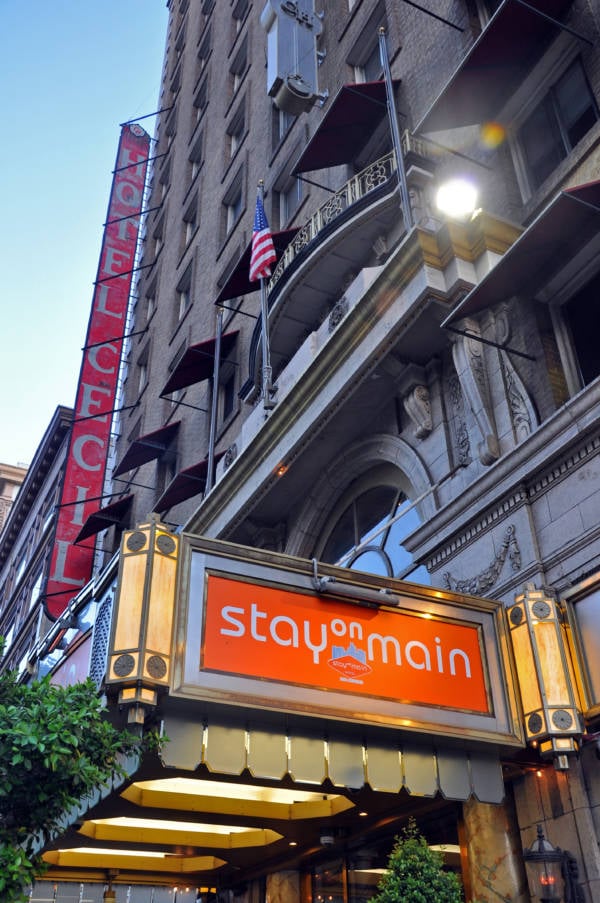
After a brief stint as the Stay On Main Hotel and Hostel, the hotel closed. It underwent a $100 million renovation and was turned into $900 to $1,200-a-month “micro apartments.”
On December 14, 2021, Cecil Hotel Apartments opened. The 600 units range between 160 and 175 square feet and the common areas include bathrooms and kitchens, which is similar to the hotel’s earlier days. It also offers guarded entry and case management services on-site.
The rooms are exclusively available to rent by low-income Los Angelenos who earn between 30% and 60% of the area’s median income of $24,850 annually. With rent ranging between $900 and $1,200 a month, tenants can use Section 8 housing vouchers to help pay. Three months after it reopened, the building was boarded up against unwanted visitors and discreetly serves its visitors.
Might there be another reason for all the deaths, spawned much further back in history? Stay tuned for part 2 of The Cecil Hotel…..
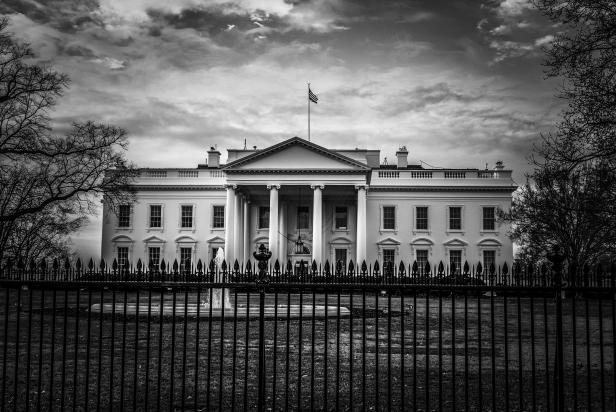
America’s house is home to more than just presidents and their families.
Sure it’s been the site of intense diplomatic meetings, grand parties, and important declarations, but the White House is notoriously haunted by some very famous ghosts.
Two grieving first ladies—Abigail Adams and Mary Todd Lincoln—held seances in the White House, hoping to speak with the spirits of their dead children. Opening that door to speak with the dead apparently allowed a sinister presence to take up residence in the presidential estate. Something has been tormenting presidents, their families, and their staff for more than 100 years.
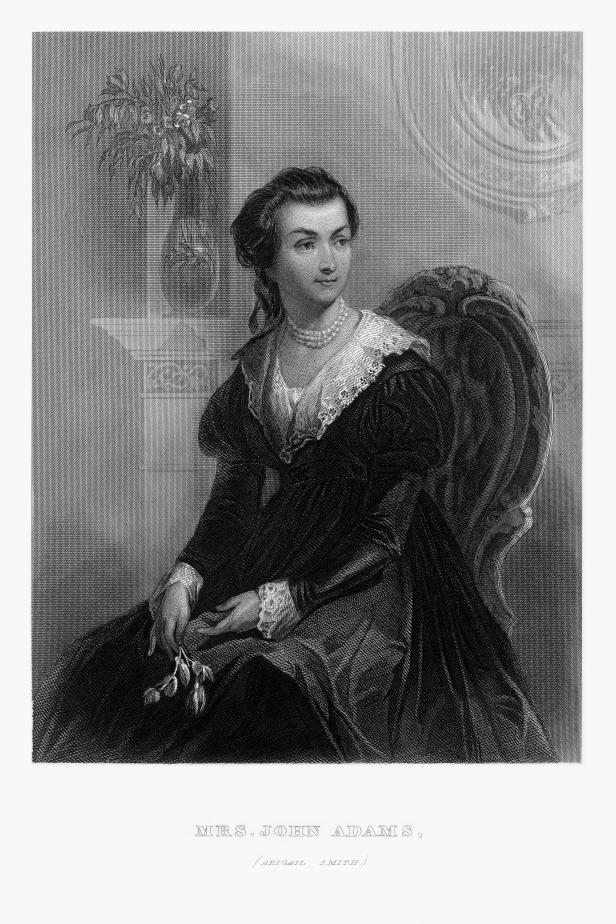
Abigail Adams
Abigail Adams, the wife of the second president, John Adams, did her own laundry when she lived in the White House, and there’s apparently still plenty of washing to be done. White House staffers have seen her ghost floating around the East Room with her arms holding an invisible load of laundry. Sometimes, they smell wet clothes or even the scene of lavender in the area.
Abraham Lincoln
The ghost of Honest Abe just can’t seem to move on following his 1865 assassination. There are numerous stories of Lincoln’s bearded ghost appearing to White House residents, staff, and visitors. A nude Winston Churchill, the British Prime Minister,once emerged from the bathroom to see Lincoln sitting in his room during a visit in the 1940s.
Lincoln is said to lurk around the Yellow Oval Room and the Lincoln bedroom. First Lady Eleanor Roosevelt spent a lot of time working in the Lincoln bedroom, and she apparently saw him often. Calvin Coolidge’s wife, Grace, reportedly caught Lincoln looking out of a window in the Lincoln Bedroom. One night, Lady Bird Johnson was watching a documentary about Lincoln’s death when she said she felt his spirit nearby.
Ronald Reagan’s dog, Rex, is believed to have seen Lincoln’s ghost as well. Apparently the dog would regularly stand at the door to the Lincoln bedroom and bark, and the president believed Rex could see Lincoln.
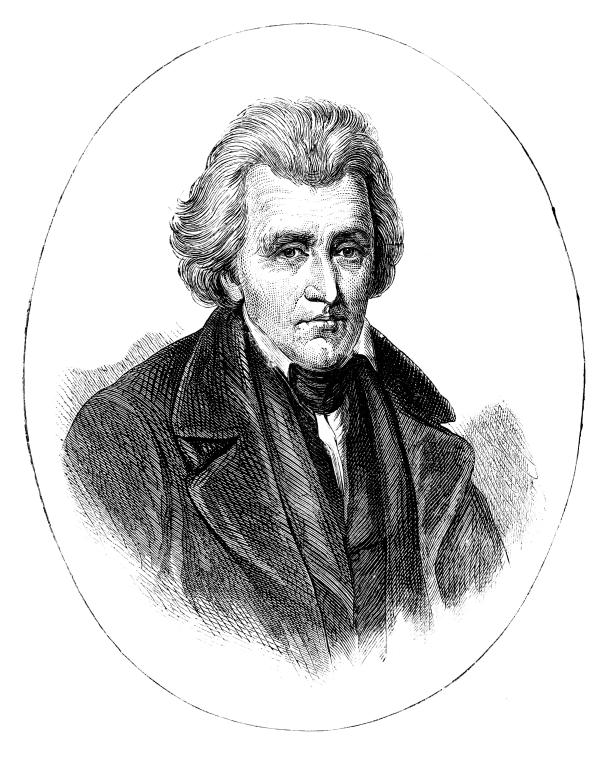
Andrew Jackson
The nation’s seventh president apparently still spends time in his old bedroom where he can be heard laughing. Mary Todd Lincoln often said she heard Jackson stomping and swearing. Perhaps his ghost is reliving the raucous 1829 inauguration party in which the White House was effectively trashed by thousands of celebrants exploring the estate.
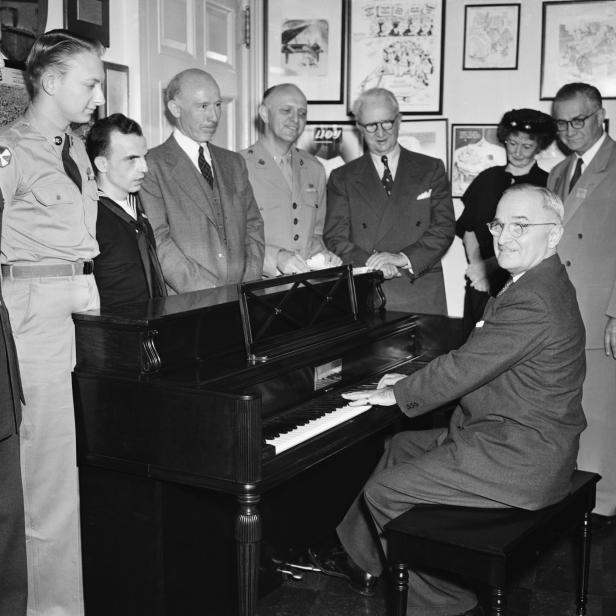
Harry Truman
Harry Truman once joked, “My choice early in life was either to be a piano player in a whorehouse or a politician. And to tell the truth, there’s hardly any difference.” Was it Truman’s piano that the Bush twins, Barbara and Jenna, heard in their room after their father, George W. Bush, took office?
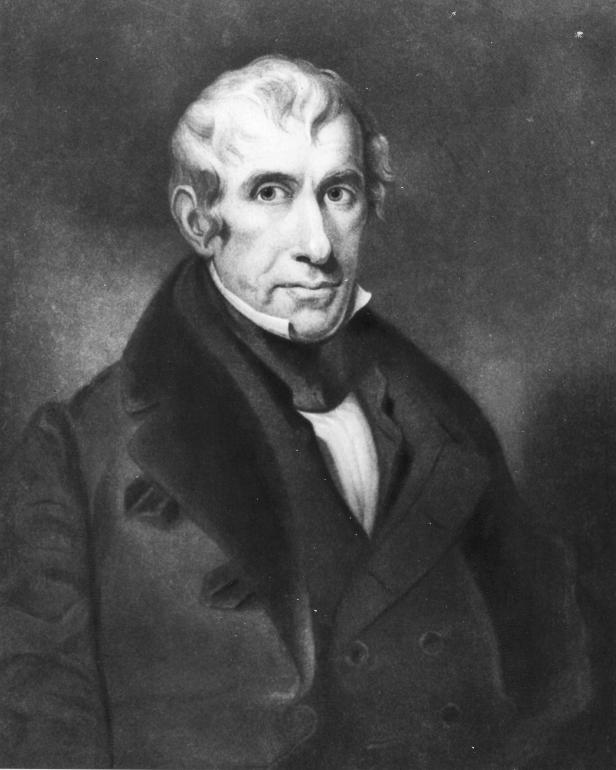
William Henry Harrison
Harrison, the ninth president, holds the record for holding the office of president for the least amount of time—just 31 days—but his ghost has been there way longer than that. Apparently, William Henry Harrison left something in the attic, and he’s still walking around up there and looking for it to this day.
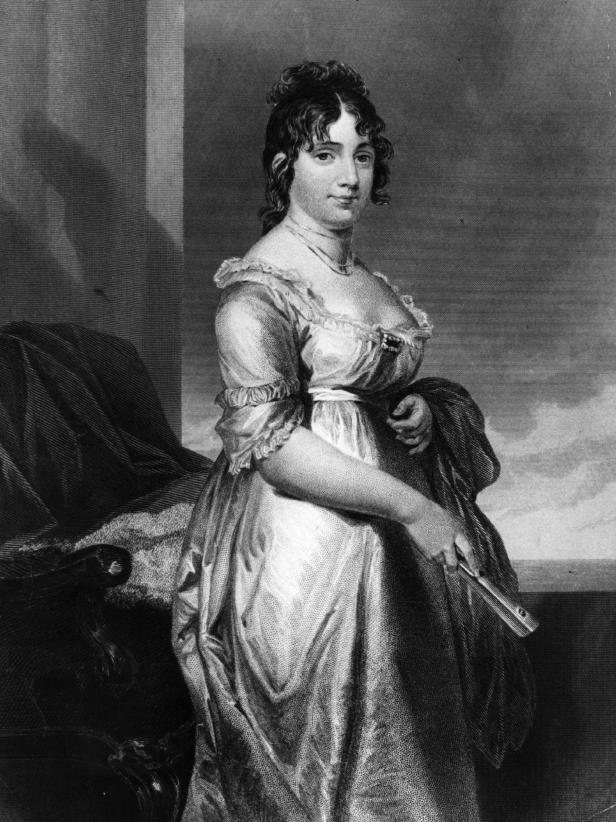
Dolley Madison
The wife of President James Madison is very protective over the Rose Garden. When Woodrow Wilson was President, an effort to move the garden was abandoned when people began seeing Molley Madison’s ghost, according to the Washington, Post.