Happy Birthday Filly!

Filly—you’re the best! You make us laugh, you entertain us and you educate us!  I’m so glad I “met” you!!!  Hope you have a wonderful birthday!

Happy Birthday to a great friend!

THIS^^^^ is a birthday cake!

I was gonna post some pictures of handsome, sexy cowboys for you, but we have different ideas there (and most of them look gay somehow…lol)…so I thought I’d stick with horses!

Hey! Here’s a cowboy who’s not gay and not all slicked up and shirtless…LOL

Love you Filly! Have a great birthday!!

What in the World?

The hala fruit is a large edible fruit made up of numerous segments called keys or cones and is found in Southeast Asia, eastern Australia, Pacific Islands and Hawaii. 

Also called the Tahitian screw pine or thatch screwpine, the hala fruit tree is one of the 750 or so trees that belong to the Pandanus species. The hala fruit tree can reach up to 14 meters in height, with a spiny trunk that grows between 5 – 11 meters in width. This is a large fruit that can be up to 30 cm long, with dozens to hundreds of segments (or phalanges, keys) that are attached together by a core, each being around 20 cm long. 

HOW TO EAT HALA FRUIT

The phalanges contain the edible pulp of the hala fruit. But in order to get to the pulp, you may have to remove a few of the phalanges with the claw of the hammer to make it easier to pull out the others. The outer edges of the keys are green and very fibrous. Pull out a segment, start from the inner end by chewing on it to squeeze out the sweet pulp from the inside. 

WHAT DOES HALA FRUIT TASTE LIKE?

It looks a bit scary and reminds you of an exploding planet. But don’t let appearances scare you off, because chances are, you might have already tried a variant of the hala fruit at one point in your life, especially if you are a fan of Southeast Asian food. 

Pandan chiffon cake, pandan curry, pandan custard – do any of these ring a bell? Pandan, usually in the form of an essence or paste is made from the leaves of a pandanus tree belonging to the same family as the hala fruit. If you’ve ever wondered why some of those desserts were a fluo green, it was probably because of pandan.

The hala fruit itself has a delicate, sweet taste, similar to the paste made from the leaves. It is eaten fresh, boiled or ground into a paste, or squeezed into juice.  

Strangest Animals in Every State Part 2

Montana: Pronghorn

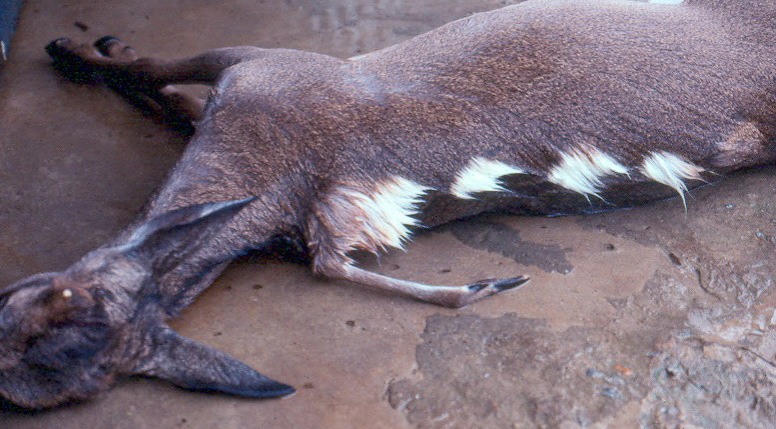
Often confused for an antelope, pronghorns with their distinctive backward-curving horns belong to a family of mammals all their own. After the cheetah, they are the second fastest land mammal in the world running more than 53 miles an hour according to National Geographic; even babies can outrun humans within a few days of being born. They can also go the distance if they cut down to half that speed. But despite long legs and the ability to achieve a running start, they rarely jump fences instead choosing to go underneath them. The pronghorn warning system is also guaranteed to make young children giggle: When frightened, the hairs on their behinds raises into a white patch that can be seen for miles.

Nebraska: Nine-banded armadillo

Of the 20 species of little-armored ones (the name’s Spanish translation), only the nine-banded armadillo, which can actually have anywhere from seven and 11 bands despite the name, is found in the United States. Once relegated to southeastern states, their range is continually expanding northward and now the bizarre beasts with ossified dermal scutes, keratinized epidermal scales, long sticky tongues, and hairy undersides are often spotted in the Cornhusker State. The insectivore cannot curl into a ball and roll away from danger despite popular belief. Only two types of armadillos can ball up according to The National Wildlife Federation. But it can jump three to four feet in the air, float across rivers by inflating its intestines, hold its breath for six minutes while running across riverbeds, and quickly dig a snug trench to lodge itself in when in danger.

Nevada: Cat-faced spider

Also known as a jewel spider, it belongs to a subset of spiders known as angulates, which can be identified by the presence of two pronounced bumps on the top of its abdomen. Those bumps form the ears of the feline face found on this eight-legged creepy crawler. Sitting with its head toward the ground is this spider’s preferred stance so most of the time the kitty appears upside down. Cat ladies have nothing to fear from this harmless-to-humans fellow.

New Hampshire: Buffalo treehopper

The buffalo treehopper is a tiny green plant jumper that earned its name because the pest appears to have horns and a tail that resemble those of a bison. But the tail is actually just the pointy end of the ridge on its back and the horns are the colored protuberances that come out of the widest part of its head.

New Jersey: Periodical cicada

These red-eyed freaks of nature emerge from living underground, subsisting on tree-root fluids, every 13 or 17 years through chimneys/turrets they build out of mud and immediately shed their skin. Harmless cicadas ascend synchronously in tremendous numbers in spring, often after a light rain. Males band together as a chorus to sing to potential mates and within a couple of months, eggs are laid and the adults disappear once again.

New Mexico: Gemsbok

These guys make the list simply because New Mexico is a strange place to find such a big wild herd. As their other name implies, the African oryx hail from another continent. According to Popular Mechanics, the gemsbok made their way out of Africa in 1969 when a group of 95 was transplanted from the savannahs of Southern Africa to the White Sands Missile Range and the surrounding area of New Mexico to give local hunters a big game target. That group thrived thanks to a lack of natural predators and now number more than 3,000.

New York: Seneca white deer

The Seneca Army Depot, a wildlife sanctuary and military museum built on a 7,000-acre former munitions and nuclear bomb storage facility in the Finger Lakes region, is home to the world’s largest herd of white deer. These ghost deer, a natural variation of the white-tailed species caused by a recessive gene, are not albinos. They are leucistic and therefore lack all pigmentation in their hair, but have normal noses and brown eyes. According to the depot’s non-profit organization’s website, the limited predators and controlled hunting on the defunct base allowed numbers to increase for more than 60 years.

North Carolina: Glass lizard

Abundant in the eastern part of the state, these guys are often mistaken for snakes. But glass lizards are actually legless (usually) lizards because of their head shape, movable eyelids, and external ear openings. Some have retained small stubby useless vestigial legs. The name refers to the tendency of their tails to easily break into several pieces like glass when they drop them to avoid being captured or eaten. It can take years for the tail to grow back and it is almost always smaller than its predecessor.

North Dakota: Spotted skunk

A unique fur pattern makes these skunks stand out in the crowd of sprayers. But the name is a bit of a misnomer as they only have one spot—on the forehead. They are however missing that traditional center white stripe and look more like a weasel. In many other ways, these skunks are like your average backyard intruder, especially when it comes to their defense mechanisms. First comes the warning. There’s front feet stomping, tail raising, hissing, and sometimes a handstand-like position which puts their shooter (aka their tushes) in the air. If that doesn’t work, two glands on the sides of the anus will release odorous oil through nipples.

Ohio: Lamprey

They wwaaaant to suck your blood. Well, maybe not your blood per se, but these aquatic vampires attach jawless disc-shaped mouths to fish in streams and rivers and feast on their blood. According to Ohio’s Division Of Wildlife, seven species including the non-native sea lamprey are found in Buckeye State waters. Sea lampreys also use their gnarly mouths to suction cup and move stones to form a breeding pit. Pits are made and used by the whole community of parasites.

Oklahoma: Ringtail

If you are lucky enough to catch a glimpse of these timid and tiny (usually weighing only a pound or two and are 24 inches in length) nocturnal animals, it’s likely you’ll mistake them for a really pretty housecat, an escaped zoo lemur thanks to oversized eyes and a long ringed tail of 14 to 16 black-and-white stripes, or for a fox because of their pointy muzzle and whiskers. But they are relatives of coatis and raccoons. They are great climbers. According to the Arizona-Sonora Desert Museum, having the ability to rotate their back paws 180 degrees allows them to ascend walls, trees, cliffs, and even cacti. Their ears have also adapted to move independently so ringtails can listen to what’s happening in front and behind them simultaneously.

Oregon: Porcupine

Generally found in the eastern half of the state and occasionally west of the Cascade Mountains according to OregonLive.com, it is best not to mess with porcupines. Covered in up to 30,000 sharp, barbed quills they use for defense, studies show the large, slow rodents are intelligent, able to learn, and have long memories, especially of mistreatment according to National Geographic. If rattling their quills doesn’t scare off predators, they will ram backward into them as the quills cannot be shot out of the body. They do however grow back over time. They don’t ask for trouble and are herbivores, but have been seen chewing on animal bones to sharpen their teeth and intake minerals like salt and calcium to stay healthy.

Pennsylvania: American paddlefish

Don’t call it a comeback. The paddlefish has been here for years—since the Paleozoic era (300 to 400 million years ago) to be precise. Fossil evidence of this long-snouted filter-feeding fish is millions of years old. The paddle, which is longer than the rest of its head and flat on the top and bottom, might be a touch organ or it may help stabilize the fish when its jaw is extended. Strangely, young paddlefish do not have the trademark rostrum. They also have teeth while the adult versions, which can weigh more than 200 pounds, do not.

Rhode Island: Northern snakehead

National Geographic warns about the perils of ignoring this aggressive invasive fish with reptilian coloring, razor-sharp teeth that can tear human flesh, ravenous appetites, and an ability to be amphibious. That’s right, these bad boys cannot only survive on land for three days using a primitive lung above their gills, they can walk on it by rhythmically swinging their muscular bodies and fins back and forth. Also a problem: snakeheads reach sexual maturity by two or three, mate up to five times a year, and can release 15,000 eggs at once.

South Carolina: Sheepshead fish

Sheepshead fish, which can be found in waters from Massachusetts to Brazil, look like a genetic experiment gone wrong thanks to its human teeth. A Scientific American blog post explains that fully-grown convict fish—a nickname inspired by the distinctive black bars running down their silvery bodies—have well-defined incisors at the front of their jaw, multiple rows of molars, and strong grinders at the back. As with humans, this unique combination of choppers allows them to bite into armored prey like clams, crabs, and barnacles.

South Dakota: Least weasel

These guys are pretty darn cute, but they are also cutthroat hunters with huge appetites according to World Atlas. Their wee bodies—usually five to seven inches in length with an inch-long tail —transform when on the hunt for voles and mice. They can narrow their bodies to follow prey into a tiny burrow or hole the size of a wedding ring. Their coats also change color seasonally—brown in summer and white to match the winter snow—to provide better camouflage. Once they find a target, they swiftly latch onto the back of its head and bite through its skull with its very sharp teeth.

Tennessee: Cave salamander

The Tennessee cave salamander, a slimy pale pink creature with a pale belly and bright red feathery external gills, was designated the state amphibian in 1995. On the threatened list, they live in streams found inside caves and sinkholes, according to Tennessee Watchable Wildlife.

Texas: Jaguarundi

Despite its name, the jaguarundi’s closet relative is the mountain lion. It does not share either’s ferocious reputation mostly because the rodent hunter is only 30 inches from nose to tail. They are also born with spots like a leopard but lose them with age. The mini cat that looks more like a weasel than a cougar is common in Central and South America, where it was used as a Pied Piper on small village rat populations, but the Gulf Coast of the Lone Star State is the only place they are found in the states, according to Big Cat Rescue. The often-solitary animals occasionally forage and travel in pairs, communicating with 13 distinct recorded vocalizations.

Utah: Gila monster

These black and ivory, pimply relatives of Komodo dragons have small hidden beady eyes and look like they are missing lips. Fortunately for humans, they spend 95 percent of their time underground and lumber around slowly when they do emerge because they are incredibly venomous. When they bite, poison secreted by their salivary glands is propelled through their teeth by chewing and capillary action into their victim. Pioneers used to believe their breath was toxic, but in an ironic twist of fate, peptides found in their venom have been shown to inhibit lung cancer growth and treat diabetes, according to the U.S. Food and Drug Administration and University of North Carolina at Chapel Hill research.

Vermont: Marten

These mink-like, housecat-sized omnivores were long considered extirpated from the boreal forests of the Green Mountain State despite an attempt to reintroduce them from 1989 and 1991. But Vermont’s Department of Fish and Wildlife started reporting new sightings of the shy guys in 2014. They average 21 to 26 inches long with a third of that length coming from their bushy tails. As agile climbers, they spend lots of time in trees hunting for squirrels and chipmunks, nesting, and birthing their annual litters. It can rotate its hind legs to descend trees headfirst.

Virginia: Assassin bug

This is the kind of insect nightmares are made of—narrow heads, wide abdomens that generally flare upward, “butts” that tip into the air, black bodies with bright red markings, and a terrifying fang that can inflict an intense bite on humans. They earned their names because they move nimbly and rapidly when on the hunt. Powerful front legs pin down insects while a strong beak emerges from its hiding place under the head and repeatedly stabs it like a serial killer. Once dead, it sucks out the insect’s insides.

Washington: Geoduck

The largest intertidal and biggest burrowing clam in the world (as well as one of the longest-living animals) makes its home in the chilly coastal substrates and silts of the Pacific Northwest and British Columbia. The valves stay open in adult geoducks because the body and siphons are too large to retract. This defining feature inspired the Chinese to refer to them as elephant trunk clams. It can stretch its neck 24 inches from its body. Geoducks, considered a delicacy in culinary circles, position themselves about 3 feet in the sand and then hang there for 100 years.

West Virginia: Puss caterpillar

Looks can kill in the case of these wooly slugs. It may look furry and soft, but the long brown silky hairs of the puss caterpillar hide hollow poisonous spines that can cause intense pain, swelling, itchy rash, anxiety, fever, muscle cramps, swollen glands, and vomiting, according to the University of Michigan. This makes them the most poisonous caterpillars in the United States.

Wisconsin: Craspedacusta sowerbii

Warning: You might never look at lakes in the same way again after reading about this globular creature Popular Mechanics reports has been sighted numerous time in the fresh waters of America’s Dairyland despite being indigenous to China. But you can exhale as the one-inch Craspedacusta sowerbii, a freshwater jellyfish or hydra relative, has stingers far too small to pierce human skin. If you want to witness them, the best time is August or September in calm shallow waters although inexplicably their numbers vary wildly from season to season.


Wyoming: Wolverine

No, Hugh Jackman doesn’t finish out the list. We’re talking about the largest terrestrial member of the Mustelid family with its broad head, beady eyes, and minor underbite. These beasts are survivors adapted to take on polar vortexes with no need to hibernate thanks to their dark oily fur that withstands frost. Wide feet act like natural snowshoes and upper molars at the backs of their mouths are rotated 90 degrees to allow them to rip meat from frozen-solid carrion. They also have the energy to travel some 15 miles a day in search of food and females practice embryonic diapause, a delayed implantation of the embryo to the uterus months after breeding. Interestingly, when their bundles of joy finally make an appearance, they are pure white.

SOURCE: READER’S DIGEST


Strangest Animals in Every State Part 1

Alabama: Red Hills salamander

This official state amphibian is a long lean mean burrowing machine. Much larger than its other lung-less salamander peers at 11 inches, the Red Hills salamander breathes through its moist skin. It’s on the U.S. Fish & Wildlife endangered species list because much of the 60,000 acres of suitable habitat (i.e., the steep slopes and moist ravines of hardwood forests) are threatened by logging and deforestation.

Alaska: Ice worm

This relative of common earthworms and leeches makes its home inside glaciers and adjacent snowfields, moving through densely packed ice crystals with ease thanks to small bristles on the outside of their bodies. Its Latin name, Solifugus, meaning sun avoider, is basically a warning to the annelids who thrive best at zero degrees Celsius. According to the Alaska Centers public lands guide, when heated to 40 degrees Fahrenheit, an ice worm’s insides liquefy until it literally melts to death. Ouch!

Arizona: Javelina

Javelinas, also known as a collared peccary, are often confused for wild pigs thanks to their stumpy legs, porcine-like snouts, and tendency to communicate in snorts. But according to the Arizona-Sonora Desert Museum, these “new world” herbivores/frugivores (fruit eaters) are distinguished from their “old world” lookalikes by numerous physical features including a scent gland in their rump that they rub on rocks and stumps to mark territory and on each other for identification. Pigs, on the other hand, lack scent glands.

Arkansas: Ozark cavefish

These endangered and nearly translucent cave dwellers live most or all of their lives in total darkness. But they’re blind because they lack eyes altogether and therefore use sense organs to detect movement in the water and find food. Very little is known about their reproductive habits, but the U.S. Fish & Wildlife Service and the Missouri Department of Conservation suspect that spring floods get them in the mood for making whoopee.

California: Banana slug

The sex life of these gooey, yellow mollusks is even more bizarre than their coloring or the fact that they inch down from high tree branches on thin strands of slime in much the same way as spiders utilize their webbing. For starters, according to a 1916 paper by Stanford University zoology professor Harold Heath, they are hermaphrodites. Two, a slug penis, which emerges from its head, can be as long as its entire body. That makes for some of the largest male genitalia of any species in proportion to its overall size. Three, reproductive sessions last hours and sometimes end in apophallation, which is when a banana slug gnaws off and eats its partner’s privates. They do not grow back.

Colorado: Sage grouse

Although the low fast fliers have poor eyesight themselves, they are quite the spectacle to watch during the spring breeding season. Defenders of Wildlife explains that males develop white chest feathers and specialized head plumage and that is just the beginning of their fascinating mating ritual. At dawn or dusk, birds in the mood for love assemble on leks—ancestral strutting grounds returned to annually that can be as far as 50 miles from their winter habitats—and strut, fan tail feathers, and puff their chests until bright yellow air sacs are revealed and hens are smitten.

Connecticut: Star-nosed mole

Star-nosed moles, according to National Geographic, eat faster than any other mammal on Earth. They decide if something is edible in 8 milliseconds and devour their meal (mostly bugs) in less than two-tenths of a second. They owe part of their ability to the extremely efficient operation of their nervous system and partly to their hideous “noses.” The star, which contains 100,000 nerve fibers contained into a space smaller than your fingertip, is the most sensitive touch organ in any mammal. They are also the only mammal known to smell underwater and again they have their grotesque snouts to thank. Moles blow bubbles into the water and then re-inhale them to catch a whiff of potential prey.

Delaware: Common grackle

These birds may be labeled “common,” but their foraging techniques are anything but. Grackles follow plows to catch invertebrates and mice, snatch leeches from the legs of turtles, raid nests and steal worms from other birds, wade in shallow water to fish, and use the hard keel on the inside of their upper mandible to saw open acorns. They also practice the strange habit of anting, in which they get low to the ground, wings spread, and let ants crawl all over them. It is postulated that the formic acid deposited by the insects gets rid of parasites. When they can’t find ants, grackles have been known to use walnut juice, marigolds, lemons, limes, and mothballs to achieve the same results.

Florida: Manatee

Although manatees are born underwater and never go ashore in their lives, the mammals with egg-shaped heads are related to elephants, not dolphins or whales according to National Geographic. The blubbery gentle giants known as sea cows congregate near Florida power plant discharge pipes because the water is warmer there. Smithsonian.com reports that they eat for almost half the day, consuming 10 percent of their 1,200-pound body weight in plants.

Georgia: One-toed amphiuma

At first glance, it is easy to confuse the one-toed amphiuma for a water snake or an eel. In fact, one of its common names is the ditch eel. But, according to the Wildlife Resources Division of Georgia’s Department of Natural Resources, it is a very rare elongated salamander with a unique two pairs of tiny seemingly useless limbs (common to salamanders) with a single toe on each (unique to this species). It lacks external gills, and although it has gill slits, it breathes by periodically lifting its nose out of the mud or water.

Hawaii: Brahminy blind snake

Hawaii’s tourism boards would have people believe there are no snakes in paradise. And while there are not any that are indigenous to the 50th state, the claim is technically a fib. Let us be the first to introduce you to the blind snake, the world’s tiniest snake. Most likely spotted on Hawaii Island and Kauai, this earthworm lookalike was introduced to the state in the 1980s, likely in potting soil from the Philippines. They have managed to survive on the islands because they are the only known parthenogenic snakes, meaning their unfertilized eggs hatch into new female clones. (Geckos also utilize this adaptation.) And because they eat termites and ants, which are also non-native, they do not have any measurable effects on the ecosystem.

Idaho: Pygmy shrew

Weight watchers should be jealous of the second-smallest mammal in the world because despite consuming as much as three times its body weight every day and eating every three to four hours to maintain body heat, pygmy shrews usually only weigh less than an ounce and are two inches long. For them, their extraordinarily high metabolisms are more of a curse given it means they have to be on a constant hunt for food and can’t sleep for more than a few minutes at a time. Shrews swim, use the tunnels and nests of other animals, and burrow through snow in pursuit of the next meal. To compensate for a short food supply in winter, they may lose up to 40 percent of their body weight, which basically makes them a bag of bones and organs.

Illinois: Fishing spider

Spiders are generally creepy as a species, but a venomous one that can grow slightly wider than a human adult’s palm and submerge itself for more than 30 minutes to fish for small aquatic dwellers like tadpoles is next level sinister. The hairs on a fishing spider’s body trap air bubbles, which they use to breathe underwater while stalking their next meal. While down there, they also scope out the area above them because they can simultaneously eat insects skittering around and just above the water’s surface. Oh, and did we mention that as part of the nursery-web family, females lay eggs on a silken mat which they wrap into a ball and then carry said ball around in her jaws until she finds an ideal spot for them to hatch? It is attached to a web until hundreds of spiderlings emerge all at once and then disperse on their own silky threads to start fresh lives of hunting and haunting your nightmares.

Indiana: Hellbenders

These two-foot long and flattened aquatic salamanders with a devilish name once roamed nearly all of the Ohio River tributaries, but numbers are dwindling at a startling rate. Fewer than 300 remain in the state, all in the Blue River, according to The Nature Conservancy, thanks to degrading water quality, loss of habitat, accidental fishing, and fatal human interactions. A rumor even puts them on plates at a Harrison County fish fry in the 1970s. It would be a shame to lose what Popular Mechanics calls “a living fossil” because relatives of the gentle mud puppy show very little external evolutionary as far back as 160 million years.

Iowa: Common conehead

No, they don’t come from France but these insects with pointy pinched conical faces do consume mass quantities of grasses and corn crops. They have antennae longer than their bodies, strong jaws that can injure humans, and very long and powerful hind legs for jumping. Females have sword-like ovipositors to lay fertilized eggs inside plant tissue. According to InsectIdentification.org, they can be found by listening for their chirpy songs.

Kansas: Western hognose snake

If an animal Academy Awards existed, the hognose snake would be the reptilian Meryl Streep thanks to its convincing death scenes. (Although it can’t help but turn its nose up at fame.) When a hognose feels threatened, Reptiles Magazine explains it hisses, flattens its neck, raises its head like a cobra, and feigns strikes. If that fails to scare away its enemy, it will roll onto its back and play dead. It emits a stinky musk, poops, and lets its tongue hang out, sometimes even excreting blood droplets. If flipped upright while in this state, it will roll over again and continue the charade.

Kentucky: Scorpion fly

Scorpion flies look Frankenstein-ed together. According to The Wildlife Trusts, they have a tail that looks like the stinger of a scorpion although they don’t sting and it is not a tail at all. It’s actually the male’s clasper, which is used in courtship. Mating can be dangerous for males as the females have been known to kill their lovers. To dissuade her from post-mating murder, these garden/wood dwellers who have never met a stinging nettles bush they didn’t like will offer a dead insect or a wad of saliva. Its head contains a long beak used to feed.

Louisiana: Roseate spoonbill

The spoonbill is hard to miss thanks to its millennial pink feathers. But it’s the long speckled proboscis that leaves a lasting impression. Especially if you get to see one swinging it side to side to push away the muck in mudflats, tide pools, mangrove keys, and coastal marshes while on the prowl for crustaceans, snails, and various other residents of shallow waters. According to the Audubon Field Guide, they also use that beak as foreplay. Males and females first interact aggressively then huddle close, present twigs to each other, and wildly cross and clasp bills. For an unknown reason, the entire flock will suddenly fly up and circle the breeding area at the beginning of the season. They are no deadbeat dads either. They use the bill to gather materials to construct the nest should mating be successful and eventually help feed their young.

Maine: Tardigrade

An Oxford University study revealed that Tardigrades, eight-legged microscopic critters with a sucker-like pharynx on their faces, could outlive humans by 10 billion years because the sturdy water bears can survive extreme conditions like dehydration, freezing, autoclaving, exposure to the vacuum of space, and irradiation by using cryptobiosis to shut down their metabolism. They live in water and on lichen and moss in most countries and states including Maine.

Maryland: Nutria

This massive semi-aquatic rodent was introduced to America back in 1899 to kickstart a fur-farm industry. When the market collapsed in the 1940s, U.S. Fish & Wildlife reports that thousands were released into the wild and have been reported in 40 states. Nutria spend their days demolishing vegetation and roots, damaging ditches and levies with its burrowing, reproducing like wildfire (females can breed 48 hours after giving birth), and frightening musophobes (someone afraid of rats) with their beaver-like looks. Their hind legs are smaller than rear ones giving them a hunchback appearance. They have large yellow-orange front teeth, heavy scaly tails covered in wiry hairs, and facial features set high on their heads. Then there’s the vestigial toe dangling unconnected to the webbing that holds the other toes together. It does not show up in tracks. Female teats are also on the side of the body instead of the chest.

Massachusetts: Hickory horned devil

This is the kind of repugnant mug you can’t un-see. The devil is the green, orange, and black caterpillar stage of the royal walnut/regal moth. But its looks are “an elaborate ruse.” The horns don’t even sting. Devils are also easily handled by humans. They molt five times becoming bright green on the fifth round. Before pupation, a larva expels its guts and changes color to turquoise before heading underground. When they emerge as moths, they have severely reduced mouths so they do not feed and can only live for about a week.

Michigan: Snapping turtles

Don’t go insulting the largest turtles in North America because the snapping turtle will clap back. Equipped not only with a ferocious albeit toothless mouth, they have a growth on the tip of their tongues that looks like a wiggly worm reports the University of Michigan’s Bio Kids website. While buried in the mud or hidden by vegetation, turtles use the “worm” to lure fish into their jaws and eventually bellies. Some scientists believe they have developed such an aggressive personality because unlike most of their relatives, they cannot retract their limbs or head into their shells for protection. The curmudgeonly turtles are solitary with social interactions limited to fighting with other males. To pick up a mate, turtles face each other and communicate with leg movements.

Minnesota: Grey tree frog

These frogs don’t look bizarre, but they have developed a pretty unique adaptation that comes in handy in a state with famously brutal winters. The Twin Cities Pioneer Press details its ability to partially freeze during the winter. It produces large amounts of glycerol to protect its body during the freezing process, but its heart, breathing, and other vital functions can stop. Once it thaws, the frog will reanimate.

Mississippi: Alligator gar

These behemoth fish, which can grow more than eight feet long, look like they belong in a natural history museum because alligator gars retain many of their Cretaceous ancestors’ primitive features including the ability to breath air, a body covered by sharp rigid scales, very sharp teeth, and much stronger bites than most lake fish you’ll find lurking in lakes in many Southern states.  Popular Mechanics also says they have a similar digestive system to sharks.

Missouri: Scolopendra heros

It’s hard not to get the heebie-jeebies when looking at a photo of the giant desert centipede, the largest centipede in North America, and its 21 or 23 pairs of yellow legs, fangs, red head, and greenish-black body. The bright coloration is aposematic, meaning it should act as a warning to stay away. The centipede hunts invertebrates and small vertebrates including rodents and reptiles, sometimes reaching into the air to grab flying bugs, and uses its cell-rupturing, membrane-compromising venom to subdue its future food. It can also pinch with its last pair of legs to bring the pain according to the Missouri Department of Conservation.

SOURCE: READER’S DIGEST

By George!

I went looking for some interesting facts about our first President on what I thought was his birthday.  According to this article in MENTAL FLOSS, I got it wrong.  Read on for more interesting facts about George Washington.

By Arthur Holland Michel | Feb 22, 2019

You know that George Washington was the first president of the United States. Is that where your knowledge of this fascinating guy’s life and history ends? Here are 25 George Washington facts that may be new to you.

George Washington didn’t have a middle name.

With a name like George Washington, you don’t really need one.

George Washington’s birthday was not February 22, 1732.

Washington was actually born on February 11, 1731, but when the colonies switched to the Gregorian calendar from the Julian calendar, his birthday was moved 11 days. Since his birthday fell before the old date for New Year’s Day, but after the new date for New Year’s Day, his birth year was changed to 1732.

George Washington’s hair was all real.

It looks white because he powdered it.

George Washington was made an honorary citizen of France.

The quintessential American received this honor in 1792.

For a time, George Washington was a non-president commander-in-chief (but he didn’t do much).

In 1798, when fears were growing of a French invasion, Washington was named (by John Adams) commander-in-chief of the U.S. military, even though he wasn’t president anymore. Apparently, this was a strategy to help recruiting, as Washington’s name was very well-known. He only served in an advisory capacity, since he was pretty old by that point. But he felt he should have been a bit more involved. According to this letter, he was frustrated that even though he was the commander-in-chief, nobody really told him much about what was going on with the military.

No one will ever rank higher than him in the U.S. military.

In 1976 Washington was posthumously awarded the highest rank in the U.S. military—ever.

According to Air Force Magazine:

When Washington died, he was a lieutenant general. But as the centuries passed, this three-star rank did not seem commensurate with what he had accomplished. After all, Washington did more than defeat the British in battle. Along the way he established the framework for how American soldiers should organize themselves, how they should behave, and how they should relate to civilian leaders. Almost every big decision he made set a precedent. He was the father of the U.S. military as well as the U.S. itself.

So, a law was passed to make Washington the highest-ranking U.S. officer of all time: General of the Armies of the United States. Nobody will ever outrank him.

George Washington made a pretty hefty salary …

According to the Christian Science Monitor, in 1789, Washington’s presidential salary was 2 percent of the total U.S. budget.

… but he still had cash-flow problems.

Washington actually had to borrow money to attend his own first inauguration.

He was one of the sickliest presidents in history.

Throughout his life, Washington suffered from a laundry list of ailments: diphtheria, tuberculosis, smallpox, dysentery, malaria, quinsy (tonsillitis), carbuncle, pneumonia, and epiglottitis—to name a few.

He may or may not have died as a result of medical malpractice.

On the day he died—December 14, 1799—Washington was treated with four rounds of bloodletting, which removed 5 pints of blood from his body. It seems that it proved to be too much. In 1999, The New York Times wrote:

“On Washington’s fateful day, Albin Rawlins, one of his overseers and a bloodletter, was summoned. Washington bared his arm. The overseer had brought his lancet and made an incision. Washington said, ”Don’t be afraid.” That day, Rawlins drew 12 ounces of blood, then 18 ounces, another 18 ounces and a final 32 ounces into a porcelain bleeding bowl. After the fourth bloodletting, the patient improved slightly and was able to swallow. By about 10 p.m., his condition deteriorated, but he was still rational enough to whisper burial instructions to Col. Tobias Lear, his secretary. At 10:20 p.m., Dr. James Craik, 69, an Edinburgh-trained physician who had served with Washington in the French and Indian Wars, closed Washington’s eyes. Another Edinburgh-trained physician, Dr. Gustavus Richard Brown, 52, was also present. The third physician, Dr. Elisha Cullen Dick, 37, who had been appointed coroner the previous year, stopped the clock in Washington’s bedroom at that moment.”

George Washington might have been infertile.

Washington had no children of his own. In 2007, John K. Amory of the University of Washington School of Medicine proposed that Washington was infertile. Armory goes through a number of possible reasons for Washington’s infertility, including an infection caused by his tuberculosis:

“Classic studies of soldiers with tuberculous pleurisy during World War II demonstrated that two-thirds developed chronic organ tuberculosis within five years of their initial infection. Infection of the epididymis or testes is seen in 20 percent of these individuals and frequently results in infertility.”

Washington’s body was almost buried in the Capitol.

Washington requested that he be buried at Mount Vernon, and his family upheld his request, despite repeated pleas by Congress. They wanted to put his body underneath a marble statue in the Capitol.

He was not very religious.

As Edward Lengel, writer of the George Washington biography Inventing George Washington, told NPR in 2011, “He was a very moral man. He was a very virtuous man, and he watched carefully everything he did. But he certainly doesn’t fit into our conception of a Christian evangelical or somebody who read his Bible every day and lived by a particular Christian theology. We can say he was not an atheist on the one hand, but on the other hand, he was not a devout Christian.”

But what about the story of him kneeling in the snow at Valley Forge to pray? According to Lengel, “That’s a story that was made up by [early Washington biographer] Parson Weems.”

While he would attend church, Washington wouldn’t take communion. According to biographer Barry Schwartz, Washington’s “practice of Christianity was limited and superficial, because he was not himself a Christian. In the enlightened tradition of his day, he was a devout Deist—just as many of the clergymen who knew him suspected.”

He never chopped down that cherry tree.

Parson Weems, who wrote a myth-filled biography of Washington shortly after he died, made up the cherry tree story. The Mount Vernon Digital Encyclopedia identifies that book, The Life of Washington, as ” the point of origin for many long-held myths about Washington.”

He was an inveterate letter-writer.

We don’t have an exact number, but the best estimates seem to put the number of letters he penned somewhere between 18,000 and 20,000. If you wrote one letter a day, it would take you between 50 and 55 years to write that many.

Before becoming the father of the nation, he was a master surveyor.

Washington spent the early part of his career as a professional surveyor. One of the earliest maps he created was of his half-brother Lawrence Washington’s turnip garden. Over the course of his life, Washington created some 199 land surveys. Washington took this skill with him into his role as a military leader.

Before fighting the British, he fought for the British.

At the age of 21, Washington was sent to lead a British colonial force against the French in Ohio. He lost, and this helped spark the Seven Years War in North America.

He was a dog lover.

Washington kept and bred many hunting hounds. He is known as the “Father of the American Foxhound,” and kept more than 30 of the dogs. According to his journals, three of the hounds’ names were Drunkard, Tipler, and Tipsy.

He lost more battles than he won.

According to Joseph J. Ellis’s His Excellency: George Washington, our first president “lost more battles than any victorious general in modern history.”

He was lucky, but his coat wasn’t.

In the Braddock disaster of 1755, Washington’s troops were caught in the crossfire between British and Native American soldiers. Two horses were shot from under Washington, and his coat was pierced by four musket balls, none of which hit his actual body.

He didn’t have wooden teeth.

He did, however, have teeth problems. When he attended his first inauguration, he only had one tooth left in his head. Throughout the rest of his life, he had different sets of dentures. They were made of a variety of materials, including ivory, brass, horse teeth, and, yes, even human teeth, possibly from slaves.

George Washington is the only president to actually go into battle while serving as president.

But only if you don’t count Bill Pullman in Independence Day. According to the Alcohol and Tobacco Tax and Trade Bureau, “On September 19, 1794, George Washington became the only sitting U.S. president to personally lead troops in the field when he led the militia on a nearly month-long march west over the Allegheny Mountains to the town of Bedford.”

He fell in love with his best friend’s wife.

According to Joseph Ellis’s His Excellency, several letters show that before he married Martha, Washington was in love with Sally Fairfax, who was the wife of George William Fairfax.

In 1758, Washington wrote to Sally his famous “Votary to Love” letter:

“‘Tis true I profess myself a votary to Love. I acknowledge that a Lady is in the case; and, further, I confess that this lady is known to you. Yes, Madam, as well as she is to one who is too sensible of her Charms to deny the Power whose influence he feels and must ever submit to … You have drawn me, my dear Madam, or rather I have drawn myself, into an honest confession of a Simple Fact. Misconstrue not my meaning, ’tis obvious; doubt it not or expose it. The world has no business to know the object of my love, declared in this manner to you, when I want to conceal it. One thing above all things, in this World I wish to know, and only one person of your acquaintance can solve me that or guess my meaning—but adieu to this till happier times, if ever I shall see them.”

George Washington was widely criticized in the press in the later years of his presidency.

He was accused of having an overly monarchical style and was criticized for his declaration of neutrality in overseas conflicts. Thomas Jefferson was among the most critical of Washington in the press, and John Adams recalled that after the Jay Treaty, the presidential mansion “was surrounded by innumerable multitudes, from day-to-day buzzing, demanding war against England, cursing Washington.”

He owned a whiskey distillery.

He installed it at Mount Vernon in 1798 and it was profitable. According to Julian Niemcewicz, a Polish visitor to the estate, it distilled 12,000 gallons a year. In 1799, Washington wrote to his nephew: “Two hundred gallons of Whiskey will be ready this day for your call, and the sooner it is taken the better, as the demand for this article (in these parts) is brisk.”

SOURCE: MENTAL FLOSS

By Arthur Holland Michel | Feb 22, 2019

Weird Wednesdays: The Plane House in Mississippi

Today’s entry in weirdness is in Mississippi.  A woman bought a old Boeing plane and turned it into her home.  The story is from Only in Your State.

Living in an airplane may seem like a concept only plausible for the rich and famous, but this unusual Mississippi home proves otherwise. Fashioned from an old Boeing 727, the airplane house is the creation of Benoit resident Jo Ann Ussery.

They say necessity is the mother of invention, and that definitely holds true in Jo Ann’s case. In the mid-1990s, the Benoit hairdresser was searching for a new mobile home since she lost her previous home in a fire. After searching with no luck, Jo Ann’s brother-in-law, an air traffic controller, suggested she purchase an old Boeing 727 and turn it into a home.

And that’s just what Jo Ann did. She paid $2,000 for the old aircraft, $4,000 to have it moved to her lakefront property, and $25,000 to have it renovated into her dream home. After six months of renovations, most of which were done by Jo Ann, the plane was completely transformed.

The unorthodox home is 12’ x 127’ and contains 1,300 sq. feet of living space, which includes three bedrooms, a living room, a fully-equipped kitchen (which even has a dish washer), and two bathrooms. The home also features some “luxuries,” including a Jacuzzi in the cockpit that overlooks the lake down below.

Although the airplane underwent extensive renovations, Joanne didn’t get rid of all the original features. The fold-down stairs were kept and are now opened with a standard garage door opener, while the four emergency exits, which are in the living room, can be opened to allow for a breeze.

Since the plane didn’t have wings when it was purchased, Jo Ann utilized the extra space and added a spacious patio and carport. And if it’s a view you’re looking for, Jo Ann thought of that, too. A huge deck, which overlooks Lake Whittington, can be accessed by a spiral staircase that was actually salvaged from a Boeing 747.

Aside from the unique factor, the home has many other advantages. For instance, it will never have to be re-roofed or repainted and termites won’t ever be an issue.

This Benoit home has been featured in countless magazines and television shows, including the “Today Show” and “The David Letterman Show,” in addition to being named one of the “20 Most Bizarre Homes in the World.” Sadly, in May of 1999, the home was severely damaged while being relocated a distance of one mile.

SOURCE: ONLY in YOUR STATE

What Shall We Make Today?

Today’s offering is an easy (!) Chicken Noodle Soup. I found this recipe at Land o Lakes website when I was looking for low-sodium alternates. I haven’t tried this one yet, but it seemed simple enough.

Ingredients

2 cups cubed cooked chicken

3 (14.5-ounce) cans low sodium chicken broth

3 medium (1 1/2 cups) carrots, sliced

2 ribs (1 cup) celery, sliced

1 small (1/2 cup) onion, chopped

2 cups uncooked dried wide egg noodles

2 tablespoons chopped fresh parsley

Salt

Pepper

Directions

STEP 1

Combine all ingredients except egg noodles, parsley, salt and pepper in 4-quart saucepan. Cook over high heat, stirring occasionally, 5-8 minutes or until mixture just comes to a boil. Reduce heat to medium. Cook, stirring occasionally, 10-15 minutes or until carrots are tender.

STEP 2

Cook noodles according to package directions; drain. Stir hot cooked noodles into hot soup mixture. Sprinkle with parsley. Season to taste with salt and pepper.

ENJOY!

Surprising Uses for Coffee Filters

On a trip to Walmart, the coffee filters we usually buy were not to be found anywhere.  Instead, they had “natural” ones which quite frankly looked already used—light brown in color. I bought them anyway in case we ran out.  They’ve been in the pantry since then and I wondered if I could use them for anything else.  Lo and behold, I found an article on The Spruce detailing such uses!

From The Spruce:

Coffee filters aren’t just for coffee makers anymore. The inexpensive filters are perfect for tasks from the kitchen to the garden because of their bowl shape, strength when wet, absorbency, and they are lint-free.

We gathered 17 clever uses for coffee filters around the house, and after reading, we’ll bet you find many more reasons to keep the filters on hand.

Protect Dinnerware from Scratches

Constantly stacking dinnerware can cause tiny scratches on the surfaces that look unattractive and weaken the material. Place a single coffee filter between each plate when storing or moving dinnerware to help protect the finishes.

Catch Popsicle Drips and Taco Spills

Eating can be messy, but not if you keep some coffee filters on hand. Cut a small slit in the center of a filter so you can slip in the wooden stick of a popsicle before you hand it over to be enjoyed.  The round filters are also a perfect fit to hold a taco or burger if you’re standing up at a party or eating on the run in your car.

Prevent Rust on Cast Iron Pans

Dampness is the enemy of cast iron pans and cookware. After washing and drying your favorite pan, slip a coffee filter inside to absorb any moisture that might linger. A bonus is that the filter will protect the interior surface from scratches if you stack the pans.

No More Messy Hands When Baking

Most bakeware should be greased before adding the batter to prevent sticking. The process can result in messy hands but not if you use a coffee filter to spread the butter or shortening. Simply use the filter to evenly spread the butter, toss it in the trash, and keep on baking.

Absorb Grease from Foods

Most people use a paper towel to absorb excess grease from bacon, French fries, or fried chicken. But, a few coffee filters work just as well. Line a plate with the filters and watch them soak up the oil.

Make Glassware Sparkle

If your drinkware has spots after removing it from the dishwasher, use a coffee filter to make it shine. The filters are lint-free and slightly textured so they gently scrub away the minerals that leave water spots.

Tip

Coffee filters work well on shower doors and bathroom mirrors with water spots.

Save the Cost of a Plumber

Coffee filters won’t unclog a sink, but they can save you the cost of a plumber to remove the clog.  When cleaning vegetables or scraping plates after dinner, put a coffee filter over the drain. It will catch the small pieces of food and debris that might create a clog. When you are finished at the sink, gather up the filter and toss it away.

Remove Dust from Electronics Screens

The screens on electronics are sensitive and easily scratched by gritty cleaning clothes and stiff paper towels that can leave lint. Coffee filters are perfect for quick clean-ups of television, laptop, and gaming screens. Just use a light touch and dust and fingerprints will be gone.

Prevent Microwave Splatters

We’ve all done it; placed a dish of leftovers in the microwave uncovered and then discovered an oven filled with splatters. Use a coffee filter over foods to catch the mess before it happens.

Spout Some Seeds

If you enjoy fresh chia seed sprouts for salads or just want to get a head start on the successful planting of some types of seeds, use a coffee filter.  Dampen the filter, sprinkle on the seeds in a closed container (glass jar or plastic bag), and place in a warm spot. The seeds will sprout with ease.

Line a Plant Container

Drainage is essential in a plant container but you don’t want soil leaking out of the drainage holes. Whether you are planting a pot or a hanging basket, place a coffee filter (or a few) in the bottom of the container before you add the soil. The water will drain out easily but the soil will stay in place.

Shine Stainless Steel Until it Is Streak-free

After cleaning a stainless-steel appliance or piece of cookware, use a coffee filter to buff the finish. Work in the direction of the grain and because the filters are lint-free, you’ll get a great shine.

Tip

After you clean a stainless-steel kitchen sink, dry it with a coffee filter to prevent water spots and streaks.

Protect Treasured Holiday Ornaments

Even if you have customized containers for storing heirloom holiday ornaments, use a coffee filter to wrap each one to add protection from dust and scratches. The filters are inexpensive and easy to use. You’ll enjoy unwrapping each one year after year.

Get Streak Free Windows

Coffee filters are the perfect last touch when cleaning windows. They will leave a lint-free, streak-free finish as you dry the glass. They also work great on car windows, mirrors, and glass tabletops.

Corral Small Pieces When Assembling Furniture

When you open a DIY furniture kit, use a coffee filter to hold the small screws and pieces. The bowl shape will help you keep them from rolling away and the filters are inexpensive enough that you can use several to sort the pieces. The same tip works great for kid’s game pieces.

Create Pressed Flowers

Coffee filters work beautifully to absorb moisture when pressing flowers in a book or a flower press. The smooth texture will not leave “dimples” like some embossed paper towels and no dye transfer to delicate petals.

Make a Shoe Freshener

To help keep sneakers and shoes smelling fresh between washings, make some odor absorbers using coffee filters.  Put about one-fourth cup of baking soda in the center of a filter. Gather up the edges and tie them with some string or use a rubber band.  Place the pouches in the shoes to absorb odors. After about a month of use, toss the filters and make a fresh batch.

SOURCE: THE SPRUCE: Mary Marlowe Leverette

GREASE!

Today is John Travolta’s birthday, so let’s look at some interesting facts about Grease from the Mental Floss website.

The movie Grease (1978), based on the musical of the same name, is about to be reimagined for a new generation. HBO Max just announced that it will be premiering Grease: Rydell High, a musical series inspired by the film. In the 1978 big-screen adaptation, John Travolta played tough guy Danny Zuko and Olivia Newton-John starred as sweet Sandy Olsson, two teenagers whose summer romance suddenly blossoms into a full-fledged high school love affair.

Shot on a budget of $6 million budget, Grease made nearly $400 million at the box office—making it one of the highest-grossing musical movies of all time.

Henry Winkler turned down the role of Danny Zuko.

As far as Henry Winkler was concerned, Danny Zuko was too similar to Fonzie, the tough guy with a heart of gold he was already playing on Happy Days.

Marie Osmond and Susan Dey said no to playing Sandy.

Marie Osmond told Larry King that she turned the part down because she “didn’t want my teenagers someday to say, you know, ‘You have to go bad to get the boy.’ It was just a personal choice as a someday mother.” Dey (Laurie on The Partridge Family) didn’t want to play another teenager. Director Randal Kleiser went to the Star Wars mixing stage to visit his college roommate, George Lucas, and to see Carrie Fisher in one of the battle scenes. But Kleiser couldn’t tell from the scene whether Fisher was right for the part, so he kept looking. In 1998, Travolta revealed he heard singer Linda Ronstadt was also in consideration.

Olivia Newton-John insisted on having a screen test with John Travolta.

Producer/co-writer Allan Carr met Olivia Newton-John at a party thrown by fellow Australian singer Helen Reddy and was “completely smitten” and begged her to sign on for the part. Travolta told The Morning Call that he rallied for Newton-John to get the part, too. Not trusting her good fortune or her acting (her previous film, Toomorrow, had been released back in 1970), Newton-John requested a screen test with Travolta to make sure they had chemistry.

Andy Warhol and an adult film star would have been cast if Paramount hadn’t stepped in.

Carr wanted Warhol to play the art teacher. One unnamed studio executive said he would not have “that man” in the movie, which Carr interpreted as the executive having a personal vendetta against the legendary artist. Carr also wanted porn star Harry Reems to play Coach Calhoun and offered him the part after a screening of Casablanca at Hugh Hefner’s mansion. The studio wouldn’t have it. “They bounced me out of the cast,” Reems said. “They thought they might lose some play dates in the South.” Carr felt so badly about it that he wrote Reems a personal check for $5000.

Lorenzo Lamas landed a role when a president’s son backed out.

Gerald Ford’s son, Steven, was too nervous to play Tom Chisum, Sandy’s jock boyfriend, who had a grand total of zero lines. Lamas (later Lance Cumson on Falcon Crest and Hector Ramírez on The Bold and the Beautiful) jumped at the chance, agreeing to lighten his dark hair because he looked too much like a T-Bird. “I would have dyed it green, fuchsia, anything,” Lamas told People.

Most of the main actors were far too old to be in high school.

Stockard Channing (Rizzo) was 34 when the film was released. Newton-John was 29. Jeff Conaway (Kenickie) was 27. Travolta was 24. Jamie Donnelly (Jan) was 30 during filming, and had to dye her hair from her premature grey to black. Her hair grew back so quickly that her roots had to be colored in with a black crayon every day.

The title song was written by Barry Gibb, and Peter Frampton played guitar.

Kleiser didn’t like this song because he thought the lyrics were too dark and not fitting of the 1950s. Kleiser asked Gibb to make the lyrics more upbeat; Gibb told Kleiser he should shoot a serious scene to match the song. It became a number one single in the United States.

Rizzo’s hickeys were real.

Conaway gave Channing a real hickey because he wanted it to be authentic. Conaway was also so infatuated with Newton-John that he was tongue-tied whenever she was around. He later married Olivia’s sister, Rona.

“Greased Lightnin'” was supposed to be sung by Jeff Conaway, not John Travolta.

Travolta’s two conditions for agreeing to play Danny were that he could sing “Greased Lightnin’,” even though Kenickie sang it in the stage production; and that he had to have “blue black hair like Elvis Presley and Rock Hudson in the movies” because “it’s surreal and it’s very 1950s.” The star also argued with Kleiser over the end of the song “Sandy”; he wanted a close-up of himself instead of the cartoon shot of a hot dog diving into a bun. Kleiser got his way.

Coca-Cola signs were (mostly) blacked out.

Carr made a promotional deal with Pepsi; the set decorator didn’t know that. When the producer saw footage from the movie featuring Coke products he went “ballistic,” according to Kleiser. The Coca-Cola logos were blocked out with an optical printer. They couldn’t alter the Coke cooler, because it was impossible to cover with the technology available at the time. Pepsi never complained. They would have unblocked the Coke signs when the Pepsi deal expired before the 20th anniversary re-release if the original print hadn’t been lost.

Travolta kept flubbing a word so much it was kept in the movie.

Travolta kept lip-syncing “heap lap trials” instead of “heat lap trials,” and Kleiser claims you could see this in the finished product. Kleiser believed Travolta was distracted after reading a magazine article that morning about his recently deceased girlfriend, Diana Hyland, who had passed away from cancer.

Travolta got more of the stage script into the movie.

Jim Jacobs and Warren Casey, who wrote the original musical’s book, weren’t invited on set during production of the movie. Travolta had played Danny more than 100 times on the road doing the musical, and gradually got more lines from Jacobs and Casey’s version into the film, which was written by Carr and Bronté Woodard. When Travolta didn’t think a line of dialogue was working, he would quote a line from the original, and Kleiser would tend to agree and use that line instead.

That Elvis Presley lyric is creepy.

In “Look at Me, I’m Sandra Dee,” Rizzo sings “Elvis, Elvis, let me be, keep that pelvis far from me,” while looking at a picture of The King. That scene was shot on August 16, 1977—the day Presley died. “It was very eerie,” Kleiser told The New York Post. “It was all over the news, so everyone knew. We did this number, and everybody kind of looked at each other like, ‘Yeah, this is creepy.’” When Carr first bought the film rights to Grease, he envisioned Elvis as Danny and Ann-Margret as Sandy. According to Broadway.com, Presley was offered the role of Teen Angel but turned it down.

Olivia Newton-John was sewn into those spandex pants.

“They sewed me into those pants every morning for a week,” Newton-John said. “Believe me, I had to be very careful about what I ate and drank. It was excruciating.” It was 106 degrees on the set for the carnival finale.

George Lucas helped get the movie re-released.

In 1997, Kleiser called Sherry Lansing, then head of Paramount, and insisted that Grease had to come back again for its 20th anniversary. Lansing informed Kleiser that George Lucas had called her a few days earlier and said that out of all of the movies in the Paramount vault, Grease is the one that should come back. The Star Wars creator explained that every nine-year-old he knew watched a VHS copy of Grease every day.

SOURCE: MENTAL FLOSS:  ROGER CORMIER