What Shall We Bake Today?

As promised, today’s recipe is Katharine Hepburn’s Brownies!

From the epicurious website:

The best recipe I have for brownies comes from a friend who got it from a magazine article about Katharine Hepburn. It is, apparently, her family’s.

Ingredients

1 stick (8 tablespoons) butter

2 squares unsweetened chocolate

1 cup sugar

2 eggs

1/2 teaspoon vanilla

1/4 cup all-purpose flour

1/4 teaspoon salt

1 cup chopped walnuts (optional)

Preparation

1. Melt together 1 stick butter and 2 squares unsweetened chocolate and take the saucepan off the heat.

2. Stir in 1 cup sugar, add 2 eggs and 1/2 teaspoon vanilla, and beat the mixture well.

3. Stir in 1/4 cup all-purpose flour and 1/4 teaspoon salt. (In the original recipe, 1 cup chopped walnuts is added here as well.)

4. Bake the brownies in a buttered and floured 8-inch-square pan at 325°F for about 40 minutes.

You can cut these brownies into squares, once they have cooled, and eat them out of the pan, but it is so much nicer to pile them on a fancy plate, from which people are going to eat them with their hands anyway. If you want to smarten up your act you can put a square of brownie on a plate with a little blob of créme fraîche and a scattering of shaved chocolate.

ENJOY!

National Blame Someone Else Day

I can’t believe there are actually people who come up with and campaign for these “national” days.  Nonetheless, today is National Blame Someone Else Day and I present to you their POSTER CHILD:

That’s it.  I’m done with this post.  It’s not my fault it’s so short…it’s Joe’s…LOL

Katharine Hepburn

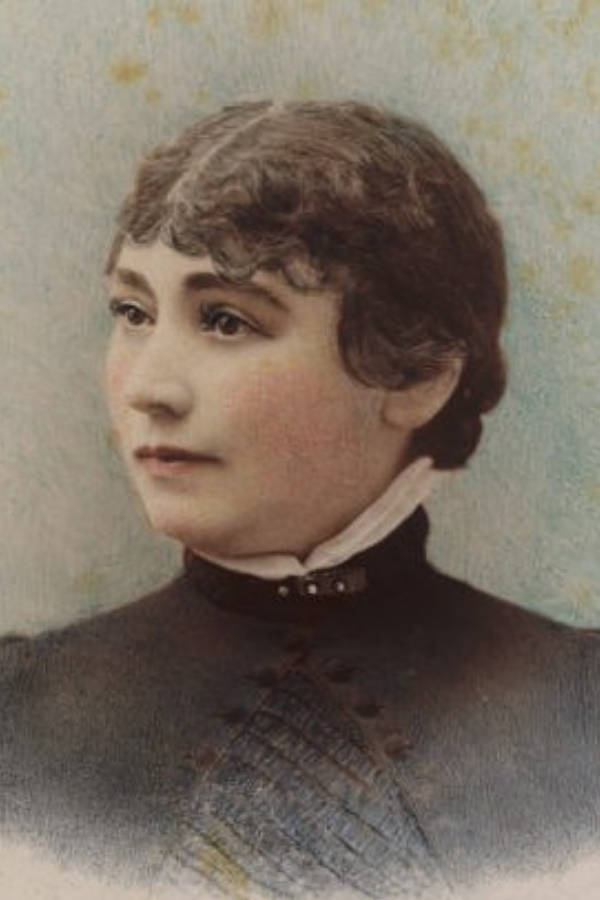
Today is one of my favorite actress’s birthday—Katharine Hepburn.  She was born May 12, 1907 and passed away on June 29, 2003 at the age of 96.  I’ve enjoyed (and have on dvds) many of her films: Desk Set, The Philadelphia Story, and The Lion in Winter to name just a few.  I found an article on Mental Floss listing 11 things we may not have known about this wonderful actress.

From Mental Floss:

1. Katharine Hepburn was a tomboy from an early age.

Aside from her acting career, Katharine Houghton Hepburn—who was born on May 12, 1907—was also famous for her commitment to wearing pants at a time when the rest of Hollywood’s female stars virtually never strayed from skirts and dresses. In 1986, the Council of Fashion Designers of America even honored Hepburn with a lifetime achievement award.

Hepburn, whose mother was a suffragette and early advocate of birth control, was raised to be confident, independent, and individualistic, and her aversion to forced femininity began at a young age. For one memorable summer during her childhood in Connecticut, she sported a short haircut and started going by “Jimmy.” “I thought being a girl was really the bunk,” Hepburn later explained in an interview. “But there’s no bunk about Jimmy.”

Though she stuck with her birth name after that, she never warmed to the idea of long, flowy clothing. “I realized long ago that skirts are hopeless,” Hepburn said in 1993. “Anytime I hear a man say he prefers a woman in a skirt, I say: ‘Try one. Try a skirt.’”

2. Hepburn found her brother dead when she was 13 years old.

While Hepburn’s upbringing was privileged in some ways, it wasn’t without tragedy. In 1921, when she was 13 years old, she found her 15-year-old brother Tom hanging from the rafters, having strangled himself to death. Her family maintained that it was the result of a magic trick gone awry, since Tom had tried a mock-hanging stunt at least once before, but it cast a dark shadow over the rest of Hepburn’s childhood and added to an already-established legacy of suicide in the family: Two uncles, a great-uncle, and her grandfather all took their own lives.

3. She bought out her contract for The Lake rather than finish the run.

Hepburn made her Broadway debut in 1930’s Art and Mrs. Bottle and graced the stage again in 1932’s The Warrior’s Husband. Her third play, 1933’s The Lake, garnered abysmal reviews, including Dorothy Parker’s alleged observation that Hepburn “ran the gamut of emotion from A to B.” Not long into the run, 26-year-old Hepburn was so miserable—and treated so poorly by director Jed Harris—that she bought out her contract and simply walked away.

4. The Lake was the original source of one of her most memorable lines.

One line from the ill-fated play, however, followed Hepburn out that stage door and right into another one. In 1937’s Stage Door, Hepburn portrayed an aspiring actress competing with other boarding house tenants for parts in a play, and director Gregory La Cava gave her the line “The calla lilies are in bloom again,” which he had borrowed from The Lake. Delivered several times throughout the film in Hepburn’s trademark Mid-Atlantic drawl, the line became one of her most iconic, and it’s been referenced in various programs over the years, including an episode of I Love Lucy and the 1988 comedy Big Top Pee-Wee.

5. She once dumped a cup of water on co-star Ginger Rogers.

On the set of Stage Door, Ginger Rogers was flaunting a new mink coat when Hepburn appeared and poured her cup of water on it, explaining that if the coat was, in fact, real mink, it wouldn’t shrink. The media speculated that the behavior was brought on by jealousy, since Hepburn’s then-beau Howard Hughes had reportedly shown interest in Fred Astaire’s legendary dancing partner. But Rogers herself wouldn’t play into the rumors. “Don’t ask me, I haven’t the foggiest notion why [she did it],” Rogers later said in an interview.

6. For a while, Hepburn was considered “box office poison.”

Hepburn followed her film debut in 1932’s A Bill of Divorcement with an Oscar-winning performance in 1933’s Morning Glory and another acclaimed appearance in Little Women that same year. But she also had enough commercial flops—including Spitfire (1934), Mary of Scotland (1936), and the now-beloved screwball comedy Bringing Up Baby (1938)—in the mid-to-late 1930s that she landed on a 1938 list of actors labeled “box office poison” by the Independent Theater Owners’ Association of New York.

Hepburn was unabashed. “Look, they say I’m a has-been,” she told the Daily News with a chuckle, “Yet Bringing Up Baby already has clicked to the tune of $2 million gross, while Stage Door has grossed better than $2,500,000. If I weren’t laughing so hard, I might cry, but why should I?”

7. The Philadelphia Story was a turning point in her career.

As it turns out, Hepburn was right not to dwell on the poisonous criticism. In 1938, she accepted a starring role—which playwright Philip Barry had actually written for her—in the Broadway comedy The Philadelphia Story, and Howard Hughes bought her the rights so that she could reprise her role in a film adaptation. The MGM-produced 1940 film, which co-starred Cary Grant and Jimmy Stewart, was a box office smash, and it planted Hepburn right back on her path to greatness.

8. She had a decades-long affair with Spencer Tracy.

Hepburn wed Philadelphia businessman Ludlow Ogden Smith soon after graduating from Bryn Mawr in 1928, but they divorced after six years. Much more significant was her affair with fellow actor Spencer Tracy, with whom she lived for 27 years (though Tracy, who was Catholic, never actually divorced his wife). Over the course of their relationship, Hepburn and Tracy starred in nine films together, including 1942’s Woman of the Year, 1949’s Adam’s Rib, and 1952’s Pat and Mike. They wrapped production on their last one, 1967’s Guess Who’s Coming to Dinner, just a few weeks before Tracy died of a heart attack at age 67.

9. Whisky was Hepburn’s drink of choice.

Though Hepburn didn’t drink much during her years with Tracy (who was an alcoholic), she was known to regularly indulge in a glass of whisky in later life, which she said helped with the head tremor she had inherited from her grandfather. “I discovered that whisky helps stop the shaking,” she said in the 1993 documentary All About Me. “Problem is, if you’re not careful, it stops the rest of you, too.”

But based on what she told fellow cast member Brian Blessed while filming 1971’s The Trojan Women, it seems like she also just really loved whisky, all favorable side effects aside. “When I smell whisky, I go absolutely out of my mind. Whisky is beauuuuuutiful. I smell whisky in a glass and I want it,” she said, according to Blessed’s autobiography. “I’d drink whisky morning, noon, and night until it killed me.”

10. Her brownie recipe broke up a marriage.

Hepburn may have balked at certain societal restrictions on women, but that didn’t mean she had anything against spending time in the kitchen. She was especially particular about brownies, which, in her opinion, should be moist. After The New York Times published her signature recipe online in 2015, a woman named Sydne Newberry revealed in the comments section that Hepburn’s deliciously fudgy dessert had inadvertently ended her marriage. As Newberry told The Cut, she had brought the brownies on a trip to visit her husband while he was stationed at an Air Force base in Germany in the 1980s. While there, she shared the dessert with his friend and his friend’s wife, “a gorgeous Italian woman who was very proud of her cooking and was a real food snob.”

Her new baking buddy loved the brownies, and the two kept up correspondence over the next few years while the woman tried to get the recipe right. After repeated failures, she implied that Newberry had intentionally omitted something. Then, while visiting Newberry in the states, the woman began an affair with Newberry’s husband, who eventually left his wife for her, apparently undeterred by her lack of success on the brownie front. “If you want to steal somebody’s husband,” Newberry told NPR, “You should screw up a brownie recipe.”

11. Hepburn held the record for most Academy Award nominations … until Meryl Streep came along.

With her Best Actress nomination for On Golden Pond in 1981, Hepburn set a new record for most nominations ever earned by an actor: 12. The record went unchallenged until 2002, when Meryl Streep clinched her 13th for a supporting role in Adaptation (since then, Streep’s nomination count has risen to a staggering 21). When it comes to actual wins, however, Hepburn comes out on top: Streep has three, while Hepburn has four.

SOURCE: MENTAL FLOSS

(I have Hepburn’s brownie recipe in a post on the 14th.)

Looking a Gift Horse in the Mouth

Mother’s Day is coming up and I wondered just how bad were the “bad Mother’s Day Gifts” on the list in MIGHTY LISTS on their blogspot.  Here’s what I found:

Monday, April 28, 2014

10 bad mother’s day gifts

 This Mother’s Day, show your mom that you really care… and DON’T get her any of these gifts!

(I don’t even know what this is!)

(Again…wth?  A face exerciser?)

SOURCE: MIGHTY LISTS.COM

(PAT’S ADVICE…)

Coronado Heights Castle, Kansas

Coronado Heights Park is a scenic overlook and park on a 300′ promontory a few miles northwest of Lindsborg, Kansas. In the 1930s, the Works Progress Administration (WPA) built a picnic area and castle like building out of Dakota limestone. It is rather cool and the view is spectacular – reminiscent of the view from Sterling Castle in Scotland.  The winding drive up to the heights is beautiful, with many trees, yucca, and sumac.

The park has grills and fireplaces, including a fireplace in the “castle,” which is otherwise unlighted except for the windows. There are many stone picnic tables located around the edge of hill, with views in all directions. When visited in July of 2007, the castle and grounds were clean and in surprisingly good repair. There is a stone rest room building, but from a distance it wasn’t clear what condition it is in, and it didn’t look like there was a regular path to the rest rooms.

Coronado Heights receives its name from Francisco Vasquez de Coronado, who visited central Kansas in 1541, looking for the Native American community of Quivira, where he was told “trees hung with golden bells and … pots and pans were beaten gold.”

Coronado didn’t find his gold, and it is unknown if he actually ascended the heights now named after him near Lindsborg, Kansas.

There is also a 3 mile mountain bike trail with two loops around the base of Coronado Heights Park.

Take Coronado Avenue (Highway 4) 3 miles north of Lindsborg to Coronado Heights Road (unpaved). Go 1 mile west, just past Smoky Hill Cemetery and turn right at the stone gate. You will see Coronado Heights Park from many miles. Open 8 AM to 11 PM.

Coronado Heights Park was closed for most of the 2019 summer, because of a land slide on the road up to the park, but it reopened at the end of August.

SOURCE: kansastravel.org

Weird Vegetables: Fiddleheads

Foraged from the ostrich fern, fiddleheads are the plant’s young shoots that look like tiny scrolls popping out of the dirt. Only available for a short window of time during the spring, they are a delicious delicacy with many devoted fans who can hardly wait for fiddlehead season. Fiddleheads are foraged from the wild in certain parts of the U.S. and Canada where they’re also most often consumed. Some foragers sell them to markets, making them available to more people. Best when simply prepared by sautéing or steaming right after harvest, fiddleheads offer a charming taste of spring for simple dishes.

What Are Fiddleheads?

Fiddleheads are the tightly coiled tips of ferns that are eaten cooked. These delicate delights are available only in early spring when ferns grow their new shoots. The young fern fronds are mainly available by foraging or at farmers markets.

The fiddleheads eaten in North America are from the ostrich fern (Matteuccia struthiopteris). Other ferns can be toxic, so never forage without an experienced guide. It’s also important to harvest just a few fiddleheads in a cluster or the fern could die. Lucky for fiddlehead fans, ostrich ferns are fairly common, especially in temperate woodland areas and near streams. They grow in dense clumps, from the northern plains states to the east coast of the United States and throughout most of Canada.

It’s not necessary to forage them yourself because fiddleheads may be found at markets that specialize in wild foods. They are not widely available, however, and are expensive due to their short season. Fiddleheads require little preparation beyond a thorough rinse. They are best lightly cooked, whether sautéed, steamed, or boiled, and can be served as a light side or on top of a dish.

How to Cook with Fiddleheads

To prepare fiddleheads, start by removing any of the papery brown skin and trim away any brown stem ends. Wash them thoroughly to remove any dirt from the fronds. A good way to wash them is to fill a sink with cold water and submerge the fiddleheads, swishing them around to loosen any dirt. Depending on how dirty they are, you might have to fill the sink again and repeat the process.

The next step is to boil the fiddleheads. This stage of cooking is for the purpose of deactivating the toxin, so even if you plan to roast or sauté the fiddleheads, don’t skip this step. Bring a large pot of water to a boil, add the fiddleheads, and simmer for 10 to 15 minutes. Then drain the fiddleheads and plunge them into a bowl of ice water to stop the cooking. Let them cool until they’re no longer warm to the touch, then drain again and dry them thoroughly with paper towels. Fiddleheads cooked this way will be tender but will retain their crisp, snappy bite.

Instead of boiling, you can steam them in a steamer basket for 10 to 12 minutes, then chill in the ice bath and drain as described. When steamed, fiddleheads have a slightly more bitter flavor than when they’re boiled, similar to broccoli rabe. Steamed or boiled fiddleheads can be served as-is or sautéed.

SOURCE: The Spruce Eats.com

Florida State Mammal: Florida Panther

From the National Park Service website:

Once common throughout the southeastern United States, fewer than 100 Florida panthers (Puma concolor coryi) are estimated to live in the wilds of south Florida today. The current range of Florida panthers is less than five percent of their original range across Florida, Georgia, Alabama, Mississippi, Louisiana, Arkansas, and parts of Tennessee and South Carolina. Florida panthers were heavily hunted after 1832 when a bounty on panthers was created. Perceived as a threat to humans, livestock, and game animals, the species was nearly extinct by the mid-1950s.

Today, the primary threats to the remaining panther population are habitat loss, fragmentation, and degradation. Urban sprawl, the conversion of once-diversified agricultural lands into intensified industrial farming uses, and the loss of farmland to commercial development combine to reduce the amount of suitable panther habitat. Other factors include mortalities from collisions with automobiles, territorial disputes with other panthers, inbreeding, disease, and environmental toxins. All these other factors, however, also are related to habitat reduction.

 Like most animals, Florida panthers need food, water, shelter, and access to mates to survive. Panthers are strictly carnivores and eat only meat. About 90 percent of their diet is feral hog, white-tailed deer, raccoon, and armadillo. Occasionally they consume rabbits, rats, and birds, and occasionally even alligators. In south Florida, panthers prefer mature upland forests (hardwood hammocks and pinelands) over other habitat types. Upland forests provide dry ground for resting and denning, and prey density is higher than it is in lower habitats where flooding is more common. Much of the prime panther habitat is north of Interstate Highway 75, and panthers in that area weigh more, are healthier, and successfully raise more kittens than panthers that live primarily south of the highway and feed mostly on small prey. Panthers in Everglades National Park are smaller and fewer because much of the park consists of wetlands, while panthers need uplands in order to thrive. Although the Long Pine Key area within the park provides dry upland habitat, hogs are scarce in the park and deer are limited to dry or low water level areas. A panther has to kill and eat about 10 raccoons to equal the food value of 1 deer. To maintain their health and fitness, adult panthers need to consume the equivalent of about 1 deer or hog per week. Females with kittens may need twice this amount.

The recent history of the Florida panther documents the success of the genetic restoration program. Historically, natural gene exchange occurred between the Florida panther and other contiguous species of Puma concolor as individuals dispersed among populations and bred. This natural mechanism for gene exchange maintained genetic health within populations and minimized inbreeding. However, as the population declined, gene exchange between subspecies could no longer occur because the Florida panther had become isolated from neighboring subspecies such as the Texas panther. Inbreeding accelerated, resulting in genetic depression, declining health, reduced survivability, and low numbers. If action was not taken to address the loss of natural gene exchange, it was feared that the species would soon be extinct. In 1995 when the genetic restoration program began, the population of panthers had dwindled to only 20-30 individuals in the wild. In 1995, eight female Texas panthers were released in south Florida. Five of the eight Texas panthers produced litters and at least 20 kittens were born. By 2007, the Florida panther population had responded by tripling to about 100 animals. The genetic restoration program restored genetic variability and vitality for a healthier, more resilient population.

Mercury in Panthers

 Scientists first became aware of the potential threat of mercury to panthers in south Florida in 1989 when a female panther from the park died. An immediate cause of death could not be determined, but later tests revealed that her liver contained high levels of mercury. That same year, the State of Florida found high levels of mercury in fish from the Everglades. Air pollution from metals mining and smelting, coal-fired utilities and industry, and solid-waste incinerators was determined to be the major source of mercury contamination. Although some of this pollution was coming from utilities and industries within Florida, some originates in other countries and continents. Summer thunderstorms scour airborne mercury out of the upper atmosphere and deposit it in the Everglades. Mercury in rainfall is transformed to methylmercury by bacteria in sediments and algal mats. Zooplankton feed on algae, fish and crayfish feed on zooplankton, raccoons feed on fish and crayfish, and panthers feed on raccoons. In the 15 months before her death, the panther with high levels of mercury in her liver fed only on small prey, primarily raccoons. As mercury moves through the food chain, it accumulates in ever-greater quantities in the tissue of each predator. The tissues of predators at the top of the food chain, such as panthers, typically contain the most mercury.

Subsequent studies found that mercury concentrations in panther tissues were lowest north of Interstate Highway 75 where adequate deer and hogs were available and highest in the Everglades and the southern part of Big Cypress National Preserve where consumption of raccoons was highest. Raccoons are thought to have been the major source of mercury in Florida panthers at that time. Since 1989, mercury concentrations in fish and birds in the Everglades have dropped by 60 to 70 percent. The drastic reductions are directly linked to the installation of technology that reduced mercury in emissions from industries in south Florida. Although mercury levels in the natural environment are a worldwide concern and mercury likely will never be completely removed from the environment, mercury reductions are expected to continue into the future. Monitoring, modeling, and research demonstrate the relationship between mercury detected in the air, deposited in waterways and sediments through rainfall, and concentrated in fish and wildlife.

SOURCE: nps.gov.com

Know-It-All Tuesdays: Mother’s Day Trivia

1) Where did the American custom of Mother’s Day begin?

2) What flower is associated with Mother’s Day?

3) Mother’s Day is the busiest day of the year for _____.

4) What is the average age for first-time moms in the United States?

5) What percentage of moms in the U.S. are single parents?

6) How do children in Serbia celebrate Mother’s Day?

7) What ancient Roman festival is considered a forerunner of Mother’s Day?

8) What year was the first Mother’s Day celebrated in the United States?

9) Which U.S. president made Mother’s Day a national holiday?

10) How many diapers does the average mom change during the first three months of motherhood?

ANSWERS:

1. West Virginia: While some countries have a multi-century history of celebrating mothers, the modern American version of the holiday didn’t begin until the early 20th century when Anna Jarvis organized the first Mother’s Day service of worship and celebration at Andrews Methodist Episcopal Church in Grafton, West Virginia, which serves as the International Mother’s Day Shrine today.

2. Carnations: Everyone knows that giving flowers on Mother’s Day is a time-honored tradition, but did you know that carnations are the official Mother’s Day flower? Pink carnations represent gratitude and love. Dark red carnations signify love and affection. And white carnations are traditional flowers to wear in remembrance of a mother who is no longer living.

3. Restaurants: According to the National Restaurant Association, Mother’s Day is the most popular day of the year to eat in a restaurant. In a survey conducted by the association, 51 percent of mothers said they prefer to eat out on the holiday because they do most of the cooking at home and dining out gives them a much-needed break.

4. 27 years old: The average age of first-time mothers has risen dramatically since 1972, when it was 21. Today, the average first-time mother is 27 years old.

5. 24%: According to Pew Research Center data, about one in four, or roughly 24 percent of mothers in the U.S. are raising kids without a spouse or partner.

6. Tying Mother up: Serbia has what is probably one of the most unusual Mother’s Day customs. Children creep into their mother’s bedroom first thing in the morning and tie her up! In order to be released, it is customary for mothers to bribe their children with treats. However, it should be noted that mothers aren’t the only ones tied up on their special day. A week earlier, on Children’s Day, children are tied up and must agree to behave before they are released.

7. Hilaria: The Romans celebrated Hilaria on March 25 in honor of Cybele, an Anatolian mother goddess known as Magna Mater (“Great Mother”). The manner of celebration during the time of the republic is unknown, except that Valerius Maximus mentions games in honor of the mother of the gods. At the time of the empire, there was a solemn procession, followed by all kinds of games and amusements, including a masquerade.

8. 1907: Ann Reeves Jarvis was a peace activist who cared for wounded soldiers on both sides of the American Civil War. She and Julia Ward Howe (author of “The Battle Hymn of the Republic”) spent years campaigning for the creation of a “Mother’s Day For Peace” where mothers would ask that their husbands and sons were no longer killed in wars. After Ann’s death in 1905, her daughter took up the fight, and the first American Mother’s Day was celebrated in 1907 at Andrews Methodist Episcopal Church.

9. Woodrow Wilson: In 1908, the U.S. Congress rejected a proposal to make Mother’s Day an official holiday, joking that they would also have to proclaim a “Mother-in-law’s Day”. But just six years later, in 1914, Woodrow Wilson signed a proclamation designating that Mother’s Day be held on the second Sunday in May as a national holiday to honor mothers.

10. 700: In the first month of life, newborns average up to 8 to 10 diaper changes per day. And over the first three months (the newborn stage), babies go through about 700 diapers.

So…how did you do?

SOURCE: usefultrivia.com

REMEMBER: Moms are cool…but GRANDMAS RULE!

George Clooney

Today is George’s birthday—born May 6, 1961—and I had a whole post about him with some interesting facts about his life, because I respected George’s attitude on aging as a movie star.  He didn’t want to dye his hair or get plastic surgery, because people always look a little off when they try to recapture their youth, he said. 

Then just recently I read this article where George makes the comment that it might be time to FORCE JAB people with the vaccine.  Suddenly an individual making their own choices was not a good option for George.  Sad.

The time has come to force-jab every unvaccinated person in the United States, according to Hollywood actor George Clooney who declared his support for “mandatory vaccines, period” during a red carpet interview.