Happy Middle Child Day!

Finally, a day about people like me…LOL. Middle Child Syndrome is real and this article from webmd.com explains why birth order can be difficult for some children.

From webmd.com:

If a couple has two children and a third on the way, will the birth of their third child affect the personality of the second-born? Some psychologists think so. Here’s what to know about “middle-child syndrome.”

What Is Middle-Child Syndrome?

Many experts who study personality believe that your family’s birth order plays a role in your development. They see “middle-child syndrome” as the idea that if you’re neither the oldest child nor the youngest, you get less attention from your parents and feel “caught in the middle”. As a result, you may take on certain personality traits that are different from those of your older and younger siblings.

Can Birth Order Affect Personality?

Middle-child syndrome is part of the psychology behind birth order. Birth order ranges from firstborn, or oldest; to second-born, third-born, and so forth; to youngest, sometimes called the last born. Though many experts think birth order is important to personality and family structure, not everyone is on board.

A psychology pioneer named Alfred Adler introduced the idea that birth order affects the development of a child. He believed that how many siblings a child has can affect the child’s potential.  Adler thought that even though children grew up in the same household, their personalities wouldn’t be the same. He said that each child should be looked at as an individual and that each child would differ based on their order of succession. 

Still, middle-child syndrome isn’t recognized as an official condition. Many researchers have disagreed with Adler’s theories. Even researchers who believe in that middle-child syndrome have trouble applying it to all middle children. For example, they find that there may be a relationship between birth order and being outgoing. But it is more likely to be true for males than for females.

Characteristics of a Middle Child

Do you, or does someone you know, have middle-child syndrome? Think about whether you know any middle children with these personality traits:  

Rebellious. They’re also less religious than their siblings and parents. Still, they’re less likely to act out against their parents.

Sociable.  They’re good at being mediators and want fairness in situations. They’re also trustworthy friends and work well as team members.

Not as family-oriented as their siblings. They may have a stronger sense of not belonging than their siblings do. So, even though many can be great when working in groups, some middle children can struggle when working with others. 

Feeling overshadowed.  They come to believe that their parents don’t care about them. Looking back as adults, they express a negative view of childhood.

Mobile.  They’re often the first sibling to move out of the house. They’re also more likely to move the farthest away. This stems from their feeling misunderstood by their families.

Not perfectionists. Still, they tend to take up something that an older sibling isn’t so great at. For example, if the older sibling is a scholar, the second-born may focus on athletics.

Outstanding Qualities of Middle Children

Despite how you may see yourself as the middle child, you will learn how to act, make friends, and come into your own by watching your siblings or peers. But it seems that your status also can drive you to excel. This may come from feeling second-best compared with your older or younger siblings. 

Some well-known middle children have been or continue to be great negotiators, trailblazers, and fighters for justice. Among them are Nelson Mandela, Martin Luther King Jr., Susan B. Anthony, Charles Darwin, Madonna, Bill Gates, and Nabisco CEO Michael Gerstner. These middle children used their personality traits to help them gain success. 

As a middle child, you may not be a perfectionist, but you may be more open to taking risks and to new ideas. In studies, 85% of middle children showed such openness, compared with 50% of firstborns. 

You may be more skilled at persuasiveness and debate. You probably can see more than one side of an argument, which makes you empathetic. Some middle children claim that their success is due in part to their ability to compromise. 

If middle-child syndrome is real, it might be the middle child’s sense of their own uniqueness that has led to many discoveries, important theories, and social movements. 

Karelian Bear Dogs

These special dogs are being trained to “herd” grizzlies and black bears away from trouble!

From Cowboy State Daily:

With the help of Karelian bear dogs, Carrie Hunt has been training grizzlies to stay out of trouble for nearly 30 years.  “We’re trying to teach the bear, ‘This is ours, you can’t be here,’” she told Cowboy State Daily during a telephone interview from her home in Florence, Montana, south of Missoula. Hunt does what she does not because she resents bears, but because as a bear biologist, she has a profound respect for them. She doesn’t want to see them come to bad ends.  “I’ve been in the bear business since I was 23 years old, and I’m 69 years old now,” she said. During the earlier years of her biology career, she got fed up with seeing grizzlies and black bears get into trouble and end up being killed for it. 

And that’s where the Karelian bear dogs come in. 

Dances With Bears 

Hunt lives in Montana’s Bitterroot Valley, the heart of bear country. Previously, she lived in Cody and Dubois, and still has a deep fondness for Wyoming. “I love Montana, but Wyoming has my heart,” she said. In Wyoming, she noticed that some outfitters “had great little cow dogs that would keep bears away from camp,” she said. So, she started looking around for a dog breed with similar characteristics, that could specialize in bears. She settled on Karelian bear dogs. The breed traces back to 1936, when it was officially recognized by Finnish and Scandinavian kennel clubs. It’s primarily a hunting breed. But perhaps contrary to the name, not all Karelian bear dogs are good for working with bears, Hunt said. They’re all intelligent, strong-headed dogs. Some of them decide they’d rather not push bears, she said – and there’s no forcing them to do something they don’t want to. In fact, on their home turf in Finland, it’s estimated that only about 20 percent of Karelian Bear Dog puppies end up having an aptitude and desire for working with bears, she said. Hunt started breeding, raising and training Karelian bear dogs in 1992. She and her business partners went on to form Wind River Karelian Bear Dog Partners and the Wind River Karelian Bear Dog Institute, based in Florence. 

They’ve selectively bred dogs keen on working bears for numerous canine generations, to the point where she estimates that 80 percent of their puppies are born raring to go at grizzlies and black bears. 

“The dogs we pick to work with are telling the bear, ‘We’re not afraid of you,’ and the bears know that,” Hunt said. Karelian bear dogs don’t actually fight bears. Instead, they’re bred to intimidate and push bears away. That’s usually done from dozens of yards away, Hunt said. But in close quarters, the dogs can use their exceptional agility to avoid bear swipes and bites. Like a mongoose to a cobra. “They are bred to ‘dance on the ground’ with a bear or a moose the way that a cow dog dances with cows,” Hunt said. 

Off To Canada And Japan 

Over the years Wind River Karelian bear dogs’ reputation grew, and the business started working with government agencies and private clients in the Western U.S. and Canada. The company used dogs to push grizzlies, black bears, brown bears and even polar bears out of potential trouble spots. And it’s done some work in Japan. That’s right, Japan has bear problems too. The Pacific Nation’s northernmost island has a species of brown bear similar to grizzlies, while the rural parts of the main island have abundant black bears, Hunt said. 

Trouble with black bears in one Japanese resort town started the way it usually does – irresponsible human behavior, she said. “It’s the garbage,” she said. “I worked in the richest vacation village in Japan,” and bears were getting into trouble there because people were leaving their garbage easily accessible to bears – just like what happens in some American and Canadian towns. Hunt and her fellow dog handlers started working in that village in the early 2000s. They also taught some locals how to properly train and handle Karelian bear dogs. 

It’s been a huge success, Hunt said. 

“They’ve gone down to almost zero conflicts with bears in that resort town,” she said. The company has been busy, averaging 400-800 bear “pushes” per year, she said. “In all this time we’ve had zero dogs hurt, zero humans hurt and zero bears hurt,” Hunt said. 

‘Spanking’ Grizzlies 

The way bear pushing, or as Hunt calls it, “bear shepherding” works is straightforward. It’s based in the bears’ basic instincts. “Bears have a natural fear of canines. Wolves and coyotes can kill their cubs, or steal big game carcasses from bears,” she said. Capitalizing on that, it’s often enough to let the dogs, which are usually kept on seven-foot leashes, use their natural intimidation factor from a safe distance. Teams usually consist of two handlers, each with a dog. “Bears understand numerical superiority. That’s four of us against one bear,” she said. If intimidation isn’t enough, handlers can use firearms to shoot rubber bullets, bean bags or “cracker shells” she said. Cracker shells fire a small explosive charge that explodes in mid-air, like a firecracker. “We use rubber bullets, bean bag rounds or cracker shells to ‘spank’ bears. It’s tough love,” Hunt said. 

Hazing’ Doesn’t Work 

Hunt isn’t a fan of “hazing” bears. By that, she means using non-lethal ammunition or other means to chase a bear away just once or twice. “Hazing just makes them sneakier” if they’re after a food reward or some other temptation in human-occupied territory, she said. Instead, it’s important to realize that bears, like dogs, learn through repetition. With grizzlies, the object is to stop the pursuit once the bear enters cover, such as thick brush. “Going for cover is what wild bears do. We’re teaching grizzlies to be wild again,” Hunt said. 

If a grizzly that has been hanging out by a roadside or a campground is repeatedly pushed into cover by a team of handlers and dogs, that bear learns that the sight of humans is their cue to go for cover. “We’re conditioning them to move away from people and seek cover, instead of moving toward people,” Hunt said. Mother grizzlies will hand that lesson down to their cubs, she added. When it’s necessary to shoot non-lethal projectiles at grizzlies, the handlers say “hey bear” before they fire, Hunt said. That’s because bears, again, like dogs, can learn to recognize short word combinations or commands. “Hikers are taught to say, ‘Hey bear, hey bear’ when they’re approaching thick brush or a bend in the trail in grizzly country,” Hunt said. So, bears that have encountered her team know that “hey bear” means “get away.” With black bears, the dogs are sometimes let off leash to pursue and tree the bear, Hunt said. Again, repeated unpleasant lessons teach the bears to move away from people and settled areas, rather than toward them. 

Cody Connection

Hunt said her bear dog program has gotten support and some funding from the Cody-based American Bear Foundation, headed by avid bear hunter and conservationist Joe Kondelis of Cody. “We look at what she’s doing with the Karelians as a style of bear conflict mitigation that’s valuable in many areas. I definitely see more and more people using dogs to handle bear conflicts,” he told Cowboy State Daily. Dogs can be part of a wholistic approach to cutting down on the number of run-ins with grizzly bears, particularly around hunting camps in the fall – when grizzlies are looking for all the calories that they can gorge on in order to fatten up for winter hibernation, he said. Portable electric fences set up around hunting camps can also help, Kondelis added.

Conflicts with black bears are common across Wyoming and the region, he said. Those are probably driven by a combination of an increasing bear population, along with more people building homes in remote areas adjacent to bear habitat. Karelian bear dogs come in handy keeping people and black bears safely separated, Kondelis said. “The biggest issue right now is just not having enough of the Karelians, we need more of those dogs out there,” he said. 

Humans Need Lessons Too 

Hunt stressed that no matter how well she and her team condition a bear, if people in that area continue to be sloppy, the bear might not be able to resist the wafting odor of fresh garbage, pet food or other temptations. “People have to learn to put away attractants,” she said. That means keeping garbage in bear-resistant containers, keeping pet food stored inside and taking similar precautions in bear country, Hunt said. 

Not A Dog Breed For Everybody 

Hunt realizes it might be tempting for folks who live or recreate in bear country to run out and buy a Karelian Bear Dog – thinking that’s an easy solution for bear protection. They should think again, she said. The breed is intelligent, sensitive, extremely energetic and almost impossible for a novice to train, she said. And again, there’s the unknown factor of whether any particular pup will have an aptitude for pushing bears to begin with. “I very strongly recommend that people be aware that these are working dogs. They need a job, and not all of them want to work bears. So, if somebody thinks that they are getting one of these dogs for bear protection during just weekend hiking, they are sadly mistaken,” she said. It’s best to leave training up to the pros, she said. And for those Karelian bear dogs that, seemingly ironically, just don’t care much for bears, there are other jobs available, she said. “They can make excellent search and rescue dogs,” Hunt said. 

Working With The Park Service 

Hunt works closely with clients by “matching” a particular pup with its future handlers, and the job that they want it for. She said she recently matched two Karelian bear dogs with outfitters in Wyoming, for protecting hunting camps in grizzly country. Her company has also worked with the National Park Service. The company has placed dogs in Yosemite Park and “are in initial talks” to perhaps match some pups with rangers in Wyoming’s Teton Park. “Eventually, I’d like to see two Karelian bear dogs in every national park,” Hunt said. 

Mark Heinz can be reached at mark@cowboystatedaily.com.

Happy National Missouri Day!

If you’re planning on visiting Missouri any time soon, Trip Advisor advises these sites!

Sight and Sound Theaters

Sight & Sound Theatres is the nation’s largest Christian theatre company and one of the highest attended live theatres on the East Coast and in the Midwest. This inspiring family experience includes a majestic 2000-seat theatre, a massive 300-foot wrap-around stage, a professional cast, spectacular sets up to 40 feet high and a variety of live animals. Go back in time and witness the greatest stories of the Bible as they come to life right before your eyes!

Silver Dollar City

Branson’s #1 attraction for over 60 years, Silver Dollar City features world-class festivals, thrilling rides & attractions, live shows daily, 60 unique shops, family restaurants and over 100 demonstrating craftsmen.

City Museum

Don’t take the name so literally. We’re about fun. Not your white walls, walk around, and be quiet museum. If you want to climb around, get active with your kids or are a big kid at heart, we’re the place. If you get freaked out easily, you might not want to come. We’re four floors filled with miles of tunnels, a full cave system, over 30 slides, a circus, an arts area, a large outdoor climbing space, Architectural Museum, a Cabin that serves adult beverages, a Museum of Mayhem, Mirth and Mystery, and a ton more. Also, there’s the roof with a Ferris Wheel and a bus hanging off its edge.

The Gateway Arch

From the thrilling views to the amazing stories, a visit to the Gateway Arch is an experience that never fails to inspire. Whether you have a few hours or a full day, you’ll find activities to please every member of your party. Attractions include the Tram Ride to the Top of the Gateway Arch, the Museum at the Gateway Arch (opened July 3, 2018), a documentary film about the construction of the Arch, shopping at The Arch Store, a new Arch Cafe, and cruises aboard the Riverboats at the Gateway Arch. Tickets sell out early and often – advance purchase strongly recommended. Closed Thanksgiving, Christmas Day and New Year’s Day.

National WW1 Museum & Memorial

The National WWI Museum and Memorial is America’s leading institution dedicated to remembering, interpreting and understanding the Great War and its enduring impact on the global community. The Museum and Memorial holds the most comprehensive collection of World War I objects and documents in the world and is the second-oldest public museum dedicated to preserving the objects, history and experiences of the war. The Museum and Memorial takes visitors of all ages on an epic journey through a transformative period and shares deeply personal stories of courage, honor, patriotism and sacrifice. Designated by Congress as America’s official World War I Museum and Memorial and located in downtown Kansas City, Mo., the National WWI Museum and Memorial inspires thought, dialogue and learning to make the experiences of the Great War era meaningful and relevant for present and future generations.

SOURCE: TRIPADVISOR.COM

What Shall We Make Today?

Today’s offering is a no-bake dessert called Oreo Fluff–and the recipe says you can use ANY flavor Oreos that you like!

     Ingredients 

13 ounces Oreo cookies

1/2 cup granulated sugar

8 ounces cream cheese softened

1 cup heavy cream

1 teaspoon vanilla extract

2 cups mini marshmallows

Instructions 

Place 13 ounces Oreo cookies into a resealable plastic bag and gently break them up. You don’t want to crush them completely but have a variation of sizes.

In a bowl, use a hand mixer to beat the softened 8 ounces cream cheese and 1/2 cup granulated sugar, together until smooth and fluffy, about 2 minutes.

Gradually pour in 1 cup heavy cream and 1 teaspoon vanilla extract. Continue to beat until the mixture is combined and forms stiff peaks, 3 to 4 minutes.

In a large bowl, use a rubber spatula to fold the broken Oreos and 2 cups mini marshmallows into the cream cheese mixture until well incorporated.

Cover the bowl with plastic wrap and refrigerate for 2 hours before serving.

ENJOY!

Weirdest Attractions in Every State: Part 1

Alabama

Unclaimed Baggage Center, an unusual roadside stop in Scottsboro, Alabama, is precisely what it sounds like. It’s a place where you can drop in and buy unclaimed baggage! Who knows, you might even find something worthwhile that you could resell for some serious money.

Alaska

Alaska is home to the world’s largest chocolate waterfall. The towering confectionary installation in Anchorage uses over 3,000 pounds of chocolate to do its best Wonka impersonation. Just try not to fall in or eat any of the chocolate, as this fixture is purely decorative.

Arizona

Arizona is a weird state, but perhaps its strangest attraction is Organ Stop Pizza. Massive pipes fill this pizzeria, which serves tasty pies and spooky organ music in equal measure. The store’s proprietors claim that the building houses the world’s largest pipe organ!

Arkansas

If you want a taste of some truly weird collectables, check out the Billy Bass Adoption Center in Little Rock, Arkansas. The fine folks at this attraction will adopt your singing, wall-mountable fish in exchange for a free basket of catfish.

California

California is a big, weird state, so it’s hard to narrow down one strange attraction. However, a visit to Magowan’s Infinite Mirror Maze in San Francisco is sure to make your head spin. The way the maze is laid out is confusing enough to get you lost forever if you’re not careful.

Colorado

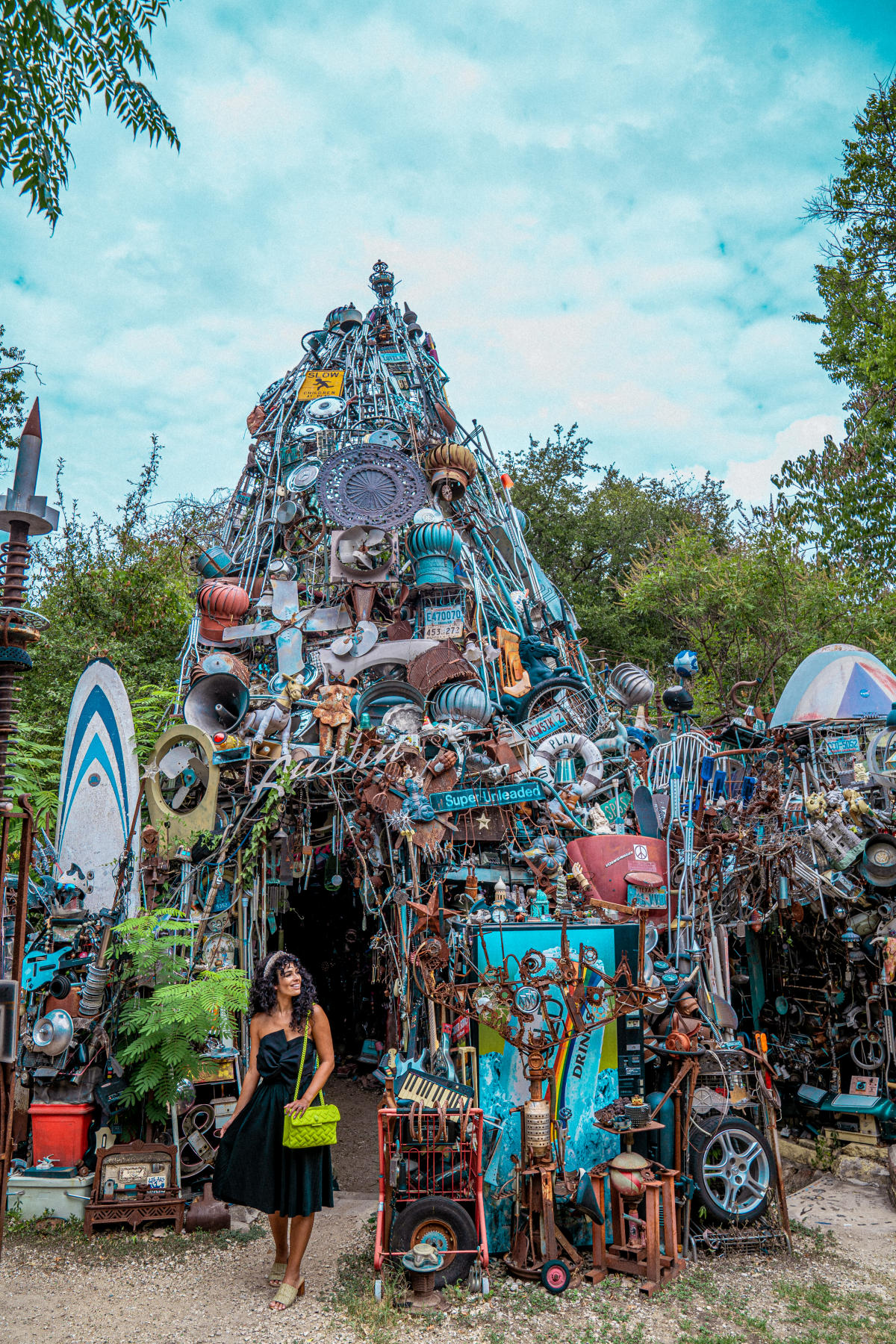
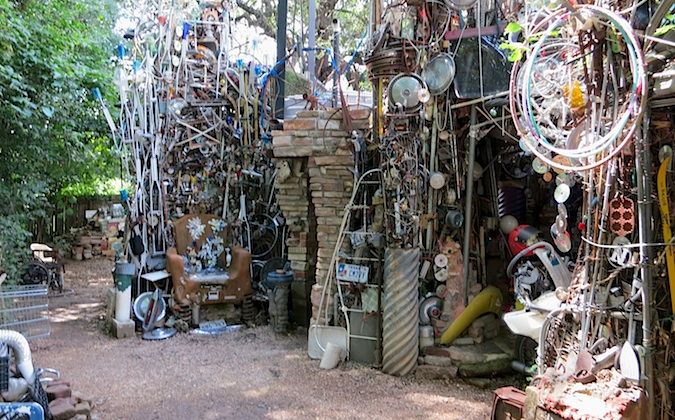
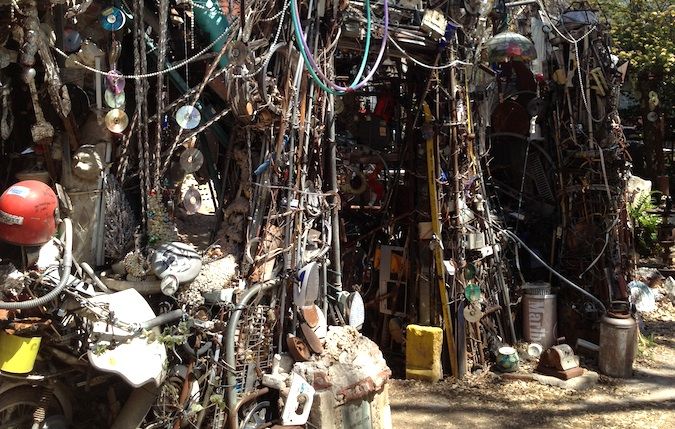
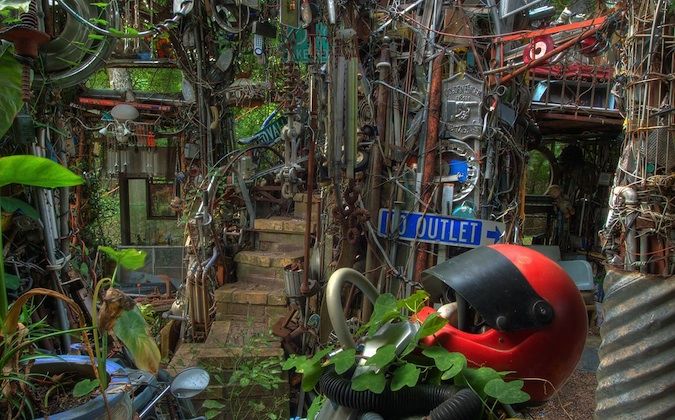
There are some bizarre attractions in Colorado. Case in point: head over to Fort Collins and check out the Swetsville Zoo. There aren’t any real animals at this “zoo,” though. The unsettling assemblage of animal-like modern art installations is enough to perplex any visitor.

Connecticut

A quick visit to Orange, Connecticut wouldn’t be complete without checking out the PEZ Visitor Center. They’ve got a museum that has collected every single PEZ dispenser imaginable, and the attraction is even home to the single largest dispenser in the world!

Delaware

Travelers in Delaware can visit the bizarre DiscoverSea Shipwreck Museum on Fenwick Island. This unusual exhibition features artifacts recovered from various shipwrecks, as the name implies. One of the strangest objects on display here is an elaborate Fiji Mermaid model.

Florida

Whimzeyland in Safety Harbor is easily one of the strangest tourist attractions in the country, let alone in Florida. It’s sometimes called the “bowling ball house” due to the hundreds of painted bowling balls in the home. You can visit the attraction, just be aware that people also live there!

Georgia

There’s plenty of weird stuff in Georgia, but let’s highlight Rock City in Lookout Mountain. A winding trail takes you through a variety of natural landscapes, twisting and turning through fairy gardens and stunning vistas. It’s as weird as it is breathtaking.

SOURCE: THEQUICKREPORT.COM

Iowa State Tree: Bur Oak

Bur oak is a slow-growing, long-lived native oak tree that reaches 90 feet tall and wide. It is identified by its dull green 8-inch oblong leaves with 7 to 11 lobes, hairy yellow-green undersides, and corky twigs. It has deeply ridged gray bark with deep furrows that become more distinct with age. Bur oak grows best in full sun with at least six hours of sunlight, handling many soil types, and is one of the most cold-tolerant oaks. 

To successfully grow a bur oak, make sure that there is sufficient space, both for the tree’s significant height and width and for the roots. Bur oaks have a deep taproot, and their expansive roots grow more deep than wide. They are less likely to damage sidewalks, though they still could because their absorbing roots occur in the top 12 inches of soil.

Here are the main care requirements for growing a bur oak:

Plant in a full sun location.

Handles many soil types and pH levels—sand, salt, clay, alkaline, acidic, and neutral.

Needs regular watering until established; long taproot helps it become drought resistant.

Withstands high temps and humidity in summer and subzero winters.

Keep away from salt spray or rock salt.

SOURCE: THESPRUCE.COM

Happy National Balloons to Heaven Day!

From: isitaholidaytoday.com:

Balloons to Heaven Day is a heartwarming celebration that unites individuals in honoring the cherished lives of loved ones who have passed away. This meaningful day involves releasing balloons into the sky, each carrying messages, prayers, and memories of those who are no longer with us.

The Story Behind Balloons to Heaven Day

This distinctive holiday is rooted in the comforting belief that our loved ones remain with us in spirit, even in their physical absence. It’s a time to reflect on the treasured memories shared with those who have departed and to find solace in the thought that they continue to watch over us, offering guidance and love.

The Symbolism of Releasing Balloons

The act of releasing balloons into the sky serves as a powerful symbol of letting go and finding peace. As these balloons ascend toward the heavens, they carry with them the emotions, memories, and heartfelt messages of those who grieve. This touching gesture reminds us that even in death, our loved ones continue to inspire and guide us.

Through this act, we visually represent the connection between the earthly realm and the spiritual domain. It’s a beautiful way to acknowledge the enduring nature of love and the eternal bond we share with those who have passed on. The sight of vibrant balloons drifting upward can be both healing and uplifting, a testament to love’s unending presence.

How to Celebrate Balloons to Heaven Day

Release Balloons into the Sky: Gather with friends and family to release balloons into the sky, each carrying messages, prayers, or simply the names of loved ones who have departed. This collective act can foster a sense of unity and shared remembrance.

Share Your Story: Take a moment to share stories and memories of your loved ones, celebrating their lives and the profound impact they had on those around them. Storytelling can be a powerful way to keep their legacy alive.

Find Comfort in Community: Connect with others who have experienced loss and find solace in the knowledge that you are not alone in your grief. Community support can be a valuable resource in the healing process.

The Significance of Balloons to Heaven Day

“Balloons to Heaven Day is a beautiful way to acknowledge the love and connection that transcends even death itself. It’s a reminder that our loved ones are always with us, guiding us and inspiring us to live our best lives.”

This special day serves as a poignant reminder of the power of love and the importance of honoring those who have come before us. By participating in Balloons to Heaven Day, we embrace the comforting knowledge that our loved ones are always with us, watching over us from above.

Take a moment to pause, reflect, and remember the lives of those who have touched our hearts. As the balloons soar into the sky, let them carry your messages and memories into the heavens, where they will be met with love, compassion, and understanding. This act of remembrance not only honors those who have passed but also strengthens the bonds of love that connect us to them forever.

SOURCE: ISITAHOLIDAY.COM

The Elephant Man’s Last Breath

Today is the anniversary of the death of Joseph Merrick, aka The Elephant Man, and I found this article on LISTVERSE.COM about the man and his life.

From: LISTVERSE.COM:

Joseph Merrick, also known as The Elephant Man, is widely known as a medical oddity. His perplexing ailment led him to a life in the limelight, which was not always grand. Going from oddity show to oddity show, The Elephant Man faced many hardships until he finally found solace at the London Hospital.

Though many people simply view him as a being to be studied, he was more than that. The Elephant Man was a human who had a life and a history that goes beyond the sideshow. Though his life is not one of glamour, there are many interesting facts that make this Victorian man extraordinary.

Merrick Was Born Healthy

Joseph Merrick was born August 5, 1862, in Leicester, England, to Mary Jane and Joseph Merrick. When young Joseph was born, he was a completely normal child—healthy, well-formed, and with no medical abnormalities. However at age five, Merrick’s physical form began changing rapidly. He developed abnormal growths on his bones, causing huge deformations on his skin. His cranial structure also changed, and large swaths of skin hung from the back of his skull and in front of his face.

His right arm became twisted, and his hand contorted into a flipper-like appendage. His legs suffered the same fate as his arm, causing impairments when he walked and requiring him to use a cane. Though Merrick became increasingly handicapped as he aged, he successfully attended school until age 11 when his malformations prevented him from making it to his classes. Shocked by what they were witnessing, his parents were convinced that Merrick’s condition must be related to the trauma his mother had experienced when she was pregnant. She had been kicked over by an elephant on a trip to the fairground. The Merricks thought it could be the only explanation for their son’s malady.

Merrick Most Likely Suffered From Proteus Syndrome

During Merrick’s time, medicine was not up to the scientific standard of today. So seeing a person with an ailment like Merrick’s was a shock. Back then, many doctors determined that Merrick was suffering from a severe case of neurofibromatosis. This is a genetic disorder that causes tumors to develop on a person’s nervous system. Luckily, medicine has advanced in many ways since then. Through the study of Merrick’s remains, it was determined that neurofibromatosis was a misdiagnosis. Merrick’s ailments were not on the nervous system level.

Studies have shown that he was most likely suffering from an incredibly rare disease known as Proteus syndrome. Causing extreme overgrowth in the bones, skin, and other organs, Proteus syndrome is characterized by asymmetrical growth which often affects one side of the body more than the other—just like in Merrick’s case.  Sadly, Merrick’s parents would have never known that young Joseph would have Proteus syndrome upon his birth. The disease shows no physical symptoms until the afflicted child reaches at least six months old.

Merrick Had Three Siblings Who All Died Tragically

Merrick wasn’t an only child. But his siblings did not fare much better in their lives as they all died due to illnesses and debilitations. Merrick’s brother, John, was born April 21, 1864, and only lived about three months. The child succumbed to smallpox, which was a common illness at the time. Merrick’s second brother, William, was born in January 1866 and lived almost five years before he, too, succumbed to illness. William died after he came down with scarlet fever. Marion, Merrick’s only sister, was born September 28, 1867. She also endured physical problems such as myelitis, seizures, and other impairments. She died in 1891, a year after Merrick passed away.

Merrick Worked For His Dad For A Short Time

Merrick’s mother died when he was a mere 11 years old, and his father quickly remarried. To help bring in extra money, Merrick left school and began working by rolling cigars. However, he had to stop a few years later when debilitating growths overtook his right arm. He was then employed directly in his father’s haberdashery which sold notions, men’s clothing, and accessories. Merrick was given the job of door-to-door salesman, which he found very dispiriting. Due to the growths on his legs and hips, he had trouble walking, which made trekking from home to home a burden.

By this point in his life, his facial deformities had left him incredibly disfigured. They also limited his ability to speak when trying to sell his father’s goods. People would open their doors, surprised to see this poor soul in front of them. But they could not understand his speech, and many were frightened by his appearance. Despite his efforts, the money was not coming in fast enough. Merrick’s father beat him severely for not making enough sales and kicked him out on the street at age 17.

Merrick Was Once Displayed In A Shop Window

Sideshows, or human oddity shows, were common during the time in which Merrick lived. Due to his condition, he was found by Tom Norman, who immediately added Merrick to his famous exhibits. With his graying, bulbous skin, Merrick was described as “half a man and half an elephant.”  Norman claimed that Merrick was treated with respect and earned plenty of money while he was with Norman’s freak show. Although Merrick was a in a better position than living life on the street, Norman still profited more by keeping Merrick in the show.

It wasn’t long before people began to lose interest in Norman’s show, and the police closed it down shortly afterward due to public decency and disruption concerns. Unable to find income, Merrick traveled to Belgium to find work in a show there, which turned out to be a disaster.

Merrick Was Stranded In Europe For A Year

When Merrick arrived in Belgium, he was met by a new promoter and a less than enthusiastic crowd. Merrick gained only mediocre success in the traveling shows, and his Austrian promoter was a true monster. After the failure of the Belgium shows, the Austrian robbed Merrick of his life savings, beat him, and ultimately abandoned him. Stranded and alone, Merrick wanted to get back to England. He finally found passage on a ship and made his way back to England in 1886.

During the voyage from Belgium, Merrick had contracted a bronchial infection. When he arrived at the Liverpool Street Station, people mobbed him due to his strangeness. With his speech unintelligible, Merrick was arrested and taken into custody by the police.

Merrick Enjoyed Writing

In his sideshow days, Merrick wrote a short autobiography that was published as a pamphlet given out at the shows. This three-page autobiography was meticulously constructed with Merrick giving specific details about himself and his condition. Merrick was an excellent writer and enjoyed the process. Upon his return to London from Europe, he took up permanent residence in London Hospital thanks to the efforts of Dr. Frederick Treves.

Once provided a safe room, Merrick’s love of writing blossomed. He found that writing gave him some sense of comfort in a life that had been so tragic. He wrote prose and poetry and loved writing letters.

Merrick’s Own Head Killed Him

Merrick’s abnormal skin and bone growth did much damage to his body, including his head. The giant skin folds had made his head so heavy that Merrick was forced to sleep in a chair. Lying down while sleeping posed many threats—the greatest of those was dying in his sleep.

Sadly, this is exactly what happened to Merrick. On the night of his death, he had decided to lie down in his bed to sleep in an attempt to “be like other people.” During the night, Merrick passed in his sleep.

Dr. Treves, who had worked so hard to give Merrick a nice life in the hospital, did the autopsy and believed that Merrick had died of asphyxiation. Over 100 years later, a newer theory suggested that Merrick’s neck had dislocated under the weight of his own head, crushing his spinal column.

 Merrick’s Skeleton Was On Display In London

After the autopsy, Merrick’s skeleton was given to the Queen Mary University of London. For many years, people could come and view the actual skeleton. Today, Merrick’s bones are kept in a private room that requires special access to view them.  However, those wishing to see the skeleton can venture to Royal London Hospital where Merrick’s skeleton has been recreated in great detail using 3-D scanning. This skeleton can be viewed alongside many of his other personal items, including his hat and mask, photos, and the model of a church he made while living in London Hospital.

Merrick Made It To The Big Screen

Merrick’s life was made into a movie in 1980. Based on the writings of Dr. Frederick Treves and Ashley Montagu’s book, The Elephant Man: A Story in Human Dignity, director David Lynch (Eraserhead, Mulholland Drive) decided to take the story of The Elephant Man and adapt it for the big screen. In a film starring Anthony Hopkins and John Hurt, Lynch recreated the heart-wrenching life of Merrick in black-and-white.

To ensure that Merrick’s appearance was as accurate as possible, Lynch received help from makeup specialist Chris Tucker, who used the actual casts of Merrick’s body to create an incredibly accurate depiction. Ninety years after his death, Joseph Merrick still had the ability to draw an audience.

SOURCE: LISTVERSE.COM

School Supplies Hacks for Teachers

As a teacher, finding ways to stay organized and make the most of your school supplies is essential. Whether you’re a seasoned educator or just starting out, these school supply hacks will help you save time, money, and energy.

1. Use Shower Caddies for Portable Storage: Instead of carrying around a bulky basket or box of supplies, opt for a shower caddy. It’s portable, has multiple compartments, and keeps everything neatly organized. Plus, you can easily hang it on a hook or store it in a cabinet when not in use.

2. Repurpose Plastic Utensil Trays: Plastic utensil trays are not only great for cutlery but can also be used to organize pens, markers, and other small stationery items. Simply place them in your desk drawer or on a shelf for easy access and tidy storage.

3. Organize Loose Paper with Magazine Holders: Keep loose papers, worksheets, and handouts in check by using magazine holders. Sort them by subject or class, and your papers will be easily accessible and protected from damage.

4. Use Binder Clips for Cable Management: Avoid tangled cords and cables by using binder clips. Attach them to the edge of your desk or a nearby shelf, and thread your cables through the metal handles. This hack will keep your cords organized and prevent them from falling off your workspace.

5. Repurpose Mason Jars as Supply Holders: Mason jars are versatile and make great storage containers for school supplies like markers, pens, and glue sticks. Use them to keep items neat and visible while adding a touch of rustic charm to your classroom.

6. Invest in a Label Maker: Labeling storage bins, folders, and drawers will make finding supplies a breeze. A label maker allows you to create professional-looking labels quickly and easily, making your classroom more organized and efficient.

7. Use Velcro Strips for Secure Storage: Avoid losing small supplies like erasers, paper clips, or flash drives by attaching Velcro strips inside drawers or on the side of containers. This hack keeps items securely in place and prevents them from rolling around or getting lost.

8. Repurpose Magnetic Spice Containers: Magnetic spice containers are an excellent way to store small items such as paper clips, push pins, or rubber bands. Stick them to a magnetic whiteboard or the side of a metal filing cabinet for easy access and clutter-free storage.

9. DIY Dry Erase Board with Picture Frames: Create a personalized dry erase board by repurposing an old picture frame. Remove the glass, insert a piece of patterned scrapbook paper or fabric, and reassemble. This budget-friendly hack provides an easy way to jot down notes or reminders during lessons.

10. Keep a Supply Backup: Make sure to keep a backup stash of essential supplies like pens, pencils, and sticky notes. This ensures that even if you run out mid-lesson, you won’t be caught unprepared.

SOURCE:THETECHEDVOCATE.ORG

What Shall we Bake Today?

August is usually a hot month, so I went looking for easy or no bake recipes.  This one, No Bake Peanut Butter Cookies has pretzels and oatmeal in it!

Ingredients

2 cups firmly-packed brown sugar

1/2 cup (1 stick) salted butter

1/2 cup whole milk

1/4 tsp. kosher salt

3/4 cup creamy peanut butter

2 tsp. vanilla extract

2 1/2 cups quick-cooking oats

1 cup pretzel sticks, roughly chopped

Directions

Line 2 rimmed baking sheets with parchment paper.

In a medium saucepan, bring the sugar, butter, milk, and salt to a rolling boil over medium-high heat. Let boil, stirring often, until the surface is covered in big, rapidly moving bubbles and the mixture registers 230°F on an instant-read thermometer, about 2 minutes. Remove from the heat.

Stir in the peanut butter and vanilla until everything is combined and smooth. Stir in the oats and pretzels.

Working quickly before the mixture sets up, drop 1 ½ tablespoons of the mixture onto the prepared pans, flattening slightly if you like. Let the cookies set at room temperature until firm, about 30 minutes.

Store in an airtight container at room temperature for up to 1 week.

ENJOY!