Fun Facts About Our Presidents: Part 1

I found an interesting article on Reader’s Digest about our presidents. 

Abraham Lincoln turned down the chance to host elephants

In 1861, the King of Siam offered to gift President Lincoln “several pairs of young male and female elephants,” which were indigenous to his country (Thailand today). The elephants could be bred to multiply, the king suggested, and the herds could be used as “beasts of burden” that could work alongside the military during the Civil War. The president politely declined the offer, opting to use steam power instead of animal labor.

Gerald Ford modeled on the cover of Cosmopolitan magazine

Before he became the 38th U.S. president, Gerald Ford had a side gig as a model. In 1942, shortly after joining the Navy, he landed an uncredited spot on the cover of Cosmopolitan in his uniform. Another fun president fact? It was during this time that he met fellow model Elizabeth Bloomer, who he went on to marry. She became known to Americans as first lady Betty Ford.

John Quincy Adams approved a real-life journey to the center of the Earth

Back in the 1800s, little was known about our planet. In the absence of scientific evidence, people believed in some pretty kooky theories—like the idea that planet Earth is actually hollow. Our sixth president, John Quincy Adams, was on board with this one. The commander-in-chief even signed off on a proposed expedition by a fellow Hollow Earther and would-be explorer to the Earth’s “empty” core. But when Andrew Jackson was voted into office four years later, he put the kibosh on the journey that never was.

William Howard Taft took a custom bathtub on a trip to Panama

As legend has it, our 27th president once got stuck in a bathtub and had to be pulled out by six men. Although President William Taft did weigh 340 pounds at his heaviest, this story is wholly false. But it probably stemmed from Taft’s (very true) affinity for baths. In fact, he ordered a 7-foot-long tub that weighed a literal ton to be built and placed aboard the USS North Carolina, so he could luxuriate in it on his way to Panama.

Herbert Hoover’s White House staff hid from him

In a very diva (or perhaps just racist) move, 31st president Herbert Hoover insisted that his staff never see him around the White House—and he didn’t want to see them either. This caused quite the charade, of course, as the staff felt pressured to hide from the president whenever he was present. According to White House journalist Kenneth Walsh, staffers would “pile into closets” and “hide behind bushes so the president couldn’t see them.”

Lyndon B. Johnson proposed to Lady Bird with a $2.50 ring from Sears

In 1934, Lyndon B. Johnson, then 26, proposed to Claudia Alta “Ladybird” Taylor, 22, on their first date. Though she declined his offer, Johnson continued to woo her from afar, sending his sweetheart 90 letters in the span of about 90 days. Impatient, Johnson traveled from Washington, D.C. to Texas to arrive at her door with an ultimatum: Marry me now or forever hold your peace. As a fun first lady fact, she accepted his proposal—and the $2.50 engagement ring that came with it.

John Quincy Adams loved to skinny-dip

While in office, sixth president John Quincy Adams often swam in the Potomac River, and he preferred to do so in the buff. Adams was an early riser, and in his diaries, he wrote of waking at about 4 a.m. and taking a morning dip—nude. Though it sounds risqué now, skinny-dipping was apparently common in the 1800s.

George Washington grew cannabis

Before you start thinking the nation’s first president was a stoner, you should know that George Washington grew hemp, not marijuana (they both belong to the cannabis family). He cultivated the hemp at his estate in Mount Vernon for industrial uses, like making rope and canvas.

George W. Bush is cousins with Hugh Hefner

It turns out our 43rd president and the founder of Playboy are distant cousins. More specifically, they’re ninth cousins twice removed, sharing the same pair of great-grandparents. Another cousin shared by the two is former presidential candidate John Kerry.

Theodore Roosevelt officially gave the White House its name

Though the residence at 1600 Pennsylvania Avenue is painted white, it was known as The Executive Mansion and The President’s Palace until October 1901, when then-president Theodore Roosevelt referred to it as The White House. The 26th president made the moniker official when he had it engraved on his stationery.

Warren Harding lost the White House china in a poker game

Here’s another interesting fact about one of the U.S. presidents: Warren Harding, our 29th president, loved a game of poker—and apparently, he was a high roller. During one of his bi-weekly poker games, Harding gambled away a set of china that had been in the White House since President Benjamin Harrison’s tenure six terms prior. He bet it all on one ill-advised hand.

Thomas Jefferson kept pet grizzly bears

During his tenure as the third U.S. president, Thomas Jefferson became the happy recipient of a wild gift: a pair of grizzly bear cubs. He kept them in a cage on the front lawn of the White House for a few months before deciding they were too dangerous to keep and bequeathing them to a museum.

Ulysses S. Grant was arrested for speeding—on a horse

A noted equestrian, our 18th U.S. president was quite confident on a horse—perhaps too confident. While driving his horse and buggy at a furious pace during his presidential tenure, Grant was pulled over twice within the span of 24 hours. The second time, one bold police officer decided to arrest the commander-in-chief, who was ultimately given a fine. Legend has it that the officer and the U.S. president became friends.

SOURCE: READERSDIGEST

What Shall We Bake Today?

As promised, since this is the beginning of Christman cookie season, I am bringing some of my favorite cookie recipes this month. First up? Pecan Tassies.

Ingredients

1/2 cup butter, softened

3 ounces cream cheese, softened

1 cup all-purpose flour

FILLING:

1 large egg, room temperature

3/4 cup packed brown sugar

1 tablespoon butter, softened

1 teaspoon vanilla extract

Dash salt

2/3 cup finely chopped pecans, divided

Directions

In a small bowl, beat butter and cream cheese until smooth; gradually beat in flour. Refrigerate, covered, 1 hour or until firm enough to roll. *

Preheat oven to 375°. Shape dough into 1-in. balls; press evenly onto bottoms and up sides of 24 greased mini tart pans or mini muffin cups.

For filling, in a small bowl, mix egg, brown sugar, butter, vanilla and salt until blended. Stir in 1/3 cup pecans; spoon into cups. Sprinkle with remaining 1/3 cup pecans.

Bake 15-20 minutes or until edges are golden and filling is puffed. Cool in pans 2 minutes. Remove to wire racks to cool.

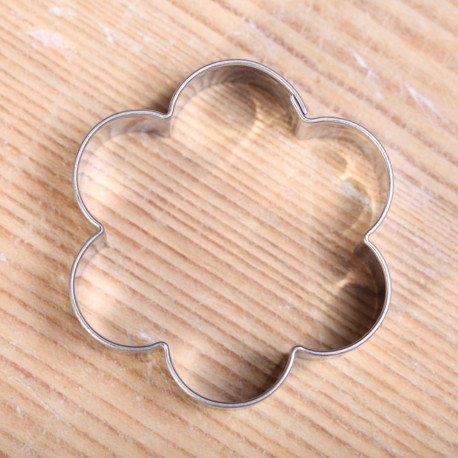
  • Pat’s note: At this point, I roll out the dough and use a flower shaped cookie cutter to cut out shapes.  These I then ease into the mini muffin pans.  It gives the tassies a nicer scalloped edge.

ENJOY!

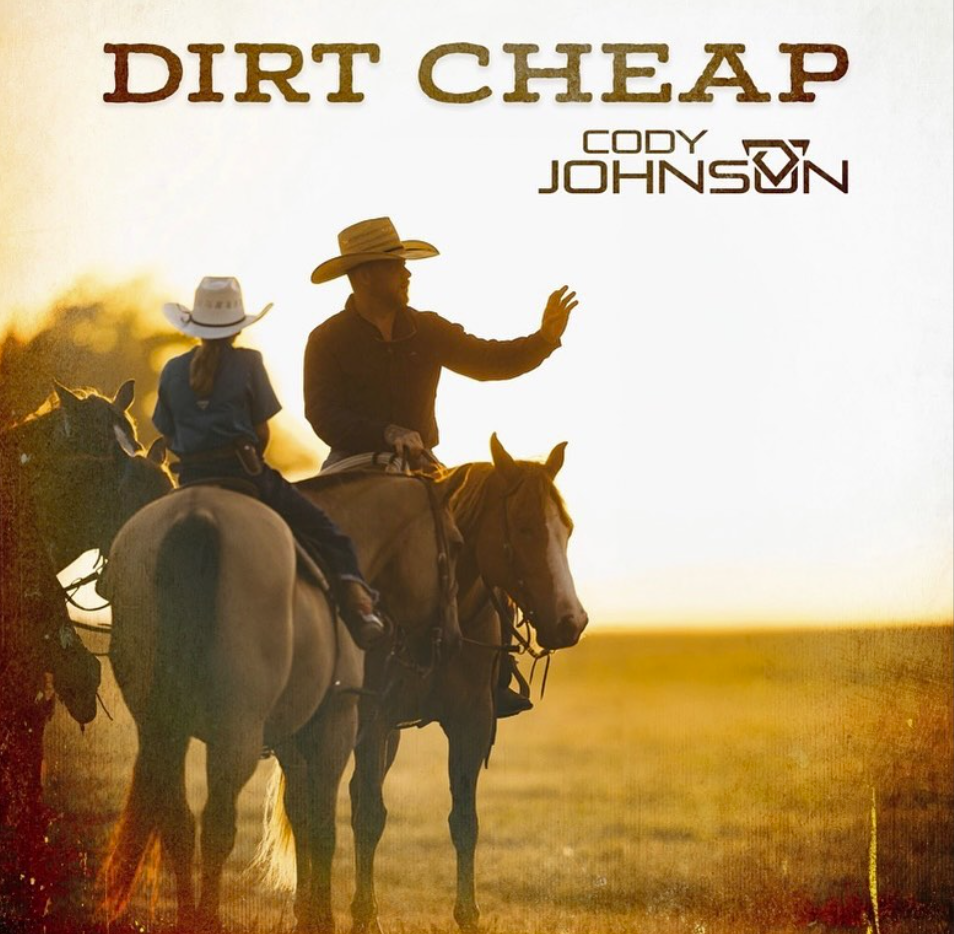
Dirt Cheap

I love this song by Cody Johnson.  It details a farmer telling a couple of developers that they don’t have enough cash to buy his land. 

Dirt Cheap

They came in thinkin’ top dollar
To that old cotton crop farmer
They knocked on his screen door and he said
“Lord, what you need, boys?” And they said
“You know all the others went and cashed out
We got the subdivision all mapped out
It’ll sit right here on this land
And you can leave town a rich man”
And he said, “Boys, whatever you’re offerin’, it won’t be enough

‘Cause I got a little girl that used to swing right there
I still see her pink bow in her brown hair
She’s in the big city, but she still calls home
What’s she gonna do if she comes back and we’re gone?
And over there, under that white oak tree
Beneath the cross is where my best buddy’s buried
Lasted thirteen huntin’ season runnin’ strong
Keep your money ’cause a man can’t leave his dog
And over there is where I got down on one knee
You can’t buy that kind of dirt cheap”

One man smiled and he kinda looked away
The other said, “Before we go, I gotta know one thing
Between the droughts and the floods through all the years
What in the world got you through?
How the hell’d you get here?” And he said

“That little girl that used to swing right there
I still see her pink bow in her brown hair
Runnin’ up after one of them long days
A big smile makin’ every little worry fade
And over there, under that white oak tree
Beneath the cross, where my best buddy’s buried
All them huntin’ seasons freezin’ in a jon boat
Me and him, double-barrel and a two-stroke
And that woman that said ‘yes’ when I got down on one knee
Yeah, you can’t buy that kind of dirt cheap

No, it ain’t somethin’ you fall into
It’s somethin’ God gives you
And you hold on to

Just like that little girl who used to swing right there
I still see her pink bow in her brown hair
She’s in the big city now, but she still calls home
She’s comin’ back next week and, man, it’s been too long
And over there, under that white oak tree
Beside the cross, where my best buddy’s buried
Lays a puppy posted up in the shade
That woman never could turn away a stray
I guess that’s why she said ‘yes’ when I got down on one knee
Oh, long as all this is here, why the hell would I ever leave?
You can’t buy that kind of dirt cheap”

Michigan State Mammal: White Tailed Deer

Fuzzy, shy, and downright adorable, white-tailed deer are among the most abundant creatures in America’s woodlands. Adults are characterized by their reddish-brown coats, which fade to a grayer brown from summer to winter. They have excellent eyesight and hearing, and are even good enough swimmers to escape predators by crossing rivers or lakes with relative ease.

From how they got their name to the story behind their booming population in the United States, explore these 15 wonderful facts about white-tailed deer.

1 White-Tailed Deer Are Found in Central and North America

Even though they are native to North America, white-tailed deer have extended their range through Central America to Bolivia. Still, the vast majority live in southern Canada and throughout the mainland United States. They prefer open woodland but can also be found on the outskirts of developed urban areas and even near agricultural lands and cactus-filled deserts. An ideal habitat for a white-tailed deer consists of dense thickets of shrubs in which to hide and feed.

2 They Are the Most Common Deer Species in North America

The IUCN estimates the population of white-tailed deer in the United States to number over 11 million, and about a third live in the state of Texas. The white-tailed deer range has pushed farther up into Canada due to habitat loss, and there are believed to be half a million of them there already. Numbers in North America are stable and abundant, but in Mexico, Central America, and South America, most populations are declining.

3 Only Some Individuals Migrate

Experts believe that populations of white-tailed deer who live in low-quality home ranges are more likely to migrate to different locations in the summer. In contrast, those who are lucky enough to live in regions with better weather and more food abundance typically stay put throughout the year. Researchers studying white-tailed deer in Washington state have found that, surprisingly, survival rates for both migrating and non-migrating groups are nearly identical. In fact, annual survival rates for migrating deer were slightly higher, at 0.85 compared to non-migratory individuals at 0.84.

4 White-Tailed Deer Grazing Can Influence the Ecosystem

Since white-tailed deer are so abundant, their grazing can significantly affect the composition of plants within their habitats. Throughout the northern United States, tree seedling abundance decreases when white-tailed deer density grows above 5.8 individuals per square kilometer (0.38 square miles) in most forests. Introduced or non-native plant species, however, increase in areas with higher deer density. As ruminant animals, they typically feed on what’s most available to them, their four-chambered stomachs allowing them to digest anything from leaves, twigs, moss, and even fungi. They also consume the buds of maple trees, poplar trees, birch trees, and shrubs, switching to hardier plants and conifers in the winter when food becomes scarce.

5 They Often Live Alone

One would think that such a populous species would prefer to live in large groups, but the white-tailed deer is generally a solitary creature. They tend to live alone, especially during the summer months, and males and females only interact during mating season. Most of the time, if you see multiple deer together, it is either a female (called a “doe”) and her babies (called “fawns”) or a small group of young adult males (called “bucks”). 

6 Disney’s Bambi Was Modeled After a White-Tailed Deer

According to the New England Historical Society, one of Disney’s earliest animators helped bring white-tailed deer to the big screen in 1942. Walt Disney himself hired Maurice Day for the film, and the artist would reportedly settle for nothing less than a white-tailed deer from his home state of Maine as the model for the young fawn. As a result, two 4-month-old deer were transported from Maine to Hollywood after a four-day train ride across the country to model Bambi, and the rest is cinematic history.

7 They Live Three Times Longer in Captivity Than in the Wild

Most wild white-tailed deer live to about two or three years old, and most adults don’t make it past 10. On the other hand, deer held in captivity can live up to three times longer than their wild counterparts, something scientists believe has to do specifically with the difference in diet. Not only do captive white-tailed deer deal with significantly less stress because they aren’t required to find their own food, but studies have found that their diets contain more protein and less carbon.

8 Only Bucks Grow Antlers

Female white-tailed deer don’t have antlers, but males begin growing them at just a few months old. Made of a combination of bone and keratin (the same material that makes up human hair and fingernails), antlers are used to attract females and to spar against other males to assert dominance. It has been well-documented that both body size and antler size are positively associated with annual breeding success among males, and older males with larger antlers are more likely to breed than those with smaller ones. Males shed their antlers every year, a completely natural process caused by a drop in testosterone after the end of mating season.

9 White-Tailed Deer Are Important Prey Animals for Large Predators

Although humans remain the largest predator for white-tailed deer, they are also preyed on by wolves, mountain lions, bears, jaguars, and coyotes. This predator-prey relationship is especially important to the local food chain and can leave more room for the survival of stronger, healthier animals, and also help control the spread of disease through population control.

10 They Are the Smallest of North America’s Deer Species

With an average height between 31 and 39 inches at the shoulders, white-tailed deer are smaller than other North American species. While white-tailed deer and mule deer are the only species native to the United States, there are also caribou, moose (the largest member of the deer family), brocket deer, and elk that now call North America home.

11 They Can Run 30 Miles per Hour and Jump Higher Than 8 Feet

White-tailed deer have been recorded bounding speeds of up to 30 miles per hour through the forest, and researchers have found that their jumping abilities are even more impressive. A study in the Journal of Wildlife Management found that wild deer could jump fences just under 8 feet tall. After the experiment, they surveyed over 150 wildlife biologists who routinely observe deer close to fences and found at least six who said they had witnessed a deer jumping a 7.87-foot fence.

12 White-Tailed Deer Are Known for Their Grunts

From snorts to bleats, white-tailed does and fawns make a variety of sounds. Males, however, are especially known for their loud grunts, which they make to show their dominance to other bucks nearby. Adults and offspring will also make soft grunts to communicate with each other, but they are often much longer and quieter than a buck grunt. These aggressive buck grunts are strictly social, used to announce their presence in the area and send a message to other males.

13 They Can Weigh Up to 300 Pounds

Despite being the smallest of the North American deer, white-tailed deer can still hold their own in terms of weight. A mature buck may weigh anywhere from 200 to 300 pounds, while females show much more variety in size, averaging 90 to 200 pounds.

14 White-Tails Make Up Most of the United States Hunting Industry

Each year, the National Deer Association reports on the hunting status of the North American population of white-tailed deer. In 2018, deer harvest went up in the states of Kentucky, Missouri, New England, New York, and Wisconsin. The year 2017 saw a total of 2,878,998 bucks killed throughout the United States, up 2% from the previous year. Texas, which also holds the highest concentration of white-tailed deer in the country, shot the most bucks (506,809), and Rhode Island shot the least (782).

15 They’re Named for Their White Tails

True to its name, the white-tailed deer has a white tail, though only on the underside; the top of its tail maintains the same light brown color as the rest of its body. When a white-tailed deer is alarmed or senses danger, it flips its tail up to display the white underside in a motion called “flagging.” Apart from being white on the bottom, their tails are also larger and broader than other deer species.

SOURCE: TREEHUGGER.COM

The Mayflower

I actually found a site called “Have Fun with History”.  (My middle school class would disagree that this is even possible…lol.)

FROM: havefunwithhistory.com:

10 Facts About the Mayflower Ship

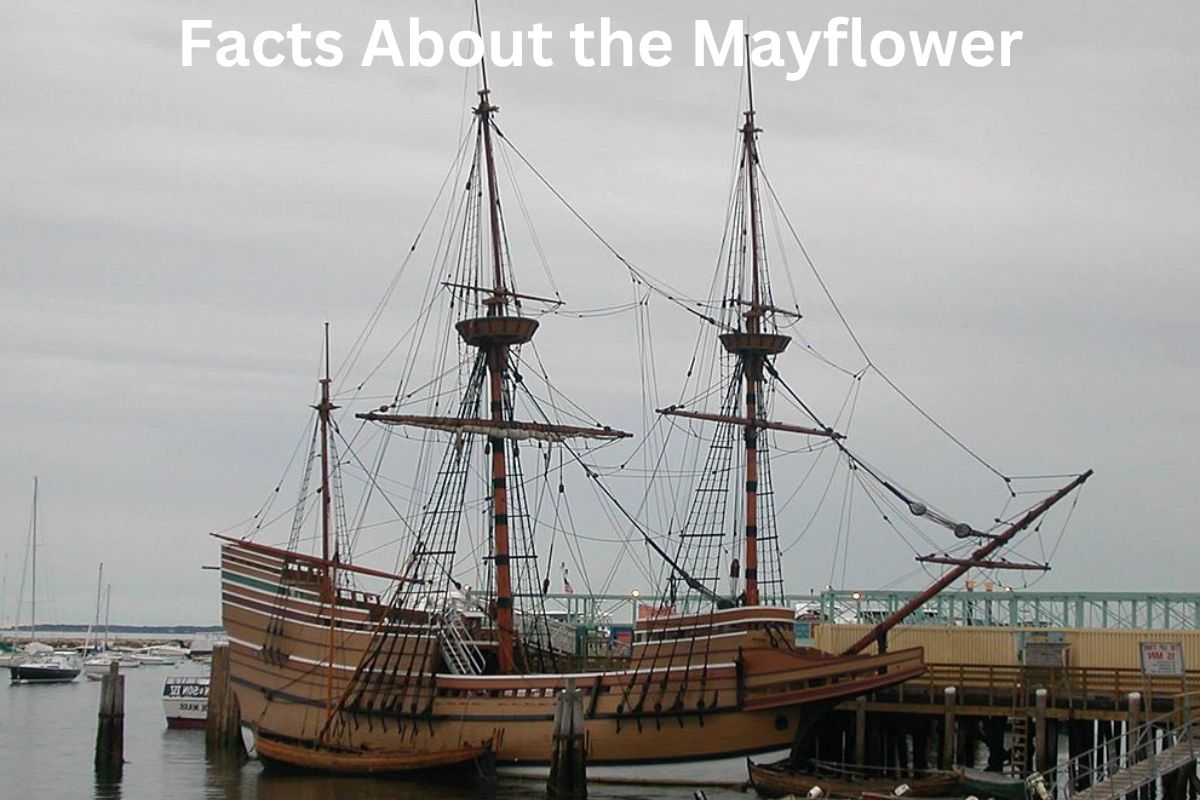
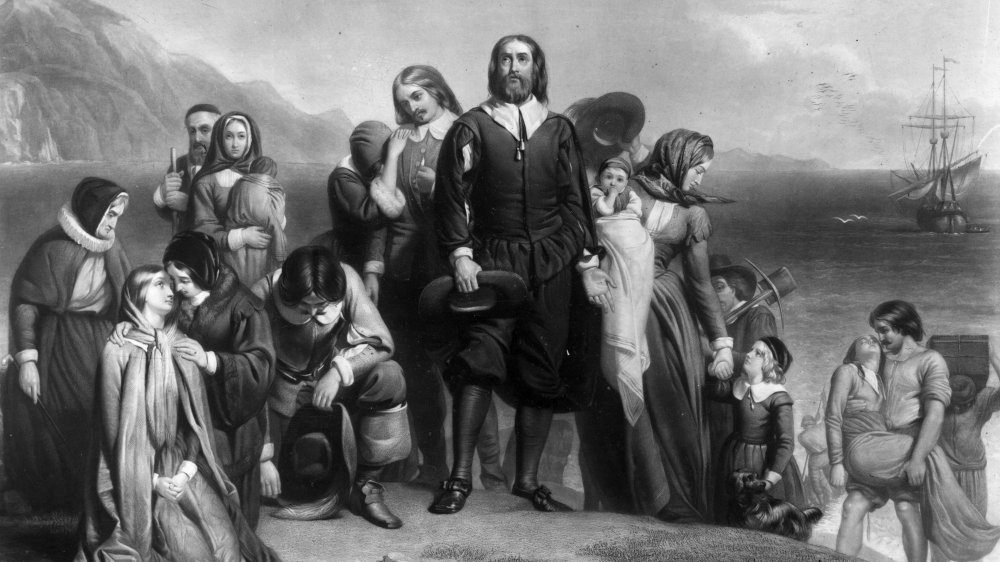
The Mayflower was the vessel that brought the first English Puritans, who are now commonly referred to as the Pilgrims, from Plymouth, England to the continent of North America in 1620. The voyage of the Mayflower and the people who boarded it had a crucial part in the early colonization and settlement of the Americas. The Pilgrims were looking for religious freedom and a better living when they made the journey to the New World. The ship had set sail with the intention of docking in northern Virginia; but, adverse weather conditions and mistakes in navigation caused it to instead arrive in what is now the state of Massachusetts, in the region that is now home to the city of Plymouth. The Plymouth Colony was the first successful and long-lasting English settlement in New England, and it was founded by the Pilgrims. Plymouth was in the southeastern part of the state of Massachusetts. The voyage of the Mayflower and the settlement of the New World by the Pilgrims is an important chapter in the annals of United States history, and it is commemorated annually on Thanksgiving.

Mayflower Facts

1 At about 180 tons, she was considered a smaller cargo ship

The Mayflower was considered a smaller freight ship and was not specifically constructed for ocean journeys. It was largely used to transport goods between England and Bordeaux, such as clothing and wine. It was, however, outfitted with the required rations and supplies to complete the journey across the Atlantic and was deemed capable of meeting the voyage’s demands. Despite its small size and lack of ocean crossing experience, the Mayflower successfully brought the Pilgrims to the New World.

2 The Mayflower was a popular name for ships at the time.

During the time of James I (1603-1625), there were 26 vessels carrying the name Mayflower in the Port Books of England; it is unknown why the name was so popular. To minimize confusion with the numerous other Mayflower ships, the identity of Captain Jones’ Mayflower is based on data from her home port, her tonnage (estimated 180-200 tons), and the master’s name in 1620. It is unknown when or where the Mayflower was built, though she was designated as “of London” in later documents. In the Port Books of 1609-11, she was identified as “of Harwich” in the county of Essex, which was also the birthplace of Mayflower master Christopher Jones in 1570.

3 It was intended for two ships to travel to the New World

The Mayflower set sail from London in the middle of July 1620 and proceeded downstream on the Thames to Southampton, where it met up with the Speedwell. It was intended for the two ships to travel to the New World together, with the Mayflower transporting the majority of the pilgrims to their new home and the Speedwell acting as a supply ship along the journey. However, it didn’t take long before it became clear that the Speedwell wasn’t seaworthy, so the two ships were forced to make multiple stops for repairs along the trip. In the end, it was determined that the Mayflower would be the sole vessel upon which the Pilgrims would continue their journey, while the Speedwell would sail back to England. Because of this setback, the voyage of the Pilgrims was prolonged by several weeks, and there were fewer people on the Mayflower as a result. In spite of this, the Pilgrims persisted on their voyage until they finally reached their destination in the New World. Once there, they established the Plymouth Colony and began a new life in the Americas.

4 There are no Admiralty court documents connected to the pilgrim fathers’ voyage of 1620.

There is no subsequent record that directly refers to Jones’ Mayflower after 1616 until 1624. This is remarkable for a ship trading to London because it would not normally vanish from the records for so long. There are no Admiralty court documents connected to the pilgrim fathers’ voyage of 1620, which could be due to the odd way the pilgrims were transferred from Leyden to New England, or some of the period’s records may have been lost. By 1620, Jones, together with Christopher Nichols, Robert Child, and Thomas Short, was one of the ship’s owners. In the summer of 1620, Thomas Weston chartered her from Child and Jones to embark on the Pilgrim journey. Because of his membership in the Company of Merchant Adventurers of London, Weston played an important role in the Mayflower journey, and he finally traveled to the Plymouth Colony personally.

5 A second Mayflower sailed from London in 1629.

In 1629, another ship called the Mayflower set sail from London to the Plymouth Colony. A group of settlers set out on this expedition to establish a new settlement in the New World. Unlike the Pilgrims’ famous voyage on the Mayflower in 1620, which is regarded one of the most renowned episodes in American history, this latter voyage is less well remembered. However, it was a significant event in the history of the Plymouth Colony, contributing to the settlement’s and its existence in the New World. The voyage of the Mayflower in 1629, as well as numerous comparable voyages conducted by other ships and groups of settlers, shaped the history of the United States and its formation as a nation.

6 The Mayflower was square-rigged ship with a beakhead bow.

The Mayflower was square-rigged, which implies that its masts were rigged with square sails. Square-rigged ships were popular because of their stability and capacity to withstand strong winds, making them ideal for long trips across the open ocean. The Mayflower also had a beakhead bow, which was common on many ships of the time. This bow was distinguished by a sharp, curved prow designed to cut through the water more efficiently. The Mayflower also had a high, elevated stern, which allowed the ship to carry more cargo while also protecting the crew and passengers from rough weather. These architectural elements, combined with the ship’s robust build and skilled crew, aided the Mayflower’s memorable trip across the Atlantic and safe arrival in the New World.

7 The number of crew on board was less than 50.

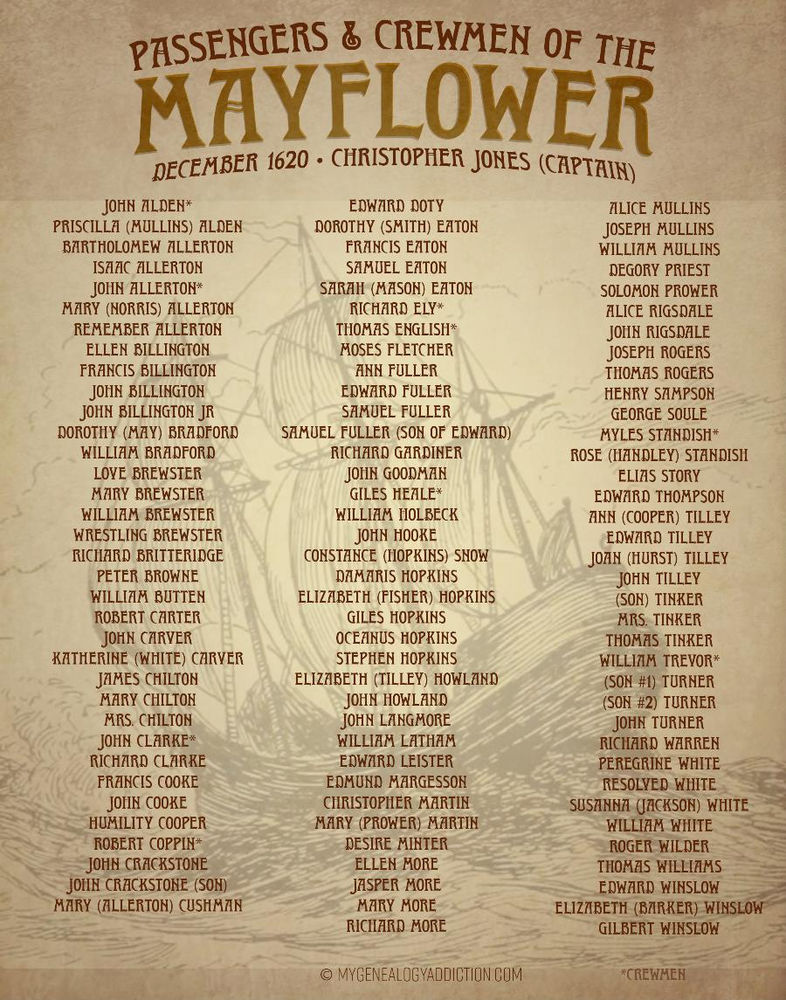
The Mayflower’s commanders and crew included a captain, four mates, four quartermasters, a surgeon, carpenter, cooper, cooks, boatswains, gunners, and roughly 36 men before the mast, for a total of about 50 men. The whole crew remained with the Mayflower in Plymouth during the winter of 1620-1621, and almost half of them died during that time. The surviving crewmen traveled back to England on the Mayflower on April 15, 1621.

8 In 2020, the 400th anniversary of the Mayflower’s landing was celebrated.

The 400th anniversary of the Mayflower arrival occurred in 2020, marking four centuries since the famed ship and its passengers arrived on the shores of what is now Massachusetts, United States. Special displays, historical reenactments, and educational programs, as well as ceremonies and other events honoring the bravery and endurance of the Pilgrims and the crew of the Mayflower, were held to commemorate the event. The Mayflower landing and the creation of the Plymouth Colony are significant events in American history because they signify the commencement of permanent English colonization in the New World as well as the birth of one of the United States’ earliest colonies. The 400th anniversary of the Mayflower landing was an opportunity to reflect on history and remember the Pilgrims and their trip to the New World.

9 The government created a Pilgrim Tercentenary half dollar, with the ship depicted on the reverse and passenger William Bradford depicted on the obverse.

The United States government struck a unique commemorative coin, the Pilgrim Tercentenary half dollar, to mark the 300th anniversary of the Mayflower’s arrival. The coin depicts the Mayflower on the reverse and a portrait of William Bradford, one of the Pilgrims’ leaders, on the obverse. The currency was issued in 1920 and extensively disseminated as a symbol of the country’s acknowledgement of the Mayflower and the Pilgrims’ importance in American history. The Pilgrim Tercentenary half dollar is a noteworthy piece of American numismatic history, and coin collectors prize it for its historical significance and rarity. The release of this coin helped to raise attention to the Mayflower and the Pilgrims’ story, and it serves as a lasting homage to their bravery, dedication, and endurance in making the momentous voyage to the New World.

10 A replica of the Mayflower, built in 1956, can be seen at the Pilgrim Memorial State Park in Plymouth, Massachusetts.

The Mayflower model can be seen in the Pilgrim Memorial State Park in Plymouth, Massachusetts. This replica was created in 1956 to honor the ship’s remarkable voyage and importance in early American settlement. The replica is a full-scale wooden sailing ship that was built utilizing traditional shipbuilding processes and materials to the greatest extent possible. It serves as an educational and historical resource for visitors, allowing them to learn about the Pilgrims’ and early settlers’ hardships and experiences in the New World. The replica is a renowned tourist attraction in Plymouth and a significant symbol of American history and tradition.

SOURCE: HAVEFUNWITHHISTORY.COM; THE HISTORIAN

DIY: Suet Wreath

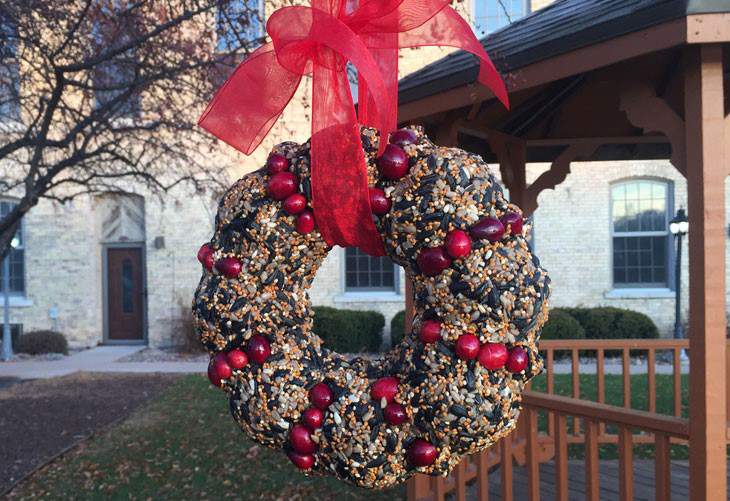
If you like to feed the birds over the winter, you can make your own suet! I found this project on the KAYTEE.COM website.

Items you’ll need for this craft:

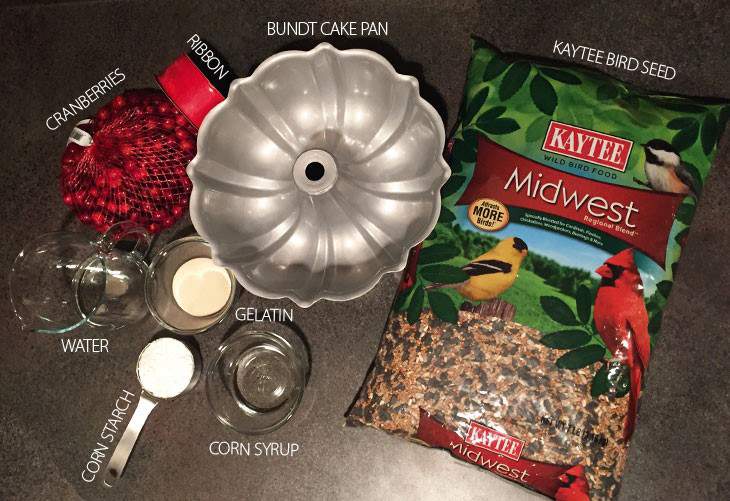
Bundt cake pan – You can use mini Bundt cake molds if you want to make multiple wreaths for multiple gifts.
4 cups Kaytee bird seed – Choose a seed that fits with your region to attract birds in your area.
Cranberries
1 and 1/2 packets of unflavored gelatin
1/2 cup warm water
1/3 cup corn starch 
3 Tablespoons light corn syrup
Thick ribbon
Gift wrap – If you’re making this as a gift, you’ll want to find a box that fits the wreath and wrapping supplies to make it festive.
Kitchen items – You’ll need a drying rack, medium-sized sauce pan, spatula, stove, refrigerator, and measuring utensils. This craft requires heat and cooling, so children will need assistance and supervision if helping with this craft.
Nonstick cooking spray.

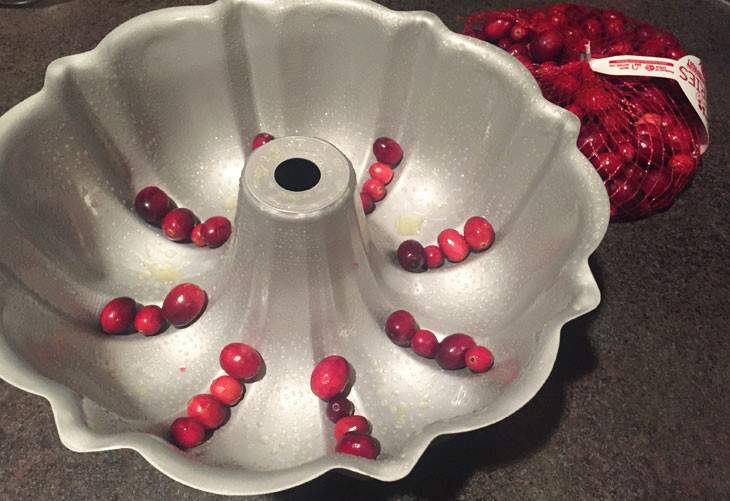
Spray the Bundt pan mold liberally with nonstick cooking spray. Place the cranberries in the pan how you would like them to look on the front of the wreath. Set aside for use after the mixture is ready.

Measure out four cups of bird seed in an easy-to-pour container. Set aside and have this ready for when the mixture is ready.

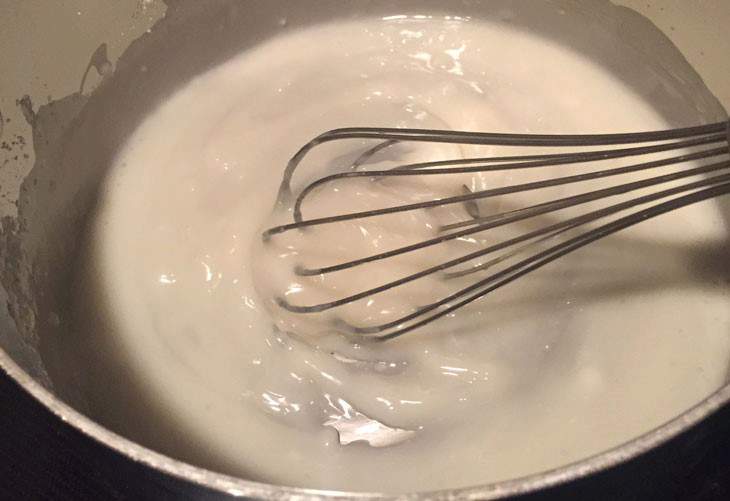
In a medium-sized sauce pan on medium heat, whisk together the packets of unflavored gelatin and warm water. Whisk until it is dissolved. 

Add in the corn starch and light corn syrup, as shown in the image above. Whisk until there are no lumps of cornstarch left. 

The mixture will start to form a thick paste after all the ingredients begin to bind. The paste should be smooth and thick.

Once the paste is formed, remove the pan from the heat and stir in the four cups of bird seed that was set aside from step three. Tip: spray your spatula with nonstick cooking spray before mixing together to make clean up easier! 


Carefully add the combined mixture into the Bundt pan mold, making sure to pack it down and keep the cranberries in place. Evenly distribute the mixture so the wreath will be balanced when it sets.

Pack the seed down with the spatula. Once all the mixture is in the pan, place the entire pan in the fridge. Remove it from the fridge when it’s hard to the touch. This should take no longer than an hour.
After the wreath is hardened, take it out of the fridge and gently remove the wreath from the pan by flipping it upside down onto a cooling rack. Let it dry completely before adding ribbon or handling it too much. It’s best to let it dry for 12-24 hours. 

Tie a thick ribbon around the wreath and then to a tree or feeder hanger. Bring it outside and carefully hang it where the birds will see it. If you’re giving it as a gift, wrap it up gently and give the gift as soon as possible so the wreath materials stay fresh for the birds. 

SOURCE: KAYTEE.COM

What Shall We Make Today?

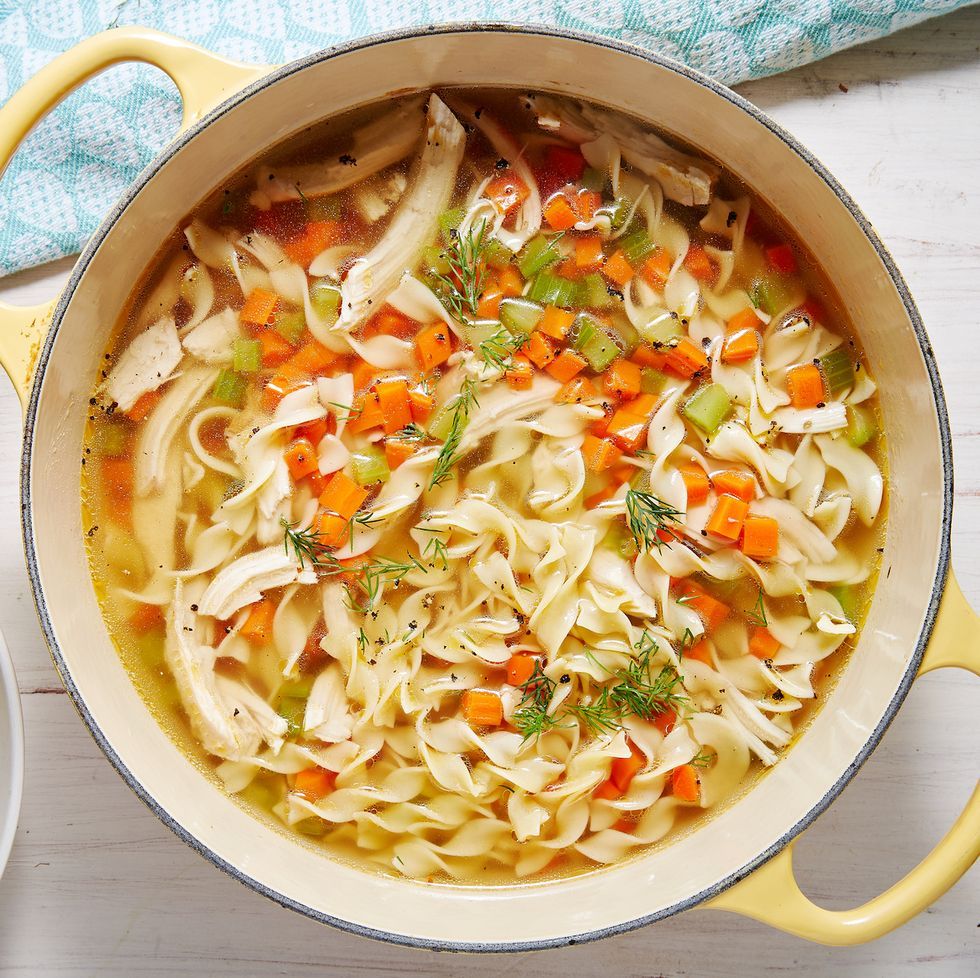
With Thanksgiving soon upon us, I thought a recipe on what to do with the turkey carcass might be appropriate—Turkey Carcass Soup!

Ingredients

1 turkey carcass, from roasted turkey, extra meat removed 

2 carrots, peeled, finely chopped

2 stalks celery, finely chopped

2 cups cooked turkey meat, shredded 

3 sprigs fresh thyme

1 dried bay leaf

8 oz. egg noodles 

Kosher salt 

Freshly ground black pepper 

2 Tbsp. fresh dill, chopped 

Directions

Place turkey carcass in a large pot. Cover with cold water and bring to a boil. Reduce heat to medium-low and simmer 2 hours.

Strain and reserve stock (and excess turkey meat, if desired). Return stock to pot and bring to a simmer (you should have about 6 c. stock).

Add carrots, celery, turkey meat, thyme, and bay leaf. Cook, stirring occasionally, until vegetables are just tender, about 12 minutes.

Add egg noodles and cook until al dente according to package directions; season with salt and pepper. Top with dill.

Enjoy!