Love Birds

Lovebirds are one of the most popular pet parrot species, and for those who are familiar with them, it’s no surprise. Beautiful and intelligent, these little birds have been one of the most beloved types of African parrot for more than 100 years. However, there are a lot of myths out there about lovebirds, their behavior, and what it’s like to keep them as pets.

Although they are a type of parrot, and they do have the ability to mimic human speech, lovebirds are not among those species that most would consider talking birds. This is because they very rarely decide to speak, and if they do choose to mimic a sound, more often than not they repeat simple noises such as whistles or household sounds such as doorbells and microwaves.

It is not known why some lovebirds are more prone to mimicking speech than others, but it is widely believed that those who do learn to talk are taught from a very young age.

There Are Several Types of Lovebirds

There are many different types of lovebirds. There are nine separate sub-species of these little parrots, each carrying their distinct traits and characteristics. These include the masked lovebird, the black-cheeked lovebird, the Fischer’s lovebird, the Nyasa lovebird, the Swindern’s lovebird, the red-faced Lovebird, the Abyssinian lovebird, the Madagascar lovebird, and the beloved peach-faced lovebird.
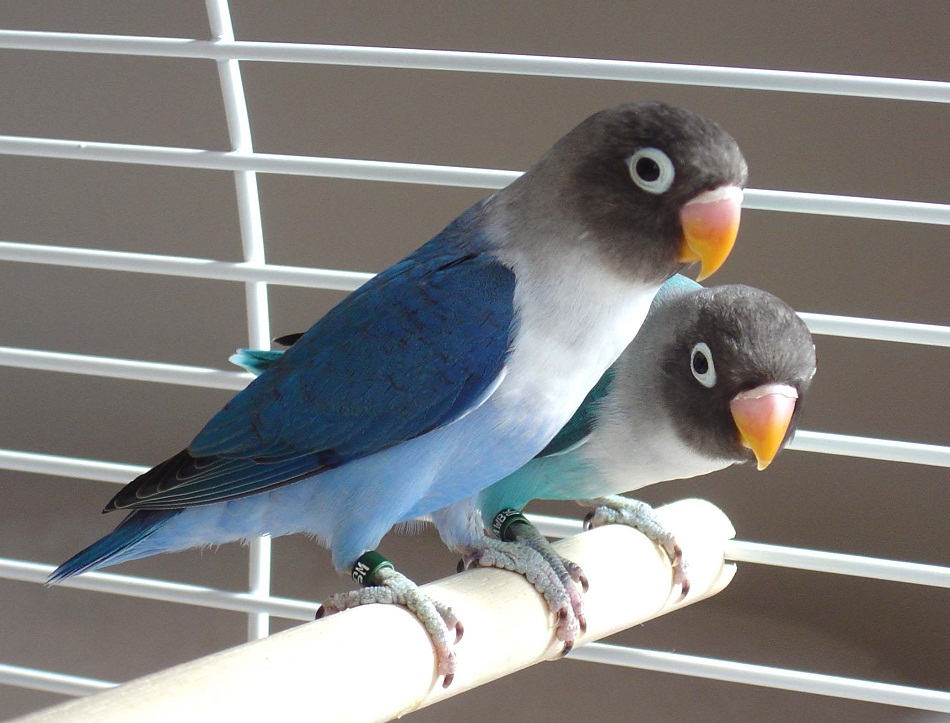
The peach-faced lovebird, which is the most popular, can be identified by the rainbow of yellow, green, and blue on their bodies as well as their bright peachy-pink faces. While the different types of lovebirds have differences in looks and temperament, on average, all of the lovebirds will live for up to 20 years in captivity. 

Lovebirds Are One of the Smallest Parrot Species

While they are true parrots, lovebirds are one of the smallest members of the parrot family. On average, most lovebirds fall between 5 and 7 inches in length at maturity, when measured from the beak to the end of the tailfeathers. Their small size has worked to push their popularity among those who live in apartments and other small spaces. Many of these bird lovers have found it easier to house and care for these little birds instead of attempting to keep a larger parrot species such as a macaw or a cockatoo.

Lovebirds Are Not Always Best Kept in Pairs

It is a widely purported myth that you should never own a solitary lovebird and that if they are not kept in pairs, they will die of depression. While it is true that they are extremely social birds who thrive on interaction and must be socially stimulated, in many cases, bird owners should keep single lovebirds. This is because these birds breed readily in captivity, and most bird owners are not capable of caring for an entire family of parrots.

It is also worth noting that birds kept in pairs tend to bond with each other and shun human interaction. Those who would like their bird to be affectionate and open to being handled by human hands have found that it’s best to keep birds by themselves and devote as much time as possible to playing and socializing with them so that their needs are met.

Lovebirds Are Very Active

Like all parrots, lovebirds are extremely active birds that need quite a bit of exercise to stay in top physical condition. Those interested in adopting a lovebird must be willing and prepared to give their feathered friend a bird-safe place to play outside of its cage for several hours per day. This will allow the bird to exercise all of the muscle groups that it needs to stay healthy, as well as provide important mental stimulation that these very intelligent animals need.

Fast Facts

What do lovebirds eat?

Lovebirds eat seeds, grasses, fruits, and vegetables.

How do lovebirds sleep?

Lovebirds hang onto the sides of their cage when it’s time for some shut-eye.

Why are lovebirds called lovebirds?

Lovebirds got their name because of the strong bond they have with their monogamous mate.

Nevada State Flower: Sagebrush

Nevada, the Silver State, is renowned for its stunning landscapes and unique flora. Among its natural treasures is the sagebrush, the official state flower of Nevada. This hardy and aromatic plant holds great significance in the state’s ecosystem and history. In this article, we’ll explore 10 fascinating facts about the Nevada state flower, shedding light on its cultural, ecological, and botanical importance. From its role in Native American traditions to its resilience in the harsh desert environment, the sagebrush embodies the spirit of Nevada’s rugged beauty. Let’s delve into the captivating world of the sagebrush and uncover the secrets that make it a cherished symbol of the Silver State.

Key Takeaways:

Sagebrush, Nevada’s state flower, symbolizes endurance and resilience, providing habitat and food for wildlife while stabilizing the state’s arid landscapes. It’s deeply ingrained in the state’s cultural heritage and inspires conservation efforts.

The aromatic Sagebrush embodies Nevada’s untamed spirit, captivating all with its evocative scent. It’s a living symbol of the state’s indomitable spirit, resilience, and natural beauty, cherished by its people and deeply rooted in its identity.

Sagebrush: The Emblem of the Silver State

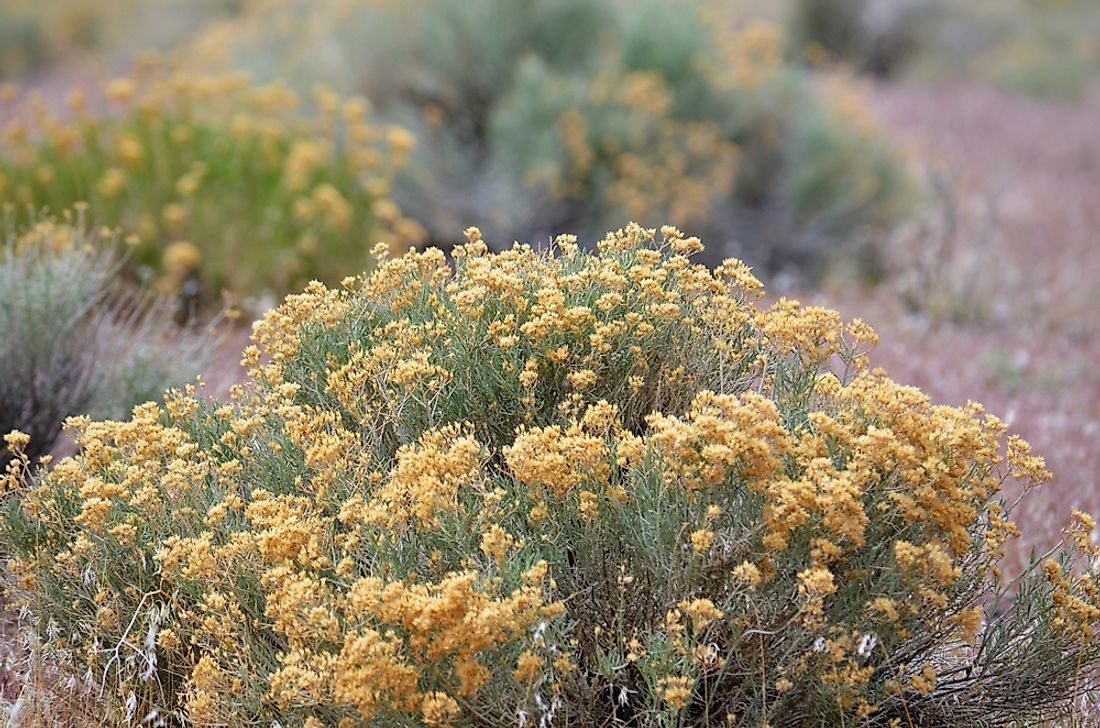
Known as the emblem of the Silver State, Sagebrush (Artemisia tridentata) is the official state flower of Nevada. This resilient and aromatic plant holds immense significance in the state’s history and ecology. Sagebrush thrives in the arid landscapes of Nevada, demonstrating remarkable adaptability to harsh environmental conditions. The plant’s distinctive silvery-green foliage and its invigorating scent are emblematic of the rugged beauty of the Nevada wilderness.

A Symbol of Endurance

Sagebrush is a symbol of endurance and tenacity, reflecting the resilience of the state’s inhabitants and its natural environment. Despite its unassuming appearance, Sagebrush plays a vital role in Nevada’s ecosystem, providing sustenance and shelter for diverse wildlife, including the state animal, the Desert Bighorn Sheep. This hardy shrub is deeply intertwined with the fabric of Nevada’s identity.

Historical Significance

Sagebrush has deep historical roots in Nevada, dating back to the time of the early settlers and Native American tribes. The plant’s presence in the state’s folklore, medicine, and daily life underscores its cultural significance and enduring legacy. Its prevalence in the Great Basin region has made it an enduring symbol of the state’s rugged beauty and the resilience of its people.

Additional Sagebrush Plant Information

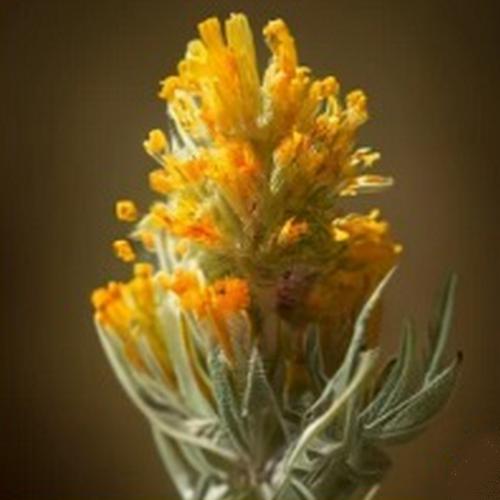
Sagebrush leaves can be identified by their grayish wooly appearance. They are about an inch long and end in a three-pronged set of “teeth.” This characteristic is important sagebrush plant information and sets them apart from other species of Artemisia. The young bark is gray and covered in fine hairs while older growth is dressed in shredded bark that falls off easily. Most plants do not grow taller than 4 feet but occasionally they have been found 10 feet tall in their native habitat. The shorter size is more likely when growing sagebrush plants in the home landscape.

Uses for Sagebrush

In addition to the medicinal uses for sagebrush, it is an important habitat for native birds, small rodents and reptiles. The plant was used as building material for baskets and rope, and the wood was fuel for early Native American people. It also has importance as a spiritual and ritual aromatic plant. The smoke is thought to have cleansing properties by those with belief in spirits. As a poultice, it clears lungs and eases aches and pains. It was once chewed for its ability to soothe stomach problems and bowel issues. Another of the uses for sagebrush included lining cloth with the leaves of the plant as a diaper.

How to Care for a Sagebrush Plant

Sagebrush is a member of a hardy and adaptive genus that thrives where moisture and nutrients are low. They can survive ferocious winds and extreme periods of drought. As such, the worst thing you can do to sagebrush is overwater it. If you give the plant supplemental water in spring, it will bloom. There is no need to water after the plant has been established.

Most pests and insects are repelled naturally by the plant’s strong taste and odor.

Look Who’s Talking

Today is John Travolta’s birthday ( born 1954) and I wanted to showcase a favorite John Travolta movie of mine: Look Who’s Talking.  The movie is a romantic comedy with voice overs done by Bruce Willis.

From: Mental Floss:

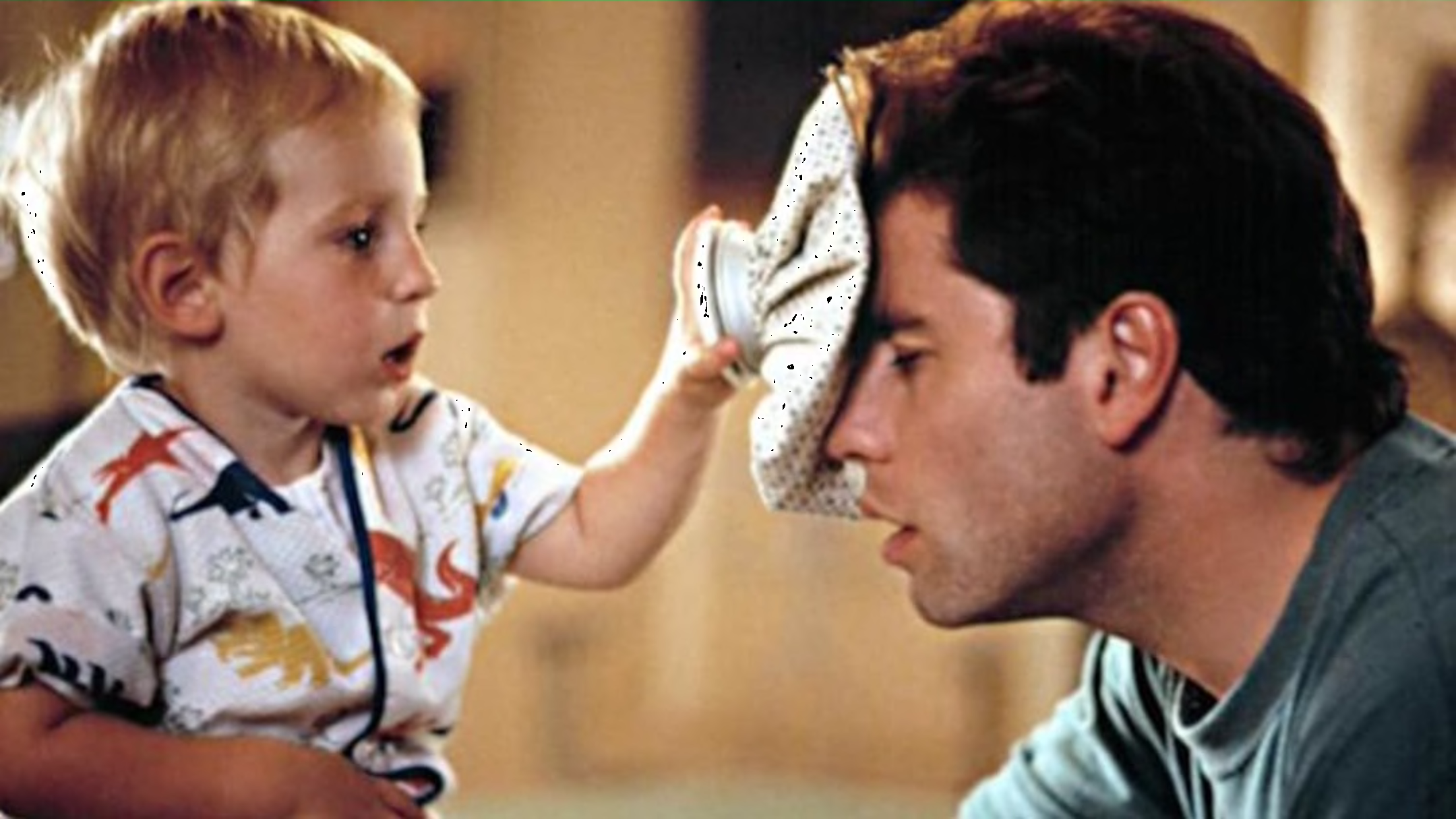
In 1989’s Look Who’s Talking, Kirstie Alley played Mollie, a single mother whose love life is manipulated by her newborn son Mikey, so she ends up with a cab driver named James, played by John Travolta. The twist to writer-director Amy Heckerling’s movie is that the audience can hear baby Mikey’s inner monologue, voiced by Bruce Willis. The original film spawned two sequels, and influenced a TV show (plus a popular ad campaign).

1 AMY HECKERLING GOT THE IDEA FROM HER DAUGHTER.

The Fast Times at Ridgemont High and future Clueless director noticed her young daughter, Mollie, constantly look around whenever she was propped up in her baby seat. “My husband and I started to put words in her mouth, what she might be thinking based on her expressions,” Heckerling told the Los Angeles Times.

2 A LAWSUIT CLAIMED THAT HECKERLING STOLE THE IDEA.

A $20 million lawsuit alleged that Heckerling stole the idea from a short story called Special Delivery, a science-fiction tale featuring an unborn infant who can talk to its parents. The terms of the eventual settlement weren’t disclosed.

3 THREE STUDIOS PASSED ON THE FILM.

Warner Bros., Disney, and Orion Pictures all passed on the idea before Tri-Star took a shot.

4 OLYMPIA DUKAKIS GOT AN OSCAR PAY RAISE.

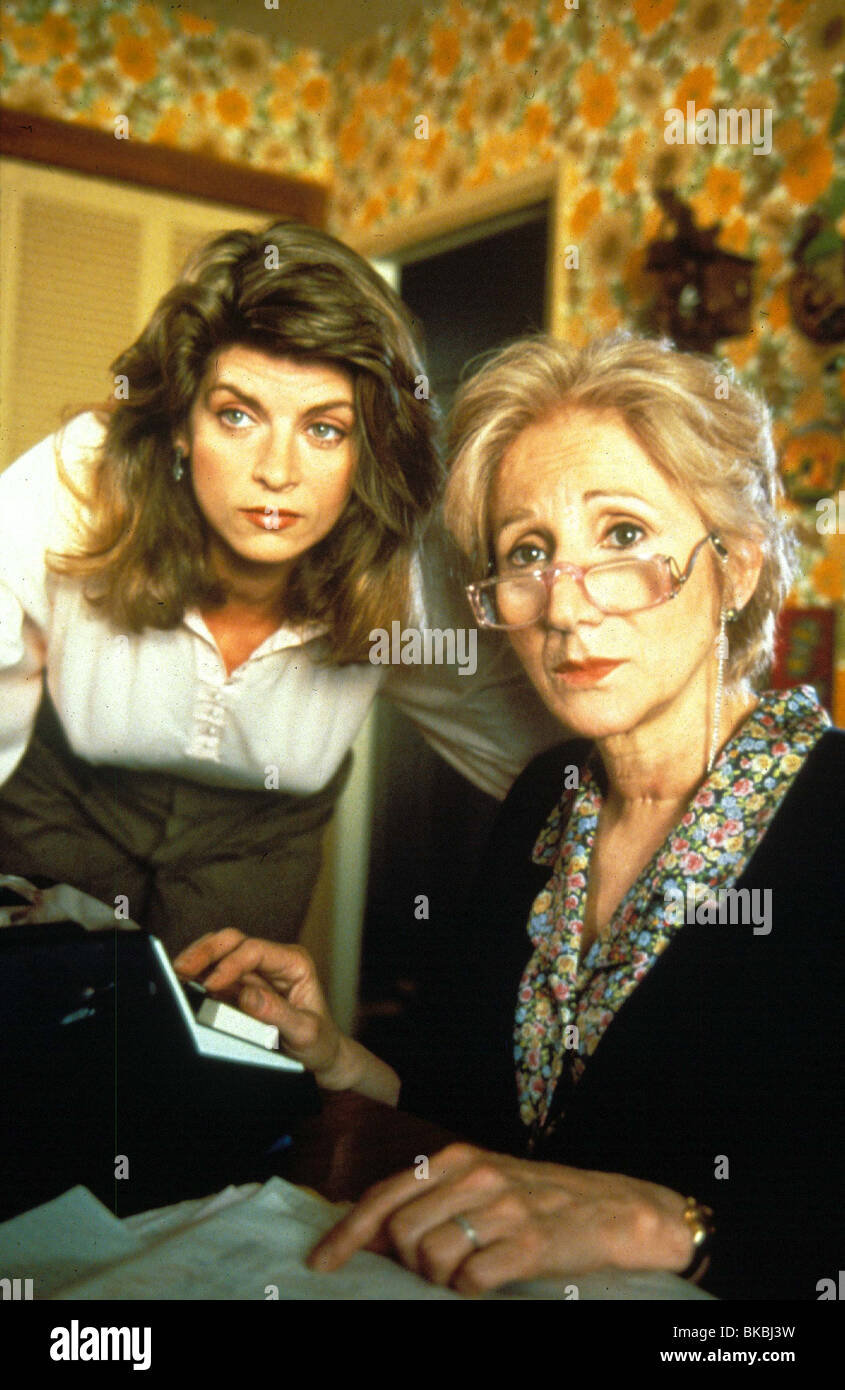
Olympia Dukakis was told that she would be paid $50,000 to play Kirstie Alley’s mother if she won an Academy Award for her work as Rose Castorini in Moonstruck. She did.

5 IT WAS SHOT IN VANCOUVER TO SAVE MONEY.

Producer Jonathan D. Krane, who was also John Travolta’s manager, cut the $13 million budget almost in half by moving the film’s production to Vancouver, instead of shooting on location in New York City.

6 KIRSTIE ALLEY FELL FOR JOHN TRAVOLTA IN REAL LIFE.

The actress recently claimed “it took all the power I had” to not run off with her co-star, whom she called the love of her life. Alley was married at the time; Travolta was single.

7 TRAVOLTA GOT SILLY DURING THE ROMANTIC SCENES.

Whenever Alley and Travolta tried to shoot their first kiss, Travolta kept evoking Barbra Streisand singing “Papa, Can You Hear Me?” from Yentl. 

8 JAMES WAS ORIGINALLY WRITTEN AS A DARKER CHARACTER.

When Travolta came on board, Heckerling changed James. She also added James’ dancing with her new star in mind.

9 ONE SHOT OF THE FETUS TOOK 115 TAKES.

The fetuses were puppets. Twelve puppeteers—some hanging upside down—were required to shoot the scene where Mikey plays with the placenta. The sperm were made of vinyl with tiny fishing weights in front.

10 HECKERLING DIDN’T WANT ALBERT’S HEAD EXPLODING TO LOOK TOO SCARY, LIKE IN SCANNERS.

A fake head was made for George Segal. Weather balloons were stuffed into the fake head’s cheeks.

11 AUDIENCES IN DIFFERENT COUNTRIES HEAR DIFFERENT BABY VOICES.

Foreign countries had their own celebrities voicing baby Mikey. It was Travolta’s idea.

12. TWO OF MOLLIE’S BLIND DATES HAVE NAMES.

They were credited as Mr. Impatience and Mr. Anal.

13 HECKERLING PUT HER FAMILY TO WORK.

Alley’s father was played by Heckerling’s dad, Louis (who is an accountant in real life). She admitted to being skeptical of Louis’ ability to pretend to laugh, but he pulled it off. Writer Neal Israel—who is Heckerling’s ex-husband and the father of Mollie, their daughter who inspired the movie—played Alley’s boss, Mr. Ross. Mollie also has a brief role in the movie.

14 THE STUDIO DELAYED ITS RELEASE FOR SEVEN MONTHS.

Tri-Star changed the movie’s release date from March to October, which led insiders to believe that the studio hated what they saw in the rough cut and it would never be released. Instead, Look Who’s Talking made nearly $300 million worldwide.

15 IT INSPIRED THE TV SHOW BABY TALK AND THE E*TRADE BABY.

ABC’s Baby Talk, featuring Tony Danza as the voice of the little one, wasn’t as successful as the movie; star Scott Baio called it a “nightmare.” The E*Trade baby endorsed the financial company from 2008 to 2014.

16. THERE IS TALK OF A REBOOT.

In 2010, it was reported that Fast & Furious producer Neal H. Moritz had plans to bring the Look Who’s Talking franchise back. Heckerling hopes the reboot does happen: “then I’d make some money!”

SOURCE: MENTALFLOSS.COM

Nebraska State Flower: Goldenrod

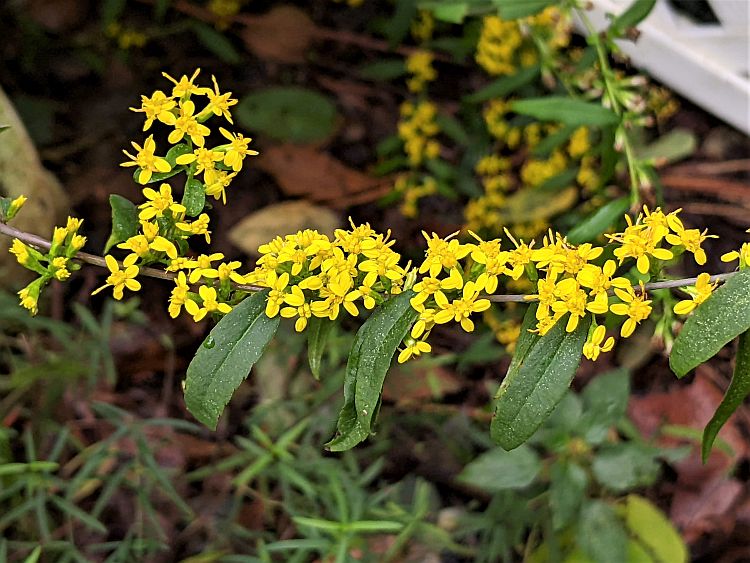
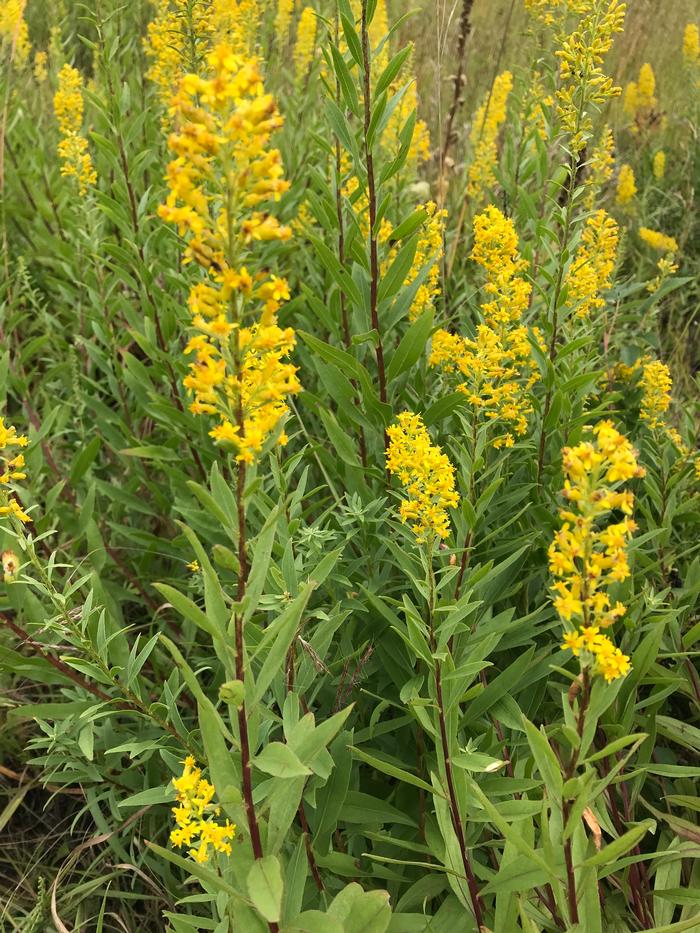
Goldenrod is a native North American perennial wildflower that is tall and slim with fluffy golden flower spikes in various shades of yellow. Once regarded as an invasive weed, goldenrod is increasingly valued by gardeners thanks to cultivars that offer better performance and more attractive flowers. Goldenrod grows best in any sunny location, survives well in average or even poor soil, and thrives in temperatures between 65 and 80 degrees Fahrenheit.

Goldenrod Care

Here are the main care requirements for growing goldenrod.

Plant goldenrod in the spring or fall, choosing a sunny location with average soil.

Stake the taller varieties so the plants don’t flop and bend. 

Water young goldenrod plants weekly to keep soil moist until established, then only supplement in drought.

Do not overfertilize; goldenrod does not need fertilizer at all.

Light

Goldenrod craves full sun for optimal flowering. The plant will tolerate a bit of shade, though a shady location can reduce its blooms.

Soil

Goldenrod is not overly picky about soil but it must be well-drained with a pH in the acidic-to-neutral range. This plant can tolerate sandy, rocky, and clay soils. Very rich soil can cause the plant to become leggy and potentially flop over.

Water

Water new goldenrod plants weekly to maintain damp, but not soggy soil. Mature goldenrod plants are drought tolerant and rarely need supplemental watering except when rainfall is scarce.

Temperature and Humidity

The hardiness range varies a bit depending on the species, but most goldenrods thrive in USDA cold hardiness zones 2 to 8, taking heat and cold weather in stride. Goldenrod isn’t fussy about humidity, either.

Types of Goldenrod

The many goldenrod species vary somewhat in size and appearance. Cultivars are known to be less aggressive spreaders than the species forms. Some popular species—all native to North America—include:

Solidago caesia (blue-stemmed goldenrod) has arching purplish stems. It is not an aggressive spreader and produces good cut flowers.

Solidago odora (sweet goldenrod) is a 2- to 4-foot plant with anise-scented leaves and yellow flowerheads. It does not spread aggressively and has a good tolerance for poor, dry soils.

Solidago rugosa, also known as rough goldenrod is a 3- to 5-foot plant with a fondness for moist conditions. A popular cultivar is ‘Fireworks’, with its arching golden-yellow flowerheads that resemble an exploding skyrocket.

Solidago speciosa, also known as showy goldenrod, grows 1 to 3 feet tall, with dense clusters of tiny yellow flowers.

Solidago sphecelata,also known as autumn goldenrod, is a 12- to 24-inch species with arching stems holding plumes of yellow flowers. Two notable cultivars are ‘Golden Fleece’, a short 15- to 18-inch plant with arching cylindrical flowers, and ‘Wichita Mountains’, a 30-inch plant with rich gold flowers.

Solidago bicolor (white goldenrod)is noteworthy simply because it does not display the typical yellow goldenrod blooms. Instead, it features white blooms.

SOURCE: THESPRUCE.COM

The Mystery of the USS Maine Explosion

Today is the 127th anniversary of the explosion of the USS Maine, killing 286 servicemen and igniting the Spanish American War.  To this day, it remains a mystery why the ship exploded.

From: allthatsinteresting.com:

Between April and December 1898, the United States engaged in a brief armed conflict with Spain as the two countries’ prominence on the world stage began to shift. Known as the Spanish-American War, this period led to substantial change in the Caribbean region as the Spanish Empire’s decline was contrasted by the U.S.’s rapid economic and industrial growth. But there was one event in particular that set this war in motion: the sinking of the USS Maine.

The Maine had been one of the first American battleships. It was docked in the harbor of Havana, Cuba for a supposedly friendly visit amid ongoing revolts by the Cubans against Spanish colonial rule.

Then, it exploded.

An official investigation determined that a submerged mine had destroyed the vessel, and Congress and the American public were quick to point fingers at Spain as the culprit. However, more recent evidence suggests the explosion may have actually been an accident. And conspiracy theorists have offered up even more sinister explanations for the destruction of the Maine. The question is, what really happened?

How The Fight for Cuban Independence Created Tension Between The U.S. And Spain

The 16th century was a time of great expansion for many European superpowers, though perhaps none more notably than England and Spain. The countries’ westward expansions saw colonizers claiming indigenous lands and committing a litany of atrocities, including rape, genocide, and slavery. By the 18th and 19th centuries, it was clear that many populations were well and truly fed up with their European colonizers, and they began to fight for their independence.

Per the Library of Congress, the fight found its way to Cuba first in October 1868, when a group of patriotic Cubans attempted to overthrow Spanish power on the island in a conflict known as the Ten Years’ War. Although the Cubans failed to topple Spanish rule, they did at least succeed in putting an end to the old colonial structure of aristocrats and slaves — and theoretically earned themselves representation in the Cortes.

At the same time, Cuba grew more and more economically linked with the United States. The U.S. refined the raw tobacco and sugar grown in Cuba with its industrial technology. Needless to say, the U.S. had a vested interest in Cuba, and it benefited the American government from both an economic and humanitarian standpoint to back Cuba’s bid for independence.  So, on Feb. 24, 1895, when Cuban insurgents once again revolted against their Spanish rulers, the first ripples of pressure began to swell for American intervention. Less than three years later, they reached a boiling point.

The Sinking of The USS Maine Marks the Beginning Of The Spanish-American War

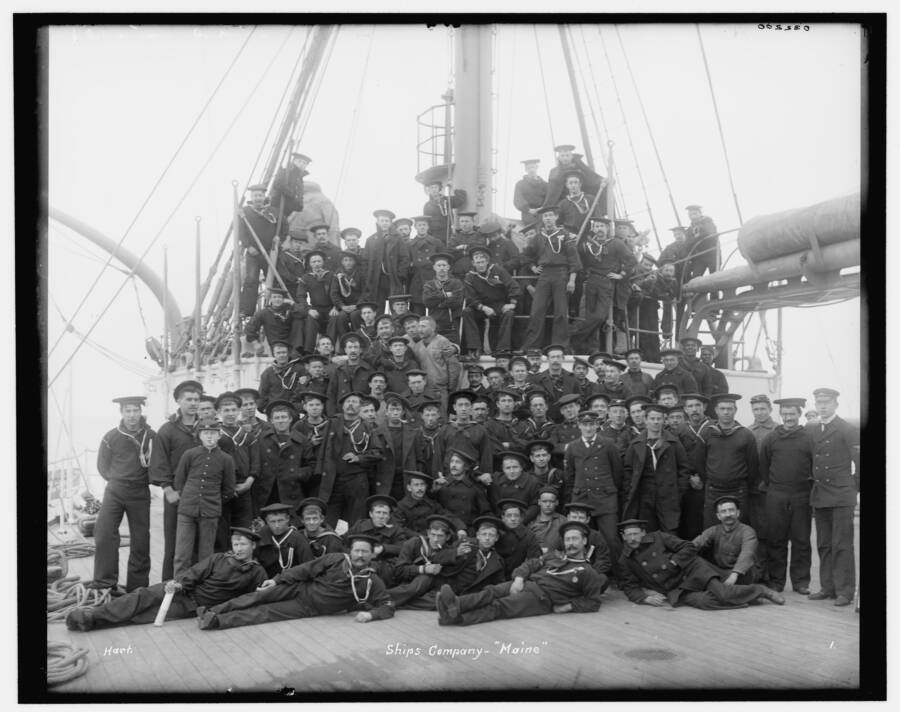
In January 1898, the American battleship USS Maine set sail for Havana, Cuba to observe the country’s ongoing conflict and protect American interests. The Maine was one of the first battleships built in the U.S. It weighed in at over 6,000 tons, cost more than $2 million to construct, and carried a crew of just under 400 seamen.

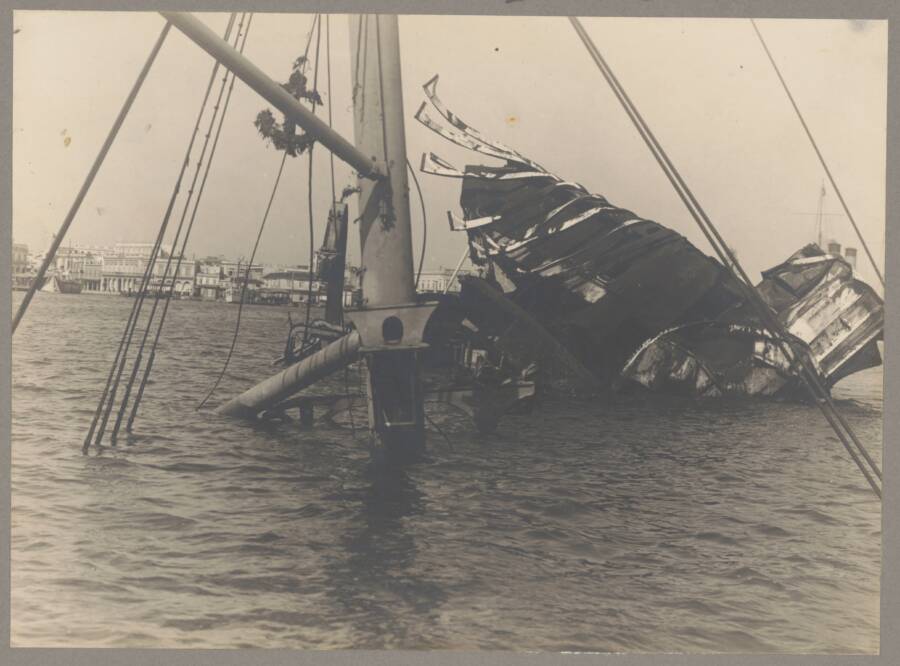
Unfortunately, just a few weeks later, on Feb. 15, most of the crew members on board the Maine were killed when the ship suddenly exploded in Havana Harbor. Then, in March, the United States Naval Court of Inquiry determined that the Maine had been destroyed by a submerged mine — and many fingers pointed to Spain.

Per the Encyclopedia Britannica, the blast took the lives of at least 260 crew members. Outrage over the event quickly found prominence in the headlines of American newspapers — particularly those of William Randolph Hearst and Joseph Pulitzer. The tycoons specialized in “yellow journalism,” which was characterized by highly sensationalized and exaggerated news.

It didn’t take long for the papers to land on a slogan that garnered public support for armed intervention: “Remember the ‘Maine,’ to hell with Spain!” Spain never took responsibility for the explosion, but the damage had been done. In April 1898, the United States declared war on Spain, and thus began the Spanish-American War.

The fighting was decidedly short-lived, with the United States defeating Spain on both the land and sea in less than four months. An armistice was called in August, and the war officially ended on Dec. 10, 1898, when the U.S. and Spain signed the Treaty of Paris. Spain ceded Puerto Rico, Guam, and the Philippines to America, and Cuba ultimately became an independent country.

The acquisition of these territories, of course, had far-reaching consequences, making the catastrophic destruction of the USS Maine one of the most important naval disasters in modern history. Yet, it turns out, it may have been nothing more than an accident.

The Real Cause Of The USS Maine Explosion

The initial investigation of the explosion of the USS Maine was conducted in 1898 by a court of inquiry headed by Captain William T. Sampson. It concluded that the Maine was destroyed when one or more of its forward magazines exploded — and that the source of the explosion had been outside the ship. In other words, the ship had been sabotaged.

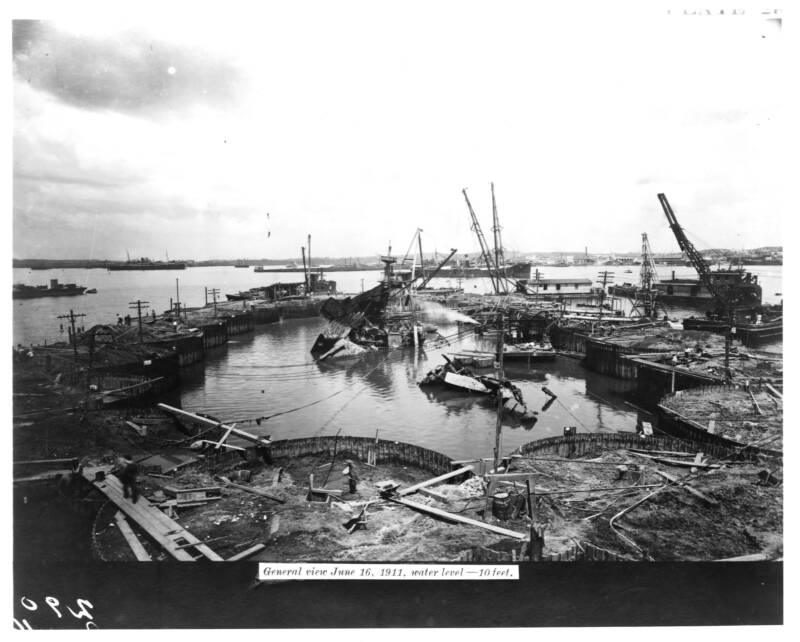
According to a 1976 report from U.S. Navy Admiral Hyman Rickover, a second investigation was then conducted in 1911 as the Maine‘s wreckage was raised. The second inquiry actually contradicted Sampson’s original conclusion, but only by asserting that the explosion occurred in a different part of the ship’s bow. It still claimed a mine had set off the magazines.

However, Rickover later criticized the earlier inquiries, particularly Sampson’s. Sampson’s investigation, he said, was largely based on the testimonies of the Maine‘s crew members and of divers working on the wreckage. Contemporary technical experts who doubted the mine theory were not heeded.

The 1911 investigation was more accurate than Sampson’s in that it found the true source of the explosion within the ship. However, Rickover felt the later investigation was too politically motivated when it stood by the conclusion that a mine had triggered the blast.

Rickover and his team ultimately reached their own conclusion: The USS Maine had not been destroyed by a Spanish act of sabotage or a mine, but rather by a spontaneous combustion fire within its ammunition stocks. In other words, it was a complete accident.

The 1976 investigation was, of course, limited in what it could gather, given that nearly a century had passed since the explosion of the USS Maine by then and many primary sources had reached contradictory conclusions. While Rickover and his team’s conclusion is plausible, there is no way of knowing for certain if it is entirely accurate.

Then, there are other theories, PBS notes, that suggest William Randolph Hearst himself may have orchestrated the explosion to instigate the war and sell more newspapers. Evidence for this is almost entirely non-existent and limited to conspiracy theory groups, but it goes to show that there is enough speculation about the Maine‘s destruction to warrant outlandish skepticism.

Whether it was an act of sabotage, an accident, or indeed a stunt to sell newspapers, we may never know for certain. But that does not change the fact that the USS Maine disaster marked a key turning point for a significant portion of the Western world — for better or worse.

SOURCE: ALLTHATSINTERESTING.COM

My Funny Valentine: Part 2

From GOODHOUSEKEEPING.COM:

More Card Games

Wait…a Card?

More Dinosaur Stuff

Harvey the Heart Had Too Many Farts…REALLY?

ANOTHER Card?

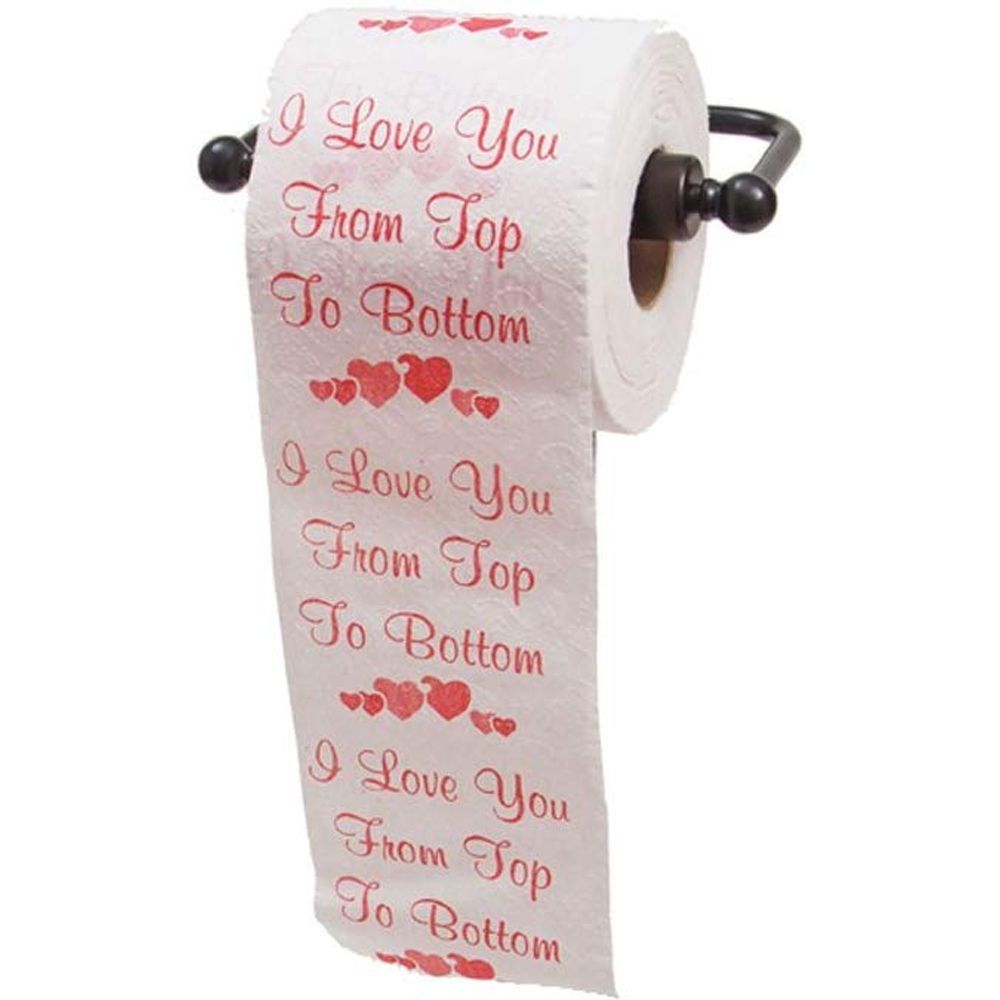
Toilet Paper

Vouchers

Carnivore Jerky Bouquet

Life Would Succ Without You Succulent

Hmmmm…Best Friends Coloring Book

Irritating Coffee Mug

Glitter Heart TOILET BOMBS

Hot Buns Potholder

Edible Cellphone

Love Oracles Cards

SOURCE: GOODHOUSEKEEPING.COM

Now this?  This is funny…LOL

Happy Valentine’s Day!

What Shall We Make Today?

Today’s offering is Chocolate Covered Strawberries!

Ingredients

10-ounce package Ghirardelli Baking Chips Bittersweet, semi-sweet, or milk chocolate

2 pounds fresh strawberries stems attached

Instructions

Start by washing the strawberries and then drying them VERY well. It’s so important to dry the strawberries well because, as you may know, chocolate and water do not work well together! If the strawberries are the least bit wet the chocolate will not stick!

If desired, add a handful of toppings, like crushed nuts or coconut, onto their own small plates. Line a sheet pan with parchment or waxed paper.

Use a double boiler or microwave the chocolate for 30 second intervals, removing and stirring at each 30 second interval, until the chocolate has melted. Stir often, making sure not to burn the chocolate!

Holding a strawberry by the stem, dip into melted chocolate, lift and twist slightly, letting the excess chocolate fall back into the bowl. At this point you may dip the strawberry in coconut or nuts (or leave it plain) and then place the strawberry on the parchment paper. Repeat with the rest of the strawberries. 

For a white chocolate drizzled strawberry, dip a fork in the melted white chocolate and drizzle the white chocolate over the dipped strawberries.

Chill the strawberries until the chocolate sets, about 15 minutes. 

ENJOY!

Penny for Your Thoughts

Ten interesting facts about pennies in honor of Abe Lincoln’s birthday!

The average penny lasts 30 years!

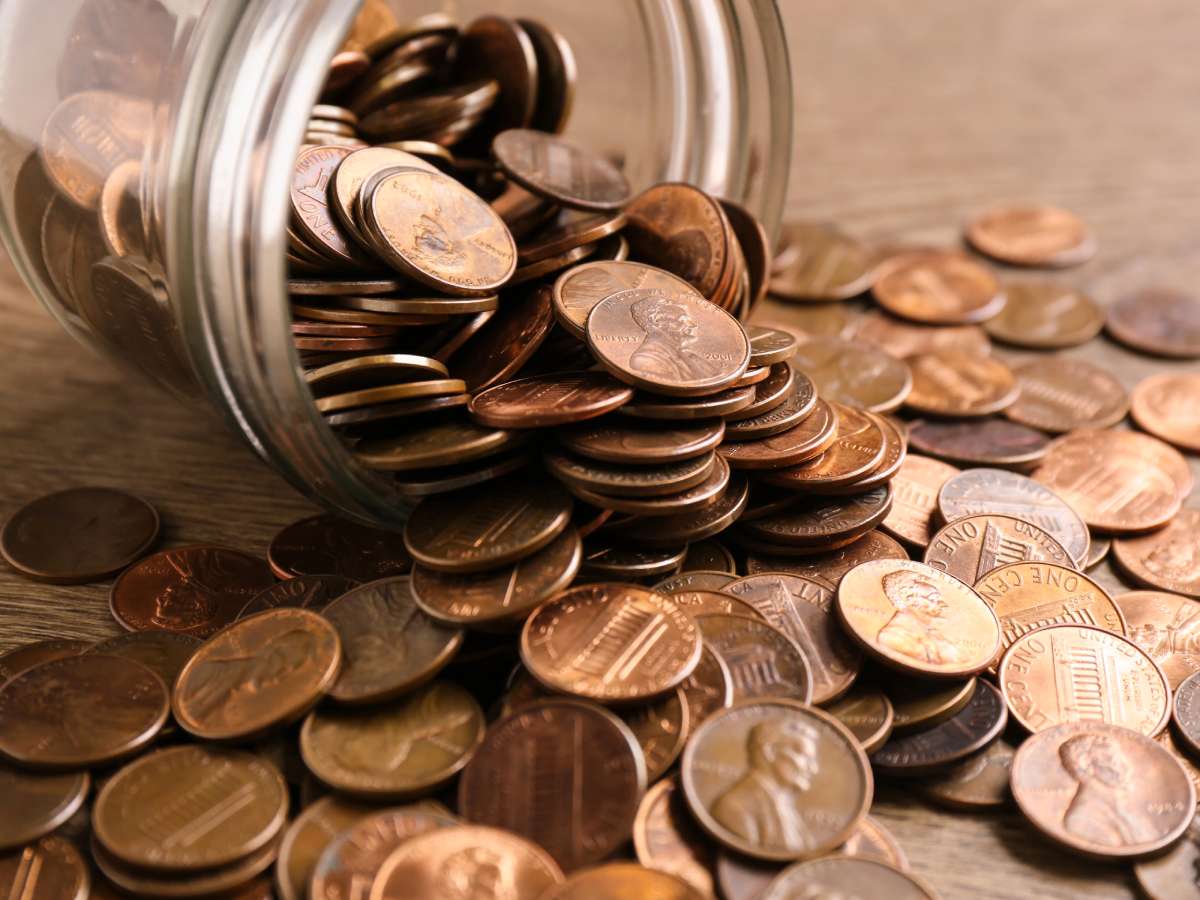
Pennies were the very first coins minted in the United States. In March 1793, the mint distributed 11,178 copper cents. (The amount of copper and zinc in the penny has changed significantly through the years.)

There have been 11 different designs featured on the U.S. penny.

The Lincoln penny was first minted and circulated in 1909, the 100th anniversary of Abe Lincoln’s birth.

Lincoln faces to the right, while all other portraits on coins face to the left. This was not done on purpose — it was simply the choice of the coin’s designer.

The penny was the first U.S. coin to have the motto “IN GOD WE TRUST”.

Lincoln pennies made from 1909 to 1958 were designed by Victor D. Brenner. His initials V.D.B. were on a limited quantity of the 1909 pennies making it one of the most sought after pennies for collecting.

Each year, the U.S. Mint produces more than 7 billion pennies. That’s approximately 19 million pennies per day! 

Over two-thirds of all coins produced by the U.S. Mint are pennies. In fact, the penny is the most widely used denomination currently in circulation and it remains profitable to make. Each penny costs .81 of a cent to make, but the Mint collects one cent for it. The profit goes to help fund the operation of the Mint and to help pay the public debt.

SOURCE: THEFUNTIMESGUIDE.COM

Know-It-All Tuesday: Valentine’s Day

Before “X” stood for a kiss, what did it represent at the end of a letter?

In Roman mythology, Cupid is the son of whom?

In the Victorian era, mean-spirited Valentine’s Day cards were called “___ Valentines.”

About how many roses are sent for Valentine’s Day each year?

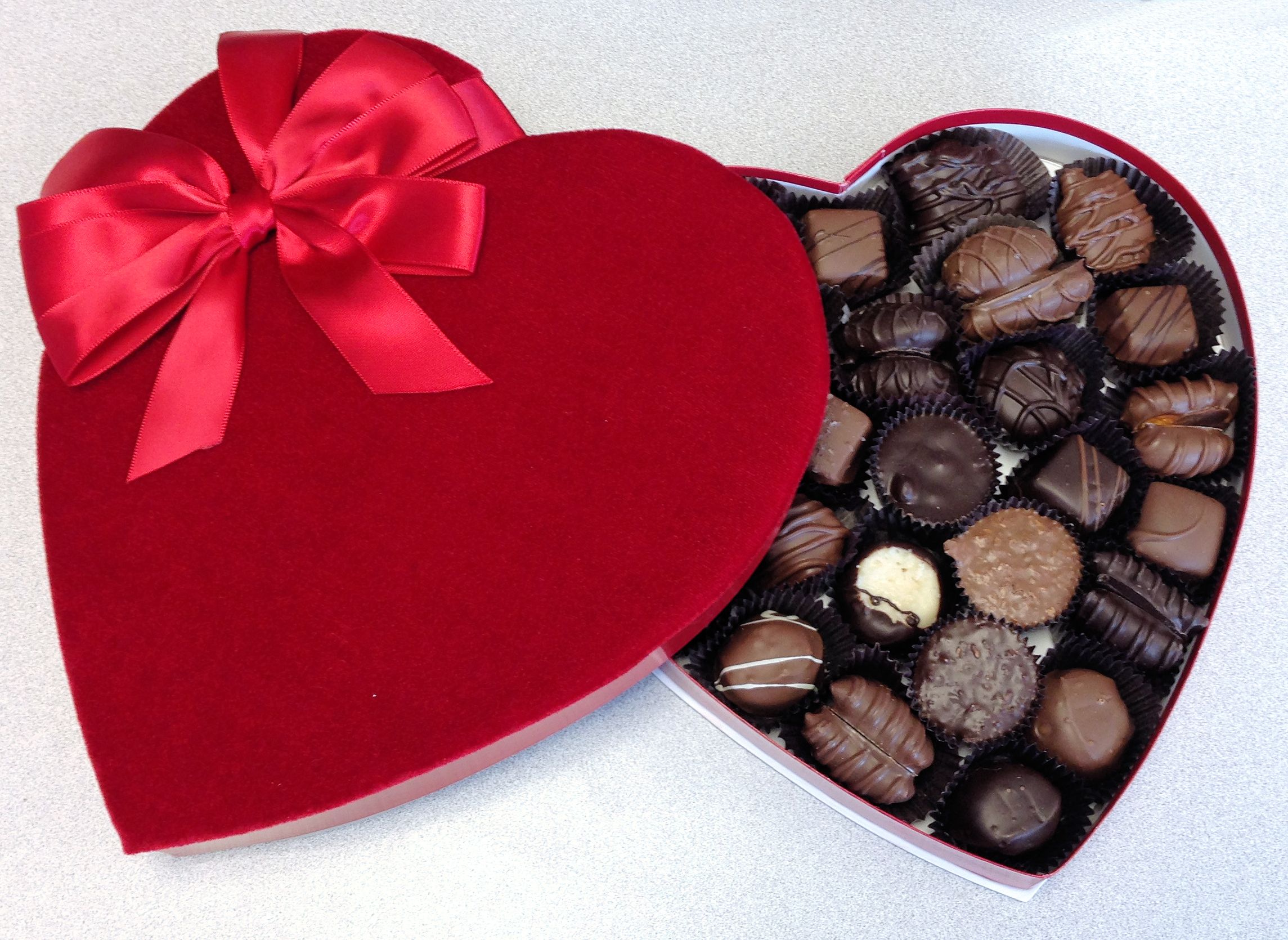
Who invented the first Valentine’s Day candy box?

On average, how many marriage proposals are there on every Valentine’s Day?

What brain chemical is known as the “cuddle” or “love hormone?”

What insanely popular website debuted on Valentine’s Day in 2005?

How many people typically buy Valentines for their pets?

What major invention was patented on Valentine’s Day?

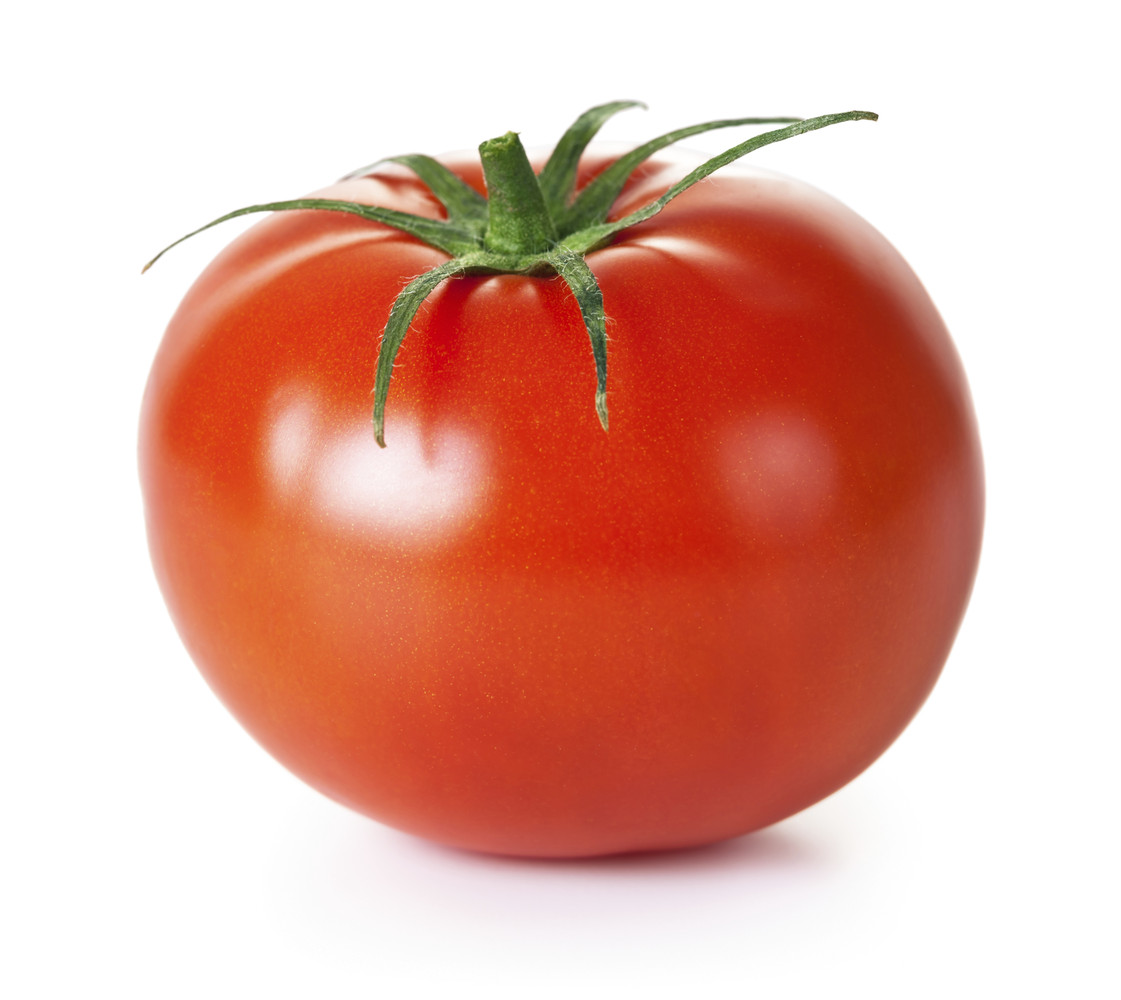
What fruit was once known as a “love apple” for its alleged aphrodisiac properties?

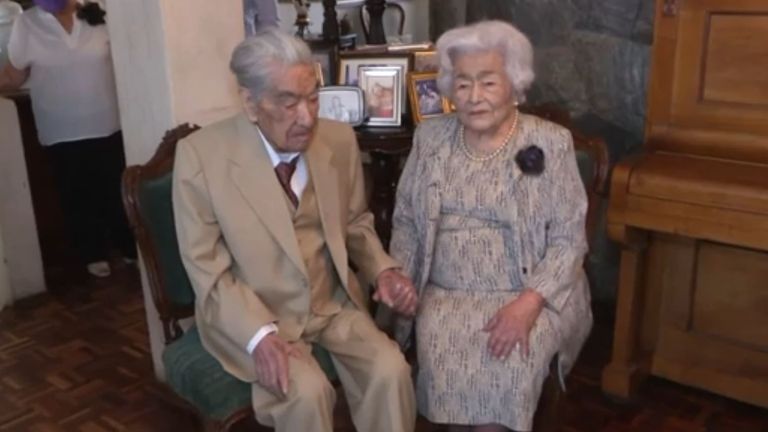
What is the Guinness World Record for the longest marriage ever recorded?

From where was the oldest-known Valentine’s Day message sent?

A single red rose surrounded by baby’s breath is called what by florists?

So, how did you do?

ANSWERS:

The Cross

Venus

Vinegar

50 million

Richard Cadbury

220,000

Oxytocin

Youtube

9 million

Telephone

Tomato

86 years 290 days

Prison

A signature rose

Until next month…stay sharp!