Fool Me Once…Part 1

Happy April Fools’ Day!  I found an interesting article on the some of the best April Fools’ pranks ever pulled on the History Collection website. Enjoy!

From: historycollection.com:

Nobody is certain when the custom of setting aside the first day of April to pull pranks on the unsuspecting began. Records of pranks go back centuries. There are reports of people hoaxing their fellows as far back as the early 16th century in France, at a time when the New Year was celebrated on March 25, one week earlier than April 1. Pranks were considered part of the New Year celebration. By the late 16th century, the event was recorded in the Low Countries, and it appeared in the British Isles a century or so later. In England, public announcements of a ceremony to wash the lions – statues at the Tower of London – appeared in 1698, though no such event took place.

In any event, throughout the history of the western world, April 1 became the date when harmless pranks were pulled on friends and strangers – and some have been epic. News organizations, governments, and private individuals have generated hoaxes for their own amusement and for the entertainment of others, at the same time demonstrating both their power and the gullibility of sections of the public. Here are some of the best April Fools pranks of all time, which when perpetrated demonstrated the brilliance of the prankster, and the foolishness of those taken in.

1. The Curious Case of Sidd Finch, April 1, 1985

Just before Opening Day, 1985, Sports Illustrated ran an article in their April 1 edition describing a unique phenomenon in the New York Mets training camp. His name was Hayden Siddhartha Finch – known to his teammates as Sidd – and he was capable of throwing a baseball at the unheard of speed of 168 miles per hour, with astonishing accuracy. He was a master of yoga, a dropout from Harvard University, disliked wearing shoes, and preferred playing the French horn to baseball. The article was accompanied by photographs, and the Mets organization played along, assigning both a locker and a uniform number to the fictitious pitcher (21). The response from the public and other media was immediate.

Mets fans called the team’s offices for additional information about Sidd. Sportswriters flocked to the Mets spring training facilities for a glimpse. A press conference was held on April 2, attended by the three major networks at the time, during which Sidd’s retirement was announced. The story, which had been written by George Plimpton, was revealed to have been an April Fools’ joke on the fifteenth of that month, but by then an uncounted number of people had been taken in. The absurdity of the tale and the absence of Finch in camp aside, many believed the story, and the Mets continued to field questions about the pitcher who never was for weeks.

2. The spaghetti harvest in Switzerland, April 1, 1957

In 1957 the British Broadcasting Corporation ran a segment on their popular television program Panorama, presented by the widely respected newsman, called a presenter in the UK, Richard Dimbleby. The three minute segment depicted spaghetti being harvested from the trees on which it had been grown in Switzerland. The report described a bumper crop of Swiss spaghetti, in part because the Swiss government had successfully eradicated the spaghetti weevil. Footage of an annual spaghetti harvest festival was included in the segment. Dimbleby’s deadpan voice-over and his reputation as a newsman gave the segment the air of authenticity, and over eight million Britons watched the program.

How many of them were fooled is unknown, but the BBC received hundreds of telephone calls in the aftermath, many of them asking how they could successfully grow their own spaghetti. Spaghetti was a recently introduced food in the UK in the late 1950s, usually purchased already prepared in tomato sauce in cans, which the British refer to as tins. It was considered somewhat exotic, even in that less than delicious presentation. Callers were told to try to seed their spaghetti in tomato sauce. Decades later the spaghetti hoax was described by CNN as one of the greatest ever pulled by a professional news organization, no matter how unbelievable it seems today.

3. Make your own color television, April 1, 1962

In 1962 Sweden had but one television channel, SVT (Sveriges Television) and the vast majority of television sets in the country were black and white receivers. SVT broadcast its programming in black and white as well, there were no color programs available for airing. On April 1, 1962, its leading technical expert appeared during a news broadcast, with the important news of a technological breakthrough which would allow Swedes to view the channel’s programming in what became known to an American network as “living color”. All they had to do was place an ordinary woman’s nylon stocking across the face of their television screen.

The expert, whose name was Kjell Stensson, demonstrated the process on the air, and the public responded with alacrity. According to Stensson, it was the mesh of the nylon which generated the color in the pictures appearing on the screen, though remember they were being broadcast in black and white. Hundreds, if not thousands, reported successfully obtaining a color image. After the report was revealed to be an April Fools’ Day joke, the number of Swedes who admitted being taken in dropped dramatically. By the way, color television broadcasts did not appear in Sweden until 1970, also on April 1, when it was no longer necessary to have a pair of nylons to receive the transmission.

4. The day the world became lighter, April 1, 1976

Early in the morning of April 1, 1976, the BBC radio station 2 presented an interview with noted astronomer Patrick Moore. Moore announced to his interviewer, and thus to listeners, that later that same morning a rare planetary alignment would occur which would have an effect on the gravitational forces on earth. At precisely 9.47 AM in Great Britain the affect would be at its peak. According to Moore if people were to jump into the air at that time they would achieve heights which up to then had been reachable only by NBA players, and some may even be able to float in the air for an extended period.

The appointed time came and went, and the BBC began receiving calls from listeners who reported successfully accomplishing the feat predicted by Moore in the interview. Hundreds of callers reported being able to reach unforeseen heights, and remaining suspended in mid-air for incredible lengths of time. Others claimed that they had been lifted out of their chairs, with no effort on their part, and floated about the room. How many of the callers were simply playing along with the joke and how many were actually taken in is unknown, but BBC 2 and Moore never revealed the idea had been made up by pranksters in the studio, and the affable Moore went along with the joke.

5. A German joke became American news, April 1, 1934

On April Fools’ Day, 1934, a Berlin newspaper published a photograph which showed a man flying using an apparatus which was powered by his own breathing. The man exhaled into a box worn on his chest, his breath causing rotors to spin and create suction, which according to the accompanying article lifted him into the air. Skis attached to his feet were used to land, and a tail fin was strapped to his back, affording him the capability of steering while airborne. The entire article and photograph was clearly a joke, in accordance with the date of its publication in Germany. American wire services picked up the story, and it appeared in American newspapers, one of which was the New York Times, later in the week.

The American newspapers received the story days after it appeared in Germany, and the significance of the date of publication was lost on them. In the United States the story ran as being real news. It was distributed throughout the United States by Hearst International. Newspapers which subscribed to Hearst carried stories which described the invention as a miraculous new means of man achieving flight, and even speculated on the invention’s potential impact on transportation and daily commuting. Gradually the newspapers came to realize that the whole story had been a joke, and the reports of a breath powered aviator faded out.

6. The Norwegian wine bottle shortage, April 1, 1950

The most widely read newspaper in Norway published a story on its front page on April 1, 1950, which described a dilemma faced by the Vinmonopolet, the wine monopoly in Norway which was owned and operated by the government. According to the story, the monopoly faced an overstock of barreled wine, and at the same time a severe shortage of bottles to fill in order to present the wine for sale to the public. In order to alleviate the glut and distribute the wine, the monopoly would sell at a deep discount, and for just that day tax-free, the wine to individuals who arrived at markets with vessels with which to carry the beverage home. The article recommended buckets.

Dutiful Norwegians formed long lines, laden with the recommended buckets, though some brought with them pitchers, empty bottles, and other vessels to carry their share of the inexpensive wine they felt was their due. Gradually realizing that the lines were not moving, or moving very slowly as those at the head of the line realized they’d been had, the disappointed Norwegian wine drinkers went home, many of them leaving their buckets – the symbol that they had been duped – behind. Who placed the story in the newspaper – whether a government official or an impish editor – was never revealed.

7. The wasp swarm in Auckland, April 1, 1949

In late March every year New Zealand radio stations are warned against perpetrating April Fools’ Day hoaxes on the air, as being a violation of the standards expected of news organizations. The warning came about in the aftermath of an April Fools’ Day joke in 1949. That year a disk jockey by the name of Phil Shone broadcast a report of a swarm of wasps, more than one mile wide, approaching Auckland. Shone exclaimed on the damage the swarm could do to persons who were inundated by it, and told his listeners to take precautions to protect themselves from being stung. He advised them to place traps baited with honey outside their abodes, to keep the wasps from entering the home.

For those who had to go out, he recommended that all skin be covered, with masks and gloves. He also suggested that socks be pulled up over the cuffs of trousers for those forced to be outside. The image of New Zealanders clad as he recommended was no doubt amusing to him, but there were those who did not find the joke entertaining. The New Zealand Broadcast Service determined that the hoax was a violation of the standards all broadcasters were duty bound to meet, and the annual reminder appeared the following year, and every year hence.

8. The Hawaiian tax refund, April 1, 1954

It was another disk jockey, at Hawaii’s KHON radio, who created a frenzy through an April Fools’ Day joke in 1954. The radio station announced that the United States had granted statehood to the territory, and as a result, Hawaiians were to receive refunds on the income taxes paid for 1953. IRS offices in the islands and on the mainland were flooded with calls from citizens demanding additional information. So were radio stations, television stations, congressional offices, savings and loans, and banks. The entire territory of Hawaii, not then as populated as today, was placed in a frenzy before cooler heads prevailed.

The situation of residents of Hawaii, who paid federal income taxes but were not granted full rights as citizens of the United States, had been much in the news. Tax relief for the islanders had been discussed among members of Congress, including those lobbying for statehood for the islands. The joke did little other than roil the islands for a few days, before it was demonstrably proven false. Statehood was not granted to the islands until 1959, and Hawaiians were never refunded the income taxes they paid before statehood was achieved.

9. Americans land on the moon, April 1, 1967

To Americans, the drive to land on the moon by the end of the decade was in limbo in the spring of 1967. A disastrous and tragic fire which killed three astronauts in January of that year had shaken confidence in the space program. Congress was divided on whether to continue to pursue President Kennedy’s vision. But on April 1 of that year, listeners to Radio Zurich in Switzerland were informed that the Americans had landed on the moon. The news was broadcast in a breathless, rushed fashion, complete with winded reporters rushing to their mikes to deliver the latest information, barely able to control their breathing as the story unfolded.

The good citizens of Zurich were informed of the time the American spaceship would depart the moon to return to earth, and encouraged to head for rural areas where, once away from the light pollution of the city, they would be able to view the departure. Thousands did. Even American officials in Switzerland were taken in by the hoax, which was the brainchild of Radio Zurich’s Hans Menge, a respected news broadcaster. The April Fools’ Day hoax was even monitored by the Soviets, though their radar capabilities caused them to question what they were hearing from the Swiss. The Americans finally did land on the moon over two years later, in July 1969.

10. Converting soil into food, April 1, 1878

The New York Daily Graphic was a newspaper which relied on illustrations rather than writers to deliver the news of the day. It was filled with both original artwork and the reproductions of others. It was the first American newspaper to present a daily weather map, provided by an obliging government, which paid the paper to print it for the benefit of its readers. On April Fools’ Day, 1878, the Graphic presented its readers with an illustrated story which described Thomas Edison, then on the crest of fame for his invention of the phonograph, having created a machine which converted dirt into edible protein. His machine could also emulate the Wedding at Cana, converting water into wine.

According to the Graphic, Edison’s invention forever solved the problem of hunger in the world, since the minerals in the soil could be shaped into food without the pesky delay of growing wheat, or corn, or some other comestible. Competing newspapers reprinted the Graphic’s reporting, and Edison was fervently praised on editorial pages across the country. When editors for the Graphic learned of the story being repeated around the country they took the opportunity to needle their compatriots in the media, reprinting their reports, and gloating over the fact that their competitors had bought into their April Fools’ Day hoax. The writer of the hoax, William Croffut, gave birth to Edison’s moniker, “the Wizard of Menlo Park”.

SOURCE: HISTORYCOLLECTION.COM

One Last Birthday…

Today is Christopher Walkin’s birthday—born March 31, 1943—and I cannot say I know much of his work.  But what I do know and LOVE is his lion speech.  I don’t even know what movie it’s from. (Poolhall Junkies) It’s how it’s been used to describe President Trump and how a lion has to show you WHO HE IS that I LOVE!

Happy Birthday Christopher!

What Shall We Bake Today?

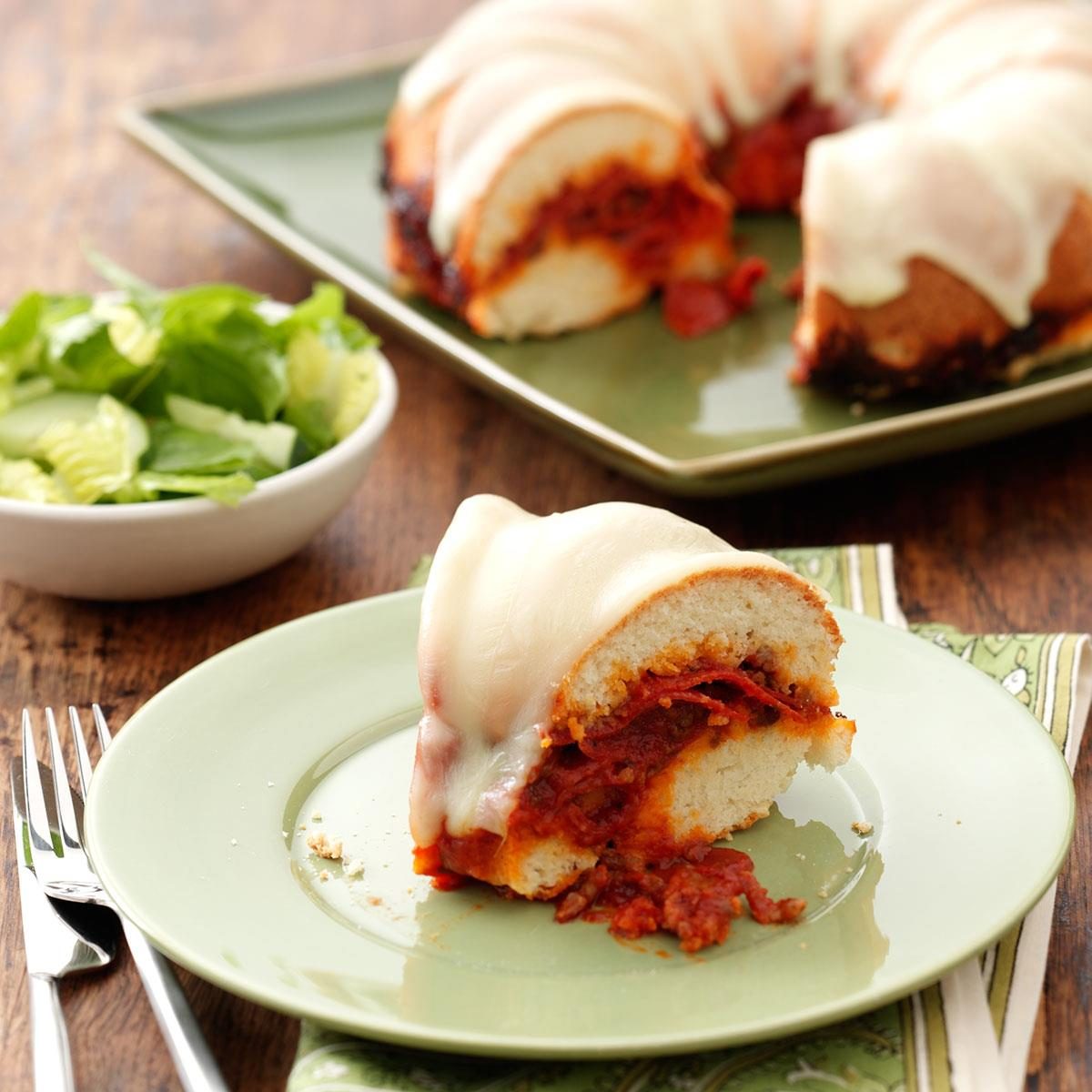
Since April Fool’s Day is coming up and I thought you might want to try this, I present an April Fool’s Cake.  (I didn’t even know this existed…lol)

Ingredients

1 jar (14 ounces) pizza sauce

1/2 pound bulk Italian sausage, cooked and crumbled

1 package (8 ounces) sliced pepperoni

3 cups biscuit/baking mix

3/4 cup whole milk

2 large eggs

2 tablespoons butter, melted

1 teaspoon garlic salt

5 to 6 slices mozzarella cheese

Directions

Preheat oven to 375°. In a bowl, combine the pizza sauce, sausage and pepperoni; set aside. In another bowl, combine the biscuit mix, milk, eggs, butter and garlic salt. Spread half of the batter on the bottom and up the sides of a greased 10-in. fluted tube pan. Spoon meat mixture over batter; cover with remaining batter.

Bake for 35-40 minutes or until browned and a toothpick comes out clean. Invert onto a baking sheet. Arrange cheese over cake. Return to the oven for 5 minutes or until cheese is melted. Using two large metal spatulas, transfer cake to a serving platter; serve immediately.

Enjoy!

Walmart…Again

In honor of Walmart founder Sam Walton’s birthday (born March 29, 1918, died April 5, 1992) I present more images from Walmart.  Brace yourselves!

Hooves

Hanging Pockets

A Customer & His Doll

Display Headphones (Gross!)

Fashion

Werther’s

Ahhhh…???

Just…WHY??

Foul Hair

Handcuffs?

Dogs Out

Pets

Photoshoot?

WTH???

More Pets

UM…What?

More Carts

Sure, Why Not?

Prick of the Year Award

People Watchers

Customer of Year

SOURCE: KNOWYOURMEME.COM

Reba

Happy Birthday Reba McEntire!  She was born in 1955 and her tv series is a favorite here at home.  I found this article on fame10.com detailing some things I didn’t know about her show.

From fame10.com:

Over the years there has been an onslaught of family sitcoms, but one of the best was Reba which ran on The WB for five seasons and The CW for one before going off the air. Over the years it amassed a large and loyal fanbase who would have been more than happy to see the series continue on well past 6 seasons thanks to its excellent writing and a perfect cast pulling it all together. Reba McEntire proved she really is a comedic genius and talented actress as well as an amazing singer, and was supported by a cast including Christopher Rich, Melissa Peterman, Steve Howey, Scarlett Pomers and JoAnna Garcia. All these years later, take a look back at the fantastic series with these 7 things you probably never knew about Reba.

7. Sally?

It only makes sense for a series starring Reba McEntire to be called Reba, right? Well it seems that isn’t how it started out. Originally Reba’s main character was supposed to have the name Sally, but Reba quickly convinced executives that because of her loyal fanbase from her singing career, calling the show Reba would help fans connect to it. In fact her character’s name ended up being Reba Nell Hart and Reba’s real full name is Reba Nell McEntire.

6. Best Friends

For a whole lot of the show, the basis was on Reba dealing with the fact her husband Brock has left her to marry his young, naive and ditzy dental hygienist Barbra Jean who he had an affair with. A lot of the comedy revolves around Reba “hating” Barbra Jean, known as B.J., while B.J. considers Reba her best friend. Despite all of this the two actresses Reba McEntire and Melissa Peterman really are best friends in real life.

5. Ratings

For all five seasons that Reba was placed in The WB’s Friday night lineup, the series set a new all-time viewership record for any program on the network’s Friday night lineup. Meanwhile the premiere on the The CW on Sunday made it the highest rated sitcom on the network and as a result of its placing before 7th Heaven, 7th Heaven saw a season high of 4.51 million viewers. It also beat out all others in repeats during The CW’s very first season from 2006-2007, and when ratings for the summer drama Hidden Palms plummeted, Reba re-runs were added to the CW’s schedule in June of 2007 and instantly became the most-watched program of the night, and later in the summer the Reba re-runs became the most-viewed program on the CW.

4. The Cancellation

Halfway through Reba‘s sixth season, rumors circulated that “the back nine” Reba episodes, or the final episodes, had been ordered by the network which would have given Reba a full-season order. Then, abruptly in January 2007 during the TCA Press Tour it was announced that the series had been cancelled and there was not going to be any “back nine” episodes ordered. The news came as a shock to fans and the finale garenerd 4.4 million viewers, and soon rumors began that the show was going to be picked up by another network; however, when stars JoAnna Garcia and Steve Howey signed on to new CBS and Fox shows it was clear Reba would not continue on any network. In May 2007, 20th Century Fox TV president Gary Newman stated that he regretted how the show was handled and was sure it could have been a hit for many more years on CBS or ABC.

3. The Switch

Before the cancellation, Reba was already hitting a rough patch that it was luckily able to get through. Reba was actually originally cancelled when The WB and UPN merged into The CW Television Network in 2006. Then, abruptly on May 17, 2006, The CW made the decision to actually renew Reba instead which was when the show was paired with 7th Heaven on Sunday evenings. The success of Reba was more than the network could have imagined as it quickly surpassed hit dramas such as Supernatural, One Tree Hill and Veronica Mars. 

2. Eating Disorder

Fans were well aware when one of the show’s stars, Scarlett Pomers, who played Reba’s middle child, Kyra Hart, was absent for almost all of season five, appearing in only two episodes; however, her absence was not really addressed. As it turns out her absence was actually because she had to enter treatment for an eating disorder which had seen the 5’2″ actress drop down to 73 lbs. Pomers appearance drew concern from her castmates when she showed up for filming season five and it was with good cause because Pomers was barely eating and exercising for up to six hours a day in secret. Despite the severity of her condition, once she had received help she returned to the show, and a joke about her extended absence was even made. In Pomers’ first episode back, Reba asked, “Where have you been?” to which her character, Kyra, replied, “I went to get something to eat.”

1. Music Video

Fans absolutely loved the romance between JoAnna Garcia’s character Cheyenne and Steve Howey’s character Van, and as such, the two went on to star in a music video for Reba McEntire and Kenny Chesney’s song “Every Other Weekend.” The two were not necessarily in character, but they did portray a divorced couple who share custody of their children and have to exchange them “every other weekend.”

SOURCE: FAME10.COM

Green Jay

12 Facts about Green Jays

1. Males and females look similar. 

Both males and females have the same plumage and brilliant green feathers. The ombre of yellow-green, blue, and black is striking. This bird can blend in with light green foliage or stand out against a backdrop of coastal brush. The Green Jay’s head is black with blue accents around its eyes. Small blue feather tufts perch like eyebrows over its eyes. A blue stripe comes down the front of its head and adorns its cheeks. The body is blue, green, and yellow. It has a greenish back, wings, and tail, but the underside is pale yellow. 

2. The only place in the United States to see them is Texas.

The Green Jay is a thoroughly tropical bird. Most of their population is found along Mexico’s east and west coasts, and the Yucatan peninsula to Honduras. However, the very northern edge of their range reaches into the southern tip of Texas, where they are considered a South Texas specialty. Green Jays don’t migrate, so you can expect to see them year-round within their range. They will shift around between breeding and feeding sites, however, in order to capitalize on the growing season. 

3. They travel in flocks. 

Green Jays are the opposite of solitary birds. They almost always live in pairs or family groups that contain a nesting pair, their new young and the previous seasons young. When feeding, the flock can send out a few birds as lookouts for predators. Other birds work as scouts to identify new food sources. Once the young males in the group get to be a year or so old, the adult male will chase them off, forcing them to break from the group and go establish their own.

4. They have complex social networks.

Green Jays are very family-oriented. Most flocks of Green Jays are related to each other in some manner. Once a mated pair’s young fledge, they stay with their parents’ flock for about a year. During this intermediate period, they learn techniques to forage for food, ways to defend territory, and how to use tools. To greet their elders, they call to them and hop up and down on their perches. 

5. There are two similar populations that are often lumped together.

Scientists recognize two separate populations of Green Jay. The first, which we are discussing in this article, lives in Mexico and southern Texas. A second group called “Inca Jays”, with a slightly different look, lives in a strip of habitat along the Andes Mountains from north-central South America south to Bolivia. They are separated by about 900 miles.  Sometimes these are listed as separate species, and sometimes the Inca’s are looked at as a subspecies of the Green Jay. These two populations have slightly differently colored feathers. Inca Jays are similar to the Green Jays, but their underparts are brighter shades of yellow. Instead of having blue on the top and back of their head, they have white. 

6. They can be attracted to bird feeders with moderate effort. 

It’s simple work to entice Green Jays to your yard, but be careful. If there’s one Green Jay there, there will probably soon be several more! These birds are not picky and will eat almost any kind of seed or suet. Similar to Blue Jays, they prefer large nuts like peanuts. 

7. Parents work together to raise their young. 

Males and females mate for the long term. While it is not known if these birds mate for life, the interconnectedness of their family relationships suggests that long-term partnerships are at least common. After the male woos the female with mutual preening, soft burbling noises, and spending time one-on-one, they build the nest together. Texas populations select brushy thickets and favor mesquite. The young often patrol the outer reaches of the territory, which can reach over 40 acres! 

8. Their behavior is similar to Blue Jays and Steller’s Jays. 

Like Blue Jays and Steller’s Jays, Green Jays are not very afraid of humans or their developments. While Blue Jays are more common in suburban areas, all three species are commonly seen at campsites and rural parks. They will beg for food and scavenge around trash cans and refuse piles. Other shared characteristics include a broad vocabulary, highly territorial natures, and a tendency to be more curious than afraid. None of these three species of birds is very subtle, either! Blue Jays are known for their ability to mimic the sound of common hawks such as red-tailed and red-shouldered. This can frighten away other bird species from food sources they want for themselves. Green Jays are also known to use this behavior and have been observed mimicking other large bird species, like Plain Chachalacas, to scare away other birds.

9. Populations in Texas are thriving. 

Conditions in southern Texas continue to be hospitable to Green Jays. There, they enjoy mild winters, abundant foliage and berry bushes, and non-threatening human development. They are free to spread out in territories averaging about 40 square acres, which isn’t possible in smaller habitat zones. 

10. Green Jays are omnivores. 

Like crows and blue jays, Green Jays eat almost anything they can get their beaks on. They are consummate foragers, searching for everything from fruit to the helpless nestlings of other birds. Some have been known to eat mice and small amphibians. 

11. They prefer habitats near water sources. 

Along the scrubby desert coast, freshwater is a crucial resource. Green Jays take advantage of that by preferring to nest and live nearby reliable water sources. This provides them with well-developed foliage to perch, nest, and forage in. It’s also more likely that they will find food sources near freshwater. Insects, an essential part of their diet, are more plentiful near lakes, rivers, and streams. 

12. Green Jays are one of the few North American bird species to use tools.

These birds are members of the family Corvidae, the same family as crows and ravens. Their intelligence expresses itself by way of the complexity of these birds’ communications, their ability to work together, and the use of tools. Green Jays have been observed using sticks to lift pieces of bark away from the tree, exposing insects beneath that they can eat. They are one of the few North American bird species known to use tools, alongside their cousins the crows and magpies. 

SOURCE: BIRDFEEDERHUB.COM

DIY: Spring Garden Projects

Spring is the perfect time to begin lawn and garden projects!  This article from thegardeningcook.com shows you how to get started.

From thegardeningcook:

These early spring garden projects will get a jump start on your garden and will get you outside too! From lawn care ideas to tips for growing perennials in the spring, i’ve got you covered. I know that in most parts of the country, the ground is still covered with snow, but as any good gardener will tell you, “it’s never too early to start thinking about spring gardening!” Spring is just around the corner and daylight savings on the horizon, so now is the time to think of getting our gardens ready. Are you like me in the late winter?  As soon as the sun starts to shine and the temps go up a bit, I seem to feel that urge to get out there and do something. Many times though, it’s far too early to plant anything. However, there are lots of things that you can do to get ready. 

Get your garden ready now with these early spring garden projects

1. Prepare for early lawn care

This is at the top of my early spring garden projects for a reason.   A lush, green lawn is such an important part of a great garden.  We all enjoy entertaining in the summer, and a wonderful lawn adds so much to the atmosphere of your garden setting.  Early spring is the time to take stock of the condition of your lawn after a winter of it not growing.  It will show what needs to be done to get it ready for spring when you can easily see the problems lurking there. I have a lot of lawn area and the back yard has quite a few weeds growing.  It definitely needs some TLC in the spring. I’ll start by raking my lawn early in the spring to remove dead grown and winter debris.  This brings light as well as air to the soil, which encourages the grass to grow.  Now is the perfect time to care for your lawn.  Don’t wait until the heat of summer hits.  When you are hosting a barbecue party in summer and your lawn is lush and green, you’ll be glad you started now.

2. Clean and repair birdhouses

Some birds visit us all year round here in NC and many really start visiting when the weather starts to turn warm.  Now is the time to check the birdhouses.  Make sure they are firmly mounted. Clean bird feeds and fill them with fresh seed, once they are dry.   Consider creating a pile of nesting materials in your yard where the birds can easily take stuff to make their nests. This little bird house needs a makeover this year.  It belonged to my mother who died last year and I will treasure it once I fix the damaged parts.

Now is the time to clear away the junk

One of my most needed early spring garden projects is cleaning up after winter.  Winter can be hard on a garden.   All sorts of garden debris and other refuse seems to gather everywhere around the yard.

3. Clear away refuse

Check the drainage ditches and walk around your yard to see what can be gathered and put out for garden refuse pick up. Our local authority allows me to put yard debris out every week and I have a whole row of old trash cans just waiting for this job.  Plants and lawns grow best in soil that drains well, so gather up those leaves, gather the weeds, and clean out the drainage ditches!  If you have a compost pile, even better.  I use a rolling compost pile. It is not very pretty, as this picture shows, but it is VERY easy to turn and all that yard refuse will turn into “black gold” that will work miracles in my garden and on my lawns. This pile is just LOADED with rich hummus under all the refuse.  Dumping my winter time yard refuse on this pile makes the clean-up part quite easy.

4. Tend to the bird baths

My bird baths are often discolored by the end of the winter.  They all need a good cleaning and scrubbing and then need to be refilled with water.

5. Think spring bulbs

Many spring bulbs start sending up leaf shoots during some warm winter days and then suffer a bit from a cold snap by getting brown edges to the leaves. The bulbs are just fine, they need the cold before they start sending up the flowers, but you can trim the leaves a bit to tidy things up.   While you are at it, make a sketch of where the spring bulbs are and put it in your gardening planner.  Once they have stopped growing, it will be hard to know where to plant your perennials without a sketch showing you where the bulbs are underground.

6. Check your mulched areas

This job is at the top of my must-dos of early spring garden projects. I have 9 large garden beds so I spend a lot of time (and money) on mulching every year.  And no matter how nicely the mulched areas looked last fall, there are still areas where the mulch has degraded or (it sometimes seems) just plain disappeared!  Add composted leaf mulch to the bare areas so that the weeds that we all know are lurking there won’t be able to grow as easily.

7. Check your outdoor seating areas

Last year, I bought new patio cushions for my seating area which rests under a huge Magnolia tree. By mid-winter, the cushions were a green mess and I honestly thought I would need to throw them away. But I threw them in the washing machine with some spray on stain remover (it took two washes) and they look almost like new.  Note to self:  Next year, put the patio cushions in the shed in the fall!  One of my summer projects for this seating area is going to be to sand the seat and bench and give it a fresh coat of paint in a dark green color. Stay tuned for the transformation.

8. Touch up yard decorations

Of all of my early spring garden projects, this one is my favorite.  I love to add decor to my garden.  Do you have some yard decorations that will need a touch up to look their best for spring and summer?  I have an old mail box that I salvaged from a make-over that I did last summer.  I plan to use to hold my gardening tools, and have a garden decoration too.  It’s very rusty, but will make a great project for early spring when I can’t actually be gardening. I plan to paint it and stencil on the side. It will make a lovely yard decoration when done.

9. Cut back ornamental grasses

I let my Japanese Silver grass get very tall in the winter because it sends up beautiful plums above the plant. But early spring is the time to cut it right now to about 6 inches to encourage lush growth during the spring and summer. If I leave this plant for even a few more weeks, ALL of these fronds will be covering my garden bed.  Now is the time to prune them.

10. Scrub those clay pots.

Clay pots get very dirty if they are left out over the winter. Now is the time to soak them so that they will be ready for the plants when the weather is warm enough for them to be planted.  

11. Cut back perennials

 Sometimes I do this in the fall, but more often, I leave this chore for the early spring, to keep some seed pods for winter birds. Perennials can be cut back almost to the ground level in most cases without hurting them at all.

12. Prune your roses

 In most cases, you will be pruning your roses just as the plant will be breaking the winter dormancy.  In warm climates, like NC, this will be fairly early in the year, just after the last frost.  Roses bear flowers on last year’s wood.  Trim off any old, dead canes. Be sure to prune so that the center of the bush is open for best air circulation.  

13. Remove dead wood

This goes for roses but also for other trees and shrubs too. Nothing will grow from dead wood, so get rid of it.  This goes for most suckers too. They sap the life from your plant and should be removed.

TIP:  If it is too early for you to prune shrubs, you can still inspect the plants. Take some ribbon with you and tie it where you want to prune once the weather warms up. So get out those garden gloves and your pruning shears and get rid of the dead wood. You’ll be glad you did come summer time.

14. Spring weeding

Even though I have it listed as #14, weeding is at the top of my list for early spring garden project. Weeding can the bane of my gardening life, if I let it be. Each year, I say that I am going to pull up weeds during the winter on warm days, and each year, I neglect this. But early spring is a good time to weed as long as the ground is not too wet, AND it’s the best time to do this job. The roots of the weeds are shallow and they will come out easily this time of the year.   This border that I planted late last summer looks as though it needs some TLC l right now, but those weeds will be out in less than a half hour and the bed will be beautiful.

15. Early spring Vegetables

Many vegetables thrive when planted in the early spring because they love the cooler weather. Some popular ones are English peas, broccoli, cabbage and Brussels sprouts. Here in NC, these plants don’t do well in the summer at all, so early spring is when I have to plant them if I want to grow them.  See my list of cold hardy vegetables here.

16. Check your lawn edges

 Inspect plastic lawn edging to see if it needs replacing.  If you edge manually with trenches, now is a good time to tidy these up so the edges will be ready when the lawns start to grow. Doing it early means that the edges will only need cutting into soil, not into lawn that is encroaching into the borders.

17. Start seeds indoors

Get a head start on spring but planting seeds for flowers and vegetables indoors.  I have a large plant stand that sits outside during the spring and summer. During the winter, it sits in front of my glass sliders and gets southern sunlight. It is the perfect spot for my plant cuttings and seed starting efforts.

18. Divide perennials

One of my favorite early spring garden projects is to divide my perennials.  Early spring is the perfect time to divide perennials. Many of them really benefit from being divided for best growth. Either plant the divisions in another part of your garden, or share them with some of your plant loving friends.

SOURCE:  THEGARDENINGCOOK.COM

The Triangle Shirtwaist Company Fire

On March 25, 1911, the Triangle Shirtwaist Company factory in New York City burned, killing 146 workers. It is remembered as one of the most infamous incidents in American industrial history, as the deaths were largely preventable–most of the victims died as a result of neglected safety features and locked doors within the factory building. The tragedy brought widespread attention to the dangerous sweatshop conditions of factories, and led to the development of a series of laws and regulations that better protected the safety of workers.

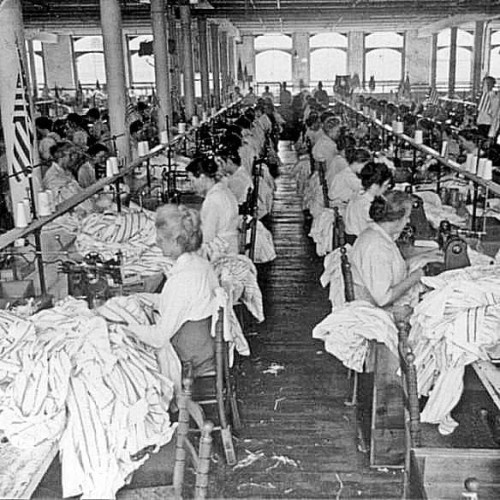
The Triangle factory, owned by Max Blanck and Isaac Harris, was located in the top three floors of the Asch Building, on the corner of Greene Street and Washington Place, in Manhattan. It was a true sweatshop, employing young immigrant women who worked in a cramped space at lines of sewing machines. Nearly all the workers were teenaged girls who did not speak English and worked 12 hours a day, every day. In 1911, there were four elevators with access to the factory floors, but only one was fully operational and the workers had to file down a long, narrow corridor in order to reach it. There were two stairways down to the street, but one was locked from the outside to prevent stealing and the other only opened inward. The fire escape was so narrow that it would have taken hours for all the workers to use it, even in the best of circumstances.

The danger of fire in factories like the Triangle Shirtwaist was well-known, but high levels of corruption in both the garment industry and city government generally ensured that no useful precautions were taken to prevent fires. Blanck and Harris already had a suspicious history of factory fires. The Triangle factory was twice scorched in 1902, while their Diamond Waist Company factory burned twice, in 1907 and in 1910. It seems that Blanck and Harris deliberately torched their workplaces before business hours in order to collect on the large fire-insurance policies they purchased, a not uncommon practice in the early 20th century. While this was not the cause of the 1911 fire, it contributed to the tragedy, as Blanck and Harris refused to install sprinkler systems and take other safety measures in case they needed to burn down their shops again.

Added to this delinquency were Blanck and Harris’ notorious anti-worker policies. Their employees were paid a mere $15 a week, despite working 12 hours a day, every day. When the International Ladies Garment Workers Union led a strike in 1909 demanding higher pay and shorter and more predictable hours, Blanck and Harris’ company was one of the few manufacturers who resisted, hiring police as thugs to imprison the striking women, and paying off politicians to look the other way.

What Started The Triangle Shirtwaist Factory Fire?

On March 25, a Saturday afternoon, there were 600 workers at the factory when a fire began in a rag bin. The manager attempted to use the fire hose to extinguish it, but was unsuccessful, as the hose was rotted and its valve was rusted shut. As the fire grew, panic ensued. The young workers tried to exit the building by the elevator but it could hold only 12 people and the operator was able to make just four trips back and forth before it broke down amid the heat and flames. In a desperate attempt to escape the fire, the girls left behind waiting for the elevator plunged down the shaft to their deaths. The girls who fled via the stairwells also met awful demises–when they found a locked door at the bottom of the stairs, many were burned alive.

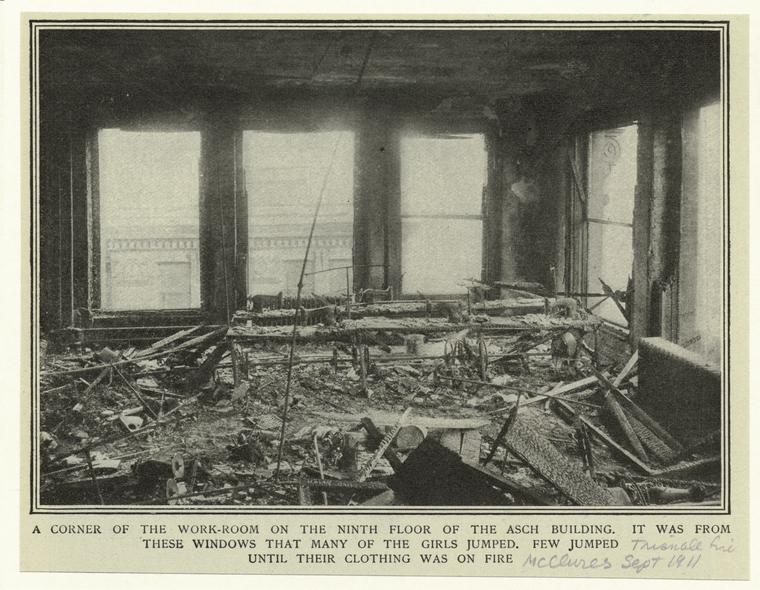
Those workers who were on floors above the fire, including the owners, escaped to the roof and then to adjoining buildings. As firefighters arrived, they witnessed a horrible scene. The girls who did not make it to the stairwells or the elevator were trapped by the fire inside the factory and began to jump from the windows to escape it. The bodies of the jumpers fell on the fire hoses, making it difficult to begin fighting the fire. Also, the firefighters’ ladders reached only seven floors high and the fire was on the eighth floor. In one case, a life net was unfurled to catch jumpers, but three girls jumped at the same time, ripping the net. The nets turned out to be mostly ineffectual.

Within 18 minutes, it was all over. A total of 146 people were killed by the fire due to severe burns, smoke inhalation, falls from great heights and injuries sustained during the incident.

The fire helped unite organized labor and reform-minded politicians like progressive New York Governor Alfred E. Smith and Senator Robert F. Wagner, one of the legislative architects of President Franklin D. Roosevelt’s New Deal agenda. Frances Perkins, who served on a committee that helped to set up the Factory Investigating Commission in New York in the wake of the fire, would later become Roosevelt’s Secretary of Labor. The workers union set up a march on April 5 on New York’s Fifth Avenue to protest the conditions that had led to the fire. It was attended by 80,000 people.

Despite a good deal of evidence that the owners and management had been horribly negligent in the fire, a grand jury failed to indict them on manslaughter charges. To settle lawsuits against them, they eventually paid $75 in compensation to each victim’s family—a fraction of the $400 per death that they were paid by their insurer.

Still, the massacre for which they were responsible did finally compel the city to enact reform. In addition to the Sullivan-Hoey Fire Prevention Law passed that October, the New York Democratic set took up the cause of the worker and became known as a reform party. Both were crucial in preventing similar disasters in the future.

SOURCE: HISTORY.COM

Harry Houdini Revealed

In honor of the great Houdini’s birthday, I present an article revealing some of Harry’s better illusions and tricks.

From: METRO.CO.UK:

The seemingly impossible stunts performed by master escapologist Harry Houdini have confused and delighted generations. Breaking locks, escaping submerged boxes, getting out of straitjackets, the fiendish Chinese Water Torture routine – his feats were simply astounding. Yet magic always has a simple explanation and, in Houdini’s case, his methods were in fact far more ingenious and impressive than the trick itself. The 52-year-old died on Halloween 1926, possibly as a result of one of his most famous stunts going wrong. The explanation of his methods has caused outrage among the magic community, with many saying they still perform some of the tricks. But, hey guys, some of these are more than 100 years old. Don’t you think your paying audience deserves some new material?

At the risk of being sawn in half by the Magic Circle, here are ten of Houdini’s greatest stunts – and how he did them.

1. Handcuffs: Harry Houdini could get out of any set of handcuffs. He often added a river or lake to the escape trick to spice things up a bit. People came to his stage shows with elaborate sets of their own, and the local police were encouraged by Houdini to try to keep him restrained. Twice it took him over an hour to free himself, but none ever succeeded in keeping him cuffed. Even specialty one-off handcuffs with a single bespoke key could not hold Harry.

What really happened: Many thought that he had trick-release stage cuffs but the truth was more simple – Houdini studied picking locks from a very early age. Sometimes he could just hit the handcuffs, at a certain angle and with enough force, for them to spring open. Other times a thin piece of string was enough to pull a screw from the locking mechanism and open it. Most times, however, he had a skeleton key hidden in the palm of his hand or sleeve. For the specialty handcuffs with only one key, Houdini would ask to inspect the cuffs and the key, secretly handing the key to an assistant – who would go back stage and choose a similar-looking key for Houdini’s vast collection. Houdini would simply hand back the lookalike key before miraculously escaping using the real one.

2. Hanging Straitjacket Escape: Straitjackets are purpose-made to restrain people, so it was an eye-popping feat to see a man wrapped up in one, dangling high off the ground from a rope tied to his feet. Houdini was famous for this stunt, regularly performing a jacket escape while hoisted up in front of the theatre where he would be putting on his evening show. He did the stunt in public in a bid to swell audience numbers, and it worked.

What really happened: When the jacket was being put on, Houdini would: cross his arms so his dominant right arm was on top; breathe in a huge gulp of air to make his chest bigger; and pinch and grab the material of the jacket to take up any slack before it was buckled. Breathing out and letting go of the slack gave him a lot of room to maneuver, but it was a matter of using brute strength to pull his right arm over his head. Once he had both arms in front of him, he would undo the straps and buckles with his teeth, or a cutting tool he had ‘palmed’ before the jacket was put on. Hanging upside down, while seemingly making the stunt more dangerous, actually helped Houdini perform the trick, because gravity worked in his favour. If all else failed, Houdini could create more room inside the jacket by dislocating his shoulder – but it’s not something he wanted to do a lot.

3. Milk Can: This was Houdini’s most enduring and dazzling escape. After audience members examined his milk can for sturdiness and any trick escape mechanisms, and watched it filled with water, Houdini asked the audience to hold its breath as he climbed inside and allowed the top of the milk can to be locked in place – many times with locks that audience members had brought with them. This took about a minute – a lot longer than most audience members could hold their breath. A curtain was pulled and, in what seemed like an impossible three minutes, a soaked Houdini would appear and show the can, its locks still in place.

What really happened: The top of the can, while made to look like it was riveted in place, could easily come away – but only when pushed up from the inside. Locks through eyelets in the top of the can would not be undisturbed while Houdini got out and put the top back on. He then waited a dramatic amount of time before revealing himself. Despite the relative simplicity of this illusion, it did mean that Houdini had to hold his breath inside the can for as long as a minute as the locks were being put in place.

4. Underwater Box: Combining a number of Houdini’s strengths – handcuffs, locks, holding his breath – this stunt involved a handcuffed Houdini being put into a wooden packing crate. The lid was nailed shut, ropes and chains were added and locked in place, and then the crate was craned into a river, where it immediately sank. After what seemed like an eternity, Houdini would bob to the surface – free of the box and his handcuffs.

What really happened: Houdini was out of the handcuffs before the box was even nailed shut. The box not only had holes drilled in it so it could fill with water and sink quickly, it also had a hidden panel on one side which opened to allow Houdini to escape once the box was in the water, and then it was a matter of how much suspense he wanted to build before he surfaced.

5. Chinese Water Torture Cell: There’s no evidence to suggest the Chinese ever used this as a torture method, but the title certainly put bums on seats. Houdini would be hoisted above a water-filled tank, his feet locked in wooden stocks, and lowered inside. The stocks were locked to the top of the tank, a curtain was drawn, and assistants then looked increasingly frantic as the seconds ticked past. Eventually, when all hope seemed lost, a damp Houdini would appear free from all bonds.

What really happened: It was more a matter of gymnastics than magic.The stocks ‘restraining’ Houdini were rigged so he could free his feet once the curtain was drawn. They were also hinged so he could get out of the tank and set the stocks back so it looked like they were still locked in place. On October 11, 1926, an accident while hoisting Houdini fractured one of his ankles.

6. Iron Stomach: Houdini famously said he could withstand any blow to the abdomen, and regularly invited audience members up to give him their best shot. No matter how hard they wailed on him, he seemed totally unfazed.

What really happened: There was no real trick to this. Houdini could prepare his stomach muscles to take the blow, and it was a combination of muscle control and fine acting to make it look like he was unaffected. The trick may have contributed to his death. On October 24, 1926 (13 days after fracturing his ankle) Houdini suffered a ruptured appendix when a fan repeatedly hit him before he had prepared. At the time, Houdini was in his dressing room lying down – not standing, as he had always done to prepare himself – because of his fractured ankle. The ruptured appendix led to the peritonitis that killed him a week later.

7. Metamorphosis: A breathtaking illusion performed by Houdini and his wife Beatrice. Houdini’s hands were bound, he was put in a sack that was tied shut at the top and put inside a box that was strapped and padlocked shut. Beatrice would draw a curtain around the box and clap three times, at which point the curtain would fly open to reveal Houdini standing there. The box was unlocked and unstrapped, and the bag undone to reveal Beatrice inside, her hands tied.

What really happened: Houdini was a master with ropes and locks. His hands, and the sack holding him, were tied using simple slip knots. He was free of the ropes and sack while his wife was locking and strapping the box where he was ‘trapped’. When the curtain was drawn, he slipped out of a panel at the back of the box and helped tie his wife’s hands and the sack before she got inside. The audience thought it was Beatrice clapping her hands but it was actually Houdini before he opened the curtain. While he was undoing the straps and locks of the box, Beatrice made sure she looked as though she was trapped and bound inside. Harry and ‘Bessie’ practiced this trick so often they got their switch time down to an astonishing three seconds.

8. The needle/razor trick: It wasn’t all about breaking locks and holding his breath. In a potentially lethal stage act (the needle version was mystically called the East Indian Needle Trick), Houdini would get audience members to examine as many as 50 sewing needles or razor blades and a length of thread before he put them all on his tongue and drank the lot with a glass of water. Following a bit of abracadabra-ry, he would regurgitate the needles/blades, perfectly strung along the thread – to the amazement of the crowd.

What really happened: Before the trick Houdini placed a packet between his cheek and teeth. The packet contained the needles/blades already attached to the thread with knots either side, so they came out evenly and did not accidentally stay in his mouth. The real trick was what to do with the loose needles/blades that he put in his mouth at the beginning of the trick. He would either spit them into the water as he pretended to drink, leaving enough water in the glass to hide the needles/blades – or deftly moved the needles and blades with his tongue between his other cheek and teeth until the end of the illusion. Needless (no pun intended) to say, it took a lot of practice to get it right.

9. Walking Through Walls: Houdini would perform his usual tricks as a team of bricklayers built a solid wall on stage. The wall cut the stage in half, was high and wide – it was impossible for Houdini to simply climb over or run around the front or back of the wall without the audience seeing. The wall was built on a large carpet that prevented the use of a trapdoor, and Houdini called up genuine audience members to hit the wall with hammers to prove it was solid. When the audience members sat back down, Houdini would position himself on one side of the wall and screens would be wheeled in. Almost straight away they would be wheeled back to reveal Houdini on the other side of the wall.

What really happened: Anyone who watched the recent Houdini TV drama starring Adrien Brody on Channel 4 will know how this one was done. The rug, instead of preventing the use of a trap door, actually hid a long trench in the stage. Once the trap door was opened, Houdini could pass under the wall via the sagging carpet and to the other side. The art was doing it quickly, so the audience literally did not have time to think about how it could be done.

10. Making an elephant disappear: Houdini did this incredible feat only once, but once is enough. Performed on January 7, 1918, at New York’s Hippodrome Theater, Houdini had an elephant brought on stage and led it into a large cabinet. The cabinet was turned around so that the audience could see there was no escape route large enough for an elephant to get through and then, with Houdini suddenly firing of a stage pistol, the elephant simply vanished.

What really (possibly) happened: This one actually is a bit of a mystery, because the elephant cabinet, the Hippodrome Theater, and Houdini himself no longer exist. But those in on the trick – and, when an elephant’s involved, there has to be a few – suggest that the stunt was all about audience perspective. The stage of the Hippodrome was very large, and the elephant cabinet was positioned at the back. Even those in the front rows didn’t have a close-up view. The cabinet was supposedly square but was actually an oblong shape, and material that exactly matched the back curtain of the cabinet was connected by wires to a powerful spring-loaded roller that almost instantly pulled the material up to conceal the elephant behind it. Stage lighting helped to fool the audience’s eyes, and when Houdini fired the pistol without warning, it distracted the audience enough to miss the material being pulled into place.

SOURCE: METRO.CO.UK.COM

Alternate Uses for Plastic Lids

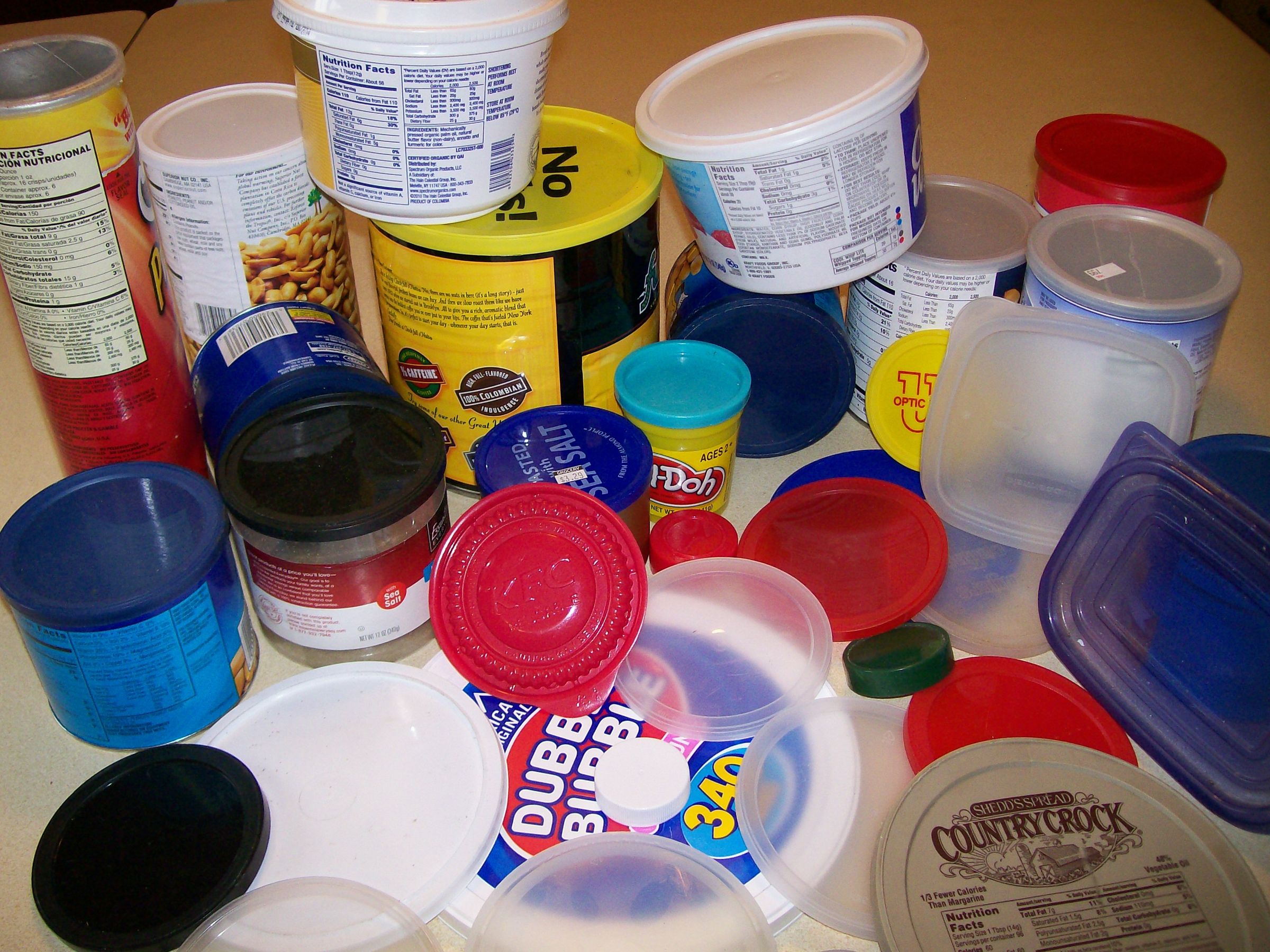
We all know the struggle: You’re cleaning out your food storage drawer and somehow have way more lids than you do containers. If you can’t find the bottoms to those tops, don’t throw them away! Surprisingly, there are many uses for plastic lids, besides being just a container cover, that can help you around the house. From moving furniture to outsmarting batter splatters, these toppers and more. Keep scrolling for all of the brilliant ways your plastic lids can save you time and money around the house.

1. Avoid a plant watering oops

The new houseplant you picked up is a beautiful addition to your home. The only problem? The hole at the bottom of the pot keeps dripping water all over your windowsill. Dodge the mess by placing a plastic storage container lid under the pot. The lid’s ridge will catch any drips and keep water from spilling onto your windowsill.

2. Uses for plastic lids: Move furniture sans scratches

You want to rearrange your living room after getting a new chair but worry about the legs scraping your floors. What can help: Place a plastic lid under each leg of the furniture before moving it. The lid lets you slide it easily without harming the floor. Bonus? This works on carpet too!  “Using a plastic lid as a slider is an excellent way to save money and your back,” says Sara McDaniel, an interior designer, home renovation expert and owner of Simply Southern Cottage. “Furniture sliders are quite popular, but plastic lids would serve the same purpose and you likely already have them in your pantry.”

3. Tangle-proof a ball of yarn

The last time you knitted a scarf, you ended up with rolls of tangled yarn. Next time: Cut an X in the center of a plastic storage container lid, then thread the yarn through. When you pull the yarn, the slit in the lid will help loosen up any tangles and keep new ones from forming. Or, if you have a leftover iced coffee to-go cup, just use the lid’s straw hole! Easy!

4. Uses for plastic lids: Clog-proof your bath drain

Whenever you bathe Buster, his fur gets caught in the drain and you’re worried about an eventual clog. Don’t have a drain cover? Poke a few small holes through a plastic lid and place it over the drain. Turn on the water and hold the lid until it is suctioned to the tub’s surface, then wash Spot as usual. The holes allow the water to drain while the lid catches your dog’s stray hairs.

5. Easily corral earrings

If you’re tired of digging through your jewelry box to find your favorite hoop earrings, leftover plastic lids can help. Simply grab a sewing needle, poke several holes in a plastic lid, then slide the end of each earring through. You’ll be able to find the pair you need in no time!

6. Uses for plastic lids: Paint without messy drips

“As a home renovator, paint is a big part of all of my projects and I’m always getting paint in places it shouldn’t be,” sighs McDaniel. Her secret to making any paint job neater: Cut a slit in a plastic storage container lid large enough to slip a paintbrush through. “As you paint, spills and splatters will be caught on the lid, keeping the paint contained and reducing messes.”

7. Ward off any rust ring stains

While deep-cleaning your shower or tub, you notice rust rings left from a shaving cream can. To avoid them from forming in the future, just place any plastic lid under metal cans you keep in your shower. The lid will act as a buffer between the tub and the canister, so there are no unwanted stains left behind.

8. Uses for plastic lids: Slice food in half the time

You love adding fresh grapes to your chicken salad, but cutting each one individually takes so much time and effort. “Every day we are looking for ways to save time while cooking without compromising quality, and this tip will help,” says Gabriela Pollack, owner of New York-based chocolate shop Brigadeiro Warehouse: Carefully arrange them close together in one layer on a plastic lid. Then cover with another plastic lid of the same size. Gently hold the top lid down to keep the fruit in place, then slide a knife between the lids. “Just make sure to use a sharp knife,” she warns. Remove the top lid and voilà — you’ll have perfectly sliced grapes for your salad in seconds. No hassle required!

9. Scrape away frost in a flash

Nothing is worse than losing your scraper while your car windshield is covered in frost and you’re running late. To the rescue: a plastic lid! Use the side of the lid to scrape the frost off the window. The soft plastic won’t scratch the glass as it quickly clears away the frost, making your winter mornings a breeze.

10. Uses for plastic lids: Outsmart batter splatters

Using a hand mixer to whip up cupcakes saves you time and energy, but one little misstep means you’re covered in batter, and so is your counter. Shield it all by using a plastic storage container lid. Just cut two small X’s in the top of the lid, then slide the mixer’s attachments through the slits; attach them to the mixer’s body. The lid will act as a shield and keep batter from getting on your clothes and counters.

11. Protect breakables in the dishwasher

You were so careful when you placed your wineglasses in the dishwasher, but somehow one broke during the cycle anyway. To keep this from happening again: Slide a plastic lid between each delicate glass in the dishwasher. The lid will stabilize the glasses so they’re less likely to shift, plus act as a barrier in case other dishes move.

12. Uses for plastic lids: Outsmart sticky honey drips

Even though you wipe your honey jar before putting it away, dribbles sometimes go unnoticed and leave your cupboard shelf sticky. Prevent this by placing a plastic lid underneath the bottle after each use. The rimmed lid will catch any drips, ensuring your cabinet stays clean.

13. Ward off accidental hammer dings

Oops! Last time you hung a photo, you missed the nail and left a dent in the wall. Next time, cut a hole that’s slightly larger than the nail in the center of a plastic lid, then slide the nail into the hole and start hammering as usual. If the hammer slips, the plastic will protect the wall. When you’re done, simply slip the lid off.

14. Uses for plastic lids: Securely close a ­garbage bag  

When you can’t find a twist tie — and there isn’t enough room at the top of the trash bag to tie a knot—enlist the help of a plastic lid. Using a knife or scissors, carefully cut a small X into the center. Twist the top of the bag, then slide it through the slit until it can’t go any further. The lid will bind the plastic together so the garbage bag will stay closed until pickup.

15. Safely scrape nonstick pans

When food particles get stubbornly stuck to your “nonstick” cookware, try using a plastic lid to scrape off the mess. Push the lip of the lid downward against the pan and repeat until all of the cooked-on food is removed. The firm plastic along the edge will get under the grunge so it easily comes off without damaging the pan’s finish.

SOURCE: FIRSTFORWOMEN.COM