DIY: Ways to Repurpose Used Tea Bags

Don’t throw away those used tea bags!  The How Stuff Works website has loads of uses for them!

From: HOWSTUFFWORKS.COM:

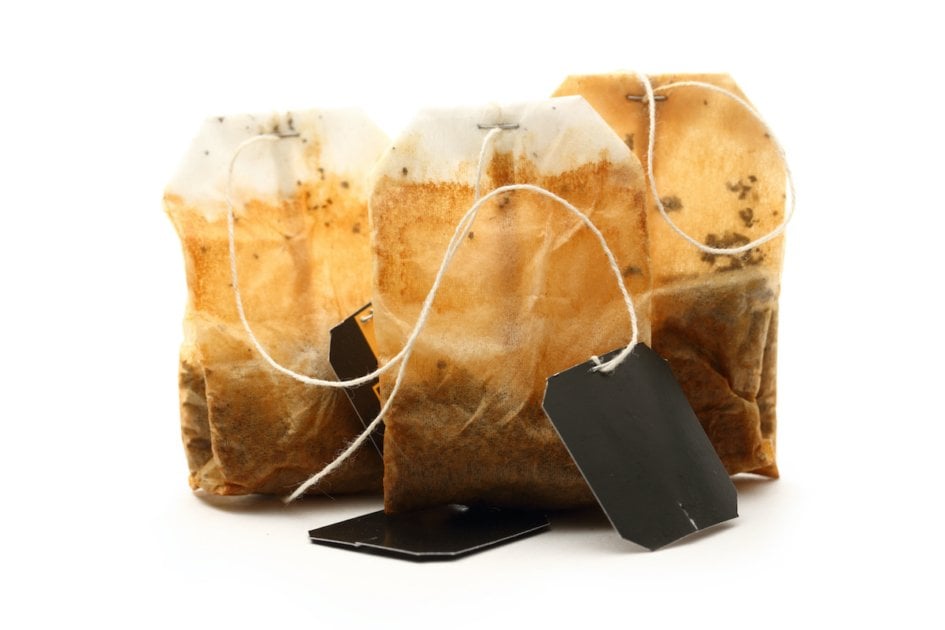
There are lots of things you can do with a used tea bag.

Key Takeaways

You can repurpose used tea bags in a variety of ways, including deodorizing carpets, rejuvenating your face, reducing puffiness around eyes, easing sunburns and adding flavor to rice. They can also enhance bath time, clean hair, act as DIY sachets, fertilize plants, deep-clean hands, deodorize smelly areas, help clean pots and pans, make glass shine, marinate meats and even patch up lawn spots. The organic matter within tea bags is rich in potential for upcycling, offering environmentally friendly solutions for common household tasks.

The next time you brew yourself a steaming cup of tea, resist the natural instinct to chuck that soggy bag in the trash. As it turns out, the organic matter within tea bags is chock full of potential for upcycling! Also, the tea bags themselves are no friend of the environment, either, so the more use you can get out of them before they hit the landfill, the better.

Check out these 15 amazing and creative ways to reuse tea bags to their fullest potential. Unless otherwise specified, these are for use with black tea.

1. Deodorize Stinky Carpets and Rugs

Feet and pets wreak havoc on carpets and rugs. Dry out tea bags after use, then rip ’em open and sprinkle the organic matter within on your carpets and rugs. Follow up with a thorough vacuuming. This is an easy, chemical-free way to deodorize floor coverings that won’t cost you a dime extra.

2. Rejuvenate Your Face

Make a DIY face scrub using the contents of used tea bags. All you have to do is put the used tea leaves into a bowl. Then, add a teaspoon (at least) of honey and mix well. Lightly work the mixture into your facial skin, using circular motions. Allow it to sit for five minutes, then rinse and enjoy a revitalized, glowing complexion!

3. Make Eyes Less Puffy

Along the same lines, used tea bags are fabulous at bringing puffy eyes back to normal. Simply soak two tea bags in warm water. Next, place them in the refrigerator and let them cool down for a few minutes. Then, kick back and relax with a tea bag on each eye for about five minutes.

4. Ease Sunburns

Much like with the eye treatment, soak two tea bags in warm water, then put them in the refrigerator. Once cooled off, place the tea bags directly on the site of the sunburn and hold for a few minutes. You can also soak a cloth in the tea liquid and apply that instead. Bonus: This treatment can reduce the pain of insect bites.

5. Add Flavor to Rice

Add a little extra pep to rice (or any grain, really) thanks to a tea bag. Simply place the bag in the pot of boiling water for a minute or two to let the flavor infuse. Then, use that tea-infused water to cook the grain of your choice as normal. Use, for example, jasmine tea to infuse jasmine rice.

6. Class up Bath Time

Who needs pricy bath salts for scent when tea bags work just as well? Pop a couple in your next bath and enjoy a delightfully relaxing aroma. Chamomile, peppermint or jasmine teas would be particularly good for this.

7. Clean Your Hair

Hair products will build up over time, no matter how often you shampoo. To get hair squeaky-clean, simply soak three or four tea bags in a cup of warm water. Shampoo and condition as normal, then finish off by pouring the tea-water over your head. Do not rinse!

8. DIY Sachets

Air fresheners can get expensive. Plus, they don’t really smell all that “fresh.” Stop the endless spraying and turn used tea bags into DIY sachets. To accomplish, dry out some used tea bags. Then, add a few drops of essential oil in your favorite scent. Place them anywhere sachets are typically used, like in dresser drawers, closets or the laundry room.
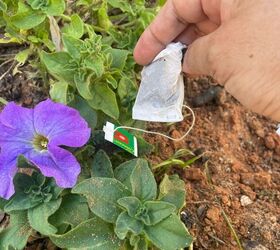
9. Fertilize the Plants

Tea leaves are nothing more than organic matter, so it only makes sense to use them for gardening! There are a couple of ways to use them for this purpose. Either tear open the used bag and mix the leaves in with the soil, or add them to your composting pile. Note: It’s best to add tea to soil around acid-loving plants, like rosebushes or ferns. That’s because the tannic acid in tea tends to make lower the soil’s pH and increases its acidity, which could pose a problem for plants that do well in neutral to alkaline soils.

Tea leaves can be added to soil as extra fertilizer. Just be sure to remove the tea bag, which is usually not biodegradable.

10. Deep-clean Hands

Some stinky scents really stick to the hands. The next time you can’t seem to scrub away the smell of onions, cigarettes, seafood, etc., turn instead to tea bags. Just use them the same way you would a bar of soap. The organic tea leaves will banish those unfortunate smells in no time!

11. Deodorize Smelly Areas

Some places, like the garbage can or the litter box, are just extra stinky. Cut their “ick” factor way down by tearing open a tea bag and spreading the dried leaves in the can and/or litter box. Another spot that often needs deodorizing is the refrigerator. To do this, put a couple of bags in a bowl in an inconspicuous area of the refrigerator, where they can effectively absorb odors. Replace the bags every few days and enjoy a much nicer-smelling appliance.

12. De-crustify Pots and Pans

If all the scrubbing in the world just isn’t cutting it, leave a used tea bag to soak in that stubborn pot or pan. Tea contains tannic acid, which can break down grease. With a little time and patience, it should make cleaning the dish much easier.

13. Ditch the Glass Cleaner

To make windows and mirrors really shine, simply dampen a used tea bag. Use it to rub the glass surface, then follow up with a paper towel. You can also pour some leftover brewed tea into an empty spray bottle and use it as a glass cleaner.

14. Marinate Meats

Easily marinate pork, chicken or turkey with the help of a couple of tea bags. Simply put a cup of water, two used tea bags and the meat into a zip-close bag. Allow to marinate overnight, then cook and enjoy a flavorful cut of meat.

15. Patch up the Lawn

To beautify those bald lawn spots, place used tea bags where needed, then add grass seed. The bag will keep the seeds in place, unlike regular old dirt. Do this only using biodegradable, non-plastic tea bags, of course. Or open the tea bags and use just the tea leaves.

Tea has been enjoyed for centuries, but the tea bag wasn’t invented until 1908-ish when a New York-based merchant named Thomas Sullivan decided to send tea samples in silk bags to his customers. They incorrectly assumed that the entire bag should be placed in the pot. Thus, the tea bag was born!

Frequently Asked Questions

How long should I dry the used tea bags before using them as DIY sachets?

To prevent mold growth, dry used tea bags completely until there’s no moisture left before adding essential oils for DIY sachets.

Are all used tea bags safe for composting or use in gardens?

Most tea bags are safe for composting or gardening, but ensure the bags are a biodegradable material and free from plastic fibers to avoid environmental harm.

SOURCE: HOWSTUFFWORKS.COM
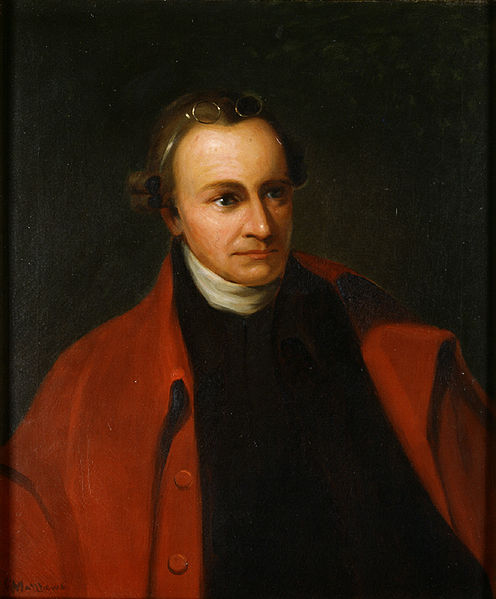
Patrick Henry

Since today is Patrick Henry’s birthday, I’m bringing an article from the Have Fun With History website.

13 Facts About Patrick Henry

by The Historian

Patrick Henry (1736-1799) was an American attorney, planter, and politician who played a vital role in the American Revolution and the early years of the United States. Known for his powerful oratory skills, Henry’s passionate speeches and unwavering commitment to liberty made him one of the most influential figures of his time.

Serving as the first and sixth Governor of Virginia, he mobilized support for the Revolutionary cause and played a significant role in shaping the course of the war.

Henry’s famous “Give me liberty or give me death!” speech and his advocacy for individual rights and religious freedom left a lasting impact on American history.

Despite his reservations about the U.S. Constitution, he continued to advocate for the protection of individual liberties, contributing to the subsequent adoption of the Bill of Rights. Patrick Henry’s legacy as a statesman, Founding Father, and defender of individual freedoms continues to inspire and resonate today.

Patrick Henry Facts

1. Patrick Henry was an American attorney, planter, and politician

Patrick Henry was an American attorney, planter, and politician who is best known for his oratory skills and his role in the American Revolution.

2. He was born on May 29, 1736, in Hanover County, Virginia

Born in Hanover County, Virginia, on May 29, 1736, Henry was a charismatic and persuasive speaker whose speeches had a profound impact on the events leading up to the Revolutionary War. His ability to inspire and galvanize audiences with his words made him one of the most influential figures of his time.

3. Henry served as the first and sixth Governor of Virginia

Henry served as the first and sixth Governor of Virginia, holding the position from 1776 to 1779 and again from 1784 to 1786. As governor, he played a crucial role in mobilizing Virginia for the Revolutionary War.  He implemented measures to strengthen the state’s defenses, organized militias, and supported the training and equipping of soldiers.  During his tenure, Henry faced numerous challenges, including British invasions, supply shortages, and political rivalries. Despite these difficulties, he worked tirelessly to lead Virginia through the war and its aftermath.

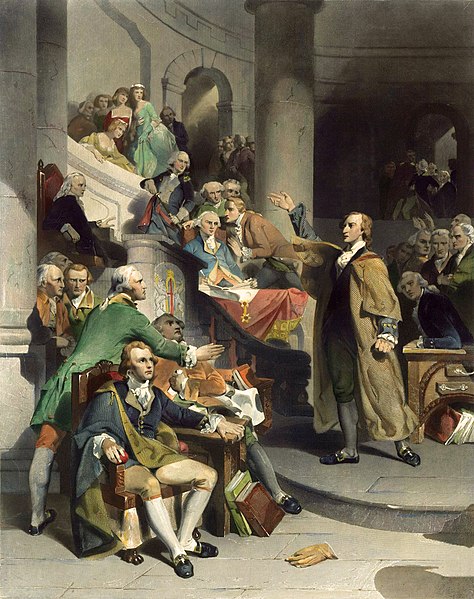
4. He is famous for his speech at the Virginia Convention in 1775, where he passionately declared, “Give me liberty or give me death!”

One of Patrick Henry’s most iconic moments came during the Virginia Convention in 1775. With tensions escalating between the American colonies and Britain, delegates gathered to discuss Virginia’s response to the growing crisis. It was during this convention that Henry delivered his famous speech, passionately declaring, “Give me liberty or give me death!”

These powerful words expressed his unwavering commitment to the cause of American independence and became a rallying cry for those who sought freedom from British rule. Henry’s speech electrified the audience and solidified his reputation as a fiery patriot and staunch advocate for revolution.

5. Henry was a staunch supporter of American independence from Britain

Patrick Henry’s speech at the Virginia Convention in 1775 is considered one of the most influential speeches in American history. His words were a call to action, urging the colonists to resist British oppression and fight for their freedom. The speech emphasized the importance of individual liberty and the willingness to sacrifice everything for the cause. It helped galvanize support for the Revolutionary War and inspired countless individuals to join the fight for independence.

6. He was a leading figure in the movement for religious freedom in Virginia

Henry was not only a passionate advocate for American independence but also a staunch supporter of religious freedom. He believed in the separation of church and state and fought for the rights of individuals to practice their own religion without interference from the government. His efforts culminated in the passage of the Virginia Statute for Religious Freedom in 1786, which became a model for religious freedom protections and influenced the First Amendment to the United States Constitution.

7. Henry was one of the Founding Fathers of the United States and was a delegate to the First Continental Congress in 1774

As one of the Founding Fathers of the United States, Patrick Henry played a significant role in shaping the early years of the nation. He was a delegate to the First Continental Congress in 1774, where he joined other colonial leaders in discussing grievances with the British government and laying the groundwork for a united colonial response. Henry’s strong convictions and forceful rhetoric made him a prominent figure in the Congress and a voice for colonial rights and self-governance.

8. He opposed the ratification of the U.S. Constitution and argued for the inclusion of a Bill of Rights to protect individual liberties

While Patrick Henry was a prominent figure in the American Revolution, he held reservations about the newly proposed U.S. Constitution. He was concerned about the potential concentration of power in the federal government and the lack of explicit protections for individual rights. Henry opposed the ratification of the Constitution and argued for the inclusion of a Bill of Rights, which would explicitly safeguard fundamental freedoms. His advocacy for the inclusion of a Bill of Rights helped shape the subsequent debate and led to the adoption of the first ten amendments to the Constitution.

9. Despite his opposition to the Constitution, Henry was elected to the Virginia Ratifying Convention in 1788

Patrick Henry’s opposition to the ratification of the U.S. Constitution stemmed from his concerns about the centralization of power and the potential for tyranny. He believed that the Constitution granted too much authority to the federal government at the expense of individual liberties and state sovereignty. Henry argued that without explicit protections for individual rights, the federal government could potentially infringe upon the freedoms of the people. His stance reflected a broader debate between the Federalists, who supported the Constitution, and the Anti-Federalists, who sought to limit federal power and protect individual rights.

10. Henry was not chosen as a delegate to the Constitutional Convention of 1787

Although Patrick Henry was not chosen as a delegate to the Constitutional Convention of 1787, his absence did not diminish his impact on the shaping of the Constitution. From the sidelines, Henry voiced his concerns about the proposed Constitution and its potential implications. His absence at the convention was largely due to his position as an outspoken critic of the centralization of power, which made his selection as a delegate less likely. Nonetheless, his influence on the subsequent debates and discussions surrounding the Constitution cannot be understated.

11. He retired from politics in 1791 but continued to be involved in public affairs

After retiring from active politics in 1791, Patrick Henry remained engaged in public affairs and continued to advocate for the protection of individual rights and limitations on the power of the federal government. He believed that eternal vigilance was necessary to prevent the erosion of individual liberties and constantly spoke out against perceived encroachments on the rights of the people. Henry’s dedication to the principles of limited government and individual freedom remained steadfast even after his formal political career ended.

12. Henry died on June 6, 1799, at the age of 63, in Charlotte County, Virginia

Patrick Henry passed away on June 6, 1799, at the age of 63, in Charlotte County, Virginia. Throughout his life, he had made significant contributions to the American Revolution, the formation of the United States, and the protection of individual liberties. His death marked the end of an era and the loss of a powerful voice in American politics. However, Henry’s ideas and principles continued to resonate and shape the course of American history long after his passing.

13. He left a lasting legacy as an orator, statesman, and advocate for individual liberties

Patrick Henry left a lasting legacy as an orator, statesman, and advocate for individual liberties. His speeches, particularly his “Give me liberty or give me death!” speech, continue to be studied and celebrated for their powerful rhetoric and their ability to inspire people to action.

Henry’s unwavering commitment to freedom, his opposition to tyranny, and his emphasis on the protection of individual rights continue to influence political discourse and shape the understanding of American values. His contributions to the American Revolution, his role as a Founding Father, and his defense of individual liberties solidify his place in history as one of the most influential figures of his time.

Source: HAVEFUNWITHHSTORY.COM

What Shall We Make Today?

Today’s offering is a Boiled Cookie–no baking involved!

Ingredients

1/2 cup butter, cubed

1/2 cup 2% milk

2 cups sugar

3 cups quick-cooking oats or old-fashioned oats

5 tablespoons baking cocoa

1/2 cup raisins, chopped nuts or sweetened shredded coconut

Directions

In a large saucepan, heat butter, milk and sugar. Bring to a boil, stirring occasionally. Boil for 1 minute.

Remove from the heat. Stir in the oats, cocoa, and raisins, nuts or coconut. Drop by tablespoonfuls onto waxed paper. Cool.

ENJOY!

North Dakota State Mammal: Western Meadowlark

Juli Bosmoe, senior range ecologist for Audubon Great Falls in Fargo, North Dakota, points out that the easiest feature to spot on the western meadowlark is the yellow breast with a v-shaped black bib. She also says to look for the white outer tail feathers that flash when the bird flushes from a perch. These features are shared by two other species that are almost identical, the eastern meadowlark and Chihuahuan meadowlark.

Around the size of a robin, Juli says, “They’re big for a songbird, for sure.” They also have long, slender bills.

Adult males and females look similar. Immature birds are paler in color.

“They prefer grasslands without trees that are encroaching because these provide a perch for predator birds,” says Juli. Throughout the year, they inhabit a large portion of the western U.S., from southern Nebraska to the West Coast, and south into Mexico. In summer, their reach extends into Canada, Montana, the Dakotas, Minnesota and Wisconsin. These birds are early spring and late fall migrants.

What Do Western Meadowlarks Eat?

“During the breeding season they like insects the most. It’s a lot of good energy in a small package,” explains Juli. “Outside of the breeding season they’re more likely to be eating seeds, which is why it’s important to have these diverse grasslands.” Even though they do consume seeds as part of their diet, she notes, “They’re not going to be your backyard feeder bird.” Juli says of one of their favorite ways to find their seeds is by sticking their beaks in a cow pie to get out the seeds.

The ideal habit for western meadowlarks is an expansive grassland with diverse grassland species, but there are many instances where development or agricultural practices reduce these food options for the birds. “If the grassland is stagnant, it’s just going to turn into a lot of older grasses,” she says. “It is typically invaded by smooth brome and Kentucky bluegrass.” One of the best ways we can support these grassland birds is to keep our own backyards as diverse as possible with native grasses.

Nesting Habits

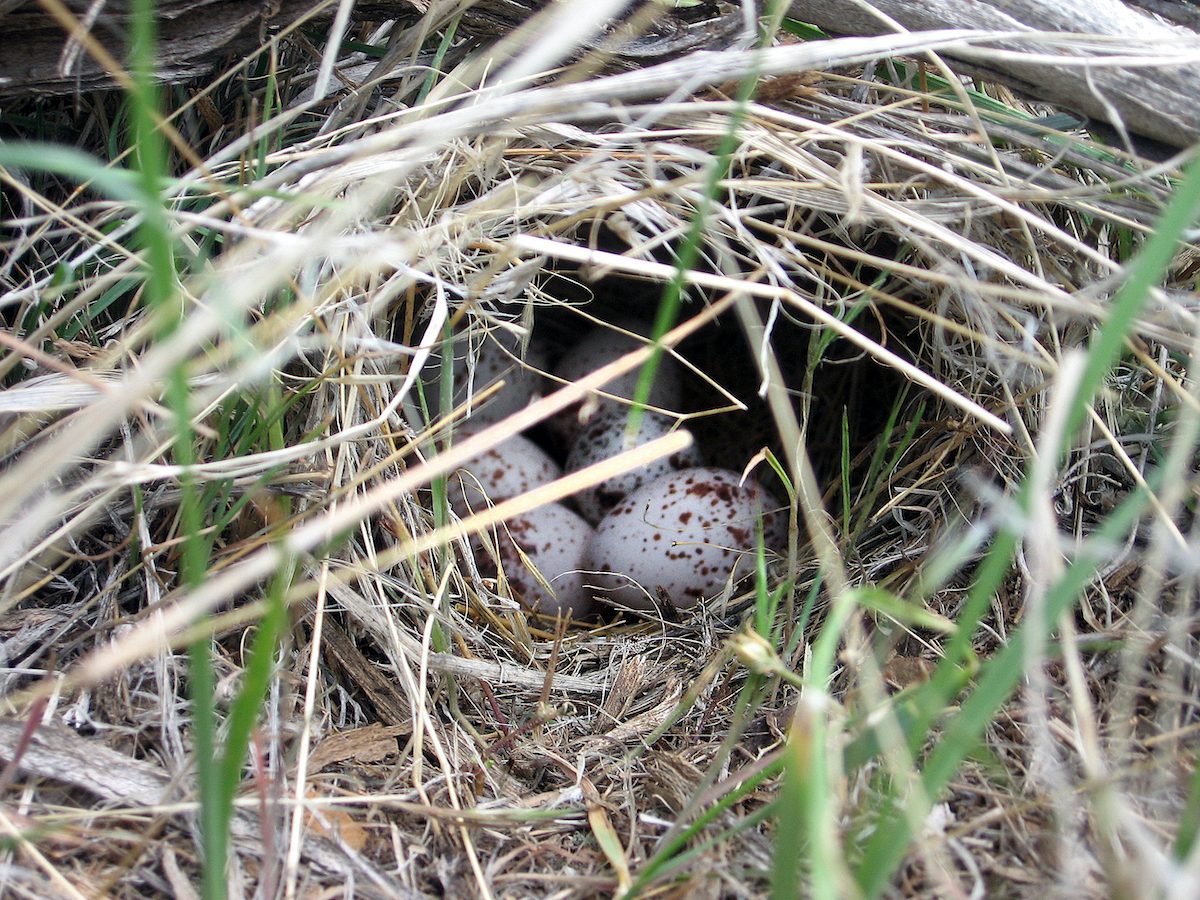
“The male mates with more than one female, but it may be only two,” notes Juli. They are very territorial during the breeding season, using their songs to woo a female, as well as ward off intruders. “They have great, hidden nests,” she explains. The female gathers all of the materials and builds the nest, which is positioned on the ground, often near a bunch of grasses or placed within a depression. Built of grasses and dried forbs, the six to seven-inch diameter nest blends perfectly with the surrounding vegetation.

“The female will tuck grasses over the top,” she says, and camouflage roof makes them nearly impossible to see, even when you’re looking for them. “(Western) meadowlarks usually have two breeds year, and the female takes care of the young,” says Juli. The five to six white eggs per clutch are heavily spotted with lavender, brown or rust markings, which adds to their concealment qualities. It requires 13 to 16 days for them to hatch, and the young leave the nest after 10 to 18 days.

Western Meadowlark Song

Their distinctive, remarkably loud song makes western meadowlarks unmistakable. “To me, that’s one of the key features, of how loud they are. You could be driving down the gravel road with the windows up, and you can still hear them,” Juli says.

“(Males) really like a post to sit on, such as fences or barbed wired, to sing for the ladies,” says Juli. “They have a whole repertoire of songs because the males are trying to attract the females. They can have 100 different variations. The females judge them on their songs.”

Sometimes described as “flute-like,” their songs vary with whistles, gurgles and warbling sounds. But once you hear it, you recognize it immediately.

SOURCE: BIRDS&BLOOMS

Profile in Courage

I found this inspirational article on the all that’s interesting website about Erik Weihenmayer—who climbed Mount Everest despite being blind.

From: allthatsinteresting.com:

“I was afraid that I wasn’t going to be able to participate in life,” Erik Weihenmayer remembered thinking after he first went blind at 14. But that’s not how things turned out.

Ever since Sir Edmund Hillary and Tenzing Norgay made the first documented summit of Mount Everest in 1953, climbers have been competing for other “firsts” on the mountain. And in 2001, American mountaineer Erik Weihenmayer accomplished one of the most astounding Everest firsts of all when he reached the treacherous peak despite the fact that he was blind.

Erik Weihenmayer: Blind Mountaineer

Erik Weihenmayer, born in New Jersey in 1968, was just four years old when he was diagnosed with retinoschisis, a rare disease (sometimes hereditary, sometimes of unknown origin) resulting in the progressive loss of sight. By the time he was just 14, Weihenmayer was completely blind.  As he himself put it, “I was afraid that I wasn’t going to be able to participate in life.” But thanks to his parents’ insistence and encouragement, Weihenmayer actually became more physically active after he became blind, taking up both wrestling and rock climbing.

“Shortly after going blind, I received a newsletter in Braille about a group taking blind kids rock climbing,” Weihenmayer recalled. “I thought to myself, who would be crazy enough to take a blind kid rock climbing? So I signed up!”

After graduating from college, Weihenmayer became a teacher and also joined the Arizona Mountaineering Club, spending his free time rock climbing. Soon it was much more than just a hobby and in 1995 he reached the top of Mount Denali, the highest peak in North America.

“After this exhilarating feat,” he said, “I then decided that I wanted to commit to a life as a full-time adventurer.” And he did. Weihenmayer went on to scale three more of the seven highest mountains in the world (the “Seven Summits,” or highest mountains on each continent) before finally setting his sights on Mount Everest in 2001.

Preparing For Everest

Mount Everest has long been a lure for adventurers — though it also serves as a graveyard for many of them. What’s more, the mountain’s low oxygen levels and frigid temperatures mean that many of the climbers who perished on their ascents remain stunningly well-preserved corpses on the slopes, serving as gruesome reminders of the dangers of the mountain.

And in 2001, Erik Weihenmayer was preparing to attempt this same perilous climb — despite having a handicap that none of them had.

It wasn’t just physical obstacles that Weihenmayer and his team would face in the quest to summit Everest. They had difficulties recruiting Sherpa guides (who are so often the difference between life and death on the mountain), due to the perceived risk of working with a blind climber.

But once Weihenmayer arrived in Kathmandu, Nepal, the locals were so surprised at the ease with which he got around that they thought he was actually lying about being blind. After convincing them that he was indeed both blind and physically capable, the Sherpas agreed to the expedition.

However, it wasn’t just the Sherpas who had doubts. Weihenmayer also faced backlash from other climbers who doubted his ability and expressed serious concerns about his attempt. In an interview with Men’s Journal, American climber and Everest veteran Ed Viesturs said, “I support [Weihenmayer’s] going. But I wouldn’t want to take him up there myself.”

Although Weihenmayer was hurt by all the doubt, he was well aware that he would be facing challenges that other mountaineers would never have to worry about. As Viesturs went on to explain, “He can’t assess the weather, or the ice-fall, or the ladders you have to crawl across” — and one misjudged step could send him careening down the slopes to his death.

But Weihenmayer was no mountaineering novice who was simply determined to reach the world’s highest peak at great risk to his other team members. He had been climbing for 16 years at this point and, far from being a hindrance to his climbing teammates, he had often been the one to offer them assistance. In response to Viesturs comments, Weihenmayer simply replied, “He hadn’t seen any part of my life except for the fact that I was blind.”

A 2017 interview with Erik Weihenmayer from TODAY.

The Ascent and Beyond

The journey to the top was certainly harrowing. Members of the group would take turns guiding Weihenmayer through the gaps and crevasses, shouting out instructions, “Slot coming up, two steps!” or “Clear traveling for the next ten steps.” But it was Weihenmayer’s own endurance and mountaineering skills that ensured he made it to the peak, which he did on May 25.

It was then that Erik Weihenmayer became the first blind person in history to stand on the summit of Mount Everest. He had not only joined the ranks of the few who have been to the highest spot on the planet, but he had also effectively silenced all of his critics.

And by 2008, he had climbed the rest of the Seven Summits, becoming one of only 150 people to have ever accomplished this, yet another incredible feat in an incredible career.

SOURCE: ALLTHATSINTERESTING.COM By Gina Dimuro | Edited By John Kuroski

RADAR

Today is Gary Burghoff’s birthday (he was born in 1943), and I found this article on Facts.net detailing some interesting things about RADAR.

From Facts.net:

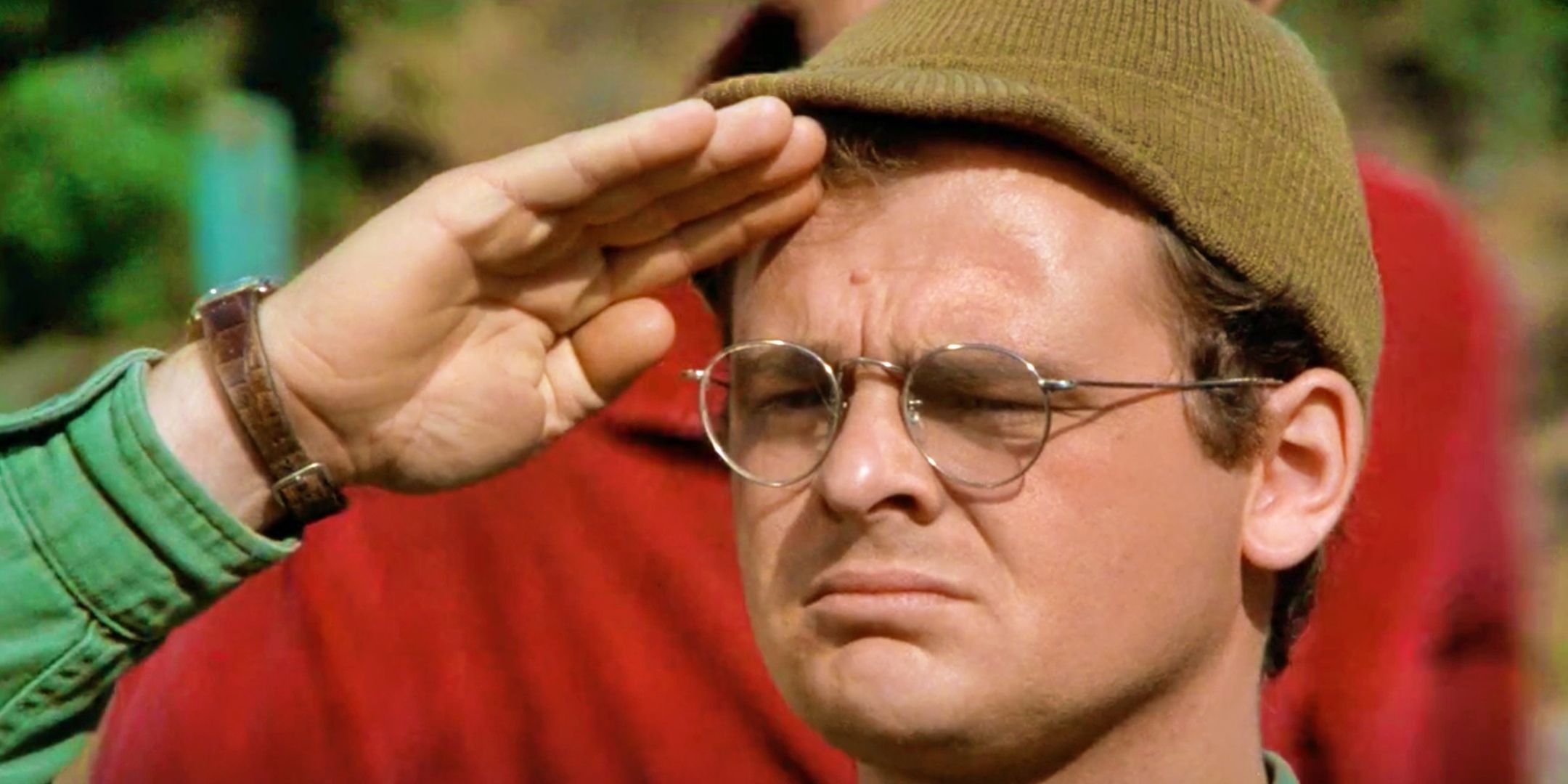
Gary Burghoff, best known for his iconic portrayal of Radar O’Reilly on the hit TV series M*A*S*H, is a celebrated actor who has left an indelible mark on the entertainment industry. With his endearing personality and exceptional acting skills, Burghoff captivated audiences around the world. But there’s more to this talented performer than meets the eye.

In this article, we will delve into the fascinating world of Gary Burghoff and uncover 10 astonishing facts that you may not have known about him. From his early life and career to his unique talents and personal achievements, we will explore the intriguing details that have shaped this beloved celebrity. So, grab a cup of coffee and prepare to be amazed by these remarkable insights into the life of Gary Burghoff!

Key Takeaways:

Gary Burghoff, known for playing Radar O’Reilly on M*A*S*H, overcame physical differences and won an Emmy for his iconic role. He’s also a talented drummer and wildlife advocate.

After M*A*S*H, Gary Burghoff pursued a successful stage career, invented fishing tackle, and appeared on “Survivor: All-Stars.” His passion for wildlife and the environment shines through his activism.

Gary Burghoff played the iconic character of Radar O’Reilly on the hit TV series M*A*S*H.

You may remember him as the lovable and quirky character Radar O’Reilly from the beloved TV show M*A*S*H. Burghoff’s portrayal of the company clerk won the hearts of millions of viewers around the world.

He was the only actor from the movie version of M*A*S*H to reprise his role in the TV series.

Not only did Gary Burghoff play Radar O’Reilly in the original M*A*S*H film, but he also went on to portray the character in the highly successful TV series, making him the only actor to reprise his role.

Gary Burghoff was born with a partially deformed hand.

One of the most astonishing facts about Gary Burghoff is that he was born with a partial left hand, with three fingers on that hand. However, this physical difference did not hinder his acting career, and he found great success in the industry.

He has a keen interest in collecting and playing rare drums.

Aside from his acting talent, Burghoff is also known for his passion for playing drums. He collects and indulges in playing rare drums, making it another interesting aspect of his life outside of his acting career.

Gary Burghoff appeared on the reality TV show “Survivor: All-Stars.”

In 2003, Gary Burghoff made a surprising appearance on the hit reality TV show “Survivor: All-Stars.” This unexpected cameo delighted fans, who were excited to see him in a completely different role.

His performance as Radar O’Reilly earned him an Emmy Award.

Thanks to his outstanding portrayal of Radar O’Reilly on M*A*S*H, Gary Burghoff received critical acclaim and won the Primetime Emmy Award for Outstanding Supporting Actor in a Comedy Series in 1977.

He had a successful stage career after leaving the show M*A*S*H.

After his time on M*A*S*H came to an end, Gary Burghoff transitioned to the stage and flourished in the world of theater. He took on various roles and showcased his versatility as an actor.

Gary Burghoff designed and patented a fishing tackle invention.

Outside of the entertainment industry, Burghoff is also a talented inventor. He designed and patented an innovative fishing tackle invention, demonstrating his creativity and practicality beyond acting.

He is an avid wildlife advocate and has participated in environmental activism.

One of the lesser-known facts about Gary Burghoff is his passion for wildlife and the environment. He has actively participated in various environmental activism initiatives, using his platform to raise awareness and make a difference.

Gary Burghoff has made frequent guest appearances on TV shows over the years.

Throughout his career, Gary Burghoff has made numerous guest appearances on various television shows, showcasing his versatility and continuing to captivate audiences with his talent.

Conclusion

In conclusion, Gary Burghoff is a truly remarkable celebrity with a wealth of astonishing facts surrounding his life and career. From his iconic portrayal of Radar O’Reilly in M*A*S*H to his passion for wildlife conservation, Burghoff’s contributions to the entertainment industry and beyond have left an indelible mark. From his unique physical attribute to his talent as a musician, Burghoff’s versatility and dedication deserve recognition. As we uncover even more intriguing facts about him, it’s clear that Gary Burghoff’s impact extends far beyond his iconic TV role. Whether you’re a long-time fan or discovering his legacy for the first time, these astonishing facts about Gary Burghoff will undoubtedly deepen your admiration for this multi-talented celebrity.

SOURCE: FACTS.NET

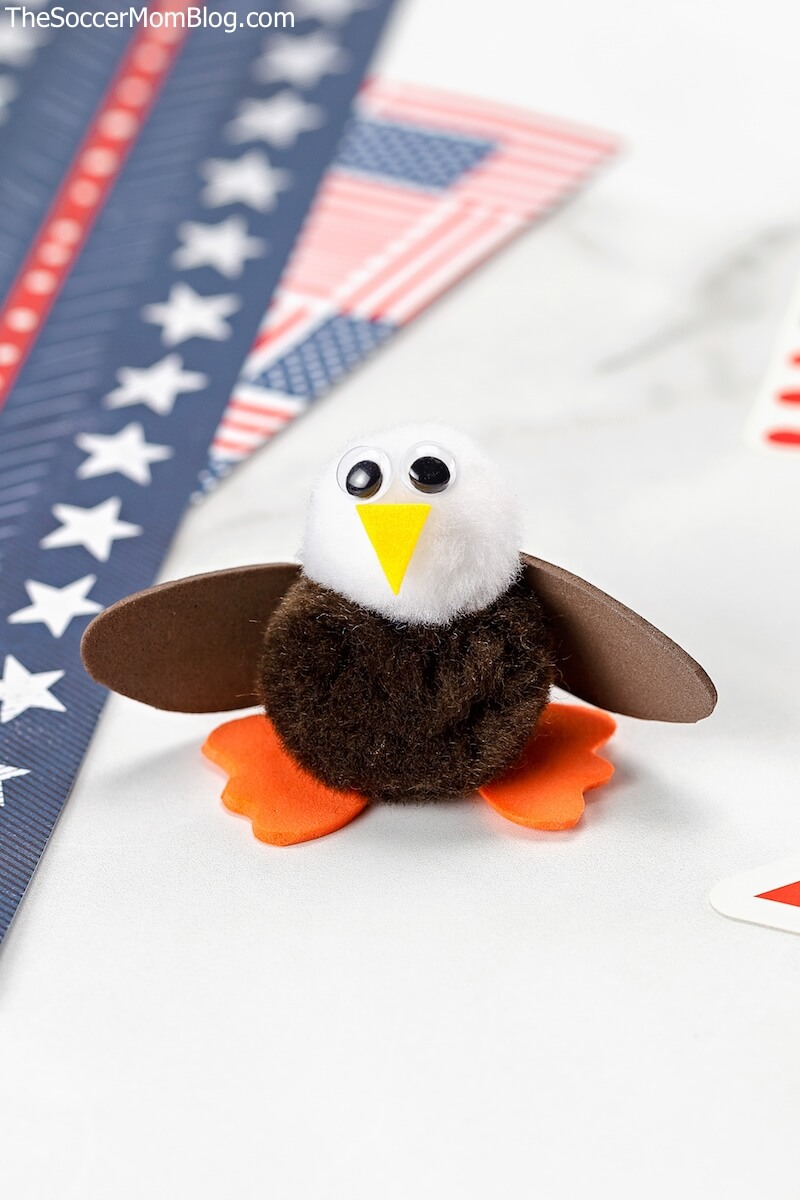
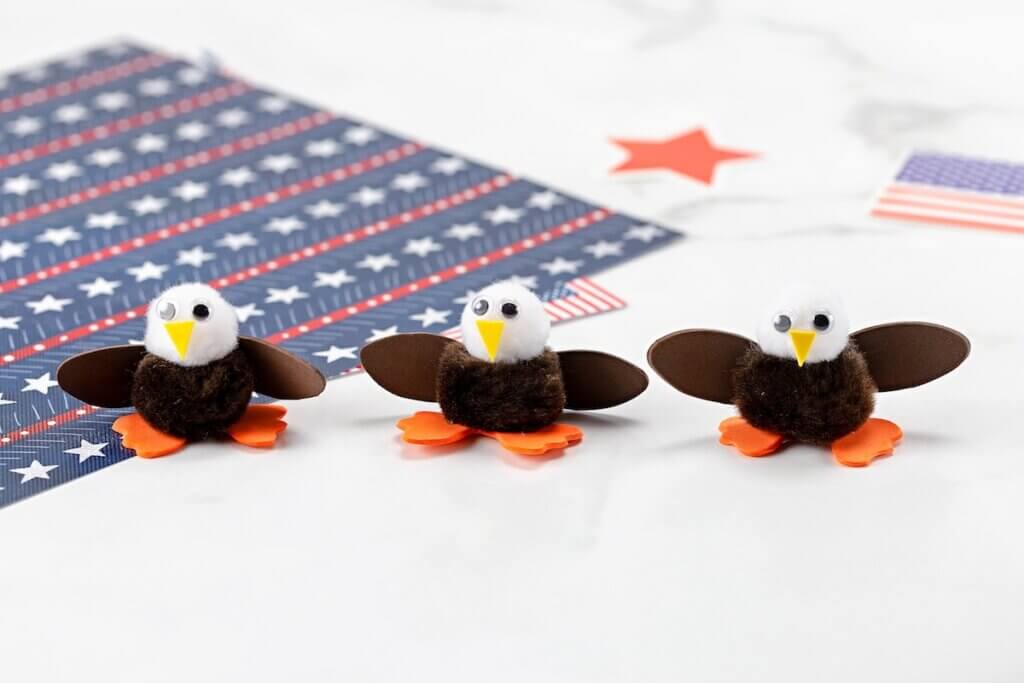
DIY Memorial Day Pom Pom Eagles

I found these eagles on SOCCERBLOG.COM website and they are so cute and so easy to make!

Materials Needed:

Craft foam sheets (brown, yellow & orange)

Large brown pom-poms

Large white pom-poms (slightly smaller than the brown pom poms if possible)

Hot glue gun & glue sticks

Google eyes

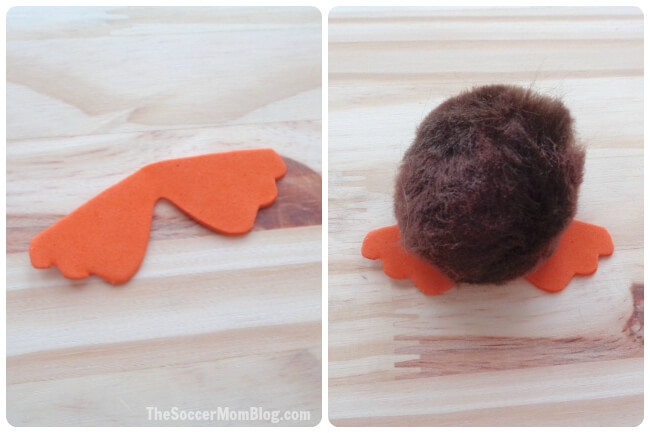
Begin by folding the orange craft foam sheet in half. Cut out feet for your eagle on the bend. They don’t have to be perfect, but you are welcome to use the photo below as a guideline.

Using the hot glue gun, glue the large brown pom pom onto your orange foam feet.

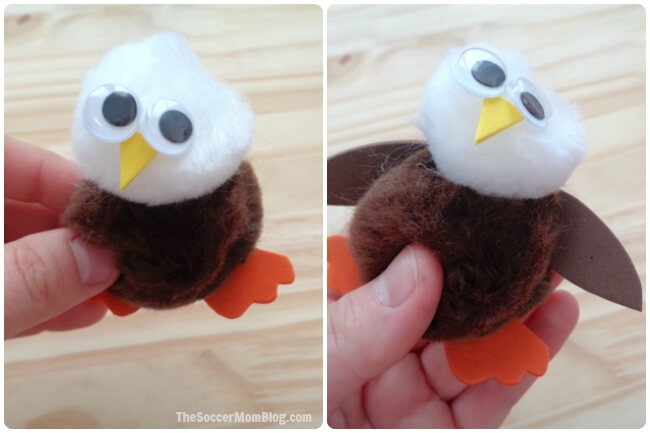
Glue the white pom pom onto the top of your brown pom pom.

Cut a small triangle from your yellow craft foam and glue to the center of the white pom pom. This will be the beak.

Glue two google eyes above the yellow triangle beak.

Cut two eagle wings from brown craft foam. Glue wings onto both sides of your brown pom pom. Your eagle is finished!

SOURCE: SOCCERMOMBLOG.COM

Weird Wednesdays: Abandoned Mansions (Continued)

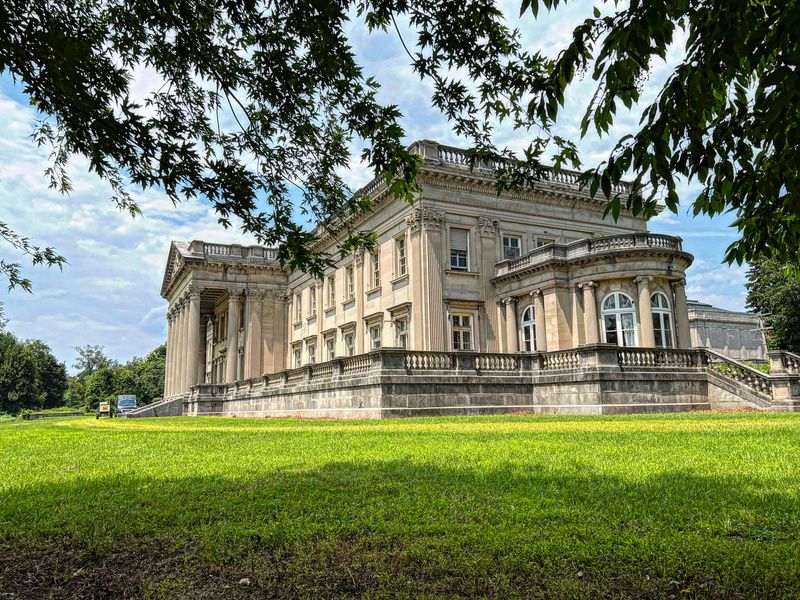
Today’s abandoned mansion is in Pennsylvania, Elkins Park to be exact—Lynnewood Hall. I found this article about this mansion on the Untapped Cities website. (I am presenting the article in two parts. This is part 2)

6. The Ballroom Used to Be a Library

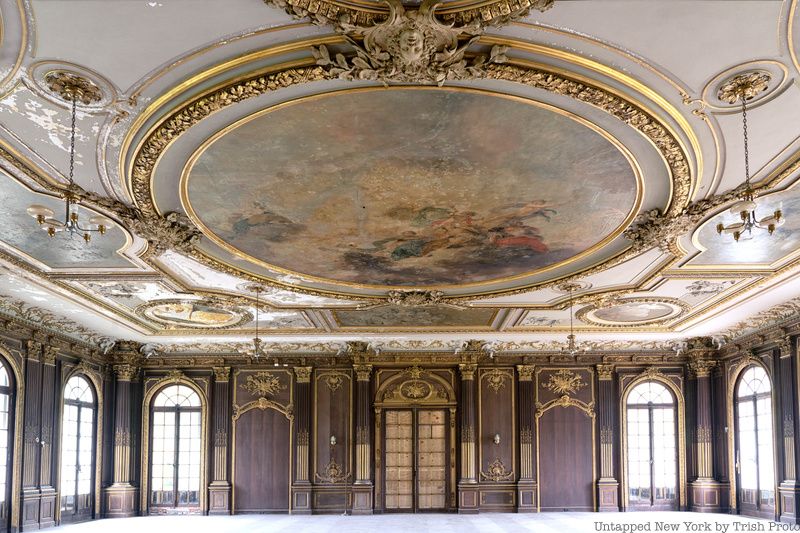
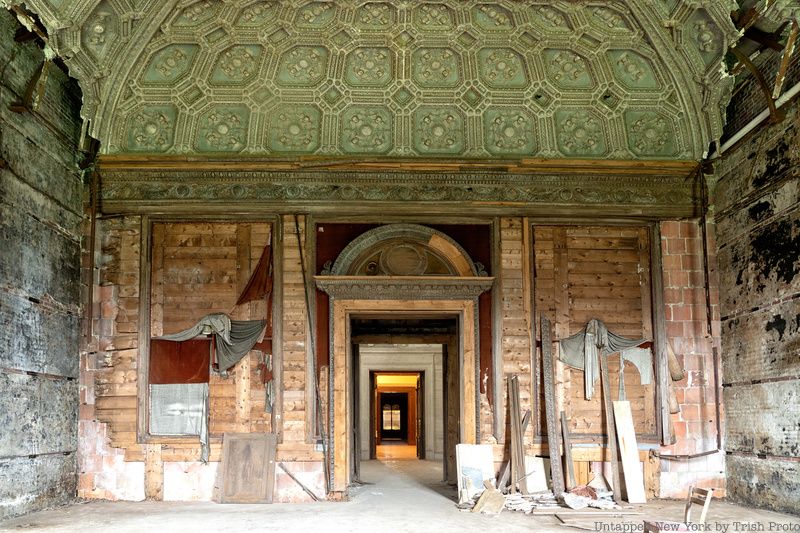
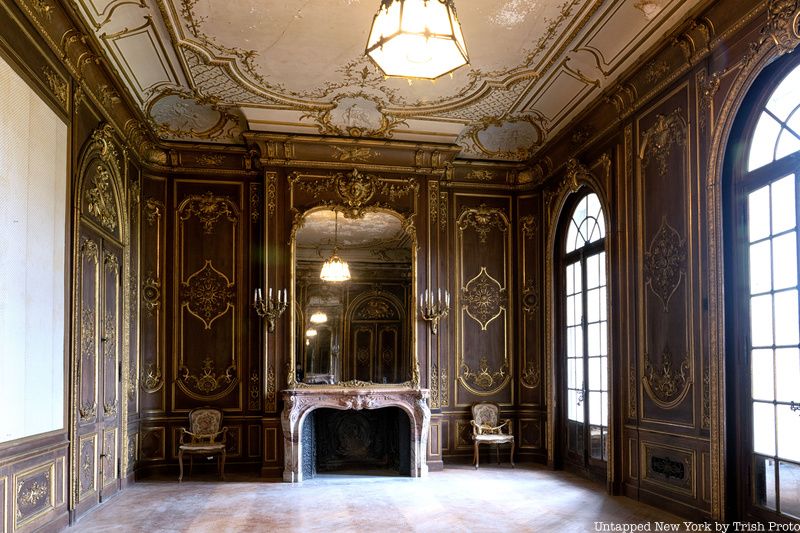
The ballroom of Lynnewood Hall is perhaps the grandest space in the home. Decorated in a Louis XIV style, it’s covered with walnut paneling that is adorned with ornate gold leaf details. And just look at that ceiling! The central mural that hangs above is believed to be from the 17th century and comes from an Italian villa. This room hosted extravagant balls in the time of both Peter’s and his son Joseph’s residency. However, before the raucous costume balls and performances by the Philadelphia Philharmonic Orchestra, this room was much quieter.

It was originally a library. The walls were covered in velvet and there were built-in bookshelves at the four corners of the room. It was converted into a ballroom around 1912. The blocked-off entryway you see in the photo above used to lead out into the conservatory. If you were to walk from there to the second conservatory on the opposite end of the home, you would cover 268 feet, one of the longest residential enfilades in the country.

7. The Lost Bowling Alley & Basement Billiards Room

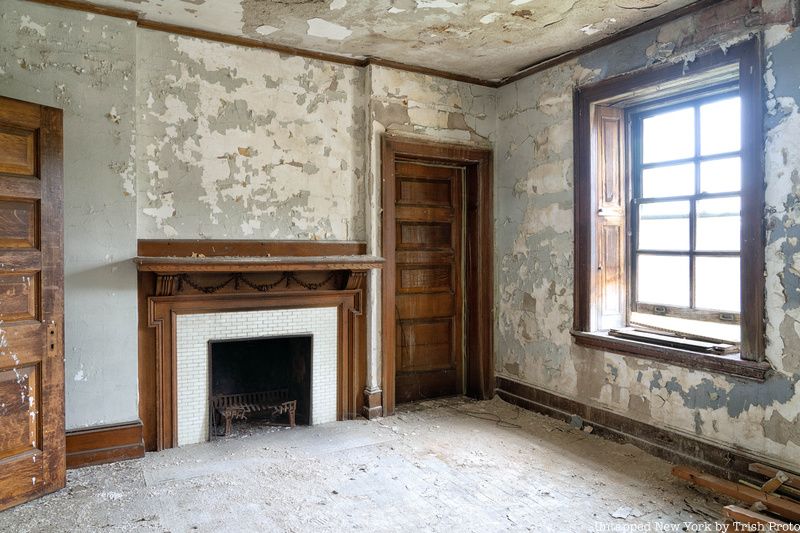
There were roughly 40 live-in staff members at Lynnewood during the Widener’s time. They slept on the upper floors of the home above the galleries where there were more than 20 bedrooms. They worked down in the basement where you would find the kitchen, bakeries (one for pastries and one for bread), wine cellar, carpentry shop, upholstery shop, coal storage, and more workspaces. Among these spaces though there was once an area reserved for the family, a private bowling alley. When more staff came on and additional housing was needed, the bowling alley was converted into bedrooms, workspaces, and a billiards room for the staff. In the basement today visitors will notice a fireplace mantelpiece that seems quite ornate for servants’ quarters. This was once part of the bowling alley room.

8. The Final Remaining Piece of Original Free Standing Furniture

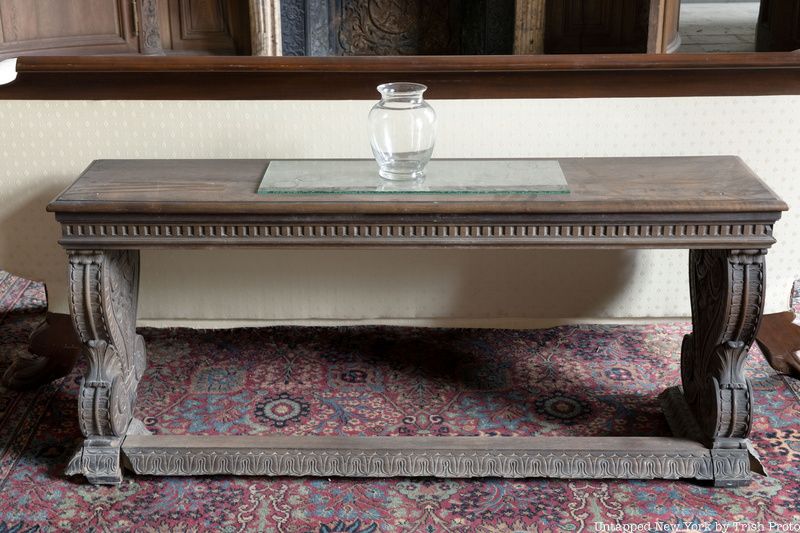
The only freestanding piece of furniture that is original to the home and still in the home is the organ bench pictured above. After Peter Widener died, the estate went to his only surviving son Joseph. Joseph lived there until his own death in 1943. At that time, the estate was liquidated in an auction covered by outlets like the New York Times and Life magazine. Everything that hadn’t already been donated to the National Gallery in D.C. went to the auction block. The auction drew hundreds of eager bidders and lasted five days. According to Life, the most expensive item purchased was a “tapestry-covered sofa and eight matching chairs that had once belonged to Louis XV.” It sold for $30,000.

It took a while for the hall to find a new owner after the Wideners. “It was a completely different time,” Thome notes, echoing the writings of Widener’s grandson, “People couldn’t keep up these types of homes anymore.” In 1952, a buyer finally came through. The estate was purchased by Faith Theological Seminary, a Christian school led by Carl McIntire. When the Seminary needed funds, it would sell off parts of the mansion, like wood paneling or mantelpieces. This trend would sadly continue with the next owner who came in 1996, Dr. Richard Yoon, leader of the First Korean Church of New York. Over the ensuing decades, Lynnewood Hall started to come apart piece by piece. Now, the Preservatin Society is working to restore the home to its former glory.

9. The Grand Hall is Based on the Entryway of a Vanderbilt Mansion

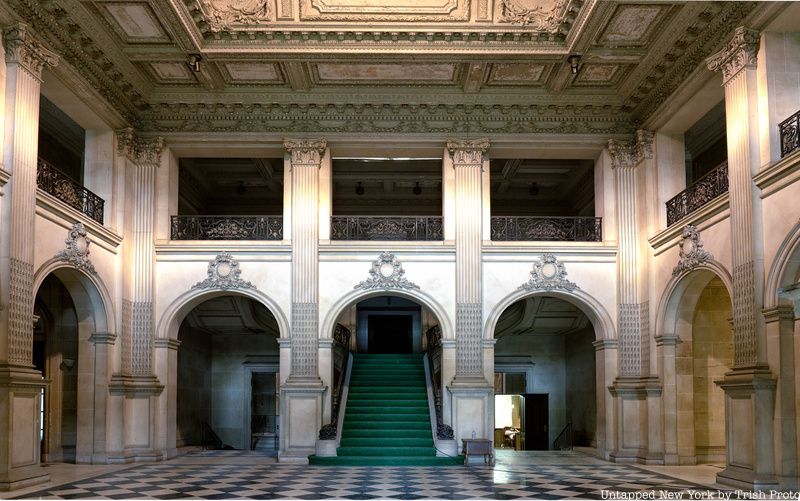
The Grand Hall at Lynnewood makes a statement. With soaring ceilings over 40 feet high, intricate carvings, and a wide central staircase, it was an entrance befitting the grandeur of the exterior. While the classical exterior design of the home was inspired by Prior Park in Bath, England, this room was inspired by the entryway at The Breakers, the Newport Estate of Cornelius Vanderbilt II. Comparing photos of the two entryways, you can see the similarities. They are both ringed with arched entryways topped by marble accents. There is a central staircase emerging from one of these arched portals in both homes. The Corinthian pilasters are nearly identical and details on the coffered ceiling and moldings are strikingly similar.

What sets these two spaces apart is the floor. Lynnewood Hall has a checkered black and white floor while the floor at The Breakers is all white, but Lynnewood’s floor was also originally all white as well. When Joseph Widener made renovations to the home around 1915, he added the checkered pattern. It was a popular element in French chateaus. Joseph sprinkled many elements of French influence throughout the mansion.

10. You Can Visit Lynnewood Hall

There is a very long road ahead before Lynnewood Hall can be open to the public. However, there is a way you can get inside while simultaneously supporting the Foundation’s preservation efforts. You can do this by joining a Pre-Restoration Hard Hat Tour. Money from these tours will go toward covering the $1,250,000 cost of asbestos remediation. The tours will be scheduled for after remediation is complete in approximately 4 to 5 months.

The Lynnewood Hall Preservation Foundation was formed in 2019 and officially took ownership of the estate on June 30, 2023. In the years leading up to the purchase, board members worked closely with the previous owner to install security cameras on the property, make essential repairs like fixing broken windows and stopping leaks, and start clean-up efforts. The Foundation is currently waiting on the final report from a conditions assessment which will lay out the roadmap for the estate’s restoration journey. “It’s a daunting project,” VanScyoc admitted, “but from our perspective, we always had the faith that it could be.”

SOURCE: UNTAPPEDCITIES.COM
(Many more photos can be seen at this link: https://www.untappedcities.com/lynnewood-hall-abandoned/)

Weird Wednesdays: Abandoned Mansions (Continued)

Today’s abandoned mansion is in Pennsylvania, Elkins Park to be exact—Lynnewood Hall. I found this article about this mansion on the Untapped Cities website. (I am presenting the article in two parts. This is part 1.)

From untappedcities.com:

Untapped New York made a visit to Lynnewood Hall to explore its many rooms and uncover a few of its secrets. We spoke extensively with VanScyoc and the Foundation’s Executive Director Edward Thome about the building’s history, its hidden gems, and the ambitious plans for its future. “There is such a rich history here, not just of the era of the Gilded Age and the family that lived here, but also of tradesmen, craftsmen, architecture…Think of all the stories that could be told,” VanScyoc mused. “It has an uncanny way of drawing you in and not letting you go,” said Thome, who has been mesmerized by the building since he was just 11 years old. While there are fascinating stories to be found around every corner of the massive building, we’ve picked out a few of our favorites to expand upon here. Read on to learn more about this stunning estate (and see photos from inside), from its tragic ties to the Titanic to its hidden room full of safes, mysterious tunnel system, and how you can visit!

1. The Art Galleries Had a Museum-Worthy Lighting System

The original owner of Lynnewood Hall, Peter A.B. Widener, died with a personal fortune that would have been worth tens of billions of dollars today and a museum-worthy art collection, but he came from humble beginnings. Born to a butcher in West Philadelphia, Widener also went into the meat business. His first big break in business was winning a contract to supply mutton to Union troops during the Civil War. He used his earnings to invest in street car lines and moved his way up the political ladder in Philadelphia until he became City Treasurer. He had holdings in foundational American companies such as U.S. Steel, American Tobacco Company, and Standard Oil. Though Widener was one of the wealthiest Americans to ever live, his money couldn’t insulate him from tragedy.

After his wife, Hannah Josephine Dunton, died in 1896, Widener realized he wanted to keep his family close. He commissioned architect Horace Trumbauer to build a home large enough to house the families of Widener’s two sons, George and Joseph, and his own expensive art collection. “Lynnewood is the home that art built,” VanScyoc said, noting how important the art collection was to the family. Widener began collecting art around 1885 and by the time Lynnewood was complete in 1899, he had amassed a collection of priceless masterpieces that included paintings by Raphael, Rembrandt, Vermeer, Gainsborough, and more. The collecting bug was passed on to his son, Joseph, who expanded on his father’s collection.

Widener arranged his works of art in five different galleries throughout his home, one on the first floor and four on the second floor. Each gallery was designed to display specific works based on the artist and style. To ensure the safety of his prized collection and to show the pieces in the best (literal) light, Widener had his home built with the latest technology. “Even though the building is a classical piece of architecture, it’s very technologically advanced,” VanScyoc said.

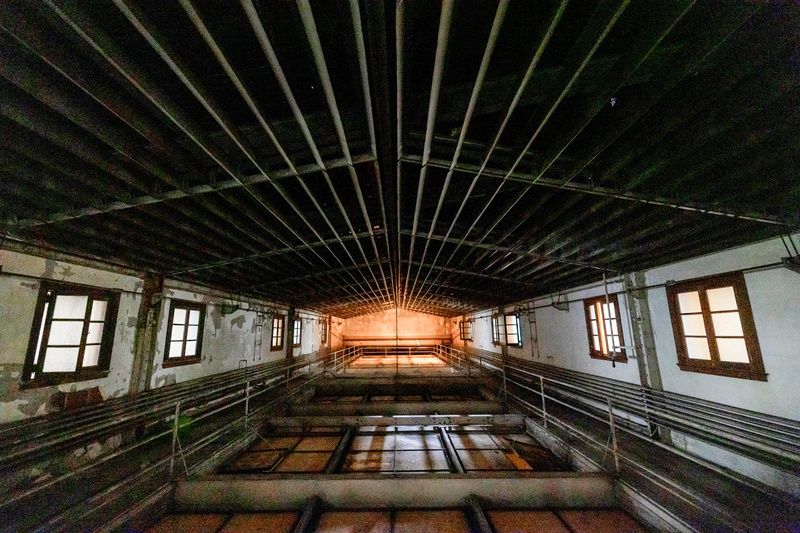
The main gallery, for instance, is surrounded by walls of concrete 2 feet thick as a fire precaution. The galleries on the second floor were lit by diffused skylights. Above the skylights, there is a mechanical system of long fins that can be adjusted to direct sunlight as the sun changes position in the sky throughout the day. The gallery skylight is also rigged to a ventilation system that allows a person to turn one wheel and simultaneously open a series of glass panels to let air flow.

The art galleries were named after Widener’s favorite artists, including Rembrandt, Raphael, Cellini, and van Dyck. Within each, paintings were displayed on red velvet walls, the remnants of which you can see hanging throughout the galleries today. In the Cellini room, niches in the walls housed precious jewelry items crafted by the Italian goldsmith Benvenuto Cellini. The Rembrandt Room held all Rembrandts. The van Dyck room, which is VanScyoc’s favorite, was also Widener’s favorite. It once held a portrait of Widener by John Singer Sargent. “Restoration would make these galleries the preeminent galleries in the country,” said Thome.

During the Depression, the Wideners opened their art galleries to the public so that anyone who wanted to could see the treasures inside. The philanthropically minded Joseph Widener bequeathed the family’s art collection, over 2,000 items, to the National Gallery in D.C. where you can see many of the items on display today. That creative and philanthropic spirit will be carried on in the estate’s future.

2. A Hidden Room Full of Safes Doesn’t Appear on Floorplans

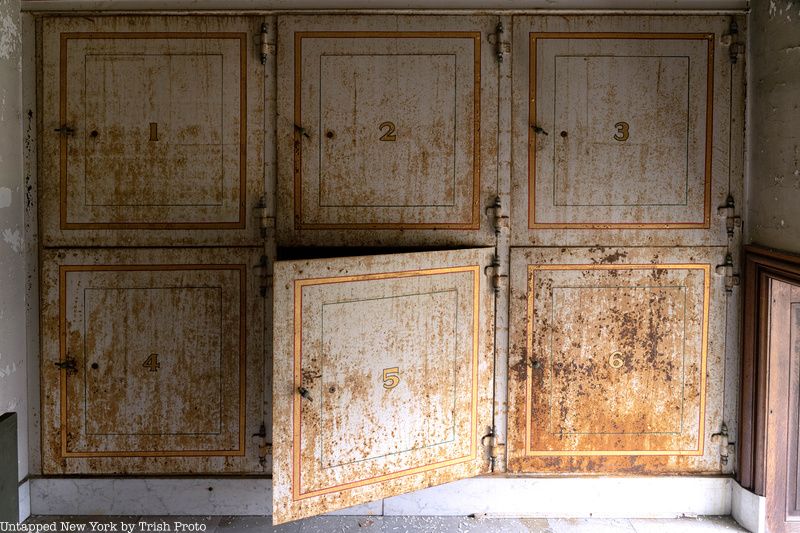
While working to clean up the mansion and learn more about it, the Preservation Foundation has made many surprising discoveries. One such hidden gem they’ve found is a room full of individually locked safes. It is tucked away behind the Butler’s Pantry and squeezed between the first and second floors and is the only room in the mansion that doesn’t appear on floor plans. There are fourteen safes in total, each lined with a dark blue velvet.  These safes likely held the finest pieces of silver from the Widener’s dinner service. Unfortunately, no long-forgotten treasures were found inside when they were opened.

3. Underground Tunnels and Buried Gardens

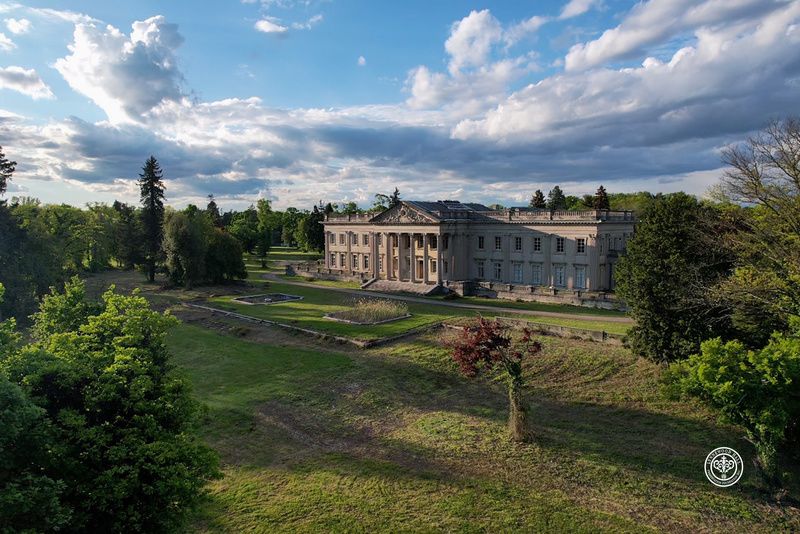
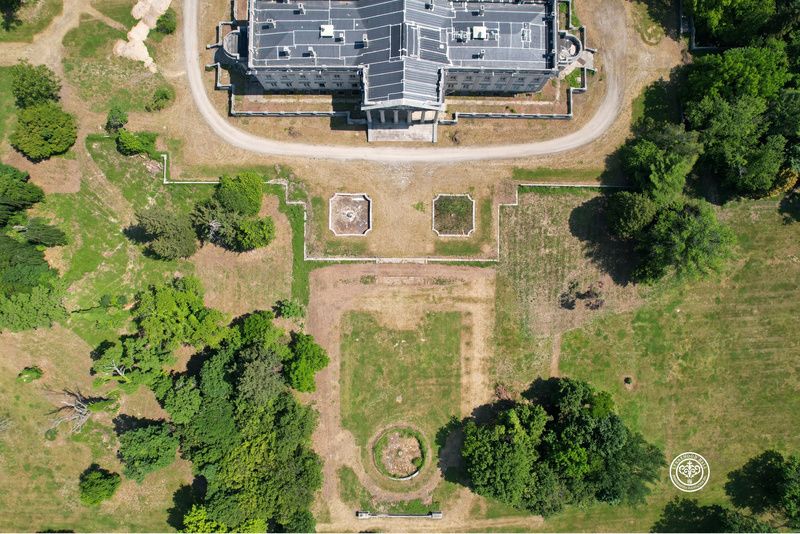
The Lynnewood Hall Estate didn’t just include the 100,000-square-foot mansion and the nearly 35 acres of land it sits on today. It originally covered 300 acres. On that land were two structures that still exist – Lynnewood Lodge (the former stables) and the Gatehouse – as well as a lost farm, a Normandy-style village for the staff, a powerplant, greenhouses, a polo field, and more. Snaking below the property is a large system of underground tunnels. VanScyoc told Untapped New York that the tunnel system may be even larger than they know. One branch of the tunnel system definitely goes from the basement of the main house to the central fountain in the front yard. A few manhole covers have been found around the property, but there may be more to uncover.

Another fun fact about the land is that the original gardens were buried. Upon the death of Peter Widener, his son Joseph inherited the property. Joseph and his father had slightly different tastes when it came to architecture and landscape design. Peter’s original landscaping for Lynnewood Hall was of an Italianate style with sunken gardens lined by balustrades. After Peter died, the sunken gardens were filled in and topped with a formal French garden.

4. Secret Doors and the Abraham Lincoln Couch

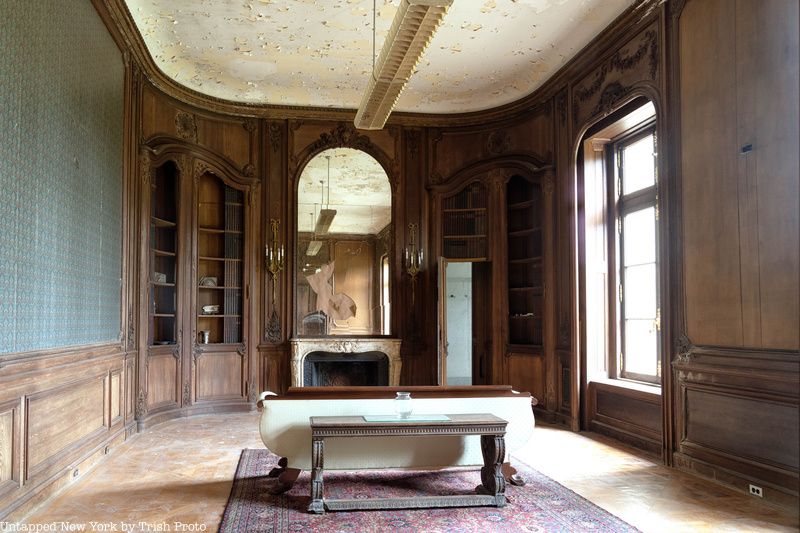
The smoking room is full of secrets! Take a peek at the right-hand side of the photo above. In the bookcase to the right of the mirror, you can see a hidden door. The door leads to a marble-clad bathroom for the gentlemen who would have enjoyed lounging in this space. The right side of that bookcase actually hides more shelves behind it, complete with false book spines. Throughout Lynnewood Hall there are many hidden doors, usually disguised as mirrors. Some doors are also fake. Rather than opening, they are simply built against a wall and give the illusion of an entryway.

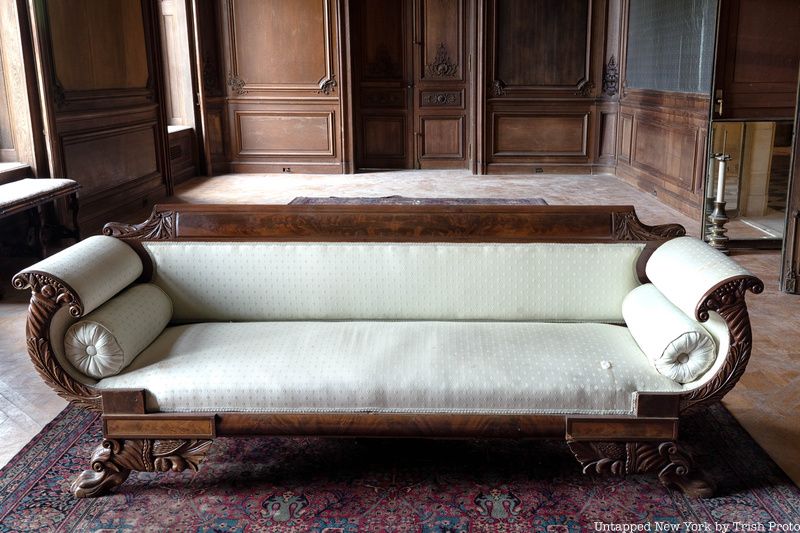
The couch in the smoking room is called the Abraham Lincoln couch because, so the story goes, Lincoln once sat in it. The couch, which is not original to the home, is allegedly from the New York Governor’s mansion and was graced by Lincoln’s rear end when he came to visit.

5. Tragic Ties to the Titanic

Many wealthy 19th-century families, the Wideners were touched by the tragedy of the Titanic. The family of Peter’s eldest son, George, booked tickets on the Titanic for their return trip from Paris. George and his wife Eleanor owned the Philadelphia Ritz-Carlton, so they were traveling to Europe to find a new chef for the hotel. They also needed to pick up a wedding trousseau for their daughter Josephine and some rare books for their son Harry. Harry, George’s valet Edwin Keeping, and Eleanor’s ladies maid Amalia Geigerhey went along for the trip. When the Titanic sank, George, Harry, and Edwin sadly lost their lives. Eleanor and Amalia made it safely to New York. This tragedy has long been one of the things that Lynnewood is most known for, but there is much more to the story of the Wideners and their opulent home.

SOURCE: UNTAPPEDCITIES.COM