Capricorn

I thought it might be fun –seriously not recommending nor am I dissuading anyone from reading their horoscopes—this is just for fun—if we took a monthly look at zodiac signs and horoscopes.  Capricorn is actually the 10th sign of the zodiac, so we’re not starting at the beginning obviously.  The dates for a Capricorn are December 22- January 19 or 20 (depending on whom you consult).  Their symbol is a goat (mythologically speaking the Sea-Goat to be specific); their element is Earth and their color is brown.
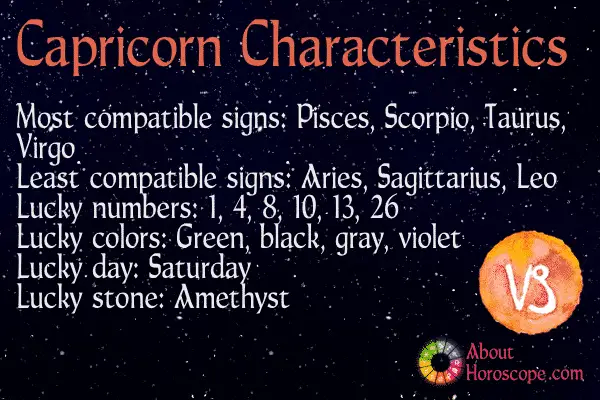
When I went looking for information—there are literally TONS of zodiac sites—I chose one randomly and here’s what it said…

Capricorn is the 10th sign of the zodiac and is represented by the Goat. Those born under this sign are generally pragmatic, ambitious, and disciplined, although they can also be somewhat stoic and pessimistic.

Capricorns belong to the element Earth (as do Taurus and Virgo), which makes sense considering how grounded they are in reality when it comes to making their dreams happen.

Indeed, Capricorns look at everything as a task to be completed, making them an incredibly independent, hardworking type. They can accomplish whatever they set their minds to, regardless of the energy it requires, so long as they have a clear goal and a path for getting there.

This also means, however, that Capricorns can hold other people to incredibly high standards. Because the Capricorn is connected to Saturn, a symbol of restraint and restriction, the Capricorn personality can at times seem distant, emotionless, and overly analytical; therefore, it’s important for Capricorns to occasionally relax and get in touch with their feelings through activities such as meditation.

Capricorns value tradition and are typically more conservative in terms of their personality and interests. This more traditional approach to the world is reflected in the classic style and character of the most common Capricorn birthstone, the garnet (January’s birthstone). (If you’re a December Capricorn, your birthstone is the blue topaz.)

What kinds of positive and negative traits does the Capricorn personality have? On the good side, Capricorn is hardworking, ambitious, and responsible. Meanwhile, on the bad side, the Capricorn sign is pessimistic, work-obsessed, and stubborn.

Some examples of suitable jobs for Capricorns include the following:

Accountant

Banker

Business analyst

Business executive

Economist

Financial planner

Human Resources manager

Politician

Principal or teacher

Real estate agent

Capricorn Astrology 2023 Predictions

The combo of Jupiter and Saturn will make your time good in areas like finance, engineering and language related areas.

You need pay more attention to your health. The dual transit of Jupiter and Saturn may cause you more stress.

Hence, you need to take enough sleep and should be healthier. The year 2023 may be slow in term of finance, but it will be steady later on.

The businessmen should be more careful throughout this year. Capricorn businessmen who are looking for long-term investment or huge investment business should think many times before go for it.

If you’re looking for marriage, then this year would be a good year. Starting from January 2023, the Capricorn star sign will get more proposals for marriage. The best part is, you will marry those who you know and love.

2023 Capricorn Love and Marriage Predictions

This year, Capricorn natives will have unspeakable freedom in their love life. But use it wisely and do not flirt or enter unwanted territory.

Especially those who are engaged, in love, or married can thrive if happiness is a priority. Individuals are advised to use time to build record-breaking lasting relationships, but not to withdraw their love in a one-time relationship.

As the year goes on, harmony comes into your love or marriage. There will be more romantic and erotic pleasure in the cards.

Some single Capricorn natives can tie the knot in the middle of the year. Occasionally there may be periods of misunderstanding with a spouse or partner, and it is up to you to sort this out accordingly.

Capricorn Horoscope 2023 Career Prediction

Career opportunities for Capricorn natives in 2023 are very beautiful. Major changes are coming, and there will be better coherent moves with bosses and colleagues in the workplace. But keep in mind that hard work and dedication will give you space, so don’t be self-satisfied and relax.

The planets wish you luck and fortune in your professional area throughout this year. However, beware of occasional setbacks. Set proud ambitions and work towards it. You will be motivated by new ideas that will help you come into your life during this period.

Some natives may find this period very demanding and stressful. Do not lose heart, keep fighting, and stay away from gossip and gossipers. Take the big hurdles as life lessons for now.

Capricorn Astrology 2023 Health Prediction

For Capricorn natives, both Jupiter and Saturn will have good health and well-being.  Although Saturn occasionally brings periods of health worries and low immunity, Jupiter brings some balance and splendor.

The natives have to follow healthy habits to stay healthy throughout the year. Goats often have minor health issues here and there. Load fluids, stay hydrated and take a balanced diet. Health needs more attention throughout the year than in the past.

Stress and strain can ruin your health too, so be safe. However, some chronic diseases may disappear these days after some medical intervention. Play a game, have a good rest and the year will be very happy for you.

Capricorn Astrology 2023 Financial Prediction

The planets for 2023 are favorably disposed so that your financial position is safe and well. Good money will come from different areas.

You need to determine if you are going to invest or move forward for future purpose. Be careful in your moves. In particular, this year will bless you with abundant financial resources throughout the year. From time to time there will be luck and fortune.

Some of you may be able to write off your bad debts, some may come to the big legacy, and still others may get a pay raise.

Some Capricorn natives may have to change their budget in the middle of the year because they are not going anywhere. Make sure you stand on solid ground during these difficult times. Saturn may suddenly cause some misfortune. So be careful, do not succumb to temptations.

Advice for Capricorn Zodiac 2023

Capricorn folks should have a great time throughout the year. However, they should use the time to evaluate how they can sustain their lives and contribute to society on a large scale.

Be optimistic even when things get bad sometimes. Bring a sense of honesty in your work, which will help you find faults in life. Saturn will bring some challenges throughout the year. Be firm in your policies, and continue to act.

Dream big during this period and on a positive note the wind of the year blows and success will be yours.

Famous Capricorns

Muhammed Ali, Kate Middleton, Ricky Martin

Which is Worse: Stink Bugs or Congress?

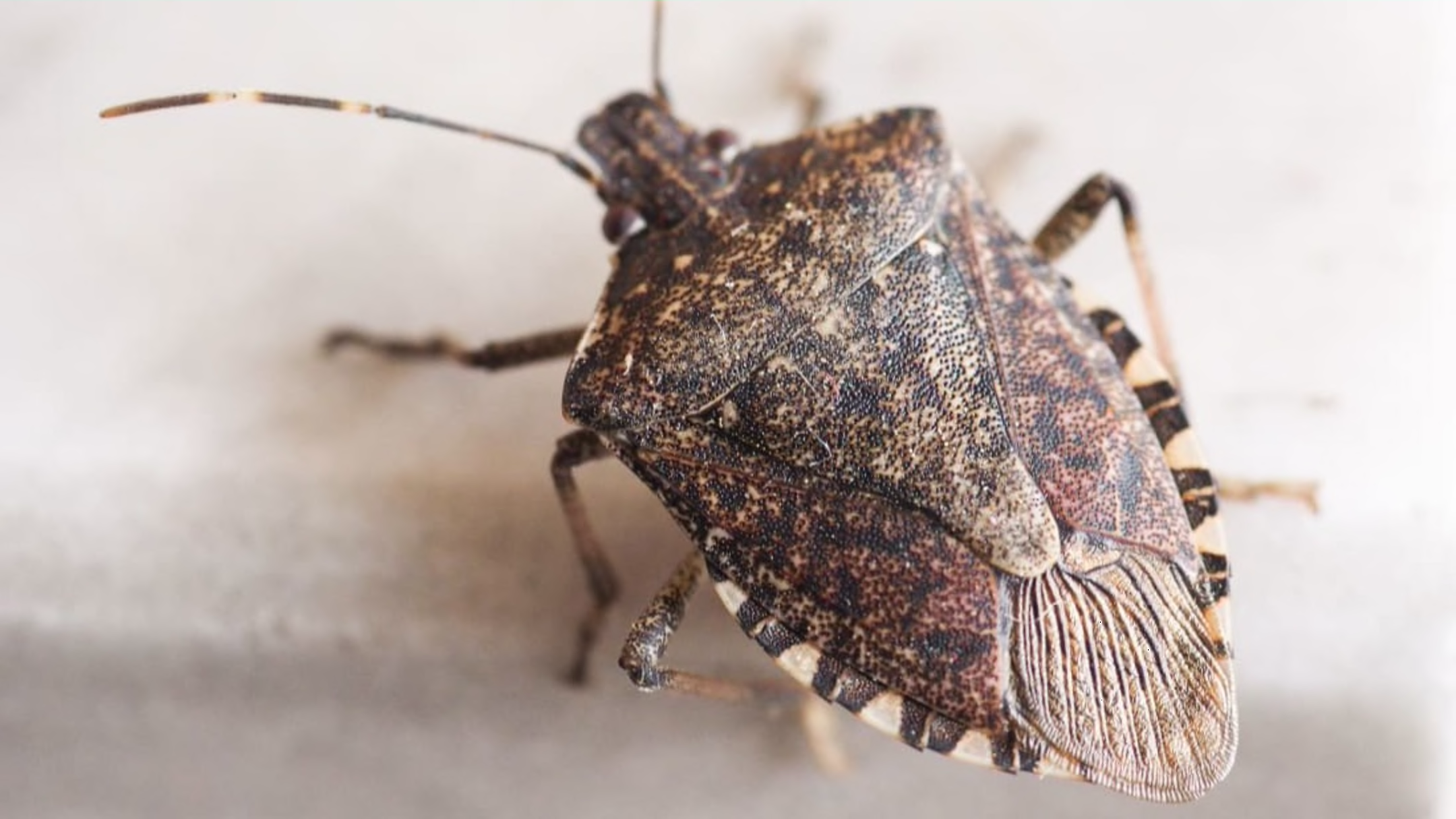
  The other afternoon, I saw a stink bug in the house and of course, I flushed it down the toilet.  (The process is a quick one: locating said bug, nabbing it quickly in a napkin and dashing to flush it before the smell permeates everything.)  I found an article about stink bugs written by Erin McCarthy in 2019 and I as I read it, I couldn’t help but notice their similarity to Congress. Stay with me here…

In her article on Mental Floss, she noted that The New Yorker called marmorated stink bugs “the most destructive, the most annoying, and possibly the ugliest” of all the stink bugs, an invasive species that’s taking North America by storm … and not in a good way.  Here are her 12 facts to know about these stink bugs (and Congress).

IT MADE ITS WESTERN HEMISPHERE DEBUT IN PENNSYLVANIA.  Stink bugs were first discovered in Allentown, PA which is not far from Philadelphia, PA where freedom, legislature and liberty were born.  (Okay, the first Congress was in NY…but that’s close enough.)

IT TOOK YEARS TO IDENTIFY IT.  Just as the bugs were unknown, so were most of Congress.  No one knew they were duplicitous dirtbags at first.  Slowly, the mystery unfolded and we could see them for who they really are.  And although there are many species (true of BOTH the bugs and Congress) there is one species most vile.  With stink bugs it’s the marmorated stink bug and in Congress it’s the Uniparty.

 IT’S NOT CUTE.  This does not even require an argument.

THEIR SPRAY HAS SOMETHING IN COMMON WITH CILANTRO.  Admittedly I’m at a loss here…not knowing what cilantro smells like, but the stink in Congress is unmistakable, so I’ll call this one a wash.

THEY EAT YOUR APPLES.  The stink bugs tend to suck the fluid of out produce.  To feed, the bugs pierce the skin of the plants with their mouthparts and drink the fluids, which renders the fruit unmarketable as a fresh product.  Congress does the same with our economy.

THEY COULD INVADE YOUR HOME BY THE THOUSANDS. Once a stink bug has found a warm spot it likes, it will release an aggregation pheromone (which can linger for up to a year) that draws others to the same area, where they’ll gather in sometimes staggering numbers.  Congress does the same—growing government by leaps and bounds—congregating in Washington DC—and then branching out to claim other areas.

ONCE INSIDE, THEY’RE HARD TO GET RID OF. Once a terrible Congressional candidate is elected, it is nearly impossible to vote them out of office!

THEY’RE PRETTY GREAT FLIERS.  Congress loves to fly!  They will take “fact-finding” trips all over the world on the taxpayer’s dime…the more the merrier!

THEY’RE GENERALLY NOT HARMFUL.  This is a true difference.  Congress is one of the most destructive forces on the planet.  Curtailing freedoms, increasing spending, never solving any crises or issues…they push the problems down the road and somehow claim victory in the next election cycle.

THEY MIGHT BE MESSING WITH YOUR RED WINE.  Researchers at Oregon State University placed live and dead stink bugs on wine grapes and measured the stress compounds the insects released as they and the grapes were squeezed during the winemaking process.  The researchers found that more than three stink bugs per grape cluster resulted in contaminated wine.  I hope Congress stays out of the wine, but they enjoy drinking it—heavily!  But as a general rule, any time 3 or more congresspeople work on an issue, you can be guaranteed that the problem will get worse, they will get richer, and the American public will get screwed.

THEY LEAVE TRACES OF THEIR PRESENCE ON PLANTS. I’m going to say according to the recent Twitter File Releases, this is a no brainer.  Not only did they leave traces (which were followed), they left their stink of censorship everywhere!

ONE OF ITS NATURAL PREDATORS IS A PARASITIC WASP THAT JUST MADE ITS WAY TO THE STATES.  Samurai wasps are tiny, stinger-less parasites that lay their eggs in the stink bugs’ eggs, where its larvae eat the contents before emerging as wasps to continue the cycle.  When I think of a parasitic predator, I think of China and our Congress has indeed been penetrated by them!  Their souls are being eaten away in their attempts to become richer and richer and China emerges to reap the benefits.

Well, what do you think? Have I made my case? If we head to DC…I call shot gun!

What Shall We Bake Today?

Last month, I included a recipe GA/FL posted in an open about turtle cookies.  I have since made the recipe and it has become a FAVORITE!!! It deserves its own open!  The recipe was not clear on how big to make the cookie logs, and I was unsure if the cookies would expand in the oven.  I made 4 smaller logs and got a ton of cookies!  I also experimented with cutting the slices thinner and thicker to see if we would like them softer or crispier—we liked them EITHER WAY! This is just a delicious tasting cookie!  Thank you GA/FL for bringing it!!!

Mama Smith’s Pecan Refrigerator Cookies

Beat together:

1-1/2 cups butter

1 cup brown sugar

1 cup white sugar

2 eggs

Whisk together:

4 cups flour

1 tsp baking soda

1 tsp cream of tartar

1/2 tsp salt

Mix sugar/egg and flour mixtures together.

Add 2 cups chopped pecans.

Roll into logs, wrap with plastic wrap or waxed paper, refrigerate for a couple of hours or store in freezer until needed.

Slice and bake at 350* until lightly browned—mine took 7-10 minutes.

ETYMOLOGY OF WORDS AND PHRASES – PART 8

Continuing my etymology series, today I am focusing only on some common phrases. If you have any phrases you are curious about, hit me up and I’ll see what I can find for you. Enjoy!!!

A bird in the hand is worth two in the bush

This proverb, like many others, warns against taking risks. It suggests that you should keep what you have and not risk losing it by going after more. The allusion may be to falconry where a bird in the hand (the falcon) was a valuable asset and certainly worth more than two in the bush (the prey).

This proverbial saying is first found in English in John Capgrave’s “The Life of St Katharine of Alexandria, 1450”: “It is more sekyr [certain] a byrd in your fest, Than to haue three in the sky a‐boue.”

John Heywood’s 1546 glossary “A Dialogue conteinyng the nomber in effect of all the Prouerbes in the Englishe tongue” also includes a variant of the proverb: Better one byrde in hande than ten in the wood. The 7th century Aramaic “Story of Ahikar” has text that modern translations render as “Better is a sparrow held tight in the hand than a thousand birds flying about in the air.”

Cat got your tongue?

The origin of the phrase ‘has the cat got your tongue?’ isn’t known. What is certain is that it isn’t derived as a reference to the cat o’ nine tails or people’s tongues being fed to cats in ancient Egypt. Both of these have been suggested and there’s no shred of evidence to support either of them.

‘Cat got your tongue?’ is the shortened form of the query ‘Has the cat got your tongue?’ and it is the short form that is more often used. It is somewhat archaic now but was in common use until the 1960/70s. It was directed at anyone who was quiet when they were expected to speak, and often to children who were being suspiciously unobtrusive.

There’s no derivation that involves any actual cat or celebrated incident of feline theft. Like the blackbird that ‘pecked off his nose’, the phrase is just an example of the light-hearted imagery that is, or was, directed at children.

The expression sounds as though it might be old but isn’t especially so. There are no instances of it in print until the mid 19th century. The early examples of the expression in print all come from the USA, which reinforces the falsity of the Egyptian or Royal Navy origins.

Hell’s bells

The exclamation ‘Hell’s bells’ has been used in both the UK and the USA since at least the mid-19th century. The earliest example of it in print that can be found is from the weekly London sporting newspaper “The Era,” February 1840. The rather fanciful story concerned a character who had stolen his friend’s partridges and replaced them with pigeons, claiming them to be ptarmigan.

There’s no reason to look for any special meaning of Hell’s bells – it doesn’t refer to diabolical campanology – the ‘bells’ are added just for the rhyme. It is an uncommon phrase in that, as well as being an example of reduplication, it is also a minced oath. Adding ‘bells’ was simply a way of uttering the oath ‘Hell’ and making it sound acceptable in polite company.

The expression is often extended by other evocative but meaningless additions. In the UK this is often ‘Hell’s bells and buckets of blood’ and, in the USA, ‘Hells bells and little fishes’ or ‘Hells bells and a bunch of parsley’. There are many other variants, in fact almost anything can be added to ‘Hell’s bells…’ as there’s no requirement for the addition to make sense.

Hold a candle

The expression ‘can’t hold a candle to’ refers to someone who compares badly to an known authority – to be unfit even to hold a subordinate position. Apprentices used to be expected to hold the candle so that more experienced workmen were able to see what they were doing. Someone unable even to do that would be of low status indeed.

Sir Edward Dering used a similar phrase ‘to hold the candle’ in his “The fower cardinal-vertues of a Carmelite fryar,” 1641: “Though I be not worthy to hold the candle to Aristotle.”

‘To hold a candle’ is first recorded in 1883 in William Norris’s “No New Thing:” “Edith is pretty, very pretty; but she can’t hold a candle to Nellie.”

Raise Cain

Cain was the first murderer according to scriptural accounts in the Bible – Genesis 4 and in the Qur’an – 5:27-32.

The biblical account, from the King James’ Version, tells of how Cain and Abel, the two sons of Adam and Eve, bring offerings to God, but only Abel’s is accepted. Cain kills Abel in anger and is cursed by God.

The transitive verb ‘to raise’ has been used since at least the 14th century to mean ‘to conjure up; to cause a spirit to appear by means of incantations’. Geoffrey Chaucer made use of that meaning in “The Canon’s Yeoman’s Tale,” circa 1395:

I haue yow told ynowe To reyse a feend al looke he neuere so rowe.

In Modern English – [I have told you enough already to raise a fiend, look he never so savage.]

If you make trouble you are raising, that is, conjuring up, the accursed spirit of Cain. This is similar to several phrases that allude to calling-up or ‘raising’ the Devil. There’s ‘raise the Devil’ of course and also ‘raise hob’ and ‘raise hell’.

The phrase is American and is first found there in the late 19th century; for example, this little pun on the word ‘raised’ from the St. Louis’ “Daily Pennant,” May 1840: “Why have we every reason to believe that Adam and Eve were both rowdies? Because they both raised Cain.”

A picture is worth a thousand words

This phrase emerged in the USA in the early part of the 20th century. Its introduction is widely attributed to Frederick R. Barnard, who published a piece commending the effectiveness of graphics in advertising with the title “One look is worth a thousand words”, in “Printer’s Ink,” December 1921. Barnard claimed the phrase’s source to be oriental by adding “so said a famous Japanese philosopher, and he was right.”

Printer’s Ink printed another form of the phrase in March 1927, this time suggesting a Chinese origin: “Chinese proverb. One picture is worth ten thousand words.”

The arbitrary escalation from ‘one thousand’ to ‘ten thousand’ and the switching from Japan to China as the source leads us to smell a rat with this derivation. In fact, Barnard didn’t introduce the phrase – his only contribution was the incorrect suggestion that the country of origin was Japan or China. This has led to another popular belief about the phrase that it was coined by Confucius. It might fit the Chinese-sounding ‘Confucius he say’ style, but the Chinese derivation was pure invention.

A similar idea was seen very widely in the USA from the early 20th century, in adverts for “Doan’s Backache Kidney Pills,” which included a picture of a man holding his back and the text “Every picture tells a story.”

Neither of the above led directly to ‘a picture is worth a thousand words’. Who it was that married ‘worth ten thousand words’ with ‘picture’ isn’t known, but we do know that the phrase is American in origin. It began to be used quite frequently in the US press from around the 1920s onward. The earliest example found is from the text of an instructional talk given by the newspaper editor Arthur Brisbane to the “Syracuse Advertising Men’s Club,” in March 1911:

“Use a picture. It’s worth a thousand words.”

It’s National Toss Your Fruitcake Day!

Fruitcake is one of those mysterious gifts that everybody receives, but nobody actually enjoys. It mysteriously lasts for a long time, and it does not taste good. If you received a fruitcake this holiday season, here are some ideas for using it.

1. A door stop

Do you have that pesky door that just won’t stay open? Throw the fruitcake down, and the door will stay open for as long as you want!

2. A booster seat for kids

Is your child not quite tall enough to sit at the dinner table? Simply place the fruitcake on a chair, and seat the child on top of the fruitcake. They will instantly be able to sit at the grown-up table!

3. A Christmas Tree stand

Is your Christmas Tree stand not festive enough? Use a fruitcake instead. (Bonus: the fruitcake will hold water, just like any other Christmas Tree stand)

4. A bird feeder (Will only work if birds are desperate)

You can try being a bird whisperer by feeding your local birds with the fruitcake! If the birds are hungry enough, this may just work!

5. A bookend

Are you tired of your books constantly falling over? Simply place the fruitcake at the end of your collection, and you have a festive bookend. For extra sturdiness, cut the cake in half and place one half at each end of your book collection.

6. Put it under your pesky neighbor’s tire

Do you have that one neighbor that you just can’t stand? Place the fruitcake under their tire, and they are almost guaranteed to never speak to you again.

7. A step stool

Do you have that one shelf that is just impossible to reach? Place the fruitcake on the ground and step on it. You are magically taller! (Note: Can also be used as a step platform for aerobics)

8. A beer koozie

Do you need somewhere festive to place your beer? Look no further than the fruitcake!

9. Use it to fix a wobbly table

Do you have to hold onto your drinks when you eat dinner? Place the fruitcake under the uneven leg, and your table is good as new! (Note: You may need to trim fruitcake according to table leg size)

10. A hockey puck

Did you lose all of your hockey pucks again? Simply use the fruitcake! You can even mold it into a hockey puck shape!

11. Save it for trick-or-treaters on Halloween

Would you like to see your fruitcake consumed, but you can’t do it yourself? Save it for Halloween! You can cut it into squares or use a cookie cutter for fun Halloween shapes!

12. A boat anchor*

*Will only work on smaller boats. Large boats and cruise ships will require several fruitcakes.

13. Throw it at a burglar

Someone break into your house? The weight of the fruitcake is sure to knock any burglar out!

14. Fire wood (most recommended)

If you just want the fruitcake to be gone, simply throw it in your bonfire during this chilly holiday season. It will be gone in no time!

Liar-in-Chief

I’m not sure who “Bonchie” is, but he (?) has done an excellent job compiling a thread of Joe Biden’s lies.  I am presenting his thread as a way of saving the list for future reference. 

THREAD:

Bonchie

Follow @bonchieredstate

Democrats are on the warpath, demanding George Santos resign for inflating his past accomplishments and backstory.

Oddly enough, they have no desire to apply that standard to their own standard-bearer: Joe Biden.

Walk with me because things get crazy…🧵

Joe Biden has spent decades lying about various aspects of his past. There are so many falsehoods that it’s hard to even quantify them.

For example, just two weeks ago, Biden made up a story about awarding his “Uncle Frank” a purple heart while vice president…

The story was vivid, complete with quotes from Uncle Frank and the description of a family ceremony.

The problem? Uncle Frank died in 1999. Essentially everything else about the story was also false…

Biden has claimed numerous times that he was arrested with Nelson Mandela in Soweto, South Africa.

The problem? That never happened. Even The Washington Post took the time to debunk it, and Biden finally admitted to the lie in September of 2022…

Biden has claimed at least twice that he worked driving a “tractor-trailer.” That was a lie so egregious that even Politifact couldn’t ignore it.

The reality? He rode around in one as a Senator…

But while those lies could be brushed off as Biden just fibbing about stuff that’s ultimately meaningless, he also has a long history of lying about his resume.

For example, he told a story about visiting Israel during the Six-Day War to bolster his record on foreign policy…

The problem? The prime minister he claimed to have met with wasn’t in power until 1969 (the Six-Day War was in 1967.

Further, his brag about being a “liaison,” essentially advising on military matters, was also false. Here’s CNN on that…

The resume fluffing doesn’t stop there. Biden was infamously caught in a plagiarism scandal that forced him out of the 1988 presidential race.

Biden had also lied about his class ranking in an attempt to bolster his credentials…

In another instance, again meant to make him seem more than he is, Biden claimed to have hit a ball 358-foot during a congressional baseball game.

He says the game took place in the “old Washington stadium.” It actually took place in Baltimore and records show he went 0-2…

Biden has also repeatedly lied about how his first wife and child died, claiming they were killed by a man who “drank his lunch,” i.e. a drunk driver.

He reportedly apologized in 2009 to the man’s family for the lie…

Back to lies meant to bolster his political image, Biden has claimed at least seven times that while he was vice president, an Amtrak conductor named Angelo Negri told him he had traveled 1.5 million miles on the service.

The problem? Negri retired in 1993…

And again returning to his resume bolstering, Biden has claimed numerous times he was a “full professor” at the University of Pennsylvania.

Fact-checkers like Snopes laughably gave him a mixed rating, but he never taught a class…

Of course, we could then talk about the lies that are so dumb that you can’t even disprove them. Such as his famed fight with “Corn Pop” or his claims of being an all-star football player (he apparently failed his way off the team)…

But I’ll stop there because I’d otherwise be here all day. The lies just keep going and going. The more you search, the worse it gets.

So while some might have the moral authority to call for George Santos to resign, Democrats (and their press allies) don’t.

The Mummer’s Parade

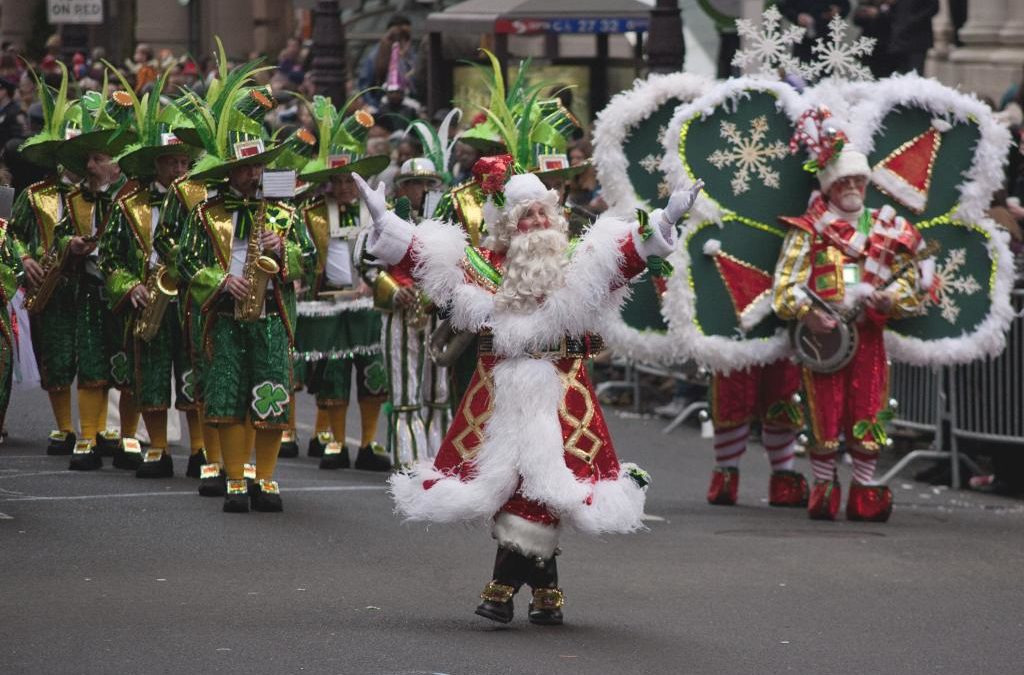
Every New Year’s Day, we would watch the Mummer’s Parade.  It’s a Philadelphia tradition full of color and music and fun!  There are districts, clubs and bands competing in different categories—even a comedy division! There’s even an official dance move called “the Mummer’s Strut”! I found the following info on the National Today website.

History of Mummer’s Parade

If you live in the Philadelphia area or plan on spending your holiday there, the Mummer’s Parade is the place to be, so don’t go too wild the night before. This 120-year-old parade is a staple of the Philadelphia cultural scene, with tens of thousands of people taking part, making it one of the most exciting events on the U.S. calendar. It all started in the mid-seventeenth century when the first parade was created, infusing dance, music, and costume styles from Swedish, Irish, German, and African cultures and heritages to celebrate art and tradition. It was also loosely based on the British and Irish Mummer’s plays, which were folk plays performed by troupes of amateur actors, almost like pantomimes, but with more of a mythical narrative.

Naturally, through the years, it has grown and evolved into a massive celebration that today symbolizes the amalgamation and coming together of different cultures in America and pays homage to those rich backgrounds and heritage of the people that chose to participate in the actual parade events.

Today, local clubs — who have started referring to themselves as New Year’s Brigades — collectively will compete in one of five categories, including comics, wench brigades, fancies, string bands, and fancy brigades. They spend months creating elaborate costumes, performance routines, and movable scenery. This is done in clubhouses, many of which are located on or near 2nd Street in the Pennsport neighborhood of the city’s South Philadelphia section and serve as social gathering places for members.

Source: National Today

Happy New Year Everybody!!!

3…2…1…

It’s no secret that one of the most popular destinations in the world for the most highly anticipated night out of the year – New Year’s Eve – is New York City. It’s all about the sights, sounds, and unique entertainment that this city has to offer—centered, of course, on the Times Square Ball. When you gather in Midtown to watch the Ball Drop, you’re part of a long, rich history of partying!

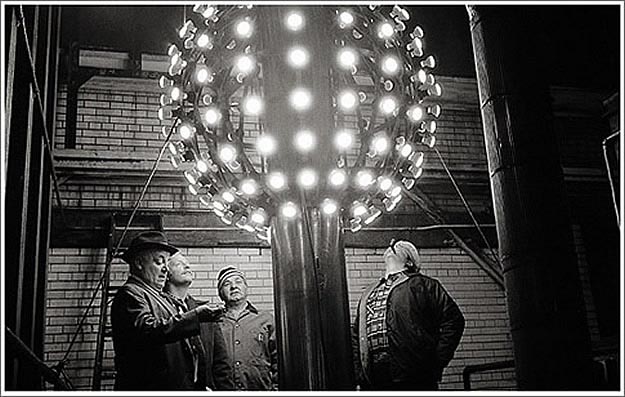
In 1903, The New York Times newspaper was about to open their new headquarters, the city’s second tallest building, in what was then known as Longacre Square. The paper’s owner, Adolph Ochs, decided to commemorate their opening with a midnight fireworks show on the roof of the building on December 31, 1903. After four years of New Year’s Eve fireworks celebrations, Ochs wanted a bigger spectacle at the building to draw more attention to the newly-renamed Times Square. An electrician was hired to construct a lighted Ball to be lowered from the flagpole on the roof of One Times Square. The iron Ball was only 5 feet in diameter! The very first drop was on New Year’s Eve 1907, one second after midnight. Though the Times would later move its headquarters, the New Year’s Eve celebration at One Times Square remains a focal celebration for the world.

The Ball has gone through some major transformations in its 100-plus years of partying. The original Ball was replaced in 1920 with a 5-foot, 400-pound iron Ball. This Ball lasted to 1995, when a third Ball debuted, adding rhinestones and a computerized lighting system featuring strobe lights. For the arrival of the new millennium, an entirely new Ball was constructed. Weighing 1,070 pounds and measuring 6 feet in diameter, the fourth ball was covered with 504 Waterford Crystal triangles illuminated with 168 halogen bulbs outside. Internally, 432 bulbs of clear, red, blue, green and yellow colors along with strobe lights and spinning mirrors lit up the night. It was retired on December 31, 2006 newly rigged with light-emitting diodes.

In honor of the Ball Drop’s 100th anniversary, a fifth design debuted New Year’s Eve 2008. Manufactured again by Waterford Crystal with a diameter of 6 feet, weighing 1,212 pounds, it used LEDs, computerized lighting pattern, and can produce over 16.7 million colors, but only consumes the electricity of 10 toasters! The 2008 Ball was only used once— a sixth new Ball debuted on New Year’s Eve 2009 and is still in use.

Today’s Ball is 12 feet in diameter, weighing 11,875 pounds. While retaining the 2008 design, this Ball was rebuilt double its previous size. To accommodate this new Ball, the flagpole was also enlarged, now rising 475 feet above the street. It remains atop One Times Square year-round, reminding the people below of the most exciting night of the year, and building the anticipation. Where will you be this New Year’s Eve? How will you become a part of the Ball’s history?

Source: https://www.balldrop.com/article/history-of-times-square-ball-drop

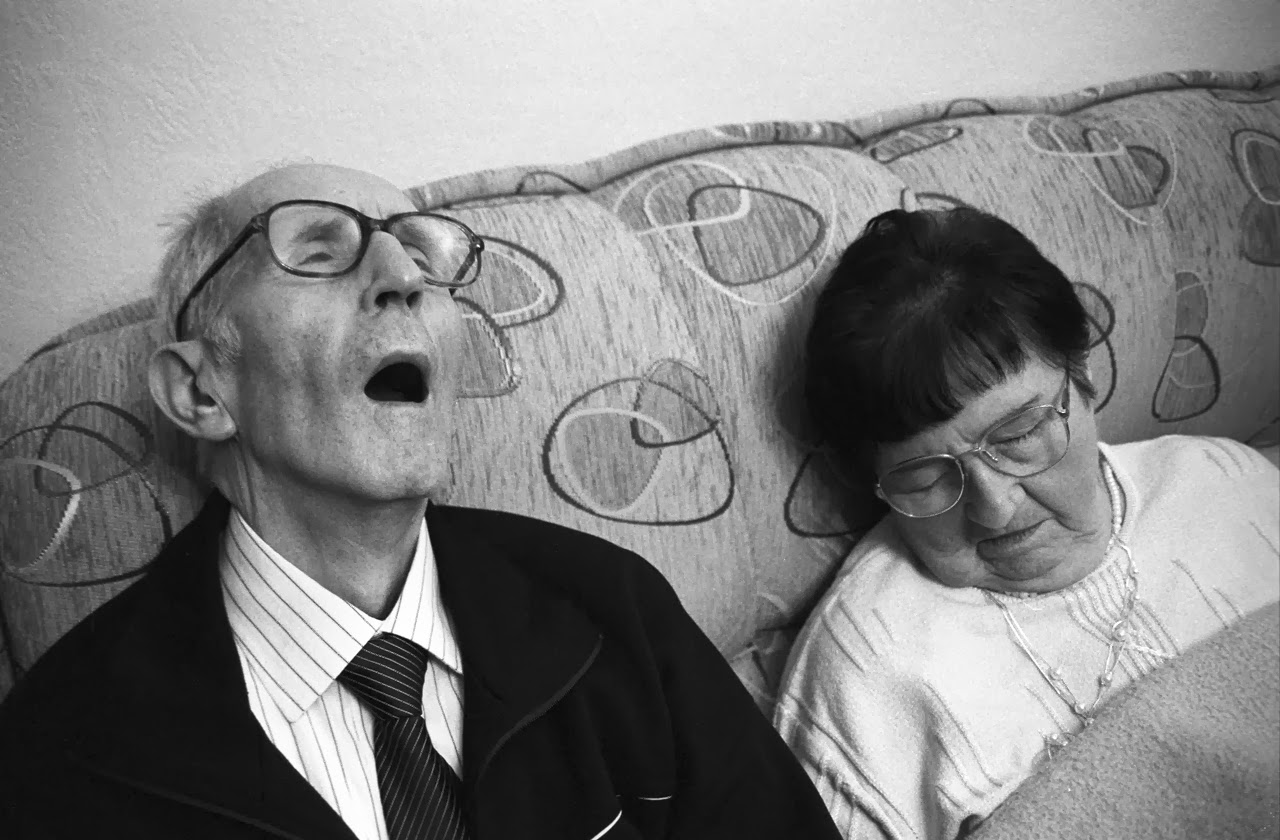
Here at our house, we do things differently.  We celebrate New Year’s promptly at 9:00 pm…if we’re still awake, because it’s usually a contest to see what drops first…the ball or our eyelids and our eyelids are undefeated at this point! 

ROCK ON…LOL

Etymology, Part 7: Oxford English Dictionary

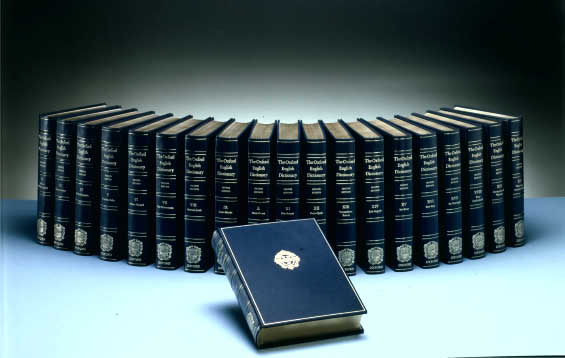
The Oxford English Dictionary (OED) defines more than a half million words and it took more than seventy years to research and write the original “twelve tombstone-size volumes.” It is the gold standard of the English language.

On August 14, 1879, Scottish polymath James Murray was given the go-ahead by the Philological Society of England to begin the work of tracing the history of every single word in the English language and providing a definition faithful to its meaning. As the editor of the OED, he had the task of finding all the words as used in classical and standard written works in English. His historical starting point was the year 1150 AD.

Denholm, birthplace of James Murray, is located in the Scottish Borders Council Area

Murray was a “self-educated country boy” from the Scottish Borders village of Denholm. He had to leave school at fourteen for lack of funds, but he continued learning on his own, with a special interest in etymology — “He was captivated by words and strange languages.”

Murray mastered Spanish, French, Catalan, Italian and Latin and, “to a lesser degree”, Portuguese, Vaudois, and Provençal, as well as other various dialects. He also acquired a working knowledge of Gaelic, Dutch, German, Danish, Slavonic and Russian. He knew Hebrew and Syriac well enough to sight read the Old Testament and picked up to a lesser degree Coptic, Phoenician and Arabic. He taught school and worked in a bank as an administrator in London, but his real passion was language.

James Murray lived in this Oxford home on Banbury Road from 1885-1915

By 1879, at the age of forty-two, James Murray began his real life’s work creating the Oxford English Dictionary. All eleven of his children lived to maturity and they, his wife, and eventually, grandchildren all helped in the project. He was permitted to use an iron shed on the property of the school where he taught, which he had outfitted with a thousand pigeon-holed rack to hold the quotations slips for the words.

Before long, the “scriptorium” was ready and the project was begun. Through the Philological Society he issued “An Appeal to the English-Speaking and English-Reading Public” in Great Britain, America and the British Colonies, asking for a thousand readers for the next three years to supply him with good quotations, thus determining how various English words were used over the centuries. They were to avoid Bible Concordances, Shakespeare, and Edmund Burke — sources already combed.

Image Credit: Oxford University Press, LA Times

Dictionary slips and their sorting became a major part of life for the Murray family. People from all over the world sent in slips with the desired information. Several sub-editors and the children sorted through them and into the pigeon holes they went. One of Murray’s sons provided 27,000 quotations on his own, according to the introduction in the first volume.

The entire story is amazing — the perseverance, erudition and dedication of Murray became legendary, as did some of the characters that sent in quotes. One of the best, most erudite and apparently brilliant contributors turned out to be a murderer from America, locked up in a prison for the criminally insane in England! (As recounted in “The Professor and the Madman” by Simon Winchester).

Seven of the twelve volumes of the Oxford English Dictionary

When William Chester Minor heard about the project, he heavily got involved with it. At that point in his life, the former American army surgeon was a patient at Broadmoor (an asylum). William had murdered a stranger named George Merrett in 1872 due to paranoia. The assailant thought that his victim had broken into his room. The court ruled that William was not guilty by reason of insanity, and he was sent to the psychiatric facility in Crowthorne, Berkshire.

Image Credit: Unknown Author, Public domain, via Wikimedia Commons

In fact, William got a pension for his military service and was not adjudged to be dangerous. Therefore, he had access to comfortable housing and a plethora of books at the facility. This is why it is not surprising that he became one of the biggest contributors to the dictionary. He sent in more than 10,000 entries! It is true that the widowed Mrs. Merrett used to visit him and bring him books on his list. Even though Winchester’s writing suggests that they could have had an affair, the author did say he was unsure about this facet of the surgeon’s life.

Winchester further said this about the man— “Minor concentrated very hard, and some synapse(s) in his brain presumably fired in such a way as to eliminate his symptoms of schizophrenia.” All this time, James had no idea about William’s past. However, when he finally learned the truth, their relationship was unaffected. The lexicographer even described the “madman” as “a fine Christian gentleman, the same as myself.”

However, in 1902, William’s paranoia became worse. He had delusions wherein he was being abducted every night and was made to go as far as Istanbul to commit sexual assaults on children. Therefore, he cut off his own penis. By 1910, James campaigned for William’s release as well. Winston Churchill was the home secretary then and ordered that the patient be deported back to America.

There, William was admitted to St. Elizabeths Hospital in Washington D.C. (which is where his schizophrenia was diagnosed). He passed away in 1920 in Hartford, Connecticut. James had passed away in 1915 due to pleurisy. Up until that point, however, he continued to work hard on the dictionary come hell or high water. The year before his death, he was awarded an Oxford honorary doctorate. Moreover, despite being knighted for his efforts in 1908, James continued to be a relative outsider at the university.

After reading all the quotations sent in for a particular word, Murray would write the “concise, scholarly, accurate, and lovingly elegant definition for which the Dictionary is well known.” The task was enormously difficult but for thirty-five years Murray stuck to it till the day of his death.

The dictionary was completed after the two passed away, however, their contributions to the book cannot be ignored. Did you know that in the end, all the information was compiled in 10 volumes? There were 414,825 words that had been defined, and 1,827,306 citations were used to illustrate their meanings.

The magnificent story of this singular Christian lexicographer was finally told by Murray’s granddaughter K.M. Elizabeth Murray in “Caught in the Web of Words: James Murray and the Oxford English Dictionary,” (1977).

K.M. Elizabeth Murray

Words have meaning, but when a culture redefines the fixed understanding of words, demagogues take advantage of the uncertainty and chaos that results, to change the culture itself. We must be wary of the malleable ways that enemies of the original intent of words, deconstruct meaning, to the destruction of morality and truth.

Did you know that the book “The Professor and the Madman” was made into a movie with Mel Gibson and Sean Penn? The script was adapted from Simon Winchester’s book called ‘The Surgeon of Crowthorne: A Tale of Murder, Madness and the Love of Words.’ (It was, however, renamed ‘The Professor and the Madman: A Tale of Murder, Insanity, and the Making of the Oxford English Dictionary’ for the audiences in America and Canada).

Mel Gibson and Sean Penn

Dust Off That Tuxedo

When I think of Burgess Meredith, Grumpy Old Men usually comes to mind.  But in his younger days, Meredith played The Penguin—arch villain on the original Batman series.  What else is there to know about penguins, I wondered.  Here are some interesting facts I found out!

There are only 17 -20 penguin species living on our planet—scientists do not agree on the methodology apparently. 

Penguins are quite fast swimmers. Their speed is usually between 5 and 10 mph. However, they can reach a top speed of up to 22 mph!

The fastest of all penguin species is the Gentoo penguin.

The average lifespan of a penguin lies between 15 and 20 years, depending on the species.

In order to be able to raise their chicks, penguins come ashore.

The smallest penguin species is the little penguin, ranging from 12 to 16 inches. (laziest naming ever…LOL) These penguins are also called fairy penguins, or just little blue penguins.

The biggest penguin species is the emperor penguin, which can reach a height of up to 48 inches.

While emperor penguins can weigh up to 100 pounds, little penguins only weigh around 2 pounds.

Scientists estimate that extinct ancestors of penguins reached a height of up to 70 inches.

While some sources cite that the emperor penguin dived 1,850 feet, their maximum diving capacity is usually around 1,000 feet.

Most of the penguins usually only dive in a range from 16 – 65 feet.

Penguins can hold their breath up to 20 minutes while diving.

Penguins mainly feed on fishes, krill and squids.

Contrary to beliefs, penguins do not have any teeth.

Penguins lose all of their feathers every year. During this time, they are unable to swim, which may cause difficulties for them as they also cannot fish due to that.

The name penguin comes from an unrelated bird species “great auk”, which is already extinct.

Penguins are actually birds but don’t have wings. They have flippers instead.

Penguins are unable to fly.

In order to keep them warm in winter, penguins have many layers of feathers to protect against the cold.

Penguins are masters in controlling their blood flow. Once part of their body becomes too cold, they pump warm water in those parts in order to warm them up.Their biggest enemies penguins have to watch out for are leopard seals, killer whales and sea lions.

The closest relatives of penguins are albatrosses, divers and petrels.

Penguins can drink saltwater as well as freshwater in order to survive. Excessive salt will be excreted.

In order to be able to recognize their mating partner, each penguin has a specific unique sound frequency which it can use to gather with its partner and differentiate him from other penguins around.

Most of the penguin species live on the South Pole or Antarctica, while all of them, apart from the Galapagos penguin, live in the Southern hemisphere.

Don’t confuse Arctic with Antarctica. Penguins don’t live at the North Pole!

In order to reach higher initial speed, penguins often jump out of the water before they dive.

Although it might not be intuitive at first glance when you see penguins out of the water, they are perfectly disguised while swimming. Their white belly disguises them from predators below them, while their black back fits in the water surface and protects them from predators above them.

Penguins produce oil that makes them resistant against the cold water and also more agile underwater.

It is estimated that the average penguin colony varies from 200,000 to 500,000 individuals.

While some penguin species prefer to stay on land, there are also some species that spend up to 80% of their lifetime in the water.

The penguins’ body is built to dive and sink easily, as their bones are not hollow like for many other birds, but they rather have dense bones which make them quite heavy.

Instead of walking, penguins often move with their belly on the ice. It is not fully clear why they do it, but scientists estimate that it might be a faster way to move on ice compared to walking.

Penguins are usually quite trustful towards humans. This is probably learned behavior since most of their predators are underwater and they feel safe on land.

In cold times, penguins are not reluctant to get closer to each other. In fact, they use each other’s body temperature to warm and protect against the cold.