This being February, I thought we’d bake a Red Velvet Cake.
Cake:
1 ½ cups sugar
½ cup butter
2 eggs
2 ounces red food coloring
2 tablespoons cocoa
1 cup buttermilk
1 teaspoon salt
1 teaspoon vanilla extract
2 cups cake flour
1 tablespoon distilled white vinegar
1 ½ teaspoons baking soda
Preheat the oven to 350 degrees F. Grease two 9-inch round pans.
In a large bowl, beat the sugar and shortening together with an electric mixer until light and fluffy. Add eggs one at a time, beating well after each addition. Combine red food coloring and cocoa to make a paste; add to creamed mixture.
Mix buttermilk, salt, and 1 teaspoon vanilla together in a small bowl. To the creamed mixture, add flour, alternating with buttermilk mixture, mixing just until incorporated. Mix vinegar and baking soda together; gently fold into cake batter and pour into prepared pans.
Bake in the preheated oven until a toothpick inserted into the center comes out clean, about 30 minutes. Cool on a wire rack for 5 minutes. Run a table knife around the edges to loosen. Invert carefully onto a serving plate or cooling rack. Let cool, about 30 minutes.
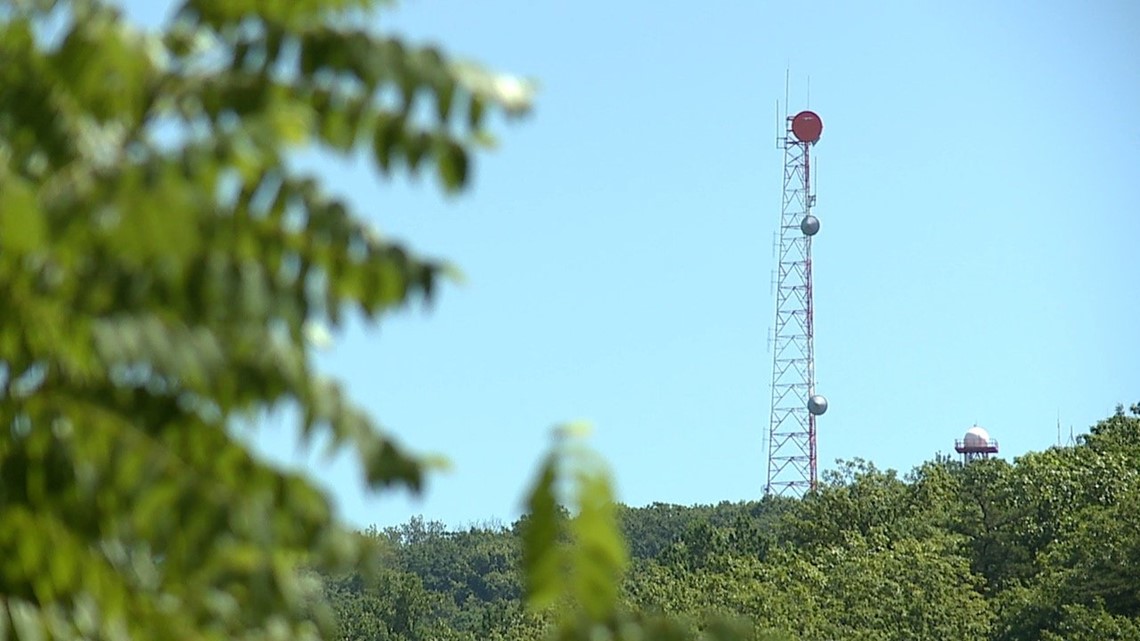
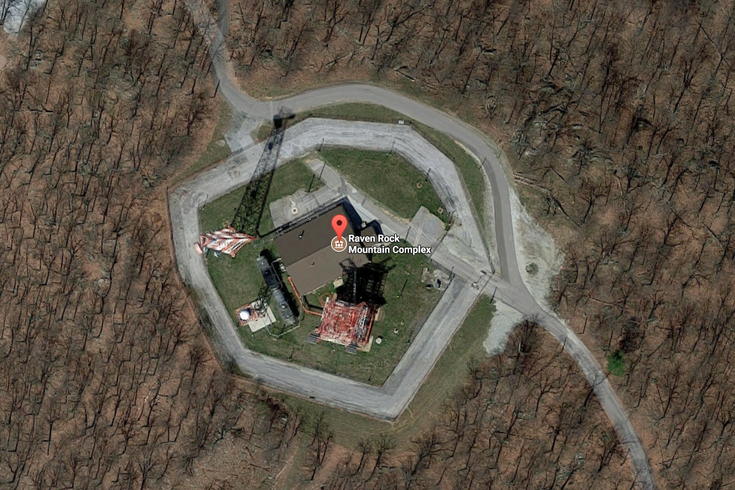
Pretty unimpressive, isn’t it? Would you believe me if I told you there is a whole military installation built under there? Maybe a different photo would help…
This is a story I found when I went searching for interesting places to see in PA…only you aren’t allowed in…and shhhhh…it’s supposed to be a secret…LOL
When Raven Rock Mountain Complex was being built in southern Pennsylvania during the late 1940s, locals jokingly called it “Harry’s Hole” for President Harry Truman. Residents would hold picnics while watching the excavations and blastings. Many worked on its construction.
It was never completely a secret. But it stayed close to one for a while, mainly because no one said anything, said Garrett Graff, a journalist and author of the new book “Raven Rock: The Story of the U.S. Government’s Secret Plan to Save Itself – While the Rest of Us Die.”
“This was relatively well known to the locals who worked there or had family who worked there,” Graff told PhillyVoice in an interview. “They just kept it quiet.”
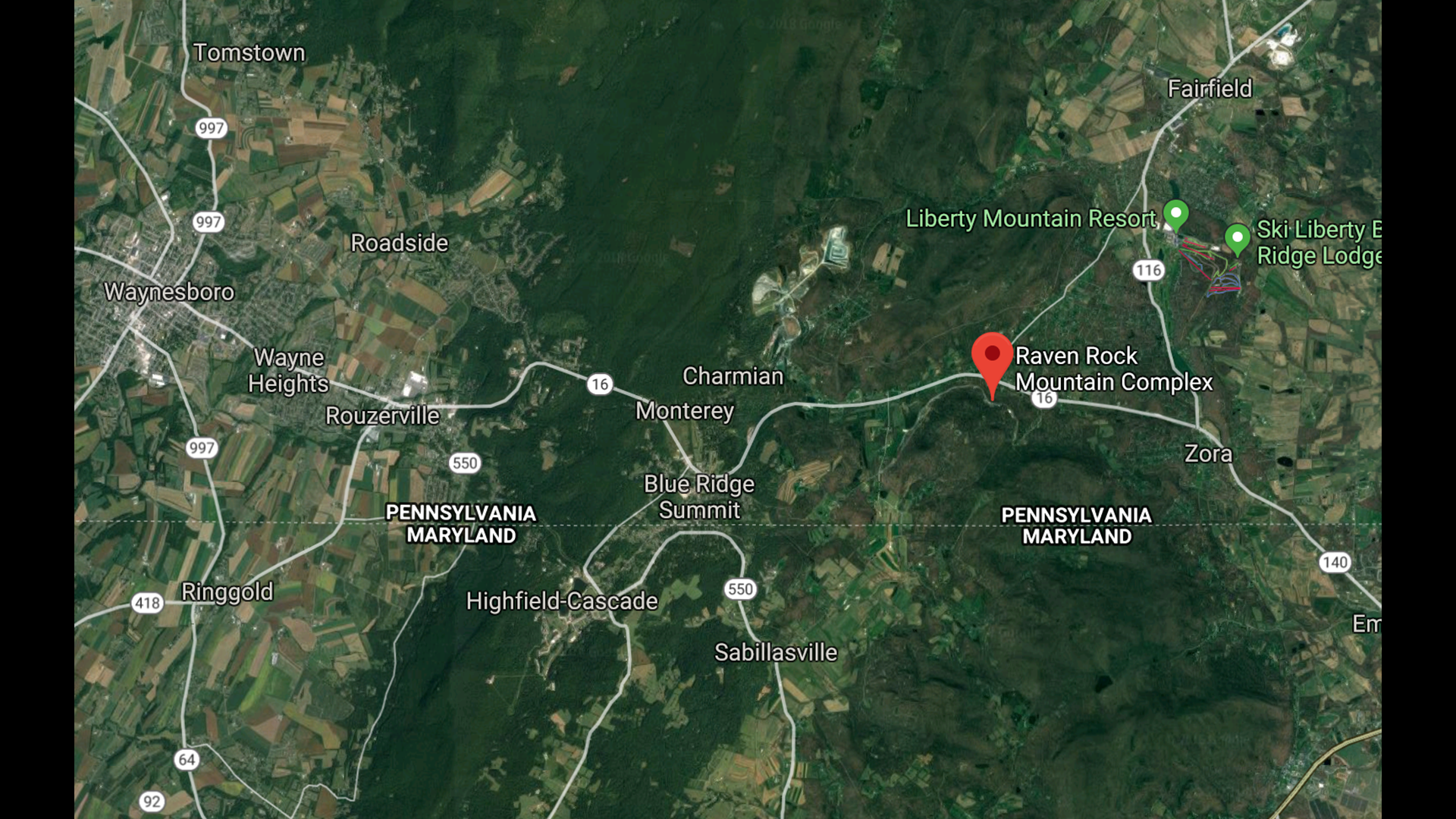
The lid on Raven Rock has slowly been peeled. Located just north of the Maryland border, three hours west of Philadelphia and a short distance from Washington, D.C., it’s clearly labeled on Google Maps and been documented in books and articles.
It also isn’t a relic. Raven Rock is fully operational, and should the United States break out into nuclear war, it’s where defense operations would likely be centered.
“Raven Rock is the place where nuclear war in the United States would begin,” Graff said.
The Raven Rock Mountain Complex was carved into the ground during a period of panic.
As the threat of a Soviet nuclear attack loomed, “ordinary families were being encouraged to dig fallout shelters in their backyards,” investigative journalist Eric Schlosser wrote in his 2013 book “Command and Control: Nuclear Weapons, the Damascus Accident, and the Illusion of Safety.”
At the same time, the military and government were digging holes of their own. A bomb shelter had been built below the East Wing of the White House for President Franklin Roosevelt during World War II, a bunker that was expanded during Truman’s administration.
Planning for a Soviet attack, however, “made it seem necessary to move America’s commander-in-chief someplace even deeper underground,” according to Schlosser.
The result was a bunker inside Raven Rock Mountain, and it was massive. Per “Command and Control”:
“Known as Site R, it sat about a half a mile inside Raven Rock and another half a mile below the mountain’s peak. It had power stations, underground water reservoirs, a small chapel, clusters of three-story buildings set within vast caverns, and enough beds to accommodate two thousand high-ranking officials from the Pentagon, the State Department, and the National Security Council.”
Graff said you can add to that list police and fire departments, a cafeteria, and “everything else you would find in a normal small city.”
The complex was finished in 1953 and has operated 24 hours a day, every day since 1961.
Some of the bunker’s facilities are located on or around the mountain, such as the fire department sitting on the peak. Most of the complex, however, is underground. Once the blast doors seal, Raven Rock’s dwellers can live there for weeks at a time.
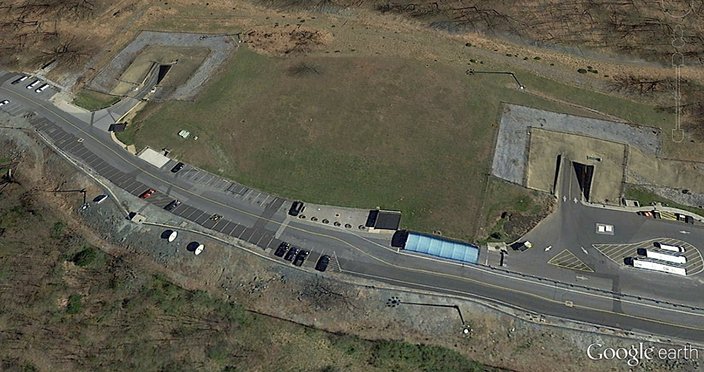
‘Portals’ A and B are visible at the Raven Rock Mountain Complex near Waynesboro in southern Pennsylvania in this image from GoogleEarth. Once the blast doors are sealed, dwellers can live there for weeks at a time.
After the Cold War, many bunkers built in anticipation of nuclear apocalypse became obsolete, such as the fallout shelter underneath a West Virginia resort that’s now a museum.
Others, like Raven Rock, were kept operational — but barely. That changed after the Sept. 11 terrorist attacks.
“It was more in mothball status,” Graff said. “It wasn’t quite as dramatic as someone walking into the mountain and turning on the lights, but operational-wise, that’s what happened on 9/11.”
The government kicked Raven Rock into gear. The facilities underwent a large expansion, Graff said. About 100 people work there under normal circumstances, but it can now hold about 5,000 in an emergency.
“Raven Rock today is a much more capable and larger facility than it was during the height of the Cold War,” Graff said.
In the days following the 9/11 attacks, Vice President Dick Cheney famously used Raven Rock as one of several secret hideaways while his office tried to shield his whereabouts.
“We know it’s there, we know why it’s there, and that’s as much as we know” — Richard Starliper, mayor of nearby Waynesboro, Pennsylvania.
Graff clarified there’s no evidence Cheney spent the day of the attacks there, but he definitely went afterward. Some defense officials, like Deputy Secretary of Defense Paul Wolfowitz, were taken directly to the mountain complex.
Raven Rock is one of two very similar facilities meant to house officials in case of an attack, with the other being the Mount Weather complex in Virginia. Mount Weather is run by FEMA, and would house most of the civilian government in an emergency.
The Pentagon runs Raven Rock, and it’s where national security would operate in the event of catastrophe or war, like if a President were to truly release “fire and fury” on North Korea — or vice versa.
“If at this exact moment the president decides he wants to launch nuclear war, or North Korea does, and for whatever reason he’s not able to reach the Pentagon, he would call Raven Rock,” Graff said.
Considering the heavy responsibility the complex would carry in the wake of tragedy, it’s not surprising the government has tried keeping a tight lip on Raven Rock. But there have been blips.
While working on their 2008 book “A Nuclear Family Vacation,” defense reporters Nathan Hodge and Sharon Weinberger were seemingly accidentally given information regarding a conference at Raven Rock about underground military facilities.
The reporters simply asked a point of contact for the conference about the event after coming across a notice for it on a Pentagon agency’s website. They were handed informational packets distributed to attendees that highlighted the level of secrecy surrounding Raven Rock, which was referred to as RRMC.
“Guidance” for those attending the conference included the following rules: “Avoid conversations about RRMC with unauthorized personnel,” “Do not confirm or deny information about RRMC to reporters or radio stations,” and “Do not post RRMC information on internet web pages.”
It continues: “Remember: The more the public knows about this facility, the more our adversaries do, and the more vulnerable we become.”
A few days after the reporters obtained the information, the Defense Threat Reduction Agency took down the notice about the conference. Hodge and Weinberger presumed someone at the Pentagon got in trouble.
Only in the past quarter century since the Cold War has information about Raven Rock become more public, “a testament to the limited communications technologies of the era” when it was constructed, according to Graff.
Raven Rock’s relationship with the surrounding community has changed too, particularly since the closure of the Fort Ritchie Army base across the border in Maryland. Some residents of nearby Waynesboro, Pennsylvania, who formerly worked at Fort Ritchie would be stationed at Raven Rock, according to the town’s mayor, Richard Starliper.
“These days you have no idea who works there or what they do,” Starliper said.
The complex is both a mystery and not at all, a sentiment summed up rather appropriately by the Waynesboro mayor.
“We know it’s there,” he said, “we know why it’s there, and that’s as much as we know.”
***There is an unprovable rumor that is interesting***
“I don`t know if it’s true or not,” a Waynesboro resident says, “But there`s supposed to be an underground tunnel from Virginia where they could drive up if they wanted to.”
The resident is referring to the popular rumor that there is an elaborate underground network of tunnels between Washington D.C., nearby Camp David, and Raven Rock so the President or Vice President could escape harm if disaster strikes.
That rumor, according to one D.C. Insider, is categorically false.
Today I offer 2 simple, easy to create Valentine crafts: a fleece pillow and a Valentine Gnome. Let’s get started!
No Sew Heart Pillow
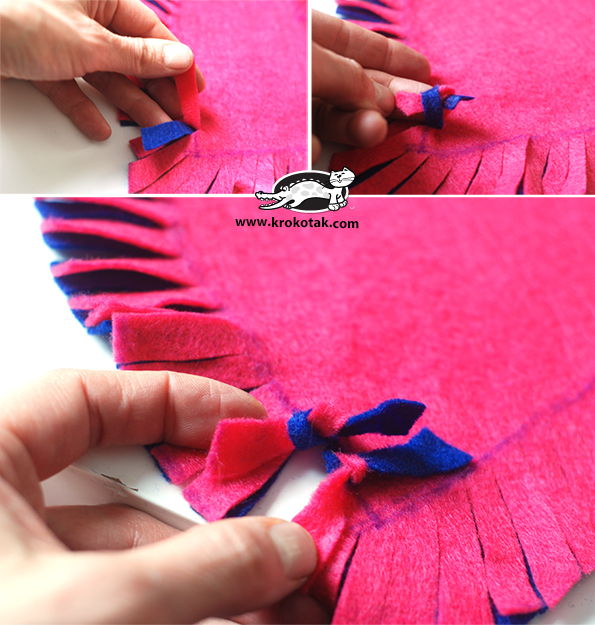
Have a look at this easy way to make such a pillow from felt fabric or polar fleece (the cloth must be threadless). You need polar fleece in two different colors, scissors, and stuffing to stuff the pillow with, when it is ready.
Put the fabrics one over the other. Cut a big heart. After that draw a smaller heart inside the bigger one. Be sure to leave at least an inch to an inch and a half between the two borders. This is very important, because when you cut the strips (as shown at the image) they must be long enough so that you can tie them.
Start to tie every two strips, which one over another.
Tie all the strips in this way.
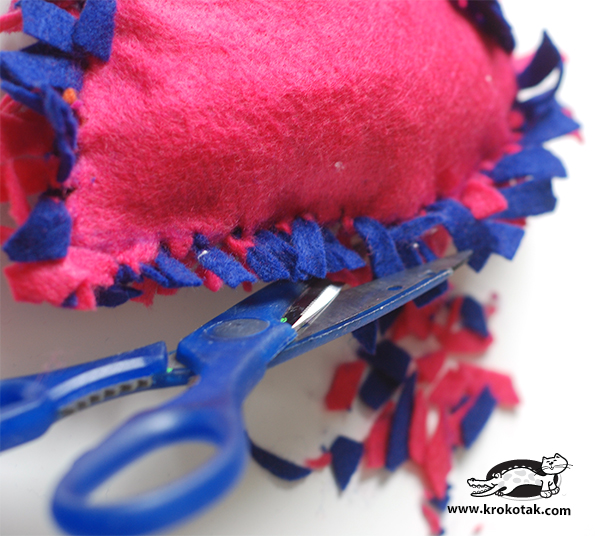
Do not forget to stuff the heart before you close the heart.
At the end, you can reduce the length of the strips to make your heart bushy. This heart pillow comes from the krokotak.com website.
Gnomes
Old yarn socks
Wooden beads
Faux beard
Rice
Polyester fiberfill
Jute string
Microfiber cleaning cloth, white
Hot glue gun & glue sticks
Directions
Cut the socks at the heel. Use the lower half for the body and the upper half for the hat.
Fill the body with half a cup of rice for the weight, then add fiberfill to complete the body. Tie with string to seal the body.
Tie the end for the hat, then turn it over and tie again to make the pompom at the top.
Cut a strip of white microfiber cloth, then glue it to the bonnet. Fold the microfiber upward to keep the unfinished seams out of sight.
Glue the hat to the top of the body. Glue on a faux beard and a wooden bead for the nose.
They are found from Europe to Australia. The center of diversity of the family is Africa, although a number of species also occur in Asia. Single species occur in each of Europe, (the European bee-eater), Australia (the rainbow bee-eater) and Madagascar (the olive bee-eater, also found on mainland Africa).
They inhabit a variety of habitats depending on what regional environments including forest, savanna, shrubland, grassland, and agricultural areas.
The average lifespan is 5 to 6 years in the wild.
Bee-eaters range in length from 6 to 14 inches.
They are characterized by richly colored plumage, slender bodies, and usually elongated central tail feathers.
Brilliant plumage is characteristic; green predominates, but many species are partially colored with red, yellow, blue, or purple.
Male and female plumages are usually similar.
Bee-eater’s bill is moderately long, slightly down curved, and sharply pointed.
Bee-eaters have one of the most complex social systems of any bird species. Many species (but not all) are monogamous, cooperative breeders living in large colonies of over 100 birds, but can reach 200 birds if conditions are favorable.
Each bird lives in an extended family with members of four overlapping generations. They appear to recognize parents, siblings, offspring, friends, and nesting neighbors, likely from voice recognition. This cooperative behavior vastly improves survival of chicks. Females leave their natal group to join her mate’s family.
Many bee-eater names reflect their flashy feathers if not the lack of imagination of the namers: red-throated, blue-headed, black-headed, red-bearded, purple-bearded, blue-cheeked, and cinnamon-chested, white-fronted, rosy, and little green bee-eaters.
They form colonies, nesting in burrows tunneled into vertical sandy banks, often at the side of a river or in flat ground. As they mostly live in colonies, large numbers of nest holes may be seen together. The eggs are white, with typically five to the clutch.
All bee-eaters are earth-hole nesters, digging their tunnels with an oval chamber at the end for eggs. They lay a single clutch annually.
As their name suggests, bee-eaters predominantly eat flying insects, especially bees and wasps, which are caught in the air by flights from an open perch. The stinger is removed by repeatedly hitting and rubbing the insect on a hard surface. During this process, pressure is applied to the insect, thereby extracting most of the venom.
One white egg is laid each day until the typical clutch of about five eggs is complete. Incubation starts soon after the first egg is laid, with both parents sharing this duty in the day, but only the female at night. The eggs hatch in about 20 days, and the newly hatched young are blind, pink and naked. For most species, the eggs do not all hatch at the same time, so if food is in short supply only the older chicks survive. The chicks are in the nest for about 30 days.
The International Union for Conservation of Nature (IUCN) assesses species vulnerability in terms of total population and the rate of any population decline. None of the bee-eaters meet the IUCN vulnerability criteria, and all are therefore evaluated as “Least-concern species”.
Bee-eaters were mentioned by ancient writers such as Aristotle and Virgil, who both advised beekeepers to kill the birds.
The Ancient Egyptians believed that bee-eaters had medical properties, prescribing the application of bee-eater fat to deter biting flies, and treating the eyes with the smoke from charred bee-eater legs to cure an unspecified female complaint.
In Hinduism, the shape of the bird in flight was thought to resemble a bow, with the long bill as an arrow. This led to a Sanskrit name meaning “Vishnu’s bow” and an association with archer gods.
Bee-eaters may be killed by raptors; their nests are raided by rodents and snakes, and they can carry various parasites.
“Be careful what you say as people may be eavesdropping.” The Louvre Palace in France was believed to have a network of listening tubes so that it would be possible to hear everything that was said in different rooms. People say that this is how the Queen Catherine de’Medici discovered political secrets and plots.
BIG WIG
Meaning an important person, especially in a particular sphere; in the 18th century, the most important political figures would wear the biggest wigs, hence today influential people are called big wigs.
CAUGHT RED-HANDED
It generally indicates that a person has been discovered in, or just after, the act of doing something wrong or illegal. However, there was an old law stating that if someone butchered an animal that didn’t belong to him, he would only be punished if he was caught with blood on his hands. If one was caught with the meat but his hands were clean, he would not be punished.
RAINING CATS AND DOGS
This idiom has two stories that try to explain its origin. The first explanation says that the origin of this phrase comes from Norse mythology, where cats would symbolise heavy rains and dogs were associated with the God of storms, Odin. The second version says that in 16th century England, houses had thatched roofs which were one of the few places where animals were able to get warm. Sometimes, when it would start to rain heavily, roofs would get slippery and cats and dogs would fall off, making it look like it’s raining cats and dogs!
BLOOD IS THICKER THAN WATER
Most people believe this means that family relationships and loyalties are the strongest and most important ones. Even though many might think this saying means that we should put family ahead of friends, it actually meant the complete opposite. The full phrase actually was “The blood of the covenant is thicker than the water of the womb,” and it referred to warriors who shared the blood they shed in battles together. These ‘blood brothers’ were said to have stronger bonds than biological brothers.
DON’T LOOK A GIFT HORSE IN THE MOUTH
While buying a horse, people would determine the horse’s age and condition based on its teeth, and then decide whether they want to buy it or not. This is the reason why people use this idiom to say it is rude to look for flaws in a thing that was given to you as a gift.
Mardi Gras Tokens
BY THE SAME TOKEN
Bus token? Game token? What kind of token is involved here? Token is a very old word, referring to something that’s a symbol or sign of something else. It could be a pat on the back as a token, or sign, of friendship, or a marked piece of lead that could be exchanged for money. It came to mean a fact or piece of evidence that could be used as proof. By the same token first meant, basically, “those things you used to prove that can also be used to prove this.” It was later weakened into the expression that just says “these two things are somehow associated.”
Irish Shebeen
THE WHOLE SHEBANG
The earliest uses of shebang were during the Civil War era, referring to a hut, shed, or cluster of bushes where you’re staying. Some officers wrote home about “running the shebang,” meaning the encampment. The origin of the word is obscure, but because it also applied to a tavern or drinking place, it may go back to the Irish word shebeen for a ramshackle drinking establishment.
CALLED ON THE CARPET
Carpet used to mean a thick cloth that could be placed in a range of places: on the floor, on the bed, on a table. The floor carpet is the one we use most now, so the image most people associate with this phrase is one where a servant or employee is called from plainer, carpetless room to the fancier, carpeted part of the house. But it actually goes back to the tablecloth meaning. When there was an issue up for discussion by some kind of official council it was on the carpet.
EAT HUMBLE PIE
This has come to mean making an apology and suffering humilitation along with it. However, during the Middle Ages, the Lord of a major would hold a feast after hunting. He would receive the finest cut of meat at the feast, but those of a lower standing were served a pie filled with the entrails and innards, known as “umbles.” Therefore, receiving “umble pie” was considered humiliating because it informed others in attendance of the guest’s lower status.
GIVE THE COLD SHOULDER
It has become a rude way of telling someone they aren’t welcome or to ignore someone. Although it is considered rude today, it was actually regarded as a polite gesture in medieval England. After a feast, the host would let his guests know it was time to leave by giving them a cold piece of meat from the shoulder of beef, mutton or pork.
RUB THE WRONG WAY
In colonial America, servants were required to wet-rub and dry-rub the oak board floors every week. Doing it against the grain caused streaks to form, making the wood look awful and irritating the homeowner.
WAKING UP ON THE WRONG SIDE OF THE BED
The left side of the body or anything having to do with the left was often associated with something sinister. To ward off evil, innkeepers made sure the left side of the bed was pushed against a wall so guests had no other option but to get up on the “right side of the bed.”
COME UP TRUMPS
This is a variant of “turn up trumps,” which has been used since the early 17th century. “Trump” is a corruption of Triumph, which was the name of a popular card game during that period.
This was posted at Wolf’s the other day and I loved it so much I brought it here! Thanks Barb Meier for bringing it in the first place!! (I added the pictures…)
Laughter is still the best Medicine! I used to be able to do cartwheels. Now I tip over putting on my underwear. Hate it when I see an old person and then realize we went to high school together.
I told my wife she should embrace her mistakes… so she hugged me. My wife says I only have 2 faults. I don’t listen and something else…. At my funeral, take the bouquet off my coffin and throw it into the crowd to see who is next. I thought growing old would take longer. I came, I saw, I forgot what I was doing. Retraced my steps, got lost on the way back, now I have no idea what’s going on. The officer said, “You drinking?” I said, “You buying?” We just laughed and laughed…. I need bail money.
Day 12 without chocolate. Lost hearing in my left eye. Scientists say the universe is made up of protons, neutrons and electrons. They forgot to mention morons.
The adult version of “head, shoulders, knees and toes” is “wallet, glasses, keys and phone.” A dog accepts you as the boss… a cat wants to see your resume. Oops…. did I roll my eyes out loud? Life is too short to waste time matching socks.
Wi-fi went down for five minutes, so I had to talk to my family. They seem like nice people. If you see me talking to myself, just move along. I’m self-employed; we’re having a staff meeting. I won’t be impressed with technology until I can download food. Some people call me crazy. I prefer ‘happy with a twist’. My doctor asked if anyone in my family suffers from mental illness. I said, “No, we all seem to enjoy it.”
I really don’t mind getting old, but my body is having a major fit. Camping: where you spend a small fortune to live like a homeless person. Project Manager. Because Miracle Worker isn’t an official job title. I told my wife I wanted to be cremated. She made me an appointment for Tuesday. The world’s best antidepressant has 4 legs, a wagging tail and comes with unconditional love.
Love is how excited your dog gets when you come home. I’ve reached the age where my train of thought often leaves the station without me. If you’re happy and you know it, it’s your meds. Hope this finds you in Good Health and Good Spirits.
Weaknesses: Runs from emotional expression, temperamental, uncompromising, aloof
Aquarius likes: Fun with friends, risky business, fighting for causes, intellectual conversations.
Aquarius dislikes: Limitations, broken promises, being lonely, dull or boring situations.
You are the innovators of the Zodiac. The best way to understand your sign is to think about the progression through the earth signs of our celestial heavens. Taurus plants the seed, Virgo harvests the seed and Capricorn represents the pinnacle of civilization. What comes after this? The unknown. The yet-to-be discovered. The future.
Aquarius sees the world as it should be, could be or will be. Definitely tuned into the beat of a different drummer, you do things in your own way. There are, however, some Aquarians who act a lot more like Capricorns. Go back and read that section if you don’t identify with the particular personality aspects discussed here.
Freedom is extremely important to you. You are destined to bring the world new ways of doing and looking at things and must have the space to be able to manifest it. Your sense of style is unique and sometimes flamboyant. You can relate to almost all others in a detached way and you are dedicated to bringing humanity a step closer to fair and just. Injustice pushes your buttons like nothing else.
You have many friends and you are conversant in an abundance of topics. You follow your intuition with a sense of purpose and you listen to it even when it seems odd. Somehow you know that it truly provides the best guidance.
You want everyone to be happy. If there is a way that you can make it happen, you will do it. Like a mama duck, you sometimes have people following behind you and seeking your inspiration. You are very good at leading groups and can often be found teaching unusual topics. Friends know that they can look to you for upcoming trends.
Aquarius Friends and Family
Friends – No matter their ability to communicate, Aquarius representatives need time to build closeness with a friend and they will unconsciously do a lot only to avoid being emotional and vulnerable around others. They are willing to self-sacrifice but only if absolutely necessary, and by the time they jump in to help, a person in trouble will probably realize that they never needed help to begin with. They need creative friends with integrity and a strong intellect.
Family – Theses individuals have certain expectations from their family. Even though it might not be their place to search for answers their parents should seek, they will do so anyway, and more often than not impose their will on family members from the best possible intention – to make them get along. The sense of duty they have with some relatives won’t keep them around for very long, for this, as all emotional blackmail, hardly ever touches the soul of an Aquarius.
Aquarius Career and Money
This is a sign that brings enthusiasm, excitement, and innovations to their workplace and has a remarkable ability of exploitation of their imagination for business purposes. Their high intellect combined with their willingness to share their talents, inspires many people in their lives. They are a visionary who likes to engage in humane activities, and needs to work in a place that supports better circumstances for endangered groups of people.
Finances of this zodiac sign can be spent on various risks but also held on to, and all they need to have in order to create a saving zone out of their life, is to give them something to look forward to. They are well adapted to their feel for style and are not afraid to show it, which is why their colors shining in the outer world make all the difference for their emotional state. They feel extremely good in professions such as piloting, paragliding and photography, but also make excellent programmers, ingenious mathematicians and scientists, and need to show their personality with not strict guidelines for the way to do so.
Today is National Carrot Cake Day, so let’s make one of those. I have tried many recipes—some use jars of carrot baby food, some used pineapple and coconut, but this is my favorite. I’ve included the recipe for cream cheese frosting even though I personally despise it. (I just use my regular frosting for this cake.)
Cake
1 1/2 cups granulated sugar
1 cup vegetable oil
3 eggs
2 cups Gold Medal™ All-Purpose Flour
2 teaspoons ground cinnamon
1 teaspoon baking soda
1 teaspoon vanilla
1/2 teaspoon salt
3 cups shredded carrots (5 medium)
1 cup coarsely chopped walnuts
Cream Cheese Frosting
1 package (8 oz) cream cheese, softened
1/4 cup butter or margarine, softened
2 to 3 teaspoons milk
1 teaspoon vanilla
4 cups powdered sugar
Nutmeg, if desired
Steps
Heat oven to 350°F. Grease bottom and sides of one 13×9-inch pan or two 8-inch or 9-inch round pans with shortening; lightly flour. In large bowl, beat granulated sugar, oil and eggs with electric mixer on low speed about 30 seconds or until blended. Add flour, cinnamon, baking soda, 1 teaspoon vanilla and the salt; beat on low speed 1 minute. Stir in carrots and nuts. Pour into pan(s).
Bake 13×9-inch pan 40 to 45 minutes, round pans 30 to 35 minutes, or until toothpick inserted in center comes out clean. Cool rectangle in pan on cooling rack. Cool rounds 10 minutes; remove from pans to cooling rack. Cool completely, about 1 hour.
In medium bowl, beat cream cheese, butter, milk and vanilla with electric mixer on low speed until smooth. Gradually beat in powdered sugar, 1 cup at a time, on low speed until smooth and spreadable. Frost 13×9-inch cake or fill and frost round layers with frosting. Sprinkle nutmeg on frosted cake, if desired. Store in refrigerator.
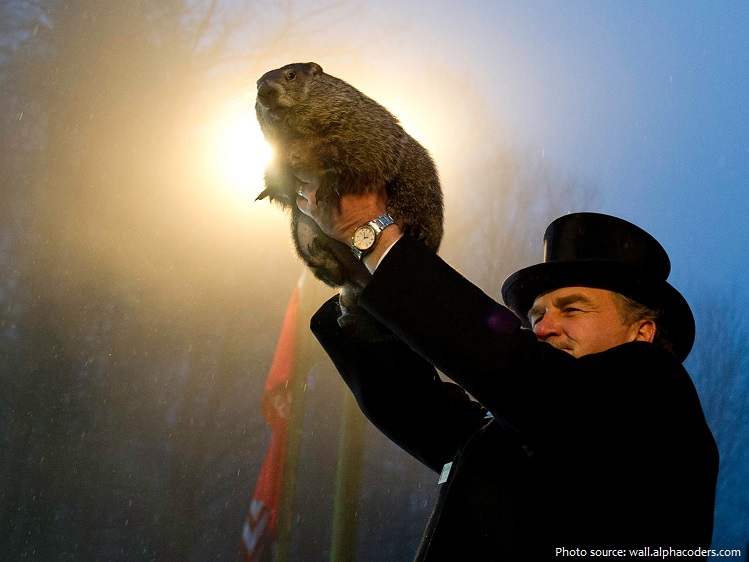
Groundhog Day is a popular tradition celebrated in Canada and the United States on February 2nd. It derives from the Pennsylvania Dutch superstition that if a groundhog emerging from its burrow on this day sees its shadow due to clear weather, it will retreat to its den and winter will persist for six more weeks, and if it does not see its shadow because of cloudiness, spring will arrive early.
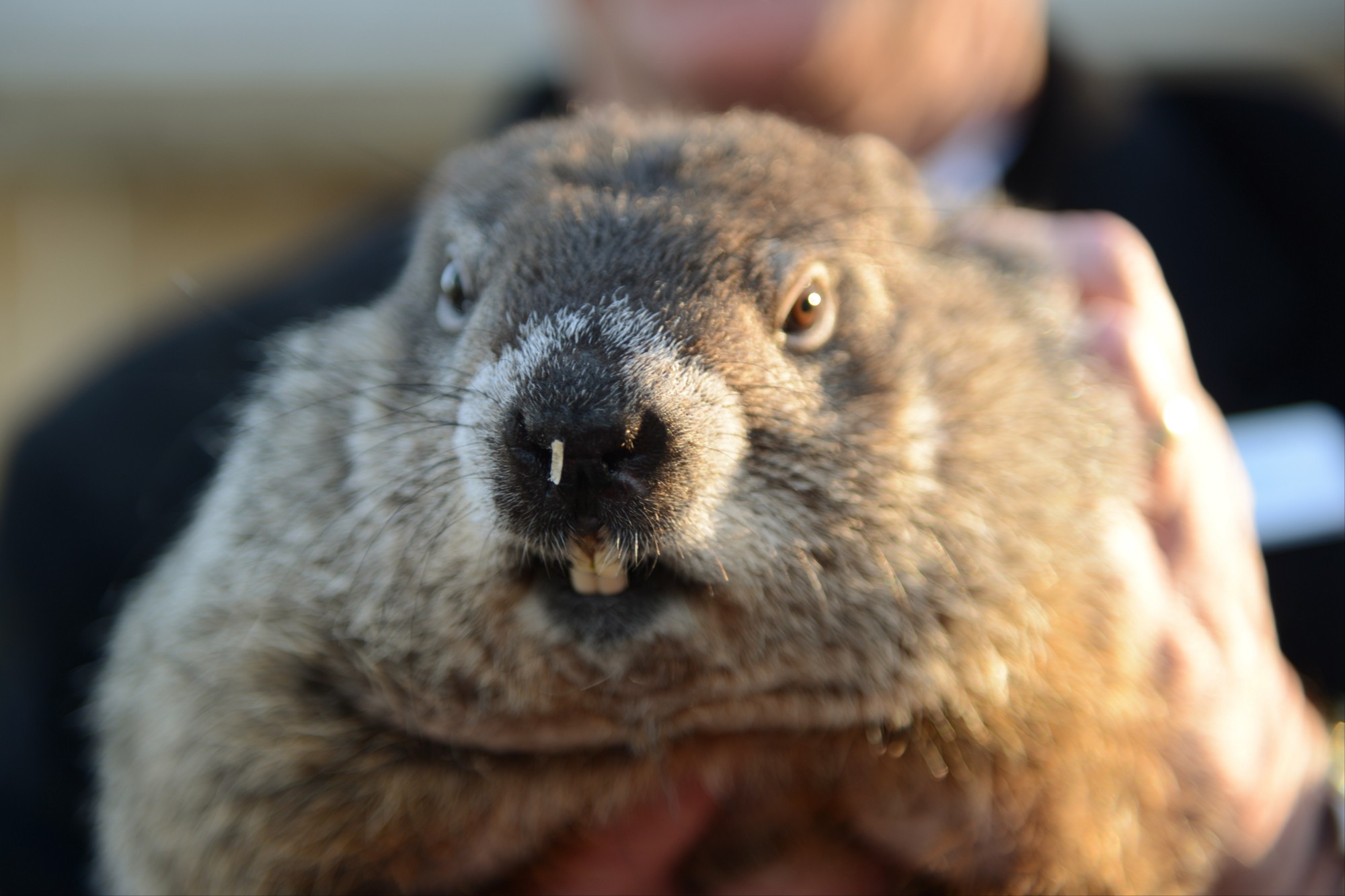
The groundhog (Marmota monax), also known as a woodchuck is a rodent.
It belongs to the group of large ground squirrels known as marmots.
The groundhog is the most widespread North American marmot species.
It is found through much of the eastern United States across Canada and into Alaska.
This species inhabits many different ecosystems. It is typically found in low elevation forests, small woodlots, fields, pastures, and hedgerows.
In the wild, groundhogs can live up to 6 years with 2 or 3 being average. In captivity, groundhogs reportedly live up to 14 years.
Groundhogs are stocky in appearance and often stand up on their hind legs, making them look tall.
Adults measure from 16.5 to 27 inches in total length including a tail of 3.7 to 7.4 inches.
Weights of adult groundhogs, typically at least, fall between 4.4 and 13.9 lbs.
Male groundhogs average slightly larger than females and, like all marmots, they are considerably heavier during autumn than when emerging from hibernation in spring.
Thick fur on the upper parts ranges in color through various shades of brown; the feet are darker, and the underparts are buff. Melanistic (nearly black) and albino individuals sometimes occur in some populations.
Groundhogs are territorial and non-social.
They are mostly diurnal, and are often active early in the morning or late afternoon.
Groundhogs are good swimmers and can climb tall shrubs and sizable trees.
Mostly herbivorous, groundhogs eat primarily wild grasses and other vegetation, including berries and agricultural crops, when available. In early spring, dandelion and coltsfoot are important groundhog food items. Groundhogs also occasionally eat grubs, grasshoppers, insects, snails and other small animals, but are not as omnivorous as many other Sciuridae.
Groundhogs have four incisor teeth which grow 0.06 inch per week. Constant usage wears them down again by about that much each week. Unlike the incisors of many other rodents, the incisors of groundhogs are white to ivory-white.
Groundhogs are excellent burrowers, using burrows for sleeping, rearing young, and hibernating.
They are one of the few species that enter into true hibernation, and often build a separate “winter burrow” for this purpose. This burrow is usually in a wooded or brushy area and is dug below the frost line and remains at a stable temperature well above freezing during the winter months.
The breeding season extends from early March to mid- or late April, after hibernation. A mated pair remains in the same den throughout the 31- to 32-day gestation period. As birth of the young approaches in April or May, the male leaves the den.
One litter is produced annually, usually containing two to six blind, hairless and helpless young. Groundhog mothers introduce their young to the wild once their fur is grown in and they can see. At this time, if at all, the father groundhog comes back to the family. By the end of August, the family breaks up; or at least, the larger number scatter, to burrow on their own.
The groundhog is classified as a species of “least concern” on the International Union for Conservation of Nature (IUCN) Red List of Threatened Species.
The groundhog has many lesser-known names including chuck, wood-shock, groundpig, whistlepig, whistler, thickwood badger, Canada marmot, monax, moonack, weenusk, redmonk and, among French Canadians in eastern Canada, siffleux.
(FOR FILLY:)
The etymology of the name woodchuck is unrelated to wood or chucking. It stems from an Algonquian (possibly Narragansett) name for the animal, wuchak. The similarity between the words has led to the popular tongue-twister:
How much wood would a woodchuck chuck if a woodchuck could chuck wood? A woodchuck would chuck all the wood he could if a woodchuck could chuck wood!
The Columbia disaster, the breakup of the U.S. space shuttle orbiter Columbia on February 1, 2003, that claimed the lives of all seven astronauts on board just minutes before it was to land at the Kennedy Space Center in Florida.
Columbia, which had made the shuttle program’s first flight into space in 1981, lifted off for its 28th mission, STS-107, on January 16, 2003. STS-107 was a flight dedicated to various experiments that required a microgravity environment. The crew was comprised of commander Rick Husband; pilot William McCool; mission specialists Michael Anderson, David Brown, Kalpana Chawla, and Laurel Clark; and payload specialist Ilan Ramon, the first Israeli astronaut. As Columbia was reentering Earth’s atmosphere, it broke apart over Texas at approximately 9:00 am Eastern Standard Time at an altitude of 40 miles, showering debris across southeastern Texas and southern Louisiana. The disintegration of the craft was recorded by television cameras and U.S. Air Force radar. Its major components and the remains of the crew were recovered over the following month.
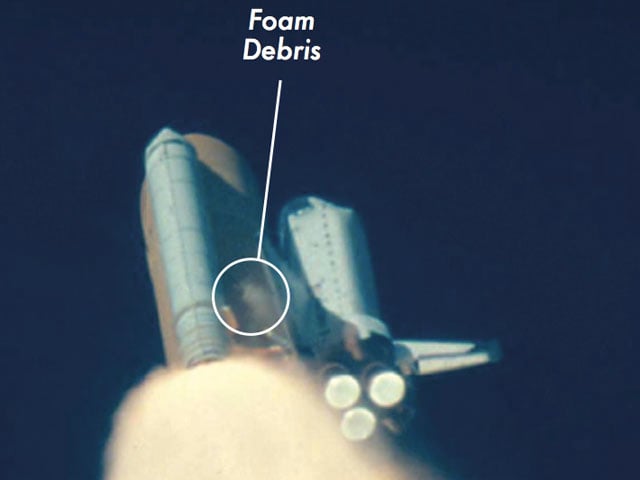
The destruction of Columbia followed by almost exactly 17 years the loss of Challenger in a launch accident on January 28, 1986. Ironically, the cause of the Columbia catastrophe soon was determined to be launch-related as well. Films showed that a piece of insulating foam broke loose from the external propellant tank and struck the leading edge of the left wing approximately 81 seconds after liftoff. Bits of foam had detached in past missions without serious mishap, and, at the time of the Columbia launch, National Aeronautics and Space Administration (NASA) engineers did not think that the foam carried enough momentum to cause significant damage. In fact, as demonstrated in post-accident tests, the foam was capable of punching a large hole in the reinforced carbon-carbon insulation tiles that protected the shuttle’s nose and wing leading edges from the extreme heat of atmospheric reentry. Although some engineers had wanted ground-based cameras to take photos of the orbiting shuttle to look for damage, the request did not get to the right officials.
During Columbia’s atmospheric reentry, hot gases penetrated the damaged tile section and melted major structural elements of the wing, which eventually collapsed. Data from the vehicle showed rising temperatures within sections of the left wing as early as 8:52 am, although the crew knew of their situation for perhaps only a minute or so before vehicle breakup. Subsequent investigation by NASA and the independent Columbia Accident Investigation Board uncovered a number of managerial shortcomings, in addition to the immediate technical reason (poor manufacturing control of tank insulation and other defects), that allowed the accident to happen.
The most palpable result of the accident was a grounding of the remaining three shuttles—Discovery, Atlantis, and Endeavour (the last built to replace Challenger)—until NASA and its contractors could develop means to prevent similar accidents, which included kits for repairs in orbit.
Assembly of the International Space Station (ISS) in Earth orbit was suspended after the Columbia accident until shuttle flights could resume. Limited research on the ISS was conducted by rotating two-person crews launched in Russian Soyuz spacecraft. The shuttle did not return to space until the STS-114 mission, which launched on July 26, 2005.
The team on the ground knew Columbia’s astronauts would not make it home and faced an agonizing decision – should they tell the crew that they would die upon re-entry or face suffocating due to depleted oxygen stores while still in orbit?
In the end, it was decided it was best for them not to know. On his blog, former shuttle project manager Wayne Hale revealed that Jon Harpold, Director of Mission Operations, told him:
You know, there is nothing we can do about damage to the TPS. If it has been damaged, it’s probably better not to know. I think the crew would rather not know. Don’t you think it would be better for them to have a happy, successful flight and die unexpectedly during entry than to stay on orbit, knowing that there was nothing to be done until the air ran out?
This was not the first time foam had broken off in space flights. In fact, it had happened several times before (and without incident), so much so that it was referred to as “foam shedding.” NASA engineers dismissed the problem of foam shedding as being of no great urgency.
When a NASA engineering manager, Don L. McCormack Jr., told Mission Management Team member Linda Ham of his concerns about the issue, he was told by her that it was “no issue for this mission.”
After the horrific crash, Columbia’s debris field stretched from Central Texas to Western Louisiana. A team of more than 25,000 professionals and volunteers searched an area of 2.3 million acres to recover everything possible that remained from Columbia. Due to the large area and extensive number of fragments, pieces are still being found to this day.
More than 14 years later, only about 84,000 pieces – or 40% – of Columbia have been recovered and are still being studied.












































 Sew Colorful