Preheat oven to 375°. Scrub potatoes; pierce several times with a fork. Place on a greased baking sheet; bake until tender, 1-1-1/4 hours. Cool slightly.
Cut each potato lengthwise in half. Scoop out pulp, leaving 1/4-in.-thick shells (save pulp for another use).
Cut each half shell lengthwise into quarters; return to baking sheet. Brush insides with butter. Mix seasonings; sprinkle over butter.
Broil 4-5 inches from heat until golden brown, 5-8 minutes. If desired, mix sour cream and chives and serve with potato skins.
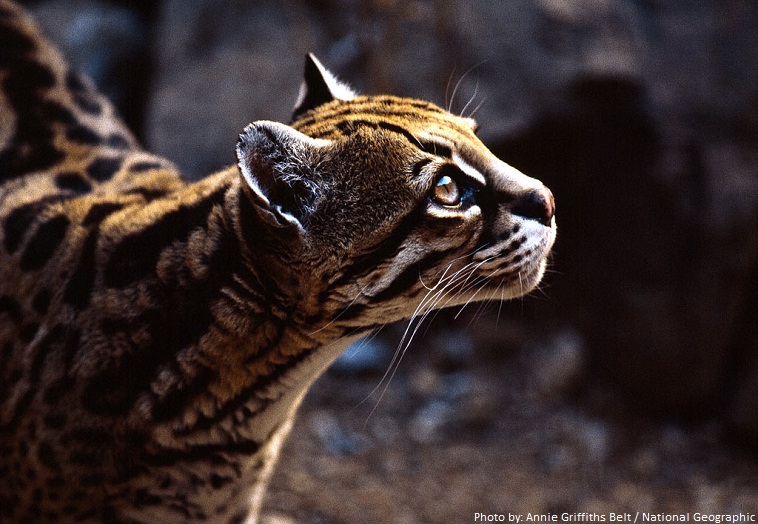
The ocelot also known as the dwarf leopard, is a wild cat.
Ocelots live primarily in the rain forests of South America. They also live in Central America, Mexico and even some as far north as southern Texas.
Ocelots are found in a variety of habitats, including tropical forests, savannas, grasslands, mangrove forests and marshes, and thorn scrub regions.
Their primary habitat requirement is dense vegetative cover. Ocelots are found in open areas only when it’s cloudy or at night when there is a new moon.
They generally live at elevations below 3,937 feet, but have been sighted at 11,482 feet as well.
Average lifespan of ocelot is 10 to 13 years in the wild and up to 20 years in captivity.
Ocelots range in color from light yellow to reddish gray, with dark spots and stripes. They have dark stripes on their cheeks and their tailed have rings of dark fur.
The ocelot ranges from 27 to 39 inches in length, plus 10 to 18 inches in tail length.
Weight for females is from 14.3 to 25.3 pounds, and for males is from 15 to 34 pounds.
Ocelots are nocturnal, meaning they’re most active at night. During the day, they rest in the hollow trees, on the branches or dense vegetation.
Like all small cats, ocelots have very good vision and hearing.
Their eyes have a special layer that collects light.
They use their sharp vision and hearing to hunt: rabbits, baby peccaries, young deer, rodents, iguanas, frogs, fish, monkeys, sloths and birds.
When they’re ready to eat, the wild cats don’t chew their food—instead they use their teeth to tear meat into pieces and then swallow it whole.
Ocelots have raspy tongues, which successfully remove every little piece of meat from bones.
Although predators themselves, ocelots occasionally become the prey of harpy eagles, pumas, jaguars, and anacondas.
Ocelots spend most of their time on the ground but are strong swimmers and good climbers and jumpers.
Ocelots communicate with each other using body language, scent marking, and vocalizations.
Ocelots are territorial and solitary creatures.
Ocelots are very active,traveling from 1.1 to 4.1 miles per night. Males traveling nearly twice as far as females.
Their home ranges are between0.7 and 12 square miles, depending on habitat. Male ranges are larger than females and do not overlap with those of other males. But male ranges tend to overlap with those of several females.
Female ocelots are called Queens while male ocelots are called Torns.
Males and females gather only during the mating season. In tropical areas, ocelots can reproduce throughout the whole year. In temperate climate, ocelots mate at the end of the summer.
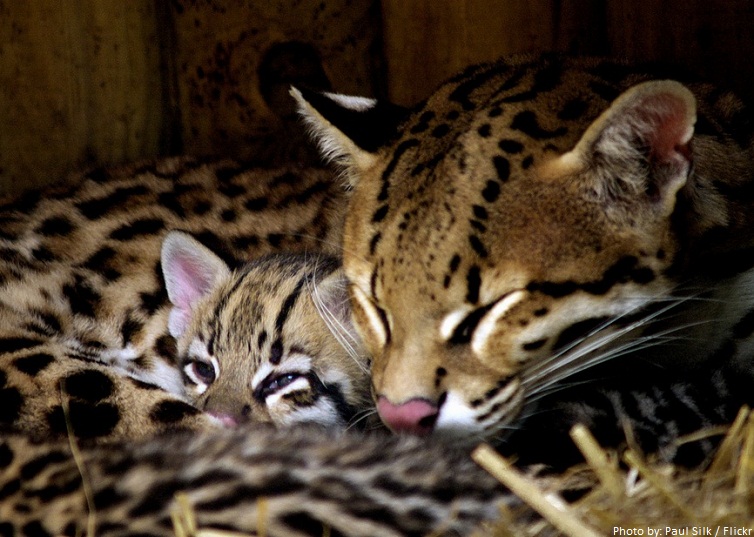
An ocelot family is made up of an adult female and her young. After breeding, the male and female ocelots go their separate ways. The female is pregnant for a little over two months before she gives birth in a hollow tree, rocky bluff, cave, or secluded thicket to usually 1 but sometimes up to 4 kittens.
The kittens are born with their spots but have gray coats and blue eyes that turn golden brown when they’re about three months old.
The youngster begins to walk when it is 3 weeks old. As the kitten grows, the mother ocelot teaches it how to hunt, usually at four to 6 weeks of age, and the kitten is able to eat solid food at 8 weeks, although it may continue to nurse for 6 months.
By the time it is8 months old, the youngster’s adult teeth are in, and it can hunt for itself, but may stay in the mother’s home range for up to 2 years.
From the early 1960’s to the mid 1980’s, Ocelot fur coats sold for $40,000.00 and the live animal as a pet sold for $800.00. At one time, more than 200,000 ocelots per year were killed for their coats. Today, with laws prohibiting hunting for the fur trade, there are no Ocelot coats for sale, and the “pet” Ocelot is a thing of the past.
Today, the Ocelot is listed by the IUCN as being a species that is of Least Concern of becoming extinct in their natural environment in the near future. Although some populations are small and unstable, the Ocelot is widespread but the general population trend is now decreasing. This is mainly due to habitat loss as vast areas particularity in the Amazon, are subject to drastic deforestation and no longer provide the dense cover and adequate food supply that the Ocelot needs to survive.
It is estimated that there are anywhere from 800,000 to 1.5 million left.
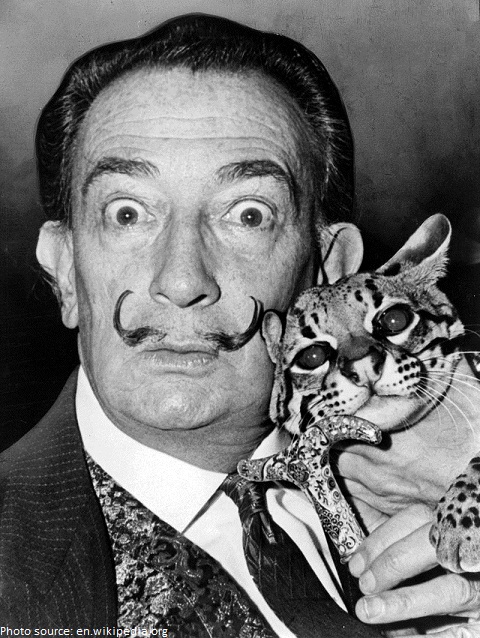
Salvador Dali frequently traveled with his pet ocelot Babou, even bringing it aboard the luxury ocean liner SS France.
Its name came from the Mexican Aztec word tlalocelot, which means field tiger.
The Moche people of ancient Peru worshipped animals and often depicted the ocelot in their art.
The Belizean name for the ocelot is the same as the margay – ‘tiger cat’.
The collective name for a group of Ocelots is a clowder or clutter.
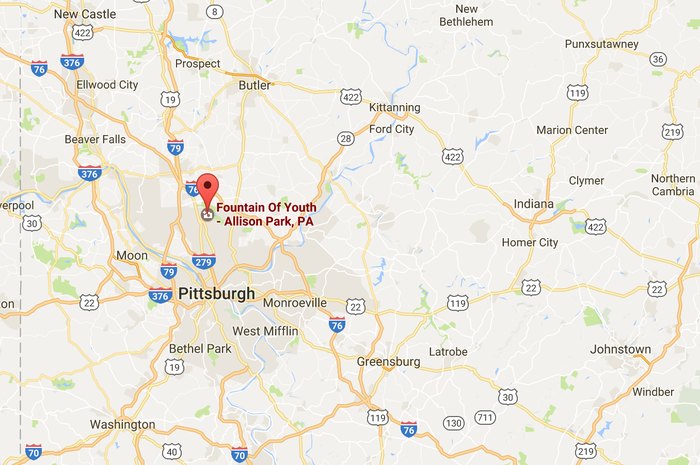
Most People Don’t Know There’s A Fountain Of Youth Hiding Deep In Pennsylvania’s WoodsTucked away in the woods of North Park near Wexford, Pennsylvania lies an attraction that relatively few know about: a Fountain of Youth. It borders on mythological, yet this small designated stone structure has become a landmark for photographers and explorers alike. Here’s more on this spring house structure and how you might find it:The Fountain of Youth is located in North Park, at 10127 Kummer Rd, Wexford, PA 15090.
The springhouse was constructed in the 1930s in the style of a Roman cavern, complete with an archway made of stone and, of course, the center disc which reads “Fountain of Youth.”
The structure is home to a spring, which until the 1950s was used as a local water source. Today, visitors will notice a warning sign that the water has not been treated.
Step inside to the cool, cave-like interior and on the back wall, you’ll notice the space where the pump was broken off after the water was considered unsafe.
You’ll then exit the space facing west, the direction that, according to local folklore, represents the struggles of middle age, the sacred feminine, and the power of water.
Whether or not you believe in the healing properties of this site (as the water itself is not safe to drink), there’s no denying its fascinating history and symbolism.
If you plan on visiting the Fountain of Youth, you’ll be in for a bit of a hike. Be sure to wear shoes that you can walk through the woods with.
The best way to access the Fountain of Youth springhouse is by parking along the small gravel pull-off and continuing along the path leading down to the creek.
St. Patrick’s Day always falls on the 17th of March.
The first St. Patrick’s Day parade took place in America—not in Ireland.
The New York City St. Patrick’s Day parade is the world’s oldest civilian parade and the largest in the United States.
Chicago began its annual tradition of turning the Chicago River green on St. Patrick’s Day in 1962.
In Ireland, St. Patrick’s Day had been viewed mostly as a religious observance, and up until the 1960s, they even had laws that forbid bars from being open that day.
It wasn’t until 1798 (the year of the Irish Rebellion) that the color green became officially associated with St. Patrick’s Day. Before then, another color was originally associated with St. Patrick (see the trivia below!).
St. Patrick’s Day switched over from a strictly holy day for Catholics to an official Irish public holiday in 1903.
Although St. Patrick’s Day falls within the period of Lent—a time when the Catholic Church prohibits eating meat, the ban is lifted on this specific day of celebration.
The annual shamrock ceremony in the White House started in 1952.
Each year, 5.5 million people visit New York’s St. Patrick’s Cathedral.
Before St. Patrick became a missionary, he had been kidnapped at the age of 16 and taken to Ireland as a slave.
St. Patrick is said to have been buried in the town of Downpatrick, County Down, in Northern Ireland.
There are two autobiographical writings from St. Patrick himself, including Confessio and Letter to Coroticus.
Traditionally, Catholic families go to church in the morning on St. Patrick’s Day, and partake in a meal that includes cabbage and Irish bacon.
Dublin’s first official celebration of St. Patrick’s Day did not occur until 1931.
15 St. Patrick’s Day Trivia Questions
Question: What’s another name for St. Patrick’s Day? Answer: The Feast of Saint Patrick.
Question: Where was Saint Patrick actually born? Answer: Roman Britain (What is now either England, Scotland or Wales).
Question: How many hours does the NYC St. Patrick’s Day parade take? Answer: Over five hours.
Question: How many pounds of green vegetable dye are now used to turn the Chicago River green? Answer: 40 pounds.
Question: What do some historians believe was St. Patrick’s real name? Answer: Maewyn Succat.
Question: According to legend, what happened during one of St. Patrick’s sermons on the Irish hillside? Answer: Legend has it that while he was speaking, all of the snakes were driven out into the sea.
Question: What color was originally associated with St. Patrick? Answer: Blue.
Question: According to legend, what did St. Patrick use to describe the Holy Trinity? Answer: The shamrock.
Question: What is another term used for Ireland? Answer: “The Emerald Isle.”
Question: What does St. Patrick’s name mean? Answer: “Patricius,” or “Patrick,” comes from the Latin term for “father figure.”
Question: Why did it take until 1998 for the city of Belfast (in Northern Ireland) to have a St. Patrick’s Day parade? Answer: Because of Protestant hostility toward the display of Irish national symbols.
Question: According to Hallmark, how many Americans exchange St. Patrick’s Day cards each year? Answer: 12 million Americans.
Question: Why was St. Patrick’s Day once celebrated in May instead of March? Answer: In 2001, a foot-and-mouth outbreak ran rampant in Ireland, so Dublin’s St. Patrick’s Day parade was moved to May (with a great turnout of 1.2 million!).
Question: From 1927 to 1961, where was the one place in Ireland that legally allowed drinking on St. Patrick’s Day? Answer: The RDS Dog Show.
Question: Is St. Patrick’s Day the most popular drinking day in America? Answer: No, it’s actually the fourth most popular (behind New Year’s Eve, Christmas Day and the Fourth of July).
Beautiful daffodil flowers adorn countless gardens around the world. Delicate and fragrant, they are a true embodiment of the fragile natural beauty. They require some care, which, of course, does not stop stubborn gardeners who want to decorate their home or summer cottage.
Interesting facts about daffodils
They got their name in honor of Narcissus, one of the characters of ancient Greek myths, who was so beautiful that he fell in love with his own reflection.
Botanically speaking, daffodils are herbs.
Daffodils are poisonous flowers, an attempt to eat any of their parts can lead to fatal poisoning.
Perfumers have been making fragrant essential oil from narcissus flowers for over 2,000 years.
In the language of flowers, the daffodil symbolizes selfishness and false hopes.
The ancient Greek goddess Persephone is usually depicted with these flowers.
In total, there are 113 types of daffodils in the world.
Daffodils grow wild only in Europe. The only exception is a single species that grows in Asia.
There is a surprisingly interesting place in Ukraine – the Valley of Narcissuses, a huge nature reserve overgrown with these plants. It is under the protection of UNESCO.
In the modern perfume industry, natural essential oil from daffodils is almost never found. It was almost completely replaced by synthetic.
The English call daffodils spring lilies.
Daffodils bloom for a surprisingly long time, if, of course, you take care of them properly. In this case, flowering can last up to 5-6 months.
The juices of this plant are able to kill the rest of the flora, therefore, before adding daffodils to a bouquet with other flowers, they are first cut off and kept separately for about a day in water so that the poison comes out.
Animals practically do not eat daffodils for the same reason – poison.
In ancient Rome, daffodils were given to commanders who returned victorious from the battlefield.
It is the daffodil that is the symbol of the county of Wales.
On New Year’s Eve in China, daffodils are the main decoration and symbol in general.
According to surveys, in the UK, daffodils are the favorite flower of most residents. Roses are in second place.
TRUCKEE, Calif. —Western stagecoach companies were big business in the latter half of the 19th century. In addition to passengers and freight, stages hauled gold and silver bullion as well as mining company payrolls.
Stage robbery was a constant danger and bandits employed many strategies to ambush a stagecoach. Thieves rarely met with much resistance from stage drivers, since they had passenger safety foremost in mind. The gang was usually after the Wells Fargo money box with its valuable contents. Passengers were seldom hurt, but they were certainly relieved of their cash, watches and jewelry.
Before the completion of the transcontinental railroad over Donner Pass in 1868, the only transportation through the Sierra was by stage. Rugged teamsters held rein over six wild-eyed horses as they tore along the precipitous mountain trails. The stagecoaches were driven by skilled and fearless men who pushed themselves and their spirited horses to the limit.
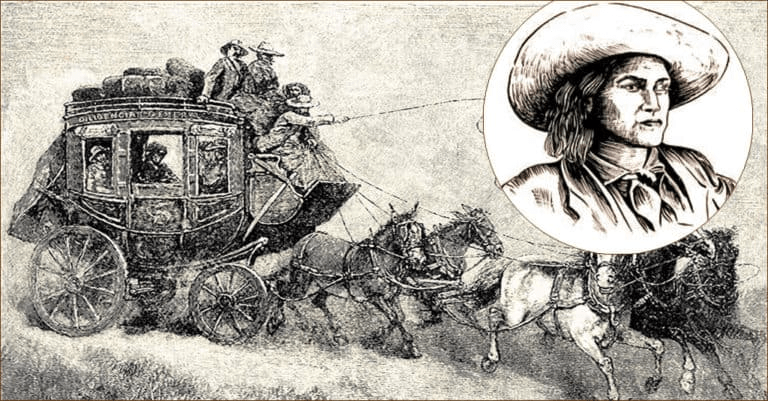
One of the most famous drivers was Charles Darkey Parkhurst, who had come west from New England in 1852 seeking his fortune in the Gold Rush. He spent 15 years running stages, sometimes partnering with Hank Monk, the celebrated driver from Carson City. Over the years, Pankhurst’s reputation as an expert whip grew.
Charley Parkhurst
From 20 feet away he could slice open the end of an envelope or cut a cigar out of a man’s mouth. Parkhurst smoked cigars, chewed wads of tobacco, drank with the best of them, and exuded supreme confidence behind the reins. His judgment was sound and pleasant manners won him many friends.
One afternoon as Charley drove down from Carson Pass, the lead horses veered off the road and a wrenching jolt threw him from the rig. He hung on to the reins as the horses dragged him along on his stomach. Amazingly, Parkhurst managed to steer the frightened horses back onto the road and save all his grateful passengers.
During the 1850s, bands of surly highwaymen stalked the roads. These outlaws would level their shotguns at stage drivers and shout, “Throw down the gold box!” Charley Parkhurst had no patience for the crooks despite their demands and threatening gestures.
The most notorious road agent was nicknamed “Sugarfoot.” When he and his gang accosted Charley’s stage, it was the last robbery the thief ever attempted. Charley cracked his whip defiantly, and when his horses bolted, he turned around and fired his revolver at the crooks. Sugarfoot was later found dead with a fatal bullet wound in his stomach.
In appreciation of his bravery, Wells Fargo presented Parkhurst with a large watch and chain made of solid gold. In 1865, Parkhurst grew tired of the demanding job of driving and he opened his own stage station. He later sold the business and retired to a ranch near Soquel, Calif. The years slipped by and Charley died on Dec. 29, 1879, at the age of 67.
A few days later, the Sacramento Daily Bee published his obituary. It read; “On Sunday last, there died a person known as Charley Parkhurst, aged 67, who was well-known to old residents as a stage driver. He was, in early days, accounted one of the most expert manipulators of the reins who ever sat on the box of a coach. It was discovered when friendly hands were preparing him for his final rest, that Charley Parkhurst was unmistakably a well-developed woman!”
Charlotte Parkhurst
Once it was discovered that Charley was a woman, there were plenty of people to say they had always thought he wasn’t like other men. Even though he wore leather gloves summer and winter, many noticed that his hands were small and smooth. He slept in the stables with his beloved horses and was never known to have had a girlfriend.
Charley never volunteered clues to her past. Loose fitting clothing hid her femininity and after a horse kicked her, an eye patch over one eye helped conceal her face. She weighed 175 pounds, could handle herself in a fistfight and drank whiskey like one of the boys.
It turns out that Charley’s real name was Charlotte Parkhurst. Abandoned as a child, she was raised in a New Hampshire orphanage unloved and surrounded by poverty. Charlotte ran away when she was 15 years old and soon discovered that life in the working world was easier for men. So she decided to masquerade as one for the rest of her life. The rest is history. Well, almost. There is one last thing. On November 3, 1868, Charlotte Parkhurst cast her vote in the national election, dressed as a man. She became the first woman to vote in the United States, 52 years before Congress passed the 19th amendment giving American women the right to vote.
The fire station in Soquel, California, has a plaque reading: “The first ballot by a woman in an American presidential election was cast on this site November 3, 1868, by Charlotte (Charley) Parkhurst who masqueraded as a man for much of her life. She was a stagecoach driver in the mother lode country during the gold rush days and shot and killed at least one bandit. In her later years she drove a stagecoach in this area. She died in 1879. Not until then was she found to be female. She is buried in Watsonville at the pioneer cemetery.”
Soquel, CA Plaque
In 1955, the Pajaro Valley Historical Association erected a monument at Parkhurst’s grave, which reads: “Charley Darkey Parkhurst (1812-1879) Noted whip of the gold rush days drove stage over Mt. Madonna in early days of Valley. Last run San Juan to Santa Cruz. Death in cabin near the 7 mile house. Revealed ‘one eyed Charley’ a woman. First woman to vote in the U.S. November 3, 1868.”
In 2007, the Santa Cruz County Redevelopment Agency oversaw the completion of the Parkhurst Terrace Apartments, named for the stagecoach driver and located a mile along the old stage route from the place of his/her death.
There was also a book written about Charley called “Charley’s Choice – The life and Times of Charley Parkhurst,” written by Fern J. Hill that might be of interest.
I was so intrigued when I saw this picture, I just had to see the recipe! It seemed easy enough, although I have not attempted it myself yet. (I will update if I do by post time.)
Shamrock Pound Cake
Ingredients
2 packages (16 ounces each) pound cake mix
10 drops green food coloring
1/2 teaspoon peppermint extract
GLAZE:
1 cup confectioners’ sugar
1/8 teaspoon peppermint extract
3 to 5 teaspoons 2% milk
Directions
Preheat oven according to package directions. Grease a 9×5-inch loaf pan. Prepare one package cake mix according to package directions, adding food coloring and extract before mixing batter. Transfer to prepared pan. Bake and cool as package directs.
Cut cooled cake into 1-in.-thick slices. Cut slices with a 2-1/2-in. shamrock-shaped cookie cutter (save remaining cake for another use). Stand shamrock slices at an angle in a greased 9×5-in. loaf pan.
Prepare remaining cake mix according to package directions. Pour batter around and over shamrock slices. Bake and cool as package directs.
For glaze, in a small bowl, mix confectioners’ sugar, extract and enough milk to reach desired consistency. Pour glaze over cake, allowing some to flow over sides.
I found an interesting article about Monarch butterfly facts on the Birds and Blooms website!
11 Fascinating Monarch Butterfly Facts
Emily Hannemann
Updated: Jan. 31, 2023
Learn facts about the monarch butterfly, including how to tell male and female monarchs apart and if monarchs are poisonous.
Monarch Butterfly Host Plant
There’s only one host plant for a monarch butterfly—milkweed! Choose native varieties for your area such as common milkweed, butterfly weed, swamp milkweed and showy milkweed. Create a monarch haven with our complete guide to growing milkweed.
Not All Orange Butterflies Are Monarchs
Soldier, queen and viceroy butterflies all are mostly orange and black and look similar to monarch butterflies. But they all have differences that set them apart. Monarchs have bright orange wings with multiple black veins. Their wings are edged in black with white speckles.
Male Monarch Butterflies
The easiest way to tell a male monarch butterfly from a female monarch is by looking for two dark spots on the hindwings—the female butterflies don’t have these spots.
A Female Monarch Butterfly Lays Hundreds of Eggs
A female monarch in the wild can lay up to 500 eggs on milkweed plants throughout her lifetime. Butterflies raised in captivity can lay even more.
Are Monarch Butterflies and Caterpillars Poisonous?
Caterpillars eat only milkweed, which contains a poisonous chemical that protects them from predators. The chemicals stay in their system to make even the adults taste bad. Bright orange wings let predators know that monarch butterflies are poisonous.
How Long Does a Monarch Butterfly Live?
These gorgeous butterflies are a welcome summer sight, but unfortunately, most of them don’t live long. The adult monarchs you see fluttering through your backyard when the weather’s warm typically live only about 4 or 5 weeks — just long enough to mate and produce the next group. It takes four generations of monarchs to complete their annual migration journey before ending up in your garden again. However, the fourth “super generation” that overwinters in Mexico can live for as long as eight months.
How Fast Do Monarch Butterflies Fly?
It’s all about speed for these butterflies. Monarch butterflies can flap their wings up to 12 times a second when flying at their fastest.
How Far Do Monarch Butterflies Migrate?
Here’s a fun monarch butterfly fact. These amber beauties could fly circles around other species. Monarch butterflies fly a long distance during fall migration, farther than any other tropical butterfly—up to 3,000 miles.
Monarchs Have a Great Sense of Direction
Monarch butterflies don’t need a GPS to locate their migration destination. Many of the gorgeous travelers find their way to the same exact location, perhaps even to one particular tree, where previous generations have wintered before.
Monarch Butterfly Wings Need to Stay Warm
Monarch butterfly wings are fascinating and complex. In order for these delicate creatures to fly, their wing muscles must stay above 55 degrees Fahrenheit.
Where Do Monarch Butterflies Live?
You can find monarchs everywhere from cities to rural fields and mountain pastures. When breeding, they prefer open areas.
Nutmeg is the common name for a dark-leaved evergreen tree, Myristica fragrans, that is cultivated for two spices derived from its fruit, “nutmeg” and “mace.”
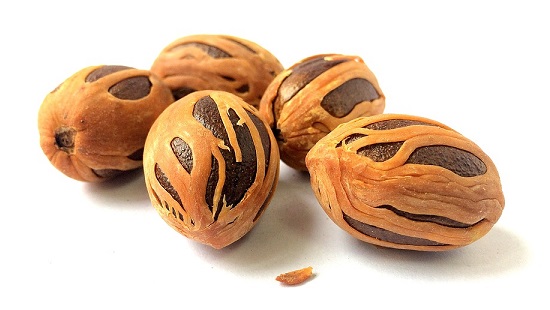
The nutmeg is the oval-shaped seed, and mace is the bright red webbing that surrounds the seed.
The tree is native to the Moluccas, or Spice Islands, of Indonesia.
Nutmeg is known to have been a prized and costly spice in European medieval cuisine as a flavoring, medicinal, and preservative agent.
Saint Theodore the Studite (ca. 758 C.E. – ca. 826), was famous for allowing his monks to sprinkle nutmeg on their pease pudding when required to eat it.
In Elizabethan times, it was believed that nutmeg could ward off the plague, so nutmeg was very popular.
Around1600 it became important as an expensive commercial spice in the Western world and was the subject of Dutch plots to keep prices high and of English and French counterplots to obtain fertile seeds for transplantation.
Until the mid-19th century, the Spice Islands, was the only location of the production of the spices nutmeg and mace in the world.
As a result of the Dutch interregnum during the Napoleonic Wars, the British took temporary control of the Spice Islands from the Dutch and transplanted nutmeg trees, complete with soil, to Sri Lanka, Penang, Bencoolen, and Singapore. From these locations they were transplanted to their other colonial holdings elsewhere, notably Zanzibar and Grenada.
Today, Indonesia and Grenada dominate production and exports of both products, with world market shares of 75% and 20%, respectively. Other producers include India, Malaysia, Papua New Guinea, Sri Lanka, and Caribbean islands.
The nutmeg tree is a small evergreen tree, usually 16–43 ft tall, but occasionally reaching 66 ft. The tree may bear fruit for more than 60 years.
The alternately arranged leaves are dark green, 2.0–5.9 inches long by 0.8–2.8 inches wide with petioles about 0.4 inches long.
The species is dioecious, i.e. “male” orstaminate flowers and “female” or carpellate flowers are borne on different plants, although occasional individuals produce both kinds of flower. The flowers are bell-shaped, pale yellow and somewhat waxy and fleshy. Staminate flowers are arranged in groups of one to ten, each 0.2–0.3 inches long; carpellate flowers are in smaller groups, one to three, and somewhat longer, up to 0.4 inches long.
Trees produce smooth yellow ovoid or pear-shaped fruits, 2.4–3.5 inches long with a diameter of 1.4–2.0 inches. The fruit has a fleshy husk. When ripe the husk splits into two halves along a ridge running the length of the fruit.
Inside is a purple-brown shiny seed, 0.8–1.2 inches long by about 0.8 inches across, with a red or crimson covering (an aril).
Nutmeg has a distinctive pungent fragrance and a warm slightly sweet taste; it is used to flavor many kinds of baked goods, confections, puddings, potatoes, meats, sausages, sauces, vegetables, and such beverages as eggnog.
Mace’s flavor is similar to nutmeg but more delicate; it is used to flavor baked goods, meat, fish, vegetables and in preserving and pickling. The more delicate flavor of mace makes this spice much more expensive than nutmeg and also because its yield is about ten times less that of nutmeg.
Nutmeg is known to impact health in many ways because of its nutritive content of vitamins, minerals, and organic compounds related to the essential oils. These beneficial components include dietary fiber, manganese, thiamine, vitamin B6, folate, magnesium, copper, and macelignan.
The health benefits of nutmeg include ability to relieve pain, reduce insomnia, detoxify the body, helps digestion, brightens skin, protect the teeth and gums, helps lower blood pressure, increases circulation, prevents leukemiand and protect cognitive functionality against degenerative diseases such as Alzheimer’s.
Nutmeg butter is obtained from the nut by expression. It is semisolid, reddish-brown in color, and tastes and smells of nutmeg.
The essential oil obtained by steam distillation of ground nutmeg is used widely in the perfumery and pharmaceutical industries.
Nutmeg contains myristicin, a natural compound that has mind-altering effects if ingested in large doses. The buzz can last one to two days and can be hallucinogenic, much like LSD.
Exactly how much nutmeg you can tolerate before becoming ill depends partly on your body mass. In one case, an eight-year-old child ate just 0.5 ounce of nutmeg and died from the effects, according to A.K. Demetriades, M.D., of University College London Hospital. From 1 to 3 tbsp. of nutmeg powder, or 1 to 3 whole nutmeg seeds, causes illness in most people.
Nutmeg is highly neurotoxic to dogs and causes seizures, tremors, and nervous system disorders which can be fatal.
Connecticut’s nickname is the “Nutmeg State” because its early inhabitants had the reputation of being so ingenious and shrewd that they were able to make and sell wooden nutmegs. Sam Slick (Judge Halliburton) seems to be the originator of this story. Some claim that wooden nutmegs were actually sold, but they do not give either the time or the place.
Did you ever wonder, like I have, how we came to separate and name the various generations? It started with the Boomers, the naming of the generations. Yes, the term Lost Generation came first, but the idea that demographic groupings of people born in a span of years should have a particular name really caught on with the post-WWII generation.
William Strauss and Neil Howe did not invent the idea of a generational schema, but they popularized it. In 1991, they published a book touting the idea that there were cyclical patterns in U.S. history based on generational differences. Their names for the generations, however, were different than those most commonly used today. Their names for the groups born in particular spans of years were:
The generally accepted names today are as follows.
1883–1900: The Lost Generation 1901–28: The Greatest Generation (The G.I. Generation) 1929–45: The Silent Generation 1946–64: Baby Boomers 1965–80: Generation X (Gen X) 1981–96: Millennials (Generation Y) 1997–2012: Generation Z 2013– : Generation Alpha
But where do these names come from?
Lost Generation (1883–1900)
The name for the generation that fought in the First World War has a literary origin. The name is both literal and metaphorical. It is literal in sheer numbers of young men who died in the war but t is also metaphorical in that it represents a rootlessness and destruction of moral purpose as a result of the war. The term Lost Generation first appears in one of the epigraphs in Ernest Hemingway’s 1926 novel The Sun Also Rises. In the book, Hemingway attributed the phrase to Gertrude Stein in conversation. Four decades later, Hemingway described that conversation: “It was when we had come back from Canada and were living in the rue Notre-Dame-des-Champs and Miss Stein and I were still good friends that Miss Stein made the remark about the lost generation. She had some ignition trouble with the old Model T Ford she then drove and the young man who worked in the garage and had served in the last year of the war had not been adept, or perhaps had not broken the priority of other vehicles, in repairing Miss Stein’s Ford. Anyway he had not been sérieux and had been corrected severely by the patron of the garage after Miss Stein’s protest. The patron had said to him, “You are all a génération perdue.”
“That’s what you are. That’s what you all are,” Miss Stein said. “All of you young people who served in the war. You are a lost generation.”
Greatest Generation / G.I. Generation (1901–27)
The earliest use of Greatest Generation is by Democratic Congressman Hatton Sumners of Dallas, Texas in 1940, before the United States was even in the war. Sumners used the term in a series of speeches, or the same stump speech, given multiple times that year. Sumners uses the term in an aspirational, rather than a descriptive sense, arguing that this generation must rise from the devastation of the Great Depression to fight fascism and right the world.
The other name for this particular generation is more prosaic: the G.I. Generation. It simply acknowledges the vast number of men of that cohort who served in uniform during the war.
Silent Generation (1928–45)
Bracketed by the war generation and the boomers and often overlooked, the Silent Generation would seem to be aptly named. The name first appears in the Detroit Free Press of 1 November 1951, but this is in an excerpt from a Time magazine piece of 5 November. The Time piece reads:
“Youth today is waiting for the hand of fate to fall on its shoulders, meanwhile working fairly hard and saying almost nothing. The most startling fact about the younger generation is its silence. With some rare exceptions, youth is nowhere near the rostrum. By comparison with the Flaming Youth of their fathers & mothers, today’s younger generation is a still, small flame. It does not issue manifestoes, make speeches or carry posters. It has been called the “Silent Generation.” But what does the silence mean? What, if anything, does it hide? Or are youth’s elders merely hard of hearing?”
Baby Boomers (1945–64)
Generic use of baby boom is much older than any of these generational names. It’s an Americanism dating to at least the 1870s to mark any uptick in births. The application of the term to the then-expected increase in births following the Second World War dates, as one might expect, to 1945. There had been a short increase in the birth rate following the U.S. entry into the war, but on 4 February 1945 the U.S. Department of Commerce reported this mini-boom was over and to expect a larger one in the year to come: “The Commerce Department reported Saturday night that the Nation’s birth rate, which rose 30 per cent above prewar levels in the year after Pearl Harbor, now is declining and will stay that way until the end of hostilities precipitates another baby boom.”
Generation X (1965–80)
Generation X first appears in December 1952 issue of Holiday magazine, touting an upcoming photo-essay by photographer Robert Capa, although the term would not appear in the photo-essay itself:
“What, you may well ask, is Generation X? […] Our tag for what we believe to be the most important group of people in the world today—the boys and girls who are just turning 21. These are the youngsters who have seen and felt the agonies of the past two decades, often firsthand, who are trying to keep their balance in the swirling pressures of today, and who will have the biggest say in the course of history for the next 50 years.”
Millennials / Generation Y (1981–96)
More successful was Strauss and Howe’s naming of the Millennial generation. From their 1991 book: “At Burrville Elementary, 13ers in older grades found the uniforms slightly humiliating, but the younger kids hardly seemed to mind. These kids in green coats and yellow blouses are the vanguard of America’s MILLENNIAL GENERATION. Cute. Cheerful. Scout-like. Wanted. Not since the 1910s, when midlife Missionaries dressed child G.I.s in Boy Scout brown, have adults seen such advantage in making kids look alike and work together. Not since the early 1900s have older generations moved so quickly to assert greater adult dominion over the world of childhood—and to implant civic virtue in a new crop of youngsters.”
Millennials have also gone by the rather unimaginative Generation Y, as they are the cohort that follows the Gen Xers. Call them Generation Y, because Y comes after X, and maybe because they’re coming of age with the big questions laid out before them.
— Y can’t we go out in the sun?
— Y can’t the AIDS epidemic be stopped?
— Y is the environment in the state it is?
— Y is Canada in the state it is?
— Y can’t I get decent work?
Generation Z (1997–2012)
Of course, Generation Y led to ‘Generation Z,” which appears by 2010, likely due to a lack of a more creative term. Some refer to this generation as “iGen” since they have never known a world without the Internet. Martha Irvine of the Associated Press states, “they are the tech-savviest generation of all time… even toddlers can maneuver their way through YouTube and some first-graders are able to put together a PowerPoint presentation for class.” A teacher’s most complicated struggle with Generation Z is not necessarily how to relate lessons to them, but rather how to prepare these students for careers and jobs that don’t even exist yet.
Generation Alpha (2013– )
Having run out of letters in the Latin alphabet, we turn to Greek for the name of the next cohort. From the Australian newspaper Northern Star of 12 March 2011: “They are smart, cashed-up, career driven and are making their way to a place near you.”
It’s the newest addition to society’s demographic categories—Generation Alpha. Babies born from 2010 are part of this demographic, coming after the digital-native Generation Z and the want-want-want Generation Y. You may note that the same critiques and notes of despair are sounded whenever a new generation comes of age. The “problem with kids these days” has always been and presumably always will be.























































 Sew Colorful