[I found this article about Mr. Ed’s Elephants on the PA Bucketlist.com site!]
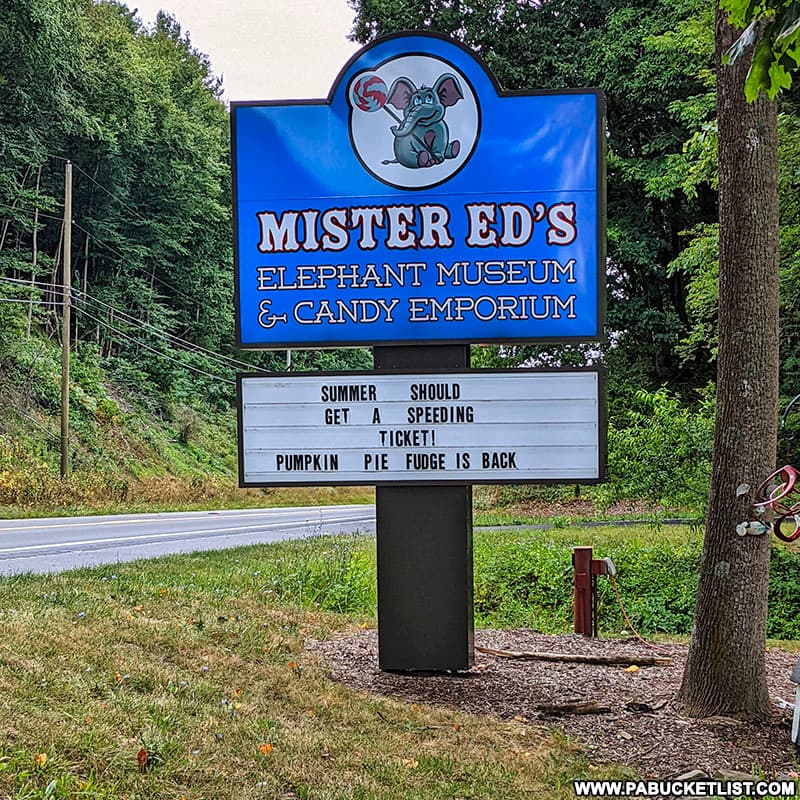
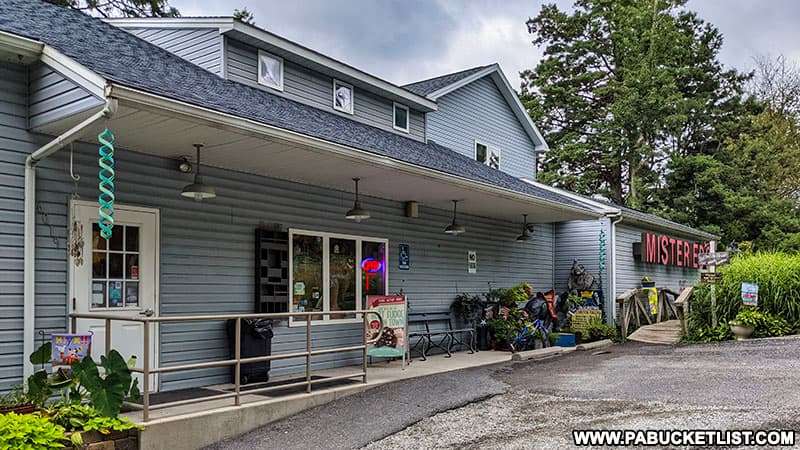
Mister Ed’s Elephant Museum and Candy Emporium just may be the best elephant-themed roadside attraction in Pennsylvania!
Elephants and candy everywhere you look.
Located just outside of Gettysburg, Mister Ed’s features a dizzying array of elephant figurines, circus souvenirs, toys, statues, gardens, and artwork, as well as over a thousand kinds of candy!
How to Find Mister Ed’s Elephant Museum and Candy Emporium
Mister Ed’s Elephant Museum and Candy Emporium is located at 6019 Chambersburg Rd, Orrtanna, PA 17353.
Exploring the Exterior of Mister Ed’s Elephant Museum
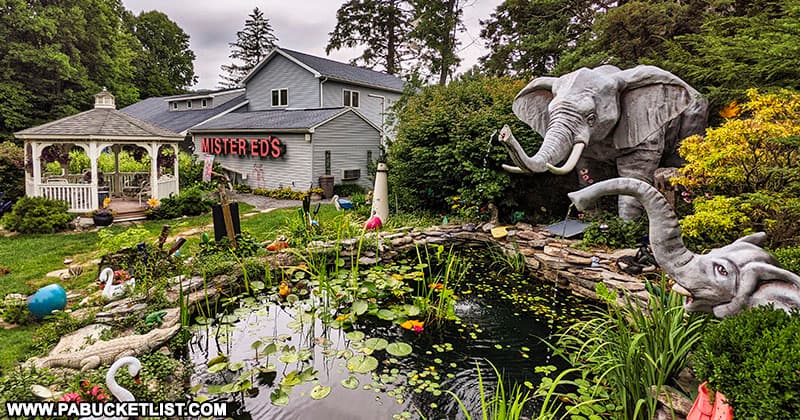
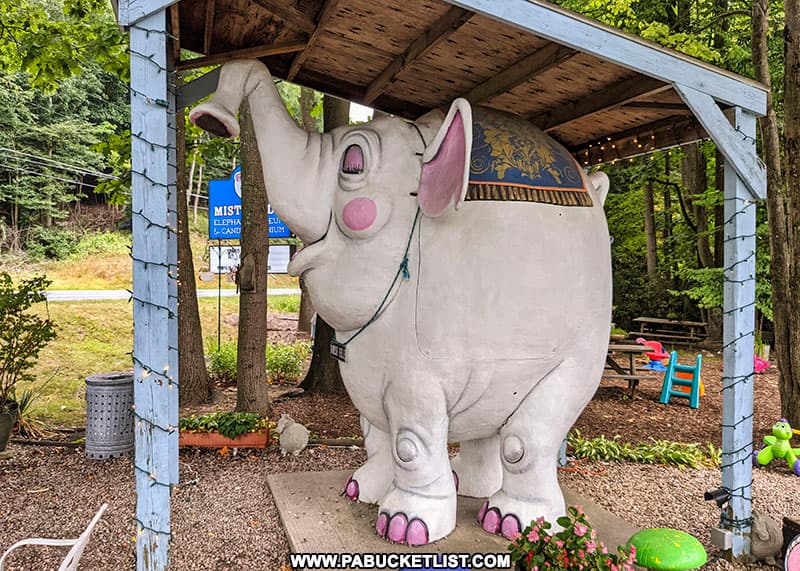
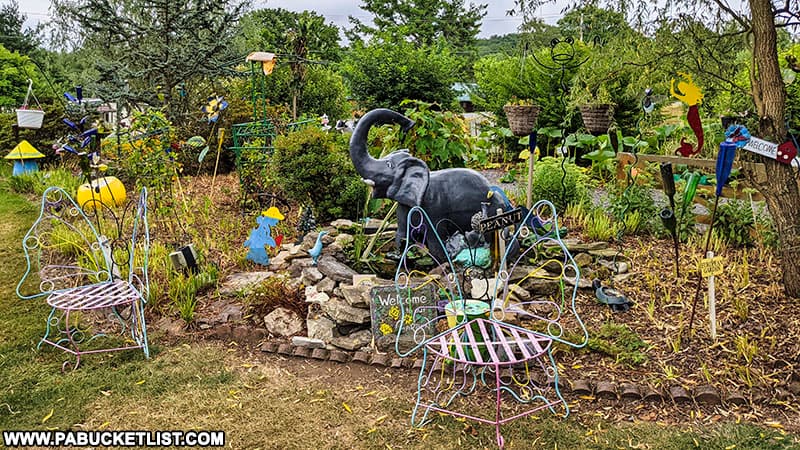
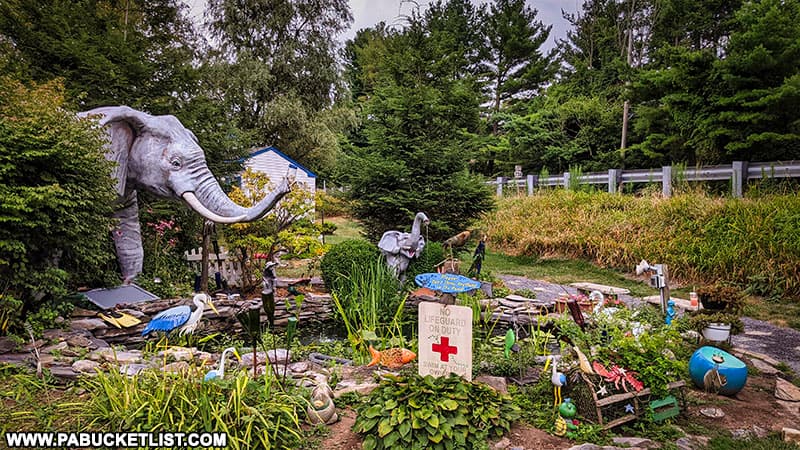
The grounds surrounding Mister Ed’s Elephant Museum and Candy Emporium are a collection of whimsically-decorated gardens incorporating elephants as the central theme (of course!).
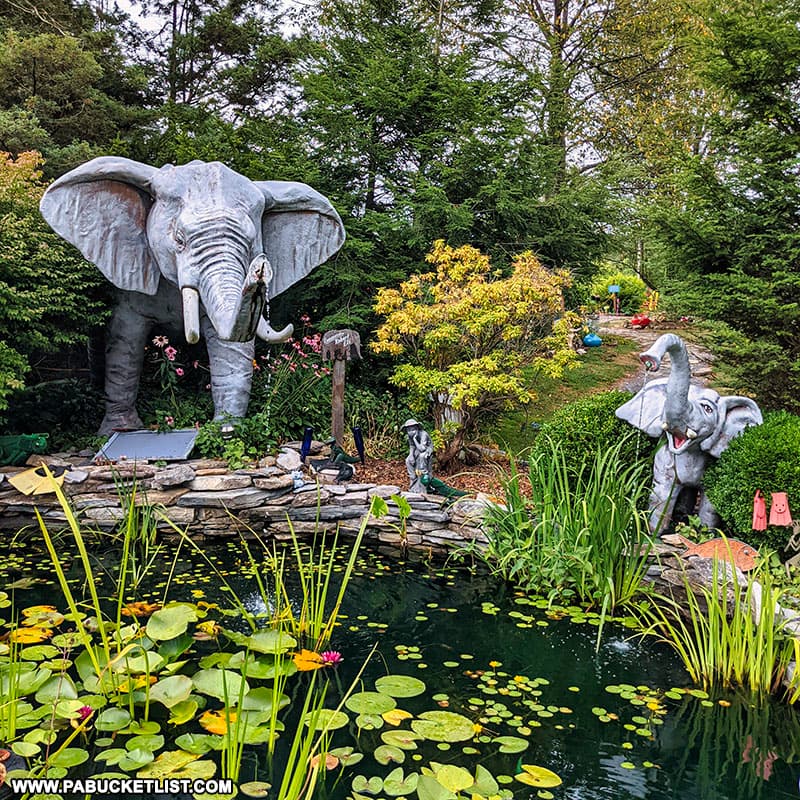
The water garden featuring a mother and baby elephant with water shooting out of their trunks caught my eye in particular, but all the gardens are a treat to walk through.
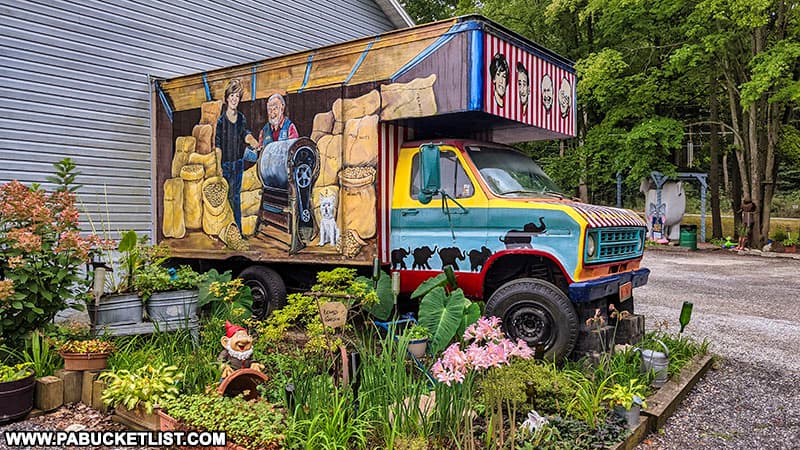
Even an old delivery truck becomes a unique piece of artwork in the gardens at Mister Ed’s Elephant Museum.
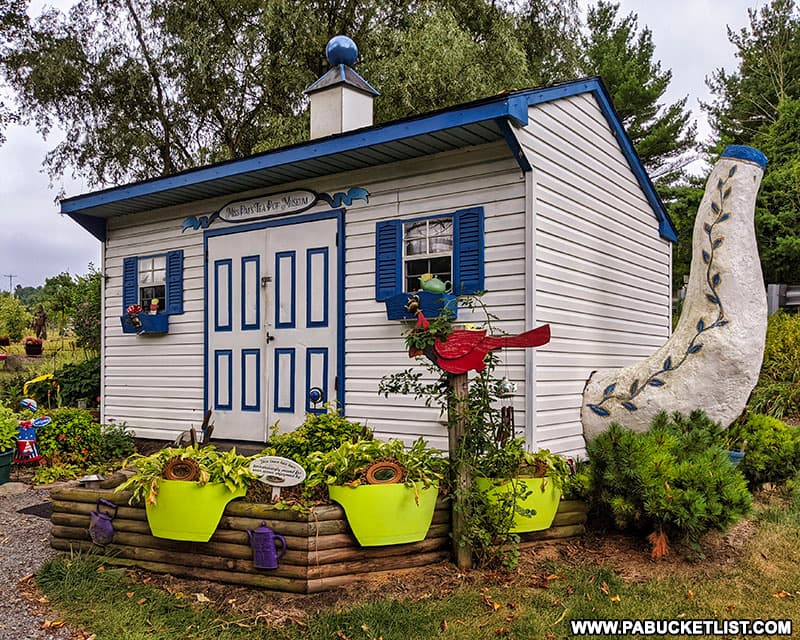
And while Bedford may be home to Pennsylvania’s largest roadside coffee pot, this teapot-shaped garden shed at Mister Ed’s is impressive in its own right, and fittingly it also houses a collection of teapots.
Step Inside Mister Ed’s Elephant Museum and Candy Emporium
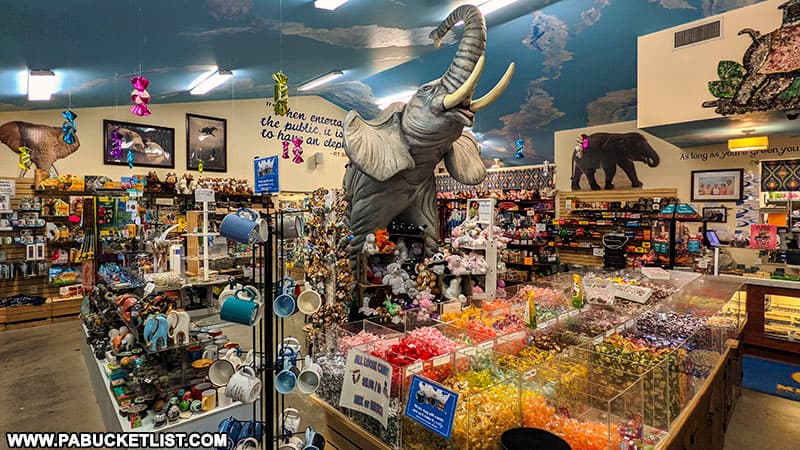
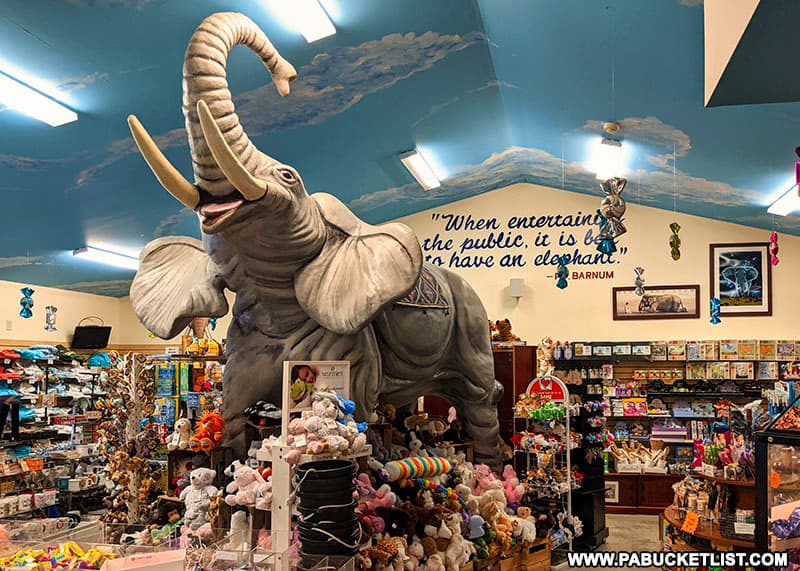
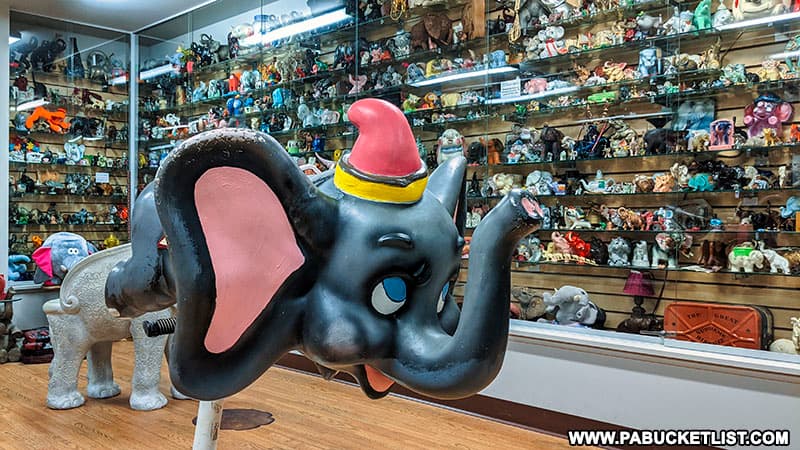
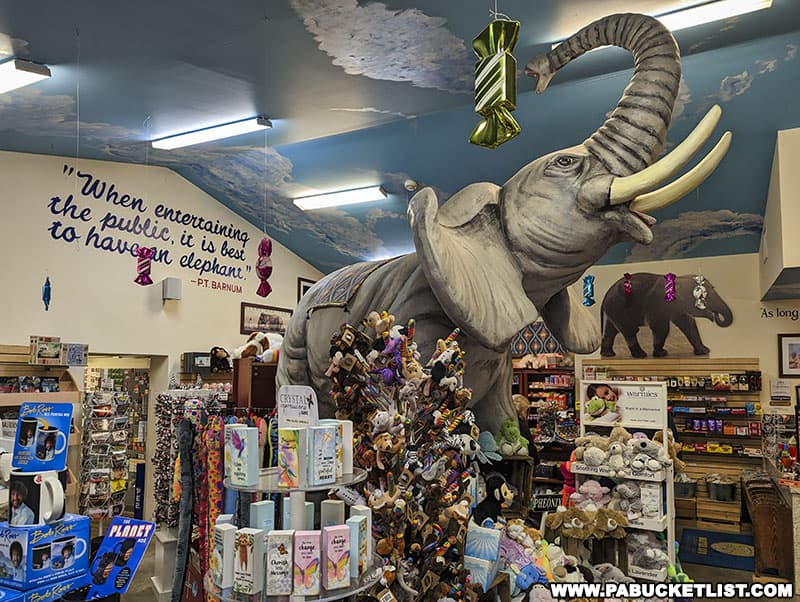
A quick glance around the inside of Mister Ed’s Elephant Museum and Candy Emporium is enough to cause massive sensory overload and a sugar rush!
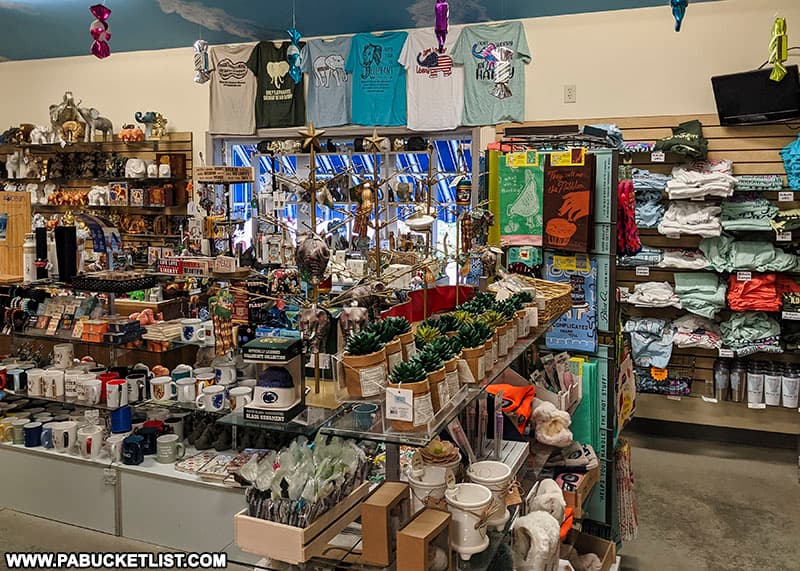
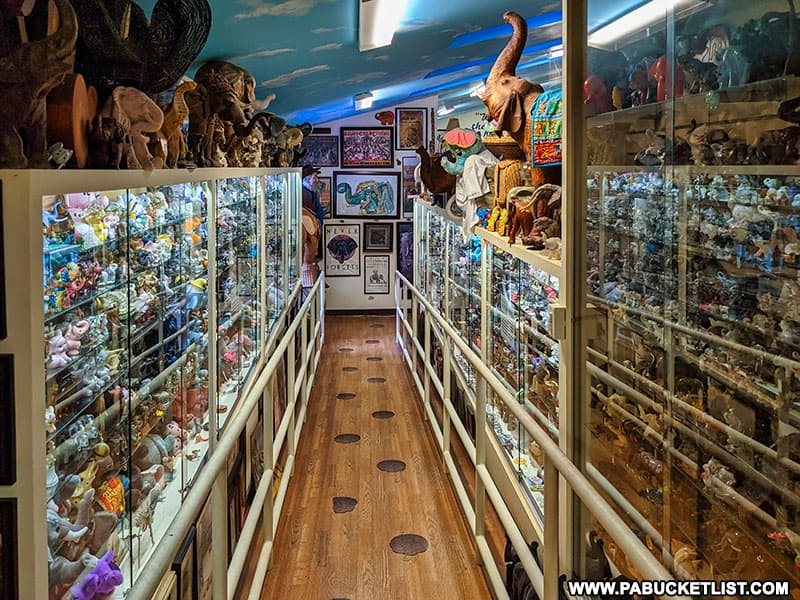
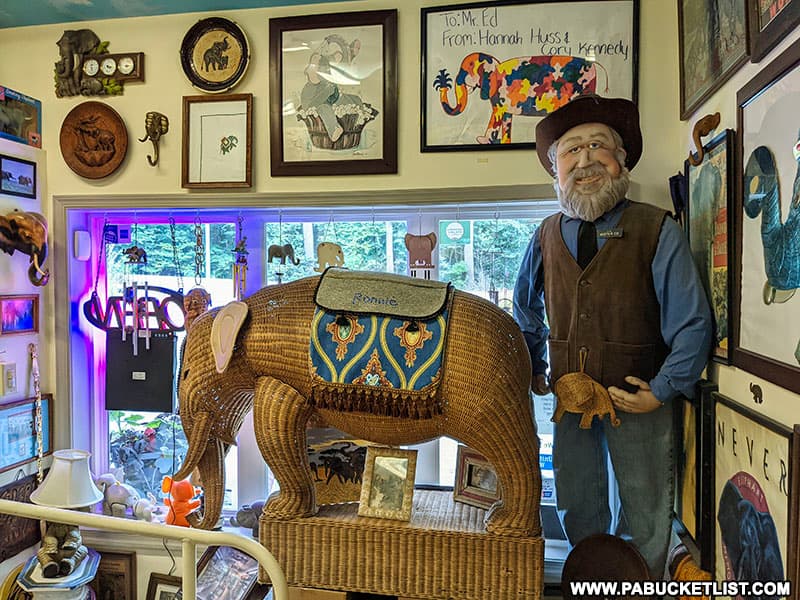
Everywhere you look, on the walls, ceilings, shelves, and countertops, you’ll see elephants and candy of every possible description.
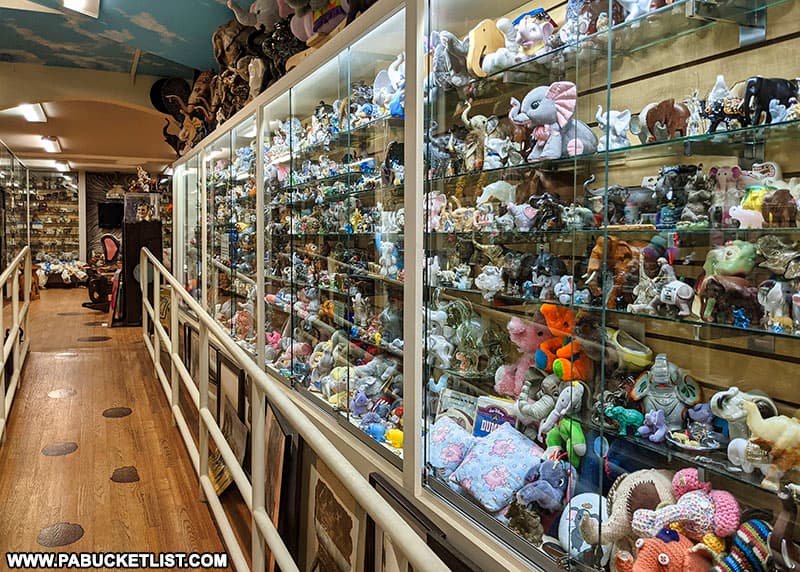
More than 12,000 elephant-related mementos are on display, a feast for the eyes and an inspiration to those of us (myself included) who walk the fine line between collectors and hoarders!
If it existed in the 20th century and it had an elephant emblazoned on it, you’ll most likely find it at Mister Ed’s Elephant Museum.
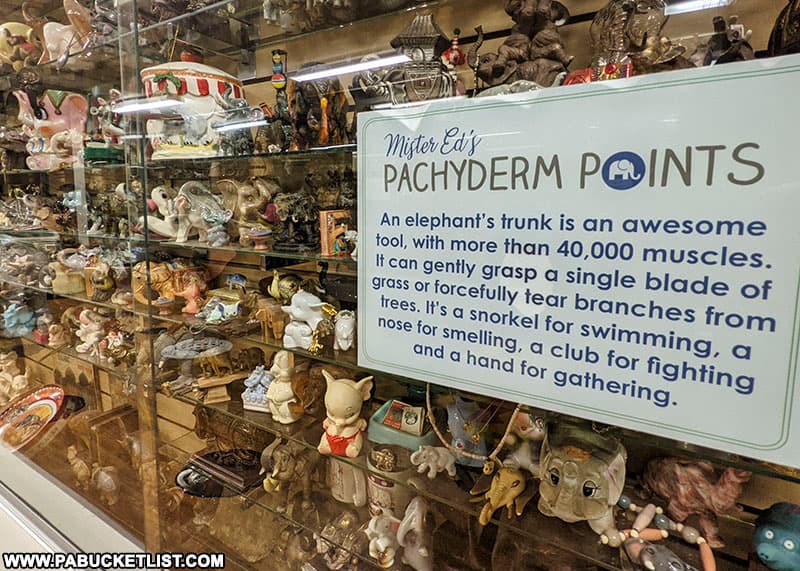
There are even “Pachyderm Points” displayed around the museum, imparting knowledge about real elephants on inquisitive visitors.
If you’re a hardcore fan of elephants or vintage toys, you’d best budget an hour or two just to explore the museum portion of Mister Ed’s!
The Candy Emporium at Mister Ed’s Elephant Museum
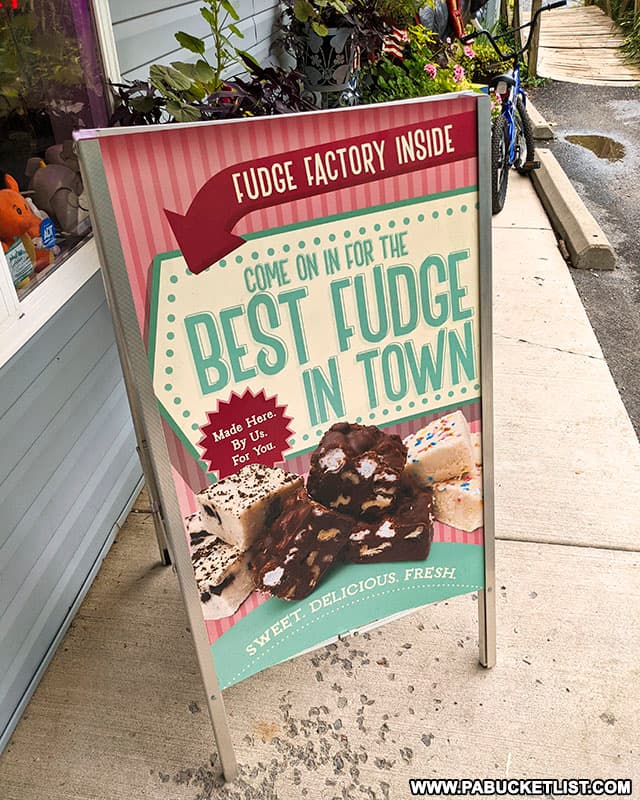
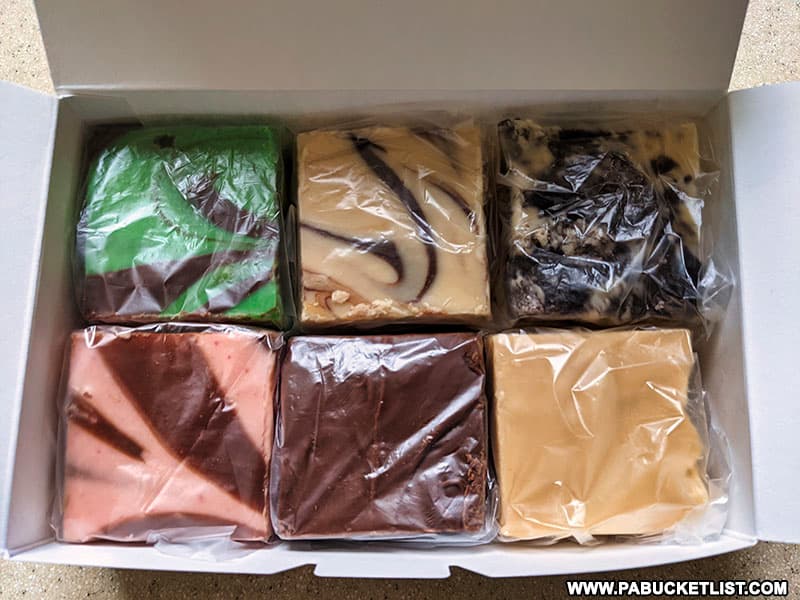
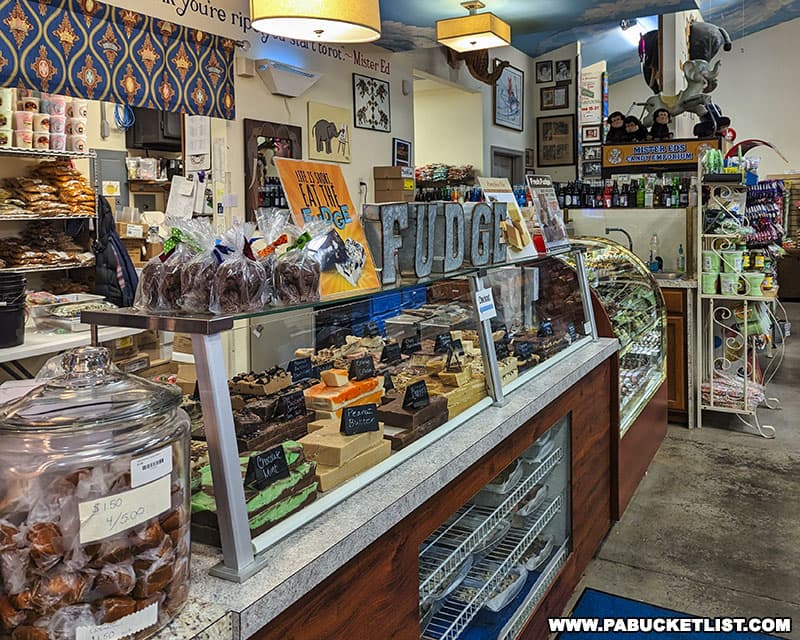
In case you missed the sign when you walked in the door, Mister Ed’s is also famous for homemade fudge!
Featuring more than 70 flavors of fudge, I’ve yet to try one that WASN’T delicious.
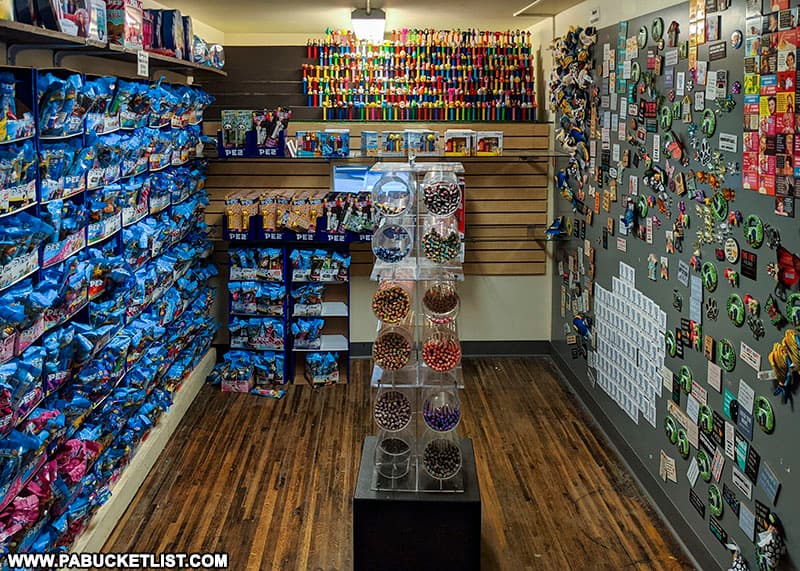
If fudge isn’t your thing, there are literally more than 1,000 different candy options, including an entire room full of PEZ candies and dispensers!
Christmas at Mister Ed’s Elephant Museum and Candy Emporium
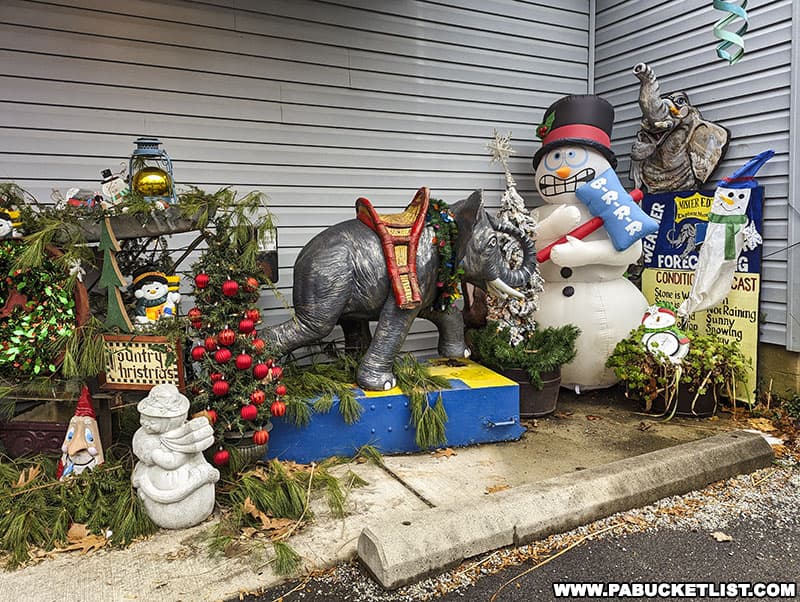
Mister Ed’s definitely gets in the spirit at Christmastime!
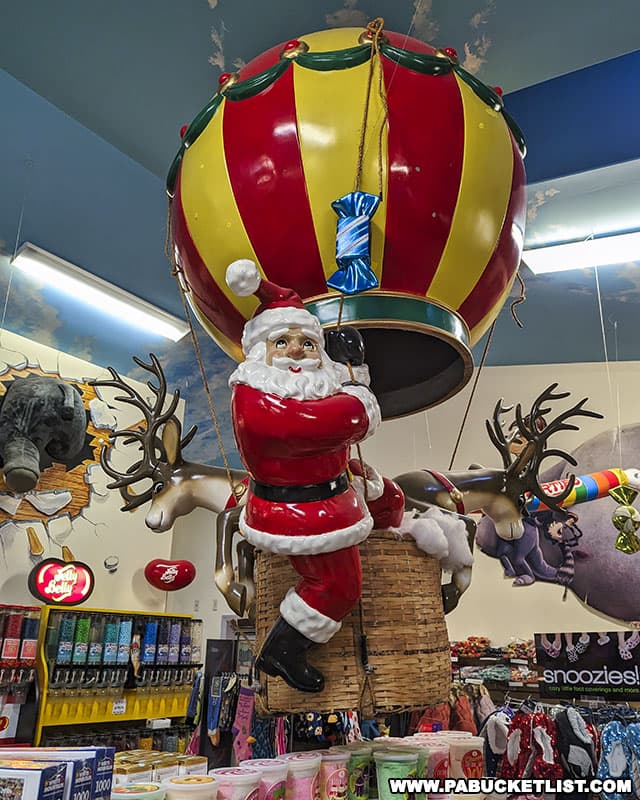
Inside the store and out, you’ll find all your favorite Christmas characters woven into the already busy tapestry of decorations and displays.
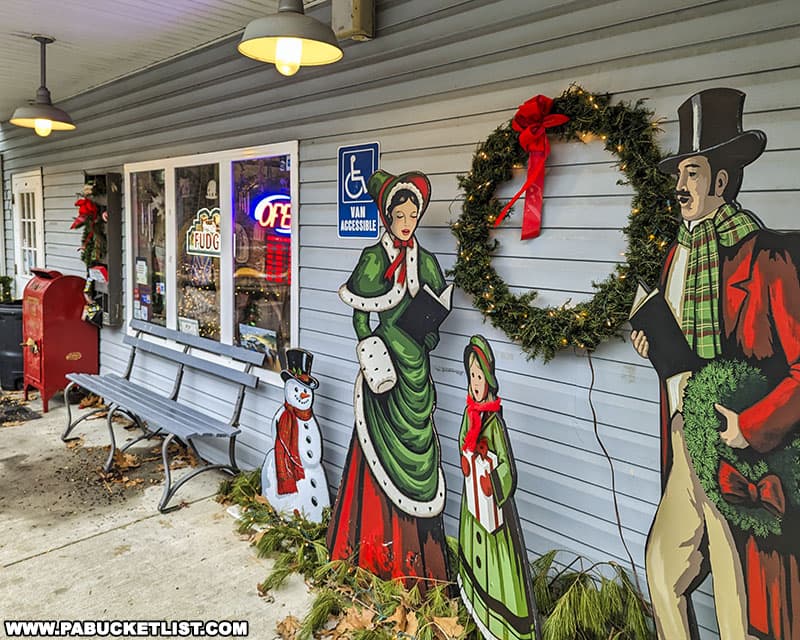
From traditional Dickens-like carolers…
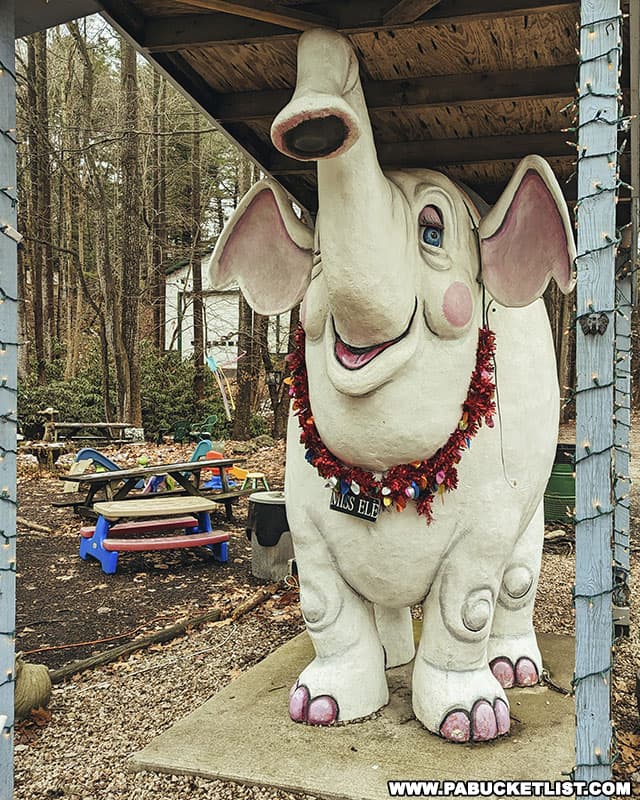
to the not-so-traditional Miss Ele out front.
Already one of the Gettysburg area’s most unique attractions and favorite candy stores, Mister Ed’s is the perfect place to shop for Christmas stocking stuffers.
If you’re road tripping through the Gettysburg area at Christmastime, make it a point to stop, stroll the grounds, and do a little shopping.
Planning Your Visit to Mister Ed’s Elephant Museum
Mister Ed’s Elephant Museum and Candy Emporium is open every day, from 9 a.m. to 7 p.m.
In the age of COVID, it’s probably prudent to call ahead and confirm those hours – the phone number there is (717) 352-3792.
There is no charge to walk the gardens or to tour the museum.
If you’ve got elephants on the brain, a hardcore sweet tooth, or just love quirky roadside attractions, Mister Ed’s Elephant Museum and Candy Emporium near Gettysburg checks all the right boxes!
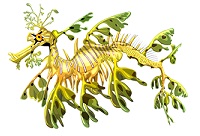
The leafy seadragon (Phycodurus eques) or Glauert’s seadragon is a marine fish related to the seahorses.
Leafy seadragons are found along the southern and western coasts of Australia.
They reside in areas with clear water, lower light conditions, and prominent vegetation. Such areas include seagrass meadows, seaweed beds, and rocky reefs.
The water must be between 54* and 73*, and 16.5 to 164 feet deep, although they most often are found between 16.5 and 49 feet) deep.
The lifespan of a leafy seadragon is up to 10 years.
While not large, they are slightly larger than most seahorses, growing to about 8 to 14 in.
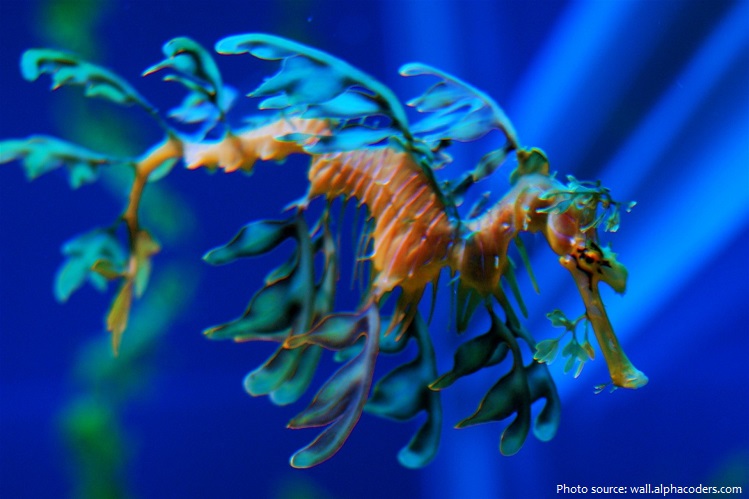
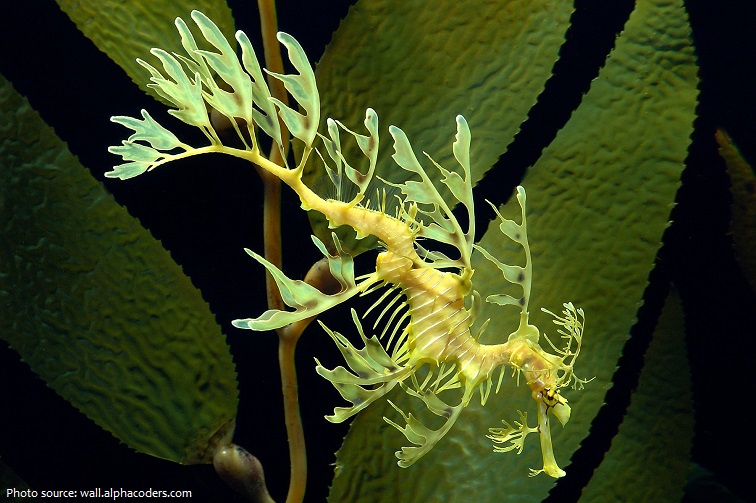
The lobes of skin that grow on the leafy seadragon provide camouflage, giving it the appearance of seaweed.
The leafy seadragon is able to maintain the illusion when swimming, appearing to move through the water like a piece of floating seaweed.
The frond-like appendages and thin body vary on adults from green to yellow-brown to light brown.
It can also change color to blend in, but this ability depends on the seadragon’s diet, age, location, and stress level.
They feed on plankton and tiny crustaceans, which they suck into the end of their long tube-like nose.
The leafy seadragon uses the fins along the side of its head to allow it to steer and turn. However, its outer skin is fairly rigid, limiting mobility.
Individual leafy seadragons have been observed remaining in one location for extended periods of time (up to 68 hours), but will sometimes move for lengthy periods. The tracking of one individual indicated it moved at up to 490 ft per hour.
Leafy seadragons live a largely solitary lifestyle.
The male sea dragon incubates the fertilized eggs joined under his tail. They stay there for about eight weeks until they hatch. The young can look after themselves as soon as they are born.
They are vulnerable when first born, and are slow swimmers, reducing their chance of escaping from a predator. Only about 5% of young survive.
Leafy seadragons are subject to many threats, both natural and man-made. They are caught by collectors, and used in alternative medicine.
The leafy seadragon is classified as “Near Threatened” on the IUCN Red List of Threatened Species.
Due to being protected by law, obtaining seadragons is often an expensive and difficult process as they must be from captive bred stock, and exporters must prove their broodstock were caught before collecting restrictions went into effect, or that they had a license to collect seadragon.
Aside from the legalities, leafy seadragons cost between $10,000 and $15,000 a piece, prohibitive to most collectors.
The leafy seadragon’s name is derived from its resemblance to the mythical dragon.
Popularly known as “leafies”, it is the marine emblem of the state of South Australia and a focus for local marine conservation.
It also features in the logos of the following South Australian associations — the Adelaide University Scuba Club Inc. and the Marine Life Society of South Australia Inc.
A number of aquaria in the United States have leafy seadragon research programs or displays.
On May 3, 1937, the Hindenburg left Frankfurt, Germany, for a journey across the Atlantic to Lakehurst’s Navy Air Base. Stretching 804 feet from stern to bow, it carried 36 passengers and crew of 61. While attempting to moor at Lakehurst, the airship suddenly burst into flames, probably after a spark ignited its hydrogen core. Rapidly falling 200 feet to the ground, the hull of the airship incinerated within seconds. Thirteen passengers, 21 crewmen, and 1 civilian member of the ground crew lost their lives, and most of the survivors suffered substantial injuries.
Survivors of the Hindenburg disaster far outnumbered the victims.
Anyone who has seen the graphic newsreel video of the Hindenburg plunging to earth in flames may be amazed to know that of the 97 passengers and crew on board, 62 survived. The disaster’s 36 deaths included 13 passengers, 22 crew members and one worker on the ground. Many survivors jumped out of the zeppelin’s windows and ran away as fast as they could.
The Hindenburg disaster wasn’t history’s deadliest airship accident.
Thanks to the iconic film footage and the emotional eyewitness account of radio reporter Herbert Morrison (who uttered the famous words “Oh, the humanity!”), the Hindenburg disaster is the most famous airship accident in history. However, the deadliest incident occurred when the helium-filled USS Akron, a U.S. Navy airship, crashed off the coast of New Jersey in a severe storm on April 4, 1933. Seventy-three men were killed, and only three survived. The 1930 crash of the British military airship R101, which claimed 48 lives, was also deadlier.
The Hindenburg disaster wasn’t broadcast live on radio.
Morrison was on the scene to record the arrival of the Hindenburg for WLS in Chicago, but he wasn’t broadcasting live. His wrenching account would be heard in Chicago later that night, and it was broadcast nationwide the following day. His audio report was synched up with separate newsreel videos in subsequent coverage of the Hindenburg disaster.
U.S. law prevented the Hindenburg from using helium instead of hydrogen, which is flammable.
After the crash of the hydrogen-filled R101, in which most of the crew died in the subsequent fire rather than the impact itself, Hindenburg designer Hugo Eckener sought to use helium, a non-flammable lifting gas. However, the United States, which had a monopoly on the world supply of helium and feared that other countries might use the gas for military purposes, banned its export, and the Hindenburg was reengineered. After the Hindenburg disaster, American public opinion favored the export of helium to Germany for its next great zeppelin, the LZ 130, and the law was amended to allow helium export for nonmilitary use. After the German annexation of Austria in 1938, however, Secretary of Interior Harold Ickes refused to ink the final contract.
The Hindenburg had a smokers’ lounge.
Despite being filled with 7 million cubic feet of highly combustible hydrogen gas, the Hindenburg featured a smoking room. Passengers were unable to bring matches and personal lighters aboard the zeppelin, but they could buy cigarettes and Cuban cigars on board and light up in a room pressurized to prevent any hydrogen from entering. A steward admitted passengers and crew through a double-door airlock into the smokers’ lounge, which had a single electric lighter, and made sure no one left with a lit cigarette or pipe.
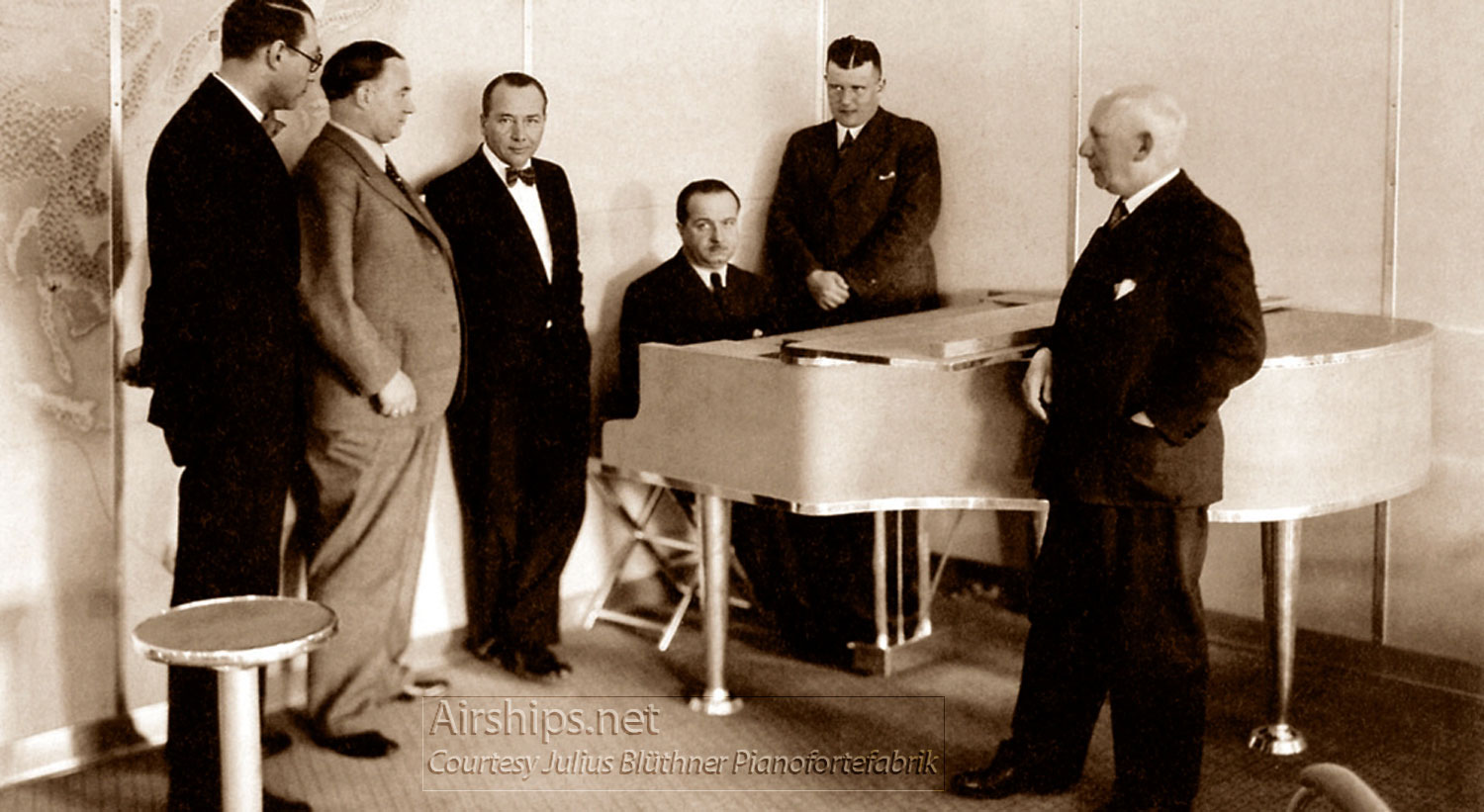
A specially designed lightweight piano was made for the Hindenburg.
The Hindenburg’s owners, seeking to outfit their airborne luxury liner, tasked the renowned piano making firm of Julius Blüthner with building a special lightweight baby grand piano to meet the airship’s strict weight standards. The piano, which was made mostly of aluminum alloy and covered in yellow pigskin, weighed less than 400 pounds. It was only used during the Hindenburg’s first flying season, so it wasn’t aboard the ill-fated voyage.
The Hindenburg first took flight on a Nazi propaganda mission.
Although the Hindenburg was in development before the Third Reich came to power, members of the Nazi regime viewed it as a symbol of German might. Nazi propaganda minister Joseph Goebbels ordered the Hindenburg to make its first public flight in March 1936 as part of a joint 4,100-mile aerial tour of Germany with the Graf Zeppelin to rally support for a referendum ratifying the reoccupation of the Rhineland. For four days, the airships blared patriotic tunes and pro-Hitler announcements from specially mounted loudspeakers, and small parachutes with propaganda leaflets and swastika flags were dropped on German cities. (The referendum, approved by 98.8 percent of Germans, was hardly a squeaker.) Later in 1936 the Hindenburg, sporting Olympic rings on its side and pulling a large Olympic flag behind it, played a starring role at the opening of the Summer Games in Berlin. The airship, which had swastikas emblazoned on its tail fins, was such a symbol of Nazi power that it was subjected to constant bomb threats—including some before its final flight, which led to suspicions of sabotage in the disaster.
Dozens of letters carried aboard the Hindenburg were ultimately delivered.
Zeppelins pioneered airmail service across the Atlantic, and the Hindenburg carried approximately 17,000 pieces of correspondence on its final voyage. Amazingly, 176 pieces stored in a protective container survived the crash and were postmarked four days after the disaster. The pieces, charred but still readable, are among the world’s most valuable philatelic artifacts.
Goebbels wanted to name the Hindenburg for Adolf Hitler.
Eckener, no fan of the Third Reich, named the airship for the late German president Paul von Hindenburg and refused Goebbels’ request to name it after Hitler. The Führer, never enthralled by the great airships in the first place, was ultimately glad that the zeppelin that crashed in a fireball didn’t bear his name.
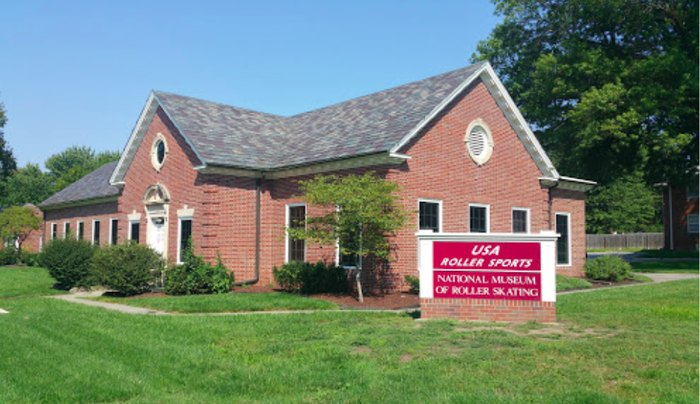
Since 1980, Lincoln, Nebraska has been the home of a one-of-a-kind museum that most people aren’t even aware of. The National Museum of Roller Skating sits in an unassuming little brick building that it shares with the headquarters of USA Roller Sports, the national governing body of roller sports. The next time you’re in the area, don’t pass by this hidden gem; step inside and get to know a fascinating part of American history.
The people behind the National Museum of Roller Skating believe that everyone should know about this delightful activity and its long history. What comes to mind when you think of roller skating? If you’re of a certain age, you probably picture couples gliding hand-in-hand around a hardwood floor as live music floats through the air from the on-site organist.
Younger people may picture a similar scene, but with a DJ and colorful flashing lights in place of a live organist. No matter what your personal experience is with roller skating, chances are you’ve got some positive associations with the activity.
Those fond memories – and much more – are all on display in this unique museum. The exhibits trace the history of roller skating back through the generations, all the way to the early 19th century.
When you visit, you’ll see some early versions of roller skates, beginning with the most primitive pieces of wood with wheels attached.
Some of the crowd-favorite exhibits are the rare and unusual types of roller skates. Would you ever try to race around the rink in these cowboy-boot skates?
Other exhibits tell little-known stories of roller skating as a sport, a hobby, and an all-around cultural phenomenon.
The museum houses the world’s largest collection of roller skating items, making it a must-visit for anyone who has ever felt a rush of excitement as they laced up a pair of skates.
The museum also contains the National Roller Skating Archives, a collection of publications and other information on all aspects of roller skating’s history.
Roller skating is explored here as a sport and an art form, as a diplomatic tool, and a unifying experience that just about everyone can enjoy. See old costumes and uniforms and read all about the surprising ways in which roller skating has influenced the world.
Whether your interest lies in leisurely rolls around the rink, dominating in a roller derby league, or even competitive speed-skating, you’ll find fascinating information at the museum about this underrated all-American activity.
Address: National Museum of Roller Skating, 4730 South St, Lincoln, NE 68506, USA
Today is the anniversary of the day that Columbus discovered Jamaica, so I thought I’d bring an article from WeJamaicansBeLike.com on interesting facts about this gorgeous island.
Jamaica is what?
If you thought Jamaica was only about Bob Marley, Reggae Music and lighting up some good herbs, then you’re in for a big surprise when you check out some of these facts below.
As a small nation, Jamaica has a lot of influence in the world and its people are amongst the most progressive. From education, to politics, to entertainment, Jamaica is not only a leader in the Caribbean, but the world.
Here are some interesting facts about Jamaica you may not have known.
On to The Fun Facts About Jamaica
Jamaica is Bananas
If you don’t like bananas, blame Jamaica for it! If you do like bananas, well Jamaica is the reason why. Jamaica was the first country to export bananas establishing a global banana trade. Crop disease and major competition from Central America did the Jamaican banana trade in.
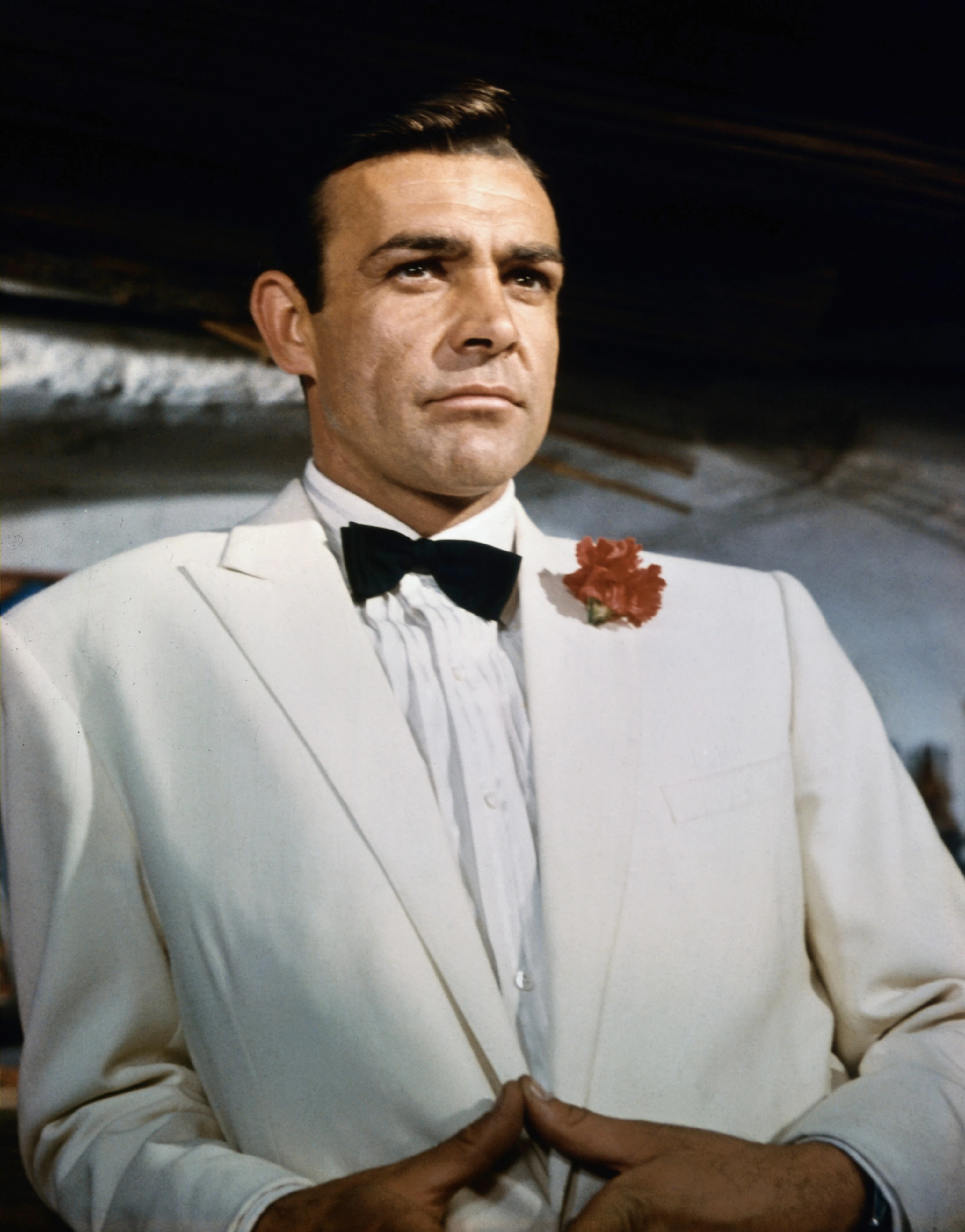
James Bond is Jamaican
On the shores of Ocho Rios, James Bond was born! Ian Flemming then lived in Jamaica when he penned the famous 14 James Bond novels. Jamaica is still home to the Golden Eye Hotel and Resort which began as the luxurious home of Ian Flemming. The novels have inspired 23 James Bond Films, one even with the hotel namesake – Goldeneye from 1995.
More Coffee Please
When you think of Jamaica you think sand and beaches, but many may not think coffee. Jamaica Blue Mountain Coffee is one of the most sought after and expensive coffees on the market.
What is Rastafarian? Think dreadlocks? Think Jamaica? When people think about Jamaica, they think about the popular deadlock style. Only 2 percent of the Rastafarian population in the world live in Jamaica.
Everybody Say Amen!
Jamaicans are very religious people. Jamaica has the most churches per capita in the world. According to the Guinness Book of World Records, Jamaica has over 1,600 “churches.”
Fresh From Abroad Jamaica’s indigenous people, the Arawaks cultivated corn and yams. The crops we know today like sugar cane, coconut, breadfruit, bamboo, bananas and mangoes are not native to Jamaica. The popular crops were imported at different times in Jamaica’s rich history.
Brrrr, Jamaicans Can Handle the Cold
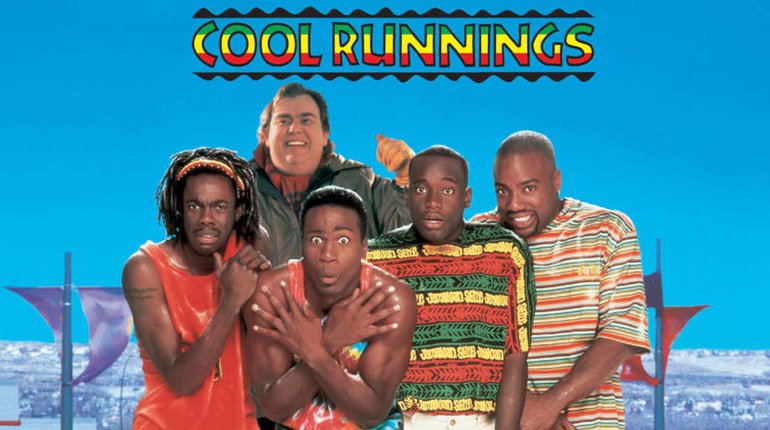
If you have not seen the movie Cool Running by now you are missing out on comedy gold. The movie is based on the 1988 Jamaican bob sled team. The team was the first tropical country to enter a Winter Olympic event.
Independence and a Queen
Jamaica was the first Caribbean nation to gain independence from the British Commonwealth in 1962. Jamaica had internal self-government years before it became an independent nation. To this day Queen Elizabeth II remains the Queen of Jamaica but by tradition only.
Raise Your Flags High
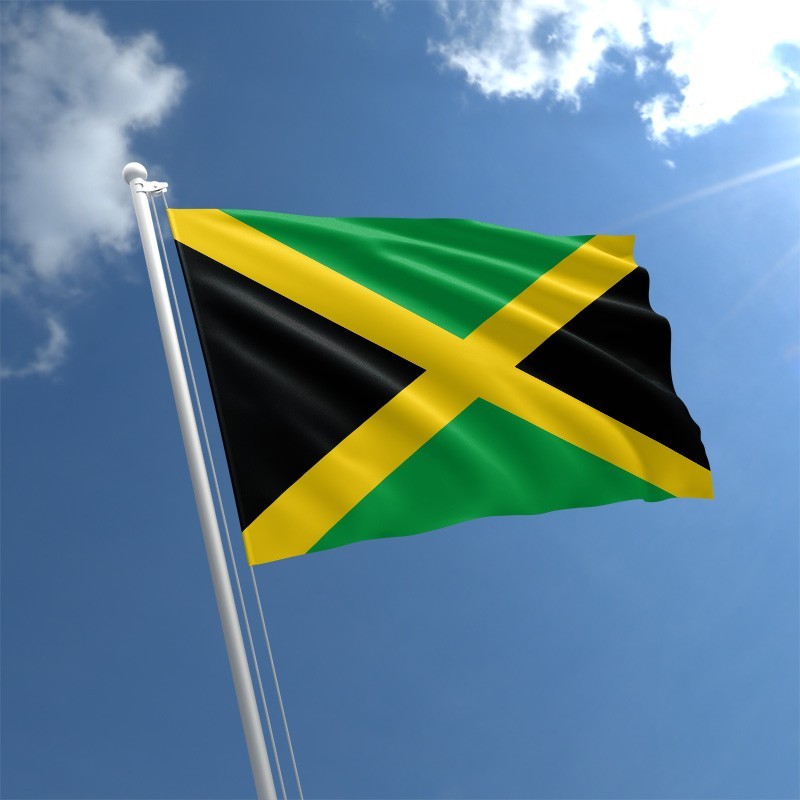
One of the most recognized flags in the world, the green, yellow and black Jamaican flag is only one of two countries in the world that has no colors in common with the flag of the United States of America. Mauritania, the other country, is green and yellow. The Jamaican flag is recognizable as the two yellow stripes intersect in an X with green filling in the top and bottom and black on either side.
All Aboard
Jamaica was the first country in the Western world to build a railroad, built just 18 years after Britain built theirs.
Blue Mountains and Moons
The Blue Mountains in Jamaica, named for the mist that covers them, are not just ideal for coffee. The mist that covers the mountain peaks appears to be blue. The blue mist also covers the moon making it appear blue. The phrase once in a blue moon does not cover the Blue Mountains as there have been dozen sightings of sapphire colored moons in the past 40 years
Orchids Everywhere
Some people would never think orchids when they think about Jamaica. With over 200 species of Orchids growing wild throughout the island of Jamaica an astounding 73 of the species are unique to Jamaica. With 1,000 species of trees and 500 species of ferns, visitors are pleasantly surprised to know that Jamaica is one of best place to see wild flora and fauna.
GoaLLLLLL
Futbol, football, soccer or whatever you call it, Jamaicans know how to play it! Jamaica is the first team from the English-speaking Caribbean to qualify for World Cup. The Reggae Boyz, as they are fondly known to the world, went on to World Cup soccer finals in France in 1998.
Most Beautiful Women
Many places brag about having the most beautiful women in the world, but Jamaica can brag and have the stats to prove it. Jamaican beautiful women stand strong, as they are the sixth country on the list of countries to win the Miss World titles. With 3 winners and 3 second runners-up, only Venezuela, UK, India, USA and Sweden have more winners. Just the size of Jamaica alone compared to these countries elevates the bragging rights.
I’m Drinking Rum and …
We all know Jamaicans love their rum! They love it so much, and wanted the world to know! Jamaica was the first island in the Caribbean to produce rum on a commercial basis.
Seeing Doubles
The little island Jamaica has more multiple (two or more) live births than anywhere else in the world. Who would have thought Jamaicans were so fertile?
Strong Politics
Jamaica is known for always making a clear stance. Jamaica was the first country to impose economic sanctions against the former apartheid regime of South Africa.
Google It
Jamaica is a great innovator. In 1994 Jamaica was the first country in the Caribbean region to launch a web site! www. jamaicatravel.com was launched in 1994 and took Jamaica to the world!
Mail It In
In 1688 Jamaica was the first British colonial territory to establish a postal service.
I stumbled upon a collection of truly “weird” homes and I plan on showcasing one of them a month…be prepared! This Weird Wednesday’s offering is called Luna Parc and it’s located in New Jersey. The house and property are not open to the public per se, but they hold tours in the spring to fall if you’re so inclined.
Luna Parc: Psychedelic Wonderland in the Woods
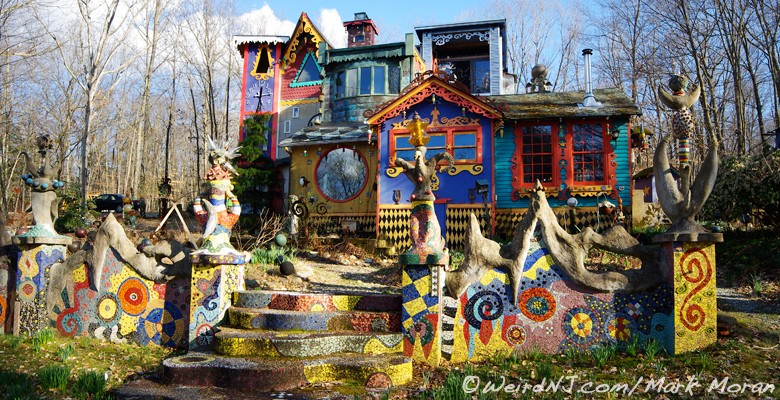
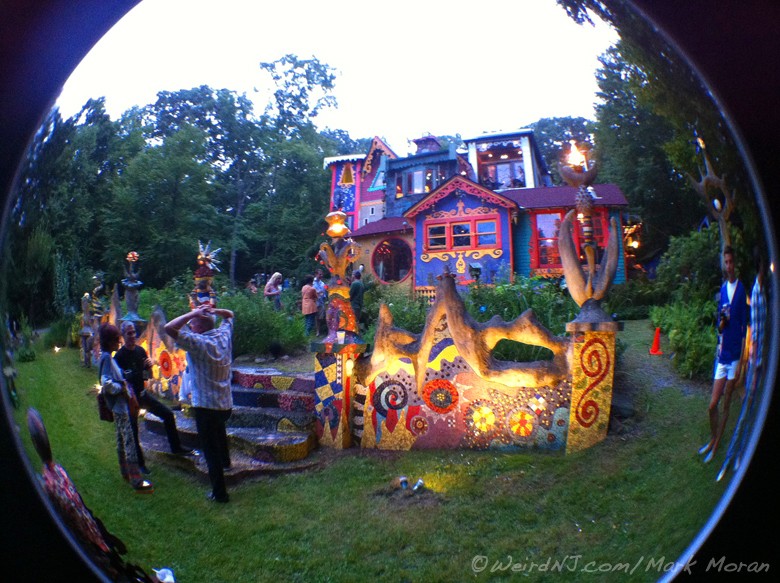
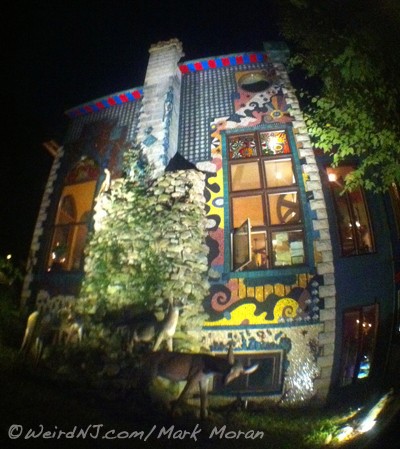
Upon entering the gates to Luna Parc, you are awestruck at the immensity of the project Boscarino has been building in the woods for all these years. The front yard is awash in brilliantly colored sculptures, walls and spires. Everything is encrusted with swirling mosaics of tile, glass, concrete and painted metal.
As we wound our way through the forests and farmlands of the Sussex County countryside, Mark and I wondered why Ricky Boscarino, owner of “Luna Parc,” decided that this remote locale would be the perfect place to create his own unique environment. We’ve visited Luna Parc several times over the past dozen years or so and it is always a thrill to see just how much it has continued to grow in new and fascinating ways with each visit we make. And it is always a real pleasure meeting Ricky, the mastermind behind this environmental madness.
Upon entering the gates to Luna Parc, you are awestruck at the immensity of the project Boscarino has been building in the woods for all these years. The front yard is awash in brilliantly colored sculptures, walls and spires. Everything is encrusted with swirling mosaics of tile, glass, concrete and painted metal. The house itself sits above the terraced yard looking like a technicolor gingerbread chalet in a psychedelic fantasy land.
Ricky, the proud creator of this unique home, is friendly and easy-going and always willing to give us a tour of the newest additions he has made to his one-of-a-kind-eastate in progress. We asked him how he first found the property.
“I grew up in Piscataway and I used to go to summer camp at Stokes, so I kinda knew the area a little. I started a jewelry business in 1986 and I was looking for a place of my own. I really just stumbled upon this place after pounding the pavement for about two years. It was an old hunting lodge, and the family that owned it hadn’t even been here for about ten years.”
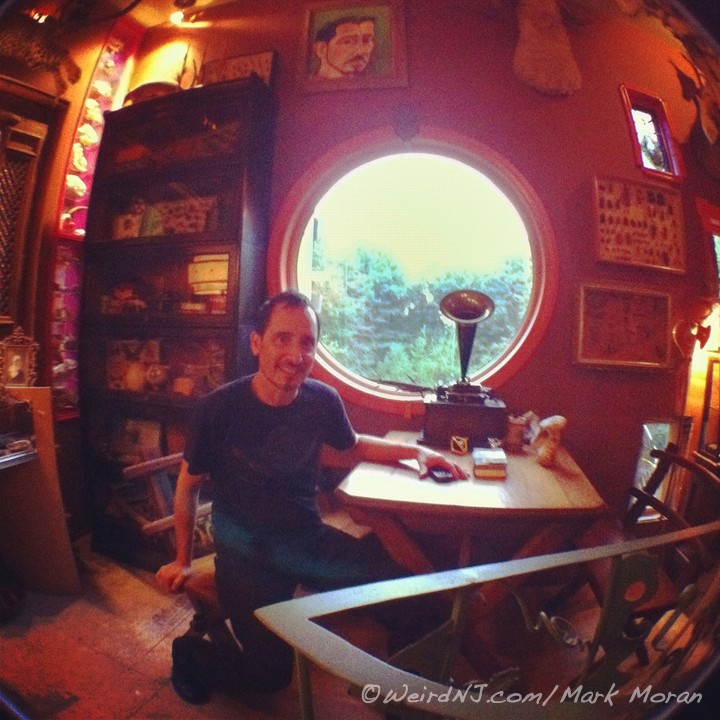
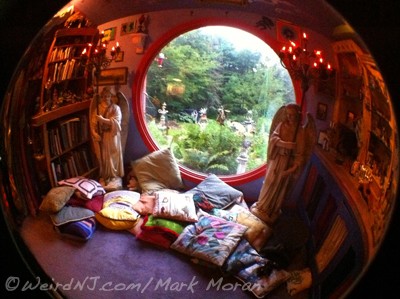
“Structurally it was fine, but it had to be rewired, etc. I should have knocked it down, but I needed a place to live! As soon as I walked up the driveway, I knew I would be here the rest of my life. My first vision was the round window. I started ripping shit out of the house from day one, and it’s been non-stop. Everything started to radiate from the house.”
The house is surrounded inside and out by whimsical multi-media art projects in various states of completion. Most are made entirely by Ricky’s own hands out of found objects, such as glass bottles, yardsticks, corks, bottle caps, stones, and other collected or donated materials. One of the outlying buildings in the front yard is a hut fashioned from thousands of brilliant blue glass bottles.
“Some are the Sky Vodka bottles and others are Arizona iced tea,” Ricky told us while scrounging through the pile recyclables. “Whenever I have an event here, I always get donations of various stuff I ask for. This project will be made entirely of blue glass bottles, which are the hardest to come by. I originally estimated I’d need 1,500 bottles to complete it, but now it looks like I’ll need about 3,000. And I didn’t drink even one of them!”
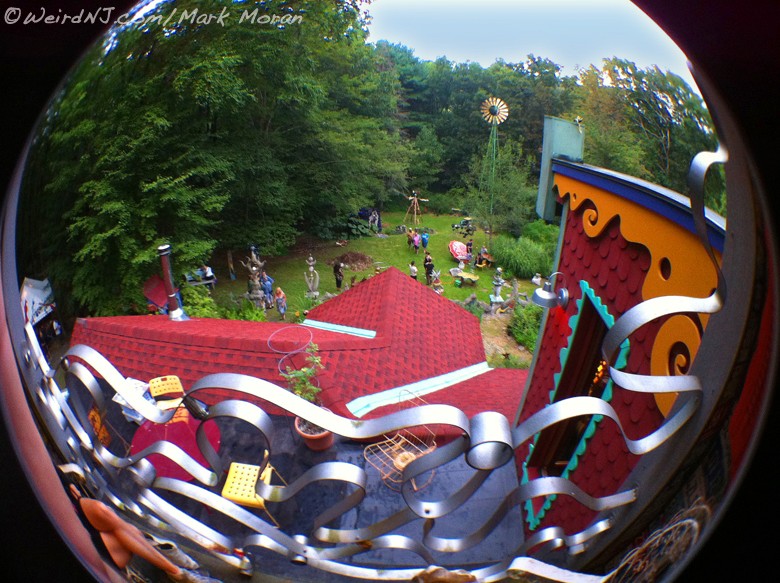
The 5-acre property is covered with an array of eclectic buildings and displays. A walk through the back property reveals more work-in-progress spread out amongst the trees and shrubbery. Walking amidst the trees and scattered sculptures, old movie set props and odd junk yard finds, we come to a chapel that Ricky has built as an homage to his grandfather, who, Ricky told us, once witnessed a miracle in Sicily.
“That’s where the crutches come in,” said Ricky, pointing to a dozen crutches leaning against a tree. “Kind of like ‘Catholic kitsch.’”
What we came across next were hundreds of empty Mrs. Butterworth glass bottles set into concrete blocks.
“This is going to be a nine-foot replica of Mrs. Butterworth built out of blocks which will be illuminated from the inside. Actually it’s almost better describing what its going to look like than what it might end up to be!”
In the middle of all of this material madness is Ricky’s studio, where he creates his finer pieces of jewelry and pottery, which he sells at art shows throughout the year.
“I do get a lot of visitors, but the place is not open to the public. I have an open house once in a while to sell the jewelry, which can be described as eclectic and fun, and people respond well to it. People get to walk through the property. This woman left a message on my machine today saying ‘I’ve got to come for my soul.’ What do you say to that?”
Standing amongst all the half-finished projects and piles of miscellaneous (but organized) clutter, we asked the question: “Where do you get all this stuff from?”
“I’m constantly scouring the area. I put the word out if I need stuff. Like in the kitchen, I covered the walls with corks. I just asked if anyone had any corks! Now I’ve created a monster and I don’t know what to do with all this stuff. They have a good dump here in the area. It’s not like an urban dump, which I guess would be more interesting, but there’s plenty of things to scavenge.”
And scavenge he does, like many of New Jersey’s visionaries who create a unique environment around themselves. We asked Ricky if he had a master plan, or message he’s trying to convey with Luna Parc.
“My master plan is to not have a master plan, which keeps me open. It’s all about ‘layering.’ I can take something down and improve on it, or move it around or add to it. There are no mistakes, that’s the magic of it. Things will always change. People have this misconception of the end product. If it starts to deviate from the original idea, they get frustrated. That’s the magic of creating stuff, that things do evolve.”
So, how do you balance your work for hire and your work on your house, which takes priority?
“The house definitely takes priority. I’m very fortunate that the business is successful and takes care of everything. It gives me the freedom to do all this. I spend way too much time working on the property.”
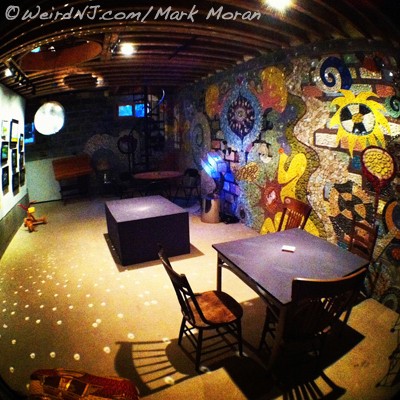
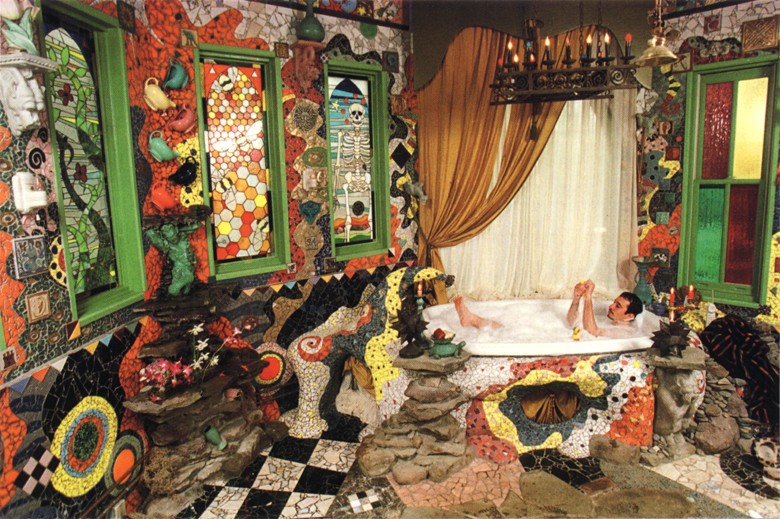
Inside the house, the art gets a little more intricate. Some rooms resemble a thrift store or museum, including collections of antique stringed instruments, taxidermied animals and strange religious artifacts. Ricky’s artwork is omnipresent, giving the place a feeling of controlled chaos. The bathroom, complete with a toilet, bode, urinal and oversized tub, is tiled from floor to ceiling in a swirl or patterns and textures, with a stream of running water trickling down through pastel colored gravy boats. The house, which started as a small hunter’s cabin, has grown into a vast labyrinth of stairways, hidden room and lookout towers, all decorated with Ricky’s own visionary artwork. There are self-portraits and paintings of Ricky’s friends on every wall. It is almost inconceivable that one man could produce such an extensive body of creative output in a single lifetime. We don’t really have any idea how he does it, but we are very thankful for the fact that he does, and we are certain that he will continue to amuse and fascinate us well into the future.
“I plan to live to be 100 and it’s my intention to see that Luna Parc is secure and safe.” Ricky told us. “I also plan to haunt the place after I die. I’m planning on building my mausoleum in the back.”
Luna Parc is a private home not open to the public other than by invitation. If you’d like to take the cyber tour of the property, you can visit www.lunaparc.com.
Today’s offering is Pecan Browned Butter Coffee Cake! This cake takes a little bit of prep, but it is oh-so-delicious!!
Ingredients
¾ cup butter
2 cup finely chopped pecans, toasted*
2 cup packed brown sugar
2 teaspoon all-purpose flour
3 cup all-purpose flour
1 ½ teaspoon baking powder
1 ½ teaspoon baking soda
¾ teaspoon salt
3 eggs
1 teaspoon vanilla
1 ½ cup plain yogurt
Coffee Icing
5 teaspoon milk
1 teaspoon instant coffee crystals
1 cup powdered sugar
Directions
In a medium saucepan, melt butter over medium heat. Reduce heat to medium-low. Continue to cook, without stirring, for 5 to 6 minutes or until butter becomes brown and fragrant. Remove from heat; cool slightly. Transfer to a bowl. Cover and chill for 2 hours or freeze for 30 minutes or until firm.
Preheat oven to 325 degrees F. Grease and flour a 10-inch fluted tube pan; set aside.
For filling, in a bowl, combine 3/4 cup of the pecans, 1/2 cup of the brown sugar, and the 2 teaspoons flour. Add 3 tablespoons of the browned butter and work in with fingers or a fork until mixture is crumbly; set aside. In another bowl, stir together the 3 cups flour, the baking powder, baking soda, and salt; set aside.
In a mixing bowl, beat remaining browned butter with an electric mixer on medium to high speed for 30 seconds. Add remaining 1- 1/2 cups brown sugar; beat until combined, scraping bowl occasionally. Add eggs one at a time, beating after each addition until combined. Stir in vanilla. Alternately add flour mixture and yogurt to butter mixture, beating on low speed after each addition just until combined. Stir in the remaining 1-1/4 cups pecans. Spoon half of the batter into prepared pan, spreading evenly. Sprinkle evenly with filling. Spoon remaining batter over filling, spreading to cover.
Bake about 50 minutes or until a wooden toothpick inserted near the center comes out clean. Cool in pan on a wire rack for 10 minutes. Remove from pan. Cool completely on wire rack. Drizzle with Coffee Icing.
Coffee Icing:
In a bowl, stir together 4 teaspoons milk and instant coffee crystals until dissolved. Stir in powdered sugar and enough additional milk (1 to 2 teaspoons) to make a drizzling consistency.
Every once in a while, a song comes along that just moves you. Maybe it appeals to your patriotic side—like Lee Greenwood’s “God Bless the USA”.
Or maybe a song just makes you want to get up and dance—like Josh Turner’s “Why Don’t We Just Dance?”
Or maybe the song has a deeper more profound effect. “Wait in the Truck” by Hardy and Lainey Wilson has that effect on me. The premise of the story is a man driving in an unfamiliar town who comes upon a “broken” woman in the road. He can tell what she’s been through so he merely asks, “where is he?” The woman responds and he delivers what he believes to be justice. Then he doesn’t run, doesn’t try to hide from what he’s done, he just calls the police and waits for them to come.
Lainey tells the woman’s side in the song:
I don’t know if he’s an angel ‘Cause angels don’t do what he did He was hellbent to find the man behind All the whiskey scars I hid I never thought my day of justice Would come from a judge under a seat But I knew right then I’d never get hit again When he said to me
Wait in the truck Just wait in the truck
The story continues that he’s been in prison for 5 years and she still comes to see him from time to time. He accepts his fate—says it was worth it to see a brighter side of the girl from that night. But what moves me so much is his pleadings with God to have MERCY on him. He doesn’t ask for forgiveness (in my opinion) because he thinks what he did was unforgivable. Instead, he asks for mercy. He took a stand, giving up his life essentially to save another and then takes responsibility for that action.
I do not advocate for vigilante justice. But being a victim of spousal abuse, I can relate. It was settled long ago, by his own hand. Thankfully I do not need to live in fear that he would ever find me again…others are not so fortunate.
Today is National Crayon Day, so I went looking for crafts using broken crayons…there are a lot of them! From lip gloss to room candles, if you’ve got broken crayons, you can recycle them. I found this particular craft at TheSuburbanMom.com website. She made the craft, then provided additional tips afterward to make your experience better!
After removing any paper from the crayons. Sharpen crayons with a manual sharpener. Since we were using old broken crayons, while my daughter sharpened the crayons she could, I used a knife to chop up smaller bits.
TIP – The first one I made I used a LOT of shavings, like 5-6 crayons worth. That’s overkill. You only need one crayon for each piece of wax paper. Otherwise, it is too thick and you will lose the translucent sun catcher effect.
For the first few sun catchers we made, we mixed colors. But we discovered that when the colors melted, they became one dark shade of red. So we decided we liked the look of a single color best.
Once you have your shavings, place them on a piece of wax paper – approx 12 x 12 inches. Fold the wax paper in half and then double fold the edges to create an envelope that will contain the shavings. This is very important. Make sure you double fold over your edges or wax will run out when you iron.
Using a low setting, place your wax paper envelope between a large piece of folded parchment or kraft paper. Wax will ooze out — do not skip the parchment or kraft paper. (At first I tried using a rag as a drop cloth, but it got messy. The parchment works well because it contains the melted crayon.)
As you iron, let the melted crayon run in the wax paper envelope filling it with color.
When the melted crayon is more or less evenly distributed, set it aside to cool (just a couple of minutes).
Once cool, use a pencil to draw large hearts on the wax paper envelopes, and then cut out hearts. (I was surprised how easy it is to cut the wax paper with melted crayon inside.) Initially, I was going to trace perfect hearts, but I decided to freehand them and let my daughter cut them out.
Punch a hole in your hearts and hang in the window.
Super pretty, right?
(Pat’s note: This can easily be used to make patriotic suncatchers using a star template or a Halloween/pumpkin one, or whatever.)
By the side of a small side-road between Quakertown and Dublin in Bucks County stands a memorial garden that’s no longer open to the public. It used to be a place of quiet reflection and peaceful meditation, but the group that ran it closed it down and painted No Trespassing signs all around it. Much of the garden is now hidden behind overgrown shrubs, but poking through the undergrowth are two large pyramids, and a mystery that goes back hundreds of years.
The land is owned by a Christian mystical sect called the Fraternitas Rosae Crucis, literally translated as the Brotherhood of the Rose Cross. They’re better known as Rosicrucians, and they have been a secretive but major presence in Pennsylvania since before the Revolutionary War. The Bucks County property with the pyramids is a place of worship and a training facility, but nobody outside the order really knows what goes on there. From the roadside, you can sometimes hear chants and catch a tantalizing glimpse of people in robes, but apart from that, the place is veiled in mystery. Anyone wandering around the property without permission is reportedly chased off.
Like many secretive organizations, the Rosicrucians deal in symbols. Pyramids loom large in their symbology, and even their name contains two powerful ciphers. The cross obviously reflects their Christian beliefs, but the rose has more ancient pagan origins. In Roman times, this flower was a symbol of secrecy. The legend went that Cupid gave Harpocrates, the god of silence, a rose in exchange for keeping Venus’s secrets. Roman banquet rooms were decorated with roses as a reminder to keep any confidences that were spoken under the influence of wine. This decorative habit gives the English language a real SAT-style word for secrecy, sub rosa, or under the rose.
Of course, this veil of secrecy means that it’s hard to get any solid details about the Rosicrucian order, but one or two elements are clear. The order grew in Germany with the 1614 publication of a book called Fama Fraternitas, describing the travels of a symbolic figure called Christian Rosenkreuz through Damascus, Egypt, and other biblical places. In these travels, the mythic character gathers the secret wisdom of the order whose true origins and nature are now lost to anyone outside the order. The book attracted many mystical Christian groups (such as Gnostics, Pythagoreans, Magi, and Freemasons) into an umbrella organization that shares many secret symbols. The most obvious symbol is the pyramid, which features prominently in Rosicrucian architecture.
By the roadside at the front of the Bucks County Rosicrucian garden is a yard-high pedestal that looks quite normal at first, but on closer investigation turns out to be a topless pyramid. It’s lined up perfectly through the bushes with a second pyramid more than five feet tall. This in turn lines up with a large pyramid-shaped mausoleum with bronze plates on it commemorating members of the order. This mausoleum gives tantalizing hints as to the structure and nature of the order. Those commemorated include members of Supreme Councils of nine, seven, and three, with titles such as Supreme Grand Master, Member Sublime Third, and Hierophant. The organization seems more egalitarian than many religions, since many of those named are women. And there have been some very influential members, including Benjamin Franklin and Abraham Lincoln.
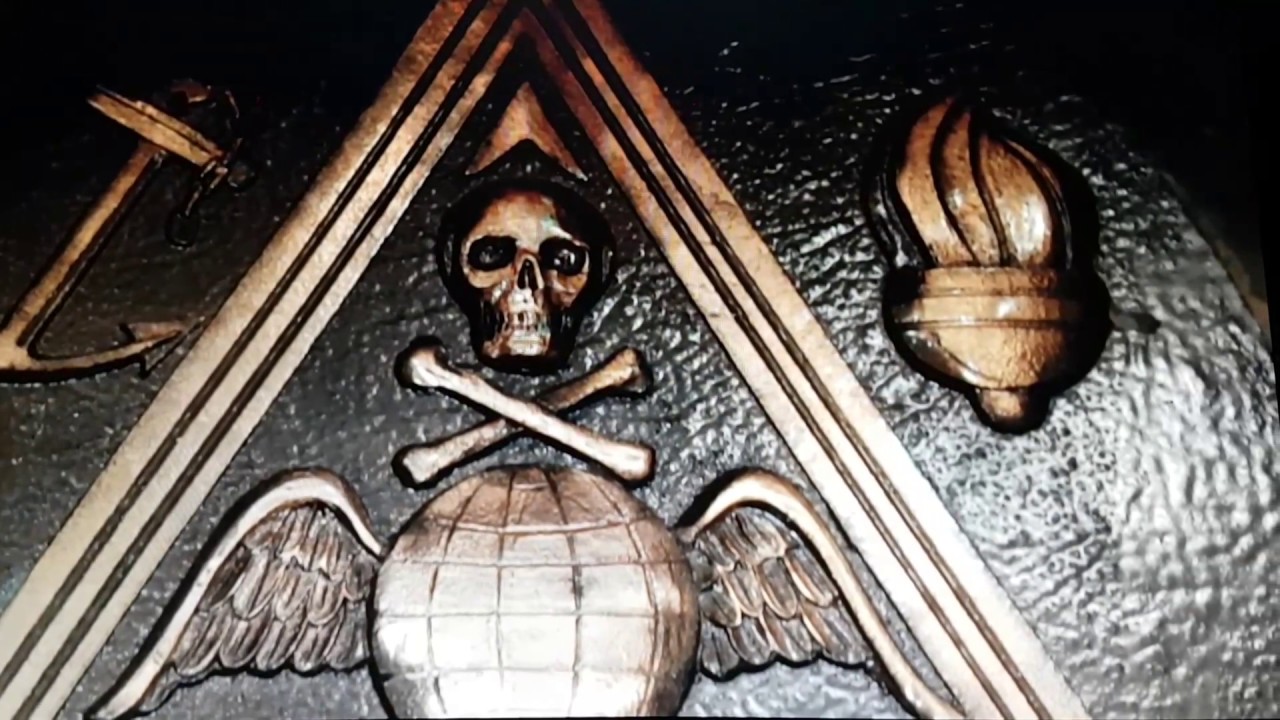
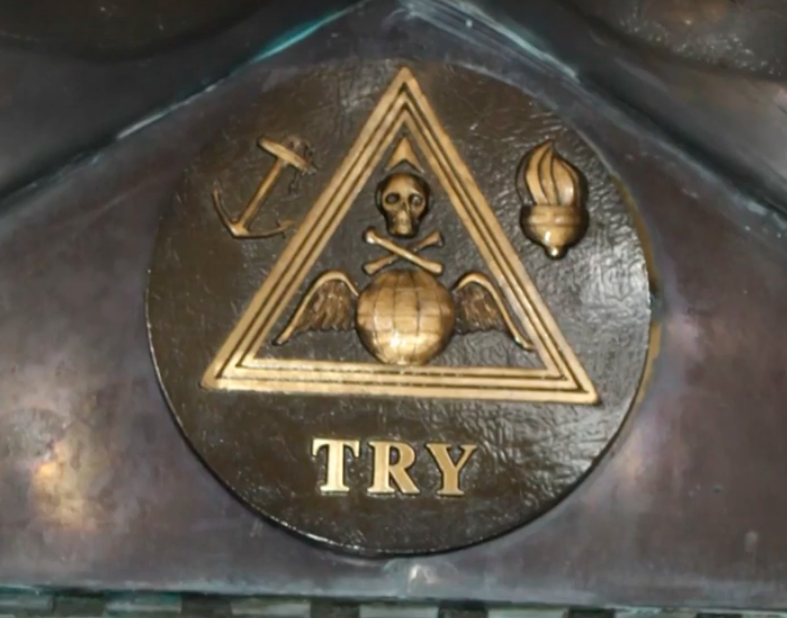
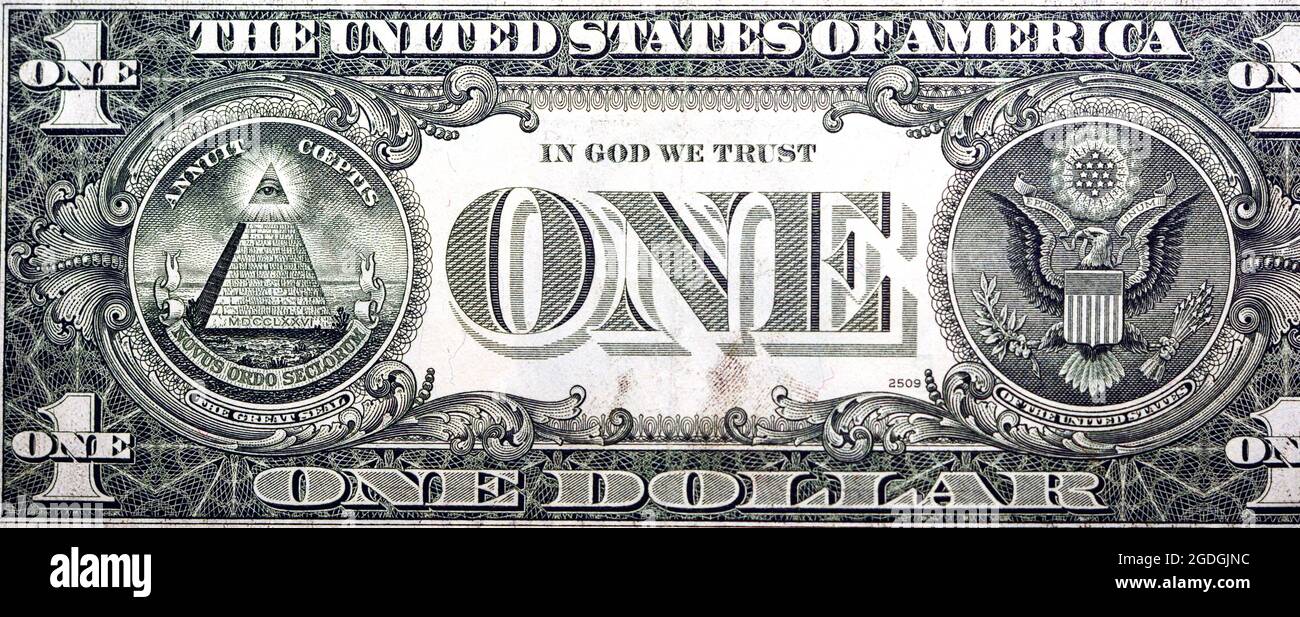
Looking inside the pyramid, you get a clearer idea of the symbols of the order. Over the gated doorway stands a circular plate with a winged world crowned by a skull and crossbones, with the word TRY underneath it. The torch, anchor and triangle in the design only confuse the uninitiated further. Peeking through the gate into the pyramid, however, gives you a jolt of recognition. On two walls of the four-sided pyramid are two very familiar circular designs: an unfinished pyramid topped with an eye and an eagle holding an olive branch and thirteen arrows. These are the two sides of the Great Seal of the United States, as portrayed on the reverse side of the dollar bill.
So why are these seals hidden inside a Rosicrucian monument? Is the order tipping its hat to the United States? Is it worshiping the mighty dollar? Or is this country actually being branded with the seal of a secret society? One piece of evidence at the Bucks County site leads to an inescapable conclusion. It is cast in bronze and screwed to the outside of the pyramid, and it’s the name of a prominent Council of Nine member—Benjamin Franklin. If one of the Founding Fathers of the country was a celebrated Rosicrucian, why wouldn’t the symbol of the new nation and its currency reflect that affiliation?
So next time you look at the All-Seeing Eye in the Sky on a dollar bill, remember that there’s a similar eye inside a pyramid near Nockamixon State Park. And take time to wonder what other secrets might be hidden there beneath the rose.


















:max_bytes(150000):strip_icc():format(webp)/R152709-8b1c5c2d12374bffa2e1a43d25e6c094.jpg)





.jpg)
 Sew Colorful