HISTORY OF THE BAR CODE

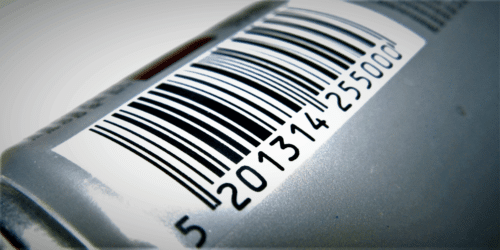
Every few years, the small town of Troy in Miami County, Ohio celebrates an historic occasion that for a few giddy weeks puts it on the world map of the grocery trade. At the time, National Cash Register, which provided the checkout equipment, was based in Ohio and Troy was also the headquarters of the Hobart Corporation, which developed the weighing and pricing machines for loose items such as meat. It was here, at just after 8 a.m. on June 26, 1974, that the first item marked with the Universal Product Code (UPC) was scanned at the checkout of Troy’s Marsh Supermarket.

It was treated as a ceremonial occasion and involved a little bit of ritual. The night before, a team of Marsh staff had moved in to put bar codes on hundreds of items in the store while National Cash Register installed their scanners and computers. The first “shopper” was Clyde Dawson, who was head of research and development for Marsh Supermarket; the pioneer cashier who “served” him, Sharon Buchanan. Legend has it that Dawson dipped into his shopping basket and pulled out a multi-pack of Wrigley’s Juicy Fruit chewing gum. Dawson explained later that this was not a lucky dip: he chose it because nobody had been sure that a bar code could be printed on something as small as a pack of chewing gum, and Wrigley had found a solution to the problem. Their ample reward was a place in American history.

The first item marked with the Universal Product Code (UPC) was scanned at the checkout of Troy’s Marsh Supermarket. Courtesy of Yale University Press

Joe Woodland said himself it sounded like a fairy tale: he had gotten the inspiration for what became the bar code while sitting on Miami Beach. He drew it with his fingers in the sand. What he was after was a code of some sort that could be printed on groceries and scanned so that supermarket checkout queues would move more quickly and stocktaking would be simplified.

That such a technology was needed was not his idea: it came from a distraught supermarket manager who had pleaded with a dean at Drexel Institute of Technology in Philadelphia to come up with some way of getting shoppers through his store more quickly. The delays and the regular stocktaking were costing him his profits. The dean shrugged him off, but a junior postgraduate, Bernard “Bob” Silver, overheard and was intrigued. He mentioned it to Woodland, who had graduated from Drexel in 1947. Woodland was already an inventor, and he decided to take on the challenge.

So confident was he that he would come up with a solution to the supermarket dilemma, Woodland left graduate school in the winter of 1948 to live in an apartment owned by his grandfather in Miami Beach. He had cashed in some stocks to tide him over. It was in January 1949 that Woodland had his epiphany, though the brilliance of its simplicity and its far-reaching consequences for modern existence were not recognized until many years later.

Joe Woodland (here) and Bernard Silver filed a patent in 1949, which was granted in 1952. Courtesy of Yale University Press

It was Morse Code that gave him the idea. Woodland had learned it when he was in the Boy Scouts. As he was sitting in a beach chair and pondering the checkout dilemma, Morse came into his head: “I remember I was thinking about dots and dashes when I poked my four fingers into the sand and, for whatever reason—I didn’t know—I pulled my hand toward me and I had four lines. I said ‘Golly! Now I have four lines and they could be wide lines and narrow lines, instead of dots and dashes. Now I have a better chance of finding the doggone thing.’ Then, only seconds later, I took my four fingers—they were still in the sand—and I swept them round into a circle.”

The patent illustrates the basic concept of a bull’s-eye-shaped bar code.

Back in Philadelphia, Woodland and Silver decided to see if they could get a working system going with the technology to hand. They first filed a patent in 1949, which was finally granted in 1952. Woodland and Silver had the right idea, but they lacked the minicomputer and, critically, a very bright light with which to “read” the black and white bar code. On July 16, 1960, Hughes Aircraft Company made one of the most sensational announcements in the history of science. One of their research scientists, Theodore Maiman, had made an “atomic radio light brighter than the center of the sun.” Maiman produced for the newsmen his “laser,” an acronym for Light Amplification by Stimulated Emission of Radiation.

Theodore Maiman looks at the ruby used to create the first laser beam. Bettmann/Corbis

A booklet produced in 1966 by the Kroger Company, which ran one of the largest supermarket chains in North America, signed off with a despairing wish for a better future: “Just dreaming a little . . . could an optical scanner read the price and total the sale. . . . Faster service, more productive service is needed desperately. We solicit your help.”

A small research team at the powerful Radio Corporation of America (RCA) was looking at a few new projects, including the possibility of an automatic bank cash machine, which they decided would not go because “the customer would not buy the concept.” Finally, they lighted on the bar code. They soon found the Woodland and Silver patent. Printing the bull’s-eye bar code proved to be one of the greatest difficulties, because any imperfections would make the whole system unworkable.

The first real-life test of RCA’s bull’s-eye bar code was at the Kroger Kenwood Plaza store in Cincinnati. Courtesy of the ID History Museum

On July 3, 1972, the first automated checkstands were installed. More checkstands were installed and a comparison with other Kroger stores told an undeniable and very promising story: the bull’s-eye bar code hit the target, with superior sales figures. But this was just one store in a nationwide grocery and supermarket business worth billions. If the laser and bar code were to revolutionize the checkout counter, they would have to be near universal.

The goal of the Ad Hoc Committee of the Universal Product Identification Code could be stated very simply. The representatives of the grocery trade were charged with finding a way to introduce a Universal Product Code, a bar code of some description that would be common to all goods sold in supermarkets and imprinted by the manufacturers and retailers. The code would carry information about the nature of the product, the company that made it, and so on. In-store computers would “read” this information with scanners and introduce their own variations, which might involve special offers and reductions.

In the end, seven companies, all of them based in the United States, submitted systems to the Symbol Committee, a technical offshoot of the Ad Hoc Committee. International Business Machines (IBM) made a surprise bid. IBM’s George Laurer was handed the specifications for a bar code that had been determined by the Symbol Selection Committee: it had to be small and neat, maximum 1.5 square inches; to save money it had to be printable with existing technology used for standard labels; it had been calculated that only ten digits were needed; the bar code had to be readable from any direction and at speed; there must be fewer than one in 20,000 undetected errors.

Like so many inventions, the UPC was not an immediate success. It was when the mass merchandisers adopted the UPC that it took off, Kmart being the first. In fact, bar code technology was almost made for companies like Walmart, which deal in thousands of goods that need to be catalogued and tracked. The bar code took off in the grocery and retail business in the 1980s, and at the same time began to transform manufacturing. In 2004, Fortune magazine estimated that the bar code was used by 80 to 90 percent of the top 500 companies in the United States.

Test tubes with blood samples are marked with bar codes. AB Still LTD/Science Photo Library/Corbis

Though the inspiration for the bar code was the plea by supermarkets for technology that would speed up the checkout, its greatest value to business and industry is that it has provided hard, statistical evidence for what sells and what does not. It has transformed market research, providing a rich picture of people’s tastes, and it has made production lines more efficient.

Hospital bracelets for newborns and their mothers have bar codes. © Vladimir Godnik/fstop/Corbis

After many years of anonymity, the man whose knowledge of Morse Code inspired the familiar black and white stripes finally got some recognition. In February 1992, President George H.W. Bush was photographed at a national grocery convention looking intently at a supermarket scanner and having a go at swiping a can with a bar code over it. The New York Times correspondent wrote this up as evidence that it was the first time Bush had seen a supermarket checkout. In other words, he was out of touch with everyday American life.

His aides insisted that he was not struck by the novelty of the technology but by the fact that it could read a damaged bar code. Apocryphal or not, the story stuck and was regarded as damaging to Bush. However, as Woodland’s local newspaper put it: “George Bush isn’t one to hold a grudge. No Sir.” A few months after the checkout incident, Bush presented Woodland with a National Medal of Technology.
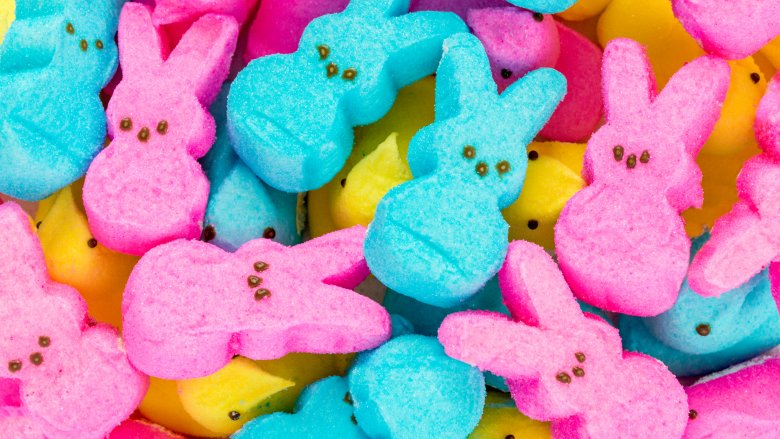
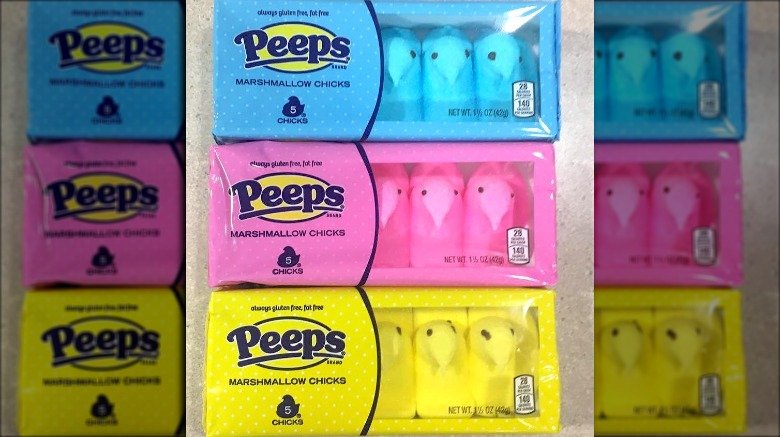
Hanging With My Peeps!

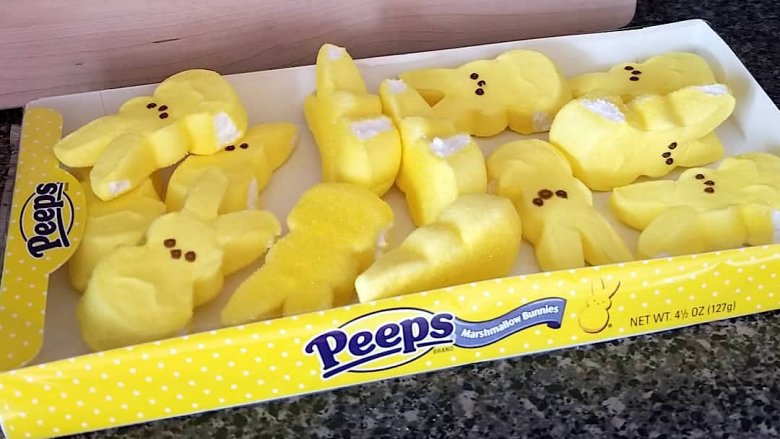
I love peeps! I like them stale and I prefer the flat bunnies to the rounded chicks.  That’s probably more than you wanted to know…lol…but read on for more weird facts about peeps!

The first Peeps took a long time to make…  

Today, Peeps chicks are produced at a breakneck speed of six minutes each. If six minutes for one marshmallow doesn’t sound all that impressive, it’s because you don’t know how long the process used to take.

In 1953, Just Born, the candy company who made Peeps a household name, was looking to acquire the Rodda Candy Company, mostly because of its jelly bean technology. But on a tour of that factory, the Born family noticed something that piqued their interest that had nothing to do with jelly beans. Just Born vice president Matt Pye told USA Today, “… while the family was touring the Rodda Candy Company, in the back part of the factory were these women with pastry tubes squirting these marshmallow chicks by hand.” But this was no quick process — it took 27 hours from start to finish to make these marshmallow chicks, thanks to the very lengthy cooling time required before the candy could be packaged.
Once Just Born acquired the company, they immediately set about automating the Peeps-making process, which included a faster dry time, and have managed to shave 21 hours off the operation. Now that you have all the facts, six minutes seems party darn fast, doesn’t it?

Is there really car wax in Peeps?

You may have heard a rumor that carnauba wax, an ingredient in some candy, is the very same ingredient used in car wax — and it is, indeed. However, it’s probably not as bad as it sounds.

Not only is carnauba wax approved by the FDA for human consumption, but according to Snopes, the amount used in candy is so minuscule that it simply cannot be likened to taking down a spoonful of Turtle Wax. And because of its high melting point, it’s actually not even absorbed by our bodies. Which leads us to one slightly creepy point…

Carnauba wax is typically used to give candy a sheen or a hard shiny surface, and in Peeps it’s what makes those brown eyes so shiny. When a pair of Emory scientists put the candy through a barrage of tests to determine its indestructibility, they stumbled onto something disconcerting about those eyes. After taking an hour-long bath in Phenol, a protein-dissolving solvent, the marshmallow was all but gone. The only thing that remained? A pair of wax eyes, bobbing in the Phenol, intact. The same eyes that will travel through your digestive system, intact. If that’s not nightmare fuel, we don’t know what is.

It would take this many Peeps to…    

Have you ever laid in bed at night wondering how many Peeps it would take to span the Golden Gate Bridge? You’re in luck. The good folks at USA Today determined just how many marshmallow chicks and bunnies it would take to measure up against some of the world’s most famous landmarks, and the numbers will blow your mind.

Wrap your head around this one: Houston’s NRG Park (aka the Astrodome) can seat up to 70,000 fans in its 1 million square feet. But to fill that stadium with Peeps? It would take an astonishing 1.7 trillion (trillion!) chicks.

The Hoover Dam built out of marshmallow? Probably wouldn’t be too effective, but it would take 1.3 billion Peeps to do it.

Stack Peeps bunnies up on top of each other ears to tail, and it would take 1,464 to measure up to the Statue of Liberty, 8,300 to reach the top of Chicago’s Willis Tower (aka the Sears Tower), and 2,664 to line up with the Washington Monument.

And that piece of Golden Gate Bridge trivia you’ve been waiting for… It would take more than 43,000 bunnies lined up side to side to complete the span.

Some actually prefer them stale!

Believe it or not, fresh-from-the-package Peeps aren’t for everyone — and no, we don’t mean that in the obvious way.

There are more fans of stale Peeps out there than you might think, according to Just Born VP Matthew Pye, who told HuffPost, “Everyone thinks they’re the only ones who like [them],” but confirmed that about 25 to 30 percent of consumers actually prefer Peeps — as he so eloquently puts it — “aged, like a fine wine.” With those kinds of numbers, should we expect aged marshmallows to hit shelves soon?  Nope, says Pye. They can’t afford to disappoint that 70 to 75 percent of customers who prefer them fresh. “If we were to produce a stale Peep, we couldn’t satisfy what the people want,” he explains. “We let the consumer do it themselves.” Let’s be honest, “making” stale Peeps at home is pretty easy.

Take this Instagrammer, for instance, who has perfected her aged Peeps process: “It’s crunchy bunny season!!!!! I only buy Peeps at Easter. I prefer the bunny shape, and I like them CRUNCHY on the outside. I usually open the package, split them apart and let them sit for a couple of days. Peep Perfection!!!” Crunchy bunny season does have a certain ring to it, doesn’t it?

What in the world is Peepza?

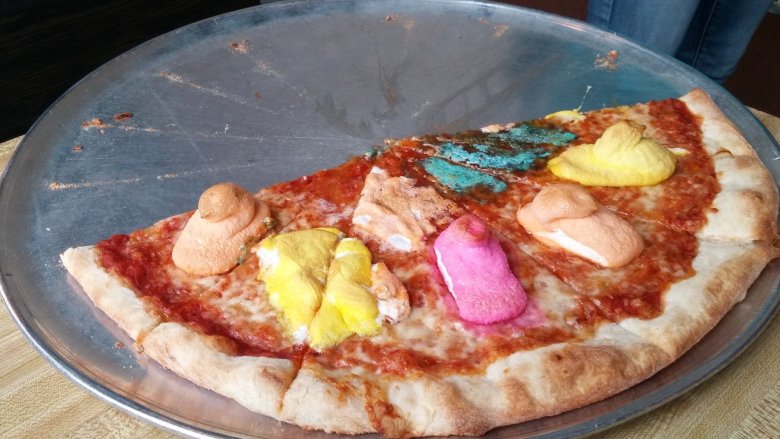
What do you get when you throw some Peeps onto an unsuspecting pizza? Peepza, otherwise known as the pizza absolutely nobody asked for ever.

It seems like every Easter someone on the internet “discovers” Peepza, but to properly lay the blame… er, give credit where credit is due, we have to go back to 2010, when Serious Eats columnist Adam Kuban debuted his springtime mashup (via Eater). The Peepza is exactly what it looks like: A plain cheese pizza, cooked almost completely, then topped with Peeps and cooked for another minute to get the marshmallows nice and melty. If we’re to believe Kuban, “it actually doesn’t taste as bad as you might think.” “You know that whole salty-sweet dynamic that we all tend to love so much? Peepza has it in spades,” he promised.

What’s good for the goose isn’t always good for the gander, though. In 2017, SBNation’s Charlotte Wilder decided to hop on the Peepza bandwagon, and her review was decidedly less enthusiastic than Kuban’s. “I took a bite of the Peepza, and let me tell you, this is the grossest s**t I’ve ever eaten. And I tried chocolate chip cookies made with cricket flour this week (don’t ask),” she said. “It tasted exactly like you think it would: A Peep on top of pizza, which is disgusting.”

Peeps Oreos came with a strange side effect…

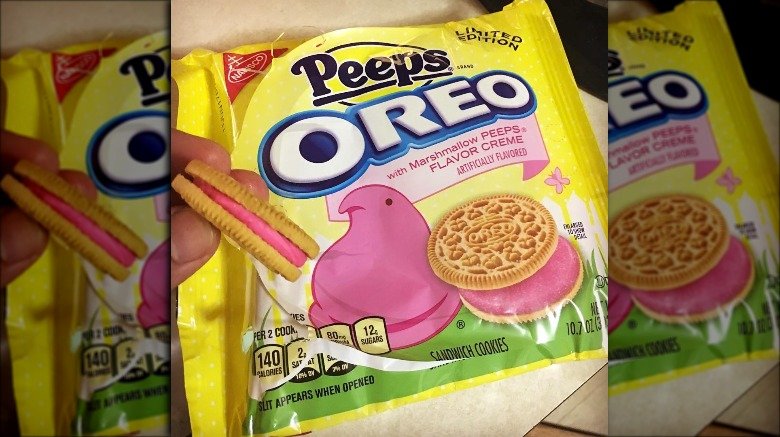
When limited edition Peeps Oreos, complete with neon pink marshmallow-flavored creme, hit the shelves the 2017, fans of the Easter candy were quick to gobble them up. But it didn’t take long before an unsettling trend was noticed.

Turns out the bright pink creme had a surprising side effect: Bright pink poop. Those experiencing this phenomenon took to Twitter to air their dirty laundry, along with others who didn’t have that particular issue, but experienced other side effects, like a stained pink tongue and Pepto-Bismol-hued spit.

Can hot pink Oreos really have this effect on our bodies?

According to LiveScience they can, thanks to the red #3 food dye used in the creme, which gastroenterologist Dr. Ian Lustbader says doesn’t get broken down in the body during digestion. While the colored poop indicates nothing serious health-wise, for someone to actually see this startling side effect, they’d have to eat a lot of cookies. “It’s certainly going to take more than one or two,” Lustbader explained. He further surmised that if you’re eating enough of these cookies to turn your poop pink, you should probably be more worried about the sugar’s and fat’s effect on your health. Touché, doc.

Peeps has infiltrated breakfast (and dessert)

If having Peeps available anytime during the year and in a plethora of flavors isn’t enough for you Peep-le, then how about Peeps cereal? Yep, it’s a thing. This limited edition cereal is the tasty product of a Peeps and Kelloggs collaboration. This seasonal breakfast cereal (dessert) features rainbow rings and little marshmallows shaped like Peeps bunnies and chicks.

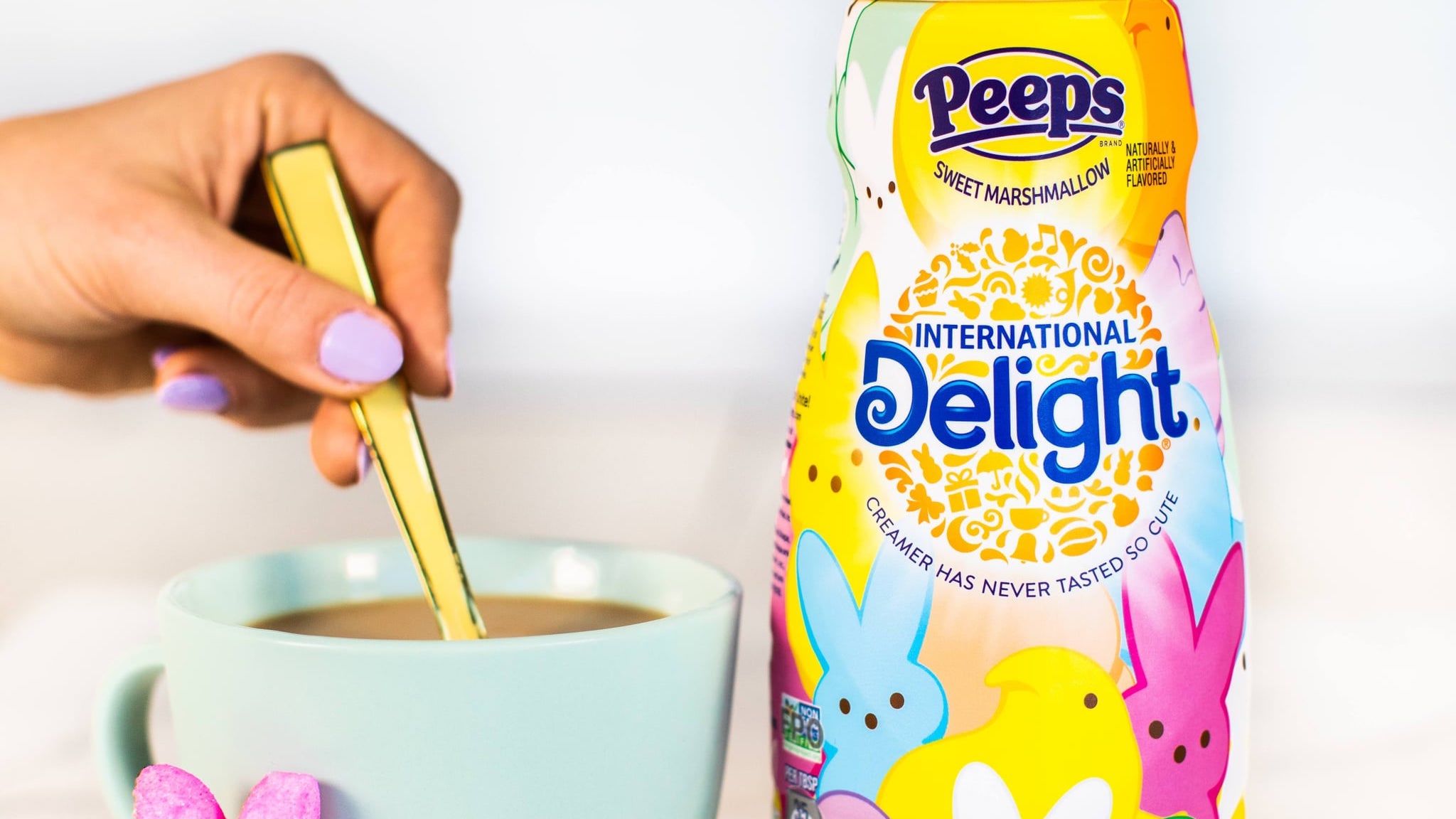
If cereal isn’t your M.O. and you’d prefer to start your day off with pure liquid energy (that’s coffee, by the way), then International Delight has you covered. If you’ve visited the refrigerated creamer section at your local grocery store recently, you might have noticed the plethora of different creamers that are readily available to you — M&M’s creamer anyone? What about Reese’s? International Delight offers seasonal flavors, too, and for spring they bring you Peeps Creamer. And if you want more dessert with your Peeps, Cold Stone Creamery recently introduced Peeps ice cream, which is for springtime only.

There was a Peeps Mobile and a Peeps Fun Bus!

What would you think if you were waiting at a red light and a bright yellow Volkswagen Bug with a Peep (of comparable size) riding on top of it rolled up beside you? Well, you’d initially want to take a photo (because who wouldn’t?), then you’d probably wonder if this car had been touring the states just as much as the Oscar Meyer Weinermobile.

Well, it happened back in 2003, in honor of Peeps 50th anniversary. And it wasn’t just a Volkswagen Bug. (Why stop with one vehicle when you can have two?) There was a Peeps bus that toured as well.  Inside that revamped school bus was Peepsville: A life-sized diorama that showcased the different Peeps that were in production at that time. (They’ve most definitely expanded on their flavor offerings since then). The bus came complete with a sampling station, so everyone could try a Peep — but who hasn’t tried a Peep before?

Peeps is a Pepsi flavor.      

Returning two years after a quick run as a promotional giveaway, Pepsi has reintroduced its Peeps flavor to beverage shelves across the U.S. Pepsi x Peeps merges the sugary cola sweetness of Pepsi with the marshmallow essence of Peeps to create a vanilla-ish cola combination, available in 7.5-ounce mini-cans and 20-ounce bottles. Customer reactions are as mixed as the candy-in-soda formula. Happy YouTube reviewers call out the balance of sweetness as surprising, noting the Peeps marshmallow essence as being present in the aroma as well as the flavor. Online critics mark the beverage down for the same reasons, hinting that this flavor may be better enjoyed by Peeps fans rather than regular Pepsi drinkers.

If the flavor sounds inspired, it certainly lit up the beverage industry. The original hype over this splash-up mash-up was followed by competitive cola colossus Coca-Cola offering their own marshmallow soda. The company recruited Grammy-winning musician Marshmello for their own marketing blitz. While the expanding line of Peeps flavors and merchandise may suggest the candy is on trend, Peeps-flavored Pepsi is a springtime flavor sensation that will only be available for a limited time.

Read More: https://www.mashed.com/147604/the-untold-truth-of-peeps/

What Shall We Make Today?

Easter Candy!  Peanut butter eggs to be specific.

Ingredients

1 cup creamy peanut butter

1/2 cup unsalted butter (1 stick) melted

1/2 teaspoon vanilla extract

2 cups powdered sugar

1/8 teaspoon salt optional, add if your peanut butter isn’t already salty

For Dipping:

2 cups semi-sweet chocolate chips or melting wafers (12-ounce bag)

1 tablespoon shortening, coconut oil, or vegetable oil optional, to help chocolate chips melt thinner and make dipping easier

Instructions

In a medium-sized bowl, use an electric mixer to mix peanut butter, melted butter, vanilla extract, and salt (optional) until combined. Slowly add in powdered sugar and mix until incorporated.

The consistency should be a bit like a play-doh and shouldn’t be sticky. If it is sticky, add a bit more powdered sugar. If it’s dry and not holding together when pressed, add a bit more melted butter.        

Roll into balls, flatten, then shape into eggs. You can also use a rolling pin to roll the dough 1/2″ thick, then use an egg cookie cutter or round plastic cup or lid (that “squishes” and is about 2″ in diameter) to cut out oval shapes.

Freeze shaped eggs for 20-30 minutes.

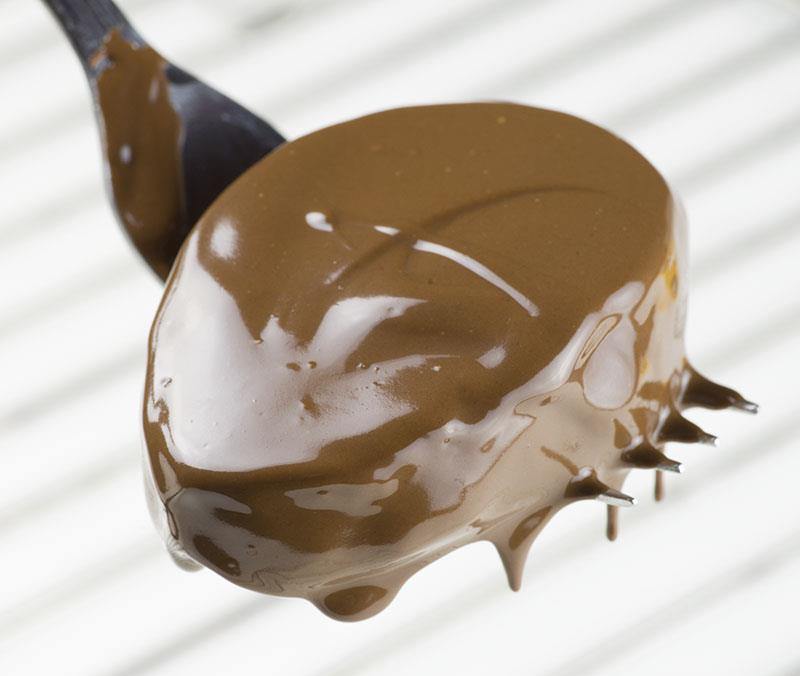
Melt chocolate chips and shortening (optional) in the microwave at 50% power in 30-second increments, stirring in between each increment. If using melting wafers, follow instructions on package.

Dip the frozen eggs in melted chocolate chips or melting wafers. It’s easiest to place them on a fork and then use another fork to scoop chocolate on top.

Tap off the excess chocolate, then place on a piece of parchment paper. Before they fully harden, it can be helpful to carefully move them to prevent the chocolate from “pooling” on the parchment (which will help you get crisp-edged eggs!).

If you have extra chocolate, use a fork to drizzle it on top of the eggs. While the eggs are still wet, you can also add fun sprinkles.

Let harden, then enjoy! You can place these in the fridge or freezer to help them harden quicker.

Recipe Notes

Storage: Store homemade peanut butter eggs in an airtight container for up to 1 week. Depending on the chocolate you used and how well it hardens, you may want to store these in the fridge so that the chocolate doesn’t get tacky and melt so quickly in your hands.

Freezing: I actually prefer these frozen, as you can grab one when a craving hits! After the chocolate is hardened, place in an airtight container (you can place a piece of wax paper or parchment in between each layer to prevent from smearing).

How do you get your chocolate chips smooth for dipping? Chocolate chips are naturally designed to hold their shape, so whenever I melt chocolate chips, I always add a heaping tablespoon of Crisco shortening before melting to smooth it out.

If you want to make these peanut butter eggs without shortening, you can instead use melting wafers (naturally designed to melt better) or just add coconut oil or vegetable oil to the chocolate chips instead (add before microwaving).

The True Origin Story Of Reese’s Peanut Butter Cups

Seriously, is there anything better than the heavenly mix of chocolate and peanut butter? There’s something about Reese’s that’s just right. It doesn’t matter if you’re craving something sweet or something salty, Reese’s has you covered.

The Reese’s Peanut Butter Cup is the third most popular candy in the US (passed only by M&Ms and Hershey’s), and of all those surveyed, an overwhelming 81 percent liked them. (Only 6 percent didn’t, and who are those people?) The data is interesting: for the most part, people can agree that Reese’s are delicious, regardless of what generation they belong to. When someone wonders what millennials and boomers have in common, the answer is, “A love of Reese’s.”

Reese’s had very unlikely beginnings

While you might expect the culinary genius behind Reese’s to be a lifelong candy-maker, that’s not the case at all. The “Reese” that the candy was named for is creator Harry Burnett Reese, and according to the Hershey Archives, he labored away at a long list of jobs before he even came up with the idea of making candy. He was a factory worker, a farmer, and he even managed a fish hatchery, all before becoming a dairy farmer employed by none other than Milton Hershey.

Even then, the road to success wasn’t a straight one. Reese found himself needing to make some extra cash to support his growing family, and in 1919, he met a man at a Harrisburg, Pennsylvania market who gave him a recipe and asked him to make hard candies. It didn’t work — the candies stuck together — so it was back to the drawing board. Reese tried making a candy bar named for his daughter, a coconut caramel bar, and finally, he started making candies with various centers covered in chocolate. Originally, the chocolates came in assorted boxes: centers were cherry, dates, coconut, and, of course, peanuts. Starting to sound familiar? It absolutely should, because it was the foundation of a great idea.

Reese and Hershey were a match made in heaven

According to Business Insider, Reese always used fresh ingredients for the centers of his candies, as well as Hershey’s chocolate. He had started on one of Hershey’s dairy farms in 1917 before he eventually made the jump to working in the chocolate factory. Reese was still working for Hershey when he decided to strike out on his own. He quit his job in 1923, but first, he went to Hershey and asked for his permission not just to quit, but to set up his own candy company. Hershey said yes under the stipulation that all of Reese’s chocolate had to come from the Hershey company.

He agreed, and five years later, a simple suggestion would change the course of the company. A shop owner Reese was visiting on a sales call asked him if he could make something that was peanut butter on the inside and chocolate on the outside. Fortunately, he said he could, and it would go on to become the company’s flagship product.

Here’s why Reese’s only makes peanut butter cups

Reese’s started out making all sorts of candy, so why do we only get peanut butter cups today? Part of the reason is just that they were an outstanding success – when Reese was first trying to figure out how to make his peanut butter cups, he roasted his peanuts to the point where they were on the verge of burning — and that’s what still gives Reese’s peanut butter that oh-so-distinctive, unmistakable taste. Times were tough but sales were strong, and he was able to weather the lean years of the Great Depression.

But then came World War II and with it, food rationing. Sugar was on the top of the list of ingredients that were suddenly in limited supply. Some of his candies simply had to go and in the end, he kept only the peanut butter cup. It was a practical decision that ended up being a very good one since his peanut butter cups required the least amount of sugar to make.

Reese’s had an unusual ad campaign strategy

Ad campaigns can make or break a product, and in the case of Reese’s, their biggest ad campaigns definitely helped raise their profile. While you might think a well-established brand would want to market their longevity, Reese’s did the opposite. They launched a major 1970s campaign by pretending the candy was something new and that most people didn’t even like the idea of chocolate and peanut butter together.

The premise was simple: ads showed two people, one eating chocolate and one eating peanut butter. The people would collide and say, “Hey, you got peanut butter on my chocolate!” and “Hey, you got chocolate on my peanut butter!” They would then suddenly realize the amazing combo.

Reese’s Pieces stuck around because of E.T.

In the 1970s, Hershey launched a new product that they originally called PBs. These candy-coated peanut butter bits were eventually renamed Reese’s Pieces, and you’d think that the name “Reese’s” would have been enough to make them a major hit. At first, they kind of were. The candies had a successful launch, but according to the Hershey Archives, it wasn’t long before sales started tapering off. That’s not something any company wants to see, so when they got a phone call from Universal Studios, it was a big deal.

The phone call was about a movie called E.T., and Universal wanted to let Hershey know that Reese’s Pieces were going to be in the movie. Not surprisingly, the candy company jumped at the chance to help promote the movie. Hershey took a gamble and agreed to give Universal around a million dollars worth of marketing for E.T. without even seeing a script. Remember, in hindsight, we know what a huge hit the movie was, but at the time, Hershey was essentially taking a chance with a hefty wad of cash.

It paid off. Sales of Reese’s Pieces skyrocketed, and supposedly, it only happened because someone else had said “No,” first — and that was M&Ms.

Some Reese’s have a lot more peanut butter than others

Sure, the chocolate is great and all, but it’s Reese’s unique peanut butter that makes them amazing. If you’re in Camp Peanut Butter, you should know that not all Reese’s are created equal — and fortunately, someone’s done the math so you know just what you should splurge on. Redditor Rustid took a handful of various Reese’s candy, scraped out the peanut butter, and weighed it to come up with a definitive chocolate-to-peanut butter ratio rating. The findings are pretty surprising, and include the fact that the Small Heart contains the least amount of peanut butter — just around 19 percent! Yikes!

On the flip side, there’s the egg and the heart, which have a much more generous amount of about 60 percent peanut butter. The pumpkin and the King Size come in just below that with a touch over 50 percent peanut butter. That means all you peanut butter lovers out there should probably keep in it in mind that Valentine’s Day and Easter are the time to stock your year’s stash. What about those that are on the bottom? Minis come in pretty low on the ratio, too, as they’re around 28 percent peanut butter. Now you know, and you can plan accordingly.

If you get a bad Reese’s, they’ll replace it

No one’s perfect, and sometimes, things slip through the cracks. That’s even happened with Reese’s, and there’s a valuable lesson to be learned here — if you get a Reese’s without the peanut butter, definitely reach out to them on social media. In 2018, an Iowa man named Alex Hentges headed over to their Facebook page to post about his peanut-butter-less Reese’s and ask the company what the heck was going on.

They responded, and Today says that at first, they told him they were going to be sending him some coupons to replace his defective Reese’s. When mail showed up a few days later, it was something much more substantial. Hentges received a letter of apology and a massive box containing about 5 pounds of various Reese’s candy. Win!

While they said that they weren’t sure just how that particular cup missed getting its peanut butter, they said: “…The brand had to make things right!” Now that’s just great customer service.

There’s a scientific reason Reese’s taste so good

Reese’s mix of chocolate and peanut butter is nothing short of magical, and it turns out that there’s a scientific principle at work here. According to Penn State University professor of food science Gregory Ziegler (via Mic), it’s something called “dynamic sensory contrast.” What’s going on here is that your taste buds essentially love it when you eat something with completely contrasting textures — like the smoothness of the chocolate and the slightly crunchy peanut butter.

Couple that with another contrasting combination — the sweetness of the chocolate and the saltiness of the peanut butter — and you’ve got a winning team that no one can resist. There’s a catch, though — these contrasting flavors and textures are so good that it makes you sort of forget how much you’re eating. Ever powered your way through half a bag of Minis without realizing it?

It wasn’t you just being a glutton, it was science! Essentially, these contrasting flavors can taste so good it overrides our sense of feeling full. The principle is also called the “ice cream effect,” and it’s why there’s just always room for ice cream even after the biggest of dinners.

If you’ve never used Reese’s in a cocktail, you’re missing out

Sure, we’ve all had Reese’s on their own, and you’ve probably even baked with them, too. But have you had them in a cocktail? No? Why not! First, grab a bottle of vodka and a handful of Reese’s Pieces. Take out just enough vodka that you can pour in those little candy nuggets of deliciousness, replace the top, and let it sit. It might have to hang out on the top shelf for a few days, but it’s worth the wait. The vodka will be infused with all that Reese’s flavor and when it’s done, it’s cocktail time!

It’s the perfect thing to add to a dessert cocktail. Mix with milk, chocolate liqueur, and add a dash of chocolate syrup. Sounds pretty brilliant, right? Pretty much any drink that features those ingredients — or some cream, chocolate vodka, or Irish cream — is made better with the addition of some Reese’s-infused vodka. Better still? Use it to mix up a boozy milkshake, and it’ll be your new go-to treat.

What Shall We Bake Today?

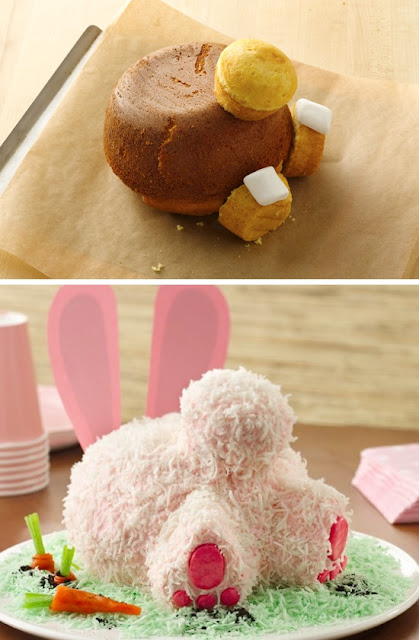
Today’s offering is a cute Easter cake that I’ve made with my granddaughter…a Bunny Butt Cake!

1 box yellow or white cake mix

Water, vegetable oil and eggs called for on cake mix box

Tray or cardboard covered with wrapping paper and plastic food wrap or foil

1 container vanilla frosting

Red food color

1 large marshmallow, cut in half

3 cups shredded coconut

Green food color

2 strawberry or cherry stretchy and tangy taffy candies (from 6-oz bag)

1 fruit roll up

3 green-colored sour candies, separated into strips

Construction paper

Heat oven to 325°F. Grease 1 1/2-quart ovenproof bowl (8 inches across top) with shortening; coat with flour (do not use cooking spray). Lightly grease 3 muffin cups in regular-size muffin pan.

Make cake batter as directed on box. Pour cake batter in 3 muffin cups, filling two-thirds full. Pour remaining batter into 1 1/2-quart bowl.

Bake cupcakes 17 to 21 minutes, bowl 47 to 53 minutes or until toothpick inserted in center comes out clean. Cool 10 minutes. Remove cakes from muffin cups and bowl; place rounded sides up on cooling racks. Cool completely, about 1 hour. If necessary, cut off rounded tops of cakes.

Spoon frosting into large bowl. Add red food color to make desired pink color. Place bowl cake on tray cut side down; spread 1/3 cup frosting over cake. Use frosting to adhere cupcakes to bowl cake for feet and bunny tail. Use toothpicks if necessary. Place marshmallow halves, cut sides down, on tops of 2 cupcakes to make heels of feet. Spread thin layer of frosting over side and top of cake to seal in crumbs. Freeze cake 30 to 45 minutes to set frosting.

Spread remaining frosting over cake. Sprinkle with 2 cups of the coconut; press gently to adhere. Shake 1 cup coconut and 3 drops green food color in tightly covered jar until evenly tinted. Surround bunny with tinted coconut. Use rolling pin to press strawberry candies into 2 large rectangles. Cut 2 large ovals and 6 small circles out of candy. Press onto bottoms of bunny feet, using frosting if needed.

Roll up fruit snack to make carrot shapes. Cut green sour candies in half crosswise; press into large end of each carrot to make greens on carrot. Cut ears from construction paper; wrap ends that will be inserted into cake with plastic food wrap. Insert into cake. Remove ears, plastic wrap and toothpicks before serving. Store loosely covered.

What Shall We Make Today

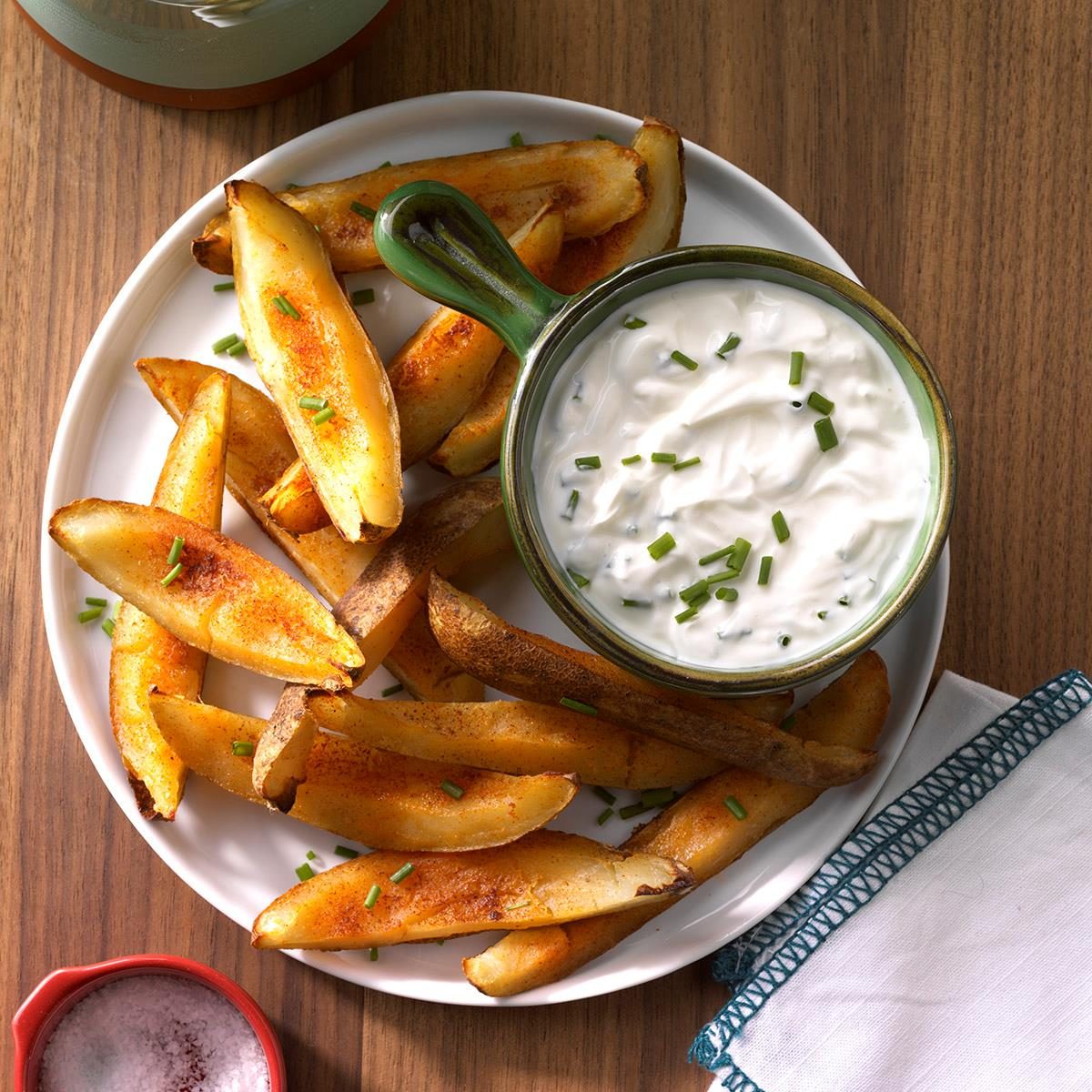
Today we’re making Savory Potato Skins!

Ingredients

4 large baking potatoes (about 12 ounces each)

3 tablespoons butter, melted

1 teaspoon salt

1 teaspoon garlic powder

1 teaspoon paprika

Optional: Sour cream and chives

Directions

Preheat oven to 375°. Scrub potatoes; pierce several times with a fork. Place on a greased baking sheet; bake until tender, 1-1-1/4 hours. Cool slightly.

Cut each potato lengthwise in half. Scoop out pulp, leaving 1/4-in.-thick shells (save pulp for another use).

Cut each half shell lengthwise into quarters; return to baking sheet. Brush insides with butter. Mix seasonings; sprinkle over butter.

Broil 4-5 inches from heat until golden brown, 5-8 minutes. If desired, mix sour cream and chives and serve with potato skins.

ENJOY!

What Shall We Bake Today?

I was so intrigued when I saw this picture, I just had to see the recipe!  It seemed easy enough, although I have not attempted it myself yet.  (I will update if I do by post time.)

Shamrock Pound Cake

Ingredients

2 packages (16 ounces each) pound cake mix

10 drops green food coloring

1/2 teaspoon peppermint extract

GLAZE:

1 cup confectioners’ sugar

1/8 teaspoon peppermint extract

3 to 5 teaspoons 2% milk

Directions

Preheat oven according to package directions. Grease a 9×5-inch loaf pan. Prepare one package cake mix according to package directions, adding food coloring and extract before mixing batter. Transfer to prepared pan. Bake and cool as package directs.

Cut cooled cake into 1-in.-thick slices. Cut slices with a 2-1/2-in. shamrock-shaped cookie cutter (save remaining cake for another use). Stand shamrock slices at an angle in a greased 9×5-in. loaf pan.

Prepare remaining cake mix according to package directions. Pour batter around and over shamrock slices. Bake and cool as package directs.

For glaze, in a small bowl, mix confectioners’ sugar, extract and enough milk to reach desired consistency. Pour glaze over cake, allowing some to flow over sides.

What Shall We Bake Today?

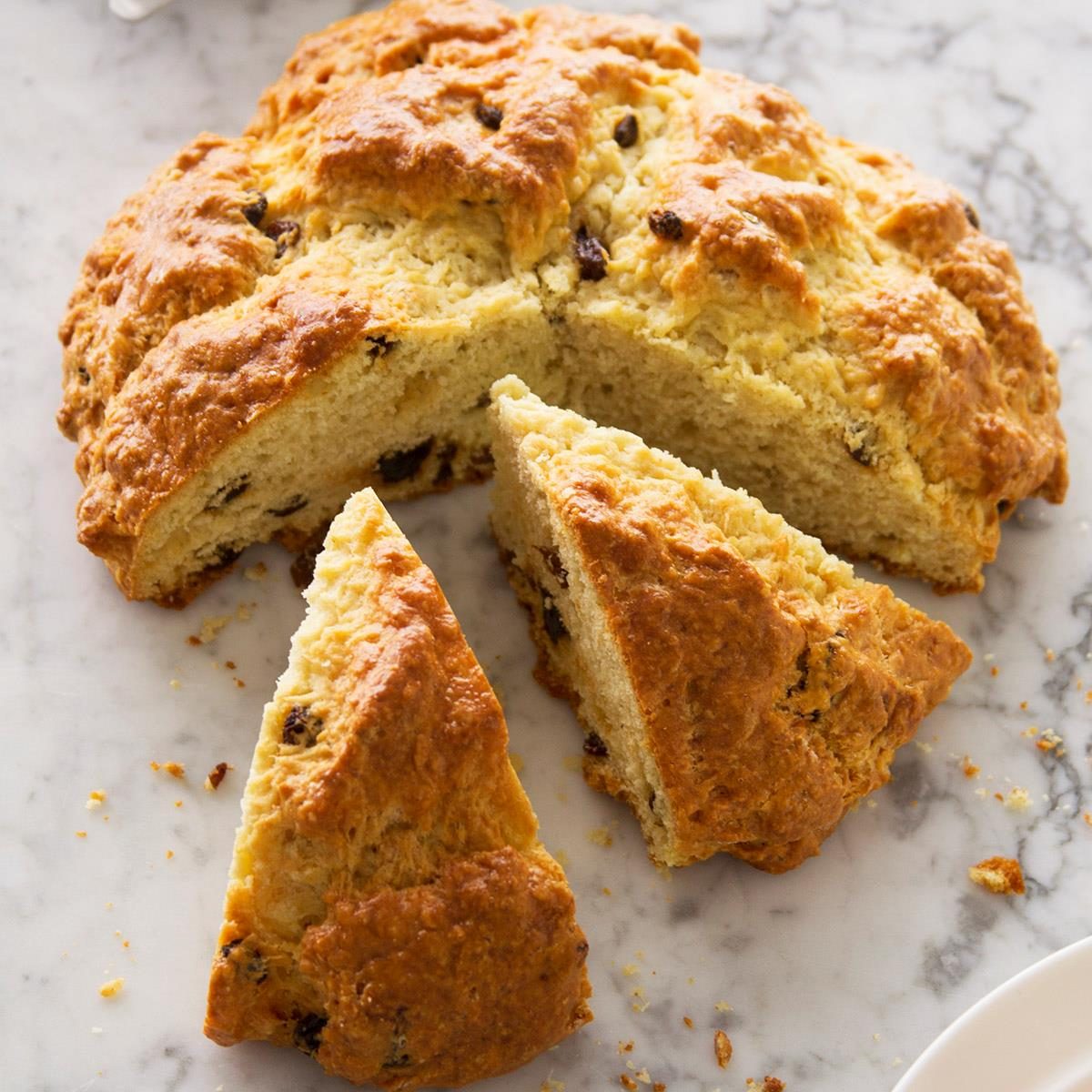
Since this is March, I thought I’d bring a recipe for classic Irish Soda Bread.  I have not attempted this as of writing this open.  If I do before it posts, I’ll update it to let you know the results.

Ingredients

2 cups flour

2 tablespoons brown sugar

1 teaspoon baking powder

1 teaspoon baking soda

1/2 teaspoon salt

3 tablespoons cold butter, cubed

2 large eggs, room temperature, divided use

3/4 cup buttermilk

1/3 cup raisins

Directions

Preheat oven to 375°. Whisk together first 5 ingredients. Cut in butter until mixture resembles coarse crumbs. In another bowl, whisk together 1 egg and buttermilk. Add to flour mixture; stir just until moistened. Stir in raisins.

Turn onto a lightly floured surface; knead gently 6-8 times. Shape into a 6-1/2-in. round loaf; place on a greased baking sheet. Using a sharp knife, make a shallow cross in top of loaf. Whisk remaining egg; brush over top.

Bake until golden brown, 30-35 minutes. Remove from pan to a wire rack. Serve warm.

ENJOY!

What Shall We Bake Today?

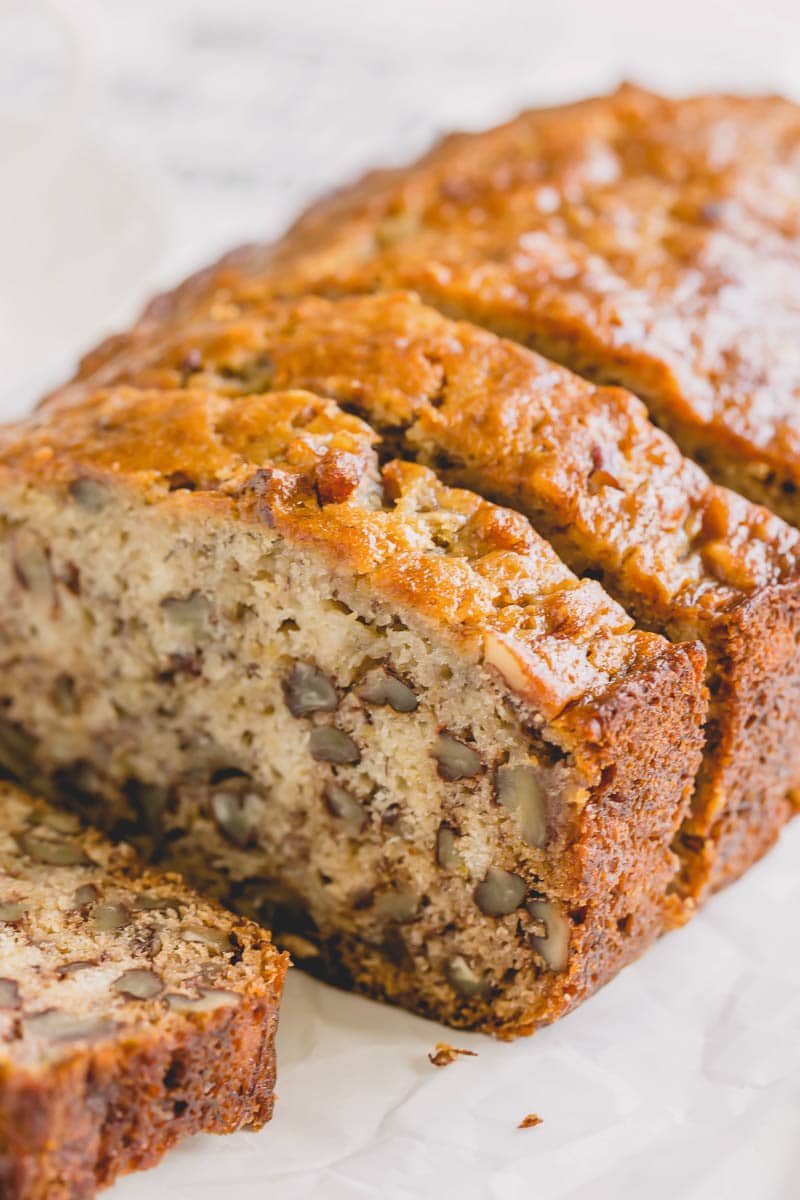
In our house, we hate to waste food, so when our bananas are past the good-to-eat stage, I freeze them to make banana bread at another time.  The morning I want to bake some banana bread, I take them out to thaw and drain slightly before adding to the other ingredients. This recipe is super easy and so delicious!

Banana Bread

Ingredients

2-1/2 cups all-purpose flour

1 cup sugar

3 1/2 teaspoons baking powder

1 teaspoon salt

3 medium ripe mashed bananas

1 egg

3 tablespoons vegetable oil

¾ cup milk

1 cup chopped nuts

Preheat oven to 350*.  Grease and flour 1 9 x 5 or 2 8 x4 loaf pans.  Place all ingredients into a large mixing bowl and beat on medium speed for ½ a minute, scraping the bottom and sides constantly.  Pour into pan(s).  Bake 55-65 minutes.  Cool slightly. Remove from pan and cool completely before slicing. Enjoy!

What Shall We Bake Today?

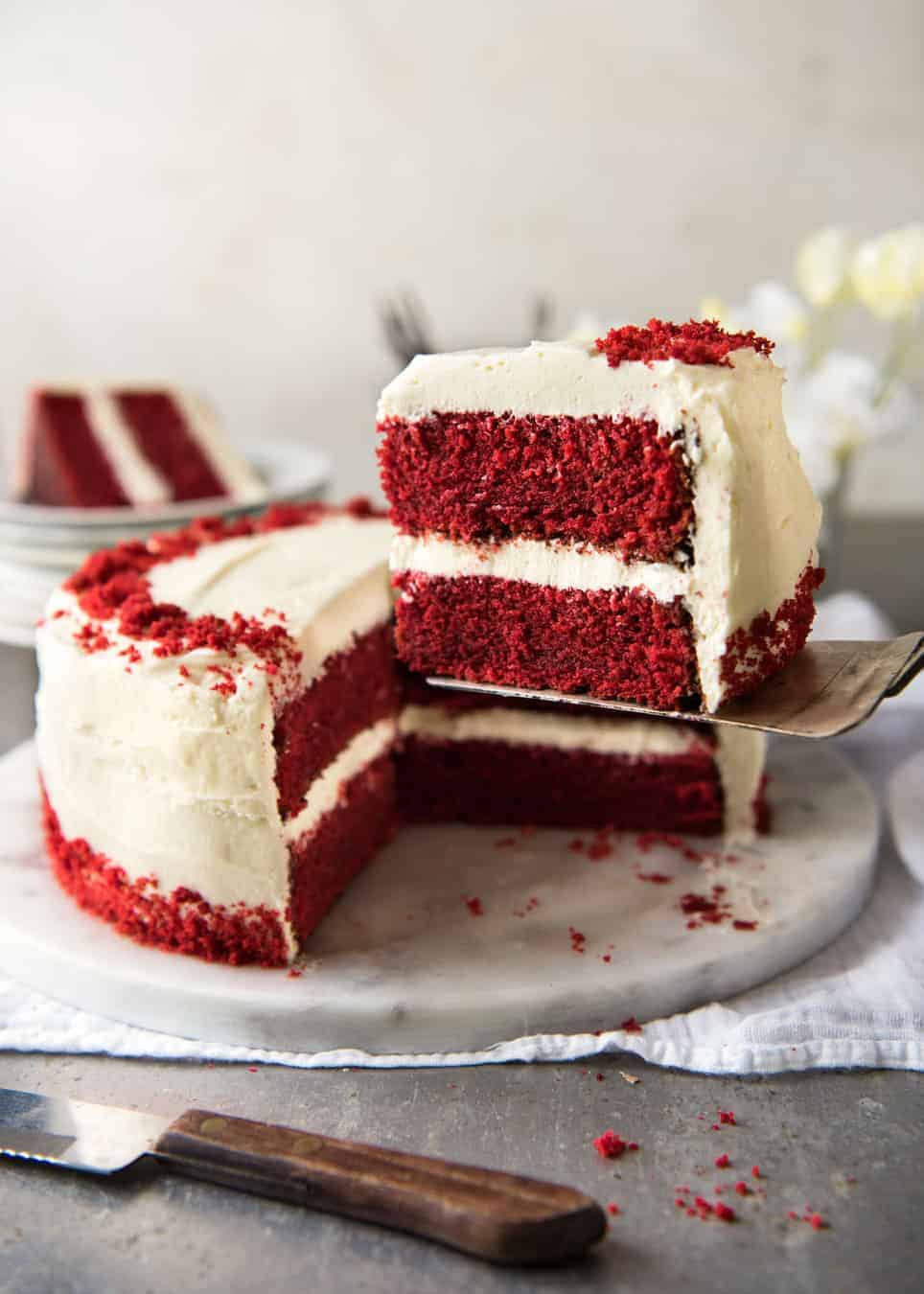
This being February, I thought we’d bake a Red Velvet Cake.

Cake:

1 ½ cups sugar

½ cup butter

2 eggs

2 ounces red food coloring

2 tablespoons cocoa

1 cup buttermilk

1 teaspoon salt

1 teaspoon vanilla extract

2 cups cake flour

1 tablespoon distilled white vinegar

1 ½ teaspoons baking soda

Preheat the oven to 350 degrees F. Grease two 9-inch round pans.

In a large bowl, beat the sugar and shortening together with an electric mixer until light and fluffy. Add eggs one at a time, beating well after each addition. Combine red food coloring and cocoa to make a paste; add to creamed mixture.

Mix buttermilk, salt, and 1 teaspoon vanilla together in a small bowl. To the creamed mixture, add flour, alternating with buttermilk mixture, mixing just until incorporated. Mix vinegar and baking soda together; gently fold into cake batter and pour into prepared pans.

Bake in the preheated oven until a toothpick inserted into the center comes out clean, about 30 minutes. Cool on a wire rack for 5 minutes. Run a table knife around the edges to loosen. Invert carefully onto a serving plate or cooling rack. Let cool, about 30 minutes.

Frost as desired.