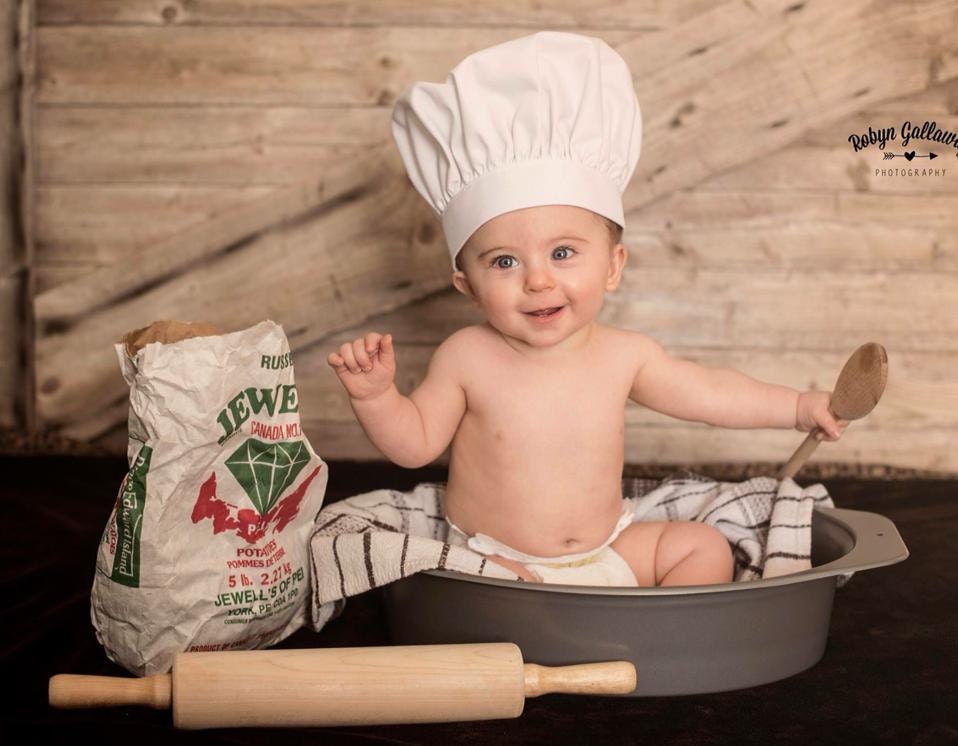
Barron

From Biography:

Who Is Barron Trump?

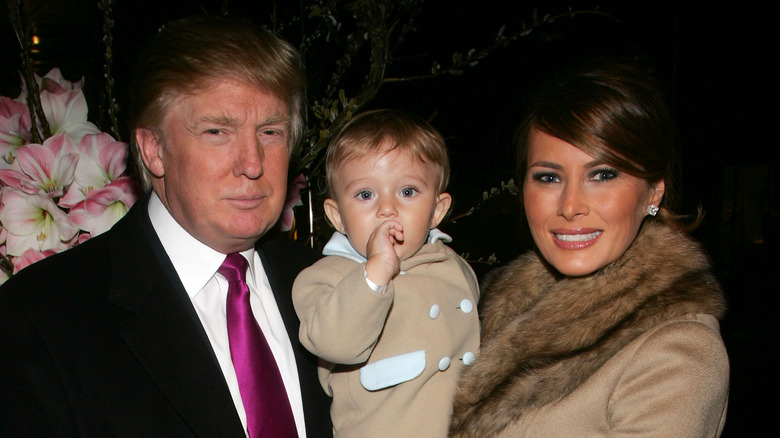
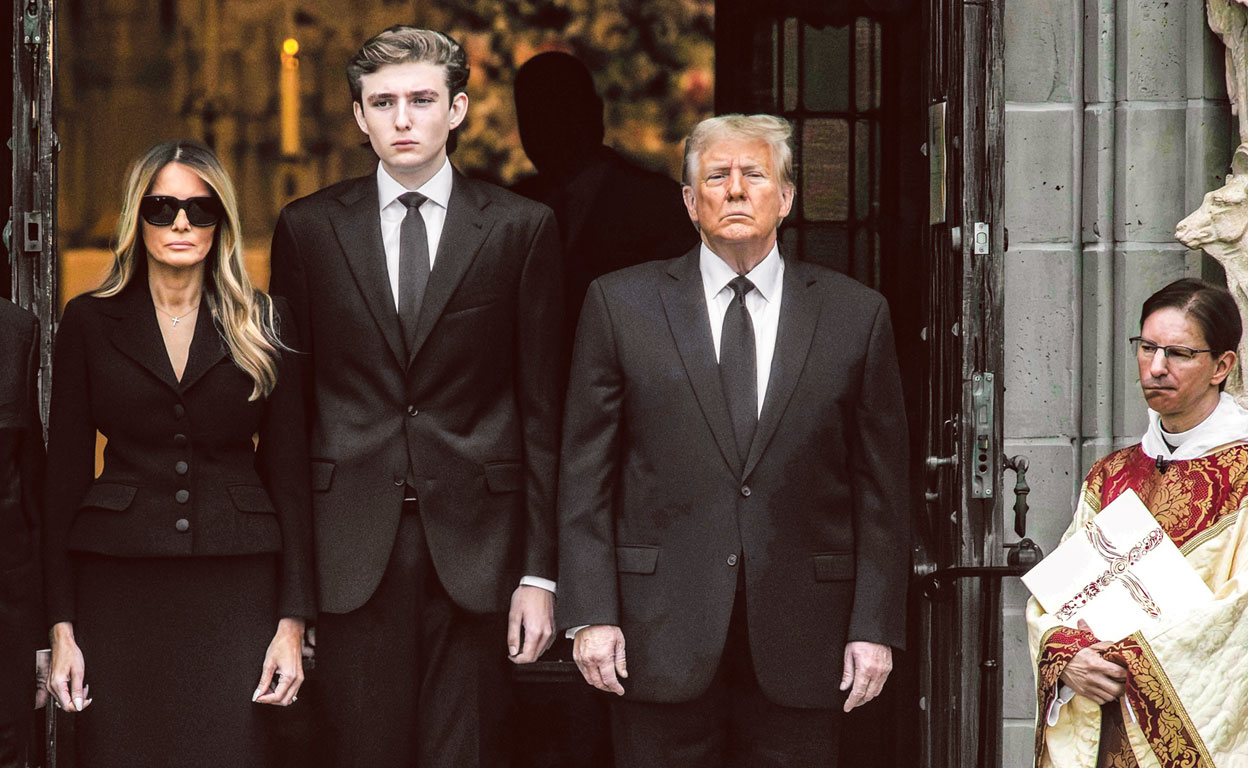
Barron William Trump is the son of former model Melania Trump and U.S. President and real estate mogul Donald Trump. Barron is the couple’s only child and the only one of the president’s offspring residing with him in the White House. His mother, Melania, told ABC News that the youngest Trump likes wearing a suit every day — he is “not a sweatpants child.” Also, like his famous father, he enjoys golfing a lot.

Early Childhood

Barron William Trump was born on March 20, 2006, in New York City. Having grown up inside of Trump Tower in New York City, where he has an entire floor to himself, Barron has always known a life of luxury. In an interview with Parenting, Melania revealed that Barron really liked planes and helicopters when he was little and that, as a hands-on mom, she cooked his breakfast and prepared his lunches. She also believed in encouraging his creativity — even when he would draw on the walls. “His imagination is growing and important,” she said. “If he draws on the walls in his playroom, we can paint it over.”

Life at the White House

Barron and Melania stayed at Trump Tower for almost the first five months of Donald Trump’s presidency, so that Barron could finish his studies at the Columbia Grammar and Preparatory School on the Upper West Side. He and his mom moved into the White House on June 11, 2017, and attended St. Andrew’s Episcopal, a prep school in Maryland.

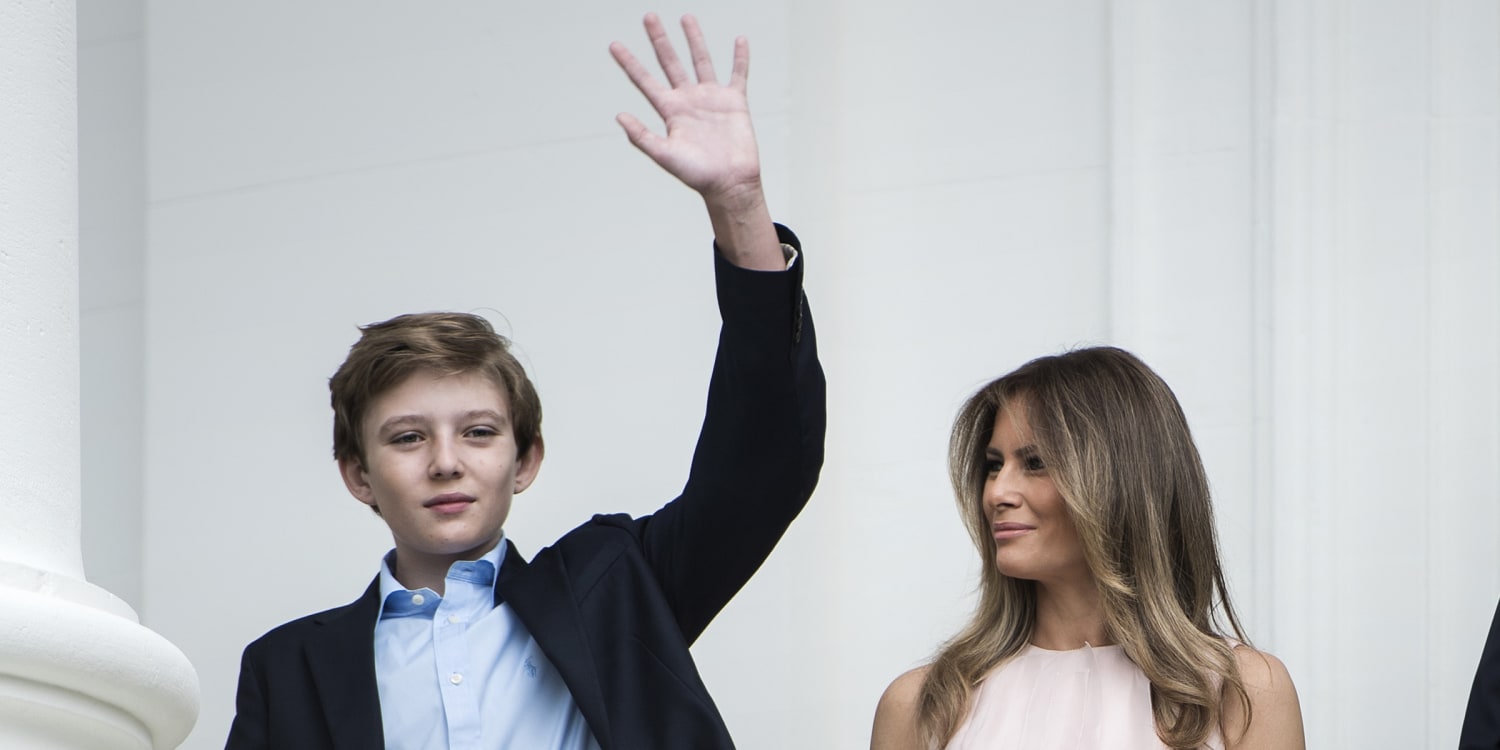
Barron is the first son of a president to reside in the White House since John F. Kennedy Jr. in 1963. Although he stays out of the spotlight for the most part, he has turned up for some of the White House’s fun holiday-themed events in 2017, including the annual Easter Egg Roll in April, where he joined his parents in signing cards for members of the American Armed Forces. He also supported his father’s pardoning of the turkeys before Thanksgiving and soon after, stepped out with his mom on the North Portico to receive the official Christmas tree from Wisconsin, which went up on display in the White House’s Blue Room.

Nicknamed ‘Little Donald’

“He is a mixture of us in looks, but his personality is why I call him ‘Little Donald,’” Melania told Parenting. “He is a very strong-minded, very special, smart boy. He is independent and opinionated and knows exactly what he wants.”

She also noted that Barron has spent a lot quality time with his father, mostly at Mar-a-Lago in Palm Beach, Florida, where they would play golf, eat dinner together, and enjoy family time.

Skills and Interests

Thanks to his Slovenian mom, Barron is already fluent in both English and Slovene and is also learning French.

Though he’s a long way off from officially joining the family’s real estate business, Barron does like to build cities and airports using Legos and Magna Tiles, but he has his own aesthetic. “He likes clean and white,” Melania told Parenting. “He builds big projects. He has a big imagination and it’s very impressive. He loves to build something and tear it down and build something else. He is very detailed at drawing. We travel often and he remembers everything he sees.”

Modern Family

As the youngest of the president’s five children, Barron has four half-siblings: Don Jr., Ivanka and Eric, as well as his older half-sister, Tiffany, from Trump’s marriage to Marla Maples. He has six nephews — Theodore James Kushner, Donald Trump III, Joseph Frederick Kushner, Tristan Milos Trump, Spencer Frederick Trump and Eric Luke Trump — and four nieces — Arabella Rose Kushner, Chloe Sophia Trump, Carolina Dorothy and Kai Madison Trump, who is just one year his junior.

COVID-19 Diagnosis

On October 14, 2020, Melania confirmed that like her and Donald, Barron tested positive for COVID-19. Initially testing negative, the first lady revealed that her “fear came true when he was tested again and it came up positive.” Melania continued, “Luckily he is a strong teenager and exhibited no symptoms. In one way I was glad the three of us went through this at the same time so we could take care of one another and spend time together. He has since tested negative.”

Life After the White House

Since leaving the White House, Barron, his mother and father have moved back to Mar-a-Lago. In August 2021 it was announced that Barron enrolled in private school at the Oxbridge Academy in Palm Beach, Florida, as part of the class of 2024.

Happy Birthday Barron!

The Last Boy Scout

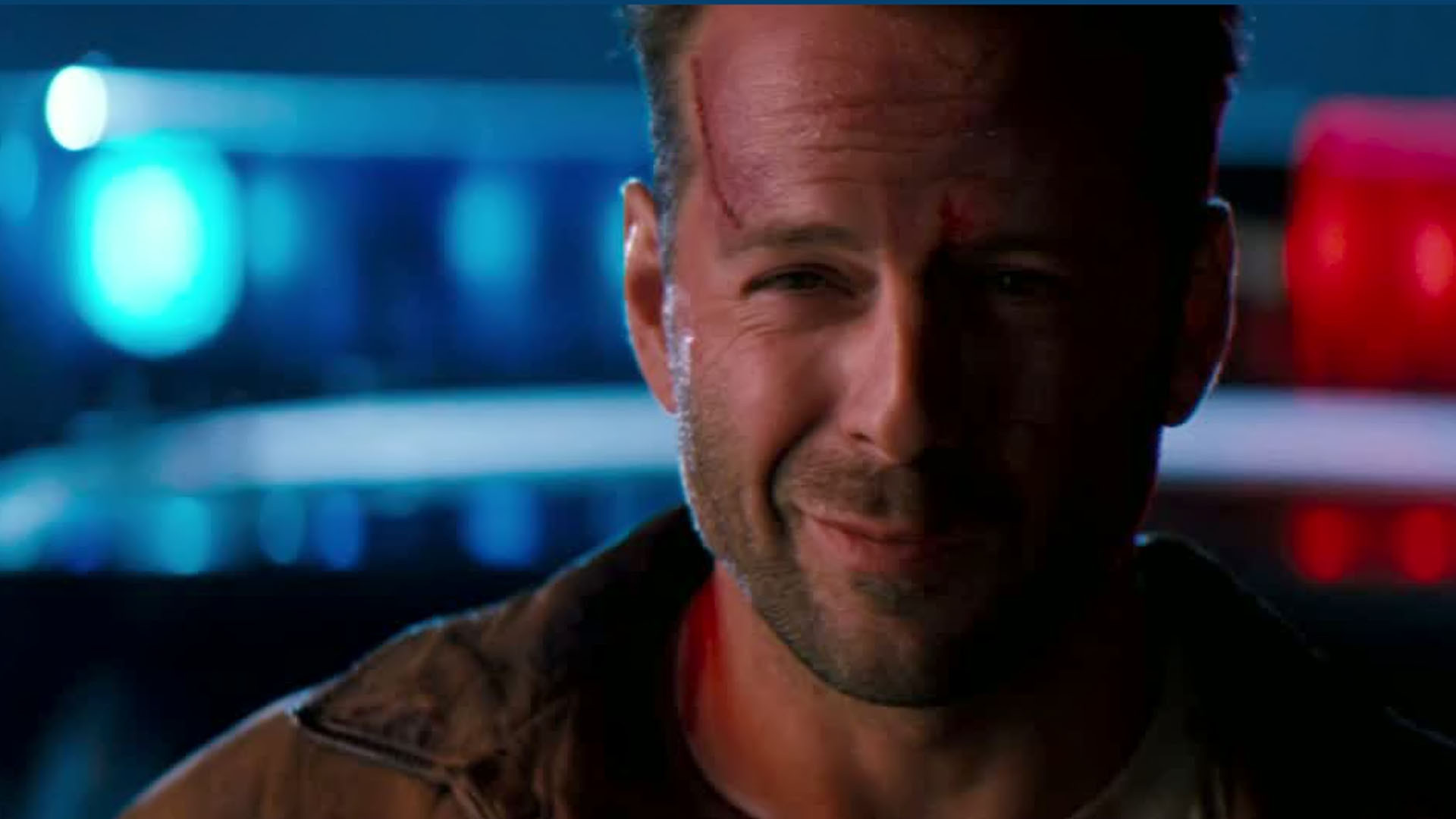
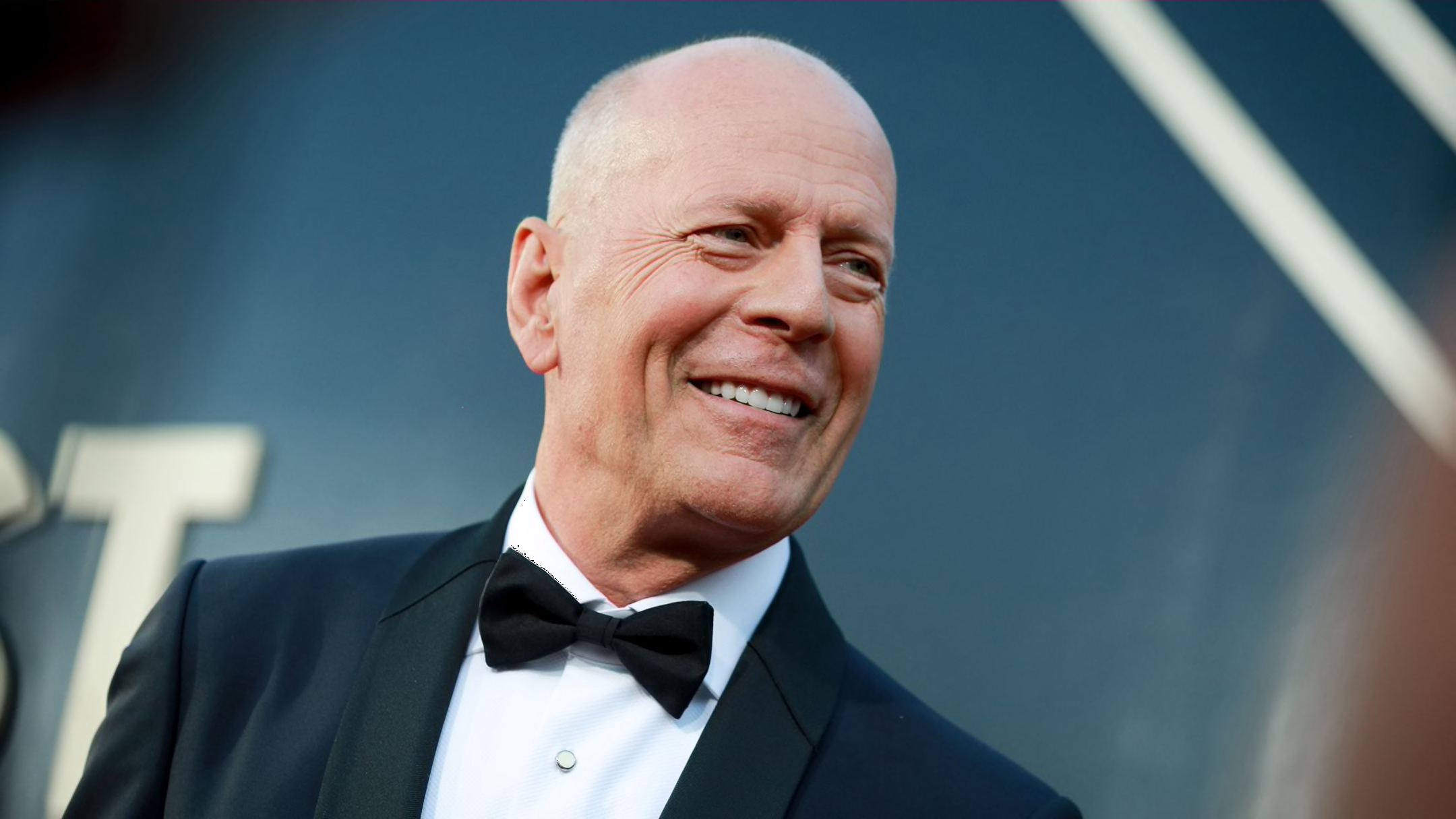
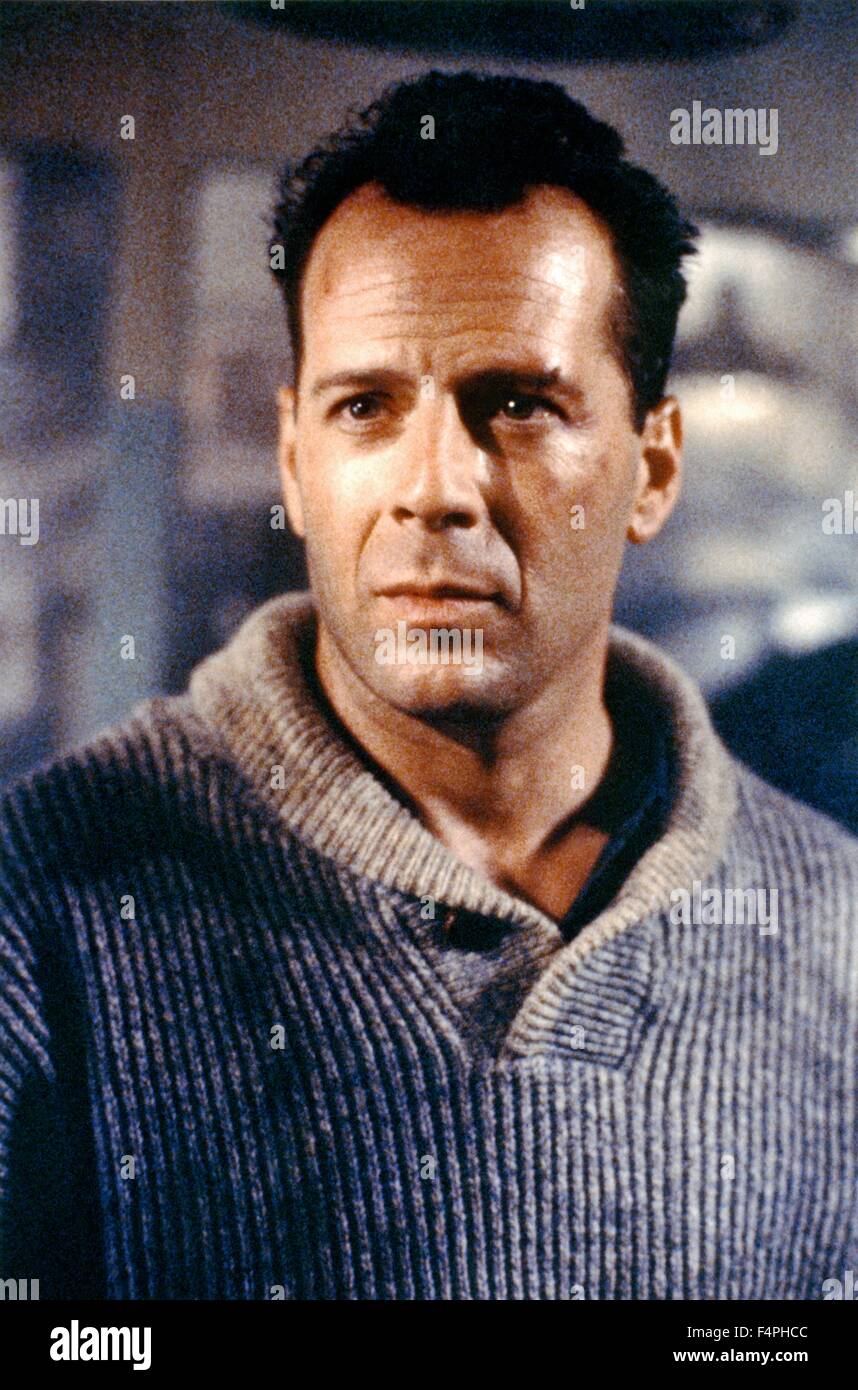
Today is Bruce Willis’ birthday and I enjoy so many of his movies, but Die Hard, Hudson Hawk and The Last Boy Scout are 3 of my favorites!  I found this article on Mental Floss—fun facts about Bruce.

From Mental Floss

On March 30, 2022, Bruce Willis’s family members, including ex-wife Demi Moore and their three daughters, posted a joint statement to their social media accounts announcing that Willis would be retiring from acting due to a recent health diagnosis.

“Bruce has been experiencing some health issues and has recently been diagnosed with aphasia, which is impacting his cognitive abilities,” the statement read. “As a result of this and with much consideration, Bruce is stepping away from the career that has meant so much to him.”

From his turns as unlikely action hero John McClane in the Die Hard series to smaller supporting roles in 1994’s Pulp Fiction and 1995’s Nobody’s Fool, Willis has consistently surprised audiences with his eclectic career choices. For more on Willis, including his recording career and how he made movie history with 1988’s original Die Hard, keep reading.

Bruce Willis was born in West Germany.

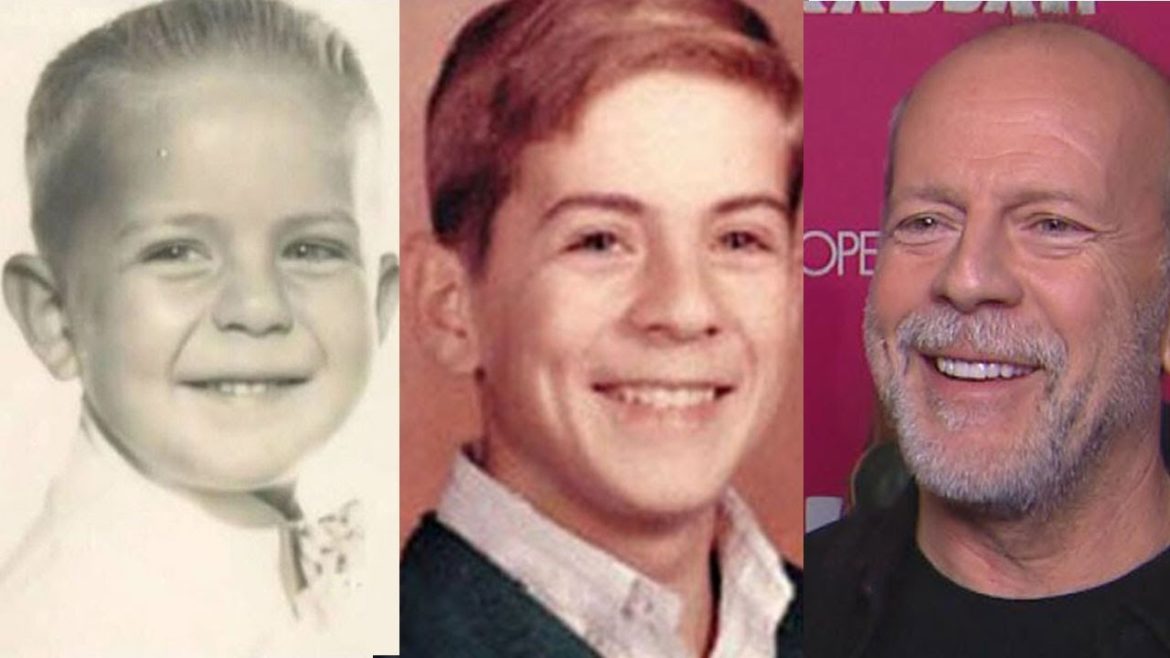
Walter Bruce Willis, the son of a military man, was born on March 19, 1955, while his father was stationed in Idar-Oberstein, West Germany. Just two years later, parents David and Marlene Willis moved to Carneys Point, New Jersey, where he spent part of his time in both high school and at Montclair State University trying his hand at acting. After his sophomore year, Willis decided to leave college and head to New York City to pursue a performing career.

Bruce Willis may have been one of the best bartenders in New York City.

While auditioning for acting roles and scoring the occasional break—he appeared in an off-Broadway play, Heaven and Earth, in 1977—Willis tended bar at Chelsea Central on New York City’s Upper West Side. According to actor John Goodman, who knew Willis before either of them became famous, Willis was notable even then. “Bruce was the best bartender in New York,” Goodman told The New York Post in 2017. “He kept an entire joint entertained all night. He just kept the show going. He was amazing.”

Bruce Willis was cast in Moonlighting even though ABC thought the role was “uncastable.”

Willis had done only some stage work and bit parts in movies like 1980’s The First Deadly Sin with Frank Sinatra and 1982’s The Verdict with Paul Newman before he went in to audition for ABC’s Moonlighting, a send-up of detective dramas. At the time, the role of David Addison was proving so difficult to cast that the network was looking to pay creator Glenn Gordon Caron, director Bob Butler, and co-star Cybill Shepherd to abandon the project. Then Willis auditioned, beating out 3000 other hopefuls and securing the part. The series ran from 1985 to 1989.

Thanks to Die Hard, Bruce Willis changed Hollywood salaries forever.

While doing Moonlighting, Willis spent his hiatus shooting feature films like 1987’s Blind Date with Kim Basinger. But it was 1988’s Die Hard that cemented him as a big-screen attraction. The action film about a New York City cop trapped in a Los Angeles skyscraper with his estranged wife and a group of terrorists was a hot commodity, and 20th Century Fox agreed to pay Willis the then-astronomical sum of $5 million for the role. (Richard Gere and Clint Eastwood were also considered.) At the time, major stars like Tom Cruise and Michael J. Fox were getting roughly $3 million a picture. The payday for Willis had other performers taking notice, and salaries reportedly went up as a result.

“It was an enormous amount of money at the time,” Willis told Entertainment Weekly in 2007. “And I was a TV actor! The day after I signed the deal, every actor in Hollywood’s salary went up to $5 million.”

The Bruce Willis movie Hudson Hawk was based on a song.

Following Die Hard, Willis was a proven box office commodity that could help projects get made. In 1991, he starred in Hudson Hawk, a critical and commercial disappointment about a jewel thief with a love of music who is hired to steal from the Vatican. The film was based in part on a song written by musician Robert Kraft in 1981. Kraft knew Willis, then a bartender and actor, and shared it with him. Over the years, the two continued to shape the song, adding characters and stories. Eventually, it wound up in the hands of screenwriters Stephen De Souza and Daniel Waters.

Bruce Willis all but disappeared in Nobody’s Fool.

In contrast to conventional wisdom of the era, Willis parlayed his success as an action hero into opportunities to work with actors and directors he found interesting—even if it meant taking a small supporting role. (Willis spent just 22 minutes onscreen in 1994’s Pulp Fiction as boxer Butch Coolidge.) For 1995’s Nobody’s Fool, he passed on his normal $15 million fee to take $1400 a week since it meant working with Paul Newman. (Newman had forgotten the then-unknown Willis was a bit player in Newman’s 1982 film, The Verdict.) Because Willis felt so strongly Nobody’s Fool was Newman’s film, he opted out of having his photo included in the press kit and his name wasn’t in the production notes.

Bruce Willis had his own cartoon series.


In 1996, Willis lent his voice to Bruno the Kid, a syndicated animated series about an 11-year-old spy named Bruno who convinces his handlers he’s really an adult. “Bruno” was Willis’s nickname growing up as well as the name of his musical alter ego. In 1987, Willis released an album, The Return of Bruno, along with a cable special. The cartoon lasted one season.

Bruce Willis never finished shooting one of his movies.

In 1997, Willis started shooting Broadway Brawler, a romantic comedy about a washed-up hockey player falling in love. Just 20 days into shooting, Willis used his powers as producer to fire director Lee Grant, Grant’s husband and producer Joe Feury, cinematographer William Fraker, and wardrobe designer Carol Oditz—all reportedly over creative differences. The problems continued even after replacement director Dennis Dugan was brought on board. Rather than continue to waste money on the $28 million movie, studio Cinergi opted to shut it down. Cinergi’s parent company, Disney, absorbed the production costs in exchange for Willis agreeing to star in three Disney movies: Armageddon (1998); The Sixth Sense (1999), Willis’s biggest hit to date; and The Kid (2000).

SOURCE: MENTAL FLOSS

DIY: Pine Cone Bird Feeders

This is an easy craft for anyone to do…and it comes with a story.  First off, you need pinecones, some twine, peanut butter and birdseed.  Merely tie the twine around the pine cone, spread peanut butter on the pine cones and roll in birdseed.  (I microwaved the peanut butter to turn spreading into dipping—much easier.)

We live in a mature wooded area meaning there are extremely few—if any—trees with low enough branches for us to hang these pine cones on.  (This is also why we have no hanging bird feeders—that and the bears would attack them.)

We wanted to attract and feed birds during the winter, so hubby devised a wooden tree of sorts.  Similar to the one pictured below, but not as tall or full.  We put it in a plastic bucket with some rocks thrown in to make sure the wind would not blow it over and put it on the deck.  I tied about a dozen of these pine cone feeders to it securely with bright red ribbon.  The project was finished around dinner time and we didn’t expect to have visitors till the next day. 

We were wrong!  Watching tv that evening we heard a THUMP! and looked at each other.  We thought for sure wind had blown the pine cone tree over, but it wasn’t windy at all.  We turned on the spotlights and saw squirrels DRAGGING our tree!  They had the pine cones in their teeth and paws and had managed to bring the tree down to the deck where they were trying to drag the tree, bucket and all, off the deck and into the woods.

I was out the door and charging at the little thieves while hubby stood and laughed.  The squirrels took that moment to let go of their treasure.

I picked up some of the rocks that had spilled out of the bucket and was winding up to hurl a couple when I felt hubby grab my arm.  “Let them go,” he laughed.  “You scared them good.  They won’t be back.”

Guess what? He was wrong.  They came back in the middle of the night and CHEWED the ribbons OFF the tree and made off with all 12!!

Sigh.

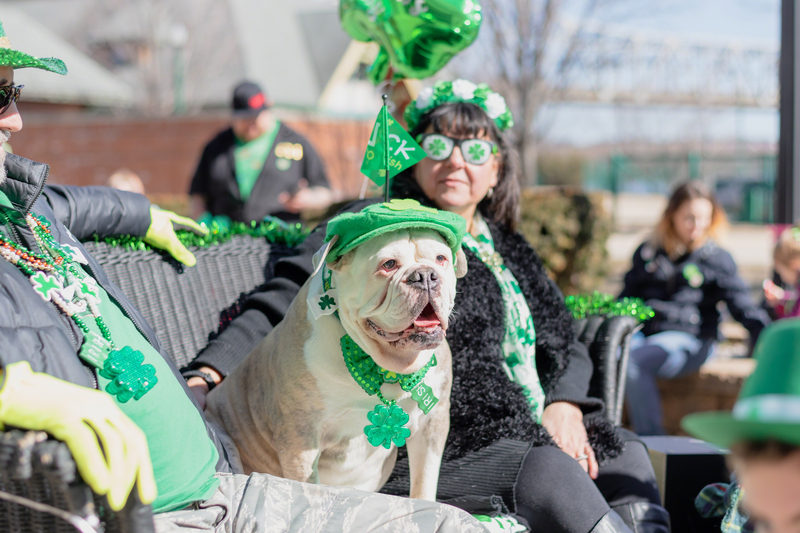
Happy St. Patrick’s Day!

I found some interesting facts and trivia about St. Patrick’s Day on The Irish Road Trip website:

The first section of our guide focuses on fun facts about St. Patrick – Ireland’s Patron Saint, while the second focuses on St. Patrick’s Day facts about the celebration itself.

Below, you’ll discover tales about pirates, snakes and the original color associated with St. Patrick (it wasn’t green!).

St. Patrick wasn’t Irish

If you’re not familiar with the story of St. Patrick, you may not be aware that he is not in fact Irish. St. Patrick is British. It’s believed that he was born in either Wales or Scotland. This is arguably the most frequently misbelieved of the many facts about St. Patrick.

 He wasn’t born in Ireland

St. Patrick was born in Roman-Britain (Britain was under Roman rule for 350 years) circa 386 A.D. He didn’t arrive in Ireland until 433. 

When he died

St. Patrick died in 461 in Saul, County Down, at the fine old age of (roughly) 75.

He was abducted at 16

This is another of the lesser known St. Patrick facts that I had never really heard. St. Patrick was abducted at the age of 16 and brought to Northern Ireland as a slave. He was forced to tend to sheep for 6 years in the mountains.

His remains are believed to be at Down Cathedral

It’s believed that the remains of St. Patrick are buried at Down Cathedral in County Down.  This magnificent Cathedral is a Church of Ireland cathedral and it’s found on the site of a Benedictine Monastery.

His name wasn’t Patrick

One of the more surprising St. Patrick’s Day facts revolves around his name. So, apparently ‘Patrick’ is a name that he picked up along the way at some point. St. Patrick’s real name was ‘Maewyn Succat’. The best of luck pronouncing that!

He didn’t banish snakes

For as far back as I can remember, I was told that St. Patrick banished the snakes from Ireland. However, there were never snakes in Ireland…

It’s believed that the St. Patrick snakes link is all about symbolism. In Judeo-Christian tradition, snakes are the symbol of evil.

It’s said that St. Patrick banishing the snakes from Ireland represents his fight to bring the word of God to Ireland.

He escaped Ireland by boat

According to St. Patrick’s Confession (a book that is said to have been written by St. Patrick), God told Patrick to flee his captures and make his way to the coast where a boat would be waiting to take him back home.

A dream led him back to Ireland

After escaping his captures in Ireland, St. Patrick returned to Roman-Britain. It’s said that one night had a dream that the people of Ireland were calling him back to tell them about God. 

Not before he spent 12 years in France…

After having the dream that called him back to Ireland, he was worried. He felt unprepared for the task ahead. 

St. Patrick decided that he must follow his studies first, to better equip himself for the task ahead.

He traveled to France where he trained in a monastery. It wasn’t for 12 years after the dream that he returned to Ireland.

He used the shamrock in his teachings

St. Patrick is often associated with the shamrock. It’s said that, upon returning to Ireland, he used the three-leafed plant as a metaphor for the Hold Trinity. It is now one of the more notable symbols of Ireland, along with the Celtic Cross.

St. Patrick’s Day facts and trivia

The next section of our fun St. Patrick’s Day facts focuses on the day itself – March 17th.

Why March 17th?

St. Patrick’s Day is held on March 17th as this is the day that St. Patrick died. On March 17th we celebrate his life along with Irish culture.

The first parade wasn’t held in Ireland

I’d never heard this St. Patrick’s Day fact before today! The first St. Patrick’s Day parade wasn’t held in Ireland – it was held in Boston in the United States in 1737. To this day some of the biggest St. Patrick’s Day parades take place in the USA.

Ireland’s first parade

The very first St. Patrick’s Day in Ireland was held in County Waterford in 1903. 

A national holiday

St. Patrick’s Day is a bank holiday in Ireland. This means that many people have the day off, as it’s a national holiday. Schools, government offices and many private workplaces close for business on March 17th.

Green isn’t the original color associated with St. Patrick

Interestingly enough, the original color associated with St. Patrick wasn’t green – it was blue. I can’t image people legging it about the place with blue face paint on!

The largest parade in the world

This is one of the few St. Patrick’s Day facts that I did know..! The largest St. Patrick’s Day parade in the world takes place in New York City. The parade attracts a staggering two million+ people every year.

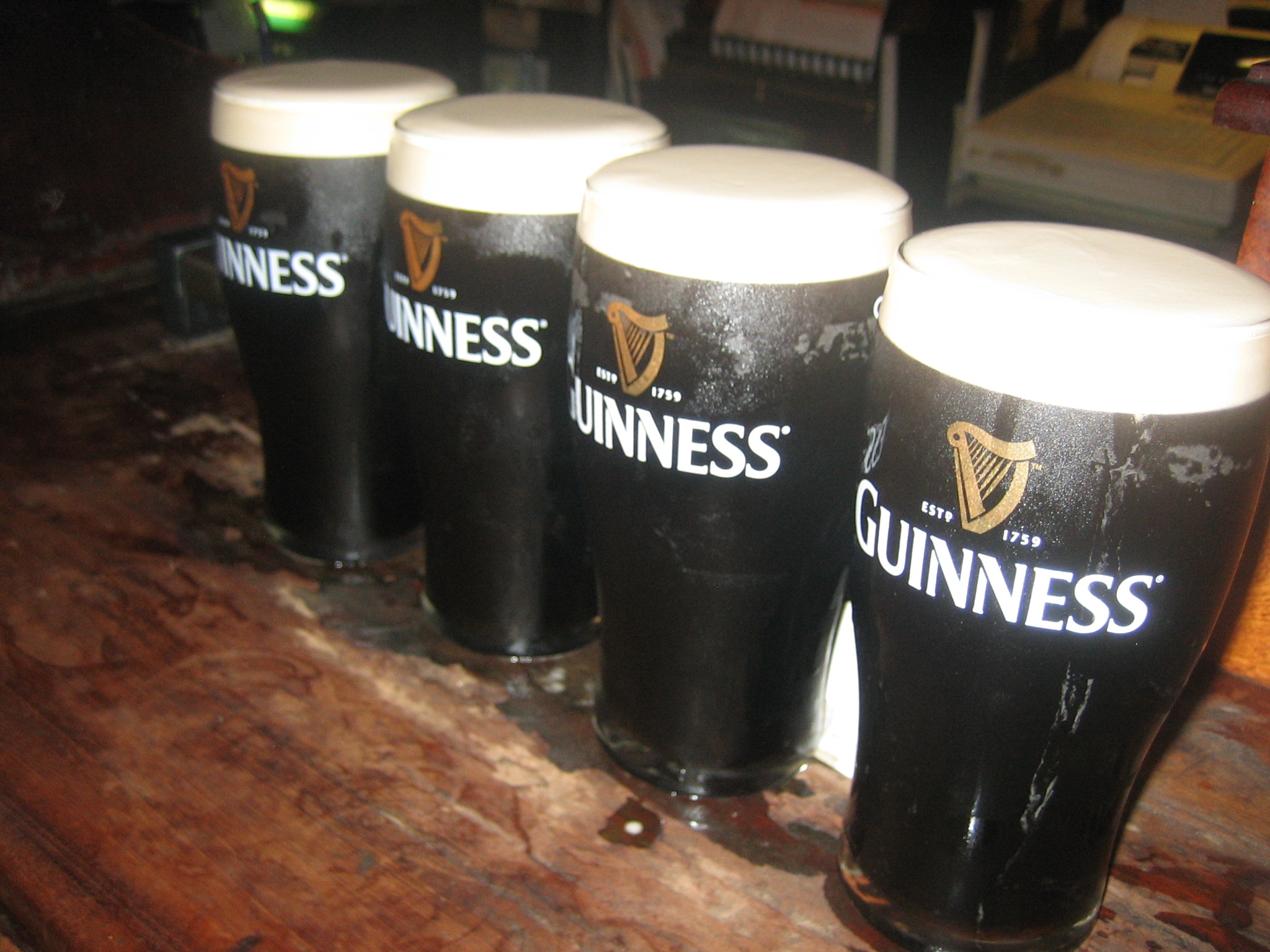
13,000,000 pints of Guinness are sipped

Yep – a whopping 13,000,000 pints of Guinness (the most popular of the many Irish beers) are drank on March 17th across the world! 

SOURCE: The Irish Road Trip

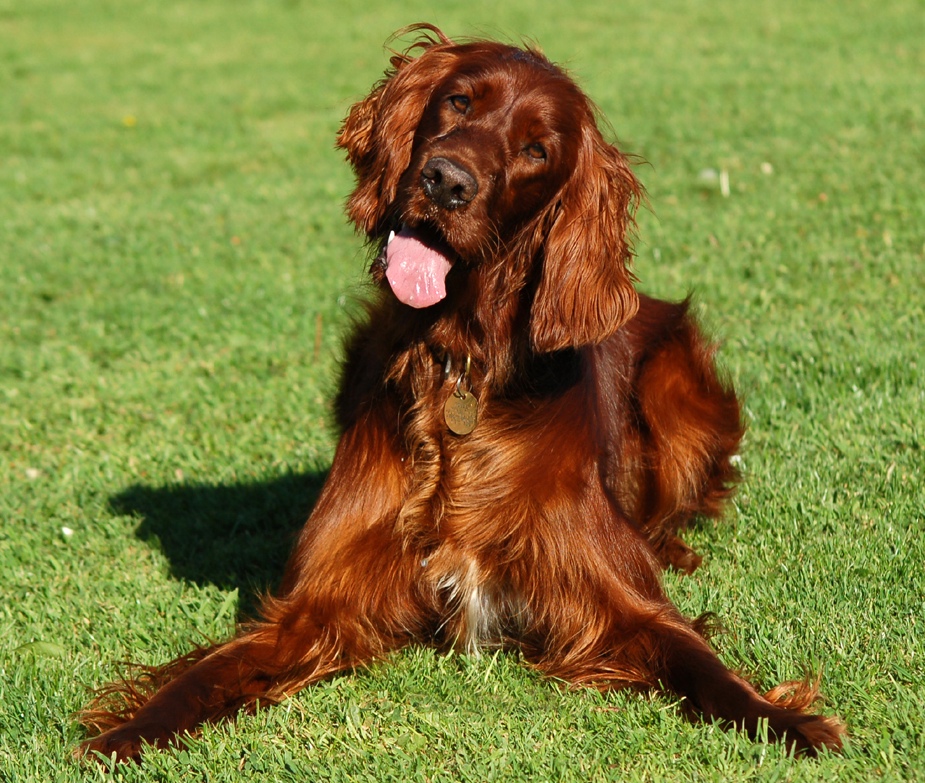
Irish Setters

Characteristics of the Irish Setter

Irish setters are the quintessential family dog, with a sweet and playful temperament that makes them ideal companions for owners of any age. They are highly intelligent and easy to train, whether you want to participate in a sport alongside them or just want them to walk by your side on a leash. They typically get along great with other pets and often make friends (human and otherwise) wherever they go. Irish setters are known for being highly affectionate with their family and open to meeting strangers wherever they go.

History of the Irish Setter

Irish setters were developed in Ireland to assist bird hunters before the advent of firearms. Setters are a group of dog breeds that use their keen sense of smell to detect birds and “set”—or take a low stance with their body nearly touching the ground. When the bird is flushed from its hiding spot, the hunter makes the shot, and the dogs eagerly retrieve the fowl.

Bird hunters in Ireland were searching for a bird dog that would move swiftly over the rather open terrain of the Irish countryside but retain the attentive and patient demeanor of prized hunting companions. In the early 1800s, hunters looked to spaniels, English setters, and Gordon setters to breed an eager, attentive, and quick bird dog.

The result was a red-and-white setter-type dog that became known as the Irish setter. Over time, further breeding resulted in a dog with an exclusively red coat with no patches of white. Today, a coat with traces of black is considered a fault in the breed’s appearance, though it isn’t a disqualifying factor for show dogs. The rich red of the Irish setter’s coat is equally eye-catching in the field or walking down the street.

With such striking good looks and an eager-to-please temperament, it’s no surprise that these dogs quickly began spreading across Britain and into the United States. While the Irish setter only appeared on the scene at the turn of the 19th century, this breed was one of the first nine breeds to gain early AKC-recognition in 1878. Along with the English setter and Gordon setter, the Irish setter was well on its way to becoming a popular dog breed in the United States for hunting and companionship.

Red setters, as they’re sometimes called by breed enthusiasts, developed into two sub-types: field and show. Show-type setters are the most common and represent the mental picture that most people have of an Irish setter—thick, flowing red coat, heavy bones, tall stature with long legs and body. The field-type setter has been intentionally bred to retain its working abilities and has the same characteristically red or mahogany coat, but features significantly less feathering, finer bones, and more compact stature.

What both types share is a strong drive to work and please their owners. Today, the Irish setter excels in the field, show ring, and family room. This breed has had the distinction of winning the Westminster Kennel Club’s Sporting Group competition 11 times. Irish setters rank within the top 100 most popular dog breeds in the United States. 

Irish Setter Care

Caring for an Irish setter is a rewarding experience. This dog breed is loyal and affectionate but also has a playful side that delights owners young and old alike. It could be said that these dogs have never met a stranger; they seem to warmly welcome everyone, so an Irish setter probably won’t make a suitable watchdog.

Exercise

To help this sporting dog maintain a balanced, happy disposition, you’ll need to plan on at least an hour of vigorous activity each day. These dogs love a brisk walk, going for a run, or endlessly retrieving tennis balls. Ideally, a fenced yard gives this breed a safe place to roam and romp, but it won’t replace the need for a daily walk or run.

Grooming

Caring for the Irish setter’s gorgeous red coat isn’t as time-consuming as you may think. Their coat will benefit from a couple of brushing sessions per week, as well as an occasional bath, but the coat is relatively low-maintenance despite its flowing appearance.

The undercoat becomes heavier in winter to keep the dog warm and sheds as spring approaches. Expect to ramp up your grooming while the coat is blowing out and use a slicker brush to remove loose hair and keep fur balls from flying. 

Training

An affable nature doesn’t mean that training an Irish setter is a hands-off experience. Like all dog breeds, this breed requires a consistent and positive approach to training. If you start with your setter in puppyhood, be sure to provide plenty of socialization with people of all ages and animals large and small. Keep in mind that the setter was born to flush game, so their prey drive can sometimes be activated by smaller household pets. However, this tendency can often be molded and contained with consistent training.

Red setters are very intelligent and quick learners. Aside from being a natural fit for field trials, they do well in flyball, dock diving, canine agility, and obedience. Their attentive nature and calm demeanor also make them well-qualified as therapy or service dogs. However, the breed’s natural affinity for human companionship means that they can be prone to separation anxiety. Compared to some other dog breeds, they don’t tolerate being alone for extended periods particularly well, so they won’t be a good fit for someone who spends most of their day outside the home.

SOURCE: The SPRUCEPETS

What Shall We Make Today?

This month’s popcorn recipe is Cinnamon Bun Popcorn!

Ingredients

10 cups popcorn kernels – popped. A little less than 1/2 cup of popcorn kernels will yield about 10 cups.

1 cup brown sugar – packed

1/2 cup butter

1/4 cup light corn syrup

1/2 teaspoon kosher salt

1 tablespoon ground cinnamon

3 teaspoons vanilla extract

1/2 teaspoon baking powder

3 oz white chocolate or almond bark – melted (optional)

Instructions

Preheat oven to 325°F, lightly grease a baking sheet or line with parchment paper for easy clean up.

Place the popped popcorn in a large bowl. 

In a medium saucepan add the brown sugar, butter, corn syrup, and salt. Place over medium heat and bring the mixture to a rolling boil, stirring frequently. Remove from heat and stir the mixture for 1 minute to cool it slightly. 

Add the cinnamon, vanilla, and baking powder to the sugar/butter mixture. Stir to combine.

Pour the sugar/butter mixture over the popcorn and toss to coat. Spread the popcorn mixture in a single layer on the baking sheet. Bake for 10-12 minutes or until the sugar coating is set. (don’t overbake otherwise it will be HARD).

Allow the popcorn to cool slightly. 

Drizzle the melted white chocolate or almond bark over the popcorn, let set and then serve! 

Passionately Curious

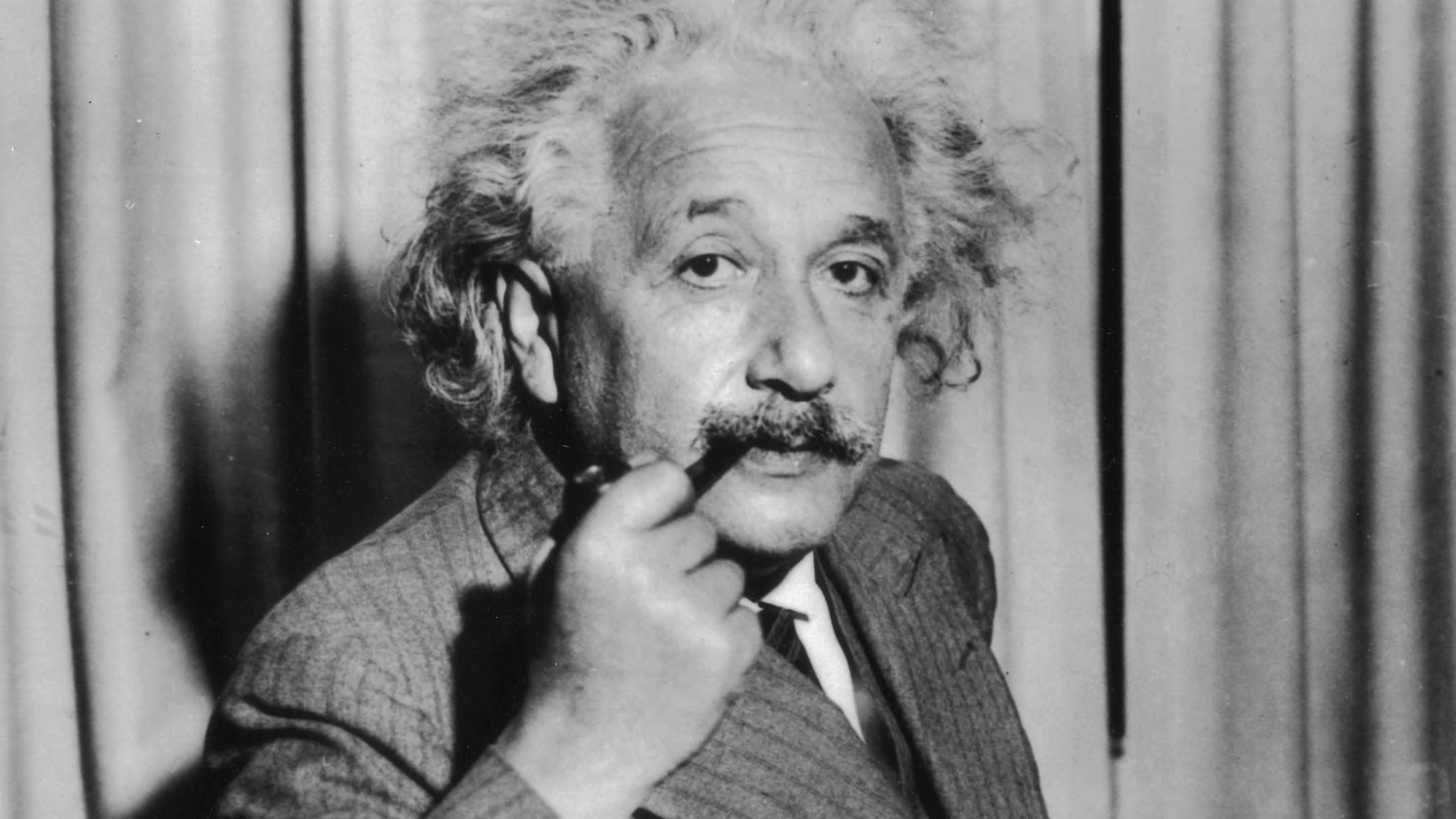
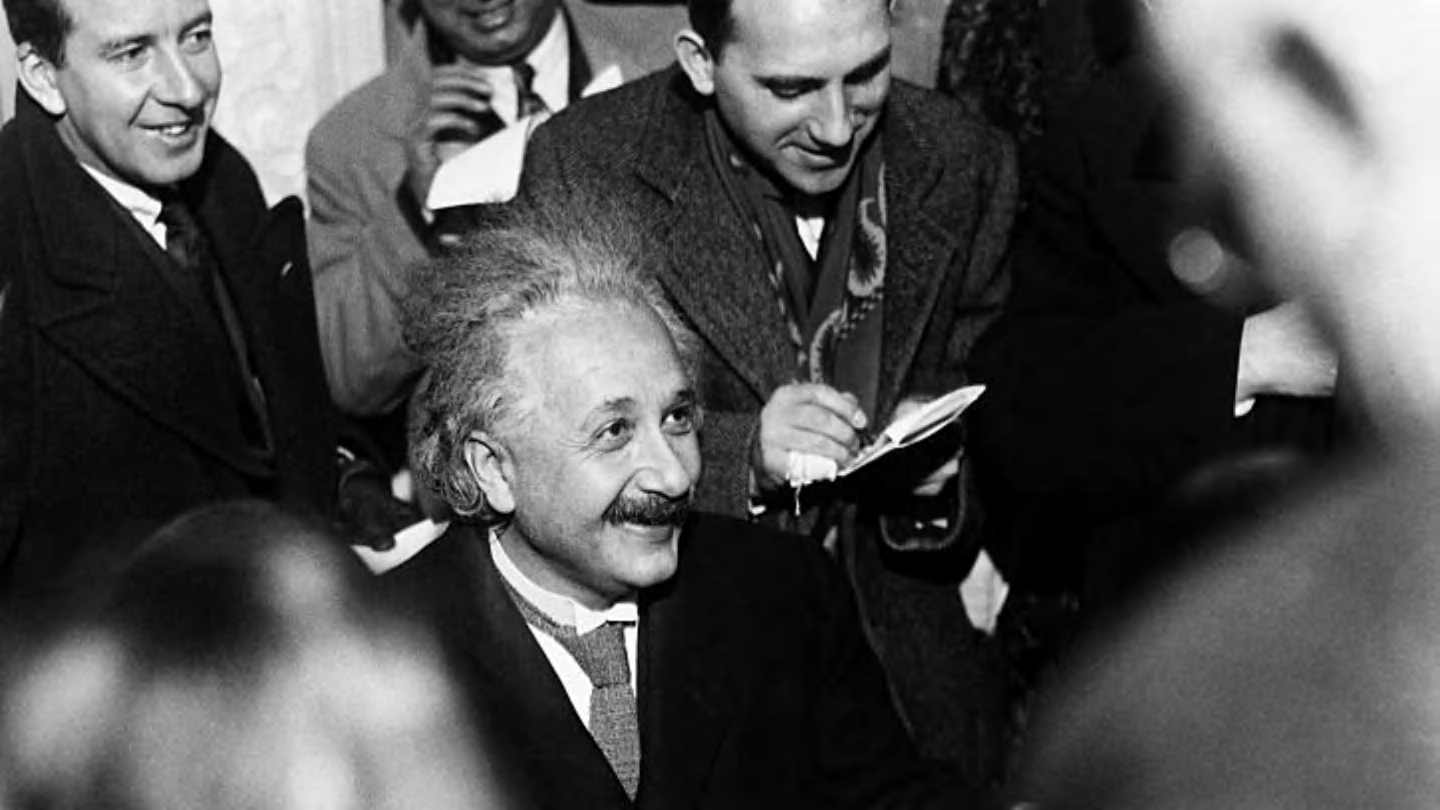
Today is Albert Einstein’s birthday and I found a great article on Mental Floss detailing some interesting facts about the man.

From Mental Floss:

In 1999, Albert Einstein was named TIME’s Person of the Century. The father of special and general relativity, Einstein’s theories introduced concepts that would help make dozens of modern technologies possible. “I have no special talents,” Einstein once said, “I am only passionately curious.” Here are some facts about the physicist who gave us wild hair and E=MC^2.

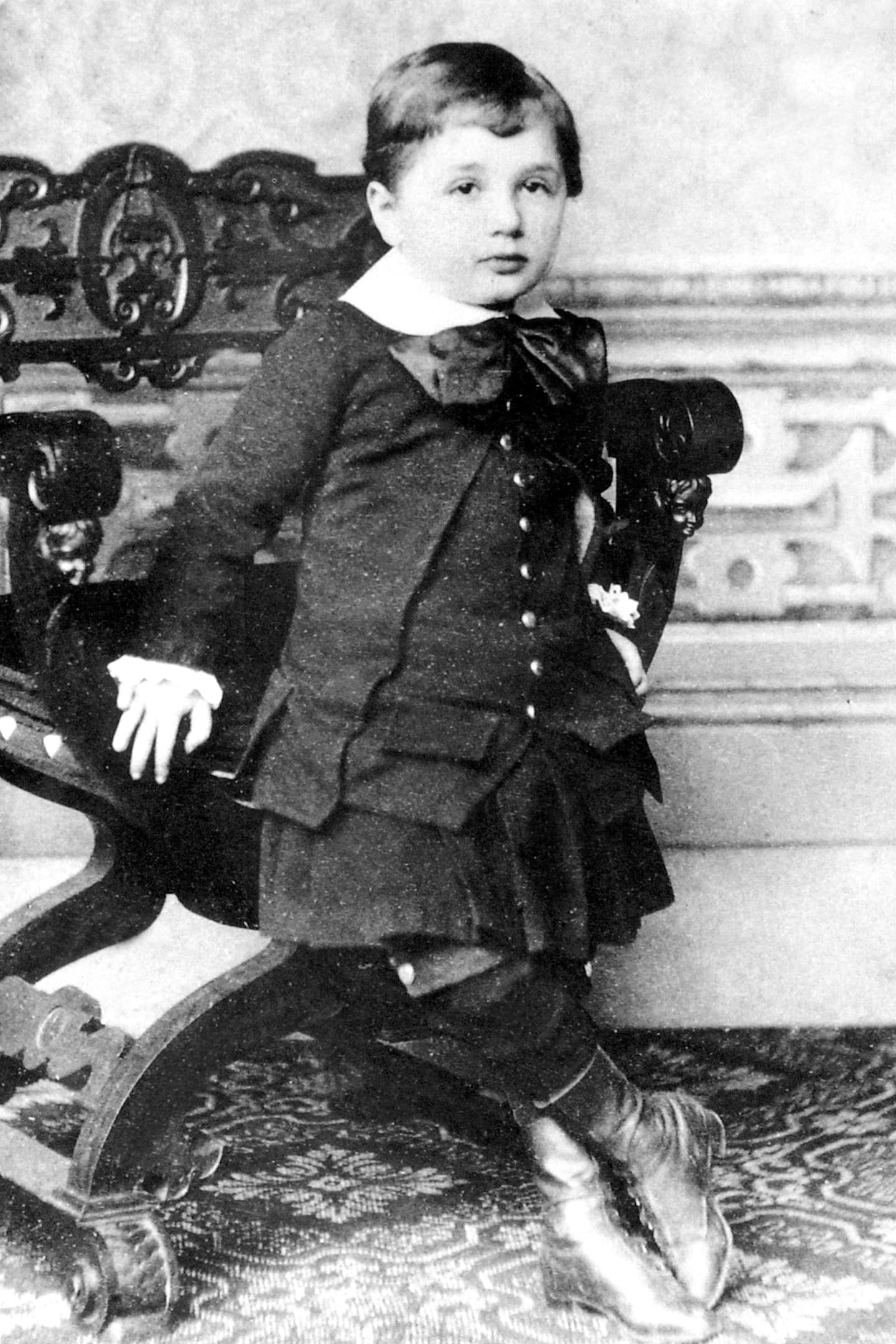
When Albert Einstein was born, his misshapen head terrified the room.

On March 14, 1879, baby Einstein emerged with a “swollen, misshapen head and a grossly overweight body,” according to Denis Brian’s book, Einstein: A Life. When she got a look at him later, his grandmother was terrified of the chunky child. She screamed, “Much too fat! Much too fat!” Thankfully, Albert would eventually grow into his body. (However, he did have trouble developing in other arenas: He supposedly didn’t start speaking until the age of 2.)

As a child, he was the king of throwing temper tantrums.

The young genius had a habit of throwing objects whenever he was displeased; once, a frustrated Einstein even threw a chair at his teacher. The 5-year-old enjoyed bombarding his tutors and family members: His sister Maja, who was often conked in the head by Einstein’s fusillades, later quipped, “It takes a sound skull to be the sister of an intellectual.”

According to a biography by Alice Calaprice and Trevor Lipscombe, “When he became angry, his whole face turned yellow except for the tip of his nose, which turned white.”

Einstein did not struggle in school.

The idea that Einstein had trouble in school is a myth. During summers, a pre-teen Einstein would study mathematics and physics for fun, eventually mastering differential and integral calculus by age 15. But that’s not to say he was a perfect student. Einstein hated rote learning and refused to study subjects that didn’t interest him. So, naturally, when the obstinate number-lover took the entrance exam to the polytechnic school in Zurich, he flunked the language, zoology, and botany sections.

Nobody knows Einstein’s IQ.

Einstein’s IQ was never tested, though that hasn’t stopped people from guessing. Lots of websites claim the physicist’s IQ was 160, but there’s simply no way of verifying that claim. “One fundamental problem with the estimates I’ve seen is that they tend to conflate intellectual ability with domain-specific achievement,” Dean Keith Simonton, professor emeritus of psychology at the University of California, Davis told Biography. For all we know, Einstein’s aptitude in arenas outside of physics might have rivaled that of an average Joe.

He refreshed his brain by playing the violin.

Whenever Einstein needed to relax, he turned to music. He started violin lessons at age 5 and, at around 17, impressed his teachers at cantonal school with his playing during a music exam. Around 1914, when Einstein lived in Berlin, he played sonatas with his friend and fellow theoretical physicist, Max Planck. And after he became famous, Einstein would play a handful of benefit concerts alongside greats like Fritz Kreisler. “Music helps him when he is thinking about his theories,” his second wife, Elsa, said. “He goes to his study, comes back, strikes a few chords on the piano, jots something down, returns to his study.”

Fashion was not Einstein’s strong suit.

Einstein hated wearing socks and was immensely proud of the fact that he didn’t have to wear them while giving lectures at Oxford in the 1930s. His antipathy apparently stemmed from a childhood realization: “When I was young, I found out that the big toe always ends up making a hole in a sock,” Einstein reportedly said. “So, I stopped wearing socks.” As an adult, he typically wore an undershirt, baggy trousers held by rope, and a pair of (occasionally women’s) sandals.

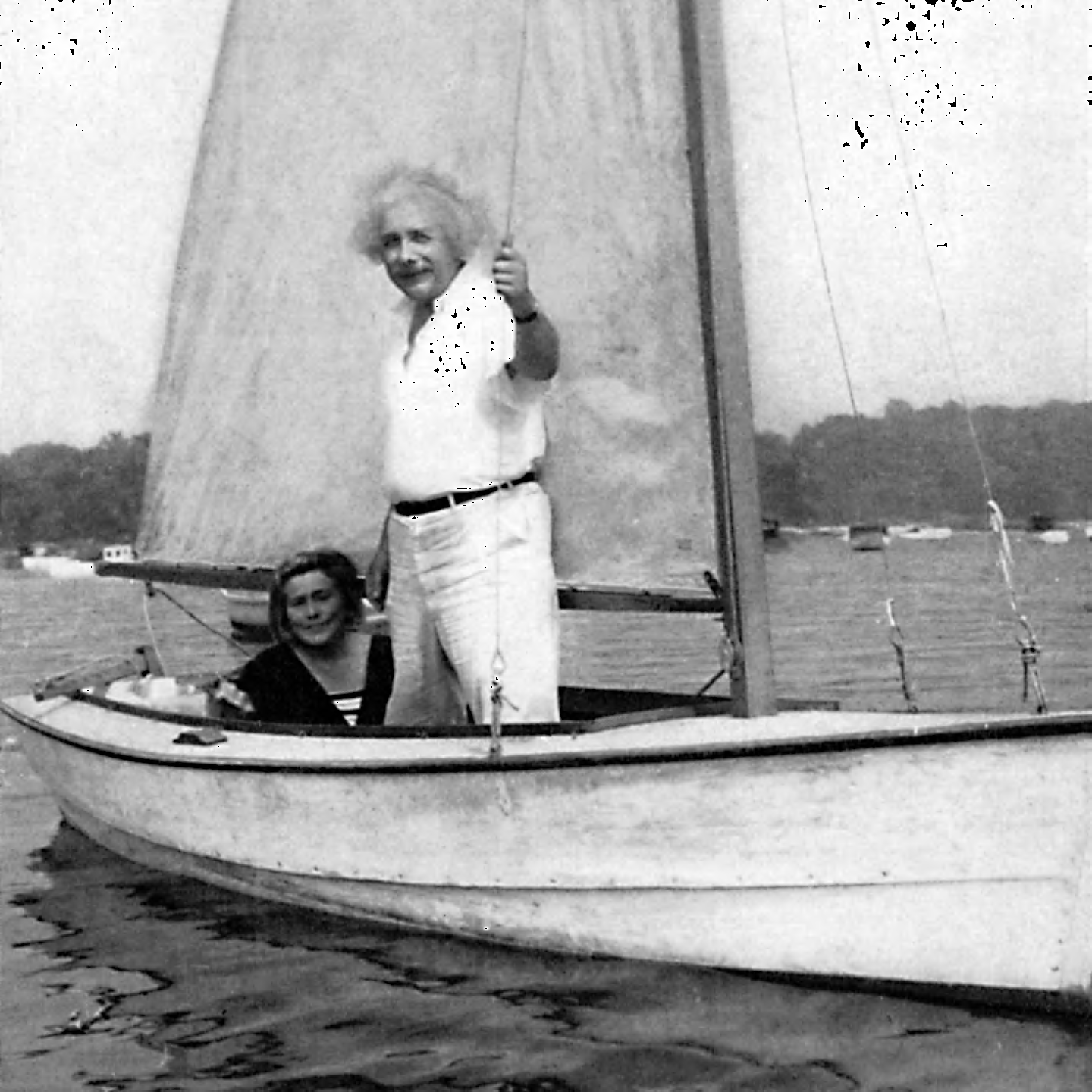
He loved sailing (and was absolutely terrible at it).

While an undergraduate in Zurich, Einstein fell in love with sailing—a passion that would persist throughout his life. There was just one problem: He was a horrible sailor. He regularly tipped his boat over and required rescue dozens of times. (His sailboat was named Tinef, Yiddish for “worthless.”) In 1935, The New York Times reported on Einstein’s sailing misadventures with the punny headline: “Relative Tide and Sand Bars Trap Einstein.”

Fatherhood gave Einstein his iconic hair.

As a young man, Einstein sported a well-maintained head of dark hair—that is, until his son Hans was born in 1904. Like many new parents, Einstein discovered that having a new mouth to feed changed everything: The patent clerk was so busy trying to support his family that he stopped combing his hair and visiting the barber. Slowly, an iconic look was born.

Einstein would spurn barbers for the rest of his life. His wife Elsa would cut his mop whenever it became disheveled.

He had a habit of mindlessly gorging on food.

When Einstein was a patent clerk, he formed a book club with two friends and called it the “Olympia Academy.” The trio usually dined on sausages, Gruyère cheese, fruit, and tea. But on Einstein’s birthday, his friends brought expensive caviar as a surprise. Einstein, who had a knack for mindlessly eating when talking about something he was passionate about, began stuffing his face while discussing Galileo’s principle of inertia—totally unaware of what he was eating. He later offered this excuse: “Well, if you offer gourmet foods to peasants like me, you know they won’t appreciate it.”

He had a bawdy sense of humor.

Einstein enjoyed the occasional dirty joke. When he accepted his first job as a professor, he said, “[N]ow I too am an official member of the guild of whores.” And when a member of his book club gave him a nameplate that said “Albert, Knight of the Backside,” Einstein proudly kept it tacked on his apartment door. Later in life, he’d tell jokes to his pet parrot, Bibo. (Einstein believed the bird was depressed and needed a laugh.)

He loved the famous tongue photo.

On his 72nd birthday, Einstein was leaving an event held in his honor. As he was getting into his car, photographers asked him to smile for the camera. Einstein, however, was sick and tired of grinning for a photograph—he’d been doing it all evening—so he popped his tongue out instead. Einstein liked the photo so much, he put it on his greeting cards.

He was an inventor.

Having spent seven years working in the Swiss patent office, Einstein was naturally curious about inventing and secured approximately 50 patents during his lifetime. He enjoyed tinkering with electronics and eventually patented a self-adjusting camera, a refrigerator that could last 100 years, and even a blouse.

When it came to love, Einstein was no genius.

Einstein, who married twice, had multiple extramarital affairs—including one dalliance with a possible Russian spy. His first marriage with Mileva Marić, a physicist he met at the Swiss Polytechnic School, soured after the birth of their third child. As their marriage crumbled, Einstein imposed a list of brusque—if not cruel—demands which included: “You will obey the following points in your relations with me: 1. You will not expect intimacy from me … 2. You will stop talking to me if I request it.” Unsurprisingly, they divorced. Later, Einstein married his cousin, Elsa Löwenthal.

A letter Einstein signed helped spark the Manhattan Project.

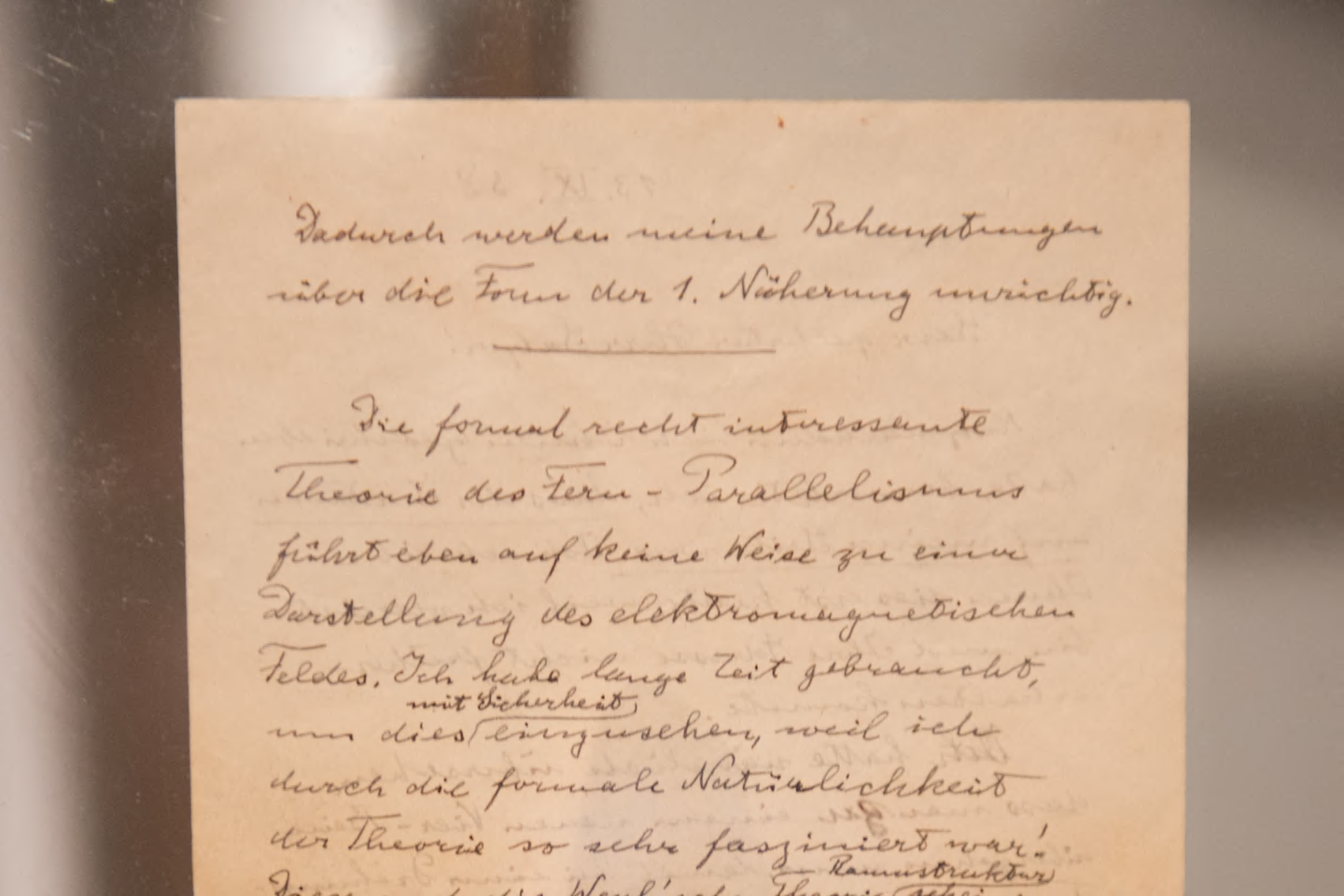
Einstein was not part of the Manhattan Project, but he was instrumental in getting it started. In the late 1930s, German scientists discovered nuclear fission of uranium, a major step toward the development of the atomic bomb. Much of the world’s uranium was held in the Congo—then a colony of Belgium—so two Hungarian-American physicists named Leo Szilard and Eugene Wigner decided to get Einstein to write a letter to his friend, the queen of Belgium. Einstein suggested a letter to a Belgian minister instead, but an encounter with an economist who knew President Franklin D. Roosevelt resulted in a change in direction and a letter that prompted America to start its own experiments.

He loved answering fan mail from children.

Einstein received countless letters from the public, but he always tried to answer mail sent by children. (In one letter, a young girl complained about her troubles with math. The professor supposedly wrote back, “Do not worry about your difficulty in mathematics. I can assure you mine are still greater.”) Einstein’s many correspondences with children—filled with charm and encouragement—are compiled in a book by Alice Calaprice called Dear Professor Einstein.

He turned down the presidency of Israel.

After the first president of the state of Israel, Chaim Weizmann, died in 1952, the prime minister asked Einstein to step into the (mostly ceremonial) role. The physicist declined, writing: “I am deeply moved by the offer from our state of Israel, and at once saddened and ashamed that I cannot accept it. All my life I have dealt with objective matters, hence I lack both the natural aptitude and the experience to deal properly with people and to exercise official functions.”

Einstein was an outspoken advocate for racial justice.

Having abandoned Germany in 1933 to avoid Nazi persecution, Einstein was sensitive to the racial discrimination he saw in the United States. He championed the rights of Black Americans and was a member of the NAACP. When the famed Black singer Marian Anderson came to perform at Princeton in 1937 and was denied a hotel room, Einstein invited her to stay in his home. He was also pen pals with W.E.B. Du Bois and, when Du Bois became the target of the Red Scare, Einstein effectively saved him by offering to be his character witness. In a 1946 speech he delivered at Pennsylvania’s Lincoln University, he called segregation “a disease of white people,” vowing, “I do not intend be quiet about it.”

He was the inspiration for Yoda.

Yoda’s face was partly modeled after Einstein’s. According to Star Wars special-effects artist Nick Maley, “a picture of Einstein ended up on the wall behind the Yoda sculptures and the wrinkles around Einstein’s eyes somehow got worked into the Yoda design. Over the course of this evolutionary process Yoda slowly changed from a comparatively spritely, tall, skinny, grasshopper kind of character into the old wise spirited gnome that we all know today.”

Einstein’s theories are more relevant than you might think.

It’s easy to assume that Einstein’s theories of relativity are purely theoretical, but they really do affect your everyday life. For instance, the theory of general relativity states that gravity affects time: Time moves by faster for objects in space than objects here on Earth. And that has profound implications for many space-based technologies, especially the accuracy of your GPS. His theories also explain how electromagnets work and are foundational to nuclear technology.

SOURCE: MENTAL FLOSS   LUCAS REILLY

Weird Wednesdays: Cave House, Festus Missouri

This month’s Weird Wednesday house is actually a cave!  The story comes from UnusualPlaces.Org.

There is a cave in Missouri, USA, that has a particularly storied history.

It began as a mine underneath a forest in the 1930s. In the 1950s, the 17,000 square foot space became ‘Caveland’ – a roller skate rink and concert venue that played host to major pop acts, including Tina Turner.

Caveland closed its doors in 1985, and it was transformed again, this time into a glass recycling center until it shut in 1990.

After that, it stood unused, seemingly for good. Then, finally, in 2003, it was discovered for sale online by Curt and Deborah Sleeper. The couple fell in love with the cave, bought it, and set about the arduous task of turning it into a home.

It nearly didn’t happen at all. Struggles in financing the cave’s purchase meant the Sleepers were on the verge of moving to Belize before the owner finally agreed to a down payment of half the value in return for funding the rest.

With finances stretched to the limit, he Sleepers enlisted acquaintances’ help to build the property from glass doors and other material from a nearby store. In the meantime, they lived in a giant tent inside the cave.

Four years later, the cave had been converted into an incredible three-bedroom house and office space. Inside, the space is vast (the cave itself is three acres in size), with dining and living rooms on the ground floor and the bedrooms on a mezzanine above the kitchen. The property also benefits from a natural spring.

The website, caveland.us, is currently run by the Sleeper family and they still live in the home. It is located at 1101 North 11th Street in Festus.

SOURCE: UNUSUAL PLACES.ORG   MIKE J HALL

Lucky Charms

Lucky charms: Some people swear by them while others think they’re silly. But regardless of whether a rabbit’s foot or a favorite number really attracts Lady Luck, lucky charms can be fun and make you feel more optimistic. When you have fun and feel more positive, that attitude makes you luckier, too!

If you don’t have a favorite lucky symbol already, maybe it’s time to find one that inspires you. Here are some popular lucky charms from around the world.

Lucky Four-Leaf Clover Charms

Four-leaf clovers are an ancient Irish symbol of luck. Among the Celtic, it was a common belief that a four-leaf clover could help people see fairies and avoid their mischief, a common source of bad luck.  The four leaves were rumored to have mystical powers representing positive attributes. Some legends attribute them to faith, hope, love, and luck, while others say they’ll bring fame, wealth, health, and faithful love.

There are many variations of clover that always have four leaves, but the lucky ones come from the white clover plant, Trifolium repens. “Trifolium” literally means three-leaved; four-leaved plants are a genetic mutation.  True four-leaf clovers are rare, with only about one in 10,000 plants carrying the lucky leaves.  To know you’ve found a true four-leaf clover, look for one leaflet that’s smaller than the others. If all four leaflets are the same size, you are probably looking at the wrong variety of clover.

Lucky Horseshoe Charms

Horseshoes are one of the oldest lucky superstitions, with various legends from different cultures attributing lucky powers to them. One legend says that horseshoes are lucky because they are made of iron. Mischievous fairies couldn’t stand the touch of iron, so they shied away from houses that had horseshoes on them.

Another legend attributes lucky horseshoes to Saint Dunstan. According to the legend, the devil commanded Dunstan, who was a blacksmith, to shoe his horse. Instead, Dunstan nailed a horseshoe to the devil’s foot. He only agreed to remove it and ease the devil’s pain when he received a guarantee that the devil would stay away from any house with a horseshoe on the door. After that, any house with a horseshoe was guaranteed to be lucky.

Lucky Dice (Fuzzy or Otherwise) Charms

Many games of chance are played with dice, so it’s no surprise that they became a symbol of luck. You might be surprised to know that, unlike many of the lucky charms on this list, fuzzy dice are a relatively recent invention. During World War II, fighter pilots would fly missions with terrible odds of coming home again. They’d bring lucky charms with them in the hopes of tipping the odds in their favor. Gambling items like cards and dice were popular charms to bring aboard the fighter planes. Knowing the WWII tradition, Deccofelt Corp started marketing fuzzy dice to hang on the rearview mirrors of cars in 1959, and a fad was born. 

Ladybugs as Good Luck Charms

Ladybugs are popular insects worldwide, and many cultures believe they bring good luck. In German-speaking countries, they are literally called lucky bugs: “Glückskäfer”

How can a ladybug make you luckier? Some cultures say that if a ladybug lands on you and you don’t brush it off, your luck will improve. Others say that they’re a sign of impending love. For example, if a man and a woman see a ladybug at the same time, they’ll fall in love. In Belgium, a ladybug crawling across a maiden’s hand was a sign that she would soon be married.

And that’s not the only way ladybugs bring luck. Farmers believed a large number of ladybugs in the spring was a harbinger of a good harvest that year. Be careful, however, around these cheerful-looking insects. Killing a ladybug can bring you misfortune. When you pick your lucky charm, keep in mind that all ladybugs are not created equal in the luck department; The deeper red their color and the more spots they have, the luckier you’ll be!

Lucky Number Seven Charms

Growing up, you may have heard that seven was the luckiest number, but did anyone tell you why? The number seven is connected with luck, perfection, and knowledge in many cultures.

One reason might be that the number seven has special mathematical properties. The ancient Greeks called 7 “the perfect number,” the sum of 3 (triangle) and 4 (square), which are perfect forms. Seven is an important number in other ways, too:

There are 7 days of the week.

There are 7 colors in the rainbow.

7 planets are visible to the naked eye.

The 7th son of a 7th son is supposed to be especially gifted and lucky.

7 is a winning roll in many games of chance.

How can you adopt the lucky seven as a lucky charm? You could make a slot machine showing all sevens or you could be more subtle and pick 21 as your token: three sevens.

Lucky Number Eight Charms

In China, however, the number 8 is considered the luckiest number, not 7. The reason is much clearer than with the number 7: Its luck-bringing properties stem from a play on words. In Chinese, the word for the number 8 sounds a lot like the word for prosperity. The number 8, with its two graceful curves, is also a balanced number. Balance and harmony are believed to be vital ingredients for a lucky life.

Lucky Rabbit Foot Charms

Lucky rabbit foot keychains, whether real or faux, are popular symbols of luck. The original legend says that the left hind foot of a rabbit that is captured in a cemetery at night can ward off evil magic. Luckily, you don’t have to go through that much effort to have a fun rabbit’s foot charm for inspiration. There are fake rabbits’ feet for sale if you don’t want to harm an actual bunny.

More Lucky Animal Charms

Rabbits aren’t the only animals to be used as a lucky charm. Here are some more animals you can use as your lucky symbol:

In feng shui, goldfish are said to attract luck and prosperity. Dragons and horses are also considered lucky.

In Germany, lucky pigs (“Glücksschwein”) are given as tokens to wish friends and family a happy and lucky New Year.

Turtles and tortoises are considered lucky due to their long lifespans.

Ancient Egyptians considered the scarab beetle to be lucky.

In Korea, the swallow is considered a sign of good luck thanks to the story of ​Heungbu and Nolbu, where a sparrow rewarded a kind deed with prosperity.

Rainbow Good Luck Charms

Rainbows are considered lucky because of the legend that says that if you dig at the end of a rainbow, you’ll find a pot of gold. Rainbows are great lucky symbols because they’re beautiful and cheery.

Lucky Coin Charms

Most of us know the old saying, “Find a penny, pick it up, and all that day you’ll have good luck!” Those found pennies are fun luck-bringers. Some people say that not just any penny lying on the ground is lucky, but that lucky pennies have to be found face-up.

Lucky Bamboo Charms

Lucky bamboo is technically not bamboo at all, but a close relative called Dracaena. It’s a hardy, long-lived plant, which might account for its lucky properties.

The more stalks a lucky bamboo plant has, the more luck it brings. A plant with three stalks is said to bring happiness, wealth and longevity to the owners. What benefits would more stalks bring you? Of course, any green plant is a good lucky charm in your home or office. According to The Sill, studies show they improve your mood and clean the air indoors.

Dreamcatcher Luck Charms

Dreamcatchers come from Native American lore. Looking like a web or net stretched over a loop and decorated with bright beads and feathers, they catch bad dreams as they enter a household.  By capturing the disturbing dreams, they make the owner happier, more balanced, and luckier. Plus, they look cool, too.

To use dreamcatchers as lucky charms, hang one inside your office window to keep bad luck away. Or buy a pair of dreamcatcher earrings or a dreamcatcher necklace to bring luck with you wherever you go.

Evil Eyes to Ward Off Bad Luck

While you may give someone the evil eye when they annoy you, people used to take malevolent looks much more seriously. Usually triggered by jealousy, giving someone an evil eye was supposed to cause all manner of suffering from mental illness to physical maladies. For thousands of years, people have been using evil eye talismans, or nazur, to ward off the bad luck caused by these curses.

The evil eye lucky charm takes several different forms. Some cultures use a hand with an eye in its center for protection. Others use simple blue or green beads. But some of the most popular and beautiful evil eye talismans come from Turkey. They use glass beads with alternating blue and white circles to bring themselves more luck.

Acorns as Lucky Symbols

Because of its association with the Norse god Odin, the lowly acorn is also considered a symbol of luck. Odin hung himself from an oak tree to gain knowledge, so the acorn has come to symbolize wisdom. The Norse also believed that acorns could bring divine protection and placed them in the windows of their homes to ward off lightning. During the Norse Invasion, Englishmen would carry acorns in their pockets, perhaps hoping that they’d make their conquerors more sympathetic.

As the saying, “great oaks from little acorns grow ” indicates, acorns also signify fertility, youth, and prosperity.

SOURCE: LIVEABOUT.COM

What Shall we Bake Today?

Since St. Patty’s Day is this month, how about a green bundt cake?  This recipe is super easy and quick using a cake mix and canned frosting!

Pistachio Bundt Cake

Ingredients

1 box Pillsbury™ Classic White cake mix

1 box (3.4 ounce pistachio instant pudding mix)

1 cup water

1/2 cup vegetable oil

3 large eggs

1 can Pillsbury™ Classic White frosting

Chopped pistachios for garnish (optional)

Instructions

Preheat oven to 350 degrees.

Spray a bundt pan with cooking spray if needed and set aside.

In a large bowl mix together cake mix and pudding mix.

Stir in water, vegetable oil and eggs until batter is smooth.

Pour into bundt pan and bake for 39-43 minutes until toothpick inserted into the center of the cake comes out clean.

Cool cake completely.

Carefully turn cake over onto serving plate.

Remove top and foil from frosting and microwave in 15 second intervals until frosting is pourable but not hot.

Drizzle frosting over cake and sprinkle with chopped pistachios.

Set aside until frosting is firm.

Enjoy!