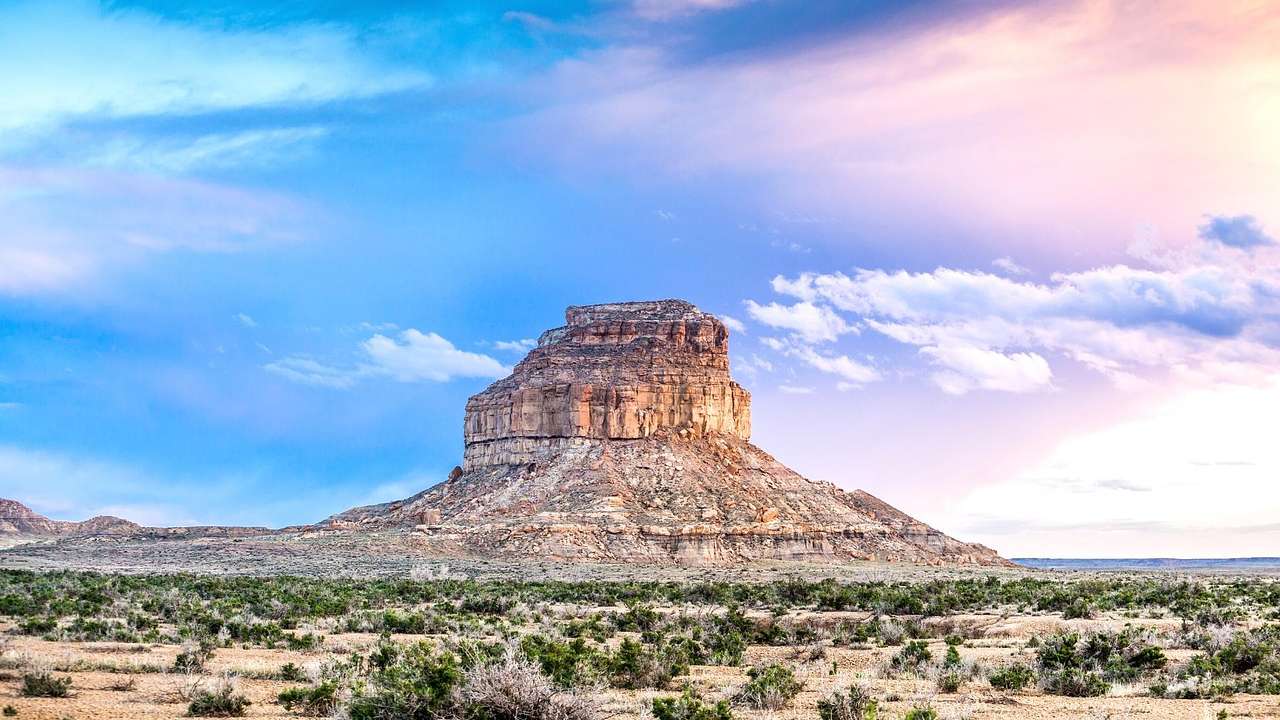
Happy New Mexico Day!

Trip Advisor advises these spots if you’re traveling to New Mexico.

Sandia Peak Tramway

Ride to new heights on North America’s longest aerial tram ride. Sandia Peak Tram takes visitors 2.7 miles or 10,378 ft up the Sandia Mountains. Breath in the fresh mountain air and enjoy breathtaking views of over 11,000 square miles of New Mexico.

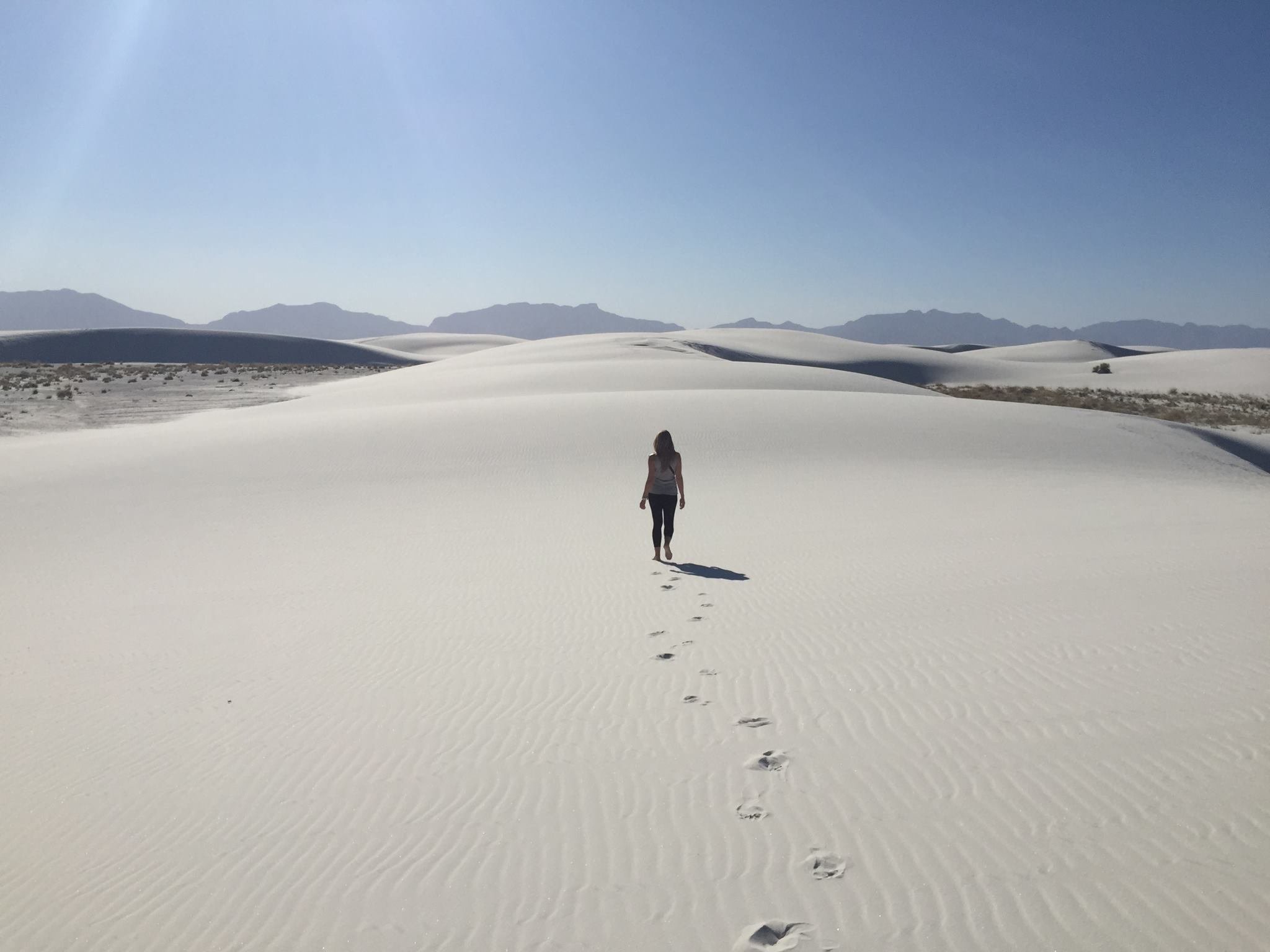
White Sands National Park

Visitors to this endless waterless sea can enjoy driving, hiking, visiting a museum and sledding down the huge dunes.

Meow Wolf Santa


The original permanent Meow Wolf exhibition, House of Eternal Return, is a monumental achievement in DIY world creation and collaboration, featuring over 70 rooms made by local and community artists. House of Eternal Return is an unique & immersive art installation with multimedia elements and a mysterious narrative throughout.

Bandelier National Monument

Bandelier National Monument is 50 square miles of the Pajarito Plateau, on the slopes of the Jemez Volcanic field in the Jemez Mountains. Over 70% of the Monument is Wilderness, with over 1 mile elevation change, from about 5000′ along the Rio Grande to over 10,000′ at the rim of the Valles Caldera, providing for a wide range of life zones and wildlife habitat. There are only 3 miles of road, but over 70 miles of hiking trails. The Monument, founded in 1916, protects Ancestral Pueblo archeological sites, a beautiful landscape, and the country’s largest Civilian Conservation Corps National Landmark District.

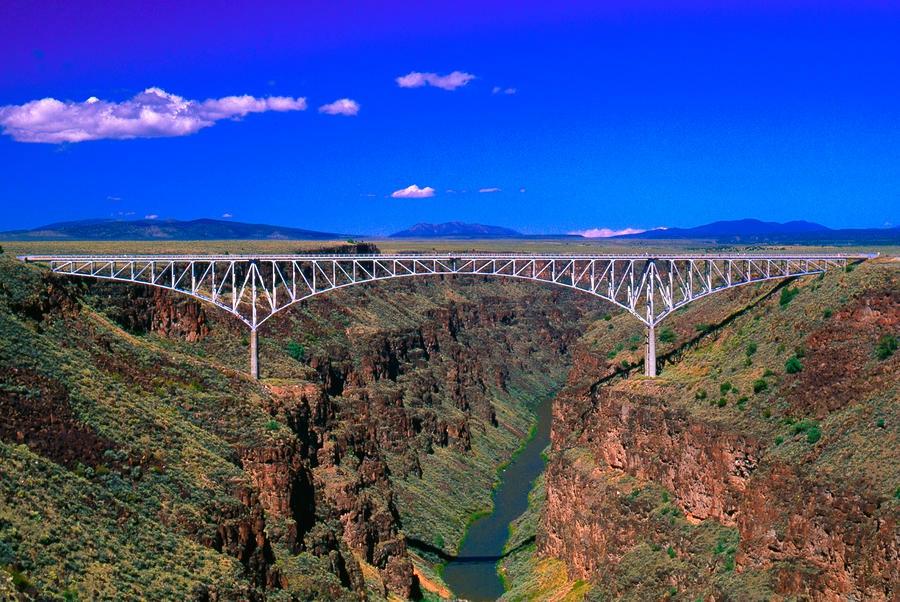
Rio Grande Gorge Bridge

SOURCE: TRIPADVISOR.COM

Happy Birthday, Sir!

Gail, from Wolf’s, made an open out of wonderful Trump stories that many have never heard about.  This is only a partial listing from her original but I excluded the links she provided because many opened to PAGE REMOVED or not a valid link anymore.

From Frankenstein@breitbart.com

And with such a great man – like Trump – running, why even bother with a candidate under criminal investigation, like Hillary?

(1) In 1986, Trump prevented the foreclosure of Annabell Hill’s family farm after her husband committed suicide on the day of the auction. He personally called to stop the sale and gave Hill $77,000.00 to pay off the mortgage. Trump decided to do this after seeing her pleas for help in the news.

(2) In 1988, a commercial airline refused to fly Andrew Ten, a sick Orthodox Jewish child with a rare illness, cross-country for medical care because he had to travel with an elaborate life-support system. His grief-stricken parents contacted Trump for help and he didn’t hesitate to send his own plane to take the child from L.A. to New York so he could get treatment.

(3) In 1990, Ryan White (18), died of AIDS. Trump called his family at home after his death.

(4) In 1991, 200 Marines who served in Operation Desert Storm spent time at Camp Lejeune in North Carolina before they were scheduled to return home to their families. However, the Marines were told that a mistake had been made and an aircraft would not be able to take them home on their scheduled departure date. When Trump got wind of this, he sent his plane to make two trips from North Carolina to Miami to safely return the Marines to their families.

(5) In 1991 Trump saved a man from a mugging. He told his limo driver to pull over and he confronted the mugger, who was beating the other man with a baseball bat. After that, the mugger recognized Trump and ran away.

(6) In 1995, a motorist stopped to help Trump after the limo he was traveling in got a flat tire. Trump asked the Good Samaritan how he could repay him for his help. All the man asked for was a bouquet of flowers for his wife. A few weeks later Trump sent the flowers with a note that read: “We’ve paid off your mortgage.”

(7) In 1996, Trump filed a lawsuit against the city of Palm Beach, Florida accusing the town of discriminating against his Mar-a-Lago resort club because it allowed Jews and blacks. Abraham Foxman, who was the Anti-Defamation League Director at the time, said Trump “put the light on Palm Beach not on the beauty and the glitter, but on its seamier side of discrimination.” Foxman also noted that Trump’s charge had a trickle-down effect because other clubs followed his lead and began admitting Jews and blacks.

(8) In 1997, Trump & Mel Farr teamed up to help young Detroit artists appear at Carnegie Hall.

(9) In 2000, Maury Povich featured a little girl named Megan who struggled with Brittle Bone Disease on his show and Trump happened to be watching. Trump said the little girl’s story and positive attitude touched his heart. So, he contacted Maury and gifted the little girl and her family with a very generous check.

(10) After 9/11, Trump sent over 200 of his own people to look for survivors in the wreckage.

(11) After 9/11, Trump “learned about Clyde Frazier Jr., who ran the Harlem Hoops tournament in the inner city and was killed in the 9/11 attacks” and “searched down the family and donated the money to keep that tournament going.”

(12) In 2007, Trump sued the city of Palm Beach for fining him for having a tall flagpole w/ the American Flag. The case settled. Trump donated the $100,000 settlement proceeds he received to Iraqi War Veterans and his local VA hospital. [While we were in Iraq, he also let military members use his Mar-a-Lago resort for free every Monday].

(13) In 2008, after Jennifer Hudson’s family members were tragically murdered in Chicago, Trump put the Oscar-winning actress and her family up at his Chicago hotel for free. Trump even hired extra security for her. He said: “She’s a great girl. And we’re protecting them well. They are very safe.”

(14) In 2008, Ed McMahon’s house went into foreclosure. Trump purchased it and allowed Ed to continue living there.

(15) In 2011, Trump & his siblings gifted $1 million to a hospital that treated their parents.

(16) In 2013, New York bus driver Darnell Barton spotted a woman close to the edge of a bridge staring at traffic below as he drove by. He stopped the bus, got out and put his arm around the woman and saved her life by convincing her to not jump. When Trump heard about this story, he sent the bus driver a $10,000 check simply because he believed his good deed deserved to be rewarded.

(17) In 2014, Trump gave $25,000 to Sgt. Andrew Tamoressi after he spent 7 months in a Mexican jail for accidentally crossing the US-Mexico border. President Obama couldn’t even be bothered to make one phone call to assist with the Marine’s release; however, Trump opened his pocketbook to help this serviceman get back on his feet.

(18) In 2016, Melissa Consin Young attended a Trump rally and tearfully thanked Trump for changing her life. She said she proudly stood on stage with Trump as Miss Wisconsin USA in 2005. However, years later she found herself struggling with an incurable illness and during her darkest days she explained that she received a handwritten letter from Trump telling her she’s the bravest woman, I know. She said the opportunities that she got from Trump and his organizations ultimately provided her Mexican-American son with a full-ride to college.

Additionally:
– Trump helped Maytag keep some of its stores in the U.S. by buying items from them that could be used in his hotels.

– Trump saved an ice-skating rink in Central Park by taking over the project, and finishing the rink by Christmas time for free. He was two months ahead of schedule, and $750,000 under budget. He also operated the rink for a year, and donated all profits to charity.

– Barbara Res, at 33 years old, became the first women to ever be put in charge of supervising the construction of a skyscraper, when Trump hired her in 1980.
– Trump donated $100,000 to a large Christian ministry after Jerry Falwell Jr. told Trump the ministry needed help.

– Trump has donated his money to several health organizations including the American Cancer Society, American Diabetes Association, Alliance for Lupus Research, Autism Speaks, Crohn’s & Colitis Foundation of America, and many more.

HAPPY BIRTHDAY, SIR!!

THANKS GAIL!!!!!

Happy National Sewing Machine Day!

I LOVE my sewing machine and have been an avid sewer since I was 10.  I watched my mom make dresses for us girls and little suits for my brother.  But Mom also made slipcovers and curtains!  It’s because of her that I love sewing and fabrics and crafts of all sorts!  This article details 23 facts about sewing machined, but I have only posted a few.  More may be found at the link at the bottom.

From: HASTYREADER.COM:

The sewing machine’s journey from a controversial industrial tool to a high-tech domestic staple is a fascinating tale of innovation and rivalry. From the riot-sparking factory of Barthélemy Thimonnier to the fierce patent wars between Isaac Singer and Elias Howe, the industry’s roots are surprisingly dramatic. Today, that evolution continues as ornate Victorian cast-iron frames are replaced by AI-driven devices featuring Wi-Fi, fabric sensors, and laser projectors. This article explores the rich history, unexpected brand origins—ranging from weapon foundries to “snake eyes”—and the cutting-edge technology that defines the world of modern stitching today.

Fact

In 1831, French tailor Barthélemy Thimonnier opened the world’s first machine-based clothing factory. However, a mob of nearly 200 angry tailors, fearing for their livelihoods, stormed the workshop and destroyed all eighty wooden sewing machines, forcing Thimonnier to flee for his life.

Fact

Although we associate sewing machines with clothing, the first patented design by Thomas Saint in 1790 was intended for leather and canvas. His blueprints were so ahead of their time that a working chain-stitch model wasn’t successfully built until eighty-four years later.

Fact

Today’s high-tech sewing machines use sophisticated sensors to detect fabric thickness in real-time, instantly communicating with an internal microprocessor to auto-adjust thread tension and pressure. This digital precision eliminates manual guesswork, allowing the machine to maintain perfect stitches across varying materials.

Fact

Elias Howe revolutionized garment construction by placing the needle’s eye at its point, a radical departure from traditional hand-stitching needles. This innovation allowed the thread to pass through fabric without needing to go all the way through, enabling the first practical lockstitch mechanism.

Fact

Victorian-era sewing machines were often adorned with deep ‘Japanning’ finishes and real 14-karat gold leaf decals. Manufacturers designed these ornate cast-iron tools to resemble high-end furniture, ensuring they were viewed as prestigious domestic collectibles rather than mere industrial equipment within middle-class homes.

Fact

In 1856, fierce rivals including Isaac Singer and Elias Howe ended years of legal conflict by forming the Sewing Machine Combination. As the first patent pool in American history, it allowed competitors to share essential technologies through a single licensing fee.

Fact

To navigate the high legal costs of the mid-nineteenth century patent wars, Isaac Singer pioneered the installment payment plan. This novel strategy allowed him to outsell his rivals by making machines affordable, despite being legally forced to pay Elias Howe royalties.

Fact

Before becoming a renowned sewing machine brand, Husqvarna was a Swedish weapons foundry established in 1689. In 1872, needing new products, the company adapted its precision engineering used for rifle production to manufacture high-quality sewing machines, ultimately pivoting away from firearms.

Fact

In 1928, brothers Masayoshi and Jitsuichi Yasui developed a chain-stitch machine for straw hats. They initially wanted to name their brand “Sister” as a nod to seamstresses, but finding the name already trademarked, they chose “Brother” to celebrate their sibling cooperation instead.

https://hastyreader.com/facts-about-the-sewing-machine

SOURCE: HASTYREADER.COM

Hawaii State Tree: Kukui

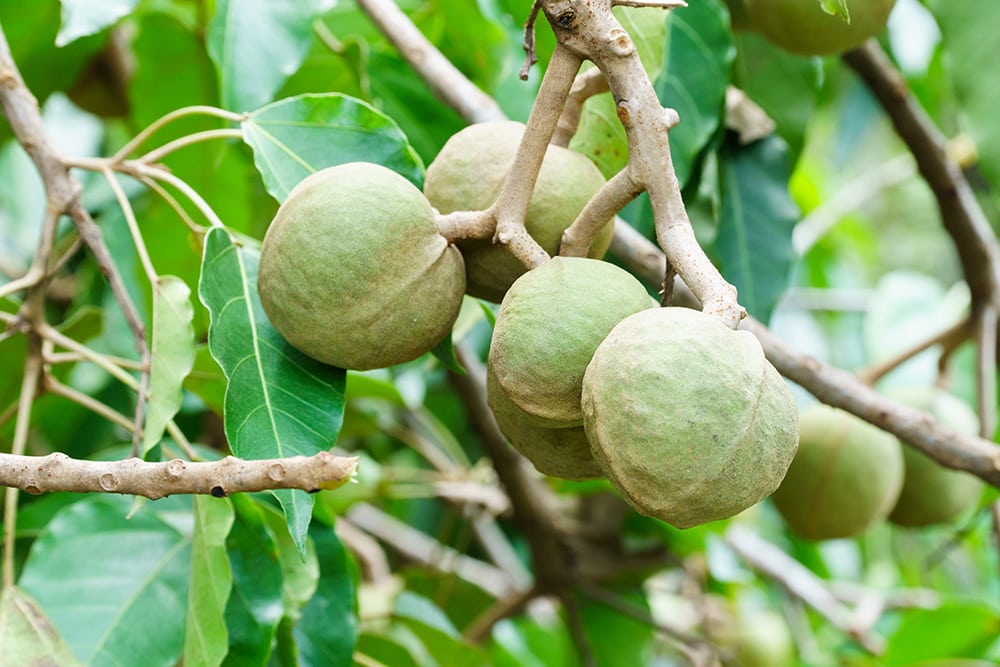
The kukui is a ‘canoe plant’ brought by Polynesian voyagers. Early settlers carried essential plant species in their double-hulled canoes during Pacific voyages. Kukui was among the most important plants they transported to Hawaii. Archaeological evidence shows kukui cultivation in Southeast Asia dating to 13,000 BC. Polynesians spread the tree throughout Pacific islands. The species originated in Malaysia or Indonesia, not Hawaii.

Voyagers selected kukui for its versatility. The tree provided numerous resources crucial for survival. Seeds were easy to transport and grew quickly. This made kukui ideal for establishing new settlements. The oily nuts served as the primary light source before Western contact. Hawaiians strung candlenuts on palm leaf midribs. They burned the nuts one at a time, each providing light for several minutes. Stone lamps also burned kukui oil.

Fishermen applied kukui oil to calm water surfaces. The oil spread across choppy water, creating a clear view beneath. This helped fishermen see their nets and catch fish. A Hawaiian proverb states ‘Pupuhi kukui—malino ke kai’ meaning ‘spewed kukui nuts—calm seas.’

The nuts provided food when roasted and ground into paste called ‘inamona. The oil treated sunburn and wounds. Tree bark made black dye for tapa cloth. The durable wood formed canoes and storage containers.

The silvery-pale green foliage stands out from other Hawaiian trees. Young leaves and branches have star-shaped hairs that create a whitish appearance. This distinctive coloring helps identify kukui forests from a distance. Large heart-shaped leaves have three to five lobes. The leaves measure four to eight inches long with toothed edges.

Small creamy-white flowers appear in dense clusters at branch ends. The flowers bloom primarily in winter and spring. Walnut-sized fruits turn from green to brown when ripe.

The kukui symbolizes enlightenment, protection, and peace in Hawaiian culture. Its role as a light source connects it to guidance and illumination. The tree represents the resourcefulness of ancient Hawaiians who used every part of the plant. Kukui also honors Polynesian voyaging heritage and the plants that enabled settlement of remote Pacific islands alongside symbols such as the Hawaii state flag.

Weird Wednesdays: The Castle House

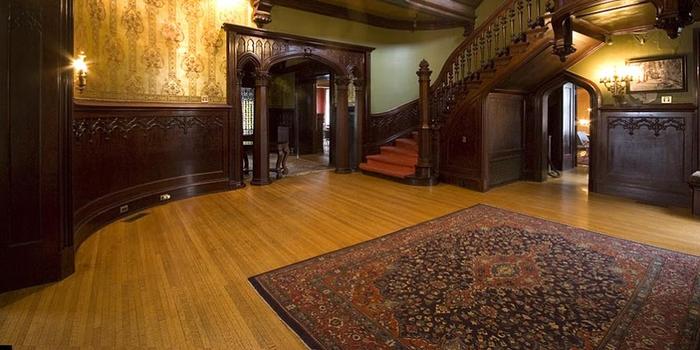
This month’s weird building comes from Nebraska! Nicknamed The Castle, George and Sarah Joslyn completed one of Nebraska’s greatest homes—a 35-room Scottish Baronial mansion atop a hill on Omaha’s outskirts in 1903.

The four-story house was completed at a cost of $250,000—about $9 million in modern currency. The pace of construction—18 months—was amazing, given the rich use of carved wood, stained glass, chiseled stone, mosaic tiles, and wrought iron. The Castle and the outbuildings were built of Kansas Silverdale limestone.

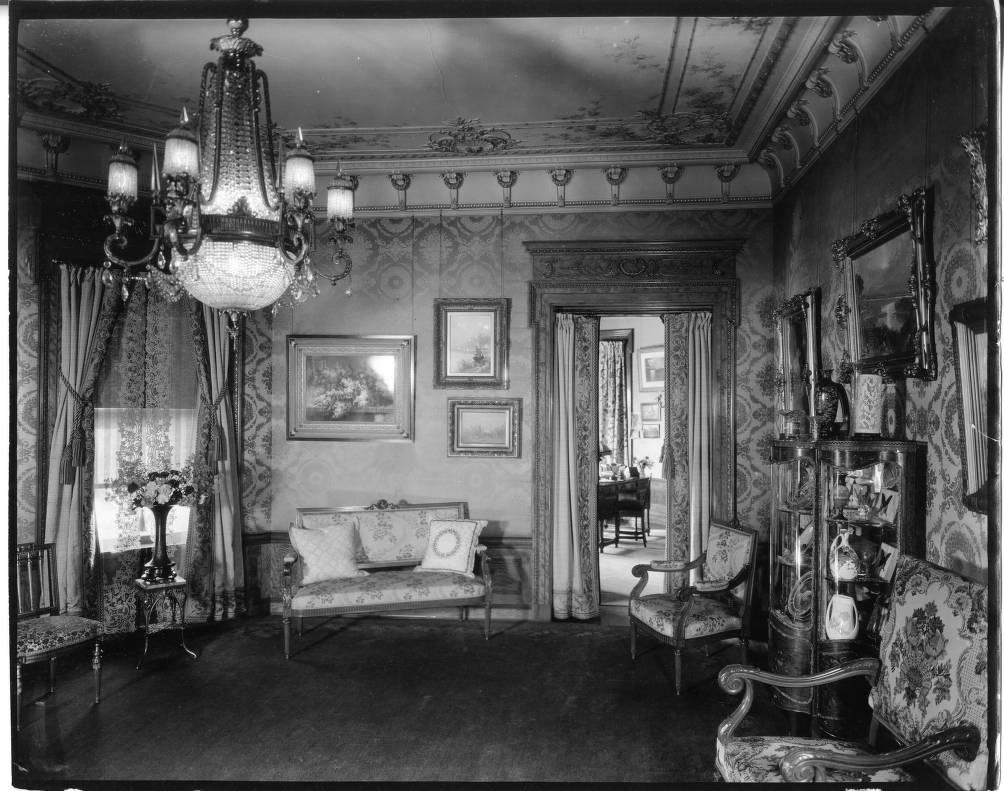
The Castle includes a reception hall, music room, ballroom, a library and gold drawing room. The basement at one time housed a bowling alley. With the addition of a music room in 1907, the house totaled 19,360 square feet. The interior of the home’s conservatory was designed by famous Chicago-based landscape architect Jens Jensen in 1913.

George Joslyn died in 1916, in his sixties. Sarah lived on the 5.5-acre estate until her death in 1940 at age 88. From 1944 to 1989, the home served as the headquarters of the Omaha Public Schools’ administrative offices. During their residency, many changes were made to the Castle to accommodate the staff including installation of a modern central heating and cooling system, an elevator, and separate male and female restrooms. 

To preserve the integrity of this architectural treasure, the State of Nebraska took possession and in 2010, Joslyn Castle & Gardens, a 501©3 non-profit organization, purchased the Castle and grounds from the state.

The castle is an Omaha Landmark Historic Structure and on the National Register of Historic Places for National Significance. The grounds are part of the Nebraska Statewide Arboretum.

The Joslyn Castle is an example of Scottish Baronial Revival architecture, a romantic outgrowth of the 19th-century Gothic Revival movement.  Examples of Scottish Baronial hallmarks include crow-stepped gables, crenellations, and small turrets or bartizans, and the style can be found in innumerable public and private buildings of this era throughout Great Britain, the United States, and Canada.

 Much has been made of the influence of architect John McDonald’s Scottish ancestry on the choice of Scottish Baronial style for the Castle, but the reality is more complex. The Joslyns, like other Gilded Age millionaires, chose a style that would lend an air of old money and sophistication to their newly found wealth and position.

The specific idea of a Castle for their home might have originated in Joslyn’s youth from Union Pacific Railroad tycoon Jay Gould’s greatly admired home, Lyndhurst, with its medieval towers and extensive greenhouses. A third influence was likely that of another “Castle”, the Chicago home of Marshall Field’s founder, Potter Palmer.  In the 1890s, the Joslyns would have attended Columbian Exposition receptions inside the Potter’s Castle with its crenelated towers and sumptuous historic revival interiors.

Lynhurst may look like a Castle, but it bears little resemblance to the drafty stone ruins of Europe. Like other gilded age mansions it was built with both dramatic ostentation and state of the art domestic technology.

The gracious hall opening up to adjoining rooms with pocket doors, the carved rare woods, the sweeping staircase, the stained glass windows, a ballroom, an Aeolian pipe organ, and historically-themed rooms were coupled with telephones, central heating, gas, electricity, a refrigeration room, and indoor plumbing with bathrooms for each bedroom, one with an elaborate shower. 

The result was conspicuous consumption rooted in tradition announcing the Joslyns were a couple not only of cultivated tastes, but power and influence.

SOURCE: JOSLYNCASTLE.COM

Know-It-All Tuesdays: Flag Trivia

How many versions of the flag have there been?

How many hours a day can the flag be displayed?

What do the colors of the flag represent?

Was the current design professionally designed?

How long has the current version been used?

True or False: A snippet of the flag that inspired Francis Scott Key was sold at an auction.

What day celebrates our Flag?

What is the proper procedure to dispose of a damaged flag?

Can a flag that has touched the ground still be displayed?

How many flags have made it to the moon?

How did you do?

ANSWERS:

There have been 27 versions of the American Flag.

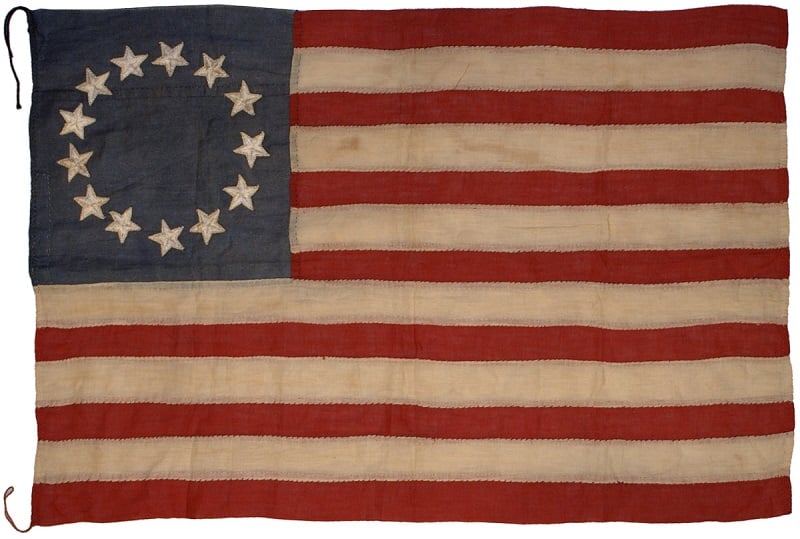
From the 1777 original that had 13 stars and 13 stripes for the American colonies, there have been many changes and iterations of the flag. Each time a state was added to the union, a star was added. We, of course, now stand with 50 stars and 13 stripes.

The Flag can be displayed for all 24 hours.

While it is Federal law that the flag should be displayed from sunrise to sunset (unless there’s inclement weather), there are measures that can be taken to show the flag for all 24 hours. All that needs to be added is proper illumination of the flag so it can be seen in the dark.

The colors were chosen carefully.

The Red, White and Blue did not just happen by accident. The founding fathers wanted the colors to have meaning, not just look visually pleasing. Red symbolizes hardiness and valor, white symbolizes purity and innocence and blue represents vigilance, perseverance and justice.

The current design wasn’t professionally made.

Rather, it was then 17-year-old high school student, Robert G. Heft, of Lancaster, Ohio who submitted the design in a contest in 1958. It was chosen out of over 1,500 submissions by President Dwight Eisenhower.

The current Flag is the only one to have lasted more than 50 years.

As stated above, there have been many changes to the design of the American Flag. But the one we currently observe is the longest running iteration of the symbol, likely because no states have been added to the union since 1959.

A snippet of the Flag the Star Spangled Banner was written about was sold in 2011.

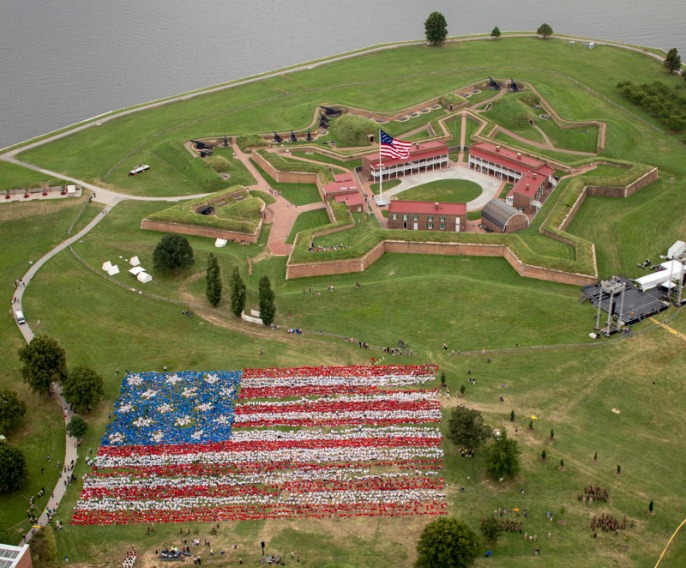
The flag that flew at Ft. McHenry, immortalized by Francis Scott Key, is still around. A  2″ x 5″ swatch of it was sold at an auction in 2011 for a whopping $38,000. The rest of the flag is on display at Smithsonian’s National Museum of American History.

A snippet of the Flag the Star Spangled Banner was written about was sold in 2011.

The flag that flew at Ft. McHenry, immortalized by Francis Scott Key, is still around. A  2″ x 5″ swatch of it was sold at an auction in 2011 for a whopping $38,000. The rest of the flag is on display at Smithsonian’s National Museum of American History.

The Flag has a national day of recognition.

Flag Day, which celebrates the anniversary of the Flag Resolution of 1777, was established by the Proclamation of President Woodrow Wilson on May 30th, 1916 after years of local celebrations.

Flags should be disposed of in a “dignified manner.”

If an American Flag is damaged beyond repair and you need to dispose of it, you can burn it with dignity. Many municipalities around the country conduct flag burnings on Memorial Day or the Fourth of July where you can participate.

The Flag can touch the ground and still be used.

There is a myth that once a flag touches the ground it needs to be burned or disposed of. That’s not entirely true. If a flag is soiled or touches the ground, it can be washed and dry cleaned and continue to be used.

Six American Flags have made it to the moon.

You have probably seen Neil Armstrong on the moon with an American Flag, but he is not the only one to plant one on the surface of the moon. Five additional Apollo missions, 12, 14, 15, 16, and 17, ended with an astronaut placing a flag on the moon.

Till next time…stay sharp!

What Shall We Bake Today?

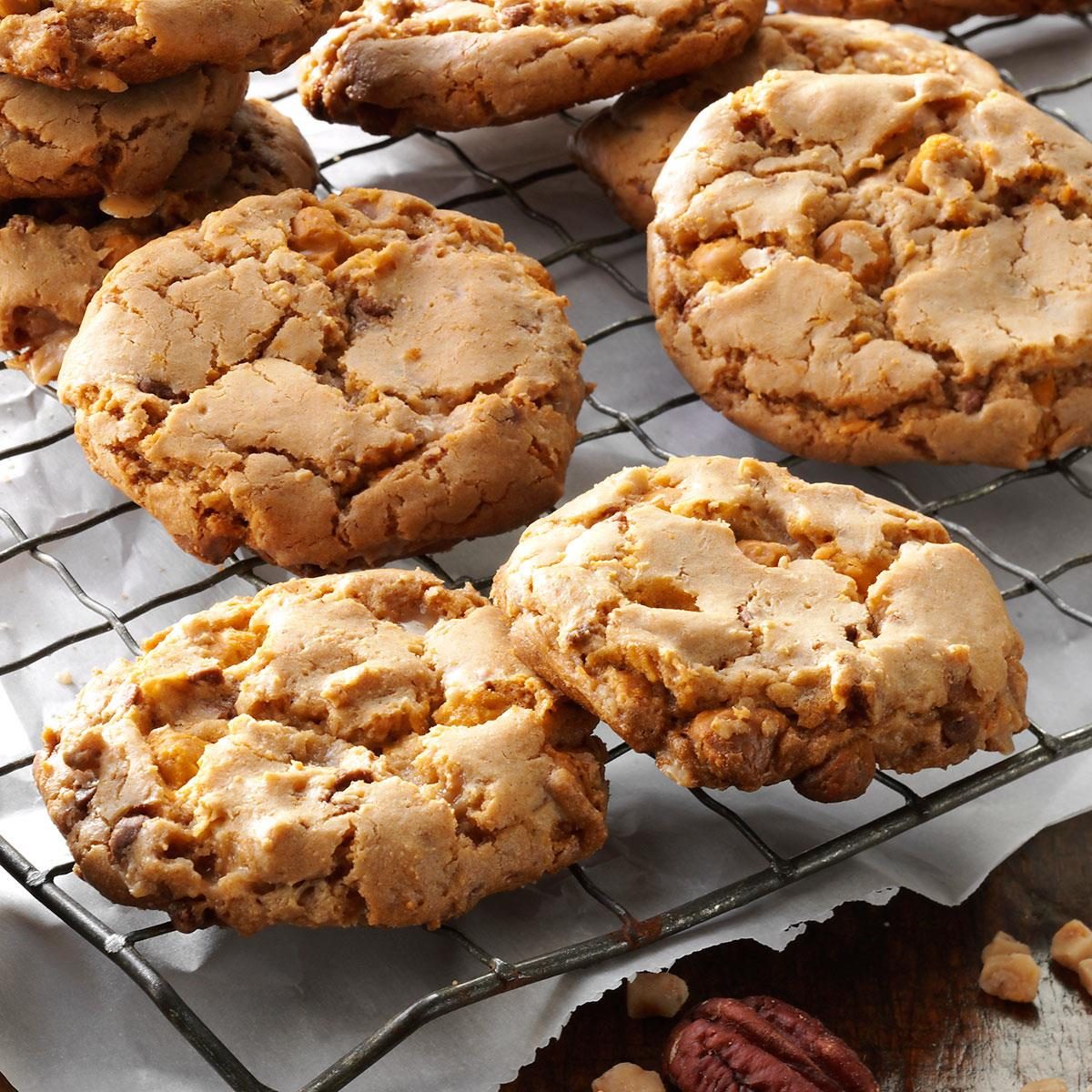
June is officially the start of summer, so I browsed recipe friendly picnics cookies/desserts.  I found this one –Butterscotch Toffee Cookies—and they look scrumptious!

Ingredients

2 large eggs, room temperature

1/2 cup canola oil

1 package butter pecan cake mix (regular size)

1 package (10 to 11 ounces) butterscotch chips

1 package (8 ounces) milk chocolate English toffee bits

Preheat oven to 350°. In a large bowl, beat eggs and oil until blended; gradually add cake mix and mix well. Fold in chips and toffee bits. 

Drop by tablespoonfuls 2 in. apart onto greased baking sheets. Bake until golden brown, 10-12 minutes. Cool 1 minute before removing to wire racks.

ENJOY!

Happy National Oklahoma Day!

If you’re going to visit Oklahoma, Trip Advisor recommends these destinations!

Bricktown

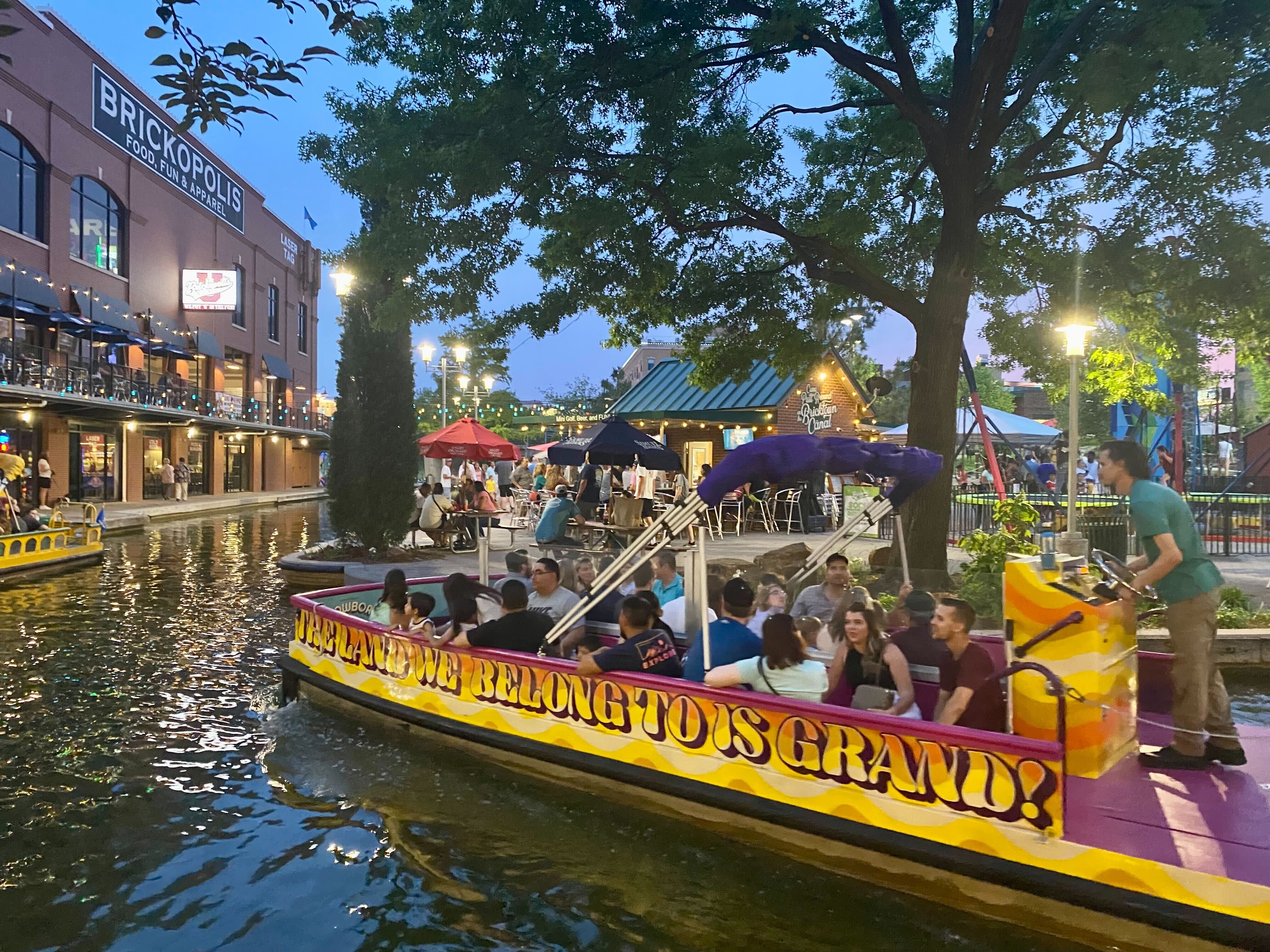
Bricktown, just east of Oklahoma City’s downtown business district, is the city’s original warehouse and distribution center turned entertainment district. You can go shopping, drink at a bar, dine at one of the many restaurants, and stroll along the Bricktown River Walk Park at your own pace. You can also catch a baseball game at the Chickasaw Bricktown Ballpark or have fun on the sands of Bricktown Beach on summer days. The area is home to a plethora of public art, museums, and galleries, making it one of Oklahoma City’s most vibrant arts districts and a great attraction year-round.

National Cowboy and Western Heritage Museum

The National Cowboy & Western Heritage Museum is America’s premier institution of Western history, art and culture. Founded in 1955, the Museum, located in Oklahoma City, collects, preserves, and exhibits an internationally renowned collection of Western art and artifacts while sponsoring dynamic educational programs to stimulate interest in the enduring legacy of the American West. More than 10 million visitors from around the world have sought out this unique museum to gain better understanding of the West: a region and a history that permeates our national culture.

Philbrook Museum of Art

This vast art museum, housed in an Italian style villa, has numerous exhibits from European, American, Asian, Native American and African artists and is surrounded by acres of lush gardens.

Beavers Bend State Park and Nature Center

The Cave House

The Cave House in a landmark in Tulsa. It was built in 1924, as a Chicken Restaurant. Built during prohibition, it was a place you could quench your thirst! It not only has quirky architecture, but it probably best known for its stories, full of interesting and sometimes amusing information. It is a great date, or family adventure, and as the owner I love to share it! It is best to call, or message ahead, as I do not have regular hours. Due to scheduling for private tours and groups, and because travelers request all days and times, I try to schedule according to requests as best as I can. The cost is $15.00 and kids under 13 years are $7.50.

Myriad Botanical Gardens

Myriad Botanical Gardens is one of Oklahoma City’s most beloved public spaces, offering its visitors a 15 acre natural escape in the heart of downtown. A half-acre children’s garden, an off-leash dog park, splash fountains, and paths for walking and jogging provide guests young and old with a place to seek solitude with nature, or seek community and the company of others. The Gardens offers a variety of horticultural education programs for adults and children. The centerpiece attraction of the Gardens is the Inasmuch Foundation Crystal Bridge Conservatory. Its unique design has earned attention and praise in the architectural community. It is 224 feet long, 70 feet in diameter, and is covered by 3,028 sections of translucent, double-layered acrylic panels. After an 18-month, $11 million renovation, it reopened to the public on November 18, 2022.

SOURCE: TRIPADVISOR.COM