

Find 3 roosters among the turkeys.

Find the missing people—there’s 9.

Find the hidden animal.

Find the bear.

ENJOY!
Find 3 roosters among the turkeys.
Find the missing people—there’s 9.
Find the hidden animal.
Find the bear.
ENJOY!
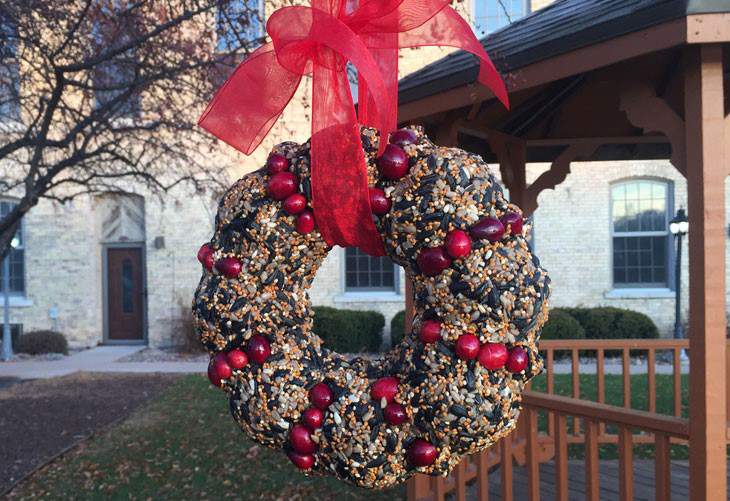
If you like to feed the birds over the winter, you can make your own suet! I found this project on the KAYTEE.COM website.
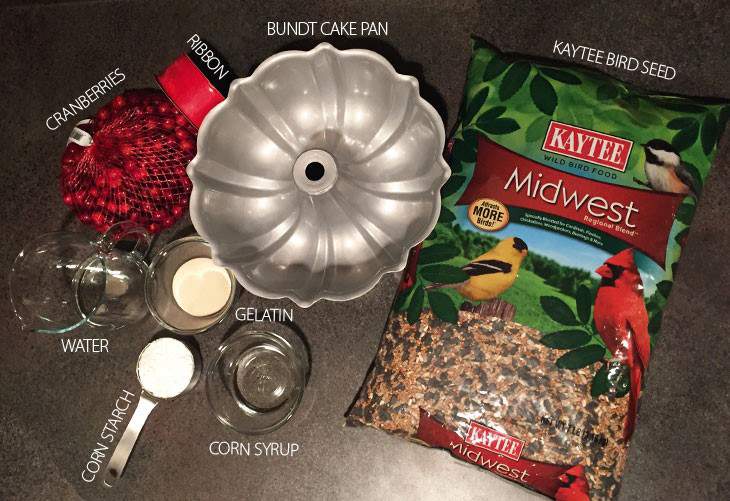
Items you’ll need for this craft:
Bundt cake pan – You can use mini Bundt cake molds if you want to make multiple wreaths for multiple gifts.
4 cups Kaytee bird seed – Choose a seed that fits with your region to attract birds in your area.
Cranberries
1 and 1/2 packets of unflavored gelatin
1/2 cup warm water
1/3 cup corn starch
3 Tablespoons light corn syrup
Thick ribbon
Gift wrap – If you’re making this as a gift, you’ll want to find a box that fits the wreath and wrapping supplies to make it festive.
Kitchen items – You’ll need a drying rack, medium-sized sauce pan, spatula, stove, refrigerator, and measuring utensils. This craft requires heat and cooling, so children will need assistance and supervision if helping with this craft.
Nonstick cooking spray.
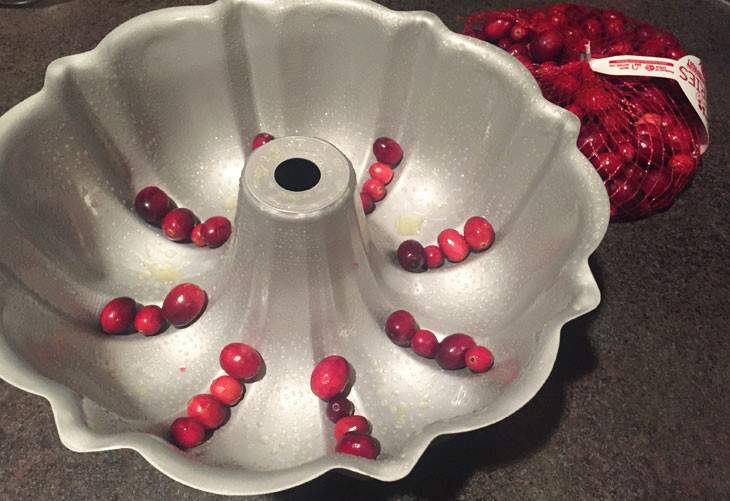
Spray the Bundt pan mold liberally with nonstick cooking spray. Place the cranberries in the pan how you would like them to look on the front of the wreath. Set aside for use after the mixture is ready.
Measure out four cups of bird seed in an easy-to-pour container. Set aside and have this ready for when the mixture is ready.
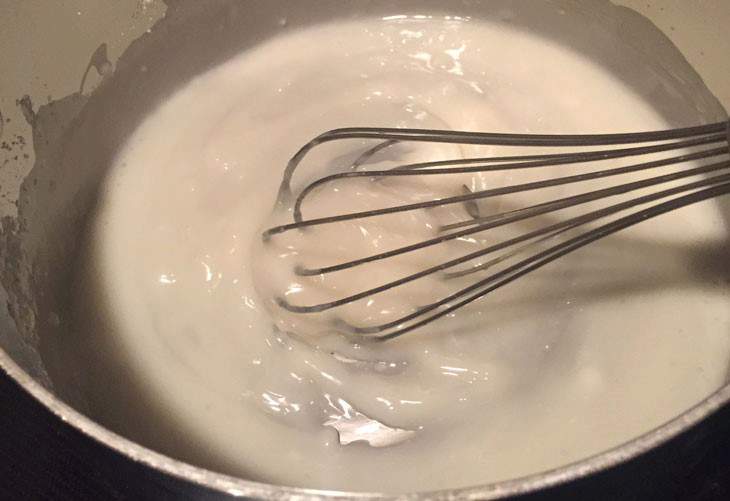
In a medium-sized sauce pan on medium heat, whisk together the packets of unflavored gelatin and warm water. Whisk until it is dissolved.
Add in the corn starch and light corn syrup, as shown in the image above. Whisk until there are no lumps of cornstarch left.
The mixture will start to form a thick paste after all the ingredients begin to bind. The paste should be smooth and thick.
Once the paste is formed, remove the pan from the heat and stir in the four cups of bird seed that was set aside from step three. Tip: spray your spatula with nonstick cooking spray before mixing together to make clean up easier!
Carefully add the combined mixture into the Bundt pan mold, making sure to pack it down and keep the cranberries in place. Evenly distribute the mixture so the wreath will be balanced when it sets.
Pack the seed down with the spatula. Once all the mixture is in the pan, place the entire pan in the fridge. Remove it from the fridge when it’s hard to the touch. This should take no longer than an hour.
After the wreath is hardened, take it out of the fridge and gently remove the wreath from the pan by flipping it upside down onto a cooling rack. Let it dry completely before adding ribbon or handling it too much. It’s best to let it dry for 12-24 hours.
Tie a thick ribbon around the wreath and then to a tree or feeder hanger. Bring it outside and carefully hang it where the birds will see it. If you’re giving it as a gift, wrap it up gently and give the gift as soon as possible so the wreath materials stay fresh for the birds.
SOURCE: KAYTEE.COM

With Thanksgiving soon upon us, I thought a recipe on what to do with the turkey carcass might be appropriate—Turkey Carcass Soup!
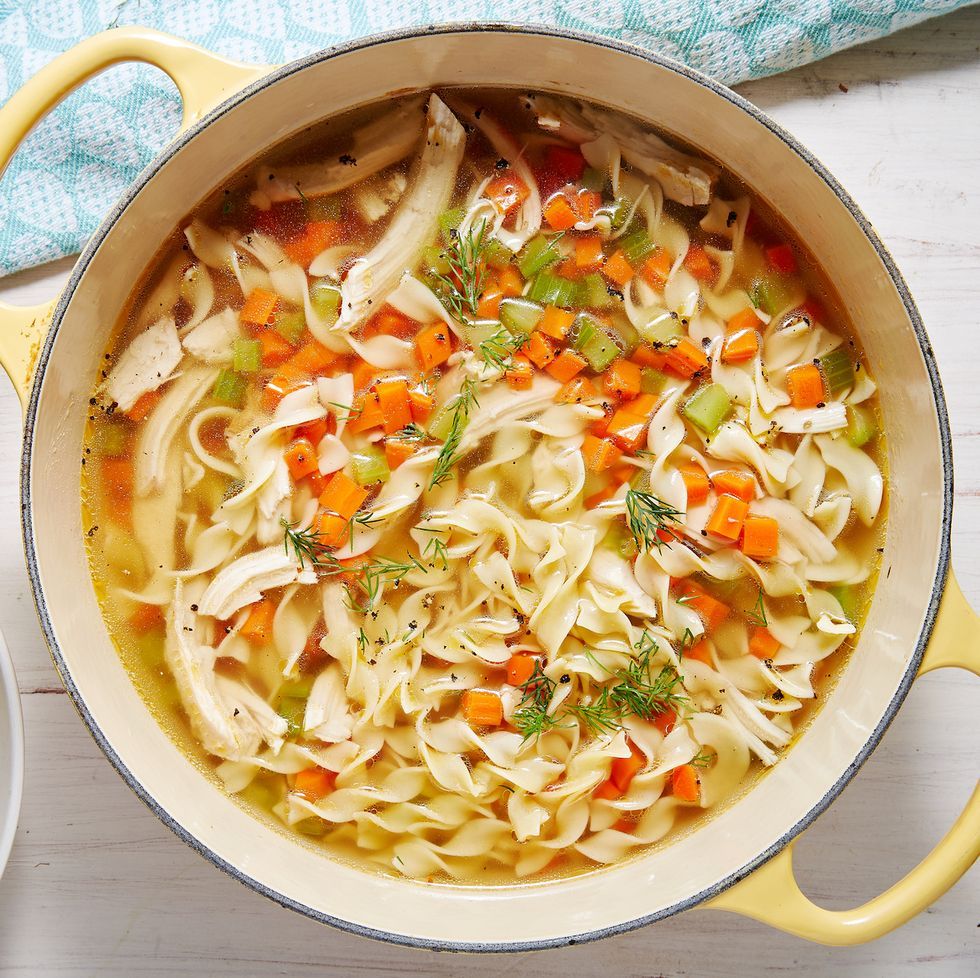
Ingredients
1 turkey carcass, from roasted turkey, extra meat removed
2 carrots, peeled, finely chopped
2 stalks celery, finely chopped
2 cups cooked turkey meat, shredded
3 sprigs fresh thyme
1 dried bay leaf
8 oz. egg noodles
Kosher salt
Freshly ground black pepper
2 Tbsp. fresh dill, chopped
Directions
Place turkey carcass in a large pot. Cover with cold water and bring to a boil. Reduce heat to medium-low and simmer 2 hours.
Strain and reserve stock (and excess turkey meat, if desired). Return stock to pot and bring to a simmer (you should have about 6 c. stock).
Add carrots, celery, turkey meat, thyme, and bay leaf. Cook, stirring occasionally, until vegetables are just tender, about 12 minutes.
Add egg noodles and cook until al dente according to package directions; season with salt and pepper. Top with dill.

Enjoy!

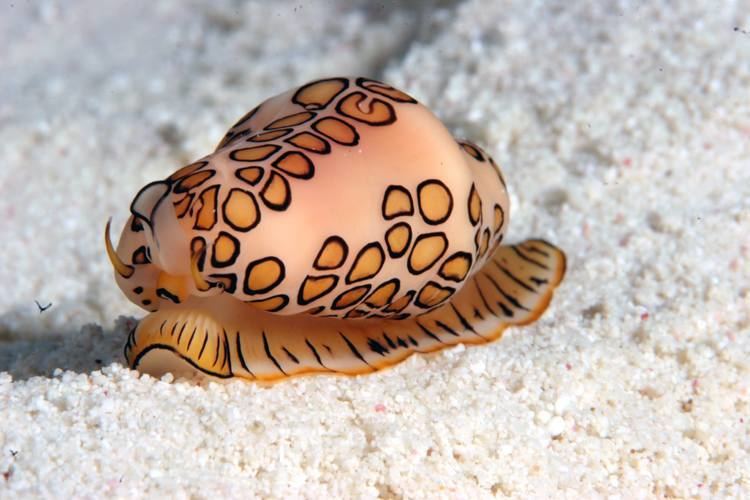
These snails are known for their strikingly beautiful shells, which are covered in bright pink and orange spots that resemble the feathers of a flamingo. Despite their small size, flamingo tongues are an important part of the marine ecosystem, serving as both predators and prey for a variety of other sea creatures.
The Flamingo Tongue Snail (Cyphoma gibbosum) is a species of marine gastropod mollusk in the family Ovulidae. They are found in the western Atlantic Ocean, from Florida to Brazil, and throughout the Caribbean Sea. These snails are named for their distinctive, brightly colored shells, which are covered in a pattern of black spots and stripes on a white or cream background. The spots and stripes resemble the feathers of a flamingo, hence the name “flamingo tongue.”
Flamingo Tongue Snails are relatively small, growing to a maximum length of about 3 centimeters. They are herbivores, feeding primarily on gorgonian corals. The snails use their radula, a ribbon-like structure covered in tiny teeth, to scrape algae and other organic material from the surface of the coral. One unique aspect of the Flamingo Tongue Snail is that the bright coloration of its shell is not actually part of the shell itself. Rather, the snail’s shell is covered in a thin layer of tissue that is brightly colored. This tissue is called the mantle, and it is responsible for secreting the calcium carbonate that makes up the shell.
Physical Characteristics

Flamingo tongues are small, brightly colored sea snails that are found in tropical waters. They are known for their distinctive orange, pink, and yellow coloring, which is often accented by black markings. These markings vary in shape and size, and can be found on both the soft tissue and the shell of the snail. Flamingo tongues are relatively small, with an average size of around 2.5 centimeters in length. They have a foot that is used for movement, as well as a shell that protects their soft tissue. The shell is typically white in color and has a smooth, glossy appearance.
One of the most striking features of the flamingo tongue is its eyes. They are large and located at the base of the tentacles, which are used for sensing the environment. The eyes are black and have a distinctive shape that is similar to that of a football. The soft tissue of the flamingo tongue is also brightly colored, with a range of orange, pink, and yellow hues. This tissue is used for feeding, and is covered in small, hair-like structures called cilia that help to move food particles towards the mouth.
Habitat and Distribution

Flamingo Tongues are found in the Western Atlantic Ocean, particularly in the Caribbean Sea and the Gulf of Mexico. They are commonly found on coral reefs, especially in shallow fore reef habitats. They occupy a wide range of tropical habitats, including areas in South America and Brazil. These snails are known to have a preference for gorgonian corals as their host. They are often found on the branches of these corals, where they feed on the tissue. Studies show that they have a high abundance and distribution in these areas.
The distribution patterns of Flamingo Tongues are affected by a number of factors, including the availability of food and the presence of predators. They exhibit density aggregation behaviors, which means that they tend to cluster in areas where food is abundant.
In North Carolina, Flamingo Tongues are relatively rare, but they have been found in small numbers in the southern part of the state. Overall, their distribution is limited to the tropical waters of the Western Atlantic, where they are an important part of the coral reef ecosystem.
Diet and Feeding Habits

Flamingo tongue snails (Cyphoma gibbosum) are carnivorous and feed on a variety of organisms found in their habitat. They are known to feed on soft corals, sea fans, and gorgonian corals. The snails use their radula, a ribbon-like structure in their mouth, to scrape and tear off pieces of the coral’s tissue. They also feed on algae and plankton, as well as small crustaceans like shrimp.
The snails are known for their bright coloration, which serves as a warning to potential predators that they are toxic. The snails obtain this toxicity by feeding on gorgonian corals that contain toxic compounds. These compounds are stored in the snail’s mantle tissue, making them unpalatable to predators. Flamingo tongue snails have a unique feeding behavior where they preferentially feed on the tips of the coral branches. This behavior is thought to be an adaptation to reduce the risk of damage to the coral colony. The snails are also known to aggregate in high densities on certain coral species, which can result in significant damage to the coral colony.
Reproduction and Lifespan

Flamingo tongues are hermaphroditic, which means they have both male and female reproductive organs. However, they cannot fertilize themselves and require a mate to reproduce. During breeding season, flamingo tongues lay their eggs on the underside of gorgonian coral branches. The eggs are small and white and take around two weeks to hatch.
Flamingo tongues have a relatively short lifespan of around two to three years. However, they reach sexual maturity at a young age, around six months old. This allows them to breed multiple times during their short lifespan.
The young flamingo chicks are born with a transparent shell, which they break open with a specialized egg tooth on their beak. The chicks are born with a greyish color and gradually develop their distinctive pink coloration over time. The chicks are cared for by both parents and are fed regurgitated food until they are old enough to feed themselves.
SOURCE: AMERICANOCEANS.ORG

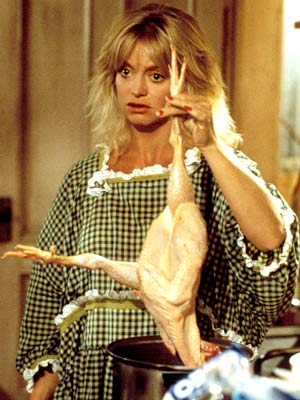
Today is Goldie Hawn’s birthday! She was born November 21, 1945 and has been in tons of movies. My favorite? Overboard! She co-stars with her long-time love Kurt Russell. I found an article on tvovermind.com that details 10 things we might not know about the movie.\
From tvovermind.com:
Forget all the glaring plot holes, that wasn’t the point of this movie. Overboard was all about showing the other half the simpler and in some cases downtrodden part of life that they didn’t realize was going on beyond their fancy lifestyles. Of course, it was also to show the supposedly downtrodden how to appreciate what they had and take care of it as well. As the wise butler in the film pointed out most people tend to go through life with blinders on, knowing just that one station to which they’ve been born. Yet when you take the blinders off and understand that life is in fact a great deal more than your own personal experience, then you have a choice to make. Do you embrace the wider world or stay put in your own little existence?
The movie showed that how you choose to live is not what defines you, it’s how you live with what you have.

10 Kurt Russell and Goldie Hawn’s kids were always on set.
Their youngest actually took his first steps on set. It was no doubt comforting to have them there at all times.
9 Russell’s pickup truck was used later on in Christmas Vacation.
Recall the old, beat-up truck that was tailgating the Griswold’s on their way to get a Christmas tree. This is the same truck.
8 The members of the crew on the yacht kept falling asleep.
The rocking motion of the yacht would continually lull them to sleep, making filming a bit difficult.

7 Everything in the film was authentic.
A good example was the bowling alley. Nothing in there was touched, everything is just the way it looks in real life.
6 The Pee Wee Herman voice was improvised.
The character of Joe made this up on the fly since the Pee Wee bit wasn’t in the script at all.
5 The director allowed his actors to improvise a lot.
It’s hard to know just what was improvised and what wasn’t without being told since everything seems to flow so smoothly.
4 Hawn and Russell hosted a BBQ for the whole cast and crew.
You get the feeling that even if they weren’t all close there was a good deal of respect between the crew and cast members.
3 John Candy was considered for the role of Billy.

At the time that he was considered for the role John was filming Planes, Trains, and Automobiles with Steve Martin.
2 One of the kids was so rowdy on the set that the director had to step in frequently.
It would seem that the actor playing Joey wasn’t just acting a lot of the time, he was actually this rowdy. The director had to get after him quite a bit to calm him down.
1 Hector Elizondo has a cameo in the film.
Hector played in the film Necessary Roughness as the head coach, and he’s been seen most recently as Ed on Last Man Standing up until it was cancelled.
This had to be one of the funniest movies ever made and yet it’s got such a great life lesson too.
SOURCE:TVOVERMIND.COM

I found this helpful article on the eatingwell.com website:
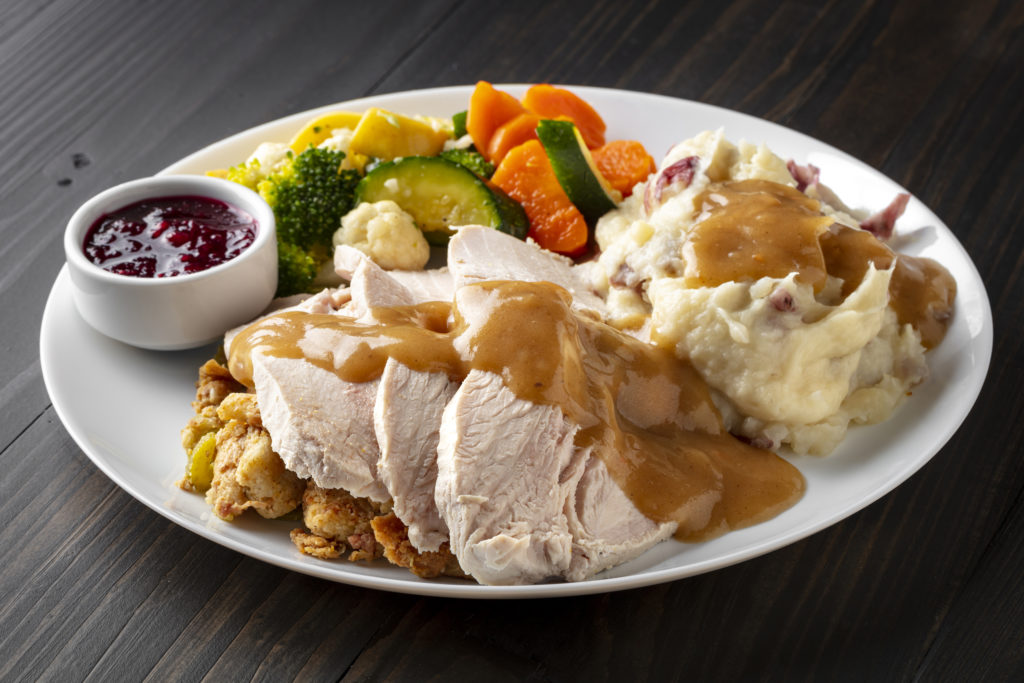
Gravy—you slather it on turkey and pool it on top of mashed potatoes. You let its rich and meaty flavor mingle a little with sweet potato casserole and sop up what’s left over with a dinner roll. No Thanksgiving dinner is complete without a good old-fashioned gravy. To give you the best shot at success, here are six common mistakes that make gravy less than perfect and how you can fix them.
Mistake to Avoid No. 1: Your Gravy Has Lumps
Nobody likes lumpy gravy. Reasons for lumpy gravy include using a spoon to stir instead of a whisk and dumping your thickener into the gravy without making a roux first. What’s a roux? A roux is a paste made from flour and fat that thickens sauces, and it’s essential to a good gravy. You can make it with fat from the bottom of the roasting pan, butter or oil. Aim for one part fat to one part flour. Heat the fat in a saucepan or directly in the roasting pan. Add the flour and cook, stirring, until the mixture begins to bubble (the longer you cook it, the nuttier the flavor—just don’t take it too far or it will burn). Once your roux is nice and bubbly, add your liquid and whisk (don’t stir!) until the mixture bubbles and thickens. Crisis averted. Now, just in case you ignored the whole roux-making step and you have a finished gravy (with lumps), all is not lost. Pouring the gravy through a fine mesh strainer should do the trick.

Mistake to Avoid No. 2: Your Gravy Is Too Thick
So you made a delicious gravy except it’s too thick. It’s gummy, in fact, and you’re not quite sure where you went wrong or how to fix it. No problem! One mistake that can result in gravy that’s too thick is adding too much thickener (or too little liquid). Another mistake is not taking into account the fact that gravy tends to thicken as it cools. When it’s hot, gravy should be thick enough to just coat the back of a spoon, but not so thick that it sticks to the spoon like glue. If your gravy is hot and still too thick, add broth a little at a time to thin it out. Remember to check the seasoning when you’re done and adjust if needed.
Mistake to Avoid No. 3: Your Gravy Is Too Thin
Gravy’s job is to coat mashed potatoes, turkey, stuffing (or everything) on your plate with a thin layer of meaty goodness, and it can’t do its job if it pools at the bottom of your plate like water. If you started with a roux and your gravy is just too thin, there are a few things you can do to correct it. If you’ve added too much liquid, you can try cooking it longer. Reducing the volume may be enough to thicken it up. However, if your gravy is thin and the seasoning is where you want it, cooking it down may make it too salty. Here is where you’ll have to make a slurry. A slurry is much like a roux with a less attractive name and a few other minor differences. Like the roux it thickens sauces, but unlike the roux, it uses a thickener (like flour) combined with a little bit of liquid like broth or water instead of fat. Simply whisk your thickener (a couple tablespoons of flour is a good place to start) into 1/2 cup or so of liquid and then whisk that mixture into your gravy. As it heats, it will thicken.
Mistake to Avoid No. 4: Your Gravy Is Greasy
Making gravy straight from the roasting pan is always best, but you’ll need to take some steps to prevent your roasting pan gravy from tasting like an oil slick. What we’re really after from the pan are those browned bits that form at the bottom. They’re a flavor powerhouse. You’ll want them in your gravy, but not the fat that they’re often swimming in. The solution? Deglaze the hot roasting pan with broth (or wine if you want to spare some) and pour the liquid into a fat separator or glass measuring cup. This will help loosen those tasty brown bits from the pan while getting rid of the fat that has also collected at the bottom. You can use the fat that floats to the top of your separator for your roux while saving the liquid for the gravy itself. If your finished gravy is oily, let it sit and try skimming any fat that rises to the top. Whisk any fat that’s left into the gravy and serve immediately.
Mistake to Avoid No. 5: Your Gravy Tastes Burnt
This is perhaps the worst-case scenario in the world of gravy-making. It happens when those deliciously concentrated pan drippings burn, and you decide to make gravy out of them anyway. Your choices are (A) Insist that the gravy tastes fine and everyone else must be mistaken, or (B) Have a backup plan. Let’s entertain Plan B…. If you’re fortuitous enough, you can work on Plan B even before disaster strikes, and here it is: Most turkeys come with a neck and a little packet of other pleasantries like the heart, gizzard and liver stuffed into the cavity. Hold onto these. If your pan is burnt, these will provide you with a much-needed flavor boost for your second attempt. You can sauté them in a separate pan with a bit of mirepoix (onion, carrot and celery) to create some new brown bits to work with, then simmer them in broth to add flavor.
Mistake to Avoid No. 6: Your Gravy Is a Salt Bomb
A well-seasoned gravy complements both sweet and savory elements on the plate, but a gravy that’s too salty can ruin everything it touches. As gravy cooks, it loses volume and concentrates the flavor (and hence the saltiness) of your end product. To avoid gravy that tastes like a salt lick, season it at the end of the cooking process, not the beginning. If you’ve got homemade broth or stock, use that as the body of your gravy. If you’re using broth or stock from a box, opt for a low-sodium option. If your gravy is finished and it’s just too salty, add some broth or water to tamp it down. That will also thin it out, so you may have to thicken it back up again.
SOURCE: EATINGWELL.COM

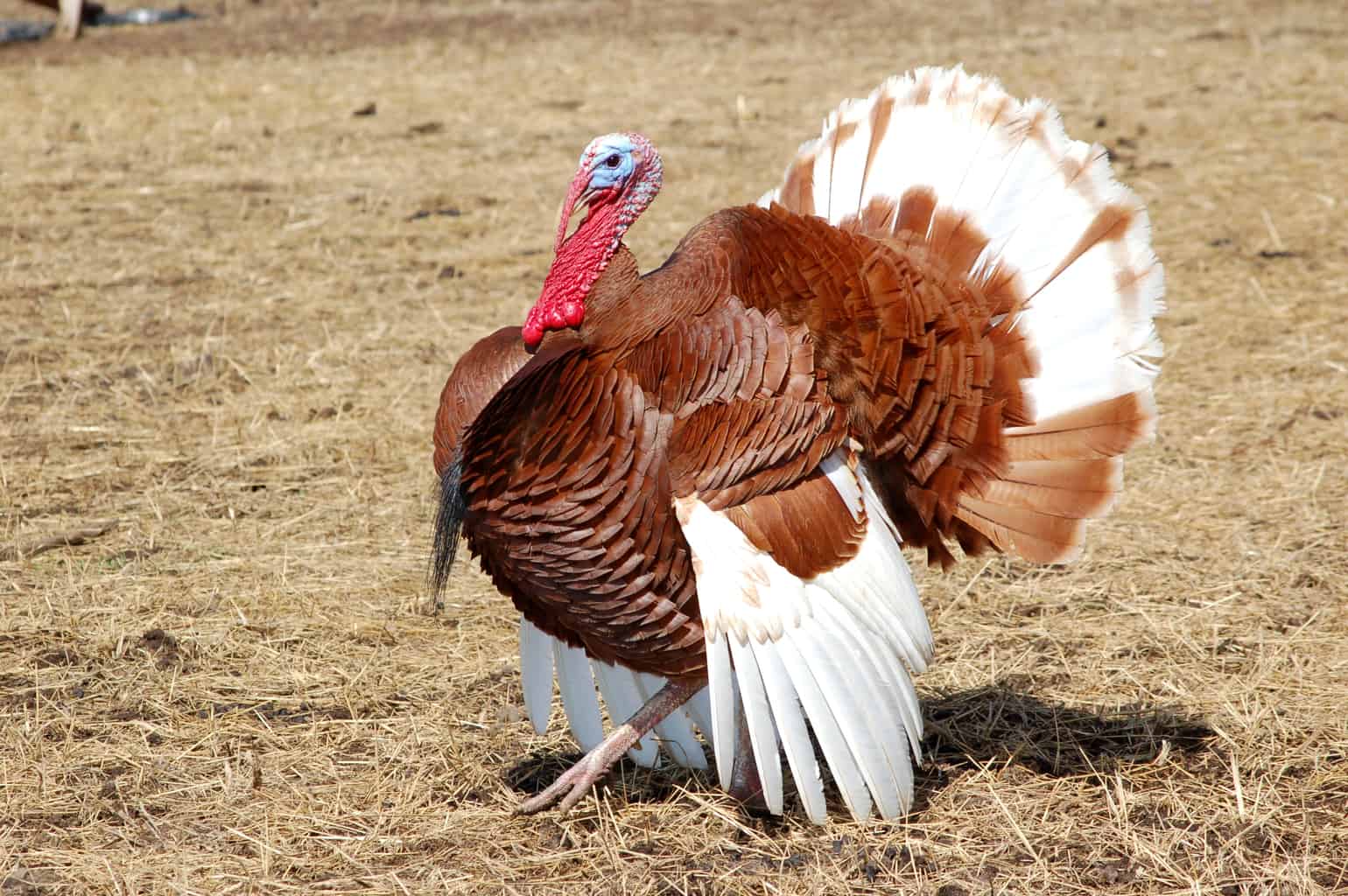
Why do turkeys gobble?
How much turkey does a person eat per year?
What’s that weird wobbly thing on a turkey’s neck?

What Is a baby turkey called?
And what about adult turkeys?
Can turkeys fly?
How long do turkeys live?
:max_bytes(150000):strip_icc()/turkey-eyes-58b8d6dd3df78c353c2312da.jpg)
Are turkeys named after turkey, the country?
Are turkeys native to the Americas?
How did you do?

Only male turkeys, or toms, can make a call known as a “gobble;” they mostly do it in the spring and fall. It is a mating call and attracts the hens. Wild turkeys gobble when they’re surprised by loud sounds and when they settle in for the night. The wild turkey can make at least 30 different calls!
The average person in the United States will eat 15 pounds of turkey this year.
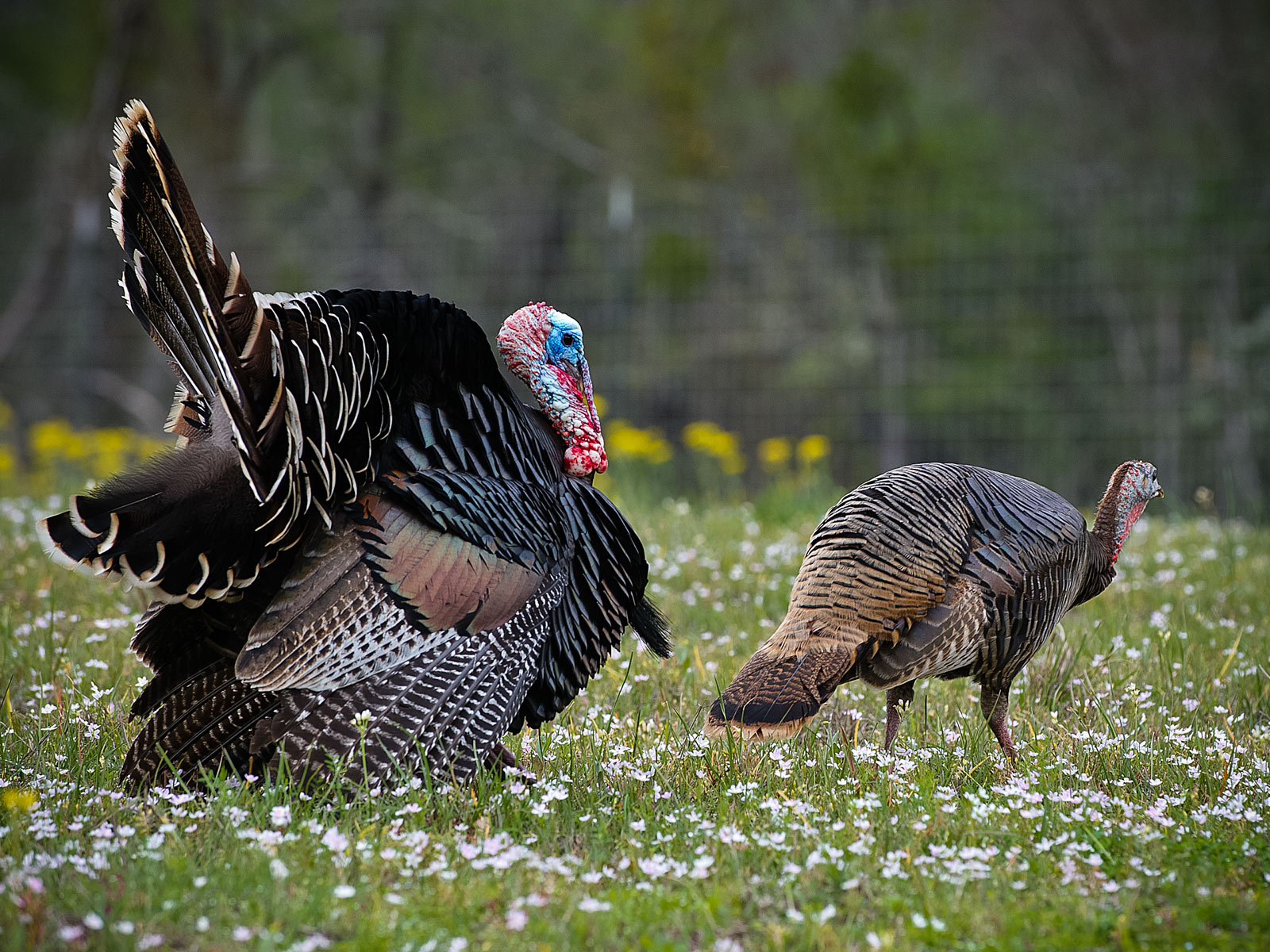
The loose red skin attached to the underside of a turkey’s beak is called a wattle. When the male turkey is excited, especially during mating season, the wattle turns a scarlet red. The fleshy flap of skin hanging over the gobbler’s beak is called a snood and turns bright red when the bird is excited. The wobbly little thing on the turkey’s chest is the turkey’s beard, which is made of keratin bristles. Keratin is the same substance that forms hair and horns on other animals.
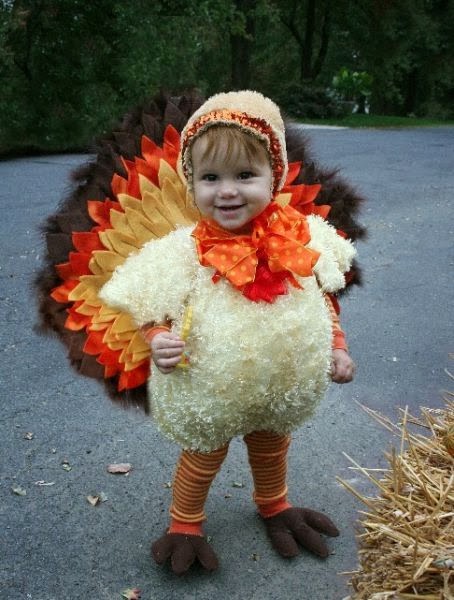
A baby turkey is called a poult, chick, or even turklette.
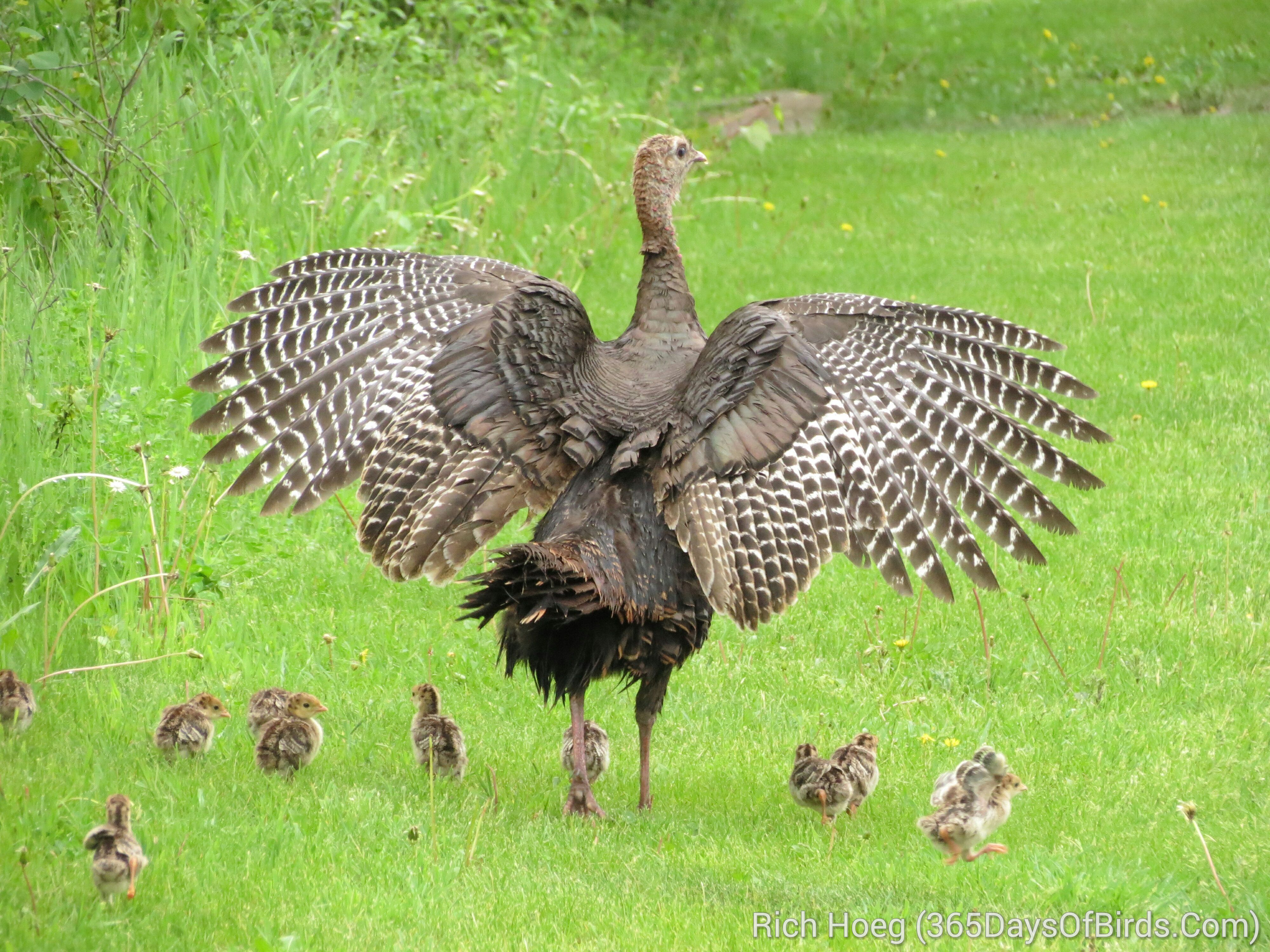
An adult male turkey is called a tom (an adolescent male is a jake), and a female is a hen.
The wild turkey can fly! (It does, however, prefer to walk or run.) The domestic turkey is not an agile flyer, although the bird will perch in trees to stay safe from predators.
The average life span of a wild turkey is three or four years. It generally feeds on seeds, nuts, insects, and berries. The average life span of a domestic turkey, from birth to freezer, is 26 weeks. During this period, it will eat about 75 pounds of turkey feed.
When Europeans first encountered the wild turkey in Mexico, they incorrectly classified the bird as a type of guinea fowl called a turkey fowl. Turkish traders originally sold guinea fowl from Africa to European markets; Turkey has no native turkeys!
Yes, turkeys originated in the “New World.” Specifically, wild turkeys are native to Mexico. It’s a funny history. European explorers brought wild turkeys home with them in the early 1500s. The birds were domesticated in Europe and later brought to North America by English colonists. Note that domesticated turkeys have white-tipped tails; wild turkeys have dark-tipped tails.
Till next month…stay sharp!


My husband loves Kentucky Fried Chicken bowls and I found a copycat recipe I wanted to share! The bowls contain popcorn chicken, mashed potatoes, corn, gravy and cheese. (I can do without the cheese personally.)
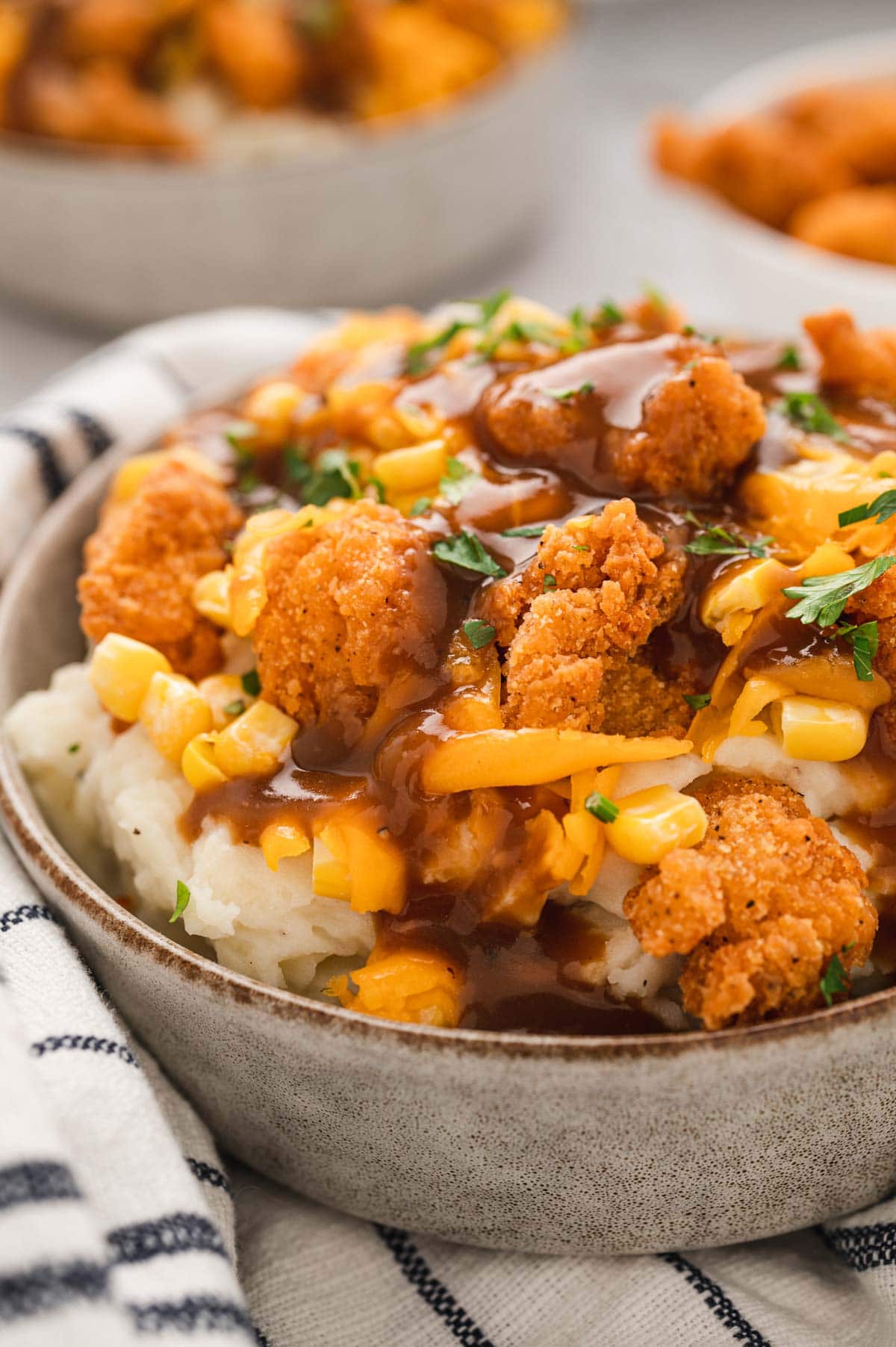
Ingredients
24-ounce bag of frozen popcorn chicken
homemade mashed potatoes kept warm
chicken gravy
1 cup frozen corn
1 cup shredded cheddar cheese
Salt and pepper to taste
Instructions
Cook popcorn chicken according to package directions.
Heat gravy.
Place the corn in a microwave safe bowl with a tablespoon of water and cover with plastic wrap or a microwave safe lid. Microwave for 1 – 1 ½ minutes, or until heated through, stirring once during cooking. Toss with a pinch of salt.*
To serve: spoon about 1 cup of mashed potatoes into the bottom of a bowl. Top with 6 oz of the chicken, a few tablespoons of shredded cheese, ¼ cup of corn and drizzle with gravy. Garnish with fresh chopped parsley if desired.
(*Pat’s note: if you prefer canned corn can be used. Simply heat as you normally would.)
Enjoy!
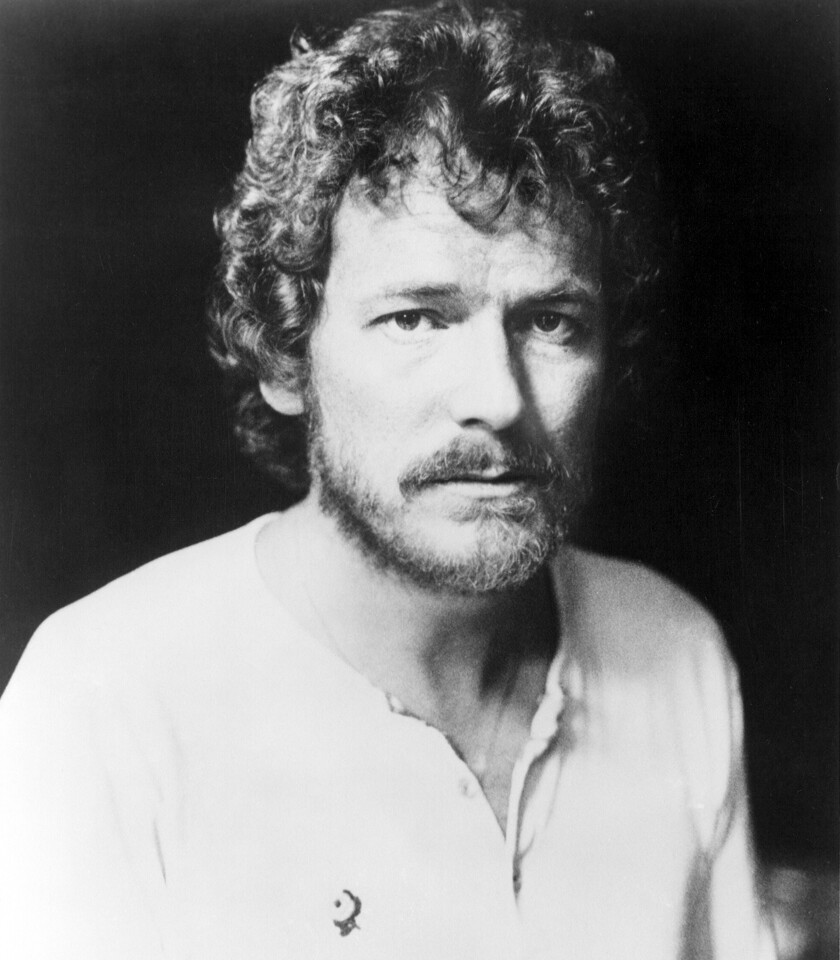
Today is Gordon Lightfoot’s birthday—born November 17, 1938, died May 1, 2023. One of my most favorite songs is his Sundown. There are many interpretations of what the lyrics mean—a woman who won’t commit? a recovering drunk? Who really knows…but I love it.
I can see her lyin’ back in her satin dress
In a room where ya do what ya don’t confess
Sundown you better take care
If I find you been creepin’ ’round my back stairs
Sundown ya better take care
If I find you been creepin’ ’round my back stairs
She’s been lookin’ like a queen in a sailor’s dream
And she don’t always say what she really means
Sometimes I think it’s a shame
When I get feelin’ better when I’m feelin’ no pain
Sometimes I think it’s a shame
When I get feelin’ better when I’m feelin’ no pain
I can picture every move that a man could make
Getting lost in her lovin’ is your first mistake
Sundown you better take care
If I find you been creepin’ ’round my back stairs
Sometimes I think it’s a sin
When I feel like I’m winnin’ when I’m losin’ again
I can see her lookin’ fast in her faded jeans
She’s a hard lovin’ woman, got me feelin’ mean
Sometimes I think it’s a shame
When I get feelin’ better when I’m feelin’ no pain
Sundown you better take care
If I find you been creepin’ ’round my back stairs
Sundown you better take care
If I find you been creepin’ ’round my back stairs
Sometimes I think it’s a sin
When I feel like I’m winnin’ when I’m losin’ again
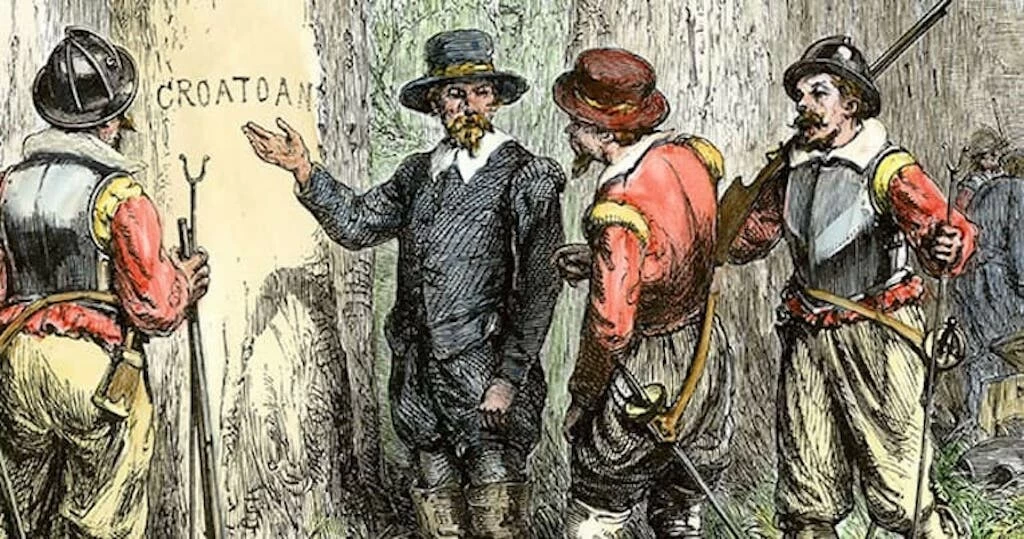
The mystery of Roanoke survives today. There are theories of course, but no answers. I found this article about the mystery on the historicmysteries website: (Thanks to Filly for introducing me to this awesome site!)
From historicmysteries.com:
The Roanoke Colony was the first English settlement in America. It vanished. The mystery of the lost colony of Roanoke Island has baffled society for hundreds of years. A group of settlers disappeared into North America with hardly a trace and no one has seen concrete evidence of their existence in centuries. Many theories have arisen over the years as to the fate of these settlers, but nothing is certain. Today, there is only speculation about the Roanoke Colony mystery.
Establishment of a Colony
After hearing news of a lush, beautiful area in the Americas Queen Elizabeth I, of England, decides to name this new place Virginia. Subsequently, she gives Sir Walter Raleigh permission to establish a colony in the area. He was to finance and plan the expedition to what is now North Carolina. Raleigh has 10 years to complete this mission.
In 1585, an expedition comprised only of around 77 men were sent to start the colony. They were led by Sir Richard Grenville. Shortly after the arrival, the men begin to suspect that local Indians have stolen a silver cup from them. In retaliation, they destroy their village and burn the chief alive. Despite the obvious discourse with the natives, Grenville decides to leave the men there to build the proposed colony. He vows to return in April of 1586.
When April passes and there is no sign of Grenville the men decide to hitch a ride home with Sir Francis Drake. Drake had stopped at the colony on his way back from a successful voyage to the Caribbean. Ironically Grenville arrived shortly thereafter. After finding the settlement empty, he decides to leave 15 men there to protect England’s claim.
John White and the Roanoke Settlement
The second group of settlers arrived at Roanoke Island on July 22, 1587. This group contains 117 people, both men and women. They are led by John White. John White’s daughter would give birth to the first English child born in America on August 18, 1587. The child’s name was Virginia Dare. These people would later become known as the Lost Colony of Roanoke Island.
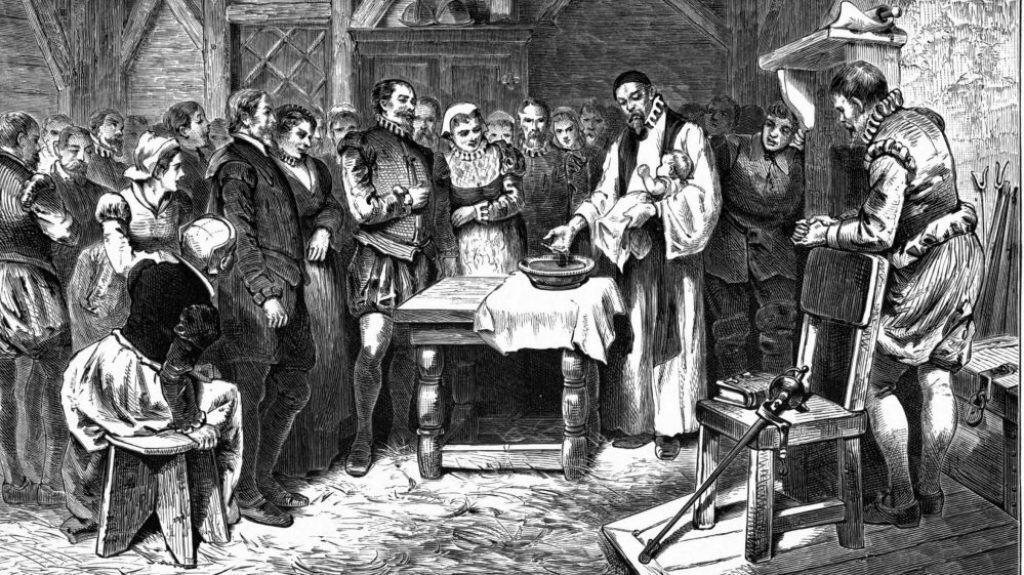
The settlers built their colony and tried to make peace with the natives. They were successful in befriending the Croatoan tribe, but other tribes were openly hostile toward the colonists. A settler by the name of George Howe was murdered by natives while hunting crab on the beach. After this incident, the settlers became nervous about their new home and convinced John White to return to England and ask for help. John White reluctantly left. He would never see any of these people again.
When John White arrived in England, he was unable to secure passage back to the colony. He was unable to find a Captain that would sail the Atlantic in the dead of winter, so he was forced to wait. Then the opposing threat of the Spanish Armada forced all available ships to be called to war. Eventually, John was able to secure passage on two small boats. Unfortunately, the owners of these boats were greedy men and they tried to capture other ships during their voyage. They were then captured, in turn, and relieved of their cargo. John White was unable to attempt another crossing for three years.
Nothing Left to Return To
John White finally returned to Roanoke Island on August 18, 1590. His granddaughter’s third birthday. To his dismay, there was no sign of his friends and family. The Roanoke colony had been dismantled and deserted. The only clues to the whereabouts of the colonists were carvings in a remaining post and a tree. The carving on the post read “Croatoan” and the carving in the tree was even more cryptic, it simply said “Cro.”
John took these clues to mean that the Roanoke colony had moved to nearby “Croatoan Island.” Before White’s departure, they had agreed that if the settlers were forced to leave, they would carve a Maltese cross into a tree. In the absence of such a carving, John could only assume that they left of their own volition. John was compelled to search for the colonists but was forced to return to England due to inclement weather. He would never set foot on Roanoke Island again.
Theories
There are many theories concerning the Roanoke colony mystery. They could have left due to weather, food shortage or threat of attack by local tribes. One thing is for sure, nothing is certain. Future settlers and explorers would claim to have spotted natives with light hair and eyes or natives that spoke perfect English. These claims may explain where the settlers went. It is highly likely that they integrated into the Croatoan tribe, but there is no concrete evidence of this.
SOURCE: HISTORICMYSTERIES.COM; SHELLY BARCLAY

