
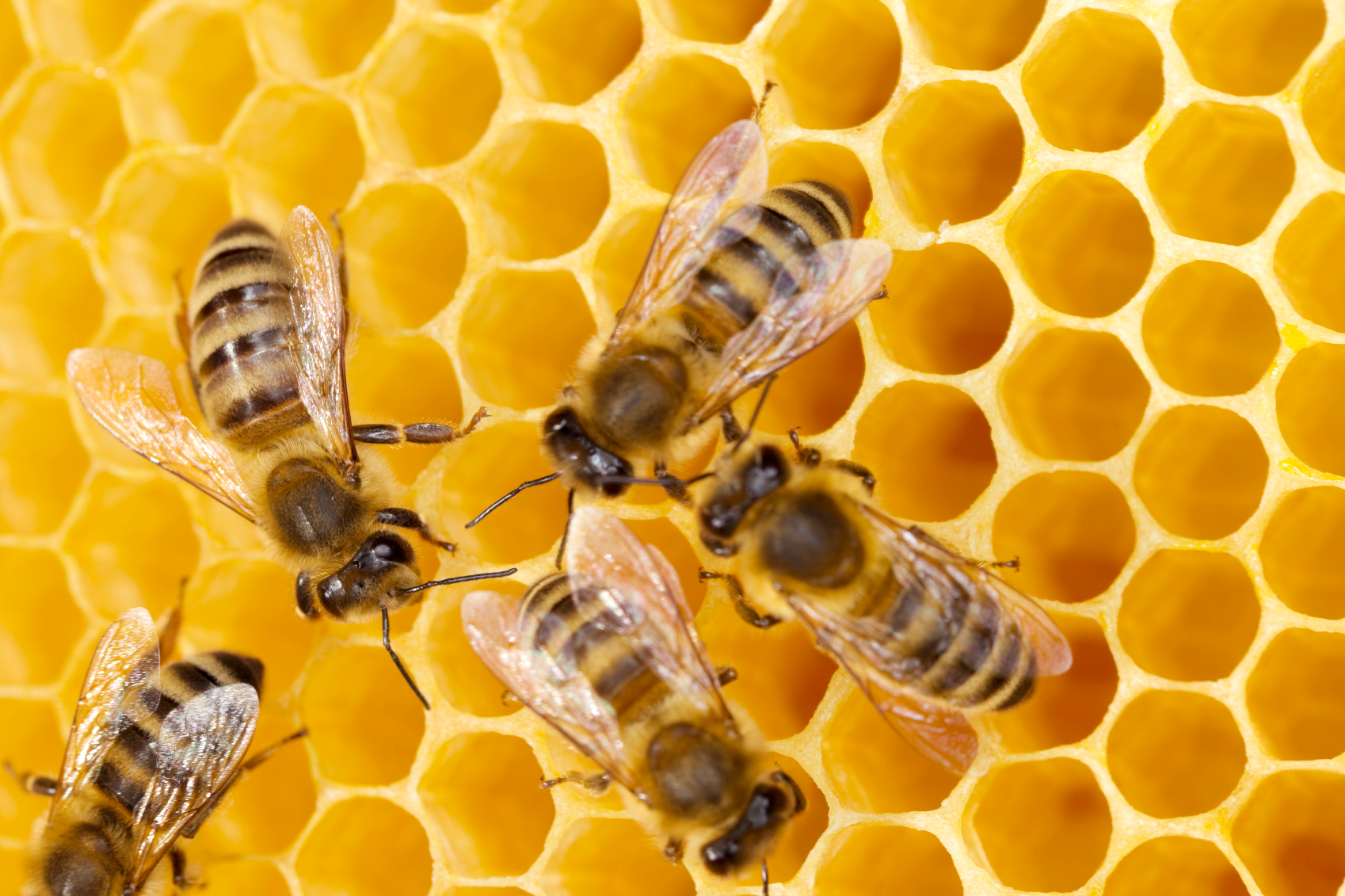
Are honey bees as busy as they say? Do they really dance? How do they make honey? Let’s find out!
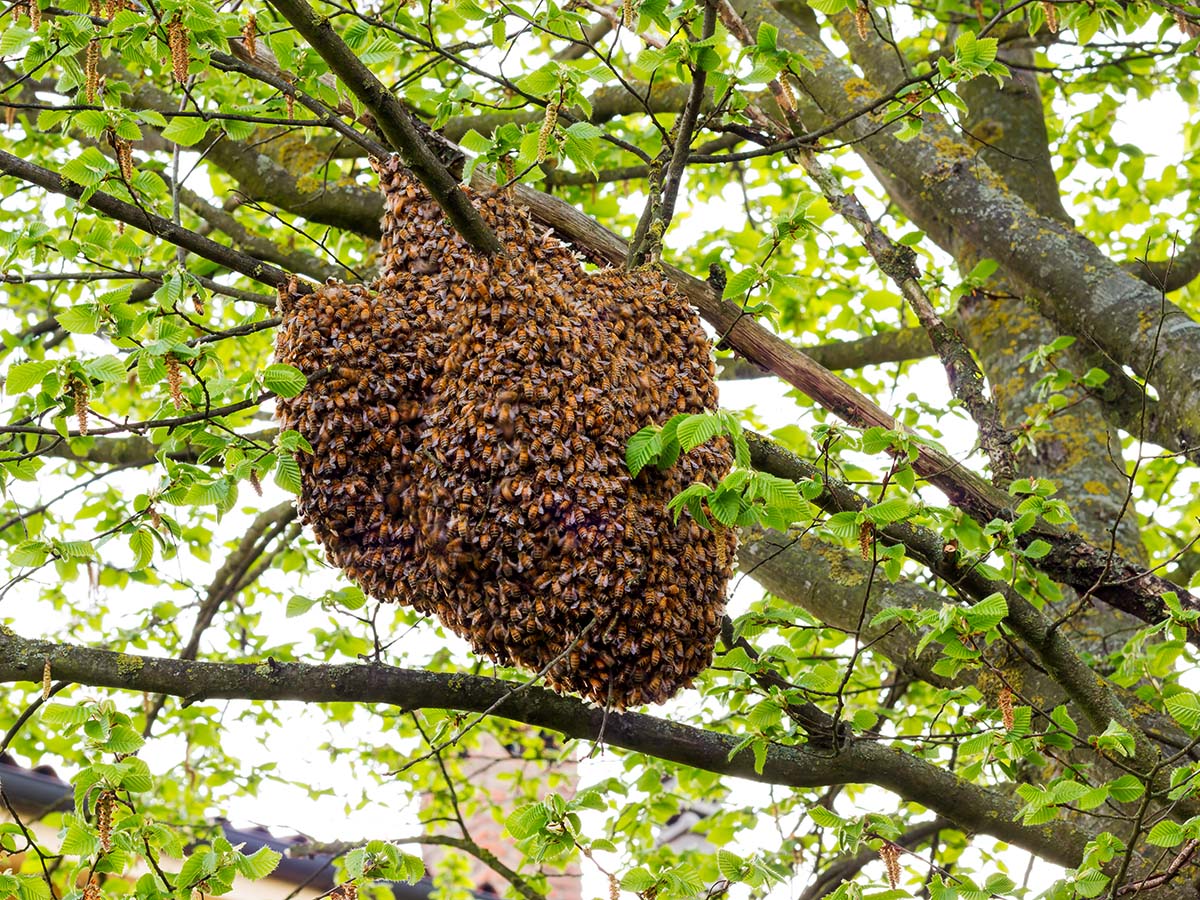
A colony is a group of bees that live and fly together. One colony can contain around 20,000 to 60,000 bees. The colony is divided into three groups; a queen, who will lay eggs to bring the next generation of bees to the hive; drones, male bees whose only function is to mate with the queen; workers, the female bees responsible for everything else…lol. They collect the pollen and nectar, circulate and clean the air in the hive, tend to the queen and build and protect that hive.
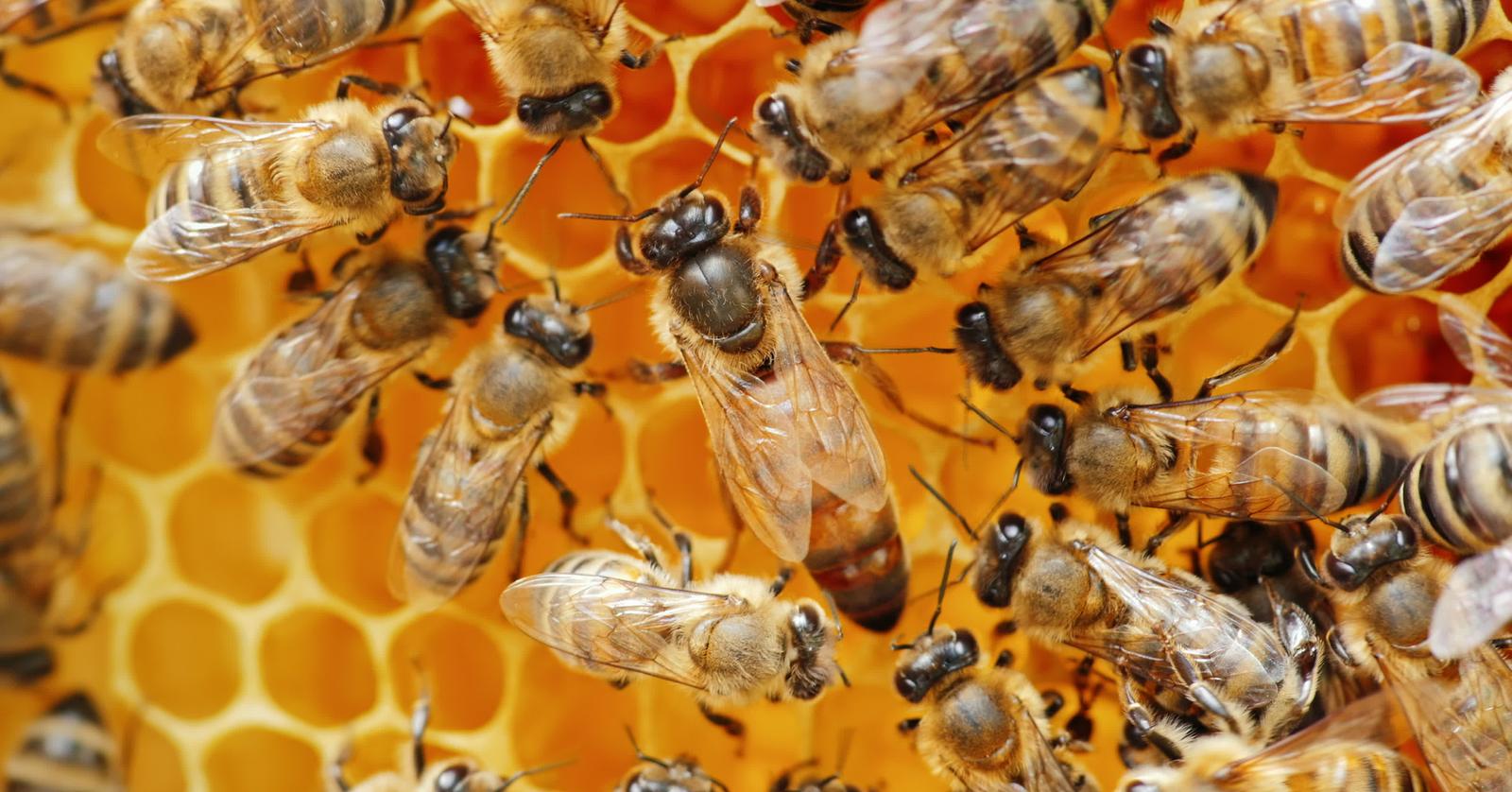
Queen
During the winter season, a productive queen will form a new colony by laying eggs within each cell inside a honeycomb. She lays one egg after every 45 seconds resulting in around 2500 eggs in a day. Compared to other insects and other honey bees, the queen bee has a longer lifespan, because she is the one to bring the next generations of bees. In her 2-3 years of life, she may lay up to 2500 eggs per day, so in her lifetime, she will have produced over 1 million offspring. As she ages, her productivity declines though she can live up to 5 years. Mature queen bees have larger body sizes, because of their long abdomen containing several ovaries, enabling them to produce a lifetime’s supply of eggs. This length also enables her to cement an egg into the bottom of a honey comb cell. If the queen is absent, honey bees will notice that absence within a span of one hour. After a few hours of agitation, emergency cells are constructed on existing worker larvae. The worker larvae is built for a new comb and fed royal jelly to enable its fast growth and development into a new queen.
Drone Bees
Male bees, called drones, exist to mate with the queen. After that happens, they die. Tough life.

Worker Bees
Worker bees teach younger members how to make honey at an early age. They are first made to fly miles away from the hive, and then taught how to gather nectar and pollen from blooming flowers. Young honey bees then fly with the collected nectar back to the hive. In the hive, worker bees make them chew up the nectar and then deposit that into honeycomb wax cells. They then fan their wings vigorously over the nectar to dehydrate the liquid inside in the cells. This will transform a slightly thin liquid into very thick honey. Once they have mastered this art, they officially start producing honey like other worker bees.

Honey Bees actually will perform a ‘waggle dance’ to share information about the best food sources. They move in a figure-eight and waggle their body to indicate the direction of the food source, distance to patches of flowers and to new-site locations with other members of the colony. Nectar is carried by scooping it in a special sac behind the bee’s leg. In order to make one pound of honey, 556 worker bees must fly to around 2 million flowers to gather nectar and pollen. In their lifespan of 6-8 weeks, worker bees have to fly approximately 90,000 miles, equivalent to 1½ times the earth’s circumference in search of quality pollen and nectar, to produce that one pound of honey. Amazingly, in one collection trip, 50-100 flowers are pollinated. And only 4 species of honey bees are kept for producing honey: the Apis melifera, meliponines, Apis lithohermaea and Apis nearctica.

Basic Honey Bee Facts
Your basic honey bee has 170 odorant receptors that enable it to recognize its relative’s signals, social communication within the hive and recognition of odor for finding food. Their sense of smell is so precise (and 50 times more powerful than a dog), that they can recognize different floral varieties when looking for pollen and nectar. Pheromones released by the honey bees together with compounds building up the nest wax, such as fatty acids and carbohydrates, make up the volatile mixture of odor. A honey bee’s odor helps it to determine its own colony, and distinguish between nest mates and foreign bees so they can identify intruders from other species. The sense of smell of a honey bee is so sensitive that carbon dioxide released from human breath may smell threatening to them, stimulating them to sting…so no heavy breathing around bees!

Honey bees rarely sleep; they work the whole day and night. When they want to sleep, they take shifts inside the hive. Their sleep pattern changes with their age. The younger bees will sleep a lot less while the older bees will sleep more than the younger bees. Older bees need more sleep because it helps their memory. Honey bees will hardly work when the temperatures are below 57⁰F or above 100⁰F. When the temperature is below 55⁰F, they can’t fly. They can only fly when the temperatures are between 55⁰F and 60⁰F. On extremely hot days, they will cluster outside unshaded hives because too much shade makes them irritable, especially in the summer.
A honey bee has two barbed lancets on its stinger, that if it stings you with it, it is unable to pull it back. Due to this fact, not only the stinger is left behind, but part of his abdomen, digestive tract, muscles and nerves are also left. This results into a massive abdominal rupture that kills the bee. Honey bees have three simple eyes called ocelli and two large compound eyes. They use their ocelli eyes to detect light intensity. The other two large eyes are used for detecting movement.
Honey bees belong in the hymenopterans family, therefore have four wings. Their wings are arranged in two pairs, connected by a row of hooks called hamulus on the back wing. Although their wings help in flight, the fore wings are much larger than the hind wings. Apart from flight, the fore wings are also used as a cooling mechanism. The hind wings are used for flight and fanning away heat from the hive. The sound of a honey bee is called a buzz. This is their trademark sound, which is created as a result of rapid beating of their wings. They flap their wings 200 times per second, creating vibrations in the air that result into the sound perception called buzzing.

Have you ever wondered why beekeepers wear white overalls? Honey bees dislike dark colors probably because they came to realize that most of the honey predators, bears and other animals, have dark colors. Dark colors make them defensive of their sweet honey. Therefore, beekeepers wear white colors to decrease their chances of being stung. Studies have proven that honey bees have the ability to recognize human faces and remember them for at least two days. It is said that they have a better memory of remembering faces than some humans. Honey bees are lovers of caffeine and can get hooked on caffeine like people. Studies reveal that honey bees love caffeine because it boosts their long-term memory.






















































 Sew Colorful