Every New Year’s Day, we would watch the Mummer’s Parade. It’s a Philadelphia tradition full of color and music and fun! There are districts, clubs and bands competing in different categories—even a comedy division! There’s even an official dance move called “the Mummer’s Strut”! I found the following info on the National Today website.
History of Mummer’s Parade
If you live in the Philadelphia area or plan on spending your holiday there, the Mummer’s Parade is the place to be, so don’t go too wild the night before. This 120-year-old parade is a staple of the Philadelphia cultural scene, with tens of thousands of people taking part, making it one of the most exciting events on the U.S. calendar. It all started in the mid-seventeenth century when the first parade was created, infusing dance, music, and costume styles from Swedish, Irish, German, and African cultures and heritages to celebrate art and tradition. It was also loosely based on the British and Irish Mummer’s plays, which were folk plays performed by troupes of amateur actors, almost like pantomimes, but with more of a mythical narrative.
Naturally, through the years, it has grown and evolved into a massive celebration that today symbolizes the amalgamation and coming together of different cultures in America and pays homage to those rich backgrounds and heritage of the people that chose to participate in the actual parade events.
Today, local clubs — who have started referring to themselves as New Year’s Brigades — collectively will compete in one of five categories, including comics, wench brigades, fancies, string bands, and fancy brigades. They spend months creating elaborate costumes, performance routines, and movable scenery. This is done in clubhouses, many of which are located on or near 2nd Street in the Pennsport neighborhood of the city’s South Philadelphia section and serve as social gathering places for members.
It’s no secret that one of the most popular destinations in the world for the most highly anticipated night out of the year – New Year’s Eve – is New York City. It’s all about the sights, sounds, and unique entertainment that this city has to offer—centered, of course, on the Times Square Ball. When you gather in Midtown to watch the Ball Drop, you’re part of a long, rich history of partying!
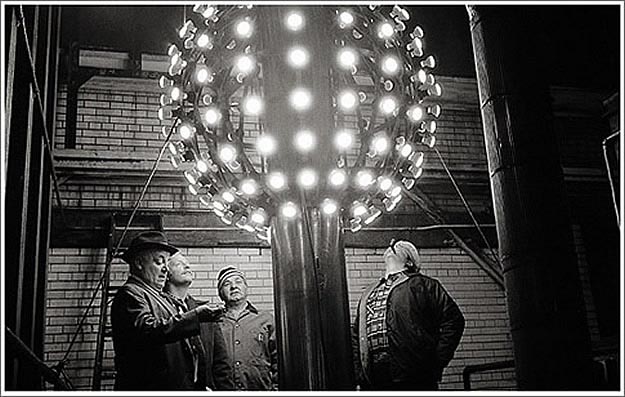
In 1903, The New York Times newspaper was about to open their new headquarters, the city’s second tallest building, in what was then known as Longacre Square. The paper’s owner, Adolph Ochs, decided to commemorate their opening with a midnight fireworks show on the roof of the building on December 31, 1903. After four years of New Year’s Eve fireworks celebrations, Ochs wanted a bigger spectacle at the building to draw more attention to the newly-renamed Times Square. An electrician was hired to construct a lighted Ball to be lowered from the flagpole on the roof of One Times Square. The iron Ball was only 5 feet in diameter! The very first drop was on New Year’s Eve 1907, one second after midnight. Though the Times would later move its headquarters, the New Year’s Eve celebration at One Times Square remains a focal celebration for the world.
The Ball has gone through some major transformations in its 100-plus years of partying. The original Ball was replaced in 1920 with a 5-foot, 400-pound iron Ball. This Ball lasted to 1995, when a third Ball debuted, adding rhinestones and a computerized lighting system featuring strobe lights. For the arrival of the new millennium, an entirely new Ball was constructed. Weighing 1,070 pounds and measuring 6 feet in diameter, the fourth ball was covered with 504 Waterford Crystal triangles illuminated with 168 halogen bulbs outside. Internally, 432 bulbs of clear, red, blue, green and yellow colors along with strobe lights and spinning mirrors lit up the night. It was retired on December 31, 2006 newly rigged with light-emitting diodes.
In honor of the Ball Drop’s 100th anniversary, a fifth design debuted New Year’s Eve 2008. Manufactured again by Waterford Crystal with a diameter of 6 feet, weighing 1,212 pounds, it used LEDs, computerized lighting pattern, and can produce over 16.7 million colors, but only consumes the electricity of 10 toasters! The 2008 Ball was only used once— a sixth new Ball debuted on New Year’s Eve 2009 and is still in use.
Today’s Ball is 12 feet in diameter, weighing 11,875 pounds. While retaining the 2008 design, this Ball was rebuilt double its previous size. To accommodate this new Ball, the flagpole was also enlarged, now rising 475 feet above the street. It remains atop One Times Square year-round, reminding the people below of the most exciting night of the year, and building the anticipation. Where will you be this New Year’s Eve? How will you become a part of the Ball’s history?
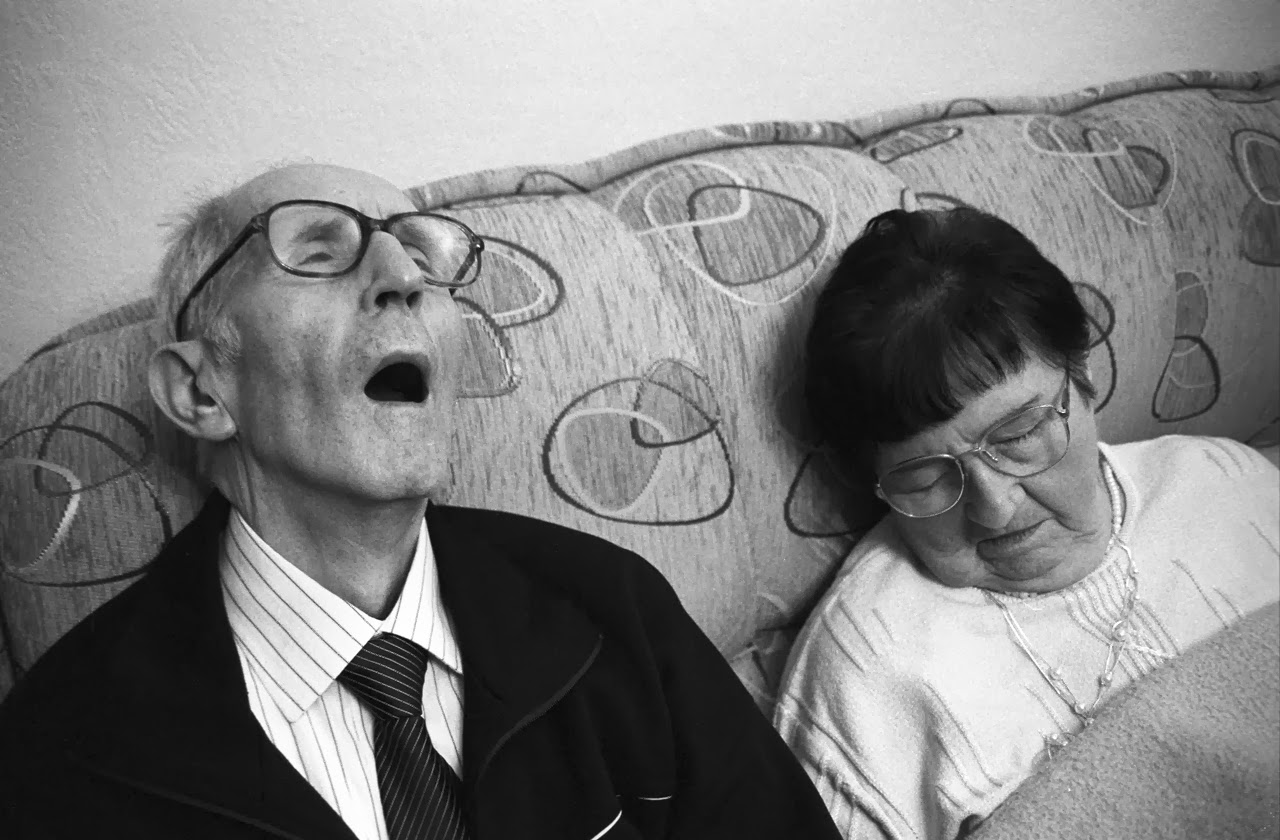
Here at our house, we do things differently. We celebrate New Year’s promptly at 9:00 pm…if we’re still awake, because it’s usually a contest to see what drops first…the ball or our eyelids and our eyelids are undefeated at this point!
When I think of Burgess Meredith, Grumpy Old Men usually comes to mind. But in his younger days, Meredith played The Penguin—arch villain on the original Batman series. What else is there to know about penguins, I wondered. Here are some interesting facts I found out!
There are only 17 -20 penguin species living on our planet—scientists do not agree on the methodology apparently.
Penguins are quite fast swimmers. Their speed is usually between 5 and 10 mph. However, they can reach a top speed of up to 22 mph!
The fastest of all penguin species is the Gentoo penguin.
The average lifespan of a penguin lies between 15 and 20 years, depending on the species.
In order to be able to raise their chicks, penguins come ashore.
The smallest penguin species is the little penguin, ranging from 12 to 16 inches. (laziest naming ever…LOL) These penguins are also called fairy penguins, or just little blue penguins.
The biggest penguin species is the emperor penguin, which can reach a height of up to 48 inches.
While emperor penguins can weigh up to 100 pounds, little penguins only weigh around 2 pounds.
Scientists estimate that extinct ancestors of penguins reached a height of up to 70 inches.
While some sources cite that the emperor penguin dived 1,850 feet, their maximum diving capacity is usually around 1,000 feet.
Most of the penguins usually only dive in a range from 16 – 65 feet.
Penguins can hold their breath up to 20 minutes while diving.
Penguins mainly feed on fishes, krill and squids.
Contrary to beliefs, penguins do not have any teeth.
Penguins lose all of their feathers every year. During this time, they are unable to swim, which may cause difficulties for them as they also cannot fish due to that.
The name penguin comes from an unrelated bird species “great auk”, which is already extinct.
Penguins are actually birds but don’t have wings. They have flippers instead.
Penguins are unable to fly.
In order to keep them warm in winter, penguins have many layers of feathers to protect against the cold.
Penguins are masters in controlling their blood flow. Once part of their body becomes too cold, they pump warm water in those parts in order to warm them up.Their biggest enemies penguins have to watch out for are leopard seals, killer whales and sea lions.
The closest relatives of penguins are albatrosses, divers and petrels.
Penguins can drink saltwater as well as freshwater in order to survive. Excessive salt will be excreted.
In order to be able to recognize their mating partner, each penguin has a specific unique sound frequency which it can use to gather with its partner and differentiate him from other penguins around.
Most of the penguin species live on the South Pole or Antarctica, while all of them, apart from the Galapagos penguin, live in the Southern hemisphere.
Don’t confuse Arctic with Antarctica. Penguins don’t live at the North Pole!
In order to reach higher initial speed, penguins often jump out of the water before they dive.
Although it might not be intuitive at first glance when you see penguins out of the water, they are perfectly disguised while swimming. Their white belly disguises them from predators below them, while their black back fits in the water surface and protects them from predators above them.
Penguins produce oil that makes them resistant against the cold water and also more agile underwater.
It is estimated that the average penguin colony varies from 200,000 to 500,000 individuals.
While some penguin species prefer to stay on land, there are also some species that spend up to 80% of their lifetime in the water.
The penguins’ body is built to dive and sink easily, as their bones are not hollow like for many other birds, but they rather have dense bones which make them quite heavy.
Instead of walking, penguins often move with their belly on the ice. It is not fully clear why they do it, but scientists estimate that it might be a faster way to move on ice compared to walking.
Penguins are usually quite trustful towards humans. This is probably learned behavior since most of their predators are underwater and they feel safe on land.
In cold times, penguins are not reluctant to get closer to each other. In fact, they use each other’s body temperature to warm and protect against the cold.
When I looked up the meaning of “Auld Lang Syne”, dictionary.com said this:
The words auld lang syne literally mean “old long since,” though in practice it means “old times, especially times fondly remembered,” as well as an “old or long friendship.”
So, as we near the end of this long, disgusting year of Ultra Maggot’s installation, let’s look back fondly at older, BETTER times!
I found this list the other day, of over 200 of Jeff Foxworthy’s best “You might be a redneck…” jokes and I’d thought I’d share a bunch with you guys. I’m gonna break it up into a few opens here and there…Enjoy!!
The ASPCA raids your kitchen.
You own a homemade fur coat.
You have a rag for a gas cap.
You’ve ever bought a used cap.
You’ve ever financed a tattoo.
You prefer car keys to Q-tips.
You have an Elvis Jell-o mold.
You have ever used lard in bed.
You’ve ever stolen toilet paper.
Fewer than half of your cars run.
Your brother-in-law is your uncle.
You own at least 20 baseball hats.
Every electrical outlet in your house is a fire hazard.
Birds are attracted to your beard.
You pick your teeth from a catalog.
You’ve ever been too drunk to fish.
You bring your dog to work with you.
Your kitchen doubles as a bait store.
You’ve ever given rat traps as gifts.
You’ve ever used a Weed Eater indoors.
You have more guns than teeth.
Your dad is also your favorite uncle.
Your Junior/Senior Prom had a Daycare.
You’re considered an expert on worm beds.
You’ve ever parked a Camaro in a tree.
You burn your yard rather than mow it.
Your brother-in-law is also your uncle.
Your other truck is made by John Deere.
You take a fishing pole into Sea World.
Your gene pool doesn’t have a “deep end”
The primary color of your car is Bondo.
Your family’s No. 1 enemy is revenuers.
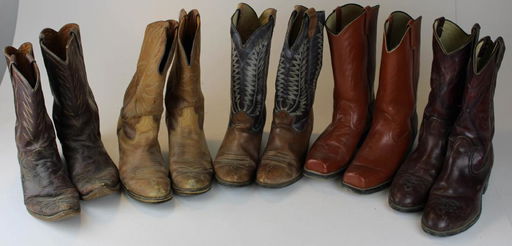
You own more cowboy boots than sneakers.
You’ve ever barbecued Spam on the grill.
You ever cut your grass and found a car.
You clean your fingernails with a stick.
You think suspenders are a type of shirt.
You consider “Outdoor Life” deep reading.
You’ve ever worn a tube top to a wedding.
You’ve ever raked leaves in your kitchen.
You wear cowboy boots with Bermuda shorts.
The Salvation Army declines your mattress.
You have every episode of Hee-Haw on tape.
You’ve totaled every car you’ve ever owned.
You go to a Tupperware party for a haircut.
Your coffee table used to be a cable spool.
You’ve ever bathed with flea and tick soap.
Your family tree doesn’t have any branches.
Your wife weighs more than your refrigerator.
You think the French Riviera is foreign car.
You ever lost a tooth opening a beer bottle.
Your school fight song was “Dueling Banjos”.
You keep a can of RAID on the kitchen table.
You consider the fifth grade your senior year.
Your home has more miles on it than your car.
Your mother has “ammo” on her Christmas list.
Your dog and your wallet are both on a chain.
Your dog can’t watch you eat without gagging.
You read the Auto Trader with a highlight pen.
You think a chain saw is a musical instrument.
You’ve ever made change in the offering plate.
Your belt buckle doubles as a serving platter.
You use lava soap more than three times a day.
You think that Dom Perignon is a mafia leader.
Your belt buckle weighs more than three pounds.
The main course at potluck dinners is roadkill.
Your lifetime goal is to own a fireworks stand.
You think a Volvo is part of a woman’s anatomy.
You buy your wife tube socks at the flea market.
Your kids take a siphon hose to “Show and Tell.”
There is a stuffed opossum anywhere in your house.
You own more than 3 shirts with cut off sleeves.
You have to go down to the creek to take a bath.
Your wife can climb a tree faster than your cat.
You think the stock market has a fence around it.
Your CB antenna is a danger to low-flying planes.
The Home Shopping operator recognizes your voice.
You think that Campho-Phenique is a miracle drug.
You consider pork and beans to be a gourmet food.
You think a hot tub is a stolen bathroom fixture.
Your boat has not left the drive-way in 15 years.
You think a turtleneck is key ingredient for soup.
Your hairdo has ever been ruined by a ceiling fan.
Your parakeet knows the phrase “Open up, Police!”.
You think a subdivision is part of a math problem.
Your mother keeps a spit cup on the ironing board.
Red man Chewing Tobacco sends you a Christmas card.
I came across this article from Reader’s Digest…Historical Facts You’ll Wish Weren’t Really True by Meghan Jones. I thought I’d share it with you.
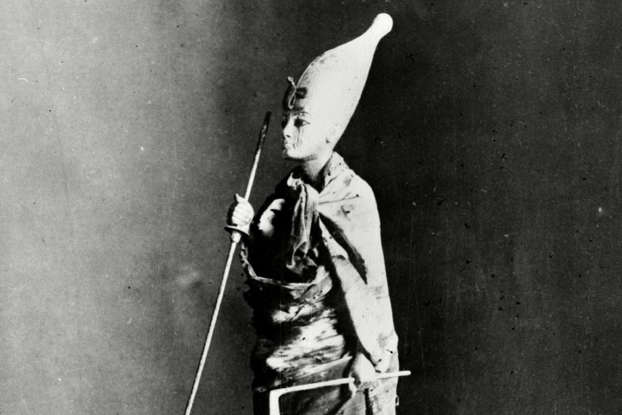
King Tut’s parents were most likely siblings.
Once you’ve finished shuddering with disgust, here’s what researchers know about the boy king and his family. His father was almost definitely Akhenaten, who preceded Tut as pharaoh in the fourteenth century BC. The identity of his mother is pretty much unknown, but recent DNA samples from his and other mummies have revealed that she was probably one of Akhenaten’s sisters. King Tut was rather frail and suffered from a bone disorder, perhaps due to his parentage. Incestuous relationships, though, weren’t out of the ordinary in ancient Egypt, a fact which is not exactly reassuring. Despite Tut’s health issues, and his short life even by the standards back then (he died at 19), he’s gone down in history as one of Egypt’s most famous and wealthiest pharaohs.
Someone tried and failed to save Abraham Lincoln—and his life just got darker from there.
You’re probably familiar with the 1860s illustration The Assassination of President Lincoln. But who’s that pair sharing the private box with the ill-fated president and his wife? The man on the far left, rushing into action, is Major Henry Rathbone. President and Mrs. Lincoln specifically asked him and his fiancée, Clara Harris, to accompany them to the theater. After Booth fired the shot, Rathbone tried to tackle him to the ground, but Booth was able to get free by slicing Rathbone in the arm with a dagger. Rathbone was never free of the memory and guilt of that night, and he reportedly felt responsible for letting Booth get away. In the years to come, he experienced a myriad of health issues, from stomach ailments to heart palpitations, and his mental state deteriorated as well. On December 23, 1883 (18 years after the assassination), he attacked and killed Clara, now his wife, and attempted to kill himself. He would spend the rest of his life in a mental institution.
In 1494, Europe experienced the closest thing to a real-life zombie outbreak.
Italy’s Renaissance period has a major, though little-known, dark side. Sailors returning from the New World brought with them a massive outbreak of syphilis, which spread through an entire French army. The troops then brought what would become known as “the great pox” to the rest of Europe. With no such thing as antibiotics back then, the disease was able to spread unchecked—and its effects were nasty. The skin on victims’ faces would essentially rot away from the disease’s grisly ulcers. In some cases, the noses, lips, or other body parts of the affected people were essentially gone, and several of the victims eventually died from the disease. So while there was a lot to love about the Renaissance in Europe, the concurrent syphilis outbreak was basically the real-world version of the zombie apocalypse. No big deal.
19th-century New Englanders dug up a young woman’s body… because they thought she was a vampire.
You’ve undoubtedly heard of the Salem Witch Trials, but what about the “Rhode Island Accused Vampire”? In the late 1800s, a bout of tuberculosis (then called “consumption”) struck Connecticut, Rhode Island, and Vermont, and the residents didn’t know what to make of it. Since its victims tended to look sunken, pallid, and drained, people assumed that they’d fallen prey to vampires. So, naturally, a “vampire hunt” soon commenced. When members of an Exeter, Rhode Island family began dying of consumption one after the other, the other townspeople decided that someone in the family must be “feeding” on the others. Even after the mother, Mary Brown, and her two daughters had died, the townspeople decided to exhume the dead bodies, suspecting that one might, in fact, be “undead.”
Brown’s 19-year-old daughter Mercy had died much more recently than her family members, so her body was in much better condition. Her heart even still contained some decayed blood—a sure sign of vampirism, in those days. So, to prevent her from “striking” again, they burned her heart and liver and mixed the ashes with water. They then gave the concoction to another affected townsperson as a “cure.” Unsurprisingly, it didn’t work.
Thomas Edison created a seriously creepy baby doll.
For all of his successful inventions, Thomas Edison did experience a pretty major failure when he tried to create the first-ever talking dolls. His 1877 development of the tinfoil phonograph was a major breakthrough in terms of sound recording, and the endless possibilities for this technology were not lost on Edison. In 1890, thanks to the development of the wax cylinder, he was able to produce a line of baby dolls. With wooden bodies, porcelain heads, and miniature phonographs in their chests, the dolls were unlike anything the world of toys had ever seen—or heard—before. The phonographs played back recordings of young women reciting nursery rhymes like “Hickory Dickory Dock” and “Now I Lay Me Down to Sleep.”
And if ever there were dolls that deserved their own horror flick, it was these. The old, garbled technology, the shrill voices, and the dolls’ eerie faces combine to make them into nightmare fuel for us today. But that’s not actually the reason the dolls were unsuccessful. Their failure was due more to several different things; the pieces were easy to lose, the sound didn’t last long and was hard to understand, and the mini phonographs were highly breakable. And, finally, the dolls were simply expensive.
Dentures used to be made from the teeth of dead soldiers.
Why have false teeth when you can have real teeth?! That must have been the mentality of nineteenth-century dentists. They combated the outbreak of tooth decay with makeshift dentures—ivory base plates with real human teeth attached. Scavengers were already looting corpses from the Battle of Waterloo for their teeth, and now they could sell the teeth to dentists. The dentists would boil the choppers, cut off the roots, attach them to ivory plates, and sell them to customers. Mental Floss doubts that the customers had any idea where the teeth came from. Whether that makes it more or less creepy is up to you to decide.
Researchers once turned a cat into a telephone. A live cat.We know what you’re thinking: “You’ve got to be kitten me!” Well, unfortunately not. In 1929, a pair of scientists at Princeton University wanted to test how the auditory nerve perceives sound. Their test subject was a heavily sedated, but alive, cat. The scientists, Ernest Wever and Charles Bray, cut out part of its brain and attached one end of a telephone wire to its auditory nerve and the other end to a receiver. When Bray said something into the cat’s ears, Wever could hear him through the receiver in a soundproof room. Though it might just seem like a sick experiment, it actually did have some beneficial effects; many researchers believe it helped lead to the development of cochlear implants. As for the feline-turned-phone, it incredibly survived the experiment… but Wever and Bray didn’t release it back into the world. Instead, they killed it to see if the experiment would work on a dead cat. It didn’t.
Boston experienced a deadly molasses flood.
This makes the Boston Tea Party look tame. In January of 1919, an enormous molasses tank burst in the North End of Boston. While a molasses flood might sound like a scene from Cloudy with a Chance of Meatballs, it was no laughing matter. The tank contained—and released—nearly two and a half million gallons of the sticky substance, which surged through the streets at a whopping 35 miles per hour. It was essentially a full-on tidal wave, reaching nearly fifteen feet tall and killing twenty-one people. A hundred and fifty more people were injured, and buildings and houses were knocked from their foundations. Emergency responders had trouble reaching the victims since they had to clamber through the sticky sludge. It took Bostonians weeks to clean up the mess, and many residents would claim that, in the summer heat, they could smell the sickly-sweet odor of molasses even years later.
A computer once did in 40 seconds what took a mathematician an entire lifetime.
Say it isn’t so! While not gross or scandalous, this history fact is still something of a downer. William Shanks, a nineteenth-century mathematician, spent his entire life calculating the digits of pi. He successfully calculated the first 527 digits, and found another 180 digits, though those calculations were incorrect. But calculating the first 527 digits is still impressive… or, rather, it was in 1873. In 1958, a computer calculated that same number of digits in less than a minute…and then calculated another ten thousand. Perhaps it’s better poor Shanks wasn’t alive to see that. If it’s any consolation, though, humans did invent that computer.
A king made his subjects worship the corpse of his beloved.
This case of star-crossed lovers got weird fast. In fourteenth-century Portugal, the king’s son, Don Pedro, fell in love with Inês de Castro. There were only a couple of problems with this: for one, his father, King Afonso IV, did not approve, because Inês was illegitimate. For another, Don Pedro was married. His father had arranged for him to marry a noblewoman named Constanza, and Inês was Constanza’s lady-in-waiting. When Don Pedro refused to stop seeing her, the king had her killed. When Don Pedro acceded to the throne two years later, he exhumed her body, had it clothed in royal dress, and “crowned” her queen. According to historical legend, he made the other nobles all kiss her hand as a sign of their devotion.
Note: None of these pictures are Grandpop’s putz–I have none of those. These are from Roadside America in Shartlesville, PA. Roadside America is a miniature model town.
One of my favorite traditions of Christmases past, was my Grandpop’s putz. (A Christmas putz refers to a miniature village usually surrounding the Nativity scene.)The day after Thanksgiving, Grandpop commandeered their sitting room and began the building. Whenever we visited before Christmas, it would be covered in tarps—shrouded in secrecy—which of course helped the excitement build till Christmas Day. We couldn’t wait to see it!
Grandpop started with a large wooden slab covered with green felt. From there he built mountains, tunnels, and forests on several different levels. And from there, he simply created an entire town! He painstakingly made buildings—stores, churches, and homes—and they had lights inside! There were street lights and street signs, stop signs and bus stops. And he hand-carved the people in the town too. There were little gardens, bushes and even a creek or two. And the TRAINS!!! He had at least 6 different train sets on the putz and on the uppermost level was a small cable car—which circled their Christmas tree…the most gosh awful aluminum thing I’d ever seen…but Grandma loved it. And in it’s place of honor was a hand carved Nativity set, brought by Grandpop’s parents from Austria.
Everything was electrically connected to a large control box that only Grandpop could operate. We’d spend hours walking around the putz, trying to see everything! The people, the details on the buildings…it was all meticulous! I don’t think I ever appreciated just how much time and effort he put into his putz.
When our family moved into a larger home, my dad created his own putz. Dad’s lacked the handcrafted elements that his dad’s had and he purchased the figurines and trees. But his buildings were spectacular! Our putz was in our basement—mom refused to surrender our living room—so no Christmas tree on ours. And Mom refused to allow the Nativity set into the basement. My little brother helped –mostly with the trains—while he and Dad sampled the egg nog Mom kept in the basement fridge.
When my Grandpop passed, my dad and my uncle split the train sets and my aunt took the rest. Then when my father passed, my brother took it all. He has never set up a putz. Sigh…
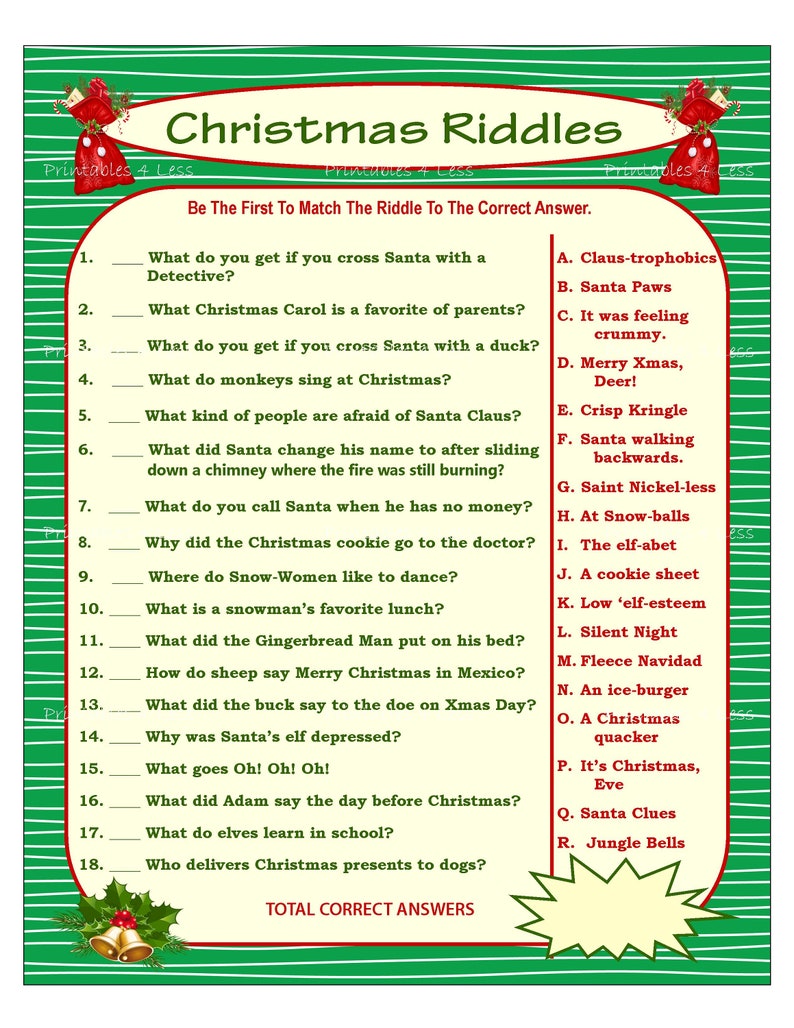
The holidays can be very stressful for a myriad of reasons—the shopping, the cooking, being with family, especially being with family. So, how about we play some games?
That’s right…Short Girl Appreciation Day falls on the first day of winter…the shortest day of the year…coincidence? Sigh…I don’t think so!
Before anyone tries to disparage short girls or people in general, let me note that your hosts here are both SHORT women. We never ask about height, but it does come out during conversations…so if you’re short too…welcome! Be proud! If you’re tall…can you reach that box on that top shelf for me?
Every year, I try one new cookie at Christmas time. This year’s selection is Triple Chocolate Turtle Cookies!
Triple Chocolate Turtle Cookies
Chocolate Cookies
1/2 cup unsalted butter at room temperature (1 stick)
2/3 cup granulated sugar
1/3 cup light brown sugar, packed
1 large egg
2 tablespoons milk
1 tablespoon molasses
1 teaspoon vanilla extract
1 cup all-purpose flour
1/2 cup cocoa powder
1/4 teaspoon salt
1/2 cup mini semi-sweet chocolate chips
1 cup pecans roughly chopped
Caramel Filling
14 soft caramel candies (like Kraft)
3 tablespoons heavy cream
Chocolate Drizzle
4 oz. semi-sweet chocolate chips or baking chocolate
1 teaspoon shortening
Instructions
In a large bowl, mix together flour, cocoa, and salt; set aside.
In a hand or stand mixer, beat butter until creamy, add sugars and beat until light and fluffy, about 2 minutes. Add egg, milk, molasses, and vanilla; mix until incorporated. Reduce speed to low and add flour mixture until just combined.
Wrap dough in plastic wrap and refrigerate for 2 hours. After 2 hours, remove dough. (Let sit for a few minutes if it’s too hard to work with.)
Preheat oven to 350F degrees. Line baking sheets with nonslip mats or parchment; set aside.
Mix together the mini chocolate chips and pecan pieces in a small bowl. Roll chilled dough into 1-inch balls, then roll in chocolate chips/pecans, pressing them firmly into the dough. Place 10 balls per baking sheet (it makes a total of 30 cookies) about 2 inches apart.
Using a 1/2 teaspoon measuring spoon, make a slight indentation in the center of each dough ball.
Bake for 10 minutes then let cool on the pan for 10 minutes before transferring to cooling rack. Once cookies are transferred to rack, gently re-press the indentations.
While cookies are cooling, prepare the caramel filling by microwaving caramels and cream together in a small bowl until smooth, stirring every 30 seconds until melted, about 1-2 minutes.
Fill each indentation with about 1/2 teaspoon of the caramel.
To make the Chocolate Drizzle, microwave chocolate in a small bowl on 50% power, stirring every 30 seconds until melted. Stir in shortening. Transfer chocolate to a Ziploc bag, snip off a small corner and drizzle over cookies.
NOTE: I haven’t made these yet. I was unable to find any caramels. but the search continues!
This is one of GA/FL’s recipes…Mama Smith’s Pecan Cookies…and I have tried these! YUM!
Mama Smith’s Pecan Refrigerator Cookies
Beat together:
1-1/2 cups butter
1 c. brown sugar
1 c. white sugar
2 eggs
Whisk together:
4 c. flour
1 tsp baking soda
1 tsp cream of tartar
1/2 tsp salt
Mix sugar/egg and flour mixtures together.
Add 2 c. chopped pecans.
Roll into logs, wrap with plastic wrap or waxed paper, refrigerate for a couple of hours or store in freezer until needed.
Slice and bake at 350 degrees until lightly browned. (mine took 7-10 minutes)





























/154271151-56a6d36f3df78cf7729070f7.jpg)



















 Sew Colorful