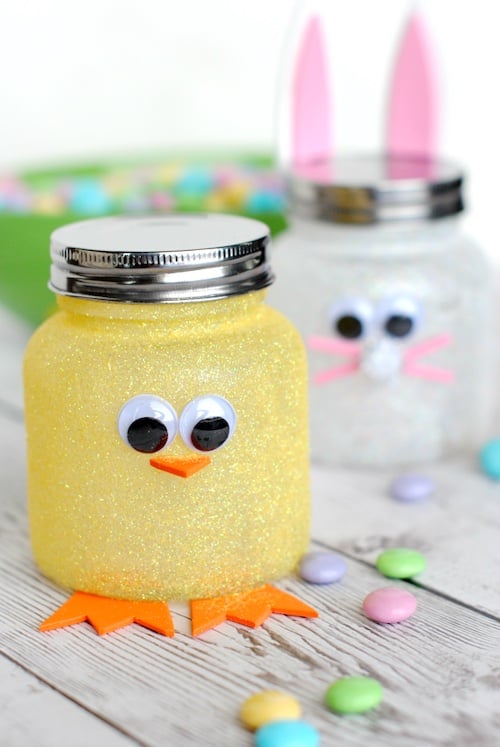
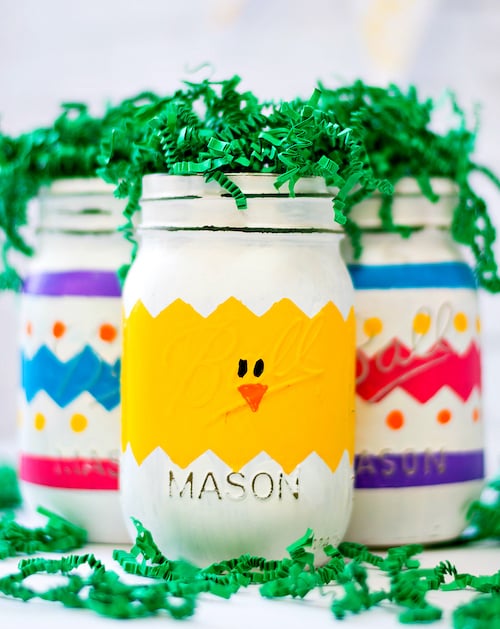
Several years ago, my granddaughter and I made these adorable (and EASY!) Easter jars. They require clean, empty jars, paint, googly eyes, pipe cleaners, a puff ball and some foam or felt scraps.
Of course, there’s ALWAYS Mason Jars to paint…LOL
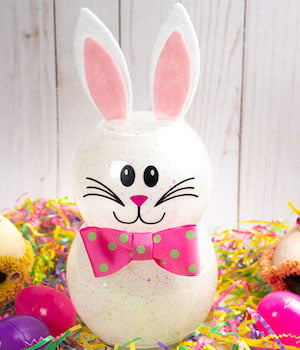
This bunny is basically the same idea only you use 2 small glass globes. I used rounded glass containers that I saved after I burned the candles in them. I microwaved the glasses to liquefy the remaining bits of wax and poured that out. Then I washed them and used them!
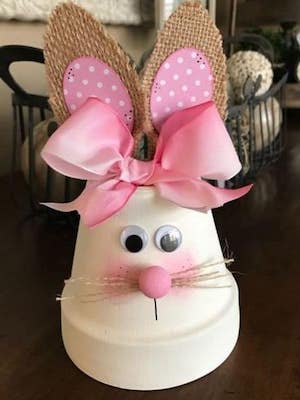
This idea uses a flowerpot, some burlap for the ears, googly eyes, a wooden ball (for the nose) and ribbon!
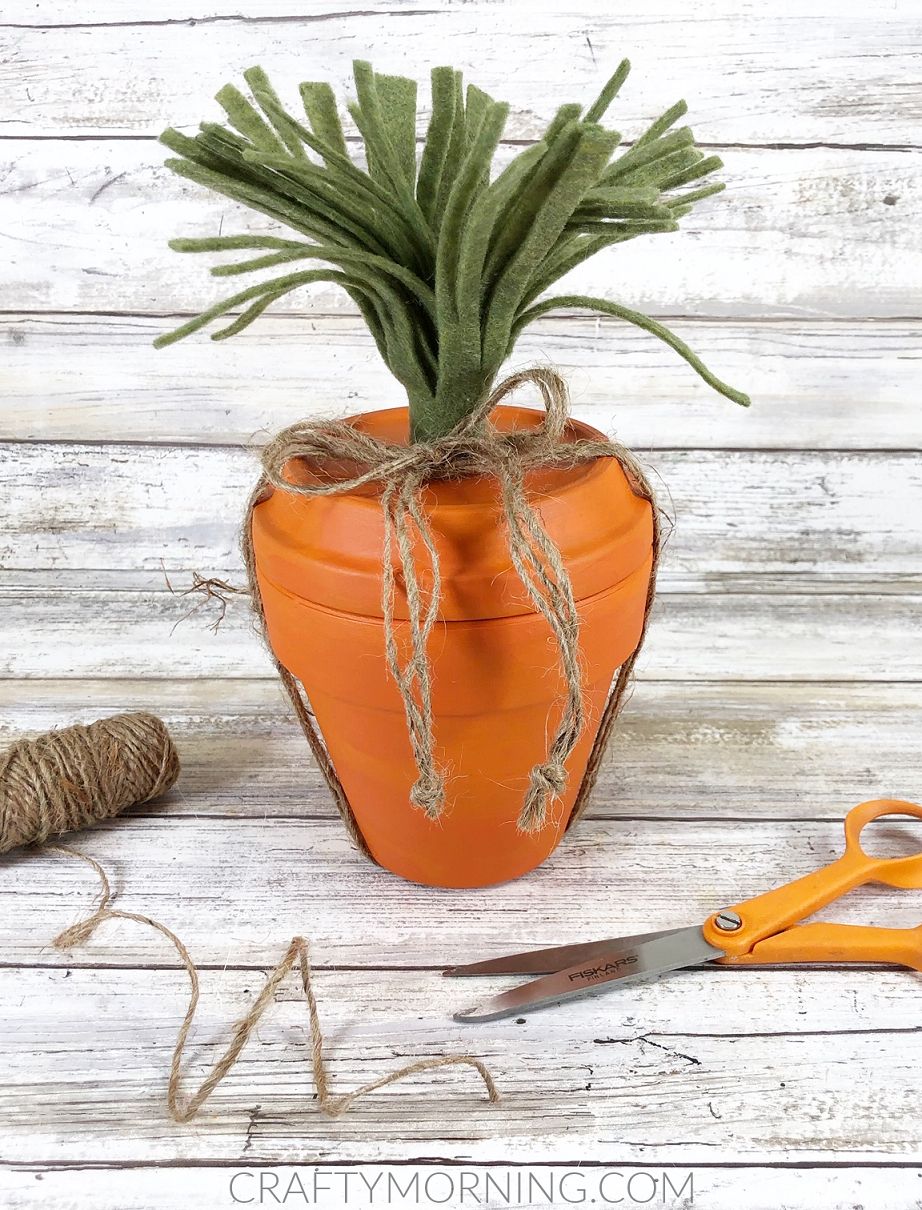
How about a super easy carrot? You’ll need a clay pot and saucer, some twine, felt, acrylic paint and glue.
Lastly, I offer these bunny sachets!!
You’ll need to draw a bunny shape (see picture below) on doubled fabric, and then, starting at the flat bottom part, sew around the edge. (If you want that exact size, add a ¼ to ½ inch around the edge for a seam.) Leave an opening so you can turn the bunny inside out. Turn the sewed bunny inside out and then tie a ribbon at the base of the ears to prevent the filling from going into the ears. Use a funnel to spoon a mixture of dry rice and dried lavender into the bunny head. Stitch the opening closed. Add a face with a fabric marker if desired.
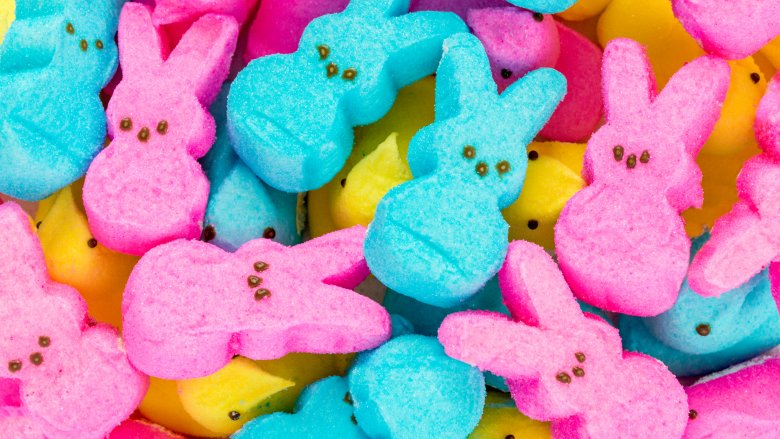
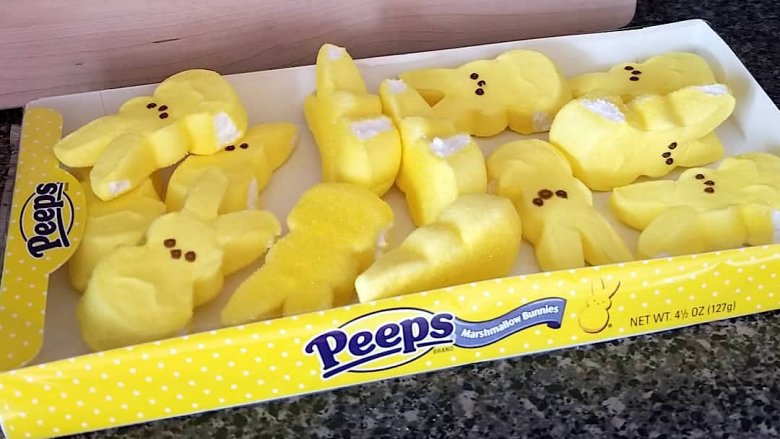
I love peeps! I like them stale and I prefer the flat bunnies to the rounded chicks. That’s probably more than you wanted to know…lol…but read on for more weird facts about peeps!
The first Peeps took a long time to make…
Today, Peeps chicks are produced at a breakneck speed of six minutes each. If six minutes for one marshmallow doesn’t sound all that impressive, it’s because you don’t know how long the process used to take.
In 1953, Just Born, the candy company who made Peeps a household name, was looking to acquire the Rodda Candy Company, mostly because of its jelly bean technology. But on a tour of that factory, the Born family noticed something that piqued their interest that had nothing to do with jelly beans. Just Born vice president Matt Pye told USA Today, “… while the family was touring the Rodda Candy Company, in the back part of the factory were these women with pastry tubes squirting these marshmallow chicks by hand.” But this was no quick process — it took 27 hours from start to finish to make these marshmallow chicks, thanks to the very lengthy cooling time required before the candy could be packaged.
Once Just Born acquired the company, they immediately set about automating the Peeps-making process, which included a faster dry time, and have managed to shave 21 hours off the operation. Now that you have all the facts, six minutes seems party darn fast, doesn’t it?
Is there really car wax in Peeps?
You may have heard a rumor that carnauba wax, an ingredient in some candy, is the very same ingredient used in car wax — and it is, indeed. However, it’s probably not as bad as it sounds.
Not only is carnauba wax approved by the FDA for human consumption, but according to Snopes, the amount used in candy is so minuscule that it simply cannot be likened to taking down a spoonful of Turtle Wax. And because of its high melting point, it’s actually not even absorbed by our bodies. Which leads us to one slightly creepy point…
Carnauba wax is typically used to give candy a sheen or a hard shiny surface, and in Peeps it’s what makes those brown eyes so shiny. When a pair of Emory scientists put the candy through a barrage of tests to determine its indestructibility, they stumbled onto something disconcerting about those eyes. After taking an hour-long bath in Phenol, a protein-dissolving solvent, the marshmallow was all but gone. The only thing that remained? A pair of wax eyes, bobbing in the Phenol, intact. The same eyes that will travel through your digestive system, intact. If that’s not nightmare fuel, we don’t know what is.
It would take this many Peeps to…
Have you ever laid in bed at night wondering how many Peeps it would take to span the Golden Gate Bridge? You’re in luck. The good folks at USA Today determined just how many marshmallow chicks and bunnies it would take to measure up against some of the world’s most famous landmarks, and the numbers will blow your mind.
Wrap your head around this one: Houston’s NRG Park (aka the Astrodome) can seat up to 70,000 fans in its 1 million square feet. But to fill that stadium with Peeps? It would take an astonishing 1.7 trillion (trillion!) chicks.
The Hoover Dam built out of marshmallow? Probably wouldn’t be too effective, but it would take 1.3 billion Peeps to do it.
Stack Peeps bunnies up on top of each other ears to tail, and it would take 1,464 to measure up to the Statue of Liberty, 8,300 to reach the top of Chicago’s Willis Tower (aka the Sears Tower), and 2,664 to line up with the Washington Monument.
And that piece of Golden Gate Bridge trivia you’ve been waiting for… It would take more than 43,000 bunnies lined up side to side to complete the span.
Some actually prefer them stale!
Believe it or not, fresh-from-the-package Peeps aren’t for everyone — and no, we don’t mean that in the obvious way.
There are more fans of stale Peeps out there than you might think, according to Just Born VP Matthew Pye, who told HuffPost, “Everyone thinks they’re the only ones who like [them],” but confirmed that about 25 to 30 percent of consumers actually prefer Peeps — as he so eloquently puts it — “aged, like a fine wine.” With those kinds of numbers, should we expect aged marshmallows to hit shelves soon? Nope, says Pye. They can’t afford to disappoint that 70 to 75 percent of customers who prefer them fresh. “If we were to produce a stale Peep, we couldn’t satisfy what the people want,” he explains. “We let the consumer do it themselves.” Let’s be honest, “making” stale Peeps at home is pretty easy.
Take this Instagrammer, for instance, who has perfected her aged Peeps process: “It’s crunchy bunny season!!!!! I only buy Peeps at Easter. I prefer the bunny shape, and I like them CRUNCHY on the outside. I usually open the package, split them apart and let them sit for a couple of days. Peep Perfection!!!” Crunchy bunny season does have a certain ring to it, doesn’t it?
What in the world is Peepza?
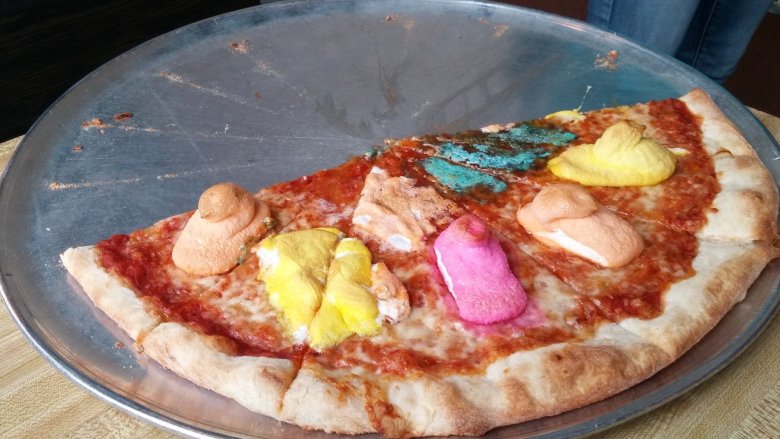
What do you get when you throw some Peeps onto an unsuspecting pizza? Peepza, otherwise known as the pizza absolutely nobody asked for ever.
It seems like every Easter someone on the internet “discovers” Peepza, but to properly lay the blame… er, give credit where credit is due, we have to go back to 2010, when Serious Eats columnist Adam Kuban debuted his springtime mashup (via Eater). The Peepza is exactly what it looks like: A plain cheese pizza, cooked almost completely, then topped with Peeps and cooked for another minute to get the marshmallows nice and melty. If we’re to believe Kuban, “it actually doesn’t taste as bad as you might think.” “You know that whole salty-sweet dynamic that we all tend to love so much? Peepza has it in spades,” he promised.
What’s good for the goose isn’t always good for the gander, though. In 2017, SBNation’s Charlotte Wilder decided to hop on the Peepza bandwagon, and her review was decidedly less enthusiastic than Kuban’s. “I took a bite of the Peepza, and let me tell you, this is the grossest s**t I’ve ever eaten. And I tried chocolate chip cookies made with cricket flour this week (don’t ask),” she said. “It tasted exactly like you think it would: A Peep on top of pizza, which is disgusting.”
Peeps Oreos came with a strange side effect…
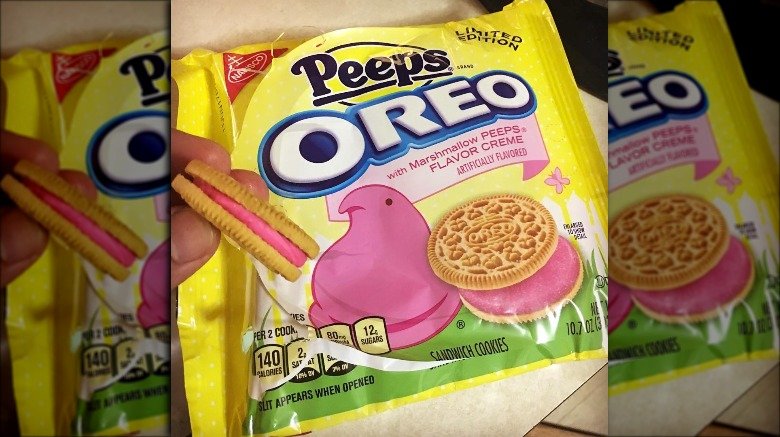
When limited edition Peeps Oreos, complete with neon pink marshmallow-flavored creme, hit the shelves the 2017, fans of the Easter candy were quick to gobble them up. But it didn’t take long before an unsettling trend was noticed.
Turns out the bright pink creme had a surprising side effect: Bright pink poop. Those experiencing this phenomenon took to Twitter to air their dirty laundry, along with others who didn’t have that particular issue, but experienced other side effects, like a stained pink tongue and Pepto-Bismol-hued spit.
Can hot pink Oreos really have this effect on our bodies?
According to LiveScience they can, thanks to the red #3 food dye used in the creme, which gastroenterologist Dr. Ian Lustbader says doesn’t get broken down in the body during digestion. While the colored poop indicates nothing serious health-wise, for someone to actually see this startling side effect, they’d have to eat a lot of cookies. “It’s certainly going to take more than one or two,” Lustbader explained. He further surmised that if you’re eating enough of these cookies to turn your poop pink, you should probably be more worried about the sugar’s and fat’s effect on your health. Touché, doc.
Peeps has infiltrated breakfast (and dessert)…
If having Peeps available anytime during the year and in a plethora of flavors isn’t enough for you Peep-le, then how about Peeps cereal? Yep, it’s a thing. This limited edition cereal is the tasty product of a Peeps and Kelloggs collaboration. This seasonal breakfast cereal (dessert) features rainbow rings and little marshmallows shaped like Peeps bunnies and chicks.
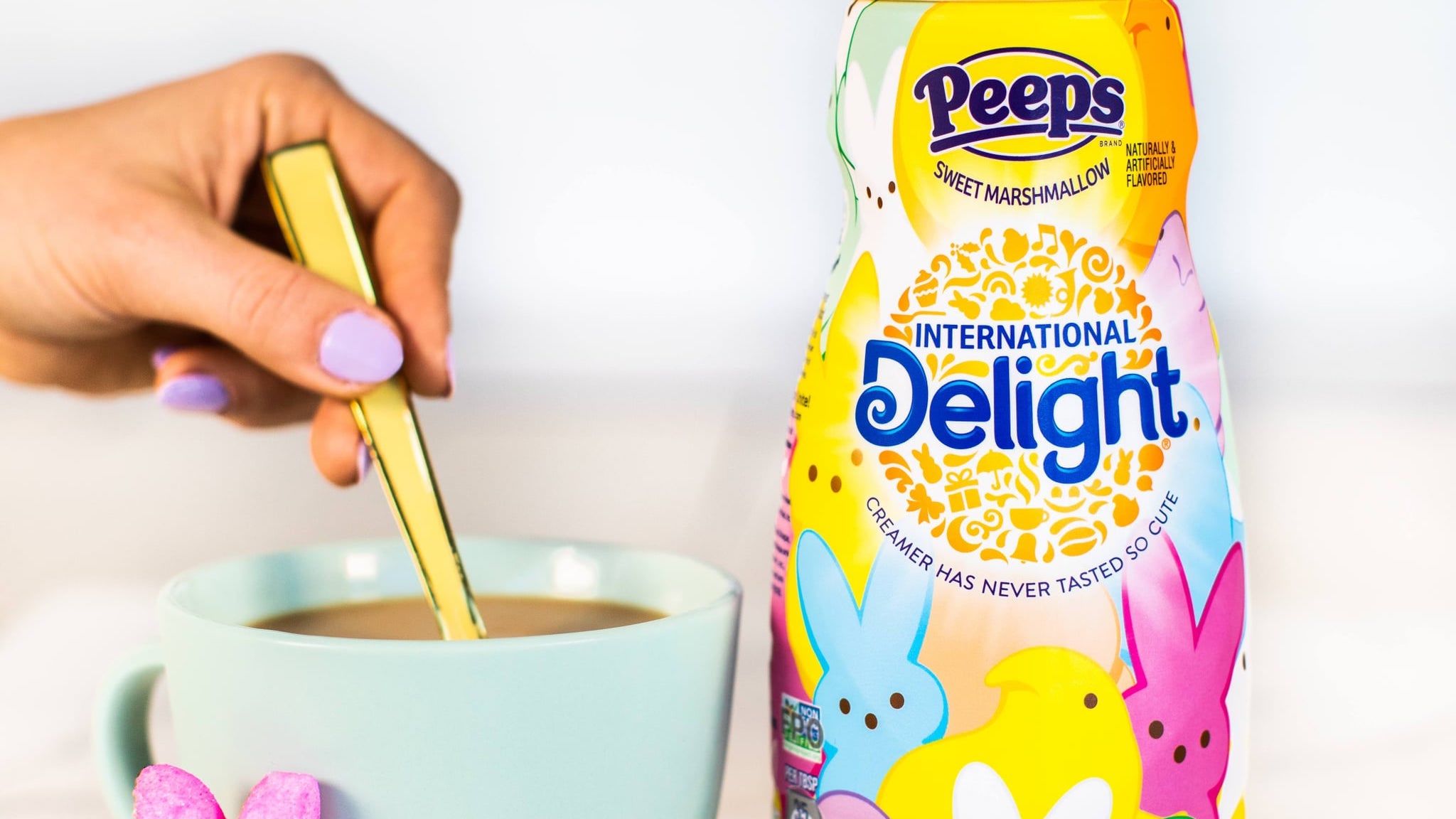
If cereal isn’t your M.O. and you’d prefer to start your day off with pure liquid energy (that’s coffee, by the way), then International Delight has you covered. If you’ve visited the refrigerated creamer section at your local grocery store recently, you might have noticed the plethora of different creamers that are readily available to you — M&M’s creamer anyone? What about Reese’s? International Delight offers seasonal flavors, too, and for spring they bring you Peeps Creamer. And if you want more dessert with your Peeps, Cold Stone Creamery recently introduced Peeps ice cream, which is for springtime only.
There was a Peeps Mobile and a Peeps Fun Bus!
What would you think if you were waiting at a red light and a bright yellow Volkswagen Bug with a Peep (of comparable size) riding on top of it rolled up beside you? Well, you’d initially want to take a photo (because who wouldn’t?), then you’d probably wonder if this car had been touring the states just as much as the Oscar Meyer Weinermobile.
Well, it happened back in 2003, in honor of Peeps 50th anniversary. And it wasn’t just a Volkswagen Bug. (Why stop with one vehicle when you can have two?) There was a Peeps bus that toured as well. Inside that revamped school bus was Peepsville: A life-sized diorama that showcased the different Peeps that were in production at that time. (They’ve most definitely expanded on their flavor offerings since then). The bus came complete with a sampling station, so everyone could try a Peep — but who hasn’t tried a Peep before?
Peeps is a Pepsi flavor.
Returning two years after a quick run as a promotional giveaway, Pepsi has reintroduced its Peeps flavor to beverage shelves across the U.S. Pepsi x Peeps merges the sugary cola sweetness of Pepsi with the marshmallow essence of Peeps to create a vanilla-ish cola combination, available in 7.5-ounce mini-cans and 20-ounce bottles. Customer reactions are as mixed as the candy-in-soda formula. Happy YouTube reviewers call out the balance of sweetness as surprising, noting the Peeps marshmallow essence as being present in the aroma as well as the flavor. Online critics mark the beverage down for the same reasons, hinting that this flavor may be better enjoyed by Peeps fans rather than regular Pepsi drinkers.
If the flavor sounds inspired, it certainly lit up the beverage industry. The original hype over this splash-up mash-up was followed by competitive cola colossus Coca-Cola offering their own marshmallow soda. The company recruited Grammy-winning musician Marshmello for their own marketing blitz. While the expanding line of Peeps flavors and merchandise may suggest the candy is on trend, Peeps-flavored Pepsi is a springtime flavor sensation that will only be available for a limited time.
1/8 teaspoon salt optional, add if your peanut butter isn’t already salty
For Dipping:
2 cups semi-sweet chocolate chips or melting wafers (12-ounce bag)
1 tablespoon shortening, coconut oil, or vegetable oil optional, to help chocolate chips melt thinner and make dipping easier
Instructions
In a medium-sized bowl, use an electric mixer to mix peanut butter, melted butter, vanilla extract, and salt (optional) until combined. Slowly add in powdered sugar and mix until incorporated.
The consistency should be a bit like a play-doh and shouldn’t be sticky. If it is sticky, add a bit more powdered sugar. If it’s dry and not holding together when pressed, add a bit more melted butter.
Roll into balls, flatten, then shape into eggs. You can also use a rolling pin to roll the dough 1/2″ thick, then use an egg cookie cutter or round plastic cup or lid (that “squishes” and is about 2″ in diameter) to cut out oval shapes.
Freeze shaped eggs for 20-30 minutes.
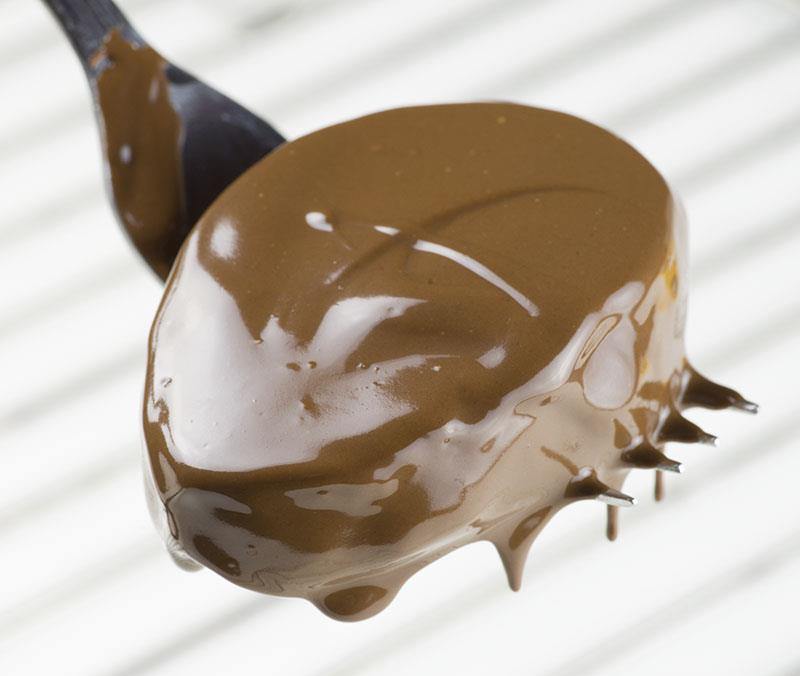
Melt chocolate chips and shortening (optional) in the microwave at 50% power in 30-second increments, stirring in between each increment. If using melting wafers, follow instructions on package.
Dip the frozen eggs in melted chocolate chips or melting wafers. It’s easiest to place them on a fork and then use another fork to scoop chocolate on top.
Tap off the excess chocolate, then place on a piece of parchment paper. Before they fully harden, it can be helpful to carefully move them to prevent the chocolate from “pooling” on the parchment (which will help you get crisp-edged eggs!).
If you have extra chocolate, use a fork to drizzle it on top of the eggs. While the eggs are still wet, you can also add fun sprinkles.
Let harden, then enjoy! You can place these in the fridge or freezer to help them harden quicker.
Recipe Notes
Storage: Store homemade peanut butter eggs in an airtight container for up to 1 week. Depending on the chocolate you used and how well it hardens, you may want to store these in the fridge so that the chocolate doesn’t get tacky and melt so quickly in your hands.
Freezing: I actually prefer these frozen, as you can grab one when a craving hits! After the chocolate is hardened, place in an airtight container (you can place a piece of wax paper or parchment in between each layer to prevent from smearing).
How do you get your chocolate chips smooth for dipping? Chocolate chips are naturally designed to hold their shape, so whenever I melt chocolate chips, I always add a heaping tablespoon of Crisco shortening before melting to smooth it out.
If you want to make these peanut butter eggs without shortening, you can instead use melting wafers (naturally designed to melt better) or just add coconut oil or vegetable oil to the chocolate chips instead (add before microwaving).
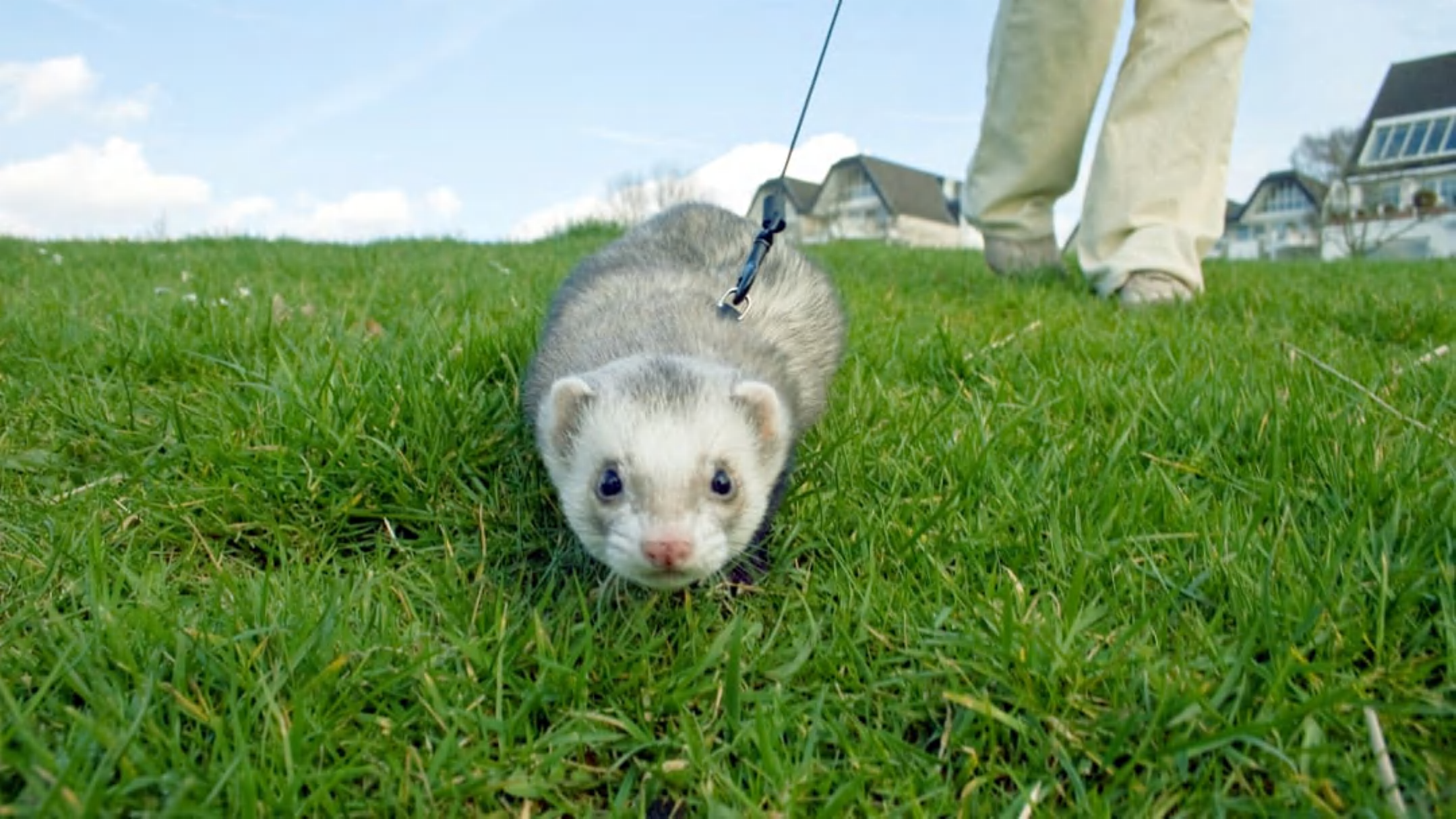
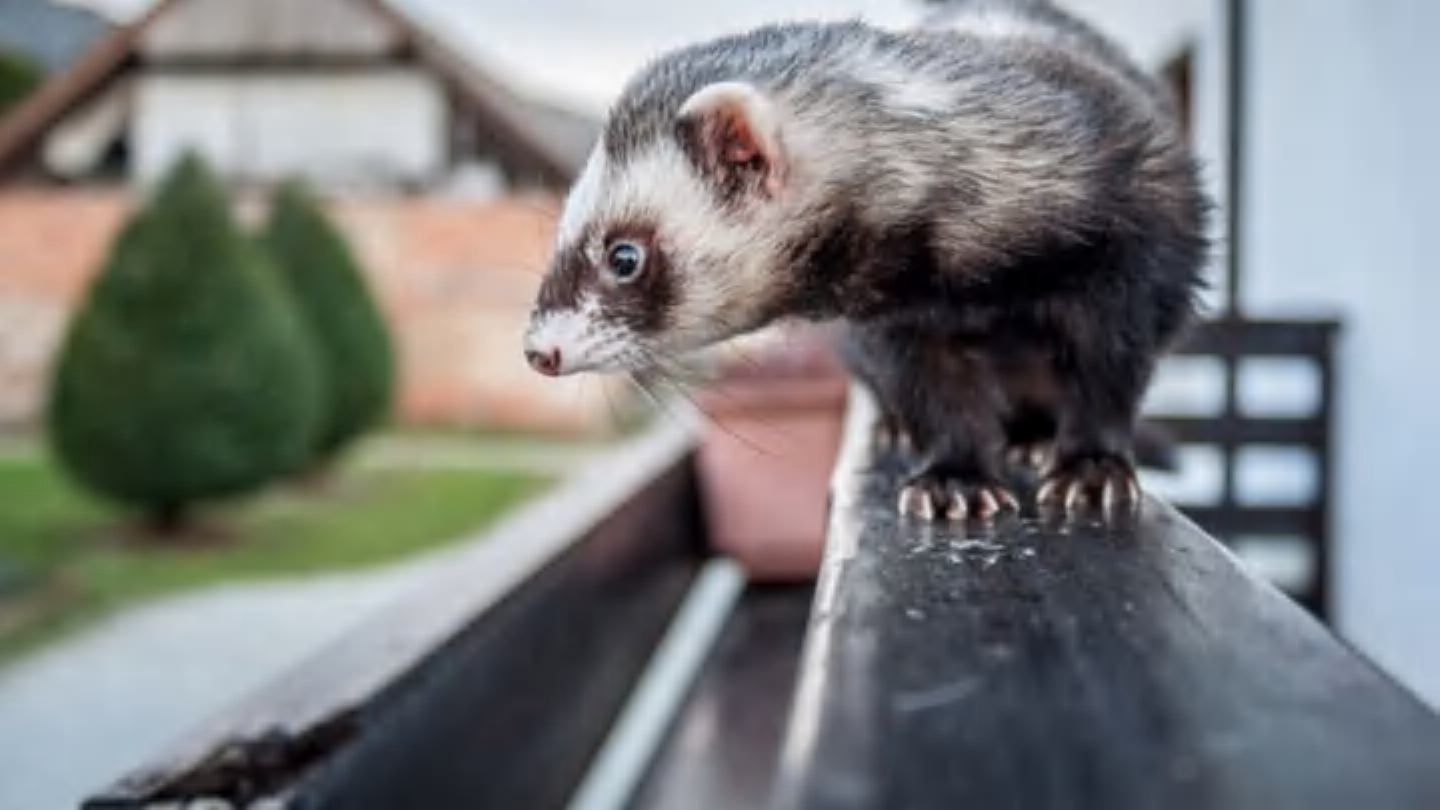
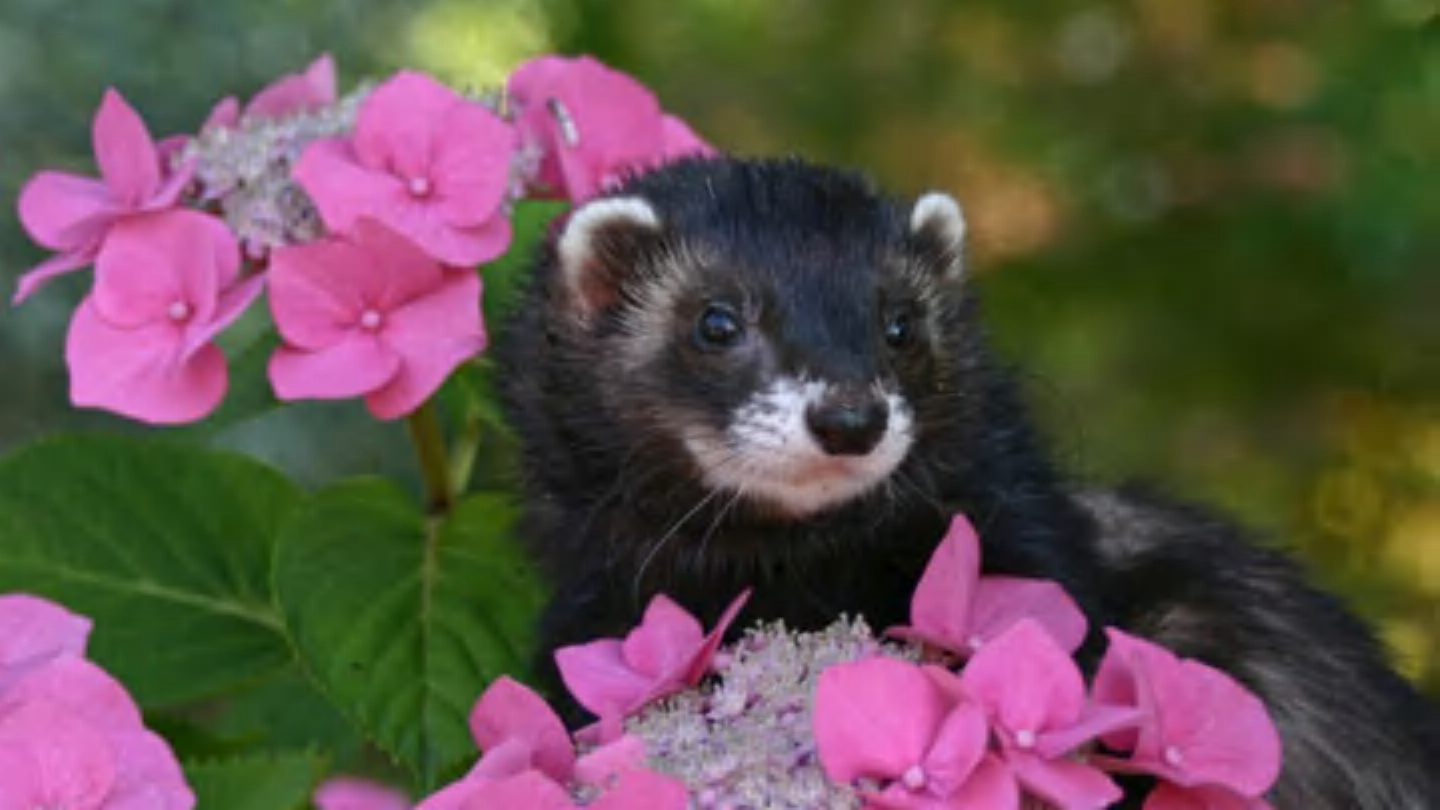
Happy National Ferret Day! In honor of the “holiday”, brush up on your knowledge about everyone’s favorite (and longest) polecat-like pet.
Ferrets have been domesticated for a quite a while.
It is unclear exactly when ferrets were first domesticated, but the critters have a long and storied history. Greek scholars—Aristophanes in 450 BCE and Aristotle in 350 BCE—wrote about a ferret-like animal. Some lore asserts that ancient Egyptians even kept them as pets, but the absence of ferret bones in explored tombs casts doubt on that claim. Remains have been found in a medieval castle in Belgium, but there is no mention of the pets in any contemporary writings. It’s also possible that the ferret was exclusively a lower-class pet, which would explain the lack of documentation.
In the late 15th century, Leonardo da Vinci painted Cecilia Gallerani holding a weasel-like creature. Although the animal has been dubbed an ermine, many scholars believe the animal is actually a ferret.
They are related to polecats.
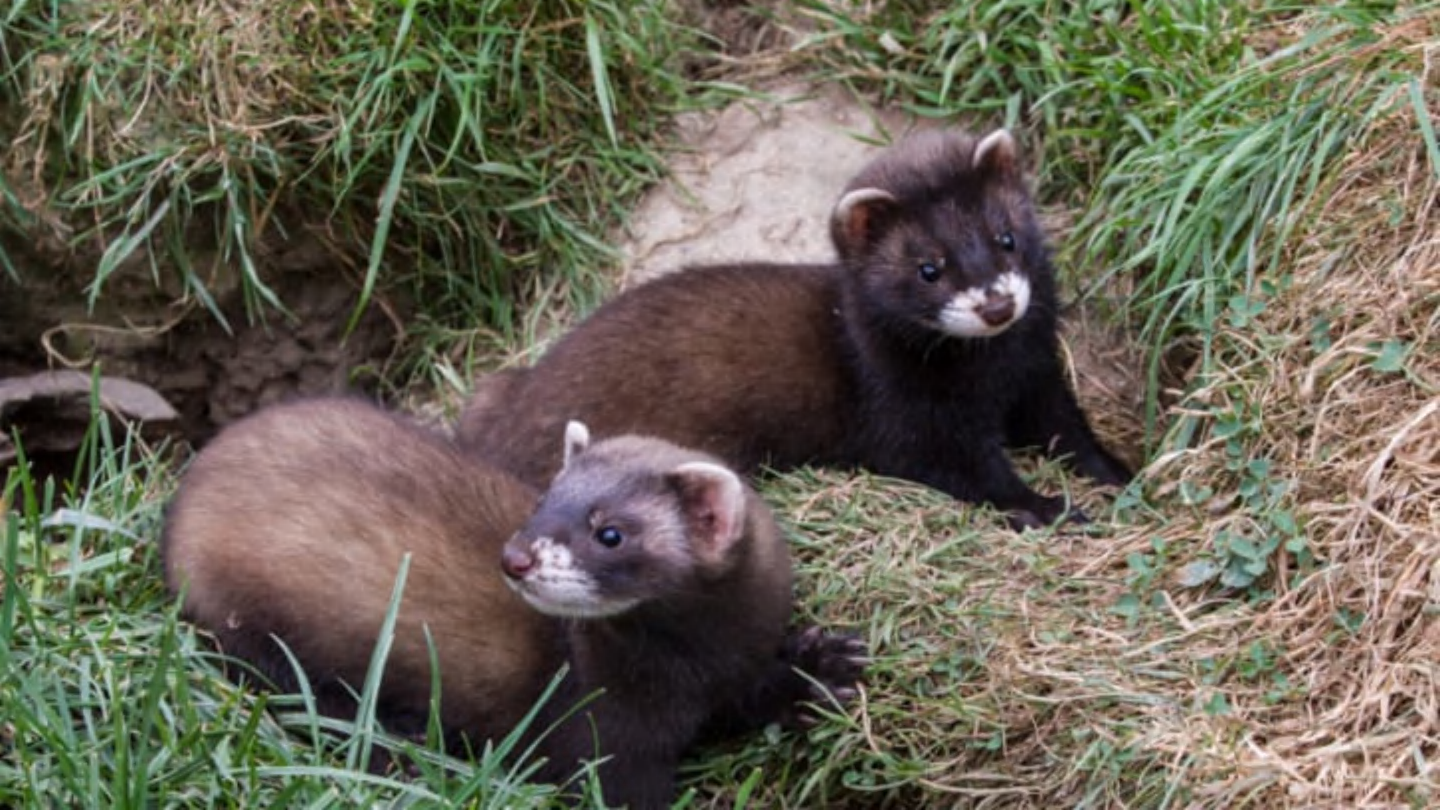
Ferrets are the domesticated subspecies of European polecats. They can easily interbreed to produce offspring that are very similar to domestic ferrets.
When threatened, ferrets will dance.
In the wild, ferrets and stoats perform a hypnotic dance that sends their prey into a trance. Domestic ferrets also perform this dance, but they use it for play instead of hunting. They arch their backs, puff their tails, and move from side to side. This rug-cutting is usually a sign that the ferret is happy and having fun.
Black-footed ferrets almost exclusively eat prairie dogs.
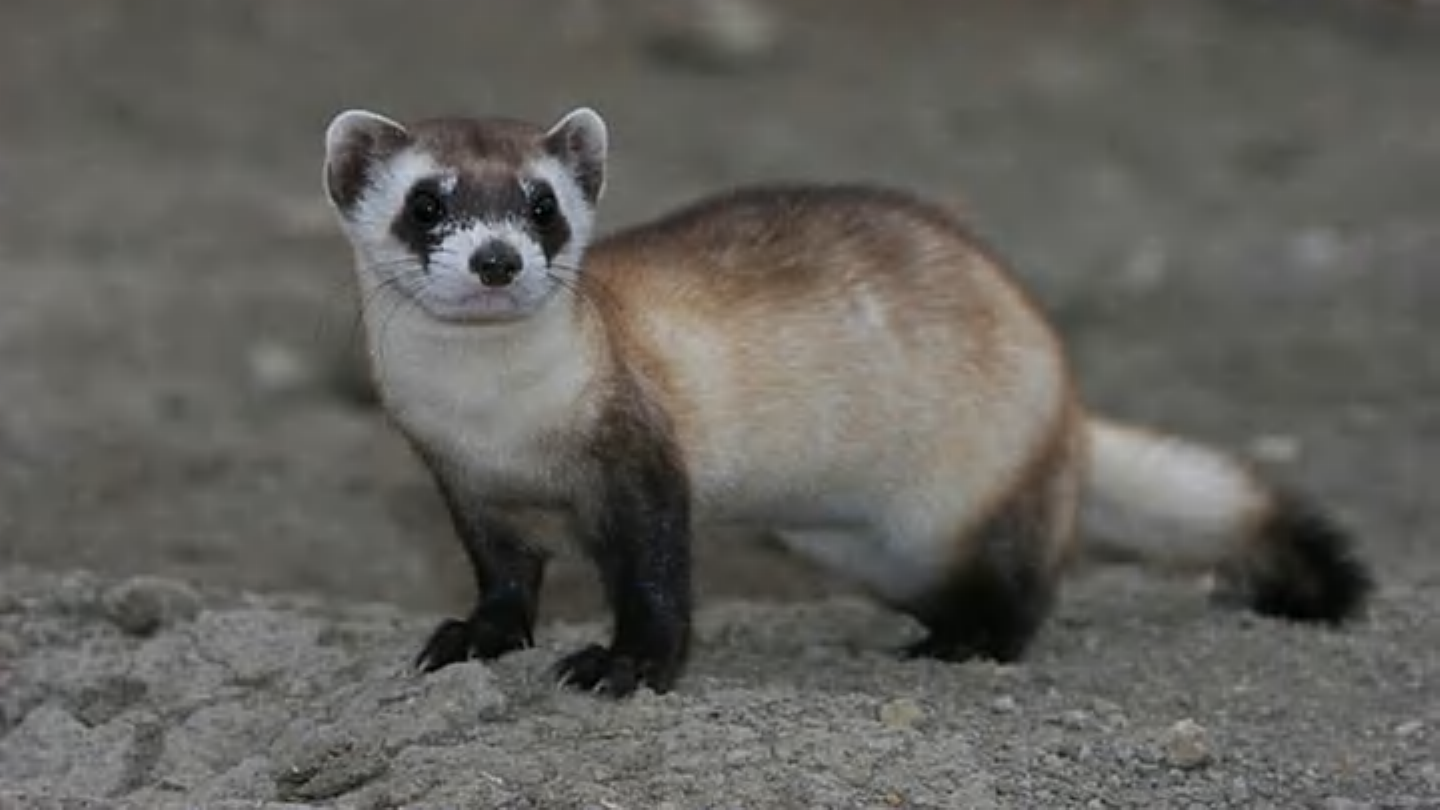
Wild black-footed ferrets, or American polecats, live in central North America and feast on unsuspecting prairie dogs. Scientists discovered that in South Dakota, 91 percent of the black-footed ferret’s diet consisted of prairie dogs.
Unfortunately, their main source of food has bigger problems than being eaten: The Black Death. The plague is no longer a worry for most humans, but it has a tendency to wipe out whole colonies of black-tailed prairie dogs. This threat is a real issue for the endangered black-footed ferrets, which perish without their favorite food. Luckily researchers have found a vaccine that could help keep the tiny rodents healthy. Testing is currently underway to see if the vaccine works in the wild.
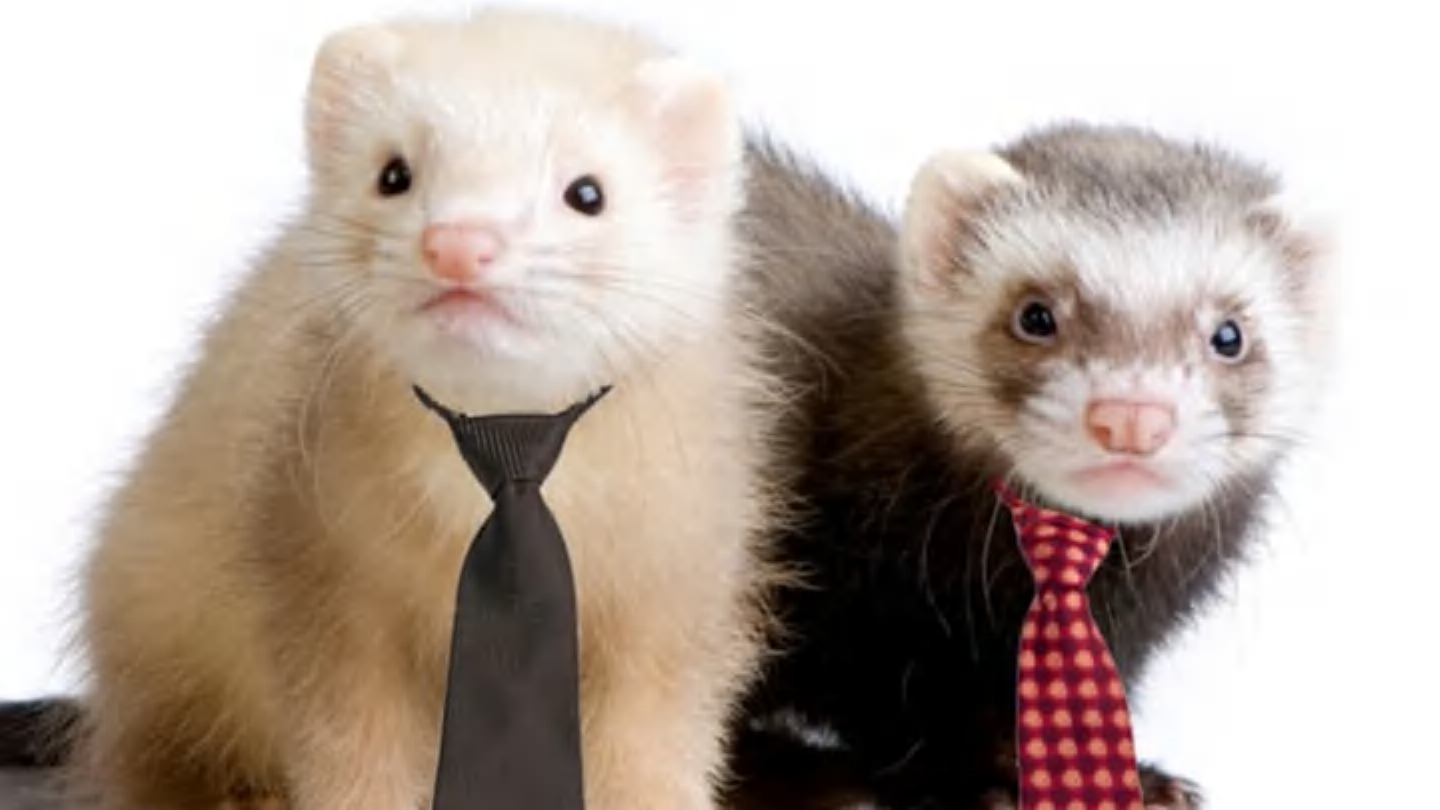
A group of ferrets is called a business.
Now that’s a professional pet!
Ferrets can be used to hunt rabbits.
Rabbit hunting with ferrets is a popular sport in England. The ferrets run into rabbit holes to run the prey out of hiding. When the rabbits dash from their homes, human hunters trap them in nets. The tiny hunters wear ferret finder collars so that if they corner a rabbit underground, their owners can come to their rescue with a shovel.
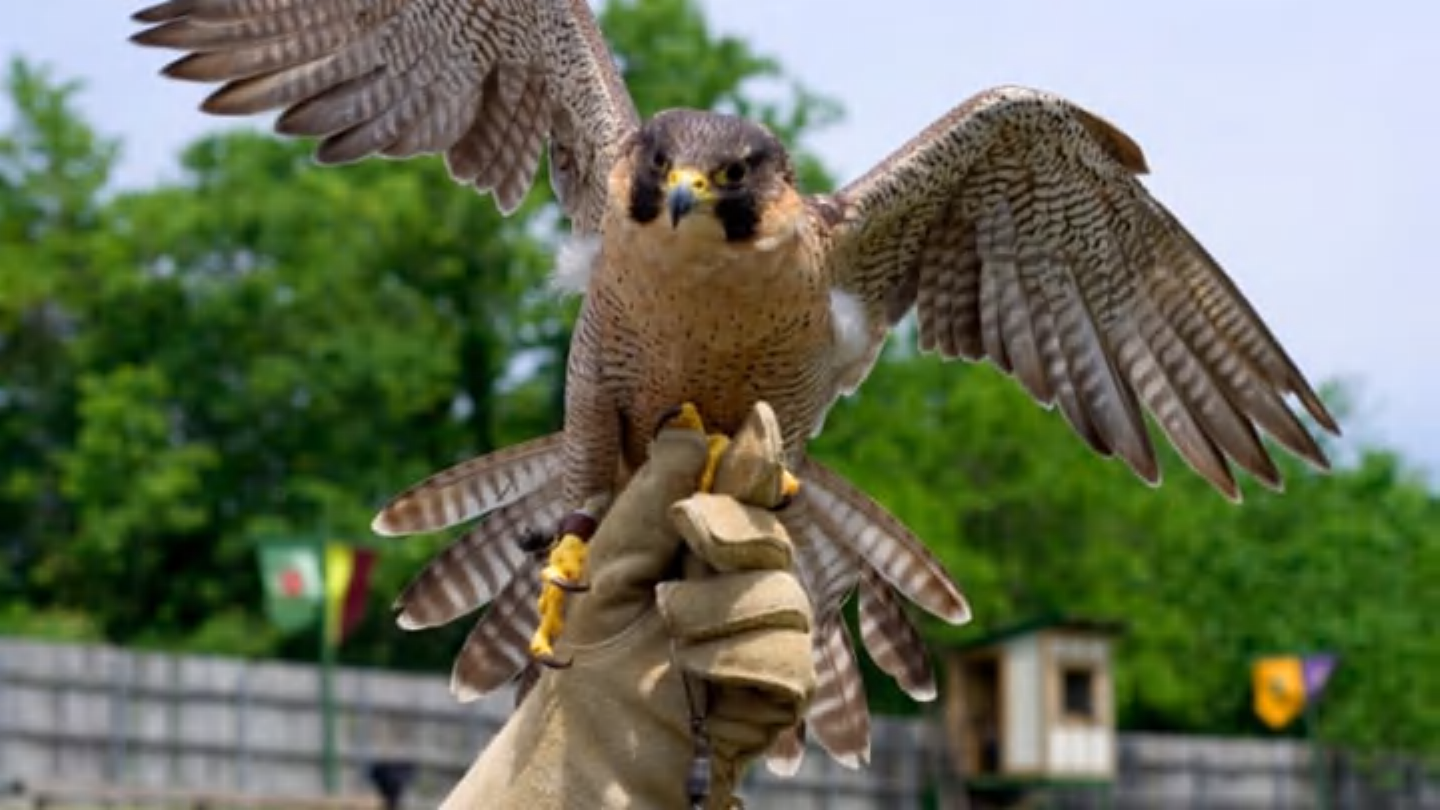
They can team up with falcons.
Falconers employ ferrets in a similar role; the only difference is that the ferrets are used to bring the prey to the falcons. The two animals make a great hunting team.
Some ferrets have jobs.
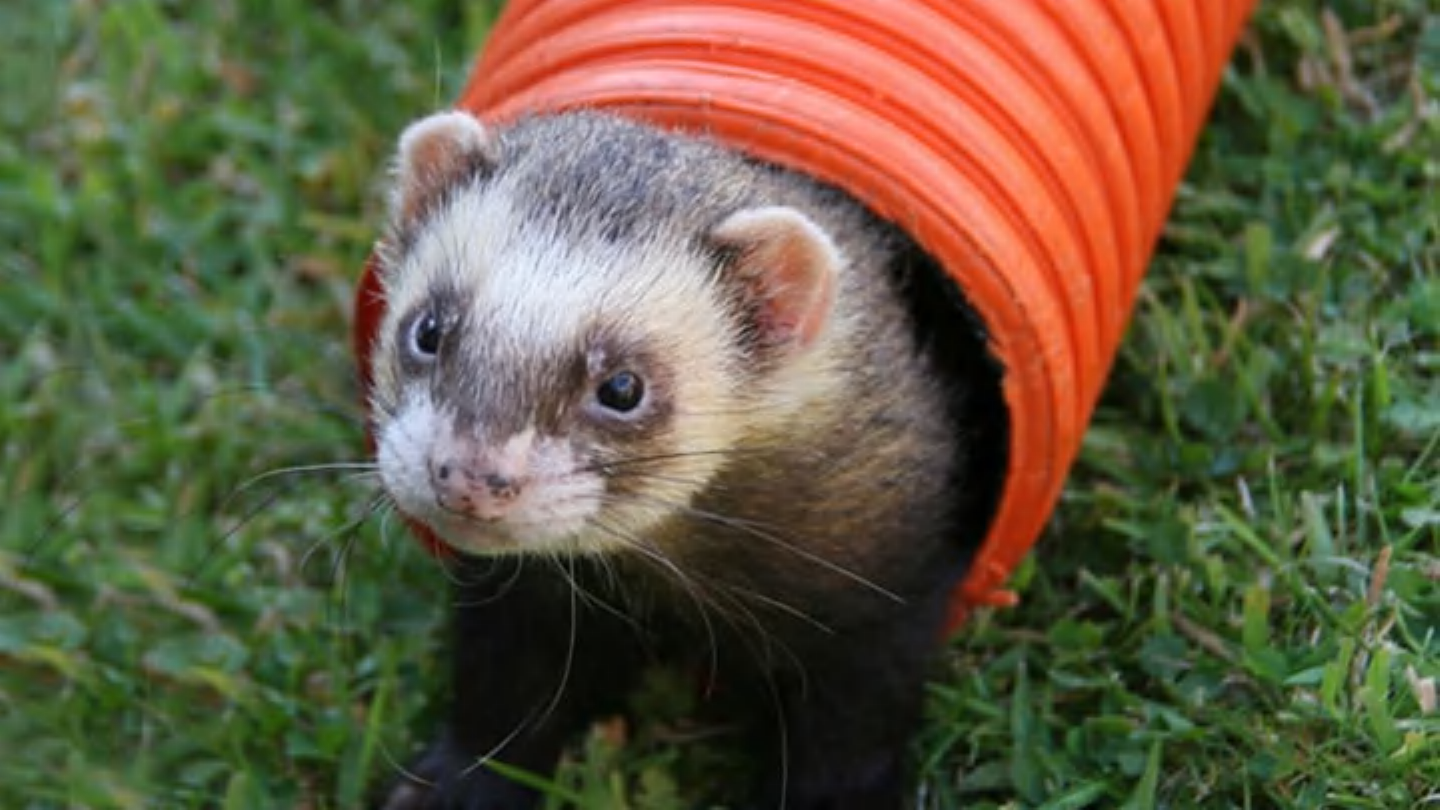
Known for their love of burrowing, ferrets can put their skill at running through pipes to a variety of professional uses. When wires cannot be pushed through tubes or tunnels with rods, the tiny critters can step in. They are known for pulling wire through underground tunnels, and even helped lay wire for London’s Party in the Park concert in 1999.
One famous ferret named Felicia helped clean pipes at Fermilab’s Meson Laboratory in 1971. A swab connected to her collar allowed her to clear away unwanted debris. Although Felicia only cost $35, she likely saved the lab thousands of dollars.
Ferret racing is a popular sport.
Ferret racing is a popular sport in London that involves competing ferrets racing through drainpipes. A small section of the pipe is removed and replaced with chicken wire so viewers can know when the pets are half-way through. Apparently, the animals thoroughly enjoy the games, and the company of their fellow ferrets.
Scammers have sold ferrets on steroids as fancy poodles.
If you are looking to get a tiny exotic dog, make sure you’re not actually buying a ferret. In 2013, some Argentineans were being tricked into buying fake miniature poodles. Ferrets were given steroids and new haircuts before being passed off as tiny purebred dogs. The owners often didn’t realize they had accidentally bought drugged ferrets until visiting the vet for shots.
Females can die if they go too long without mating.
Unspayed females need to mate or run the risk of producing too much estrogen. The overproduction can lead to estrogen toxicity, or hyperestrogenism. This condition can lead to anemia, clotting, and death.
Scientists fiddled with a ferret’s brain and made a startling discovery.
In the 1990s, neuroscientists at MIT reconfigured baby ferrets’ brains so that the critters’ retinas were connected to their auditory cortexes. They expected the ferrets to go blind, but miraculously, they readjusted so that the auditory cortex worked like the visual cortex; they could see using the part of the brain normally used for hearing. This discovery showed that the brain is adaptable and makes use of what’s available. ”It’s just waiting for signals from the environment and will wire itself according to the input it gets,” Dr. Jon Kaas, a professor of psychology at Vanderbilt University, told The New York Times in 2000.
They love to jump.
But sometimes they land in some unfortunate places.
We all want what’s “BEST” for our parents, but in our rush to protect and make things better, we sometimes overstep our good intentions. My mom has always had a problem with her knees. After being dared by her older brother (my uncle who owns the property next door to Mom) to jump the fence between their homes and landing awkwardly on one knee, it has been an on again/off again knee problem for many, many years. Damp weather or cold weather makes it worse, but for the most part she gets around just fine. In her recent years, she has taken to using a walker to keep herself steady because she doesn’t want to fall.
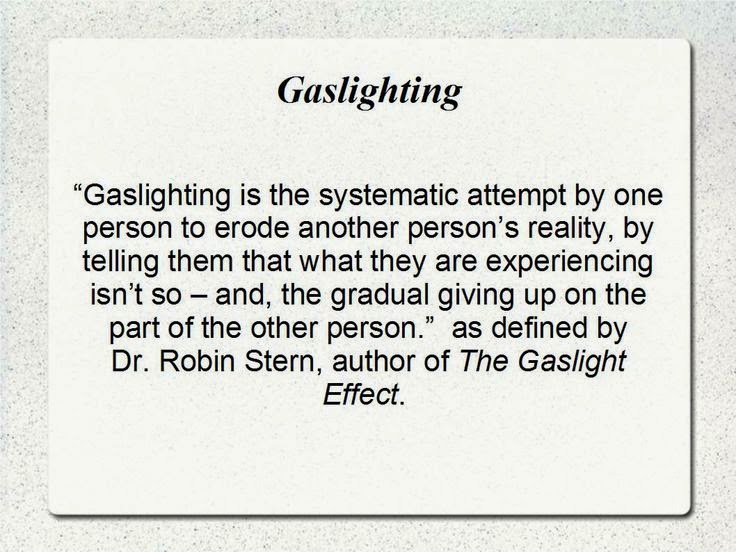
After Dad passed and before she started with the walker, she used to be active outside. She’d rake her leaves, clean her windows and even do some limited gardening. Then one afternoon, she discovered her good aluminum ladder was gone from the woodshed. Since my brother and his wife were the last visitors she’d had, she called them and confronted them about the ladder. Their first reaction was to deny it. When she persisted, they giggled. Then they confessed that they didn’t want her to climb ladders anymore. She was furious. First, they lied to her. Second, they treated her like a child. Despite their good intentions, mom felt, in a word, gaslighted.
Times have changed since then, and my brother and sister-in-law have problems of their own and have less time to do things for Mom. My cousin who lives next door with my aunt and uncle has stepped up and so has a younger neighbor of my mom’s. They will get groceries for her or take her along if she’s up to it; they run her to doctor’s appointments and do other odd errands and chores for her. She feels lucky to have them. She does, however, reward them financially for everything they do. (But there are times, she insists, they refuse any money.)
Mom comes from a family of 17 children, so she knows what it feels like to have very little of her own. To that end, after she married, she helped all the siblings who came behind her as much as she could. She saved things constantly, telling me so and so might be able to use this. But now, in her later years, she is tired of the clutter in her house and wants to get rid of things. So my visits have been trying to declutter her rooms and make it easier for her to move about more freely.
Mom has not been able to go into her upstairs or down into her basement since she started using the walker, so she has relied on others to get or take things from those places and it’s been her niece and neighbor friend. During the last 2 visits with Mom, she’s made comments about missing some things she’s sure she still had. Now, I know my mom—she freely gives things to anyone if they need it. But she doesn’t remember giving these items away. Could it be a memory issue? Sure, she’s not a young lady anymore. But that incident with the ladder is haunting her—she isn’t sure that one of the people who have keys to her home (for emergencies) isn’t taking things without permission. Out of sight, out of mind. Again, Mom insists, if someone asks, she’d surely give it to them. But this is making her feel unsafe in her home.
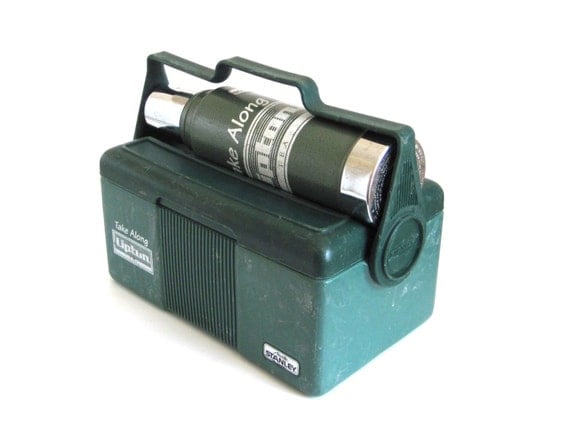
This last visit, I confirmed that this is not all in her imagination. The last trip we made in December, we discussed certain items I told her were still in one room upstairs. Four Lipton Tea cooler sets she sent box tops to get years and years ago. (The set was a cooler—one man lunch kind of thing—and a good thermos on the top in a space made just for it.) She had 4 of them with the thermoses on top. This visit, the thermoses were gone, except for one lid and cup laying on a dresser. The coolers were still there though. Both my cousin and her friend had been upstairs in the interim.
I didn’t have time to search the entire upstairs for these thermoses so I can’t positively accuse anyone. Our next visit will be a more concerted effort to find them. But we spent one whole day cleaning the other room. I started with taking pictures of each side of the room and showing her those. Then bringing down items and boxes and detailing their contents. Then I drew a “map” of where everything was placed. I will compare that list/map to what’s there next time. That will at least help Mom’s mind, I hope. And if something is moved or gone, we can discuss other options…nanny cams perhaps?
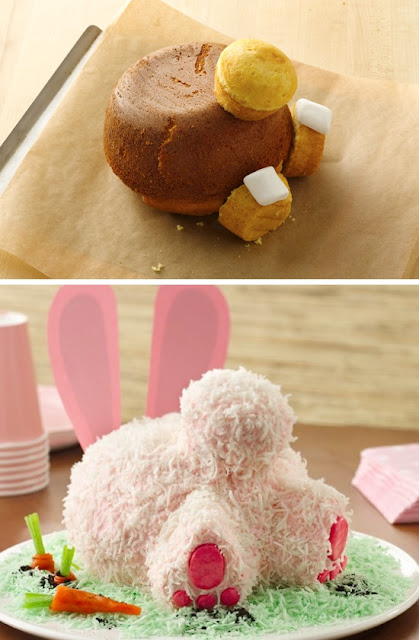
Today’s offering is a cute Easter cake that I’ve made with my granddaughter…a Bunny Butt Cake!
1 box yellow or white cake mix
Water, vegetable oil and eggs called for on cake mix box
Tray or cardboard covered with wrapping paper and plastic food wrap or foil
1 container vanilla frosting
Red food color
1 large marshmallow, cut in half
3 cups shredded coconut
Green food color
2 strawberry or cherry stretchy and tangy taffy candies (from 6-oz bag)
1 fruit roll up
3 green-colored sour candies, separated into strips
Construction paper
Heat oven to 325°F. Grease 1 1/2-quart ovenproof bowl (8 inches across top) with shortening; coat with flour (do not use cooking spray). Lightly grease 3 muffin cups in regular-size muffin pan.
Make cake batter as directed on box. Pour cake batter in 3 muffin cups, filling two-thirds full. Pour remaining batter into 1 1/2-quart bowl.
Bake cupcakes 17 to 21 minutes, bowl 47 to 53 minutes or until toothpick inserted in center comes out clean. Cool 10 minutes. Remove cakes from muffin cups and bowl; place rounded sides up on cooling racks. Cool completely, about 1 hour. If necessary, cut off rounded tops of cakes.
Spoon frosting into large bowl. Add red food color to make desired pink color. Place bowl cake on tray cut side down; spread 1/3 cup frosting over cake. Use frosting to adhere cupcakes to bowl cake for feet and bunny tail. Use toothpicks if necessary. Place marshmallow halves, cut sides down, on tops of 2 cupcakes to make heels of feet. Spread thin layer of frosting over side and top of cake to seal in crumbs. Freeze cake 30 to 45 minutes to set frosting.
Spread remaining frosting over cake. Sprinkle with 2 cups of the coconut; press gently to adhere. Shake 1 cup coconut and 3 drops green food color in tightly covered jar until evenly tinted. Surround bunny with tinted coconut. Use rolling pin to press strawberry candies into 2 large rectangles. Cut 2 large ovals and 6 small circles out of candy. Press onto bottoms of bunny feet, using frosting if needed.
Roll up fruit snack to make carrot shapes. Cut green sour candies in half crosswise; press into large end of each carrot to make greens on carrot. Cut ears from construction paper; wrap ends that will be inserted into cake with plastic food wrap. Insert into cake. Remove ears, plastic wrap and toothpicks before serving. Store loosely covered.
The accident in 1979 at the Three Mile Island nuclear power station that was the most serious in the history of the American nuclear power industry. The Three Mile Island power station was named after the island on which it was situated in the Susquehanna River near Harrisburg, Pa. At 4:00 am on March 28, an automatically operated valve in the Unit 2 reactor mistakenly closed, shutting off the water supply to the main feedwater system (the system that transfers heat from the water actually circulating in the reactor core). This caused the reactor core to shut down automatically, but a series of equipment and instrument malfunctions, human errors in operating procedures, and mistaken decisions in the ensuing hours led to a serious loss of water coolant from the reactor core. As a result, the core was partially exposed, and the zirconium cladding of its fuel reacted with the surrounding superheated steam to form a large accumulation of hydrogen gas, some of which escaped from the core into the containment vessel of the reactor building. Very little of this and other radioactive gases actually escaped into the atmosphere, and they did not constitute a threat to the health of the surrounding population. In the following days adequate coolant water circulation in the core was restored.
The accident at Three Mile Island, though minuscule in its health consequences, had widespread and profound effects on the American nuclear power industry. It resulted in the immediate (though temporary) closing of seven operating reactors like those at Three Mile Island. A moratorium on the licensing of all new reactors was also temporarily imposed, and the whole process of approval for new plants by the Nuclear Regulatory Commission was significantly slowed for years after the accident. No new reactors were ordered by utility companies in the United States from 1979 through the mid-1980s. The accident increased public fears about the safety of nuclear reactors and strengthened public opposition to the construction of new plants. The unharmed Unit 1 reactor at Three Mile Island did not resume operation until 1985. The cleanup of Unit 2 continued until 1990; damage to the unit was so severe, however (52 percent of the core melted down), that it remained unusable.
Additional details from the This Day in History website:
At 4 a.m. on March 28, 1979, the worst accident in the history of the U.S. nuclear power industry begins when a pressure valve in the Unit-2 reactor at Three Mile Island fails to close. Cooling water, contaminated with radiation, drained from the open valve into adjoining buildings, and the core began to dangerously overheat.
The Three Mile Island nuclear power plant was built in 1974 on a sandbar on Pennsylvania’s Susquehanna River, just 10 miles downstream from the state capitol in Harrisburg. In 1978, a second state-of-the-art reactor began operating on Three Mile Island, which was lauded for generating affordable and reliable energy in a time of energy crises.
After the cooling water began to drain out of the broken pressure valve on the morning of March 28, 1979, emergency cooling pumps automatically went into operation. Left alone, these safety devices would have prevented the development of a larger crisis. However, human operators in the control room misread confusing and contradictory readings and shut off the emergency water system. The reactor was also shut down, but residual heat from the fission process was still being released. By early morning, the core had heated to over 4,000 degrees, just 1,000 degrees short of meltdown. In the meltdown scenario, the core melts, and deadly radiation drifts across the countryside, fatally sickening a potentially great number of people.
As the plant operators struggled to understand what had happened, the contaminated water was releasing radioactive gases throughout the plant. The radiation levels, though not immediately life-threatening, were dangerous, and the core cooked further as the contaminated water was contained and precautions were taken to protect the operators. Shortly after 8 a.m., word of the accident leaked to the outside world. The plant’s parent company, Metropolitan Edison, downplayed the crisis and claimed that no radiation had been detected off plant grounds, but the same day inspectors detected slightly increased levels of radiation nearby as a result of the contaminated water leak. Pennsylvania Governor Dick Thornburgh considered calling an evacuation.
Finally, at about 8 p.m., plant operators realized they needed to get water moving through the core again and restarted the pumps. The temperature began to drop, and pressure in the reactor was reduced. The reactor had come within less than an hour of a complete meltdown. More than half the core was destroyed or molten, but it had not broken its protective shell, and no radiation was escaping. The crisis was apparently over.
Two days later, however, on March 30, a bubble of highly flammable hydrogen gas was discovered within the reactor building. The bubble of gas was created two days before when exposed core materials reacted with super-heated steam. On March 28, some of this gas had exploded, releasing a small amount of radiation into the atmosphere. At that time, plant operators had not registered the explosion, which sounded like a ventilation door closing. After the radiation leak was discovered on March 30, residents were advised to stay indoors. Experts were uncertain if the hydrogen bubble would create further meltdown or possibly a giant explosion, and as a precaution Governor Thornburgh advised “pregnant women and pre-school age children to leave the area within a five-mile radius of the Three Mile Island facility until further notice.” This led to the panic the governor had hoped to avoid; within days, more than 100,000 people had fled surrounding towns.
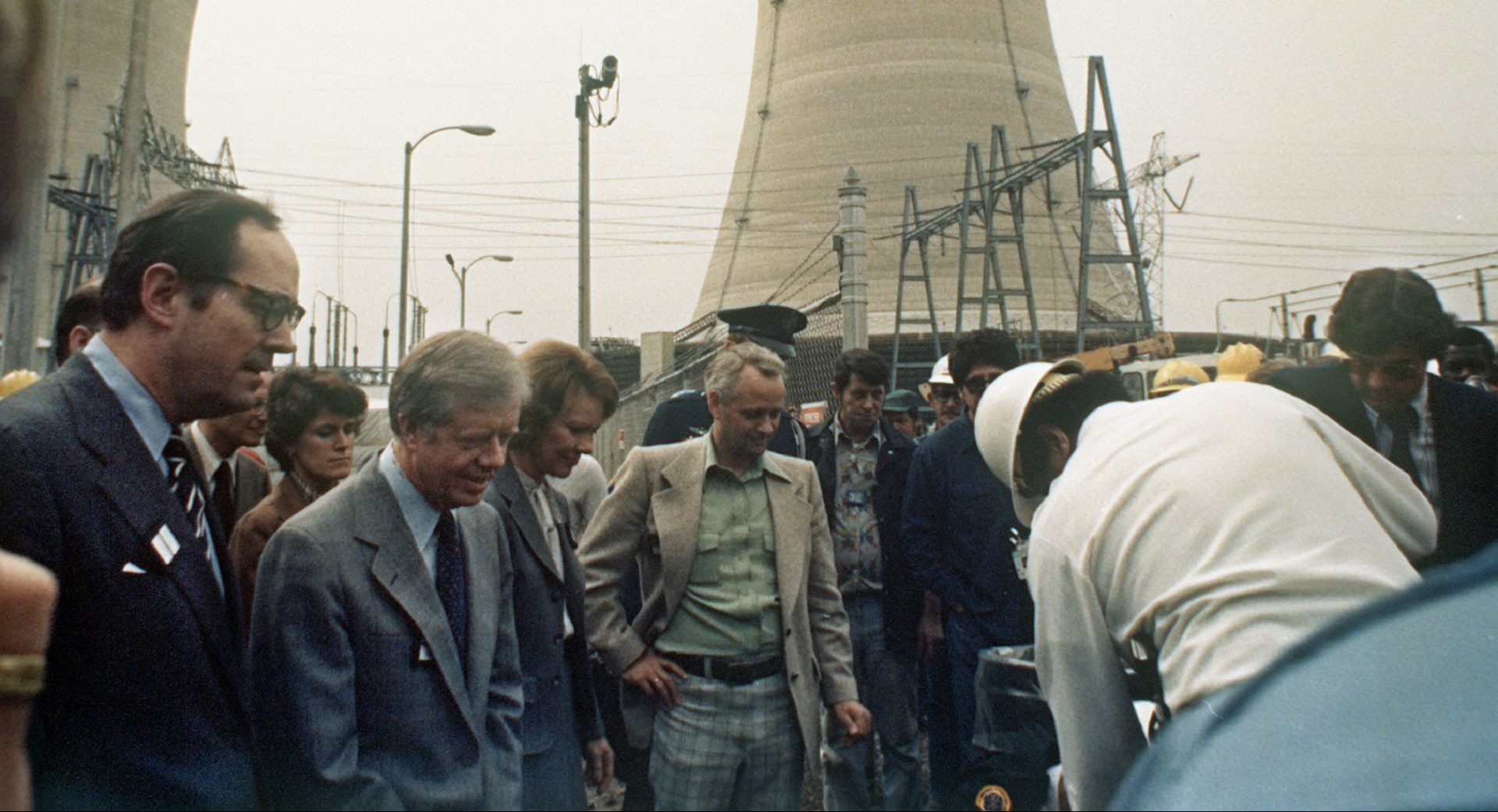
On April 1, President Jimmy Carter arrived at Three Mile Island to inspect the plant. Carter, a trained nuclear engineer, had helped dismantle a damaged Canadian nuclear reactor while serving in the U.S. Navy. His visit achieved its aim of calming local residents and the nation. That afternoon, experts agreed that the hydrogen bubble was not in danger of exploding. Slowly, the hydrogen was bled from the system as the reactor cooled.
At the height of the crisis, plant workers were exposed to unhealthy levels of radiation, but no one outside Three Mile Island had their health adversely affected by the accident. Nonetheless, the incident greatly eroded the public’s faith in nuclear power. The unharmed Unit-1 reactor at Three Mile Island, which was shut down during the crisis, did not resume operation until 1985. Cleanup continued on Unit-2 until 1990, but it was too damaged to be rendered usable again.
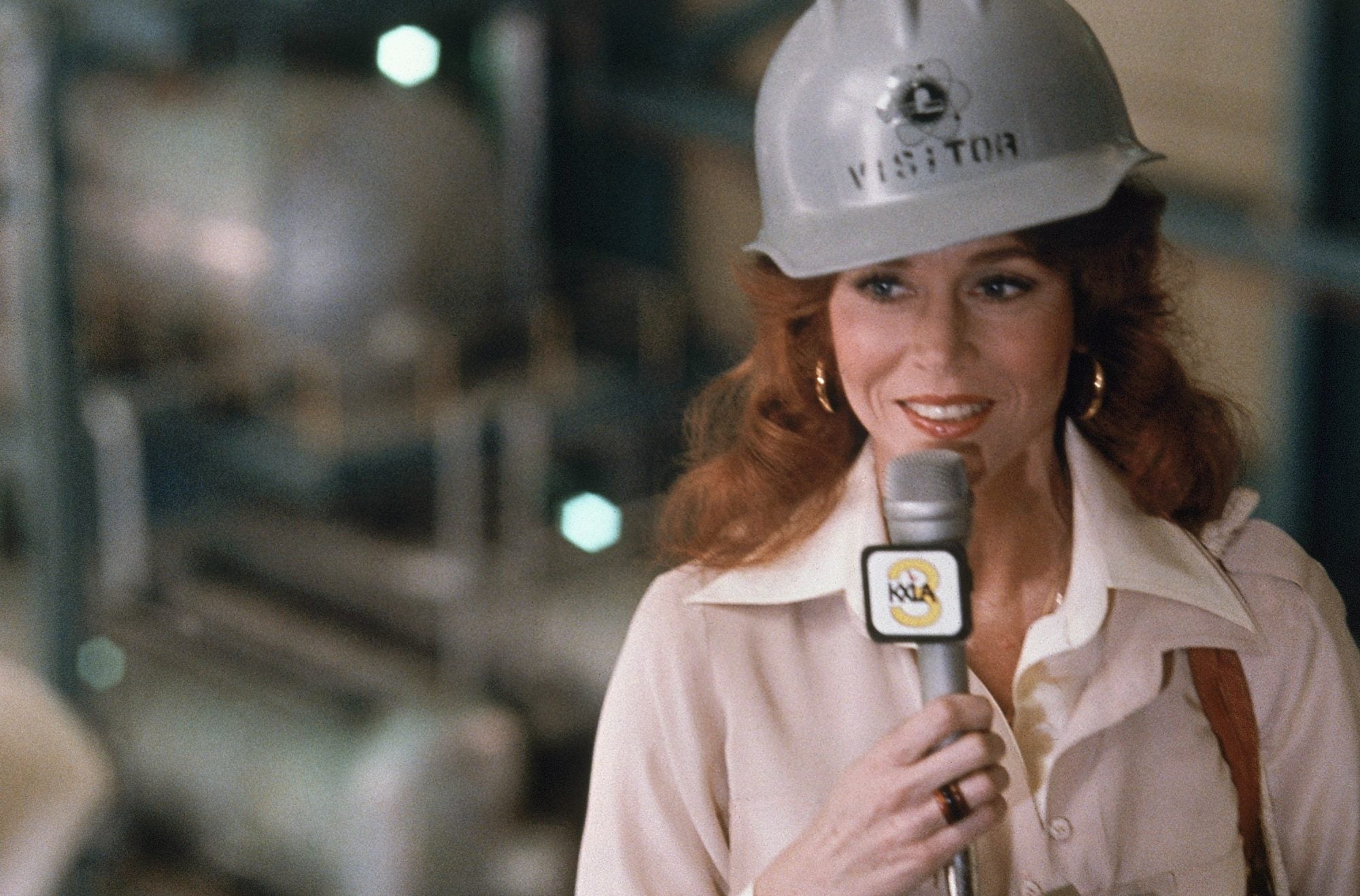
On March 15, 1979, twelve days before the accident, the movie The China Syndrome premiered and was initially met with backlash from the nuclear power industry, claiming it to be “sheer fiction” and a “character assassination of an entire industry”.
In the film, television reporter Kimberly Wells (Jane Fonda) and her cameraman Richard Adams (Michael Douglas) secretly film a major accident at a nuclear power plant while taping a series on nuclear power. At one point in the film, an official tells Jane Fonda’s character that an explosion at the plant “could render an area the size of the state of Pennsylvania permanently uninhabitable”. After the release of the film, Fonda began lobbying against nuclear power. In an attempt to counter her efforts, Edward Teller, a nuclear physicist and long-time government science adviser best known for contributing to the Teller–Ulam design breakthrough that made hydrogen bombs possible, personally lobbied in favor of nuclear power. Teller suffered a heart attack shortly after the incident and joked that he was the only person whose health was affected.
I enjoy reading websites about my home state of Pennsylvania and this website—PABucketlist.com—always has great articles. This article, by Rusty Glessner, is all about eminent domain claiming a small town and then abandoning it.
Exploring the Abandoned Alvira Bunkers in Union County
By
Rusty Glessner
The abandoned Alvira bunkers are remnants of the American WWII war effort, as well as reminders of what lengths the federal government will go to to seize private property for “the greater good”.
Brief History of Alvira
In the case of Alvira (originally founded as Wisetown in 1825), the federal government used the courts and eminent domain to force residents to accept buyouts of their homes, so that their entire town could be leveled and turned into a TNT manufacturing plant and storage facility known as the Pennsylvania Ordnance Works.
But just 11 months after the Pennsylvania Ordnance Works started manufacturing TNT, it was closed down due to a lack of need for the TNT being made and stored there.
And while the residents had been promised that they could buy back their land after the war, that promise was broken.
The federal government instead kept the land and gradually divvied it up, giving 4,000 acres to the Federal Bureau of Prisons to construct Allenwood Prison, and giving 3,000 acres to the state of Pennsylvania (including the land where the bunkers sit) which became State Game Lands 252.
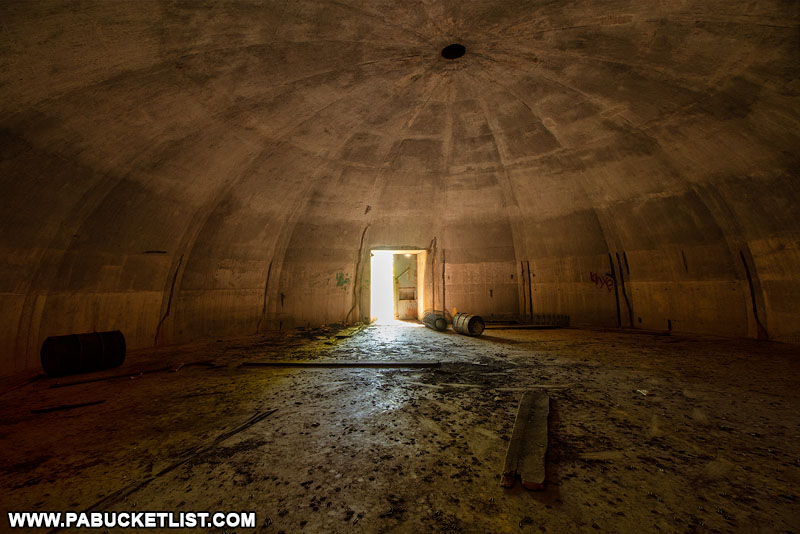
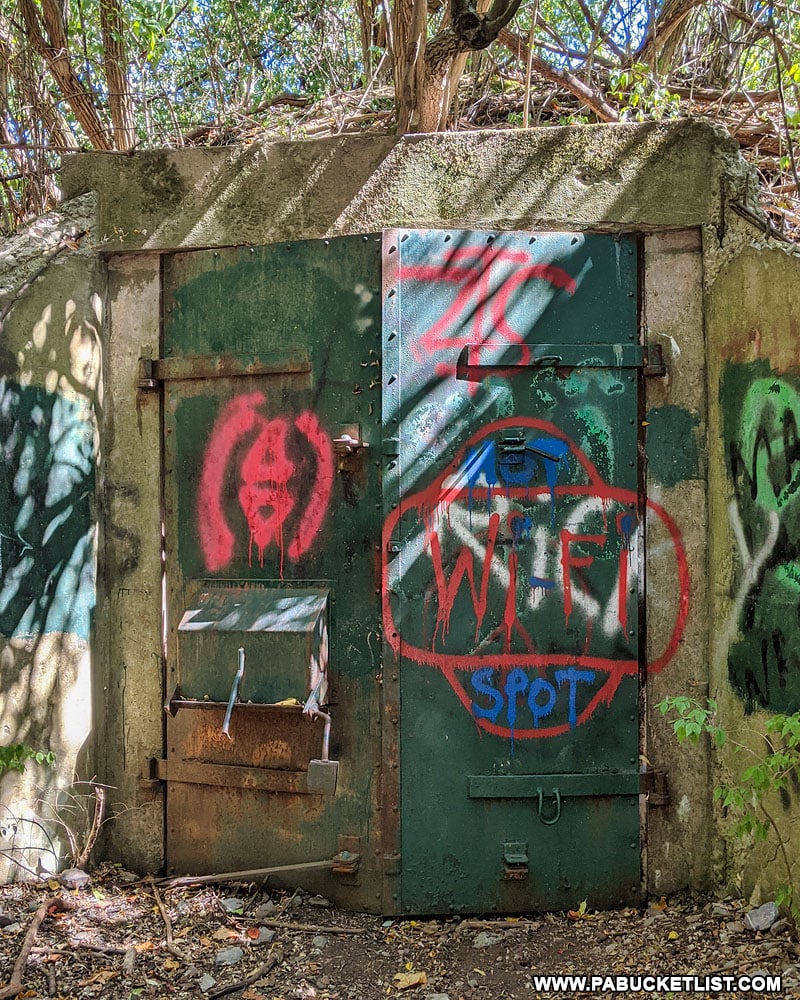
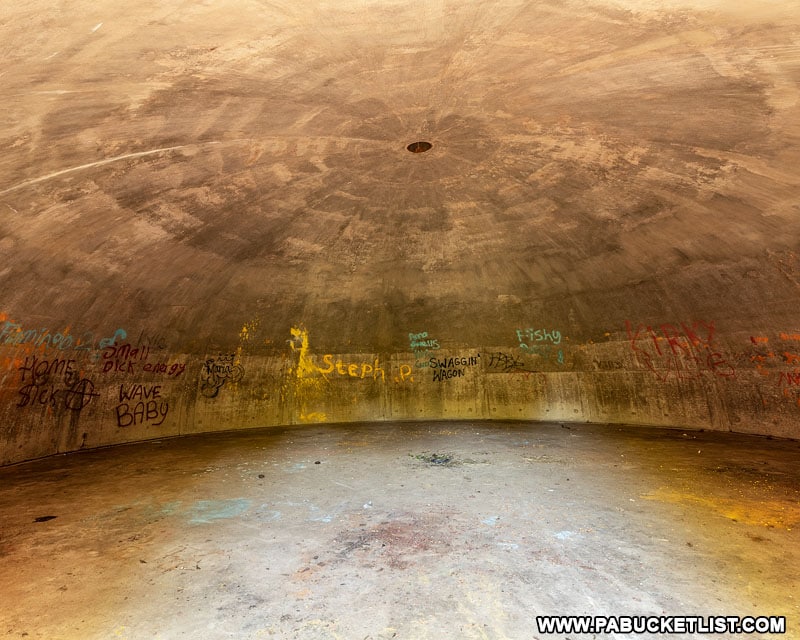
Today, the 149 dome-shaped concrete bunkers that once housed explosives for the US military are gradually being reclaimed by nature.
Designed to explode upwards in case of accidental detonation, and spaced far enough apart to prevent a chain-reaction spreading to other bunkers, these concrete igloos, nearly 80 years old now, have fared remarkably well on the inside.
The official PA Game Commission map of SGL 252 shows the location of all the bunkers – all that is required of modern explorers is to do the bushwhacking!
Abandoned Alvira Bunkers FAQs
Where exactly are the abandoned Alvira bunkers located?
The Alvira bunkers are located in the Union County portion of State Game Lands 252, approximately 7 miles south of Williamsport.
Can I navigate to the Alvira bunkers by GPS?
Yes – use GPS coordinates 41.13618, -76.95924 to navigate to the first of several parking lots along Alvira Road.
Are any of the Alvira bunkers roadside and easy to reach?
Yes – in fact you can literally park right next to several of the bunkers along Alvira Road.
How many of the bunkers are you able to enter?
On a recent visit (Summer 2020) I was able to find and enter several dozenwithin a 2-hour time period. Please note – I have never tried to find all the bunkers, or get an exact count of how many are still accessible.
Are any of the bunkers still locked?
Yes, but again I have not attempted to determine an exact count of how many are locked/unlocked.
Are you able to see inside the bunkers without a flashlight?
The interiors of most of the unlocked bunkers are dimly lit by a small hole in the center of the roofs, but I would strongly recommend taking a flashlight along.
Are most of the bunkers full of trash and graffiti?
No – although none of the bunkers I’ve personally entered are in pristine condition, the further away you get from Alvira Road, the less vandalized the bunkers generally become.
What else is there to see at Alvira?
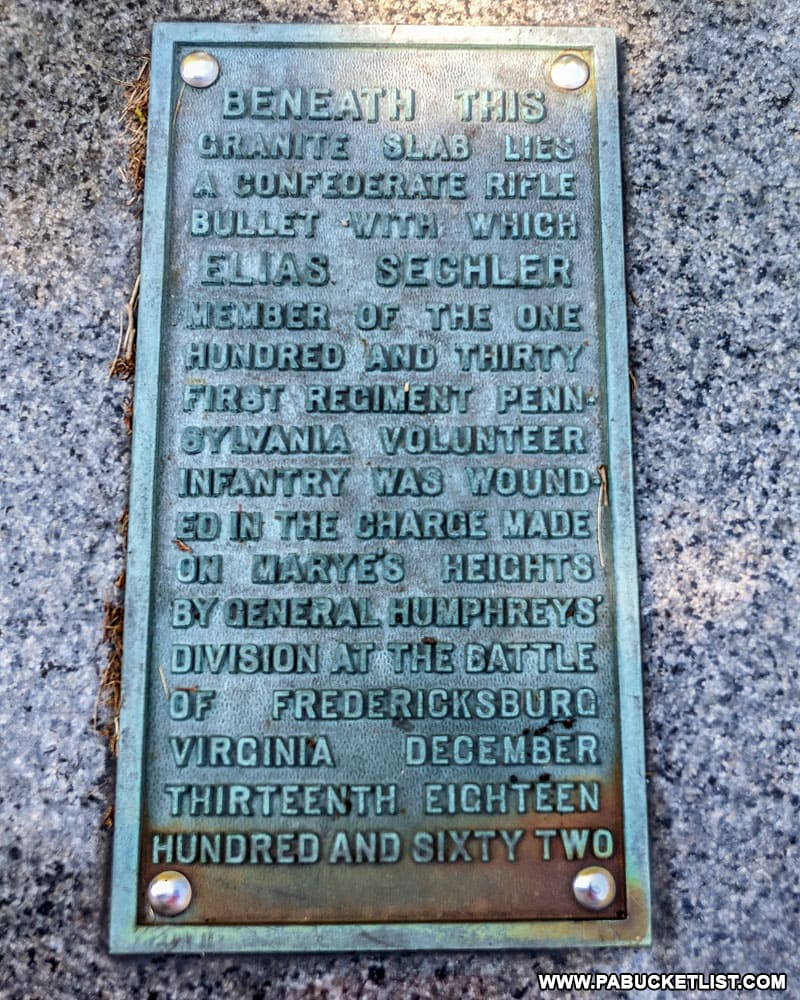
Several cemeteries still stand on Game Lands 252 (see map above), including many Civil War-era graves.
Final Thoughts on the Alvira Bunkers
The abandoned Alvira munitions bunkers are an interesting architectural relic of WWII-era America.
They are also a cautionary tale for what can happen to private individuals when the government decides it wants your property.
Or in the case of Alvira, wants your ENTIRE TOWN.
And what was once a thriving little hamlet in Union County, followed by a TNT factory and munitions depot, is now slowly being reabsorbed by nature and the elements.
The abandoned Alvira bunkers – go see them while you can!
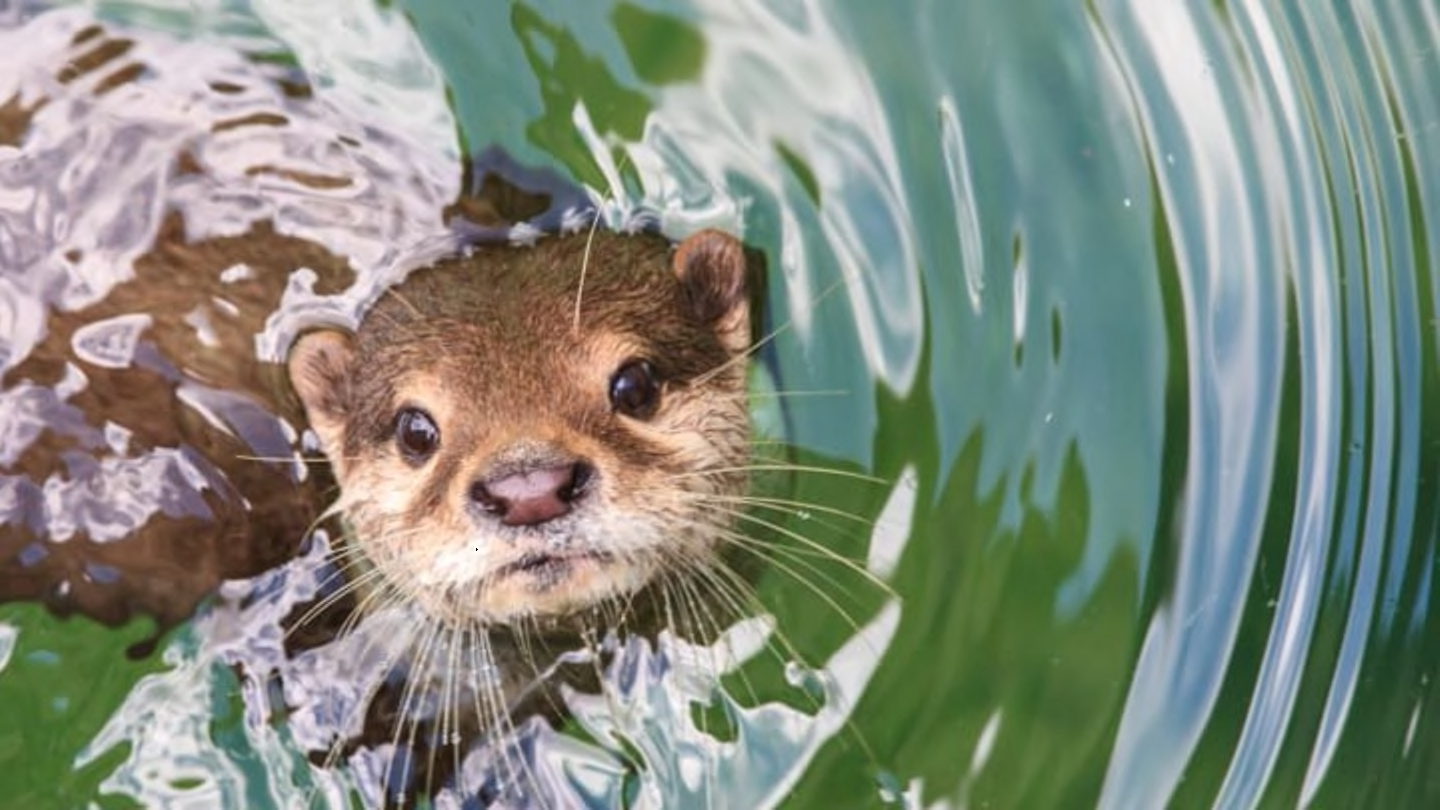
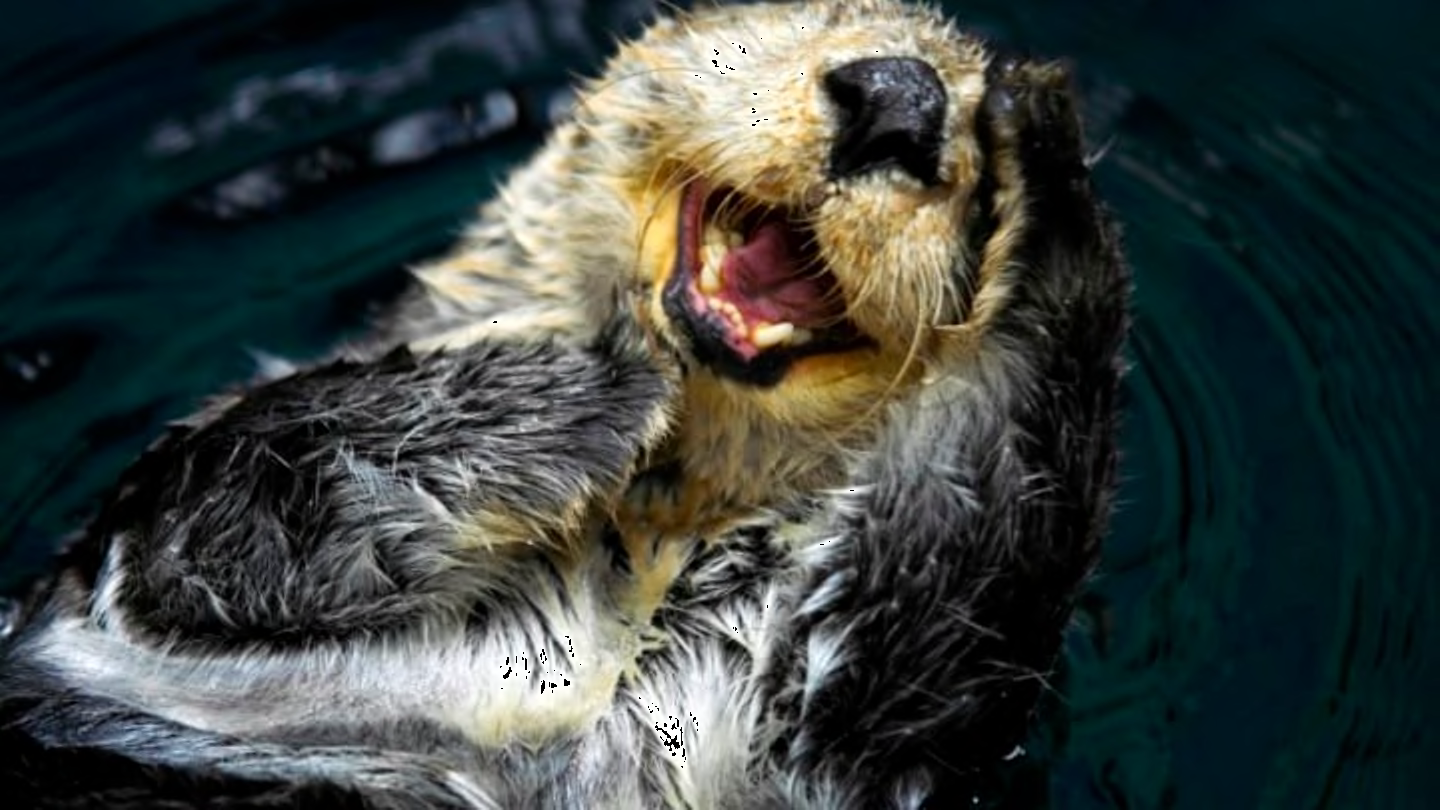
These adorable aquatic mammals are clever, chatty, and oddly aromatic.
THERE ARE 13 SPECIES OF OTTERS, AND JUST ABOUT ALL OF THEM ARE DECREASING.
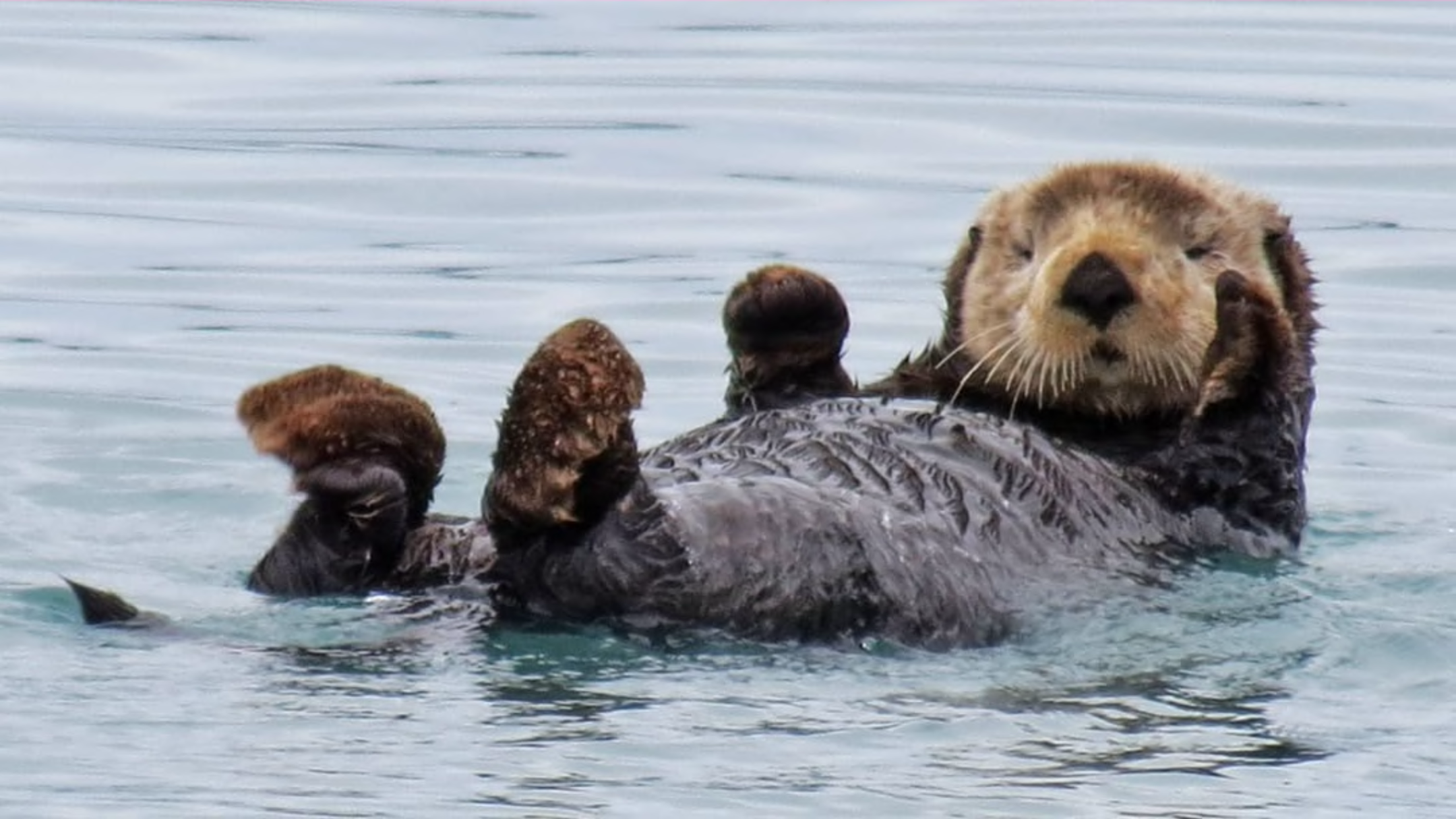
Only one otter species seems to be thriving, and that’s the North American River Otter. The other 12 otter species were recently identified by the International Union for Conservation of Nature (IUCN) as having decreasing populations, and five otter species are already on the endangered list. Among the endangered are the sea otters along the Californian to Alaskan coasts, which are threatened by “environmental pollutants and disease agents.” Others, like the marine otters of South America, have had their numbers reduced because of poaching, as well as environmental concerns.
ZOROASTRIANS THOUGHT THE OTTERS TO BE NEARLY SACRED CREATURES.
This ancient religion considered otters to be the dogs of the river or sea and had strict rules forbidding the killing of otters. It was thought that otters helped keep water purified by eating already dead creatures that might contaminate the water source if they were allowed to rot. Zoroastrians would also hold ceremonies for otters found dead in the wild.
OTTERS HAVE VERY DISTINCTIVE POOP, AND THAT SCAT HAS ITS OWN NAME.
Otters use their dung—known as spraint—to communicate with other otters. The mammals like to keep things organized within their communities and will designate certain areas to be used as latrines. Spraint scents can vary, but often are (relatively) pleasant—one expert described them as not “dissimilar to jasmine tea.” Spraint composition is unique to each otter, and the creatures can identify each other by the smells. Scientists suspect otters may even be able to determine the sex, age, and reproductive status of the spraint dropper just from a quick whiff. And since otters have superb metabolisms and can easily eat up to 15 percent of their body weight each day, there’s a lot of spraint to go around.
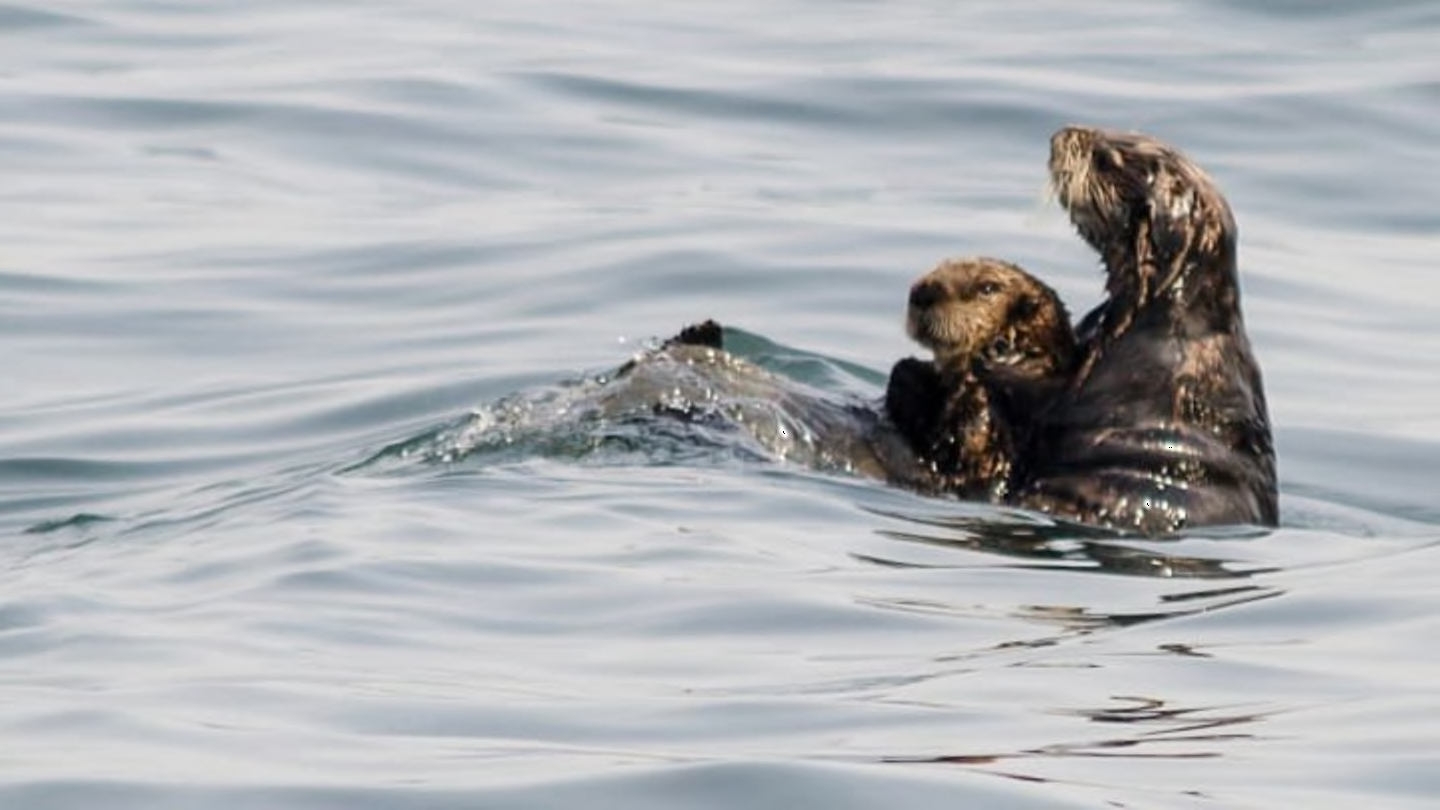
OTTER MOMS ARE TOTALLY GAME FOR ADOPTION.
In 2001, a female otter at the Monterey Bay Aquarium gave birth to a stillborn pup on the same day a stranded pup was discovered in the wild nearby. The aquarium staff had previously tried raising pups themselves but found that hand-raised otters became too attached to humans to be released back into the wild. So instead, they dropped the pup in with the female otter, and she immediately went into mom mode. The aquarium has since devised a system of hand-rearing pups for the first six to eight weeks—mostly for bottle feeding purposes—before handing the pups off to female otters for raising. At six months, the pups are released back into the wild with generally strong results.
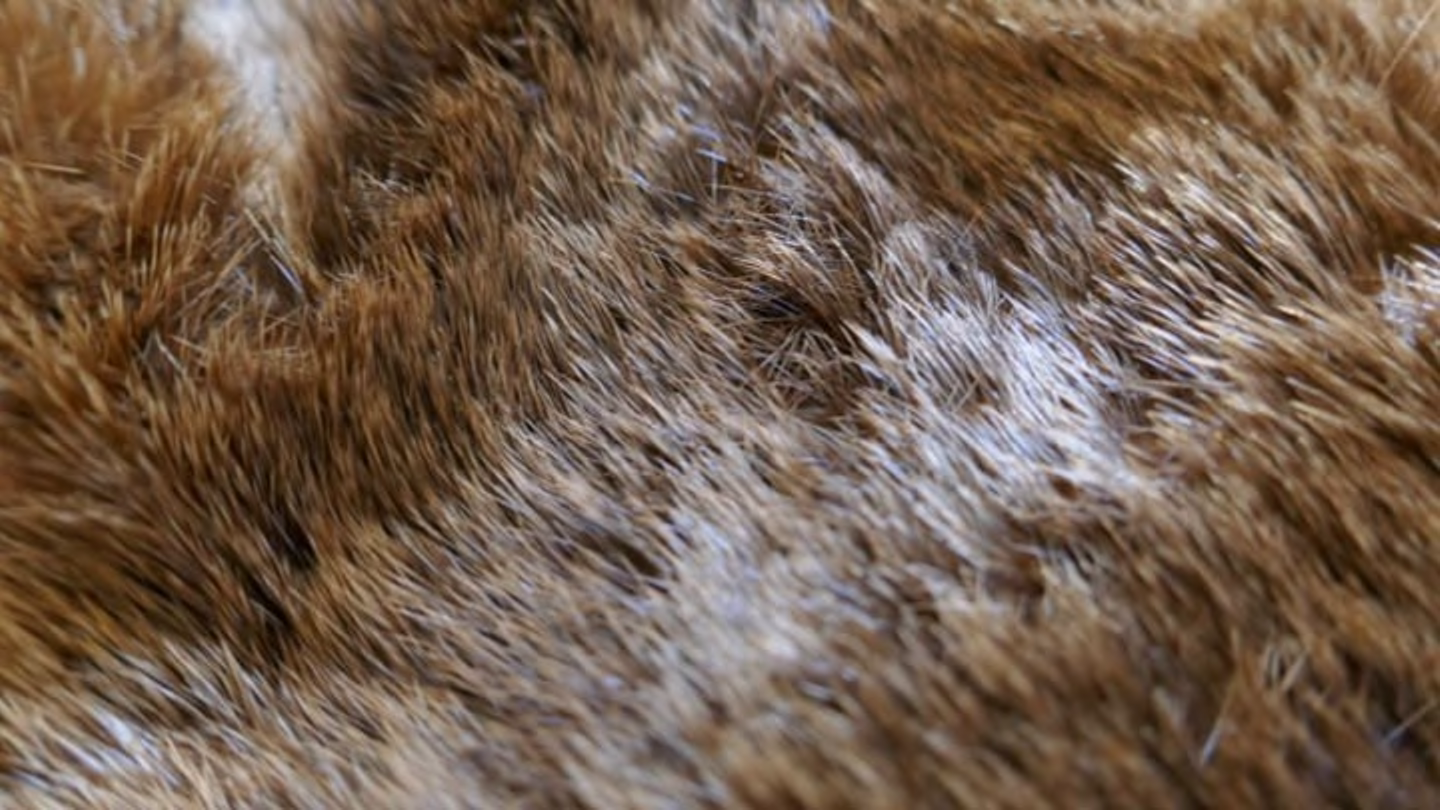
THEY HAVE THE THICKEST FUR OF ANY MAMMAL IN THE ANIMAL KINGDOM.
Otters can have up to one million hairs per square inch. There are two layers of fur—an undercoat and then longer hairs that we can see. The layers manage to trap air next to the otter’s skin, which keeps the otters dry and warm and also helps with buoyancy. Otter pups have so much air trapped in there, they actually can’t dive under water, even if they want to.
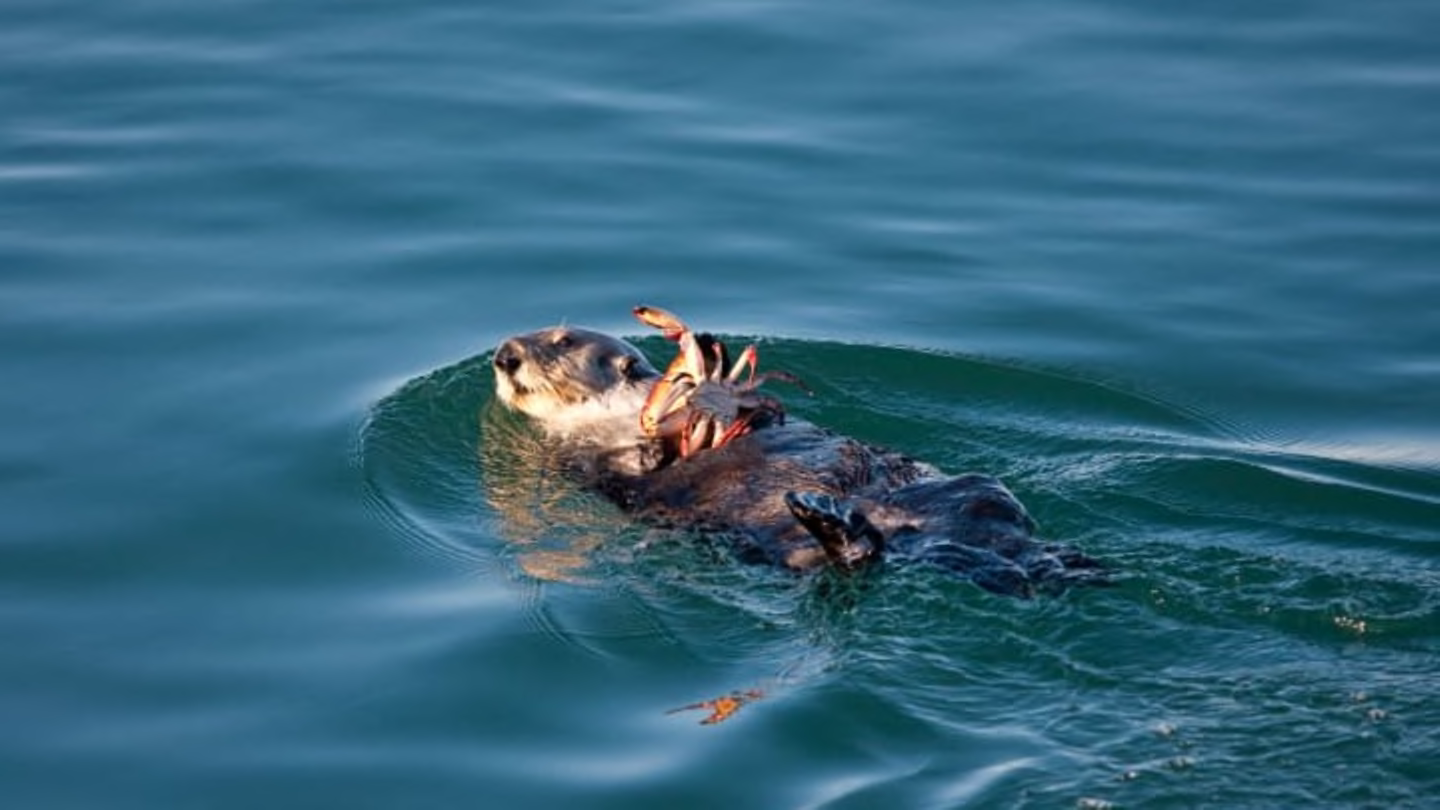
AN OTTER IS SOMETIMES ONLY AS GOOD AS HIS TOOLS.
Otters love to eat shelled animals, like clams, but they aren’t equipped with the strength to open their food without some help. Therefore, they are big on tools and will often use rocks to help crack into dinner. While they hunt for food underwater, they’ll often store a rock in the skin under their arms for later use.
OTTERS ARE POPULAR IN NATIVE AMERICAN CULTURES, BUT FOR VARYING REASONS.
Some tribes consider the otter to be a lucky animal and a symbol of “loyalty and honesty.” But some, particularly in present-day Canada and Alaska, viewed the river otter “with awe and dread” and associated the creatures with the undead and drowning. Some cultures even forbid eating the creatures and were offended when colonial Europeans began hunting the river otters and selling their furs.
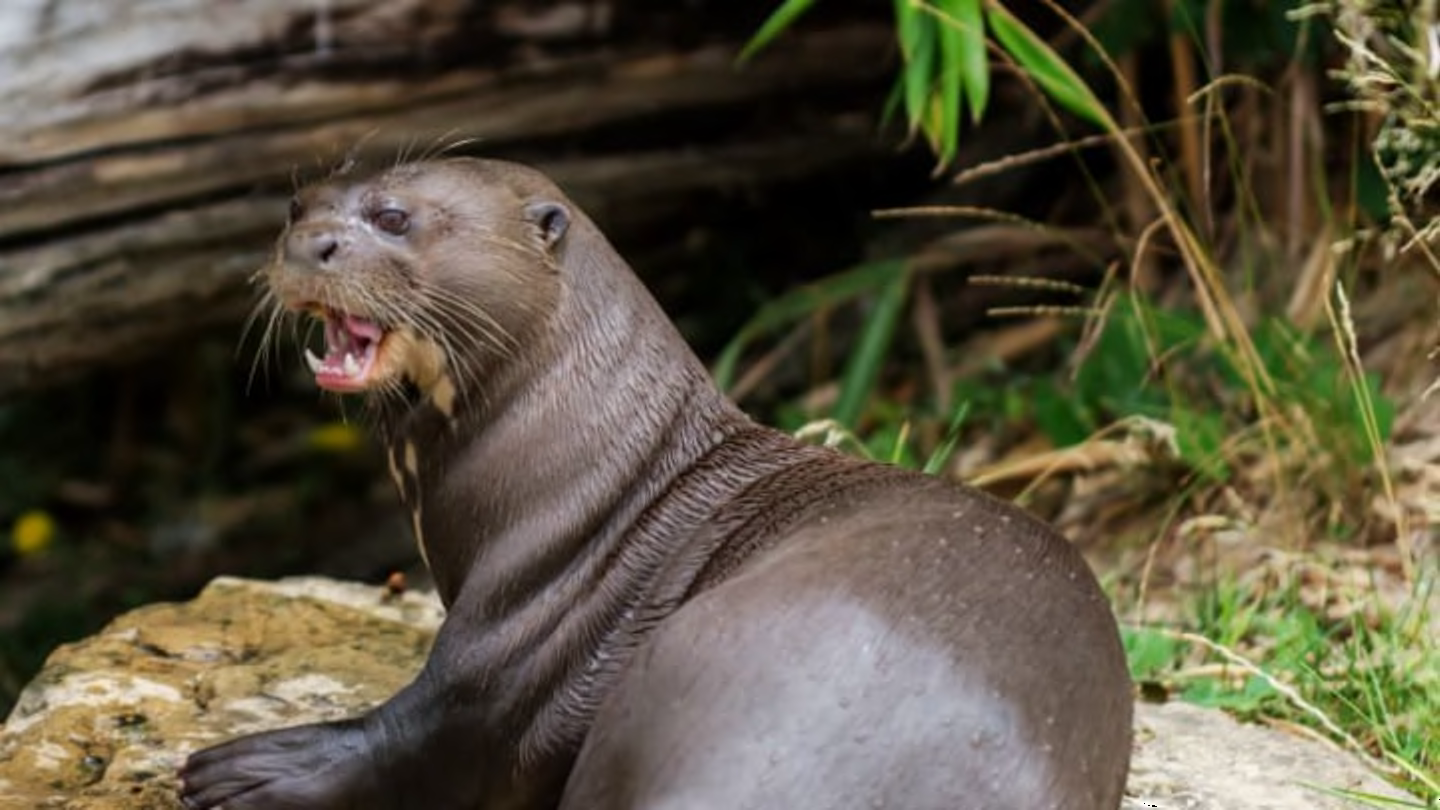
GIANT OTTERS ARE SUPER CHATTY.
In 2014, a study of giant otters found that the river-dwellers have 22 distinct noises they make for different situations. On top of that, pups have 11 of their own calls that they intersperse with “infant babbling.” Among the most notable calls: a “hum gradation” used to tell otters to change directions and a “Hah!” shout when a threat is nearby.
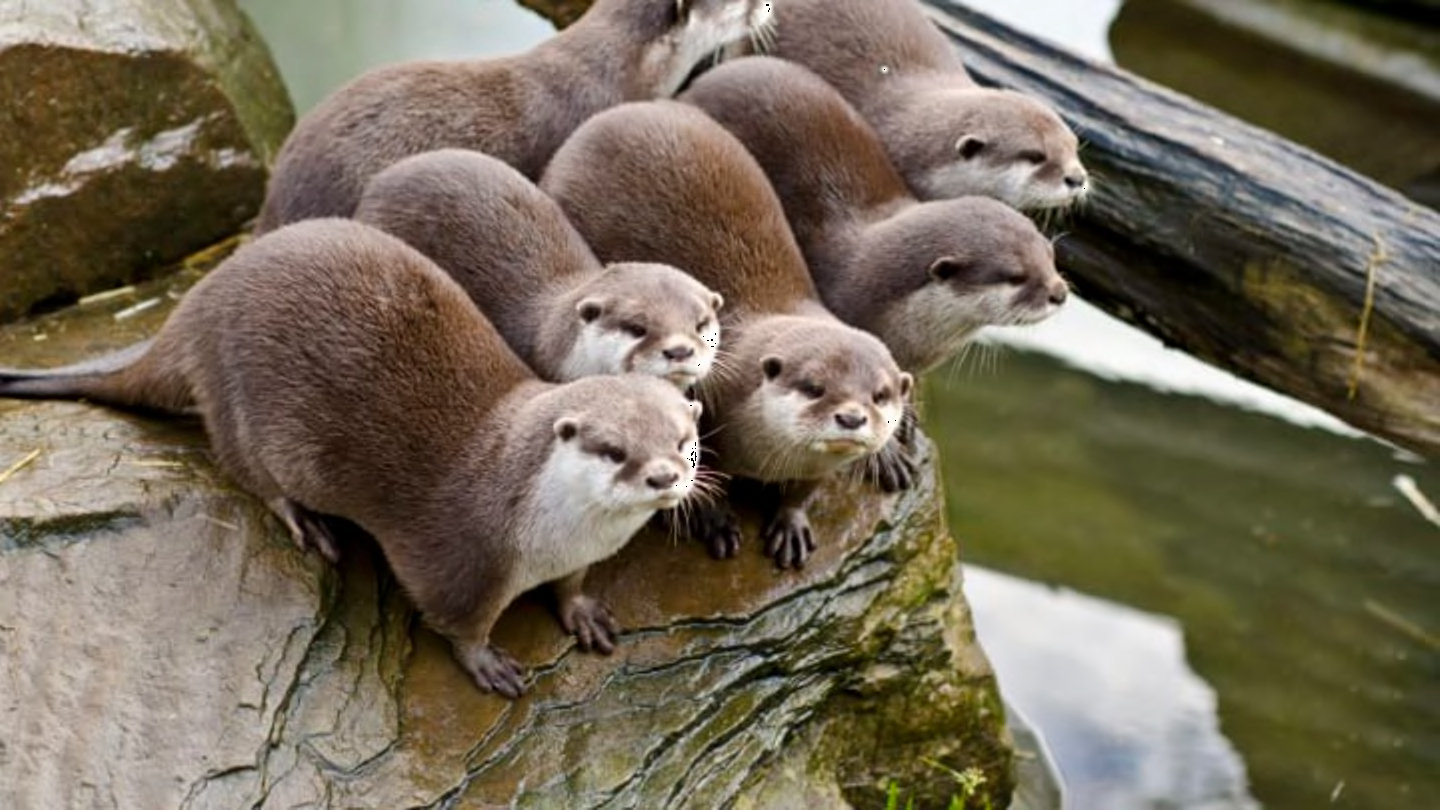
SEE A GROUP OF OTTERS? THAT’S A ROMP. OR A BEVY.
Or a family or a raft. Otter groups go by a few different monikers, all of which are fairly unique to that crew. Generally, a group of otters on land will go by a romp, while a group hanging in the water is called a raft.
OTTERS ARE BIG ON PLAY TIME, AND MAKING SLIDES IS AMONG THEIR FAVORITE GAMES.
Otter families are usually limited to pups and their mothers, and these duos will spend most of their time either feeding or sleeping. In the downtime, though, otters love to play and will often build themselves slides along the banks of rivers.
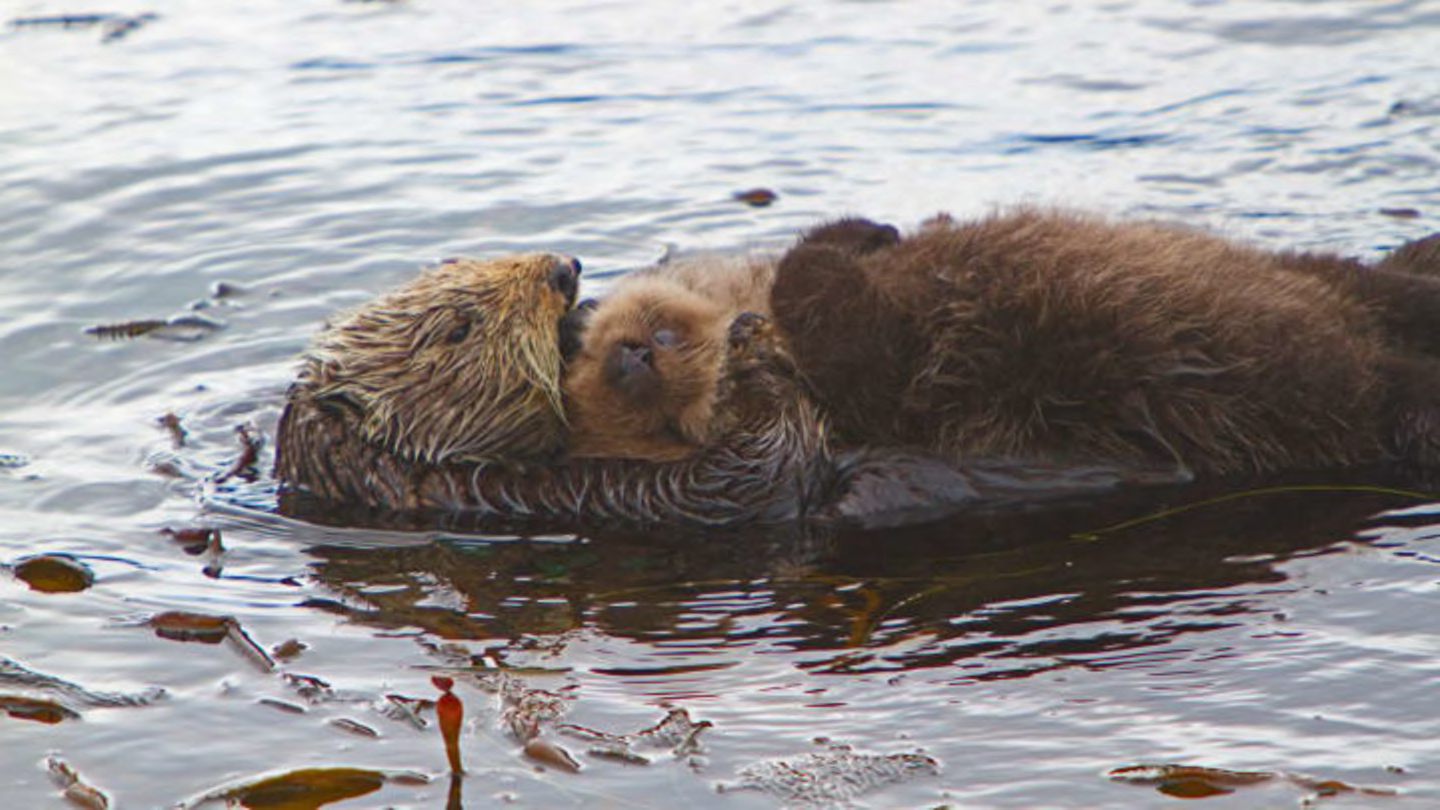
BABY OTTERS ARE BUOYANT, BUT THEY CAN’T SWIM ON THEIR OWN.
A mother will often wrap the babies in kelp to keep them in one place while she hunts. Or, she might rely on human resources and otter ingenuity to find a makeshift “playpen” for her pup.
THEIR BEHAVIOR ISN’T ALWAYS ADORABLE.
Like many animals, otters sometimes behave in ways that aren’t exactly within the bounds of what humans would consider morally acceptable. Even if you find them otherwise adorable, otters’ mating habits will no doubt make your stomach turn.
Male otters’ mating techniques are violent. They bite their female partner’s face during copulation to keep her from slipping away, leaving her with substantial facial wounds. It’s not uncommon for female otters to die as a result of these aggressive encounters, either through drowning or from their wounds becoming infected. Male otters have also been known to violently copulate with other species—most notably, baby seals. The behavior doesn’t stop when the seals die from the trauma. Otters have been known to guard and have sex with the bodies of their victims for up to seven days after they’ve died.
Scientists hypothesize that these seemingly counterproductive mating habits might be the result of a population imbalance. In California’s Monterey Bay, where scientists observed otters trying to copulate with the week-old bodies of dead baby seals, there are far more male otters than females. Facing a lack of female partners, male otters may be engaging in what researchers call “misdirected sexual activity.” The area in the bay where the scientists observed the most otter-on-seal mating sessions was also where there was a high population of transient male otters, ones that, unlike more dominant males, don’t have an established territory filled with potential mates. In the absence of females of their own kind, then, they turned their typical sexual responses toward the seals. Nature, unfortunately, isn’t always pretty.
In searching for some tips on fixing something totally unrelated, I happened upon this article by Juliana LaBianca in Reader’s Digest.
The beauty of nail polish
Nail polish can be used for a lot more than just adding a little color to your nails. If you have a few extra bottles lying around the house, check out these clever ways you can use them up.
Smooth out slightly splintered wood
Seal a wooden surface with a coat of clear nail polish (for stained wood surfaces, first find a color that matches the wood). The new finish will stop supplies such as wooden hangers from snagging clothes and keep fingers splinter-free.
Waterproof your garden labels
Make plant labels waterproof by coating them in clear nail polish. You’ll never have to Google how often to water your herb garden again. This trick also works for waterproofing address labels on packages.
Prevent rust stains
Coat the bottom of metal cans (think shaving cream and hair spray) with clear nail polish to prevent rust from developing and staining your sink or medicine cabinet.
Stop a run in tights in its tracks
Keep a small hole from spreading by dabbing the run with clear nail polish.
Prevent frayed fabric from getting worse
Tame frayed fabric, such as the wisps on the cuffs of a nylon-lined jacket or the tiny broken threads on the bottom of a well-worn wool pencil skirt, with clear polish.
Fix peeling pearl buttons
Coat (fake) pearls with clear nail polish to stop them from peeling.
Stop a cracked windshield from getting worse
Stop a small windshield crack in its tracks with clear polish. Working in the shade, paint the crack on both sides of the glass. Move the car into the sun to allow it to dry. You’ll eventually need to repair the windshield, but in the meantime, use polish to buy time and shop around for the best estimate.
Treat an unraveling shoelace
Dip an unraveling shoelace in clear nail polish. Twist it back into shape and allow it to dry.
Protect tarnish-prone costume jewelry
Prevent costume jewelry from tarnishing by brushing over it with clear nail polish. This hack will also stop skin discoloration and irritation from cheap jewelry.
Seal an envelope
Seal an envelope with a brush of nail polish. For a fun letter, such as a party invitation or thank you note, use a bright color.
Hide scuff marks on a shoe or bag
Fill in a scuff with a dab of nail polish that matches the piece. No one will be any the wiser. (Note: If you plan to resell a vintage or designer item, the paint could lower its value.)
Hide a chipped tile
Color in a small chip on a kitchen or bathroom tile with a matching nail polish color. The small brush and variety of colors available will ensure accuracy.
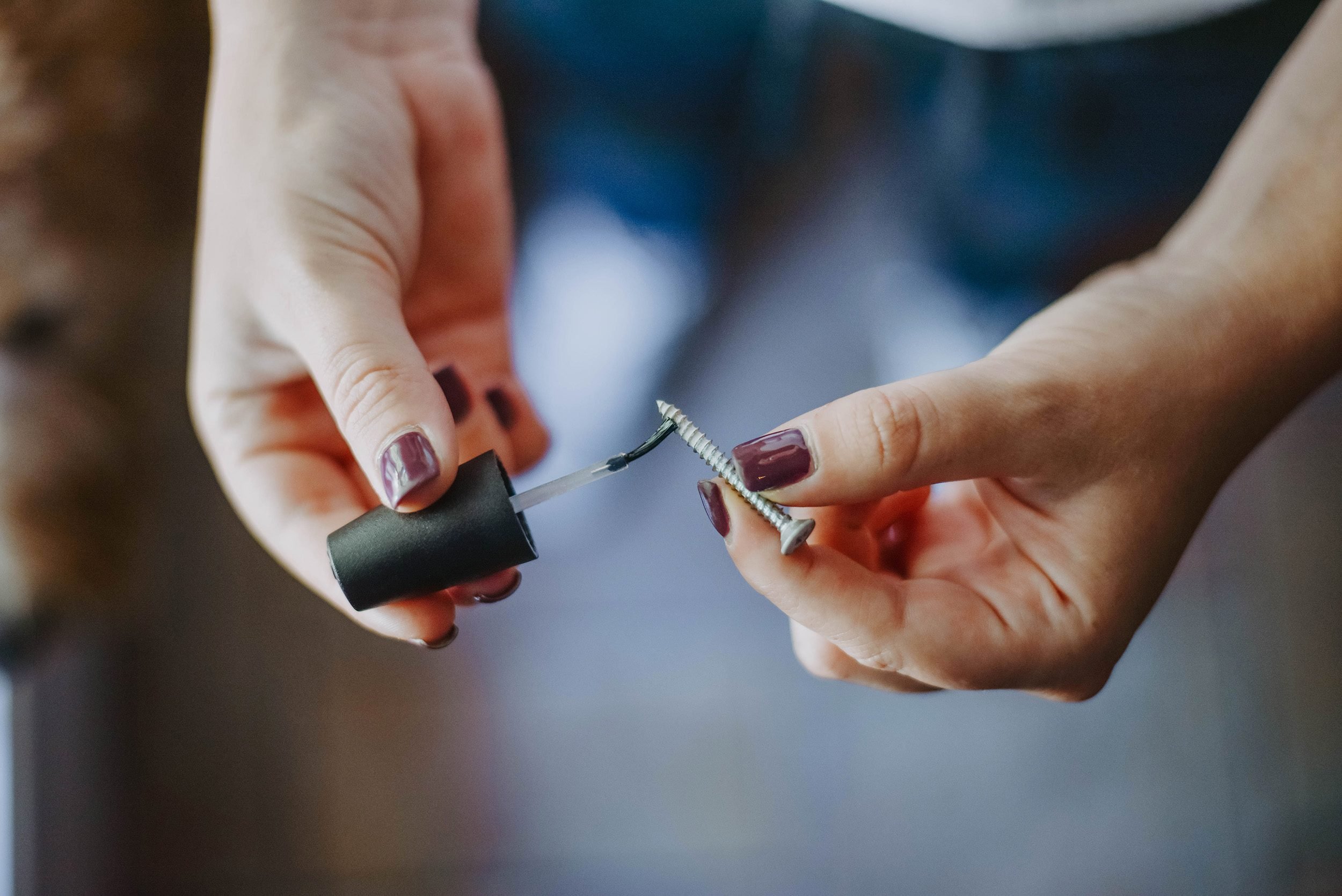
Tighten a loose screw
Secure a screw by first painting it with nail polish, which will give it extra stickiness. Paint over the top of the screw to prevent it from developing rust.
Prevent chipped car paint from rusting
A small indent or piece of chipped paint could develop rust once the spot is exposed to the elements. Seal yours off with a coat of clear nail polish.
Organize a jumbled set of keys
Organize your mess of keys by painting the tops of the most important ones with different colored nail polish. You’ll always know that blue means home and red means gym locker.
Reattach a loose rhinestone
The ultimate wedding must-have? A bottle of clear nail polish. In addition to fixing any manicure fiascos, the polish can also be used to reattach a loose rhinestone or crystal.
Fix a window screen
Mend a torn window screen with a dab of clear nail polish.




























 Sew Colorful