Everyone knows about Paul Revere’s midnight ride, but this patriot did a lot more to help America gain its independence. Here are 11 little-known facts about the Founding Father.
His father was a Huguenot.
Revere’s father, Apollos Rivoire, was a French Huguenot refugee who fled his country as a result of religious persecution. He was born in Riocaud in 1702, but with time he lost most of his connection to France—he could not read or write the language. The Frenchman later changed his name to Paul Revere, “on account that the Bumpkins pronounce it easier.” He married Deborah Hitchbourn, a member of a very old Boston family, and passed the anglicized name, Paul, to his eldest son.
As a teen, Revere worked as a church bell ringer.
When he was around fifteen, Revere would ring the bells at the Eight Bell Church near his home. The young patriot and his friends set up a bell ringers’ association. They drafted a document that detailed the rules and guidelines for membership. Members could only be allowed into the group through a unanimous vote, members could not beg for money, and a moderator was chosen every three months to delegate work and changes within the group. The simple document focused on the fundamentals of public duty, majority vote, and community.
Revere made some interesting items in silver.
Revere’s father came to Boston as an apprentice smith. He worked for a man named John Coney for several years and purchased his freedom for forty pounds. After Revere was born, he apprenticed under his father and learned how to craft things from gold and silver. Some items include a chain for a pet squirrel, an ostrich egg snuffbox, and sword hilts. You can tell an item is made by Revere by his maker’s mark—either his last name in a rectangle, or his initials in cursive.
The silversmith was also a dentist.
When dental surgeon John Baker moved to town, Revere happily studied under him. He learned how to create false teeth out of ivory and insert them using wire. Revere became so confident in his abilities that in 1768, he placed an ad declaring he “can fix [teeth] as well as any surgeon dentist who ever came from London, he fixes them in such a manner that they are not only an ornament but of real use in speaking and eating.”
He made a lot of money. Literally.
During wartime, Revere used his smithing skills to engrave printing plates to print money in Massachusetts. He was also commissioned to design the Continental currency, money used to pay the rebel army. The new bills strangely ranged from one-sixth of a dollar to 80 dollars.
During the war, Revere accidentally engaged in some super early forensics.
After Dr. Joseph Warren was killed at the Battle of Bunker Hill in 1775, he was buried like others in an unmarked grave. Ten months later, the bodies were exhumed and examined. Revere was Warren’s dentist, and recognized him by his teeth: Revere had given Warren a false tooth fastened with wire. This was the first body identification done by teeth in recorded history.
He had a large family.
Revere had two wives, Sarah Orne and Rachel Walker, and he had eight children with each of them. Revere was a doting father who referred to his kids as his “little lambs.” Ten of Revere’s children perished at a young age, but he still managed to acquire 52 grandchildren.
Revere was unfailingly polite and dapper.
The patriot even dressed well on his famous midnight ride. Impressed by his garb, his captors saluted him as one of equal rank (before threatening to shoot him in the head). Even with a gun in hand, the redcoat politely asked, “May I crave your name, sir?”
He was not drunk on his midnight ride.
This urban legend took hold when the media was eager to discredit the Founding Fathers during the tumultuous era surrounding the Vietnam War. One Boston newspaper ran a story in 1968 claiming that Revere drank some rum early into his midnight ride. Revere’s drunken yelling apparently roused the patriots accidentally. While Captain Hall, a patriot stationed in Medford, did own a distillery, there is no evidence suggesting that Revere’s booze-fueled yelling truly occurred. Regardless, the unfounded accusations caught on and are often still suggested as truth.
He wasn’t the only one to go on a midnight ride.
Paul Revere and William Dawes originally planned to carry news of the invasion to Concord, where military supplies were stored, and then warn John Hancock and Samuel Adams, who had been targeted for capture. On the trip there, the duo would ride through Somerville, Medford, and Arlington, warning patriots as they passed through. They ran into Samuel Prescott (who was just leaving a lady friend’s house at one in the morning) in Lexington, and asked him to come along.
Revere was captured about halfway through the ride, but the others managed to escape and keep going. Revere had his horse confiscated but still managed to warn John Hancock and Samuel Adams. The true hero was Prescott, who actually went through with the plan and reached Concord.
So why were the more successful criers left out of the story? One very popular—but incorrect—poem is to blame. Henry Wadsworth Longfellow’s “Paul Revere’s Ride” starts with this very familiar stanza:
Listen, my children, and you shall hear Of the midnight ride of Paul Revere, On the eighteenth of April, in Seventy-Five: Hardly a man is now alive Who remembers that famous day and year.
This poem is filled with intentional inaccuracies. Longfellow did his research, but took many liberties in order to properly convey his message. The poet wanted to create a folk hero by painting a lone man as the midnight rider. In order to do such, he removed the extra players.
We’ve all been misquoting him.
Paul Revere and his fellow patriots never shouted, “The British are coming!” That wouldn’t have made sense, since most colonists were British. The actual warning was “the Regulars are coming out.” This misconception is another result of Longfellow’s creative license—he found the real sentence to be too wordy for his poem.
There are few sure things in life, but 2 are death and taxes. I’m presenting an article from Mental Floss about tax trivia. I added pictures.
Why does Tax Day typically fall on April 15 (though it’s April 18 in 2022*), and which historical leader taxed beards? Read on for answers to those questions and more in this list, adapted from an episode of The List Show on YouTube. * (in 2023, it’s April 17th)
1. Taxes date back to at least ancient Egypt.
We can trace documented records of taxation all the way back to ancient Egypt, sometime around 3000 to 2800 BCE. Apparently, there was a biennial event called the Following of Horus, when the pharaoh went around collecting taxes in his dual roles as head of state and living incarnation of the god Horus. Taxation is even described in the Bible when Joseph tells the people of Egypt to give a fifth of their crops to Pharaoh.
2. The first taxes implemented in the United States caused a rebellion.
Fans of the Broadway musical Hamilton probably remember the lyric, “Imagine what gon’ happen when you try to tax our whiskey.” What happened was the Whiskey Rebellion, which was largely due to a tax that Alexander Hamilton imposed on—you guessed it—whiskey.
As you might imagine, people were extremely unhappy about it, especially small producers of whiskey, who, because of the way the tax was structured, had to pay nine cents per gallon in taxes, while larger producers were able to get as low as six cents. Violence quickly broke out. Tax officers were assaulted and tarred and feathered for trying to do their jobs, and several people were killed during riots. The rebellion was eventually quashed in 1794, and the whiskey tax remained in effect until 1802, when Thomas Jefferson repealed it.
3. Abraham Lincoln gave us federal income tax.
Abraham Lincoln signed the Revenue Act in 1861, which imposed the first-ever federal income tax. To drum up funds for the Civil War, Lincoln and Congress enacted a modest 3 percent tax on income over $800, which would be roughly $23,000 today. The law was almost instantly replaced with a new revenue act and would be repealed a decade later, but the relief obviously didn’t last: In 1913, the 16th Amendment established the federal income tax system we all know today.
4. Tax Day wasn’t originally on April 15.
When the modern federal income tax was established, lawmakers set March 1 as the looming deadline.
Although they gave no reason for this particular date, it was presumably to give people a couple of months to gather paperwork and crunch numbers after the end of the year. By 1919, the government tacked a couple of more weeks on to help panicked filers, making March 15 the date. That date stood until 1955, after Congress acknowledged that doing your taxes was getting more complicated by the year.
To help accommodate all of those changes and give people adequate time to file, the date was bumped by another month—but the change wasn’t entirely altruistic. The IRS acknowledged that the extra month would help their employees as well, spreading the workload out across another 30 days.
5. We spend a lot of time doing our taxes.
The amount of time we spend doing our taxes every year suggests that the repeated date changes may have been justified. According to the IRS, the average taxpayer spends about 11 hours doing record-keeping, tax planning, form submission, and other super fun tax-related activities. Of course, if you break it down even further, the amount of time changes based on the type of form the filers use. Business filers spend about 20 hours, including 10 hours on record-keeping alone.
6. The average American gets about $3000 back from their tax refund each year.
This amount ebbs and flows a little bit every year based on the economy, fluctuating consumer incomes, and the IRS’s withholding tables, which suggest how much employers should deduct from employee paychecks to account for income tax. It’s worth pointing out that a huge tax refund isn’t necessarily a great goal: It basically means you gave the government an interest-free loan that year.
7. In 1836, the federal government of the United States had a tax surplus of around $30 million.
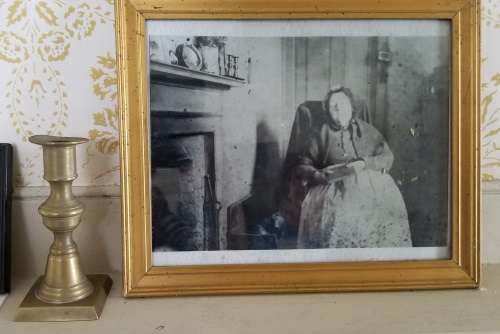
Congress gave most of that money back to the states, and each state was able to decide how to handle it. Maine decided to give back to the people, which meant that every single resident received a whopping $2. A woman named Salome Sellers used her money to buy a pair of fancy candlesticks. As she told the New York Star Tribune in 1902, when she was about to turn 101 years old, “Many people put their share of the surplus into flimsy finery … but I bought something that would keep to remember those good times by.” Today, those surplus sticks are in a museum.
8. Peter the Great taxed beards.
In 1698, Russia’s Peter the Great introduced a beard tax. After embarking upon what he called a “Grand Embassy” across Europe to observe more about Western cultures and processes, Peter came back with a number of reforms designed to bring Russia up to speed—and one of those reforms impacted facial hair.
The tsar noted that “modern” Western Europeans eschewed beards, and he wanted to emulate the trend within his own borders. If that doesn’t seem strange enough, wait until you hear how he unveiled his new anti-beard beliefs: At a big state reception, the tsar whipped out a massive barber’s razor and proceeded to shave his guests’ beards.
Although Peter was originally against beards entirely, he eventually decided to make money off of his ban by allowing facial hair, but taxing it. Nobility and merchants were charged significantly more than commoners, by the way.
9. A former IRS commissioner went to prison for tax evasion.
In 1952, Joseph Nunan, who was the IRS commissioner from 1944 to 1947, was busted for evading over $90,000 in taxes. Among the transactions that he failed to claim was $1800 in winnings from a wager that Harry Truman would beat Thomas Dewey in the presidential election of 1948. Nunan was sentenced to five years in prison.
10. A famous gangster was ultimately taken down over taxes.
Mob boss Al Capone ran a criminal enterprise and regularly ordered hits on his enemies—but he wasn’t sent to prison for murder. Instead, he was charged with tax evasion and fraud, and was sentenced to 11 years.
11. Willie Nelson made an album to cover his tax debts.
It was called the IRS Tapes, and all proceeds went toward his tax bill.
12. Henry David Thoreau went to jail for failing to pay taxes.
The poet was imprisoned in 1846 for failing to pay a poll tax (a tax levied on every individual, regardless of income). Poll taxes were once typical in much of New England; paying the tax was typically a requisite to be able to vote, so they often functioned as a form of de facto discrimination against poorer citizens. Thoreau’s refusal to pay the poll tax was his way of protesting slavery. Someone paid the tax on Thoreau’s behalf, however, and he was released the next morning.
13. Shelled nuts are sometimes subject to taxes.
In England, shelled nuts are subject to a 20 percent value-added tax.
14. India has an entertainment tax.
Movie tickets are taxed anywhere from 18 to 28 percent depending on the price of the tickets. This is actually an improvement—before the government launched the Goods and Services tax, it was left up to each state to set its own entertainment tax. In Jharkhand, the tax was 110 percent.
15. There’s a cow flatulence tax.
Cow farts (really more like cow burps) are no laughing matter. The methane they produce is contributing to climate change in a big way. To help offset some of these drawbacks, many EU countries are looking at introducing a cow tax to tax producers for cow emissions.
16. England once had a special hat tax.
From 1784 to 1811, British citizens had to pay a tax on their hats. To prove they paid the tax, a stamp was pasted inside the hat. If the hat police caught you wearing a stamp-less hat, you’d be hit with a hefty fine. In 1798, a man named John Collins was caught using a printing press to forge the stamps, which would allow people to skirt the tax. He was sentenced to death.
17. There’s a tax court.
There are always people who get creative with their tax deductions. While most don’t pass muster, the United States Tax Court, a court of law dedicated to tax-related disputes and issues, does occasionally find in favor of some pretty unusual claims. For example, TurboTax tells the story of a professional bodybuilder who successfully claimed his supply of body oil as a professional necessity. (He also tried to claim buffalo meat and vitamin supplements, which they nixed.)
18. New Mexico gives a tax break to all centenarians.
If you live in New Mexico, and have lived there for at least a century, great news: You don’t have to pay state taxes. The Land of Enchantment provides a major tax break to all centenarians. But considering there are only 80,000 100-plus-year-olds in the entire United States, New Mexico isn’t exactly losing out on major money by providing this perk.
19. Even astronauts in space need to file their taxes on time (or ask for an extension).The IRS is a notorious stickler for on-time filing—which no one knows better than Jack Swigert, the command module pilot for Apollo 13, who joined the crew at the last minute. He was mid-mission when he realized that he was going to miss the April 15 tax deadline, so he radioed Houston to request an extension. Although the ground crew laughed at what they presumed was a joke, Swigert was dead serious. According to NASA transcripts, he said, “Hey, listen, it ain’t too funny; things kind of happened real fast down there, and I do need an extension. I didn’t get mine filed, and this is serious.”This sort of thing happens more than you might expect, by the way. In 2005, NASA astronaut Leroy Chiao was commanding the 10th expedition to the International Space Station when Tax Day reared its ugly head. He prevailed upon his sister, an accountant, to file an extension on his behalf, and he got right on it when he returned to Earth on April 24.20. The president of the United States isn’t exempt from taxes.In fact, the POTUS is expected to pay their rightful share, though there are a few nice perks, including a nontaxable travel account worth $100,000 and a nontaxable entertainment account with a $19,000 limit.
21. The IRS updates tax requirements on a regular basis.With the Reform Act of 1986, the IRS started requiring taxpayers to list their dependents’ Social Security numbers for the first time. When citizens were forced to provide this evidence, several million children mysteriously “disappeared” from tax returns.22. Most people file their taxes electronically.As of 2018, only 10 percent of people were still filing paper tax returns. Not only does this mean that those people will wait longer to get any refunds back, it also increases their chances of screwing things up: Paper tax returns are around 40 times more likely to contain mistakes compared to online filing.23. There’s a good chance you can file your taxes for free.If your adjusted gross income is less than $69,000, you’re eligible to use IRS Free File. Seventy percent of filers qualify, which works out to 100 million Americans. If your adjusted gross income is more than $69,000, you can still use Free File. But it’s not going to walk you through the process step-by-step like the other version, so you have to feel pretty comfortable doing your taxes.24. Founding Father Sam Adams was bad at collecting taxes.Adams was elected to Boston’s tax collector post in 1756, but he wasn’t terribly interested in the job. He was prone to overlooking tax debts from people having financial or medical difficulties, which made him a bit like Robin Hood to working-class Bostonians. The problem was, the tax collector was personally liable for uncollected taxes—and by 1765, he owed more than £8,000—equivalent to nearly £1.5 million today. He did end up trying to go after some of the uncollected taxes, but apparently without much success. According to the New England Historical Society, his well-to-do friends ended up covering most of Adams’s debt.25. Vermont once declared war on Germany for tax purposes.In the lead-up to the United States entering World War II, Vermont lawmakers voted to give residents serving in the military a $10-a-month bonus. If the raise was instituted during peacetime, though, everyone would have been hit with a new tax. In order to avoid it, the bonus needed to be issued during a time of armed conflict.War hadn’t officially been declared yet, but President Franklin Roosevelt had issued orders for the U.S. Navy to shoot first if they came across German ships in waters “necessary for our defense.” Vermont lawmakers decided this order was enough for them to basically declare we were at war with Germany in September 1941—three months before the United States did.
This article was originally published in 2021; it has been updated for 2022.
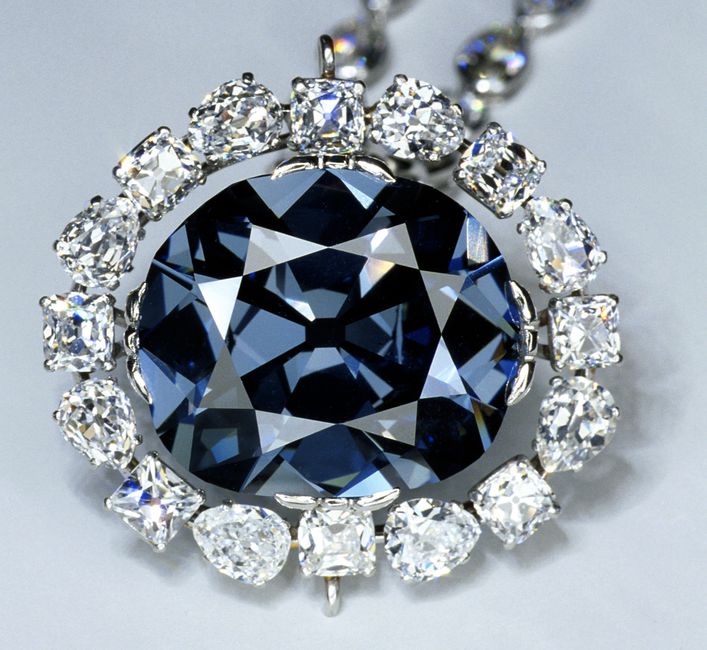
The History of the Hope DiamondThe Hope Diamond was originally unearthed in the mines of Southwest India along the Kistna River. It was viewed as one of the most unique stones ever pulled from the Golconda mines. So how big is the Hope Diamond? It is believed to have been around 112 carats originally and was placed in the brow of a temple idol.The next time it was mentioned in texts was when it was stolen by a French merchant who then sold it to King Louis XIV in 1642 at a substantial profit. Shortly thereafter the merchant died a wicked death. After the court jeweler cut it down to 67 carats it was named “the Blue Diamond of the Crown.” During the French Revolution in 1792, it was stolen from the royal family after King Louis XVI and Marie Antoinette were beheaded.
In 1812, the Hope Diamond resurfaced in the hands of London diamond merchant Daniel Eliason but only weighed 45.52 carats. It is said that King George IV acquired it but his debts were so enormous when he died that it was sold. A 1839 gem catalog noted that the next known owner was Henry Philip Hope who gave the stone its name. It transferred to several other owners in the succeeding years.
Properties of the Hope Diamond
The Hope Diamond is classified as a type IIb fancy dark grayish-blue stone that contains a strong phosphorescence of reddish-orange. When it is exposed to ultra-violet light in a darkened room then the lights are turned off, the diamond continues to glow like a hot coal. The strange phenomenon simply adds to its mystery.
Colored diamonds, especially blue ones, have electrical properties that are semi-conducting. Unlike other diamonds, blue ones are renowned for their hardness, thermal and optical properties and chemical resistance. Natural diamonds contain defects or impurities. In the Hope Diamond, the impurity is boron, which gives it its unique color.
The Hope Diamond and others in the Aurora Collection underwent intense scrutiny by the Naval Research Laboratory’s Chemistry Division in 2005 in collaboration with NOVA Research. The objective was to identify the similarities and differences between the gems which included the Hope and Blue Heart diamonds among others. It became immediately apparent that all the diamonds studied had phosphorescent bands that centered between 500 and 660nm wavelengths. What they determined was that the phosphorescence in each gem studied could appear pink, aqua, red or orange.
Myths Surrounding the Hope Diamond
Historically, diamonds had myths surrounding them both good and bad as far back in history as 3500 BC when they were first discovered. Here are a few interesting facts that have been recorded over time:
In 3000 BC, the Egyptian hierarchy wore diamonds to represent the sun, courage, truth, and as a symbol of power.
In ancient India, Hindus wore diamonds as a symbol of invincibility and clarity.
The ancient Greeks and Romans believed diamonds were actually the tears of the gods. Plato once wrote that diamonds embodied the celestial spirits of living beings.
In ancient times, the breast plates of Kings were studded with diamonds because it was believed they had magical superpowers. Wearers were seen as invincible, strong and would have good fortune.
Between the 5th and 15th century, diamonds were referred to as “miracle stones” because it was believed they had magical healing powers. Unfortunately, they also discovered that swallowing powdered diamonds resulted in death.
Jewish high priests utilized diamonds to determine guilt or innocence. If the diamond sparkled the individual was considered innocent and if not, they were guilty.
As for the Hope Diamond, its popularity is partially due to the myths surrounding it:
Legend has it that in India the Hope Diamond was originally found embedded in an idol. It was ripped out of the idol by a French merchant and the Hindu priests became so angry they cursed it. A gruesome death was foretold to all who possessed it and anyone that dared touch it. The original thief, for example, was torn apart by wild dogs.
In 1715 King Louis XIV of France bought the Hope Diamond and died of gangrene. Almost all of his children and grandchildren died, so he was succeeded by his five year-old great grandson Louis XV.
In 1792 King Louis XVI and Marie Antoinette were beheaded during the French Revolution. It is said that it was because of the diamond’s curse.
King George IV of England owned the Hope Diamond next and died completely destitute.
It was said that the Titanic sunk in 1912 because the Hope Diamond was aboard.
American Evalyn Walsh-McLean came into possession of the Hope Diamond after which her life was beset by tragedies and debt.
Where Is the Hope Diamond Today?
The Hope Diamond is currently housed in the Smithsonian Museum of Natural History in the Department of Mineral Sciences in Washington D.C. It was donated by Harry Winston in 1958 and receives over 100 million visitors a year. Unlike its previous history, the Smithsonian has always viewed the stone as a sign of good luck.
People often wonder about the value of the Hope Diamond. According to S.H. Zell & Sons Fine Jewelry in New York, New York the value of the gem is $350 million. According to the Smithsonian, however, it is priceless in that it is irreplaceable. However, in 2009 they insured it for $250 million. The thought most gemologists adopt according to Diamond Cutters International is “How can you set a value on the only one of something?”.
Summing Up
The history, curses and myths surrounding the Hope Diamond is actually a parable about the cardinal transgression of greed. The original thief died a horrendous death while later owners, even though unaware of the curse, went through tragedies and forms of suffering as well. It was only when a pure-hearted person, Harry Winston, donated rather than sell the Hope Diamond to the Smithsonian Institution that the curse was broken.
So what is the Hope Diamond? It is one of the greatest treasures in the world that would have an enormous amount to tell us if only it could talk.
Today is the anniversary of Abraham Lincoln’s assassination and I found an article on the History.com website detailing some little-known facts about that horrible event.
Booth initially planned to kidnap Lincoln.
After meeting with Confederate spies in the summer of 1864, Booth spearheaded a plot to abduct Lincoln, bring him to the Confederate capital of Richmond, Virginia, and use him as a bargaining chip to secure the release of rebel prisoners. On March 17, 1865, Booth and his fellow conspirators hid along a country road in Washington, D.C., intending to commandeer the presidential carriage that was scheduled to carry Lincoln to a matinee performance of a play at Campbell Hospital to benefit wounded soldiers. Lincoln, however, had a change of plans and never showed. Some of the co-conspirators abandoned the plot thereafter, and Booth soon had a change of plans as well. After the fall of Richmond and Confederate General Robert E. Lee’s surrender at Appomattox, he decided to kill, rather than kidnap, Lincoln with help from the remaining co-conspirators.
Ulysses S. Grant was originally scheduled to be at Lincoln’s side.
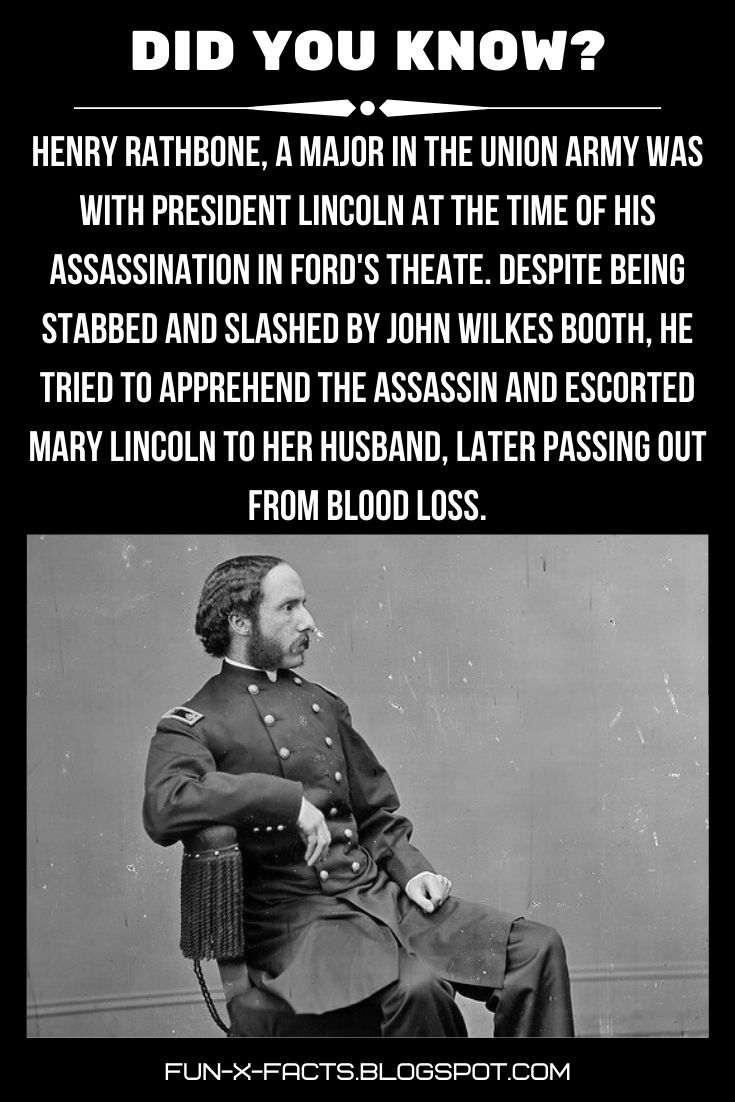
Just days after accepting Lee’s surrender, the Union general accepted Lincoln’s invitation to attend “Our American Cousin” at Ford’s Theatre on the evening of April 14, 1865. The general’s wife, however, had recently been the victim of Mary Todd Lincoln’s acid tongue and wanted no part of a night on the town with the first lady. Grant backed out, citing the couple’s desire to travel to New Jersey to see their children. Lincoln had a surprisingly difficult time finding a replacement. Secretary of War Edwin Stanton, Speaker of the House Schuyler Colfax and even son Robert Todd Lincoln turned down the tickets before Clara Harris, daughter of New York Senator Ira Harris, and her fiancé, Major Henry Rathbone, accepted.
Lincoln’s murder was part of a larger plot to decapitate the government.
Booth and his conspirators plotted to not only kill Lincoln, but Grant, Secretary of State William Seward and Vice President Andrew Johnson. Grant’s unexpected departure removed him as a target, and George Atzerodt lost his nerve and failed to follow through on his assignment to slay Johnson at his residence in the Kirkwood House hotel. At the same time Booth shot Lincoln, Lewis Powell stormed Seward’s house and repeatedly stabbed the cabinet member, who was bedridden after a near-fatal carriage accident. Seward somehow survived the savage attack.
The lives of the Lincolns’ guests at Ford’s Theatre ended in tragedy as well.
After shooting Lincoln, Booth slashed Rathbone’s left arm from his elbow to his shoulder. Rathbone recovered from the stab wounds but not from the trauma of that night. After marrying Harris—who also happened to be his stepsister—in 1867, he grew increasingly erratic and perhaps suffered from post-traumatic stress. Two days before Christmas in 1883, he fatally shot and stabbed his wife before stabbing himself repeatedly in a suicide attempt. Once again, however, he survived the knife wounds. Rathbone lived out the remaining three decades of his life in an asylum for the criminally insane. (The fourth member of the presidential box on the night of the assassination, Mary Todd Lincoln, was herself institutionalized in 1875.)
Lincoln’s death was not universally mourned in the North.
As Martha Hodes recounts in her book Mourning Lincoln, some Northerners who thought Lincoln too dictatorial and some Radical Republicans who thought him too lenient toward the Confederacy welcomed news of his assassination. After a meeting of Radical Republicans hours after the shooting, Indiana Congressman George Julian recorded in his diary that the “universal feeling among radical men here is that his death is a godsend.” Michigan Senator Zachariah Chandler wrote to his wife that God had permitted Lincoln to live only “as long as he was useful and then substituted a better man (Johnson) to finish the work.”
Mary Todd Lincoln thought the vice president was involved in the conspiracy.
Hours before shooting Lincoln, Booth had mysteriously called on Johnson at the Kirkwood House and left a handwritten calling card that read: “Don’t wish to disturb you. Are you at home? J. Wilkes Booth.” The first lady, as she wrote to a friend, believed “that miserable inebriate Johnson had cognizance of my husband’s death. Why was that card of Booth’s found in his box? Some acquaintance certainly existed.” Atzerodt’s failure to attack the vice president was even seen by some as proof of Johnson’s complicity.
Lincoln and Booth had a previous encounter at Ford’s Theatre.
On November 9, 1863, the Lincolns watched a performance of “The Marble Heart” starring John Wilkes Booth at Ford’s Theatre. Mary Clay, one of Lincoln’s guests, recounted after the assassination that “twice Booth in uttering disagreeable threats in the play came very near and put his finger close to Mr. Lincoln’s face.” After Booth gestured menacingly toward the president a third time, Clay said, “Mr. Lincoln, he looks as if he meant that for you.” The president replied, “Well, he does look pretty sharp at me, doesn’t he?”
Lincoln’s deathbed quickly became a tourist attraction.
In the hours after Lincoln died in the back bedroom of William Petersen’s boardinghouse across the street from Ford’s Theatre, souvenir hunters ransacked the property and snatched numerous relics of the martyred president. Deciding to cash in himself, Petersen began to charge admission to the hundreds of curiosity-seekers who came each day to see Lincoln’s bloody deathbed, which incredibly continued to be slept in by tenant William Clark each night. Petersen fell into financial difficulty in 1871 and died after being found on the lawn of the Smithsonian Institution following an opium overdose.
Robert Todd Lincoln was in close proximity to two other presidential assassinations.
Sixteen years after being bedside for his father’s death, Robert Todd Lincoln was serving as President James A. Garfield’s secretary of war when he witnessed Charles Guiteau fire two gunshots that mortally wounded the chief executive inside a Washington, D.C., train station. On September 6, 1901, Lincoln arrived in Buffalo to attend the Pan-American Expo at the invitation of William McKinley only to learn that the president had just been shot. Lincoln visited McKinley’s bedside several times before the president ultimately succumbed to his wounds.
Another deadly tragedy struck Ford’s Theatre during the funeral of Booth’s brother.
When John T. Ford attempted to reopen Ford’s Theater to performances on July 10, 1865, Stanton, who was “opposed to its ever being again used as a place of public amusement,” dispatched heavily armed soldiers to prevent the show from going on. The federal government eventually purchased Ford’s Theatre for $100,000, gutted the auditorium and converted the building into war department offices. On June 9, 1893, at the precise moment when funeral services for Edwin Booth began inside New York’s Church of the Transfiguration, three floors of Ford’s Theatre collapsed into the basement and killed 22 federal workers.
I saw this building while looking for other unrelated things and I knew I had to do a little research about it and bring it (for kea!).
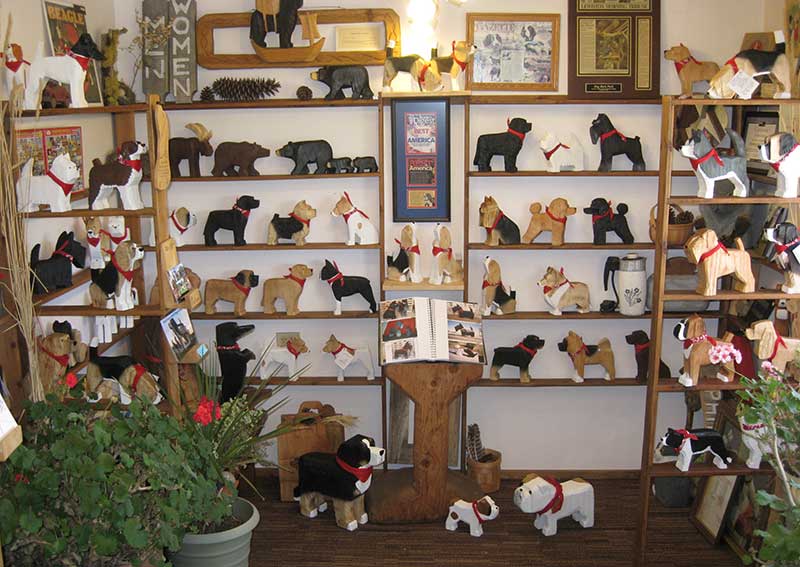
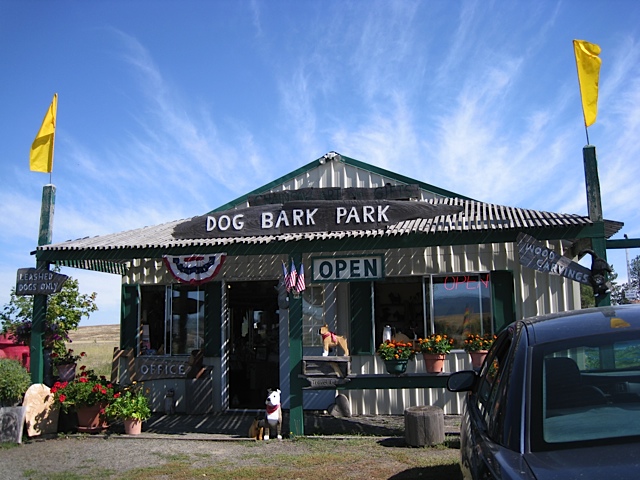
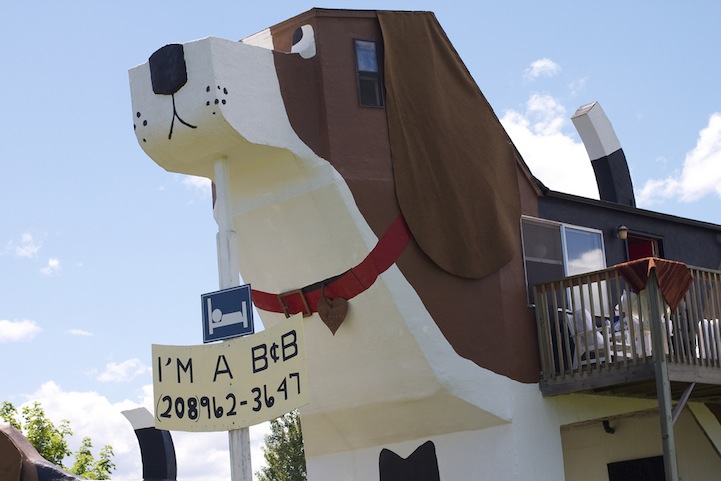
Dog Bark Park Inn is a guesthouse inside the World’s Largest Beagle. Some of the dog’s decorative furnishings are carvings by Dog Bark Park chainsaw artists Dennis and Francis. An adjacent gift shop offers an assortment of dog carvings. Visitors can also see how the carvings are made.
For dog lovers looking to take a trip to Idaho, we’ve found the perfect place to stay overnight! Located in Cottonwood, Idaho, Dog Bark Park Inn (aka Sweet Willy) is a specifically themed hotel shaped like a beagle. The two-bedroom bed & breakfast boasts a number of dog-themed design choices from the architecture itself to the interior decor.
The husband and wife wood carving artists behind the inn, Dennis Sullivan and Francis Conklin, first began experimenting with wood art nearly two decades ago. They say, “Our ‘big break’ came in 1995 when our carvings were sold on QVC television. We did nothing but carve wooden dogs for 18 months (our children barely remember seeing us during those days!), made what seemed like a bundle of money, invested it all in developing and building Dog Bark Park.”
Now, the couple continues to carve folk-art style wooden replicas of dogs, having already created over 60 different breeds of canines, and rent out their massive, towering tourist attraction. Check out the lodge’s website for a full list of amenities and pricing.
Dog lovers will appreciate this fun and functional roadside attraction on US Highway 95 at Cottonwood, Idaho.
Things To Know
Free visitor center & gallery gift shop open year-round.
Chainsaw dog carvings by resident artists are featured at Dog Bark Park.
Century-old Monastery of St. Gertrude & Historical Museum located near Cottonwood.
Enjoy seeing beautiful old wooden railroad trestles & bridges in the area.
Bed & breakfast season is April – August. Two night minimum stay.
Daisies are one of two flowers for April. This article from The Spruce details 7 of the most common varieties.
Daisies are a popular choice for gardens—and for good reason. Bright, cheerful, and easy to grow, the flowers are readily identifiable and are a mainstay of cottage gardens and classic perennial borders alike. But the term “daisy” is far broader than you may realize. There are multitudes of options when it comes to choosing daisies to grow in your garden.
The common name “daisy” is applied to a large handful of species within the huge Asteraceae family of plants, a group known for blooms that are flat and disc-shaped, with petals that form rays projecting outward from a central hub. The family also includes chrysanthemums, zinnias, asters, and sunflowers as well as many common weeds, such as dandelions. However, the daisy species that are best for your flower garden depends on several factors. A daisy that’s perfect for one growing zone might be a total pest in another.
Here are seven gorgeous species of daisies to consider for your garden.
Warning
Some types of daisies are considered weeds and are categorized by states as invasive (and thus discouraged), because they grow so rapidly, thanks to self-sowing and their robust nature. Check with your local county extension office before planting a new daisy variety.
English Daisy (Bellis perennis)
The common English daisy, Bellis perennis, has a somewhat deserved reputation for being a weed; it’s even considered invasive in some areas. The species has flowers with white rays and yellow centers, but there are many cultivars with semi-double and button flowers, such as ‘Galaxy Red.’ These cultivars are both showier and better behaved than the primary species. English daisies are hardy in growing zones 4 to 8 but are often grown as biennials in warmer zones and as annuals in cooler zones. These low-growing daisies, especially the showier cultivars, can make excellent ground cover plants.
Gerbera Daisy (Gerbera jamesonii)
The National Garden Bureau named 2013 the Year of the Gerbera, declaring the pleasing shape and luminous colors of the flower to be irresistible to gardeners. And we’re still in love with the species today. Unlike some daisies, this South African native is a tender perennial, hardy only in warm climates. However, the plants can thrive in a container garden and make fabulous cut flowers, as many florists and brides can attest. Gerbera daisies, also called African Daisies or Veldt Daisies, prefer morning sun, although full sun is tolerated in cooler climates. Irrigate the plants at soil level to keep water off the foliage and prevent fungal diseases. Look for the Festival series in a rainbow of colors, or try one of the lush, semi-double types, such as the peach-hued Cartwheel Chardonnay.
Marguerite Daisy (Argyranthemum frutescens)
The Marguerite daisy, Argyranthemum frutescens, also known as the cobbitty daisy, thrills gardeners with its blazing yellow and pink color choices as well as its demure white petal variety, which will thrive as a perennial in zones 8-10. These are annuals in all but the warmest growing zones, so they won’t return after winter, but you will get a full season of repeating blooms. Marguerite daisies are at their best during spring and fall when nighttime temperatures are below 75 degrees. However, if you shear them back in the summer, they’ll bounce back with a new flush of blooms when the autumn rains arrive.
Oxeye Daisy (Leucanthemum vulgare)
What’s considered a vigorous plant in one garden is considered a weed in another, and that’s true for the oxeye daisy, Leucanthemum vulgare. It’s a native flower in Europe, where the spreading nature and drought tolerance of the plants make them pasture pests. These short-lived perennials are discouraged in a dozen continental states because they’re considered invasive. However, in tamer settings, oxeye daisies are welcome for their three-month bloom time. Consider using them in a small, well-kept wildflower garden, or allow them to naturalize in your cottage garden.
Painted Daisy (Tanacetum coccineum)
The ease of care and vivid blooms of the painted daisy, Tanacetum coccineum, makes it deserving of a spot in every cutting garden. It starts blooming in early summer and may even put on a second, smaller showing in the fall if you deadhead the faded blooms. After the fernlike leaves appear in spring, watch out for aphids and leafminer. Varieties like ‘James Kelway’ are easy to start from seed or try the pale pink ‘Eileen May Robinson.’ Shasta Daisy (Leucanthemum x superbum)
A cross of the oxeye daisy and three other wild daisies yielded the beloved Shasta daisy, Leucanthemum x superbum, which received its common name from the white snow of Mount Shasta in California. The many cultivars of this daisy offer gardeners several different looks for their flower borders, ranging from the yellow ‘Banana Cream’ to the frilly, fringed ‘Phyllis Smith.’ The ‘Becky’ and ‘Alaska’ varieties are widely sold and look like the classic daisy flower seen in many cottage gardens. These plants bloom across a long season but reach their peak in June and July. Although they’re low-maintenance, Shasta daisies don’t like wet feet and will sometimes fail to reappear in the garden after a soggy winter. Divide the plants every two years to keep them vigorous.
Swan River Daisy (Brachyscome iberidifolia)
A warm-weather perennial from Australia, the swan river daisy produces small flowers, only about 1 inch in diameter. But the blooms are so colorful and abundant—and the flower works so well with other garden plants—that it can serve as a central feature of any flower garden. Lavender, blue, yellow, or white blooms appear in abundance from summer into fall, while the foliage is a softly textured gray-green hue.
FAQ
Which daisies bloom for a long period?
Shasta daisies, black-eyed Susans, and African daisies or osteospermum have a longer bloom period, blooming at least three months. Black-eyed Susans will bloom from June to September, and Shastas will produce flowers from July to September. Osteospermums start blooming in late spring, flowering through fall, but slow down during the height of summer.
Are all daisies perennial?
In short, daisies are perennial depending on your USDA growing zone. Marguerite and gerbera daisies are only perennial if grown in zone 9 or higher. Most other daisies are perennial down to zone 3 or 4. Do not confuse hardier golden Marguerites (Anthemis tinctoria) with Marguerite daisies; the two are two different species.
Which daisies are the easiest to grow?
Oxeye daisies are among the easiest daisies to grow. These quintessential daisies self-seed and grow easily; they’re even listed as invasive in Washington state. Before planting them in your region, check your local extension for invasiveness.
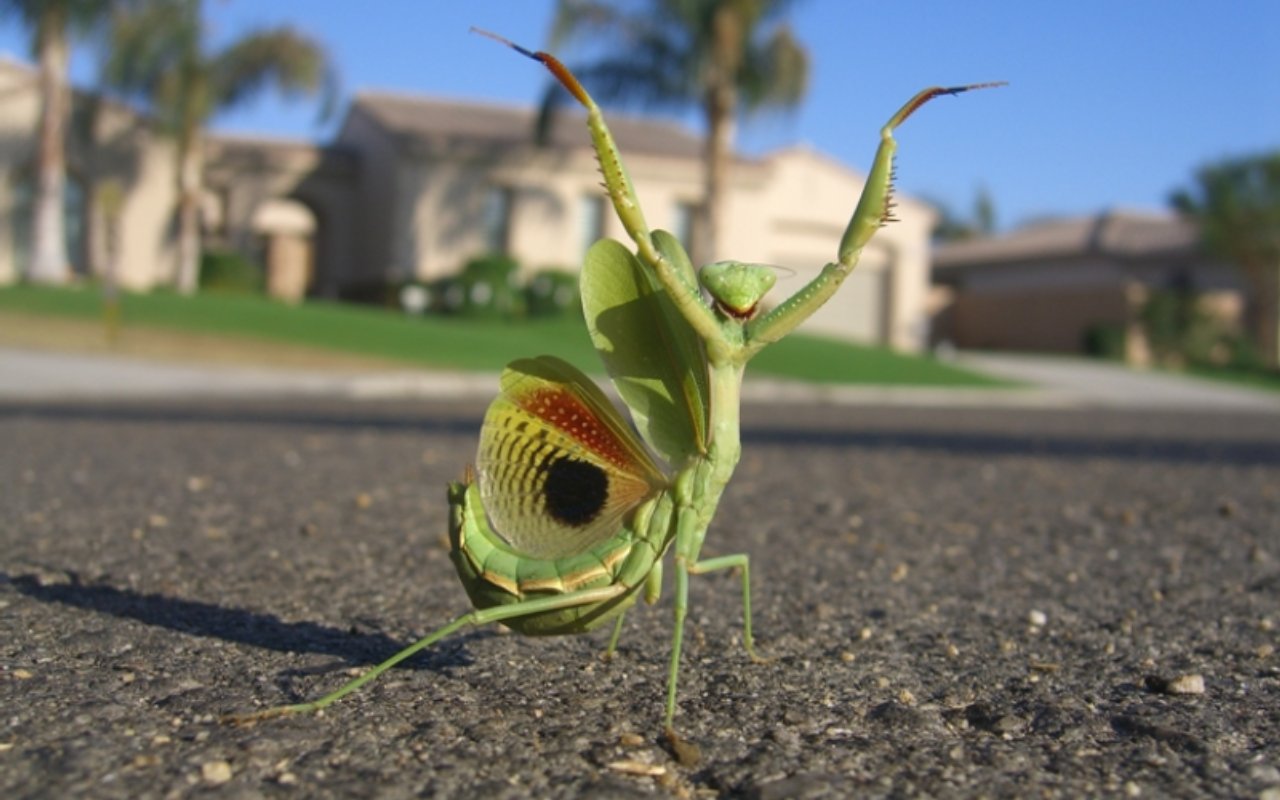
However bizarre or intimidating they may appear to be, praying mantises have long intrigued scientists not only for their amazing camouflaging ability but also for their uncanny ability to control the spin of their body. Worldwide, there are around 2,400 species of a mantis—ranging in size from as small as a human nail to as big as a human forearm. Perhaps it’s time to bring out some more interesting facts about praying mantis.
Prayer-like Posture
The praying mantis earns its name due to its prayer-like posture especially when it raises its seemingly reverent forelegs. For the same reason, the mantis is highly esteemed in some parts of the world; a few people even consider mantids as a sign of good luck.
Remarkable Vision
Studies suggest that the praying mantis is probably the only insect able to swivel its head and stare right straight at you. Lately, scientists have also discovered that the mantis’ eyes may well be equipped with 3-D vision.
Accurate Jump
A mantis doesn’t jump haphazardly. In fact, it is able to control its trajectory by twisting its abdomen and body parts alongside head. They don’t miss the target. The head-movement is meant to judge precisely the distance between the two points.
Feeding on Birds
You might have heard that birds feed on insects but how about if it occurs the other way round. Mantises are the only insects that feed on birds. While hummingbirds are the most primary target, mantids do take on European robins, sunbirds, flycatchers, warblers, honeyeaters, and vireos. Chinese mantises, one of the biggest species, are particularly avid avivores, but only females kill and eat the birds.
Sexual Cannibalism
The female mantis kills and eats the male either during or sometimes after the mating. She bites the head off the male. Since females are twice the size of the males and they cannibalize their mating partner, males usually avoid head-on confrontations with the female.
Male’s Flight
Males are thought to fly only although both males and females have wings. Females, with their heavy weight and bigger size, are probably just too heavy to lift off the ground.
Number of Eyes
Praying mantises have five eyes out of which two are compound eyes while three are simple. Scientists believe that mantises might see things in three-dimensional way just like we humans do.
Ambush Hunters
Mantids are ambush hunters and their predatory nature enables them to take on animal the size of their own. Like big cats, they will stalk prey and grab it with its neck.
Ootheca – Egg Sack
The female mantis produces 100 to 300 eggs over a period of several days. The eggs are protected in a hard frothy liquid. The entire egg sack is known as ootheca.
Spinning Bodies
While in flight praying mantis manages to generate a bit of spin together with swinging their head side to side. They will swing their heads to gauge the distance and judge the landing on an unsuspecting target.
The leaves and stems of lamb’s ear, also known as betony, are covered with a dense layer of tiny white hairs that make them feel silky to the touch and give them a silvery appearance. This plant is a must for sensory garden settings and is sure to delight children who are encouraged to stroke the soft leaves. While lamb’s ear is most commonly grown for its foliage, it does bloom; some varieties are grown specifically for their prolific blooms.
In addition to lamb’s ear plants providing tactile joy, the silvery foliage also serves as the perfect backdrop for many other plants. The flower stalks are usually 12-24 inches tall, with small purple, white, red, or pink blooms.
Lamb’s ear is a vigorous grower. It isn’t on the USDA invasive plant list, but unless it is carefully contained, it can become troublesome. Lamb’s ear produces creeping stems that root along the soil, creating dense mats of foliage. The roots aren’t thick, so the plants can be pulled up where you don’t want them. This spreading habit makes lamb’s ear a good choice for a groundcover in full sun or poor soil situations. Lamb’s ear also readily reseeds itself, so removing the flower stalks before they go to seed reduces spreading.
Lamb’s Ear Care Tips
Light
This plant performs best in full-sun conditions, but it can withstand shade. The plant looks greener in the shade because it produces fewer dense hairs.
Soil and Water
Lamb’s ear varieties withstand poor soil conditions and drought. One thing it does not tolerate, however, is soggy soil.
Give the plant about 1 inch of water weekly if the soil is dry. Don’t water from the top of the plant. Keep the plant as dry as possible by watering it from the bottom.
Temperature and Humidity
The soft hairs on the leaves and stems help prevent plant moisture loss, making it exceptionally drought-tolerant. Heat is not a problem for lamb’s ear. However, in desert locations, it is best to select a planting location with at least some partial shade. Low humidity is best for this plant. In locations with high humidity, the plant is susceptible to leaf rot.
Fertilizer
Lamb’s ear doesn’t like rich soil. It is best to avoid giving the plant any fertilizer.
Pruning
Because the prolific seeds spread quickly, deadhead the flower stalks or cut them back to the ground to prevent unintended spread. Prune any dead or damaged leaves as they occur. Repeat the process whenever you see more dead leaves or about twice a year. The plant can stand a harsh pruning if needed. It’s difficult to kill.
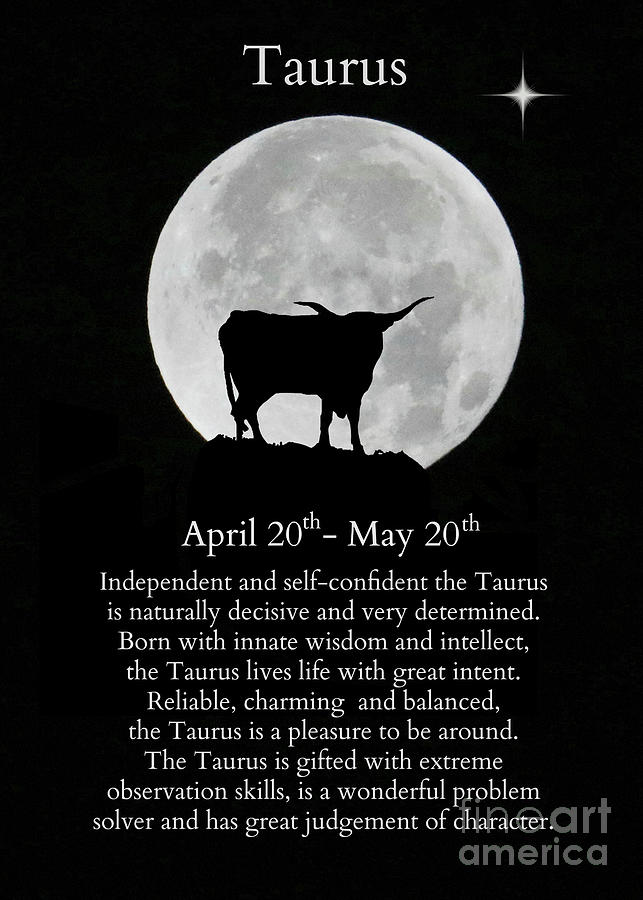
Smart, ambitious, and trustworthy, Taurus is the anchor of the Zodiac. Amazing friends, colleagues, and partners, Taureans value honesty above all else and are proud that their personal relationships tend to be drama free. Bulls get the reputation of being stubborn, but they’re not always stuck in their ways. This searching sign is willing to see another point of view, but they won’t flip-flop on an opinion just to make someone else happy. They will shift their thinking only if they truly have a change of heart.
With a rep as one of the hardest-working signs in the Zodiac, a Bull is never afraid to roll up those sleeves and get to work, and won’t blink an eye at pulling an all-nighter to get the job done. But it’s not all work for a Taurus sign. Anchored by the earth, this passionate sign is all about sensuality, and is always seeking out pleasure. Whether they’re indulging in luxurious massages, spending hours in bed with their lover, or going on a long run, Taureans love feeling present in their body and frequently need to get in touch with their physical self.
When it comes to love, Taureans are all about honesty, which is why a first date with a Bull may resemble a job interview. They’re not being rude—they’re built for partnerships and are simply trying to see if you’re a good fit at the start. And once you begin dating a Taurus, forget about white lies. A Taurus would much rather hear that an outfit is unflattering than endure hollow compliments. Taurus will hold a grudge against someone who lies, even if it’s a lie just to make them feel happy. Detail-oriented Taurus may seem nitpicky (even in the bedroom, a mid-romp critique may not be unusual), but that’s not because they want to offend. They simply demand the best, and they expect the people in their life to deliver.
While Taurus signs have an intense internal drive, they sometimes have trouble respecting authority, especially if asked to do something they think is pointless or should be done differently. Learning to be flexible and go with the flow can be an advantage to Taurus. And while Taureans have a rich internal life, they value external attributes and may overlook someone who doesn’t have the perfect outfit, car, or resume. Learning the benefits of getting to know someone before writing them off can be a lifelong lesson to a Taurean, especially in love, where they might be too hasty to write off a perfect match.
Taurus in Love
Ruled by Venus, a Taurus in love is sensual to the max and very connected to their physical bodies. A Taurus must feel physical attraction from the start if a romance is going to take off. But those who want to seduce Taurus first have to get past the formidable external barriers this sign places in front of them.
Taurus Friendship Style
“Friends forever” is a cliché probably dreamed up by a Taurus. When it comes to friendship, once you’re in with a Bull, you’re in for life. Bulls aren’t just loyal, they’re also fun, with a witty streak that always keeps you laughing. They don’t take friendship lightly, and remember birthdays, anniversaries, and other key events, often with a card or gifts.
Taurus Career, Money & Success Traits
Taurus greatest career strength: Persistence. A Taurus will look at a project, break it down into steps, and get things done, even if it means burning the midnight oil. Taurus never utters the words “too busy” and quickly becomes a cherished member of any work team.
Persistent and hardworking, once a Taurus sets a goal, it will get done—despite any obstacles that may come up. While becoming friends with a Taurus can be tough since they’re so particular about who they want in their social circle, once you’re in, you’re in for life. Taurus doesn’t get pulled down by gossip or petty drama. They’ll always see the best in their loved ones and buoy them up when they’re feeling down.
Taurus’ Greatest Challenges
Yes, they’re hardworking, but they’re also lazy. How is that even possible? Because Bulls are so driven by their own internal compass, they sometimes have trouble pivoting to fulfill someone else’s demands, which can lead to tough times at work or school. Learning to consider others’ viewpoints is a lifelong lesson for all Taureans.
Taurus’ Secret Weapon
Willpower. Think of its symbol, the bull (or even a bulldozer), and you’ve got an idea of how Taurus gets things done. They push, roll over, and dominate whatever challenges they’re facing until those challenges are history. They’re also a model for perseverance—when a Bull decides to do something, they get it done.
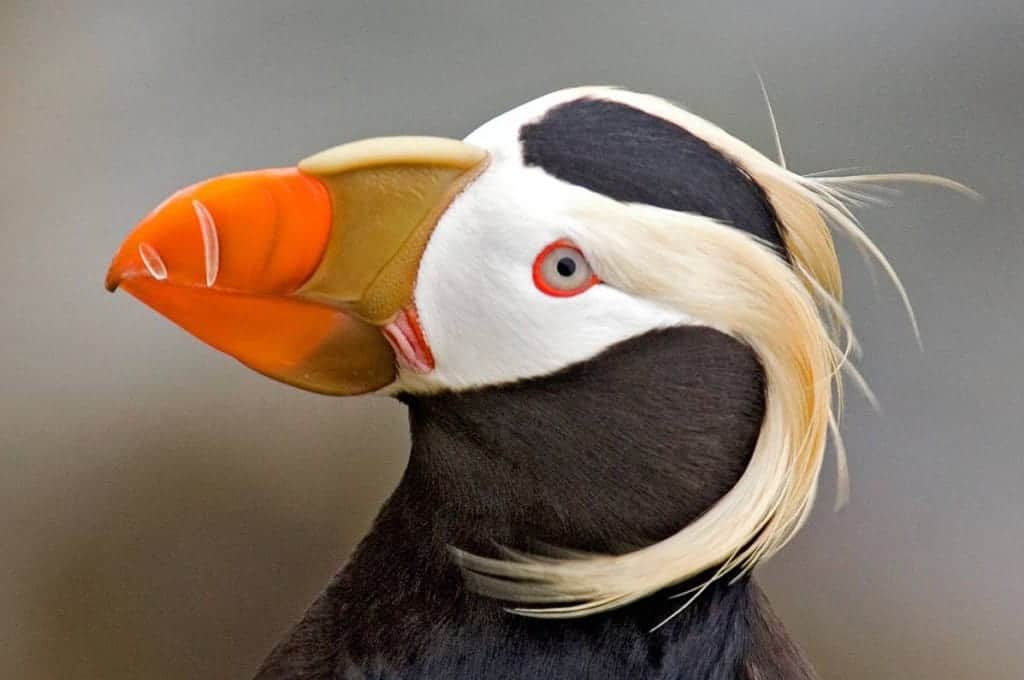
Puffins are cute, stocky birds, known for their black and white plumage and orange feet and bills. Their appearance has earned them numerous nicknames, including “sea parrots” and “clowns of the sea.” Puffins are often compared to penguins because of their plumage, waddling walk, and diving ability, but the two birds are not actually related.
Types of Puffins
Depending on which expert you ask, there are three or four puffin species. All puffin species are types of auks or alcids. The Atlantic or common puffin (Fratercula arctica) is the only species native to the North Atlantic. The tufted or crested puffin (Fratercula cirrhata) and the horned puffin (Fratercula corniculata) live in the North Pacific. The rhinoceros auklet (Cerorhinca monocerata) is definitely an auk and only sometimes considered to be a type of puffin. Like the tufted and horned puffin, it ranges across the North Pacific.
Description
Puffin plumage depends on the species, but the birds are generally brownish-black or else black and white, with black caps and white faces. Puffins are stocky, with short tails and wings, orange webbed feet, and large beaks. During the breeding season, the outer portions of the beak are bright reddish orange. After breeding, the birds shed the outer part of their bills, leaving smaller and less-colorful beaks.
The Atlantic puffin is about 13 inches long, while the horned puffin and tufted puffin average 15 inches long. Male and female birds are visually indistinguishable, except that the male in a pair tends to be slightly larger than his mate.
Habitat and Distribution
The open sea of the North Atlantic and North Pacific is home to puffins. Most of the time, the birds live out at sea, far from any coast. During the breeding season, they seek islands and coastlines to form breeding colonies.
The Atlantic puffin ranges from Iceland, Greenland, and Norway as far south as New York and Morocco. The horned puffin may be found from the coasts of Alaska, British Columbia, and Siberia, wintering along the California and Baja California coast. The tufted puffin and rhinoceros auklet range largely overlaps that of the horned puffin, but these birds also overwinter off the coast of Japan.
Diet
Puffins are carnivores that feed on fish and zooplankton, preying primarily on herring, sand eels, and capelin. Puffin beaks feature a hinge mechanism that allows them to hold several small fish at a time, making it easier to transport small prey to feed a chick.
Behavior
Unlike penguins, puffins can fly. By rapidly beating their short wings (400 beats per minute), a puffin can fly between 48 to 55 mph. Like other auks, puffins also “fly” underwater. Despite their mobility in the air and sea, puffins appear clumsy when walking on land. Puffins are highly vocal at their breeding colonies, but silent when they are out at sea.
Reproduction and Offspring
In captivity, puffins reach sexual maturity at three years of age. In the wild, breeding usually occurs when the birds are around five years old. Like other auks, puffins are monogamous and tend to form lifelong pairs. Each year, the birds return to the same colonies. They build nests among rocks or burrows in the soil, depending on the colony geography and puffin species.
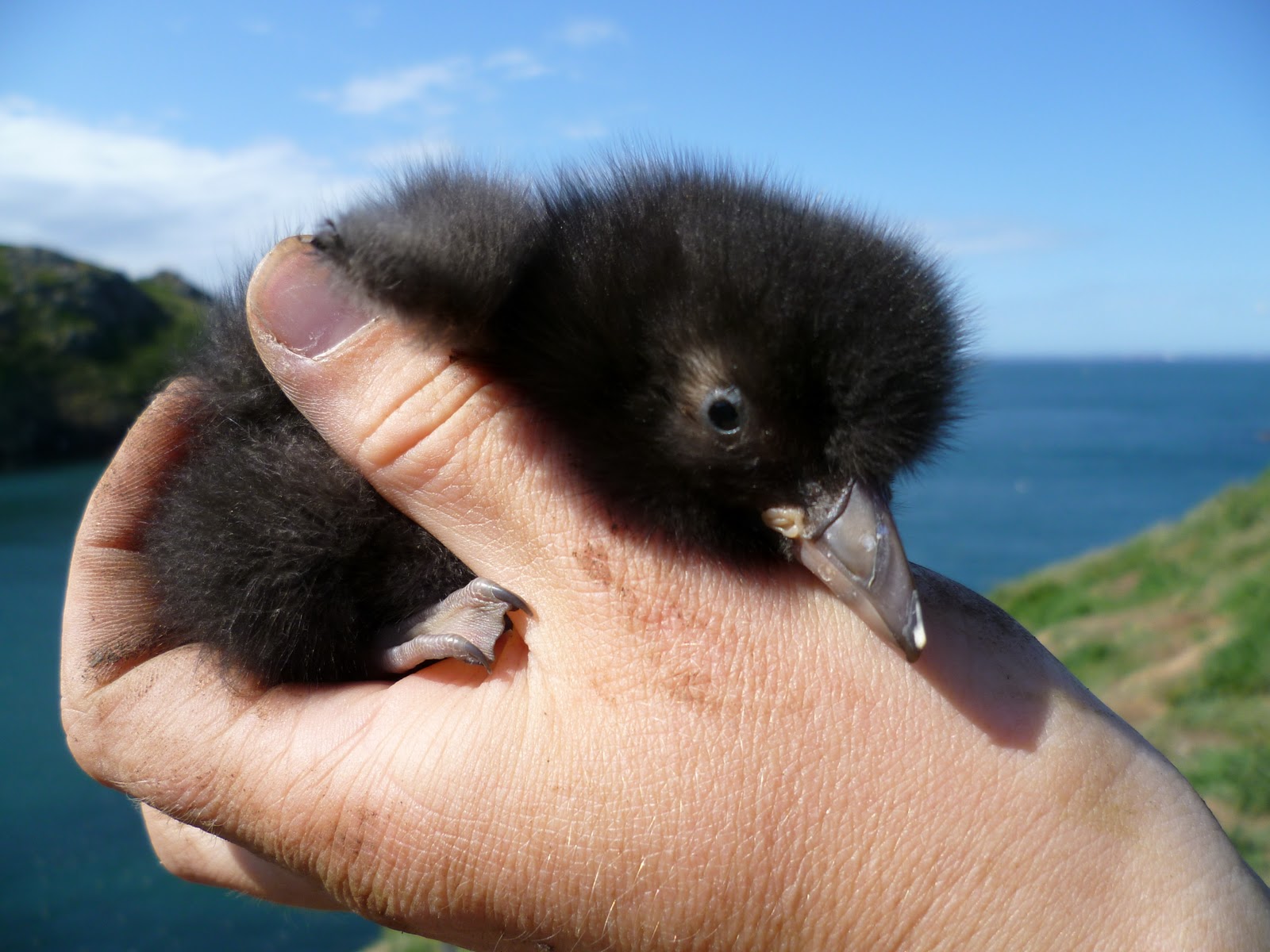
The female lays a single white or lilac-colored egg. Both parents incubate the egg and feed the chick, which is commonly called a “puffling.” Pufflings lack the well-defined plumage markings and colorful bills of their parents. Chicks fledge at night and head out to sea, where they will remain until they are ready to breed. The average lifespan of a puffin is about 20 years.
Conservation Status
The horned puffin and tufted puffin are classified as being of “least concern” on the IUCN Red List of Threatened Species. The IUCN lists the Atlantic puffin as “vulnerable” because populations are rapidly declining across the species’ European range. Researchers believe the decline is due to multiple factors, including food shortage caused by overfishing, predation, pollution, and mortality in fishing nets. Gulls are the principle natural predator of puffins, although they are also preyed upon by eagles, hawks, foxes, and (increasingly) domestic cats. Atlantic puffins are hunted for eggs, food, and feathers in the Faroe Islands and Iceland.
















:max_bytes(150000):strip_icc():format(webp)/daisy-types-for-gardens-1316051-01-abec54c485ba434587b7786f6a7c5bab.jpg)
:max_bytes(150000):strip_icc():format(webp)/daisy-types-for-gardens-1316051-01-0a6f875824904d31a9abddf38526ab28.jpg)
:max_bytes(150000):strip_icc():format(webp)/daisy-types-for-gardens-1316051-02-bc78e98a08b946bfaca8a2e7cb80cf16.jpg)
:max_bytes(150000):strip_icc():format(webp)/daisy-types-for-gardens-1316051-03-f205a1990fd44f298aa25427f8249d16.jpg)
:max_bytes(150000):strip_icc():format(webp)/daisy-types-for-gardens-1316051-04-e0f4e84f081d452885752e84bc7886ed.jpg)
:max_bytes(150000):strip_icc():format(webp)/daisy-types-for-gardens-1316051-05-c616072e374d442b8e83b9a3b91447ac.jpg)
:max_bytes(150000):strip_icc():format(webp)/daisy-types-for-gardens-1316051-04-c945d583097a4346b97838f974bb2d69.jpg)
:max_bytes(150000):strip_icc():format(webp)/daisy-types-for-gardens-1316051-07-e4a1dfd277d74c518779c258905997a9.JPG)
/GettyImages-522193594-5779b6f03df78cb62ca14568.jpg)



:max_bytes(150000):strip_icc():format(webp)/big-ears-lambs-ears-13182e70-25cf8bdeb02f4b8e8fd7b3c01372851c.jpg)
:max_bytes(150000):strip_icc():format(webp)/purple-stachys-officinalis-betony-c6a7303d-9e61df16ec654ed39159c7c49d6283a5.jpg)
:max_bytes(150000):strip_icc():format(webp)/big-betony-stachys-macrantha-59d6a28b-b5148f9f7eb64377a301f2f449ecb1fc.jpg)
:max_bytes(150000):strip_icc():format(webp)/saharan-pink-betony-13a544b8-3639f4d587804102a61d945d500e9ee7.jpg)









 Sew Colorful