Today is National Crayon Day, so I went looking for crafts using broken crayons…there are a lot of them! From lip gloss to room candles, if you’ve got broken crayons, you can recycle them. I found this particular craft at TheSuburbanMom.com website. She made the craft, then provided additional tips afterward to make your experience better!
After removing any paper from the crayons. Sharpen crayons with a manual sharpener. Since we were using old broken crayons, while my daughter sharpened the crayons she could, I used a knife to chop up smaller bits.
TIP – The first one I made I used a LOT of shavings, like 5-6 crayons worth. That’s overkill. You only need one crayon for each piece of wax paper. Otherwise, it is too thick and you will lose the translucent sun catcher effect.
For the first few sun catchers we made, we mixed colors. But we discovered that when the colors melted, they became one dark shade of red. So we decided we liked the look of a single color best.
Once you have your shavings, place them on a piece of wax paper – approx 12 x 12 inches. Fold the wax paper in half and then double fold the edges to create an envelope that will contain the shavings. This is very important. Make sure you double fold over your edges or wax will run out when you iron.
Using a low setting, place your wax paper envelope between a large piece of folded parchment or kraft paper. Wax will ooze out — do not skip the parchment or kraft paper. (At first I tried using a rag as a drop cloth, but it got messy. The parchment works well because it contains the melted crayon.)
As you iron, let the melted crayon run in the wax paper envelope filling it with color.
When the melted crayon is more or less evenly distributed, set it aside to cool (just a couple of minutes).
Once cool, use a pencil to draw large hearts on the wax paper envelopes, and then cut out hearts. (I was surprised how easy it is to cut the wax paper with melted crayon inside.) Initially, I was going to trace perfect hearts, but I decided to freehand them and let my daughter cut them out.
Punch a hole in your hearts and hang in the window.
Super pretty, right?
(Pat’s note: This can easily be used to make patriotic suncatchers using a star template or a Halloween/pumpkin one, or whatever.)
By the side of a small side-road between Quakertown and Dublin in Bucks County stands a memorial garden that’s no longer open to the public. It used to be a place of quiet reflection and peaceful meditation, but the group that ran it closed it down and painted No Trespassing signs all around it. Much of the garden is now hidden behind overgrown shrubs, but poking through the undergrowth are two large pyramids, and a mystery that goes back hundreds of years.
The land is owned by a Christian mystical sect called the Fraternitas Rosae Crucis, literally translated as the Brotherhood of the Rose Cross. They’re better known as Rosicrucians, and they have been a secretive but major presence in Pennsylvania since before the Revolutionary War. The Bucks County property with the pyramids is a place of worship and a training facility, but nobody outside the order really knows what goes on there. From the roadside, you can sometimes hear chants and catch a tantalizing glimpse of people in robes, but apart from that, the place is veiled in mystery. Anyone wandering around the property without permission is reportedly chased off.
Like many secretive organizations, the Rosicrucians deal in symbols. Pyramids loom large in their symbology, and even their name contains two powerful ciphers. The cross obviously reflects their Christian beliefs, but the rose has more ancient pagan origins. In Roman times, this flower was a symbol of secrecy. The legend went that Cupid gave Harpocrates, the god of silence, a rose in exchange for keeping Venus’s secrets. Roman banquet rooms were decorated with roses as a reminder to keep any confidences that were spoken under the influence of wine. This decorative habit gives the English language a real SAT-style word for secrecy, sub rosa, or under the rose.
Of course, this veil of secrecy means that it’s hard to get any solid details about the Rosicrucian order, but one or two elements are clear. The order grew in Germany with the 1614 publication of a book called Fama Fraternitas, describing the travels of a symbolic figure called Christian Rosenkreuz through Damascus, Egypt, and other biblical places. In these travels, the mythic character gathers the secret wisdom of the order whose true origins and nature are now lost to anyone outside the order. The book attracted many mystical Christian groups (such as Gnostics, Pythagoreans, Magi, and Freemasons) into an umbrella organization that shares many secret symbols. The most obvious symbol is the pyramid, which features prominently in Rosicrucian architecture.
By the roadside at the front of the Bucks County Rosicrucian garden is a yard-high pedestal that looks quite normal at first, but on closer investigation turns out to be a topless pyramid. It’s lined up perfectly through the bushes with a second pyramid more than five feet tall. This in turn lines up with a large pyramid-shaped mausoleum with bronze plates on it commemorating members of the order. This mausoleum gives tantalizing hints as to the structure and nature of the order. Those commemorated include members of Supreme Councils of nine, seven, and three, with titles such as Supreme Grand Master, Member Sublime Third, and Hierophant. The organization seems more egalitarian than many religions, since many of those named are women. And there have been some very influential members, including Benjamin Franklin and Abraham Lincoln.
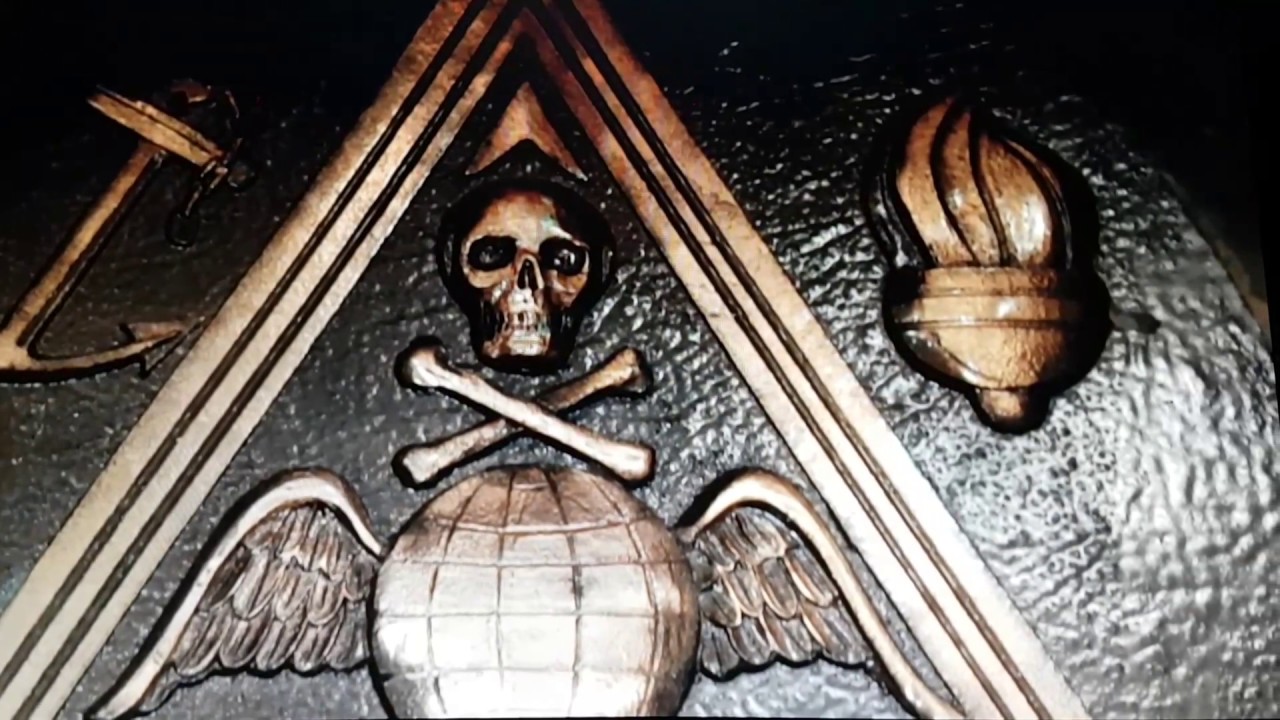
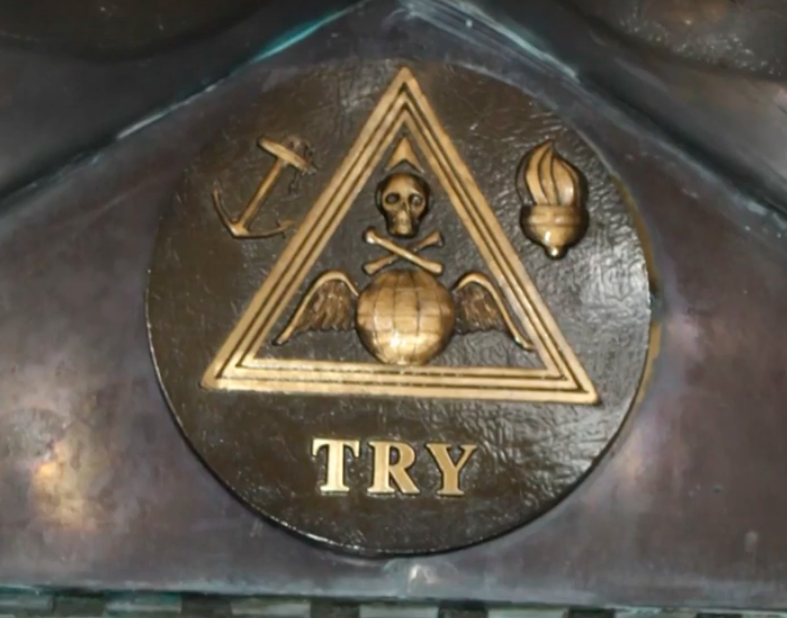
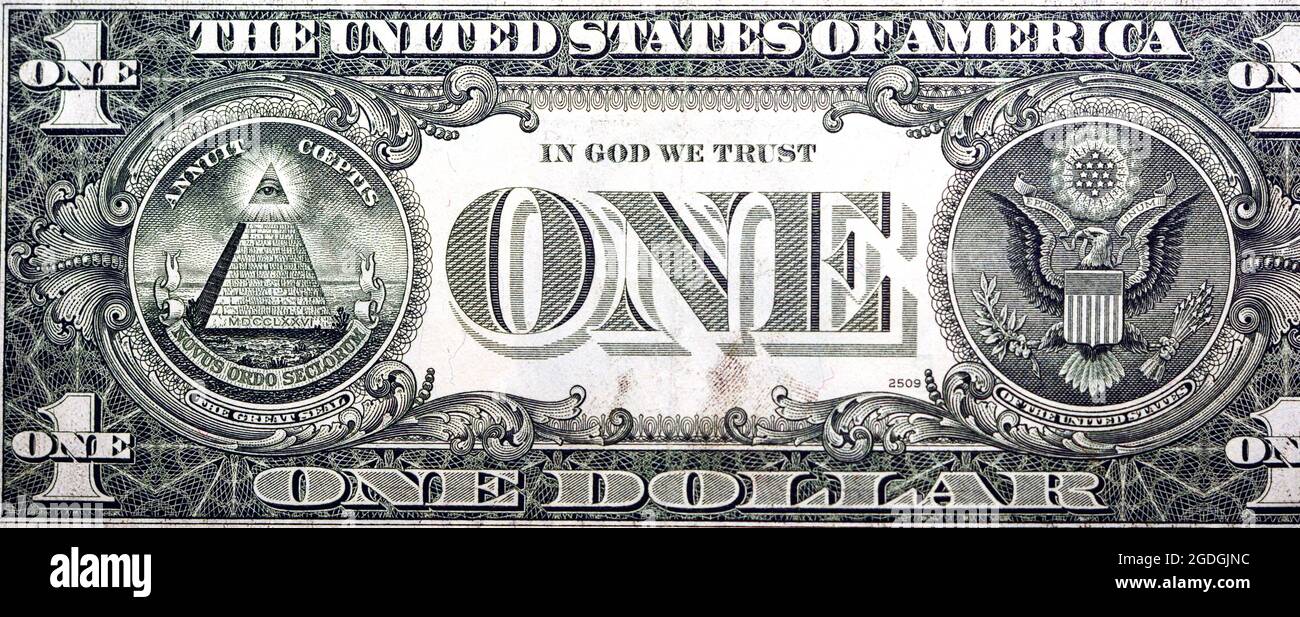
Looking inside the pyramid, you get a clearer idea of the symbols of the order. Over the gated doorway stands a circular plate with a winged world crowned by a skull and crossbones, with the word TRY underneath it. The torch, anchor and triangle in the design only confuse the uninitiated further. Peeking through the gate into the pyramid, however, gives you a jolt of recognition. On two walls of the four-sided pyramid are two very familiar circular designs: an unfinished pyramid topped with an eye and an eagle holding an olive branch and thirteen arrows. These are the two sides of the Great Seal of the United States, as portrayed on the reverse side of the dollar bill.
So why are these seals hidden inside a Rosicrucian monument? Is the order tipping its hat to the United States? Is it worshiping the mighty dollar? Or is this country actually being branded with the seal of a secret society? One piece of evidence at the Bucks County site leads to an inescapable conclusion. It is cast in bronze and screwed to the outside of the pyramid, and it’s the name of a prominent Council of Nine member—Benjamin Franklin. If one of the Founding Fathers of the country was a celebrated Rosicrucian, why wouldn’t the symbol of the new nation and its currency reflect that affiliation?
So next time you look at the All-Seeing Eye in the Sky on a dollar bill, remember that there’s a similar eye inside a pyramid near Nockamixon State Park. And take time to wonder what other secrets might be hidden there beneath the rose.
8 ounces Cool Whip, thawed (lite or fat free can also be used)
1 9-Inch Graham Cracker Crust
Preparation
In a medium bowl dissolve the Jello mix in the boiling water then set it aside to cool slightly.
Stir in yogurt until combined. Fold in the Cool Whip. Spread into the prepared pie crust. Top with sliced strawberries if desired.
Refrigerate for at least 2-3 hours until set. Enjoy!
*My mom made this and it’s delicious. She used regular everything—not sugar free or lite. She said you can also pair other Jello flavors and yogurt—like peach—if you like.
Melania Trump, née Melania Knauss, {original name Melanija Knavs}, was born April 26, 1970, in Novo Mesto, Yugoslavia [now in Slovenia]. She grew up in Sevnica, Yugoslavia, where her father sold cars and her mother worked in the textile industry. She attended the Secondary School of Design and Photography in Ljubljana, the capital of Slovenia. She then studied Architecture and Design at the University of Ljubljana for one year before leaving to pursue a modeling career. She found success, first in Slovenia and later—under the name Melania Knauss—in Milan and Paris. In 1996 she was brought to New York by Paolo Zampolli’s modeling agency. In the course of her career, she appeared on the covers of several magazines, and in 2000 she modeled for Sports Illustrated’s popular swimsuit edition. Melania is fluent in Slovene and English, and also speaks Italian, French, German and Serbo-Croatian.
Knauss first met Donald Trump in 1998 at a fashion industry party in New York City. He was then married to Marla Maples, whom he was to divorce in 1999. After a long courtship, Trump and Knauss were married on January 22, 2005, at his estate in Palm Beach, Florida. It was his third marriage and her first. In 2006 Melania gave birth to Barron William Trump, her first child and Donald’s fifth. In that year she also became a U.S. citizen. During this time, Melania continued her career. In addition to occasionally modeling, she marketed a line of jewelry sold by the QVC company and developed a line of caviar-based skin care products. Melania strongly believes in women equality and stands for it.
In 2015 Donald announced that he was entering the U.S. presidential race. When he made immigration a central issue, the details of Melania’s own immigration history were scrutinized, including allegations that she worked in the United States before acquiring the appropriate visa. Although Melania did not take a prominent role in the campaign, she spoke at the Republican National Convention in July 2016. Her speech initially drew praise but was later revealed to contain sentences and phrases similar to those spoken by Michelle Obama eight years previously. A speechwriter apologized for the seeming plagiarism.
Melania subsequently maintained a low profile until several weeks before the election, when she defended her husband after a series of women accused him of sexual assault and harassment. On November 8, 2016, Donald was elected president of the United States, defeating Hillary Clinton; he took office on January 20, 2017.
Melania initially made few appearances as first lady, and she did not move into the White House until June, after her son finished the school year. In 2018 she launched the Be Best initiative, which focused on children. Its main objectives included ending cyberbullying. In May 2018 she underwent an embolization procedure for a benign kidney condition. During her husband’s reelection campaign in 2020, Melania took a limited role, though she spoke at the Republican National Convention in August. Two months later both she and the president tested positive for COVID-19, but both recovered.
The Controversies
The Photos
When Donald announced his intentions to make a 2016 presidential bid for the White House, the normally private Melania was pushed into the national spotlight along with her past modeling work, some of which was considered racy. One of the first controversial images that began circulating online was her 2000 British GQ spread that had her lying naked on a fur blanket.
Not long after, more controversy followed. On July 30, 2016, the New York Post published nude photos of a then 25-year-old Melania, including one in which she lay in bed with another woman. Many of the photos were published for a men’s French magazine that is no longer in circulation.
Discussing the nude photos, Donald told The Post, “Melania was one of the most successful models and she did many photo shoots, including for covers and major magazines. This was a picture taken for a European magazine prior to my knowing Melania. In Europe, pictures like this are very fashionable and common.”
The Speech
While Donald Trump was campaigning for the 2016 presidential elections, Melania Trump gave a speech on July 18, 2016, at the Republican National Convention. The speech became controversial after it was found to be partly similar to Michelle Obama’s speech given at the Democratic National Convention in 2008. According to the Biography website, a staff writer took responsibility for the mistake:
Shortly thereafter, Melania staff writer Meredith McIver took responsibility for the gaffe, claiming she accidentally included part of Obama’s speech in Melania’s talking points. McIver issued the following statement explaining what transpired:
“In working with Melania on her recent first lady speech, we discussed many people who inspired her and messages she wanted to share with the American people. A person she has always liked is Michelle Obama. Over the phone, she read me some passages from Mrs. Obama’s speech as examples. I wrote them down and later included some of the phrasing in the draft that ultimately became the final speech.”
The LanguagesMelania Trump is a multi-linguist with good command over Slovene, English, German, French, Italian, and Serbo-Croatian. {Britannica}According to Stephanie Winston Wolkoff (“Melania and Me”) and Mary Jordan (“The Art of her Deal”), nobody has ever heard her speak anything but English and Slovenian, except for “Bonjour” and a few such basic expressions. {Imdb}
The Degree
She was embroiled in a controversy regarding her degree in architecture and design from the University of Ljubljana. This alleged false claim was mentioned on her official website. After this was highlighted by the media, it was removed.
Imdb made a larger issue with the claim:
On July 29, 2016, USA Today reported that Melania Trump’s personal website was taken offline. Previously, Melania’s bio-statement stated there that she received a “degree in design and architecture at University in Slovenia.” However, a biographer questioned the veracity of that claim by suggesting that Melania never completed her studies. At http://www.archive.org, the WayBack Machine has preserved a 2012 snapshot of Melania’s website, where she printed the now-disputed statement.
The Books
An early attempt to use the first lady platform for public good generated attention for the wrong reasons: In September, Melania sent a package of Dr. Seuss books to one deserving school in each state as part of National Read-a-Book Day. However, the gift was spurned by a Massachusetts elementary school librarian, who decried both the selection of her school and the choice of Dr. Seuss as a “tired and worn ambassador for children’s literature.”
The Unnamed Family Friend Revealing Secrets
The following month, the secretive first lady was profiled in Vanity Fair. According to the article, it was Melania who pushed a waffling Donald into announcing his candidacy for president, knowing that he would regret the missed opportunity if he didn’t. On the flip side, she supposedly never expected to find herself in the White House. “This isn’t something she wanted and it isn’t something he ever thought he’d win,” said one longtime friend of the couple. “She didn’t want this come hell or high water. I don’t think she thought it was going to happen.”
(I cannot believe she “pushed” him into something she didn’t want and never thought he would win.)
Personal Quotes
[on the accusations against her husband] I believe my husband. This was all organized by the opposition. Did they ever check the background of these women? They don’t have any facts. (…) That never happened. [Oct.2016]
My husband is real. He’s raw. He tells it like it is. [Oct.2016]
Don’t feel sorry for me. I can handle everything. [Oct.2016]
[about the attacks on her husband] The opposition doesn’t want to talk about WikiLeaks and the Emails and Benghazi and all the rest of the stuff – they don’t want to talk about it. So, they said: ‘Let’s do something to hurt his campaign’. [Oct.2016]
[defending her husband’s attacks on the Clintons] They’re asking for it. They started it. They started from the beginning of the campaign, putting my pictures from the modeling days [into the newspapers]. That was my modeling days and I’m proud of what I did. I worked very hard. [Oct.2016]
[on the media bias against Donald Trump] When did we hear or read any great stories about my husband – or about me? The true stuff. The facts. The real stuff. We never read the New York Times. They are bashing, bashing, bashing. [Oct.2016]
Sources: Biography, Brittanica, Imdb
In my opinion, Melania has only gotten more beautiful as time has passed. Her look is softer somehow and she is by far the most gorgeous First Lady we’ve ever had.
The colorful and fragrant sweet pea (Lathyrus odoratus) is a favorite plant for informal cottage gardens and is easy to grow. It is most often seen trained up trellises or fences, but sweet peas grow beautifully in pots where it spills over the sides. They are climbing plants that bear profuse clusters of spring and early summer flowers in a wide variety of colors, including red, pink, blue, white, and lavender. Sweet pea flowers resemble fringed butterflies, while their sturdy stems appear to be folded. Plant your sweet peas in late winter or early spring. Sweet peas provide beautiful color in garden spaces, but beware because they are toxic to humans and pets.
About Sweet Pea Flowers
Sweet pea (Lathyrus odoratus), is a climbing annual member of the legume genus. Originating in the southwest of Italy and the islands of the Mediterranean, sweet pea has been cultivated for use in gardens since the 17th century.3 It reached its modern form under the work of Scottish nurseryman Henry Eckford, who developed dozens of cultivars during the late 1800s.
Sweet Pea Care
Sweet peas lend a cottage feel to gardens. For many of us, fast-growing sweet peas are an instant nostalgic reminder of the beautiful, rambunctious old-fashioned gardens. These vintage varieties were selected for their vibrant colors and intense fragrance. Modern sweet pea cultivars come in almost every color except yellow, but not all of the newer sweet pea varieties are fragrant. The mature size will depend on the variety you choose to grow, but expect the vines to stretch to at least 6 to 8 feet tall. They are often grown on bamboo tripods, but typically they are grown along a trellis or fence for support.
Planting and Soil
Plant sweet pea in the late winter and early spring. Sow three seeds together about a foot between groups of seeds. Plant sweet pea seeds about 1 inch down in the soil. For better blooms, work compost into the soil about six weeks before planting the seeds. Compost will also improve poor soil.
Sweet peas prefer rich but well-drained soil. A slightly alkaline soil pH (about 7.5) is ideal.
Light
Sweet peas thrive in full sun, although in warmer climates they do well in a location that receives a bit of shade in the heat of the afternoon.
Water
Sweet peas need weekly watering, to keep the soil moist during the growing season. Check the soil by placing your finger an inch into the soil. If it’s moist, there’s no need to water the plant but if it’s dry, it’s time to give the plant a drink.
Temperature and Humidity
Because sweet peas originated in the Mediterranean, they can handle a rare chill but do best if they’re planted after the last frost and in warmer temperatures in USDA zones 3-8. Sweet pea seedlings can tolerate a light frost, but the plants dislike extremely hot temperatures. Plant early to enjoy the blooms before they wither in the heat.
Fertilizer
During the growing season, apply fertilizer for sweet peas monthly. Choose a fertilizer high in potassium, such as a tomato fertilizer. Adding a bit of blood meal to the soil is thought to help keep the stems long and suitable for cutting.
Types of Sweet Peas
‘Old fashioned’:Sweet peas labeled old fashioned should be very fragrant.
Spencer cultivars:These are especially hardy vines with striking coloring, but not all of them are particularly fragrant.
‘Bijou Group’: This is a sweetly scented dwarf variety suitable for containers.
Pruning
To increase branching, which produces more flowering stems, pinch the growing tips back 1 inch when the plant reaches 4 inches tall.3 The more you cut the flowers, the more blooms you should get, so don’t hesitate to bring some bouquets indoors. Deadhead the spent flowers to encourage continued blooming. For Lathyrus odoratus annuals, you do not need to do anything to the plant when sweet peas have finished flowering.
How to Grow Sweet Pea From Seed
Sweet peas are usually direct sown. To assist germination, seeds should be scarified by nicking and/or soaking in water for several hours to soften the seed coating.4
Seed can be started outdoors, as soon as the ground has warmed to about 50 degrees Fahrenheit and is not too wet. In the South, you may have better luck seeding sweet peas in the fall to grow into winter.
You can get a jump start on the season by starting seed indoors, about four to five weeks before your last frost date. They will be easier to transplant if you start them in peat pots. When you are ready to transplant, pinch any flowers or buds off that may have formed, which will encourage root development. They like cool soil, so a thick layer of mulch around the plants may help sweet peas thrive.
When the plants reach about 4 inches tall in the garden, pinch the seedlings to encourage strong side shoots.3 Sweet pea vines have tendrils and will attach themselves to almost any type of support that has meshing or strings.
I found an interesting article about tigers on the FactSite!
The Latin name for the tiger is ‘Panthera tigris‘.
They can live up to 26 years in captivity and in the wild.
Tigers prefer to inhabit forests, grasslands and mangrove swamps.
There are six distinctive tigers: Bengal, Indochinese, Malayan, Siberian, South China and Sumatran.
White tigers are caused by recessive genes and inbreeding.
There are as few as 30 Golden Tigers in captivity.
There are three extinct breeds: Bali, Caspian and Javan.
They can measure up to 11ft, including tail.
They can weigh up to 670lbs.
The stripes that a tiger has are as unique as human fingerprints.
Tigers are generally solitary creatures, but are seen as highly social able.
They have a great fondness for water and are very strong swimmers.
Tigers feast on many animals, depending on their territory. These include: antelope, boar, buffalo, camel, fish and horse.
Interestingly, a tiger can go two weeks without feeding.
They can gorge up to 75lbs of flesh in one sitting.
A tiger’s method of killing prey is to stalk it, before ambushing and overpowering it, before biting.
Human behavior can make the tiger feel threatened and attack humans. These are known as ‘man eaters’.
They can make horizontal leaps of up to 33ft.
Usually, in a litter of cubs, there are up to three, but as many as six can be born.
After fourteen days, the cubs will open their eyes.
A cub can take up to two-and-a-half years to separate from its mother.
Tigers are heavily endangered.
They are hunted for fur, meat, medicine and sport.
Save China’s Tigers is a conservation group, which is extremely successful at breeding and reintroducing tigers to the wild.
The Bengal tiger is the national animal of Bangladesh and India.
They are one of the Chinese Zodiac animals, depicting wood.
In Asian folklore, the weretiger is seen as a horrific and terrifying creature, replacing the werewolf.
Shere Khan was a deadly tiger in Rudyard Kipling’s The Jungle Book (1894).
The breakfast cereal Frosted Flakes is sponsored by Tony the Tiger, who claims, “They’re grrrreat!”
Siegfried and Roy, the magical entertainers, closed their show after a confused seven year old tiger bit Roy’s neck and attempted to treat him like a cub.
If you feel like you have to trim your nails more than you used to, it’s not just your imagination. A 2010 study out of the University of North Carolina at Chapel Hill comparing the growth of fingernails and toenails to two previous studies from 70 and 50 years earlier found that growth had increased by almost a quarter over the decades. For example, the big toe nail was found to grow by more than 2mm per month, compared to 1.65mm per month in the 1930s. The reason, according to researchers? The proliferation of protein-rich diets.
Your body position affects your memory.
That bad posture isn’t just giving you a backache—a 2012 article published in Biofeedback found that sitting and looking downward makes it easier to recall negative memories, while sitting upright and looking upward makes it easier to recall positive, empowering memories.
Humans “glow”—you just can’t see it.
When we talk about someone having a “glow” about them, that’s often literally true. Research has found that the human body does, in fact, emit visible light, but since it’s about 1,000 times less intense than the levels the human eye can spot, it’s not “visible” in practice. The results of a 2009 study published in PLOS One reveal that this body glow rises and falls throughout the day, with the least glow coming off of the humans they tested at about 10 a.m., and the highest at about 4 p.m. (perhaps because they were about to wrap up work for the day).
A blink is a micro nap.
You probably thought that a blink was just something you did to keep your eyes moist or keep dust out of them. That is a very valuable service, of course, but we actually blink way more than needed for that alone—about 15 to 20 times per minute.
In fact, according to a 2012 study conducted by researchers at Washington University, blinking can help sharpen attention and provide our bodies time to recharge.
Big eyes cause nearsightedness.
Big eyes may be considered beautiful by some, but they can cause nearsightedness. Also known as myopia, this condition that causes distant objects to look blurry is caused by light not properly reaching the retina. If your eyeball grows too long, light is focused too soon before it hits the retina—so when it does hit the retina, the image is blurry.
It’s impossible to tickle yourself.
Your cerebellum—the area in the back of your brain that monitors movement—predicts the sensation you will feel when you attempt to tickle yourself, countering the response that the tickle would otherwise elicit in other parts of your brain. Two distinct parts of the human brain are responsible for giving you that ticklish feeling: The somatosensory cortex and the anterior cingulate cortex. As Sarah-Jayne Blakemore, a research fellow at the Institute of Cognitive Neuroscience at University College London, explained to Scientific American, “We found that both these regions are less active during self-tickling than they are during tickling performed by someone else, which helps to explain why it doesn’t feel tickly and pleasant when you tickle yourself.”
Stomach acid dissolves razor blades.
You probably shouldn’t be swallowing these things, but you might be surprised to learn that your stomach could do some serious damage on razor blades if you did. Researchers out of Meridia Huron Hospital tested the effects of gastric juice on metal objects and found that over 24 hours, the stomach acid reduced razor blades to 63 percent of their original weight (pennies and batteries, however, were barely affected).
Your intestine is four times as long as you are.
Among the many things you probably didn’t know about your body is that your small intestine is about 18 to 23 feet long, meaning that, if you uncoiled it, it would stretch to almost four times your height.
Your gut has a “second brain.”
We’ve all felt that “butterflies in the stomach” sensation (say, before a first date or major presentation). There’s good reason for this: There’s a network of neurons that lines the gut, which some scientists have taken to referring to as our “second brain.” The gut doesn’t just handle digestion, but comes with its own reflexes and senses, and is intricately and inextricably interwoven with your nervous system. So, yeah, trust your gut.
Sneezes can travel up to 20 feet.
You may think you’re safe when the guy all the way across the subway car sneezes, but you could be in the line of fire without even realizing it. A video study conducted by researchers at MIT found that sneezes travel much farther than previously believed—as far as 20 feet.
Earwax is good for you.
To be clear, you don’t want to eat earwax! But that icky stuff serves the important purpose of lubricating, cleaning, and protecting your ears from infection. It’s as much as 50 percent fat, coating the ear and catching dust and debris—keeping your ears healthy, even if it looks gross.
Taste buds dull with age.
Wine may taste better as it ages, but as we age, it’s harder for us to appreciate it. Just as hearing and vision tend to deplete as the years go by, your sense of taste does the same. As you get older, your taste buds regenerate more slowly after injury or if you take certain medications. And bad news for the ladies: Women generally experience a decrease in their taste sensitivity beginning in their 50s, while men don’t experience that until their 60s.
You have a one-of-a-kind tongue print.
Just as your fingerprint is uniquely yours, so too is your tongue print, according to a 2016 study by the Thai Moogambigai Dental College. Biometric scans can be done to compare the individual shape (long or short, wide or narrow) and texture (ridges, wrinkles, and marks), with specific details tracked and mapped by a “tongue image-acquiring device.” Of course, while this thing you didn’t know about your body might be interesting, it probably is not very useful to forensic investigators.
Humans are the only animals that weep.
While many animals produce tears as lubricants for their eyes, humans are the only ones who cry as an emotional response. Thomas Dixon, PhD, director of the Centre for the History of Emotions at Queen Mary, University of London, suggested that tears serve a social purpose for humans and that, “Even for those who think they really are just weeping for nobody apart from themselves, it’s still a sort of performance. You’re showing yourself things have really got bad, or whatever it might be.”
Your liver can almost completely regrow.
The liver is resilient. Even if reduced by as much as 75 percent, it can grow back to normal size. This happens through the rapid replication of liver cells, with the thing reaching its original size (or very close to it) within about a month, according to the University of Iowa.
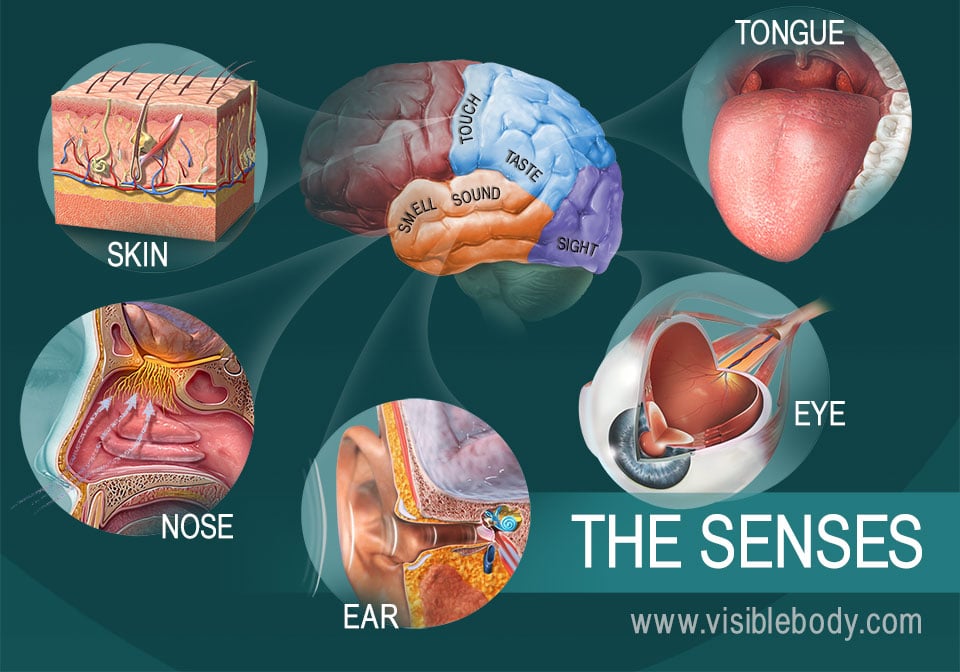
Humans have more than five senses.
While we have sight, smell, touch, taste, and hearing, humans also have “proprioception” (sense of space) and “nociception” (sense of pain). There’s also “equilibrioception” (sense of balance), “thermoception” (sense of temperature in and around the body), “temporal perception” (sense of time), and more, depending on who you ask.
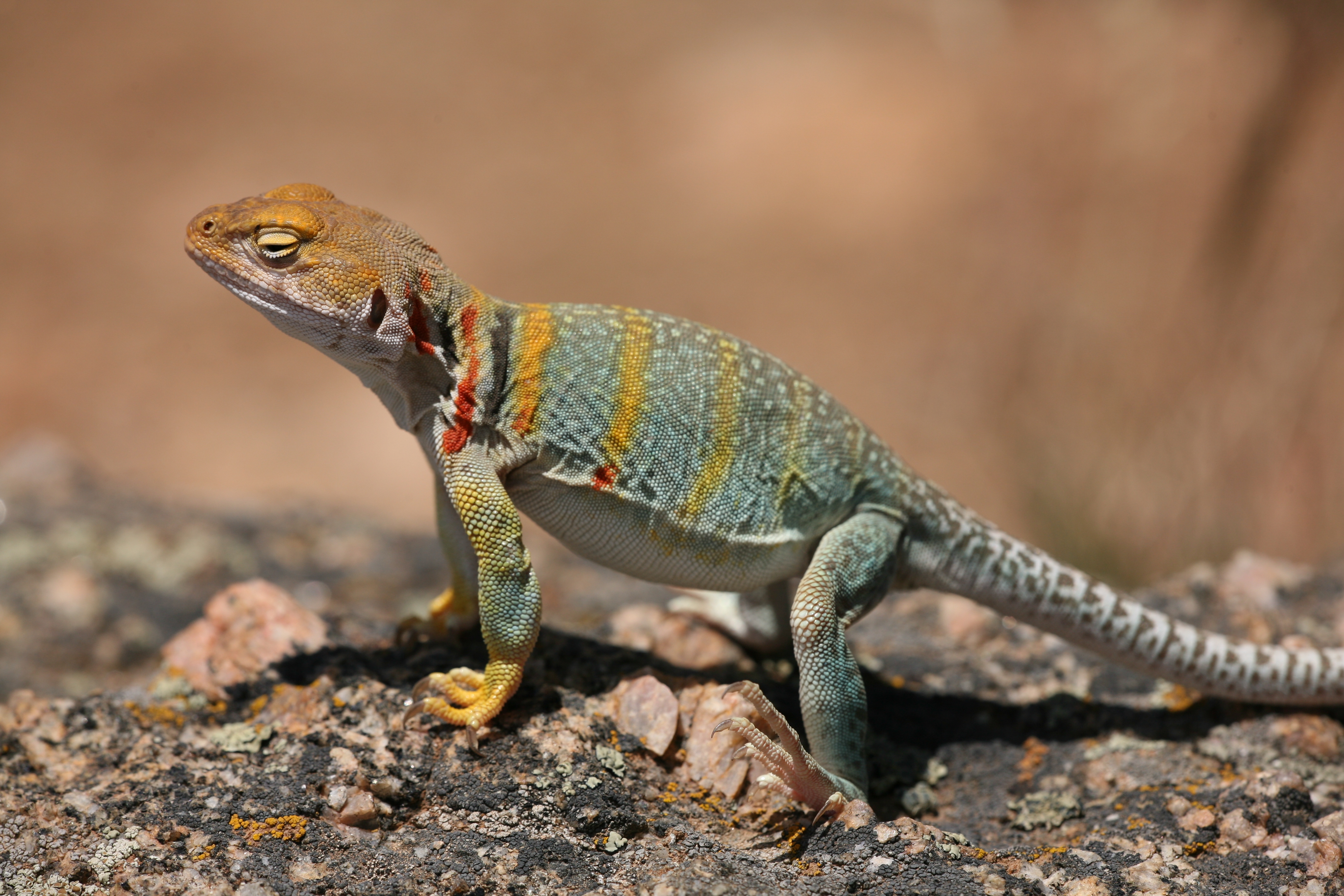
Your skeletal system’s cells are constantly regenerating and, on average, the bones you have now will have completely regenerated in about a decade’s time. This does start to slow down as you age, however, with regeneration taking longer, causing bones to naturally become thinner.You’re taller in the morning than you are at night.It might seem like a tall tale, but when you wake up in the morning, you’re actually a tiny bit taller than you were when you went to bed. This is due to the pressure put on joints throughout the day.As you go about your activities, this pressure causes the cartilage in your spine to compress—just fractions of an inch, but enough to push everything down. As you relax in your sleep, it eases the pressure on your spinal disks, thus allowing you to return to your full height.Your sweat is actually odorless.If you think sweat stinks, you wouldn’t be alone—but you would be incorrect. Sweat itself doesn’t smell. It’s the interaction with bacteria on your skin that causes body odor. Don’t worry, this is perfectly normal. These bacteria occur naturally and just happen to thrive in the sweatiest regions of our body.You have over 60,000 miles of blood vessels.If it sounds overwhelming, that’s because it kind of is. While individual blood vessels are relatively small, the amount found within the average adult body tallies up in some pretty impressive ways. If laid out in a straight line, the entire network would stretch well over 60,000 miles. That’s including all arteries, capillaries, and veins, end-to-end.Like lizards, we also shed our skin.
OK, so it’s not quite as intense as when it happens to a lizard or to a snake but it is just as creepy. According to the American Chemical Society, humans shed their entire outer layer of skin every two to four weeks. That’s about 500 million skin cells a day!
Babies don’t have kneecaps.
You’d think that our kneecaps would be a necessary part of the human body. Not for babies, who aren’t born with them. Instead, their cartilage gradually turns into bone, as ossification begins between the ages of two and six years—and doesn’t fully finish until young adulthood.
Your stomach growls because it’s full of hot air.
Ever wonder why you experience those grumbly, growly sounds when hungry? It all circles back to the digestive system. More specifically, the intestines. These guys go through a series of contractions to help move food and liquid along when eating. But even after all the food is digested, the intestines continue to move air through the digestive tract. That’s what causes “borborygmus,” the scientific name assigned to those funny little rumbles.
Your bones are stronger than steel.
While many of us experience a broken bone at some point in life, the fact is that bone is an incredibly tough substance. So strong, in fact, that, as Discover puts it, “ounce for ounce, our bones are stronger than steel.” A bone has a greater pressure tolerance and bearing strength than a rod of steel of the same width. The strongest bone in the body is the femur, which can support 30 times the body weight of an average person.
Throughout your life, you will produce enough saliva to fill up two pools.
The average human produces over 20,000 liters of saliva throughout their lifetime. That’s enough to eventually fill up two swimming pools full of spit. If you think that sounds like a long time, just remember: Rome wasn’t built in a day, either.
Your feet contain a quarter of your bones.
Human feet contain 52 bones (26 for each foot). That’s nearly a quarter of all the bones in your whole body! Each also contains 33 joints and more than 100 muscles, tendons, and ligaments.
The smallest bone in your body is in your ear.
No named bone in your body is smaller (or lighter) than the stapes, a bone in the middle ear that’s actually shaped like a stirrup. It’s complete with a base and an oval window, which is covered with a membrane that measures sound vibrations.
You lose almost one-third of your bones as you age.
As it turns out, there are quite a few things you didn’t know about your body—including how many bones you have. According to the doctors over at the Cleveland Clinic, you’re born with about 300 bones, but as you grow, some fuse together as cartilage ossifies, eventually leaving you with 206 bones by the time you stop growing (once you’ve reached young adulthood).
There are no muscles in your fingers.
Your fingers do countless important things throughout the day, from opening jars to opening doors. But don’t chalk up those feats of strength to your fingers. Any movement that happens in your fingers is due to tendons and bones, with a lot of help from the muscles in the palms of your hands and at the base of each individual digit.
Half your hand strength is in your pinkie.
The pinkie seems unassuming, but it’s crucial for your hand strength—helping the thumb to pinch and giving more power to the ring, middle, and index fingers.
Laurie Rogers, hand therapist at National Rehabilitation Hospital in Washington, told The New York Times that losing your pinkie would mean, “You’d lose 50 percent of your hand strength, easily.”
Your tongue is the only muscle that doesn’t join two bones.
Every muscle in the human body connects to bones at both ends, allowing it to pull and create motion, with one notable exception: your tongue. On one end, it’s connected to your hyoid bone—part of your neck—but nothing else on the other side.
Your rear is your largest muscle.
While there is some debate about which of your muscles is the strongest, your gluteus maximus happens to be your largest, according to the Library of Congress. These muscles help keep your body upright, move your hips and thighs, and work against gravity when you’re walking uphill or upstairs. The fact that they make your jeans look great is just a bonus.
We’re as hairy per square inch as chimpanzees.
It turns out we’re just as hairy as chimps. According to a 2011 paper published in the International Journal of Trichology, we have the same number of hairs as chimps, even if the hair itself is much finer, making it harder to see and creating a lower volume of hair overall.
Roller coasters can “toss” your organs.
You know that sinking feeling you get when on a roller coaster? Turns out, it might be a little something more than the adrenalin. According to experts, these rides can achieve speeds fast enough to actually toss your internal organs around. We’re talking brain, heart, eyes, blood vessels, and more. Don’t worry, the acceleration isn’t enough to do any harm (unless you have a preexisting condition). It’s just enough to leave you feeling a little queasy.
Hair can “taste.”
Here’s a fun human body fact: Your nasal passages and lungs are lined with fine hairs, or cilia, that detect and sweep out impurities. How do they detect it? By sensing the bitter tastes of the things passing through them (such as, say, nicotine). When these hairs taste something bitter, they increase their rate of movement, attempting to sweep out the bad stuff, according to a 2009 study published by the American Association for the Advancement of Science.
Hair knows when you sleep.
Your hair helps the environment.
Dirty hair can be good for the atmosphere: According to a 2008 study published in Atmospheric Environment, hair absorbs the air pollutant ozone. Scalp oils were found to be a major contributor to this, so if you want to do your part to help your local air quality, skip the shampoo!
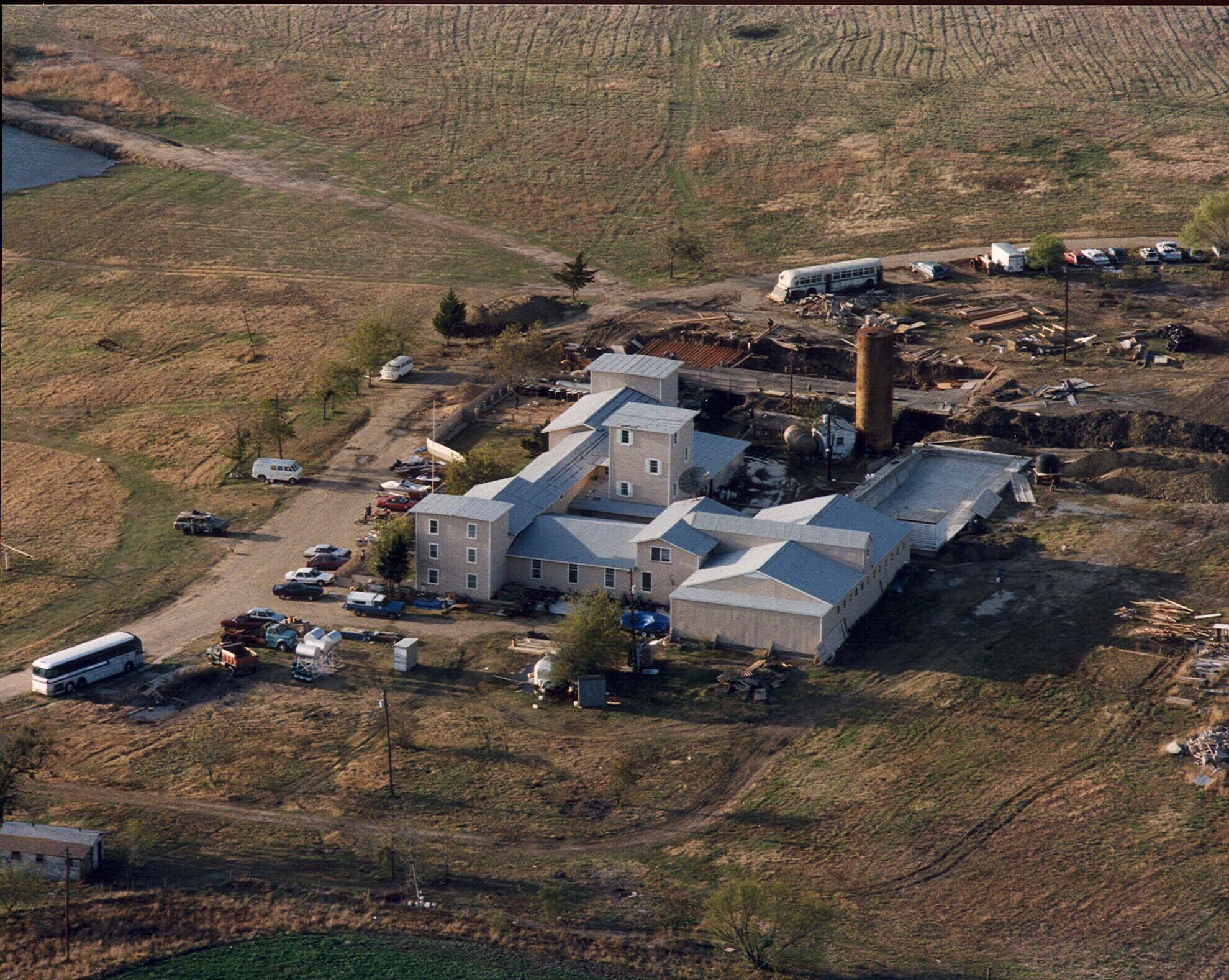
The Waco Siege began in early 1993, when a government raid on a compound in Axtell, Texas, led to a 51-day standoff between federal agents and members of a millennial Christian sect called the Branch Davidians. The siege ended dramatically on April 19, 1993, when fires consumed the compound, leaving some 75 people dead, including 25 children.
David Koresh
On February 28, 1993, some 80 agents from the U.S. Bureau of Alcohol, Tobacco and Firearms (ATF) raided a religious compound at Mount Carmel, near Waco, Texas, after receiving reports that the Branch Davidians and their leader, David Koresh, were violating federal firearms regulations.
After four ATF agents and six Davidians were killed in the gun battle that followed, a cease-fire was arranged, and nearly 900 law enforcement officials eventually surrounded the compound, including hostage negotiators and rescue teams from the Federal Bureau of Investigation.
Reporters soon arrived on the scene as well, and the 51-day siege that followed would play out on TV screens and in newspaper headlines around the world. Despite some early negotiating successes—the Davidians sent about 2 dozen children out in exchange for food and other supplies—numerous children remained among those inside, many of them Koresh’s children with various women.
Branch Davidians
In the 1930s, a disgruntled member of the Seventh-Day Adventist Church named Victor Houteff had broken away and founded the Davidian movement. After Houteff’s death, Ben Roden led an offshoot of the movement known as the Branch Davidians, who took control of Houteff’s original settlement at Mount Carmel, near Waco, by 1962.
Believing the Bible is literally the word of God, the Branch Davidians looked to it for clues about the end of the world and Christ’s Second Coming, as told in the Book of Revelation.
Roden died in 1978, leaving his wife, Lois, as head prophetess of the sect. In 1981, a 22-year-old convert named Vernon Wayne Howell arrived at Mount Carmel; he became involved with Lois Roden, and after her death clashed with her son, George, over control.
In a gun battle in late 1987, George Roden was shot in the head and chest, and Howell and seven followers went on trial for attempted murder. The seven other men were acquitted, and Howell’s case ended in a mistrial.
By 1990, having asserted control over the Branch Davidians, Howell legally changed his name to David Koresh. (“Koresh” is the Hebrew translation of Cyrus, the ancient Persian king who conquered Babylon and allowed the Jews to return to Israel.)
Koresh and the FBI
In his negotiations with the FBI during the Waco siege, Koresh claimed he was a messianic figure prophesied in the Bible and that God had given him his surname. He threatened violence against those who would attack him and his family, but asserted that the Davidians weren’t planning a mass suicide.
To the Branch Davidians, Koresh was “the Lamb,” the only one (according to the Book of Revelation) worthy of unlocking the Seven Seals and revealing to the world the entirety of the Bible’s teachings. This identification allowed Koresh to justify some of his controversial (even within the sect) practices, including taking various “spiritual wives,” some reportedly as young as 11 years old.
As time wore on, the negotiators and the Hostage Rescue Team, which handled all the tactical maneuvers, disagreed on how to handle the siege. The latter team, frustrated by the slow pace of negotiations, employed aggressive tactics like playing ear-splitting music or crushing the Davidians’ cars—disrupting often-delicate negotiation efforts.
Fire Engulfs Waco Compound
In mid-April, after religious scholars reached out to Koresh through a radio discussion of the teachings of Revelation, Koresh sent a message through his lawyer announcing he had received word from God and was writing his message on the Seven Seals; he would come out with his followers when he was finished.
The FBI, unconvinced, decided to act to end the siege. Though initially reluctant, Attorney General Janet Reno ended up approving a plan to fire CS gas (a form of tear gas) into the Mount Carmel compound to try and force out the Davidians. Just after 6 a.m. on April 19, 1993, FBI agents used two specially equipped tanks to penetrate the compound and deposit some 400 containers of gas inside.
Soon after the attack ended, around 12 pm, several fires simultaneously broke out around the compound, and gunfire was heard inside. Safety concerns prevented firefighters from entering Mount Carmel immediately, and the flames spread quickly and engulfed the property.
Though nine Davidians were able to escape, investigators later found 76 bodies inside the compound, including 25 children. Some of them, including Koresh, had fatal gunshot wounds, suggesting suicide or murder-suicide.
Legacy of the Waco Siege
From the beginning, the government’s handling of the Waco siege (which played out in the national and international media) was heavily criticized. Reno took responsibility for the botched raid, later admitting there was no evidence of ongoing child abuse within the compound (which had been one of the justifications for ordering the gas attack).
Though the government long maintained that its actions played no role in starting the fires at the Waco compound, in 1999 it was revealed that some of the gas the FBI used was flammable under certain conditions.
Reno subsequently appointed the lawyer and former senator John Danforth to lead an investigation into the siege’s end. In 2000, he concluded that government agents did not start the fires or shoot at the compound.
Despite this conclusion, resentment lingered about the government’s handling of the situation, which partially fueled the growth of homegrown militias in the United States. The Waco siege and the 1992 Ruby Ridge incident in Idaho are often cited by government critics as examples of overreach and intrusion by federal officials.
In April 1995, on the second anniversary of the Waco siege’s end, a militant named Timothy McVeigh used a truck loaded with 4,800 pounds of fuel oil and aluminum nitrate to attack the Alfred P. Murrah Federal Building in Oklahoma City, Oklahoma. With a total of 168 people killed and some 850 wounded, the Oklahoma City bombing was by far the deadliest terrorist attack in the United States to that date.
Everyone knows about Paul Revere’s midnight ride, but this patriot did a lot more to help America gain its independence. Here are 11 little-known facts about the Founding Father.
His father was a Huguenot.
Revere’s father, Apollos Rivoire, was a French Huguenot refugee who fled his country as a result of religious persecution. He was born in Riocaud in 1702, but with time he lost most of his connection to France—he could not read or write the language. The Frenchman later changed his name to Paul Revere, “on account that the Bumpkins pronounce it easier.” He married Deborah Hitchbourn, a member of a very old Boston family, and passed the anglicized name, Paul, to his eldest son.
As a teen, Revere worked as a church bell ringer.
When he was around fifteen, Revere would ring the bells at the Eight Bell Church near his home. The young patriot and his friends set up a bell ringers’ association. They drafted a document that detailed the rules and guidelines for membership. Members could only be allowed into the group through a unanimous vote, members could not beg for money, and a moderator was chosen every three months to delegate work and changes within the group. The simple document focused on the fundamentals of public duty, majority vote, and community.
Revere made some interesting items in silver.
Revere’s father came to Boston as an apprentice smith. He worked for a man named John Coney for several years and purchased his freedom for forty pounds. After Revere was born, he apprenticed under his father and learned how to craft things from gold and silver. Some items include a chain for a pet squirrel, an ostrich egg snuffbox, and sword hilts. You can tell an item is made by Revere by his maker’s mark—either his last name in a rectangle, or his initials in cursive.
The silversmith was also a dentist.
When dental surgeon John Baker moved to town, Revere happily studied under him. He learned how to create false teeth out of ivory and insert them using wire. Revere became so confident in his abilities that in 1768, he placed an ad declaring he “can fix [teeth] as well as any surgeon dentist who ever came from London, he fixes them in such a manner that they are not only an ornament but of real use in speaking and eating.”
He made a lot of money. Literally.
During wartime, Revere used his smithing skills to engrave printing plates to print money in Massachusetts. He was also commissioned to design the Continental currency, money used to pay the rebel army. The new bills strangely ranged from one-sixth of a dollar to 80 dollars.
During the war, Revere accidentally engaged in some super early forensics.
After Dr. Joseph Warren was killed at the Battle of Bunker Hill in 1775, he was buried like others in an unmarked grave. Ten months later, the bodies were exhumed and examined. Revere was Warren’s dentist, and recognized him by his teeth: Revere had given Warren a false tooth fastened with wire. This was the first body identification done by teeth in recorded history.
He had a large family.
Revere had two wives, Sarah Orne and Rachel Walker, and he had eight children with each of them. Revere was a doting father who referred to his kids as his “little lambs.” Ten of Revere’s children perished at a young age, but he still managed to acquire 52 grandchildren.
Revere was unfailingly polite and dapper.
The patriot even dressed well on his famous midnight ride. Impressed by his garb, his captors saluted him as one of equal rank (before threatening to shoot him in the head). Even with a gun in hand, the redcoat politely asked, “May I crave your name, sir?”
He was not drunk on his midnight ride.
This urban legend took hold when the media was eager to discredit the Founding Fathers during the tumultuous era surrounding the Vietnam War. One Boston newspaper ran a story in 1968 claiming that Revere drank some rum early into his midnight ride. Revere’s drunken yelling apparently roused the patriots accidentally. While Captain Hall, a patriot stationed in Medford, did own a distillery, there is no evidence suggesting that Revere’s booze-fueled yelling truly occurred. Regardless, the unfounded accusations caught on and are often still suggested as truth.
He wasn’t the only one to go on a midnight ride.
Paul Revere and William Dawes originally planned to carry news of the invasion to Concord, where military supplies were stored, and then warn John Hancock and Samuel Adams, who had been targeted for capture. On the trip there, the duo would ride through Somerville, Medford, and Arlington, warning patriots as they passed through. They ran into Samuel Prescott (who was just leaving a lady friend’s house at one in the morning) in Lexington, and asked him to come along.
Revere was captured about halfway through the ride, but the others managed to escape and keep going. Revere had his horse confiscated but still managed to warn John Hancock and Samuel Adams. The true hero was Prescott, who actually went through with the plan and reached Concord.
So why were the more successful criers left out of the story? One very popular—but incorrect—poem is to blame. Henry Wadsworth Longfellow’s “Paul Revere’s Ride” starts with this very familiar stanza:
Listen, my children, and you shall hear Of the midnight ride of Paul Revere, On the eighteenth of April, in Seventy-Five: Hardly a man is now alive Who remembers that famous day and year.
This poem is filled with intentional inaccuracies. Longfellow did his research, but took many liberties in order to properly convey his message. The poet wanted to create a folk hero by painting a lone man as the midnight rider. In order to do such, he removed the extra players.
We’ve all been misquoting him.
Paul Revere and his fellow patriots never shouted, “The British are coming!” That wouldn’t have made sense, since most colonists were British. The actual warning was “the Regulars are coming out.” This misconception is another result of Longfellow’s creative license—he found the real sentence to be too wordy for his poem.





.jpg)




:no_upscale()/cdn.vox-cdn.com/uploads/chorus_asset/file/6966527/Screen_Shot_2016-08-19_at_2.46.14_PM.0.png)










:max_bytes(150000):strip_icc():format(webp)/sweet-peas-the-queen-of-the-annuals-1402917-06-893caa2772ff4af6b02d7663b2a38763.jpg)
































 Sew Colorful