Guy Fawke’s Day

From History.com:

Observed in the United Kingdom every year on November 5, Guy Fawkes Day—also called Bonfire Night or Fireworks Night—commemorates a failed assassination attempt from more than 400 years ago.

On November 5, 1605, Guy Fawkes and a group of radical English Catholics tried to assassinate King James I by blowing up Parliament’s House of Lords. The plot went awry and all of the conspirators were executed. Soon after, Britons began to celebrate Fawkes’ demise and the survival of their king by burning effigies, lighting bonfires and setting off fireworks—a tradition that has continued to this day.

Background to the Gunpowder Plot

Catholicism in England was heavily repressed under Queen Elizabeth I, particularly after the pope excommunicated her in 1570. During her reign, dozens of priests were put to death, and Catholics could not even legally celebrate Mass or be married according to their own rites. As a result, many Catholics had high hopes when King James I took the throne upon Elizabeth’s death in 1603. James’ wife, Anne, is believed to have previously converted to Catholicism, and his mother, Mary Queen of Scots, was Elizabeth’s Catholic arch-rival prior to being executed. There were even rumors, inspired by his diplomatic overtures to the pope, that James himself would become Catholic.

It soon became clear, however, that James did not support religious tolerance for Catholics. In 1604 he publicly condemned Catholicism as a superstition, ordered all Catholic priests to leave England and expressed concern that the number of Catholics was increasing. He also largely continued with the repressive policies of his predecessor, such as fines for those refusing to attend Protestant services.

English Catholics had organized several failed conspiracies against Elizabeth, and these continued under James. In 1603 a few priests and laymen hatched the so-called Bye Plot to kidnap James, only to be turned in by fellow Catholics. Another related conspiracy that year, known as the Main Plot, sought to kill James and install his cousin on the throne. Then, in May 1604, a handful of Catholic dissidents—Guy Fawkes, Robert Catesby, Tom Wintour, Jack Wright and Thomas Percy—met at the Duck and Drake Inn in London, where Catesby proposed a plan to blow up the Houses of Parliament with gunpowder. Afterward, all five men purportedly swore an oath of secrecy upon a prayer book.
The Gunpowder Plot Is Hatched—Then Foiled

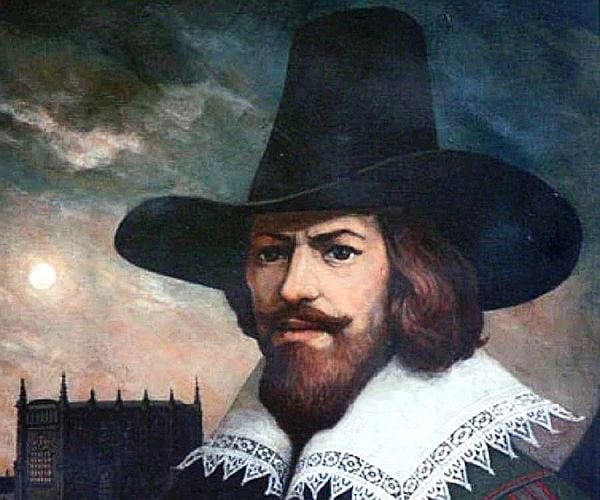
Eight other conspirators would later join what became known as the Gunpowder Plot. But although Catesby was the ringleader, Fawkes has garnered most of the publicity over the past 400-plus years. Born in 1570 in York, England, Fawkes spent about a decade fighting for Spain against Protestant rebels in the Spanish-controlled Netherlands. He also personally petitioned the king of Spain for help in starting an English rebellion against James. According to writings in the Spanish archives, Fawkes believed the English king was a heretic who would drive out his Catholic subjects. Fawkes also apparently expressed strong anti-Scottish prejudices.

By 1605, Fawkes was calling himself Guido rather than Guy. He also used the alias John Johnson while serving as caretaker of a cellar—located just below the House of Lords—that the plotters had leased in order to stockpile gunpowder. Under the plan, Fawkes would light a fuse on November 5, 1605, during the opening of a new session of Parliament. James, his eldest son, the House of Lords and the House of Commons would all be blown sky-high. In the meantime, as Fawkes escaped by boat across the River Thames, his fellow conspirators would start an uprising in the English Midlands, kidnap James’ daughter Elizabeth, install her as a puppet queen and eventually marry her off to a Catholic, thereby restoring the Catholic monarchy.

On October 26, an anonymous letter advising a Catholic sympathizer to avoid the State Opening of Parliament alerted the authorities to the existence of a plot. To this day, no one knows for sure who wrote the letter. Some historians have even suggested that it was fabricated and that the authorities already knew of the Gunpowder Plot, only letting it progress as an excuse to further crack down on Catholicism.

Either way, a search party found Fawkes skulking in his cellar around midnight on November 4, with matches in his pocket and 36 barrels of gunpowder stacked next to him. For Fawkes, the plot’s failure could be blamed on “the devil and not God.” He was taken to the Tower of London and tortured upon the special order of King James. Soon after, his co-conspirators were likewise arrested, except for four, including Catesby, who died in a shootout with English troops.

Fawkes and his surviving co-conspirators were all found guilty of high treason and sentenced to death in January 1606 by hanging, drawing and quartering. A Jesuit priest was also executed a few months later for his alleged involvement, even as new laws banned Catholics from voting in elections, practicing law or serving in the military. In fact, Catholics were not fully emancipated in England until the 19th century.

Guy Fawkes Day Becomes a Holiday

After the plot was revealed, Londoners began lighting celebratory bonfires, and in January 1606 an act of Parliament designated November 5 as a day of thanksgiving. Guy Fawkes Day festivities soon spread as far as the American colonies, where they became known as Pope Day. In keeping with the anti-Catholic sentiment of the time, British subjects on both sides of the Atlantic would burn an effigy of the pope.

That tradition completely died out in the United States by the 19th century, whereas in Britain Guy Fawkes Day became a time to get together with friends and family, set off fireworks, light bonfires, attend parades and burn effigies of Fawkes. Children traditionally wheeled around their effigies demanding a “penny for the Guy” (a similar custom to Halloween trick-or-treating) and imploring crowds to “remember, remember the fifth of November.”

Guy Fawkes himself, meanwhile, has undergone something of a makeover. Once known as a notorious traitor, he is now portrayed in some circles as a revolutionary hero, largely due to the influence of the 1980s graphic novel “V for Vendetta” and the 2005 movie of the same name, which depicted a protagonist who wore a Guy Fawkes mask while battling a future fascist government in Britain.

Guy Fawkes masks even cropped up at Occupy Wall Street protests in New York City and elsewhere. “Every generation reinvents Guy Fawkes to suit their needs,” explained historian William B. Robison of Southeastern Louisiana University. “But Fawkes was just one of the flunkies. It really should be Robert Catesby Day.”

King Tut

In honor of the finding of Tutankhamun‘s Tomb on this day in 1922, I present something entirely silly—Steve Martin sings King Tut.

(King Tut, King Tut)
Now when he was a young man
He never thought he’d see (King Tut)
People stand in line to see the boy king (King Tut)

How’d you get so funky? (Funky Tut)
Did you do the monkey?
Born in Arizona
Moved to Babylonia (King Tut)

(King Tut) Now, if I’d known
They’d line up just to see him (King Tut)
I’d taken all my money
And bought me a museum (King Tut)

Buried with a donkey (Funky Tut)
He’s my favorite honkey!
Born in Arizona
Moved to Babylonia (King Tut)

Dancin’ by the Nile (Disco Tut)
The ladies love his style (Boss Tut)
Rockin for a mile (Rockin’ Tut)
He ate a crocodile (Ooh)

He gave his life for tourism (King Tut)

(Tut, tut, tut, tut) Golden idol!
(Tut, tut, tut, tut)
(Tut, tut) He’s an Egyptian
(Tut, tut, tut, tut)
They’re sellin’ you (King Tut)

Now, when I die
Now don’t think I’m a nut (King Tut)
Don’t want no fancy funeral
Just one like ol’ King Tut (King Tut)

He coulda won a Grammy (King Tut)
Buried in his jammies
Born in Arizona
Moved to Babylonia
He was born in Arizona
Got a condo made of stone-a
King Tut!

Vermont State Flower: Red Clover

From The Charlotte News:

Introduced to Vermont by European settlers, red clover has become an essential part of the state’s landscape and identity. Designated as the state flower in 1894, this pinkish-purple bloom symbolizes Vermont’s deep agricultural roots, particularly its dairy farming heritage, and serves as a living tribute to the land’s rural character and economic lifeblood.

Originally from Asia Minor and southeastern Europe, red clover spread to the British Isles from Germany in the 1600s and was later transported to North America by English colonists.

Red clover (Trifolium pratense) is an herbaceous biennial or short-lived perennial belonging to the legume family. The plant typically grows erect stems with leaves composed of three leaflets, each including light-colored “V” shapes. Its pink to rosy-purple pom pom-like flower heads are dense oval or spherical clusters, each consisting of up to 125 individual pea-shaped flowers.

Adaptable and relatively hardy, red clover thrives in U.S. Department of Agriculture hardiness zones 3 to 9. It prefers full sun and performs best when the temperatures are between 60 and 75 degrees Fahrenheit though it can tolerate both cold and heat. While it favors well-drained loamy soils, it can also grow in a variety of soil types, including those with poor drainage, provided it receives moderate moisture during its growing season.

Like other members of the legume family (which includes peas and beans), the roots of red clover develop nodules when in contact with beneficial soil bacteria known as rhizobia. They convert atmospheric nitrogen into a form that plants can use through a process called nitrogen fixation. This enriches the soil with nitrogen, an important macronutrient for plant health. Red clover can contribute 75 to 175 pounds of nitrogen per acre, an amount that underscores its value as a soil enhancer.

This nitrogen-fixing ability, combined with its fast growth, flexible planting schedule, tolerance for a variety of soil types and ability to break up compacted soils, makes red clover an exceptional cover crop. As the plant decomposes, it contributes organic matter that further improves soil structure and health.

To maximize nitrogen fixation, red clover seeds are often inoculated with Rhizobium trifolii bacteria and a sticking agent to encourage nodule formation. Inoculation is important in soils lacking sufficient populations of beneficial bacteria.

Red clover is typically direct seeded in the spring (April to May) or in the fall, assuming optimal moisture conditions. Fall planting should occur at least six weeks before the first frost to allow the plant enough time to establish. 

Farmers use red clover in a variety of ways: as hay, forage in pastures, as a cover crop or as part of a crop rotation system to improve soil health and reduce the need for synthetic fertilizers. In addition to its agricultural benefits, red clover is a magnet for pollinators. Many insects are drawn to its nutritious pollen and nectar with bees and bumblebees serving as its most effective pollinators.

Red clover is also edible to humans. The mildly sweet flowers are the most palatable, often added to salads, soups, jellies and baked goods. The leaves can be eaten in salads or brewed into tea. The seed pods are typically reserved for animal feed.

Historically, red clover has been valued for its medicinal properties. Native Americans used red clover infusions to treat various illnesses and applied it as an ointment for venomous bites. Its healing reputation spans ancient traditions across the globe.

Brought by settlers and embraced by generations of farmers, red clover reflects Vermont’s deep-rooted traditions and pride in its rural character. Its designation as the state flower honors both Vermont’s agricultural history and its enduring connection to the land.

SOURCE: CHARLOTTENEWSVT.ORG

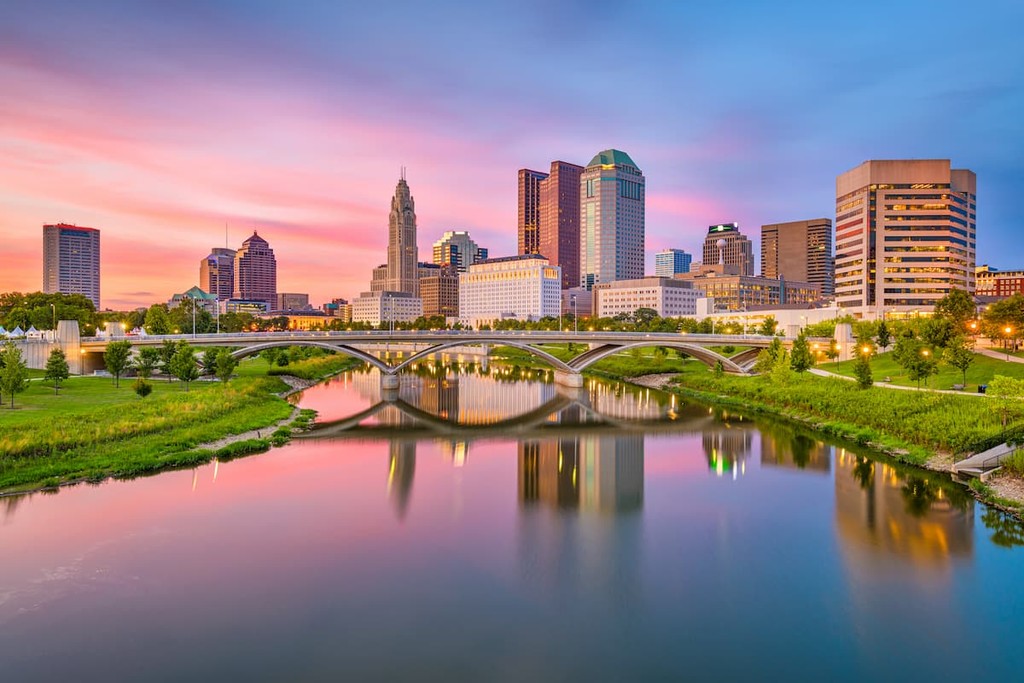
Happy National Ohio Day!

Here are some fun facts about Ohio—The Buckeye State (including what the heck a “buckeye” is!).

Ohio is derived from the Iroquois word “oyo,” meaning “great river.”

Seven U.S. presidents were born in Ohio: Ulysses S. Grant, Rutherford B. Hayes, James Garfield, Benjamin Harrison, William McKinley, William H. Taft and Warren G. Harding.

The burgee-shaped Ohio flag is the only non-rectangular state flag in the country.

You may hear “Hang On Sloopy” whenever you go to Ohio State football games. The song is the state’s official rock song.

Ohio is known as the Buckeye State, but what is a Buckeye? The buckeye tree bears fruit that contains a large nut. The tree got its name because it is dark brown with a light spot, resembling the shape and color of a deer’s eye.

Ohio hosts teams in all five major professional sports leagues, including

Cincinnati Reds and Cleveland Guardians (MLB)

Columbus Crew and FC Cincinnati (MLS)

Cleveland Cavaliers (NBA)

Cincinnati Bengals and Cleveland Browns (NFL

Columbus Blue Jackets (NHL)

    Ohio has two world-class theme parks – King’s Island in Mason, and Cedar Point in Sandusky – and more than a dozen smaller amusement parks that are local favorites. There are also indoor and outdoor waterparks around the state.

    The state beverage is tomato juice.

    The state slogan is “Ohio, The Heart of It All.”

    The biggest city in the state is Columbus. 

    SOURCE: 10tv.com

    What Shall We Bake Today?

    This month we focus on cute Thanksgiving or turkey-oriented cookies and desserts! We start off with turkey cookies!

    Ingredients

    1 cup semisweet chocolate chips

    30 candy corn candies, plus 6 white tips of candy corn

    6 chocolate sandwich cookies

    6 mini peanut butter cups

    6 malt balls

    1 cup Red Frosting, recipe follows

    6 chocolate sandwich cookies with top cookies removed

    Red Frosting:

    1/2 stick (1/4 cup) unsalted butter, at room temperature

    1 1/2 cups powdered sugar

    1/2 teaspoon pure vanilla extract

    2 tablespoons whole milk

    Red food coloring, as needed

    Directions

    Place the chocolate chips in a medium stainless steel or glass bowl. Set the bowl over a saucepan of barely simmering water. Cook, stirring occasionally, until the chocolate has melted, about 4 minutes. Set aside to cool slightly.

    For each turkey, push 5 candy corn candies, tip-side down, into the cream filling of a chocolate sandwich cookie to make the feathers for the turkey. Lay the cookie on a work surface.

    Dip the flat, larger end of a peanut butter cup in the melted chocolate allowing any excess chocolate to drip back into the bowl. Place the peanut butter cup, chocolate-dipped end down, onto the sandwich cookie.

    Dip a malt ball into the melted chocolate allowing any excess chocolate to drip back into the bowl. Place the malt ball above the peanut butter cup to make the head of the turkey.

    Dip the flat end of the white candy corn tip in the chocolate. Place on the malt ball, to make the turkey beak. Refrigerate until the chocolate has set, about 10 minutes.

    Place the Red Frosting in a piping bag. Using scissors, cut a small opening in the end of the piping bag. Pipe a small piece of frosting under the malt ball to make the turkey’s beard.

    Place a cookie (with top half removed) on a platter. Stand the turkey upright into the cream filling. Repeat with the remaining ingredients.

    Red Frosting:

    In a medium bowl, using an electric hand mixer, beat the butter until smooth, about 20 seconds. Add the powdered sugar, vanilla extract and milk. Beat on low speed until combined. Increase the speed to high and beat until the mixture is smooth. Color the frosting by mixing in 1 drop of red food coloring at a time until the desired color is reached.

    ENJOY!

    Pittsburgh Again: Congelier House

    Pittsburgh, Pennsylvania, stands as a staple in the history of contemporary America with its reputation as the city of steel. It has another reputation intertwined with its glorious past, however. Spirits of the dead linger around every corner of this towering city, speaking tales of tragedy, suffering, and murder. 

    There is one such location in the Manchester neighborhood of Pittsburgh whose name sends a shiver down locals’ spines to this day: the Congelier House. It no longer stands, covered by a highway, yet this once-grandiose home held a reputation so gruesome it’s believed the evil that once dwelled within left a mark on the city to this day. That’s why locals still believe the Congelier House was built by the devil himself. 

    What is the story behind the Congelier House?

    The infamous Congelier House has held a notorious reputation in the city of Pittsburgh for two centuries. So much so, in fact, it’s debated among locals whether the now demolished house ever even existed, but one thing is for sure if it did. The Congelier House was, without a doubt, the most haunted location in America. 

    History of the Congelier House 

    The most accepted timeline for the Congelier Mansion shows that it was built in the 1860s by Charles Congelier. A wealthy businessman, Congelier moved to Pittsburgh after the Civil War and had the elaborate home built for him, his wife, Lyda, and their maid, Essie. 

    Life for the Congeliers was as good as it could get in the booming city of Pittsburgh. That all changed one day in 1871 when Charles’s wife, Lyda, heard noises from the maid’s quarters. It was Charles and Essie making sounds together that, let’s just say, made Lyda’s heart shatter. Grabbing a knife and a meat cleaver, Lyda returned to Essie’s bedroom and butchered them both.

    A friend and neighbor of the Congeliers visited the house after seeing no one come or go for the next several days after the murders. The house was filled with the stench of decaying flesh. He then came upon the haunting sight of Lyda, covered in blood and sitting in a rocking chair, humming a lullaby as she cradled Essie’s severed head.

    The Congelier House’s Later Years

    The mansion sat abandoned for two decades before it underwent a series of ownerships. First, it was bought by a local railroad company in 1892. Then, in 1900, it was bought again by a reclusive doctor named Adolph Brunrichter. Finally, it was owned by the Equitable Gas Company until November 1927, when an explosion two blocks away completely demolished the Congelier Mansion. 

    Today, the site of the grandiose Congelier House is covered by a highway and a nefarious enigma as well. Did this infamous mansion actually exist? If so, is there a shred of truth to the ghostly tales and the history surrounding it? For those who believe, the house didn’t just return to hell but was, as some call it, the “House the Devil Built.”

    Hauntings Overview

    The Congelier House was converted into apartments for railroad workers when it was purchased in 1892 by a local railroad company. However, what the company didn’t know was that evil was lying dormant in its walls all that time. 

    Workers felt a general sense of unease and heard scratches coming from within the walls. Demonic voices echoed through the halls, and someone humming a lullaby could be heard. They also spoke of a deep hissing sound that seemed to emanate from everywhere in the house at once. 

    The most unsettling experience involved several complaints workers submitted about their foreman. According to them, the foreman—who lived in his own private residence at the time—checked in on the men too often. This was a violation of privacy, as he lurked in the hallways at odd hours, watching them come and go. 

    It seems like a logical complaint, except the foreman insisted he wasn’t visiting the house during those times; his wife and children vouched for his whereabouts. 

    There was even one night when the apparition was seen at the house while the foreman was out having drinks with one of the railway’s vice presidents. The activity became so intense that these hardened blue-collar workers eventually refused to stay another night in the house.

    The house sat vacant once again and was later purchased by the Equitable Gas Company. Its rooms were used to house immigrant workers, but they, too, found themselves hearing demonic voices throughout the home. 

    Things became downright terrifying for them when the bodies of two workers were later found murdered in the basement. Only to make it stranger, there was nowhere in the basement for the killer to escape. The horrified remaining workers immediately moved out of the house never to return. 

    The Mad Doctor

    The only thing as disturbing as the story of the Congelier House’s first owners is the story of Dr. Adolph C. Brunrichter. He purchased the home in 1900 upon his immigration to America and never left or socialized with his neighbors. Blissful obscurity seemed to be the fate for the good doctor until August 12, 1901.

    The neighbors were startled by a woman’s blood-curdling scream followed by an explosion of light from within the home. The police arrived and discovered a woman’s decapitated body, eerily similar to the house’s first crime it had ever witnessed. 

    Upon further investigation, they also found a hidden laboratory with the heads of five more women. There were also notes left behind suggesting the doctor had been performing experiments to keep the heads alive even after decapitation. 

    The doctor was nowhere to be found until 1927 when a man was arrested in New York claiming to be Adolph Brunrichter. He was drunk and told police about the experiments he performed in Pittsburgh, as well as the location of several other bodies. 

    Police searched the locations, but there were no bodies, forcing them to deem the man harmless and release him. This odd figure referenced in the newspapers as the “Pittsburgh Spook Man” was never seen or heard from again. 

    Haunted Pittsburgh

    Pittsburgh, Pennsylvania, boasts a rich history forged in the steel that built America. Stories of its past echo through Its cobblestone streets and towering skyscrapers and are carried away on the Allegheny and Monongahela rivers. 

    However, a darker undercurrent travels through the city, filled with death and agony, giving rise to its haunting tales. They’re whispered in the shadows of Pittsburgh where the dead linger, refusing to let the past of this great city remain buried. 

    The infamous Congelier House is a haunting example. A once-grand residence, it soon became a house of terror that met a destructive end. Though it may be long gone, the chilling legend of the Congelier family continues to plague Pittsburgh’s collective memory.

    Tales of a jealous wife, a brutal double murder, and a mad doctor have embedded the Congelier House’s place as America’s most haunted house. It also adds credence to its spine-gripping reputation as the “House the Devil Built.”

    Pittsburgh is riddled with ghosts lurking in the shadows at every turn. Come and see them firsthand with Pittsburgh Ghosts! Book an unforgettable ghost tour on our website today while there’s still room.

    SOURCE: PITTSBURGHGHOSTS.COM

    Trundle Manor, Pittsburgh PA

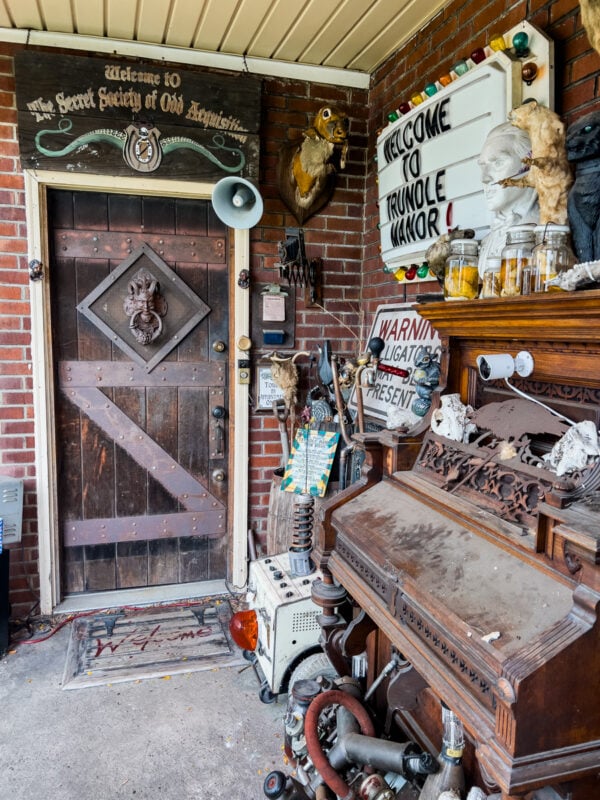
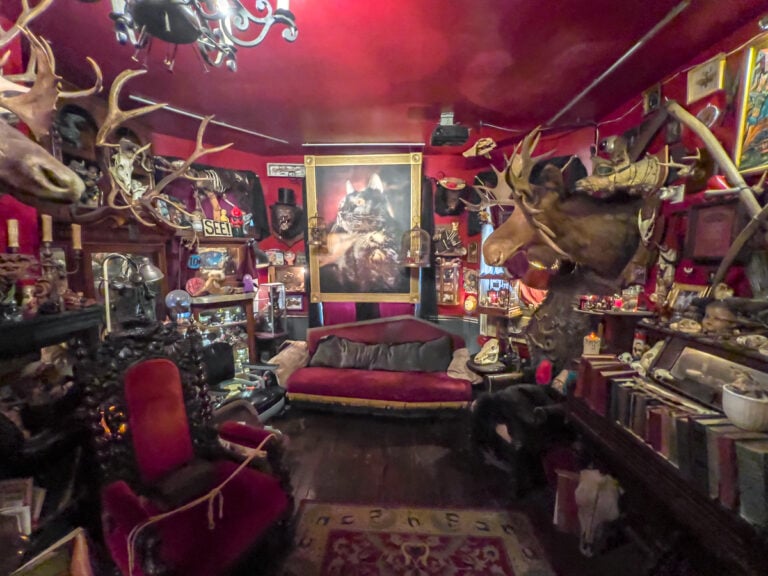
    Trundle Manor is the private home of Mr. Arm and Velda Von Minx and is located in the Swissvale neighborhood in east Pittsburgh. It describes itself as “The most unusual tourist trap in the world meets the most bizarre private collection on public display”, which seems like a quite fitting description for this unusual residence.

    The homeowners opened their home to tours in 2009 and offer a peek into their very unusual and eclectic collection of items by appointment. Since this is a private residence, don’t just show up here and expect a tour. Make sure to reach out to them via their website as early as possible to arrange a time to visit (typically on weekday evenings and on weekend afternoons).

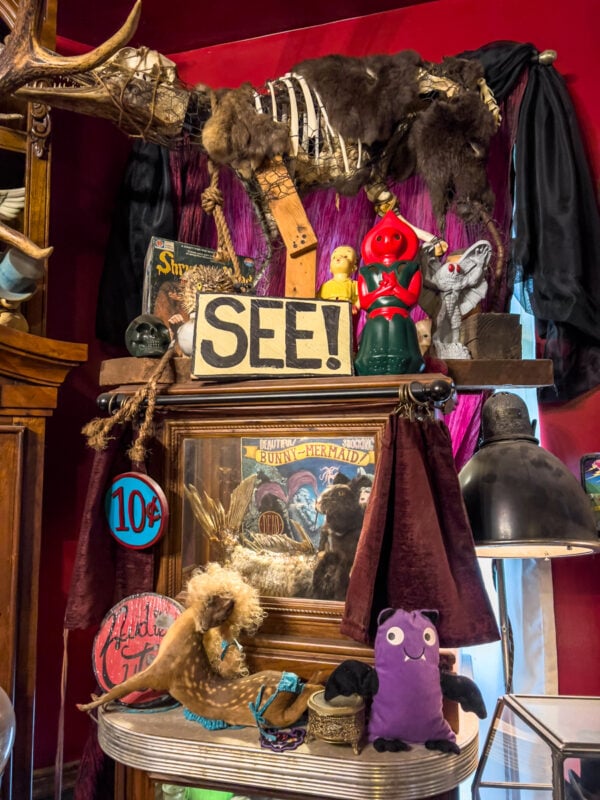
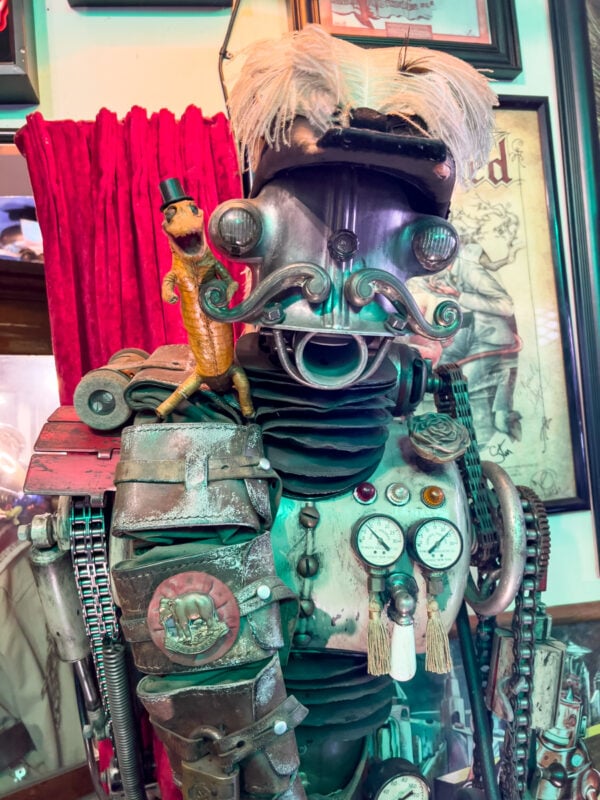
    Trundle Manor is definitely a bizarre collection of items ranging from 100-year-old taxidermy to meat cleavers, handmade robots, and even a singing tumor (more on that later).

    What’s even more incredible is that many of the items on display were created by Mr. Arm and Velda Von Minx themselves, though they make sure you know that they did not kill or torture any of the animals that they have taxidermied themselves. However, they do have their own deceased cat and a friend’s deceased dog on display after preservation.

    Tours last about 45 minutes and take you through four rooms on the lower level of the home. While there are no steps on the tour, note that there are a fair number of steps to get into the home.

    The rooms on the tour of Trundle Manor are chock full of items. In fact, you could probably spend all day here and still miss something.

    Display cases are overflowing, decades-old taxidermied items are stacked multiple layers deep throughout the space, and a myriad of items also hang from the walls and over doorways. Somehow, though, the collection keeps growing as new items are found, made, or donated to Trundle Manor.

    During your tour, one of the homeowners guides you through the space offering stories about various pieces and interesting tidbits (such as the fake and creepy dog made by Mr. Arm when he was a child). Visitors are also welcome to ask about items they find interesting, and if you love the strange and macabre, you are sure to find plenty of things to ask questions about during your visit.

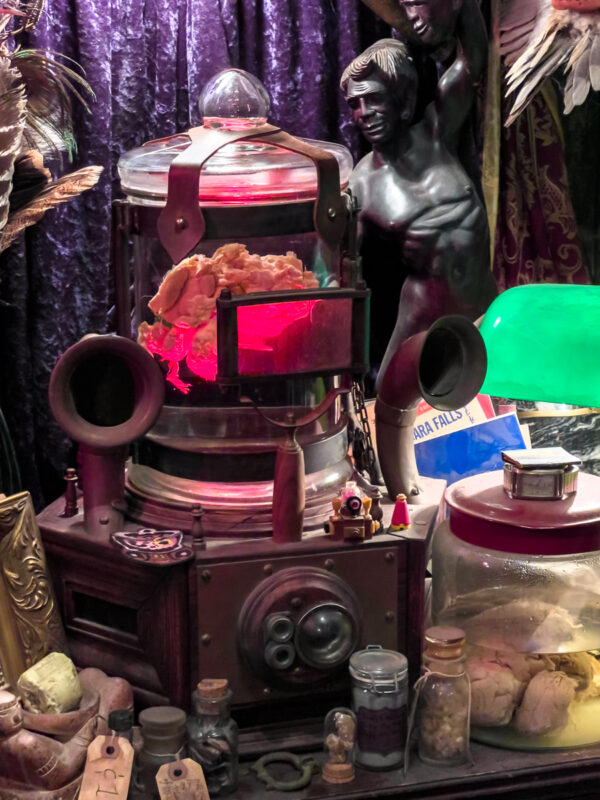
    One of the most unusual pieces is Olivia’s Singing Tumor, which is located just inside the main entrance to the home.

    This is an actual benign tumor that was removed from a friend’s body and has been given a place of honor inside a glass jar. It has been rigged to lights and music to create one of the most interesting displays you’ll ever see. It’s even said that the woman who donated the tumor comes by the visit it from time to time.

    The largest room in the space is the home’s main parlor. This room is not just full of more unusual displays but also serves as their personal living room, complete with a hidden video game system and projector screen.

    In this space, you can find their now-deceased pet cat, which has been freeze-dried and placed in an enclosure, right next to a giant painting that features its likeness, and a collection of meat cleavers in case of a zombie attack (Pittsburgh is the birthplace of zombies after all!)

    Tours end with the chance to go through a hidden doorway into the home’s kitchen, which is also filled with incredible items and is one of the most unique spaces in the home. There is also a small gift shop here with everything from stickers to homemade Halloween costumes.

    Through the back door, visitors can also see the homeowners’ cars, including one that has been modified to shoot flames six feet into the air. While they don’t demonstrate the flames, the modifications on this car are really interesting to look at.

    It’s worth noting that there is no specific charge to tour Trundle Manor. However, donations are accepted, and they have a jar near the door for those with cash. They also accept strange oddities as a donation and some of the items pointed out during my visit were donated by past visitors, which really adds a unique twist to the collection here. They also accept non-beer alcohol as a donation as well, according to their website.

    Overall, Trundle Manor is one of the most unusual places I’ve ever been, and to think that this doubles as someone’s private home is truly mind boggling.

    The collection here is one of the most eclectic you’ll find anywhere and probably isn’t for everyone (including young kids who like to grab things and the easily squeamish).  However, for those who enjoy strange oddities, unique art, and simply exploring the unusual, this is definitely a stop you won’t want to miss in Pittsburgh.

    SOURCE: UNCOVERINGPA.COM

    What Shall We Bake Today?

    Our finally entry this month is Witch Fingers!

    Ingredients

    1 cup butter, softened

    1 cup confectioners’ sugar

    1 large egg, room temperature

    1 teaspoon vanilla extract

    1 teaspoon almond extract

    2-3/4 cups all-purpose flour

    1 teaspoon baking powder

    1 teaspoon salt

    Red decorating gel

    1/2 cup sliced almonds

    Directions

    In a large bowl, cream butter and sugar. Beat in the egg and extracts. Combine the flour, baking powder and salt; gradually add to the creamed mixture. Divide dough into fourths. Cover and refrigerate for 30 minutes or until easy to handle.

    Working with 1 piece of dough at a time, roll into 1-in. balls. Shape balls into 3×1/2-in. fingers. Using the flat tip of a table knife, make an indentation on 1 end of each for fingernail. With a knife, make 3 slashes in the middle of each finger for knuckle.

    Place 2 in. apart on lightly greased baking sheets. Bake at 325° until lightly browned, 20-25 minutes. Cool for 3 minutes. Squeeze a small amount of red gel on nail bed; press a sliced almond over gel for nail, allowing gel to ooze around nail. Remove to wire racks to cool.

    ENJOY!

    Black Cats

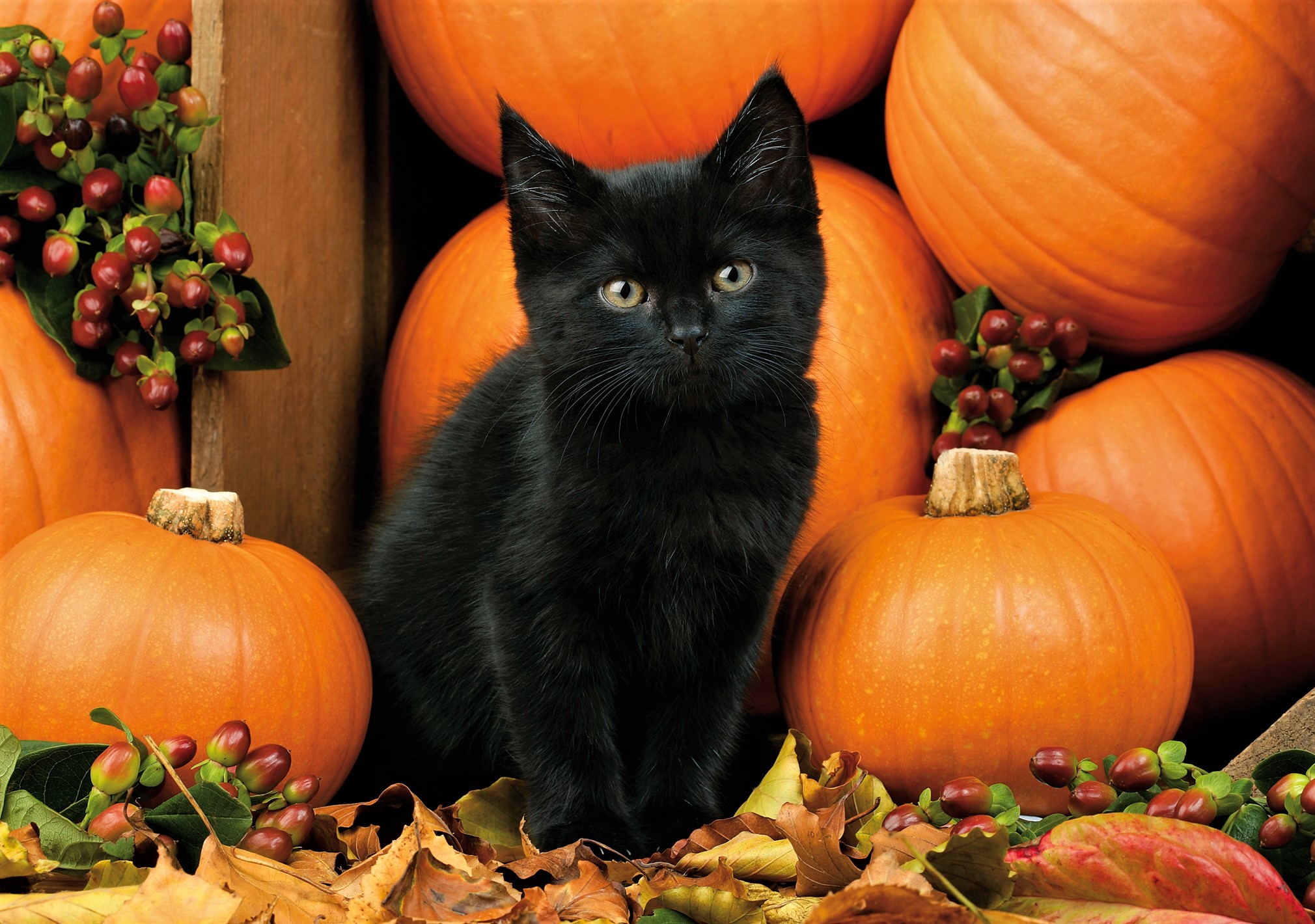
    Black cats are widely known for their connection to Halloween, witchcraft, and misfortune. However, despite their reputation, they are unique felines that are thought to bring good luck in some countries, and they have a rich history dating back to the Middle Ages.  Of course, other than the color of their fur, black cats are no different from any other feline; the difference is in how people think about them.

    Here are 13 fascinating facts about black cats.

    The Background of Black Cats and Witches

    Black cats are quintessential Halloween icons—and the number one costume choice for both elementary-aged children and women in their freshman year of college, oddly enough—but do you know how they got such a spooky rap?

    Beginning in the Middle Ages, black cats became associated with Satan, witches, and witchcraft; some people went so far as to believe that black cats were cohorts to witches or even witches who had taken on another form. This widespread superstition resulted in the horrific mass killing of black cats—and sometimes even their owners.

    Aside from continuing to represent all things eerie, the fear of black cats still has some influence today. Many animal shelters won’t place black cats in homes during the month of October for fear of them being used sacrificially.

    Black Cats Can Help Your Love Life

    Forget the stereotypical depiction of the perpetually single cat lady. In some parts of the world, it’s believed that black cats can actually improve your love life.  In Japan, for example, single women who own black cats are believed to attract more suitors. In Great Britain’s English Midlands, a black cat is the ideal wedding gift; they’re believed to bring good luck and happiness to the bride.

    Black Cats Have a Sailing History

    Ship’s cats were once a common thing; historically, sailors brought cats aboard ships to control rodents that could destroy food stores or damage the ship itself. But British sailors believed a black cat would bring the ship good luck and ensure a safe return home.  It was a little more complicated for pirates, though. They believed a black cat walking toward you was bad luck, a black cat walking away from you was good luck, and if a cat boarded the ship and then jumped off, the ship was going to sink.

    Black Cats Can Resist Disease

    In the early 2000s, researchers at the National Institutes of Health discovered that the genetic mutations that cause cats to have black coats may offer them some protection from diseases. In fact, the mutations affect the same genes that offer HIV resistance to some humans.  Since cats can experience many of the same health issues as we do—cancer, HIV, and cognitive dysfunction similar to Alzheimer’s, to name a few—they make perfect models for studying human disease. By figuring out how cats have evolved to resist diseases, researchers can, potentially, learn how to prevent disease in humans as well.

    Black Cats Can Change Color

    If your black cat loves to lounge in the sun—and what feline doesn’t?—the UV rays can break down the black pigment in the cat’s fur, changing it to a rusty color.  The affected fur will remain discolored, but once shed, will be replaced by fresh black fur once again.

    In Some Places, Black Cats Mean Good Luck

    While black cats are mostly associated with bad luck in North America, that’s not the case around the world. In Scotland, tradition holds that a black cat on the doorstep means money is on the way. The French have a similar association between black cats and financial riches. In Germany, a black cat crossing your path means good luck, not bad, is on the way.

    Black Cats are Not a Breed

    While many different breeds of cat include solid black as an accepted coat color, simply being a black cat is not a specific breed.  However, one feline breed, the Bombay, was specifically bred to only have solid black fur, along with black foot pads and even black whiskers. These gorgeous kitties resemble little house panthers, but are friendly and affectionate domestic cats.

    Black is Genetically Dominant

    When it comes to feline coat color, black is genetically dominant, although most black cats are not solid black but have some patches of white, as well. Still, overall, black is the most common color of domesticated cats.

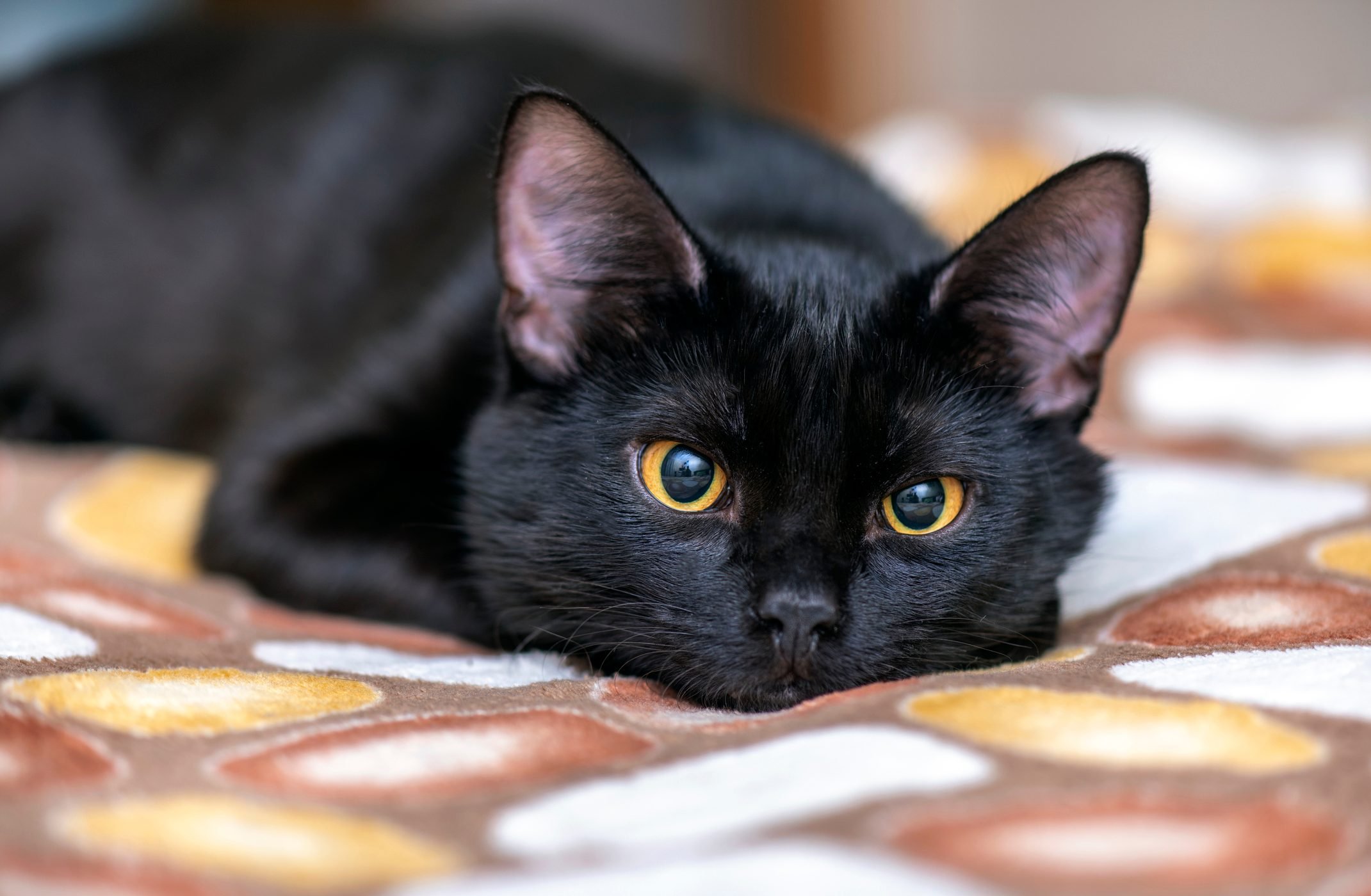
    Most Black Cats Have Yellow Eyes

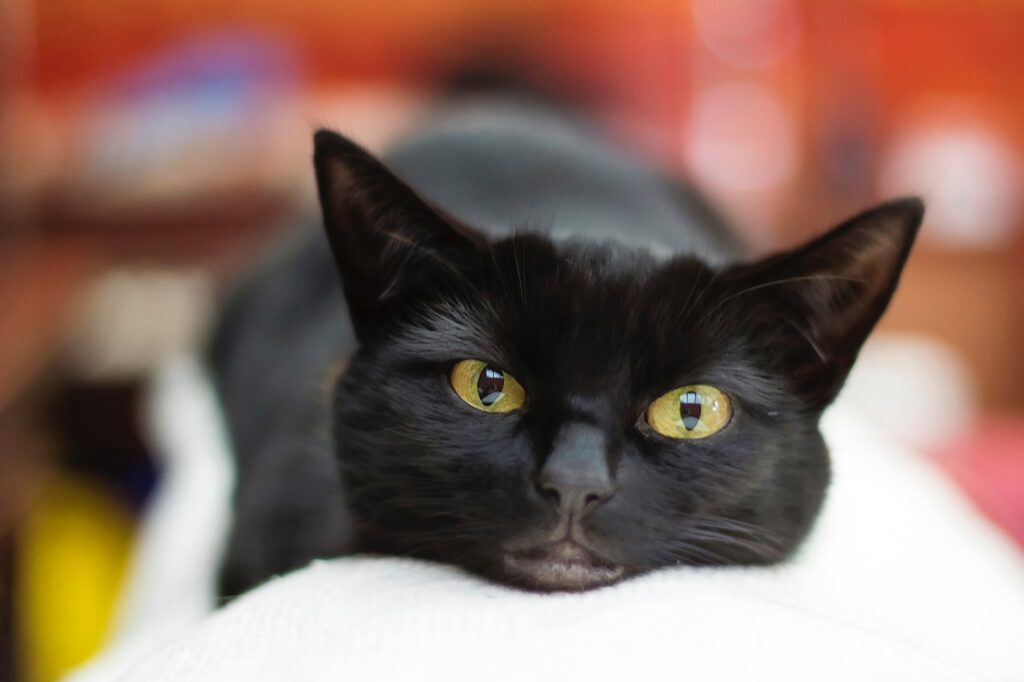
    While feline eye color covers a wide range of hues, the vast majority of black cats have yellow or golden eyes. The striking contrast between black fur and yellow eyes adds even more mystique to these fabulous felines.

    They Can Have Short or Long Hair

    Because black cats are not one breed, they can have either long or short hair, depending on the individual cat breed. Bombays, Oriental shorthairs, American shorthairs, and others will have short black hair. Longhaired breeds like the Maine coon, Persian, and Siberian can have luxurious long black locks. Black cats can even be hairless, like the sphynx.

    Black Cats Have Their Own Days

    While every cat firmly believes that everyday is devoted entirely to them, black cats have their very own specific day of the year: October 27, four days before Halloween. National Black Cat Day celebrates the black cat in hopes of dispelling myths about their association with bad luck.  Another day dedicated to black cats is August 17, which is Black Cat Appreciation Day. Like October 27, this day also recognizes how wonderful these cats are, contrary to false superstitions.

    Patterns Can Be Hidden Underneath Black Fur

    Look at a solid black cat in the sunlight, and you may very well see faint stripes within the fur.  That’s because although black is genetically dominant as a fur color, the striped tabby pattern is genetically dominant as a fur pattern, and in cats with genes for both black fur and tabby patterning, the stripes can be “hidden” under the black coloring.

    They’re Overlooked in Shelters

    Unfortunately, black cats (and black dogs) are often overlooked in shelters. “Black Cat Bias” refers to the higher rates of surrenders to shelters, lower adoption rates, and high chance of euthanasia. It’s thought that these rates are due to the continued, but unfounded, superstitions around these cats.  So, if you’re thinking about adopting a shelter cat, consider opening your home to one or more black cats who are more likely to be left behind. You won’t regret bringing these fun and loving kitties into your family.

    SOURCE: THESPRUCEPETS.COM