What Shall We Bake Today?

Today’s offering looks so good and although it takes a couple of additional steps, it’s still an easy dessert!  Peanut Butter Brownies!

Ingredients

1 1/2 cups creamy peanut butter

1/2 cup all-purpose flour

2/3 cup unsweetened cocoa powder

3/4 cup salted butter

3 oz. dark chocolate bar, chopped

1 1/4 cups granulated sugar

1/4 tsp. kosher salt

1 1/2 tsp. vanilla

3 large eggs

1/3 cup semisweet chocolate chips

1/3 cup peanut butter chips

Directions

Preheat the oven to 350°. Lightly grease a 9-by-9-inch square baking pan then line with parchment paper, leaving an overhang on all sides. Microwave the peanut butter for 30 seconds; stir. Repeat as necessary until peanut butter is pourable. Pour into the prepared pan. Freeze until firm, about 1 hour. Remove the peanut butter layer and transfer to a small sheet tray. Store in the freezer until ready to use. 

Sift together the flour and cocoa powder in a medium mixing bowl.

Melt the butter and chocolate in a medium saucepan over medium heat, stirring often. Remove from heat.

Beat the sugar, salt, vanilla, and eggs in a large bowl with an electric mixer at medium-high speed until fluffy, about 3 minutes. Slowly drizzle in the melted chocolate mixture on low speed until combined. Beat in the flour mixture on low speed until just combined. 

Pour half of the batter into the prepared pan. Remove peanut butter layer from the freezer, and place on top of brownie batter. Top with the remaining half of the brownie batter, and spread to even out the top. Sprinkle the top with the chocolate chips and peanut butter chips.

Bake in the preheated oven for about 40 minutes or until puffed, dry to the touch, and set on the top (a wooden pick inserted in the center will not come out clean). Cool completely in the pan on a wire rack, about 3 hours. Cut into 16 squares.

ENJOY!

PAT’S NOTE: I think you could probably substitute a box mix for the brownie part—just make the peanut butter layer as described and top with the chocolate and peanut butter chips before baking!  Easy-Peasy!

Happy Birthday Hunk-A-Doodle-Do

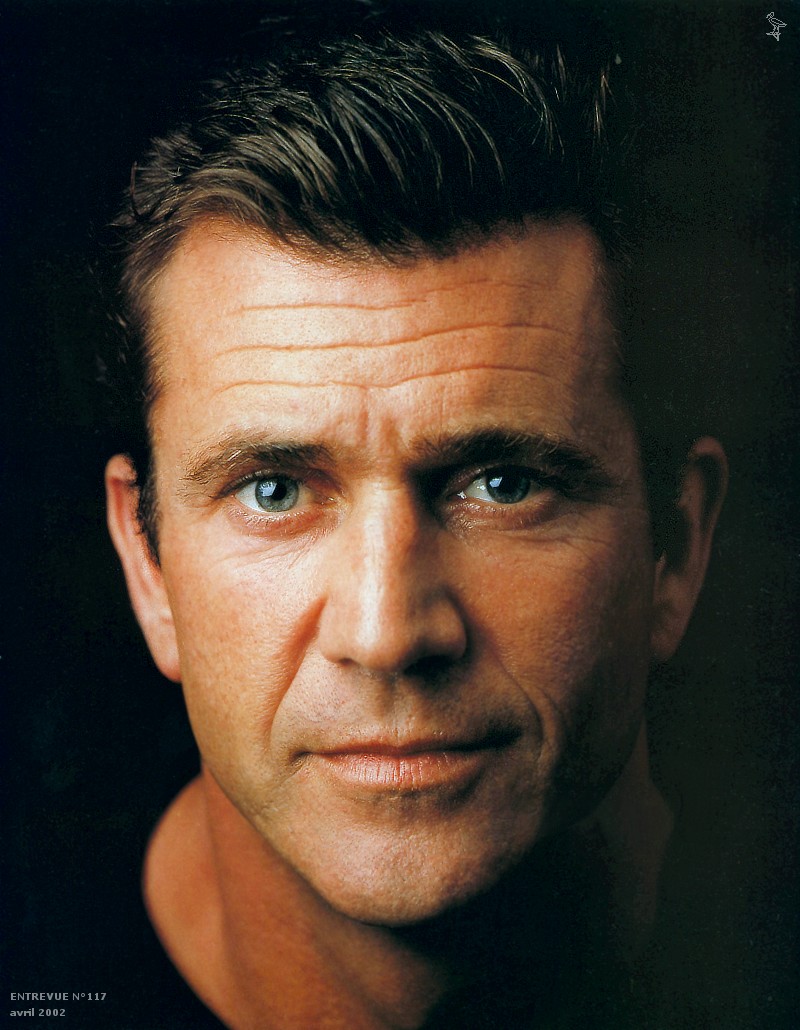
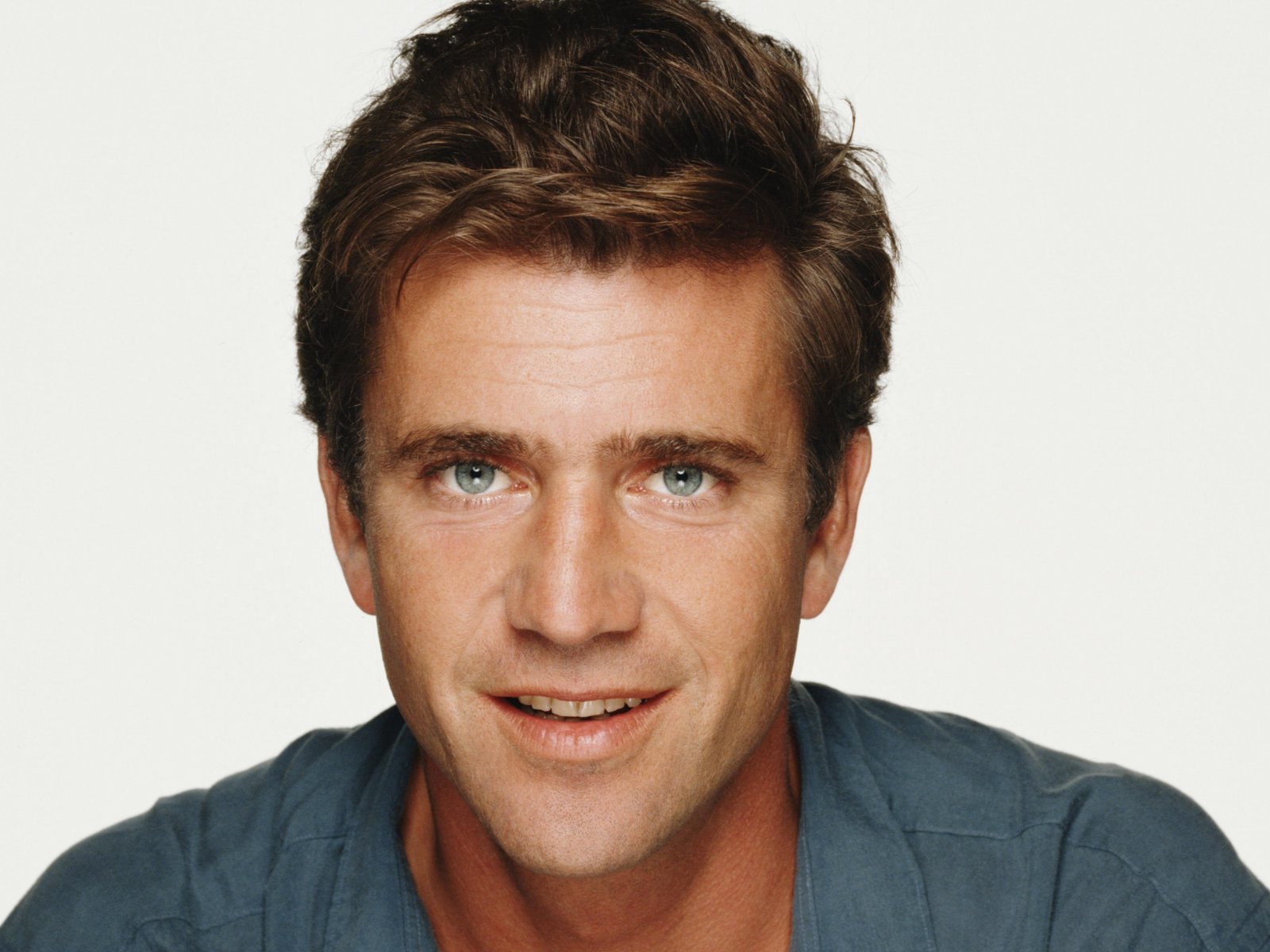
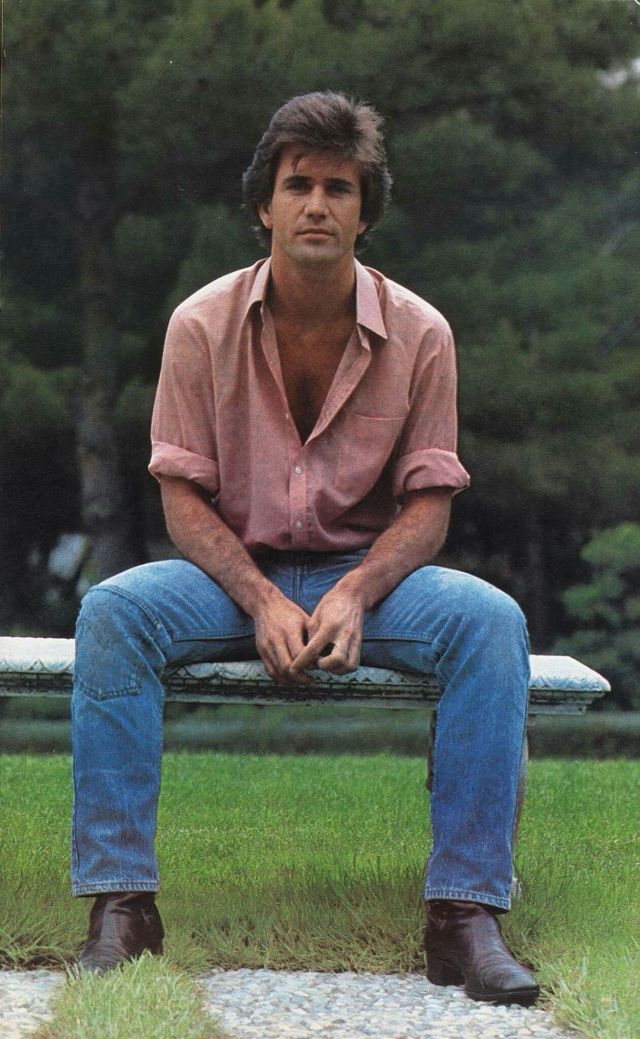
January 3 is Mel Gibson’s birthday and JustFunFacts has an article detailing some interesting facts about my favorite hunk.

Mel Gibson is an American actor and filmmaker.

His full name is Mel Colmcille Gerard Gibson.

He was born on January 3, 1956, in Peekskill, New York.

Mel is the sixth of eleven children, and the second son of Hutton Gibson and Anne Patricia (née Reilly).

His mother was Irish, from County Longford, while his American-born father is of mostly Irish descent.

Because of his mother, Gibson retains dual Irish and American citizenship.

Mel and his family moved to Australia in the late 1960s, settling in New South Wales, where Mel’s paternal grandmother, contralto opera singer Eva Mylott, was born.

In 1974 he enrolled in the National Institute of Dramatic Art in Sydney, and while at school he made his film debut playing a surfer in Summer City (1977) for which he was paid $400.

After graduating in 1977, he joined the State Theatre Company of South Australia.

In 1979 he starred as a renegade cop seeking revenge in the futuristic action film Mad Max. He was paid $15,000 for this role. Mad Max became the biggest commercial success of any previously released Australian film, grossing more than $100 million worldwide.

After Mad Max, Gibson also played a mentally slow youth in the film Tim (1979). For his performance in the film, Gibson earned his first Australian Film Institute Award, for best actor.

Director Peter Weir cast Gibson as one of the leads in the critically acclaimed World War I drama Gallipoli (1981), which earned Gibson another Best Actor Award from the Australian Film.

Gibson wouldn’t become internationally famous, however, until after his performance in Mad Max 2: The Road Warrior (1981), one of the few sequels to have proved superior to its predecessor.

His second collaboration with Peter Weir, The Year of Living Dangerously (1982), featured the actor in his first romantic lead, alongside Sigourney Weaver.

In 1984, Gibson took on the role of Fletcher Christian in The Bounty (1984), which co-starred Anthony Hopkins.

Mel Gibson’s first American film was Mark Rydell’s 1984 drama The River, in which he and Sissy Spacek played struggling Tennessee farmers.

Gibson earned his first million-dollar salary for playing Max Rockatansky for the third time, in Mad Max Beyond Thunderdome in 1985.

After a two-year break, Gibson returned to the screen with the blockbuster hit Lethal Weapon (1987), playing volatile cop Martin Riggs opposite Danny Glover, who portrayed by-the-book character Roger Murtaugh. The success of Lethal Weapon inspired three sequels—Lethal Weapon 2 (1989), Lethal Weapon 3 (1992) and Lethal Weapon 4 (1998).

In 1988 Gibson started in a crime thriller film Tequila Sunrise, co-starring Michelle Pfeiffer and Kurt Russell.

Gibson next starred in three films back-to-back: Bird on a Wire, Air America, and Hamlet; all were released in 1990. Hamlet was the first film made by his production company, ICON Productions.

In 1993 he made his directorial debut with The Man Without a Face, in which he also starred.

Gibson next directed the epic Braveheart (1995), in which he portrayed the Scottish national hero Sir William Wallace. The film won five Academy Awards, including best picture and best director.

He then starred in Ransom (1996), Conspiracy Theory (1997), and Payback (1999).

In 2000, Gibson started in the highly anticipated war saga The Patriot, in which he played a reluctant hero during the American Revolution. That same year he appeared in What Women Want, and lend his voice for the animated comedy Chicken Run.

In 2002, Gibson appeared in the Vietnam War drama We Were Soldiers and M. Night Shyamalan’s science fiction thriller Signs, which became the highest-grossing film of Gibson’s acting career. While promoting Signs, Gibson said that he no longer wanted to be a movie star and would only act in film again if the script were truly extraordinary.

Gibson returned to directing with The Passion of the Christ (2004), an account of the last 12 hours of Jesus Christ’s life that was based primarily on the biblical Gospels, with dialogue in Aramaic and Latin.

In 2006, he directed the action-adventure film Apocalypto, his second film to feature sparse dialogue in a non-English language. The violent film was set during the collapse of the Mayan empire and featured dialogue in Mayan.

In 2010, Gibson appeared in Edge of Darkness, which marked his first starring role since 2002 and was an adaptation of the BBC miniseries, Edge of Darkness.

The following year he portrayed a depressed man whose life is invigorated by his use of a hand puppet in the drama The Beaver (2011).

In 2012, Gibson appeared in the neo noir crime thriller Get the Gringo directed by Adrian Grunberg. The film has received largely positive reviews.

Then Gibson played two villains: Voz in Machete Kills in 2013, opposite Danny Trejo, and Conrad Stonebanks in The Expendables 3 opposite Sylvester Stallone in 2014.

In 2016 Gibson started in the action crime thriller film Blood Father directed by Jean-François Richet, written by Peter Craig based on his novel of the same name.

He returned to directing with Hacksaw Ridge (2016), a biopic about Desmond T. Doss, a conscientious objector who served as an army medic during World War II. The critically acclaimed drama earned an Academy Award nomination for best picture, and Gibson received an Oscar nomination for his direction.

Mel Gibson has an estimated net worth of $425 million.

Mel Gibson married Robyn Denise Moore, a dental nurse on June 7, 1980 in a Roman Catholic Church in Forestville, New South Wales. Together they have a daughter and six sons. They separated in 2006 after 26 years of marriage and finally got divorced in 2011. Robyn Moore has been awarded half his $850 million fortune in their divorce settlement.

In 2009, he began dating Grigorieva and had a daughter, Lucia with her. They split up a year later.

As of 2014, Gibson is in a relationship with former champion equestrian vaulter and writer Rosalind Ross. Ross gave birth to their son, and Gibson’s ninth child on January 20, 2017 in Los Angeles.

Gibson was raised a Sedevacantist traditionalist Catholic. When asked about the Catholic doctrine of Extra Ecclesiam nulla salus, Gibson replied, “There is no salvation for those outside the Church … I believe it.

Gibson has his own private chapel in his grounds, where he attends mass every day.

On July 25, 1997, Gibson was named an honorary Officer of the Order of Australia (AO), in recognition of his “service to the Australian film industry”. The award was honorary because substantive awards are made only to Australian citizens.

Gibson is a property investor, with multiple properties in Malibu, California, several locations in Costa Rica, a private island in Fiji and properties in Australia.

Gibson has struggled with alcoholism. He has said that he started drinking at the age of 13.

As a director, he sometimes breaks the tension on set by having his actors perform serious scenes wearing a red clown nose.

His voice in Mad Max (1979) was dubbed for the film’s US release.

He was named after the Church of St. Melin Clonmel, Co. Tipperary, Ireland where his mother’s family is from.

In Portuguese, “Mel” means “honey”.

SOURCE: JUSTFUNFACTS

The Great Fruitcake Toss

Today is National Fruitcake Day! In honor of the…ah…delicious? treat, I present an event dedicated to tossing the fruitcake bricks in style!  The actual toss-your-fruitcake-day is in January, but I thought you’d appreciate a little heads up…lol

FROM GASTRO OBSCURA:

Every year, millions of Christmas celebrants feature fruitcake on their tables. After the holidays, it remains untouched. Rather than eat the unpalatable loaf, families eventually just toss it in the trash.

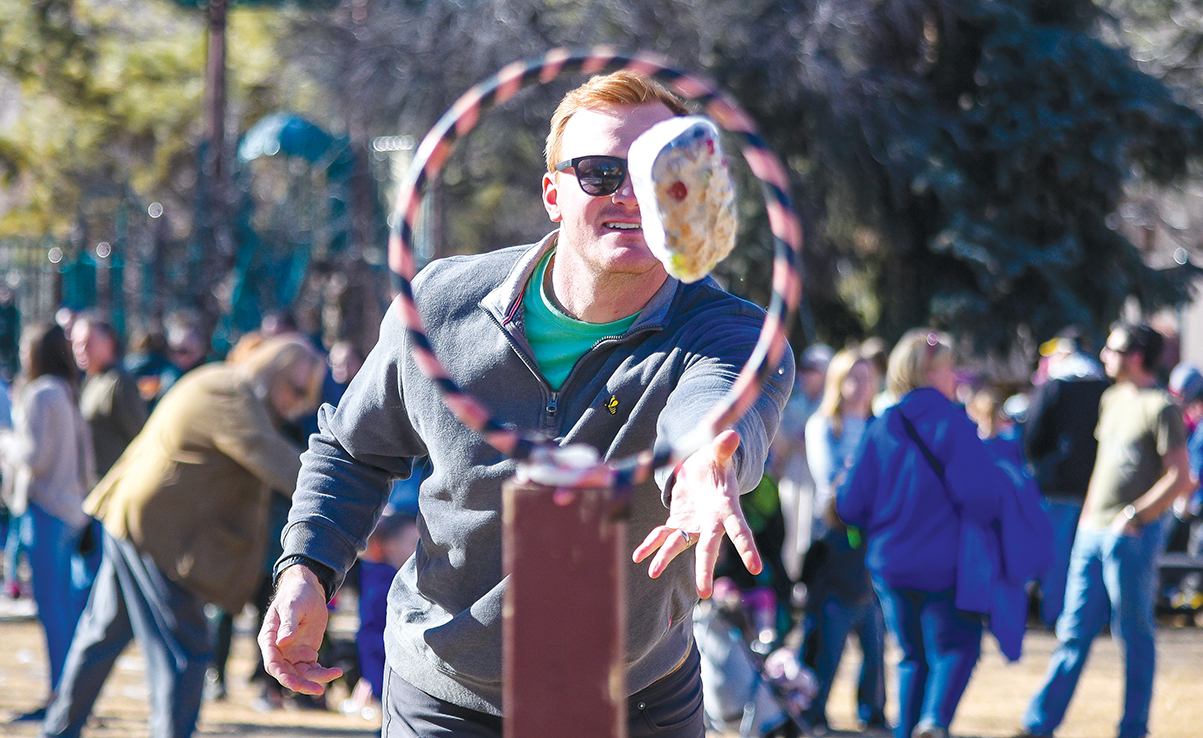
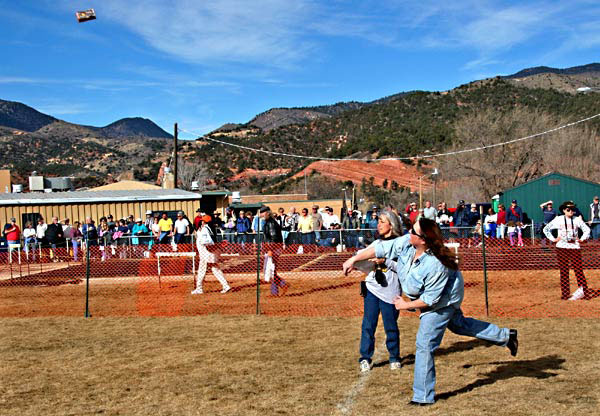
In 1996, a group in Manitou Springs, Colorado, decided to approach fruitcake-tossing with some extra imagination. They gathered in a public park to dispose of their unloved holiday cakes. But instead of just throwing them out, the group literally threw the dense wads as far as they could. Competition ensued.

Over the last two decades, the January celebration has grown to include a slew of diverse events. In addition to the classic hand toss, past offerings have included the fruitcake slingshot (with robotic, mechanical, and three-man divisions) and a pneumatic weapon launch. In 2007, a team of Boeing engineers shot a cake 1,420 feet using a mock artillery piece. (By comparison, the hand toss winner that year clocked in 124 feet.)

The festivities also include a kids’ fruitcake toss, complete with targets, as well as speed and balance games. Those who are less interested in athletics can enter the fruitcake costume competition or the “Too Good to Toss” bake-off. 

So the next time you find yourself staring at a stale, uneaten holiday dessert, remember: Just because you’re not going to eat it doesn’t mean you have to throw it in the garbage.

SOURCE: GASTRO OBSCURA

New Year’s Eve Superstitions

Want to make sure your New Year starts out auspiciously? You might want to try one of these suggestions (or superstitions if you will) from The Pioneer Woman’s website.

Clean Your House Before Midnight

In Japan, there’s a New Year’s tradition known as “osoji” or “o-souji” that involves thoroughly cleaning and tidying the house before midnight. This custom is rooted in the belief that cleaning one’s living space helps to purify the home and welcome the new year with a fresh start.

Watch a New Year’s Day Parade

Many people around the world like to kick off the new year by watching or attending a parade on the holiday. In the U.S., a couple of the most famous examples are the Rose Parade in Pasadena, California, and the Mummers Parade in Philadelphia.

Write a Letter to Yourself for Next Year

This tradition is a gift that keeps on giving. It involves taking a moment to reflect on the past year, set goals and intentions for the future, and capture your thoughts and feelings in a personal letter to be opened the following New Year’s Day.

Watch the Sunrise

In Japan, the tradition of watching the first sunrise of the new year is known as “hatsuhinode.” This act is believed to bring good fortune for the coming year and many people make a special effort to wake up early and find a scenic location like a beach or hill to take in the view.

Eat Lentils

In Italy, many people ring in the new year by eating a dish of lentils. The belief is that lentils, which resemble small coins, symbolize prosperity and wealth for the coming year.

Have a New Year Movie Marathon

Looking for a low-key tradition to kick off the new year? Snuggle up on the couch with your loved ones and watch the best New Year’s movies that capture the spirit and heart of the holiday.

Make a List of Resolutions

Believe it or not, New Year’s resolutions are said to have been around since ancient Babylonian times. So, when writing out this year’s goals, remember that for approximately 4,000 years, people have been working toward achieving their resolutions.

Jump Seven Waves

In Brazil, it’s considered good luck to start the new year by jumping over seven waves. You get one wish for each wave, so be ready with your list!

Put Mistletoe Under Your Pillow

Mistletoe isn’t just a Christmas tradition. The Irish believe that if you put a sprig of mistletoe, holly, or ivy under your pillow on New Year’s Eve, you’ll dream of your future love.

Bang Some Bread

You’ve heard of breaking bread but how about banging it? Families in Ireland have a New Year’s tradition of banging loaves of Christmas bread against the walls and doors to ward off evil spirits and pave the way for a healthy and prosperous new year.

Carry an Empty Suitcase

Want to go places in 2024? Take a cue from the Colombians, who walk around the block carrying empty suitcases on New Year’s Eve to bring a year filled with travel.

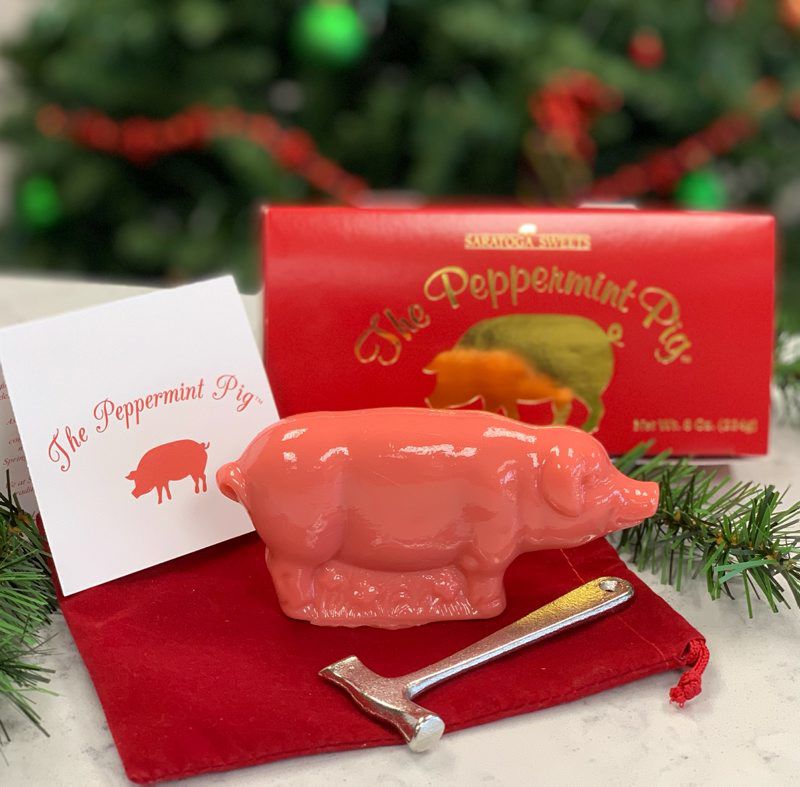
Smash a Peppermint Pig

Have you heard of the tradition of the Peppermint Pig? It all began in the 1880s with candy makers in Saratoga Springs, New York. To bring good health, happiness, and prosperity in the new year, place the candy pig in a velvet bag and smash it with a small hammer, then eat a piece of peppermint. This one will be fun for the whole family!

Host a Party

Sometimes the most fun is had in the comfort of your own home surrounded by friends and family! If that’s your idea of a good time, throw a party to usher in the new year with New Year’s Eve decorations, the best New Year’s Eve drinks, and of course, exciting New Year’s Eve games.

Watch Fireworks

Across the world, fireworks are a central part of celebrating the new year. But where did the tradition begin? Well, historians point to seventh century A.D. in China where the big bangs were used to ward off evil spirits. You can find displays across the country to enjoy on NYE or light your own. In some cultures, different colors even correspond to various types of luck, including love and health.

Toss a Coin

Similar to throwing change and making a wish, many Romanians believe that tossing a coin in the river on New Year’s Eve will provide good luck for the whole year. So, gather your pennies and bring on the good fortune!

Find Round Objects

Round items are all the rage on New Year’s Eve, especially in the Philippines! Because the circular shape symbolizes money and wealth, it’s the more the merrier! According to this tradition, you can wear polka dots, carry coins, and eat round foods like donuts, bagels and cookies to boost your funds for the next 12 months.

Carefully Choose Your First Guest

In Scotland, a tradition known as first-footing will supposedly determine whether your household has good luck or misfortune for the rest of the year. For prosperity in 2024, superstition says the first person to enter your home at midnight should be a tall, dark-haired male. He should also bring symbolic gifts like coins or black buns. It’s worth a shot, right?

Watch the Times Square Ball Drop

The New Year’s Eve ball drop in Times Square has been a tradition since the early 1900s. While celebrations in Times Square date back to 1904, it wasn’t until 1907 that the crystal ball made its big debut. Since then, the spectacle has been a staple of New Year’s Eve celebrations, with hundreds of thousands of people flocking the streets, and millions watching from home.

Kiss at Midnight

You may never have thought about where the New Year’s Eve midnight kiss tradition came from. Some historians believe it traces back to ancient Rome’s Saturnalia celebration. A raucous good time full of dancing, alcohol, and kissing galore took place during this festival. As time went on, German and English folklore romanticized the idea of a midnight kiss, suggesting that starting the year with a kiss would improve your endeavors in love.

Make a Toast

There’s nothing like cheers-ing to the new year with a glass of bubbly. And it’s not only modern-day folks who enjoy the tradition. The practice of toasting dates back to the ancient world, NPR reports, when people would often raise their glass to someone’s good health. No matter how much time has gone by, there’s nothing like toasting with those closest to you.

SOURCE: THE PIONEER WOMAN

What Shall We Make Today?

Since it’s almost New Year’s Eve, I thought I’d share one of my daughter’s favorite party recipes…Rum Balls!

Ingredients

2-1/2 cups crushed vanilla wafers (about 75 wafers)

1 cup ground pecans

1 cup confectioners’ sugar

2 tablespoons plus 2 teaspoons baking cocoa

¼  – ½ cup rum (your choice)

3 tablespoons honey

2 tablespoons water

Additional confectioners’ sugar or crushed vanilla wafers

Directions

Mix together wafer crumbs, pecans, confectioners’ sugar and cocoa. Combine rum, honey and water; stir into crumb mixture. Shape into 1-in. balls. Roll in additional confectioners’ sugar or wafer crumbs. (I have seen these rum balls also rolled in crushed pecans, coconut or candy bits.)  Store in an airtight container.

NOTE: Bourbon may be substituted for the rum if you like.

ENJOY!

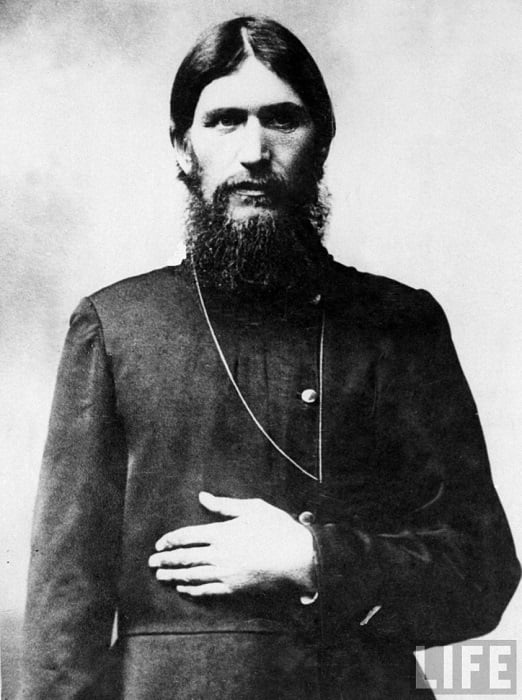
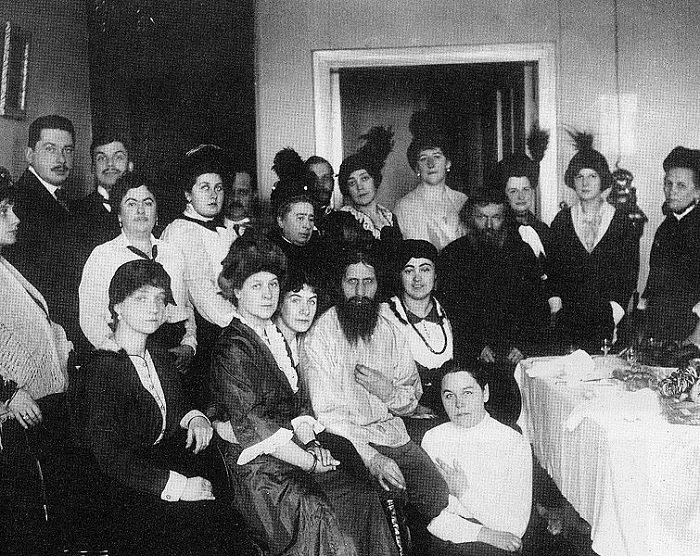
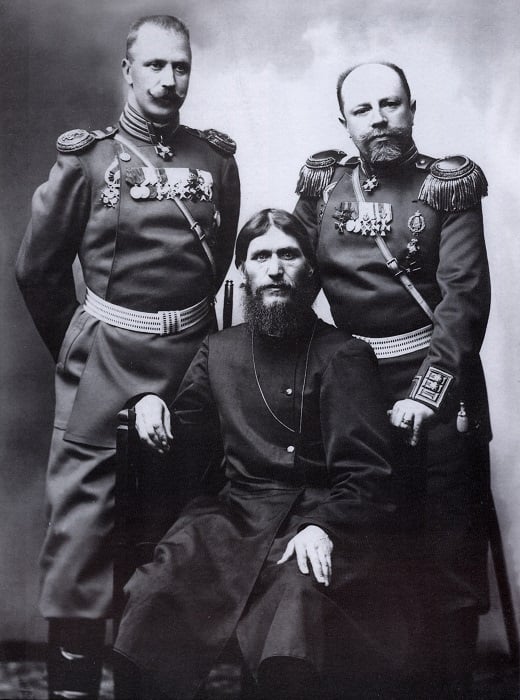
Rasputin, The Mad Monk Who Wouldn’t Die

Rasputin: mystic, mad man, or none of the above? You decide with a fascinating look at his life and fabled death.

Most people have heard of Anastasia, the daughter of Czar Nicholas II and Alexandra Feodorovna who, according to a trove of rumors, survived her family’s extrajudicial murder in July 1918. Though the rumors were later disproved, general fascination with Anastasia and the tragic story of Imperial Russia’s final sovereign family has garnered extensive attention, and even an animated movie, Anastasia, that was released in 1997. Though the movie wasn’t historically accurate, Rasputin, the minion-dispatching menace did exist. According to many eyewitness testimonies, the “man who wouldn’t die” was just as intriguing as the royal family itself.

The Early Years Of Rasputin’s Life

Grigori Yefimovich Rasputin was born in Siberia, Russia in 1869. From an early age, villagers noticed something different about the young boy, and many claimed he had supernatural powers. As a teenager, Rasputin went to Verkhoture Monastery in Russia hoping to become a monk. He never completed the program, however, and instead married at age 19 to Praskovia Fyodorovna, with whom he had three children.

Within two short years following his 1906 arrival in Saint Petersburg, Rasputin was introduced to Czar Nicholas and his wife, both desperately seeking a cure for their son, Alexei, the heir to the throne. Historians now know that Alexei was a hemophiliac, though at the time the royal family chalked his health problems up to a weak constitution. Rasputin successfully “cured” Alexei, gaining the trust of Alexandra in the process. While some claim that Rasputin hypnotized the boy, others say it was dark magic, and still others wonder if the “mad monk” had any healing powers to begin with.

For the next five years or so, Rasputin held a large influence over Alexei’s treatment, however, Rasputin’s presence in the palace and his time spent with Alexandra prompted a number of harsh critiques on the royal family’s credibility. Rasputin’s lewd, unruly behavior and his insistence that he was the czarina’s adviser proved a bone of contention between the royal family and Russian constituents. Alexandra often defended Rasputin from the many advisers and officers who sought his removal from the royal palace as she claimed that he was the only one who could save her son.

World War I, prompting Nicholas to head to war and leave Alexandra in charge of domestic affairs. During this time, many sought to remove Rasputin from the family’s presence. They called him a witchdoctor, and thought he was using black magic to poison Alexandra’s mind. In reality, though, Rasputin had little influence in political matters.

Attempts On Rasputin’s Life

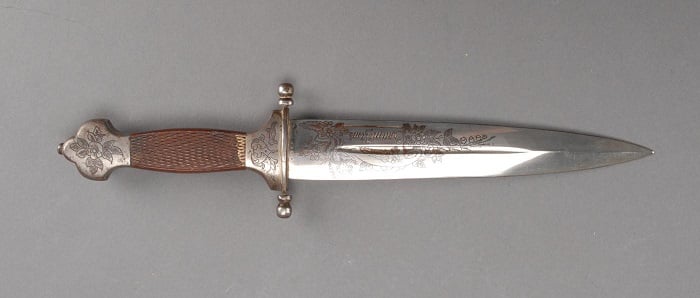
Reportedly, Rasputin’s first assassination attempt occurred in 1914, when the prostitute Khioniya Guseva stabbed him in the gut with a dagger in what was thought to be a mortal wound. Eyewitnesses claim that as Rasputin’s entrails fell from his stomach Guseva shouted, “I’ve killed the antichrist.” Though Rasputin survived the attack, his demeanor changed permanently.

In 1916, the country’s distaste for Rasputin hit an all-time high, and a group of conspirators including Grand Duke Dmitri Pavlovich and Prince Felix Yusupov set out to kill him. Using Yusupov’s wife to lure Rasputin to their home, the conspirators fed Rasputin wine and cakes laced with cyanide. Though it was reportedly enough poison to kill five men, Rasputin was unaffected.

Unperturbed, the conspirators continued their attack by beating him repeatedly, then shooting him in the back and causing him to fall to the floor. Yet Rasputin, much like an antibiotic-resistant pathogen, still wasn’t dead. According to some, Rasputin jumped up violently, only to be shot several more times. The men then wrapped the body in a sheet or carpet and tossed him into the Neva River.

Rasputin’s body was pulled from the water three days later. Though autopsy reports differ, most attest that he was still alive when thrown into the water and that from the positioning of his body, he had tried to break free before either drowning or dying from hypothermia. The exact cause of death has been debated for decades.

Intriguingly, before Rasputin died, he told the Czar, “If I am killed by common men, you and your children will rule Russia for centuries to come; if I am killed by one of your stock, you and your family will be killed by the Russian people!”

Regardless of your thoughts regarding Rasputin’s alleged mysticism, his harsh words came true less than two years later, when the entire family was brought to a basement and murdered.

SOURCE: Allthatsinteresting

Kiri Picone

History of Nicola Tesla, Part 2

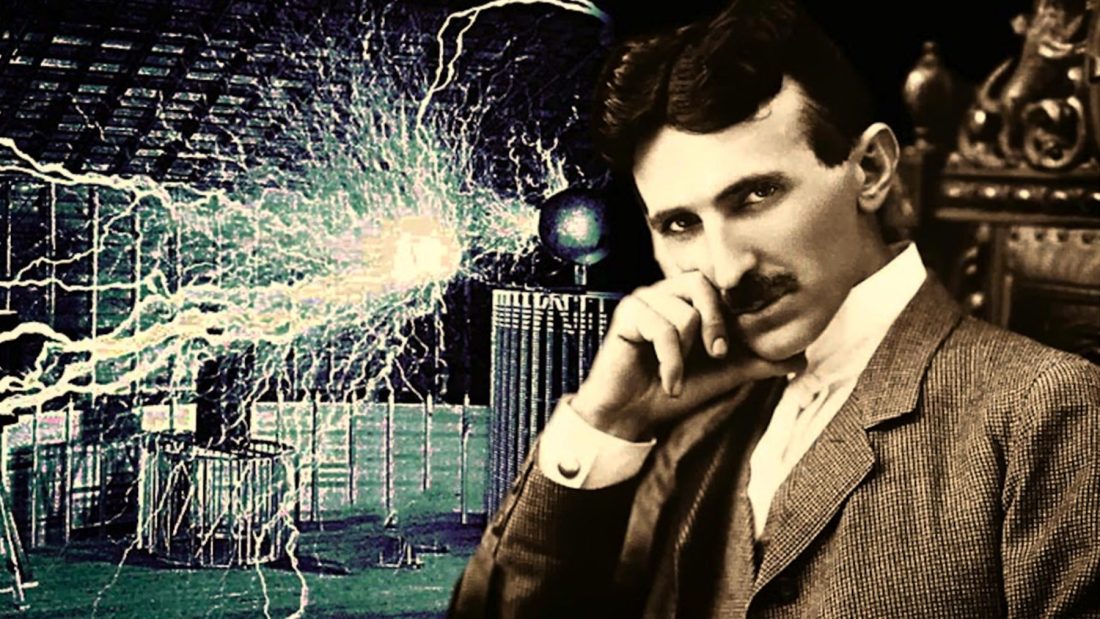
Nikola Tesla’s Failures, Death and Legacy

In 1895 Tesla’s New York lab burned, destroying years’ worth of notes and equipment. Tesla relocated to Colorado Springs for two years, returning to New York in 1900. He secured backing from financier J.P. Morgan and began building a global communications network centered on a giant tower at Wardenclyffe, on Long Island. But funds ran out and Morgan balked at Tesla’s grandiose schemes.

Tesla lived his last decades in a New York hotel, working on new inventions even as his energy and mental health faded. His obsession with the number three and fastidious washing were dismissed as the eccentricities of genius. He spent his final years feeding—and, he claimed, communicating with—the city’s pigeons. Tesla died in his room on January 7, 1943. Later that year the U.S. Supreme Court voided four of Marconi’s key patents, belatedly acknowledging Tesla’s innovations in radio.

Patent After Nikola Tesla was found dead in January 1943 in his hotel room in New York City, representatives of the U.S. government’s Office of Alien Property seized many documents relating to the brilliant and prolific 86-year-old inventor’s work

What happened to Tesla’s files from there, as well as what exactly was in those files, remains shrouded in mystery—and ripe for conspiracy theories. Three weeks after the Serbian-American inventor’s death, an electrical engineer from the Massachusetts Institute of Technology (MIT) was tasked with evaluating his papers to determine whether they contained “any ideas of significant value.”

Dr. John Trump

According to the declassified files, Dr. John G. Trump reported that his analysis showed Tesla’s efforts to be “primarily of a speculative, philosophical and promotional character” and said the papers did “not include new sound, workable principles or methods for realizing such results.” The scientist’s name undoubtedly rings a bell, as John G. Trump was the uncle of the 45th U.S. president, Donald J. Trump. The younger brother of Trump’s father, Fred, he helped design X-ray machines that greatly helped cancer patients and worked on radar research for the Allies during World War II.

Tesla, Trump, Trump

At the time, the FBI pointed to Dr. Trump’s report as evidence that Tesla’s vaunted “Death Ray” particle beam weapon didn’t exist, outside of rumors and speculation. But in fact, the U.S. government itself was split in its response to Tesla’s technology. Marc Seifer, author of the biography Wizard: The Life & Times of Nikola Tesla, says a group of military personnel at Wright Patterson Air Force Base in Dayton, Ohio, including Brigadier General L.C. Craigee, had a very different opinion of Tesla’s ideas.

Wizard: The Life & Times of Nokola Tesla

“Craigee was the first person to ever fly a jet plane for the military, so he was like the John Glenn of the day,” Seifer says. “He said, ‘there’s something to this—the particle beam weapon is real.’ So you have two different groups, one group dismissing Tesla’s invention, and another group saying there’s really something to it.”

Then there’s the nagging question of the missing files. When Tesla died, his estate was to go to his nephew, Sava Kosanovic, who at the time was the Yugoslav ambassador to the U.S. According to the recently declassified documents, some in the FBI feared Kosanovic was trying to wrest control of Tesla’s technology in order to “make such information available to the enemy,” and even considered arresting him to prevent this.

Yugoslavan Ambassador Sava N. Kosanovic

In 1952, after a U.S. court declared Kosanovic the rightful heir to his uncle’s estate, Tesla’s files and other materials were sent to Belgrade, Serbia, where they now reside in the Nikola Tesla Museum there. But while the FBI originally recorded some 80 trunks among Tesla’s effects, only 60 arrived in Belgrade, Seifer says. “Maybe they packed the 80 into 60, but there is the possibility that…the government did keep the missing trunks.”

Despite John G. Trump’s dismissive assessment of Tesla’s ideas immediately after his death, the military did try and incorporate particle-beam weaponry in the decades following World War II, Seifer says. Notably, the inspiration of the “Death Ray” fueled Ronald Reagan’s Strategic Defense Initiative, or “Star Wars” program, in the 1980s. If the government is still using Tesla’s ideas to power its technology, Seifer explains, that could explain why some files related to the inventor still remain classified

Although some of his more sensitive innovations may still be hidden, Tesla’s legacy is alive and well, both in the devices we use every day, and the technologies that will undoubtedly play a role in our future. “Tesla is the inventor of wireless technology. He’s the inventor of the ability to create an unlimited number of wireless channels,” Seifer says of the inventor’s lasting impact. “So radio guidance systems, encryption, remote control robots—it’s all based on Tesla’s technology.”

History of Nicola Tesla, Part 1

Serbian-American engineer and physicist Nikola Tesla (1856-1943) invented the first alternating current (AC) motor and developed AC generation and transmission technology. Though he was famous and respected, he was never able to translate his copious inventions into long-term financial success—unlike his early employer and chief rival, Thomas Edison.

Nikola Tesla

Nikola Tesla was born in 1856 in Smiljan, Croatia, then part of the Austro-Hungarian Empire. His father was a priest in the Serbian Orthodox church and his mother managed the family’s farm. In 1863 Tesla’s brother Daniel was killed in a riding accident. The shock of the loss unsettled the 7-year-old Tesla, who reported seeing visions.

Young Tesla in the lab

In 1870, Tesla moved to Karlovac (Carlstadt) and stayed with his Aunt and Col. “Old War Horse” Brankovic. He attended “Higher Real Gymnasium” where teacher Martin Sekulic taught him math and physics and had a decided influence over him. Tesla graduated Gimnazije Karlovac a year early.

House where Tesla lived in Karlovac

Did you know? During the 1890s Mark Twain struck up a friendship with inventor Nikola Tesla. Twain often visited him in his lab, where in 1894 Tesla photographed the great American writer in one of the first pictures ever lit by phosphorescent light.

Tesla and Twain

Tesla studied math and physics at the Technical University of Graz and philosophy at the University of Prague. In 1882, while on a walk, he came up with the idea for a brushless AC motor, making the first sketches of its rotating electromagnets in the sand of the path. Later that year he moved to Paris and got a job repairing direct current (DC) power plants with the Continental Edison Company. Two years later he immigrated to the United States.

Nikola Tesla and Thomas Edison

Tesla arrived in New York in 1884 and was hired as an engineer at Thomas Edison’s Manhattan headquarters. He worked there for a year, impressing Edison with his diligence and ingenuity. At one point Edison told Tesla he would pay $50,000 for an improved design for his DC dynamos. After months of experimentation, Tesla presented a solution and asked for the money. Edison demurred, saying, “Tesla, you don’t understand our American humor.” Tesla quit soon after.

Nikola Tesla and Westinghouse

After an unsuccessful attempt to start his own Tesla Electric Light Company and a stint digging ditches for $2 a day, Tesla found backers to support his research into alternating current. In 1887 and 1888 he was granted more than 30 patents for his inventions and invited to address the American Institute of Electrical Engineers on his work.

His lecture caught the attention of George Westinghouse, the inventor who had launched the first AC power system near Boston and was Edison’s major competitor in the “Battle of the Currents.” Westinghouse hired Tesla, licensed the patents for his AC motor and gave him his own lab. In 1890 Edison arranged for a convicted New York murderer to be put to death in an AC-powered electric chair—a stunt designed to show how dangerous the Westinghouse standard could be.

Edison’s Electric Chair

Buoyed by Westinghouse’s royalties, Tesla struck out on his own again. But Westinghouse was soon forced by his backers to renegotiate their contract, with Tesla relinquishing his royalty rights. In the 1890s Tesla invented electric oscillators, meters, improved lights and the high-voltage transformer known as the Tesla coil.

Early Tesla Coil

He also experimented with X-rays, gave short-range demonstrations of radio communication two years before Guglielmo Marconi and piloted a radio-controlled boat around a pool in Madison Square Garden. Together, Tesla and Westinghouse lit the 1893 World’s Columbian Exposition in Chicago and partnered with General Electric to install AC generators at Niagara Falls, creating the first modern power station.

Functioning Model

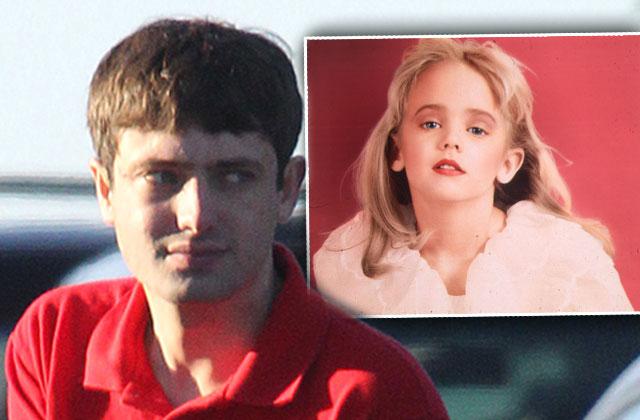
JonBenét Ramsey

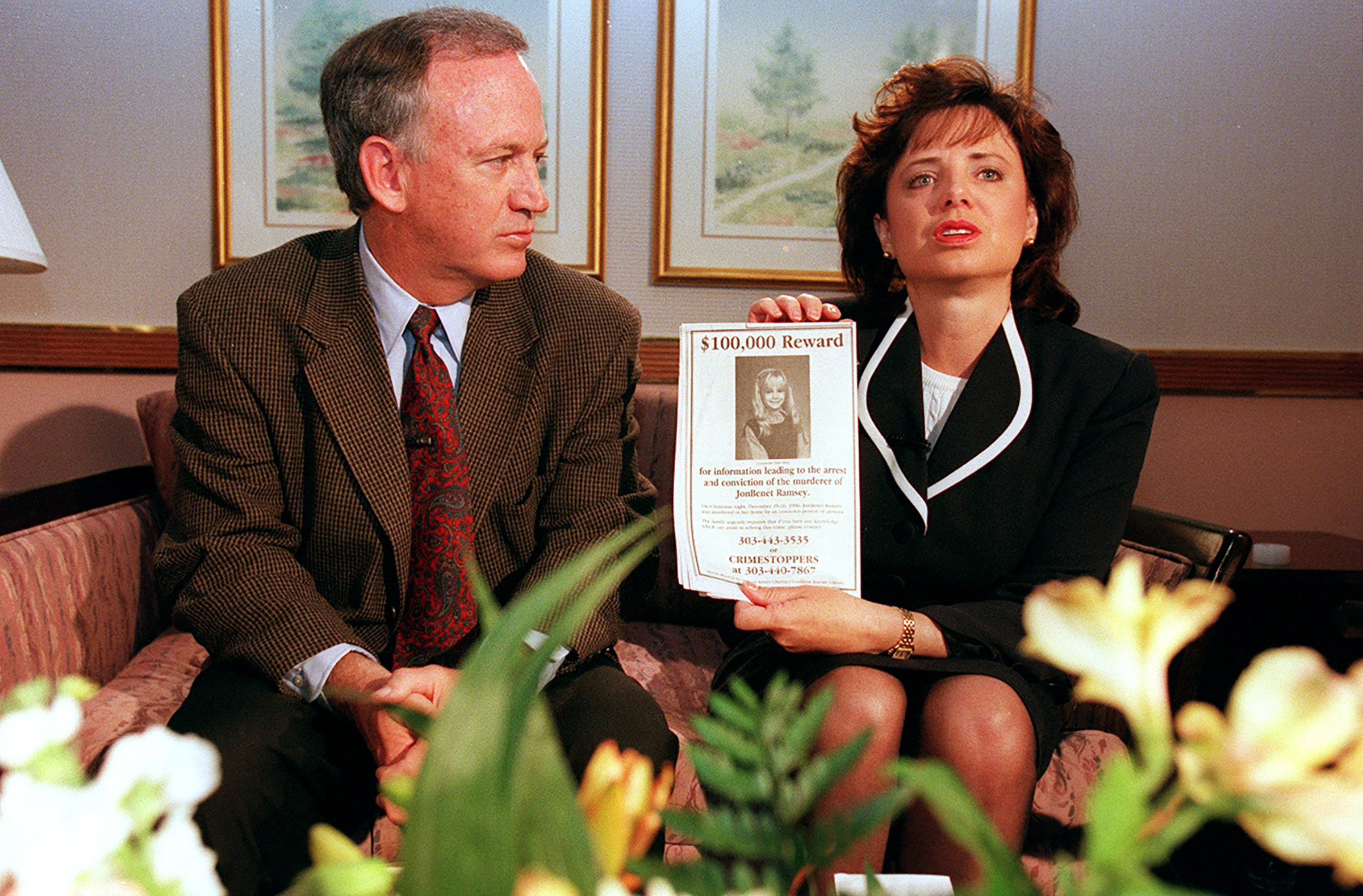
In the early morning hours of December 26, 1996, John and Patsy Ramsey awoke to find their six-year-old daughter JonBenét Ramsey missing from her bed at their home in Boulder, Colorado. Patsy and John had woken up early to prepare for a trip, when Patsy discovered a ransom note on the stairs demanding $118,000 for their daughter’s safe return.

Despite the note’s warning not to involve police, Patsy immediately called them, as well as friends and family in order to aid in the search for JonBenét Ramsey. Police arrived at 5:55 AM and found no signs of forced entry, but did not search the basement, where her body would eventually be found.

Before JonBenét’s body was even found, there were many investigative mistakes made. Only JonBenét’s room was cornered off, so friends and family roamed the rest of the house, picking up things and potentially destroying evidence. The Boulder Police Department also shared evidence they found with the Ramseys and delayed conducting their informal interviews with the parents. At 1:00 PM the detectives instructed Mr. Ramsey and a family friend to go around the house to see if anything was amiss. The first place they looked was the basement, where they found JonBenét’s body. John Ramsey immediately picked up his daughter’s body and brought her upstairs, which unfortunately destroyed potential evidence by disturbing the crime scene.

During the autopsy it was discovered that JonBenét Ramsey had died from asphyxiation due to strangulation, in addition to a skull fracture. Her mouth had been covered in duct tape and her wrists and neck were wrapped with a white cord. Her torso had been covered in a white blanket. There was no conclusive evidence of rape as no semen was found on the body and her vagina appeared to have been wiped clean, although a sexual assault had occurred. The makeshift garret was made using a length of cord and part of a paintbrush from the basement. The coroner also found what was believed to be pineapple in JonBenét’s stomach. Her parents do not remember giving her any the night before she died, but there was a bowl of pineapple in the kitchen which had her nine-year-old brother Burke’s fingerprints on it, however this meant little since time cannot be attributed to fingerprints. The Ramseys maintained Burke was in his room all night asleep, and there was never any physical evidence to reflect otherwise.

There are two popular theories in the Ramsey case; the family theory and the intruder theory. The initial investigation focused heavily on the Ramsey family for many reasons. The police felt that the ransom note was staged as it was unusually long, written using a pen and paper from the Ramsey’s house, and demanded almost the exact amount of money that John had received as a bonus earlier that year. Additionally, the Ramseys were reluctant to cooperate with police, though they later said this was because they feared the police would not conduct a full investigation and target at them as easy suspects. However all three members of the immediate family were questioned by investigators and submitting handwriting samples to compare to the ransom letter. Both John and Burke were cleared of any suspicion of writing the note. Although much was made that Patsy could not be conclusively cleared by her handwriting sample, this analysis was not further supported by any other evidence.

Despite a larger pool of suspects, the media immediately focused on JonBenét’s parents, and they spent years under the harsh limelight of the public eye. In 1999, a Colorado grand jury voted to indict the Ramseys on child endangerment and obstruction of a murder investigation, however the prosecutor felt that the evidence did not meet the beyond a reasonable doubt standard and declined to prosecute. JonBenét’s parents were never officially named as suspects in the murder.

Alternatively, the intruder theory had lots of physical evidence to support it. There was a boot print found next to JonBenét’s body which did not belong to anyone in the family. There was also a broken window in the basement which was believed to be the most likely point of entry for an intruder. Additionally, there was DNA from drops of blood from an unknown male found on her underwear. The floors in the Ramsey’s home were heavily carpeted, making it plausible for an intruder to have carried JonBenét downstairs without waking the family.

One of the most famous suspects was John Karr. He was arrested in 2006 when he confessed to killing JonBenét by accident, after he had drugged and sexually assaulted her. Karr was eventually dismissed as a suspect after it was revealed that no drugs had been found in JonBenét’s system, police could not confirm he was in Boulder at the time, and his DNA did not match the profile generated from the samples found.

Much of the recent investigation in the case revolves around the DNA profiles developed from the sample found in her underwear and the touch DNA later developed from her long johns. The profile from her underwear was entered into CODIS (the national DNA database) in 2003, but no matches have been identified.

In 2006, Boulder District Attorney Mary Lacy took over the case. She agreed with the federal prosecutor that the intruder theory was more plausible than the Ramseys killing their daughter. Under Lacy’s lead, investigators developed a DNA profile from touch DNA (DNA left behind by skin cells) on her long johns. In 2008 Lacy released a statement detailing the DNA evidence and fully exonerating the Ramsey family, saying in part:

“The Boulder District Attorney’s Office does not consider any member of the Ramsey family, including John, Patsy, or Burke Ramsey, as suspects in this case. We make this announcement now because we have recently obtained this new scientific evidence that adds significantly to the exculpatory value of the previous scientific evidence. We do so with full appreciation for the other evidence in this case.

Local, national, and even international publicity has focused on the murder of JonBenet Ramsey. Many members of the public came to believe that one or more of the Ramseys, including her mother or her father or even her brother, were responsible for this brutal homicide. Those suspicions were not based on evidence that had been tested in court; rather, they were based on evidence reported by the media.”

In 2010 the case was officially reopened with renewed focus on the DNA samples. Further testing has been conducted on the samples and experts now believe that the sample is actually from two individuals rather than one. In 2016 it was announced that the DNA would be sent to the Colorado Bureau of Investigation to be tested using more modern methods and authorities hope to develop an even stronger DNA profile of the killer.

In 2016, CBS aired The Case of JonBenét Ramsey which implied her then nine-year-old brother Burke was the killer despite the fact he was cleared by the DNA evidence that proved the existence of an intruder. Burke filed a $750 million-dollar lawsuit against CBS for defamation. The case was settled in 2019, and while the terms of the settlement were not disclosed, his lawyer stated the case was “amicably resolved to the satisfaction of all parties.”

The JonBenét Ramsey case is still open and remains unsolved.

SOURCE: CRIME MUSEUM