King Vultures

The King vulture (Sarcoramphus papa) is a large bird found in Central and South America. It is a member of the New World vulture family Cathartidae. Its more powerful features, for the purpose of feeding from the toughest animal carcasses, have given the King vulture its name; its larger size, brilliant color, and adapted features. Other birds treat the King vulture as the king, for example, when it flies in, other birds will stop feeding and let it eat.

Appearance

An imposing bird, the adult King vulture has predominantly white plumage, which has a slight rose-yellow tinge to it. In stark contrast, the wing coverts, flight feathers, and tail are dark grey to black, as is the prominent thick neck ruff. The head and neck are devoid of feathers, the skin shades of red and purple on the head, vivid orange on the neck, and yellow on the throat. On the head, the skin is wrinkled and folded, and there is a highly noticeable irregular golden crest attached to the cere above its orange and black bill; this caruncle does not fully form until the bird’s fourth year. The King vulture has, relative to its size, the largest skull and braincase, and strongest bill, of the New World vultures. This bill has a hooked tip and a sharp cutting edge. The bird has broad wings and a short, broad, and square tail. The irises of its eyes are white and bordered by bright red sclera. Unlike some New World vultures, the King vulture lacks eyelashes. It also has gray legs and long, thick claws. The juvenile vulture has a dark bill and eyes, and a downy, gray neck that soon begins to turn the orange of an adult. Younger vultures are a slate gray overall, and, while they look similar to the adult by the third year, they do not completely molt into adult plumage until they are around five or six years of age.

Distribution

King vultures live in the south of Mexico and throughout South and Central America to northern Argentina. Mainly frequenting humid tropical forests, they may sometimes be seen in more open areas like savannah and grasslands. These birds prefer undisturbed forests inhabited by large mammals. They are also often seen near swamps or marshy places in the forests.

Habits and Lifestyle

King vultures do not gather in large groups but remain in family units. They mostly stay out of sight, perched high up in the canopy, or they are flying about and soaring high above the ground looking for food. They do not migrate, remaining within the same area all year long. They are a diurnal species and much of their time is spent basking in the sun and saving their energy, sometimes preening their wing feathers. King vultures, unlike some other vulture species, have a poor sense of smell, relying on other vultures to locate prey, and then descending to join in the feeding. These birds are very rarely aggressive, usually backing down instead of fighting. Due to their large bodies and wings, they totally depend on air currents for their flight, and avoid flapping their wings unless they really have to. King vultures do not have a voice box (a syrinx) or the muscles needed to make it work. They can make very low croaks. During the breeding season, they will give warning sounds when something approaches their nest.

Mating Habits

King vultures are monogamous and their pair bonds last for life. They are often seen perching high in trees under cover or soaring very high up in the sky. As a result, their courting ritual is only seen in captivity, being a display where both birds walk around on the ground in circles while they flap their wings. They make loud snorting and wheezing noises during mating. Breeding usually takes place during the dry season. These birds are solitary and so do not gather in big colonies to nest. Instead of building nests, they lay their eggs in a stump the hollow of a rotting log, or a crevice in a tree. A single egg is laid and incubation lasts for around 55 to 58 days, with both parents regularly taking turns. Chicks are naked when they hatch but very soon acquire pure white down. The parents bring food to them in their claws, but also feed their chick by regurgitation. Young fledge at 3-4 months, but remain dependent on their parents until they are eight months old and may stay close to them for two more years. At three to four years of age, a chick has developed all its plumage and other features. Females become reproductively mature at around 5 years of age, and males at around 7 years of age.

Fun Facts for Kids

King vultures have one of the strongest beaks out of all the American vultures, being able to open a carcass that the others cannot. This is why they often eat first, with the other vultures eating what remains.

When it is too hot, the King vulture defecates on its legs, a cooling process called urohydrosis.

The closest relatives to King vultures are condors.

The vulture’s head and neck are featherless as an adaptation for hygiene, though there are black bristles on parts of the head; this lack of feathers prevents bacteria from the carrion it eats from ruining its feathers and exposes the skin to the sterilizing effects of the sun.

After eating, King vultures will fly a long way to a river to bathe.

Ancient Mayans knew the King vulture, including it in their art. They named it “oc”.

SOURCE: ANIMALIA.COM

Lunchbox Notes

My mom was always one of those people who “Spring” cleaned her home twice a year—once in the Spring and once again in Fall.  This was non-negotiable.  She cleaned walls, ceilings, carpets, windows—every surface in every room on every floor—AND inside every drawer or cabinet. She flipped mattresses and scoured grout with an old toothbrush.  Since the basement held my father’s workshop, the furnace, oil tank and not much else, she did relegate the cleaning of that floor to him, but she did make frequent trips down there to check his progress. 

With the passing of time, my father has passed and Mom now walks with a walker, but she still insists on her cleaning marathons—only concentrating on the main floor where she lives.  When we visit, I will clean the upstairs for her—there’s a spare bedroom where we sleep—and another spare room mostly empty. 

The basement, however, has not been touched much since Dad passed.  The tools were left to my brother and in more than 10 years, he still cannot face getting rid of anything—which is such a shame because they are rusting in the damp workshop.  Since Mom can’t go down into the basement, she had no idea of its condition until I showed her pictures.  She shrugged and said she couldn’t force him to do anything.  So, I suggested we just get rid of the myriad of leftover scraps of wood, trim and old paint cans and she said she’d talk to him about that.  Then, in one of the pictures, she spied a shelf of books and decided they must be musty by now and we could toss those.

The small stack of books were mostly hardcover spy novels (Dad loved those) and how-to books.  All of them smelled musty.  She started to page through one while I paged through another.  In one of the spy novels we found $2 bills tucked between the pages and Mom laughed…that’s Dad she said.  We went through the other books, but we didn’t find anything interesting until the last book.  I picked it up to hand it to her, and something slipped out from the book jacket.  It was a small bag like the kind you got a card shop if you only bought one card.  Inside were small pieces of folded paper. 

Mom opened one of them and her eyes misted up. I asked what the paper was—was it a note from Dad?  She shook her head no…they were notes SHE wrote and sent in his lunchbox sometimes…little I love you’s or you’re the best husband type notes.  There were also cards from my sister in the stack.  And then Mom handed me a hand written letter I wrote to Dad a long time ago.  I remembered tucking it into his birthday card that year, thanking him for helping me through some really rough times back then.  I couldn’t believe he kept it all those years. 

Armed Forces Day

From Soldiersangels.org, fun facts about Armed Forces Day:

Happy Armed Forces Day! Or, is it “Merry Armed Forces Day”? While you may be familiar with the holiday itself, there is a slew of history that has slipped through the cracks of time. Each military force: Army, Navy, Air Force, Marines, and Coast Guard has their own celebratory day in the calendar year. These days are greeted by special celebrations for that branch of the service and were established during the terms of several presidents. The time frame ranges from the late eighteenth century to the early twentieth century. It wasn’t until August 31, 1949—four years after the conclusion of World War Two—that a single day was denoted for all five of the United States of America’s armed forces.

President Harry S. Truman declared that thereafter “Armed Forces Day” would be celebrated on the third Saturday of every May. In addition to its origins, there are several interesting facts associated with Armed Forces Day!

Every year, Armed Forces Day celebrations are focused around a central theme. This year, [2016] the theme is “Guardians of Freedom”. Some past themes include its debut theme in 1950, which was “Teamed for Defense”, “Appreciation of a Nation”, “Prepared to Meet the Challenge”, “Freedom Through Unity”, and “Power for Peace”.

Even though Armed Forces Day is not a federal holiday, it is widely celebrated. On the first Armed Forces Day, over 10,000 veterans and soldiers marched in Washington. One might even call it an international holiday, as several other countries including Australia, Bulgaria, Spain, South Korea, and Thailand also celebrate an Armed Forces Day that is similar to the holiday in the United States.

The United States Department of Defense is not only the largest federal department in the country, it is the largest employer in the world. All combined, the various branches of the Department of Defense include 742,000 civilian personnel, over 1.3 million troops on active duty, over 2 million retired service members, and 826,000 Reserves and National Guard members.

National Armed Forces Day is actually the fifth in a series of holidays celebrating our armed forces during National Military Appreciation Month (NMAM). The first holiday is Loyalty Day, then Public Service Recognition Week and Military Spouse Appreciation Day followed by Victory in Europe Day. Then comes Armed Forces Day and the month culminates in the federally celebrated holiday, Memorial Day.

One purpose of the original Armed Forces Day was to demonstrate the best and brightest of new technology and methodology. The goal was, and is, to be prepared for “any eventuality by land, sea, or air.”

Source: soldiersangels.com

Calamity Jane

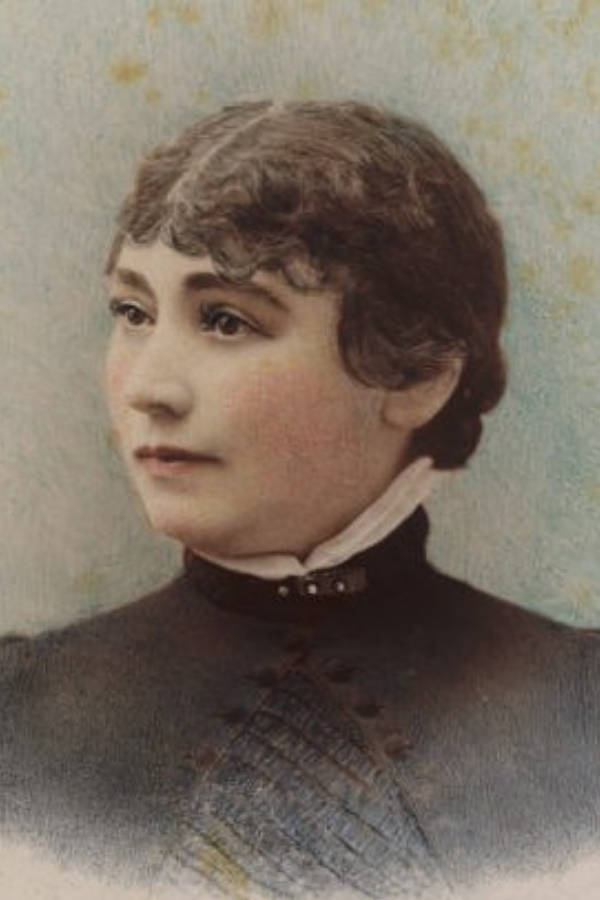
Calamity Jane was born May 1, 1852 and to celebrate her birthday, I went searching for some interesting facts about her.

From the All That’s Interesting website comes the story of Calamity Jane:

The life of Calamity Jane may be more fiction than fact, but her story is enthralling either way.

In the hyper-masculine world of the Wild West, Calamity Jane could shoot, ride, and drink with the toughest cowboys of her day.

Growing Up on The Frontier

From the mix of tall tales and exaggerations that make up the life of Calamity Jane, facts are like the nuggets of gold in the west — rare. She herself published an autobiography in 1896 that most historians peg as trumped-up fiction, and most accounts of her life weave together legend and truth.

Still, there are a few parts of Calamity’s life that are mostly certain.

Calamity Jane was born Martha Jane Canary (sometimes written as “Cannary”) in 1856 — though she claimed she was born in 1852 — near Princeton, Missouri, right on the Iowa border. It was nine years before the outbreak of the Civil War. Her father, Robert, was a farmer. Her mother, Charlotte, was by some accounts an illiterate prostitute whose husband tried to reform her.

In her book The Autobiography of Calamity Jane, Calamity claims to have been the oldest of five siblings, two brothers and three sisters, spending the better part of her Missouri childhood riding horses.

In the early 1860s, Canary’s family headed to Montana for gold. Her mother died in Blackfoot, Montana, possibly of pneumonia, and her father died soon after taking his children to Salt Lake City. It’s not clear what happened to her siblings, but by the time she was around 15 Canary was on her own.

She went to Piedmont, Wyoming, about 75 miles northeast of Salt Lake, where she worked at a boarding house and danced with soldiers at night. Though she later claimed to have spent her teens riding “many dangerous missions” in the American Indian Wars in Arizona — “I was considered the most reckless and daring rider and one of the best shots in the western country,” her autobiography reads — she most likely worked as a laundress, dancer, and prostitute along the Wyoming railroad.

Becoming Calamity Jane

How did Martha Jane Canary go from an orphaned prostitute to one of the most famous women in the Wild West? In Wyoming, she began to develop the identity that would make her famous as Calamity Jane.

Canary knew how to shoot, she liked to dress as a man (or perhaps more accurately, she refused to dress like women of the era), and, like men, she chewed tobacco and drank a lot of alcohol. That set her apart from her cohorts; she was reportedly one of the first white women to enter the Black Hills of South Dakota.

“The first place that attracted her attention,” according to one train captain who saw her there when she was 20 years old, “was a saloon, where she was soon made blind as a bat from looking through the bottom of a glass.”

Canary quickly gained notoriety in 1876 Deadwood, South Dakota, where she rubbed shoulders with the likes of Wild Bill Hickok. Her personality caught the attention of dime novel writer Edward Wheeler, who worked Calamity Jane into his popular stories as a Wild West heroine.

But how did Canary become Calamity Jane? The origin of the “Calamity Jane” moniker is, as with the rest of her life, unknown for certain. But there are a few of theories.

In the first, Martha Jane rescued a man from his horse during a raid by Native Americans. Shot by the Indians, Martha Jane pulled him onto her own steed. He said to her: “I name you Calamity Jane, the heroine of the plains.” In another version, it’s said that to offend Martha Jane was to “court calamity.”

Another is a bit simpler: Jane was a popular nickname for women in the Wild West (Lewis and Clark called Sacagawea “Jane”), and her life had been such a calamity.

In any case, the nickname stuck.

Calamity Jane’s Maybe-Romance with Wild Bill Hickok

A big element of Calamity Jane’s reputation today – and part of the reason she became famous in her own time — was her purported romance with American folk hero James Butler “Wild Bill” Hickok.

In her 1896 autobiography, she calls Hickok her “friend,” and by 1902 she told the press he was her “affianced husband.” In 1941, a 68-year-old woman named Jean McCormick went on the CBS radio program We the People to announce that she was long-lost daughter of Calamity Jane and Wild Bill Hickok, and she supposedly had a trove of handwritten letters from Calamity – and a marriage certificate between Calamity and Hickok — to prove it.

The real story? They may have been casual friends — they were both in Deadwood in 1876 — but in all likelihood Hickok and Calamity were never lovers.

In fact, Calamity only knew Hickok for six weeks before his murder at the Nuttal & Mann Salon in Deadwood. (Killed during a poker game, Bill held two aces and an eight, now called the “dead man’s hand.”) The marriage certificate and album of purported letters from Calamity to her daughter Jean were very likely made up by McCormick as a last-ditch effort to get some money and a few minutes of fame in the last years of her life.

Calamity also claimed to have married Clinton Burke in El Paso, Texas in 1885, and to have remained there until 1889. But news reports show she wasn’t even in Texas at that time.

More likely was that she married a man named Bill Steers in Wyoming, with whom she had two children: a boy who died in infancy, and a girl who lived into the 1960s.

Acts Of Bravery and Kindness

Calamity Jane has a tough reputation, but during her life she was known for her acts of kindness and bravery

Although the moniker of “Calamity Jane” evokes an image of a gunslinging, tobacco-spitting outlaw, much of Calamity’s reputation came from her bravery and good heart. Upon her return to Deadwood in 1895, after a 16-year absence, the Black Hills Daily Times wrote:

“She has always been known for her friendliness, generosity and happy cordial manner. It didn’t matter to her whether a person was rich or poor, white or black, or what their circumstances were, Calamity Jane was just the same to all. Her purse was always open to help a hungry fellow, and she was one of the first to proffer her help in cases of sickness, accidents or any distress.”

The story goes that when smallpox ravaged Deadwood in 1878, Calamity Jane cared for eight afflicted gold miners.

One man described her as “the last person to hold the head of and administer consolation to the troubled gambler or erstwhile bad man who was about to depart into the new country.”

Martha Jane Canary’s Late Life: Alcoholism and Death

Calamity Jane poses at Wild Bill’s grave. She would later be buried next to him.

English professor Margot Mifflin put it succinctly:

“[Calamity Jane] was the Courtney Love of her day: A talented pioneer in a man’s world, she was a chronic substance abuser prone to outrageous behavior and forever linked in the public mind to a dead man whose fame overshadowed her own.”

With the success of Wheeler’s Calamity Jane stories, Calamity supported herself by banking on her notoriety and selling photos of herself for extra cash. After publishing her 1896 autobiography — which Calamity, likely illiterate, recited to a scribe — she appeared in dime museum shows and rodeos, from Minneapolis to Buffalo, New York.

In 1903 she died near Deadwood of “inflammation of the bowels,” likely caused by alcoholism. She was only in her late 40s, but years of drinking made her look much older.

Calamity was buried next to Wild Bill Hickok. Why? The reasoning varies from the romantic (Calamity Jane died with his name on her lips) to the vengeful (his friends thought it’d be a funny prank). It could also be because she swore she married Hickok, even though every piece of evidence points to the contrary.

Calamity Jane: The Character

With so much misinformation surrounding the life of Calamity Jane, her persona has easily taken on a variety of forms in popular fiction. In the 1953 film Calamity Jane, Doris Day provided a G-rated, ted, light-hearted portrayal of the tough Calamity Jane — singing, dancing, and engaging in cheerful mischief.

In the TV series Deadwood, on the other hand, Calamity Jane, portrayed by Robin Weigert, is a tough, hard-drinking frontierswoman who can keep up with the boys.

Her life’s story, which Calamity herself happily confused with fiction, may never be fully known.

SOURCE: All That’s Interesting

Florida State Flower: Orange Blossom

The blossom of the orange tree (Citrus sinensis) is one of the most fragrant flowers in Florida. Millions of these white flowers perfume the atmosphere throughout central and south Florida during orange blossom time. The orange blossom was selected as the state flower by the 1909 legislature.

The orange fruit is an important agricultural product, used for both the juicy fruit pulp and the aromatic peel (rind). Orange blossoms (the flowers) are used in several different ways, as are the leaves and wood of the tree.

Flowers

The orange blossom, which is the state flower of Florida, is highly fragrant and traditionally associated with good fortune. It has long been popular in bridal bouquets and head wreaths.

Orange blossom essence is an important component in the making of perfume.

Orange blossom petals can also be made into a delicately citrus-scented version of rosewater, known as “orange blossom water” or “orange flower water”. It is a common ingredient in French and Middle Eastern cuisines, especially in desserts and baked goods. In some Middle Eastern countries, drops of orange flower water are added to disguise the unpleasant taste of hard water drawn from wells or stored in qullahs (traditional Egyptian water pitchers made of porous clay). In the United States, orange flower water is used to make orange blossom scones and marshmallows.

In Spain, fallen blossoms are dried and used to make orange tea.

Orange blossom honey (or citrus honey) is obtained by putting beehives in the citrus groves while trees bloom. By this method, bees also pollinate seeded citrus varieties. This type of honey has an orangey taste and is highly prized.

Leaves

Orange leaves can be boiled to make orange tea.

Wood

Orangewood sticks are used as cuticle pushers in manicures and pedicures, and as spudgers for manipulating slender electronic wires.

Orangewood is used in the same way as mesquite, oak, and hickory for seasoning grilled meat.

SOURC: MIAMI LIVING

What Shall We Bake Today?

As promised, today’s recipe is Katharine Hepburn’s Brownies!

From the epicurious website:

The best recipe I have for brownies comes from a friend who got it from a magazine article about Katharine Hepburn. It is, apparently, her family’s.

Ingredients

1 stick (8 tablespoons) butter

2 squares unsweetened chocolate

1 cup sugar

2 eggs

1/2 teaspoon vanilla

1/4 cup all-purpose flour

1/4 teaspoon salt

1 cup chopped walnuts (optional)

Preparation

1. Melt together 1 stick butter and 2 squares unsweetened chocolate and take the saucepan off the heat.

2. Stir in 1 cup sugar, add 2 eggs and 1/2 teaspoon vanilla, and beat the mixture well.

3. Stir in 1/4 cup all-purpose flour and 1/4 teaspoon salt. (In the original recipe, 1 cup chopped walnuts is added here as well.)

4. Bake the brownies in a buttered and floured 8-inch-square pan at 325°F for about 40 minutes.

You can cut these brownies into squares, once they have cooled, and eat them out of the pan, but it is so much nicer to pile them on a fancy plate, from which people are going to eat them with their hands anyway. If you want to smarten up your act you can put a square of brownie on a plate with a little blob of créme fraîche and a scattering of shaved chocolate.

ENJOY!

Katharine Hepburn

Today is one of my favorite actress’s birthday—Katharine Hepburn.  She was born May 12, 1907 and passed away on June 29, 2003 at the age of 96.  I’ve enjoyed (and have on dvds) many of her films: Desk Set, The Philadelphia Story, and The Lion in Winter to name just a few.  I found an article on Mental Floss listing 11 things we may not have known about this wonderful actress.

From Mental Floss:

1. Katharine Hepburn was a tomboy from an early age.

Aside from her acting career, Katharine Houghton Hepburn—who was born on May 12, 1907—was also famous for her commitment to wearing pants at a time when the rest of Hollywood’s female stars virtually never strayed from skirts and dresses. In 1986, the Council of Fashion Designers of America even honored Hepburn with a lifetime achievement award.

Hepburn, whose mother was a suffragette and early advocate of birth control, was raised to be confident, independent, and individualistic, and her aversion to forced femininity began at a young age. For one memorable summer during her childhood in Connecticut, she sported a short haircut and started going by “Jimmy.” “I thought being a girl was really the bunk,” Hepburn later explained in an interview. “But there’s no bunk about Jimmy.”

Though she stuck with her birth name after that, she never warmed to the idea of long, flowy clothing. “I realized long ago that skirts are hopeless,” Hepburn said in 1993. “Anytime I hear a man say he prefers a woman in a skirt, I say: ‘Try one. Try a skirt.’”

2. Hepburn found her brother dead when she was 13 years old.

While Hepburn’s upbringing was privileged in some ways, it wasn’t without tragedy. In 1921, when she was 13 years old, she found her 15-year-old brother Tom hanging from the rafters, having strangled himself to death. Her family maintained that it was the result of a magic trick gone awry, since Tom had tried a mock-hanging stunt at least once before, but it cast a dark shadow over the rest of Hepburn’s childhood and added to an already-established legacy of suicide in the family: Two uncles, a great-uncle, and her grandfather all took their own lives.

3. She bought out her contract for The Lake rather than finish the run.

Hepburn made her Broadway debut in 1930’s Art and Mrs. Bottle and graced the stage again in 1932’s The Warrior’s Husband. Her third play, 1933’s The Lake, garnered abysmal reviews, including Dorothy Parker’s alleged observation that Hepburn “ran the gamut of emotion from A to B.” Not long into the run, 26-year-old Hepburn was so miserable—and treated so poorly by director Jed Harris—that she bought out her contract and simply walked away.

4. The Lake was the original source of one of her most memorable lines.

One line from the ill-fated play, however, followed Hepburn out that stage door and right into another one. In 1937’s Stage Door, Hepburn portrayed an aspiring actress competing with other boarding house tenants for parts in a play, and director Gregory La Cava gave her the line “The calla lilies are in bloom again,” which he had borrowed from The Lake. Delivered several times throughout the film in Hepburn’s trademark Mid-Atlantic drawl, the line became one of her most iconic, and it’s been referenced in various programs over the years, including an episode of I Love Lucy and the 1988 comedy Big Top Pee-Wee.

5. She once dumped a cup of water on co-star Ginger Rogers.

On the set of Stage Door, Ginger Rogers was flaunting a new mink coat when Hepburn appeared and poured her cup of water on it, explaining that if the coat was, in fact, real mink, it wouldn’t shrink. The media speculated that the behavior was brought on by jealousy, since Hepburn’s then-beau Howard Hughes had reportedly shown interest in Fred Astaire’s legendary dancing partner. But Rogers herself wouldn’t play into the rumors. “Don’t ask me, I haven’t the foggiest notion why [she did it],” Rogers later said in an interview.

6. For a while, Hepburn was considered “box office poison.”

Hepburn followed her film debut in 1932’s A Bill of Divorcement with an Oscar-winning performance in 1933’s Morning Glory and another acclaimed appearance in Little Women that same year. But she also had enough commercial flops—including Spitfire (1934), Mary of Scotland (1936), and the now-beloved screwball comedy Bringing Up Baby (1938)—in the mid-to-late 1930s that she landed on a 1938 list of actors labeled “box office poison” by the Independent Theater Owners’ Association of New York.

Hepburn was unabashed. “Look, they say I’m a has-been,” she told the Daily News with a chuckle, “Yet Bringing Up Baby already has clicked to the tune of $2 million gross, while Stage Door has grossed better than $2,500,000. If I weren’t laughing so hard, I might cry, but why should I?”

7. The Philadelphia Story was a turning point in her career.

As it turns out, Hepburn was right not to dwell on the poisonous criticism. In 1938, she accepted a starring role—which playwright Philip Barry had actually written for her—in the Broadway comedy The Philadelphia Story, and Howard Hughes bought her the rights so that she could reprise her role in a film adaptation. The MGM-produced 1940 film, which co-starred Cary Grant and Jimmy Stewart, was a box office smash, and it planted Hepburn right back on her path to greatness.

8. She had a decades-long affair with Spencer Tracy.

Hepburn wed Philadelphia businessman Ludlow Ogden Smith soon after graduating from Bryn Mawr in 1928, but they divorced after six years. Much more significant was her affair with fellow actor Spencer Tracy, with whom she lived for 27 years (though Tracy, who was Catholic, never actually divorced his wife). Over the course of their relationship, Hepburn and Tracy starred in nine films together, including 1942’s Woman of the Year, 1949’s Adam’s Rib, and 1952’s Pat and Mike. They wrapped production on their last one, 1967’s Guess Who’s Coming to Dinner, just a few weeks before Tracy died of a heart attack at age 67.

9. Whisky was Hepburn’s drink of choice.

Though Hepburn didn’t drink much during her years with Tracy (who was an alcoholic), she was known to regularly indulge in a glass of whisky in later life, which she said helped with the head tremor she had inherited from her grandfather. “I discovered that whisky helps stop the shaking,” she said in the 1993 documentary All About Me. “Problem is, if you’re not careful, it stops the rest of you, too.”

But based on what she told fellow cast member Brian Blessed while filming 1971’s The Trojan Women, it seems like she also just really loved whisky, all favorable side effects aside. “When I smell whisky, I go absolutely out of my mind. Whisky is beauuuuuutiful. I smell whisky in a glass and I want it,” she said, according to Blessed’s autobiography. “I’d drink whisky morning, noon, and night until it killed me.”

10. Her brownie recipe broke up a marriage.

Hepburn may have balked at certain societal restrictions on women, but that didn’t mean she had anything against spending time in the kitchen. She was especially particular about brownies, which, in her opinion, should be moist. After The New York Times published her signature recipe online in 2015, a woman named Sydne Newberry revealed in the comments section that Hepburn’s deliciously fudgy dessert had inadvertently ended her marriage. As Newberry told The Cut, she had brought the brownies on a trip to visit her husband while he was stationed at an Air Force base in Germany in the 1980s. While there, she shared the dessert with his friend and his friend’s wife, “a gorgeous Italian woman who was very proud of her cooking and was a real food snob.”

Her new baking buddy loved the brownies, and the two kept up correspondence over the next few years while the woman tried to get the recipe right. After repeated failures, she implied that Newberry had intentionally omitted something. Then, while visiting Newberry in the states, the woman began an affair with Newberry’s husband, who eventually left his wife for her, apparently undeterred by her lack of success on the brownie front. “If you want to steal somebody’s husband,” Newberry told NPR, “You should screw up a brownie recipe.”

11. Hepburn held the record for most Academy Award nominations … until Meryl Streep came along.

With her Best Actress nomination for On Golden Pond in 1981, Hepburn set a new record for most nominations ever earned by an actor: 12. The record went unchallenged until 2002, when Meryl Streep clinched her 13th for a supporting role in Adaptation (since then, Streep’s nomination count has risen to a staggering 21). When it comes to actual wins, however, Hepburn comes out on top: Streep has three, while Hepburn has four.

SOURCE: MENTAL FLOSS

(I have Hepburn’s brownie recipe in a post on the 14th.)

Looking a Gift Horse in the Mouth

Mother’s Day is coming up and I wondered just how bad were the “bad Mother’s Day Gifts” on the list in MIGHTY LISTS on their blogspot.  Here’s what I found:

Monday, April 28, 2014

10 bad mother’s day gifts

 This Mother’s Day, show your mom that you really care… and DON’T get her any of these gifts!

(I don’t even know what this is!)

(Again…wth?  A face exerciser?)

SOURCE: MIGHTY LISTS.COM

(PAT’S ADVICE…)