Creepy Fish: Vampire Fish

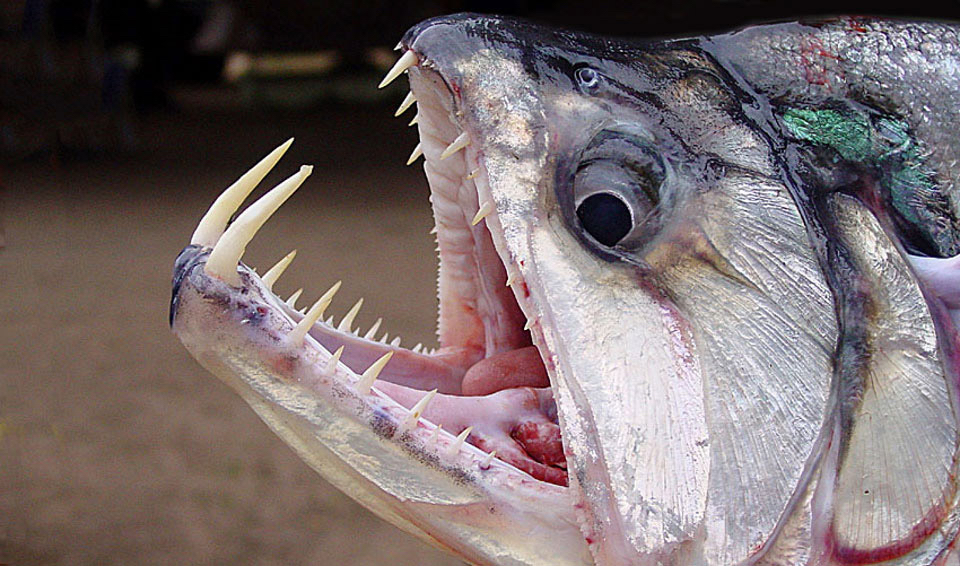
The physical appearance of this fish ispowerful as it has a robust and laterally compressedbody.  Their fins are short but have strong muscles which allow them to swim very quickly if their prey undertakes the escape. However, the payara fish’ (as they are known in Spanish) most striking trait is undoubtedly itsspectacular mouth, considered a powerful machine to tear their prey apart. The lower jaw is longer than the upper jaw, and both are armed withpointed sharp teeth from those used to crush their victims.

The attacking method and physical appearance is quite similar between the Payaras and the Goliath Tigers fish, since their heads are very similar. In addition, these two species can naturally replace their teeth and their four-part jaws allow them to open the mouth very broadly in both cases. The vampire fish, thanks to their good eyesight, hide deep in the fast and murky waters by launching ambush attacks on their prey, which makes of them a deadly and perfect machine, and they do so with lethal and diabolical precision.
In nature, vampire fish can become quite large. They measure anywhere from 2 – 3 feet long, and their weight is around 10 – 35 pounds. The largest recorded came in at 40 pounds. Captivity is another story. When bred in aquariums, vampires rarely exceed 12 inches and 5 – 10 pounds.

In the wild, vampire fish are ferocious hunters that are constantly looking for their next prey. They’ve been known to chase off medium- and large-sized fish that they don’t want to eat just so the water will be clear for the fish that they do want to consume.

In terms of compatibility, they may tolerate others payaras in small groups, but they’re mostly lonely creatures. It’s assumed that they only come together for mating and migrating. Captive payaras take these antisocial tends up to 11. They don’t like to be housed with other fish at all, and they’ll fight, threaten, charge and kill speciesthat are put in the same aquarium. They hate being crowded.

They’re moody and temperamental fish on a good day, but when you force to defend their territory, they become aggressive as well. It’s recommended that only experienced fish owners try their luck with vampire. They definitely aren’t first-time fish.
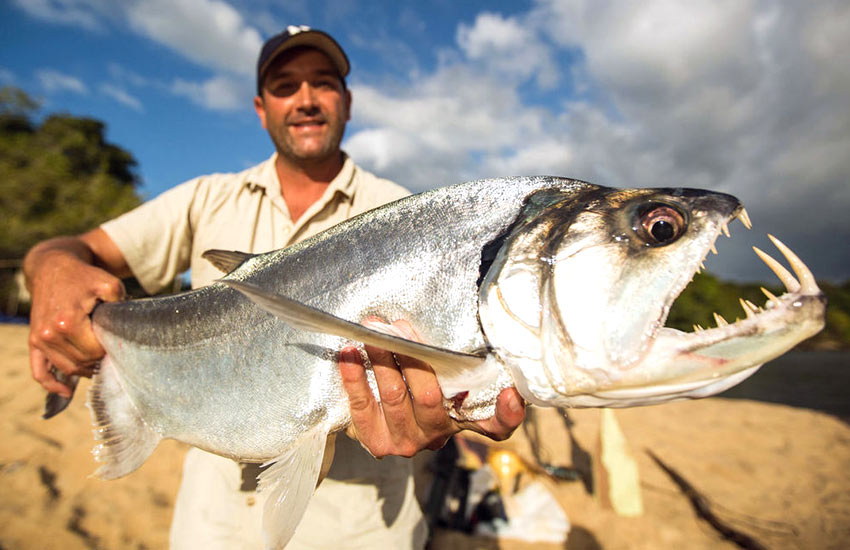
The vampire fish are characterized by being extremely aggressive, voracious, and very fast fish,which makes them true hunting machines. They usually swallow their entire prey, although sometimes they only bite their prey with their powerful tusks, tearing large pieces and then swallowing them. Vampire fish usually eat all kinds of food, although they prefer a carnivorous diet. So, they devour smaller fish found in their territory. Yet the vampire fish’ favorite food, are the fearsome piranhas, which they fully swallow in a single bite.

SOURCE: OURMARINESPECIES.COM

Weird Wednesdays: The Ennis House

This month’s house in the spotlight is The Ennis House in Los Angeles, California. This house has been featured in several horror movies (none of which I’ve seen to be honest).  The house is angles and blocks but no curved features at all.  The pictures I’ve seen of the house show some interesting elements, but there is no warmth in them.  It gives me the impression of living in a mausoleum.  

From Architectural Digest:

If you’ve ever seen Buffy the Vampire Slayer, Day of the Locust, or Blade Runner, then you’ve also seen the Ennis House. In the films, the property is used to depict a vampire mansion, a private residence, and an apartment building respectively. Designed by Frank Lloyd Wright in 1923 and constructed in 1924, the home has made more than 80 onscreen appearances throughout its near century-long existence, according to the Frank Lloyd Wright Foundation. However, it was the home’s feature in House on Haunted Hill in 1959 that brought it into ghoulish acclaim.

“In just a minute, I’ll show you the only really haunted house in the world,” Watson Pritchard, played by Elisha Cook Jr., says in the movie. “Since it was built a century ago, seven people—including my brother—have been murdered in it.”  The film’s plot follows five people who are promised $10,000 each if they can spend the whole night in the eerie property, which is “played” by the Ennis House. 

“It’s a really modern house, yet it uses ancient forms,” said Michael Wyetzner, architect at Michielli + Wyetzner Architects, in the newest episode of Blueprints, a YouTube series for AD. In the video, Wyetzner breaks down the Ennis House’s role in House on Haunted Hill, as well as the role of five other properties featured in horror films. “It doesn’t have a very domestic scale, it almost looks like it could be a museum or other type of religious building,” he said.  

Of course, though large, it was designed as a residential property. Located in the Los Feliz neighborhood of Los Angeles, Wright designed the home in the early ’20s for Charles and Mabel Ennis, owners of a local men’s clothing store. The home is one of four that makes use of Wright’s textile block system, which is constructed from precast, interlocked concrete blocks. Designed in a trabeated style, the home lacks curves, arches, vaults, and domes and is heavily inspired by Mayan architecture. As such, many have classified the home as a Mayan Revival. 

Drawing from the Mayan-design vernacular, the home looks older than it is—in the 1959 film Pritchard says the home was built “a century ago,” despite only being 35 years old at the time. Aside from its deceptive age, the house has two other important qualities that make it the perfect horror home: It sits on a hill (which is not just a nod to the film’s title) and features a deep, high roof. These two qualities have become commonplace in homes used in horror films and were made famous in what Wyetzner calls “the iconic house of horrors”: the Bates’s home in Psycho.

SOURCE: ARCHITECTURALDIGEST.COM

Maryland State Bird: Baltimore Oriole

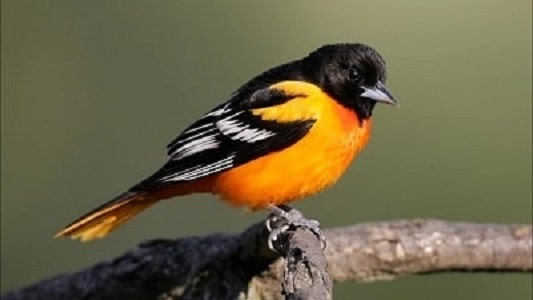
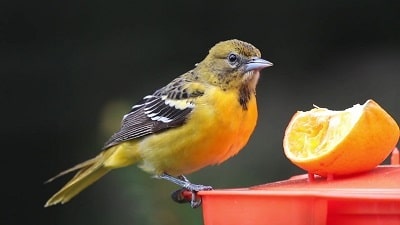
Baltimore Orioles measure 7 – 8 1/2 inches long. The male bird is black with orange underparts, rump, shoulders, and sides of the tail. His wings have 2 white wing bars. The female Baltimore Oriole looks quite different than the male. She is olive above, and yellowish below with 2 white wing bars. This particular Oriole bird is found east of the Rockies.

The breeding season begins in late April to early May. The males arrive 2 or 3 days before the females and begin claiming their territories. You’re likely to hear them singing from treetops in their effort to attract a mate. Their singing is almost constant until they mate with a female. Unlike the Northern Mockingbird though, these birds do not sing at night. Generally, any singing late in the season is from unmated or immature birds. Once the birds have found a mate they defend their territory and begin nesting.

The female selects a site for the nest, usually in a deciduous tree, often a tall one. Orioles prefer trees such as Elm, Cottonwood, or Maples to build their nest. The nest is typically located at the end of a branch, which provides some protection against predators. The female gathers materials for the nest, which can include plant, animal, and even human-made materials. This often includes grass, bark, hair, and twine. She may also use spider silk as a binding agent. The female weaves the nest, creating a small cup shape. She starts by weaving a loop around a twig. Then she weaves additional material, including long grasses and strips of bark, in and out of the loop. The weaving process can take as long as a week.

Once the basic structure is complete, the female lines the inside of the nest with soft materials, such as plant down, fur, or feathers, to provide a comfortable and warm environment for the eggs and chicks. The outside of the nest is often decorated with gray and white lichen, which helps to camouflage it against the tree. Nest can be anywhere from 6 to 90 feet above the ground.

While it’s quite common for them to return each year to the same territory, they will not use the same nest. They often take parts of the old nest to build a new one, so you may see them at the old nest site. Bird watchers will find the best viewing of the Baltimore Oriole’s nest when the leaves are off the trees. You’ll see them at the end of branches high in shade trees.

The preferred habitat of Orioles is in open woodlands of deciduous trees near parks, gardens, and suburban settings. In this tightly woven hanging nest, the female lays 3 to 6 pale blue with dark marks eggs. Incubation of the eggs is done by the female with the male always close by and watching. Incubation will last 12 to 14 days and the young birds will leave the nest in 12 to 14 days after hatching.

Baltimore Orioles nest only once each season and do not use birdhouses. Cowbirds have a difficult time laying eggs in the Oriole’s nest but still do. Orioles can tell the difference between their eggs and Cowbird’s eggs. Either the Oriole will eat the Cowbird’s eggs, or eject them from the nest.

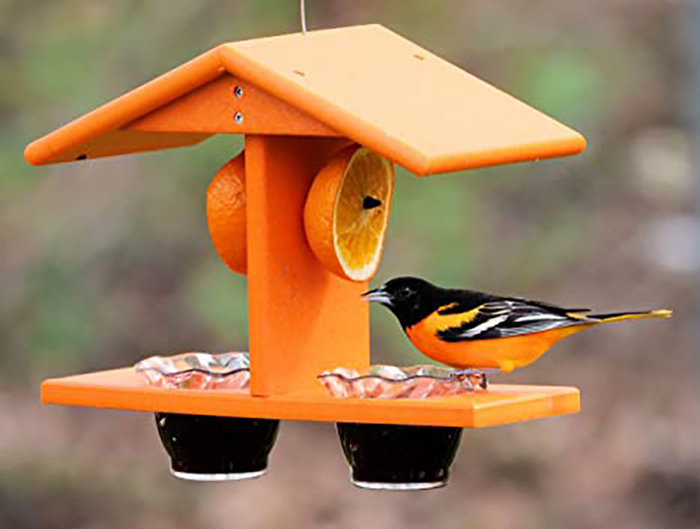
The main diet of the Baltimore Oriole consists of insects, fruits, and flower nectar. At the feeding station orange halves or grape jelly placed in a shallow bowl will draw them in. Another option is by providing a sugar-water mixture. 1 part sugar to 4 parts water. No need to boil the sugar-water mixture. Replace often during hot weather.

Often we’re asked “What happened to our Oriole birds”? “They were here every day eating our oranges and grape jelly and now they’re gone”. The simple answer is that Orioles often disappear from feeders because they switch to a protein-rich diet while nesting and feeding their young to ensure healthy growth. This means they are hunting insects instead of visiting your feeders. They also may have started migrating south. Don’t worry, sometimes the adults will bring their young to the feeders once they’ve left the nest. So be prepared for a return after a 4-week absence.

Spring migration begins in April when male Baltimore Orioles begin to arrive at their breeding grounds roughly East of the Rockies. The winter migration to the South can begin as early as July, which is much earlier than most species. Still, you may see some Orioles well into September or a little later in their Southern range.

SOURCE: WILD-BIRD-WATCHING.COM

What Shall We Make Today?

Continuing our pumpkin theme, today’s offering is Crunchy Ranch Pumpkin Seeds!

Ingredients

3 cups fresh pumpkin or squash seeds, washed and drained

1/4 cup vegetable oil

1/4 to 1/3 cup ranch salad dressing mix

Directions

In a large skillet, saute seeds in oil for 5 minutes or until lightly browned. Using a slotted spoon, transfer seeds to an ungreased 15x10x1-in. baking pan. Sprinkle with salad dressing mix; stir to coat. Spread in a single layer. Bake at 325° for 10-15 minutes or until crisp. Store in an airtight container for up to 3 weeks.

ENJOY!

Real Haunted Houses in America: Part 4

From All That’s Interesting:

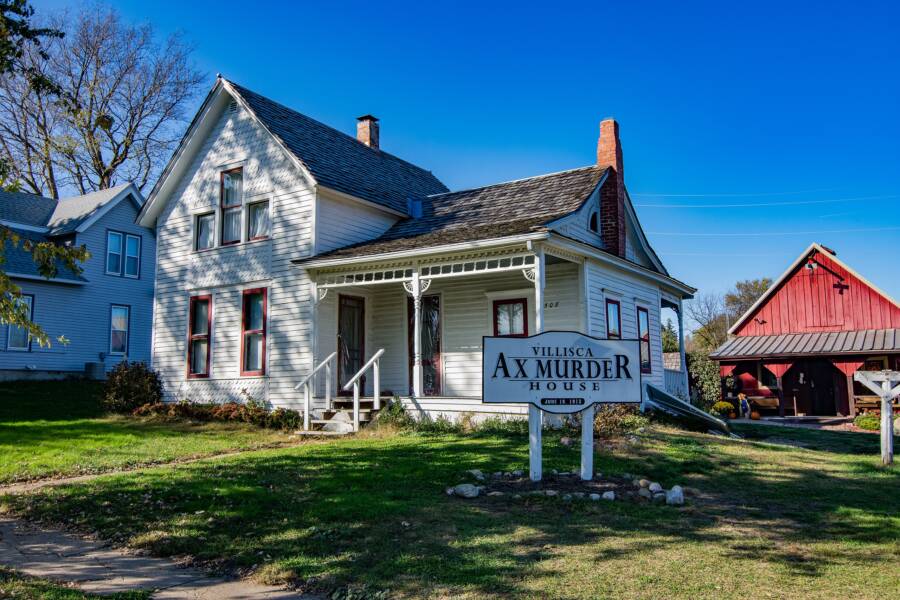
7 The Villisca Axe Murders House

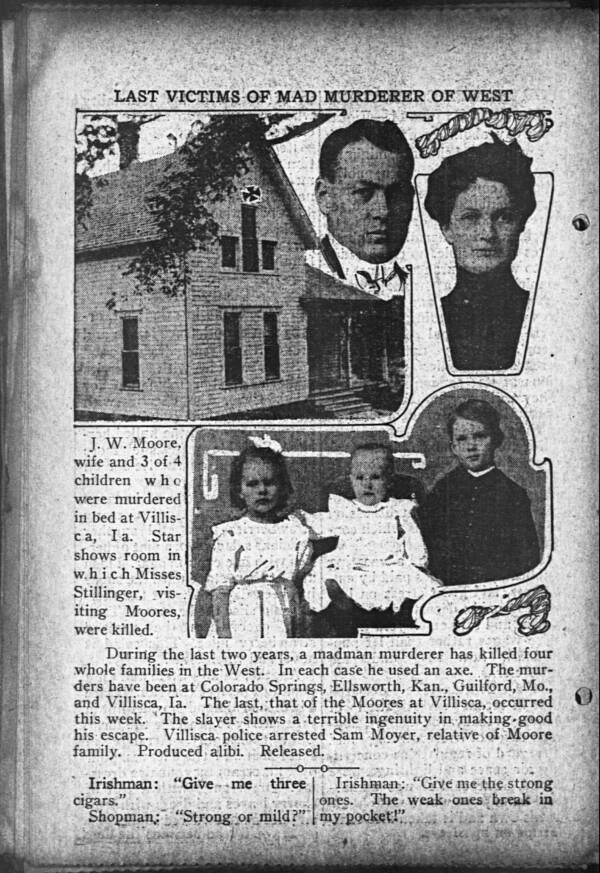
On June 9, 1912, in the small town of Villisca, Iowa, someone snuck into the Moore family house with an axe. The murderer killed all eight people inside that night, including six children.

A coroner’s report the following day determined that the killer had snuck in through the unlocked back door and went straight to the bedroom of Josiah and Sarah Moore, aged 43 and 39 respectively. Based on gouges in the ceiling, the coroner determined that the killer raised the axe high and then brought it down on Josiah’s head at least 60 times.

After killing Josiah and Sarah, the killer also bludgeoned their four children plus two more children who had been staying at the house as guests — before disappearing into the night.

“Don’t go in there, boys,” one doctor warned the next day after seeing the scene. “You’ll regret it until the last day of your life.”

The grisly murder remains unsolved to this day. Though a messy investigation ensued, no one was ever convicted of the homicides. Today, the so-called Villisca Axe Murder House is considered by some to be one of the most haunted houses in America. Visitors claim to have heard children’s voices and mysterious footsteps, as well as objects moving on their own.

The very curious — and very brave — can even spend a night at the house. Its current owners have restored it so that it looks just like it did in 1912. They’ve even added details from the night of the murder, like covering all the mirrors with sheets.

“An overnight visit to this house will make most skeptics believers come sunrise the next morning!” the Villisca Axe Murder House website exclaims. But be warned. One paranormal investigator who spent the night at the Villisca Axe Murder House stabbed himself in the chest during the night and had to be evacuated to a nearby hospital.

8 LaLaurie Mansion

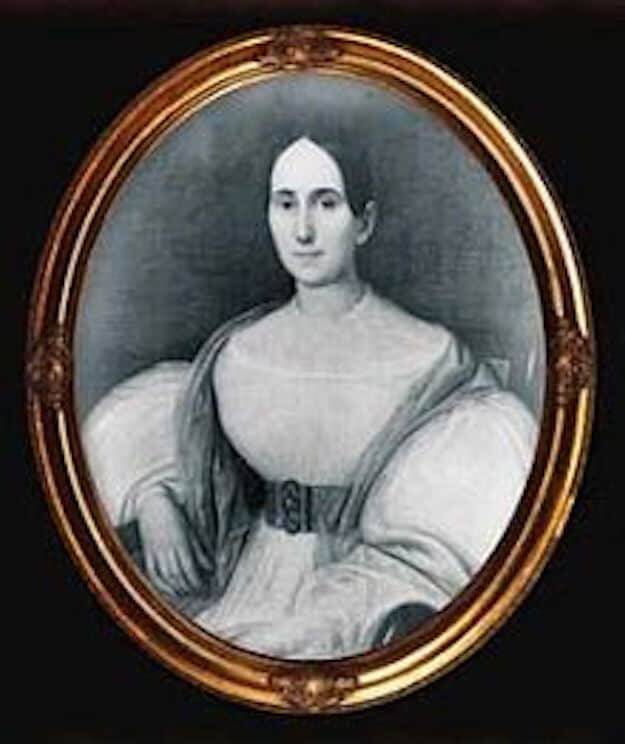
To some, the LaLaurie Mansion at 1140 Royal Street in New Orleans’ French Quarter is simply known as the “Haunted House.” Between 1831 and 1834, it was a veritable house of horrors — where a cruel woman tortured the people she enslaved.

New Orleans socialite Marie Delphine LaLaurie bought the house in 1831. Though LaLaurie appeared outwardly warm and polite, rumors swiftly spread that she was cruel toward those she held enslaved at her home. However, no one could have guessed the depth of depravity that went on behind the handsome walls of her house — at least not until a fire forced LaLaurie’s wickedness to the light. As police and firefighters battled the blaze, which broke out suddenly on April 10, 1834, they came across a shocking sight in the attic. There, the horrified responders found enslaved people who had been viciously tortured, mutilated, and murdered.

“Upon entering one of the apartments, the most appalling spectacle met their eyes,” The New Orleans Bee reported the next day. “Seven slaves more or less horribly mutilated were seen suspended by the neck, with their limbs apparently stretched and torn from one extremity to the other…“These slaves were the property of the demon, in the shape of a woman…”

Though LaLaurie skipped town, the spirits of the people she tortured allegedly remained in the mansion. Today, visitors have reported hearing footsteps and moaning from the attic, as well as seeing doors slam closed without explanation. Other hauntings are more severe. When the mansion was briefly a school, terrified young girls reported seeing a “woman” who grabbed and scratched their arm. And one boarder in the house died mysteriously after worrying to a friend about vengeful ghosts. The LaLaurie Mansion was most recently featured in American Horror Story and was briefly owned by actor Nicholas Cage.

SOURCE: ALLTHATSINTERESTING.COM

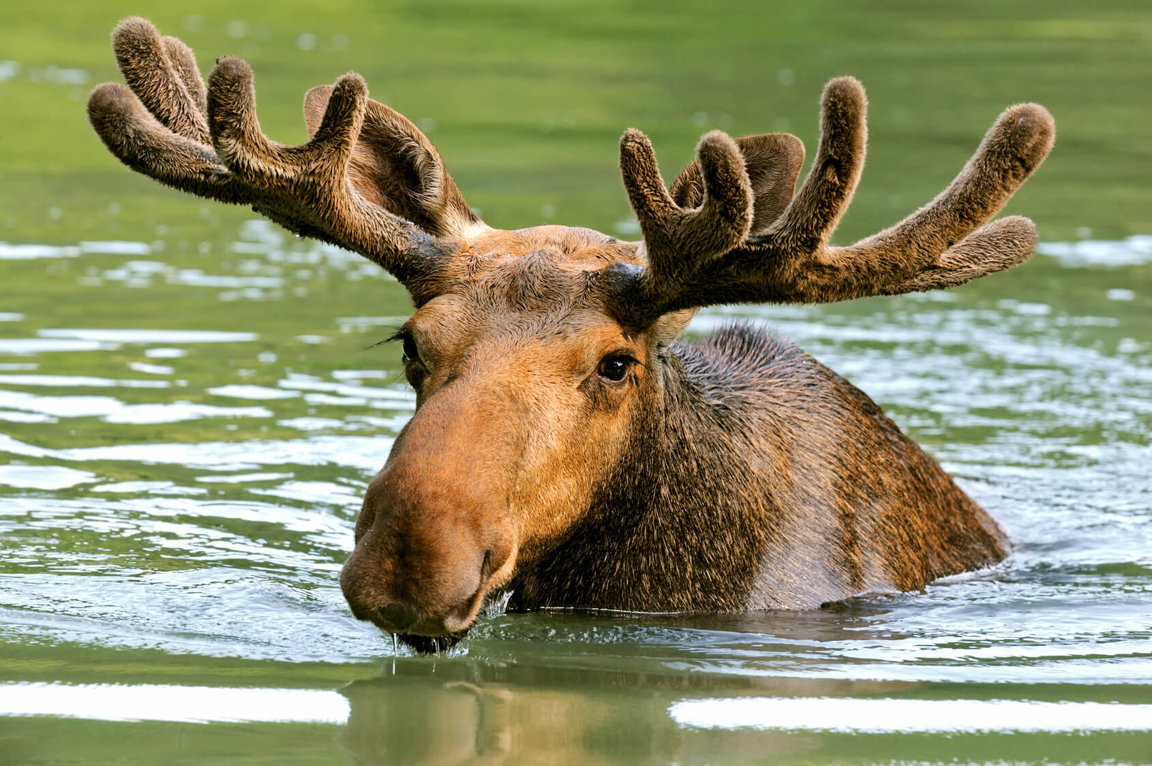
Maine State Mammal: Moose

The ereferencedesk.com has these 30 interesting facts about Moose:

Moose are the official state animal of Maine.

Male moose are called Bull Moose.

Only Bull Moose has antlers.

Bulls’ antlers can span up to 6 feet wide and weigh up to 90 lbs.

Bull Moose shed their antlers every winter and grows them back every spring.

Each year a moose grows bigger antlers than the year before.

Bull Moose grow antlers to impress cows during mating season and to express dominance in the pack.

Moose have the highest rate of bone formation growth; growing up to 1 inch a day.

During mating season Bull Moose are more aggressive.

Moose live for an average of 25 years and can weigh up to 1500 lbs.

Moose on average are 7 feet tall at the shoulders and 8.5 feet in length.

Moose are great swimmers and can swim up to 6 mph.

Moose can run up to 35 mph.

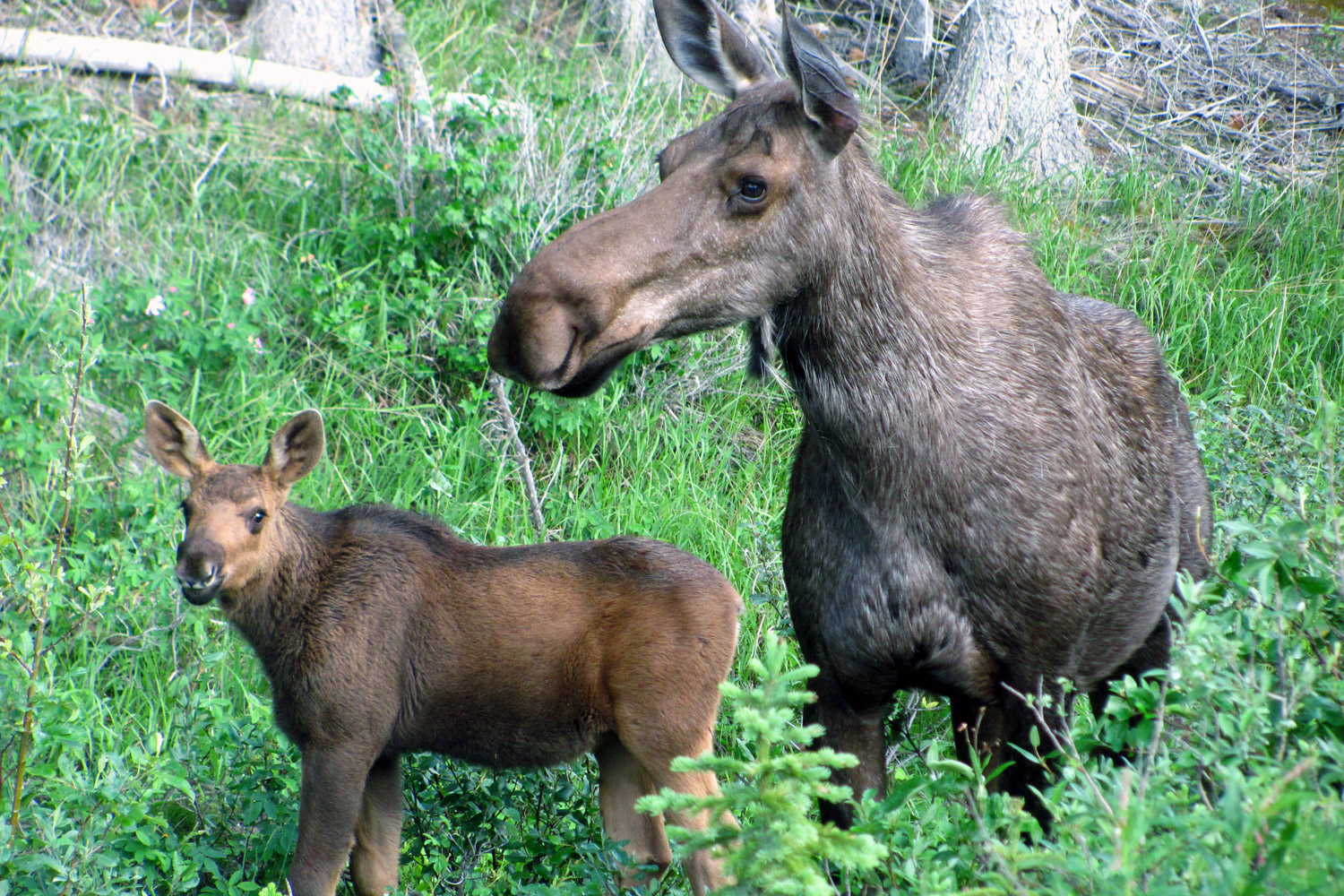
Female moose are called “cows”.

Female moose (cows) are pregnant for 8 months.

Infant moose are called “calves”.

Baby moose are an average of 25 – 33 lbs when born.

Calves will stay with their mom until they are 1 year old.

Moose have bad eyesight.

Moose have 32 teeth.

Moose have no upper front teeth.

Moose have front legs that are longer than their back legs.

Moose have 27 chromosomes. Humans have 23.

The flap that hangs under the moose’s throat is called a “Bell”.

Moose are the largest member of the deer family.

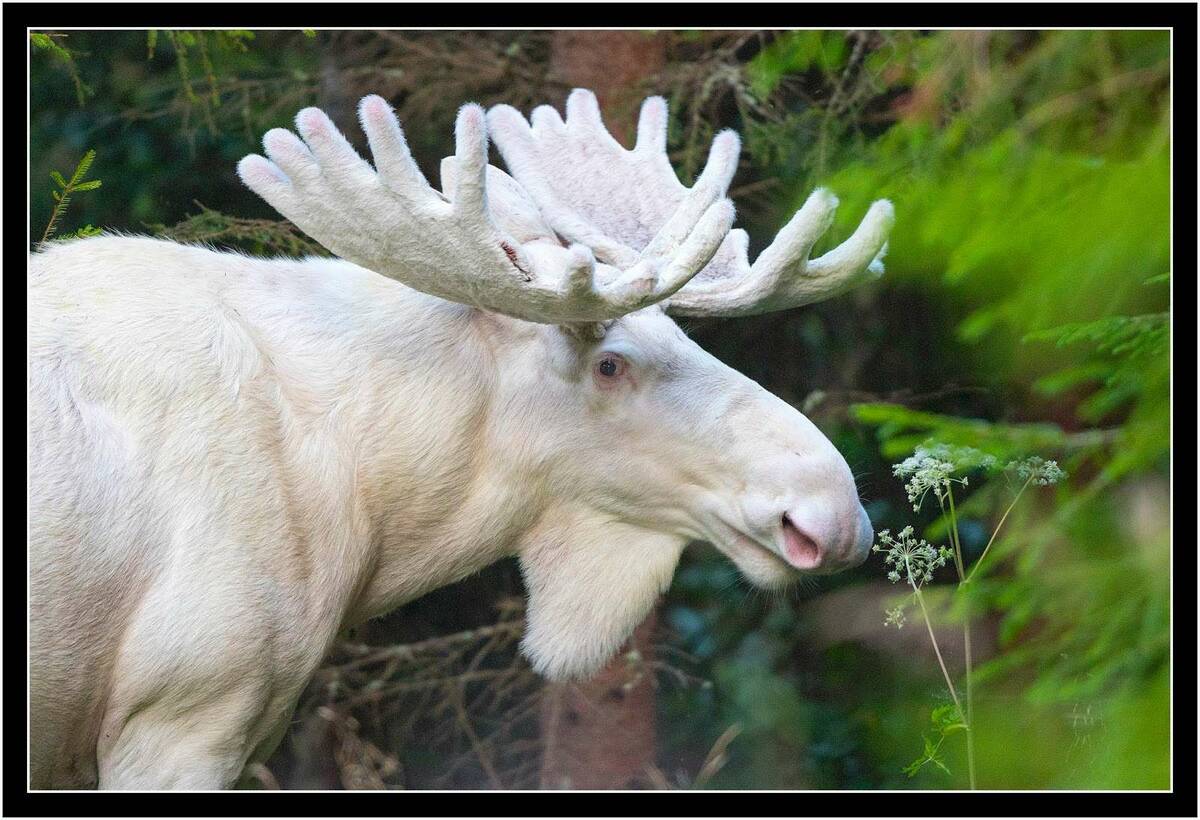
There is such thing as a white moose, however it’s extremely rare, and is not considered an albino.

Like a dog, when moose are agitated the hairs on their backs stand up straight.

Maine has the second highest population (30,000) of moose in the U.S., next to Alaska.

May, June, September, October and December are the best moose watching seasons in Maine.

You are more likely to see a fully antlered Bull Moose in September and October. (This is right before they shed them for the winter)

SOURCE: EREFERENCEDESK.COM

Creepy Bird: Turkey Vulture

Interesting Turkey Vulture Facts

1 They aren’t turkeys

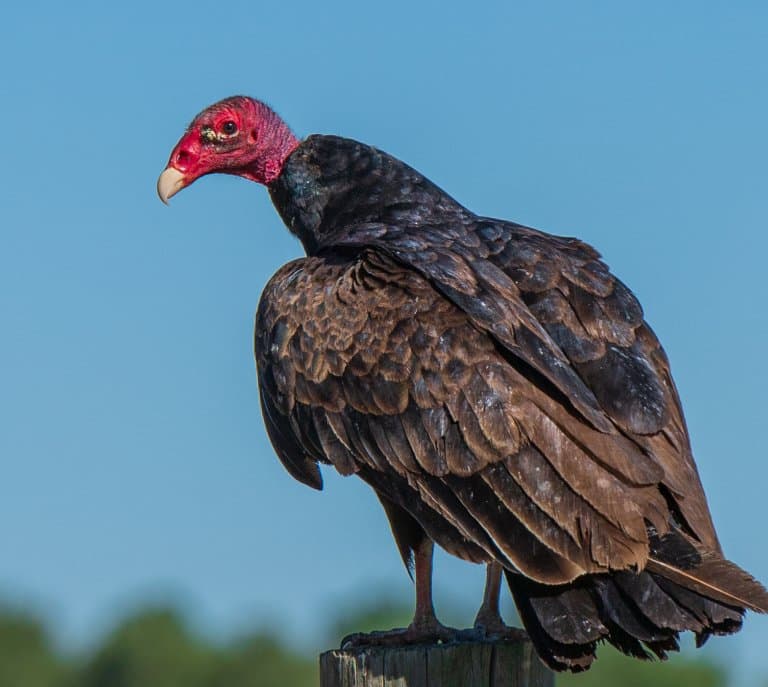
There are over 20 species of birds known as vultures, and their taxonomy is a bit muddled. The Old-World vultures are relatively straightforward, but there is a group of American birds whose relationship with them is still under assessment. Turkey vultures are part of this group, and so named because they have red, featherless heads, sort of like a turkey. This is the only reason, though, and not because they’re remotely related to turkeys, or even that they really eat turkeys, although they probably would if they showed up at Thanksgiving and everyone had left it just sitting there at the table. 

2 They’re New-World Vultures

Old World vultures are the ones related to eagles and buzzards and other raptors, whose prey drive has mostly worn off and who are happy to scavenge carrion from animals with more energy to hunt, and then there are the ones in the Americas, whose origin is a bit hard to determine. Turkey vultures are vultures, but they’re New World vultures, and these were once thought to be a branch of storks that have picked up a taste for rotting meat. 

However, recent DNA research suggests they might be more related to the first group than we thought, and that New World vultures may indeed be a sister group to the Accipitriformes, or raptor order. Regardless, turkey vultures are one of about seven species of New World vultures, so named for their distribution across the Americas.

3 They’re very adaptable 

As far as the distribution of this species goes, it’s the most widespread vulture in the Americas. They range from Southern Canada, all the way down into South America, and most places in between. They achieve this incredible range by being highly adaptable as a species and can be comfortable in anything from arid, open areas to thicker woodlands and forests. 

Its habitat preference is a mix of these two extremes, and it will happily scavenge meat from various sources within it. They’ll also thrive amid human refuse and can eat what gets thrown away in the cities. But they’ll also kill things on occasion, such as young birds or sick mammals. They’ll even eat plant matter like pumpkins and coconuts, increasing their option across a range of circumstances. 

4 They forage by smell

This is uncommon in the bird world, where sight is typically used. Turkey vultures will hover low to the ground to detect the odor of ethyl mercaptan, a gas created by the start of decay in dead animals. Due to this, other birds such as black vultures and condors will follow the turkey vulture to find carcasses.

5 They’re the most migratory of the NW vultures

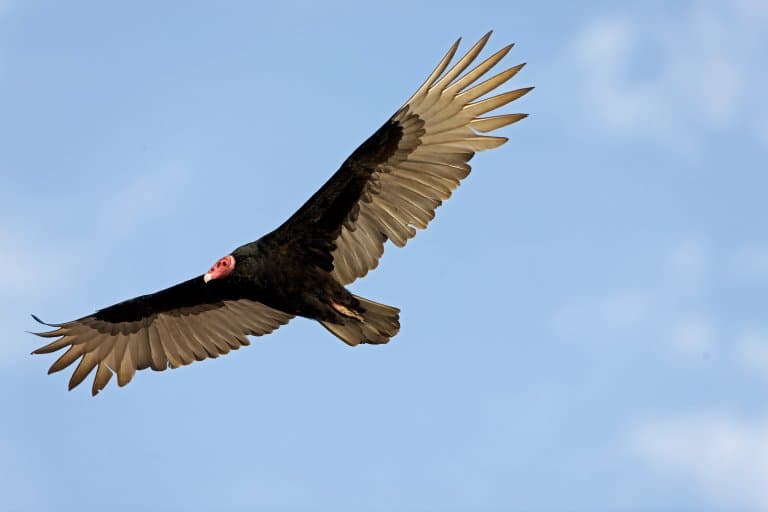
Not only do these vultures thrive across the continents, they move through them, too. They’re considered partial migrants because some populations move more than others. Populations in the North migrate more, coming down from the cold during Winter and heading back up when it’s more temperate. The longest trips are from the Western US down to Mexico and South America, and some of these trips can include thousands of birds.

6 They’re posers

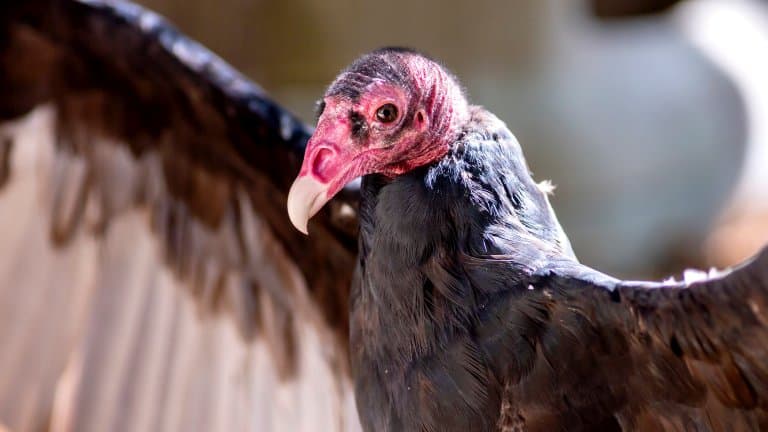
Turkey vultures display a behavior that’s known as Horaltic pose. This is basically a power stance with the wings spread wide, and researchers can’t agree on exactly why it’s happening.  Some suggest it’s a way of drying the bird’s wings, warming the body, or getting UV treatment for parasites they might have. It’s much more common after damp nights, so it could have a thermoregulating component to it, but whatever it is, it looks really cool!

7 They pee on their own legs 

Speaking of cool, these birds engage in urohidrosis, which is a fun way to say they pee on themselves. Since they can’t sweat, wet bird excreter functions as a medium for evaporative cooling, and is released onto the bald skin of the legs, which they do in public and even at social gatherings, suggesting they’re just no shame in it in their community.

8 They feed chicks by regurgitating

Turkey vultures will typically lay two eggs on cliffs, caves or rock crevices. Chicks will hatch 30-40 days later and be cared for by both parents for 10-11 weeks. During this time, adults will regurgitate food for them until they leave the nest between 8-11 weeks.

9 They’ve had a bad time

Wetting your legs with your own waste is enough to ruin a relationship but the image issues these vultures have faced among the human populations don’t stem from their pooping habits. Many used to believe these carrion feeders brought disease with them, and some thought it would kill livestock, so they have been persecuted historically, despite the fact that neither is true. 

In fact, this species is complicit in the reduction of disease by way of removing waste and rotting meat from the system. In the United States, turkey vultures are protected by the Migratory Bird Treaty Act of 1918, which makes killing them illegal.

10 They’re doing fine

And despite their troubles, this species is doing great. It’s estimated that there are over 18 million individuals left, covering an incredible range of over 28 million square kilometers. This is one of the most abundant raptorial birds in the world.

SOURCE: FACTANIMAL

Real Haunted Houses in America: Part 3

From All That’s Interesting:

5 Pittock Mansion

Most haunted houses in the United States bear the spiritual scar of past horrors. But the Pittock Mansion in Portland, Oregon, is a different story. The ghosts there are said to be fairly friendly.  Pittock Mansion was first constructed in 1909 by Henry and Georgiana Pittock. Already elderly, the wealthy Pittocks wanted a home for their retirement. Architect Edward T. Foulke designed them a beauty — a 46-room French Renaissance mansion overlooking the city below.

But by the time Pittock Mansion was completed in 1914, the Pittocks didn’t have much time left to enjoy it. Georgiana died in 1918, and Henry died a year later. In death, however, the Pittocks seemed determined to stay at their mansion. After all, they’d hardly been able to enjoy it in life.

Today, the mansion is a historic site and open to the public. Visitors and workers alike have reported odd experiences that suggest the Pittocks stuck around in the afterlife. Most of these encounters happen in the upper stories of the house, where their bedrooms were located.

There, many people claim to have smelled rose perfume — as if Georgiana is passing through the room. Visitors have also heard footsteps throughout the house and insist that portraits of Henry Pittock sometimes move. One visitor says that she saw a woman in a long dress. And a staff member recalled that one night after she had turned off all the lights and locked the mansion, every light in the house suddenly flared back on.

Visitors have even reported hearing the sound of shoveling and heavy footsteps outside. Some speculate that this is the groundskeeper doing his rounds. Like Henry and Georgiana, he lived and died in Pittock Mansion.  All in all, though, Henry and Georgiana Pittock seem like friendly ghosts. Though they make their presence known, they seem perfectly content to share their beautiful mansion with the public.

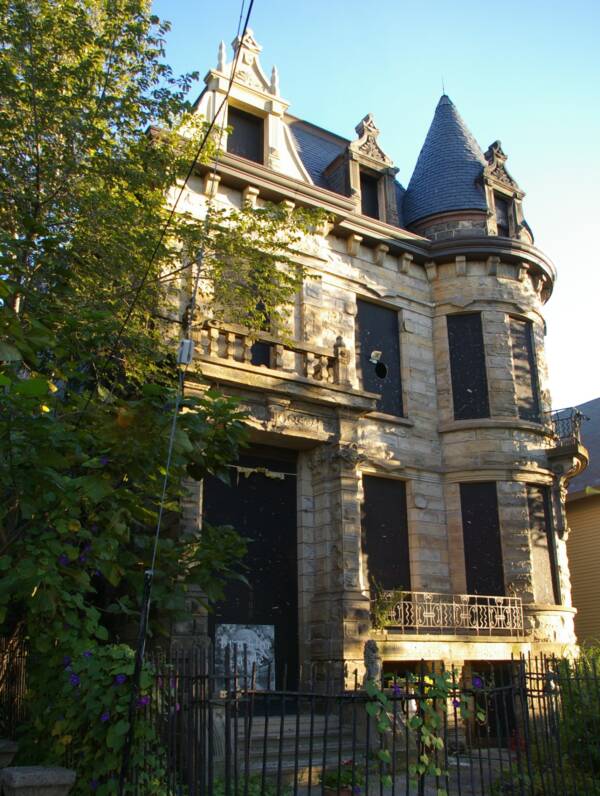
6 Franklin Castle

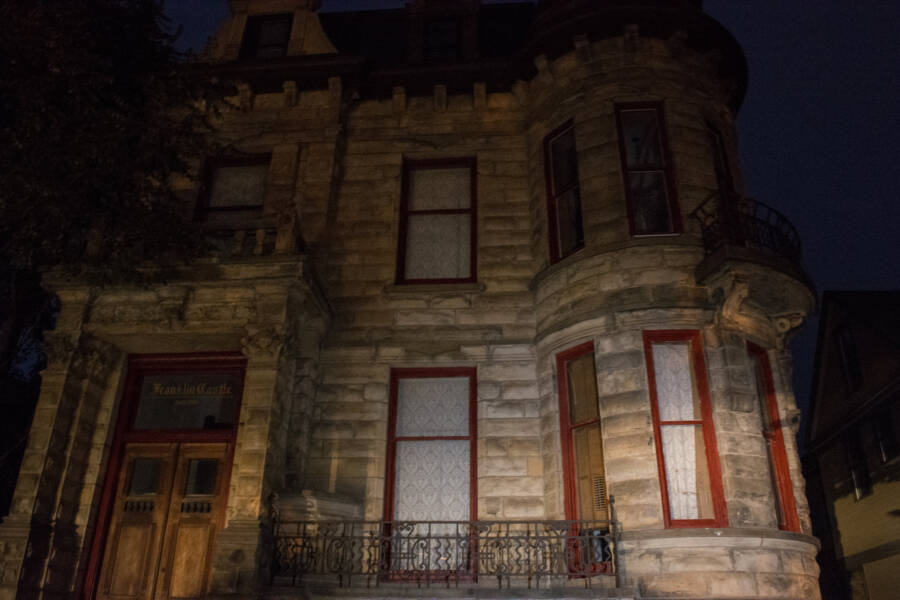
Considered the most haunted house in Ohio, Franklin Castle is a strong contender for the most haunted house in America, too. And for years, its grand turrets and stone façade masked terrible tragedies.

In 1881, German immigrant Hannes Tiedemann built Franklin Castle in Cleveland for himself and his family. However, not long after they moved in, Tiedemann’s teenage daughter died of diabetes. Then his mother died. Soon, three more children died. And finally, Tiedemann’s wife, Louise, died in 1895. Shortly after that, Tiedemann himself left the house.

But this series of tragedies led some to speculate that Tiedemann had more than bad luck. Before long, rumors spread about what had really happened behind Franklin Castle’s ornate walls. The darkest of the rumors claims that Tiedemann hanged his teenage daughter and killed the others. Human bones were even found in the house in 1975, but most believe that the current owner planted them to drum up publicity for ghost tours.

Today, Franklin Castle is home to many purported ghost sightings. People have claimed to see a “girl in white” wandering the halls, allegedly the ghost of Tiedemann’s daughter. Others say they’ve seen Louise Tiedemann staring down at the street from a window. The room where she died is known as the “cold room.”

Franklin Castle is allegedly so haunted that several paranormal teams have visited it to investigate.  “Franklin Castle is unlike any other,” explained Travel Channel’s Ghost Adventures investigator Zak Bagans. “You can come here, open the door, walk inside and begin having experiences like that.” He and his team claimed that something pushed them, and they recorded a ghostly voice that muttered: “Feels like… kill you.”

Certainly one of Ohio’s most haunted places, the Franklin Castle may also be one of the most haunted houses in America. Though visitors can only see it from the street, you may still catch a glimpse of Louise Tiedemann from the window.

SOURCE: ALLTHATSINTERESTING.COM

Know-It-All Tuesdays: Halloween

What are the names of the three Sanderson sisters in the movie “Hocus Pocus”?

According to the Sheb Wooley song lyric, this creature is a one-eyed, one-horned, flyin’ what?

How many bones are in the average human skeleton?

Are pumpkins technically a fruit or vegetable?

Which U.S. state produces the most pumpkins?

Who wrote “The Legend of Sleepy Hollow”?

What’s the most popular kids’ Halloween candy?

How much candy does the average American consume each year?

Before pumpkins, which root vegetable did the Irish and Scottish carve on Halloween?

Why do we trick or treat?

What historic weather event occurred on Halloween in 1991?

What is the only mammal that can fly?

What is having a fear of Halloween called?

How did you do?

Answers

Winifred, Mary and Sarah

Purple People Eater

206

Fruit

Illinois

Washington Irving

Reese’s Peanut Butter Cups

8 pounds

Turnips

Trick-or-treating is thought to have begun as a way for homeowners to reward pranksters for not vandalizing their home on Halloween

The “Halloween Blizzard” of 1991, which dumped three feet of snow and two inches of ice across parts of the Midwest

Bat

Samhainophobia

Till next month…stay sharp!