





Today’s offering is also a patriotic picnic favorite—Oreo Balls!


Ingredients
40 Oreo Cookies, regular size
8 oz cream cheese, softened
12 oz white chocolate, broken into pieces
3 oz red colored melting wafers
3 oz blue colored melting wafers
1 oz patriotic sprinkles
Instructions
Line a sheet pan with parchment paper or a silicon liner.
Crush your Oreos in a food processer fitted with a blade attachment until they are a fine texture; about 10 (2-second) pulses.
In a large mixing bowl combine cookie crumbs and cream cheese until well combined. However, if you have a large enough food processor, I highly recommend adding the cream cheese and pulsing with the crushed cookies until just combined and a large clump has formed, a few more (2-second) pulses. It will be thick, slightly sticky, and shiny.
Form the mixture into tablespoon-sized balls (about 36) (roll them in your hands to make them smooth) and place in a single layer on the baking sheet. Refrigerate until very cold and firm, at least 1 hour or place them in the freezer for twenty minutes.
Line a second rimmed baking sheet with parchment or wax paper. Transfer half of the chilled Oreo balls onto it. Keep the rest in the refrigerator to keep them chilled and firm.
Place your white chocolate into a small mixing bowl and melt them in the microwave for 30 second intervals, stirring in between, until the chocolate is melted. Dip the balls into the melted chocolate and pull them out with a fork, while spooning the melted chocolate over the top and sides of the ball. Gently shake the fork up and down to help smooth the chocolate over the ball and for any excess to drip off.
Slide each ball onto the baking sheet and repeat with the remaining Oreo balls. (If the melted chocolate starts to firm up and becomes hard to work with, heat in the microwave for 15 seconds and stir again.)
In small mixing bowls melt the blue and red chocolate just as you did the white. Place the colored chocolates into individual zip top bags, cut the tip off the bottom of the bags and drizzle the chocolates over the balls. Sprinkle with red, white and blue sprinkles. Place them in the fridge to set for 10 minutes.
Break off any excess chocolate and enjoy. Keep stored in the refrigerator.
Enjoy!

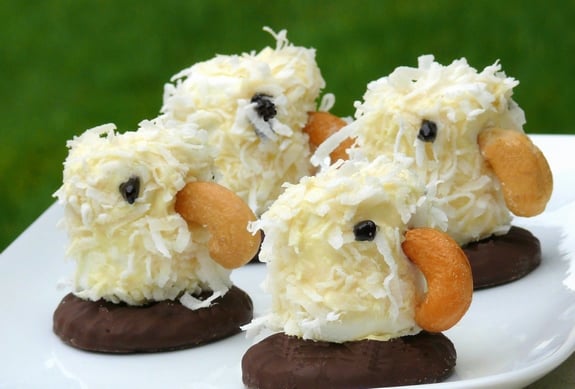
Since it’s July, I found some patriotic desserts for those July 4th picnics! Today’s offering is Edible Eagles!
Ingredients
1/4 cup white chocolate chips
6 large marshmallows
finely shredded coconut
6 chocolate covered sandwich cookies (like Oreo Fudge Creams)
6 whole cashews
black decorator’s gel
Directions
Melt chocolate chips according to the package directions. For each bird, drop a large marshmallow into the melted chocolate, using a spatula, coat it well. Remove the marshmallow from the chocolate and roll it in the coconut, leaving one end uncovered. Immediately set the marshmallow, coconut free end down, atop chocolate cookie. Let the chocolate set a bit, then use a toothpick to make a hole in the side of the marshmallow and insert a cashew in the beak. Finally, add black decorator’s gel eyes.
Enjoy!
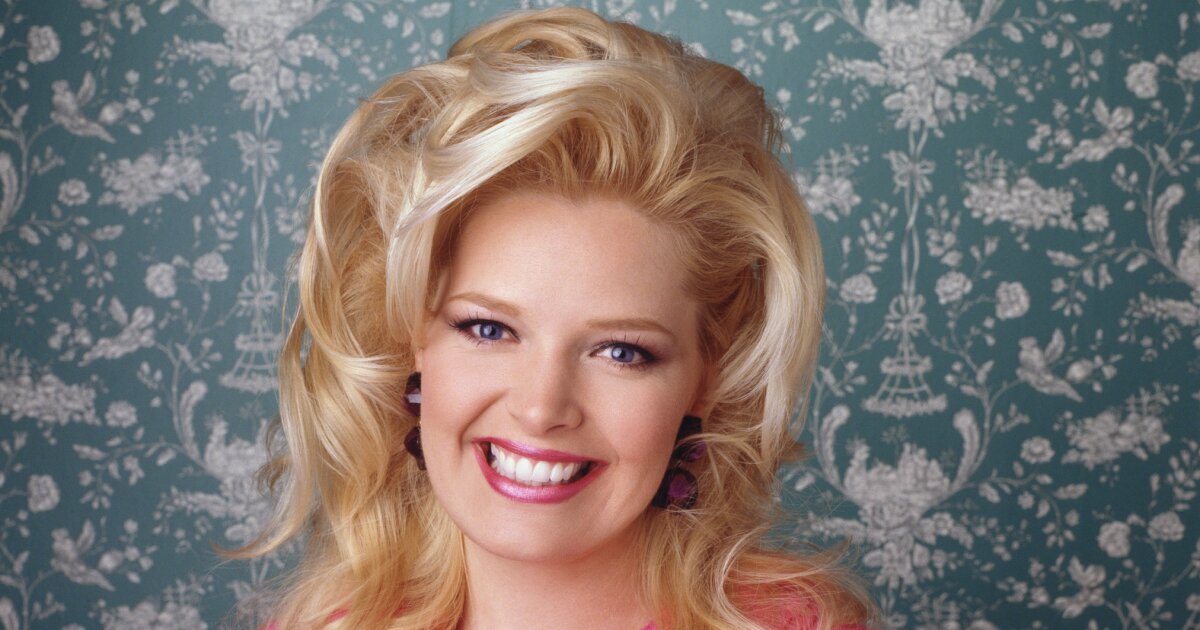
Today is Melissa Petermen’s birthday! She was born in 1971 and is best known for her portrayal of Barbra Jean on the television show Reba. I found this article on the countryrebel.com website detailing 5 things we may not have known about the Reba show.
From countryrebel.com:
One of the biggest hit television shows in the 2000s, Reba McEntire‘s beloved sitcom and family show took off like wildfire with American viewers.
Originally only expected to last a few seasons, the show endured the test of time and developed a massive fan base which helped it reach new heights as the top-rated sitcom on its network, The CW.
For more than six years, Reba captured viewers hearts and souls with its witty, wise-cracking humor and ditzy antics from the easy-to-love, Barbra Jean all while touching on some of life’s most difficult and hard-hitting topics.
If you consider yourself a Reba fan (which you likely do) then you’re going to love this list of shocking and true facts about this incredible TV show!
The Show Almost Wasn’t Called “Reba”

When the show was developed and pitched to Reba McEntire, it was originally written with the main character named “Sally”. Of course, by this time McEntire had a massive and loyal fan base built up from her career in music. After some talking with executives, the decision was made to re-name the show and character “Reba” to give fans a foothold and connect to the show.
Reba Had Some Friendly Faces On The Show
Although many believed this hot and fresh sitcom was the first gig for some of these actors, both McEntire and Christopher Rich, who plays her ex-husband Brock, co-starred in Kenny Roger’s 1991 masterpiece, The Gambler Returns: Luck of the Draw.
Reba & Barbra Jean Are Best Friends – But She Would Never Admit It

Throughout the entire show, fans were able to see just how close Reba’s character and Barbra Jean became, but even through some of the most trying of circumstances, there never was a moment that she opened up about how close they are.
It was only during the very last episode they would ever tape that Reba actually acknowledged to Barbra Jean that she was her closest friend.
The Final 6th Season Almost Didn’t Happen
Originally broadcast on the WB network, Reba was cut out of the lineup and cancelled after a merger brought an entirely new channel to television, The CW. During a last-minute maneuver, the 6th and final season of Reba was ordered by the network for a 13-episode run, giving devoted fans the closure they had been hoping for.
Reba + Barbra Jean = 4EVER
After spending more than six years working on the show together and enduring the highs and lows of their beloved series getting cancelled and renewed, Reba McEntire and Melissa Peterman (Barbra Jean) became incredibly close friends off screen.
To this day, Peterman and McEntire consider each other some of the closest friends they’ve had and every now and then, you can find Peterman crashing one of McEntire’s concerts in a hilarious turn of events!
SOURCE: COUNTRYREBEL.COM
Happy Birthday Melissa!


Today is Thomas Sowell’s birthday, (born in 1930) and I wanted to share some of his wisdom.










I found this brilliant DIY article on making your own little first aid kit! She uses a 98-cent potholder from Walmart, some small plastic bags and a little sewing!
From: lifeawayfromtheofficechair.com:
My daughter will be working at the local YMCA this summer as a summer camp counselor and has to carry some sort of first aid kit with her in her back pack in case one of her campers gets a boo boo. This gave me a reason to make this really cute first aid kit using only a 98-cent pot holder from Walmart, some snack size baggies and a little sewing machine help.

I was able to whip this project up in less than 15 minutes.
I used six snack size baggies. I laid them on the pot holder, three on each side, letting the bottoms of the baggies cross over each other in the center.

I taped each one down to keep them from sliding and then I used a sewing machine and made one single stitch down the center. Then I folded the pot holder in half and sewed a button on it. I used the loop as a button hole but if your pot holder does not have a loop, then just stitch on a piece of ribbon. (It’s really prettier with the ribbon).
You can decorate these any way you want to. I attempted to use a piece of cut ribbon to make a red cross for first aid but I do not recommend it. Just be creative when making yours.
You can use this same idea for sewing kits, travel jewelry holders, or coupons.
SOURCE: LIFEAWAYFROMTHEOFFICECHAIR.COM

I found an interesting article listing 50 facts about Elon Musk that might not be widely known. I skipped most about his businesses and concentrated on Elon the person. I provided the link at the bottom for those interested in reading more about Elon.
From: unknownfacts.in:
Elon Musk’s Early Start in Coding
At the age of 12, Elon Musk taught himself how to code and created a video game called Blastar, which he later sold for $500. This was Musk’s first entrepreneurial venture and gave him early exposure to the world of programming and technology.
He Was Bullied in School
Elon Musk endured intense bullying during his school years in South Africa. At one point, he was beaten so severely by classmates that he had to be hospitalized.
Elon Dropped Out of a PhD Program
Elon Musk briefly attended Stanford University to pursue a PhD in applied physics but dropped out after just two days. He realized that his entrepreneurial goals could be better achieved outside of academia.
Elon Musk’s Mars Ambition
One of Musk’s most audacious goals is to colonize Mars. He founded SpaceX with the long-term goal of making life multiplanetary. Musk has repeatedly said he wants to send humans to Mars within his lifetime.

Musk’s Fear of AI
Despite co-founding OpenAI, Musk has often expressed concerns about artificial intelligence. He believes that unregulated AI could pose a serious threat to humanity, going as far as to call it more dangerous than nuclear weapons.
Elon Musk Doesn’t Take Salaries
Despite being one of the wealthiest people in the world, Musk doesn’t take a salary from his companies. Instead, he opts for stock options, which are tied to the success of his companies.
He Lived on $1 a Day in College
During his college years, Musk lived on just $1 a day by buying groceries in bulk. He would often eat cheap food like hot dogs and oranges to save money for bigger dreams.
Elon Musk’s Quirky Sense of Humor
Musk is known for his quirky and sometimes controversial sense of humor, especially on social media. His tweets about topics ranging from Dogecoin to memes often go viral.
Musk Has Asperger’s Syndrome
In 2021, Musk revealed on Saturday Night Live that he has Asperger’s syndrome, a form of autism that often makes social interactions challenging. Despite this, Musk has successfully navigated the high-pressure worlds of business and technology.
Elon Musk is a Father of 10 Children

Elon Musk has fathered 10 children from various relationships. He has expressed that he views population decline as one of the biggest threats to humanity and that he is doing his part to counter it.
Musk Reads 2 Books a Day
Elon Musk is an avid reader, and his reading habits are intense. He has said that he used to read up to two books a day on a variety of subjects, including science fiction, philosophy, and engineering.
Elon Musk Was Once Broke
After selling PayPal, Musk reinvested almost all of his earnings into his ventures like Tesla and SpaceX. By 2008, he was so financially stretched that he had to borrow money for rent.
Elon Musk’s Boring Company
In 2016, Musk founded The Boring Company, a tunnel construction and infrastructure firm. The company aims to reduce traffic congestion by building underground transportation systems.
He Opened Tesla’s Patents
In 2014, Musk announced that Tesla would open its patents to the public in an effort to accelerate the adoption of electric vehicles worldwide. This move was seen as unprecedented in the highly competitive automotive industry.
Elon Musk’s Stint on Saturday Night Live
In May 2021, Musk made his debut as a host on Saturday Night Live, becoming one of the few non-entertainment industry figures to host the show. His appearance drew mixed reactions but garnered significant media attention.
Musk Owns a McLaren F1
Musk once owned a rare McLaren F1 supercar, which he purchased with part of his proceeds from the sale of Zip2. Unfortunately, he wrecked the car in 2000 without having insured it, and it was damaged beyond repair.
He Became the Richest Person in the World in 2021
In January 2021, Musk briefly overtook Jeff Bezos to become the richest person in the world, thanks to Tesla’s surging stock price. Although the rankings fluctuate, Musk’s net worth remains in the hundreds of billions.
He Was a Heavy Sleeper
Musk used to sleep for more than eight hours a night, but after founding his companies, he reportedly cut his sleep to about six hours a night to have more time for work.
He Taught Himself Rocket Science
Elon Musk didn’t have a formal background in aerospace engineering before founding SpaceX. He taught himself rocket science by reading textbooks and speaking with experts in the field.
Musk’s Father’s Wealth
/errol-musk1-1-e9211bb326b643369115bd6154db19c5.jpg)
Elon Musk’s father, Errol Musk, was a wealthy South African engineer who helped Elon financially in his early days. However, the two have had a tumultuous relationship over the years, with Elon describing his father as a difficult person.
Elon Musk’s $6 Billion Philanthropy Pledge
In 2021, Musk pledged to donate $6 billion to address world hunger after a United Nations official suggested that such an amount could help solve the crisis. However, the specifics of this pledge remain under discussion.
He Has a High Pain Threshold
Musk has admitted that he has an unusually high pain threshold, which has helped him endure both physical and mental challenges over the years.
He Plans to Die on Mars
Elon Musk has said that he would like to die on Mars, but not on impact. His dedication to space exploration is so deep that he envisions his final moments on the Red Planet, marking the fulfillment of his life’s dream.
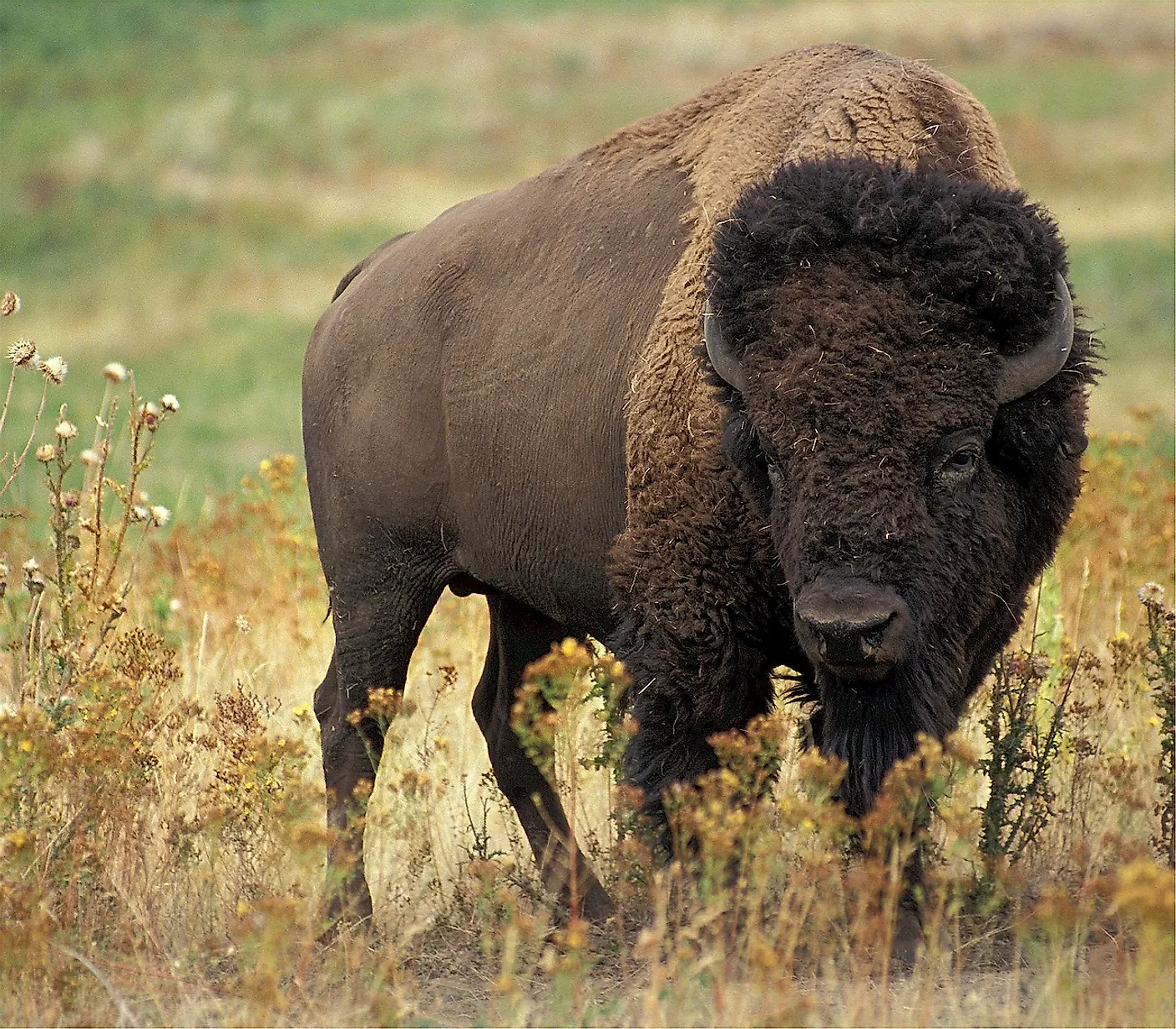
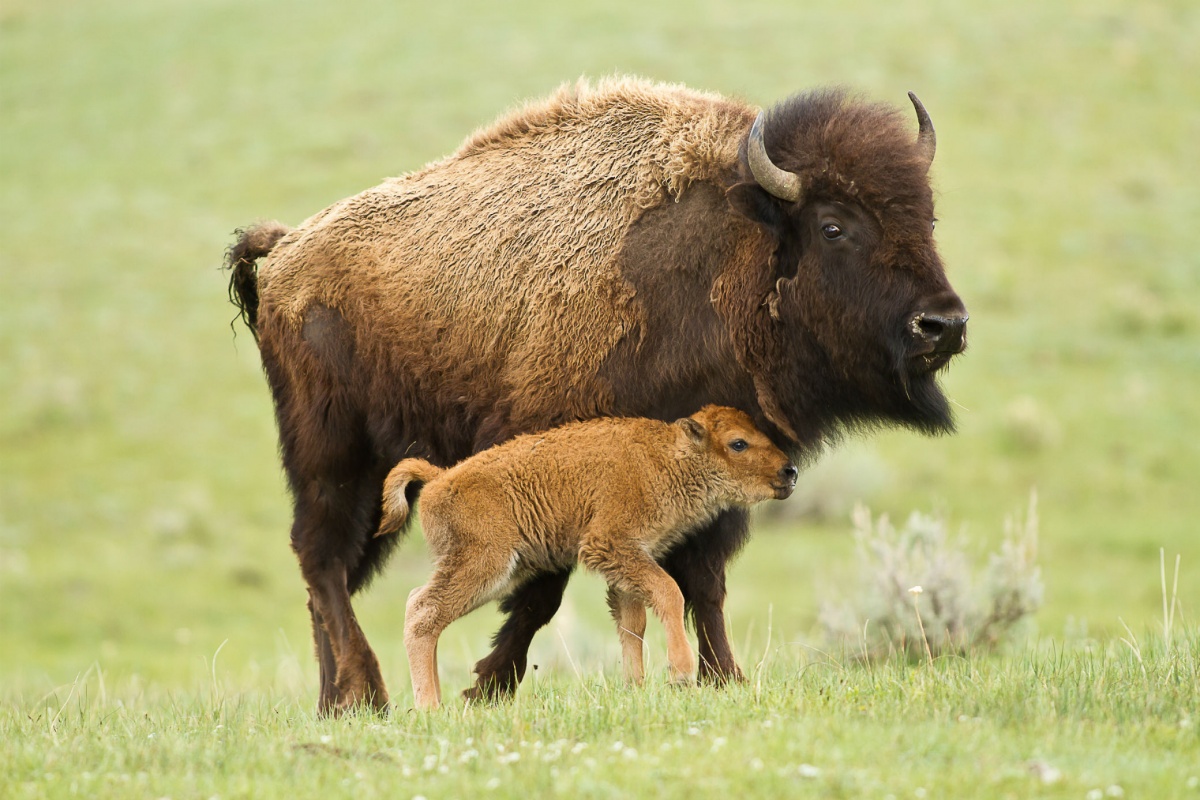
The American bison (Bison bison) is a species of bison native to North America. Sometimes colloquially referred to as buffalo (a distinct species of bovine), it is one of two extant species of bison, alongside the European bison. Once roaming in vast herds, the species nearly became extinct by a combination of commercial hunting and slaughter in the 19th century and introduction of bovine diseases from domestic cattle. With a population in excess of 60 million in the late 18th century, the species was culled down to just 541 animals by 1889. Through multiple reintroductions, American bison now freely roam wild in several regions in the United States, Canada, and Mexico, with them, also being introduced to Yakutia in Russia.
The color of the American bison fur varies in the front and back of its body and is different shades of brown. Bison is hunchbacked and it has a long beard on its chin. The forehead is wide and narrow while the neck is short. Hind legs are smaller than front legs, making up a scarp from humpback to tail. Length of hair differs in front and rear, especially in males: front hair is significantly longer than rear hair. Horns of bison are black, bent inward withal upward, and pointed.
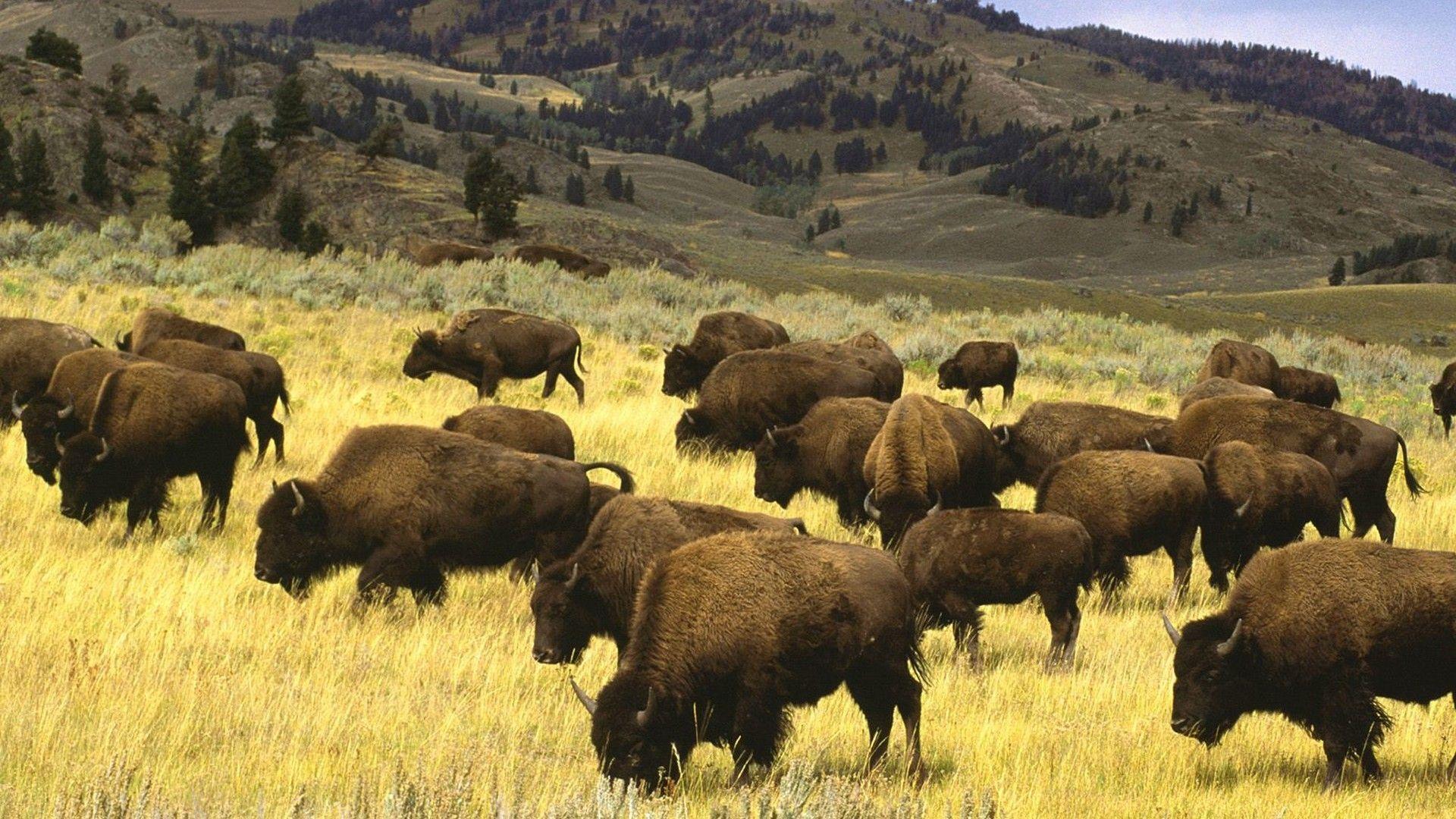
In the past, a huge number of bison thundered North America from Mexico to Alaska. Then, mass killings of these impressive animals led to their total extermination from the main area of their habitat. However, bison survived and currently they live primarily in Canada and the western part of the USA, usually in protected areas and national parks. American bison prefer to inhabit river valleys, prairies, and plains. Typical habitat is open or semiopen grasslands, as well as sagebrush, semiarid lands, and scrublands. Bison also graze in hilly or mountainous areas where the slopes are not steep.
American bison is diurnal, being active all day long. They are usually relatively passive during the day, becoming particularly active at dusk and dawn. They spend a lot of time cleaning the fur or grooming: they rub their head, sides, and necks against trunks of trees. Bison are able to be constantly on the move, passing long distances as long as there is food. Cows, female bison, are leaders of family groups while males stay separate, creating small groups or living solitarily. As the mating season comes, males join female groups. Bison like rolling, weltering, and rubbing against the ground. Wallows are recesses – dust bowls with no vegetation, having circular form, formed as a result of bison’s wallowing on the ground.
Bison are herbivores (graminivores) and, more specifically, grazers, chewing grass all year round. However, in absence of grass, they eat other greenery found in the area such as sagebrush. The presence of water is another important component of their life: they can’t last long without a source of water.
Bison are polygynous, meaning that a dominant male, or a bull, mates with a group of females. The season for breeding takes place in summer, from June to September while the gestation period lasts about 285 days. A female can give birth to a single calf each season. Newborn calf weight about 15-25 kg. To give birth, bison females choose shelter, a distant place far from the herd. Protection of the calf lies on the shoulders of females whereas males don’t take part in this process. Babies are breastfed for 7-8 months and weaned when they are one year old. Males reach sexual maturity at the age of 3 years and females – from 2 to 3 years.
Fun Facts
Dense coat of bison protects it from the rough elements of the American plains. In winter the coat becomes solid and even thicker, so that bison are seen with snow on their backs, not melting due to their coats isolating their warm skin from the outer surface.
The groups that bison create are called obstinacies, gangs, or herds.
Hunch on its back is nothing but a bunch of muscles. The hunch also helps bison to move into the snowpack.
Bison is an excellent jumper, able to jump up to 6 feet off the ground.
Bison have a heightened sense of hearing, being able to identify big objects from a 1 km distance and moving objects – at a distance of 2 km.
Along with jumping, bison are excellent at running and swimming.
Newborn calves start walking and running a few hours after being born.
SOURCE: ANIMALIA.BIO
Filly brought these wonderful stone creations to my attention. This article appeared on the Arkeonews.net website:
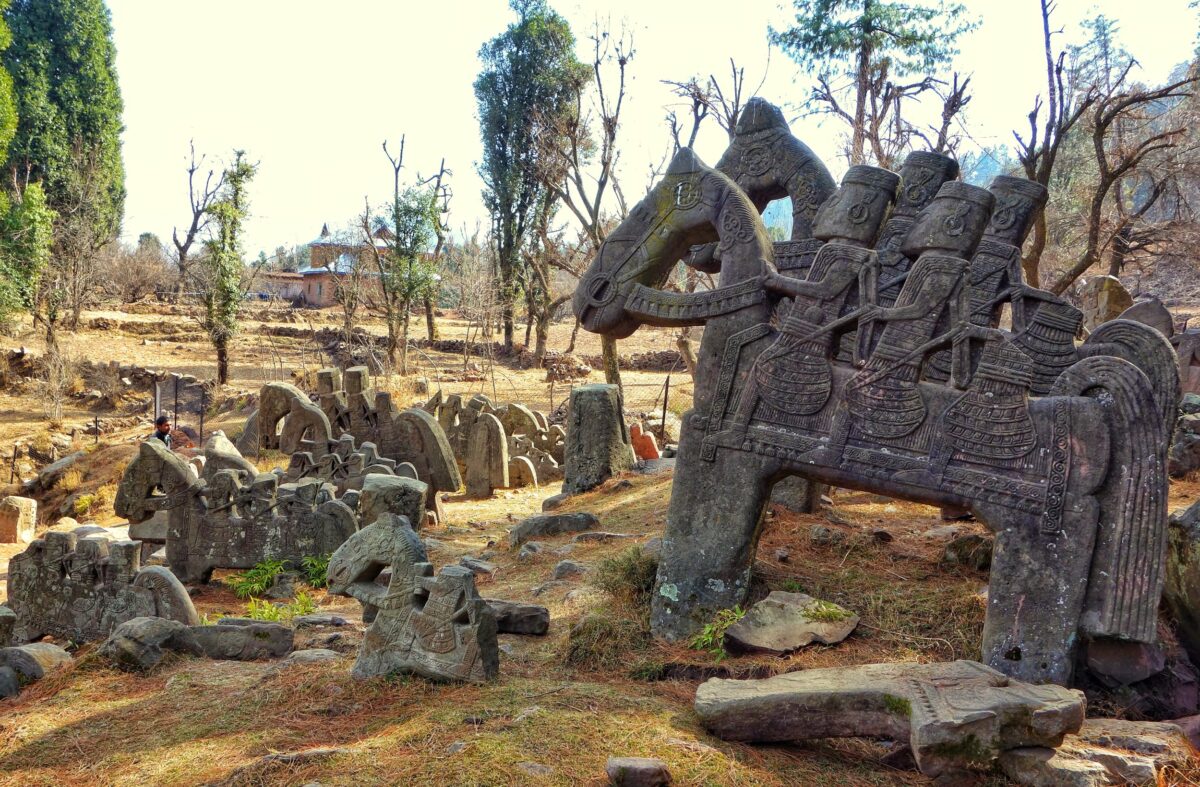
Deep within the rugged Pir Panjal range in Jammu and Kashmir, India, lies a captivating mystery known as the Mysterious Horsemen. These ancient stone figures, scattered across secluded sites, have puzzled historians and archaeologists for years, their origins and purpose shrouded in enigma. The craftsmanship displayed in these sculptures is remarkable, raising questions about their creators and the intentions behind their construction.
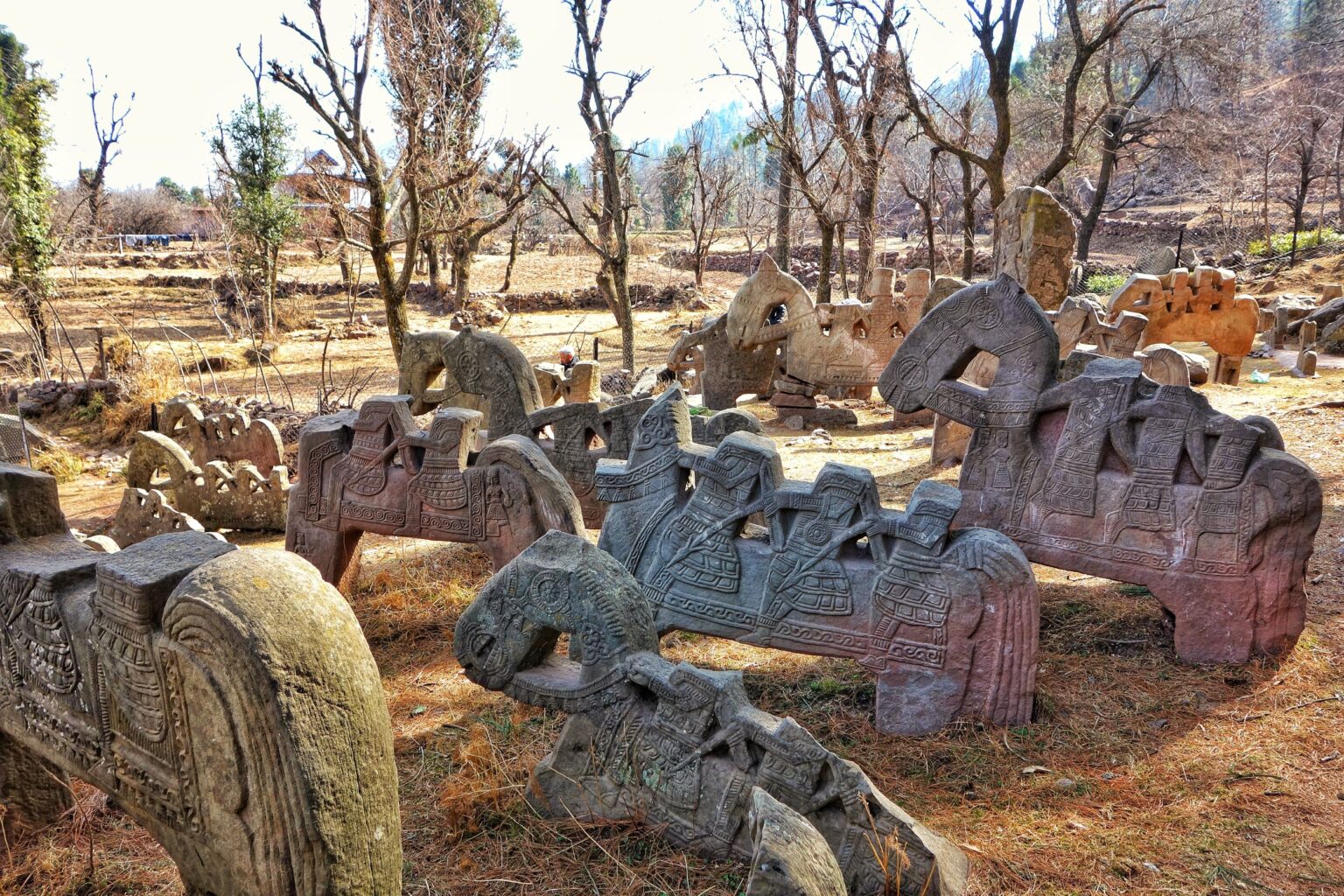
In the outskirts of Reasi district, specifically in the Gool tehsil, lies the infamous Gora Gali. A Russian expedition team, led by Natalia Polosmak, conducted a general survey of the area due to the presence of man-made and natural water ponds. To their surprise, they discovered an army of approximately 200 horsemen sculptures, arranged haphazardly over an area of 4-5 acres of inaccessible land in the woods. This remote area is uninhabited and difficult to reach from the main road, although a trail built by the army provides some access.
The locals believe that these sculptures were created during the period of the Mahabharata, when the Pandavas resided in the ancient town of Reasi and practiced stone engraving and sculpting. This belief has led to the development of a devta culture among the people, who worship these horsemen as local deities. However, further analysis of the sculptures reveals fewer Indic features and more foreign artistic forms. All these sculptures are believed to date back to the 2nd and 3rd centuries AD, a period during which the Gandhara school of art was emerging.

The horsemen exhibit striking similarities with the artistic features of the Gandhara school and Bactrian art forms. Their facial features resemble those found on Hephthalite coins, characterized by large facial structures, long straight noses, flat-cut necks, almond-shaped eyes, and round eyeballs. These features reflect the anthropological characteristics of the population at that time, influenced by Western art forms from Greece and Rome.
The way in which the horses are adorned indicates that ornamentation held significant importance. The horsemen are depicted wearing large round earrings and carrying unique weapons associated with the Hephthalites. Anthropologists suggest that one of the tribes of Hephthalites that settled in this region was the Dogras, the current residents of Jammu province. Moreover, the artistic forms used in these sculptures are polished and refined, showcasing a high level of skill.
A unique feature of these structures is that all the horses carry three soldiers on their backs, which can be observed in most of the sculptures. This detail may indicate the physical strength of the horses and suggest that they were of a pure breed. The remarkable craftsmanship involved in sculpting the stone deserves appreciation, as it reflects the artistic prowess of the creators.
The origins of the horsemen remain enigmatic, fueling speculation and scholarly debate. Various theories have been proposed, with connections to the White Huns (Hephthalites) and Mihirkula being central to these discussions. Some suggest that the horsemen may be linked to the White Huns, a Central Asian tribe that ruled the region between the 5th and 7th centuries. This timeframe aligns with the estimated period for the creation of the sculptures, providing a potential historical context for their existence. The cultural influences reflected in the sculptures may also hint at the interactions between different civilizations during this period.
Mihirkula, a feared leader of the White Huns, is often associated with the era of the sculptures, although definitive evidence of his involvement remains elusive. His reputation as a formidable leader adds a layer of intrigue to the mystery, suggesting a possible connection to the creation of these figures. However, the lack of concrete evidence highlights the challenges of reconstructing ancient history and understanding the true purpose of the horsemen. Theories abound, but the absence of definitive proof leaves much to the imagination.
The purpose of the horsemen remains unexplained, with no definitive answers emerging from ongoing research. Some scholars speculate that they may have served as memorials, commemorating significant events or individuals, while others propose that they could have had a religious or ceremonial function. The ambiguity surrounding their purpose only adds to their allure, inviting further investigation and research to unravel their secrets.

As an ancient puzzle, the Mysterious Horsemen continue to captivate the imagination of those who encounter them. The combination of their scale, detail, and isolation creates a captivating sight, leaving a lasting impression on all who visit these remarkable stone figures. The ongoing exploration of their origins and significance not only enriches our understanding of the region’s history but also highlights the enduring mysteries that ancient cultures have left behind.
SOURCE: ARKEONEWS.NET

The King of Saxony Bird-of-paradise is a fascinating and visually striking creature. This bird is relatively small in size, with a height of approximately 10-12 inches. However, what it lacks in stature, it more than makes up for with its elaborate and unique physical features.
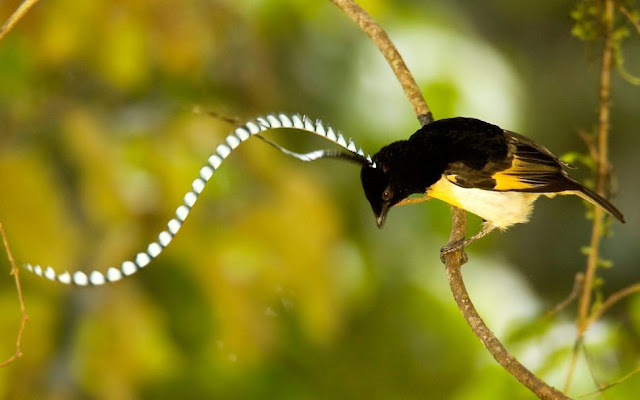
One of the most prominent characteristics of the King of Saxony Bird-of-paradise is its incredibly long and ornamental head plumes. These plumes, which are only possessed by the adult males, can reach up to 18 inches in length. They are composed of slender, wire-like feathers that emerge from the bird’s forehead and curve outward, resembling two long antennae or saxophone reeds. These extraordinary head plumes give the bird its distinctive appearance and lend it its regal name.

The King of Saxony Bird-of-paradise has a compact body with a relatively short tail compared to other bird-of-paradise species. Its body is covered in soft, fluffy feathers that are predominantly black in color. However, it also exhibits vibrant patches of color on its chest and sides. These patches vary between individuals but can include shades of yellow, orange, or red. The contrast between the dark body and the bright, eye-catching colors adds to the bird’s overall allure.
In addition to its striking head plumes and colorful patches, the King of Saxony Bird-of-paradise possesses other unique physical attributes. It has a small, curved beak that is black in color, perfectly suited for its diet of fruit, insects, and arthropods. The bird’s eyes are relatively large and are surrounded by bare, bright blue skin, which further enhances its visual appeal. Its legs and feet are short and sturdy, adapted for perching and maneuvering through the dense vegetation of its natural habitat.

Overall, the King of Saxony Bird-of-paradise is a truly remarkable creature in terms of its physical appearance. From its long, extravagant head plumes to its vibrant patches of color and unique facial features, this bird stands out as one of nature’s most visually captivating creations. Its relatively small size does not diminish its impact, as its ornate and regal appearance commands attention and admiration.
The King of Saxony Bird-of-paradise, scientifically known as Pteridophora alberti, is a striking and unique bird species found in the rainforests of New Guinea. This avian beauty boasts an elaborate and extravagant plumage, making it one of the most remarkable creatures in the avian world.
One of the most distinctive features of the King of Saxony Bird-of-paradise is its extraordinary head crest. The male bird has two long, thin, and curved feathers protruding from its forehead, resembling two elegant ribbons. These remarkable plumes can reach up to half the bird’s body length, making it an impressive sight to behold. These feathers are used during elaborate courtship displays to attract females and establish dominance among males.
In terms of diet, the King of Saxony Bird-of-paradise primarily feeds on fruits, nectar, and small insects. Its beak is specially adapted for its feeding habits, allowing it to extract nectar from flowers and catch insects with precision. This bird plays a crucial role in pollination, as it transfers pollen from flower to flower while feeding on nectar.
The King of Saxony Bird-of-paradise is known for its unique courtship rituals. During the breeding season, males gather in specific display trees to showcase their colorful plumage and impressive head crest. They engage in elaborate dances, spreading their wings, vibrating their feathers, and swinging their head plumes in mesmerizing displays. These displays are accompanied by a series of distinctive calls and vocalizations, creating a symphony of sounds in the rainforest.
When it comes to living habits, the King of Saxony Bird-of-paradise is primarily arboreal, spending most of its time in the forest canopy. It is a highly territorial bird, with males defending their display trees from intruders. These birds are solitary creatures, preferring to live and forage alone, except during the breeding season.
As for sleep patterns, the King of Saxony Bird-of-paradise typically roosts in the dense foliage of the rainforest at night. It chooses secure locations that offer protection from predators and adverse weather conditions. These birds have been observed to roost alone or in small groups, seeking safety in numbers.
The conservation status of the King of Saxony Bird-of-paradise is currently classified as near threatened. Its habitat destruction due to deforestation and illegal hunting pose significant threats to its population.
SOURCE: ANIMALINFORMATION.COM

