DIY: Thanksgiving Appetizers

I know, I know Thanksgiving isn’t for weeks yet, but hear me out.  You’ve got family and friends coming over for dinner, you’re busy in the kitchen making a magnificent feast, and everyone keeps wandering into the kitchen to “see what smells so good”.  They’re family, they’re friends, they’re in the way!  So, plan ahead to make these cute and simple appetizers to keep them in another room while you perform your magic!

Let’s start with the basic Turkey appetizer.  There are dozens of varieties and all are easy to make.  The most difficult part is the arranging.

If you have some time, you can attempt a pizza dough cornucopia to fill with veggies, fruits, breadsticks.

(Short version instructions: create a foil cone; wrap slices of pizza crust dough around the cone overwrapping edges; brush with an egg wash and bake.)

For a lighter fare, you could make acorns!

These adorable acorns are just 3 ingredients: use some melted chocolate chips (or peanut butter, your choice) to attach a mini nutterbutter cookie to the flat end of a Hershey kiss.  Let them set a few minutes, then use more melted chocolate to attach a mini chocolate chip (or peanut butter chip) to the other end.  Done!

Another easy appetizer is a pilgrim hat!

Any type of chocolate cookie will work—a plain chocolate wafer or fudge striped cookie will do.  With a bit of frosting attach the chocolate side to a mini peanut butter cup, add some frosting details, and you’re done!

I’ll Be There for You

Today is David Schwimmer’s birthday—Ross from Friends. People had an interesting article about things we may not know about the hit series.

From People:

No one really liked the theme song and opening sequence

The iconic theme song, “I’ll Be There for You,” accompanied by the six friends splashing around in a fountain and settling together on the burnt orange couch, has become synonymous with Friends. However, in a 2016 interview with BBC, Aniston shared that the cast of the show didn’t necessarily feel as fondly toward it. “No one was really a big fan of that theme song,” she said. She added that she found it “a little odd” that they were all dancing in the fountain.

Schwimmer originally didn’t want to play Ross

Though the role of Ross was created with Schwimmer in mind, he didn’t originally feel passionate about the part, according to former PEOPLE writer Kelsey Miller’s 2018 book I’ll Be There For You: The One About Friends. Co-creator David Crane said Schwimmer had had a negative experience working on a TV project and had resigned to a career in theater. Crane recalled during the 2021 reunion special having to “beg” and “beseech” Schwimmer to join the cast.  “[We] tried to get David, [but] David had quit television,” he said. “He had a miserable experience doing another show. He moved back to Chicago to just do theater.”Perry also almost didn’t play Chandler, as he had another pilot booked.

The creators originally wanted Cox to play Rachel

During Friends: The Reunion, Crane revealed they had a “hard time” finding the actress to play Monica, originally wanting Cox to play Rachel. “We met with Courteney Cox and she explained to us why she didn’t think she was a Rachel and that she, herself, was more of a Monica — and she was right,” co-creator Marta Kauffman added. “Courteney brought this incredible joy to the character.” “Everything Courteney brought to it made Monica so much richer than what we had originally intended,” said Crane.

The cast went to a casino before the first live taping to celebrate their last night of “anonymity”

Having a feeling that the show would blow up, director James Burrows took the young cast out to dinner in Las Vegas the night before the pilot premiered. “This is your last shot at anonymity,” he told them, according to Miller’s book. He added that they wanted to “do whatever it was that hot young television actors were supposed to do when they flew into Vegas on private jets,” sharing that they wrote Burrows checks so they could have money to gamble with.

‘Friends’ takes the credit for making the term “friend zone” popular

Now well-known in pop culture, the term “friend zone” refers to when a person does not reciprocate someone’s feelings but, rather, sees them only as a friend. While the phrase didn’t take off until the 2010s, it was originally coined by Joey in the season 1 episode “The One with the Blackout.” He tells Ross that he has waited too long to confess his feelings for Rachel and is now certifiably in the “friend zone.”

Monica was supposed to end up with Joey, not Chandler

While Monica was originally supposed to end up with Joey, the actors’ chemistry changed the outcome of the show. After Monica slept with Chandler in the season 4 finale of the show, the creators knew that relationship was there to stay. “When Monica and Chandler went to bed together the first time in London, the original plan wasn’t that they were going to then become a couple for the rest of the series,” Crane told Entertainment Weekly in September 2019. He added, “It was one of those things where originally the thought was, ‘Oh it was just a big, quick, funny mistake and how are they going to get out of that?’ Then the more we explored it, the more stories it provided and it really reinvigorated the show.” The audience also reacted so strongly, screaming loudly, that the creators knew they hit gold.

Set decorator Greg Gande found the iconic orange couch in a basement

Gande searched far and wide for a couch that would be the central meeting spot for the friends at their favorite café, Central Perk. He eventually found the perfect fit — a burnt orange, slightly torn couch — in the basement storage area at the Warner Bros. studio in Burbank, California. “Literally in the back corner, shoved under another piece, was this sofa with beautiful carved wood,” he told USA Today in September 2019. He recalled that he had to spruce it up before it could go on air. “I remember explicitly, there were network and studio notes because there was a rip in the back of the sofa and it was a little tattered on the arms,” Gande said. “I had to redo some of the fringe.”

Perry’s favorite episode was one where he spoke the least

Though Chandler was known for his signature sarcastic humor, Perry’s favorite episode was ironically one in which he had little dialogue. In season 1’s “The One with the Blackout,” Chandler is stuck in a vestibule with Victoria’s Secret model Jill Goodacre during a city-wide power outage. “The interesting thing about that episode was I didn’t speak much; it was mostly in voiceover,” Perry told Entertainment Weekly in 2004“We prerecorded what I said, and I had to react.” He added in the interview that the fact that he was acting opposite Goodacre didn’t hurt.” Let’s face it: Jill Goodacre is hot, so it wasn’t that difficult,” he said, adding, “I [remember] spitting my gum out, and it stuck to the wall. It was my choice to just stay frozen in fear and embarrassment.”

The episode in which Ross and Rachel consummate their relationship has a unique title

Ross and Rachel consummate their relationship for the first time in season 2, with the episode aptly titled, “The One Where Ross and Rachel…You Know.” It is the only episode to include two characters’ name in the title. Ross and Rachel’s on-and-off relationship was a staple throughout the show, leaving off with the two of them finally getting together after a decade in which they welcomed a child and dated multiple times.

Perry had a crush on Aniston before the show started

When Perry first met Aniston, two years before the show started, he immediately had a crush on her, he told PEOPLE in October 2022.  “There was such severe indifference from her that I ended it,” he said jokingly. “I think everybody probably figured it out. I never said anything. And I hid it. But then she married Brad Pitt, and I was like, ‘I don’t think I have a chance here.’ “

Aniston and Schwimmer had crushes on each other

During the reunion special, Schwimmer revealed that he and Aniston both had feelings for one another at different points of the show, but nothing ever came of it. “I mean, the first season, I had a major crush on Jen. At some point, we were crushing hard on each other,” Schwimmer said. “But it was like two ships passing, because one of us was always in a relationship and we never crossed that boundary. We respected that.”  Aniston added, “Honestly, I remember saying one time to David, ‘It’s going to be such a bummer if the first time you and I actually kiss is going to be on national television.’ Sure enough, first time we kissed was in that coffee shop. So we just channeled all of adoration and love for each other into Ross and Rachel.”

The cast hated working with Marcel, the monkey

A staple in the show, Marcel was Ross’ pet for points in the first two seasons. However, the cast revealed during the reunion that they hated working with the monkey — especially Schwimmer.  “I love animals. I love primates. I have nothing against animals, I’m an animal lover. However, here was my problem,” he said. He continued, “The monkey — obviously, it was trained and it had to hit its mark and do its thing right at the perfect time— but what inevitably began to happen was we would all have choreographed bits kind of timed out, and it would get messed up because the monkey didn’t do its job right. So, we’d have to reset, we’d have to go again because the monkey didn’t get it right.”

Bruce Willis starred on ‘Friends’ after losing a bet to Perry

Friends had a number of famous guest stars, including Bruce Willis, who worked alongside Perry in the 2000 comedy The Whole Nine Yards. “Bruce hadn’t been sure the film would work at all, and I’d bet him it would — if he lost, he had to do a guest spot on ‘Friends,’ ” Perry wrote in his 2022 memoir Friends, Lovers, and the Big Terrible Thing. The movie went on to become the no. 1 movie in the U.S. for three straight weeks, leading Willis to appear in Friends for three episodes in season 6 as Paul Stevens, the father of a college girl that Ross dated. He also had a brief relationship with Rachel. Willis’ performance even earned him an Emmy for outstanding guest actor in a comedy series.

Gunther’s bleached hair was an accident

James Michael Tyler, who died in October 2021, originally was only on the show to play an unnamed barista to make the café look more realistic. However, over time, he built out his character, Gunther, to have a personality and undying love for Rachel, no matter how bad of a coworker she was. He became known especially for his eccentric, dramatically bleached blonde hair — which turned out to be a result of an accident. “I had a friend who wanted to be a hairdresser and wanted to practice bleaching someone’s hair, so I offered what hair I had left at the time,” Tyler told BuzzFeed in 2014. “It came out white and that was the night before I was called in for the first day of shooting the first season.” “I bleached my hair every week for 10 years,” Tyler said. “I did it myself after a while. It was just easier instead of coming in early to do it. I would just do it the night before.”

The turkey in “The One With All the Thanksgivings” was not real

In one of the most beloved Friends episodes, the six friends each shared their worst Thanksgiving memory. For Joey, it was when he got his head stuck in the turkey Monica was preparing as a meal — that Monica later got stuck in herself. Luckily for the cast, the turkey was a prop. “That is absolutely not a real turkey,” Crane told Entertainment Weekly in November 2016. “I think there are so many health issues about actually putting a turkey on someone’s head.”  “We wanted — I especially wanted — a real turkey. Just because I wanted Matt to have to put his head into a turkey,” writer Greg Malins added. “The prop department did their due diligence, but it didn’t exist.” He continued, “The biggest turkey ever for sale is not big enough to fit a human head. I remember them coming to us and saying, ‘We have to build it.’ So we made it out of foam.”

Kudrow’s pregnancy was written into the show

When Kudrow discovered she was pregnant near the end of season 3, she told creators Kauffman and Crane right away. Crane explained he hadn’t wanted to do the classic TV stint of hiding her behind objects for the duration of her pregnancy, so decided to go against the grain and write the pregnancy into the show. The two came up with the idea of Phoebe going through IVF to become pregnant with her brother’s children and serve as a surrogate for him and his wife. However, when they first presented the idea to Kudrow, she was hesitant. “It’s really early on. I understand that this serves the story really well, but if, God forbid, something happens to my pregnancy, I’m still stuck playing a pregnant woman,” the creators recalled her saying, per Vulture. Kauffman and Crane assured her they could easily switch the storyline should anything go wrong, and they went forth.

The show was filmed in front of a live audience that would sometimes have to be swapped out if filming went on too long

In an effort to always stay true to their audience, Friends filmed in front of a live crowd, adapting and changing the lines to fit what led to the best reactions. The creators didn’t shy away from continuing to make tweaks as often as necessary, sometimes leading shoots to go on as late as 1 a.m. or 2 a.m. When they went for so long, they would switch out the audiences to keep them as fresh as possible, per Vulture. “They would sometimes laugh at setups to jokes, ’cause they knew the characters so well. They were ahead of us, more than not,” Kauffman said.

Kudrow asked Perry’s permission to do a scene the way Chandler would

Kudrow recounted in a 2020 Actors on Actors Variety special with Aniston that one of her favorite scenes to shoot was when her character discovered Monica and Chandler were hooking up while she was at Ross’. Phoebe saw them start undressing across the street (the apartments faced each other) and had a drastic reaction — which she said she asked Perry’s permission for as it was inspired by his sarcastic humor. “[I’m like], ‘My eyes! My eyes!’ That’s how Matthew Perry said things. I actually asked his permission before we shot it,” she said. Kudrow continued, “I was like, ‘I don’t know if you’ve seen the rehearsals, but I’m saying ‘My eyes! My eyes!’ the way you do. So I just need to know that that’s OK with you. If not, I’ll say it a different way.’ And he was like, ‘Yeah, go for it.’ “

Kudrow did not enjoy playing Ursula

Throughout the show, viewers got to know Phoebe’s estranged identical twin sister, Ursula. However, as Kudrow didn’t actually have a twin, she played both roles, with her real life sister stepping in as a body double. Director Kevin Bright told Entertainment Weekly in September 2019 that Kudrow actually disliked shooting the scenes, especially having her sister in the role. “Lisa really did not have a good time doing them,” he said. “She did not like acting with a double, and in a way she might have made it more difficult for herself because her double was her actual sister, [Helena].”

There were a lot of people interested in playing Ugly Naked Guy

Perhaps one of the most iconic — yet nameless! — Friends characters, Ugly Naked Guy made a number of off-screen appearances in the show as the unattractive nude man in the apartment across from Monica and Rachel’s. The friends would often see him across the street going about his day, in the nude. Though he was mainly not shown, in the few instances he appeared on camera without even his face visible, the crew admitted they had no issue finding someone to play him. “Surprisingly, there are people who want to play ‘Ugly Naked Guy.’ They do,” Kauffman told EW. “It’s just [shot] from the back, they don’t have any lines, it wasn’t an audition — it was just about, physically, what do we imagine?”

SOURCE: PEOPLE.COM

The World’s Greatest Mysteries: Part 1

I love a good mystery, don’t you?  I found this article on Mental Floss and wanted to share!

From Mentalfloss.com:

1 Where is Cleopatra’s tomb?

Finding the burial place of Cleopatra VII, who is usually considered the last monarch of the Ptolemaic dynasty that ruled Egypt after the death of Alexander the Great—and therefore the last pharaoh of Egypt—would undoubtedly be one of the crowning archaeological achievements in modern history. The problem is, no one knows where to look.  Conventional wisdom places Cleopatra’s tomb beside her palace in an area of ancient Alexandria that is now submerged beneath the Mediterranean Sea. If this is the case, the tomb is likely lost forever. 

But a few researchers have set their sights on Taposiris Magna, the location of a temple dedicated to Osiris, the Egyptian ruler of the realm of the dead, near Alexandria’s western outskirts. Since Cleopatra wanted to associate herself and her Roman lover, Mark Antony, with Osiris and his sister-wife, Isis, some believe it stands to reason that the two could be interred there. Excavations at Taposiris Magna were still underway in 2023, and have so far yielded 16 burial chambers, mummies with golden tongues, funeral masks, coins engraved with the legendary queen’s face, and a tunnel more than 4000 feet long—but no signs of Cleopatra.

If you’re especially captivated by the legend of Cleopatra’s tomb, you’re welcome to help look for it: The Taposiris Magna excavation has been turned into a hands-on tourist experience that starts at about $21,000 per person. 

2 What happened on the Mary Celeste?

If you’ve heard of the Mary Celeste, you can thank Arthur Conan Doyle. The unexplained abandonment of the ship in 1872—and the still-unknown fate of the 10 people aboard—might have been forgotten if not for Conan Doyle publishing a sensational short story about the fictional Marie Celeste in 1884 that captured the popular imagination and turned the American merchant ship into one of the most enduring maritime mysteries of all time.

In terms of solving the mystery of the Mary Celeste and the fate of its captain, his wife and 2-year-old daughter, and its seven-man crew, Doyle’s highly fictionalized account, involving a missing African artifact and a murderous mutiny led by a man who had been born into enslavement in America, was unhelpful. But the official inquiry conducted years earlier had also failed to come up with any reason for the crew to have abandoned a seaworthy vessel. There was three and half feet of water in the hold and a pump had been dismantled, and the ship’s lifeboat was gone. But the ship was safe and operable when it was found drifting near the Azores islands, and the crew who found it had no trouble sailing it 800 miles to Gibraltar to file a salvage claim. 

In 2006, a chemistry professor at University College London proposed a solution: A “pressure-wave type of explosion” caused by the ship’s cargo—around 1700 barrels of industrial alcohol—and some unknown spark had caused little damage but frightened the crew into abandoning the vessel. But other researchers have discounted the theory. While the mystery around the Mary Celeste remains unsolved, it continues to serve as inspiration for storytellers: Season 4 of True Detective was partially inspired by the abandoned ship as well as the Dyatlov Pass incident, another historical head scratcher. 

3 What caused the Great Unconformity?

In 1869, American geologist and explorer John Wesley Powell was working in the Grand Canyon when he noticed something strange: What should have been thousands of feet of rock were just hundreds, and as tools and techniques improved, it became clear that in parts of the Grand Canyon over a billion years’ worth of rock was missing. Since the missing time immediately precedes the Cambrian explosion—the period when evolution seems to have kicked into high gear and life on Earth suddenly and rapidly diversified—scientists would very much like to know more about it. 

Rock strata are full of gaps, or “unconformities,” but a billion years is a big one, even in terms of geologic time. As geologist Kalin McDannell explained to science mag Eos, it’s the difference between a book that’s missing a few pages and one that’s had entire chapters torn out. Whatever happened, it wasn’t a local phenomenon—since Powell noticed the anomaly in the Grand Canyon, it’s been spotted in other parts of the world as well. The gap is twice as large in some places, representing more than 40 percent of the planet’s history that just isn’t there.

So where did it go? Two main theories have emerged in recent years. The first maintains that the missing rock was scoured away by glaciers a few hundred million years ago, during what’s known as the Snowball Earth period. The other theory is a little more dramatic: The culprit might be Rodinia, a supercontinent that predates Pangaea and potentially sliced away huge swathes of what would become our geologic record as pieces of the enormous land mass broke away, slid around the planet, and smashed back together. It’s also possible that the Great Unconformity isn’t one gap, but many smaller ones caused by a series of distinct geologic events.

Whatever the cause, the Great Unconformity is a case of one mystery that might hold the key to another. Some researchers believe that when the missing rock was deposited into Earth’s oceans, it altered the chemistry of the water and seeded it with vast amounts of minerals and nutrients. This could have given early lifeforms the resources they needed to evolve helpful things like shells and skeletons, setting the stage for the Cambrian explosion.  

4 What’s up with the Salish Sea feet?

If you type the phrase Salish Sea into Google’s search field, the autocomplete feature assumes you’re going to ask it about all those feet. The phenomenon seems to have started in 2007, when a 12-year-old girl found a running shoe containing a human foot on a British Columbia beach. Since then, more than 20 disembodied feet, most of them secured in sneakers, have washed ashore on the Salish Sea’s U.S. and Canadian coastlines. The embarrassment of extremities has prompted sinister theories ranging from the somewhat plausible (a serial killer is clearly at work) to the fantastic (it’s obviously aliens). Science, however, has requested that we all calm down a little and consider the facts. 
For starters, authorities have ruled out foul play, determining that several of the feet belonged to people who died accidentally or by suicide. Roughly 8.7 million people live along these shores, and there’s a grim correlation between seaside population density and the number of corpses that end up in the water. But if it’s a natural phenomenon, why is it just feet? Why did it start happening so recently? And why just the shores around the Salish Sea? 

Science can help us here, too. The bodies of drowning victims—a category that would include most of the people who die in the waters of the Salish Sea—tend to sink, where their soft tissue is consumed by bottom-dwelling animals such as crabs and lobsters. Since soft tissue is much of what’s holding our feet on, they can easily become detached. If they’re tucked inside running shoes or hiking boots that are made of lightweight, buoyant materials—technology that began to develop rapidly around the time the feet started washing ashore—they’re likely to bob up to the surface, where the Salish Sea’s distinctive combination of geography, wind conditions, and currents conspire to deposit them on beaches rather than carry them out to the open ocean. For all intents and purposes, we can probably mark this one “solved.”

5 How—and why—were the Olmec Heads made?

Long before the Maya (at least the Classical Period of Maya) and Aztecs built sophisticated civilizations in what is now Central America and Mexico, the area was home to the Olmecs, a society that flourished around 3200 to 2400 years ago. As the first great civilization of Mesoamerica, the Olmecs are sometimes considered a “mother culture” that influenced many of the peoples who would come in their wake. They cultivated an extensive trade network and possessed impressive engineering skills, but we know them best for the spectacular art they left behind, including approximately 17 colossal stone heads that have been discovered to date. 

The mystery of the heads is two-fold. First, their size—some are nearly 10 feet tall, and they weigh about 8 tons on average—would have presented enormous logistical challenges. Each head is carved from a single volcanic basalt boulder, and each of those boulders had to be moved more than 50 miles from where it was sourced. How did they do it? And second, why did they go to all that trouble?

Given the resources and labor required to transport and create them and the fact that they appear to depict distinct individuals, most archaeologists think the heads are portraits of powerful Olmec rulers (though some have suggested they could represent ballgame players who were maybe not that good). As for how they were moved such long distances, several theories have been suggested, ranging from wooden rollers to enormous rafts to temporary causeways built specifically for their transport. Answering these questions would fill in some important blanks in our knowledge of human history, but so far researchers can only make educated guesses. 

SOURCE: MENTAL FLOSS

Real Haunted Houses in the US: Final

From All That’s Interesting:

9 The White House

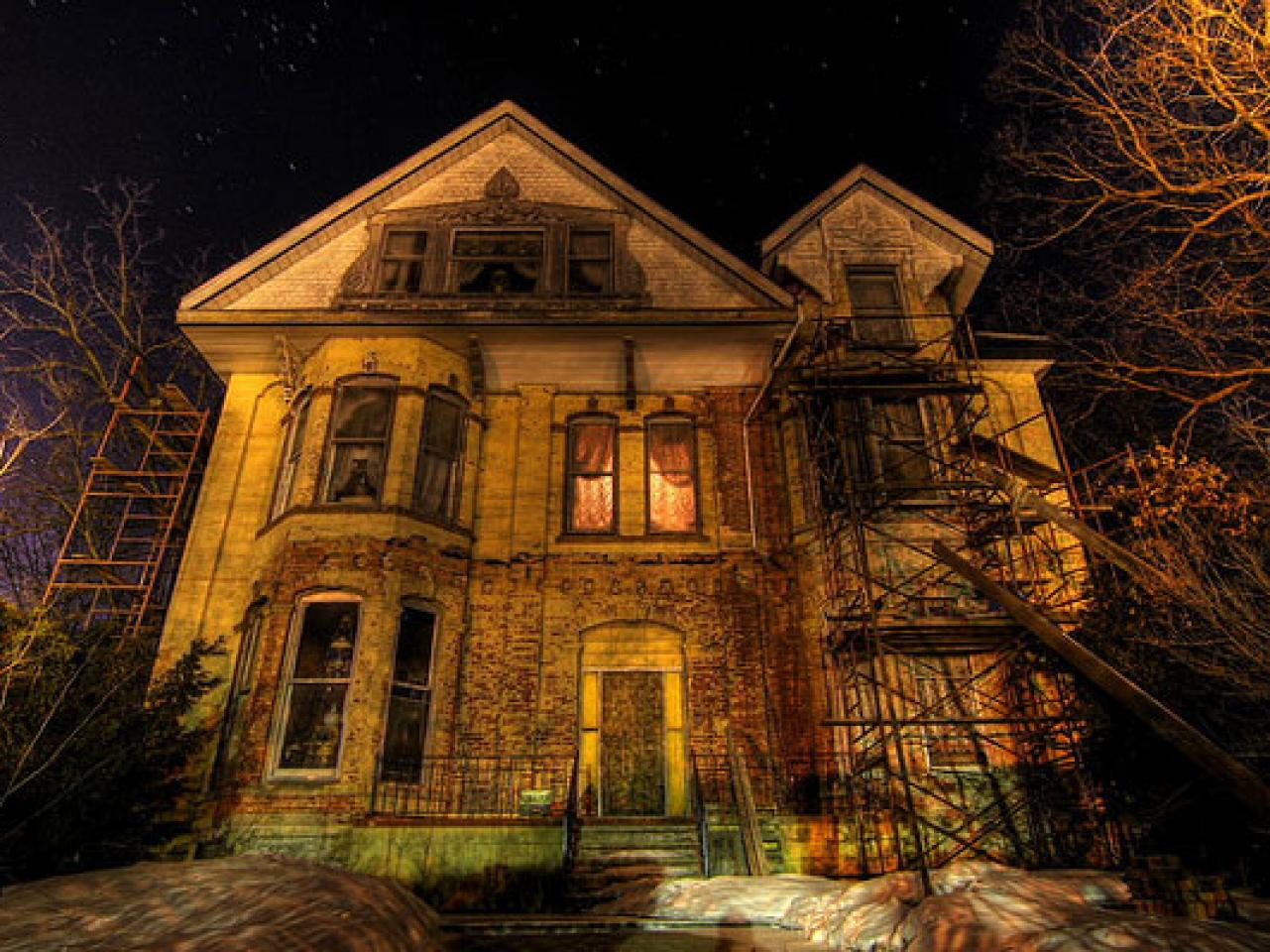
Perhaps the most haunted house in America is also its most famous. The White House in Washington, D.C., is allegedly home to several ghosts. Completed in 1800, the White House has been home to every president since John Adams. And his successors have admitted to feeling a ghostly presence in the executive mansion.

“The damned place is haunted sure as shootin’,” President Harry S Truman wrote to his wife in 1946, after hearing knocking on doors and footsteps in empty rooms. “Secret Service said not even a watchman was up here at that hour.”

To date, several former White House inhabitants have made their presence known. The ghost of a little boy so frightened members of President William Howard Taft’s administration that the president forbade anyone of speaking of it — or they’d get fired.

Some have claimed to see Abigail Adams, John Adams’s wife, in the East Room, where she once hung out clothes to dry. Contemporary staff report smelling lavender and wet laundry.

And others have reported seeing presidents lingering around the White House long after their administration (and lives) had ended. Mary Todd Lincoln claimed to hear Andrew Jackson stomping around. Others say they’ve seen Thomas Jefferson playing the violin and William Henry Harrison — the first president to die while in office — in the attic.

One of the most commonly seen ghosts in the White House is Abraham Lincoln, who was assassinated in 1865. First, Lady Grace Coolidge claimed she saw him staring out a window in his former office, and British Prime Minister Winston Churchill says he saw Lincoln sitting by the fire.

“They say Lincoln always comes back whenever he feels the country is in need or in peril,” said Jared Broach, who once offered White House ghost tours.

Broach claims he is sure that the White House is haunted. “If I said [otherwise], I’d be calling about eight different presidents liars,” he explained.

Certainly, the White House has some of the most alleged hauntings in the United States. But is it the most haunted house in America? More haunted than Myrtle Plantation? Or the Villisca Axe Murder House?

There’s only one way to find out. Gather your wits and visit some real haunted houses across the United States. Maybe some of the country’s most active ghosts will make themselves known.

SOURCE: ALLTHATSINTERESTING.COM

Bye bye

War of the Worlds

From History.com:

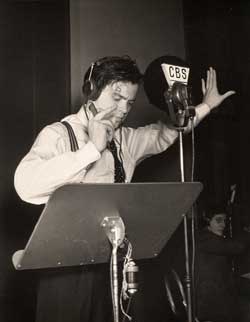
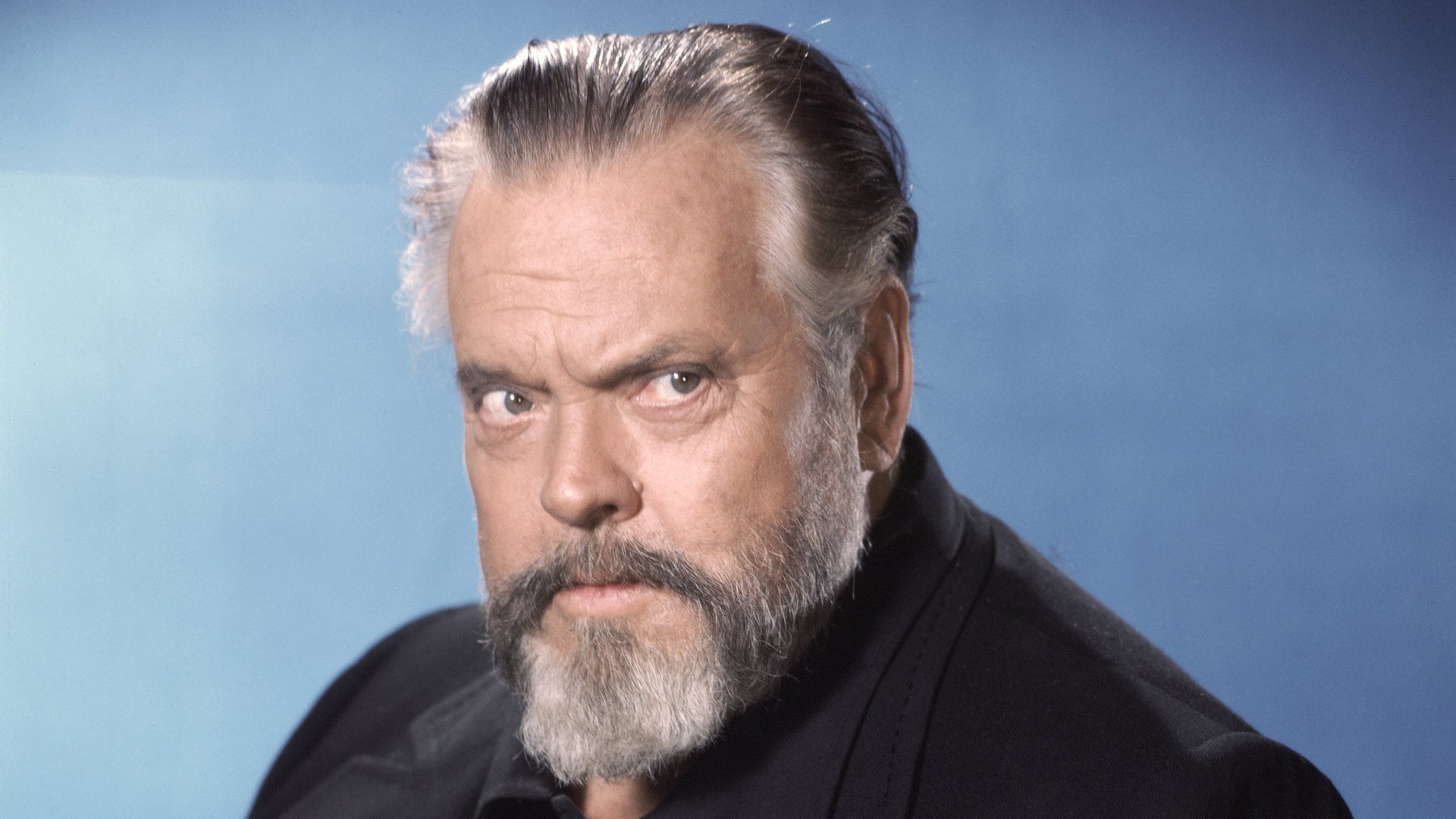
As the clock struck 8 p.m. in New York City on the night of October 30, 1938, Orson Welles stood on a podium inside a Madison Avenue radio studio. The baby-faced, 23-year-old theatrical star, who had graced the cover of Time magazine months earlier, prepared to direct 10 actors and a 27-piece orchestra for the Columbia Broadcasting System’s weekly “Mercury Theatre on the Air” program.

Millions of Americans, as they were every night, huddled around their radios, but relatively few of them were listening to CBS when it was announced that Welles and his fellow cast members were presenting an original dramatization of the 1898 H.G. Wells science-fiction novel “The War of the Worlds.” Instead, most of the country was tuned in to NBC’s popular “Chase and Sanborn Hour,” which featured ventriloquist Edgar Bergen and his dummy, Charlie McCarthy. 

Channel surfing, however, was not a modern-day invention, and disoriented listeners who stumbled onto the “Mercury Theatre on the Air” without having heard the disclaimer at the top of the radio play were thrust into the middle of an hour-long drama that left some believing that the country was under attack.

The CBS program, penned by “Casablanca” screenwriter Howard Koch, opened serenely with the dulcet dance music of “Ramon Raquello and his orchestra.” Then, an actor portraying an announcer broke in with a fake news report that several explosions of incandescent gas had occurred on Mars. In quick succession came a series of increasingly alarming, suspense-building newsflashes that culminated with Martian spacecrafts crashing into a farm in Grovers Mill, New Jersey. 

For the rest of the hour, terror crackled over the airwaves. Breathless reporters detailed an extraterrestrial army of squid-like figures that killed thousands of earthlings with heat rays and black clouds of poison gas as they steamrolled into New York City. Welles and the rest of the cast impersonated astronomers, state militia officials and even the Secretary of the Interior, who cannily sounded like President Franklin D. Roosevelt.

Human germs, rather than human armies, ultimately did in the mythical Martian invaders, and at the end of the hour the director wrapped up the radio drama by telling his audience, “This is Orson Welles, ladies and gentlemen, out of character to assure you that ‘The War of the Worlds’ has no further significance than as the holiday offering it was intended to be. The Mercury Theatre’s own radio version of dressing up in a sheet and jumping out of a bush and saying ‘boo!’”

The National Panic That Followed The War of the Worlds 

The fright that Welles put into America, however, was much greater than he thought. Although the program included a reminder at intermission that it was a dramatization, thousands of anxious and confused listeners believed it to be real. They besieged police departments, newspapers and CBS with phone calls. In New Jersey, ground zero for the fictitious invasion, national guardsmen wanted to know where they should report for duty, and the Trenton police department fielded 2,000 calls in under two hours. In Providence, Rhode Island, hysterical callers begged the electric company to cut power to the city to keep it safe from the extraterrestrial invaders.

Fear and anxiety had become a way of life in the 1930s, and it took little to rattle jittery Americans. The Depression had emptied their wallets, the gathering crisis in Europe threatened to ignite into war and just weeks earlier the Hurricane of 1938 had roared ashore. Plus, the Hindenburg disaster, which had been broadcast over the airwaves just the year before, was still fresh in the country’s collective psyche. 

This Day in History: 10/30/1938 – Welles Scares Nation

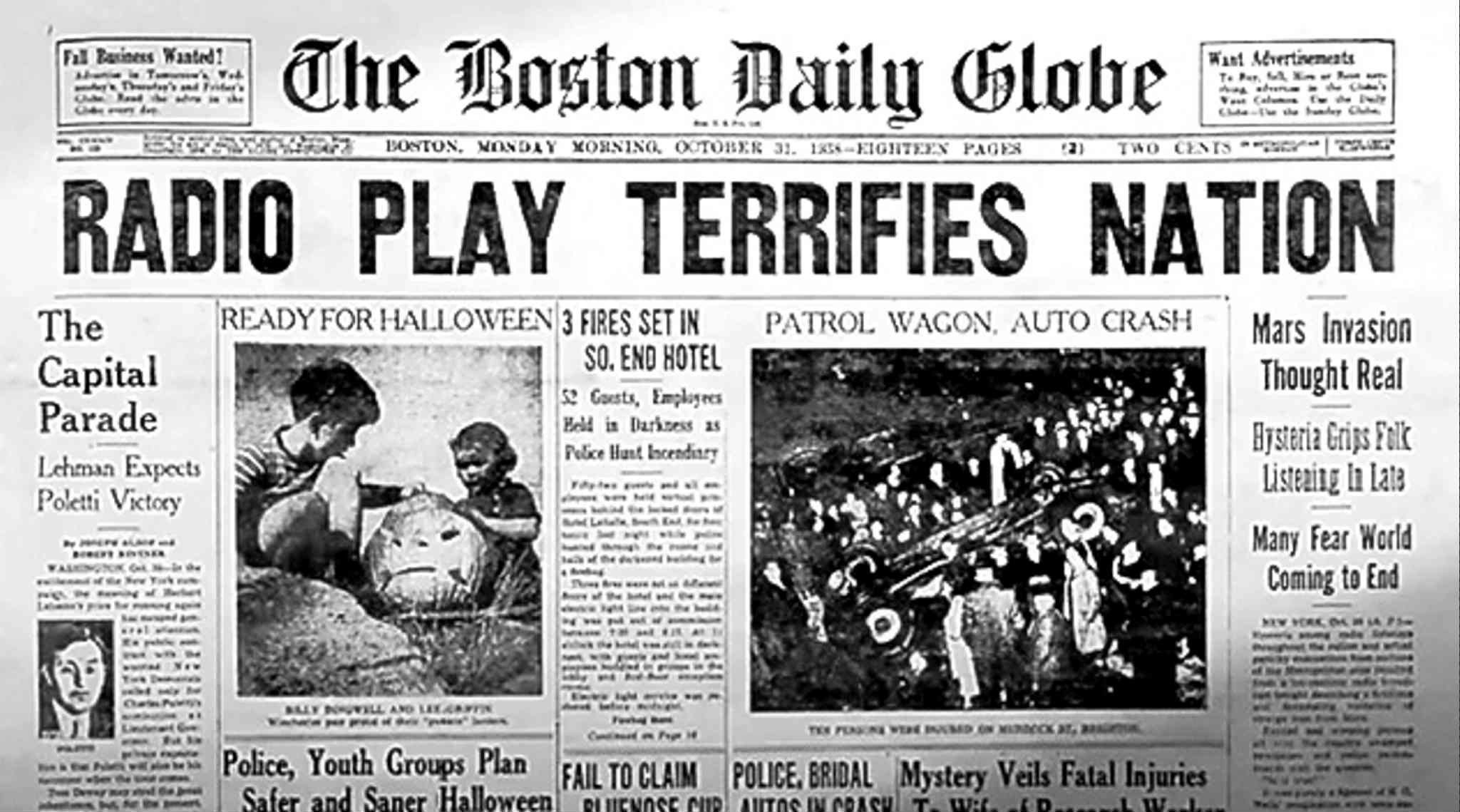
The newspaper industry also felt unease from the increasing popularity of radio as an informational and advertising medium, and seeing a chance to strike back at its growing rival, it gleefully collected the sporadic reports of individual confusion generated by “The War of the Worlds” and weaved them into a narrative of “mass hysteria.” Newspapers reported suicide attempts, heart attacks and exoduses from major metropolitan areas. 

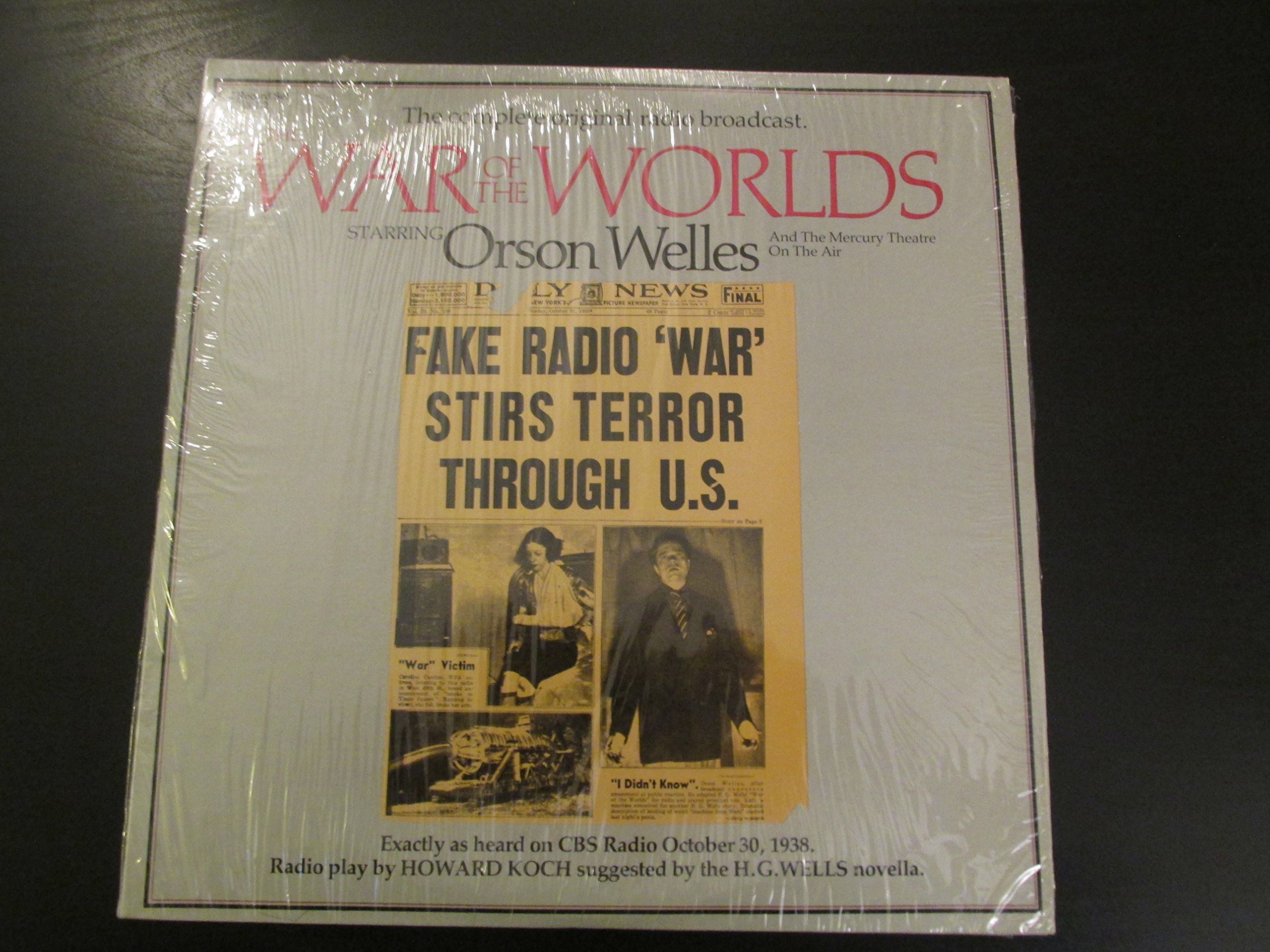
The New York Daily News printed the feverish headline “Fake Radio ‘War’ Stirs Terror Through U.S.” along with the photograph of a “war victim,” a woman in a sling who had heard the reports of black gas clouds in Times Square and ran out from her midtown apartment into the street where she fell and broke her arm. Similar stories of woe were printed from coast to coast and unleashed a media frenzy.

Orson Welles’ Response

With threats of lawsuits swirling in the press, CBS went into damage control. At a hastily called press conference, a doe-eyed Welles displayed his theatrical acumen and expressed his remorse and shock at the public reaction. “I can’t imagine an invasion from Mars would find ready acceptance,” he said when asked if he pranked the country. Decades later, however, Welles admitted, “The kind of response was merrily anticipated by us all. The size of it, of course, was flabbergasting.”

The Federal Communications Commission did not sanction CBS or Welles, and the radio dramatist quickly spun his Halloween trick into a treat. Thanks to what became known as the “panic broadcast,” the radio program signed Campbell’s Soup as a sponsor, and soon after, Welles inked a deal to direct “Citizen Kane,” named by the American Film Institute as the greatest movie of all time.

SOURCE: HISTORY.COM

I’d Like to Solve the Puzzle

Today is (not) Pat Sajak’s birthday! He was born October 26, 1946 and was the host of Wheel of Fortune for over 40 years.  I thought I’d take a look at some of the funnier wrong answers to Wheel of Fortune puzzles.

12 You say “flamenco,” he says…

In 2018, a contestant named Jonny lost out on a $7,100 prize after pronouncing “flamenco” like “flamingo.” Ashley, whose turn it was next, almost looked sheepish as she offered the correct answer.

11 Tennessee Williams is rolling in his grave

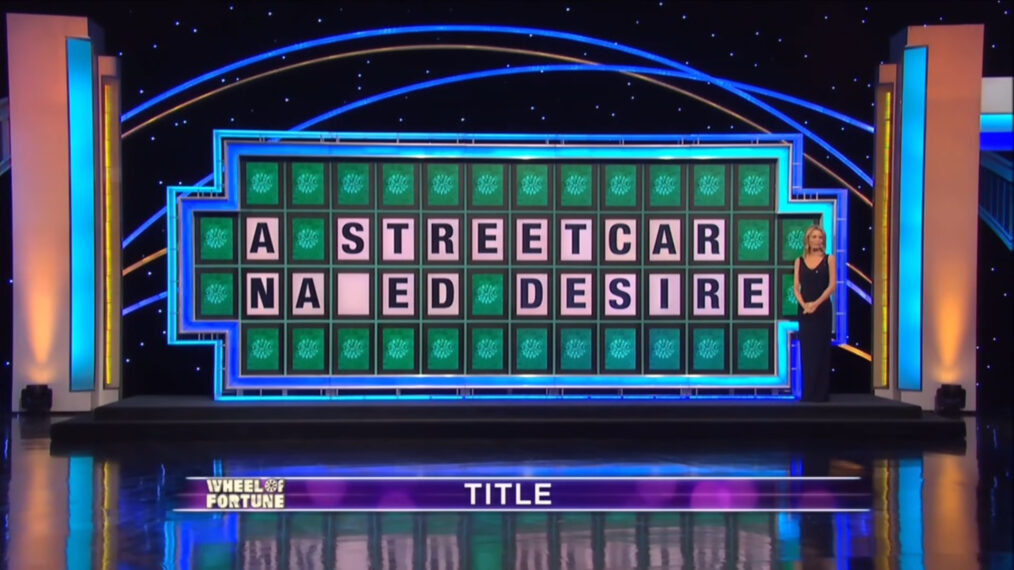
After thinking that the play A Streetcar Named Desire was titled A Streetcar Naked Desire in a 2017 episode, Kevin Haas said in a statement that he was glad to give viewers a laugh. “That, my friends, is the naked truth,” he added, per TIME.

10 A “fregh” response

A contestant named Khushi might never go to a grocery store without a twinge of humiliation, having offered a “G” instead of a “S” as the final letter in “FRE_H TROPICAL FRUIT” in a 2023 Wheel of Fortune episode.

9 A child-ish flub

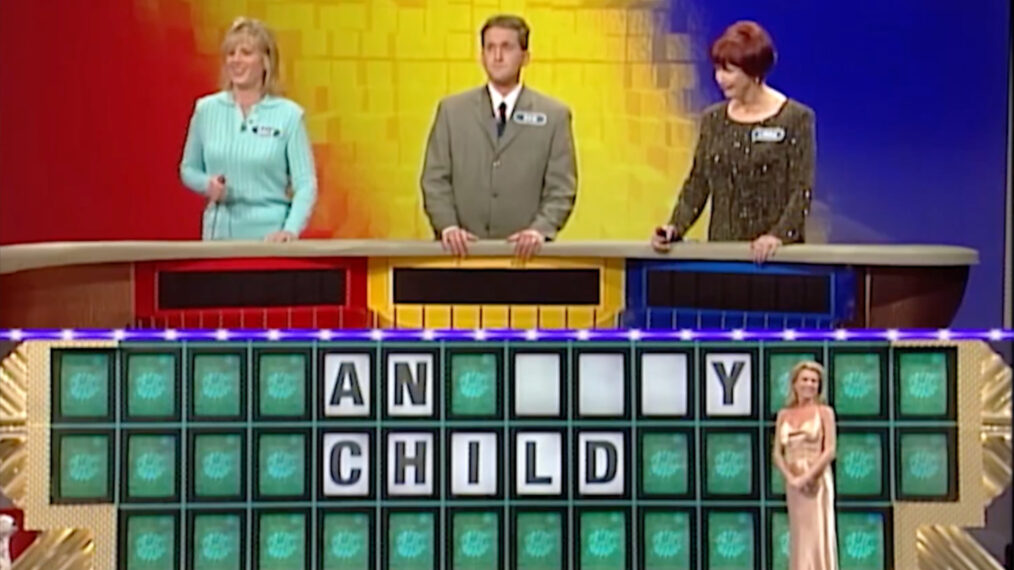
In 2002, a contestant named Linda actually thought that the answer to a Wheel of Fortune puzzle would be “an ugly child” instead of “an only child.” (“What can I say? I’m a schoolteacher,” she said by way of… explanation?)

8 No Live fans here

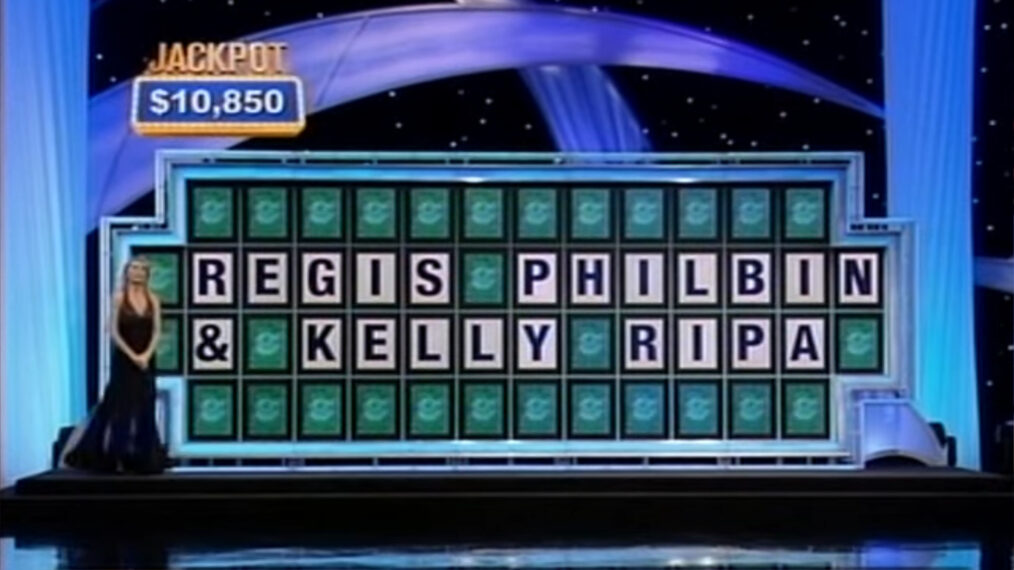
None of the contestants of a 2010 episode could nail the names of former Live cohosts Regis Philbin and Kelly Ripa at first, saying “Philburn,” “Philmin,” and — even once the answer was revealed — “Ree-pa” instead of Ripa.

7 A prescription for failure

In an infamous 1999 episode of Wheel, one contestant guessed “a group of pill-pushers” instead of “a group of well-wishers.” Sajak jokingly announced the end of that episode’s taping.

6 Wand-ering around the answer

If you can deduce the answer from the puzzle “MAG_C _AND,” you’re better off than a contestant named Zach, who in a 2012 episode guessed 10 wrong consonants for that second blank before realizing — just after the buzzer — that the answer is “magic wand.”

5 Pronunciation is his Achilles heel

Julian Batts staked his place in game show infamy in 2014 when he lost $1 million by pronouncing Achilles like “A-chillus.” (“It’s the Wheel of Fortune,” Batts said in a follow-up interview with IndyStar. “Crazy stuff happens all the time. It’s a crazy game.”)

4 Tuber on the tube

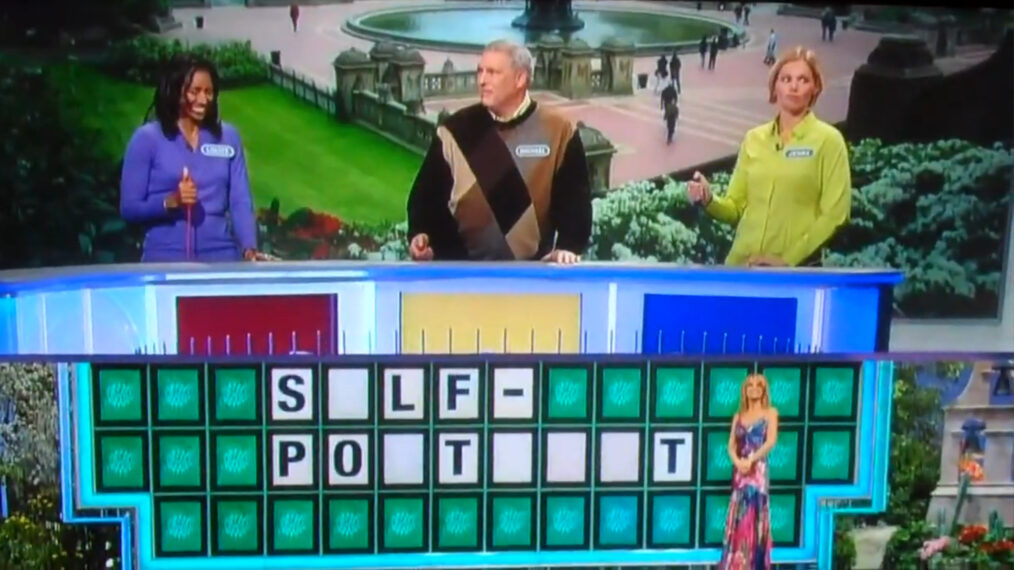
Lolita McAuley also had an embarrassing turn on the show, guessing “self-potato” — whatever that is — instead of “self-portrait” in a 2009 episode. McAuley told The New York Times she wanted to “go and hide” right after the word salad fell out of her mouth.

3 What kind of shower?

Melanie inadvertently — seemingly inadvertently, at least — name-dropped a NSFW sex act on Wheel of Fortune in 2018, saying “gold shower” instead of “cold shower.”

2 The lovely Parisian city of Venice

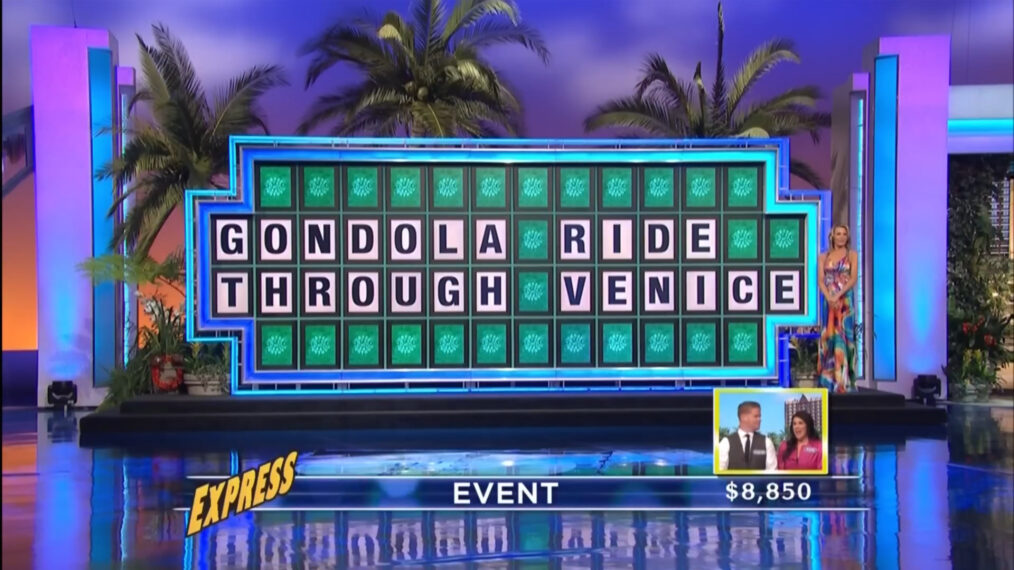
After winning a trip to Venice on the show in 2016, a contestant named David flunked Sajak’s impromptu geography quiz, venturing that Venice is a city in the country of Paris. (“Do we still get [the prize]?” asked David’s embarrassed wife.)

1 Right where?!

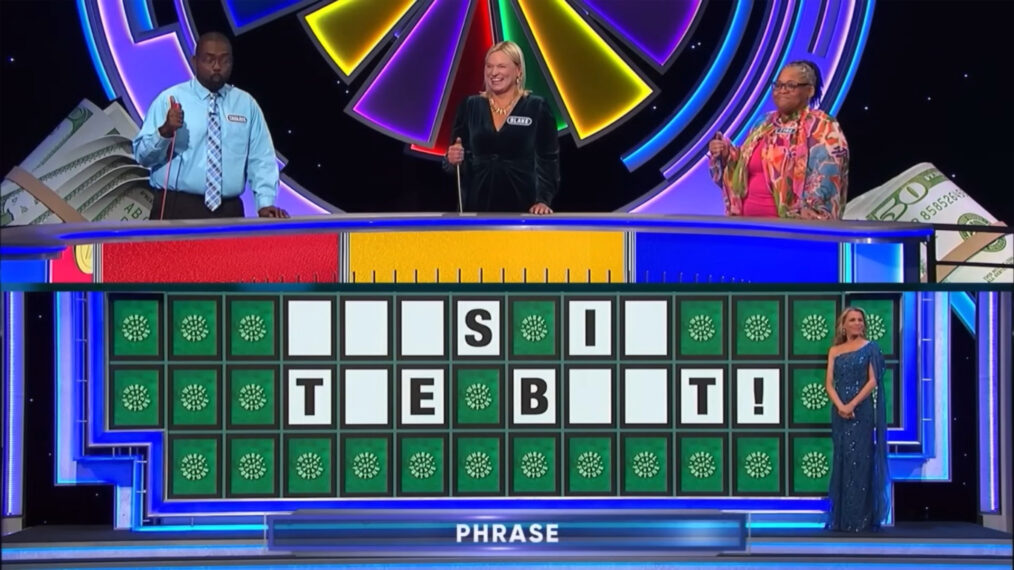
Tavaris Williams made a wild guess in a toss-up round in 2024, thinking “____ I_ T_E B__T” might be “right in the butt.” (The correct answer was “this is the best.”) “I have never used those words in sequential order a day in my life,” Williams later said on Jimmy Kimmel Live!)

Thanks for the laughs!

SOURCE: TVINSIDER.COM

The Ghosts of St. Augustine Lighthouse

I found an interesting ghost story about a lighthouse in Florida—and what better month to share than October!

From GHOSTCITYTOURS.COM:

On the coast of Florida, where the Tolomato and Matanzas Rivers spill out into the unforgiving waters of the Atlantic, stands one of America’s oldest and most haunted structures: the St. Augustine Lighthouse.

Standing 164 feet tall, nestled on the northern edge of Anastasia Island since the mid 1500s, this lone sentry has seen its fair share of history—for better or for worse. From the colonization of the Americas, to the Hundred Years’ War, to the birth of a nation and its subsequent divide, the St. Augustine Lighthouse has stood watch, year after year, through plagues and power struggles, as a beacon of hope in the darkness.

And it has left a mark.

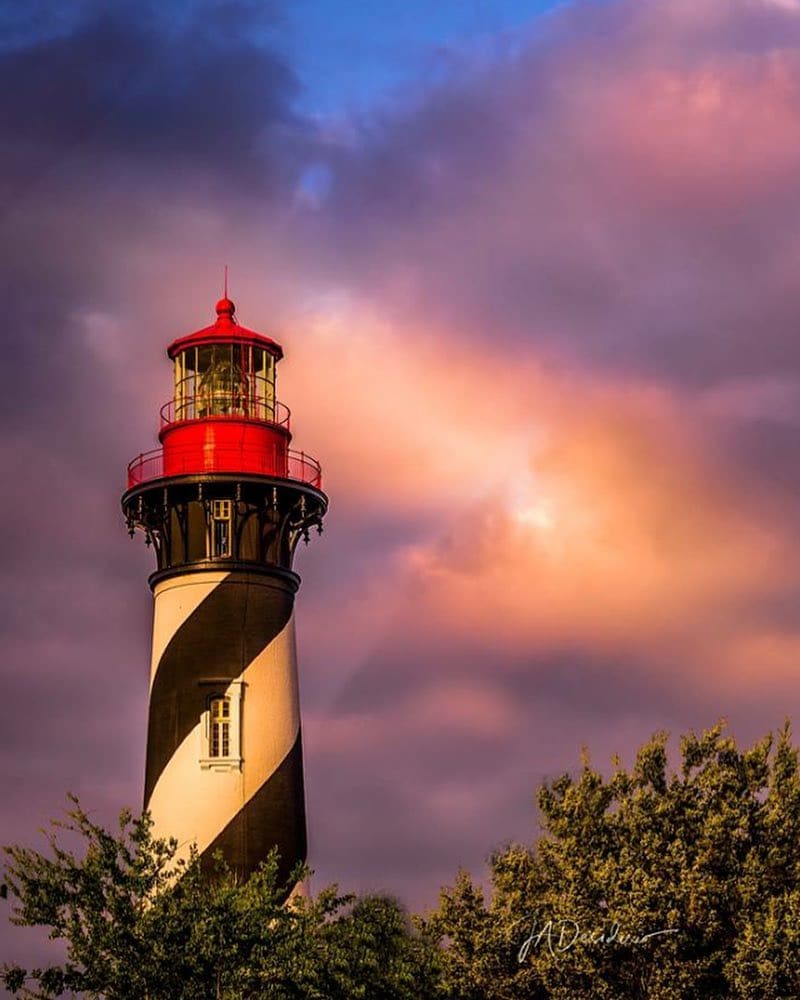
You may not see it at first, but it’s there. Looking up at its twisted, black and white striped base, capped with a blood-red crown, you can almost sense it. That something is off. But it isn’t until you’ve run your fingers along its coquina walls, a mixture of limestone and broken shells, that you can really feel it—what the centuries and the salt have carved out like ancient runes.

It holds memories.

On the ground floor living quarters, where so many lighthouse keepers have laid their heads over the years, the raw, almost sickly-sweet smell of a freshly-lit cigar can be detected, subtle beneath the ocean air. Remnants of a different time, when men huddled around wood-burning stoves and waited out the storms, praying that no lives would be lost on their watch.

Inside the lighthouse proper, climbing the tall, spiraling staircase, the sound of crashing waves and screeching gulls is dampened by the thick walls. The sudden quiet is almost welcome, until a new sound emerges: the bell-like ringing of a little girl’s laughter. It starts at the top of the stairs, high above your head, and works its way down, down, down until it is silenced, abruptly.

In the red room at the very top, the beacon itself sits staring like a giant glass eye, seeing through time to the world that was before. You step out onto the catwalk, taking in Anastasia Island and the enormity of the sea beyond. It feels like you could be one of those lone lighthouse keepers, on duty, eyes on the horizon. That is until you see her, a shadow of a woman in the corner of your eye, holding onto the railing and leaning out into the open air—until she isn’t.

You too grip the railing, white-knuckled, looking out over the trees to the water beyond. You can’t help but wonder what it would feel like if you stepped out too? To be nothing more than another memory left behind at the St. Augustine Lighthouse, standing watch and waiting as the centuries slipped by and history rewrote itself.

The Caretakers

Like all hauntings, the spirits that roam the grounds of the St. Augustine Lighthouse didn’t just appear from nothing. Over the hundreds of years that the structure has stood, many people have come and gone, lived and died, and a few have even remained. The sightings that have been recorded on Anastasia Island have roots that go deep into the history of the lighthouse, much of which is now known to us.

For instance, it may be tempting to disregard the lingering odor of cigars, even despite the site being smoke-free. But for anyone who has ever smelled it, or has even seen the too-tall, shadowy figure that often accompanies it, they will tell you that the sense of fear and foreboding in the air lingers long after the cigar has faded away.

Locals and lighthouse employees refer to this spectre as “The Man,” and he is often seen dressed in a blue jacket and mariner’s cap, walking his route up and down the spiral staircase or looking down from the catwalk above. Because of his tall, thin frame, some believe he is the ghost of William Russel, a protective and dutiful lighthouse keeper from the 1850s. While others point to Joseph Andreu, who fell from the top of a scaffolding in 1859 while putting on a fresh coat of paint.

Regardless of who “The Man” is, it’s clear that his shift has never ended.

And who can forget the children’s laughter that bubbles up from thin air and moves across the grounds, from the caretaker’s home to the top of the lighthouse itself, as if it has a life of its own. While children weren’t uncommon on Anastasia Island, especially in more recent years, there are only so many children who have had a reason to stay.

In 1872, the lighthouse was under construction, overseen by a man named Hezekiah Pittee, who stayed on the island with his wife and two daughters while the project was underway. One afternoon, while Pittee’s daughters and a few of their friends were playing near the lighthouse, tragedy struck, and the island was changed forever.

There was a rail cart that the construction crew used to transport supplies from the nearby pier to the lighthouse, and it had become a part of the girls’ favorite game: pretending they were Spanish pirates moving their hoarded treasure to a secret location. Only one day, while rolling near the cliff’s edge, the rail cart came off its tracks, sending the young girls down into the water below. Some of them were rescued in time, but, unfortunately, both of Mr. Pittee’s daughters were lost to the sea.

If anything can be said, it’s that the children now get to play long after dark. We know because employees of the St. Augustine lighthouse still hear their giggles ringing out in the night, and have been known to find the dirty, child-sized footprints on the floors the next morning.

Which leaves us with one last vestige of the lighthouse’s history, and perhaps one of the most unnerving: the woman on the catwalk.

Maria Mestre de los Dolores stands out for more reasons than just her recent, ghostly sightings. In 1859, she became not only the first woman to serve in the U.S. Coast Guard, but she also became the first Hispanic-American woman to command a federal shore installation: the St. Augustine Lighthouse.

Her appointment came after her husband, the formerly mentioned caretaker Joseph Andreu, met his fateful end. Maria was heartbroken, left on Anastasia Island to follow in the very same footsteps her husband had once walked, and even was known to stand at the edge of the catwalk, looking down to where her husband’s body had once laid, broken.

She can still be found there, on occasion, leaning over the railing and imagining what those last few seconds of Joseph’s life had been like.

There is little doubt that, when it comes to hauntings, there are few places that will leave a mark on its visitors like the St. Augustine Lighthouse. With its rich history, infamous legends, and well-documented sightings, it is clear that what happens on Anastasia Island, stays on Anastasia Island.

SOURCE: GHOSTCITYTOURS.COM

DIY: Halloween Treats

I love to see what new recipes or treats are out there for Halloween parties.  Not that I have them anymore, but I do love to eat!

Acorn Treats

This is a super simple recipe that’s adorable too!  There’s only three ingredients: miniature chocolate chips, Hershey Kisses and Nutter Butter Bites!  You need one Hershey Kiss, one Nutter Butter Cookie and one miniature chocolate chip per treat.  Simply melt chocolate chips to use as the “glue” between the pieces!

Meringue Bones

This is another simple to make recipe with minimal ingredients!  You need 2 large egg whites at room temperature, 1/8 teaspoon cream of tartar and ½ cup sugar. In a small bowl, beat the egg whites with the cream of tartar on medium speed till soft peaks form.  Gradually add the sugar, 1 tablespoon at a time until stiff peaks form.  Place in a heavy-duty resealable plastic bag and cut a small hole in the corner of the bag.  On parchment lined cookies, pipe a 3-inch log. Pipe 2 balls on each end to create the bone shape. Bake at 225* for 1 ½ hours or until firm.

Brownie Spiders

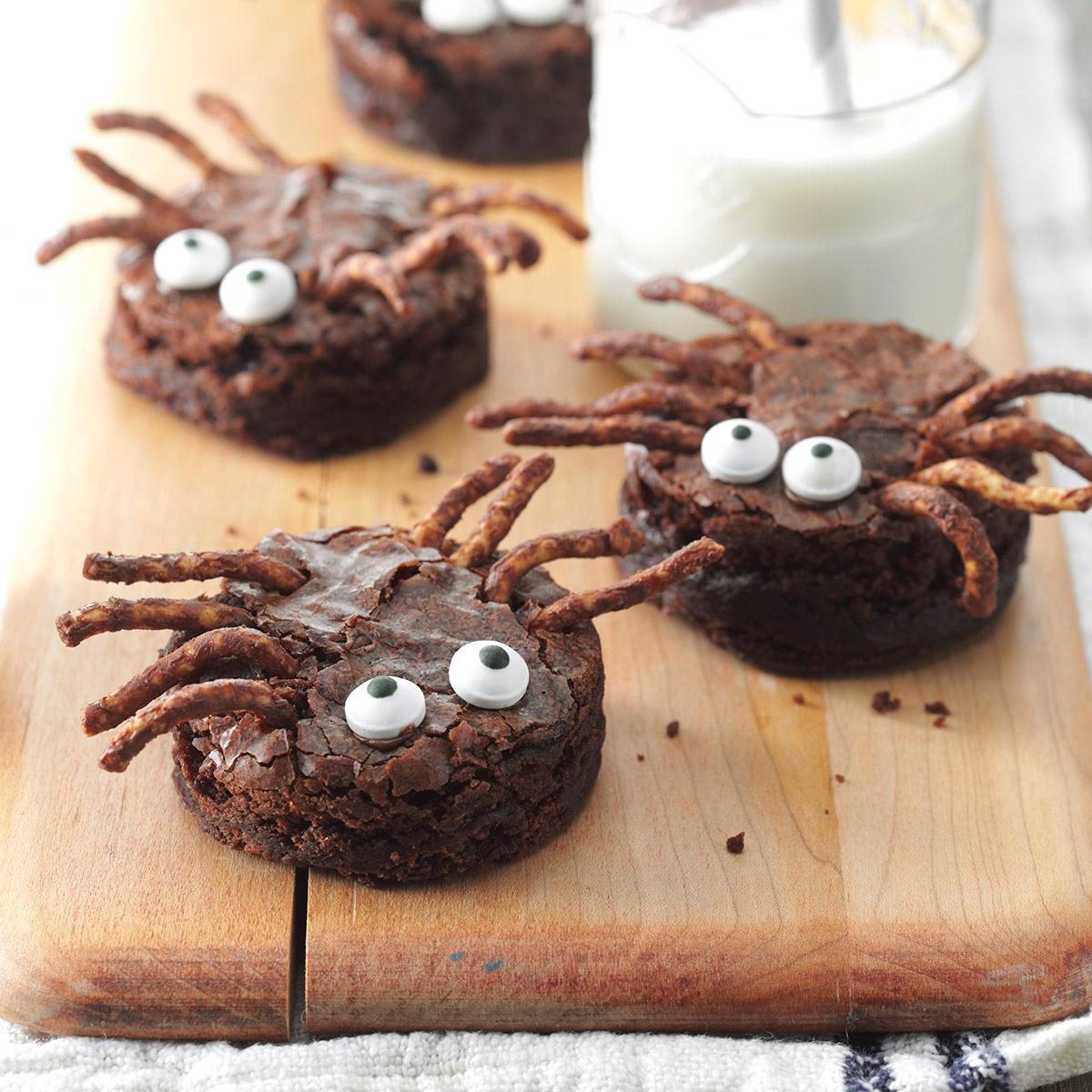
These brownies are cute and so easy to make. Bake up your favorite brownies (from a mix if you like) and after they bake and cool, turn the brownies out onto a cutting board. Using a glass, “cut” circles from the brownies. (The leftover scraps are fair game to munch on!) Use pretzel pieces for legs and purchased eyes from the baking aisle.

ENJOY!

Pumpkin Slice

When I was a kid, if you wanted to carve a pumpkin, you got Mom’s sharpest knife (and then she took it from you cuz you might cut yourself) and then you got the knife Mom thought was safe and you cut out your pumpkin face. If you were lucky, you didn’t cut yourself and the jack-o-lantern was passable.

But these days?  There are stencils and cutters to make carving pumpkins easy!

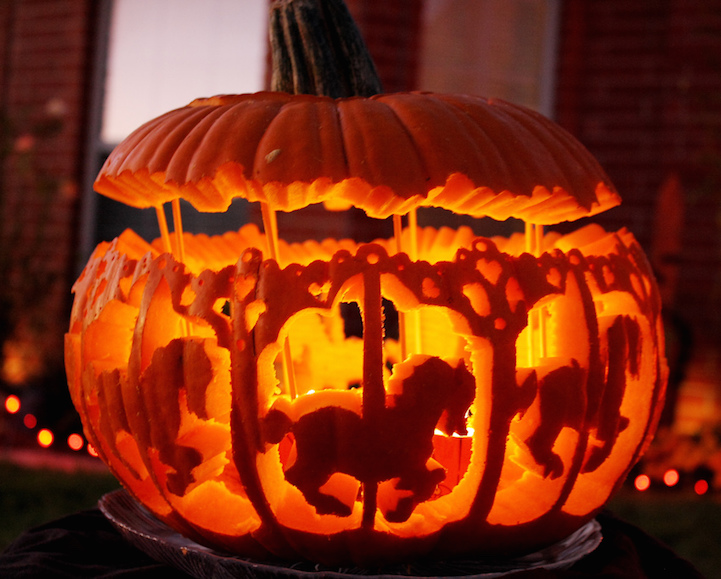
Then there are the pumpkin works of art!

Happy carving!