National New Hampshire Day!

This article on USNews lists 25 fun things to do in New Hampshire.  I’m only bringing a few, but check out the link at the end to see more if you’re so inclined!

From USNews:

New Hampshire may be a small state, but it’s packed full of attractions and activities for visitors. From its 18 miles of coastline to the centrally located Lakes Region to the looming White Mountains up north, New Hampshire offers plenty of opportunities for outdoor recreation. Then there are the unique and family-friendly amusement parks, historic sites and thought-provoking museums to explore while vacationing in the Granite State.

With skiing in the winter, summer fun by the lakes and leaf peeping in the fall, this state is a year-round destination. Here are some of the best things to do and see in New Hampshire.

McAuliffe-Shepard Discovery Center

Concord’s must-visit McAuliffe-Shepard Discovery Center honors two New Hampshire residents: Alan B. Shepard Jr., who in 1961 was the first American to travel into space, and Christa McAuliffe, a teacher aboard the Space Shuttle Challenger that tragically exploded just after it launched in 1986. Visitors to this family-friendly attraction can learn about space travel and science through hands-on exhibits, demonstrations and planetarium shows.

Concord, the capital of New Hampshire, has plenty of hotel chains and budget-friendly lodging. If you’re looking for something different and historic, consider The Centennial Hotel, located in a 19th-century Victorian mansion.

Santa’s Village

Just as the name suggests,Christmas-themed Santa’s Village is a celebration of the jolly old fellow himself, as well as all things that make the holiday special, from elves and reindeer to sleighs and sweet treats. Family-friendly rides at this amusement park in Jefferson include the Reindeer Carousel, Christmas Ferris Wheel, Santa’s Express Train and Yule Log Flume. There’s also a water park that’s open in the summer, with slides, gentle fountains of water and water spray zones.

Visitors have noted how clean and charming this amusement park is. Typically Santa’s Village is open daily in the summer, with limited weekend hours in the late spring and from Labor Day through Christmas. Be sure to check the Santa’s Village website for operating hours before you visit. One budget-friendly option for overnighting nearby is the Coos Motor Inn in Lancaster, located just over 5 miles north.

Polar Caves

The Polar Caves in Rumney were formed by a moving glacier 50,000 years ago. Visitors can pass through nine distinct boulder caves on a self-guided tour, while enjoying the cooler temperatures on a hot summer day. Squeeze through the many named granite spaces and features, such as Orange Crush and the narrow path of Devil’s Turnpike. The caves are linked by a series of wooden boardwalks and stairs, and all cave entry is optional.

Be prepared to crawl, twist and get a little dirty if you choose to make your way through the natural obstacles, say past travelers. Visitors can also feed the fallow deer and ducks at the on-site animal park. Polar Caves is open seasonally, from mid-May through mid-October. Nearby Fairfield Inn & Suites by Marriott Plymouth White Mountains offers daily free breakfast.

Kancamagus Highway

The Kancamagus Highway is a 34.5-mile National Scenic Byway that stretches from Lincoln to Conway in the White Mountains. This portion of state Route 112 is a wildly popular scenic drive in the autumn for its plentiful vistas of colorful fall foliage. Many pull-off points allow for stretching legs along this curvy, wooded highway, where you can take in views of mountains, waterfalls and rivers. Plan a stop at Russell-Colbath Historic Site, a museum that demonstrates what life in the region might have been like in the 19th century.

Along the highway, there are also parking lots at trailheads that allow you to traverse through the woods on foot. Past road-trippers note that cell service is very limited in this remote area. You won’t really find any motels or hotels along this stretch of rural road that reaches 2,855 feet in elevation, though there are several White Mountain National Forest campgrounds right off of the highway as well as many overnight options in Lincoln and Conway.

Portsmouth

Explore the charming Seacoast city of Portsmouth. Stroll the brick sidewalks of its lively downtown – featuring a vibrant restaurant scene, galleries, shops and historic buildings. Picnic or relax on a bench in 10-acre waterfront Prescott Park among gorgeous gardens and summer events like concerts, movies and theater performances. History lovers will enjoy hopping aboard the USS Albacore Museum, a decommissioned submarine that set a world record for speed in the 1960s. Or, opt for a tour of the Moffatt-Ladd House & Garden, a Georgian-style mansion that once housed General William Whipple, a signer of the Declaration of Independence.

Though many attractions in town are seasonal, wintertime visitors still find plenty to delight in as Portsmouth has been named one of the prettiest and coziest towns in America to visit during the winter. Each year, the town’s holiday festivities include a vintage trolley shuttle, an ice skating rink, a candlelight stroll, a gingerbread house contest and exhibition, and more. For lodging, consider the luxurious Wentworth by the Sea; The Inn Downtown, a boutique apartment-hotel with chic rooms in an early 19th-century building; or Ale House Inn, housed in a former brewery warehouse from the 1800s.

SOURCE: USNEWS.COM

Why Do Fish Travel in Schools?

From Scubadiving.com:

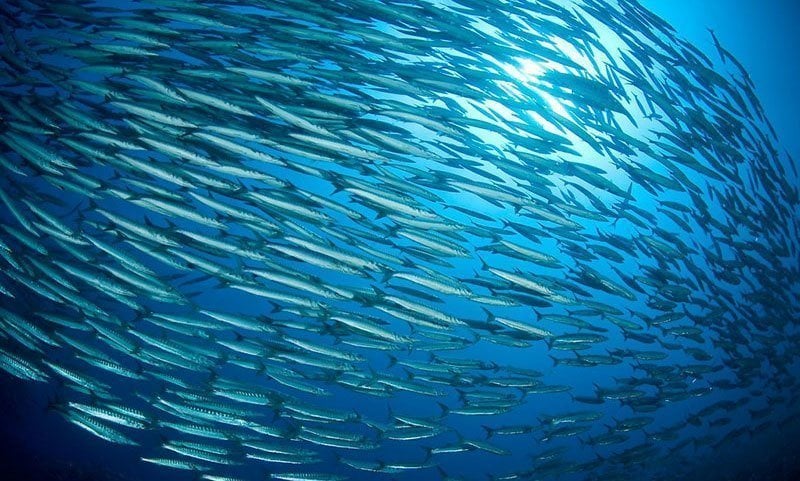
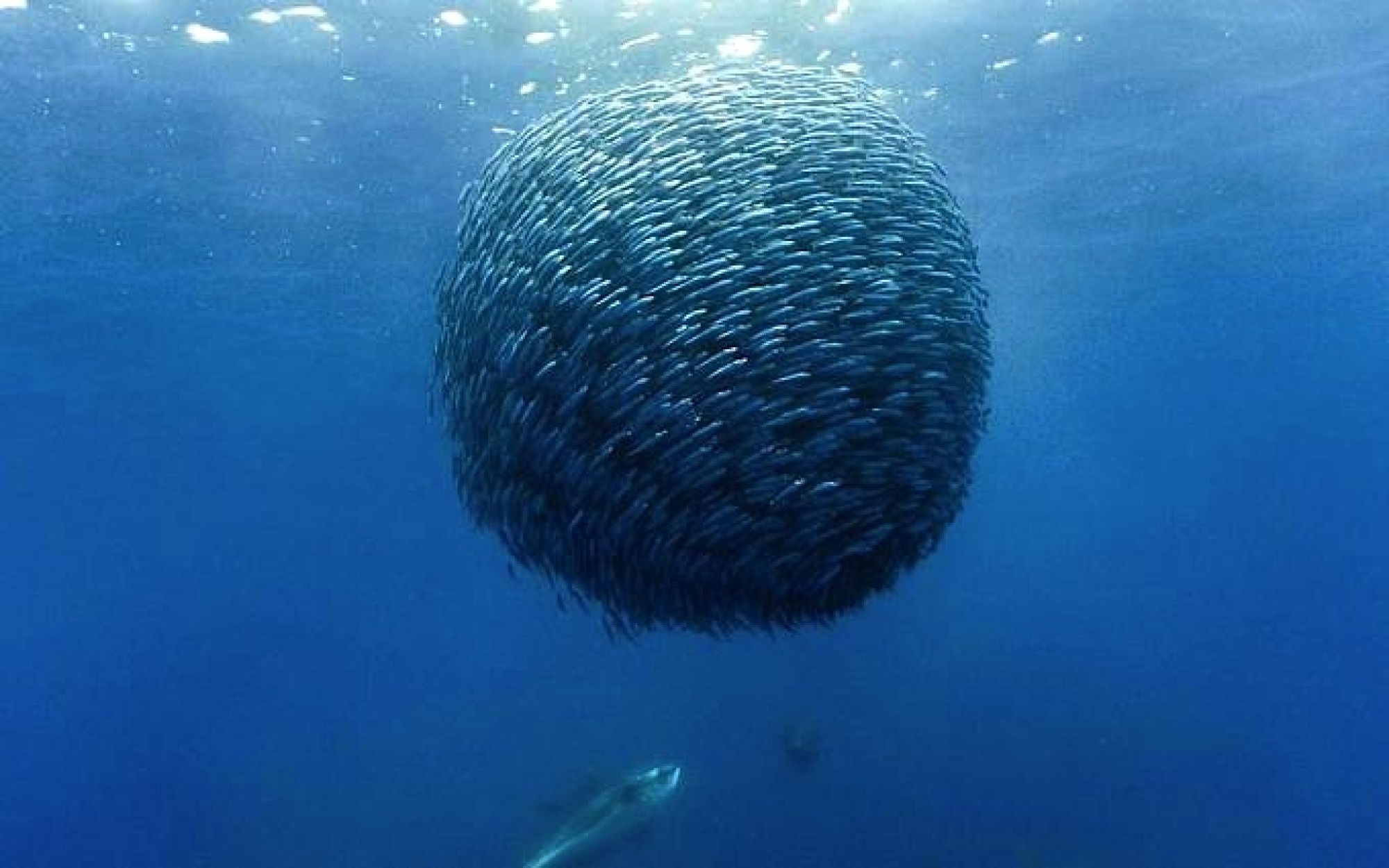
I am completely enclosed, suspended in a sphere of clear warm water smaller than my office. I am not surrounded by bricks and mortar, but living walls made of thousands of silvery bodies. The schooling silversides are so thick that I can’t see the surrounding coral canyon they’ve filled on this Cayman reef. As swiftly as I was engulfed, I am spat back into the bright blue world as the fish sweep past me to escape a marauding tarpon.

Shoals and schools of fish are similar, but there are differences. A shoal is any gathering of fish (single or mixed species), something about 50 percent of all fish species does at some point. Strictly, schools are much tighter formations, where the fish are fully synchronized, usually dominated by a single species of a similar size. Many schooling fish are silvery, which keeps them safe, not only because those scales reflect the water, making them harder to see, but they also dazzle and confuse predators. To us, these defensive maneuvers are an enchanting spectacle; the fish dance as if they are a single, giant creature.

As effortlessly balletic as it looks, these coordinated and unrehearsed mass twists and turns are challenging. It is not something a group of people could do. It used to be thought that fish’s unique lateral line sense, which allows them to feel vibrations in water, was the main control. But recent studies show that vision is the dominant sense in synchronized schools. Fish that school typically have eyes mounted on the sides of their head; the exact spacing of individuals, and the precise and unified movement are controlled mainly by eye contact.

Many schools form for defense. The main protective advantages of safety in numbers are: Each member of the school has less chance of being eaten since predators struggle to pick out an individual, and when faced with a predator, most individuals can take evasive action before it gets close, based on the movements of the other fish. The closer the fish pack together and the more unified their movements, the safer they are, which has driven the evolution of this complex behavior.

Not all gatherings are for protection. Fish also form shoals to feed, migrate, rest, court and spawn. Some herbivorous species of damselfish live alone and aggressively defend the gardens where they farm algae—even against divers. Other species can’t raid these gardens alone, but many species of surgeonfish, parrotfish and rabbitfish will shoal to use the weight of numbers to gain access.

Many nocturnally active species, like snappers, grunts, sweetlips and bigeyes, are commonly seen resting in mixed groups during the day. These shoaling fish are often horizontally striped, a pattern thought to signal peaceful cooperation in the fish world. (Vertical bars are often associated with aggression and territoriality.)

Smaller reef fish tend to spawn regularly, but larger species reproduce less frequently, often gathering in large numbers just a few times each year to spawn. Large, solitary reef predators like Nassau groupers and bohar snappers are classic examples of species that gather impressively for spawning events. Sadly, this is a sight that is vanishing from the oceans, because these gatherings make it easy for people to net large numbers of fish, often wiping out the entire adult population of a species from a reef system in one fell swoop.

As photographers, our best shots will emphasize the togetherness of the fish. We want tight formations of neat, repeated shapes to make our pictures pop. However, the one thing guaranteed to mess up pleasing arrangements is getting too close! Shooting schools requires that we unlearn the golden rule of underwater photography and keep a bit of distance (in relative terms, anyway) to maintain those fantastic formations in our photos. What benefits the fish is also good for our photos.

SOURCE: SCUBDIVING.COM

Know-It-All Tuesdays: Animal Trivia Continued (46-60)

46. Question: How many species of sea urchin are there?

47. Question: What is a group of camels called?

48. Question: Which aquatic mammal has the most extended lifespan?

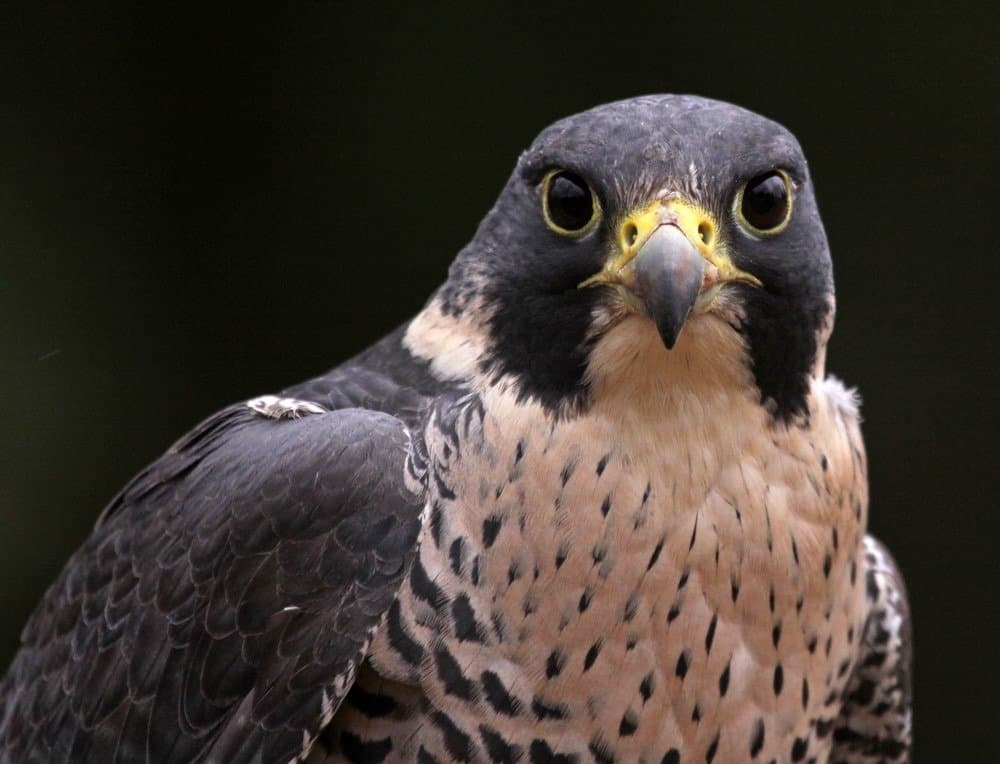
49. Question: Which bird is considered the fastest?

50. Question: How many heart chambers does a cockroach have?

51. Question: What animal lays the largest egg?

52. Question: What is thought to be the oldest breed of dog?

53. Question: How many species of ants exist on Earth?

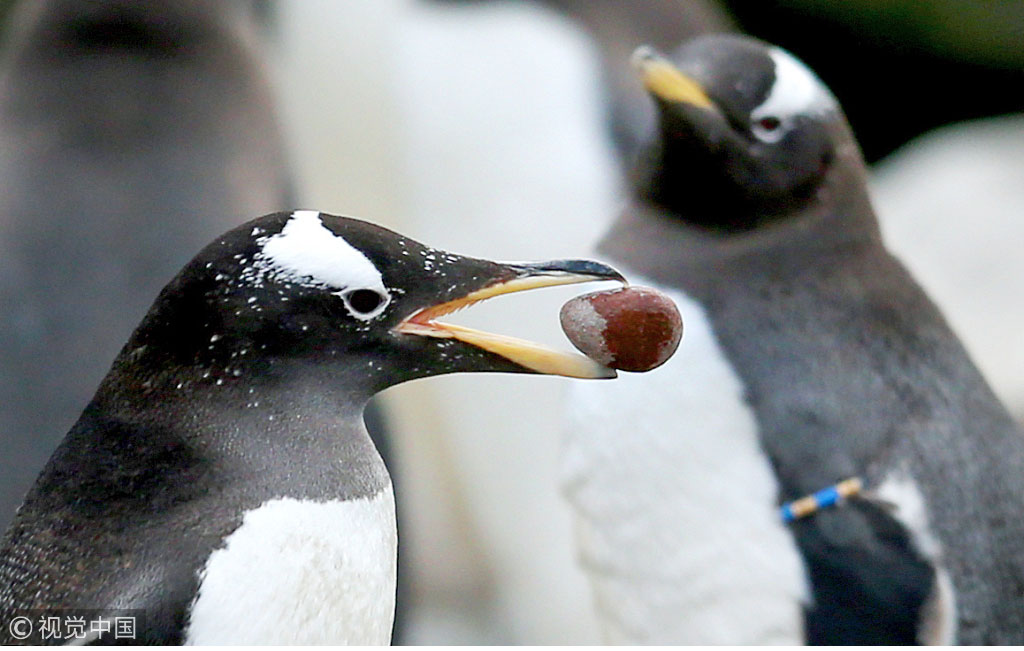
54. Question: What does a male penguin often gift its female counterpart to win her over?

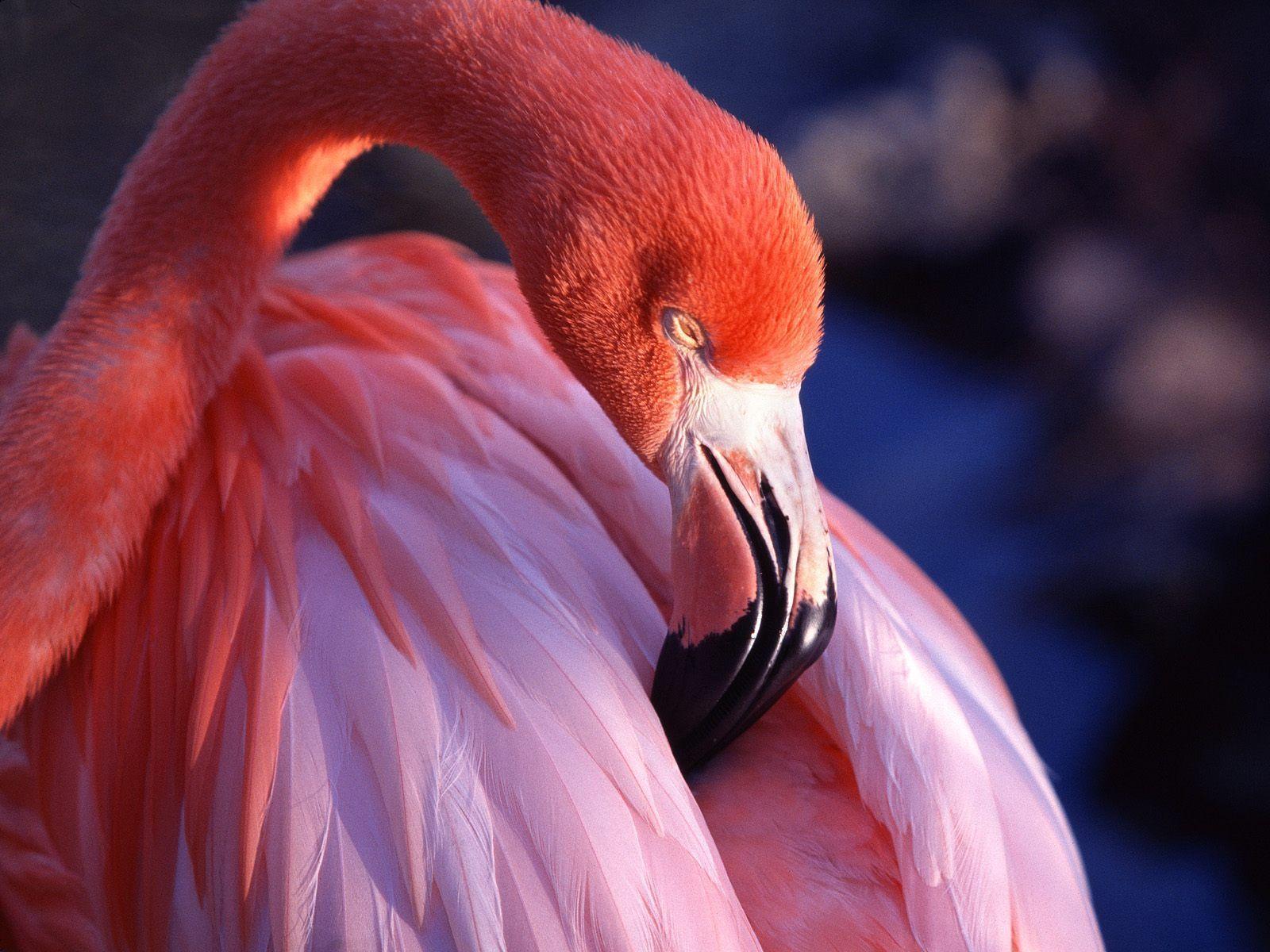
55. Question: Why are flamingos pink?

56. Question: What color is a giraffe’s tongue?

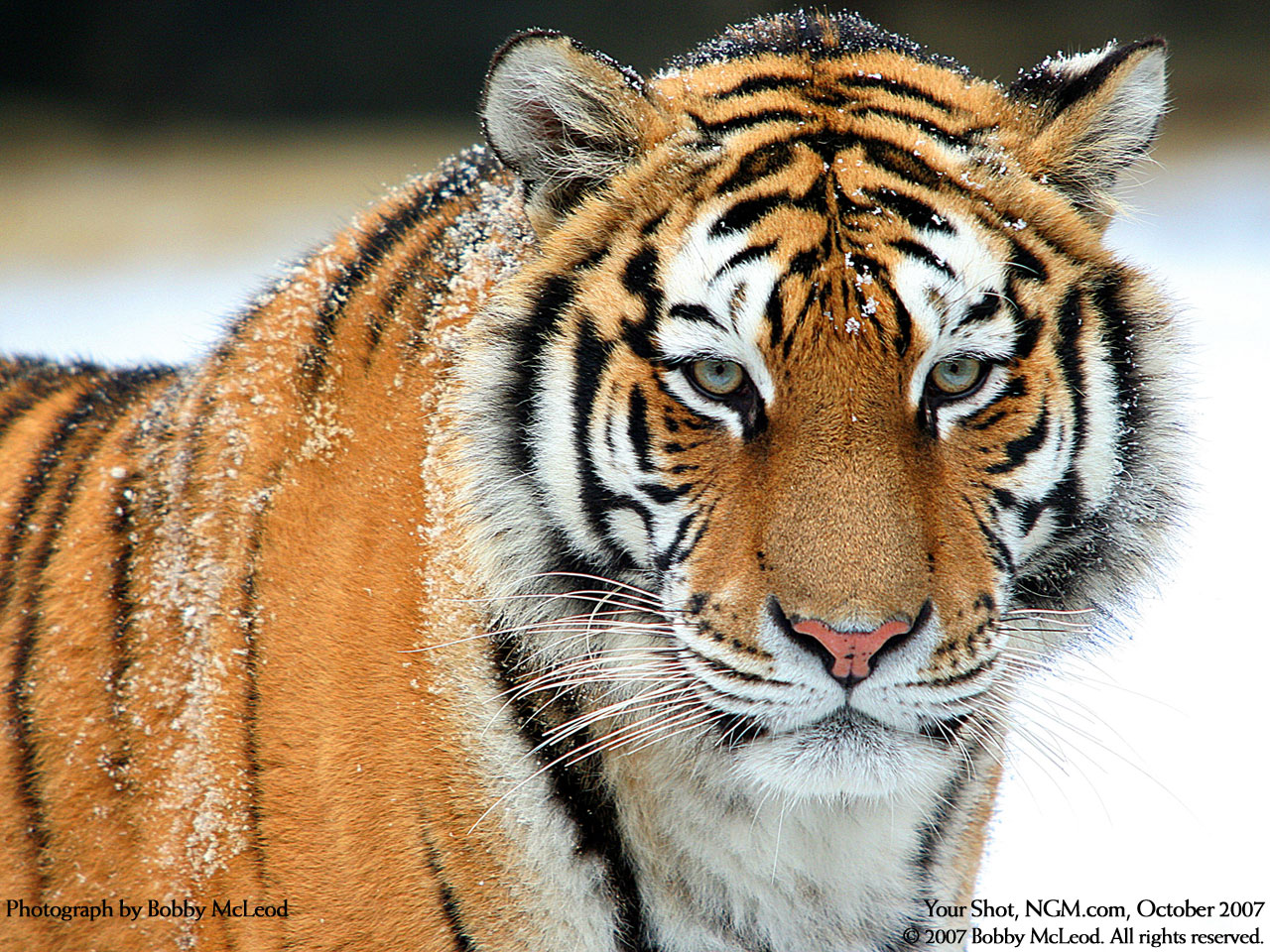
57. Question: What animal has stripes on its skin as well as its fur?

58. Question: How do sea otters keep from drifting apart while they sleep?

59. Question: What kind of turtle can’t retract into its shell?

60. Question: What does a snake use to taste and smell?

How did you do?

ANSWERS:

46. 950

47: A caravan

48. Bowhead whale

49: Peregrine falcon

50: 13

51: An ostrich

52: Greenland sled dog

53: 12,000+

54: A pebble

55: Their diet is rich in algae, shrimp and crustaceans

56: Purple, black or blue, with a pink base

57: Tiger

58: They hold hands

59: Sea turtle

60: The roof of its mouth

Till next time…stay sharp!

Donut Dollies

Nebraska Filly brings all sorts of interesting stories and notions to the blog and this one raised my curiosity—Donut Dollies—female volunteers in the war efforts.

From All That’s Interesting:

Meet The Donut Dollies, The Unsung Women Who Gave Out Sweet Treats On The Front Lines

By Jaclyn Anglis

Inspired by a simple idea from female volunteers in 1917, the work of the Donut Dollies spanned decades and helped boost the morale of American soldiers during World War II and beyond.

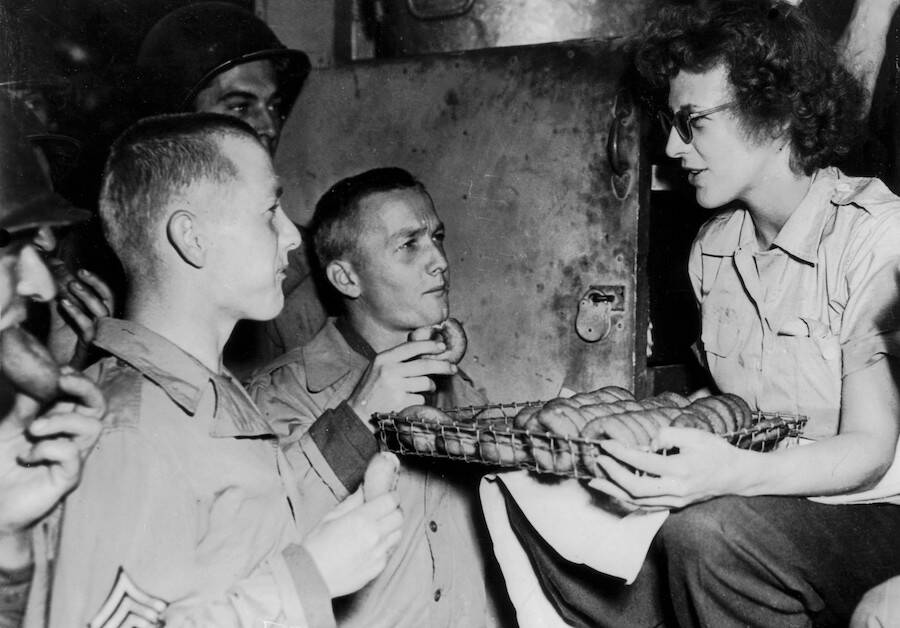
Throughout history, the roles that American women have played during times of war have often been overlooked and misunderstood. The Donut Dollies are no different. As a group of female Red Cross volunteers, the Donut Dollies officially began traveling with American soldiers during World War II. On a surface level, their roles seemed simple: provide wholesome entertainment and a “taste” of home to the young men fighting for their country.

But the Donut Dollies had so much more to offer than just sweet treats.

Who Were The Donut Dollies?

After the attack on Pearl Harbor on December 7, 1941, the Red Cross quickly mobilized to supply aid to wounded soldiers as needed. One aspect of this aid was maintaining troop morale. Enter the Donut Dollies. Though the history of female wartime volunteers “who fried donuts and dodged bombs” actually dates back as far back as 1917, this practice was far more casual and relaxed during World War I.

By World War II, the American Red Cross sought out a very exclusive group of women to be Donut Dollies. Experts say the standards for these female volunteers were even higher than the standards of the actual military.  These women were required to be at least 25 years old, college-educated, and able to provide recommendation letters and pass physical exams. Oh, and they also needed to have an “outstanding personality.”

Only one out of six applicants made the final cut.

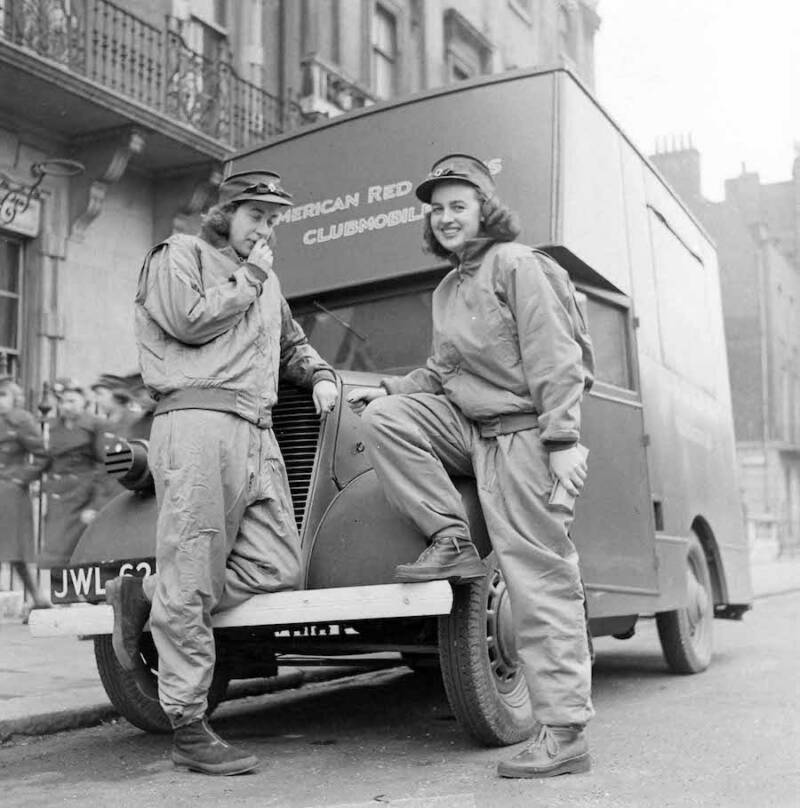
Once a new Donut Dollie was officially accepted, she would receive immunizations, get fitted for Red Cross uniforms, and undergo several weeks of basic training in the history, policies, and procedures of both the Red Cross and the U.S. Army. She also received a very specific dress code on how to wear her uniform — no earrings, hair ornaments, “brilliant nail polish” or “excessive use of cosmetics.”

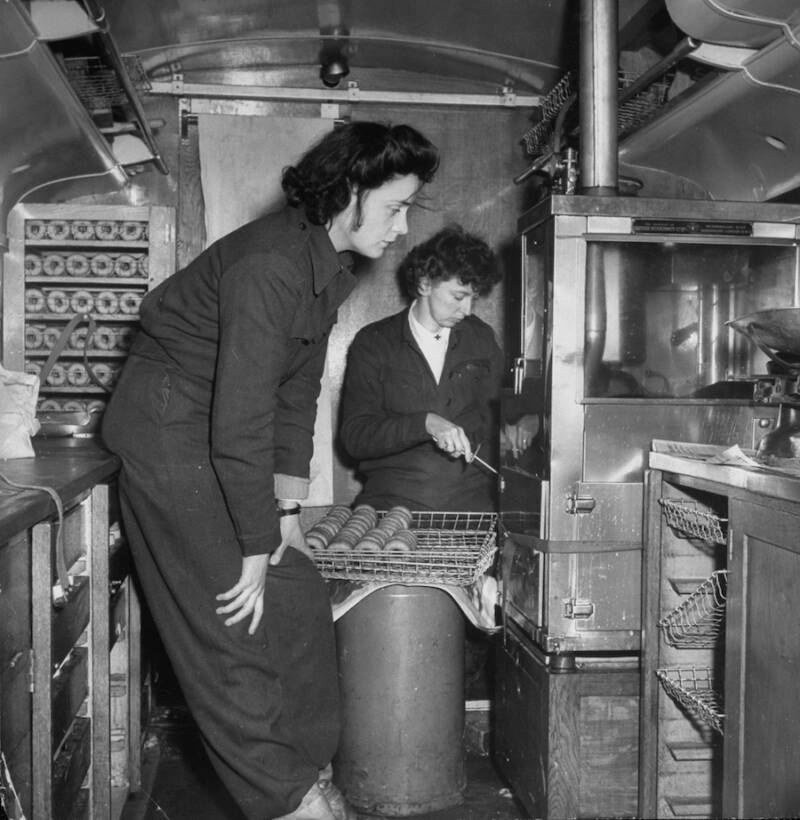
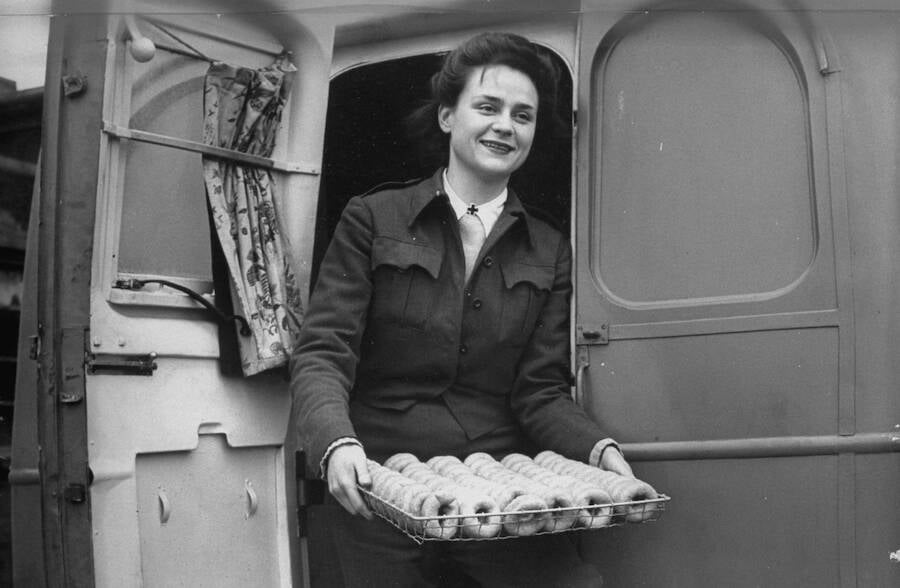
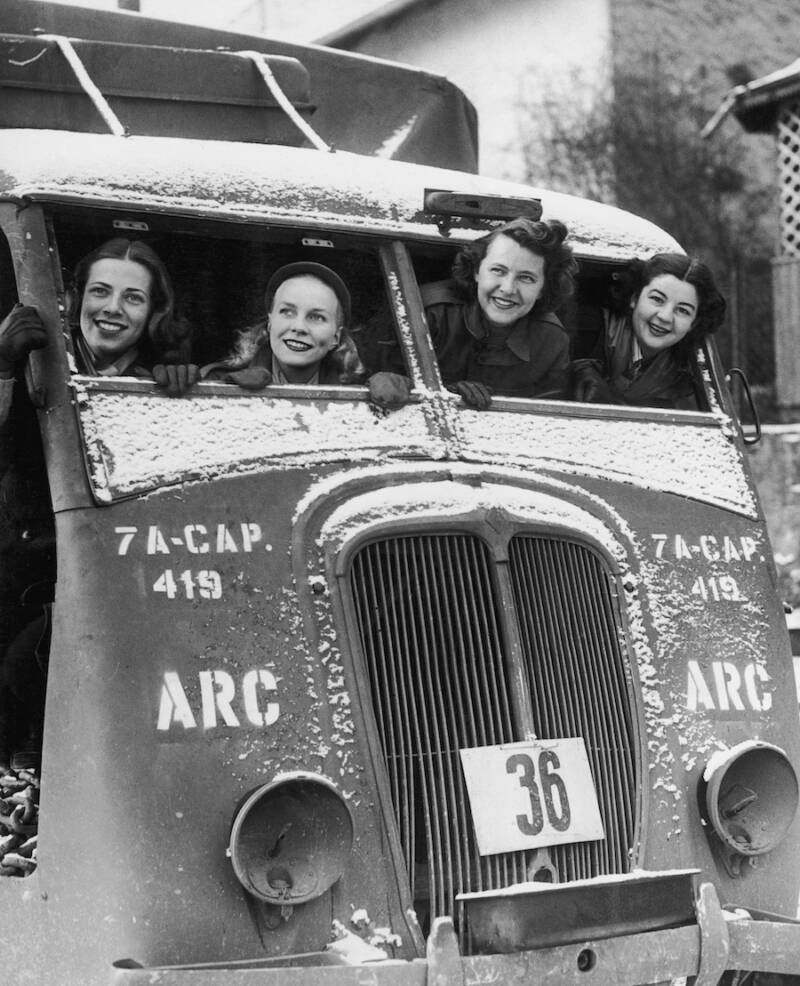
After a Donut Dollie completed her training, she was sent overseas, where she would often operate a “Clubmobile,” which was basically a mobile army clubhouse that was able to travel directly to soldiers stationed at faraway bases or camps in the field.  These single-decker green buses were outfitted with the equipment Donut Dollies needed to make fresh donuts right on the spot for hungry troops.

The Donut Dollies Of World War II

During World War II, the Doughnut Corporation of America loaned 468 donut machines to the Red Cross. Each machine could yield about 48 dozen donuts per hour. Yet as the war raged on, the machines proved to be inefficient at keeping up with the high demand for the fried treats.  One volunteer, Clara Schannep Jensen, wrote in a letter to her family back home: “The day before yesterday we spent the whole day making doughnuts. They were pretty good, too.”

Eventually, the Red Cross was forced to open up a handful of centralized bakeries in order to keep the Clubmobiles stocked. According to one report from late 1944, a total of 205 women had served well over 4.6 million donuts to soldiers in Great Britain. As Jensen noted in another letter to her family: “[I] have quite a responsible job and am quite thrilled that they felt I could handle it.”

In addition to donuts, the Clubmobiles were also stocked with cigarettes, magazines, chewing gum, and newspapers that provided an additional sense of normalcy for all of the homesick soldiers.  To make up for the fact that those in the field were unable to visit more permanent recreation clubs in cities such as London, the buses were also equipped with speakers in order to play music out loud.  The back portions of the Clubmobiles could also open up into makeshift lounges, fitted with seats where soldiers could sit and talk amongst themselves and perhaps even flirt with the beautiful young women who made the donuts.

The Donut Dollies Of Vietnam And Korea

After World War II, Donut Dollies offered their services during the Korean War and the Vietnam War as well. A total of 899 Donut Dollies served in South Korea from 1953 to 1973. “Everywhere we went, we took donuts, fresh baked daily by Korean bakers, for the troops,” said volunteer Patricia Lorge. “This was, no doubt, meant to bring a little bit of home to the troops.” She added, “We went to the troops; we visited small, isolated locations, where they didn’t have a chance to go anywhere or relax.” Meanwhile, 627 women served as Donut Dollies in Vietnam from 1962 to 1973. During the Vietnam War, however, the focus began to shift from donuts to recreational activities.

“We really did not make donuts and deliver them to the field in Vietnam,” volunteer Debby MacSwain said. “In fact, I only saw one donut during my year-long deployment. It was given to me by an Army Sergeant and I ate it!” But even though the Donut Dollies stopped making their namesake pastries, they were certainly no less busy than they were before. They provided a wide range of entertainment, including sing-a-longs, ping pong, and pool tournaments. They were ready to serve up smiles — even when they didn’t feel like smiling themselves.

The Challenges And Dangers

“As ‘Donut Dollies’ our job was to lift the guys’ spirits,” said Jeanne Christie, who volunteered during the Vietnam War. “That was easier said than done. We brought a little bit of home with us, we’d listen to them. We’d play games and records at the base rec centers.” However, she acknowledges that the experience was far from perfect. “It wasn’t easy being a Donut Dollie,” Christie admitted. “Some people thought we were just there to tease men. We were wrong, or bad, because we were over there. If you got pregnant, it was your fault, you asked for it.”

That was certainly a lot of pressure, especially since according to the book Beyond Combat: Women and Gender in the Vietnam War Era, the Donut Dollies were expected to be “nonsexual symbols of purity and goodness.” Add that to the pressure of trying to help fearful soldiers while feeling fearful of their own safety. After all, three young women had their lives cut short during their time serving the war effort overseas in Vietnam.

Hannah E. Crews died in a Jeep accident, Virginia E. Kirsch was killed by a U.S. soldier who was high on drugs, and Lucinda Richter died from a degenerative nerve disease known as Guillain-Barre Syndrome.

While Vietnam volunteer Linda Sullivan Schulte was lucky enough to avoid any serious issues overseas, she explained, “We all had incidents like getting gassed, watching occasional rockets come into the base, and sniper fire.” While the number of men who lost their lives on the battlefront far outnumbered the women, the Donut Dollies also showed tremendous courage and selflessness during times of vast national uncertainty.

Their Legacy Today

While donuts are a quintessential American culinary experience, the Donut Dollies are also an American phenomenon — full of phenomenal women. Inspired by a simple idea from female volunteers during World War I, the work of the Donut Dollies spanned decades thanks to the tenacity and kindness of American women. So they surely deserve recognition for their work in the same way that troops do. While nurses treated the physical injuries, Donut Dollies tended to psychological wounds. Long before the vocabulary surrounding PTSD came to be widely accepted, the Donut Dollies were there to listen, there to support, and there to try to understand. While they may not have brandished guns or crawled through the trenches, these women held the line on the emotional battlefield.

SOURCE: ALLTHATSINTERESTING;  Jaclyn Anglis

What Shall We Bake Today?

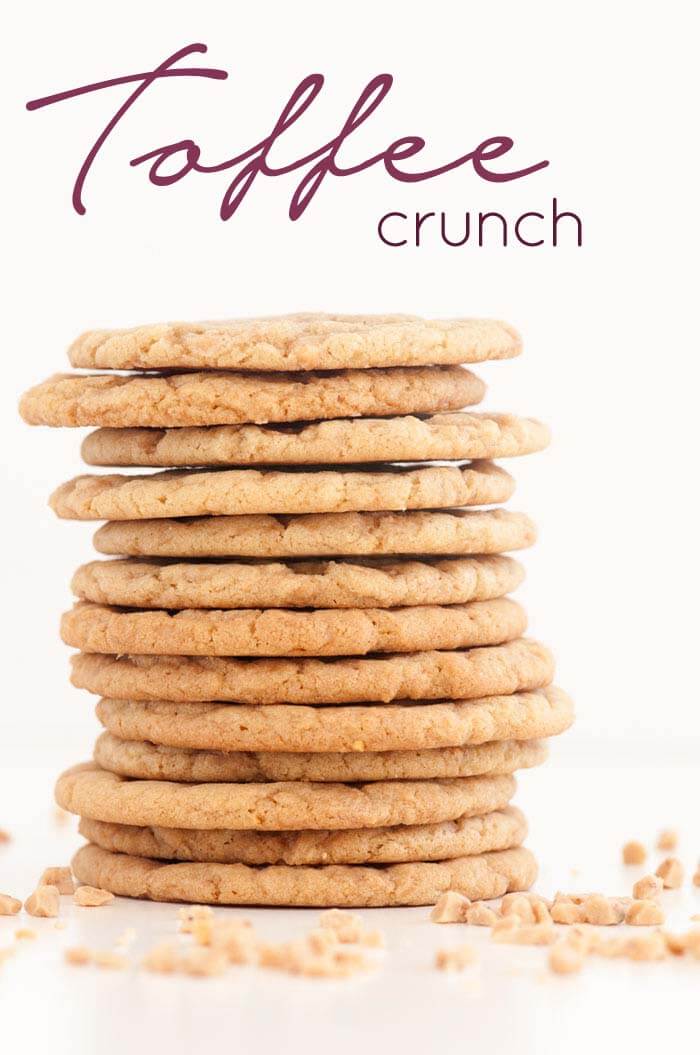
Since this is Back-to-School month, I’ll be sharing cookies and lunchbox treats recipes! The first is Toffee Crunch Cookies!

Ingredients

1 cup (2 sticks) butter

1 cup light brown sugar

1 cup white sugar

1 teaspoon vanilla extract

2 eggs

2 cups all-purpose flour

1/4 teaspoon salt

1/4 teaspoon baking soda

1 (10-ounce) bag toffee candy bits

1 cup oatmeal

1 cup sweetened flake coconut

1 cup chopped almonds (I’m going to try walnuts or pecans)

Directions

Preheat oven to 350 degrees F.

Cream together the butter, sugar and vanilla. Beat the eggs slightly; then add to the butter mixture and mix well. Sift flour, salt and baking soda; then add slowly to the moist ingredients and mix thoroughly. Mix in the toffee bits, oatmeal, coconut and nuts.

Drop dough by the teaspoonful onto an ungreased baking sheet and bake for 15 minutes.

ENJOY!

South Dakota State Animal: Coyote

The historical presence of the coyotes in the South Dakota

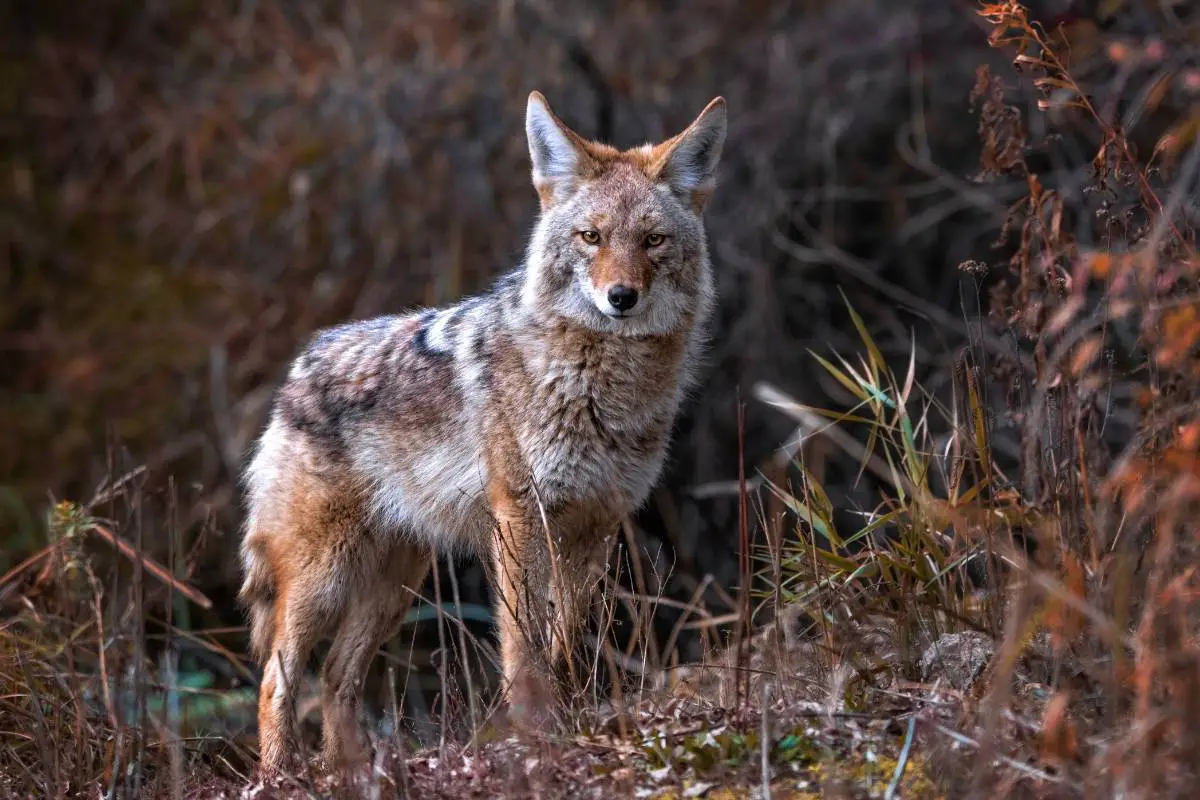
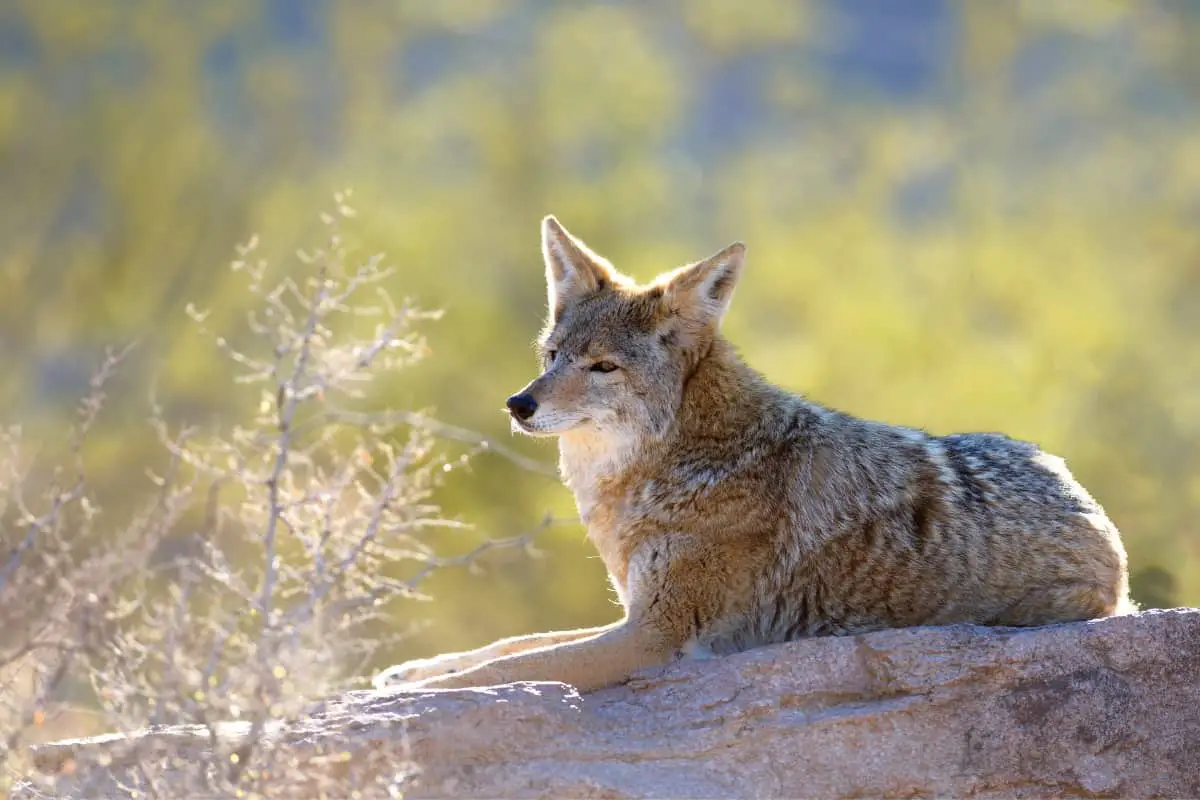
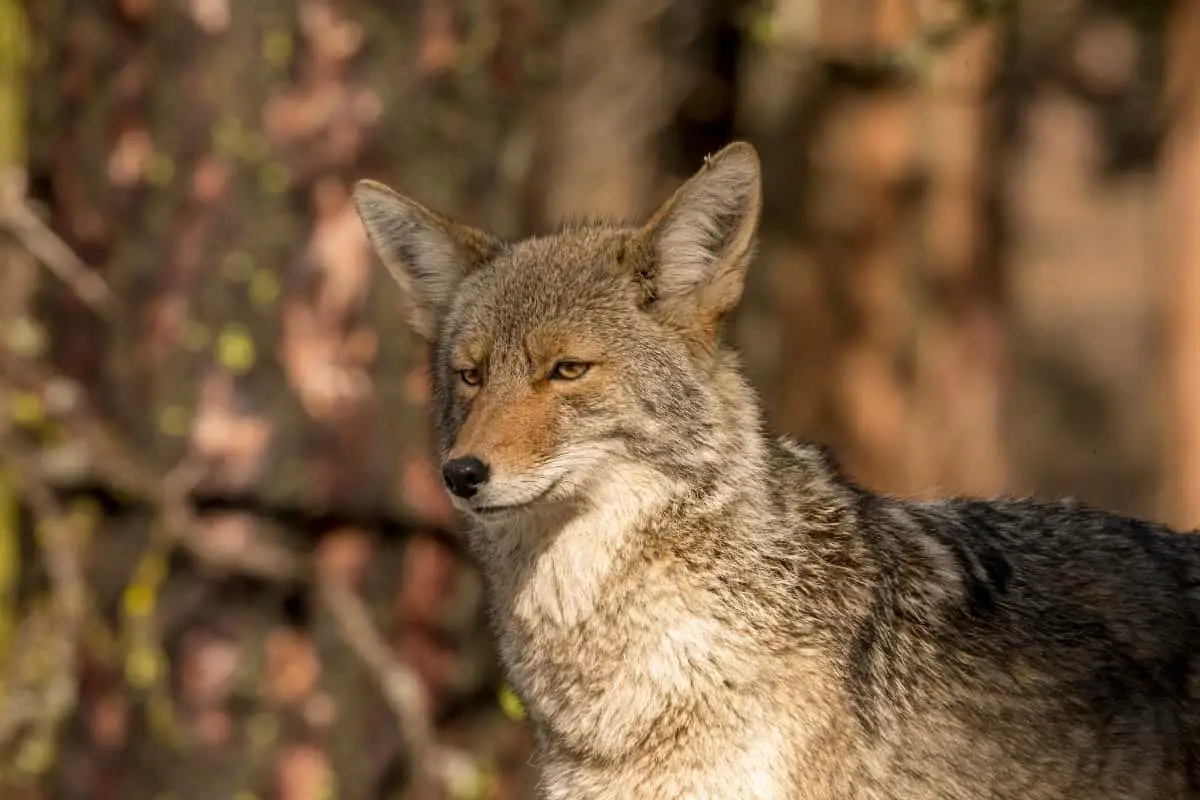
You must keep in your mind that the coyotes are native animals of the state. Prior to the 1980s, they were mainly found in the western side of the state and in the counties at the border region of the Missouri River. With the increase in the size of their population, they started expanding to the other sides of the state. Now, coyotes are available in almost all the counties of the state. They have actually expanded their range in every nook and corner of the USA.

Once it was estimated that there are almost 80 to 90,000 coyotes available in the state of South Dakota only. The population of the coyote is mainly concentrated along the drained beds of the river. Now, they are also freely roaming among human beings in the Urban and semi-urban areas of the state. Being territorial animals, they like to establish their homes in good territory. Male coyote covers at least 10 to 20 square mile in their home range while female coyote covers only 10 to 15 square mile in their home range.

Diet and Habitat of the Coyotes in South Dakota

Coyotes are the native wild animals of the state. You can mainly find them in wooded areas, along the rivers, and in areas having very tall grass or brush. Coyotes have also now shifted towards the cities of the state as they can find here plenty of food, and many places to hide. Now, you can even witness them in many big metropolitan cities like New York City, Chicago, etc.

In these cities, these animals don’t like to confront human beings and are very timid and usually run away once they encounter people. Coyotes in South Dakota rely on a variety of fruits for their diet like Birds, eggs, mice, bugs, rabbits, squirrels, garbage, pet food, bird seeds, etc. In some cities, coyotes have been highly helpful in controlling the population of rodents, squirrels, and rabbits.

Ecological Importance of the Coyotes in the South Dakota

Coyotes play a significant ecological role in South Dakota’s ecosystems. As predators and scavengers, they contribute to the balance and health of the environment in various ways:

Regulation of Prey Populations

Coyotes help regulate the populations of their prey species, which can include rodents, rabbits, and small mammals. By keeping these populations in check, coyotes prevent overgrazing of vegetation and help maintain the health of plant communities.

Cascading Effects

The presence of coyotes can lead to cascading effects throughout the ecosystem. When coyotes suppress the populations of smaller predators such as foxes and raccoons, it can reduce the predation pressure on smaller mammals and birds that they would otherwise target. This can indirectly benefit other species and even plant communities.

Carrion Disposal

Coyotes are efficient scavengers, consuming carrion. By doing so, they help recycle nutrients back into the ecosystem, which can benefit soil fertility and nutrient cycling.

Seed Dispersal

Coyotes can aid in seed dispersal by consuming fruits and then dispersing the seeds in their scat across the landscape. This can contribute to plant diversity and the distribution of plant species.

In essence, coyotes are a crucial component of South Dakota’s ecosystems, playing a role in maintaining the delicate balance of nature. Their interactions with other species and their impact on food webs contribute to the overall health and functionality of the environment. Conservation efforts often focus on maintaining healthy predator populations like coyotes as part of broader strategies for preserving biodiversity and ecological stability.

SOURCE: WILDLYANIMALS.NET

The Munsters

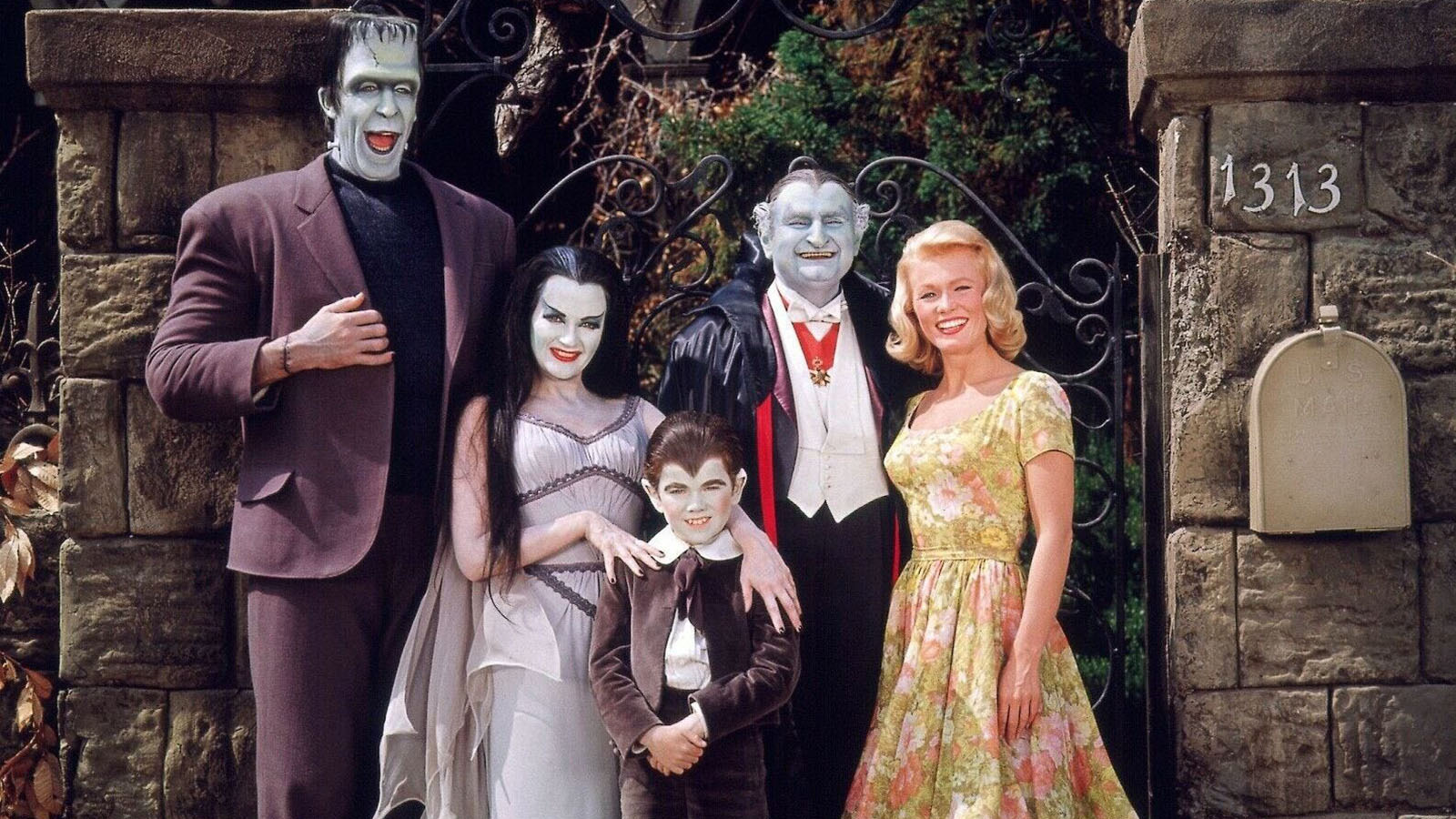
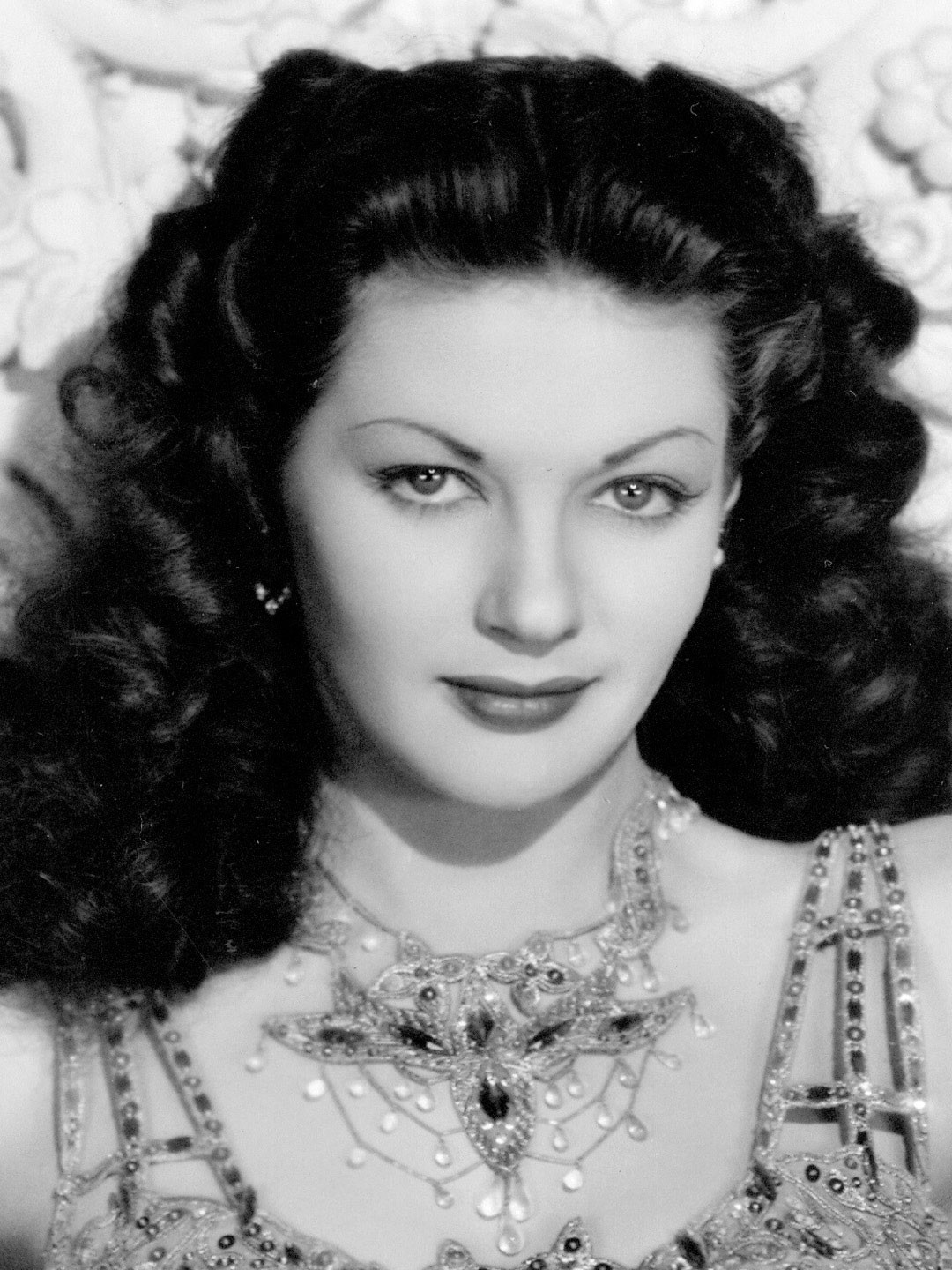
Today would have been Yvonne De Carlo’s birthday (born in 1922 and passed away January 8, 2007.  Although she was famous for playing Lily Munster, I would definitely have trouble picking her out without all that make-up.  She was quite lovely!

I found this article on Mental Floss detailing things we might not know about The Munsters:

From Mental Floss:

The Munsters premiered on September 24, 1964,and was an immediate ratings success. The wacky antics of childlike patriarch Herman and his unusual (but not really scary) family originally ran for two seasons (70 episodes), but has remained on the air in some form ever since in syndication. Here are some behind-the-scenes facts about the goings-on at 1313 Mockingbird Lane.

1. THE SHOW WAS CREATED BY THE SAME TEAM BEHIND LEAVE IT TO BEAVER.

Joe Connelly and Bob Mosher’s credo while producing and writing for the classic family sitcom Leave it to Beaver was “write what you know.” Between them they had six children and they based a lot of their plots on their own home lives. They used this same philosophy when they created a sitcom about a suburban blue-collar family that just happened to be comprised of monsters. They didn’t want children to be frightened of the characters (as they might be when watching Frankenstein or Dracula during the Saturday afternoon “Creature Feature”), so they made Herman a typical working dad who carried a lunch box to work every day and who imparted homespun wisdom to his young son. The mother was caring and nurturing, even if she did serve rolled hyena foot roast for dinner, and an aging grandparent (who had a laboratory in the dungeon) lived with the family. All in all, a nice slice of down-home Americana.

2. THE CHOICE OF MONSTER CHARACTERS WAS STRICTLY INTENTIONAL (AND ROYALTY-FREE).

Universal Studios owned Universal Television, which owned The Munsters. Universal Studios also owned the copyrights to most of the classic monsters, including Dracula, the Wolf Man, and Frankenstein’s monster. The studio had been running their old classic horror films on television since the 1950s and found that there was still an impressive audience for these decades-old monster movies. When Connelly and Mosher pitched their series idea, CBS executives knew that they had one advantage that ABC lacked with The Addams Family: the ability to use the Universal monster characters. The Munsters regularly topped The Addams Family in the ratings, mainly because of the instant identifiability of (and built-in fan base for) Dracula, Frankenstein’s bride, et al.

3. HERMAN AND GRANDPA HAD THEIR COMEDY TIMING DOWN PAT BEFORE THE SHOW BEGAN.

Fred Gwynne and Al Lewis played so well off one another because they’d had a couple years of practice. They’d co-starred as Officers Francis Muldoon and Leo Schnauser on the hit sitcom Car 54, Where Are You? from 1961 until 1963. The two remained close friends long after The Munsters was cancelled.

4. “LILY” WAS ORIGINALLY “PHOEBE.”

She was also played by a different actress. In the unaired pilot, Mrs. Munster was played by Joan Marshall. But when the show was picked up as a series, CBS brass worried that Marshall’s look and onscreen demeanor were too similar to Carolyn Jones’ portrayal of Morticia Addams on rival network ABC. The producers were asked to recast the role, and along with a new actress came a new name for the character.

5. THE NEW “LILY” WASN’T EXACTLY WELCOMED BY HER CO-STARS AT FIRST.

Fred Gwynne and Al Lewis were not pleased when they heard that Yvonne De Carlo had been hired to replace Joan Marshall. They’d never met the film actress, but they were intimidated by her reputation as a Hollywood glamour queen. “She was a bona fide movie star,” Al Lewis recounted in a 2003 interview for A&E’s Biography, “and we didn’t think she would fit in with our brand of comedy. We were wrong.”

6. THEIR ONSCREEN CHEMISTRY WAS GREAT, BUT ALL WAS NOT ROSY BEHIND THE SCENES.

De Carlo’s comedic timing was great and she fit in fine while the cameras were rolling, but in between scenes she kept mainly to herself in her trailer. She often held up production while having minute adjustments done to her hair (she went through five different hairdressers during the show’s two-year run), makeup, and nails, which aggravated the cast and crew.

7. EDDIE WAS ALSO RECAST AFTER THE PILOT.

Nate “Happy” Derman played wolf-boy Eddie Munster in the pilot, but his growling, clawing characterization was a little too lycanthropic for the network’s taste. He was replaced by Butch Patrick, who played Eddie more like a pointy-eared version of Beaver Cleaver.

8. MARILYN WAS PLAYED BY TWO DIFFERENT ACTRESSES.

But in this case it was the actress’s decision, not the producers’: New York-based Beverley Owen played Marilyn for the first 13 episodes, but she was desperately unhappy working in California and missed her fiance, who was back on the east coast. Gwynne and Lewis intervened on her behalf and talked to the producers to get her released from her contract. She went home, got married, and eventually got a role on the soap opera Another World, which was filmed in New York.

9. PAT PRIEST GOT THE ROLE IN PART BECAUSE OF HER SIZE.

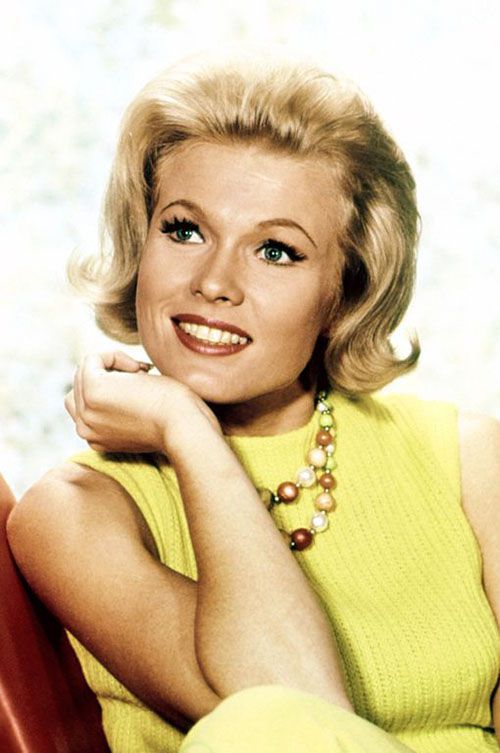
Pat Priest, the daughter of Treasurer of the United States Ivy Baker Priest, was not only blonde (brunette Owen had worn a wig as Marilyn), she was also the same height and had almost the exact same measurements as Owen. Which meant that all of the existing “Marilyn” costumes and accessories fit her perfectly, so there would be no need to spend money on a replacement wardrobe once she was hired.

10. HERMAN’S COSTUME WAS A PERSONAL TORTURE CHAMBER FOR FRED GWYNNE.

Even though Gwynne would eventually reminisce that Herman was one of his favorite characters, the time he spent on The Munsters set was often fairly miserable, thanks to the various devices necessary to transform him into the lovable Frankenstein monster. On his feet he wore asphalt paver’s boots with four-inch soles, and his thighs, arms, and torso were covered in 40 pounds of foam rubber padding. He contended with back pain daily caused by the weight of the suit and inflexibility of the shoes. His head was fitted with a foam latex piece to flatten the top of his head and then he had to endure two hours in the makeup chair. He perspired freely under the heavy costume and hot studio lights and lost 10 pounds in one month despite consuming gallons of lemonade between takes. The producers eventually rented a compressed air tank and would poke the nozzle inside Gwynne’s collar to blow cool air on him.

11. THE COSTUME HAD ONE BENEFIT: IT EXCUSED GWYNNE FROM PERSONAL APPEARANCES.

As The Munsters gained popularity, its stars received more and more requests to appear at various functions. The producers, of course, sent the actors out as often as possible since such appearances not only promoted the show, they also propelled the sales of the various Munsters merchandise that saturated the market at the time. Only Fred Gwynne was able to relax on his days off (for the most part), since the time and expense required to get him into character outweighed the publicity value of cutting ribbons at supermarket openings. One of the rare times he played Herman in public was alongside Al Lewis in the 1964 Macy’s Thanksgiving Day Parade. Gwynne confessed to TV Guide that he’d been taking slugs from a bottle of whiskey the entire time, because he “had to get bombed so I could say ‘hello’ to the little kiddies for 40 blocks.”

12. THE MUNSTER KOACH WAS BUILT BY THE SAME COMPANY THAT CREATED THE BATMOBILE.

Hollywood custom car builder George Barris used three Model T Ford bodies to construct the 18-foot-long Munster-mobile. The brass radiator and fenders were hand formed and the velvet upholstery was “blood red.” It took 21 days to complete at a total cost of $18,000.

SOURCE: MENTAL FLOSS

What Shall We Make Today?

The last entry in our No-Bake Goodies series is Chocolate Peanut Butter Cookies.

Ingredients

2 cups sugar

1/2 cup butter or margarine, cubed

1/2 cup 2% milk

3 tablespoons baking cocoa

Dash salt

1/2 cup creamy peanut butter

1 teaspoon vanilla extract

3 cups old-fashioned oats

Directions

In a large saucepan, combine the first 5 ingredients. Bring to a boil, stirring constantly. Cook and stir 3 minutes.

Remove from heat; stir in peanut butter and vanilla until blended. Stir in oats. Drop mixture by tablespoonfuls onto waxed paper-lined baking sheets. Refrigerate until set. Store in airtight containers.

ENJOY!

Hoopoe

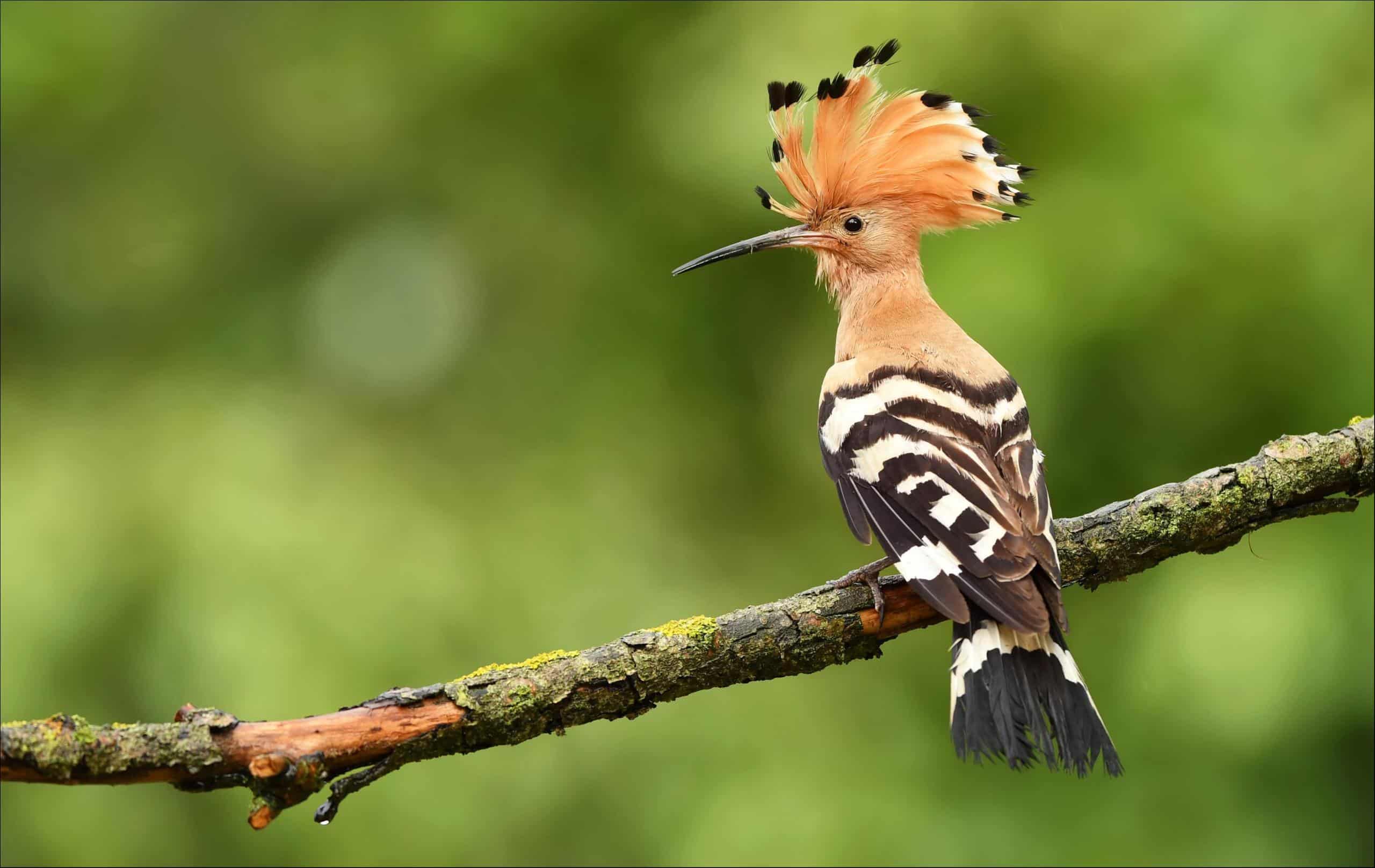
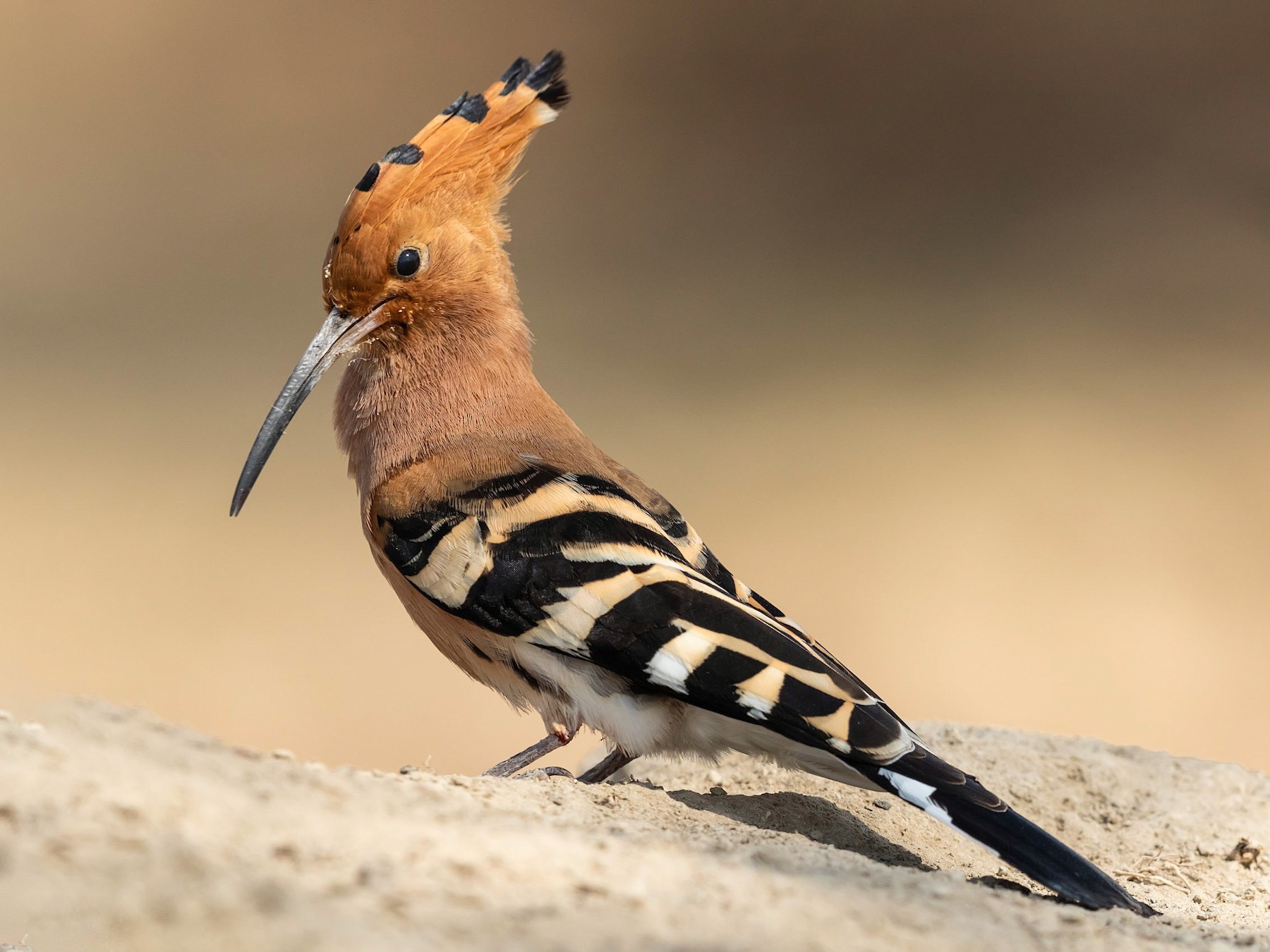
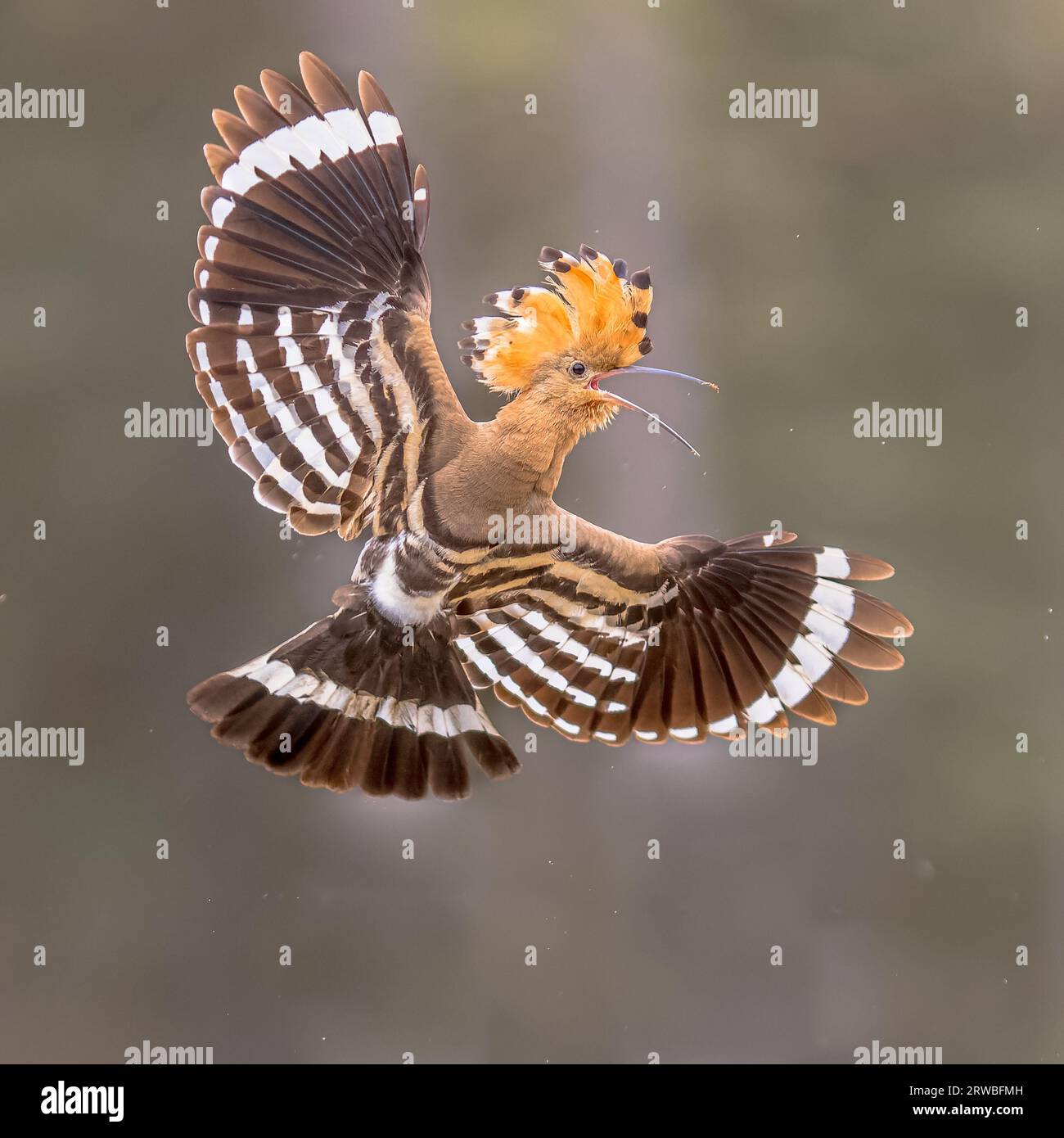
The Eurasian hoopoe (Upupa epops ) is the most widespread species of the genus Upupa. It is a distinctive cinnamon colored bird with black and white wings, a tall erectile crest, a broad white band across a black tail, and a long narrow downcurved bill. Its call is a soft “oop-oop-oop”. It is native to Europe, Asia and the northern half of Africa. It is migratory in the northern part of its range. It spends most of the time on the ground probing for grubs and insects. The clutch of seven to eight eggs is laid in an existing cavity. The eggs are incubated by the female and hatch asynchronously. Some ornithologists treat the African and Madagascar hoopoes as subspecies of the Eurasian hoopoe.

Appearance

The Eurasian hoopoe is a cinnamon-colored bird with black and white wings, a tall erectile crest, a broad white band across a black tail, and a long narrow down curved bill. The bird has broad and rounded wings capable of strong flight which are larger in the northern migratory subspecies. The hoopoe has a characteristic undulating flight, which is like that of a giant butterfly, caused by the wings half-closing at the end of each beat or a short sequence of beats.

Eurasian hoopoes are widespread in Europe, Asia, and North Africa, and northern Sub-Saharan Africa. Most European and north Asian birds migrate to the tropics in winter. Those breeding in Europe usually migrate to the Sahel belt of sub-Saharan Africa. The African populations are sedentary all year. Eurasian hoopoes require bare or lightly vegetated ground on which to forage and vertical surfaces with cavities (such as trees, cliffs, or even walls, nestboxes, haystacks, and abandoned burrows) in which to nest. These requirements can be provided in habitats such as heathland, wooded steppes, savannas and grasslands, as well as forest glades.

Habits and Lifestyle

Eurasian hoopoes are active during the day spending most of the time on the ground probing for grubs and insects. They are solitary foragers who typically feed on the ground. More rarely they will feed in the air, where their strong and rounded wings make them fast and maneuverable, in pursuit of numerous swarming insects. More commonly their foraging style is to stride over relatively open ground and periodically pause to probe the ground with the full length of their bill. The rest of the time is typically spent sunbathing by spreading out their wings and tails low against the ground and tilting their head up; they often fold their wings and preen halfway through. They also enjoy taking dust and sand baths. The typical call of these birds is a trisyllabic ‘oop-oop-oop’. Other calls include rasping croaks, when alarmed, and hisses. Females produce a wheezy note during courtship feeding by the male.

Diet and Nutrition

Eurasian hoopoes have a carnivorous (insectivorous) diet. They eat mostly insects, although small reptiles, frogs, and plant matter such as seeds and berries are sometimes taken as well.

Mating Habits

Eurasian hoopoes are serially monogamous, meaning they form pair bonds that last for a single breeding season. They are solitary and territorial breeders. The male calls frequently to advertise his ownership of the territory. Chases and fights between rival males (and sometimes females) are common and can be brutal. Birds will try to stab rivals with their bills, and individuals may be occasionally blinded in fights. The nest of Eurasian hoopoes is usually located in a hole in a tree or wall. It has a narrow entrance and may be unlined, or various scraps may be collected. The female alone is responsible for incubating the eggs. Clutch size varies with location and can contain from 4 to 12 eggs. The incubation period lasts between 15 and 18 days, during which time the male feeds the female. The chicks hatch with a covering of downy feathers. By around day 3 to 5, feather quills emerge which will become the adult feathers. The chicks are brooded by the female for between 9 and 14 days. The female later joins the male in the task of bringing food. The young fledge in 26 to 29 days and remain with the parents for about a week more.

Fun Facts for Kids

  • It is suggested that hoopoes received their name from their common ‘oop-oop-oop’ call. However, an alternative explanation of the English and scientific names is that they are derived from the French name for the birds, huppée, which means crested.
  • When foraging Eurasian hoopoes beat larger prey items against the ground or a preferred stone to kill them and remove indigestible body parts such as wings and legs.
  • Hoopoes have well-developed anti-predator defenses in the nest. The preen gland of the incubating and brooding female is quickly modified to produce a foul-smelling liquid, and the glands of nestlings do so as well. These secretions are rubbed into the plumage. The secretion, which smells like rotting meat, is thought to help deter predators, as well as deter parasites and possibly act as an antibacterial agent. From the age of 6 days, nestlings can also direct streams of feces at intruders and will hiss at them in a snake-like fashion. The chicks also don’t hesitate to strike with their bill or with one wing.
  • Hoopoes are distinctive birds and have made a cultural impact over much of their range. They were considered sacred in Ancient Egypt, and were “depicted on the walls of tombs and temples”.
  • Hoopoes were seen as a symbol of virtue in Persia, while across much of Europe these birds were thought of as thieves, and harbingers of war in Scandinavia.

SOURCE: ANIMALIA.BIO

Thriller

Today would have been Michael Jackson’s birthday (born in 1958 and passed away June 25, 2009). I liked a lot of his music but Thriller is a unique and memorable song for me.

[Verse 1]
It’s close to midnight
And something evil’s lurking in the dark
Under the moonlight
You see a sight that almost stops your heart
You try to scream
But terror takes the sound before you make it
You start to freeze
As horror looks you right between the eyes
You’re paralyzed

[Chorus]
‘Cause this is thriller, thriller night
And no one’s gonna save you
From the beast about to strike
You know it’s thriller, thriller night
You’re fighting for your life inside a killer
Thriller tonight, yeah
Ooh

[Verse 2]
You hear the door slam
And realize there’s nowhere left to run
You feel the cold hand
And wonder if you’ll ever see the sun
You close your eyes
And hope that this is just imagination (Girl)
But all the while
You hear a creature creepin’ up behind
You’re out of time

[Chorus]
‘Cause this is thriller, thriller night
There ain’t no second chance
Against the thing with forty eyes, girl
Thriller (Ooh), thriller night
You’re fighting for your life
Inside a killer, thriller tonight

[Bridge]
Night creatures call
And the dead start to walk in their masquerade
There’s no escaping the jaws of the alien this time
(They’re open wide)
This is the end of your life, ooh

[Verse 3]
They’re out to get you
There’s demons closing in on every side (Ooh)
They will possess you
Unless you change that number on your dial
Now is the time
For you and I to cuddle close together, yeah
All through the night
I’ll save you from the terror on the screen
I’ll make you see

[Chorus]
That this is thriller, thriller night
‘Cause I can thrill you more
Than any ghoul would ever dare try
Thriller (Ooh), thriller night
So let me hold you tight
And share a killer, thriller, chiller
Thriller, here tonight
‘Cause this is thriller, thriller night
Girl, I can thrill you more
Than any ghoul would ever dare try
Thriller (Ooh), thriller night
So let me hold you tight
And share a killer, thriller (Ow)

[Outro: Vincent Price & Michael Jackson]
I’m gonna thrill you tonight
Darkness falls across the land
The midnight hour is close at hand
Creatures crawl in search of blood
To terrorize y’all’s neighborhood (I’m gonna thrill you tonight)
And whosoever shall be found
Without the soul for getting down
Must stand and face the hounds of hell
And rot inside a corpse’s shell
I’m gonna thrill you tonight
Thriller, ooh, babe (Thriller)
I’m gonna thrill you tonight (Thriller night)
Thriller, oh, darling (Oh, baby)
I’m gonna thrill you tonight (Thriller)
Ooh, babe (Thriller night)
I’m gonna thrill you tonight (Thriller)
Oh, darling (Oh, baby)
Thriller night, babe (Thriller night, babe)
Ooh
The foulest stench is in the air
The funk of forty thousand years (Thriller night, thriller)
And grisly ghouls from every tomb
Are closing in to seal your doom
And though you fight to stay alive
Your body starts to shiver (I’m gonna thrill you tonight)
For no mere mortal can resist
The evil of the thriller

Happy Birthday Michael!