Please note – everything in this article pertains to a NORMAL, average pregnancy, with NO complications.
In 1980, I was pregnant with my second child and, like the vast majority of people, I trusted my doctor. I had some minor morning sickness and he gave me a prescription for Bendectin, the only approved drug available in the US at that time. The nausea disappeared within a few weeks, so I never took it.
I enjoyed reading the “rags,” like the Enquirer, where I read an article that claimed Bendectin was causing birth defects. My doctor insisted it was quite safe. In 1983, after losing a birth defect lawsuit, the manufacturer pulled it from the shelves. It was never proven that Bendectin caused birth defects. However, here is the bottom line: drugs are NOT good during a normal pregnancy!!! Link to a 1983 NY Times article, if you’re interested.
Stuck at home, by myself, with no vehicle, I worked on my Bengal tiger latch-hook wall hanging and read books about pregnancy and childbirth. I discovered something called “Natural Childbirth.” Our God does NOT make mistakes and, in the normal course of events, nature provides mechanisms to lessen or eliminate what many consider “problems” in labor and delivery.
For example, the requirement to remain flat on your back and not being allowed to get up and walk around – this puts pressure on a major artery and eliminates the effects of normal gravity; the proscription against eating or drinking – this simply makes it easier for the doctors to guard against vomiting and aspiration of fluids; routine enemas – most women will naturally void their bowls during early labor; shaving the pubic hair – again, this is for the convenience of the doctors; an episiotomy – given no other complications (as in my case), the vaginal opening will gradually stretch during labor due to the pressure from above; the claim that drugs do not cross the placental barrier – not true.
In early March, I was one month out from my due date and we went to “Orientation to Labor and Delivery” at Walter-Reed. The Captain giving the class started listing all these drugs you can have during labor, such as getting an epidural, which entails injecting a numbing drug directly into your spinal cord. Yes, this blocks the pain but it also, to a certain extent, removes your ability to push during contractions. She claimed that these drugs did not cross the placental barrier, which I knew for a fact was not true.
Walter Reed Army Medical Center
Well, she did NOT like that! She got all huffy and said, “Well, if you don’t like the way we run things at WR, you can take it up with the General who runs the hospital.” We immediately got up and left the class and were directed to the Public Affairs office, where the Colonel told us they could not FORCE us to do anything we didn’t want – he advised waiting and coming to the hospital at the last minute.
This experience prompted me to search for alternatives and I found a book at the library about Home Birth. Stop and think for a minute – where is THE worst place to be when it comes to germs? That’s right – A HOSPITAL!!!! Your body, and therefore your baby, is already acclimated to the germs within your own home. Yes, when complications arise, chances are not good. However, if you live close to a hospital in case of an emergency….
I was able to find a local group in Arlington called “Family Birth Associates” and we began our journey…….but we had to move fast. Time was running out……stay tuned for the rest of the story…….
In honor of Caturday, I brought this puzzle/game I found in Games World of Puzzles April 2022 issue.
Cat Got Your Tongue by Raymond Simon
Each of the 14 clues below can be answered by a word, phrase, name or title containing the word CAT. For example, the clue “Butterfly-to-be” leads to CATEPILLAR, while “Independent oil driller” would be WILDCATTER. Can you identify all the right answers?
Wealthy campaign contributor
Midafternoon snooze, maybe
Imitator
L. Bean sends them via snail-mail
Fashion show runway
The world’s first female Iron Chef
Excessively fearful person
Subterranean cemeteries
Reveal a secret, slangily
Substance that initiates a chemical reaction
Early version of a missile launcher
Swift boat with twin hulls
Creating a fake persona to lure someone online
Tennessee Williams play featuring Brick and Maggie
So how’d you do? Did you get them all? PURRRRRRFECT!!
Go to a meeting with any male politician today and you’re almost certainly going to be standing in front of a man wearing pants, except perhaps in Bermuda, where the eponymous shorts are the nation’s official dress. But in Imperial Rome, obviously, things were a little different—no man of honor would think of wearing what was considered the garb of a savage barbarian.
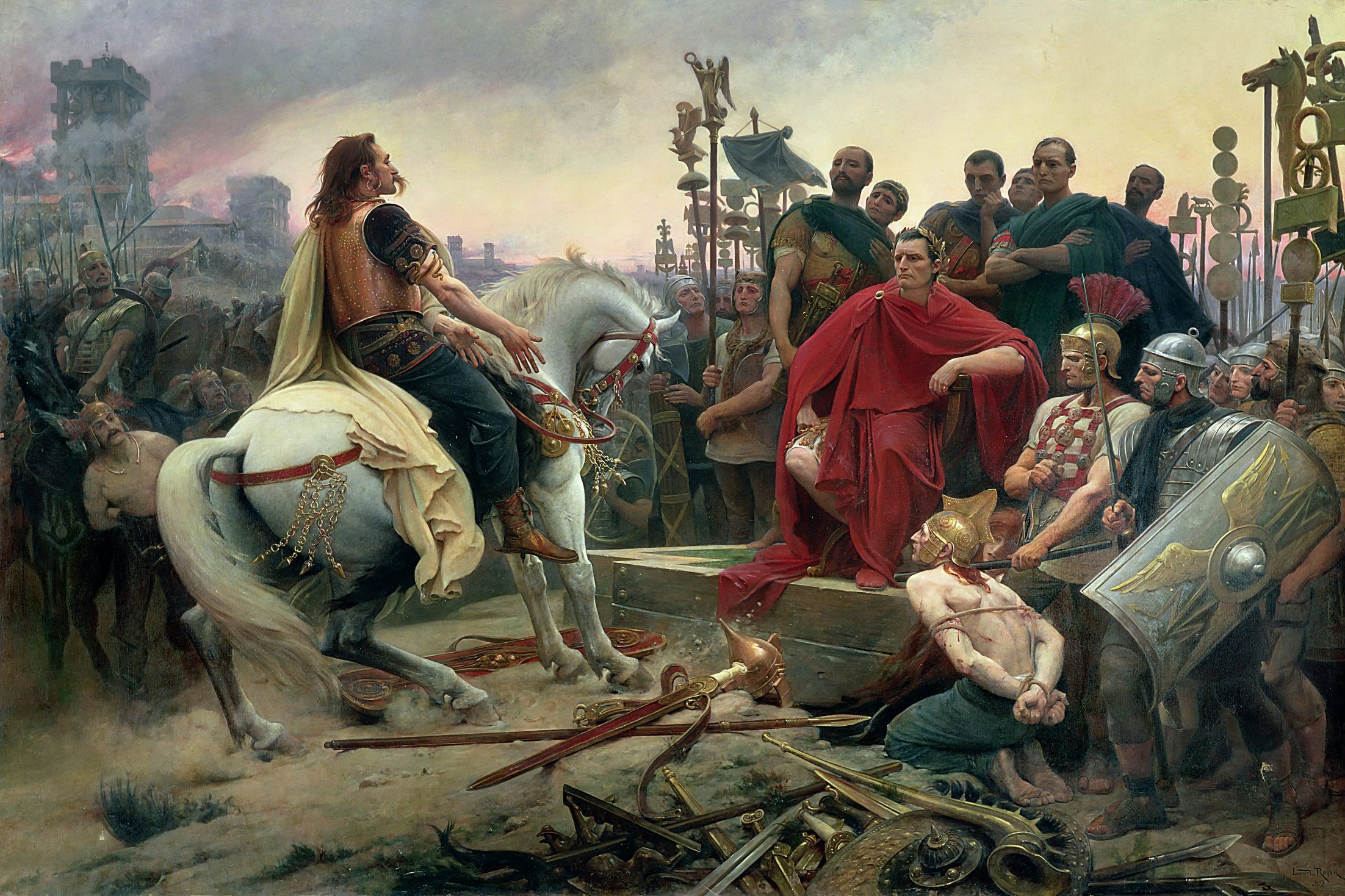
Gaulish chief Vercingetorix, wearing trousers, surrenders to Julius Caesar after the battle of Alesia in 52 B.C. (Public Domain)
When Marcus Tullius Cicero, an eloquent orator and lawyer, was defending the former Gaul governor Fonteius from accusations of extortion, he cited the wearing of pants as a sign of the “innate aggressiveness” of the Gauls—and an extenuating circumstance for his client:
‘Are you then hesitating, O judges, when all these nations have an innate hatred to and wage incessant war with the name of the Roman people? Do you think that, with their military cloaks and their breeches, they come to us in a lowly and submissive spirit, as these do (…)? Nothing is further from the truth.’
Think of it as the “Trouser Defense.”
“Good orators were using rhetoric in a rather sophisticated way—they were picturing foreign tribes in the way that mostly suited their needs, from fierce aggressors to backwards folks, and they were relying on visual imageries to make sure that ‘barbarian otherness’ would stand out,” says Susanne Elm, a historian from the University of California, Berkeley, who studies Rome’s relationship with the tribes to the north, which they collectively referred to as “barbarians.” The breeches were, in this case, a powerful symbol of “otherness.”
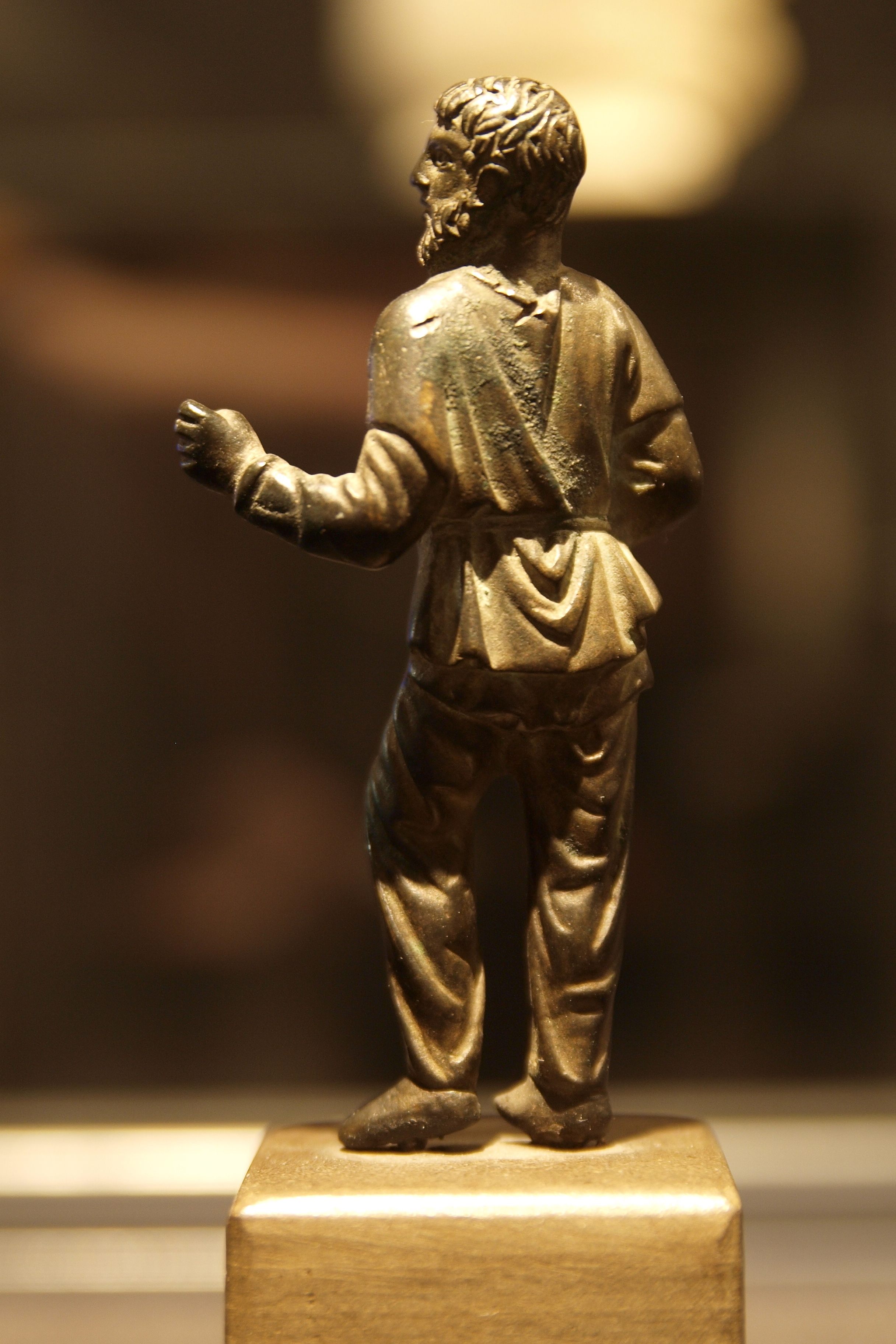
A bronze statue of a German, wearing pants, from the 2nd century. Baden-Wurttembergisches Landesmuseum, Suttgart, Germany
Cicero was not alone in relating pants to a primordial, uncivilized life. In 9 A.D. Ovid, by then an acclaimed poet, was exiled by Emperor Augustus, for reasons that remain unclear (but may have had to do with Augustus’s niece). In what is now Tomis, Romania, the poet first encountered barbarians:
‘The people even when they were not dangerous, were odious, clothed in skins and trousers with only their faces visible.’
Generic pic
There were no particular hygienic reasons for the Roman distaste for pants, says Professor Kelly Olson, author of “Masculinity and Dress in Roman Antiquity.” They did not like them, it appears, because of their association with non-Romans.
But opinions change with time, and not long after, the historian and senator Publius Cornelius Tacitus listed pants among a range of “exotic” behaviors of Germanic tribes, whom he praised for having morals unweakened by civilization: river-bathing, ponytails (“wisted tufts resembling horns or plumes”), and pants.
It is not as though every person walking around ancient Rome was wearing a toga—they were more like formal wear. Tunics where the most common garment, sleeveless or short-sleeved for men, and long-sleeved, ankle-length for women. Squeezing one’s legs into stitched fabric was simply not tradition, and not generally demanded by the Mediterranean climate.
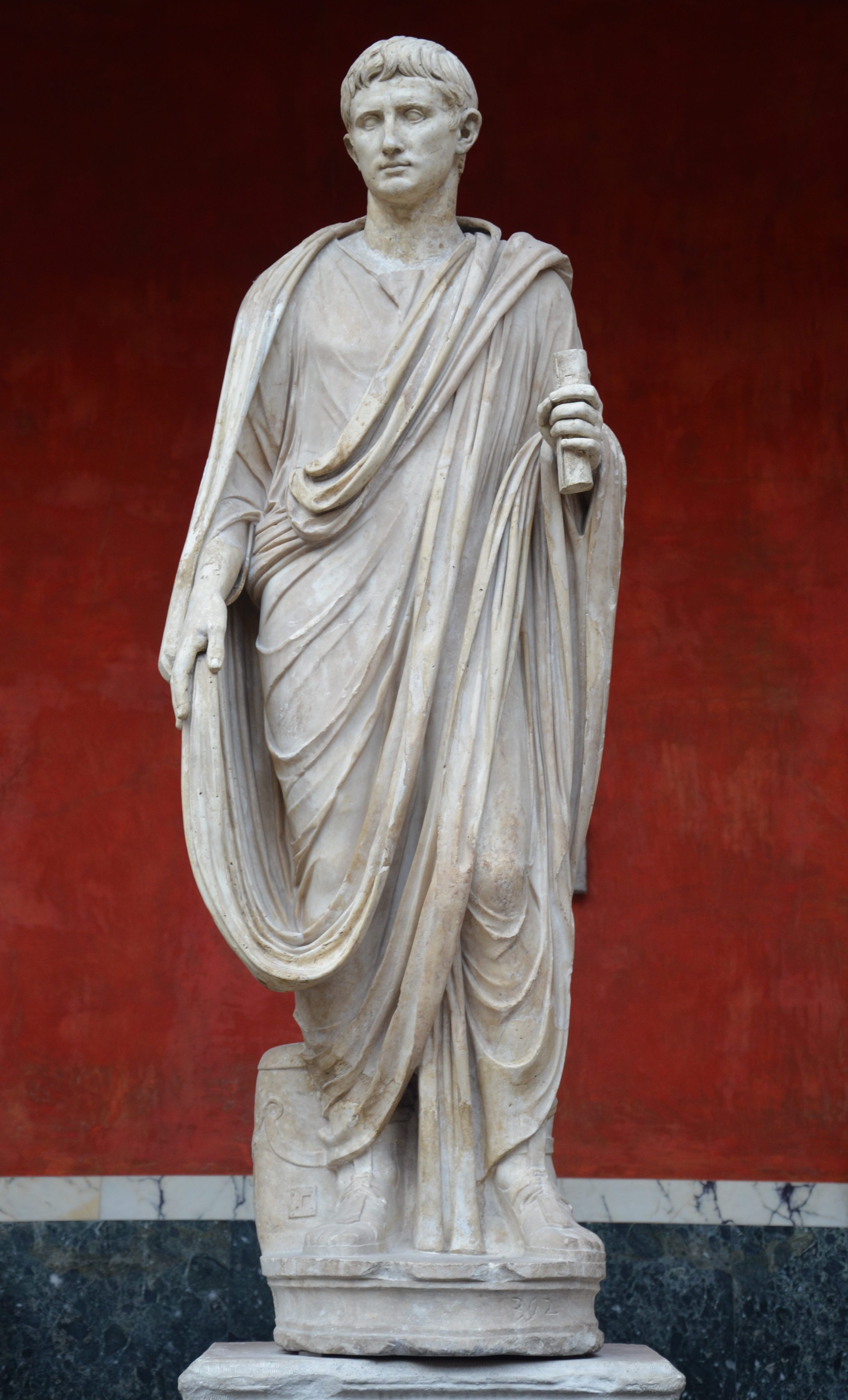
A marble statue of Emperor Augustus, clad in a magistrate’s toga. NY Carlsbert Glytotek, Copenhagen
However, as the empire expanded, this began to change. Romans and tribes from newly annexed northern lands fought side-by-side to protect their borders from still other barbarians, such as the Visigoths. So military trousers used by Germans or Gauls became the outfit of choice for Roman troops—presumably because they’re more practical on a northern battlefield than flappy tunics.
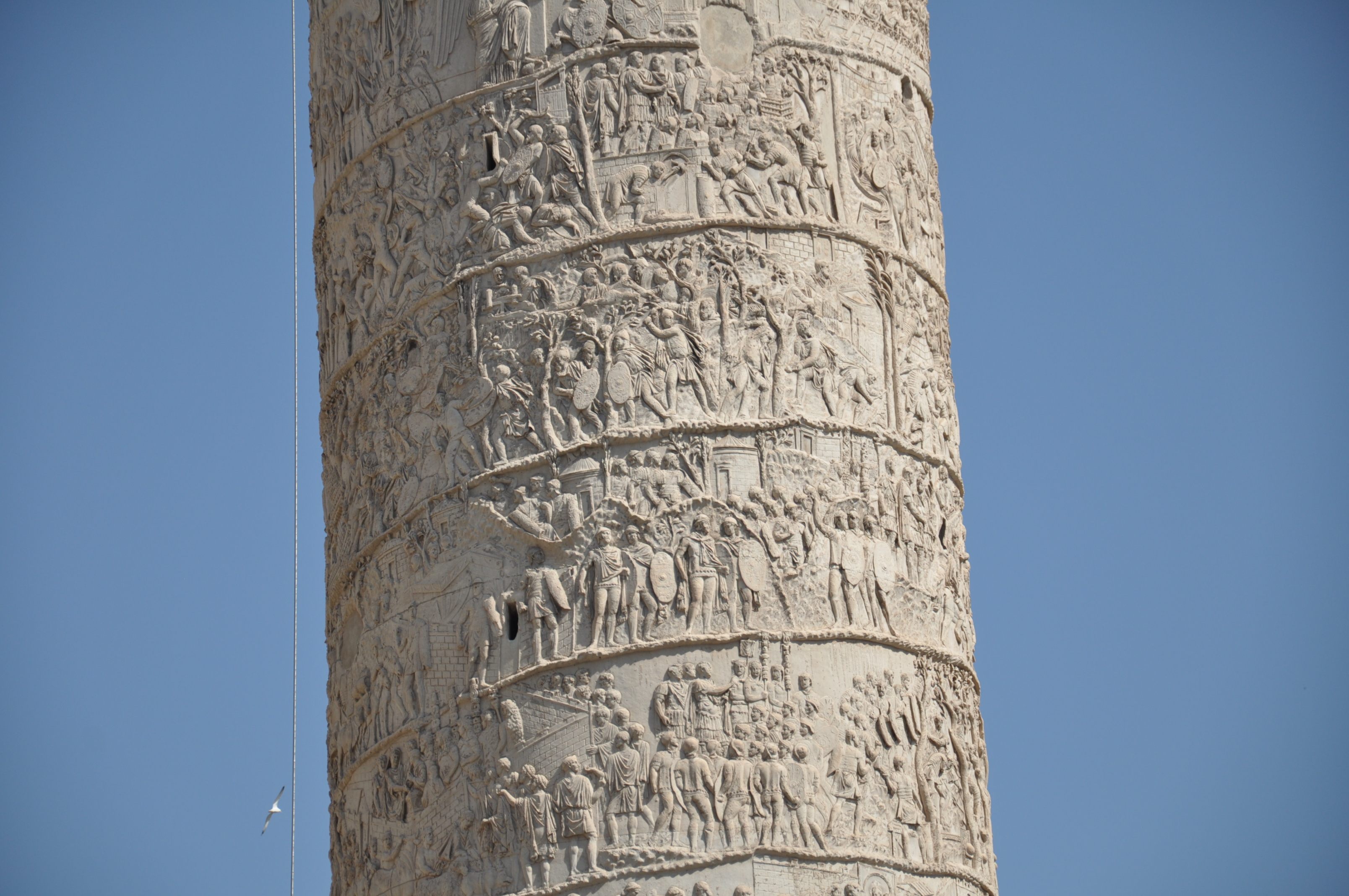
Evidence of this early trouserization of Roman troops can be seen in the spiral bas-relief of Trajan’s Column, the 98-foot-tall, 12-foot-thick marble monument erected in 113 to honor the emperor’s triumph over the Dacians, pants-wearers from what is now Romania and the region around it. In that depiction, generals and other high-rank figures wear tunics or togas, while common soldiers wear leggings.
Trajan’s Column, showing Roman soldiers wearing leggings. (Public Domain)
Like with GPS and the internet, innovations from the military sector slowly spread to civil society. By 397, trousers, in all their odiousness, were becoming so common that brother-emperors Honorius and Arcadius (of the Western and Eastern empires, respectively) issued an official trouser ban. The ban is cited in a code named for their father, Theodosianus, which read:
‘Within the venerable City no person should be allowed to appropriate to himself the use of boots or trousers. But if any man should attempt to contravene this sanction, We command that in accordance with the sentence of the Illustrious Prefect, the offender shall be stripped of all his resources and delivered into perpetual exile.’
“What the ban basically does is that it bans civilians from wearing a military outfit in the capital,” says Elm, “so one could see it as an indirect way to make it easy to distinguish civilians from military men at a time where tension was high.” Four years prior, Emperor Valens had been killed in battle within Roman borders, and a third of the army had been wiped out. So banning trousers could have been a way to make sure that the capital was easier to police, and that fighters were kept out.
The ban could also be read as the desperate attempt of late-period emperors to cling to a sense of Roman identity at a time where the empire had become a melting pot of traditions, after hundreds of years of expansion and cultural appropriation. Long hair and flashy jewels soon joined boots and pants as forbidden fashion.
“Barbarian influence on fashion was something that emperors wanted to control, but then their own bodyguards, which presumably they trusted, were barbarians,” says Elm. “So rather than anti-barbarian, they were mostly anti-barbarian-identity.” Restoring concepts such as “purity” and “identity” is not uncommon in fading empires—authoritarian ways to make rulers feel in control at home in the face of external weakness.
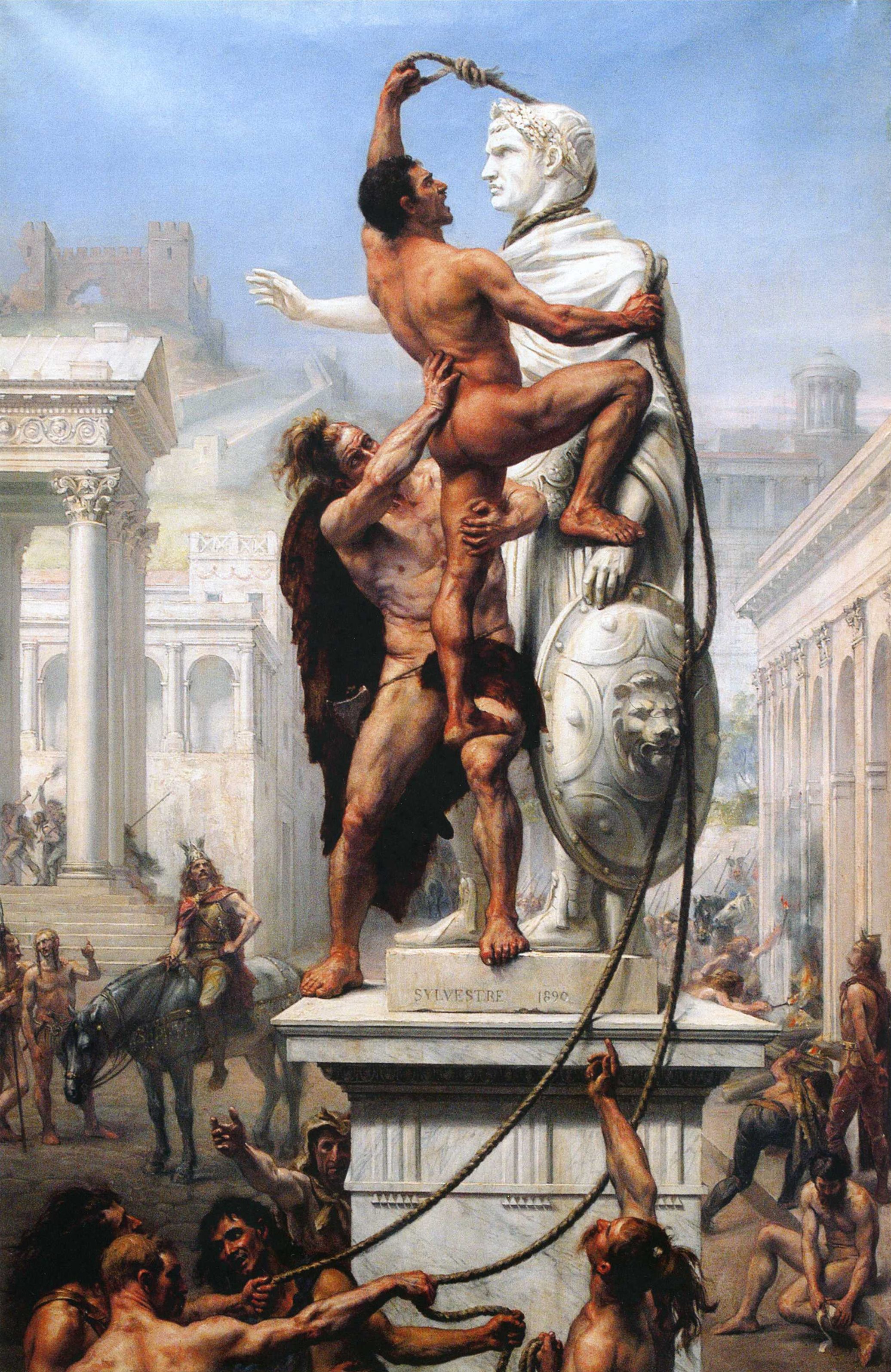
It’s not clear whether the trouser ban had any impact on Roman identity, or was even actually enforced. There is no legal evidence or angry letters. But 13 years after the ban, Visigoth fighters led by King Alaric violently marched into and sacked Rome, an event that most historians consider a critical shove in the fall of the Western Roman Empire in 476. The ban was more or less rendered moot.
An 1890 painting by French artist Joseph-Noel Sylvestre depicts the sacking of Rome by the Visigoths. (Public Domain)
Of course, pants won in the end. By a century later, the barbarians had claimed the battle for the sartorial soul of the court of Constantinople, the only Roman court left.
“By the fifth and sixth centuries, suddenly the so-called barbarian custom, sleeved top and trousers, had become the official uniform of the Roman court. If you were close to the emperor, that’s what you would wear.” says Olson. “Scholars have not yet been able to explain how that happened, trousers going from being banned to be legally required clothes for the Roman court.”
Today’s post got messed up and when I tried to fix it, the editor function went bonkers…or I just don’t speak the wordpress crap language well enough. So here’s the open…LOL
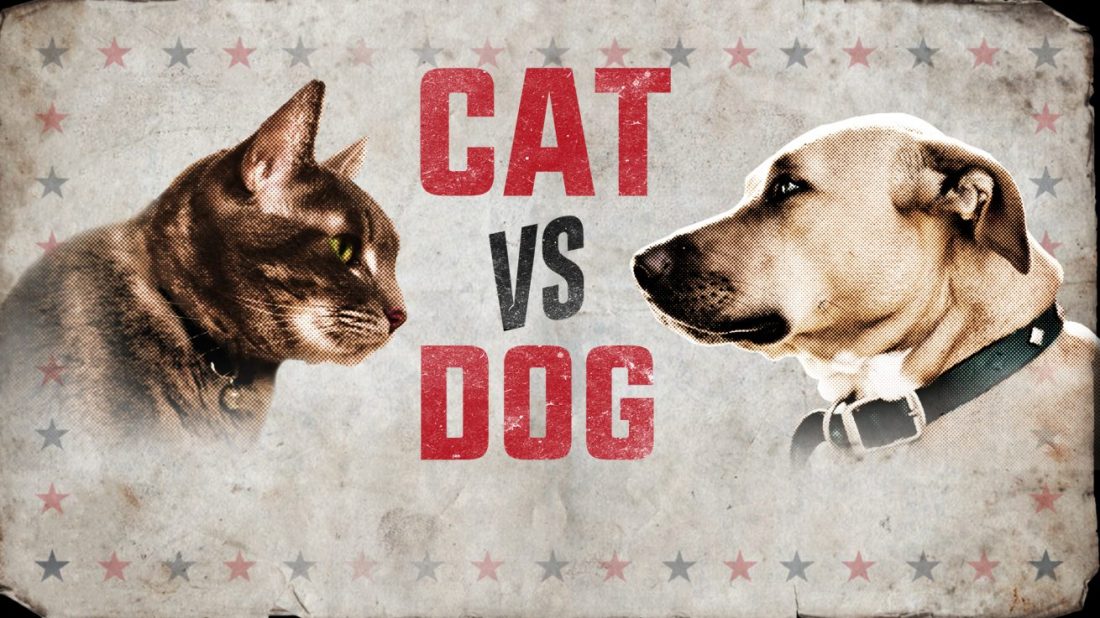
In the great debate of whether cats are better then dogs (they’re not!) both sides present compelling arguments about why their choice is better (like cats are less smelly–really?? ever smell cat pee on anything???)
my sentiments exactly!
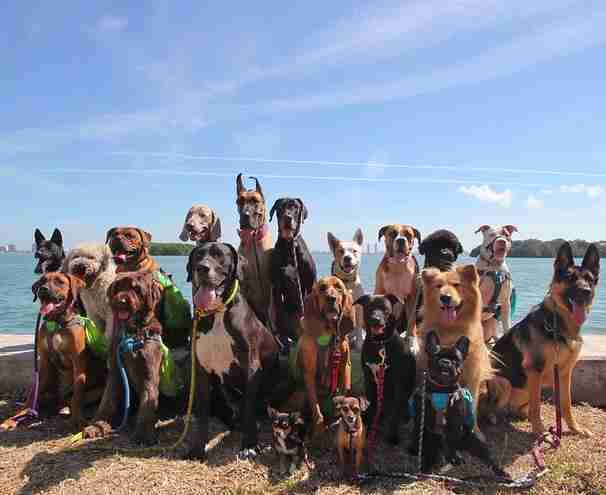
I maintain that dogs are way better than cats! So let’s get right to it!
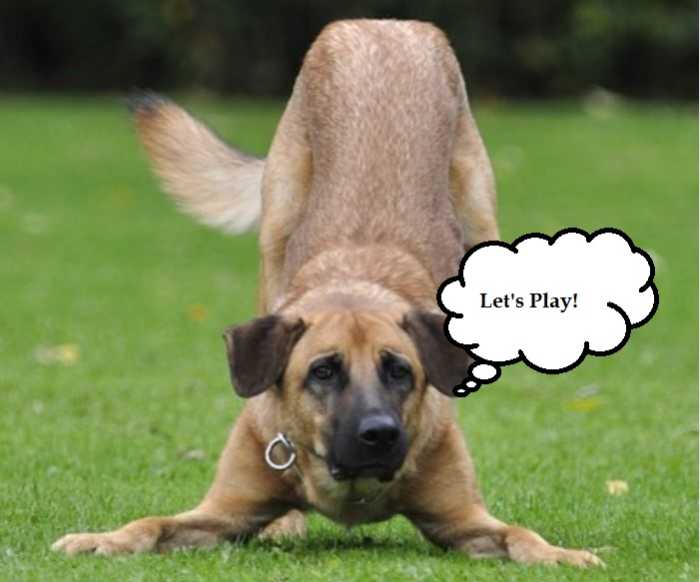
Dogs are interactive and keep you healthier by requiring walks. And they love to play; whereas a cat will spend all day sleeping and then run around at night while YOU’RE trying to sleep.
Dogs are trainable and obedient; whereas cats are indifferent—unless you’re a red dot, they’re not interested.
High five!Ever see a cat do this? didja?
Dogs are infinitely smarter than cats. How do I KNOW this? Dogs are used by the military in combat regions, by police to sniff out bombs and drugs, and by the medical communities as service companions and to sniff out certain cancers. Cats? Nope!
They are also helpers to man–and can be trained to herd other animals, can cats? Nope!
Dogs look at humans as the center of their universe! They are man’s best friend and will be fiercely protective! Cats? Can’t be bothered.
And dogs make you smile!
And finally…
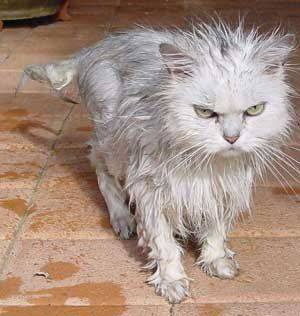
“How To Wash A Cat”
1. Thoroughly clean the toilet. 2. Add the required amount of shampoo to the toilet water, and have both lids lifted. 3. Obtain the cat and soothe him while you carry him towards the bathroom. 4. In one smooth movement, put the cat in the toilet and close both lids (you may need to stand on the lid so that he cannot escape). CAUTION: Do not get any part of your body too close to the edge, as his paws will be reaching out for any purchase they can find. 5. Flush the toilet three or four times. This provides a “power wash and rinse” which I have found to be quite effective. 6. Have someone open the door to the outside and ensure that there are no people between the toilet and the outside door. 7. Stand behind the toilet as far as you can, and quickly lift both lids. 8. The now-clean cat will rocket out of the toilet, and run outside where he will dry himself. Sincerely, The DOG
The debate of “cats vs. dogs” is an argument as old as time. Rarely will you find someone who likes both equally. Dog people are very passionate about their pups and cat people are very passionate about their felines. However, sometimes it feels like the cat people are a minority in a majorly dog-loving-world. And when things pop up like a 2017 study in the journal Society & Animals that shows human parents feel more empathy for puppies than they do for babies, it’s hard to say dogs haven’t won the cat vs. dog debate… But, have they?
Cats, as anyone who has one will tell you, are better than dogs in every conceivable way. They’re softer, sweeter, and smarter. They’re quieter and cleaner. They’re masters of both the art of lazy lounging and the one of skillful hunting (of rodents). Plus, once upon a time, we used to revere them as gods. And this all isn’t just one cat lover’s opinion—there’s science and data to back it up. Yes, you may have heard that dogs are man’s best friends, but here are all of the reasons why cats actually make for far better pals.
Owning a cat might make you more intelligent.
Next time someone asks you to defend why cats are better than dogs, lob this fun little fact at them: Cat people are smarter than dog people. According to 2017 research published in the Human-Animal Interaction Bulletin, self-identified cat lovers tended to have higher intelligence than dog lovers do. (We are less outgoing, though.)
They splash less.
As a team of researchers from the Massachusetts Institute of Technology and Princeton University revealed in 2010, cats drink water far more efficiently than dogs do. When a cat takes a drink, its tongue doesn’t actually pierce the water’s surface; it forms a funnel that lifts water up for a splash-free drink, getting in four laps per second. A dog, on the other hand, will sloppily crash its tongue into the water bowl like a cannonball. It’s scientific proof that cats rule and dogs drool—literally.
They’re cheaper.
According to the Animal Humane Society, average adoption fees for kittens and cats start at $32 and can run as high as $270. For dogs and puppies, however, fees start at $115, but go all the way up to $660! Adopting a cat is just more cost-efficient.
They love humans more than food.
Over the years, cats have earned a bad rap for being cold and distant. “They only love you because you feed them,” dog owners often tell cat owners. There’s also the persistent rumor that—were you to die—a cat wouldn’t care at all, and would, in fact, eat your deceased remains to survive. But research indicates all of this thinking is just plain hooey. According to a 2017 study in Behavioural Processes, cats prefer human interaction to all other stimuli, including food, toys, and catnip. Can you say the same for dogs? We think not.
Their love is more meaningful than a dog’s.
Dogs, it often appears, love everyone. Cats, on the other hand, are more standoffish when meeting someone new. (Centuries of domesticity still can’t eliminate the innate caution of a stealthy predator, it seems.) When a dog showers you in affection, it may be nice, but you know that everyone else is getting the same treatment. When a cat warms up to you, though, you feel special and unique—like you’ve earned it. And, as we just learned from that Behavioural Processes study, no, it’s not just because of the food.
They take up less space.
On average, Pets WebMD says a domestic cat will usually weigh around 10 pounds. Dogs, of course, have more variables—there are hundreds of different breeds—but, the American Kennel Club clocks a medium-sized dogs, on average, at about 50 pounds. As far as who takes up more of your well-earned space, it’s not rocket science.
They live longer.
Need another big reason why cats are better than dogs? They live a lot longer. In fact, Pet WebMD says a domesticated cat, on average, will live anywhere from 10 to 15 years. Dogs, on the other hand? Depending on size, eight to 11.
They’re not as smelly as dogs.
If you want to conjure some instant revulsion, just think of the words “wet” and “dog.” You know exactly what odious scent I’m talking about, and you know just as well that few things offend the olfactory nerves as much as a the aroma of a damp dog. Cats don’t ever reek like that.
They sleep a lot.
Fact: Animals are at their cutest when sound asleep. And cats sleep anywhere from 12 to 16 hours per day, which means you have more than half of your waking hours to snap some serious aww-inducing Instagram pics. And, frankly, we should take a note from this behavior because we could all stand to sleep a few hours more each day.
They’re expert hunters.
Before you judge a cat’s sleeping habits, know that these long hours are borne less out of laziness and more out of evolutionary coding. Cats are natural predators; unlike other mammals, who may have foraged for food, felines had to hunt, which meant spending large chunks of the day asleep, conserving energy to chase down their next meal. This is also why much of that 12-to-16-hour period is spent in a light doze. Before domesticity came into play, felines had to sleep lightly, in case prey—or a more dangerous predator—stepped on their turf. (That’s also why we call a “catnap” a catnap.)
Their centuries-long history of hunting has carried into the modern day. According to a 2013 study published in Biological Conservation, domesticated house cats are responsible for the deaths of 2.9 billion rodents and birds every year. This is all to say: Your cat is basically a terminator with fur, and we’d be overrun with rodents if not for their valiant effort regulate the vermin population.
They’re better for the environment.
You may assume all of this wanton death leaves a negative impact on the environment, but ecosystems are well-adjusted by now. In fact, it’s not cats but dogs that aren’t so great for the planet. According to research conducted by New Zealand researchers in 2009, dogs have about 2.1 times the environmental impact of an SUV. Talk about a serious carbon paw print!
You don’t have to walk them.
Whenever dogs need to relieve themselves, you have to take them outside. Yes, you can train them to need this only at certain hours of the day, but still, it’s a pain. Cats will just tend to a litter box on their own volition. A cat and its owner mostly stay out of each other’s bathroom business—and that’s truly one of the sweetest reasons why cats are better than dogs.
And some of them can even use a toilet!
It’s not just a Meet the Parents storyline. It’s a true story. You’ll have to start the training early, though—when they’re about three or four months old.
They clean themselves.
Cats don’t require regular grooming sessions like dogs do. The tongue of a cat is barbed in a way that removes dirt and grime from fur with startling efficiency. Cats literally lick themselves clean, another practical reason why they are better than dogs.
Once upon a time, they were gods.
As early as 3,000 B.C.E., felines were worshipped as deities. The Egyptian goddess Bastet—of war, protection, or the moon, depending on the dynasty—is among the first. Her sister in folklore, Sekhmet, the warrior goddess of healing or the hunt (again, depending on the dynasty), was thought to have blown Egypt into existence with her breath. Oh, and there’s also a little thing you maybe have heard of called The Sphinx.
But feline worship isn’t relegated to Ancient Egyptian culture. There’s also Dawon, the Hindu sacred tigress; Barong Ket, the Balinese “king of spirits;” and the entire pantheon of jaguar gods of the pre-Columbian Mayan era. In other words: Your cat may have descended from a deity. Whether you believe in that sort of thing or not, though, it can’t hurt to treat the little fella as such.
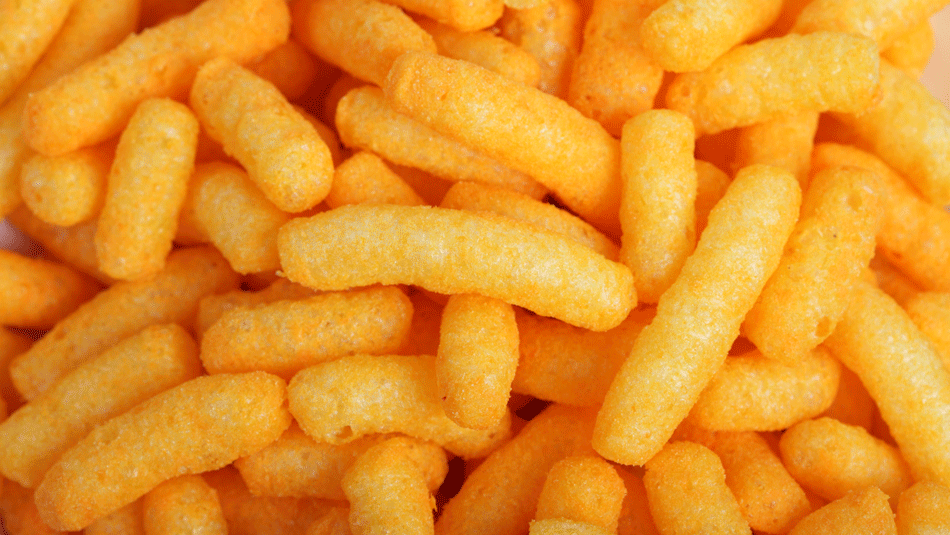
They change the color of our skin. They get stuck in our teeth. But for some reason, we can’t stop eating cheese curls, the puffiest snack food ever created. But these corn-and-powder snacks didn’t just fall like manna from the sky into our bowls. The story of the cheese curl is one of the more unusual creation stories in snack-food history. Let’s talk about it. It’s weirder than you’d think.
Who invented cheese curls? One story involves a piece of agricultural equipment
Wisconsin, the agricultural hub that it is, has given us a lot of food innovations over the years. (Three words: fried cheese curds.)
But some of those innovations, like the process that gave us the modern cheese curl, were complete accidents. The accident proved fruitful for Flakall Corporation, a Beloit, Wisconsin animal feed manufacturer whose owners later switched gears to producing snack foods, all thanks to the way the company cleaned its machines. The company’s approach to producing animal feed was to put the material through a grinder, effectively flaking out the corn so more of it could be used to get as much usable material as possible from the grain, as well as to ensure cows weren’t chewing any sharp kernels.
A Feed Grinder (patent filing)
“This flaking of the feed is of advantage because it avoids loss of a good percentage of material which otherwise is thrown off as dust, and gives a material which keeps better in storage by reason of the voids left between the flakes, such that there can be proper aeration, not to mention the important fact that flaked feed is more palatable and easily digested by the animal,” the firm stated in a 1932 patent filing.
The grinder did its job, but it wasn’t perfect, and periodically required cleaning to ensure it wouldn’t clog. One strategy that Flakall workers used was to put moistened corn into the grinder. During this process, however, something unusual happened: the moist corn ran directly into the heat of the machine, and when it exited the grinder, it didn’t flake out anymore—it puffed up, like popcorn, except without the annoying kernels, in a long string.
By complete accident, Flakall had invented the world’s first corn snack extruder.
Edward Wilson, an observant Flakall employee, saw these puffs come out of the machine, and decided to take those puffs home, season them up, and turn them into an edible snack for humans—a snack he called Korn Kurls. Another way to put this is that when you’re eating a cheese curl, you’re noshing on repurposed animal feed.
How a cheese curl is made (patent filing)
This state of affairs led to the second patent in Flakall’s history, a 1939 filing titled “Process for preparing food products.” A key line from the patent:
“The device preferably is designed so as to be self-heated by friction between the particles of the material and between the particles and the surfaces of contacting metal and to progressively build up pressure during the heating period. Thus the uncooked raw material, having a predetermined moisture content is processed into a somewhat viscous liquid having a temperature high enough to cook the mass and heat the water particles to a temperature high enough for evaporation at atmospheric pressure but being under sufficient pressure to prevent it.”
If that’s a little complicated to understand, a 2012 clip from BBC’s Food Factory does the trick.
In the video, host Stefan Gates takes an extruder and connects it to a tractor, making the extruder move so fast that it puffs the corn out in an extremely fast, dramatic way.
Clearly, Flakall had something big. The firm eventually changed it’s name to Adams Corporation, which helped to take some attention off the fact that it was selling a food product to humans that was originally intended for animals.
While Flakall has the more interesting tale on this front, it’s not the only one. Another early claimant to the cheese curl is a Louisiana firm called the Elmer Candy Corporation, which developed a product eventually called Chee Wees.
Chee Wees
The Big Cheese of New Orleans, as it’s nicknamed, became a local institution. Elmer’s Fine Foods—no longer a candy company—is a family-owned business that’s produced cheese curls almost continuously for roughly 80 years.
I say “almost” because the firm had to deal with the impact of Hurricane Katrina. As the company explains on its website, Elmer’s entire facility was flooded out by the deadly storm, and the company had to stop operation for 16 months while it recovered from the hurricane and completely replaced the machines that produced the snacks.
A challenge like that might have been enough to kill a lot of companies. But Elmer’s bounced back—and it’s still active to this day.
(Another notable cheese curl firm, Old London Foods,came out with its variation, the Cheese Doodle, in the late 1950s.)
Five interesting facts about Cheetos, the brand that took cheese curls mainstream
While Cheetos came along later than its competitors, first being invented in 1948, it quickly overtook the market, in part because it had gained national distribution due to the prior success of Fritos. That company’s founder, Elmer Doolan, worked out a deal with H.W. Lay and Company to market Cheetos to the broader market. It quickly became a massive hit.
Cheetos
Cheetos are by far the most popular brand of cheese curls in the United States. According to Statista, the Cheetos brand had an estimated $969.5 million in sales in 2016, with the next most popular brand being Frito-Lay’s more-upscale Chester’s brand, which garnered up just 7 percent of Cheetos’ total sales.
The success of Cheetos was so impressive that it played a large role in the merger of Frito with Lay in 1961, as well as the company’s later merger with PepsiCo just four years later.
There are two main varieties of Cheetos—crunchy, the most common kind, and puffed, which only came about in 1971 or so. Each is made through different variations on the corn snack extruder process. Dozens of other flavors exist, however, both inside and outside of the U.S.
The reason that Flamin’ Hot Cheetos have such a prominent color that sticks to everything (and turns your fingers red), according to Wired, has a lot to do with the product’s use of food dyes that have an added chemical to make the seasoning oil-dispersible. That’s because the powder won’t stick to the Cheetos without vegetable oils.
Cheese curl cartoons: Why we never got a Chester Cheetah Saturday morning cartoon, despite multiple attempts
These days, Chester Cheetah is trying to goad Beyoncé on Twitter just like every other advertising mascot worth its weight in salt, but there was a time that the cheetah was seen as so impressive that there was chatter it could become a cartoon lynchpin. In fact, Frito-Lay got pretty far down the road with Fox in turning the mascot, launched in 1986, into a cartoon. Yo! It’s the Chester Cheetah Show, as the toon would have been called, was developed as a potential part of Fox’s Saturday morning cartoon slate. (CBS also considered making the show, but rejected it.)
I grew up a very lucky girl. I had a great mom, a competitive, older sister, a somewhat bratty, younger brother, and a completely awesome Dad.
Dad himself did not have an easy life. At 16, he had to quit high school because both my grandparents contracted horrific cases of influenza. While an aunt cared for his parents, and looked after his siblings, he found a job at a clothing factory to support the family. Months later, my grandfather, a carpenter by trade, was able to return to work, but Dad chose to keep working and help out as much as he could. Within a few years, he met and married my mother.
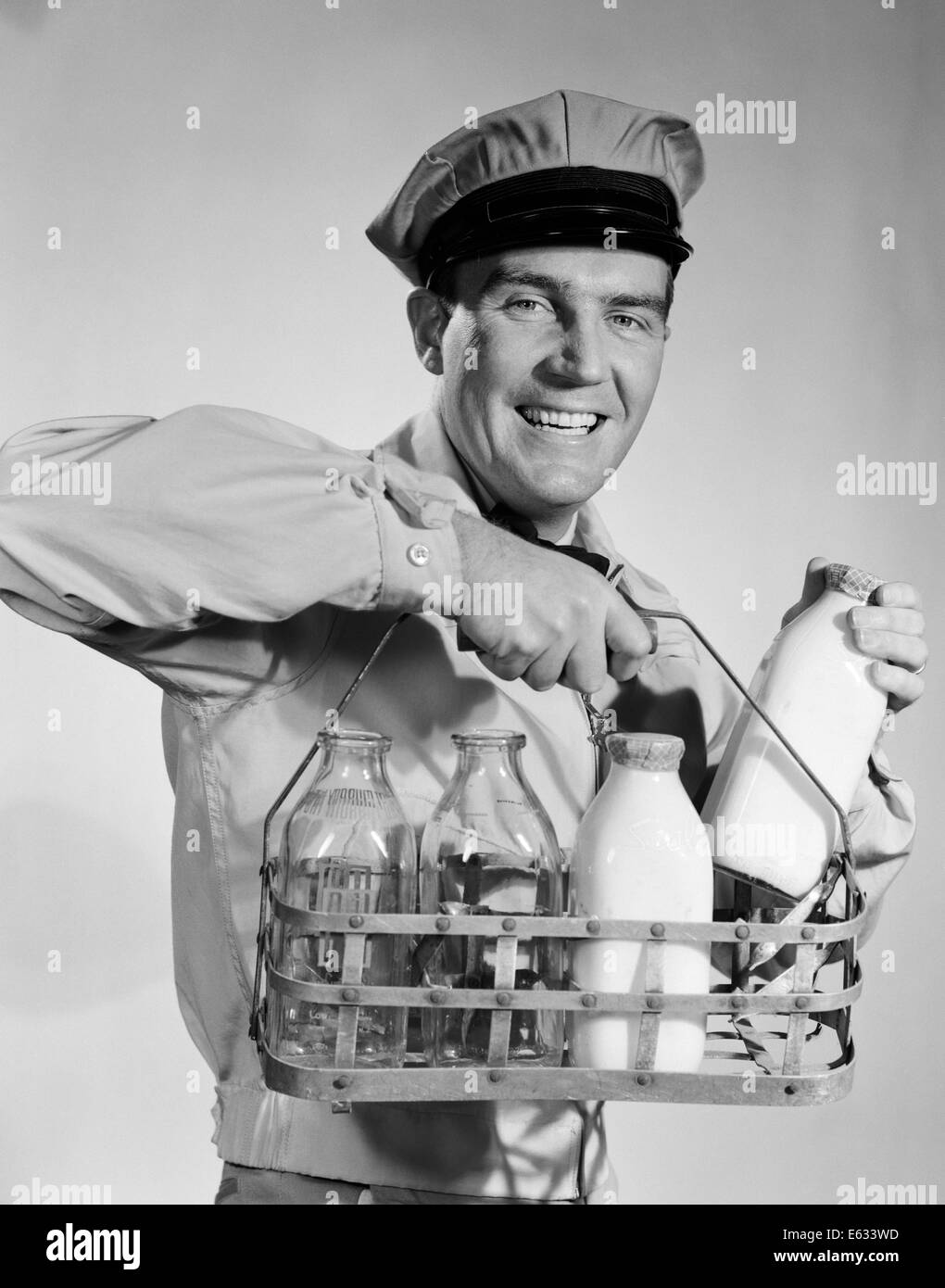
Because Dad had a limited education, employment prospects were few, far and in between, but he always kept food on the table. One of my earliest memories is of seeing my father coming home very early in the morning still dressed in his milkman uniform.
same uniform, different Dad
When the dairy shut down, Dad was forced to work as a general laborer, working on such projects as The Pocono Raceway and The Schaeffer Brewery. Neither of those jobs were close to our home, so Dad drove long hours to and from work, but he never complained. I learned that there is nothing more important than family…because of Dad.
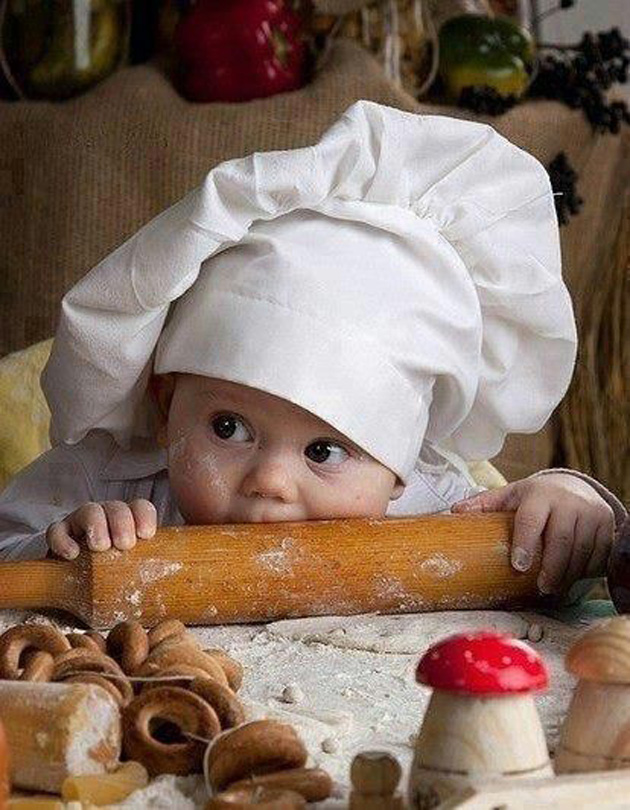
I remember when I was in grade school, being frustrated with a homework assignment to write a book report (which was finished) and draw an accompanying picture. I couldn’t draw a horse; no matter how I tried, it looked terrible. Dad came out to the table, asked what was wrong and when I blubbered I can’t draw, he sat down beside me. Taking my blue composition book and a pencil, he explained the shape of the horse as it came to life on the paper. I was mesmerized. He then instructed me to take my pencil and recreate the image—making a smaller horse beside his—and I did it! Right there and then I fell in love with drawing…because of Dad.
not his drawing…but close!
As we kids grew older, Dad used our dinner times to not only to ask about our days at school, but to discuss and debate many different issues. He was the first conspiracy theorist I ever knew. We debated the moon landing frequently, as well as JFK’s assassination and Hitler’s suicide. I learned how to defend my positions, make informed opinions and how to keep an opened mind…because of Dad.
Dad’s theory
One of the greatest gifts I ever got from my Dad was making people laugh. He was a musician, played the accordion—had his own band—and played at weddings and dances, and at our home on Sundays.
not my Dad, although he DID like red
He would play and sing and the neighbors always came over to hear him. Before long, they were clapping along or dancing, and laughing, because Dad always told jokes. If he wasn’t singing, he was cracking jokes. Even when he was in the hospital, he was always joking with the nurses and making them laugh. I learned how to brighten someone’s day…because of Dad.
When I first met my second husband, a handsome, college educated professional man, he was a single father, newly divorced and I thought he was nothing like my Dad. He wasn’t artistic or musical in the least, didn’t care to debate conspiracy issues or current issues at all, and couldn’t tell a joke to save his soul. And then I saw him with his daughter, and I knew he was the one…because of Dad.
During his years of service with the engine company, Chief/Nip had demonstrated many acts of bravery and heroism. He rode with the company to every fire, and was always the first to leap off the fire engine and run into the burning buildings to scout for victims. Whenever he found a human in need of help, the brave fire dog would bark until the firemen responded.
I’m sure the fireman rewarded him with extra food or treats every time he saved someone, but Chief/Nip was never rewarded with medals for saving a human mother or child. He was awarded the medals for saving a cat. (And he didn’t even like cats.)
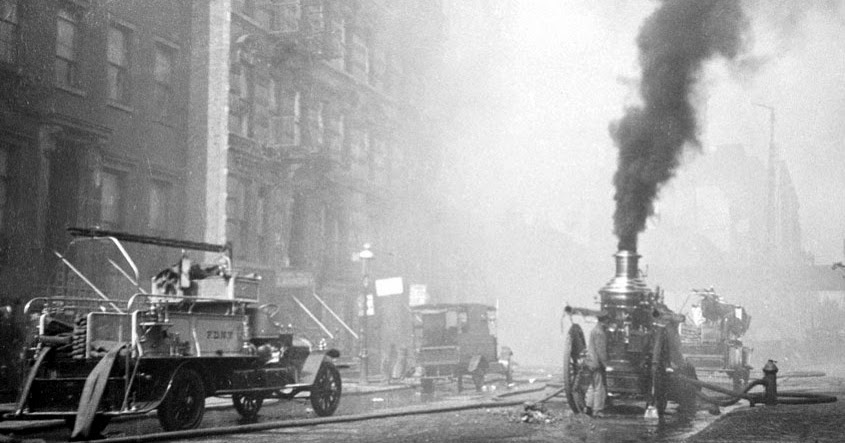
On November 10, 1936, a fire broke out in the basement of a four-story brick apartment building at 308 Hicks Street in Brooklyn Heights. It quickly spread to the upper floors through a dumb-waiter shaft.
The four-story, nine-unit apartment building at 308 Hicks Street, where Chief/Nip the fire dog rescued a cat, was constructed in 1899. Today, developers have proposed converting the building into a luxury single-family townhouse.
Ten people were in the building when Adela Gomez, 17, ran into the hallway on the second floor and screamed after smelling smoke. John Bermudez, 16, was with his mother, his 18-year-old sister Anna, his 12-year-old brother Joseph, and his sister-in-law and her baby in their top-floor apartment when they heard the commotion.
As the family started to descend the stairs, John noticed a cat running in the opposite direction toward the top floor. (Some reports say the cat was named Carlotta and belonged to John; other reports say the cat was named Fluffy and belonged to Mrs. Andrea Gomez on the second floor). John was determined to run after the cat and save it. John’s mother protested, but the “invincible” teenager darted upstairs as his family made their way safely to the street.
When the firemen of Engine Company No. 203 arrived on the scene, they found John unconscious on the stairway between the third and fourth floors. They took him to the street, where a rescue squad tried to revive him for nearly an hour without success (I’m not sure why they didn’t transport him to a hospital).
Soon after the firemen brought John out of the building, Chief/Nip emerged from the building, a little bit singed, with the cat in his jaws. The cat had lost a few of its nine lives, but somehow it was revived.
The rescue at 308 Hicks Street wasn’t the first time the company’s fire dog had saved a cat. Only a few months before, he had put his disdain for felines aside to do his duty and rescue a litter of five kittens from a burning store at Hicks and Union Streets.
Chief/Nip’s Life as a Fire Dog
Taken in as a stray one winter night in 1929, Chief/Nip served 10 years with Engine Company No. 203. During that time, he received numerous injuries from broken glass and falling debris, burns from scalding water, and bruises from falling off the fire engine. He also had some wonderful times, especially during the summer months when he got to live with one of the firemen in his home on Long Island.
Chief/Nip could recognize all the bells and signals, and he knew exactly which signal meant his company was responding to a call (he never made a mistake). On the fire scenes, Chief/Nip would superintend the firefighters and alert them if he knew something was wrong. If the hoses ever splashed his way, Chief/Nip would nestle under a fireman’s coat.
Chief/Nip Answers His Last Call
Although Chief/Nip was a 16-year-old senior citizen in 1939, he probably had a few more good years left as an active fire dog when his life was abruptly ended on November 9, 1939. While playing out in front of the firehouse, Chief/Nip was struck by a hit-and-run driver.
People in the street called out for help, and a group of children followed the fire dog into the firehouse and told Lt. Matthew F. Rogers that it had been hit by a car that kept going. Instead of waiting for help to come, Chief/Nip dragged himself back inside and tried to jump up on the fire engine seat. Missing the seat, he landed on the running board, where he curled up and died.
When Chief/Nip, the fire dog, died in 1939, the men of Engine Company No. 203 had his body stuffed and mounted. The black and tan mongrel dog is forever on display with his medals of honor at the New York City Fire Museum. Photo by P. Gavan
The members of Engine Company No. 203 kept him in a place of honor at the firehouse until the company disbanded in 1974.
A Brief History of the Brooklyn Fire Department and Engine Company No. 203 @ link:
Since Father’s Day is rapidly approaching, I thought it would be a good time to look at some options to make Dad a special cake for his special day.
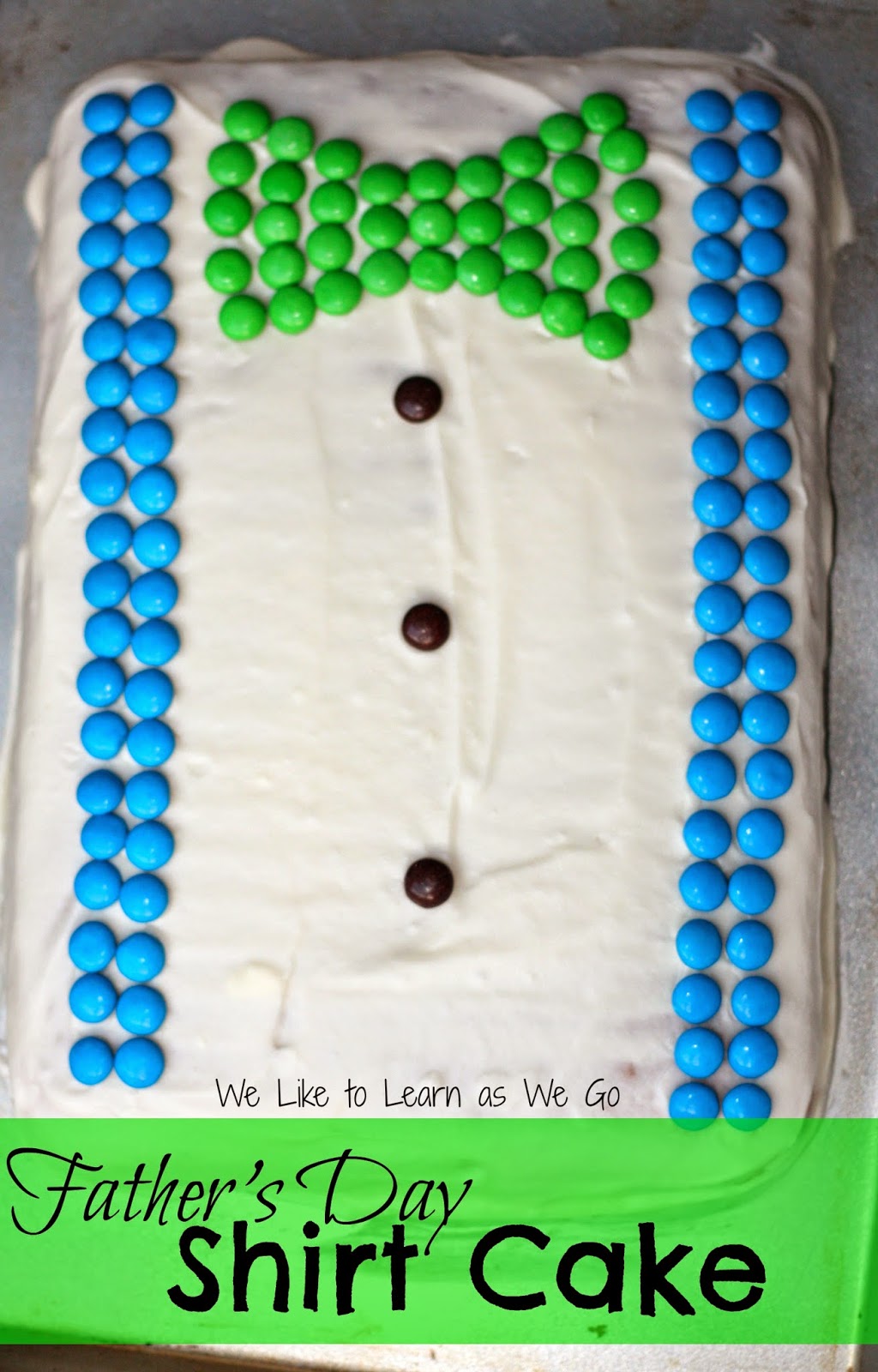
Let’s begin with a super easy one first. This cake can be made with any flavor box mix baked in a 13 x 9 pan. When cooled, you simply frost with white frosting and add M&M’s to make the suspenders and the bow tie. (You can get fancy and make a regular tie as well.)
If that seems too easy and you’d like to try your hand at more involved decorating, I suggest the Beer Mug Cake. (There are 3-D versions of this cake that are very involved, so I suggest this flat version.) It merely requires any flavor cake baked in a 13 x 9 pan, cooled and then inverted onto a baking sheet. The corners are trimmed into a rounded mug shape and the frosting is piped on in long lines in gold. White frosting is then piped in swirls to mimic foam and a handle is fashioned from white fondant. (Roll the fondant into a rope and make an elongated “U”. Insert toothpicks into the 2 ends and attach to the side of the mug.
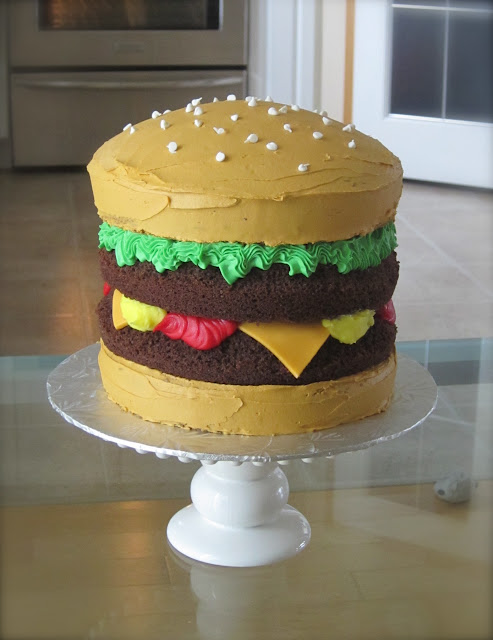
If you’re feeling even more daring, there’s always the Hamburger cake. This will require 2 cake mixes—one vanilla (for the bun) and one chocolate (for the hamburgers). The “cheese” in this hamburger is actually colored fondant. (If that sounds too involved or difficult, skip the cheese!) The sesame seeds on the top bun are mini white chocolate chips. The rest of the details, lettuce, ketchup, mustard are all tinted frostings.
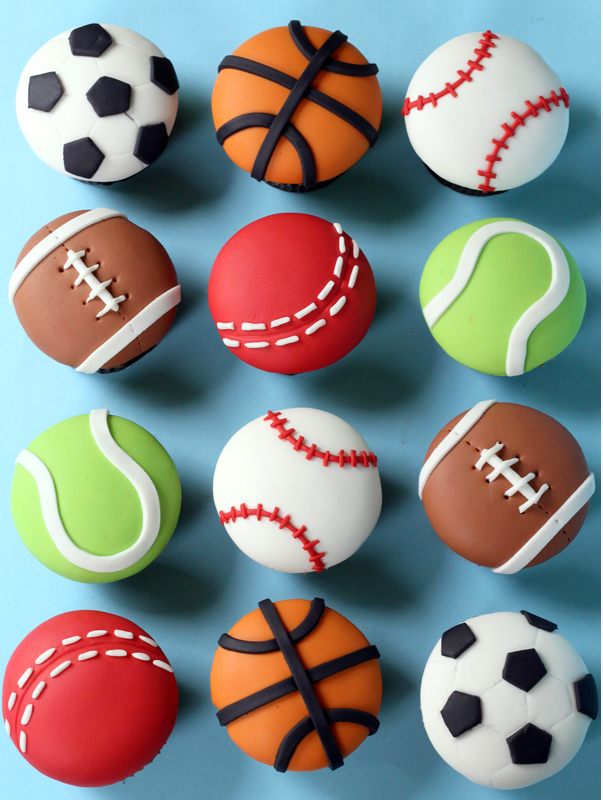
If cupcakes are more your style, you can decorate them in numerous ways to honor the sports Dad loves: tennis, baseball, basketball, soccer, are all easy choices.
And while we’re discussing cupcakes, if Dad’s a beer lover, what better cake than one made of both cupcakes AND beer?
birthday cake, but you get the idea…
Lastly, might I recommend a real show stopper? The Bacon cake! A vanilla layer cake, frosted with vanilla icing infused with maple flavoring and surrounded by…BACON!





















 Sew Colorful