Wounded Knee

Wounded Knee, located on the Pine Ridge Indian Reservation in South Dakota, was the site of two conflicts between Native Americans and representatives of the U.S. government, including the U.S. Army and, later, the FBI. An 1890 massacre left some 150 Native Americans dead, in what was the final clash between federal troops and the Sioux tribe. In 1973, members of the American Indian Movement occupied Wounded Knee for 71 days to protest conditions on the reservation.

Ghost Dance and Sitting Bull

Throughout 1890, the U.S. government was worried about the increasing influence at Pine Ridge Indian Reservation of the Ghost Dance spiritual movement, which taught that Native Americans had been defeated and confined to reservations because they had angered the gods by abandoning their traditional customs.

This Day in History: 12/29/1890 – Massacre at Wounded Knee

On this day in 1890, in the final chapter of America’s long Indian wars, the U.S. Cavalry kills 146 Sioux at Wounded Knee on the Pine Ridge reservation in South Dakota. Throughout 1890, the U.S. government worried about the increasing influence at Pine Ridge of the Ghost Dance spiritual movement, which taught that Indians had been defeated and confined to reservations because they had angered the gods by abandoning their traditional customs. Many Sioux believed that if they practiced the Ghost Dance and rejected the ways of the white man, the gods would create the world anew and destroy all non-believers, including non-Indians. On December 15, 1890, reservation police tried to arrest Sitting Bull, the famous Sioux chief, who they mistakenly believed was a Ghost Dancer, and killed him in the process, increasing the tensions at Pine Ridge. On December 29, the U.S. Army’s 7th cavalry surrounded a band of Ghost Dancers under the Sioux Chief Big Foot near Wounded Knee Creek and demanded they surrender their weapons. As that was happening, a fight broke out between an Indian and a U.S. soldier and a shot was fired, although it’s unclear from which side. A brutal massacre followed, in which it’s estimated almost 150 Indians were killed (some historians put this number at twice as high), nearly half of them women and children. The cavalry lost 25 men.

Did you know?

Nearly half of the Sioux killed at the 1890 Wounded Knee massacre were women and children.

Wounded Knee Massacre

The conflict at Wounded Knee was originally referred to as a battle—the Army troops involved were later rewarded with Medals of Honor—but in reality it was a tragic and avoidable massacre. Surrounded by heavily armed troops, it’s unlikely that Big Foot’s band would have intentionally started a fight. Some historians speculate that the soldiers of the 7th Cavalry were deliberately taking revenge for the regiment’s defeat at Little Bighorn in 1876.

Whatever the motives, the massacre ended the Ghost Dance movement and was one of the last major confrontations in the Indian Wars, America’s deadly series of wars against the Plains Indians and other Native Americans.

American Indian Movement

The American Indian Movement (AIM) was founded in 1968 in an effort to stop police harassment of Indians in the Minneapolis area. Borrowing some tactics from the Vietnam war protests of the era, AIM soon gained national notoriety for its flamboyant demonstrations. However, many mainstream Indian leaders denounced the youth-dominated group as too radical.

In 1972, a faction of AIM members led by Dennis Banks and Leonard Peltier sought to close the divide by making alliances with traditional tribal elders on reservations. They had their greatest success on the Pine Ridge Indian Reservation, after a group of young white men murdered a Sioux man named Yellow Thunder.

Although Yellow Thunder’s attackers received only six-year prison sentences, this was widely seen as a victory by the local Sioux accustomed to unfair treatment by the often racist judicial system. AIM’s highly visible publicity campaign on the case was given considerable credit for the verdict, winning the organization a great deal of respect on the reservation.

Wounded Knee Siege

AIM’s growing prestige and influence, however, threatened the conservative Sioux tribal chairman, Dick Wilson. When Wilson learned of a planned AIM protest against his administration at Pine Ridge, he retreated to tribal headquarters where he was under the protection of federal marshals and Bureau of Indian Affairs police.

Rather than confront the police in Pine Ridge, some 200 AIM members and their supporters decided to occupy the symbolically significant hamlet of Wounded Knee, site of the 1890 massacre. Wilson, with the backing of the federal government, responded by besieging Wounded Knee.

During the 71 days of the siege, which began on February 27, 1973, federal officers and AIM members exchanged gunfire almost nightly. Hundreds of arrests were made, and two Native Americans were killed and a federal marshal was permanently paralyzed by a bullet wound.

The leaders of AIM finally surrendered on May 8 after a negotiated settlement was reached. In a subsequent trial, the judge ordered their acquittal because of evidence that the FBI had manipulated key witnesses. AIM emerged victorious and succeeded in shining a national spotlight on the problems of modern Native Americans.

Trouble Continues at Pine Ridge

The troubles at Wounded Knee, however, were not over after the siege. A virtual civil war broke out between the opposing Indian factions on the Pine Ridge reservation, and a series of beatings, shootings and murders left more than 100 Indians dead. When two FBI agents were killed in a 1975 gunfight, the agency raided the reservation and arrested AIM leader Leonard Peltier for the crime.

The FBI crackdown coupled with AIM’s own excesses ended its influence at Pine Ridge. In 1977, Peltier was convicted of killing the two FBI agents and sentenced to life in prison. To this day, Peltier’s supporters continue to maintain his innocence and seek a presidential pardon for him.

And in 2021, members of the U.S. Congress petitioned President Joe Biden to revoke the Medals of Honor soldiers received for their participation in the 1890 Wounded Knee massacre.

SOURCE: HISTORY.COM

Wyoming State Animal: American Bison

I found this article on a site called MyCountry955.com  that details the differences between an American Bison and the American Buffalo.

From MyCountry955.com:

Don’t be confused, when in Yellowstone or most places in the North America, you’re not seeing Buffalo you’re seeing the American Bison. There is quite the difference and if you’ll follow along, I will explain it.

When the first explorers made their way west they came in contact with these massive beasts, that roamed the plains in the millions and started hunting until they thinned the herds greatly. Bison were hunted so often, they were almost eliminated in the late 1800’s. In the early 1900’s the US Army brought 21 Bison into Yellowstone and protected them and eventually were able to bring back to a comfortable number like we have now in the park.

Even back as far as those early day’s Bison have been (by some measures) incorrectly called Buffalo. Other than being both big, having horns and being extreme distant cousins in the Bovidae family, the American Bison isn’t even closely related to the Buffalo.

One difference you can see immediately between Bison and Buffalo is the Bison’s large hump on it’s back. This may shock you, but according to NPS.GOV the Bison’s hump is made up of muscles and long vertebrae so they can use their head as a snow plow to get to plants to eat during the winter. That comes in really handy during the Wyoming winters.

Yep! The American Bison is a natural born snow remover!

The Smithsonian’s National Zoo & Conservation Biology Institute points out that “True Buffalo” are actually native to Africa and Asia (Cape Buffalo and Water Buffalo), so living in the warmer climates, they wouldn’t need the type of thick coat of fur that the Bison of North America need during the winter months.  You’ll also notice that the Bison has a nice “mountain man” like beard to go along with that big winter coat. Of course the hot summers and to cool down the bison will shed the thick warmth for a lighter/cooler summer coat.

The next difference will come when you’re looking at the horns of the Buffalo and Bison. African Water Buffalo have long, large curved horns, the Cape Buffalo has horns that dip down and look like a mustache coming out of the top of their head and the Bison horns are sharp and shorter than the others.

Historians believe the reason many call the bison, buffalo is a simple play on words. Early explorers called bison by many names and that the French word for beef “boeuf” is where the name originated. Others believe the Bison’s coat resemble a “buff” coat (a popular coat worn in those times) and that’s how they started to be called “Buffalo”. Since that was EARLY in our country’s history, the origins of why they were called Buffalo are a little sketchy, but what we do know is that here in North America…they’re Bison!

I’m fairly certain that you’re not going to get in trouble for calling a bison, buffalo…BUT, just wanted you to be informed when you were in a deep conversation about western U.S. history and so you can school the “Tourons” on your next visit to Yellowstone


SOURCE: MYCOUNTRY955.COM

Wyoming State Flower: Indian Paintbrush

Native to the American Southwest, Indian paintbrush (Castilleja spp.) colors a meadow or woodland garden with showy clusters of red-orange leaves (aka bracts) in late spring or early summer. The colorful bracts, which resemble paintbrushes dipped in paint, mask the plant’s actual flowers. These small blossoms are vital for setting seed, of course, but are otherwise unremarkable. Indian paintbrush (also called desert Indian paintbrush) is known to be slightly unpredictable. Some years the foliage will be brilliantly colored, and other years it will be muted. Accept this unpredictability as part of the plant’s charm.  

A symbiotic plant, Indian paintbrush grows best when planted where its root system can tap into the root system of a host plant to obtain nutrients. The host plant is rarely harmed by the relationship, and Indian paintbrush thrives. Good host plants include little bluestem (Schizachyrium scoparium), beardtongue (Penstemon), and blue-eyed grass (Sisyrinchium angustifolium).

The leaves and roots of Indian paintbrush can be toxic to humans and livestock.

Where to Plant Indian Paintbrush

Wild Indian paintbrush thrives in sandy soil, sagebrush plains, grassland, and semidesert locations up to 9,500 feet. That’s why it’s best suited for naturalized areas and prairie pockets alongside other native plants rather than manicured gardens.

How and When to Plant Indian Paintbrush

Seeding is the best way to plant Indian paintbrush because container-grown plants are difficult to transplant. Seed Indian paintbrush in late summer in sandy, well-drained soil. Be patient; the seeds may take a few months to germinate; they need a period of cold stratification first. If the seed is pre-stratified, sow it in early spring.

Expect the young biennial plants to unfurl a low-growing rosette of foliage during that first growing season. Colorful bracts appear in spring or early summer of the second growing season, followed by seeds in the fall. The plant will die shortly after setting the seed that will become a new generation of Indian paintbrush.

Types of Indian Paintbrush

Wholeleaf Indian Paintbrush

Wholeleaf Indian paintbrush (Castilleja integra) is one of the larger varieties of Indian paintbrush. It typically stands 6-18 inches tall but can grow to as much as 36 inches. “Whole” in the name refers to the fact that the leaves don’t have the division seen in many Indian paintbrush plants. Zones 4-10

Texas Indian Paintbrush

Texas Indian paintbrush (Castilleja indivisa) is native to Texas, grows 12-18 inches high, and is topped by bright red spikes. A yellow or white variation sometimes occurs. It’s not easy to cultivate, but the spectacular flowers make it worth the effort. Zones 4-8

Scarlet Painted Cup Indian Paintbrush

Indian paintbrush (Castilleja coccinea), also called scarlet painted cup for its attractive spikes, is present primarily in the Eastern states. Like other Indian paintbrushes, it is popular with bees and hummingbirds. Zones 4-9

The Lighthouse Keepers Vanished

From the allthatsinteresting.com website:

In December 1900, the keepers of the Flannan Isles Lighthouse off the northwest coast of Scotland mysteriously disappeared — and to this day, no one knows what happened. “A dreadful accident has happened at the Flannans,” reported a ship captain in 1900.

After a lighthouse went dark in the wild islands north of Scotland, a ship traveled to the Flannan Isles to investigate. They discovered that all three lighthouse keepers had vanished The captain added, “On our arrival there this afternoon no sign of life was to be seen on the Island.” What happened to the vanished lighthouse keepers? Was the Flannan Isle mystery an accident, or something darker?

Investigating The Flannan Isle Mystery

Three lighthouse keepers – James Ducat, Thomas Marshall, and William MacArthur – manned the remote outpost on Eilean Mòr, one of the Flannan Isles. Built only a year earlier in 1899, the lighthouse was sturdy and sound.

The men likely disappeared around December 15, 1900, about the time a storm had swept across the North Atlantic.  Near the end of December, the ship Hesperus sailed north to investigate under Captain Jim Harvie. On December 26, 1900, The Hesperus docked at the bottom of a steep cliff. Alone, relief lighthouse keeper Joseph Moore climbed the 160 steps up to the lighthouse. When he opened the door, Moore discovered a scene frozen in time. The clock on the wall stood silent. The table was set, waiting for men who would never return. Moore found only one living creature at the lighthouse – a canary who sat quietly in a cage. “I did not take time to search further, for I only too well knew something serious had occurred,” Moore later reported. “I darted out and made for the landing.”

At the Hesperus, Moore reported what he’d found. Two more sailors joined the search for the missing men. But the investigation only deepened the Flannan Isle mystery.

In the lighthouse, the searchers discovered an oilskin, protection against the rough northern weather, meaning one of the lighthouse keepers must have run from the lighthouse during the storm without his rain gear.

On the western side of the isle, the storm’s power left its mark. Iron railings had bent in the wind. A railway track was torn away from the concrete. An enormous boulder had rolled out of place. And a supply box lay smashed on the ground, with its contents spread across the rocky land.  But there was no sign of the three vanished men. “Poor fellows, they must been blown over the cliffs or drowned trying to secure a crane or something like that,” declared Captain Harvie in his report to the Northern Lighthouse Board. In his telegram report, the captain also noted, “Nothing appears touched at East landing to show that they were taken from there. On West side it is somewhat different. We had an old box halfway up the railway for holding West landing mooring ropes and tackle, and it has gone.”

Was the west landing where the men died? “Now there is nothing to give us an indication that it was there the poor men lost their lives,” the captain warned. Robert Muirhead, the lighthouse board superintendent, had personally recruited the three missing men. He traveled to the Flannan Isles to conduct his own investigation.

The Official Report And Surrounding Rumors

Muirhead declared that the Flannan Isle mystery was merely an accident. In his official report, Muirhead stated that two men had traveled to the west landing around dinner time on December 15. They hoped to secure ropes and the supply box.

“An extra-large sea had rushed up the face of the rock,” Muirhead speculated, “had gone above them, and coming down with immense force, had swept them completely away.” Wind could not have been the cause, Muirhead reasoned, because the direction of the wind would have pushed the men toward the island rather than out to sea.

The official report did not end speculation. Along the windswept islands of the Hebrides, some blamed a sea serpent for devouring the men. Others claimed the keepers had tried to escape the island only to be swept away.  Another theory claimed that a fight had broken out. One of the keepers killed another. While covering up the crime, the survivors were swept out to sea. Or did MacArthur, known for his short temper, kill both men and throw himself off the cliffs?

In the years after their tragic disappearance, the rumors surrounding the lighthouse keepers only intensified. Stories of a logbook containing suspicious entries began to surface. In this supposed logbook, Marshall had written about their despair during the storm, praying for protection before it finally ended on December 15. But if the storm had ended before the men disappeared, it seemed foul play was much more likely than previously thought.

However, no evidence of these logbook entries has ever surfaced. Official reports at the time show the final entry in the lighthouse log being made on December 13, with small notes about the weather being made on the morning of December 15.

The Unsolved Mystery of the Flannan Isles

The bodies of the missing lighthouse keepers were never found. For over 120 years, the mystery has remained unsolved. Whether an accident or something worse, the disappearance was a tragedy. The men left behind families who never learned the truth. Muirhead also found himself reeling after the deaths.  “I visited Flannan Islands when the relief was made so lately as 7th December, and have the melancholy recollection that I was the last person to shake hands with them and bid them adieu,” Muirhead recalled.

Did a storm or a large wave kill the missing lighthouse keepers? Or did violence claim their lives? Over a century later, we may never learn the true story.

SOURCE: ALLTHATSINTERESTING.COM

What Shall We Bake Today?

This is another brand new holiday recipe—Salted Caramel Bundt Cake!

Ingredients

CAKE

2 sticks salted butter, at room temperature

3 cups all-purpose flour, plus more for the pan

2 tsp. baking powder

1/2 tsp. baking soda

1/2 tsp. salt

2 cups packed light brown sugar

1 tsp. instant espresso powder

4 large eggs, at room temperature

1 Tbsp. vanilla extract

3/4 cup whole milk

GLAZE

1/2 cup unwrapped hard caramel candies, such as Werther’s Original (about 24)

2/3 cup heavy cream

1/4 tsp. salt

1/4 cup white chocolate chips

 Directions

For the cake: Preheat the oven to 350˚. Butter a 12-cup bundt pan, then dust with flour, tapping out the excess, making sure the pan is fully coated. Combine the flour, baking powder, baking soda and salt in a medium bowl and whisk to combine. Beat the butter, brown sugar and espresso powder in a large bowl with a mixer on medium speed until well combined, 1 to 2 minutes. Increase the speed to medium-high and beat until light and fluffy, about 3 more minutes, scraping the sides of the bowl as needed. Beat in the eggs one at a time, then beat in the vanilla. Beat in the flour mixture in 3 additions, alternating with the milk, beginning and ending with flour. 

Pour the batter into the prepared bundt pan and smooth the top. Bake until a long toothpick or skewer inserted into the cake comes out clean, about 50 minutes. Let cool 5 to 10 minutes in the pan, then invert the cake onto a rack to cool completely. 

For the glaze: Put the hard candies in a small resealable bag and roughly crush with a rolling pin. Pour the candies into a small saucepot and add the heavy cream and salt. Cook over low heat, stirring constantly, until the candies are totally melted and the glaze is smooth and thick, scraping the bottom of the pan so the mixture doesn’t burn. Let stand 5 to 10 minutes to cool slightly and thicken a bit more. 

Meanwhile, put the white chocolate chips in a small microwave-safe bowl and microwave in 20- to 30-second intervals, stirring, until smooth. Drizzle the salted caramel glaze over the cake, letting it run down the sides. Drizzle the white chocolate over the caramel. Let set, about 10 minutes.  

ENJOY!

That’s a Wrap!

This Christmas consider some creative wrapping alternatives I found at the Sarah Scoop website!

Chalkboard

Matte black paper and white pens create a cute chalkboard effect that’s perfect for artsy kids, teens, and anyone who loves a modern look. You can doodle snowflakes, write names, or add little messages.

Photo Gift Tags

Use small printed photos instead of traditional name tags to make each gift feel personal. This is a fun Christmas gift wrapping idea for close friends, grandparents, and kids.

Brown Paper and Rubber Stamps

Turn plain paper into custom Christmas designs using rubber stamps. This is a relaxing project to do with kids and gives your gifts a handmade feel.

Sheet Music

Perfect for music lovers, this idea turns sheet music into beautiful wrapping paper. Use it for choir directors, piano teachers, or anyone who loves holiday carols.

Map Paper Adventure Wrap

Use old maps or map-printed paper for the traveler in your life. It’s a creative way to hint at travel-related gifts or experiences.

Plaid Blanket Scarf Wrap

Wrap a gift in a cozy scarf so the packaging becomes part of the present. This is especially fun for teens and friends who love winter fashion.

There are lots more ideas and directions at this website:

Everybody Loves Raymond

Today is Ray Romano’s birthday (born in 1958), so I found an article about Everybody Loves Raymond!

From: Mental Floss:

1. THE SHOW BEGAN AFTER RAY ROMANO DID A STAND-UP SET ON LATE SHOW WITH DAVID LETTERMAN.

“I was doing stand-up for 12 years,” Romano recounted to Larry King in 2005. “I did my first stand-up spot on Letterman and then the following week his company called me up to say, ‘We want to try to develop a show based around what we saw.'”

2. ROMANO DIDN’T LOVE THE TITLE.

“It was a title that, first of all, the critics … it invites hatred,” Romano explained. “It came about from a sarcastic comment my brother made, who is a police officer. And he said, ‘Look what I do for a living, and look at Raymond—yeah, everybody loves Raymond.’ So we used it as a working title. And it just grew on CBS, and we couldn’t get rid of it.”

3. DORIS ROBERTS THOUGHT SHE WOULD BE TOO BUSY TO EVEN AUDITION.

Doris Roberts was busy directing a play while the Marie auditions were taking place. The play’s producer made sure to have her available for 3:30 one fateful Monday. She beat out over 100 other women for the part.

4. PETER BOYLE WAS PERFECTLY ANGRY AT HIS AUDITION FOR FRANK.

Peter Boyle had trouble just getting into the studio lot. He then couldn’t find a parking space. Then he went into the wrong building. By the time he reached Romano and show creator/showrunner Philip Rosenthal he was, in his own words, “enraged”—and perfectly in character for Frank Barone. The topper of it all was that, according to Romano, the CBS president was going to give Boyle the gig anyway.

5. CBS OFFERED CAROL FROM FRIENDS THE PART OF DEBRA.

Jane Sibbett (Ross’s first ex-wife on Friends) declined the role once she discovered Romano was both unaware she had been offered the role by the network, and that Romano was pushing hard for Patricia Heaton to play his on-screen wife.

Maggie Wheeler, who played Janice on Friends, auditioned for the role of Debra, too. She ended up playing Debra’s friend Linda over the course of the series as a consolation prize. Heaton wasn’t officially cast until one week before the pilot began shooting.

6. RAY IS OLDER THAN HIS “OLDER” BROTHER.

Brad Garrett, who played Ray’s older brother Robert, was 36 when the series first started. Romano was a few months shy of his 39th birthday.

7. PHILIP ROSENTHAL’S WIFE GOT USED TO STORIES FROM HER MARRIAGE BEING WRITTEN INTO THE SHOW.

Monica Horan—who played Robert’s on-again-off-again girlfriend and eventual wife Amy—was married to the show’s creator, Phil Rosenthal. She got used to her arguments with Rosenthal ending up in scripts. Horan told People about an episode where Debra has PMS: “I’m hearing lines from conversations I had with my husband. Ray was telling Debra to take medication, and she was telling him she needed a hug. I was like, ‘Whoa.’ I was crying, then laughing, then crying. It was surreal.”

“Ninety percent of everything you hear on the show has been said to me or Ray Romano or one of the writers,” Rosenthal admitted in the same article. Horan claimed her favorite line to Rosenthal is, “You can say the right thing on TV, but why can’t you do it in real life?”

8. THE NAMES OF THE TWIN BOYS WERE CHANGED AFTER THE FIRST EPISODE.

In the pilot, the kids were known as Matthew and Gregory, but were subsequently turned into Michael and Geoffrey for the rest of the series. Romano’s own twin sons are named Matthew and Gregory; he decided that art was imitating life a little too closely and asked for the names to be changed. Matthew and Gregory not only got new names, they got new actors to play them: Rosenthal cast Sullivan and Sawyer Sweeten as Michael and Geoffrey, respectively. They were the real-life brothers of Madylin Sweeten, who played their TV sis, Ally.

The inclination to separate fact from fiction never seemed to apply to Ally, who kept her character name despite being based on Romano’s real daughter, also named Ally. Not only that, the real Ally (Alexandra Romano) played TV Ally’s friend Molly on the show.

9. RAY’S BROTHER WAS A POLICE OFFICER, WHOSE COLLEAGUES MADE FUN OF HIM.

“Well, my brother was—he is a retired cop now, but at the time he would take a lot of stuff from the other cops,” said Romano. “They think it’s a documentary.” While Garrett put his own spin on the character to differentiate Robert Barone from Rich Romano, there was a point where Ray’s brother—an NYPD sergeant—moved back in with their parents.

10. PATRICIA HEATON’S FATHER WAS A SPORTSWRITER, LIKE RAY BARONE.

Chuck Heaton was a sportswriter for The Cleveland Plain Dealer for 50 years. He’s mentioned in the season one episode “Recovering Pessimist” when Debra runs down a list of Ray’s competition for a Sportswriter of the Year award: “Chuck Heaton’s big story this year was ‘too much violence in boxing.’ Thanks for the scoop, Chuck.”

11. PETER BOYLE’S CAREER WAS ALLUDED TO TWICE IN THE SAME EPISODE.

In “Halloween Candy,” Frank gives the same speech about mortality he famously gave to Robert De Niro’s character in Taxi Driver (1976). He also dressed as Frankenstein’s monster, a nod to his work in Mel Brooks’s Young Frankenstein (1974).

12. THE SHOW MADE ROMANO THE HIGHEST PAID ACTOR ON TELEVISION.

Romano made $1.7 to $1.8 million per episode during the last two seasons of Raymond, surpassing Kelsey Grammer’s $1.6 million per episode salary for Frasier at the time.

13. THE SERIES ENDED WHEN THE WRITERS RAN OUT OF IDEAS.

“We ran out of ideas,” Rosenthal told The A.V. Club of why the show came to an end. “If you worked for me, I would say to you, ‘Go home, get in a fight with your wife, and come back in and tell me about it.’ And then we’d have a show. But after nine years, if we kept that up, our wives would leave us. And in California, that’s half. So we made sure that we got out before that happened.”

14. THE SERIES FINALE TAPING WAS DELAYED BY ONE WEEK.

Patricia Heaton fell ill, and by the intended showtime her voice was completely gone. The audience was sent home, and told to return seven days later.

15. RAYMOND IS LOVED ALL OVER THE WORLD.

The Voronins, or Воронины, the Russian adaptation which Rosenthal attempted to help, was Russia’s number one comedy, and performed original episodes after going through all 210 of the American installments. Local-language versions of the show were also produced in Egypt (Close Doors); Israel (You Can’t Choose Your Family); the Netherlands (Everybody Is Crazy About Jack); Poland (Everybody Loves Roman, which was canceled after four episodes), and the Czech Republic (Everybody Loves Rudy). In the United Kingdom, a pilot was shot (The Smiths).

SOURCE: MENTALFLOSS.COM

Wisconsin State Animal: American Badger

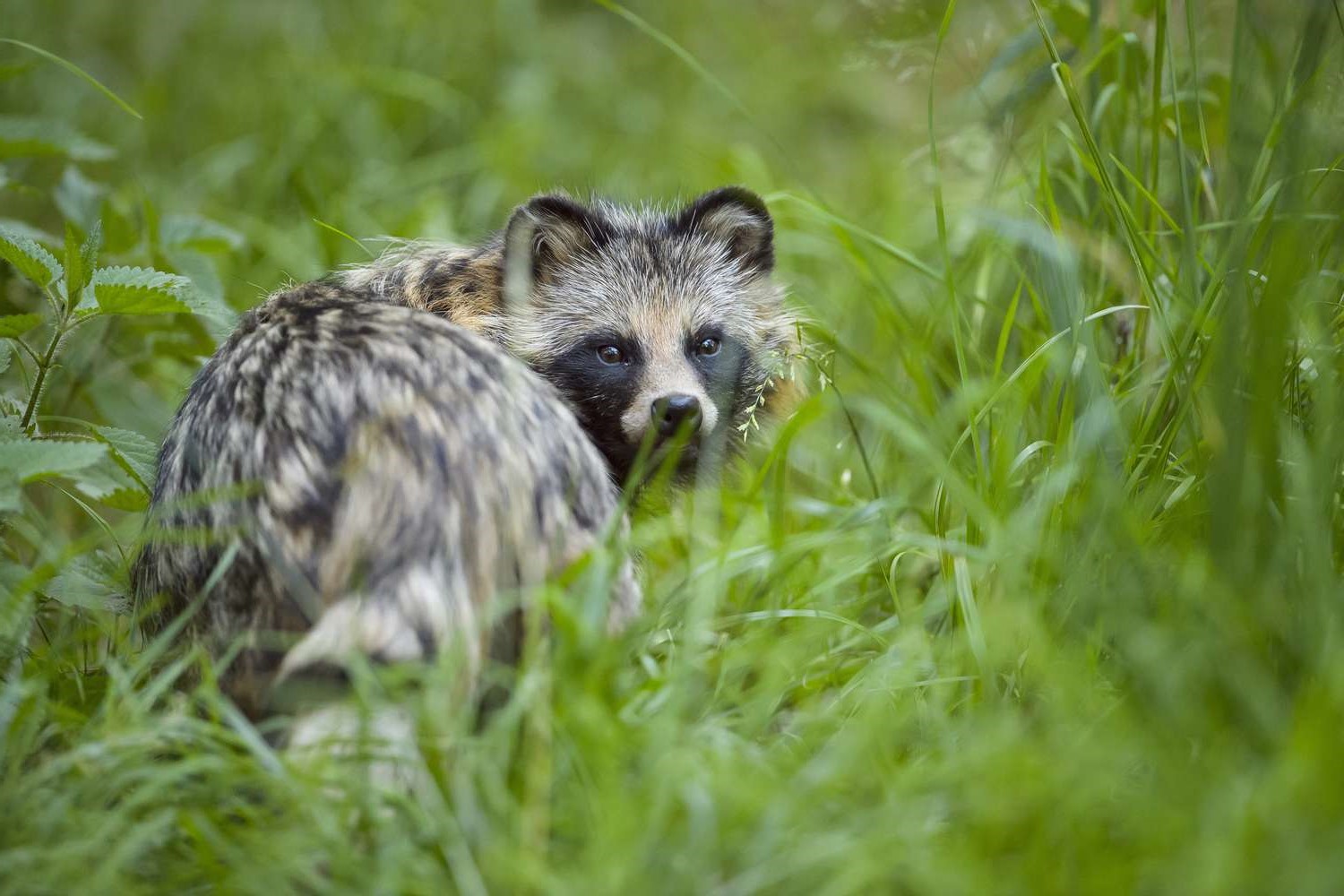
One of the most reclusive animals in the park, the American badger (Taxidea taxus) is a primarily nocturnal, burrowing predator found in grassy regions containing loamy soils that allow them to easily dig for prey and create burrows. The abundance of prairie dog towns and clay soil found in the Badlands provide a perfect environment for this species to thrive.

American badgers are medium-sized mammals with stocky bodies, short legs, and a tapered head. They have a distinctive black-and-white striped face and their torso’s coarse fur is thatched with black, brown, and white hairs, giving their coat a unique blended appearance. They’re equipped with strong, muscular forelimbs, long, sharp claws, and a streamlined body designed for digging.

Badgers are primarily solitary animals adapted to life underground. They build burrows used for shelter, thermal refuge, resting, and breeding. Badgers typically have many burrows in their home range and their structure can vary based on their use. During the summer, they frequently dig new burrows and alternate which one they use daily, but come fall they will begin using burrows for multiple days. During the winter, they typically select a single burrow to shelter from the cold and have been documented partially plugging entrances with loose soil to retain warmth. Similarly, when giving birth and rearing young in the spring, a mother badger will primarily raise her young in one burrow. Natal dens are structurally more complex, containing additional tunnels, chambers, and latrines, reflecting the needs of a family group. Abandoned badger holes are utilized as shelter by many other species, including snakes, rabbits, burrowing owls, insects, and tiger salamanders.

Badgers are physically equipped and specialized to prey on burrowing rodents, such as prairie dogs. They will smell and use other senses to detect recent activity at burrow sites and dig up their prey. They’ve been observed filling holes dug by their prey to block escape routes from burrow networks. While badgers are digging up burrows, coyotes can sometimes be observed waiting nearby to catch rodents fleeing their dens and catching an easy meal. While small rodents comprise most of a badger’s diet, they have also been documented consuming insects, birds, eggs, and various plants.

SOURCE: NPS.GOV