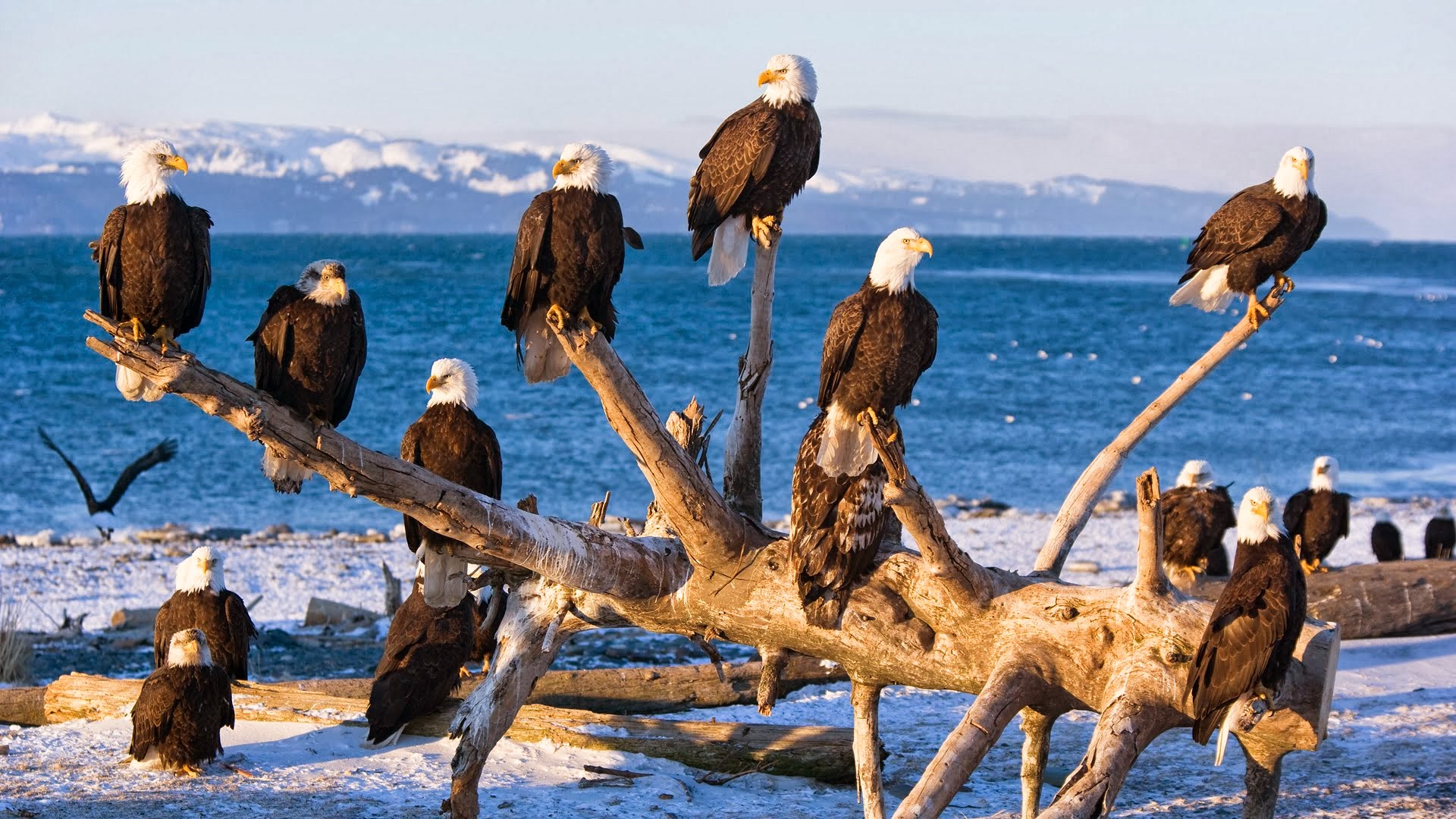
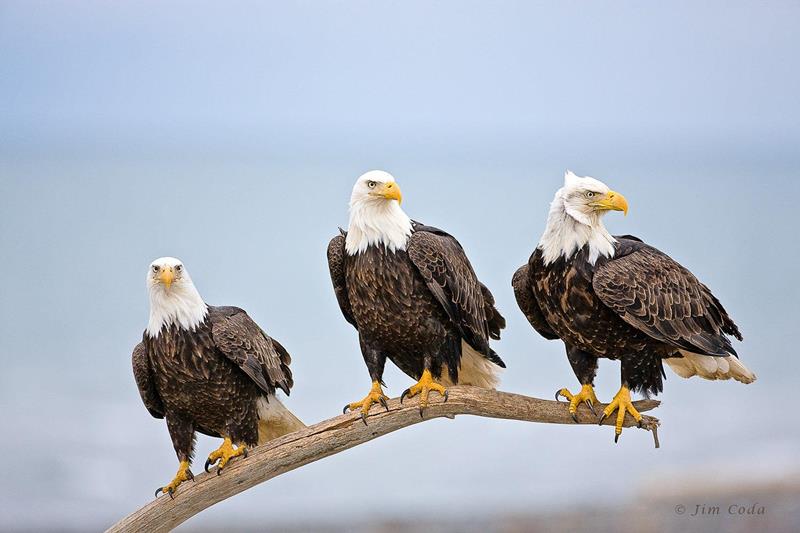
Want to see a hundred bald eagles in a single glance? Spy a couple dozen roosting in a lone tree? Listen to the hair-raising chorus of their weird, trilling calls? Visit the Alaska Chilkat Bald Eagle Preserve—site of the largest gathering of bald eagles in the world. Each October and November, between 3,000 and 4,000 bald eagles descend upon this 48,000-acre preserve centered on river bottomlands a few miles north of Haines to feast on late runs of salmon.
When these eagles converge, photographers travel from all over the world to capture images of the iconic birds jousting over chum and coho spawners. They perch in trees, land on gravel bars, and wing across a stunning Southeast Alaska vista. Even without the birds, the preserve anchors a pristine riverine wilderness traversed by a paved road minutes from a friendly small town with full services. The Chilkat River Valley forms a natural travel corridor between the interior and the coast, attracting moose, beavers, coyotes, wolves, brown and black bears, mountain goats on the ridges, forest birds, plus long distant migrants like trumpeter swans and Arctic terns.
Where Will You Find the Most Bald Eagles?
A vast sand-and-gravel “flat” where the Tsirku and Kleheni rivers merge with the Chilkat serves as the main viewing area, located along the Haines Highway between Mile 18 and 24. With thousands of fish finning and dying among a myriad of shallow channels that remain open well into winter, the zone draws thousands of eagles seeking a late-season snack. It is considered critical habitat for the species in the region, and the preserve was formed in 1982 with a mission to help protect this space. Eagles can be found throughout the preserve, however, with an estimated 300 to 400 of the birds in the area throughout the year.
Tips For Visiting the Park:
Best viewing will be from four main pullouts between Mile 18 and Mile 24, but eagles might be anywhere along the river.
The Council Grounds pullout at Mile 19 features pit toilets, informational displays, a boardwalk, viewing scopes and a two-mile river-side trail. Go there first.
Please pull completely off the road to view or photograph bald eagles! Keep watch for other eagle enthusiasts so awestruck that they simply brake in middle of the highway and leap out with doors ajar. (Yes, this actually happens—a headache for park rangers.)
Stay within the designated areas to avoid stressing individual birds. They need space to roost and feed.
Much of the preserve is not easily accessible, but during summer, rafting and jet boat tours are a great way reach remote spots along the river.
For more information, purchase the book Where Eagles Gather, the Story of the Alaska Chilkat Bald Eagle Preserve, Haines, Alaska by Joe Ordonez, which features incredible photographs of the area.
Attend the Alaska Bald Eagle Festival held annually in November by the American Bald Eagle Foundation.
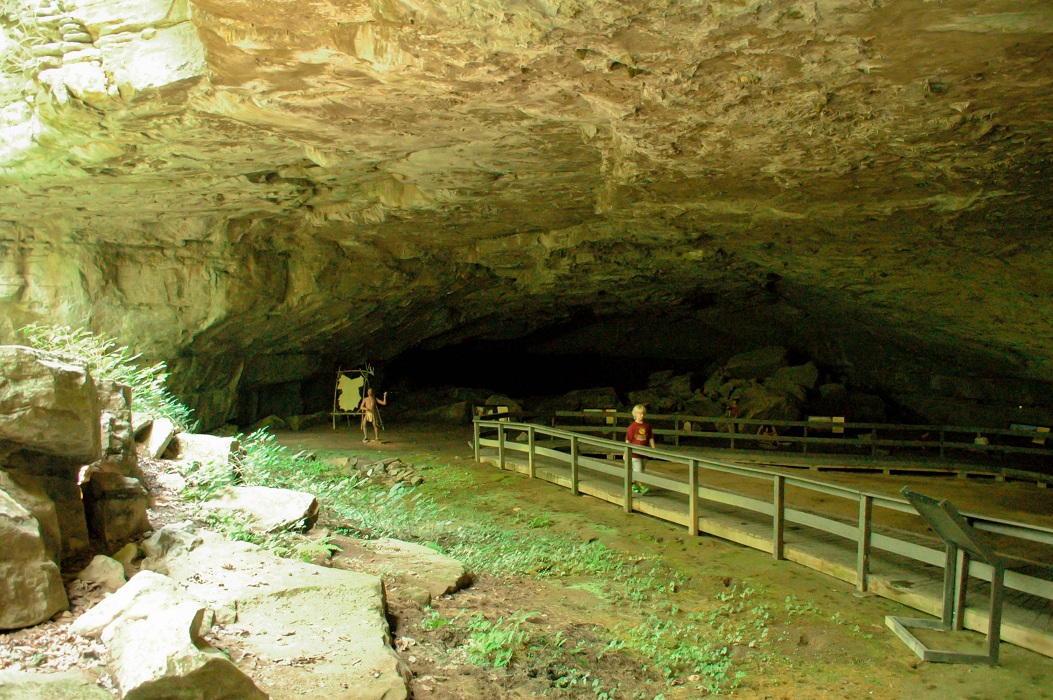
A relatively small cave in what is today northeastern Alabama, Russell Cave has been home to virtually every cultural group in the region. The cave, one of many archeological sites in the Russell Cave National Monument, provided shelter to various groups for approximately 12,000 years – from roughly 10,000 BC to 1650 AD. This staggering achievement makes Russell Cave one of the oldest rock shelters in the eastern United States. Archeological remains found beyond the mouth of the cave and in other surrounding areas provide additional evidence and markers of this long period of settlement.
The cave and associated burial sites and shelters are all the more remarkable, because the occupation and use of the area was regular, providing a chronological layering of artifacts from before recorded history to the modern era. Created when part of the cave collapsed, the shelter inside the cave is roughly 30 by 65 yards and has a streambed that forms part of the cave floor. Attracted by a year-round water source and the consistent temperature inside the cave, many American Indian groups regularly used Russell Cave as a seasonal dwelling place. The cave is located in a valley along the Tennessee River, which helped supply the cave occupants with shellfish and game. Given the location of the cave within the valley, it is probable that the entire area was a hunting ground even before the formation of the cave. As American Indian groups discovered the cave, and camped and lived in it, they found food and raw materials to develop tools on the land around it. They also used the surrounding land for religious ceremonies, including burial of the dead. More recently, this land was the possible site of a log cabin as well as two historic coalmines and associated structures.
Paleoindian peoples, the first humans in North America, were the first group to use Russell Cave. Artifacts from this period tend to be projectile points formed of stone quarried nearby and sharpened into points inside the cave. The majority of objects found at Russell Cave, though, come from three later archeological stages: the Archaic Stage (7000 to 500 BC), the Woodland Stage (500 BC to 1000 AD), and the Mississippian Stage (1000 to 1600 AD). While Archaic dwellers were sedentary hunters and gatherers with few social divisions, the material culture of the Woodland period indicates that larger populations supported the development of a social structure and widening trade networks. In general, people of the Mississippian Stage were very sedentary travelling less than previous groups and relying heavily on the cultivation of crops. They also had highly developed religious ceremonies and political structures. The artifacts recovered from Russell Cave reflect the technological and social changes typical for the Archaic, Woodland, and Mississippian Stages.
Given the long history of settlement of Russell Cave, the archeological material provides a level of depth uncommon at other sites. In both the cave and surrounding areas, the continued presence of humans has resulted in a collection of artifacts that almost trace the complete development of some technologies. The cave has yielded projectile points, fishhooks (7500 to 5000 BC and 3500 to 500 BC), basketry (7500 to 5000 BC), and ceramics (7500 BC to 1540 AD). Pottery shards date from the earliest ceramic pieces to those of the early 19th century, and some of the fishhooks are of a type not seen anywhere else. Outside the cave, in some of the outlying archeological areas, seed evidence remains of the maize and other crops cultivated as early as 500 BC.
Residency in the cave and use of the adjacent areas in religious ceremonies declined after about 1000 AD as the local populations, who had formerly used the cave as temporary seasonal shelter, developed permanent year-round villages. Following the arrival of the Europeans in the early 1500s, the use of the Russell Cave area practically ceased, as new settlers replaced American Indian groups. Artifacts from after the mid-1500s indicate that the cave saw only sporadic use as a hunting camp before becoming private property in 1817. The Russell family owned the cave at one point, giving the cave its name. The cave site represents the development of early culture and society and provides important evidence of how American Indians of the region lived for thousands of years.
Despite its eventual decline as a shelter, Russell Cave National Monument offers a unique opportunity to view the past in the present. Although the natural setting has changed slightly since 10,000 BC, the site of the cave itself has remained relatively unaltered. Today, the visitor center and museum present artifacts and reproductions of objects found in and around the cave as well as films about the earliest settlers in the region. Ranger-led cave tours allow visitors to explore the cave itself; other tours conducted by the rangers demonstrate pre-contact weaponry and tools. A visit to Russell Cave is a journey through the early settled history of the Americas presented not only through artifacts, but also through a tour of the very site where people have lived for thousands of years.
Today’s offering is The Mushroom House in Cincinnati, Ohio.
In Cincinnati’s Hyde Park neighborhood lies a building that looks like it came right out of a children’s storybook. This is Ohio’s very own Mushroom House, also known as the TreeHouse.
Built by Terry Brown, this landmark marks the great architect’s creative genius. The house took more than a decade to create; construction began in 1992 and ended in 2006. It served as Brown’s secondary residence, architecture studio and teaching tool for his students.
The landmark itself is a simple one-bedroom house. The most prominent features are its copper ceilings and an orange spiral staircase entry. Terry Brown’s creation has porthole windows that sit against a swirling cedar exterior, which is what gives it its fairytale-like appearance. The side of the house is covered in warped shingles that were placed there to resemble the underside of a mushroom. The bulbous roofing gives the building an added fungal look.
The inspiration behind this building came from Brown’s desire to create spaces that would relate to human activity. Brown realized early on in his career that space and people are connected. Hence, he started to build small structures that would feature intimate spaces.
The Mushroom House was the result of experimental architecture. The structure could only be built after many meticulous drawings and complicated geometric calculations. Brown’s aim was to use materials that are not conventionally used to build houses and to combine elements that are not typically combined.
After Brown’s passing in 2008, the hype for the Mushroom House did not die down. The house remains a Cincinnati landmark that attracts people from afar. Currently, the structure is being looked after by Brown’s friend, Paul Lausha. Brown’s other works are exhibited at the National Building Museum in Washington, D.C., and the Architectural League of New York.
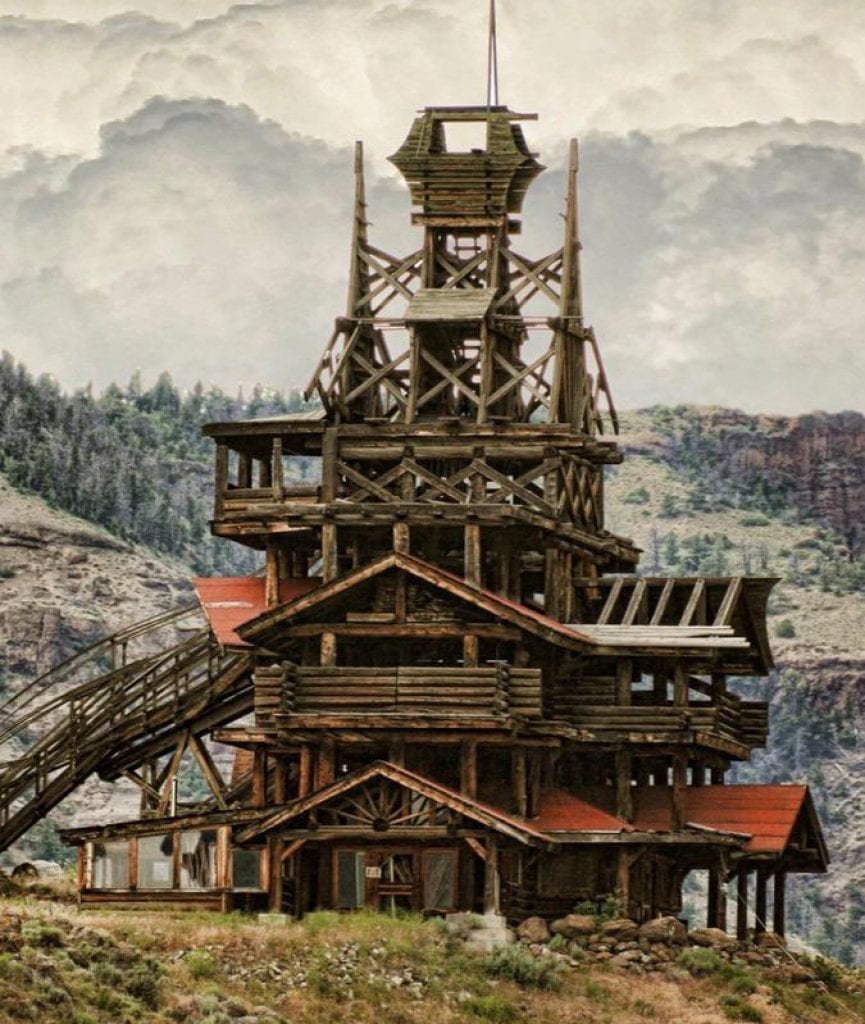
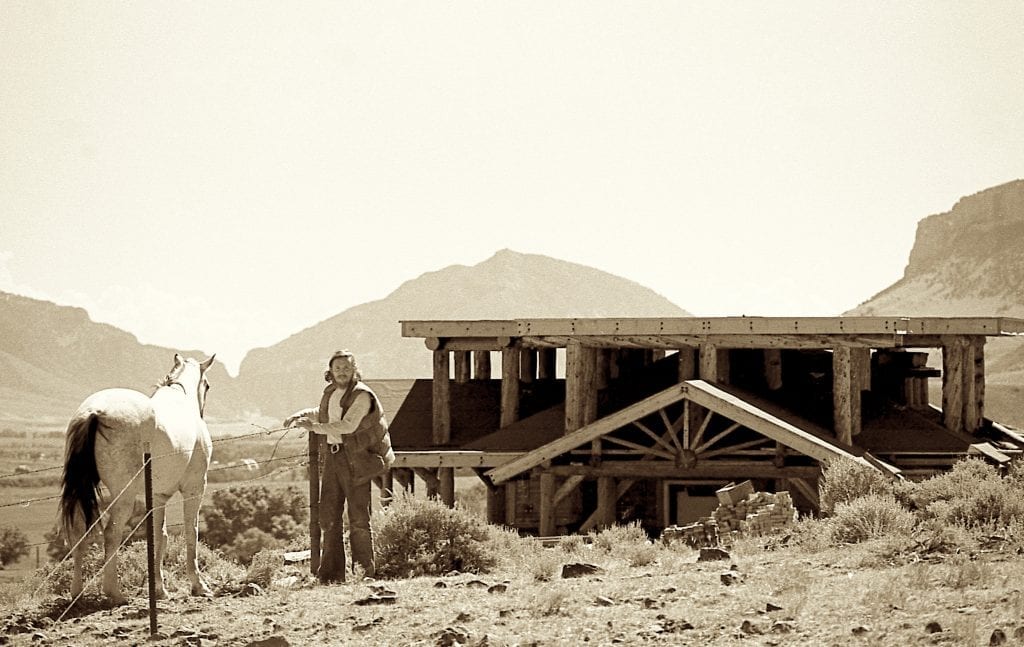
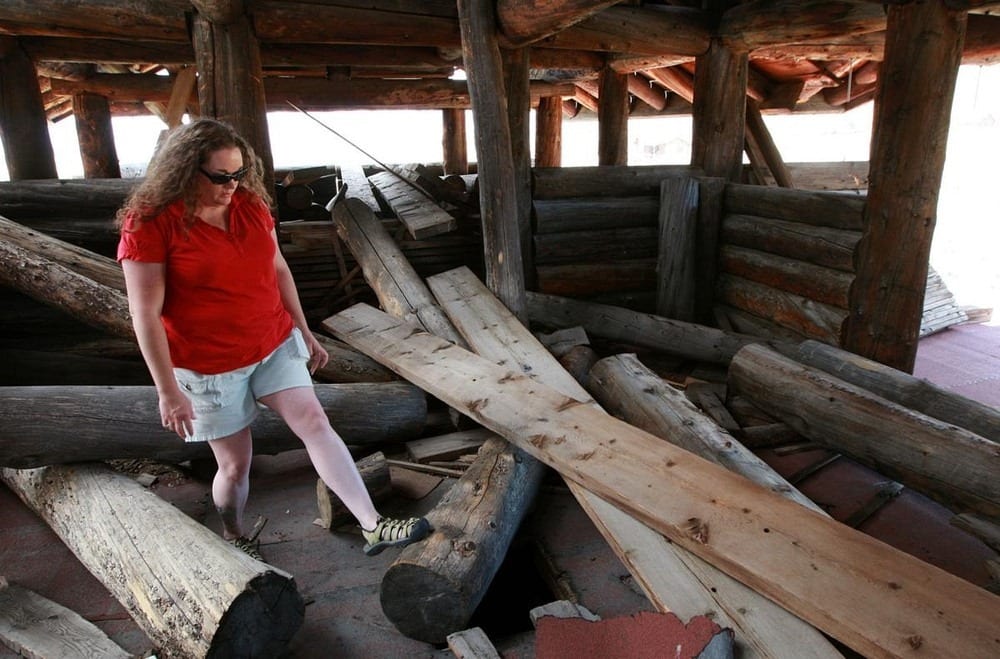
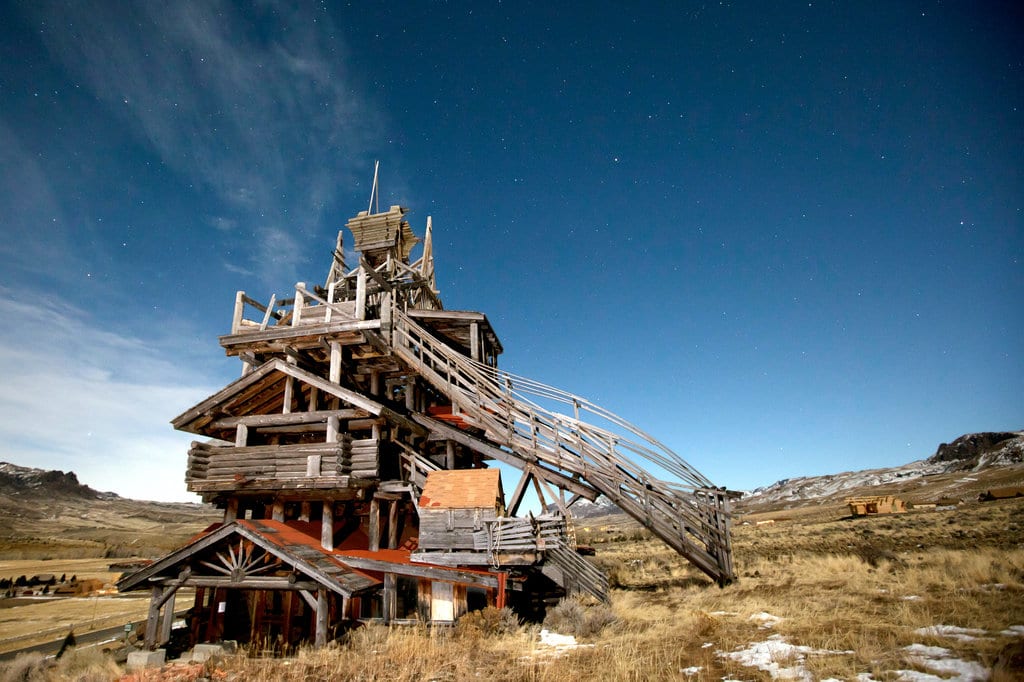
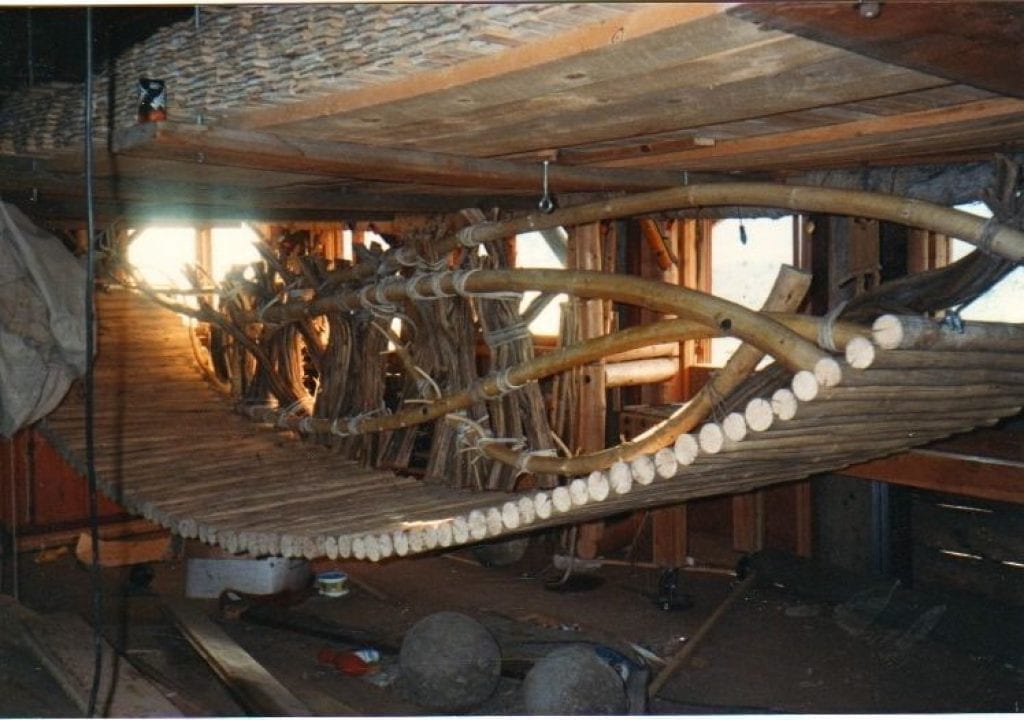
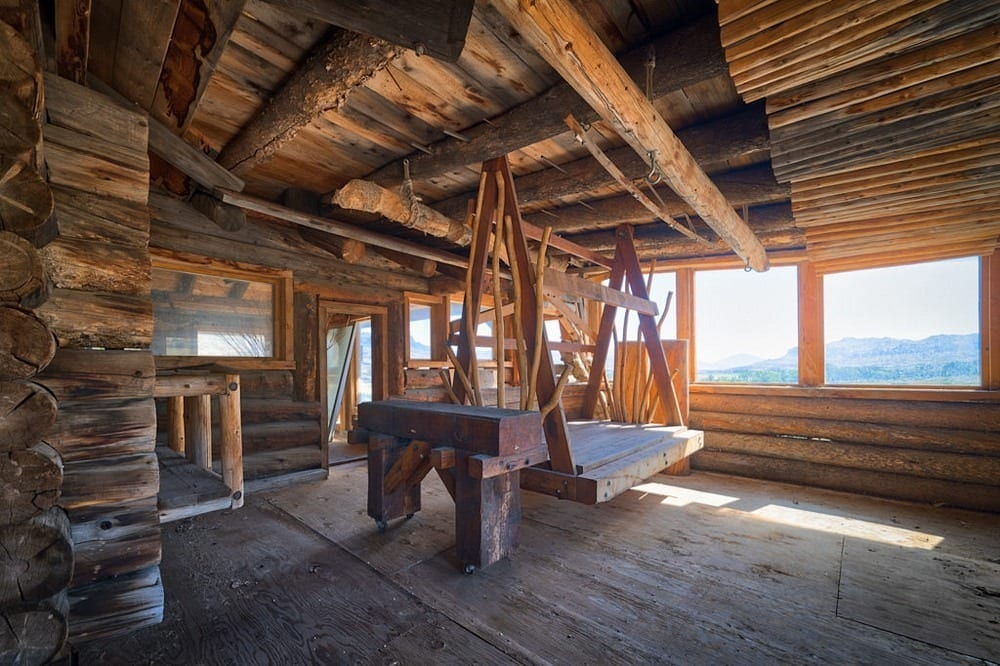
As you make your way through Wyoming’s Wapiti Valley, perched upon a hill just outside of Cody is a strange looking building known to locals as ‘Smith Mansion.’
The home was built over eighteen years by local man Francis Lee Smith. Smith, who worked as a full-time engineer in Cody, made the property in his spare time.
Francis Lee Smith, designed and built ‘Smith Mansion’ from scratch.
Unfortunately, the house didn’t have a fairy-tale ending one would hope for. In 1992, disaster struck, and construction on the property came to an end, forever.
THE HISTORY OF THE SMITH MANSION
In the 1970s, Smith was inspired by an opportunity he couldn’t pass up. After a huge fire on the nearby Rattlesnake Mountain, much of the timber was left up for grabs for anyone willing to lug it away.
Smith had a truck and two willing associates who helped him start loading up. Yet it appears Smith could never stop!
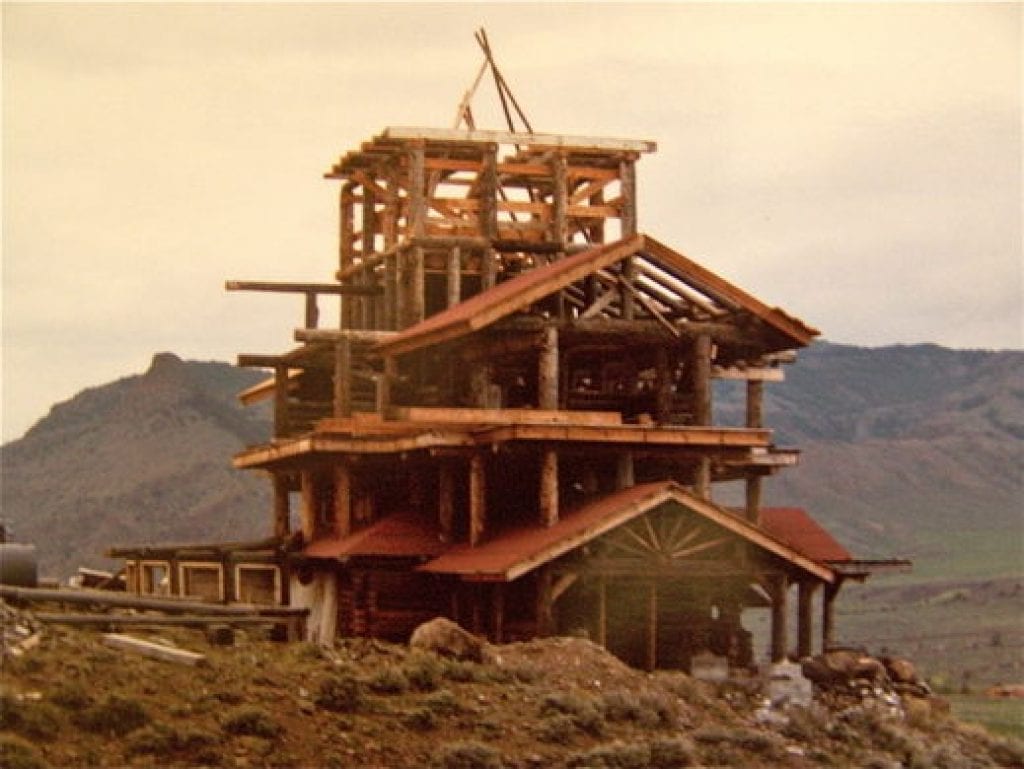
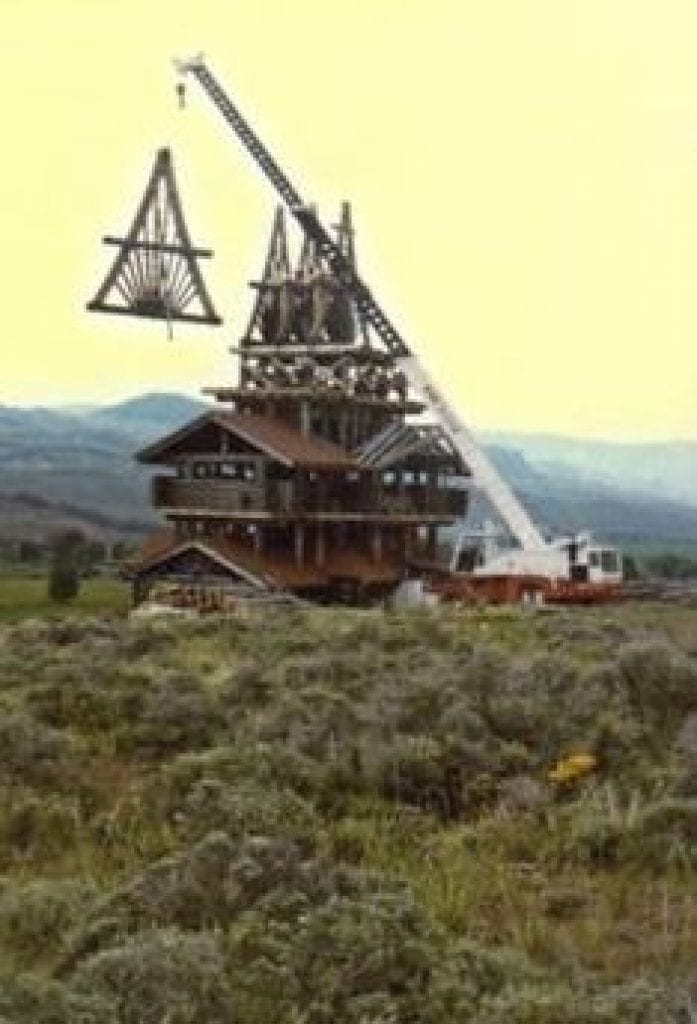
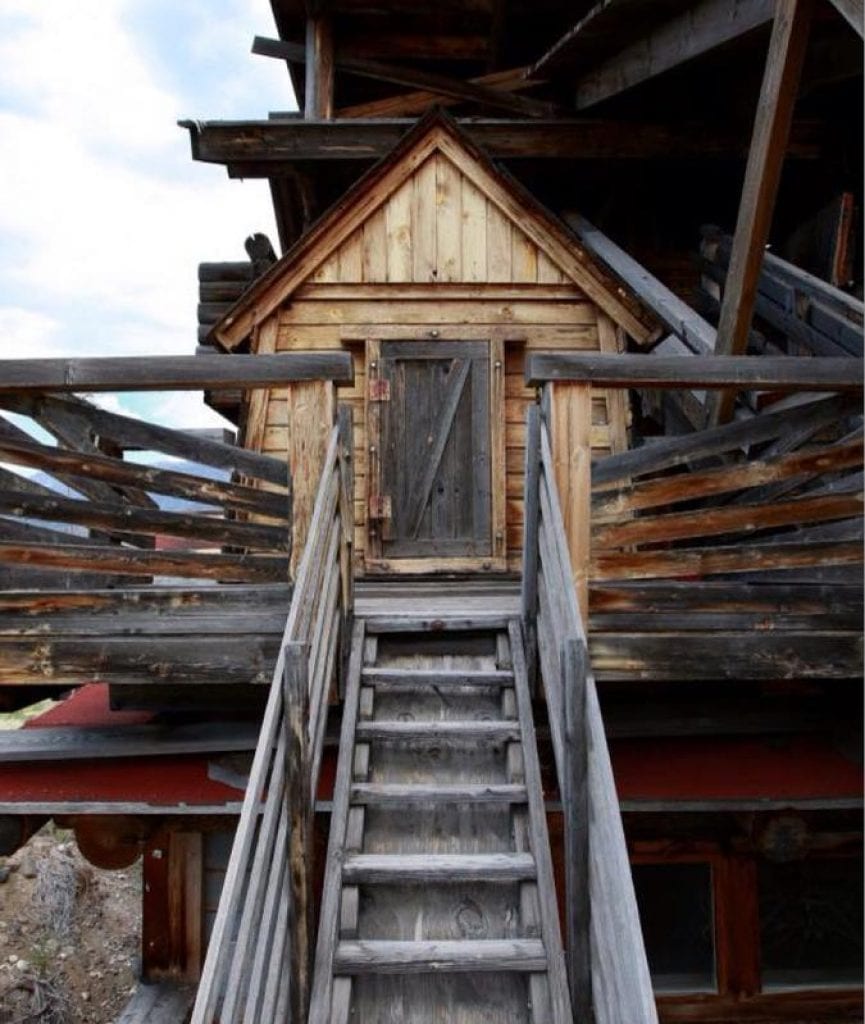
At first, Smith wanted to build a comfortable home for him and his family. But once the house was completed, the project just kept growing. Over the years, what was supposed to be a small family home, became a large tower featuring balconies and viewing platforms.
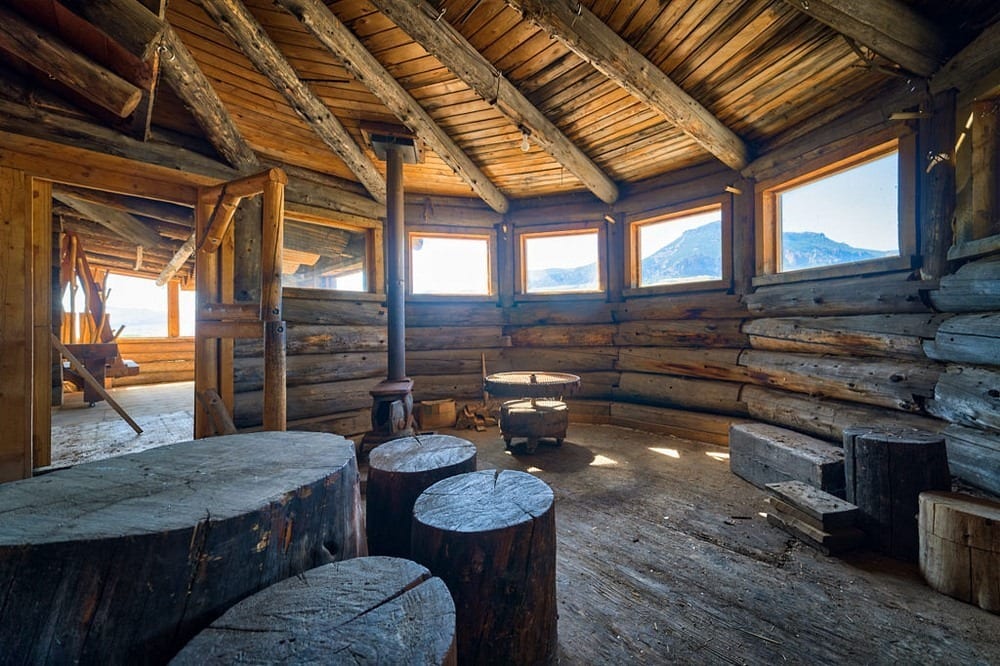
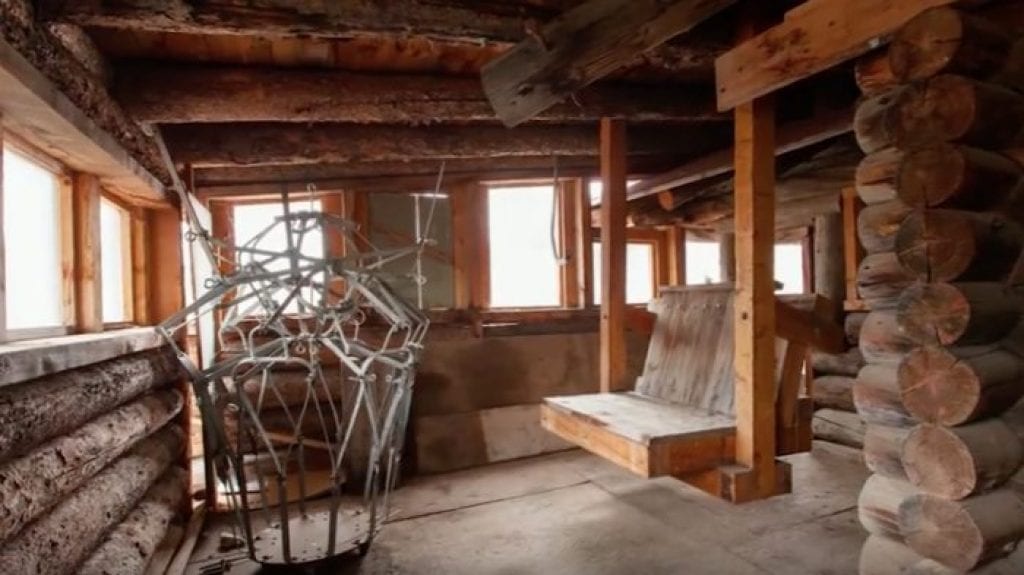
In the lower floor living spaces, you had named rooms, such as the “hot room” and “cold room.” Through the colder months, they would spend their time in the “hot room” which featured a wood-burning stove. In warmer months, they would use the cooler temperatures of the “cold room.” The house had no running water, and no plumbing or electricity, except for that provided by a small generator.
Unfortunately for Smith, the family home wasn’t to be. Despite living there with his family for some time, his obsession with it became a strain on his marriage, which lead to divorce. His wife, son, and daughter moved back into the nearby town of Cody.
This however, only drove Smith to focus more on completing the building. However, it wasn’t to be, one day in 1992, the 48-year-old was working on one of his slanted roofs when he fell (not for the first time) and died. Smith’s body wasn’t found until two days later.
THE SMITH MANSION TODAY
After the death of Francis Lee Smith, the Smith Mansion passed on to his family. The home is now looked after by Smith’s daughter Sunny Larsen, who was just 12 when her father died but still remembers living in the property as a child.
She said: “His original intent was to build a home for his family, and it just took on a life of its own.” It was only in later years that she realized her father had no blueprints, every addition was off-the-cuff. “He never knew what his next step was going to be.”
His daughter also rejects the idea that mental illness played a part in her father’s obsession. “He built,” she said. “He was an artist in every sense of the word.”
The property has been empty now for almost 30 years, exposed to the elements the wooden structure has begun to decay slowly. Teenagers from the nearby town of Cody routinely visit the property on the weekends and vandalize it.
This decay hasn’t stopped Ms. Larsen from trying to sell the property though. In August 2018, Smith Mansion was listed on the market for $750,000, as of yet it still has no buyer.
How a half-finished wooden structure with no plumbing or electricity on a hill in Wyoming could fetch $750,000 we don’t know. However, it would be a cool property to finish if you had the cash burning a hole in your pocket.
Montana — Billings Christmas Lights in Billings, MT
Throughout Billings, Montana, you’ll find residential home after residential home lit to Christmastime perfection. Featuring more than 35 glowing locations throughout the drive, the town includes everything from residential homes and lanes to landmark houses. Bring along some hot cocoa and snacks and enjoy the view!
Nebraska — Omaha Holiday Lights Festival in Omaha, NE
If you live in the Cornhusker State, check out the Omaha Holiday Lights Festival in Omaha this holiday season. Running from November 24 until January 2, the Omaha Holiday Lights Festival lights up 40 blocks of downtown Omaha with twinkling, glowing lights, running from 10th to 13th Streets and from Farnam to Jackson Streets. Come New Year’s, the tradition continues, with the Holiday Lights Festival also setting off fireworks. Their Shine the Light on Hunger campaign has goals to raise the equivalent of three million meals this year. Go out and show your support!
Nevada — Glittering Lights in Las Vegas, NV
From the safety, warmth, and comfort of your car, Nevadans can celebrate the season by driving through Glittering Lights in Las Vegas at the Las Vegas Motor Speedway. Tickets for the drive-thru start at $29 for weekdays and $39 for any day. You can also purchase a season ticket for $129.
New Hampshire — La Salette Christmas Festival of Lights in Enfield, NH
This year, the annual Christmas lights display at the Shrine of Our Lady La Salette in Enfield, New Hampshire isn’t just offering light; it’s offering hope during a dark time. The website reads, “Despite the pandemic, the war in Ukraine, natural disasters, climate change, and political turmoil this year’s festival will proclaim ‘Jesus Christ-the living light.’ Generations of men and women have all declared that, even in times of darkness, his “living light” is still shining ahead of us all”. As such, the Shrine of Our Lady La Salette named this year’s display “Christ: Living Light.” Running from November 24 until January 1 the La Salette Christmas Festival of Lights is one of the oldest light displays throughout the Granite State. Set on 20 acres of hillside, the La Salette Christmas Festival of Lights features nativity scenes, thousands of multi-colored lights, and hundreds of decorations.
New Jersey — Storybook Land in Egg Harbor Township, NJ
In the quaint Egg Harbor Township of New Jersey, you’ll find Storybook Land—a timeless, enchanting children’s park that has been around since 1995. Open from November 19 to December 30, Storybook Land is now open for the holiday season, offering the Christmas Fantasy with Lights event. Santa turns the park’s thousands of lights every night at 5 o’clock through December 23.
New Mexico — River of Lights in Alburquerque, NM
Throughout the U.S., there is no Christmas lights display quite like the River of Lights in Albuquerque, New Mexico. Running from November 26 through December 30, this event will host over 700 light displays, animated and 3D sculptures and millions of twinkling lights! Purchase a timed ticket starting at $14 Mondays through Thursdays and $17 Fridays through Sundays.
New York — The Shops at Hudson Yards in Manhattan, NY
In New York, New York, everyone tends to flock to the illuminated angels at the Channel Gardens at Rockefeller Center because they’re free to visit (of course, if you want to skate underneath the tree at The Rink at Rockefeller Center, that’ll cost you about $33, not including rentals). But if you want to beat the crowds and escape the weather, check out The Shops at Hudson Yards instead.
Outside of The Shops, the lights display continues with over 2 million twinkling lights across The Plaza, Edge, and Vessel, as well as almost 1,000 decorated trees across The Plaza.
Other honorable mentions throughout Manhattan include visiting the Saks Fifth Avenue outdoor light display and taking a quick trip on the D train to Dyker Heights, Brooklyn.
North Carolina— The Biltmore Estate in Asheville, NC
In Asheville, NC, there’s the 8,000-acre Biltmore Estate—America’s largest home, which was built back in 1895. It’s worth visiting all year round solely for its historical significance, but come the holiday season, it’s all the more magical. From November 4 to January 7, visitors can explore the estate’s luminary-lit pathways, glowing candles reflected in thousands of ornaments and warm, flickering fireplaces starting at $119 per ticket.
North Dakota — Spring Lake Park Holiday Lights Drive in Spring Lake Park, ND
The Spring Lake Park Holiday Lights Drive in North Dakota is one of the most unique light displays there is. After all, the Holiday Lights Drive has hosted several different themed nights in the past—from LEGO Night and Snoopy Gives Back to Dinosaur Night and the Grinch Gives Back Night. This year should prove just as unique with different craft nights!
Ohio — Clifton Mill in Clifton, OH
The Historic Clifton Mill, one of America’s largest water-powered grist mills, has been a historical staple of Clifton, OH since 1802. Every holiday season, the Clifton Mill goes all out by transforming into a Christmas village featuring a Santa Claus Museum, a vintage toy collection, and lots and lots of lights.
Oklahoma
Apparently, Parade didn’t like Oklahoma…there was no information for Oklahoma.
Oregon — Peacock Lane in Portland, Oregon
One of Oregon’s most beloved Christmas lights displays is Peacock Lane in Portland, OR. From December 15 to 24 each home on Peacock Lane is decorated in its own style and personality for the holiday season. You can either drive through this display, but be prepared to wait your turn, or you can walk along the sidewalks. December 15, 16 and 17 will be designated pedestrian-only nights this year and the cocoa booth is returning for 2022. Each night from December 15 through 24 cups of cocoa and hot cider are free! (While supplies last.)
Pennsylvania — Koziar’s Christmas Village in Bernville, PA
If ever there was a place that really, truly felt like it could be the real North Pole, it’s certainly Koziar’s Christmas Village in Bernville, PA. Nestled in the Pennsylvanian countryside, Koziar’s appears as a quaint and festive village lit up by more than 1 million lights glowing in the night. In town, you’ll find a toy workshop, a bakery, and a post office that only goes back and forth to Santa’s address. Tickets start at $10 for kids, $12 for people ages 11+, and children 3 years old and under can attend for free.
Rhode Island — Bristol Christmas Festival in Bristol, RI
Christmas in Bristol, Rhode Island is unlike any other place… except maybe the North Pole! Light displays as part of the Bristol Christmas Festival and Grand Illumination event have been a part of Bristol since 1987. Throughout town, buildings, churches, trees, and residential homes are lit up in celebration of the season. This year, the Grand Illumination event kicks off on December 3 and is free for everyone who attends. The festival’s annual Christmas Story Time event is going virtual on December 16.
South Carolina — Holiday Festival of Lights in Charleston, SC
At James Island County Park’s Holiday Festival of Lights in Charleston, SC, you’ll drive through three miles of a gorgeous Christmas lights display. The festival features all kinds of lights and animatronics and even has a $3 train ride that will allow you to take it all in. The festival runs nightly from now until December 31. For an additional experience, you can also book a visit with Santa Claus himself and walk away with a 5×7 souvenir photo.
South Dakota — Christmas Nights of Light in Rapid City, SD
South Dakota may be known as the home of Mount Rushmore, but there’s more to the Coyote State than just breathtaking views of the Black Hills. Especially during Christmastime. Come December, the park at Storybrook Island in Rapid City, SD, turns into a winter wonderland as part of the city’s Christmas Nights of Light event. Kids will love the storybook characters walking around, drinking cocoa or cider, and looking at all the charming lights. Admission is $4 per person and runs every Friday, Saturday and Sunday until December 31.
Tennessee — Cheekwood Estates & Gardens in Nashville, TN
The Holiday LIGHTS event at Cheekwood Estates & Gardens in Nashville was voted the best local event and festival in 2019. This year is no different! Still a beloved light display by plenty of locals, Cheekwood Estates & Gardens offers a one-mile walking path of glowing lights against a backdrop of the gardens. Kids and adults alike will enjoy taking pictures by the iconic poinsettia tree and indulging in the s’more and bar stations. The Holiday LIGHTS event runs from November 19 until January 8.
Texas — Austin’s Trail of Lights in Austin, TX
The Lonestar State is home to Austin’s Trail of Lights in Austin, TX—a literal trail of lights that features more than 70 Christmas-themed displays, two million lights, an artisans marketplace, and some of the city’s most beloved food trucks. Pricing varies depending on the date you choose to go, and admission is free on certain dates.
Utah — Christmas in Color in South Jordan, UT
This year, Utah’s Christmas in Color drive-through display has adapted to the times, ultimately becoming the Socially Safe Drive-Thru Animated Light Show! Millions of lights twinkle against the backdrop of the Salt Lake County Equestrian Park as you drive by giant candy canes, through lit-up tunnels, and cruise past dancing snowflakes synchronized to the holiday music.
Vermont — Wassail 2020 in Woodstock, VT
Wassail Weekend boasts the historic homes and local shops throughout Woodstock, VT that will be spectacularly lit for the season. The weekend events will be all day December 9 through 11. This calendar highlights all events happening during Wassail Weekend this year. Get ready to enjoy the craft fair, tree lightings and carriage rides at this year’s Woodstock festival.
Virginia — Tacky Light Tour in Richmond, VA
If you’re nearby in Richmond, VA, then you and your family will love stopping by the city’s Tacky Light Tour. A residential light display that acts as a self-guided tour that you can drive through in nearby neighborhoods, you’ll see some of the gaudiest decorations homes have to offer. Think the movie Deck the Halls, but IRL.
Washington — The Lights of Christmas in Stanwood, WA
The Lights of Christmas festival features more than one million lights in its Pacific Northwest display. There will be a light tunnel, the Cascade Splendor Mountain scene and even Santa and his reindeer! Tickets start at $27 and the event will run on select dates from November 25 to December 31.
West Virginia — Oglebay in Wheeling, WV
Light tunnels, a meteor shower of lights and wintry scenes galore! That’s what you’ll find at Oglebay’s Winter Festival of Lights in Wheeling, West Virginia. Running from now until January 8, Oglebay’s Winter Festival of Lights: Sounds of the Season is celebrating this holiday season with its annual six-mile drive over 300 acres. There are 90 lighted scenes throughout Oglebay’s Winter Festival of Lights, utilizing more than 1 million energy-efficient LED lights.
Wisconsin — Country Christmas in Pewaukee, WI
For the largest outdoor drive-through Christmas light display in all of Wisconsin, be sure to check out County Christmas from now until January 1. With several different locations to explore—from the Country Christmas Trail featuring mile-long drive-through animated figurines and holiday scenes to the Christmas Village—tickets start at $25 and range to $45 depending on vehicle type. There are also designated walking nights as well as nights that offer wagon rides!
Wyoming — Street Railway Trolley in Cheyenne, WY
Ride in festive Christmas style while you take your Christmas lights display tour this year in Wyoming. Board the Street Railway Trolley in Cheyenne and then be transported throughout the neighborhood to check out some of the coolest local lights—available every night from Dec. 9 to Jan. 1. It’s $15 a ticket for adults, $7.50 for children, and each ticket should be purchased in advance.
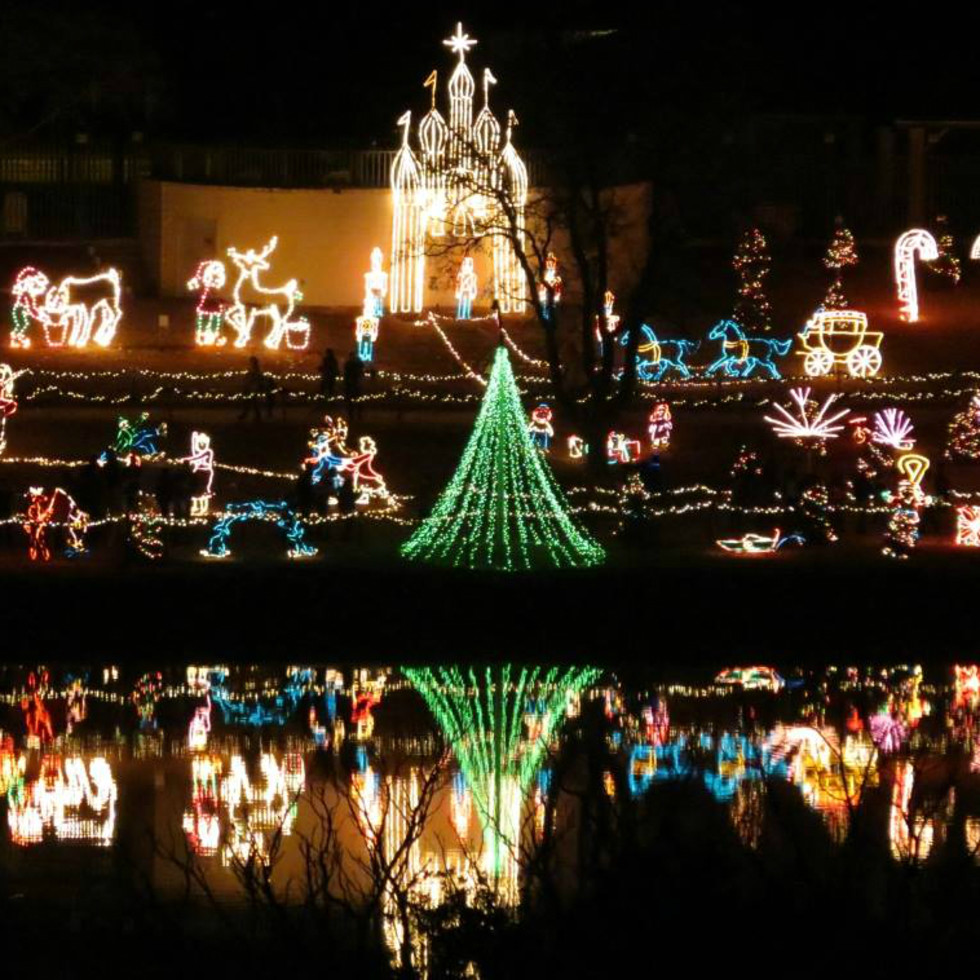
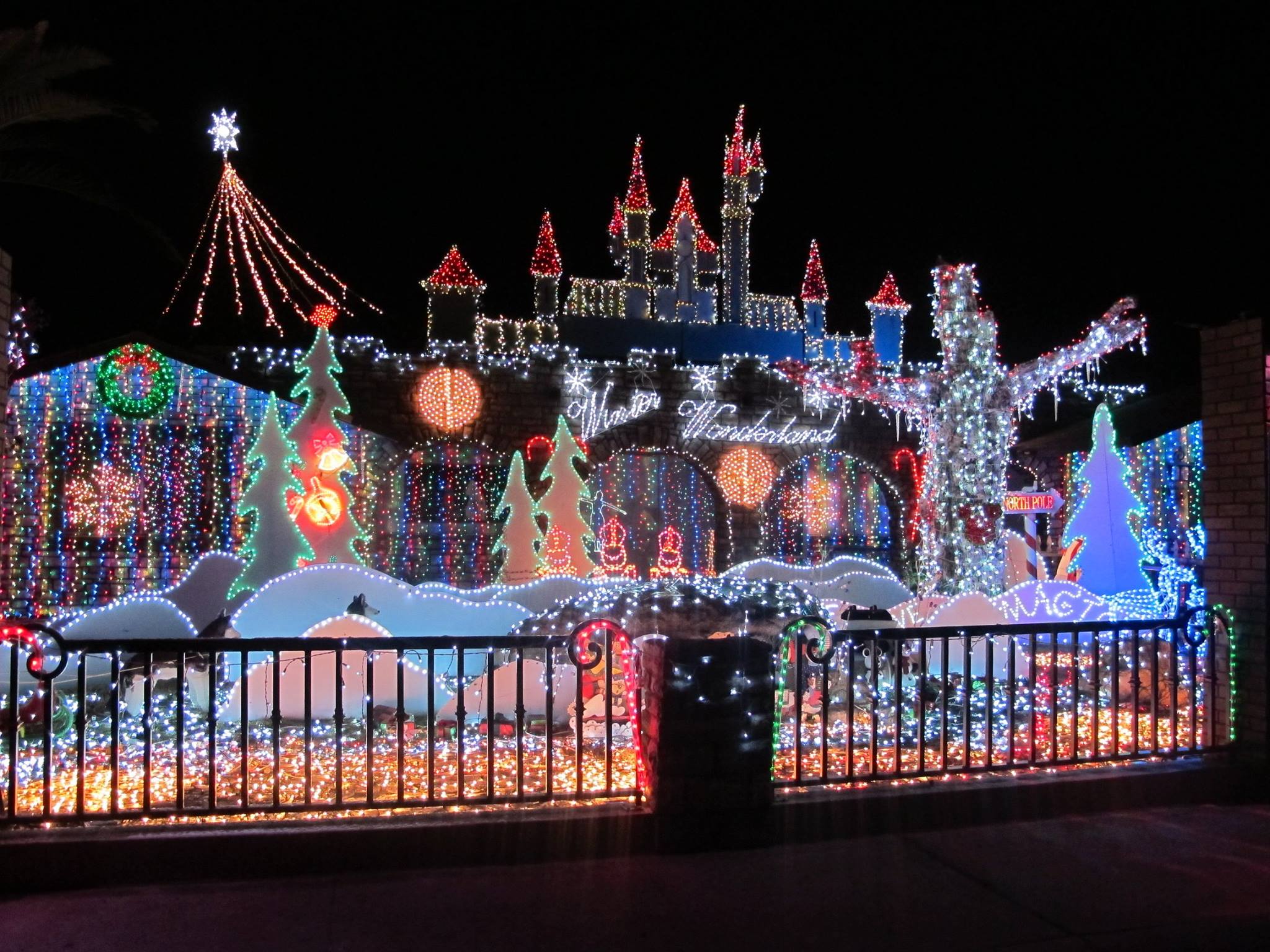
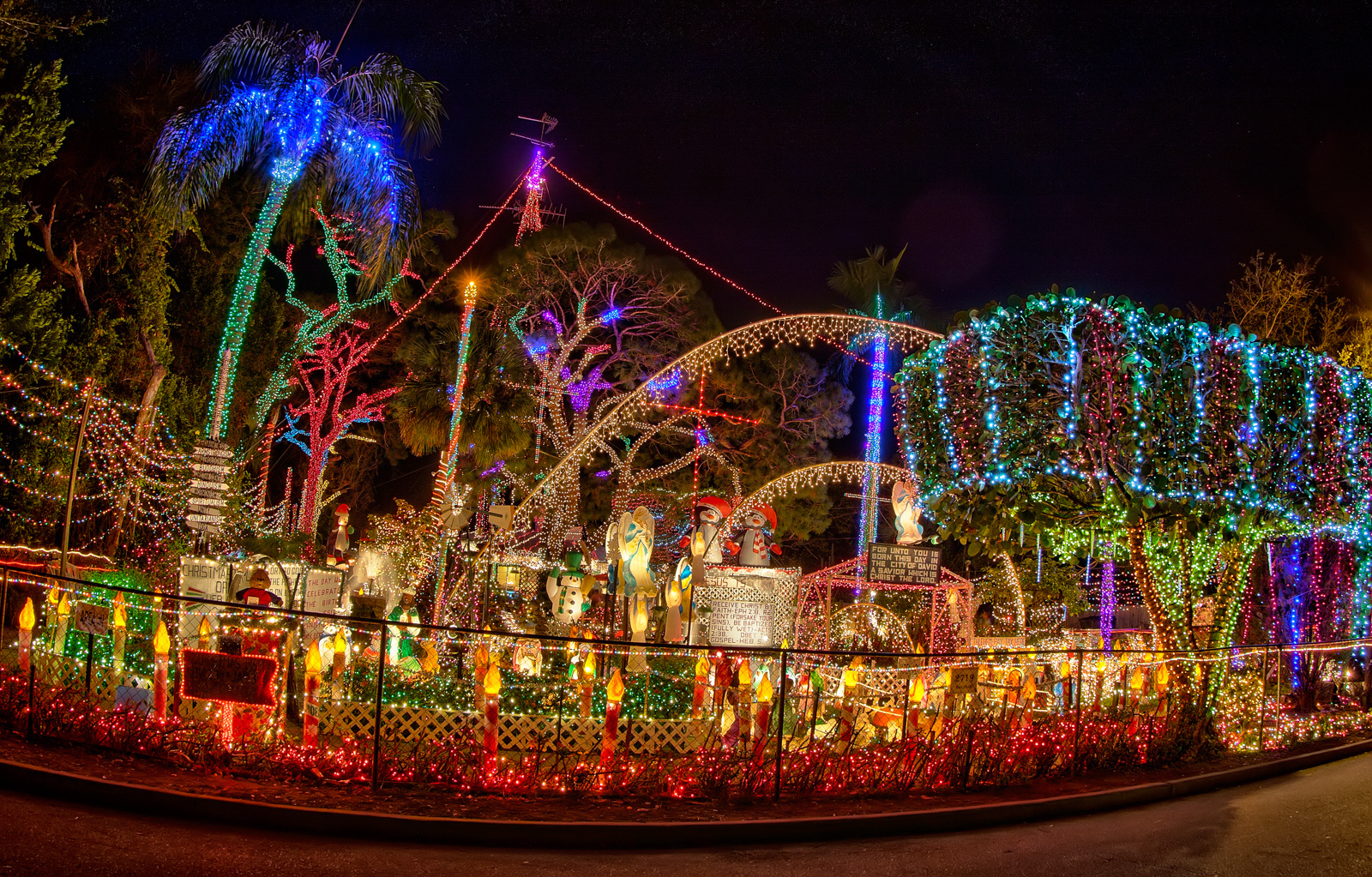
I love Christmas light displays! I found an article on yahoo (of all places) for the best lighting displays in each state. I included the link to the article at the bottom of the article so you can see their links and pictures (which I couldn’t copy here.) The pictures I did find to post, listed only the state in most cases, so don’t assume the picture matches the reference in the article.
From PARADE:
Here are the 50 best Christmas light displays in the U.S., state by state.
There is something about twinkling lights, hot cocoa in hand and Christmas music playing, right? It evokes that warm holiday feeling everyone loves. That’s why holiday light shows and holiday light displays are so special to children and adults—it’s a chance for everyone to pause and look at the magic all around.
And luckily, every state has a holiday light show they are known for (and usually, more than one!). We rounded up the best Christmas and holiday light shows in every state so you can plan your holiday tradition-making now.
Here are the 50 best Christmas light displays in the U.S., state by state.
Alabama — Huntsville Botanical Garden in Huntsville, AL
The Galaxy of Lights Festival at the Huntsville Botanical Garden in Huntsville, Alabama is a must-visit if you live in the Heart of Dixie. Starting over 25 years ago, the Huntsville Botanical Garden Christmas lights display now spans 2.5 miles and features classic holiday themes, characters, and even scenes from nature. It’s open from November 11 to January 1, can be driven or walked, (even with your dog some nights!) and tickets start at $16 for the public and $13 for members if pre-purchased. Tickets at the gate start at $25 for the public and $20 for members.
Alaska — Alaska Botanical Gardens in Anchorage, AK
If you live near Anchorage, Alaska, you know that Alaska Botanical Gardens is worth visiting at any time of the year. But particularly during the holiday season, Alaska Botanical Gardens transforms into a winter wonderland worthy of the North Pole itself. You’ll have plenty of time to experience this magic as the event begins November 27 and lasts all the way through January 21! Brighter Winter Nights Tickets start at $10 for members ages 7+ and kids 6 years old and under are free.
Arizona — Glendale Glitters in Glendale, AZ
With a name like Glendale Glitters, how could you not want to attend?! Glendale Glitters is home to the largest free light display—featuring 1.6 million LED lights—in the state, and runs from November 21 until January 11. This year marks the 27th anniversary of Glendale Glitters and the display illuminates 16 blocks of the town’s Historic Downtown District.
Arkansas — Lights of the Ozarks in Fayetteville, AR
Beginning the Friday before Thanksgiving, the holiday celebration of lights in Fayetteville illuminates the Historic Square every night from 5 p.m. to 1 a.m. The initial Lighting Night kicks off at 6 p.m. and is followed by a holiday parade. There are also plenty of vendors set up on the Square each night during the Lights of the Ozarks featuring winter treats, seasonal activities, holiday music and more. Lights of the Ozarks is a free public display and will run from November 18 to January 1.
California — Festival of Lights at The Mission Inn in Los Angeles, CA
Every Christmas season, Californians love visiting residential light displays such as El Segundo’s Candy Cane Lane or LA Zoo Lights. While those are both popular attractions, maybe you’d like to head to a different event in hopes of experiencing something new this year. Look no further than The Mission Inn Hotel and Spa in LA and witness the castle’s gorgeous interior décor. This year’s 30th annual lighting festival will take place from November 25 through January 6.
Colorado — Denver Botanic Gardens in Denver, CO
Blossoms of Light is the Denver Botanic Gardens’ annual holiday lights event that has been held for three decades. Participants walk through the Blossoms of Light pathway and can stop by the Hive Garden Bistro for hot cocoa and other holiday treats. This event runs from November 18 to January 7, (closed November 24 and December 25) and tickets start at $24 for non-members, $21 for members, and each ticket is limited to a 30-minute time slot.
Connecticut — Holiday Lights at Lake Compounce, CT
Connecticut is home to one of the nation’s most unique light displays. In fact, it’s more of an experience than a display. Lake Compounce is an amusement park turned winter wonderland during the holidays! This year will be their longest running season yet, opening every Friday, Saturday and Sunday, November 19 through December 24 and Monday through Saturday December 26 through 31. Admission starts at $39.99 for adults but you can save some money if you buy online. There are plenty of twinkling lights to enjoy as well as fun festive activities!
Delaware — Historic Odessa Candlelit Tours in Odessa, DE
Throughout the First State, Christmas light displays are abundant and in fact, Frampton Realty has put together an amazing stop-by-stop road trip for light-lookers that spans all of Delaware. However, if you want to hone in on just one area, consider taking a Historic Odessa Candlelit Tour in the 18th-century hamlet of Odessa, DE. Tours span throughout the month of December on Tuesdays and Thursdays, and you must have a reservation. On the tour, you’ll walk past Historic landmarks and buildings like the National Historic Register Wilson Warner House (c. 1769), National Historic Landmark Corbit-Sharp House (c. 1774), the Stone Barn (c.1812), and of course, bear witness to a plethora of beautiful light displays.
Florida — Night of Lights in St. Augustine, FL
St. Augustine, Florida is a Historic area and as most historic areas tend to do, offers a one-of-a-kind light display each year during Christmastime. Known for its famous white light display along 20 blocks of Historic buildings, Night of Lights is celebrating its 29th year in 2022. Pro tip: The event is best witnessed, according to the website, from either the Plaza de la Constitución or The Bridge of Lions and will be open each evening from November 19 to January 31.
Georgia — Fantasy in Lights in Pine Mountain, GA
Did you know that Georgia is home to one of the top 10 light displays in the world? Experience the wonder of one of the world’s most top-rated light displays at Callaway Gardens in Pine Mountain, which claims to feature 10 million twinkling lights across 2500 acres. This year, Fantasy in Lights is introducing a new scene called the Celebration Lake which will feature a floating combination of 30 dancing trees in honor of the event’s 30th year. Tickets range from $15 to $39.95 depending on the night you choose, and while you’re there, don’t forget to hop on the Jolly Trolley!
Hawaii — Honolulu City Lights in Honolulu, HI
Honolulu City Lights—put on by Honolulu’s city hall Honolulu Hale—usually kicks off with an electric light parade and the annual lighting of the town’s Christmas tree. This year, Honolulu City Lights is inviting guests to partake in a free milk and cookies night on December 17 for its 20th year.
Idaho — Winter Wonderland Festival in Caldwell, ID
The Winter Wonderland Festival takes place at the Indian Creek Plaza every year in Caldwell, Idaho and features all kinds of festive activities. Downtown Caldwell is lit with over a million lights and will stay lit from November 19 to January 9.
Illinois — Christkindlmarket in Chicago, IL
Chicago, Illinois is home to many various Christmas light displays, but an annual favorite has to be Christkindlmarket. An authentic and traditional German-style holiday market, Christkindlmarket will be open to the public from November 18 to December 24. Always admission free, the Christkindlmarket boasts plenty of vendors that will appeal to all the senses! From seasonal treats to holiday music and of course twinkling lights, this festival should definitely be on your to-visit list this year.
Indiana — Santa Claus, IN
In a town aptly named Santa Claus, you’ll find Indiana’s 1.2-mile-long Christmas LED-light display called Shining Story of Rudolph at Lake Rudolph Campground. The drive-through display runs every Friday, Saturday and Sunday night from November 25 to December 4 and every night December 9 through 26 (but is closed on Christmas Eve and Christmas Day).
Iowa — Adventureland Resorts in Altoona, IA
In Altoona, Iowa, you’ll find the Jolly Holiday Lights at Adventureland Resorts. Open from November 25 through January 1, the Jolly Holiday Lights display features 2.5 miles of stunning lights to feast your eyes on. What’s more, 100 percent of the admission fee goes to Make-A-Wish Iowa, which sponsors the event annually. To date, they have funded over 1000 wishes! The event is also offering virtual meetings with Santa Claus as well.
Kansas — The Lights at Ability Point in Wichita, KA
In Sedgwick County, Kansas, The Lights at Ability Point is one of the most unique Christmas light displays throughout the Sunflower State. While the drive-through light display, featuring more than 1.5 million glittering lights, offers admission by donation on Mondays, a $10 fee is required to visit The Lights every other night from November 24 until December 28.
Kentucky — Lights Under Louisville in Louisville, KY
From now until January 1, the Lights Under Louisville Christmas light display is open for business in Louisville, Kentucky. One ticket for a passenger vehicle costs $34.99 and the event starts at the Louisville Mega Cavern. Known as the world’s only underground lights show, the tour rides along 17 miles of lit-up underground passageways throughout the city.
Louisiana — Holiday Trail of Lights in Natchitoches, LA
If you’ve spent more than five minutes in the state known for its Mardi Gras, then you know that Louisiana is big on all celebrations. Christmas, of course, is no exception. The Holiday Trail of Lights is Louisiana’s statewide light display with several towns included on the trail. However, if you’re going to visit just one, check out Natchitoches, the oldest permanent settlement in the Louisiana Purchase Territory. You’ll find 300,000 lights and more than 100 set pieces on display in Natchitoches alone. This year is the Holiday Trail of Lights’ 96th, so head out and celebrate!
Maine — Coastal Maine Botanical Garden in Boothbay, ME
Every year, Coastal Maine Botanical Gardens hosts Gardens Aglow in the Boothbay peninsula of Maine. This year the event will be more traditional as they reinstate the walking tour. Tickets start at $18 for non-members, $14 for members, and the event runs from now until December 31.
Maryland — 34th Street in Hampden, MD
Nearby Baltimore, 34th Street in Hampden, Maryland—also known as Christmas Street—is known for its holiday decorations come December. The lights will be shining brightly this year from November 26 to New Year’s Day and there will be plenty of food, drinks and shopping to enjoy!
Massachusetts — Zoolights at Stone Zoo in Stoneham, MA
Walk along the zoo’s 26 acres under lighted trees and see animals such as black bears, arctic foxes, lynx and reindeer. On certain nights you may even catch a glimpse of Mrs. Claus! Zoolights will be open from November 18 through January 8, (closed November 24 and December 25) and general admission for non-members starts at $12.95.
Michigan — The Big Bright Light Show in Rochester, MI
The Big Bright Light Show in downtown Rochester, Michigan, is quite a sight. From now until January 3, as you walk through the downtown area, you’ll bear witness to every single building covered in more than 1 million lights in rainbow order. The result? Downtown Rochester transforms into a holiday-themed rainbow.
Minnesota — Bentleyville Tour of Lights in Canal Park, MN
The goal of Bentleyville’s Tour of Lights is to bring people together during the holiday season. The free, walk-through light display features more than 5 million lights and 20 acres of the park to walk through, as well as free hot cocoa and treats. Parking for the event is $10 per car.
Mississippi — Victorian Christmas Festival in Canton, MS
With more than 100,000 lights glowing from the town’s historic buildings, the Courthouse Square carousel, a 4-story tree, an 18-foot walk-through gift box and Rudolph’s playground, Canton transforms itself into an authentic Christmas village each December. Also, be sure to check out the town’s Animation Museums for an animated Polar Express train and stop by Santa’s Workshop to play “I Spy” and look for the elves’ top 10 favorite toys!
Missouri — Silver Dollar City in Branson, MO
While visiting Silver Dollar City in Branson, you’ll stumble upon one of the best holiday light displays in the state. From November 5 to December 30, An Old Time Christmas is a light spectacular at the center of Silver Dollar City. Featuring 6.5 million twinkling lights, animations, and other larger-than-life displays, the whole light show spans nine stories into the sky above.
The mysterious “Lady in White” supposedly roams the corridors of the Chico Hot Springs Hotel in Pray, scaring guests and staff members. People have reportedly seen the ghost of a woman in white, many times leading them into room 349, only to find an empty rocking chair swaying back and forth. Her rocking chair is sometimes found in other rooms as well, always facing the window, no matter the position the last person left it in.
Nebraska: The Hatchet House
The urban legend of the “Hatchet House” of Portal reminds us of those scary ghost stories we used to tell each other at camp. As the legend goes, a school teacher from long ago went insane and decapitated all her students in the one-room schoolhouse. Afterward, she placed their heads on their respective desks and took their hearts to a nearby bridge, throwing the organs into the water. People say you can still hear the hearts beating if you cross it, hence the name “Heartbeat Bridge.” We dare you to try it.
Nevada: The Aliens at Area 51
Publicly known as the place where the military tests out some of its most advanced weapons and technology, conspiracy theorists and urban legend die-hards suspect that it’s also where the U.S. government stashes the UFOs it doesn’t want us knowing about.
New Hampshire: The Legend of Chocorua
Mount Chocorua was named after a native American chief who lived in the early 1700s. Legend has it that he left his son with the Campbell family while he went away on tribal business. While under the family’s care, the son died (perhaps accidentally, perhaps not). To exact revenge, Chief Chocorua killed the white man’s wife and children. Then the surviving Campbell chased Chocorua to the top of a mountain and shot him dead, but not before the Chief had placed a terrible curse upon the land. It is said that the land, now known as Chocorua Lake Conservancy, will inflict suffering and death on anyone who tries to live there or drink from its rivers.
New Jersey: The Ghost Boy of Clinton Road
The ghost of a young boy is said to reside beneath one of the bridges on this road in Passaic County in northern New Jersey. According to legend, he’s quite helpful, not to mention honest: If you drop a coin into the water, he will return it to you within 24 hours. It has become a rite of passage for local teens to go test it out.
New Mexico: UFO Crash at Roswell
In 1947, something big, really, really big, crashed on a ranch northwest of Roswell. Members of the U.S. military quickly came to retrieve the debris, which led some to believe that it was something they wanted to cover up—a UFO, perhaps? Adding to the mystery, Jesse Marcell Jr., son of one of the military officers charged with clearing the site, later described the debris he saw his father bring home as being made of lead foil with “I”-beams. According to Roswell UFO Museum, “He recalled the writing on the ‘I’-beams as ‘Purple. Strange. Never saw anything like it … different geometric shapes, leaves and circles.’” The U.S. government maintains it was a weather balloon that crashed, but urban legend tells a different story …
New York: The Legend of Cropsey
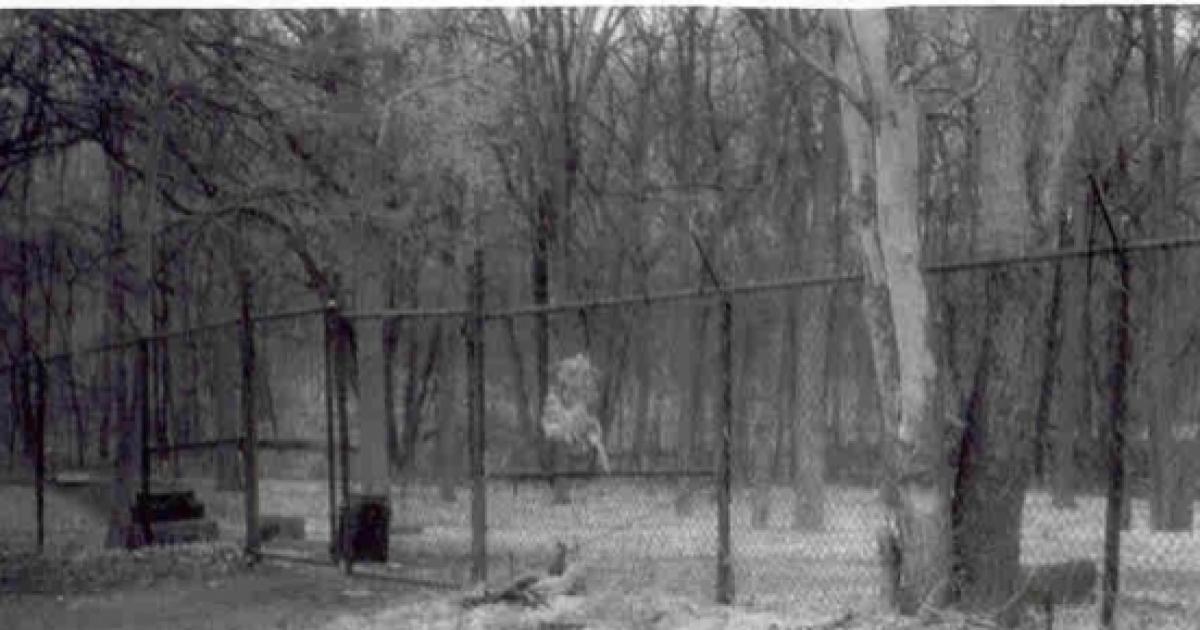
Staten Island’s “Cropsey” has been a local legend for decades, gaining national attention when the documentary of the same name was released. The story goes that Cropsey had a hook for a hand and was a patient at the Willowbrook State School. He would come out late at night to hunt and chase local kids with his hook hand. In truth, a series of child murders did take place in that area of Staten Island in the 1970s and 1980s.
North Carolina: The Beast of Bladenboro
Many regions in the United States have their own urban legends of a story about a mutant creature in the woods who kills viciously and indiscriminately. In North Carolina, it’s the Beast of Bladenboro, described by locals as a panther-like, bloodthirsty killer lurking in the darkness. It is said to have attacked numerous dogs and even people. Watch your back!
North Dakota: The Miniwashitu
Next time you’re on the banks of the Missouri River in North Dakota, keep an eye out for the Miniwashitu of North Dakota, a giant, red, hairy monster with sharp spikes along its back, a horn and only one eye. If you look at it, blindness, insanity and even death are said to soon follow. So on second thought, don’t keep an eye out for it!
Ohio: Gore Orphanage
In the 1800s, there was a deadly fire at the aptly named Gore Orphanage in Lorain County. Tragically, every single orphan in the institution perished. Locals say if you visit the site where the orphanage stood, you can still see the ghosts of the dead children, hear them playing or smell their burning flesh.
Oklahoma: Shaman’s Portal
People have allegedly disappeared into thin air upon setting foot in these dunes in Beaver Sands, also known as Oklahoma’s Bermuda Triangle. It’s believed that a UFO crashed here, opening a door to another world.
Oregon: The Bandage Man
The ghost of a man who was supposedly chopped into bits at a sawmill terrifies Oregon residents and urban legend believers to this day. They call him the “Bandage Man,” because, well, his entire body is wrapped in bloody bandages. Mostly, he is said to attack people who drive through or park their cars in Cannon Beach.
Pennsylvania: Eastern State Penitentiary
The Eastern State Penitentiary of Pennsylvania is a real place that was shut down due to its exceptional cruelty toward inmates. Each cell and chamber has its own set of hauntings and terrible tales, and walking through it is supposed to feel like walking through the pit of hell itself. If you’re the type who likes to experience the macabre, you can take a tour on Halloween. You must sign a liability waiver before entering, though.
Rhode Island: Fingernail Freddie
If this sounds familiar, it’s because the Rhode Island legend of Fingernail Freddie is supposedly the inspiration for The Nightmare on Elm Street. In this version, Fingernail Freddie is a wild woodsman with insanely long fingernails who comes out at night to attack campers with his talons.
South Carolina: The Legend of Lavinia Fisher
Known as America’s first female serial killer, Lavinia Fisher was certainly not dainty about her kills: In the 1800s, she and her husband John ran an inn, where they had the unfortunate habit of killing off many of their guests. They would poison them, then when the poor person had fallen asleep, drop them down a trap door. One victim managed to escape, and the two were found out, resulting in their execution. Now people say the ghost of Lavinia Fisher haunts the Charleston jail where she was executed.
South Dakota: Walking Sam
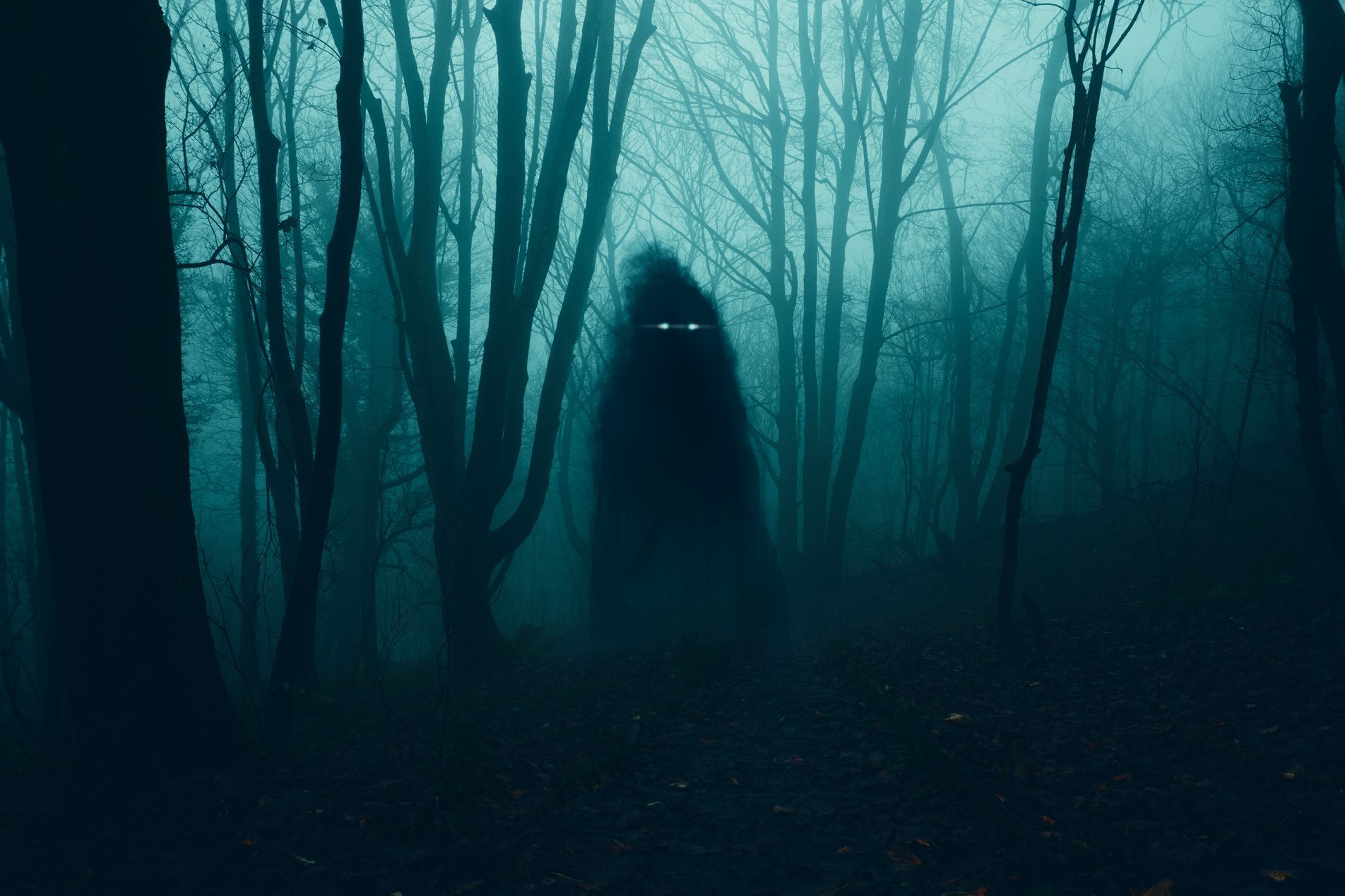
Walking Sam of South Dakota is a bit like the notorious figure from the Slenderman video games: an unnaturally tall, skinny and creepy character. Those who cross his path are induced to commit suicide, and his favorite prey is young teens.
Tennessee: Skinned Tom
As the story goes, in the 1920s, a young man named Tom once took his lady friend to the local Lover’s Lane. He didn’t know it, but the woman he was so enamored with, was, in fact, married. Her husband found the two canoodling in their car, murdered the wife and then skinned Tom alive. Folks say Tom still hangs around Lover’s Lane, ready to kill those who dare to commit adultery.
Texas: The Lechuza
In South Texas, after you’ve had a beer or two, you’ll need to be on the lookout for the lechuza. Depending on the version of this urban legend being told, this incredibly large owl is either a brouha’s (witch) or a familiar woman by day, bird by night. Her child was killed by a drunk, so she is on the prowl, looking to take revenge on bar patrons stumbling out onto the street after closing time.
Utah: The Curse of the Escelante Petrified Forest
Visitors to Escelante Petrified Forest in the Black Hills of Utah are cautioned to leave what they find behind. Legend has it that anyone who takes so much as a rock or a piece of wood will suffer intense misfortune. Car accidents, broken bones and even job loss are said to have befallen those who dared to ignore the warning.
Vermont: The Brattleboro Retreat Tower
Built as part of an insane asylum in the late 1800s, the Brattleboro Retreat tower was soon closed off after a number of patients supposedly committed suicide by flinging themselves from the top. The tower remains standing today, and people say that if you dare visit it, you’ll see ghosts plunging to their deaths over and over, like an old tape replaying itself.
Virginia: Bunny Man Bridge
As the story goes, in 1904, some of the most dangerous patients from an insane asylum in Clifton, Virginia, were being moved to a prison when the bus crashed on Fairfax Station Bridge. The inmates attempted to escape, but only one was successful. He left a trail of dead, skinned, half-eaten rabbits, hanging many from the bridge that was the scene of the crash. Then on Halloween night of that very same year, several teens hanging out under the bridge were attacked at the stroke of midnight—and met the same fate as the bunnies.
Washington: Maltby’s 13 Steps to Hell
In Maltby Cemetery in Maltby, you’ll find a set of 13 steps leading down into an underground crypt. Urban legend has it that anyone who makes the regrettable decision to climb down those steps will be met with a vision of hell so terrifying it will drive them to insanity.
West Virginia: The Mothman
Yes, this is the same “Mothman” from the movie, The Mothman Prophecies. The final scene of that movie is a retelling of a take on an event that actually happened in 1967: The Silver Bridge that connects Point Pleasant, West Virginia, with Gallipolis, Ohio, collapsed at the height of rush hour, killing 46 people. According to legend, it was the Mothman, the great bringer of death, who caused the accident.
Wisconsin: The Bloody Headstone at Riverside Cemetery
This urban legend tells of a local woman by the name of Kate Blood (fitting, right?), who is said to have killed her husband and three children, after which she committed suicide. Her headstone at Riverside Cemetery in Appleton allegedly drips with blood every full moon. (Though if you do visit, a glance at her headstone will quickly debunk the legend: She was outlived by her husband and her only child.)
Wyoming: The Jackalope
The large bunny creature with antelope horns is a well-known character in Wyoming’s culture, history, landscape and urban legends. Some people say they’ve most definitely seen it, while others shrug it off as fairy tale. What do you think?
No matter where in the United States you’re from, your home state is sure to have its share of urban legends and urban myths. These scary stories aren’t just for Halloween; they’re whispered between campers, passed from town to town and reserved for nights when the power goes out. Urban legends may be spooky stories, but they aren’t necessarily ghost stories. They could have happened to someone you know, a relative or friend. These are the stories that make you do a double-take when you walk past abandoned places or make you check to make sure your door is locked when you’re home alone. Be careful next time you’re driving the back roads of America. You never know what scary urban legends you might encounter.
Alabama: Huggin’ Molly
The legend of Huggin’ Molly is clearly a tool used by parents to get their children to obey the rules: The story, native to Abbeville, tells of a phantom woman who appears to children if they stay out late at night. She grips the lingering child tightly and screams in their ear—she’s not meant to cause death, just one heck of a fright. Sounds like something straight out of a horror movie!
Alaska: The qalupalik
The qalupalik, an Inuit version of a mermaid or siren, calls with a hum to children who are wandering too close to the seashore, then takes them away in her baby pouch. The greenish, womanlike creature will never return a child once taken into the depths. Sounds like a good way to convince your kids not to go in the water, if you ask us.
Arizona: Slaughterhouse Canyon
Also known as Luana’s Canyon, the urban legend of Slaughterhouse Canyon tells the gruesome tale of a 19th-century gold miner who failed to come home to his family one night. Without his earnings, the mother and her children couldn’t buy food and began to starve. When she couldn’t stand it any longer, the wife chopped her kids into pieces, tossed them into the nearby river and died of despair. Her cries can still be heard echoing through the canyon.
Arkansas: The Gurdon Light
Like many urban legends, the story of the Gurdon Light has several variations. In one, a railroad worker was hit by a train and decapitated. His spirit can still be seen today, searching for his lost light. In another, the railroad worker bore a violent grudge against his boss who had fired him. He murdered his former employer with a railroad spike, and the victim now wanders the tracks. While the Gurdon Light is well documented, no one has been able to offer an explanation as to what it really is …
California: Char Man of San Antonia Creek
Per local lore, a father and son were trapped in a horrible fire. The father perished, and before help could arrive, the traumatized son lost his mind. He skinned his father and then ran into the forest. Now, known forever as Char Man, his blackened, burnt body is said to attack motorists on Creek Road in Ojai as he seeks more human skins.
Colorado: The Ridge Home Asylum
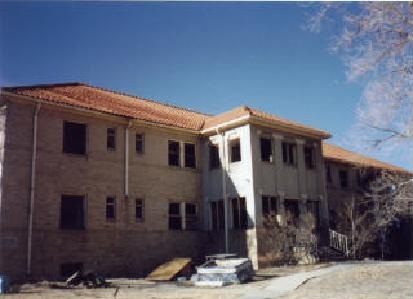
The Ridge Home Asylum was a real facility that opened in Arvada in 1912, but it’s become an urban legend because of its history. It reportedly housed patients who were horribly mistreated—some of whom weren’t even mentally incapable but had just been forsaken by their families. Though it was demolished in 2004, people say they can still hear the screams and see the apparitions of former patients on the grounds.
Connecticut: Dudleytown
The misfortunes that have occurred in Dudleytown, starting in the 1700s, are so terrible and numerous that its nickname is “Village of the Damned.” The now completely deserted town is said to have been home to many suicides, disappearances and even demonic activity that have given rise to several urban legends. It is believed that the founders of the village—and by extension, the village itself—are forever cursed.
Delaware: Fort Delaware
A prisoner camp during the Civil War, Fort Delaware in Delaware City was ultimately home to more than 30,000 Confederate soldier inmates. The few thousand who died before they could leave the Union fort are said to still haunt the area.
Florida: Captain Tony’s
Since 1852, Captain Tony’s, the oldest saloon in Key West, has been known to be haunted: Doors slam for no apparent reason, and there are inexplicable banging noises and frequent ghostly visitations. Perhaps that’s because it’s the site of the town’s original morgue and was built around a tree that the town once used for hanging pirates.
Georgia: “The Song of the Cell”
As urban legend goes, in 1848 Elleck and his wife, Betsy, both slaves, were in their home one night when their master, drunk and belligerent, crashed open the door. He attempted to attack Betsy, but Elleck fought him off. Undeterred, the master chased Elleck up a ladder into a loft. As the struggle continued, the master lost his balance, fell out of the loft and died. Even though Elleck turned himself in to the sheriff the next morning, explaining that what happened was self-defense, he was still charged with murder (par for the course in the antebellum South). Elleck was imprisoned in the Old Lawrenceville Jail and later executed unjustly for the crime. People say they can still hear his sorrowful song traveling through the walls of the old jail.
Hawaii: Pali Highway
Pele, the Hawaiian volcano goddess, has many myths attached to her name. One tells of her ill-fated union with the demigod Kamapua’a, who was half-pig, half-human. The two supernatural beings had a terrible breakup, agreeing to never see each other again. That’s why, as urban legend has it, if you carry pork with you when you travel over the Pali Highway in O’ahu, your car will come to an inexplicable halt. Next time you’re in the area, we advise sticking to chicken!
Idaho: The Water Babies of Massacre Rocks
This urban legend is about starvation and infanticide, so if you’re squeamish, you may want to skip ahead. When famine hit the local area of Pocatello, mothers resorted to drowning their babies in the rivers instead of letting them starve to death. It is said that those babies turned into fish-like imps whose new mission was to trick, or even murder, people.
Illinois: Bachelor’s Grove Cemetery
Often referred to as one of the most haunted graveyards in America, this 82-plot cemetery is known as the home of many phantom sightings. People who have visited the site have seen numerous inexplicable illusions, from a ghostly “White Lady” to an ephemeral white farmhouse.
Indiana: 100 Steps Cemetery
If you visit this cemetery in the town of Brazil and climb the 100 steps in the total darkness of night, urban legend has it you’ll see the ghost of the original caretaker appear before you on the top of the hill. Apparently he will give you a preview of what your own death will look like!
Iowa: Stony Hollow Road
As the saying goes, a woman scorned is not someone you want to mess with. Lucinda of the town of Burlington is no different. Legend says that when her fiancé failed to meet her there as promised one night, she threw herself off the bluffs along Stony Hollow Road. Ever since, her ghost has appeared to countless people. What’s (much) worse, if she leaves a rose at your feet, you are destined to die within 24 hours, or so the story goes …
Kansas: Molly’s Hollow
The urban legend of Molly’s Hollow speaks to the country’s racist history. As the legend goes, when the local townsfolk found out that Molly, an African American woman, was involved with a white man, she was lynched. People claim her spirit is still there, screaming at night.
Kentucky: Hogan’s Fountain
In Cherokee Park, you’ll find Hogan’s Fountain, which features a statue of Pan, the pastoral yet devious Greek god. At every full moon—some versions say every night at midnight—the figure of Pan wanders the park, causing mischief for passersby.
Louisiana: The Carter Brothers
Back in the early 1930s, a young woman escaped from the home of the Carter Brothers in New Orleans with slash marks on her wrist. She told the police that the brothers were feeding off her blood. The cops stormed the French Quarter residence where they found more young women in similar states, their blood draining from their bodies. The brothers, now thought to be vampires, were captured and executed, only for it to be discovered years later that their crypts were empty.
Maine: Seguin Island Lighthouse
Like many urban legends, the one in Maine has to do with isolation. As legend has it, in the 1800s, the caretaker of the Seguin Island Lighthouse and his wife were the only two people living on the tiny spit of land. They naturally grew increasingly bored and isolated. The caretaker bought a piano so his wife could play it to keep them both entertained, but she only knew one song. The insufferable repetition of the same tune, combined with severe isolation, drove the husband mad. He took an ax, chopped the piano and his wife into bits, and then killed himself. Or so the story goes …
Maryland: Bigg Lizz and the Greenbrier Swamp
During the Civil War, Bigg Lizz, a very large woman, was a slave who became a spy for the Union troops. But her espionage was found out by her master, who decided to exact revenge. Urban legend says he took Bigg Lizz to Greenbrier Swamp so she could help him bury a treasure. Bigg Lizz dug the hole, and was subsequently decapitated by her evil master, who threw her body into the grave she had just unwittingly dug for herself. It is said that if you travel to that spot during the dead of night, you will see her spirit there, attempting to lure you into the murky swamp.
Massachusetts: The Ghost of Sheriff George Corwin
When you think of haunted locales and birthplaces of urban legends in the United States, Salem is no doubt one of the top places that comes to mind. A key character in the Salem Witch Trials, Sheriff Corwin was the most infamous and brutal when it came to interrogating and handling accused witches, earning himself the nickname “The Strangler” for his torturous methods. A building called the Joshua Ward House now stands on top of the land where Corwin lived and died, and many people say they’ve seen him in the windows or even felt his hands pressing down around their necks when they’re inside the space.
Michigan: The Nain Rouge
This is one of the urban legends still recognized today, celebrated by the people of Detroit every year. They say there’s a devilish creature, known as the Nain Rouge (French for “red dwarf”), who causes mayhem in the city. He’s thought to be seen when disaster is about to strike and is even said to be the reason for the Cadillac company’s downfall in the city.
Minnesota: The Wendigo
The wendigo is a creature of Native American folklore that is thought to be the result of cannibalism. A person will turn into a wendigo, a fang-bearing creature that is tall, skeletal and hairy, if they resort to eating another human being. Will you fall prey to the glowing eyes and snake-like tongue of the wendigo, or is it just an urban legend?
Mississippi: The Witch of Yazoo
While living on the Yazoo River, an old woman allegedly lured boatsmen to their deaths with her magic. One day, the local sheriff chased her into a swamp, and as she drowned in quicksand, she put a curse upon the town. In 20 years, she said, she would return to set the city aflame. Eerily, in 1904 the city was hit with a massive fire, believed to be the work of the witch. The next day, when people went to visit her grave at the Glenwood Cemetery, they saw that the chain links around her grave had been broken. Or so the urban legend goes …
Missouri: The Landers Theater
The Landers Theater in Springfield is supposedly beyond haunted: From fires to stabbings to accidental deaths, this theater has seen it all and has many urban legends to tell. Locals and performers have alleged that they’ve seen the ghosts of the people believed to have perished there, including the janitor who was said to have died during a 1920 fire.
This weird Wednesday offering is a residential home in New Mexico and the only detailed descriptions and photos I could find were in an architectural magazine: The Guide to New Mexico Architecture.
This architect’s unusual residence and separate studio gallery are quite special for Albuquerque. The visual complexity of the residence’s unique series of volumes disguises an architectural diagram that is best described from the top down. The top floor is a long, flattened tube placed parallel to the long dimension of this very narrow site. Four cylindrical, hollow pillars (aligned along this long dimension) support this tube and all the major enclosures. A large circular volume engages the western two pillars, and a smaller circular volume engages the eastern two pillars. The visual complexity is accomplished by exposing all the supporting beams and columns and the addition of surface art to walls, balcony railings, window and door treatments, beam ends, and other opportunities that present themselves.
Windows on the south-facing facades of the house take advantage of the long southern exposure of the site. Three light scoops on the northern portion of the third-floor roof capture southern sun in the winter and bring it into the northern part of that volume. The cylindrical library tower was appended to the residence’s southern face in 1990; the dramatically linear studio gallery, built in the 2000s, stands alone—albeit sitting atop a smaller stuccoed structure—just to the north of the residence.
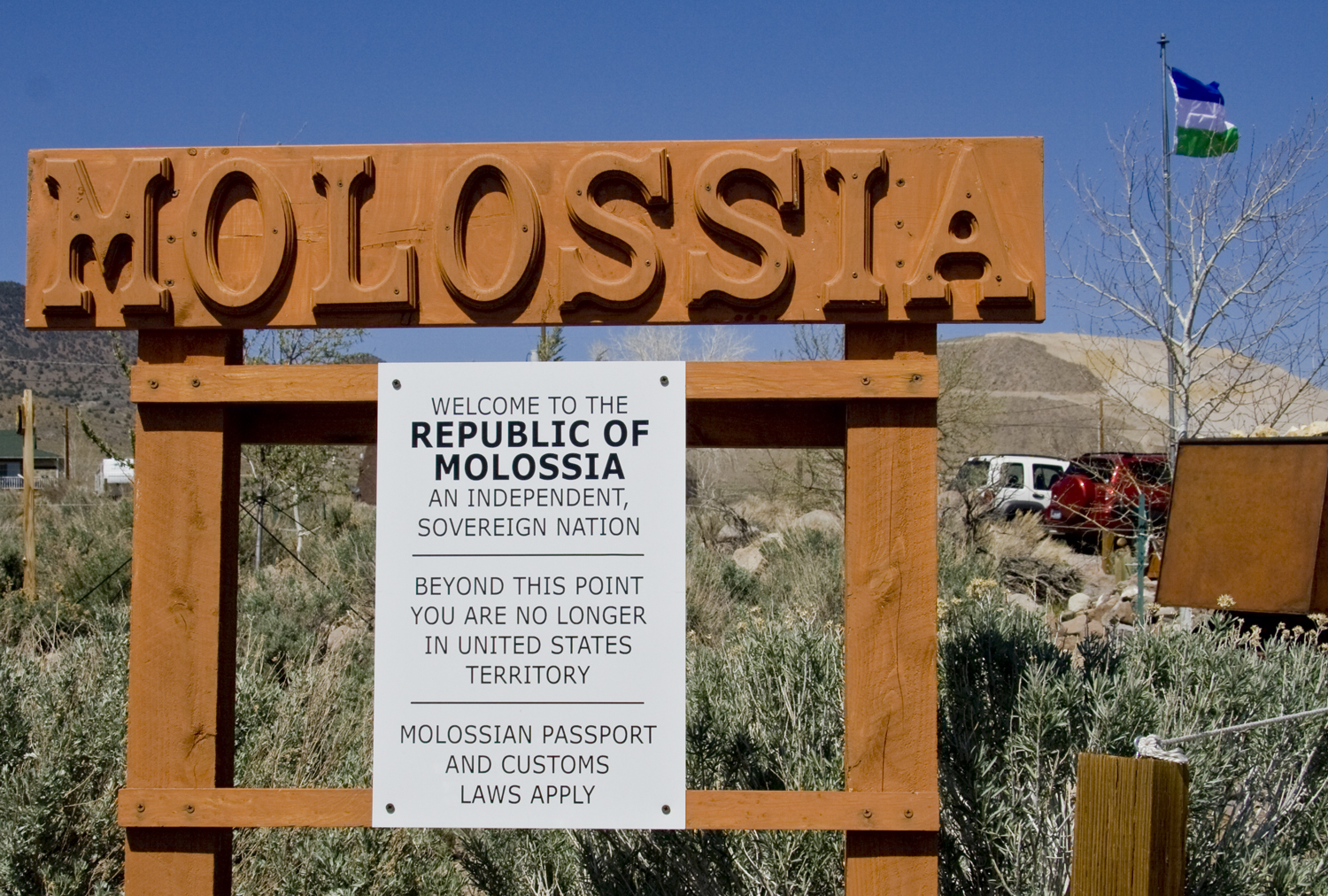
Inside the United States, there is a micronation of 38 citizens residing in what they call The Republic of Molossia. I found this article at SFGATE that explains the concept and gives a brief overview of this quirky little (unrecognized) nation inside Nevada.
The Republic of Molossia is the city of your adolescent, Candy Land dreams, where the currency is cookie dough and the nation’s leader officially outlawed spinach.
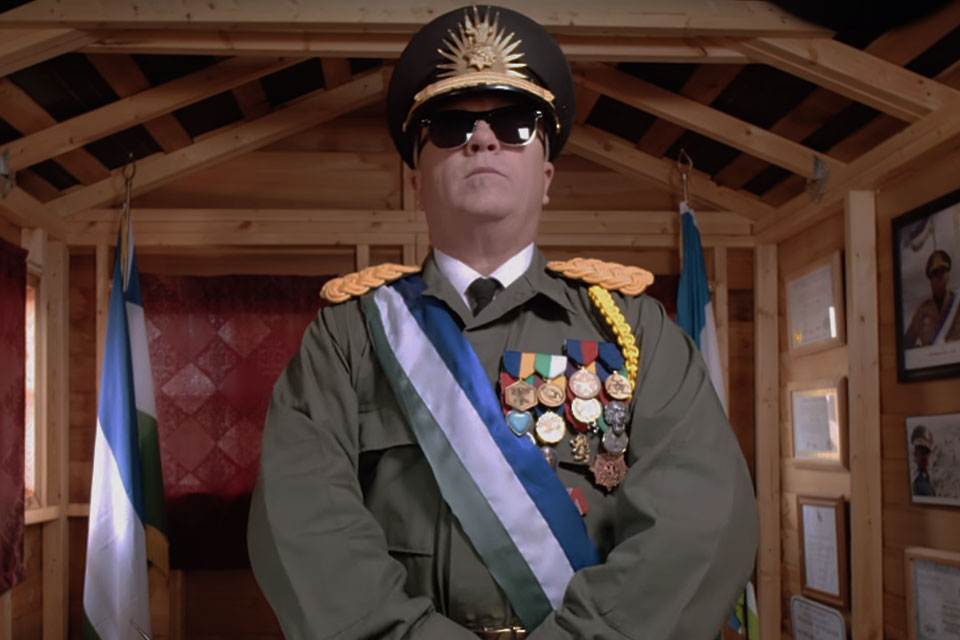
How does a place like Molossia, located about 45 minutes from Reno, exist within the confines of the United States? The self-described independent nation, ruled by President Kevin Baugh and first lady Adrianne Baugh, is actually a micronation within the United States.
At last count, there were 67 micronations across the globe, although that number is more of an estimate considering there aren’t a lot of hard and fast rules for declaring sovereignty. Micronations are not recognized as sovereign states, no matter their claims, but they often share a dedication to pageantry and humor.
Molossia is enclosed within a small Nevada town called Dayton, on an 11-acre property with a total population of 38 souls. Three of the citizens are dogs.
Molossia is an artistic expression with shades of outlaw libertarianism, and it owes its entire existence to a San Francisco icon who was a pioneer in “fake it till you make it” social entrepreneurialism.
The micronation accepts tourists but on specific terms. I rode over the desert brush to find it on a recent August afternoon. Before embarking on the journey, I somewhat expected an unhinged social vigilante with a political agenda, but what I discovered instead was a seemingly well-meaning couple with a solid sense of humor and a love of entertaining the masses with their clever takes on what it means to run a micronation.
I left knowing it was a place I would need to bring friends, if only to experience the hilarity and downright weirdness firsthand. Without seeing it, it’s hard to say who will believe a place like Molossia exists.
Tours are held one day a month between April and October, usually, but not always, on a Saturday. During this time, anyone can visit Molossia. A passport isn’t strictly required, but if you bring one, you can get it stamped at the customs office.
Molossia is smaller than 10 football fields but can draw worldwide attention. During my visit in August, I met people from Canada, Washington and Texas, as well as many from other parts of Nevada. In total, there were about 20 attendees. It’s customary to bring cookie dough to exchange for the local currency, called Valora, which is Latin for “brave or courageous.”
It’s important to abide by the laws when moving about Molossia. That means no contraband like tobacco, incandescent lightbulbs, plastic bags, catfish, onions, walruses and, of course, spinach.
Other laws prohibit citizens from causing catastrophe; torpedoes may not be set off inside of the country, and percussion instruments are barred from every bathroom. It’s also illegal to detonate a nuclear device within the nation and offenders incur a 500 Valora fine.
President Baugh is also considering outlawing hurricanes, but the weather in these parts of Nevada tends to be sunny.
“Molossia weather is always perfect,” he boasts. He says the problem is that “we’re so close to the U.S. border that their crappy weather blows in all the time.”
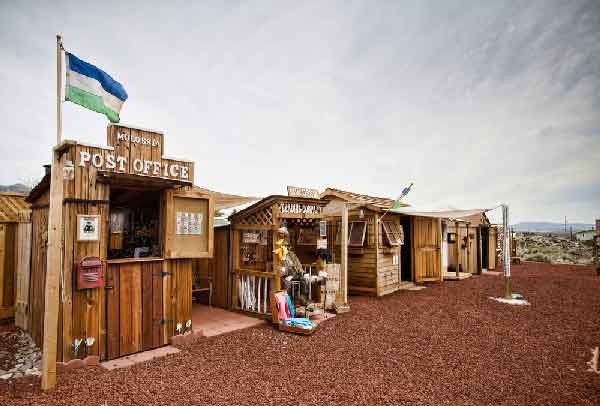
A tour guarantees access to all of Molossia’s main buildings, including a post office, Tiki bar, the president’s office, a trading post and a jail cell. You’re subject to arrest if you bring in unpermitted items, but the president doesn’t make a habit of keeping anyone past the end of their tour (or for more than a few minutes).
Although Molossia is still at war with East Germany — there’s a long-winded explanation to this involving an argument suggesting East Germany still exists as a small island off the coast of Cuba — the micronation resists the need for a military to defend itself (in part because that East Germany island is uninhabited).
Nevertheless, Molossia does have a naval program composed entirely of inflatable kayaks that explore nearby lakes, including Lake Tahoe on flexible biannual excursions. There are also annual and public events including a dry land boat race.
The space program is predictably limited, but you can launch a small rocket when visiting, which earns yourself a designation as an honorary Molossia space cadet.























 Sew Colorful