CHOCOLATE!!

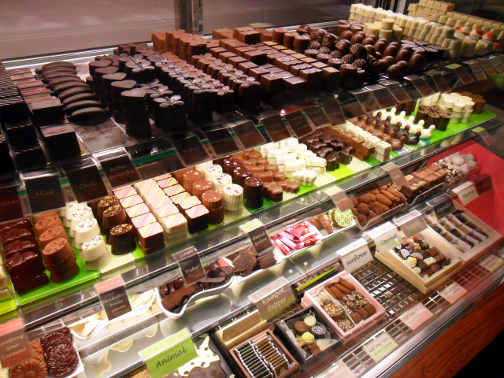
Today is International Chocolate Day!  Now everyone has their favorite, go-to flavor, but, how much do you actually know about the different kinds of chocolate? Do you know what differentiates semisweet from bittersweet? Or why white chocolate is softer than milk chocolate? It all comes down to how the chocolate is made and what ingredients are used to make it. Read on to learn about the varying flavors, compositions, and characteristics of each kind of chocolate.

Chocolate Liquor

Chocolate liquor, sometimes referred to as unsweetened chocolate, is the base of all types of chocolate. This thick, dark brown paste is created from cacao nibs, the inside of the cocoa bean. The nibs are finely ground to a smooth texture. When heated, this paste turns to a liquid that can be formed into bars or chips. Chocolate liquor is 100% cocoa, with no added ingredients. Under high pressure, this paste separates into cocoa butter and cocoa powder (also called cocoa solids). Despite the name, chocolate liquor does not actually contain alcohol.

White Chocolate
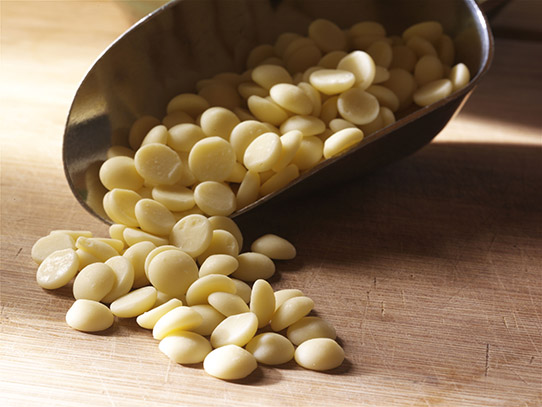
White chocolate is easy to identify because of its cream or ivory color. It is made by combining sugar, cocoa butter, milk, vanilla, and lecithin (an emulsifier that helps the ingredients blend together). These ingredients give white chocolate its sweet vanilla aroma. White chocolate often has a flavor profile that can be described as predominately sweet, with bold notes of sweetened condensed milk and vanilla. Good quality white chocolate will have a rich, soft, and creamy texture — a characteristic that comes from its cocoa butter base and high sugar and milk content.

White chocolate is unique because it does not contain any cocoa solids. The cocoa solids are what give chocolate it’s dark brown color and chocolatey taste that we all know and love. The U.S. Food and Drug Administration (FDA) sets standards of classification for each kind of chocolate. According to their definition, in order for something to be considered white chocolate it must contain at least 20% cocoa butter and 14% milk, and no more than 55% sugar.

Many ask, “Is white chocolate, chocolate?” The answer is yes because it contains ingredients from the cacao bean. Not to be confused with the white-flavored or vanilla-flavored coating that is often found in sub-par products. Cocoa butter is expensive because it is in high demand by the cosmetics industry, for use in lotions and other beauty products. Therefore, companies often create a compound that substitutes other vegetable fats in place of the cocoa butter. These white chocolate-like substitutes can’t be officially called white chocolate because they often don’t meet the 20% cocoa butter requirement set by the FDA definition.

White chocolate, when stored properly, has a shelf life of about four months. While it is delicious to eat, white chocolate is also great for cooking, baking, and decorating. The dairy-forward flavor profile adds subtle richness to any dish, while still letting other flavors shine through. White chocolate’s color lends itself well to decorating cookies, cakes, and confections.

Milk Chocolate
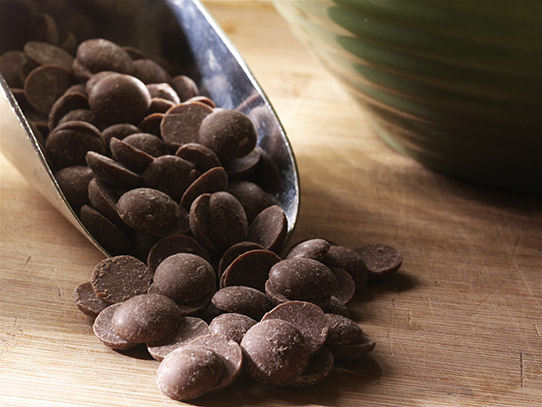
Milk chocolate is a classic that we all know and love from childhood. With its light brown color, creamy texture, and sweet flavor, milk chocolate is widely regarded as the most popular type of chocolate. It is made by combining chocolate liquor (cocoa solids and cocoa butter) with sugar, and milk. Sometimes an emulsifier, such as soy lecithin, is added to enhance its smoothness. According to the FDA definition, milk chocolate must contain at least 10% chocolate liquor and 12% milk.

Break off a piece of milk chocolate and let the aroma fill the air. Enjoy the smell of caramelized sugar, vanilla, chocolate, and dairy. Then take a bite and let the flavor fill your mouth. Milk chocolate often has a flavor profile that can be described as sweet and chocolatey, with notes of cooked milk and caramelized sugar and a vanilla aftertaste.

Milk chocolate is considered to be a good middle of the road chocolate.  It is characteristically sweeter, with a softer texture than dark chocolate, but not quite as sweet and soft as white chocolate. When properly stored, milk chocolate has a self-life of about 16 months. Milk chocolate is a great choice for when you want a chocolate treat or gift everyone will enjoy.

Dark Chocolate
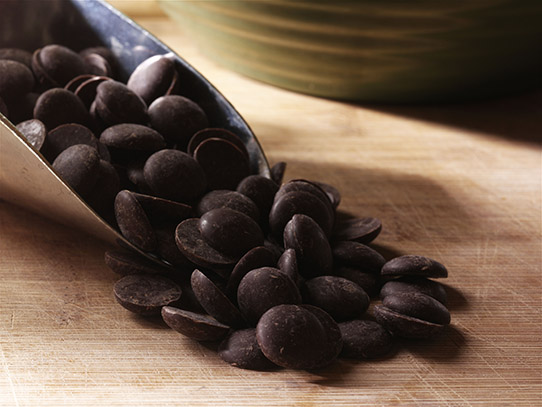
Dark chocolate, with its notable deep brown color, is the second most popular type of chocolate. It is sometimes referred to as black or semisweet chocolate and is noticeably less sweet than milk chocolate. In recent years, dark chocolate has surged in popularity thanks to a number of articles being published about the health benefits.

Dark chocolate is fairly simple in composition. It is typically made from two ingredients — chocolate liquor and sugar. Sometimes small amounts of vanilla and soy lecithin (an emulsifier) are added. According to the FDA definition, dark chocolate must contain at least 15% chocolate liquor but usually contains closer to about 50%. Most high-quality, dark chocolate does not contain added dairy and can be a great vegan-friendly chocolate. The lack of dairy and less sugar gives dark chocolate firmer texture than milk chocolate or white chocolate.  This is why a well-tempered piece of dark chocolate will have a nice snap when broken in half.

The flavor profile of dark chocolate can vary widely based on the cocoa content of the chocolate. It is often slightly-sweet and chocolatey, with notes of baked brownie, red fruit, and brown spice (think cinnamon or allspice). Due to its chocolate-forward flavor profile, dark chocolate is great for baking when your recipe needs a rich, chocolatey flavor. Dark chocolate’s widely-acclaimed health benefits make it a favorite snack among health-conscious consumers. When properly stored, it has a shelf-life of about 20 months.

Bittersweet Chocolate
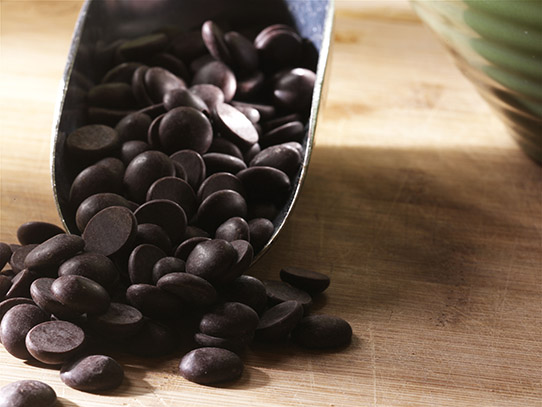
Bittersweet chocolate has gained a lot of traction recently as people started to learn more about cacao and cocoa percentages. This kind of chocolate, sometimes referred to as extra-dark chocolate, rose to popularity when people began claiming that you should eat dark chocolate with a cocoa content of 70% or more, in order to get the most health benefits. The recent rise in bean-to-bar chocolate makers and craft chocolate has also lead to an increase in awareness and popularity of higher cocoa content dark chocolate.

Semisweet and bittersweet chocolate share the same FDA definition, and must contain more than 35% chocolate liquor, although they generally contain at least 50% cocoa liquor. Bittersweet chocolate is typically 66% cocoa content or higher (the added sugar usually less than one-third of the total content).

Like its name indicates, bittersweet chocolate is often a little more bitter than semisweet dark chocolate. The chocolate’s flavor profile can vary greatly, depending on where the cacao is grown – some can be fruit-forward or have a deep earthy flavor, while others can have flavor notes of baked brownies. Bittersweet and semisweet are interchangeable when baking, depending on the recipe and personal taste preferences. Substituting bittersweet chocolate will give your recipe a deeper, less sweet chocolate flavor. Extra-dark chocolate, when properly stored, has a shelf-life of about 20 months.

Cocoa Powder
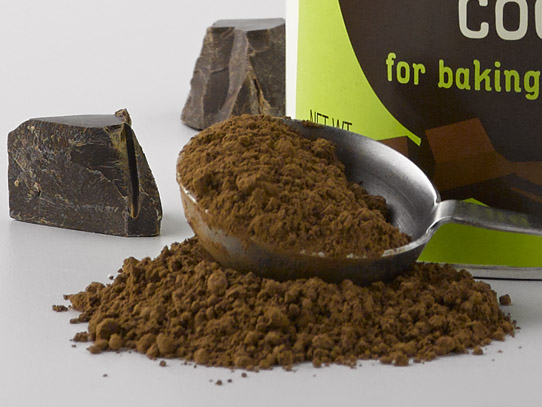
Cocoa powder is created when chocolate liquor is separated under high pressure, and the resulting cocoa solids are crushed into a powder. Unsweetened cocoa powder is essentially 100% cocoa.

There are two types of cocoa powder, natural cocoa and dutch-processed cocoa. Natural cocoa is lighter brown in color and has a strong chocolate flavor that is often acidic. Dutch cocoa is natural cocoa that has been alkalized to neutralize the acidity. The dutch-process gives the cocoa powder a deep, warm color and slightly milder flavor.

Unsweetened cocoa, especially dutch cocoa is great for baking. Unsweetened cocoa can be added to spice rubs and moles to give the dish a richer, more complex flavor. Dutch-processed cocoa is often used when making hot chocolate, because the extra process allows the powder to easily blend with liquids. When stored properly, unsweetened cocoa can have a shelf-life of about 18 months.

Ruby Chocolate

In 2017, ruby chocolate was discovered by Belgian chocolate maker, Barry Callebaut.  With its red-pink hue, this distinctive chocolate is noticeably different than its other chocolate counterparts.  It is not colored white chocolate, but rather a color derived from a specific type of cacao — the ruby cocoa bean (a bean typically grown in Ecuador, Brazil, and the Ivory Coast.) Because this is a relatively new discovery (and the exact cacao making process developed by Barry Callebaut is proprietary), there is no standard FDA definition.

Made from 47.5% cacao content and 26.3% milk, ruby cacao has flavors of intense fruitiness and fresh sour notes. This trendy new type of cacao is great for creating bold, fruit-forward chocolate treats and colorful Instagram-worthy chocolate confections. When stored properly, ruby cacao can have a shelf-life of about 12 months.

PLEASE NOTE:  Chocolate Bloom is a harmless gray coating on chocolate caused by rapid changes in humidity or temperature.  It doesn’t affect flavor or melting properties.  I personally never had chocolate long enough to see it bloom…lol.

What Shall We Bake Today?

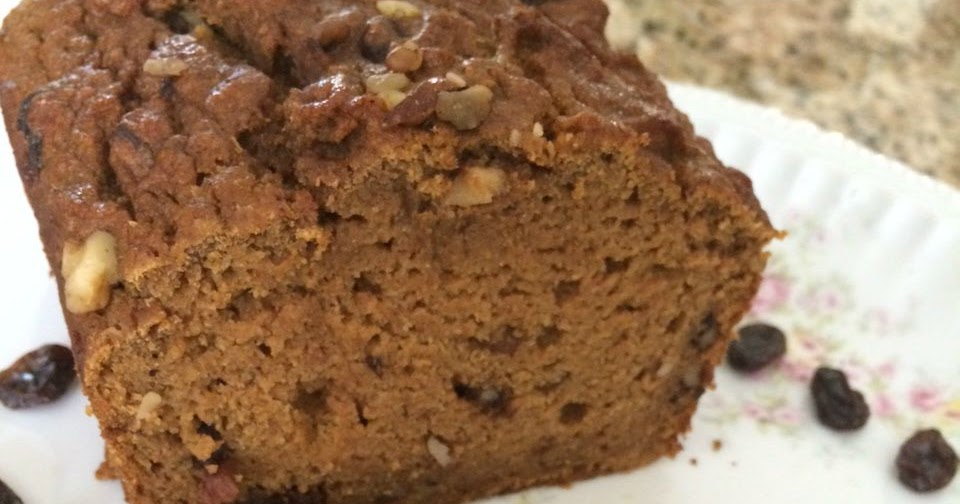
Today’s recipe is one of my favorite Fall recipes—Pumpkin Bread!  The recipe says you can make 2 9-inch loaves or 3 8-inch loaves.  I normally make 1 8-inch loaf and then several mini loaves to share.  This bread freezes wonderfully!!

Pumpkin Bread

2/3 cup shortening

2 2/3 cups sugar

4 eggs

1 can (1 pound) pumpkin

2/3 cup water

3 1/3 cups flour

2 teaspoons baking soda

1 ½ teaspoons salt

½ teaspoon baking powder

1 teaspoon cinnamon

1 teaspoon cloves

2/3 cup chopped nuts (I use walnuts)

2/3 cup plumped raisins

Heat oven to 350*.  Spray 2 9-inch loaf pans or 3 8-inch loaf pans with baking spray.  In a large bowl, cream the shortening with the sugar until fluffy.  Stir in the eggs, pumpkin and the water.  Blend in the flour, baking soda, salt, baking powder, cinnamon and cloves.  Stir in the nuts and raisins.  Pour into pans.  Bake about 70 minutes or until wooden toothpick inserted in the center comes out clean.  Enjoy!

Note: if you use the mini loaf pans, your baking time will be less.  I check mine at 40 minutes and go from there. 

An Apple a Day

Crisp, sweet, and delicious, bushels of apples are a true symbol that autumn has arrived. Whether you stroll through the apple orchard and pick some yourself, or scoop a few pecks up from the store, Americans just can’t get enough. By volume, we eat more apples than any other fruit. But for all the love we show to apples, how much do you actually know about our favorite fall fruit?

Archaeologists have found evidence that people have been eating apples since 6,500B.C.

The science of growing apples is called pomology.

There are more than 7,500 apple varieties in the world — about 2,500 varieties grown in the United States. About 100 of those are sold commercially. Apples are the second-most valuable fruit grown in the U.S. (oranges being the first).

Apples are grown in all 50 states, but they’re only grown commercially in 36 states. The top producing states are Washington, New York, Michigan, Pennsylvania, California, and Virginia.

Top producing counties in the world are China, United States, Turkey, Poland, and Italy.

Most apples in the world are still picked by hand.

 Americans eat more apples per capita than any other fruit. According to the USDA Economic Research Service, the average American eats about 16 pounds of fresh apples and 28 pounds of processed apples like juice, cider, or sauce, for a total of about 44 pounds per person per year.

 Apples are available in grocery stores all year long thanks to the global market, but the Northern Hemisphere typically considers as early as July and as late as November apple season. September and October are peak months.

If you’ve ever wondered why apples float it’s because they’re 25 percent air, giving us the ability to bob for apples in a barrel of water.

The common autumn party game bobbing for apples started as a Celtic New Year’s tradition for trying to determine one’s potential future mate.

Apples ripen up to 10 times faster at room temperature than if they are refrigerated.

Apple trees take at least four to five years to start producing fruit. Some take as many as 10 years.

The top ten varieties produced in the United States are Gala, Red Delicious, Granny Smith, Fuji, Golden Delicious, Honeycrisp, Mcintosh, Rome, Cripps Pink, and Empire.

An average tree produces 840 pounds of fruit.

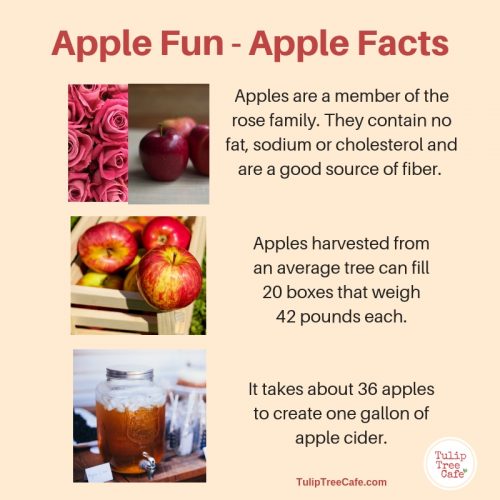
It takes about 36 apples to make one gallon of apple cider.

One of George Washington’s hobbies was pruning his apple trees.

Apples are a member of the rose family of plants, which also includes pears, peaches, cherries, and plums.

When John Glenn, the first American to orbit Earth, blasted off on his initial space flight, he carried with him pureed applesauce in squeezable tubes.

According to Guinness World Records, the largest apple peel was created by Kathy Wafler Madison in Rochester, N.Y. on October 16, 1976. The prize-winning peel was 172 feet 4 inches long.

The first American apple orchard was planted around 1625 by William Blackstone on Boston’s Beacon Hill.

Apple juice was one of the earliest prescribed antidepressants.

 Only sour apple trees were native to America before the European settlers brought with them their favorites.

The pale, lime green Lady apple is one of the oldest varieties of apple still available today. It was originally documented in early Rome (approximately 700 B.C.). It was first referenced as the ‘Lady apple’ in 1628 during the French Renaissance.

An apple has about 80 calories. They are fat-free, sodium-free, and cholesterol-free and also are an excellent source of fiber.

After nearly a decade with Red Delicious as the apple darling of the United States, Gala apples are now the nation’s favorite.

What Shall We Bake Today?

Today we’re going to make Banana Nut Muffins! These freeze beautifully, by the way. After they’ve cooled, put them on a baking tray in the freezer for about 30 minutes. Remove them, wrap in aluminum foil and freeze in an air-tight container for up to 2 months. You can also reduce the fat in these muffins, by substituting half (or all) of the oil with unsweetened applesauce.

Banana Nut Muffins

1-1/2 cups all-purpose flour

1 cup sugar

1 teaspoon baking soda

1/2 teaspoon salt

3 medium ripe bananas

1 large egg, room temperature

1/3 cup vegetable oil

1 teaspoon vanilla extract

In a large bowl, combine dry ingredients. In another bowl, mash the bananas. Add egg, oil and vanilla; mix well. Stir into the dry ingredients just until moistened. Fill greased or paper-lined muffin cups half full.

Bake at 375° for 18-22 minutes or until a toothpick inserted in the center comes out clean. Cool for 10 minutes; remove from pan to a wire rack to cool completely. Enjoy!

What Shall We Make Today?

We love pretzels at our house and this recipe takes store bought pretzels and turns them into a flavorful snack. I use 2 full bags of pretzels (I like Snyder’s) which sounds like a lot, but this recipe will keep if stored in an airtight container for a long time!

Baked Pretzels

2 1-lb bags of hard pretzels (broken into bite sized pieces)

1 cup oil (not olive!)

1 package Hidden Valley Ranch Dressing mix (original)

1/2 tsp lemon pepper

1/2 tsp dill weed

1/2 tsp garlic powder

Preheat oven to 350*. Mix all the ingredients (except the pretzels) in a small bowl. Put the broken pretzels in a large bowl and pour the seasonings/oil mixture over them. Stir to coat the pretzels. Pour the pretzels onto a baking tray and bake for 7 minutes. Remove from the oven and carefully stir the pretzels on the tray. Bake an additional 7 minutes. Remove from the oven. Continue to stir several times as the pretzels cool. Enjoy!

What Shall We Make Today?

This is one of my favorite recipes from my grandmother.  When my dad was growing up, times were tough, and nothing got wasted.  Whenever there was some leftover mashed potatoes, too much to throw away, but not enough for anyone to have with another meal, my Grandmother would make potato candy.  Since it was a favorite of mine, when I got old enough, Grandma taught me how to make it.  You can always make potato candy with a freshly cooked potato though never fear—you can cook a potato just for this!  If you wish to go that route, peel and cook the potato, drain, and then mash with a little butter and milk—omit salt, pepper or anything else.  Cool completely.  (If you are using leftover mashed potatoes, allow them to come to room temperature.)

Potato Candy

Mashed potatoes at room temperature

Powdered sugar

Flour

Peanut butter

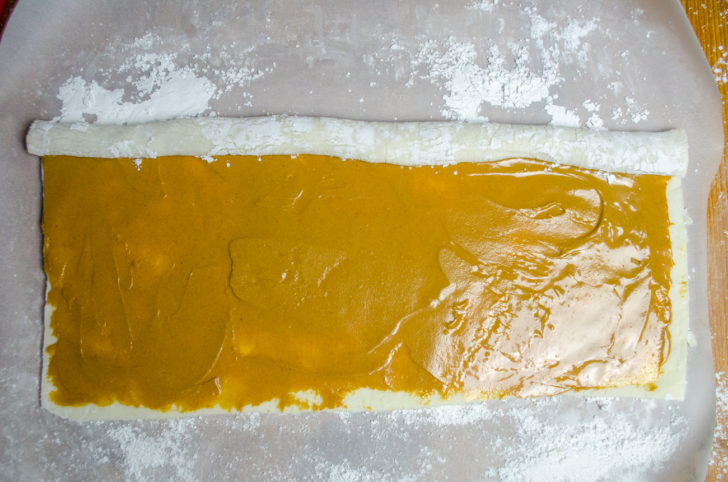
You’ll notice there are no specific amounts given for the ingredients, that’s because it all depends on the amount of mashed potatoes you start with.  A few tablespoons are more than enough to begin with.  You’ll need several cups of powdered sugar to start with.  You’re going to mix that with the potatoes to form a stiff dough.  I add a little sprinkling of flour to the dough to avoid adding more and more powdered sugar.  It will be very sweet.  Grab a piece of the potato “dough” and roll it out on a lightly floured board.* (Grandma taught me to use my hands to press it out rather than “dirty the rolling pin”.)  Thick or thin is a personal choice—I leave mine a little thicker.  Spread peanut butter on the dough (again, your preference as to how much peanut butter.) Roll up like a jelly roll and slice.  Repeat with the rest of the dough.  Chill.  This freezes for a long, long time.

The picture above shows one long roll, but I use smaller pieces of dough to make several rolls.  It’s much easier and less messy in my opinion, but the picture gives you an idea of what you’re shooting for. Enjoy!

*Some recipes call for the dough to be rolled out in powdered sugar, that would make it even sweeter, but that’s an option if you prefer.

What Shall We Cook Today?

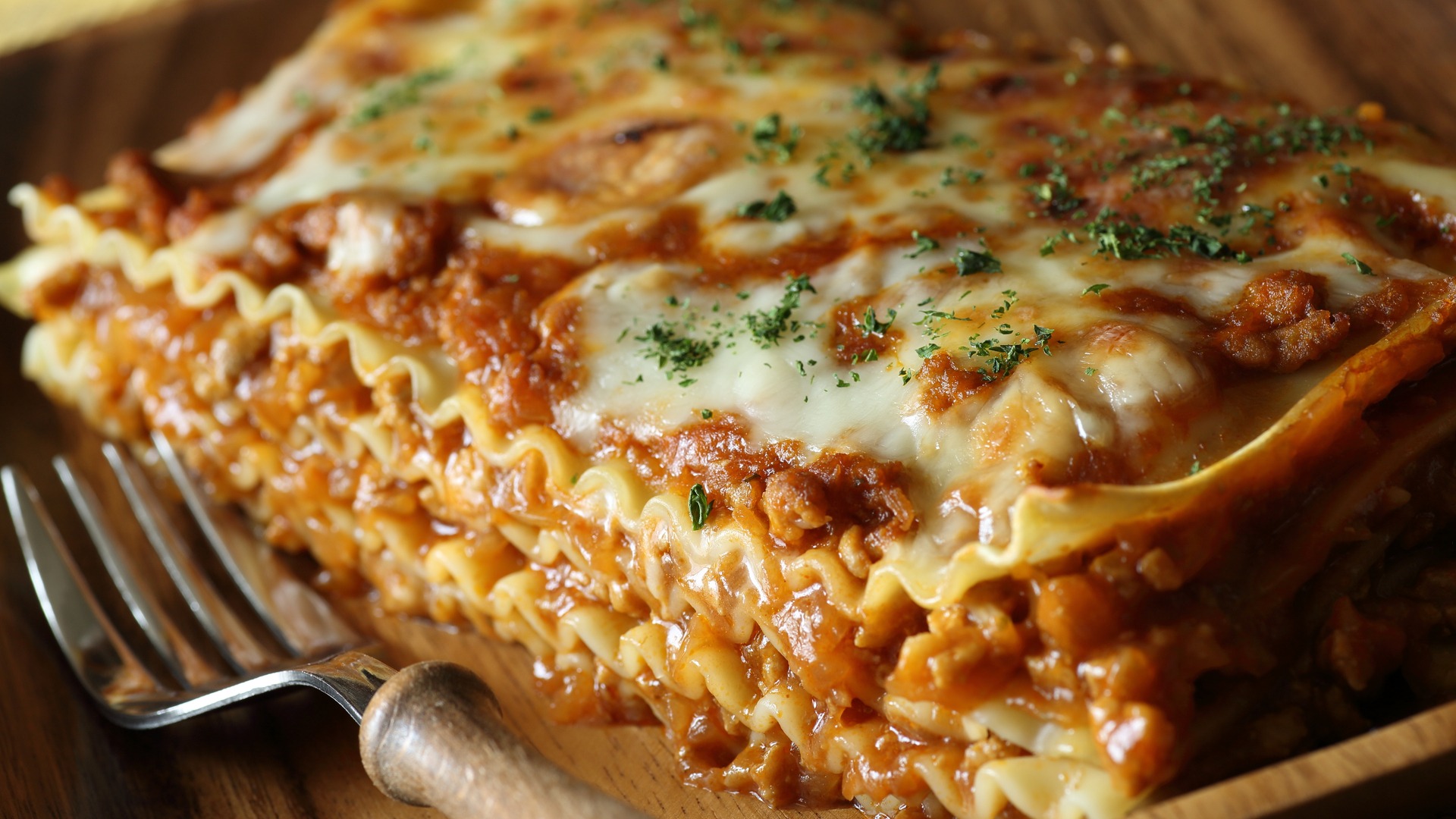
Today I am sharing my favorite lasagna recipe! I do not like ricotta cheese, so I use a combination of sour cream and cream cheese instead.  I have tried the lasagna noodles that do not require pre-cooking, but I was unsatisfied with the results, but you could always choose to substitute those if you wish.  And while I like mozzarella cheese, I am not in love with it, lol, so I do not add it between layers—some folks do.  Again, it’s what YOU like that counts.  This is a wonderful dish to assemble early in the day and put in the fridge till an hour or so before supper.  Then remove from the fridge while you preheat the oven.  Slide it in the oven for an hour and it’s done!

LASAGNA

1 pound ground beef, browned, rinsed, drained and seasoned to your taste

1 jar Spaghetti sauce (we like Prego)

9 Lasagna noodles cooked and drained*

1 8-ounce cream cheese slightly softened

1 16-ounce sour cream

Mozzarella cheese (I prefer finely shredded)

Preheat oven to 350*.  Combine the seasoned, browned ground beef with the spaghetti sauce.  In a bowl, beat the cream cheese and the sour cream.  Spray a 13 x 9 baking dish with non-stick cooking spray.  Assemble the lasagna in this manner: a layer of 3 noodles, then ladle 1/3 of the sauce/ground beef, then drop tablespoons of the sour cream/cream cheese mixture over that using approximately 1/3 of the mixture per layer.  You should be able to make 3 layers ending with the sour cream/cream cheese mixture.  Top with mozzarella cheese.  I top that with oregano, but any Italian seasonings you prefer would work also.  Cover the dish with aluminum foil and bake at 350* for 45 minutes.  Uncover and bake for an additional 15 minutes or until the mozzarella is melted. Enjoy!

*Lasagna noodles expand slightly when they are cooked, so you may want to trim them to fit your dish (I do, but I am admittedly anal about such things). 

National Watermelon Day!

Watermelons are made up of 92% water, hence the name.

A watermelon is one of the only foods to be classified as both a fruit and a vegetable.

Wild watermelons are native to South Africa.

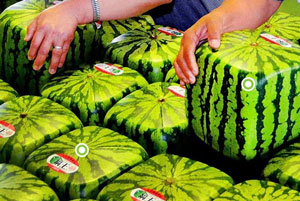
The novelty of a cubed watermelon began in Japan where they would grow them in glass boxed to hold their shape.

In Egypt and Israel it is common for watermelon to be served with feta cheese.

Watermelon is a relative of pumpkins and cucumbers.

Early explorers used watermelons similar to a drink bottle to hold fluids.

Watermelon is grown in 96 countries.

Watermelon has a greater concentrated source of lycopene in comparison to tomatoes.

In the United States amongst different melons, watermelon is the most consumed.

There are more than 1,200 varieties of different watermelons.

Although many people prefer not to, all of the watermelon including the rind can be eaten.

Globally, China is the leading producers of watermelons.

There is evidence showing that the first watermelon ever grown was in Egypt approximately 5,000 years ago.

United States are the fifth largest producers of watermelon globally.

The scientific name for a watermelon is ‘Citrullus Lanatus’.

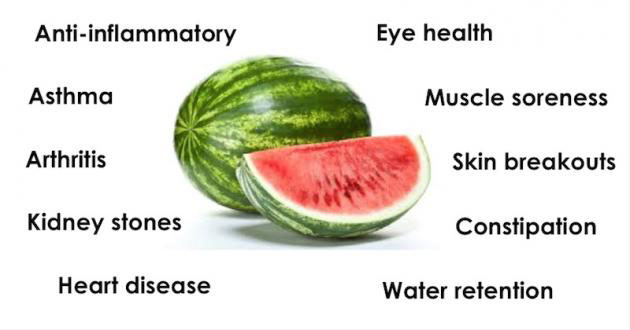
Watermelon juice may relieve muscle tension.

Watermelon is rich in many vitamins.

Watermelon contains 6% sugar.

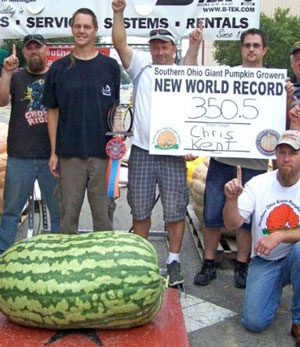
The heaviest watermelon recorded weighed 350.5 lbs and was grown in 2013.

In the United States an entire month has been dedicated to watermelons.

Watermelon has been known as a natural Viagra due to its citrulline content.

Seedless watermelons are not genetically modified but are a hybrid species.

Going on weight, watermelons are the most consumed fruit in America.

Watermelon has only about 40 calories per cup.

Chinese offer watermelons as gifts to a hostess.

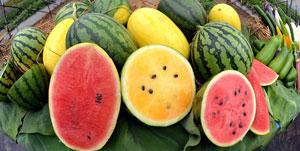
A watermelon’s flesh is not always red alternatively can be orange, green, yellow or white.

Some varieties of watermelon need 130 warm days to fully ripen.

In some cases watermelon can reduce inflammation in the body.

Watermelon does not contain any bad fat or cholesterol.

In ancient Egypt, watermelons were placed in burial tombs to nourish the soul after they had passed.

Watermelon only began growing in China in the 10th century and Europe in the 13th century.

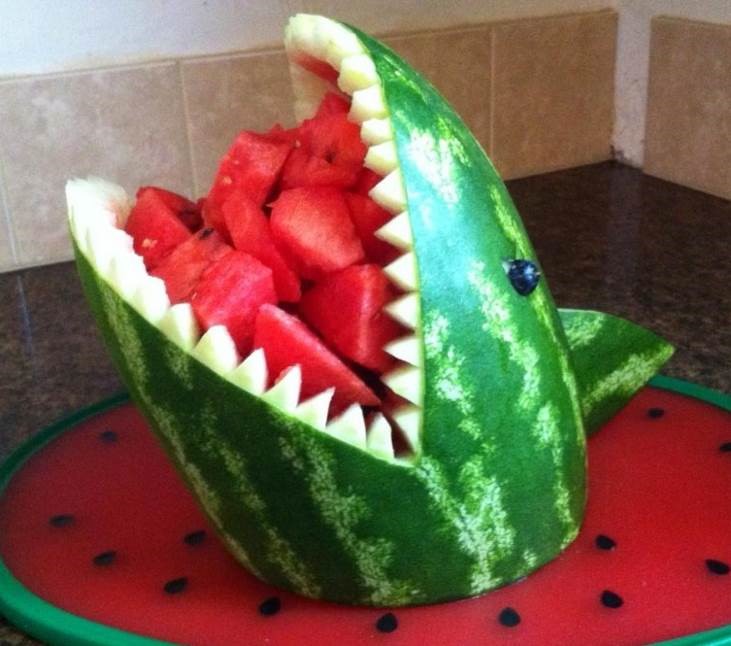
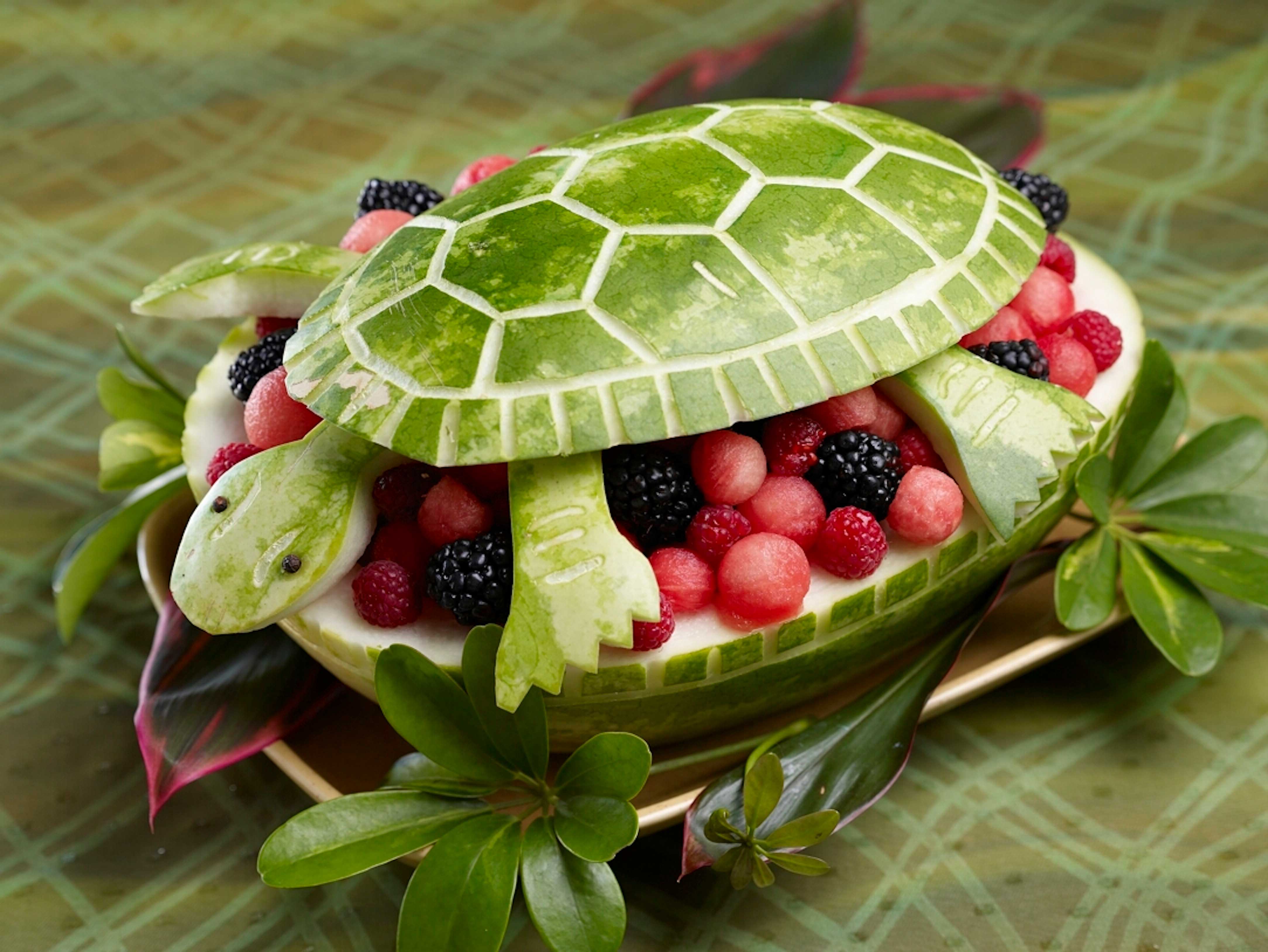
But to me, the most amazing fact about watermelon is that the part most people discard–the rind–can be carved into the most beautiful designs!

okay, technically not the rind…but it’s gorgeous!
same comment…it’s gorgeous!

And then, of course, there are the whimsical carvings…

So, get them while they’re in season!!

What Shall We Bake Today?

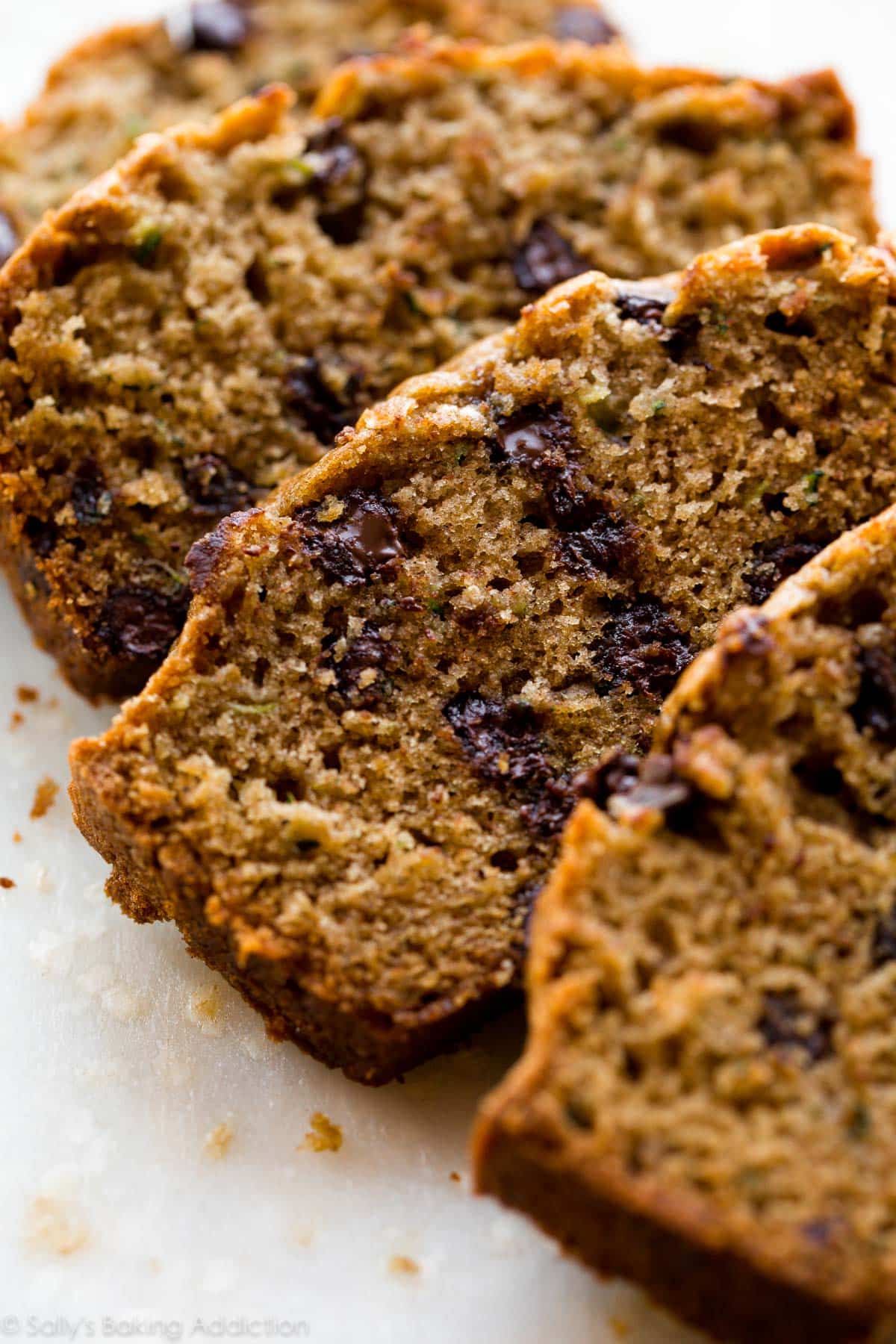
Since it will soon be time to harvest veggies from the garden, I thought I’d share my 2 favorite zucchini dessert recipes.  The first is zucchini bread—a moist, flavorful bread.

Zucchini Bread

3 eggs

2 cups sugar

1 cup oil

1 Tbsp vanilla

2 cups grated zucchini

2 cups flour

1 Tbsp cinnamon

1 tsp baking soda

1 tsp baking powder

Chopped nuts and/or raisins (optional: I use both)

Preheat oven to 350*.  Grease and flour 2 8-inch loaf pans.  Beat the eggs till frothy.  Then add the sugar, oil and vanilla.  Beat till thick and lemon colored.  Stir in the zucchini.  Mix all of the last ingredients (except the nuts or raisins) in a smaller bowl, then add to the egg mixture.  Mix well.  Stir in the nuts and raisins if desired.  Divide into the 2 loaf pans.  (I have also made this recipe using the mini loaf pans to share.)  Bake for one hour.  Enjoy!

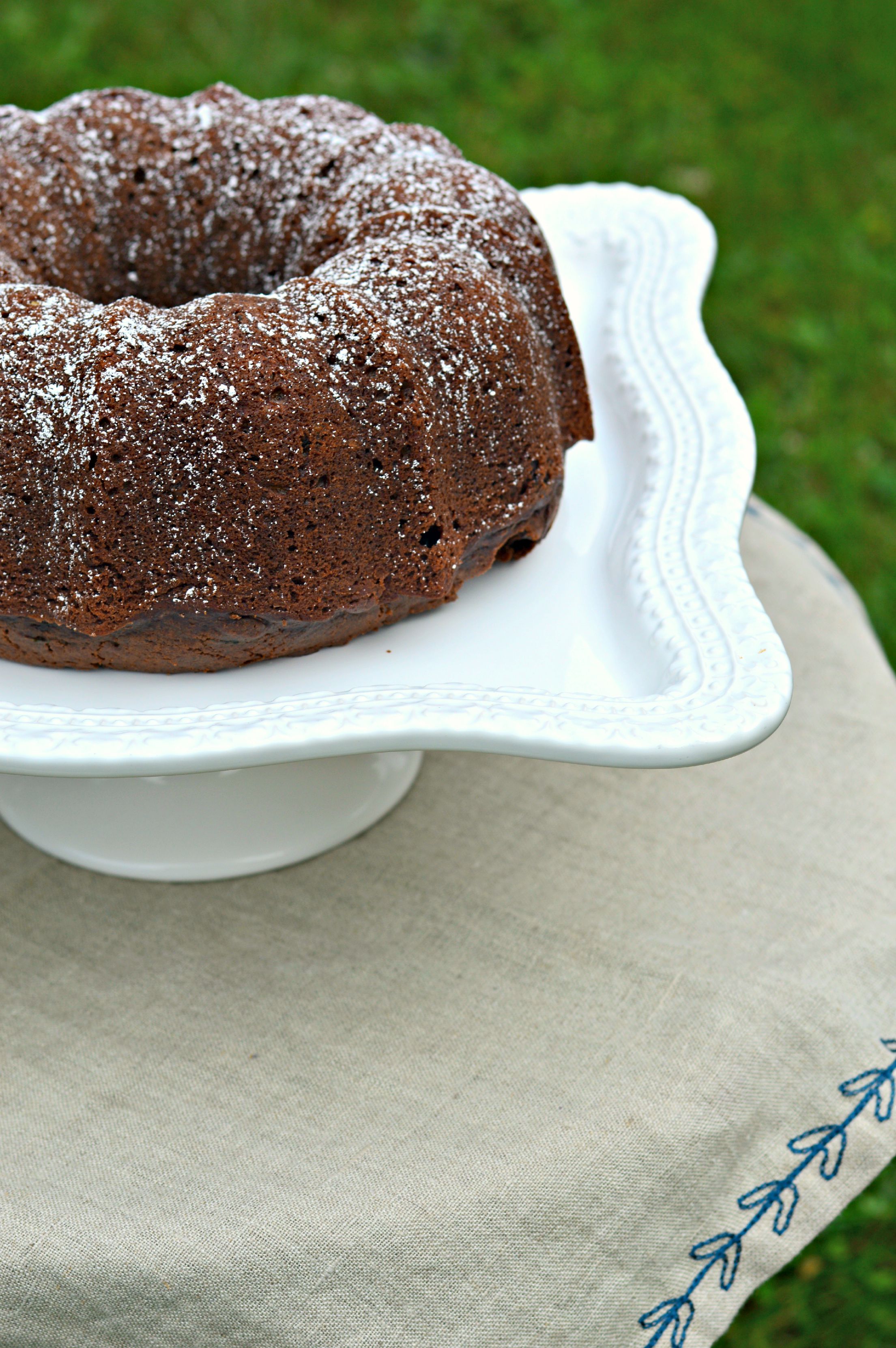
Chocolate Zucchini Cake

2 cups flour

2 cups sugar

¾ cup cocoa

2 tsp baking soda

1 tsp baking powder

½ tsp salt

1 tsp cinnamon

4 eggs

1 ½ cups oil

3 cups grated zucchini

¾ cup chopped walnuts

Preheat oven to 350*.  Grease and flour a bundt or angel food pan.  In a medium bowl, stir together the flour, sugar, cocoa, baking soda, baking powder, salt and cinnamon.  Add eggs and oil, and mix well.  Fold in the zucchini and nuts. Pour into the prepared pan.  Bake for 50-60 minutes.  Cool completely before frosting with your favorite frosting.  I like to dust with powdered sugar.  Enjoy!

What Shall We Bake Today?

Today we’re going to make carrot cake! I like this recipe because it uses a cake mix, genuine carrots and chopped nuts!

Carrot Cake

1 package yellow cake mix (I like Duncan Hines Moist Deluxe)

4 eggs

1/2 cup crisco oil

3 cups grated carrots

1 cup finely chopped walnuts (pecans also work in this recipe)

2 tsp ground cinnamon

Preheat oven to 350*. Grease and flour 2 8-inch cake pans. Combine cake mix, eggs, oil, carrots, nuts and cinnamon in a large bowl. Beat at low speed until moistened, then for 2 minutes beat on medium speed. Pour into pans. Bake at 350* for 35-40 minutes. Cool in pans for 10 minutes, then turn out onto wax paper lined plates. When completely cooled, frost. I have included a recipe for cream cheese frosting which I do not use because I don’t like cream cheese frosting…LOL

Cream Cheese Frosting

1 8-ounce package cream cheese, softened

1/4 cup butter, softened

2 tsp vanilla

4 cups confectioners sugar

Place cream cheese, butter and vanilla in a large bowl. Beat at low speed until smooth and creamy. Add confectioners sugar gradually, beating until smooth. (If the frosting needs to be thickened, add more confectoners sugar. If it needs to be thinned, add a little milk. ) Fill and frost the cooled cake. Garnish with additional chopped nuts if desired. Enjoy!