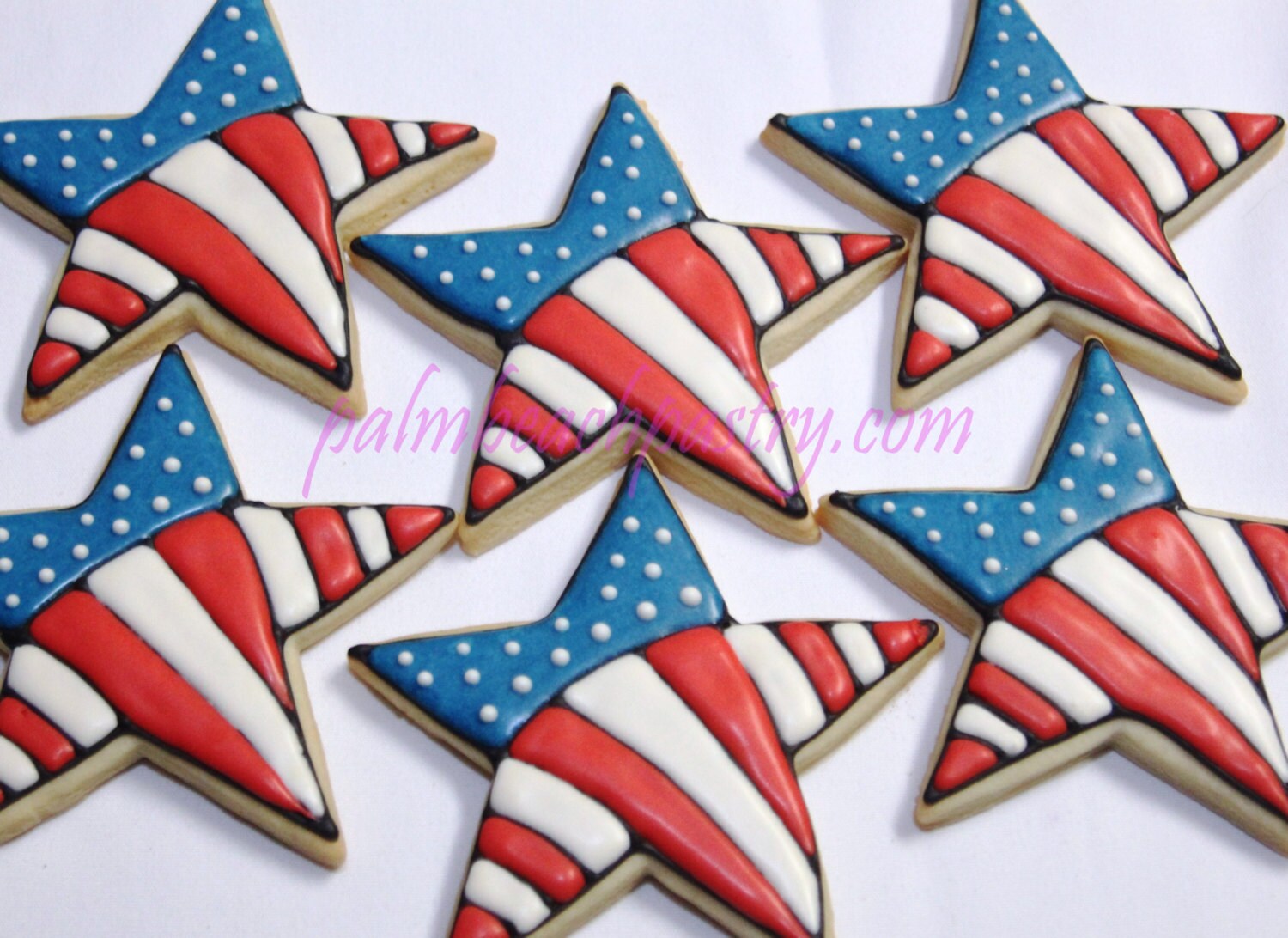
Today is National Sugar Cookie Day, so I brought my favorite sugar cookie recipe!
FULL DISCLAIMER: I never frost my cookies; i use colored sugars. But this cookie has a nice firm and crunchy texture that would definitely lend itself to icing if desired.
I have over a hundred cookie cutters in shapes for every holiday and some for every day. I make these cookies several times a year. The recipe makes a huge can of cookies and you’ll want to store them in a can to keep their crispness.
Ultimate Sugar Cookies
1 ¼ cups sugar
1 crisco stick
2 eggs
¼ cup light corn syrup
1 Tablespoon clear vanilla
1 Tablespoon butter flavoring
3 cups flour
¾ teaspoon baking powder
½ teaspoon baking soda
½ teaspoon salt
Colored decorative sugars
Combine the sugar and butter in a large bowl. (A mixer can be used, I use my hands.) Add eggs, syrup and flavorings. In a separate bowl, combine the flour, baking powder, baking soda and salt. Gradually add the flour mixture to the creamed mixture.
Gather the dough and shape into a log and wrap in waxed paper. I usually chill the dough overnight but it should be chilled for at least an hour.
Cut dough in to hunks and roll out dough on a floured surface. Cut into shapes and sprinkle colored sugars onto cookies before baking. Bake at 350* for 5 to 9 minutes depending on the thickness of the rolled dough shapes.
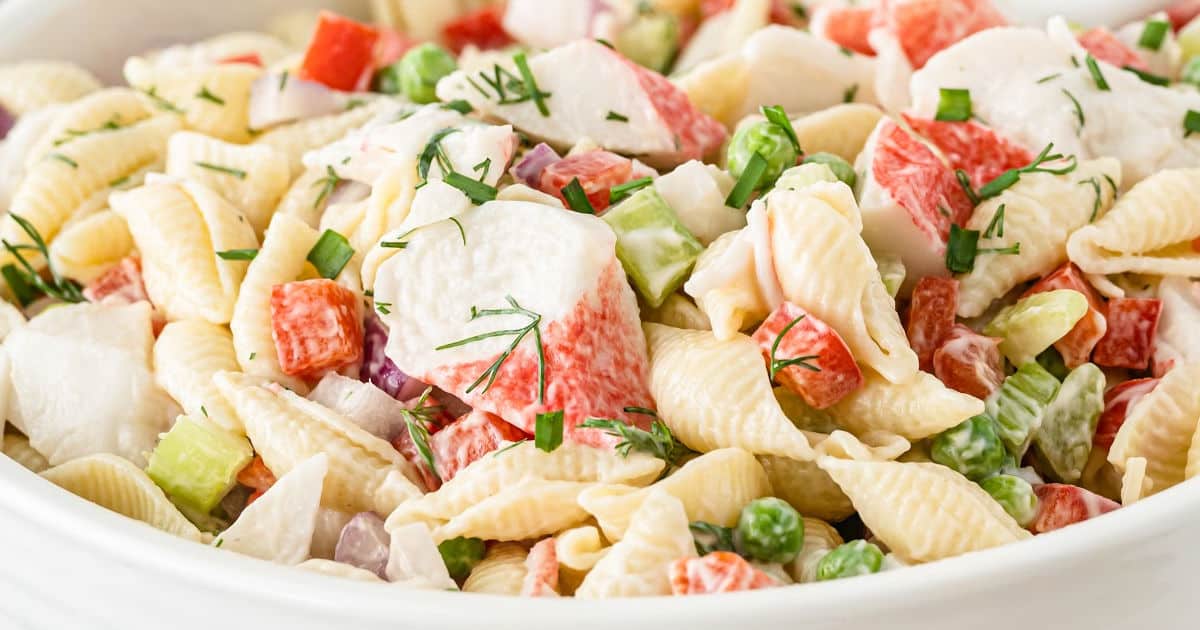
As promised, today’s offering is my mom’s Crab Pasta Salad. She didn’t include a picture of hers, and when I went searching, I couldn’t find one with all the same ingredients.
Crab Pasta Salad
Ingredients
8 ounces cooked and drained pasta (any type: spirals, shells, macaroni)
8 ounces imitation crab meat
1 cup frozen peas thawed
1 cup fresh broccoli
½ cup chopped green pepper
1/3 cup chopped red pepper
¼ cup sliced green onion
2 stalks celery chopped small
¾ cup mayonnaise
1/3 cup Italian salad dressing
3 Tbsp grated Parmesan cheese
Directions
In a large bowl, combine the pasta, crab meat, peas, broccoli, green and red peppers and onion. In another bowl, combine the mayonnaise, salad dressing, and Parmesan cheese. Pour over pasta mixture and toss to coat. Cover and refrigerate for 2 hours or until chilled. Enjoy!
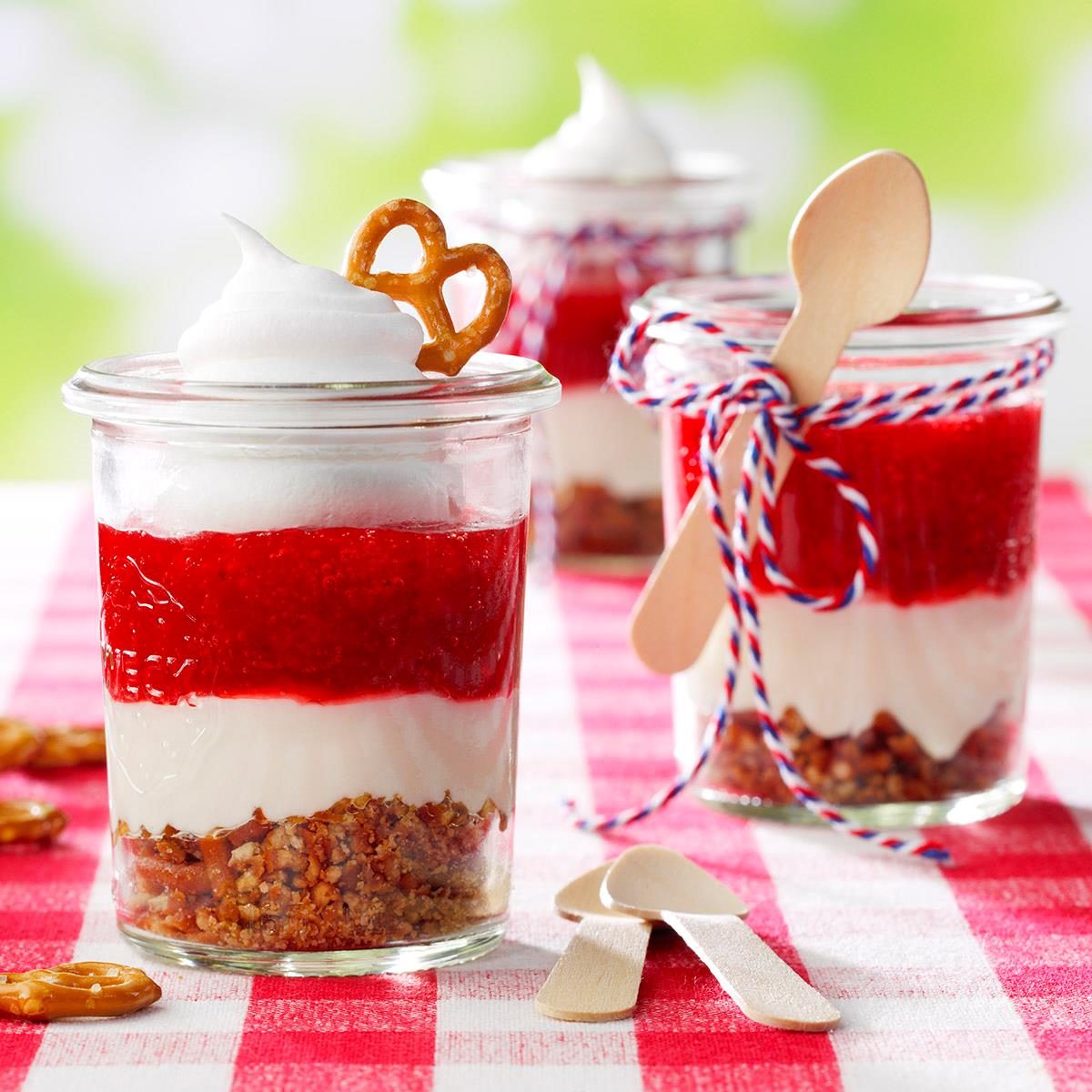
Preheat oven to 350°. In a small bowl, combine pretzels, butter and sugar; spread onto a baking sheet. Bake until crisp and lightly browned, 12-15 minutes. Cool completely on a wire rack; break into small pieces.
For filling, in a small bowl, beat whipped topping, cream cheese and sugar until smooth. Refrigerate until chilled.
For topping, in a large bowl, dissolve gelatin in boiling water. Stir in sweetened strawberries; chill until partially set, about 1 hour. Carefully layer pretzel mixture, filling and topping into 4-oz. glass jars. Chill until firm, at least 2 hours. If desired, serve with additional whipped topping and pretzels.
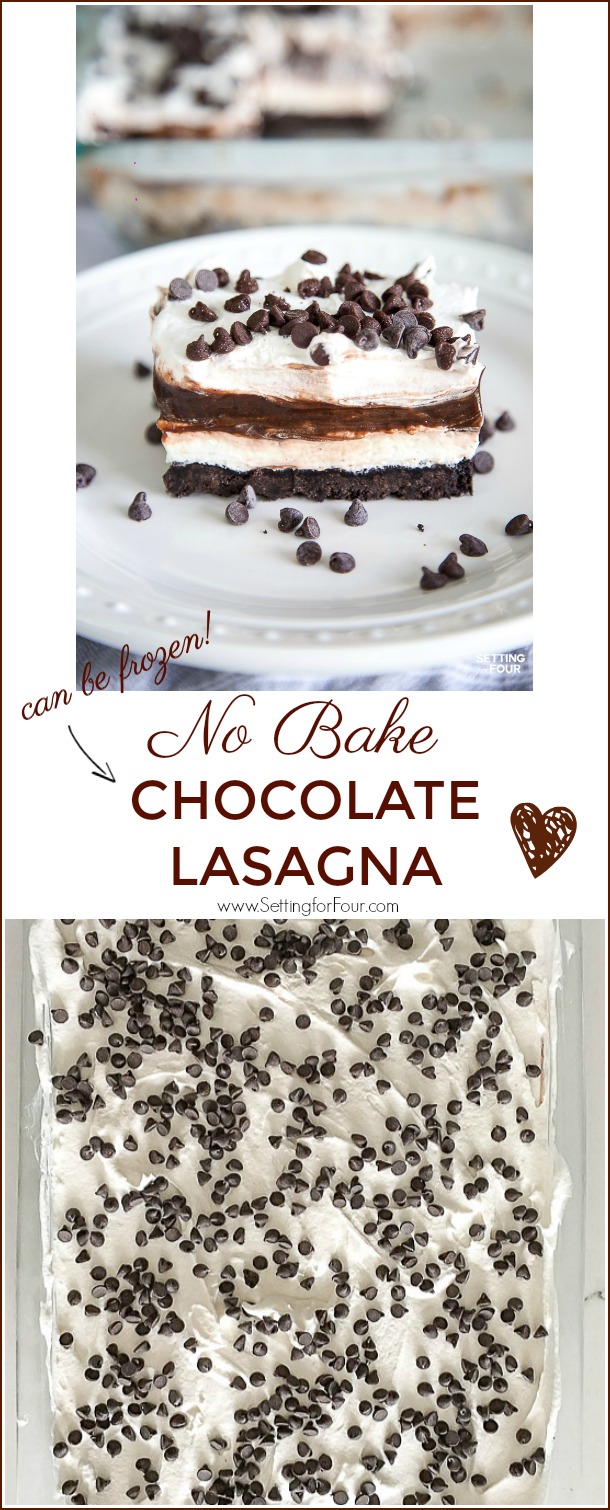
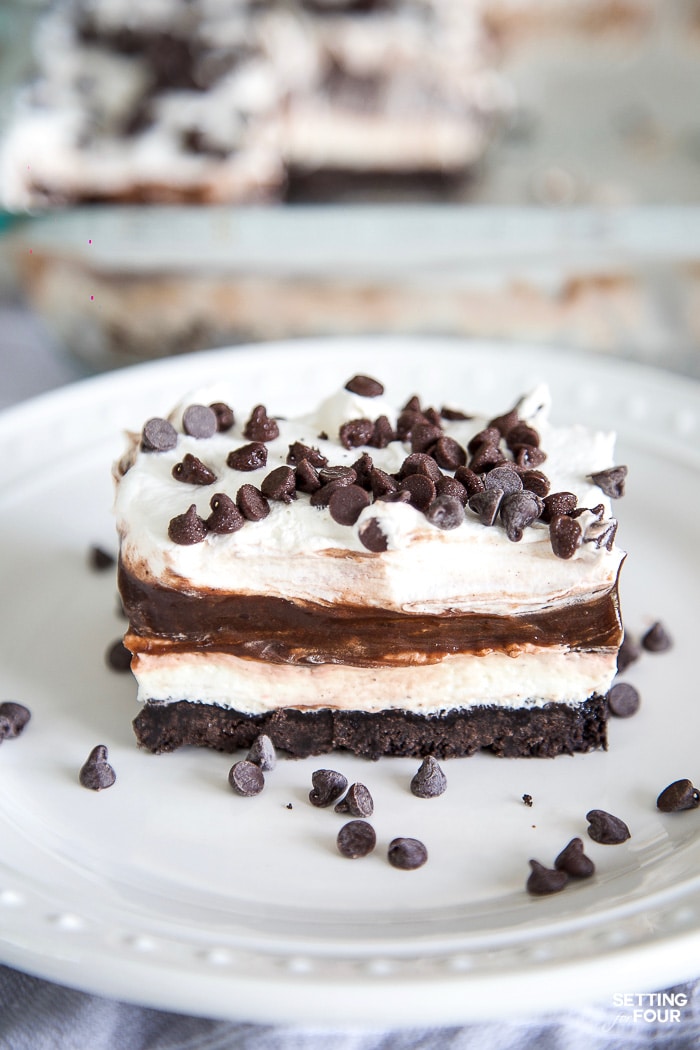
Picnic season is starting, so let’s make an easy, no bake dessert! Chocolate Lasagna!
Recipe Ingredients:
1 package regular Oreo cookies (not the Double Stuff kind) – about 36 cookies
5 Tablespoon butter, melted
8-ounce package cream cheese, softened
1/4 cup granulated sugar
2 Tablespoons cold milk
Optional – 4 tbsp chocolate liqueur such as Godiva Chocolate Liqueur or Bailey’s.( If you don’t want to use this, just leave it out! No substitution of another liquid is required.)
12-ounce tub Cool Whip, divided
2 of 3.9-ounce packages Chocolate Instant Pudding
3 1/4 cups cold milk
1 1/2 cups mini chocolate chips
Instructions:
Crush 36 Oreo cookies. You can use a food processor, but you could also place them in a large ziploc bag and crush them with a rolling pin or meat tenderizer mallet. Crush until the Oreos have turned into fine crumbs.
Add the Oreo crumbs to a large bowl. Stir in melted butter. Use a fork to mix the butter into the cookie crumbs. Transfer the mixture into a 9 x 13 inch baking dish, pressing the crumbs into the bottom of the dish. Place the baking dish into the refrigerator and work on the additional layers.
In a large bowl mix the cream cheese with a mixer until light and fluffy. Add 2 Tablespoons of milk and sugar. Mix well. Add the chocolate liquor if desired. Stir in 1 1/2 cups Cool Whip and completely mix. Spread this mixture over the Oreo crust.
In a bowl, add 3 and 1/4 cups cold milk to the chocolate instant pudding. Whisk for several minutes until the pudding starts to thicken. Use a spatula to spread the pudding mixture over the cream cheese layer. Allow the dessert to firm up on the countertop for 5 minutes.
Spread the remaining Cool Whip on top. Next sprinkle mini chocolate chips over the top. Place in the freezer for 1 hour, or the refrigerator for 4 hours then serve.
Today’s offering is called Wacky Cake! The instructions are a little different from what I’m used to. See what you think!
Wacky Cake
Ingredients
1 ½ cups all-purpose flour
¾ cup granulated sugar
⅓ cup unsweetened cocoa
1 teaspoon baking soda
½ teaspoon kosher salt
⅓ cup oil
1 tablespoon distilled white vinegar
2 teaspoons vanilla extract
1 cup water
Wacky Cake Frosting
¼ cup chopped toasted pecans
Directions
Preheat oven to 350°F. Sift flour, sugar, cocoa, baking soda, and salt into an ungreased 8- x 8-inch baking pan; spread mixture evenly in pan. Make 1 large well and 2 small wells in mixture in pan. Carefully pour oil into the large well, vinegar into 1 small well, and vanilla into remaining small well. Pour 1 cup water evenly over entire mixture in pan. Stir everything together using a fork until combined.
Bake in preheated oven until a wooden pick inserted in center comes out clean, 25 to 30 minutes. Transfer to a wire rack.
Pour Wacky Cake Frosting over warm cake. Sprinkle with chopped pecans. Cool completely, about 2 hours.
Wacky Cake Frosting
Ingredients
⅓ cup butter
¼ cup whole milk
3 tablespoons unsweetened cocoa
2 ¾ cups powdered sugar, sifted
1 teaspoon vanilla extract
Directions
Cook butter, milk, and cocoa in a small saucepan over medium-low, stirring often, until mixture comes to a simmer. Remove from heat; gradually whisk in powdered sugar and vanilla until completely smooth. Pour on your favorite cake.
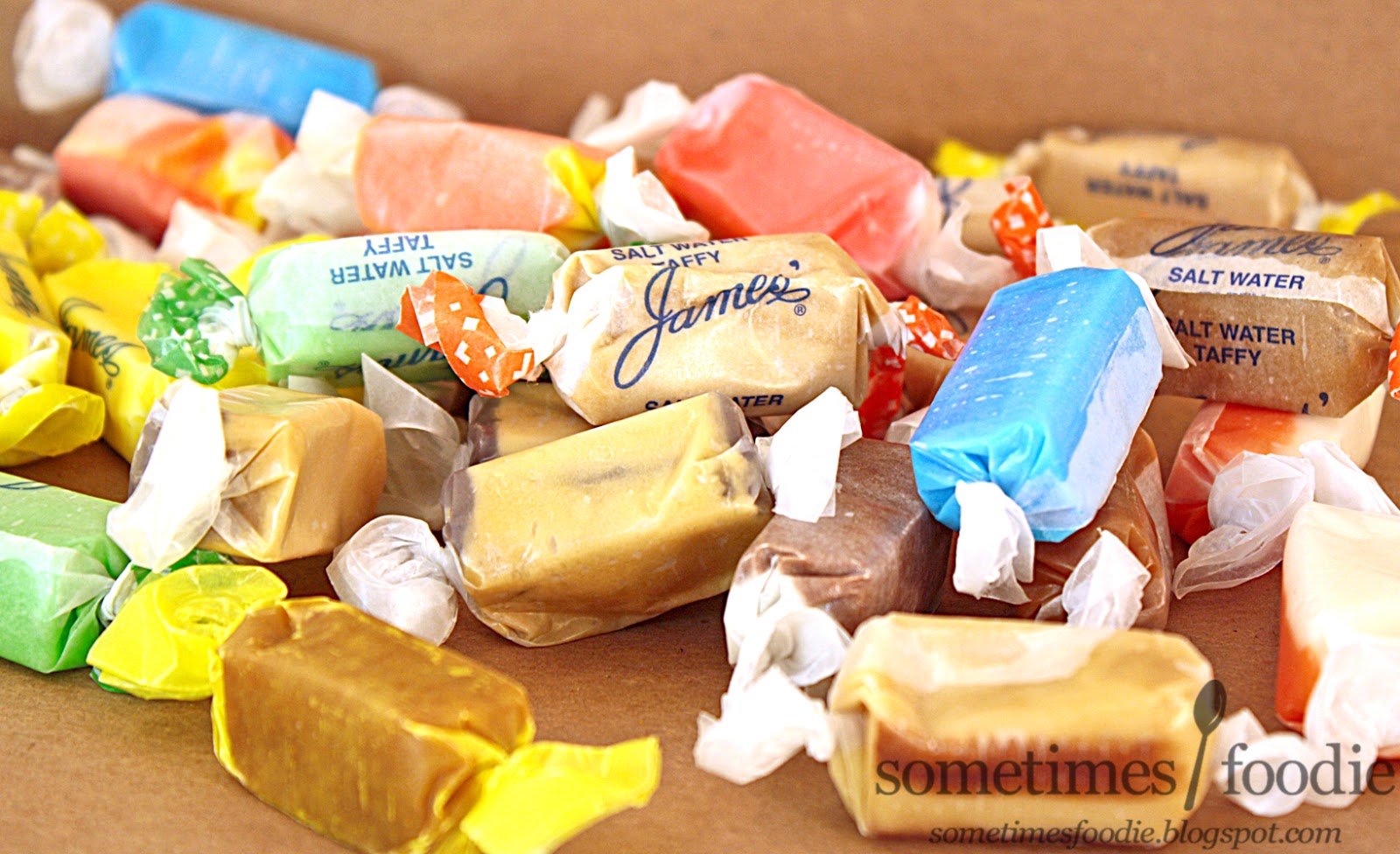
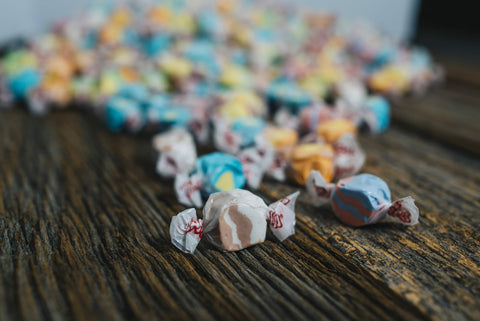
In honor of National Taffy Day, I found an article on the Taffy Town website. Enjoy!
The History of Salt Water Taffy
Do you ever wonder, “Why is it called ‘saltwater taffy’?” Perhaps you’re asking yourself, “Where did salt water taffy originate from?” Like many favorite recipes, salt water taffy’s history isn’t always clear, but one thing is certain: this American-made candy has been around for over a century and enjoyed by millions. So who invented it, and how did salt water taffy get its name? Read on to learn more about the history of salt water taffy!
Where Was Salt Water Taffy Invented?
Though there are a few popular origin stories for where the term “salt water taffy” came from, the most popular salt water taffy history story claims Atlantic City as its birthplace.
When Was Salt Water Taffy Invented?
Most food historians believe salt water taffy was invented in the early 1880s. The story begins with a gentleman named John Ross Edmiston. The owner of a small boardwalk postcard shop in Atlantic City, Edmiston hired a man named David Bradley to sell taffy alongside his wares. While Edmiston eventually fired Bradley, he kept the popular candy in his shop. One night, an ocean swell flooded his boardwalk shop. In the morning, Edmiston discovered all the taffy had been soaked in salty sea foam.
During his cleanup, a young girl came into the store asking if he still had some taffy for sale. Jokingly, Bradley said that he had some “salt water taffy.” The little girl purchased the taffy and took it back to the beach to share with her friends. Her mother heard the name and instantly loved it, and thus the name “salt water taffy” was born.
Is Salt Water Taffy Really Made With Salt Water?
While the origin of salt water taffy tells us the taffy was soaked by the sea, Since then,salt water taffy hasn’t been caught at high tide., Recipes for salt water taffy vary; none contain actual salt water (and especially not ocean water!). Often, however, both water and salt are usually added at some point during the production process, so the name still fits.
Salt Water Taffy: No Longer Just a Beachside Treat
The word “taffy” was first used in the United States in the early 1800s. While much has changed since then, Americans’ love for taffy has only grown.
Now you know where the name “salt water taffy” comes from, let’s take a closer look at where it first was sold: Atlantic City. This beach side resort destination in New Jersey was a popular getaway for Northeasterners in the late 19th century (and still today). Catering to tourists and weekenders, Atlantic City was full of fine dining restaurants, upscale hotels and gambling halls, and boardwalk games and sweets; to stand out from the competition, a candy shop needed to create demand. Once Edmiston coined the curious term “salt water taffy” the sweet treat only grew in popularity.
Joseph Fralinger, a confectioner in Atlantic City, is given credit for being the first successful merchandiser of the candy. Originally, salt water taffy was something only purchased from an Atlantic City boardwalk stand. However, Fralinger came up with the idea of boxing up the taffy for people to take home. This was a smashing success, and his boxes of taffy sold out quickly. Even today, simple boxes stuffed with individually wrapped taffy remain one of the most popular ways to buy this all-American candy.
Salt water taffy history may have begun on boardwalks by the oceans, but it is now commonly enjoyed as a tasty treat all over the country. Thanks to the pioneers of salt water taffy, this wrapped candy comes in tons of flavors and can be enjoyed anywhere! At Taffy Town, we’re far from any coast, yet have become one of the most popular gourmet taffy producers in the country. Taffy is no longer just a beach side treat.
Taffy Town’s Unique Taffy-making Process
We’ve covered salt water taffy history, but what about how it’s being made today? When it comes to salt water taffy, there’s regular taffy, and then there’s Taffy Town taffy. Those who have tried our candy know that we stand out from the others. But what is the difference that sets our taffy apart?
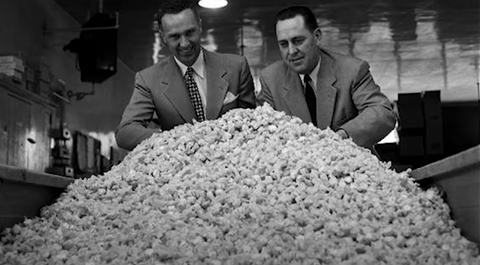
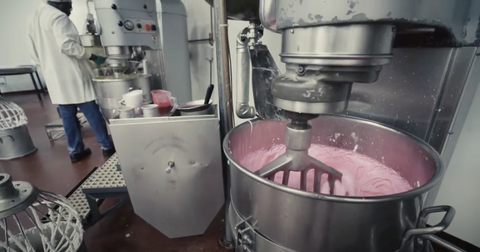
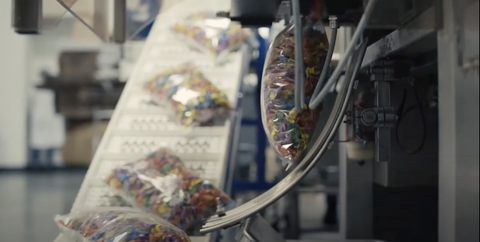
Traditional salt water taffy production starts by boiling a variety of sugars in a large copper kettle to a high temperature. Then, the sugary mass goes through an aeration process to capture tiny bubbles in the candy. This makes it softer and less tacky. Typically, a pulling machine stretches, twists, and kneads the mixture into a chewy treat. After that, the taffy is cut into pieces and packaged for consumption.
Now for the most important part: our unique taffy-making process that makes Taffy Town taffy the best around! Unlike the traditional method, our process starts with whipping a meringue to create the fluffiest structure possible. We use evaporated milk and real salt in our recipe for a creamy, rich base for our flavors. Try our taffy and you’ll quickly realize that we aren’t your average taffy shop.
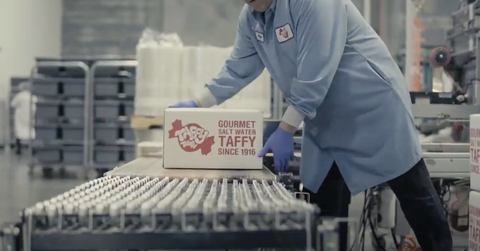
Our salt water taffy production process takes three days from start to finish, and our factory is always full of fresh treats! We currently have over 90 different flavors, and we’re always on the hunt for new ones. Each year, we take suggestions from our customers and consumer trend reports to develop our flavors. Our taffy flavors are thoroughly tested for tastiness before they hit the shelves. With our wide selection to choose from, you’re sure to find at least a few favorites!
We’re Keeping the History of Salt Water Taffy Alive at Taffy Town
We’re proud to carry on the history of salt water taffy — one of America’s favorite candies. Did you know that you don’t have to be on a boardwalk to enjoy our wide selection of Taffy Town flavors? You can shop from the comfort of your own home and savor the treats that come straight to your door. Take a look at our wide variety of salt water taffy flavors. We have the perfect gourmet candy selection for every palate. Stop by our Utah candy store or place your salt water taffy order today!
Today’s offering is Pecan Browned Butter Coffee Cake! This cake takes a little bit of prep, but it is oh-so-delicious!!
Ingredients
¾ cup butter
2 cup finely chopped pecans, toasted*
2 cup packed brown sugar
2 teaspoon all-purpose flour
3 cup all-purpose flour
1 ½ teaspoon baking powder
1 ½ teaspoon baking soda
¾ teaspoon salt
3 eggs
1 teaspoon vanilla
1 ½ cup plain yogurt
Coffee Icing
5 teaspoon milk
1 teaspoon instant coffee crystals
1 cup powdered sugar
Directions
In a medium saucepan, melt butter over medium heat. Reduce heat to medium-low. Continue to cook, without stirring, for 5 to 6 minutes or until butter becomes brown and fragrant. Remove from heat; cool slightly. Transfer to a bowl. Cover and chill for 2 hours or freeze for 30 minutes or until firm.
Preheat oven to 325 degrees F. Grease and flour a 10-inch fluted tube pan; set aside.
For filling, in a bowl, combine 3/4 cup of the pecans, 1/2 cup of the brown sugar, and the 2 teaspoons flour. Add 3 tablespoons of the browned butter and work in with fingers or a fork until mixture is crumbly; set aside. In another bowl, stir together the 3 cups flour, the baking powder, baking soda, and salt; set aside.
In a mixing bowl, beat remaining browned butter with an electric mixer on medium to high speed for 30 seconds. Add remaining 1- 1/2 cups brown sugar; beat until combined, scraping bowl occasionally. Add eggs one at a time, beating after each addition until combined. Stir in vanilla. Alternately add flour mixture and yogurt to butter mixture, beating on low speed after each addition just until combined. Stir in the remaining 1-1/4 cups pecans. Spoon half of the batter into prepared pan, spreading evenly. Sprinkle evenly with filling. Spoon remaining batter over filling, spreading to cover.
Bake about 50 minutes or until a wooden toothpick inserted near the center comes out clean. Cool in pan on a wire rack for 10 minutes. Remove from pan. Cool completely on wire rack. Drizzle with Coffee Icing.
Coffee Icing:
In a bowl, stir together 4 teaspoons milk and instant coffee crystals until dissolved. Stir in powdered sugar and enough additional milk (1 to 2 teaspoons) to make a drizzling consistency.
8 ounces Cool Whip, thawed (lite or fat free can also be used)
1 9-Inch Graham Cracker Crust
Preparation
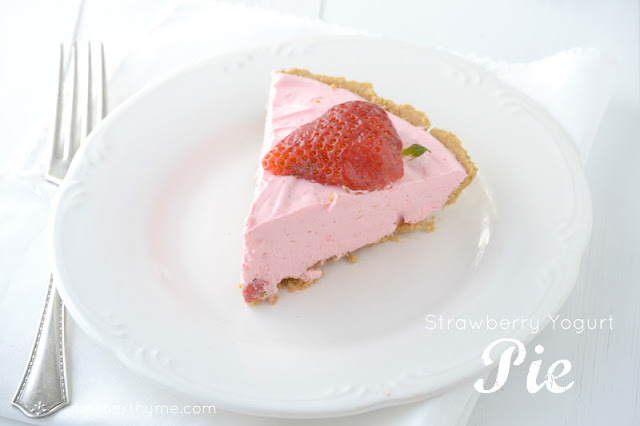
In a medium bowl dissolve the Jello mix in the boiling water then set it aside to cool slightly.
Stir in yogurt until combined. Fold in the Cool Whip. Spread into the prepared pie crust. Top with sliced strawberries if desired.
Refrigerate for at least 2-3 hours until set. Enjoy!
*My mom made this and it’s delicious. She used regular everything—not sugar free or lite. She said you can also pair other Jello flavors and yogurt—like peach—if you like.
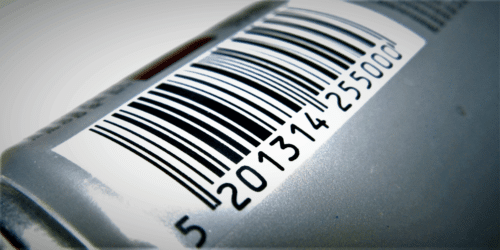
Every few years, the small town of Troy in Miami County, Ohio celebrates an historic occasion that for a few giddy weeks puts it on the world map of the grocery trade. At the time, National Cash Register, which provided the checkout equipment, was based in Ohio and Troy was also the headquarters of the Hobart Corporation, which developed the weighing and pricing machines for loose items such as meat. It was here, at just after 8 a.m. on June 26, 1974, that the first item marked with the Universal Product Code (UPC) was scanned at the checkout of Troy’s Marsh Supermarket.
It was treated as a ceremonial occasion and involved a little bit of ritual. The night before, a team of Marsh staff had moved in to put bar codes on hundreds of items in the store while National Cash Register installed their scanners and computers. The first “shopper” was Clyde Dawson, who was head of research and development for Marsh Supermarket; the pioneer cashier who “served” him, Sharon Buchanan. Legend has it that Dawson dipped into his shopping basket and pulled out a multi-pack of Wrigley’s Juicy Fruit chewing gum. Dawson explained later that this was not a lucky dip: he chose it because nobody had been sure that a bar code could be printed on something as small as a pack of chewing gum, and Wrigley had found a solution to the problem. Their ample reward was a place in American history.
The first item marked with the Universal Product Code (UPC) was scanned at the checkout of Troy’s Marsh Supermarket. Courtesy of Yale University Press
Joe Woodland said himself it sounded like a fairy tale: he had gotten the inspiration for what became the bar code while sitting on Miami Beach. He drew it with his fingers in the sand. What he was after was a code of some sort that could be printed on groceries and scanned so that supermarket checkout queues would move more quickly and stocktaking would be simplified.
That such a technology was needed was not his idea: it came from a distraught supermarket manager who had pleaded with a dean at Drexel Institute of Technology in Philadelphia to come up with some way of getting shoppers through his store more quickly. The delays and the regular stocktaking were costing him his profits. The dean shrugged him off, but a junior postgraduate, Bernard “Bob” Silver, overheard and was intrigued. He mentioned it to Woodland, who had graduated from Drexel in 1947. Woodland was already an inventor, and he decided to take on the challenge.
So confident was he that he would come up with a solution to the supermarket dilemma, Woodland left graduate school in the winter of 1948 to live in an apartment owned by his grandfather in Miami Beach. He had cashed in some stocks to tide him over. It was in January 1949 that Woodland had his epiphany, though the brilliance of its simplicity and its far-reaching consequences for modern existence were not recognized until many years later.
Joe Woodland (here) and Bernard Silver filed a patent in 1949, which was granted in 1952. Courtesy of Yale University Press
It was Morse Code that gave him the idea. Woodland had learned it when he was in the Boy Scouts. As he was sitting in a beach chair and pondering the checkout dilemma, Morse came into his head: “I remember I was thinking about dots and dashes when I poked my four fingers into the sand and, for whatever reason—I didn’t know—I pulled my hand toward me and I had four lines. I said ‘Golly! Now I have four lines and they could be wide lines and narrow lines, instead of dots and dashes. Now I have a better chance of finding the doggone thing.’ Then, only seconds later, I took my four fingers—they were still in the sand—and I swept them round into a circle.”
The patent illustrates the basic concept of a bull’s-eye-shaped bar code.
Back in Philadelphia, Woodland and Silver decided to see if they could get a working system going with the technology to hand. They first filed a patent in 1949, which was finally granted in 1952. Woodland and Silver had the right idea, but they lacked the minicomputer and, critically, a very bright light with which to “read” the black and white bar code. On July 16, 1960, Hughes Aircraft Company made one of the most sensational announcements in the history of science. One of their research scientists, Theodore Maiman, had made an “atomic radio light brighter than the center of the sun.” Maiman produced for the newsmen his “laser,” an acronym for Light Amplification by Stimulated Emission of Radiation.
Theodore Maiman looks at the ruby used to create the first laser beam. Bettmann/Corbis
A booklet produced in 1966 by the Kroger Company, which ran one of the largest supermarket chains in North America, signed off with a despairing wish for a better future: “Just dreaming a little . . . could an optical scanner read the price and total the sale. . . . Faster service, more productive service is needed desperately. We solicit your help.”
A small research team at the powerful Radio Corporation of America (RCA) was looking at a few new projects, including the possibility of an automatic bank cash machine, which they decided would not go because “the customer would not buy the concept.” Finally, they lighted on the bar code. They soon found the Woodland and Silver patent. Printing the bull’s-eye bar code proved to be one of the greatest difficulties, because any imperfections would make the whole system unworkable.
The first real-life test of RCA’s bull’s-eye bar code was at the Kroger Kenwood Plaza store in Cincinnati. Courtesy of the ID History Museum
On July 3, 1972, the first automated checkstands were installed. More checkstands were installed and a comparison with other Kroger stores told an undeniable and very promising story: the bull’s-eye bar code hit the target, with superior sales figures. But this was just one store in a nationwide grocery and supermarket business worth billions. If the laser and bar code were to revolutionize the checkout counter, they would have to be near universal.
The goal of the Ad Hoc Committee of the Universal Product Identification Code could be stated very simply. The representatives of the grocery trade were charged with finding a way to introduce a Universal Product Code, a bar code of some description that would be common to all goods sold in supermarkets and imprinted by the manufacturers and retailers. The code would carry information about the nature of the product, the company that made it, and so on. In-store computers would “read” this information with scanners and introduce their own variations, which might involve special offers and reductions.
In the end, seven companies, all of them based in the United States, submitted systems to the Symbol Committee, a technical offshoot of the Ad Hoc Committee. International Business Machines (IBM) made a surprise bid. IBM’s George Laurer was handed the specifications for a bar code that had been determined by the Symbol Selection Committee: it had to be small and neat, maximum 1.5 square inches; to save money it had to be printable with existing technology used for standard labels; it had been calculated that only ten digits were needed; the bar code had to be readable from any direction and at speed; there must be fewer than one in 20,000 undetected errors.
Like so many inventions, the UPC was not an immediate success. It was when the mass merchandisers adopted the UPC that it took off, Kmart being the first. In fact, bar code technology was almost made for companies like Walmart, which deal in thousands of goods that need to be catalogued and tracked. The bar code took off in the grocery and retail business in the 1980s, and at the same time began to transform manufacturing. In 2004, Fortune magazine estimated that the bar code was used by 80 to 90 percent of the top 500 companies in the United States.
Test tubes with blood samples are marked with bar codes. AB Still LTD/Science Photo Library/Corbis
Though the inspiration for the bar code was the plea by supermarkets for technology that would speed up the checkout, its greatest value to business and industry is that it has provided hard, statistical evidence for what sells and what does not. It has transformed market research, providing a rich picture of people’s tastes, and it has made production lines more efficient.
After many years of anonymity, the man whose knowledge of Morse Code inspired the familiar black and white stripes finally got some recognition. In February 1992, President George H.W. Bush was photographed at a national grocery convention looking intently at a supermarket scanner and having a go at swiping a can with a bar code over it. The New York Times correspondent wrote this up as evidence that it was the first time Bush had seen a supermarket checkout. In other words, he was out of touch with everyday American life.
His aides insisted that he was not struck by the novelty of the technology but by the fact that it could read a damaged bar code. Apocryphal or not, the story stuck and was regarded as damaging to Bush. However, as Woodland’s local newspaper put it: “George Bush isn’t one to hold a grudge. No Sir.” A few months after the checkout incident, Bush presented Woodland with a National Medal of Technology.
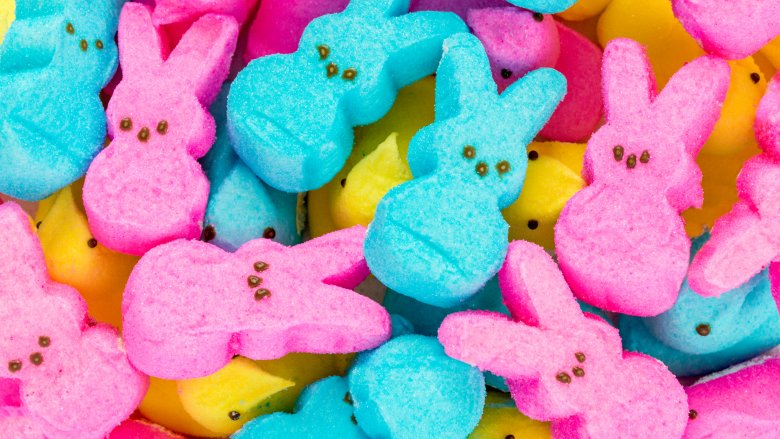
I love peeps! I like them stale and I prefer the flat bunnies to the rounded chicks. That’s probably more than you wanted to know…lol…but read on for more weird facts about peeps!
The first Peeps took a long time to make…
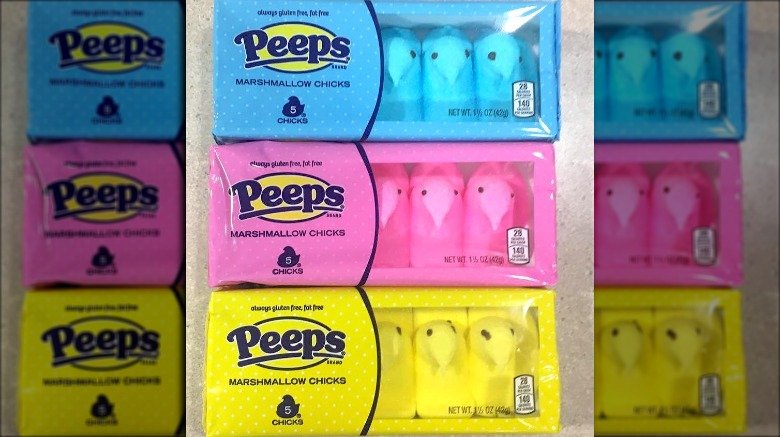
Today, Peeps chicks are produced at a breakneck speed of six minutes each. If six minutes for one marshmallow doesn’t sound all that impressive, it’s because you don’t know how long the process used to take.
In 1953, Just Born, the candy company who made Peeps a household name, was looking to acquire the Rodda Candy Company, mostly because of its jelly bean technology. But on a tour of that factory, the Born family noticed something that piqued their interest that had nothing to do with jelly beans. Just Born vice president Matt Pye told USA Today, “… while the family was touring the Rodda Candy Company, in the back part of the factory were these women with pastry tubes squirting these marshmallow chicks by hand.” But this was no quick process — it took 27 hours from start to finish to make these marshmallow chicks, thanks to the very lengthy cooling time required before the candy could be packaged.
Once Just Born acquired the company, they immediately set about automating the Peeps-making process, which included a faster dry time, and have managed to shave 21 hours off the operation. Now that you have all the facts, six minutes seems party darn fast, doesn’t it?
Is there really car wax in Peeps?
You may have heard a rumor that carnauba wax, an ingredient in some candy, is the very same ingredient used in car wax — and it is, indeed. However, it’s probably not as bad as it sounds.
Not only is carnauba wax approved by the FDA for human consumption, but according to Snopes, the amount used in candy is so minuscule that it simply cannot be likened to taking down a spoonful of Turtle Wax. And because of its high melting point, it’s actually not even absorbed by our bodies. Which leads us to one slightly creepy point…
Carnauba wax is typically used to give candy a sheen or a hard shiny surface, and in Peeps it’s what makes those brown eyes so shiny. When a pair of Emory scientists put the candy through a barrage of tests to determine its indestructibility, they stumbled onto something disconcerting about those eyes. After taking an hour-long bath in Phenol, a protein-dissolving solvent, the marshmallow was all but gone. The only thing that remained? A pair of wax eyes, bobbing in the Phenol, intact. The same eyes that will travel through your digestive system, intact. If that’s not nightmare fuel, we don’t know what is.
It would take this many Peeps to…
Have you ever laid in bed at night wondering how many Peeps it would take to span the Golden Gate Bridge? You’re in luck. The good folks at USA Today determined just how many marshmallow chicks and bunnies it would take to measure up against some of the world’s most famous landmarks, and the numbers will blow your mind.
Wrap your head around this one: Houston’s NRG Park (aka the Astrodome) can seat up to 70,000 fans in its 1 million square feet. But to fill that stadium with Peeps? It would take an astonishing 1.7 trillion (trillion!) chicks.
The Hoover Dam built out of marshmallow? Probably wouldn’t be too effective, but it would take 1.3 billion Peeps to do it.
Stack Peeps bunnies up on top of each other ears to tail, and it would take 1,464 to measure up to the Statue of Liberty, 8,300 to reach the top of Chicago’s Willis Tower (aka the Sears Tower), and 2,664 to line up with the Washington Monument.
And that piece of Golden Gate Bridge trivia you’ve been waiting for… It would take more than 43,000 bunnies lined up side to side to complete the span.
Some actually prefer them stale!
Believe it or not, fresh-from-the-package Peeps aren’t for everyone — and no, we don’t mean that in the obvious way.
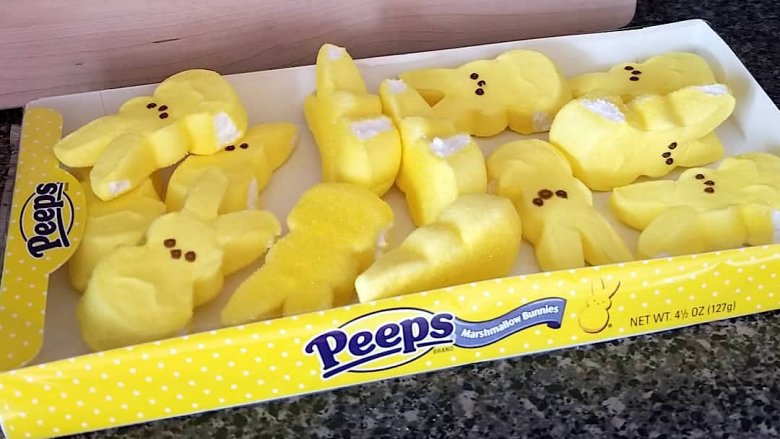
There are more fans of stale Peeps out there than you might think, according to Just Born VP Matthew Pye, who told HuffPost, “Everyone thinks they’re the only ones who like [them],” but confirmed that about 25 to 30 percent of consumers actually prefer Peeps — as he so eloquently puts it — “aged, like a fine wine.” With those kinds of numbers, should we expect aged marshmallows to hit shelves soon? Nope, says Pye. They can’t afford to disappoint that 70 to 75 percent of customers who prefer them fresh. “If we were to produce a stale Peep, we couldn’t satisfy what the people want,” he explains. “We let the consumer do it themselves.” Let’s be honest, “making” stale Peeps at home is pretty easy.
Take this Instagrammer, for instance, who has perfected her aged Peeps process: “It’s crunchy bunny season!!!!! I only buy Peeps at Easter. I prefer the bunny shape, and I like them CRUNCHY on the outside. I usually open the package, split them apart and let them sit for a couple of days. Peep Perfection!!!” Crunchy bunny season does have a certain ring to it, doesn’t it?
What in the world is Peepza?
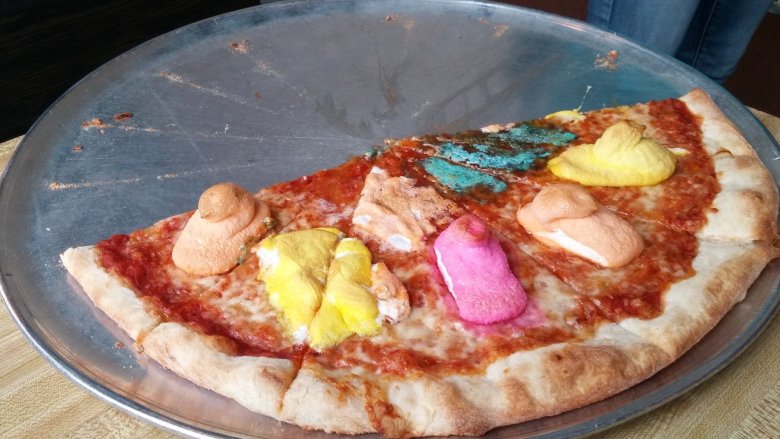
What do you get when you throw some Peeps onto an unsuspecting pizza? Peepza, otherwise known as the pizza absolutely nobody asked for ever.
It seems like every Easter someone on the internet “discovers” Peepza, but to properly lay the blame… er, give credit where credit is due, we have to go back to 2010, when Serious Eats columnist Adam Kuban debuted his springtime mashup (via Eater). The Peepza is exactly what it looks like: A plain cheese pizza, cooked almost completely, then topped with Peeps and cooked for another minute to get the marshmallows nice and melty. If we’re to believe Kuban, “it actually doesn’t taste as bad as you might think.” “You know that whole salty-sweet dynamic that we all tend to love so much? Peepza has it in spades,” he promised.
What’s good for the goose isn’t always good for the gander, though. In 2017, SBNation’s Charlotte Wilder decided to hop on the Peepza bandwagon, and her review was decidedly less enthusiastic than Kuban’s. “I took a bite of the Peepza, and let me tell you, this is the grossest s**t I’ve ever eaten. And I tried chocolate chip cookies made with cricket flour this week (don’t ask),” she said. “It tasted exactly like you think it would: A Peep on top of pizza, which is disgusting.”
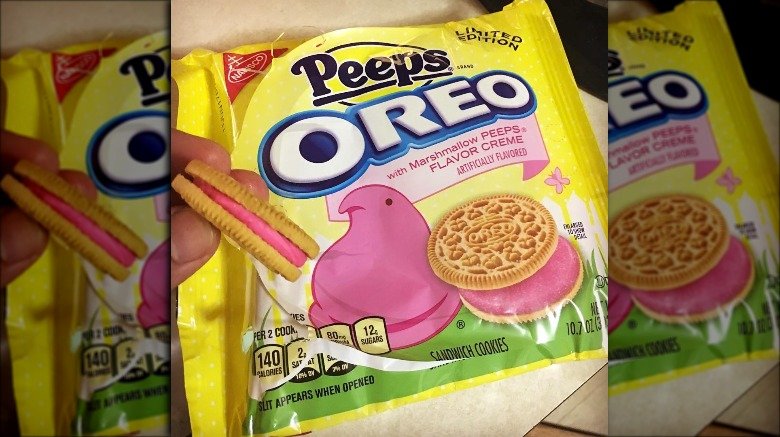
Peeps Oreos came with a strange side effect…
When limited edition Peeps Oreos, complete with neon pink marshmallow-flavored creme, hit the shelves the 2017, fans of the Easter candy were quick to gobble them up. But it didn’t take long before an unsettling trend was noticed.
Turns out the bright pink creme had a surprising side effect: Bright pink poop. Those experiencing this phenomenon took to Twitter to air their dirty laundry, along with others who didn’t have that particular issue, but experienced other side effects, like a stained pink tongue and Pepto-Bismol-hued spit.
Can hot pink Oreos really have this effect on our bodies?
According to LiveScience they can, thanks to the red #3 food dye used in the creme, which gastroenterologist Dr. Ian Lustbader says doesn’t get broken down in the body during digestion. While the colored poop indicates nothing serious health-wise, for someone to actually see this startling side effect, they’d have to eat a lot of cookies. “It’s certainly going to take more than one or two,” Lustbader explained. He further surmised that if you’re eating enough of these cookies to turn your poop pink, you should probably be more worried about the sugar’s and fat’s effect on your health. Touché, doc.
Peeps has infiltrated breakfast (and dessert)…
If having Peeps available anytime during the year and in a plethora of flavors isn’t enough for you Peep-le, then how about Peeps cereal? Yep, it’s a thing. This limited edition cereal is the tasty product of a Peeps and Kelloggs collaboration. This seasonal breakfast cereal (dessert) features rainbow rings and little marshmallows shaped like Peeps bunnies and chicks.
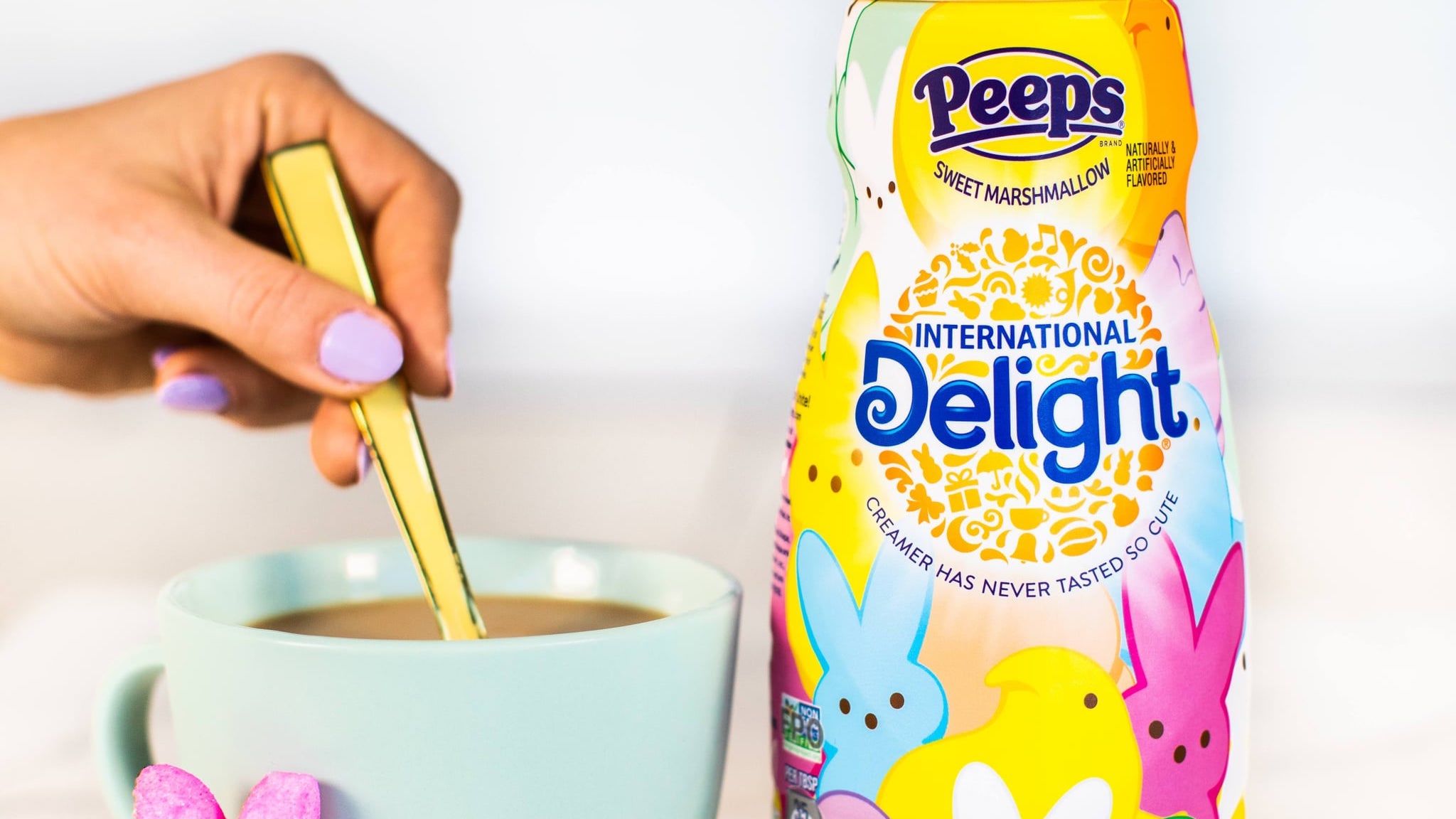
If cereal isn’t your M.O. and you’d prefer to start your day off with pure liquid energy (that’s coffee, by the way), then International Delight has you covered. If you’ve visited the refrigerated creamer section at your local grocery store recently, you might have noticed the plethora of different creamers that are readily available to you — M&M’s creamer anyone? What about Reese’s? International Delight offers seasonal flavors, too, and for spring they bring you Peeps Creamer. And if you want more dessert with your Peeps, Cold Stone Creamery recently introduced Peeps ice cream, which is for springtime only.
There was a Peeps Mobile and a Peeps Fun Bus!
What would you think if you were waiting at a red light and a bright yellow Volkswagen Bug with a Peep (of comparable size) riding on top of it rolled up beside you? Well, you’d initially want to take a photo (because who wouldn’t?), then you’d probably wonder if this car had been touring the states just as much as the Oscar Meyer Weinermobile.
Well, it happened back in 2003, in honor of Peeps 50th anniversary. And it wasn’t just a Volkswagen Bug. (Why stop with one vehicle when you can have two?) There was a Peeps bus that toured as well. Inside that revamped school bus was Peepsville: A life-sized diorama that showcased the different Peeps that were in production at that time. (They’ve most definitely expanded on their flavor offerings since then). The bus came complete with a sampling station, so everyone could try a Peep — but who hasn’t tried a Peep before?
Peeps is a Pepsi flavor.
Returning two years after a quick run as a promotional giveaway, Pepsi has reintroduced its Peeps flavor to beverage shelves across the U.S. Pepsi x Peeps merges the sugary cola sweetness of Pepsi with the marshmallow essence of Peeps to create a vanilla-ish cola combination, available in 7.5-ounce mini-cans and 20-ounce bottles. Customer reactions are as mixed as the candy-in-soda formula. Happy YouTube reviewers call out the balance of sweetness as surprising, noting the Peeps marshmallow essence as being present in the aroma as well as the flavor. Online critics mark the beverage down for the same reasons, hinting that this flavor may be better enjoyed by Peeps fans rather than regular Pepsi drinkers.
If the flavor sounds inspired, it certainly lit up the beverage industry. The original hype over this splash-up mash-up was followed by competitive cola colossus Coca-Cola offering their own marshmallow soda. The company recruited Grammy-winning musician Marshmello for their own marketing blitz. While the expanding line of Peeps flavors and merchandise may suggest the candy is on trend, Peeps-flavored Pepsi is a springtime flavor sensation that will only be available for a limited time.





:max_bytes(150000):strip_icc():format(webp)/WackyCake-Beauty-0821_3x2-001f89cdc9024194a7342e882a3a500a.jpg)



:max_bytes(150000):strip_icc():format(webp)/R152709-8b1c5c2d12374bffa2e1a43d25e6c094.jpg)





 Sew Colorful