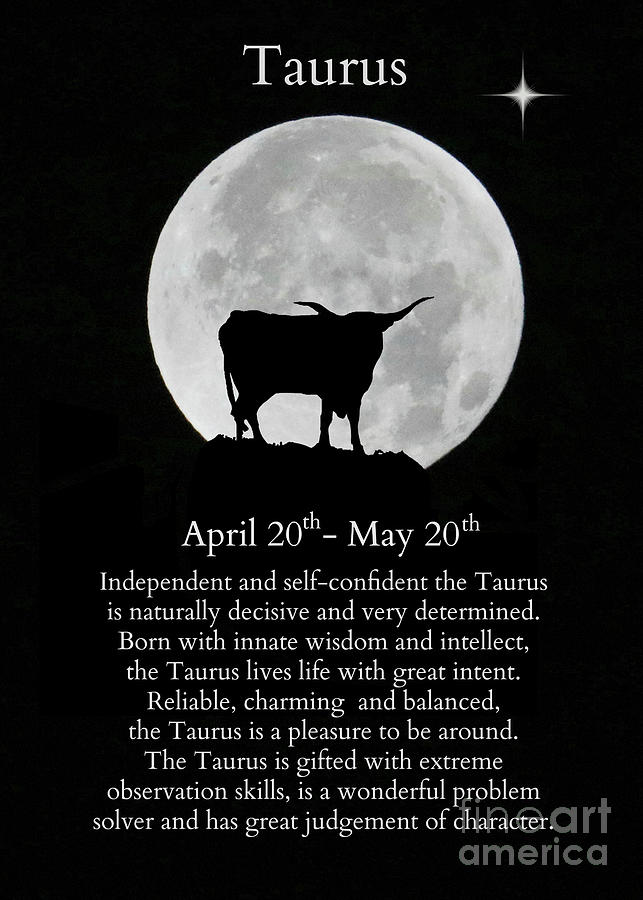
Smart, ambitious, and trustworthy, Taurus is the anchor of the Zodiac. Amazing friends, colleagues, and partners, Taureans value honesty above all else and are proud that their personal relationships tend to be drama free. Bulls get the reputation of being stubborn, but they’re not always stuck in their ways. This searching sign is willing to see another point of view, but they won’t flip-flop on an opinion just to make someone else happy. They will shift their thinking only if they truly have a change of heart.
With a rep as one of the hardest-working signs in the Zodiac, a Bull is never afraid to roll up those sleeves and get to work, and won’t blink an eye at pulling an all-nighter to get the job done. But it’s not all work for a Taurus sign. Anchored by the earth, this passionate sign is all about sensuality, and is always seeking out pleasure. Whether they’re indulging in luxurious massages, spending hours in bed with their lover, or going on a long run, Taureans love feeling present in their body and frequently need to get in touch with their physical self.
When it comes to love, Taureans are all about honesty, which is why a first date with a Bull may resemble a job interview. They’re not being rude—they’re built for partnerships and are simply trying to see if you’re a good fit at the start. And once you begin dating a Taurus, forget about white lies. A Taurus would much rather hear that an outfit is unflattering than endure hollow compliments. Taurus will hold a grudge against someone who lies, even if it’s a lie just to make them feel happy. Detail-oriented Taurus may seem nitpicky (even in the bedroom, a mid-romp critique may not be unusual), but that’s not because they want to offend. They simply demand the best, and they expect the people in their life to deliver.
While Taurus signs have an intense internal drive, they sometimes have trouble respecting authority, especially if asked to do something they think is pointless or should be done differently. Learning to be flexible and go with the flow can be an advantage to Taurus. And while Taureans have a rich internal life, they value external attributes and may overlook someone who doesn’t have the perfect outfit, car, or resume. Learning the benefits of getting to know someone before writing them off can be a lifelong lesson to a Taurean, especially in love, where they might be too hasty to write off a perfect match.
Taurus in Love
Ruled by Venus, a Taurus in love is sensual to the max and very connected to their physical bodies. A Taurus must feel physical attraction from the start if a romance is going to take off. But those who want to seduce Taurus first have to get past the formidable external barriers this sign places in front of them.
Taurus Friendship Style
“Friends forever” is a cliché probably dreamed up by a Taurus. When it comes to friendship, once you’re in with a Bull, you’re in for life. Bulls aren’t just loyal, they’re also fun, with a witty streak that always keeps you laughing. They don’t take friendship lightly, and remember birthdays, anniversaries, and other key events, often with a card or gifts.
Taurus Career, Money & Success Traits
Taurus greatest career strength: Persistence. A Taurus will look at a project, break it down into steps, and get things done, even if it means burning the midnight oil. Taurus never utters the words “too busy” and quickly becomes a cherished member of any work team.
Persistent and hardworking, once a Taurus sets a goal, it will get done—despite any obstacles that may come up. While becoming friends with a Taurus can be tough since they’re so particular about who they want in their social circle, once you’re in, you’re in for life. Taurus doesn’t get pulled down by gossip or petty drama. They’ll always see the best in their loved ones and buoy them up when they’re feeling down.
Taurus’ Greatest Challenges
Yes, they’re hardworking, but they’re also lazy. How is that even possible? Because Bulls are so driven by their own internal compass, they sometimes have trouble pivoting to fulfill someone else’s demands, which can lead to tough times at work or school. Learning to consider others’ viewpoints is a lifelong lesson for all Taureans.
Taurus’ Secret Weapon
Willpower. Think of its symbol, the bull (or even a bulldozer), and you’ve got an idea of how Taurus gets things done. They push, roll over, and dominate whatever challenges they’re facing until those challenges are history. They’re also a model for perseverance—when a Bull decides to do something, they get it done.
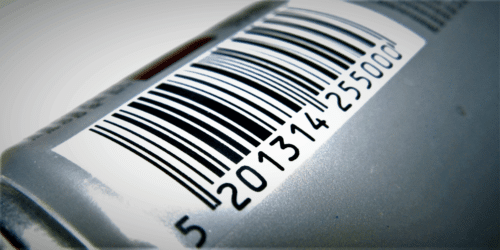
Every few years, the small town of Troy in Miami County, Ohio celebrates an historic occasion that for a few giddy weeks puts it on the world map of the grocery trade. At the time, National Cash Register, which provided the checkout equipment, was based in Ohio and Troy was also the headquarters of the Hobart Corporation, which developed the weighing and pricing machines for loose items such as meat. It was here, at just after 8 a.m. on June 26, 1974, that the first item marked with the Universal Product Code (UPC) was scanned at the checkout of Troy’s Marsh Supermarket.
It was treated as a ceremonial occasion and involved a little bit of ritual. The night before, a team of Marsh staff had moved in to put bar codes on hundreds of items in the store while National Cash Register installed their scanners and computers. The first “shopper” was Clyde Dawson, who was head of research and development for Marsh Supermarket; the pioneer cashier who “served” him, Sharon Buchanan. Legend has it that Dawson dipped into his shopping basket and pulled out a multi-pack of Wrigley’s Juicy Fruit chewing gum. Dawson explained later that this was not a lucky dip: he chose it because nobody had been sure that a bar code could be printed on something as small as a pack of chewing gum, and Wrigley had found a solution to the problem. Their ample reward was a place in American history.
The first item marked with the Universal Product Code (UPC) was scanned at the checkout of Troy’s Marsh Supermarket. Courtesy of Yale University Press
Joe Woodland said himself it sounded like a fairy tale: he had gotten the inspiration for what became the bar code while sitting on Miami Beach. He drew it with his fingers in the sand. What he was after was a code of some sort that could be printed on groceries and scanned so that supermarket checkout queues would move more quickly and stocktaking would be simplified.
That such a technology was needed was not his idea: it came from a distraught supermarket manager who had pleaded with a dean at Drexel Institute of Technology in Philadelphia to come up with some way of getting shoppers through his store more quickly. The delays and the regular stocktaking were costing him his profits. The dean shrugged him off, but a junior postgraduate, Bernard “Bob” Silver, overheard and was intrigued. He mentioned it to Woodland, who had graduated from Drexel in 1947. Woodland was already an inventor, and he decided to take on the challenge.
So confident was he that he would come up with a solution to the supermarket dilemma, Woodland left graduate school in the winter of 1948 to live in an apartment owned by his grandfather in Miami Beach. He had cashed in some stocks to tide him over. It was in January 1949 that Woodland had his epiphany, though the brilliance of its simplicity and its far-reaching consequences for modern existence were not recognized until many years later.
Joe Woodland (here) and Bernard Silver filed a patent in 1949, which was granted in 1952. Courtesy of Yale University Press
It was Morse Code that gave him the idea. Woodland had learned it when he was in the Boy Scouts. As he was sitting in a beach chair and pondering the checkout dilemma, Morse came into his head: “I remember I was thinking about dots and dashes when I poked my four fingers into the sand and, for whatever reason—I didn’t know—I pulled my hand toward me and I had four lines. I said ‘Golly! Now I have four lines and they could be wide lines and narrow lines, instead of dots and dashes. Now I have a better chance of finding the doggone thing.’ Then, only seconds later, I took my four fingers—they were still in the sand—and I swept them round into a circle.”
The patent illustrates the basic concept of a bull’s-eye-shaped bar code.
Back in Philadelphia, Woodland and Silver decided to see if they could get a working system going with the technology to hand. They first filed a patent in 1949, which was finally granted in 1952. Woodland and Silver had the right idea, but they lacked the minicomputer and, critically, a very bright light with which to “read” the black and white bar code. On July 16, 1960, Hughes Aircraft Company made one of the most sensational announcements in the history of science. One of their research scientists, Theodore Maiman, had made an “atomic radio light brighter than the center of the sun.” Maiman produced for the newsmen his “laser,” an acronym for Light Amplification by Stimulated Emission of Radiation.
Theodore Maiman looks at the ruby used to create the first laser beam. Bettmann/Corbis
A booklet produced in 1966 by the Kroger Company, which ran one of the largest supermarket chains in North America, signed off with a despairing wish for a better future: “Just dreaming a little . . . could an optical scanner read the price and total the sale. . . . Faster service, more productive service is needed desperately. We solicit your help.”
A small research team at the powerful Radio Corporation of America (RCA) was looking at a few new projects, including the possibility of an automatic bank cash machine, which they decided would not go because “the customer would not buy the concept.” Finally, they lighted on the bar code. They soon found the Woodland and Silver patent. Printing the bull’s-eye bar code proved to be one of the greatest difficulties, because any imperfections would make the whole system unworkable.
The first real-life test of RCA’s bull’s-eye bar code was at the Kroger Kenwood Plaza store in Cincinnati. Courtesy of the ID History Museum
On July 3, 1972, the first automated checkstands were installed. More checkstands were installed and a comparison with other Kroger stores told an undeniable and very promising story: the bull’s-eye bar code hit the target, with superior sales figures. But this was just one store in a nationwide grocery and supermarket business worth billions. If the laser and bar code were to revolutionize the checkout counter, they would have to be near universal.
The goal of the Ad Hoc Committee of the Universal Product Identification Code could be stated very simply. The representatives of the grocery trade were charged with finding a way to introduce a Universal Product Code, a bar code of some description that would be common to all goods sold in supermarkets and imprinted by the manufacturers and retailers. The code would carry information about the nature of the product, the company that made it, and so on. In-store computers would “read” this information with scanners and introduce their own variations, which might involve special offers and reductions.
In the end, seven companies, all of them based in the United States, submitted systems to the Symbol Committee, a technical offshoot of the Ad Hoc Committee. International Business Machines (IBM) made a surprise bid. IBM’s George Laurer was handed the specifications for a bar code that had been determined by the Symbol Selection Committee: it had to be small and neat, maximum 1.5 square inches; to save money it had to be printable with existing technology used for standard labels; it had been calculated that only ten digits were needed; the bar code had to be readable from any direction and at speed; there must be fewer than one in 20,000 undetected errors.
Like so many inventions, the UPC was not an immediate success. It was when the mass merchandisers adopted the UPC that it took off, Kmart being the first. In fact, bar code technology was almost made for companies like Walmart, which deal in thousands of goods that need to be catalogued and tracked. The bar code took off in the grocery and retail business in the 1980s, and at the same time began to transform manufacturing. In 2004, Fortune magazine estimated that the bar code was used by 80 to 90 percent of the top 500 companies in the United States.
Test tubes with blood samples are marked with bar codes. AB Still LTD/Science Photo Library/Corbis
Though the inspiration for the bar code was the plea by supermarkets for technology that would speed up the checkout, its greatest value to business and industry is that it has provided hard, statistical evidence for what sells and what does not. It has transformed market research, providing a rich picture of people’s tastes, and it has made production lines more efficient.
After many years of anonymity, the man whose knowledge of Morse Code inspired the familiar black and white stripes finally got some recognition. In February 1992, President George H.W. Bush was photographed at a national grocery convention looking intently at a supermarket scanner and having a go at swiping a can with a bar code over it. The New York Times correspondent wrote this up as evidence that it was the first time Bush had seen a supermarket checkout. In other words, he was out of touch with everyday American life.
His aides insisted that he was not struck by the novelty of the technology but by the fact that it could read a damaged bar code. Apocryphal or not, the story stuck and was regarded as damaging to Bush. However, as Woodland’s local newspaper put it: “George Bush isn’t one to hold a grudge. No Sir.” A few months after the checkout incident, Bush presented Woodland with a National Medal of Technology.
April Fools’ Day—celebrated on April 1 each year—has been celebrated for several centuries by different cultures, though the exact origins remain a mystery. April Fools’ Day traditions include playing hoaxes or practical jokes on others, often yelling “April Fools!” at the end to clue in the subject of the April Fools’ Day prank. The embrace of April Fools’ Day jokes by the media and major brands has ensured the unofficial holiday’s long life.
Some historians speculate that April Fools’ Day dates back to 1582, when France switched from the Julian calendar to the Gregorian calendar, as called for by the Council of Trent in 1563. In the Julian Calendar, as in the Hindu calendar, the new year began with the spring equinox around April 1.
Roman Julian Calendar
Gregorian Calendar
People who were slow to get the news or failed to recognize that the start of the new year had moved to January 1 and continued to celebrate it during the last week of March through April 1 became the butt of jokes and hoaxes and were called “April fools.” These pranks included having paper fish placed on their backs and being referred to as “poisson d’avril” (April fish), said to symbolize a young, easily caught fish and a gullible person.
Hilaria in Ancient Rome
Historians have also linked April Fools’ Day to festivals such as Hilaria (Latin for joyful), which was celebrated in ancient Rome at the end of March by followers of the cult of Cybele. It involved people dressing up in disguises and mocking fellow citizens and even magistrates and was said to be inspired by the Egyptian legend of Isis, Osiris and Seth.
Vernal Equinox and April Fools’
There’s also speculation that April Fools’ Day was tied to the vernal equinox, or first day of spring in the Northern Hemisphere, when Mother Nature fooled people with changing, unpredictable weather.
Gowk Day was a day of wild goose chases, pranks and set ups in Scotland for generations, starting with “hunting the gowk,” in which people were sent on phony errands (gowk is a word for cuckoo bird, a symbol for fool) and followed by Tailie Day, which involved pranks played on people’s derrieres, such as pinning fake tails or “kick me” signs on them.
The Gowk Day custom derives in part from young people being led from wood to wood to track the newly arrived Spring cuckoos, with the “hunt the gowk” always staged too early for the birds to be found. The traditional prank was to ask someone to deliver a sealed message requesting help of some sort.
When the note was opened on delivery, the nature of the errand was revealed. “Dinna laugh, dinna smile, hunt the gowk another mile,” was the message. The daft missions further evolved with reports of people being sent to the butcher for items such as a gill of pigeon milk. It is believed Gowk’s Day was marked in Scotland from at least 1700.
Accounts detail how it was usually the early milk boy or girl who would usher in Gowk month by falsely warning passers by that ‘yer lace is lowse’ or “ye’ve let something fa” More elaborate jokes were perpetrated by the older school children and apprentice boys. In the Western Isles, gowk cakes, made from milk, eggs and fruit, were eaten on April 1.
April Fools’ Day Pranks
In modern times, people have gone to great lengths to create elaborate April Fools’ Day hoaxes. Newspapers, radio and TV stations and websites have participated in the April 1 tradition of reporting outrageous fictional claims that have fooled their audiences.
1856: The Tower of London hosts a lion washing extravaganza
In the days leading up to April 1, 1856, London residents received an official-looking invitation printed on Tower of London stationery and bearing a crimson wax seal. Signed “Herbert de Grassen,” supposedly a “senior warden” at the popular tourist attraction and prison, the leaflet offered admission to “view the annual ceremony of washing the lions” on April 1.
Such an event could have indeed taken place two decades earlier, but the Tower’s famous menagerie—which for 600 years featured bears, leopards, lions and other dangerous beasts—had closed in 1835. Nevertheless, a certain number of would-be spectators showed up for the display, only to learn they’d fallen prey to an April Fools’ hoax.
1957: Spaghetti grows on trees
Leave it to the Brits to concoct one of history’s most memorable April Fools’ Day pranks. On April 1, 1957, the BBC aired a segment in which a Swiss farming family harvested long strands of pasta from their spaghetti trees. In England at that time, spaghetti was still an exotic delicacy with mysterious origins, so many viewers bought the report hook, line and sinker. Some even called in to ask how to grow spaghetti trees of their own. The BBC reportedly suggested, “Place a sprig of spaghetti in a tin of tomato sauce and hope for the best.”
1962: Swedish televisions don pantyhose
On April 1, 1962, a supposed technical expert for Sweden’s one and only television channel made an exciting announcement. By stretching out a pair of nylon stockings and taping it over their screens, he reported, viewers could watch the usual black-and-white broadcast in stunning color. Television owners rushed to implement the astonishingly simple hack, only to be disappointed when the hose did nothing but obscure the picture. Regular color programming would eventually debut in Sweden on April 1, 1970.
1972: The Loch Ness Monster surfaces
Very few April Fools’ Days go by without some Nessie-related hoax, but in 1972 a widely published photograph convinced many that Loch Ness’ elusive dweller had finally made an appearance—sadly, dead rather than alive. It turned out that a prankster from Yorkshire’s Flamingo Park Zoo had dumped the body of a bull elephant seal in the lake. He had only intended to play a joke on his coworkers, but the “news” quickly went viral.
1976: Gravity takes a hiatus
On April 1, 1976, the BBC pulled off yet another of its many April Fools’ Day pranks. Astronomer Sir Patrick Moore told listeners that at 9:47 a.m. that day, the temporary alignment of Pluto and Jupiter would cause a reduction in Earth’s gravity, allowing people to briefly levitate. Sure enough, at 9:48, hundreds of enthralled callers flooded the lines with reports that they had floated in the air.
1992: Richard Nixon makes a comeback
National Public Radio’s “Talk of the Nation” program reported that former-President Richard Nixon had declared his candidacy for the Republican presidential nomination. Accompanying the announcement were audio clips of Nixon delivering his candidacy speech and declaring “I never did anything wrong, and I won’t do it again.”
Harvard professor Laurence Tribe and Newsweek reporter Howard Fineman then came on the air to offer their analysis of Nixon’s decision and its possible impact on the 1992 presidential race. A clip from Torrie Clarke, press secretary of the Bush-Quayle campaign, was also played in which she said, “We are stunned and think it’s an obvious attempt by Nixon to upstage our foreign policy announcement today.”
Listeners reacted emotionally to the announcement, flooding NPR with calls expressing shock and outrage. Only during the second half of the program did host John Hockenberry reveal that the announcement had been an April Fool’s Day joke. Comedian Rich Little had impersonated Nixon’s voice.
1998: Lefties get their own burger
In a full-page advertisement in USA Today, Burger King unveiled a new menu item specifically engineered for southpaws: the Left-Handed Whopper. According to the fast food chain, the burger’s condiments were rotated 180 degrees to better suit the 1.4 million lefties who patronized its restaurants. Thousands of customers requested the new burger, swallowing an April Fools’ Day whopper as they ordered their Whopper.
2000: People Google with their minds
Now famous for its annual hoaxes, Google played its first April Fools’ Day prank in 2000. Visitors to the search engine’s website learned about a new “MentalPlex” technology that supposedly read people’s minds, thereby bypassing the need to type in a query. Google has orchestrated an increasing number of elaborate ruses in the years since, announcing such products and features as Google Nose, Gmail Motion and PigeonRank.
2013: Uncle Sam Wants Kitties
The U.S. Army jumped on the hoax bandwagon in 2013, when it sent out a seemingly official press release announcing the latest additions to the U.S. Armed Forces. Claiming that drafting cats to serve their country would cut down on military spending, officials went on to say that it was time these feckless felines got to work.
As Sgt. 1st Class Tyler Radmall wisely stated, “Not only will the Army have a more cost-effective working animal, but we will be doing our part in getting them off of the streets and finding them employment.” But while Army brass seemed bullish on the idea, they did note that the K-9 units weren’t taking too kindly to the new recruits, resulting in more than a little fighting like cats and dogs.
Of course, I can’t possibly let this day pass without acknowledging the birthday of my sweet girl! Happy Birthday, Heather Brianna!!!
HB at 3 months
HB dearly loved hats of all kinds!
After a night of sleeping on the beach in VA Beach
Seriously, is there anything better than the heavenly mix of chocolate and peanut butter? There’s something about Reese’s that’s just right. It doesn’t matter if you’re craving something sweet or something salty, Reese’s has you covered.
The Reese’s Peanut Butter Cup is the third most popular candy in the US (passed only by M&Ms and Hershey’s), and of all those surveyed, an overwhelming 81 percent liked them. (Only 6 percent didn’t, and who are those people?) The data is interesting: for the most part, people can agree that Reese’s are delicious, regardless of what generation they belong to. When someone wonders what millennials and boomers have in common, the answer is, “A love of Reese’s.”
Reese’s had very unlikely beginnings
While you might expect the culinary genius behind Reese’s to be a lifelong candy-maker, that’s not the case at all. The “Reese” that the candy was named for is creator Harry Burnett Reese, and according to the Hershey Archives, he labored away at a long list of jobs before he even came up with the idea of making candy. He was a factory worker, a farmer, and he even managed a fish hatchery, all before becoming a dairy farmer employed by none other than Milton Hershey.
Even then, the road to success wasn’t a straight one. Reese found himself needing to make some extra cash to support his growing family, and in 1919, he met a man at a Harrisburg, Pennsylvania market who gave him a recipe and asked him to make hard candies. It didn’t work — the candies stuck together — so it was back to the drawing board. Reese tried making a candy bar named for his daughter, a coconut caramel bar, and finally, he started making candies with various centers covered in chocolate. Originally, the chocolates came in assorted boxes: centers were cherry, dates, coconut, and, of course, peanuts. Starting to sound familiar? It absolutely should, because it was the foundation of a great idea.
Reese and Hershey were a match made in heaven
According to Business Insider, Reese always used fresh ingredients for the centers of his candies, as well as Hershey’s chocolate. He had started on one of Hershey’s dairy farms in 1917 before he eventually made the jump to working in the chocolate factory. Reese was still working for Hershey when he decided to strike out on his own. He quit his job in 1923, but first, he went to Hershey and asked for his permission not just to quit, but to set up his own candy company. Hershey said yes under the stipulation that all of Reese’s chocolate had to come from the Hershey company.
He agreed, and five years later, a simple suggestion would change the course of the company. A shop owner Reese was visiting on a sales call asked him if he could make something that was peanut butter on the inside and chocolate on the outside. Fortunately, he said he could, and it would go on to become the company’s flagship product.
Here’s why Reese’s only makes peanut butter cups
Reese’s started out making all sorts of candy, so why do we only get peanut butter cups today? Part of the reason is just that they were an outstanding success – when Reese was first trying to figure out how to make his peanut butter cups, he roasted his peanuts to the point where they were on the verge of burning — and that’s what still gives Reese’s peanut butter that oh-so-distinctive, unmistakable taste. Times were tough but sales were strong, and he was able to weather the lean years of the Great Depression.
But then came World War II and with it, food rationing. Sugar was on the top of the list of ingredients that were suddenly in limited supply. Some of his candies simply had to go and in the end, he kept only the peanut butter cup. It was a practical decision that ended up being a very good one since his peanut butter cups required the least amount of sugar to make.
Reese’s had an unusual ad campaign strategy
Ad campaigns can make or break a product, and in the case of Reese’s, their biggest ad campaigns definitely helped raise their profile. While you might think a well-established brand would want to market their longevity, Reese’s did the opposite. They launched a major 1970s campaign by pretending the candy was something new and that most people didn’t even like the idea of chocolate and peanut butter together.
The premise was simple: ads showed two people, one eating chocolate and one eating peanut butter. The people would collide and say, “Hey, you got peanut butter on my chocolate!” and “Hey, you got chocolate on my peanut butter!” They would then suddenly realize the amazing combo.
Reese’s Pieces stuck around because of E.T.
In the 1970s, Hershey launched a new product that they originally called PBs. These candy-coated peanut butter bits were eventually renamed Reese’s Pieces, and you’d think that the name “Reese’s” would have been enough to make them a major hit. At first, they kind of were. The candies had a successful launch, but according to the Hershey Archives, it wasn’t long before sales started tapering off. That’s not something any company wants to see, so when they got a phone call from Universal Studios, it was a big deal.
The phone call was about a movie called E.T., and Universal wanted to let Hershey know that Reese’s Pieces were going to be in the movie. Not surprisingly, the candy company jumped at the chance to help promote the movie. Hershey took a gamble and agreed to give Universal around a million dollars worth of marketing for E.T. without even seeing a script. Remember, in hindsight, we know what a huge hit the movie was, but at the time, Hershey was essentially taking a chance with a hefty wad of cash.
It paid off. Sales of Reese’s Pieces skyrocketed, and supposedly, it only happened because someone else had said “No,” first — and that was M&Ms.
Some Reese’s have a lot more peanut butter than others
Sure, the chocolate is great and all, but it’s Reese’s unique peanut butter that makes them amazing. If you’re in Camp Peanut Butter, you should know that not all Reese’s are created equal — and fortunately, someone’s done the math so you know just what you should splurge on. Redditor Rustid took a handful of various Reese’s candy, scraped out the peanut butter, and weighed it to come up with a definitive chocolate-to-peanut butter ratio rating. The findings are pretty surprising, and include the fact that the Small Heart contains the least amount of peanut butter — just around 19 percent! Yikes!
On the flip side, there’s the egg and the heart, which have a much more generous amount of about 60 percent peanut butter. The pumpkin and the King Size come in just below that with a touch over 50 percent peanut butter. That means all you peanut butter lovers out there should probably keep in it in mind that Valentine’s Day and Easter are the time to stock your year’s stash. What about those that are on the bottom? Minis come in pretty low on the ratio, too, as they’re around 28 percent peanut butter. Now you know, and you can plan accordingly.
If you get a bad Reese’s, they’ll replace it
No one’s perfect, and sometimes, things slip through the cracks. That’s even happened with Reese’s, and there’s a valuable lesson to be learned here — if you get a Reese’s without the peanut butter, definitely reach out to them on social media. In 2018, an Iowa man named Alex Hentges headed over to their Facebook page to post about his peanut-butter-less Reese’s and ask the company what the heck was going on.
They responded, and Today says that at first, they told him they were going to be sending him some coupons to replace his defective Reese’s. When mail showed up a few days later, it was something much more substantial. Hentges received a letter of apology and a massive box containing about 5 pounds of various Reese’s candy. Win!
While they said that they weren’t sure just how that particular cup missed getting its peanut butter, they said: “…The brand had to make things right!” Now that’s just great customer service.
There’s a scientific reason Reese’s taste so good
Reese’s mix of chocolate and peanut butter is nothing short of magical, and it turns out that there’s a scientific principle at work here. According to Penn State University professor of food science Gregory Ziegler (via Mic), it’s something called “dynamic sensory contrast.” What’s going on here is that your taste buds essentially love it when you eat something with completely contrasting textures — like the smoothness of the chocolate and the slightly crunchy peanut butter.
Couple that with another contrasting combination — the sweetness of the chocolate and the saltiness of the peanut butter — and you’ve got a winning team that no one can resist. There’s a catch, though — these contrasting flavors and textures are so good that it makes you sort of forget how much you’re eating. Ever powered your way through half a bag of Minis without realizing it?
It wasn’t you just being a glutton, it was science! Essentially, these contrasting flavors can taste so good it overrides our sense of feeling full. The principle is also called the “ice cream effect,” and it’s why there’s just always room for ice cream even after the biggest of dinners.
If you’ve never used Reese’s in a cocktail, you’re missing out
Sure, we’ve all had Reese’s on their own, and you’ve probably even baked with them, too. But have you had them in a cocktail? No? Why not! First, grab a bottle of vodka and a handful of Reese’s Pieces. Take out just enough vodka that you can pour in those little candy nuggets of deliciousness, replace the top, and let it sit. It might have to hang out on the top shelf for a few days, but it’s worth the wait. The vodka will be infused with all that Reese’s flavor and when it’s done, it’s cocktail time!
It’s the perfect thing to add to a dessert cocktail. Mix with milk, chocolate liqueur, and add a dash of chocolate syrup. Sounds pretty brilliant, right? Pretty much any drink that features those ingredients — or some cream, chocolate vodka, or Irish cream — is made better with the addition of some Reese’s-infused vodka. Better still? Use it to mix up a boozy milkshake, and it’ll be your new go-to treat.
A few minutes ago, I was contemplating the fact that my BD is a couple of days away. I had received more than one request for the date in order to host a little “celebration” for me on the blogs. I sincerely appreciate them thinking of me and wanting to do something for me.
The issue for me is this: birthdays mean nothing to me – I have literally forgotten it even WAS my birthday until my Sis called: “Oh, it IS my BD, isn’t it???” I had nothing to do with being born – I had no choice in the matter. In my eyes, it’s not a celebration of my accomplishments: how I’ve improved in various ways, good changes I was a part of bringing about, the people I’ve helped…..those are the kinds of things I believe deserve celebration.
Celebrating children’s birthdays, on the other hand, helps to instill confidence, let’s them know they are loved and appreciated, that they have value and are deserving, etc., etc. Kids NEED that – adults should not! Of course, it would be hurtful for a person to ignore their significant other’s BD – certainly you want your partner to recognize the day with you. Beyond that….whatever!
As with any of my editorials, this is my opinion only and YMMV. I’m sure having lived alone for so many years also has something to do with it but even if HB or the grands or anyone else were to forget? Meh – I might jokingly poke them but I wouldn’t really care much.
In any case, as usual, my mind promptly went to the “why and how” of the “Happy Birthday” tradition. Source: happybirthday2all.com
What Does Birthday Mean? Why We Celebrate Birthdays? What is a birthday?
A birthday is a tradition of marking the anniversary of the birth of a person, fictional character, or an organization. Birthday is the day when a person first enters in the living world. Birthdays are celebrated all over the world in different ways. Some people also celebrate the birthdays of their God, celebrities, and founders of their religion.
Wondering who invented birthdays?
Birthdays are a way to celebrate surviving one more year, sharing and creating memories with your friends, family, and loved ones. There is a lot of research performed to find out the origin of celebrating birthdays and cutting a birthday cake. However, the research remained inconclusive.
The 18th birthday of a person holds special significance in many cultures because at this age the person is considered to be transformed from a child to an adult. The 25th birthday is known as a Silver jubilee, 50th birthday means golden Jubilee and if you are lucky enough to celebrate your 100th birthday then it is known as Platinum Jubilee.
What does a birthday really mean?
Your birthday is a day to celebrate the time you have spent on this earth. You have successfully managed to live one more year, gained a lot of experiences, created memories, learned new things, met new people and many more things might have changed from your last birthday. It’s time you spend some quality time with your friends and family and make a plan to achieve more in the upcoming year.
Why do we celebrate birthdays? & Why is birthday special?
Birthdays are special because they provide you an opportunity to look back at the time spent you have spent from your birth until now. So, here are some reasons [excuses?] that make it fun and special to celebrate your birthdays.
Birthday celebration makes it easy to eat tasty birthday cake and get lots of gifts
A chance to thank God for keeping you safe, happy, and healthy for one more year
Birthdays give you the excuse to party like there is no tomorrow
Meet with your relatives, friends, and family
An excuse to get drunk without the consequences
An excuse to take a holiday from the office to celebrate your birthday
An excuse to dress up in your best dress and then show off to your friends
Clicking lots of funny pics and selfies and then posting them on social media to make your friends jealous
Go for shopping and having a big fat dinner at the place of your choice
Getting blessings from your elders and grandparents
So, to conclude, you could say that it doesn’t matter when birthday celebrations originated or why birthdays are celebrated. What matters is that you spend some quality time and enjoy the day of your birth. If you are going to celebrate the birthday of your loved one then you should get a gift, a beautiful greeting card, a lovely birthday wish, and maybe organize a small party to make him/her happy.
TRUCKEE, Calif. —Western stagecoach companies were big business in the latter half of the 19th century. In addition to passengers and freight, stages hauled gold and silver bullion as well as mining company payrolls.
Stage robbery was a constant danger and bandits employed many strategies to ambush a stagecoach. Thieves rarely met with much resistance from stage drivers, since they had passenger safety foremost in mind. The gang was usually after the Wells Fargo money box with its valuable contents. Passengers were seldom hurt, but they were certainly relieved of their cash, watches and jewelry.
Before the completion of the transcontinental railroad over Donner Pass in 1868, the only transportation through the Sierra was by stage. Rugged teamsters held rein over six wild-eyed horses as they tore along the precipitous mountain trails. The stagecoaches were driven by skilled and fearless men who pushed themselves and their spirited horses to the limit.
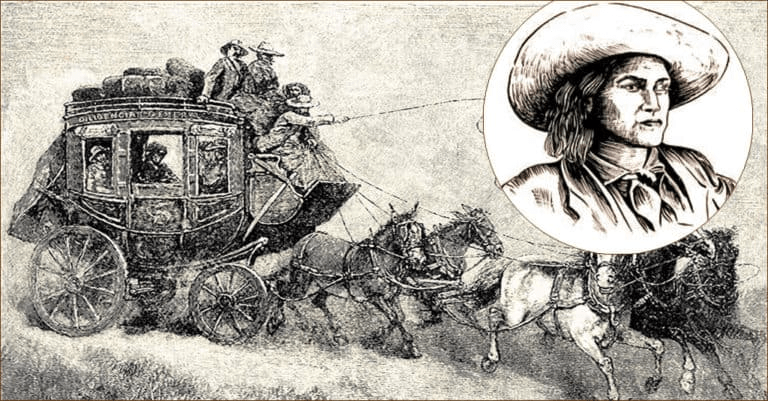
One of the most famous drivers was Charles Darkey Parkhurst, who had come west from New England in 1852 seeking his fortune in the Gold Rush. He spent 15 years running stages, sometimes partnering with Hank Monk, the celebrated driver from Carson City. Over the years, Pankhurst’s reputation as an expert whip grew.
Charley Parkhurst
From 20 feet away he could slice open the end of an envelope or cut a cigar out of a man’s mouth. Parkhurst smoked cigars, chewed wads of tobacco, drank with the best of them, and exuded supreme confidence behind the reins. His judgment was sound and pleasant manners won him many friends.
One afternoon as Charley drove down from Carson Pass, the lead horses veered off the road and a wrenching jolt threw him from the rig. He hung on to the reins as the horses dragged him along on his stomach. Amazingly, Parkhurst managed to steer the frightened horses back onto the road and save all his grateful passengers.
During the 1850s, bands of surly highwaymen stalked the roads. These outlaws would level their shotguns at stage drivers and shout, “Throw down the gold box!” Charley Parkhurst had no patience for the crooks despite their demands and threatening gestures.
The most notorious road agent was nicknamed “Sugarfoot.” When he and his gang accosted Charley’s stage, it was the last robbery the thief ever attempted. Charley cracked his whip defiantly, and when his horses bolted, he turned around and fired his revolver at the crooks. Sugarfoot was later found dead with a fatal bullet wound in his stomach.
In appreciation of his bravery, Wells Fargo presented Parkhurst with a large watch and chain made of solid gold. In 1865, Parkhurst grew tired of the demanding job of driving and he opened his own stage station. He later sold the business and retired to a ranch near Soquel, Calif. The years slipped by and Charley died on Dec. 29, 1879, at the age of 67.
A few days later, the Sacramento Daily Bee published his obituary. It read; “On Sunday last, there died a person known as Charley Parkhurst, aged 67, who was well-known to old residents as a stage driver. He was, in early days, accounted one of the most expert manipulators of the reins who ever sat on the box of a coach. It was discovered when friendly hands were preparing him for his final rest, that Charley Parkhurst was unmistakably a well-developed woman!”
Charlotte Parkhurst
Once it was discovered that Charley was a woman, there were plenty of people to say they had always thought he wasn’t like other men. Even though he wore leather gloves summer and winter, many noticed that his hands were small and smooth. He slept in the stables with his beloved horses and was never known to have had a girlfriend.
Charley never volunteered clues to her past. Loose fitting clothing hid her femininity and after a horse kicked her, an eye patch over one eye helped conceal her face. She weighed 175 pounds, could handle herself in a fistfight and drank whiskey like one of the boys.
It turns out that Charley’s real name was Charlotte Parkhurst. Abandoned as a child, she was raised in a New Hampshire orphanage unloved and surrounded by poverty. Charlotte ran away when she was 15 years old and soon discovered that life in the working world was easier for men. So she decided to masquerade as one for the rest of her life. The rest is history. Well, almost. There is one last thing. On November 3, 1868, Charlotte Parkhurst cast her vote in the national election, dressed as a man. She became the first woman to vote in the United States, 52 years before Congress passed the 19th amendment giving American women the right to vote.
The fire station in Soquel, California, has a plaque reading: “The first ballot by a woman in an American presidential election was cast on this site November 3, 1868, by Charlotte (Charley) Parkhurst who masqueraded as a man for much of her life. She was a stagecoach driver in the mother lode country during the gold rush days and shot and killed at least one bandit. In her later years she drove a stagecoach in this area. She died in 1879. Not until then was she found to be female. She is buried in Watsonville at the pioneer cemetery.”
Soquel, CA Plaque
In 1955, the Pajaro Valley Historical Association erected a monument at Parkhurst’s grave, which reads: “Charley Darkey Parkhurst (1812-1879) Noted whip of the gold rush days drove stage over Mt. Madonna in early days of Valley. Last run San Juan to Santa Cruz. Death in cabin near the 7 mile house. Revealed ‘one eyed Charley’ a woman. First woman to vote in the U.S. November 3, 1868.”
In 2007, the Santa Cruz County Redevelopment Agency oversaw the completion of the Parkhurst Terrace Apartments, named for the stagecoach driver and located a mile along the old stage route from the place of his/her death.
There was also a book written about Charley called “Charley’s Choice – The life and Times of Charley Parkhurst,” written by Fern J. Hill that might be of interest.
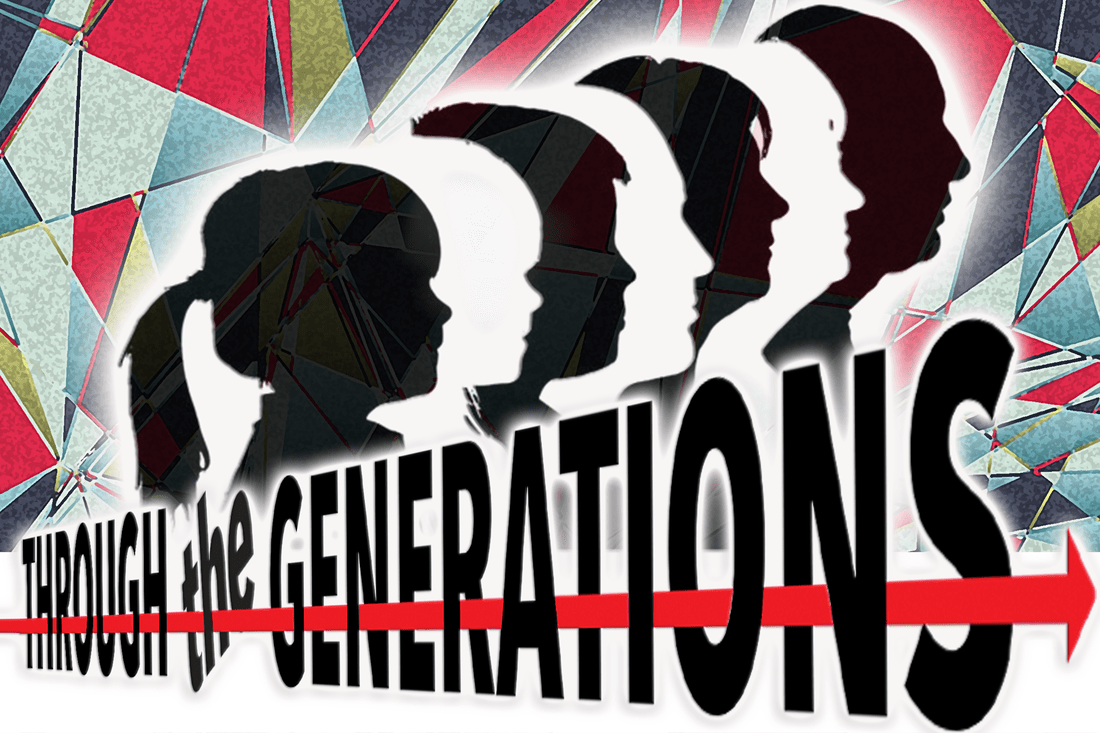
Did you ever wonder, like I have, how we came to separate and name the various generations? It started with the Boomers, the naming of the generations. Yes, the term Lost Generation came first, but the idea that demographic groupings of people born in a span of years should have a particular name really caught on with the post-WWII generation.
William Strauss and Neil Howe did not invent the idea of a generational schema, but they popularized it. In 1991, they published a book touting the idea that there were cyclical patterns in U.S. history based on generational differences. Their names for the generations, however, were different than those most commonly used today. Their names for the groups born in particular spans of years were:
The generally accepted names today are as follows.
1883–1900: The Lost Generation 1901–28: The Greatest Generation (The G.I. Generation) 1929–45: The Silent Generation 1946–64: Baby Boomers 1965–80: Generation X (Gen X) 1981–96: Millennials (Generation Y) 1997–2012: Generation Z 2013– : Generation Alpha
But where do these names come from?
Lost Generation (1883–1900)
The name for the generation that fought in the First World War has a literary origin. The name is both literal and metaphorical. It is literal in sheer numbers of young men who died in the war but t is also metaphorical in that it represents a rootlessness and destruction of moral purpose as a result of the war. The term Lost Generation first appears in one of the epigraphs in Ernest Hemingway’s 1926 novel The Sun Also Rises. In the book, Hemingway attributed the phrase to Gertrude Stein in conversation. Four decades later, Hemingway described that conversation: “It was when we had come back from Canada and were living in the rue Notre-Dame-des-Champs and Miss Stein and I were still good friends that Miss Stein made the remark about the lost generation. She had some ignition trouble with the old Model T Ford she then drove and the young man who worked in the garage and had served in the last year of the war had not been adept, or perhaps had not broken the priority of other vehicles, in repairing Miss Stein’s Ford. Anyway he had not been sérieux and had been corrected severely by the patron of the garage after Miss Stein’s protest. The patron had said to him, “You are all a génération perdue.”
“That’s what you are. That’s what you all are,” Miss Stein said. “All of you young people who served in the war. You are a lost generation.”
Greatest Generation / G.I. Generation (1901–27)
The earliest use of Greatest Generation is by Democratic Congressman Hatton Sumners of Dallas, Texas in 1940, before the United States was even in the war. Sumners used the term in a series of speeches, or the same stump speech, given multiple times that year. Sumners uses the term in an aspirational, rather than a descriptive sense, arguing that this generation must rise from the devastation of the Great Depression to fight fascism and right the world.
The other name for this particular generation is more prosaic: the G.I. Generation. It simply acknowledges the vast number of men of that cohort who served in uniform during the war.
Silent Generation (1928–45)
Bracketed by the war generation and the boomers and often overlooked, the Silent Generation would seem to be aptly named. The name first appears in the Detroit Free Press of 1 November 1951, but this is in an excerpt from a Time magazine piece of 5 November. The Time piece reads:
“Youth today is waiting for the hand of fate to fall on its shoulders, meanwhile working fairly hard and saying almost nothing. The most startling fact about the younger generation is its silence. With some rare exceptions, youth is nowhere near the rostrum. By comparison with the Flaming Youth of their fathers & mothers, today’s younger generation is a still, small flame. It does not issue manifestoes, make speeches or carry posters. It has been called the “Silent Generation.” But what does the silence mean? What, if anything, does it hide? Or are youth’s elders merely hard of hearing?”
Baby Boomers (1945–64)
Generic use of baby boom is much older than any of these generational names. It’s an Americanism dating to at least the 1870s to mark any uptick in births. The application of the term to the then-expected increase in births following the Second World War dates, as one might expect, to 1945. There had been a short increase in the birth rate following the U.S. entry into the war, but on 4 February 1945 the U.S. Department of Commerce reported this mini-boom was over and to expect a larger one in the year to come: “The Commerce Department reported Saturday night that the Nation’s birth rate, which rose 30 per cent above prewar levels in the year after Pearl Harbor, now is declining and will stay that way until the end of hostilities precipitates another baby boom.”
Generation X (1965–80)
Generation X first appears in December 1952 issue of Holiday magazine, touting an upcoming photo-essay by photographer Robert Capa, although the term would not appear in the photo-essay itself:
“What, you may well ask, is Generation X? […] Our tag for what we believe to be the most important group of people in the world today—the boys and girls who are just turning 21. These are the youngsters who have seen and felt the agonies of the past two decades, often firsthand, who are trying to keep their balance in the swirling pressures of today, and who will have the biggest say in the course of history for the next 50 years.”
Millennials / Generation Y (1981–96)
More successful was Strauss and Howe’s naming of the Millennial generation. From their 1991 book: “At Burrville Elementary, 13ers in older grades found the uniforms slightly humiliating, but the younger kids hardly seemed to mind. These kids in green coats and yellow blouses are the vanguard of America’s MILLENNIAL GENERATION. Cute. Cheerful. Scout-like. Wanted. Not since the 1910s, when midlife Missionaries dressed child G.I.s in Boy Scout brown, have adults seen such advantage in making kids look alike and work together. Not since the early 1900s have older generations moved so quickly to assert greater adult dominion over the world of childhood—and to implant civic virtue in a new crop of youngsters.”
Millennials have also gone by the rather unimaginative Generation Y, as they are the cohort that follows the Gen Xers. Call them Generation Y, because Y comes after X, and maybe because they’re coming of age with the big questions laid out before them.
— Y can’t we go out in the sun?
— Y can’t the AIDS epidemic be stopped?
— Y is the environment in the state it is?
— Y is Canada in the state it is?
— Y can’t I get decent work?
Generation Z (1997–2012)
Of course, Generation Y led to ‘Generation Z,” which appears by 2010, likely due to a lack of a more creative term. Some refer to this generation as “iGen” since they have never known a world without the Internet. Martha Irvine of the Associated Press states, “they are the tech-savviest generation of all time… even toddlers can maneuver their way through YouTube and some first-graders are able to put together a PowerPoint presentation for class.” A teacher’s most complicated struggle with Generation Z is not necessarily how to relate lessons to them, but rather how to prepare these students for careers and jobs that don’t even exist yet.
Generation Alpha (2013– )
Having run out of letters in the Latin alphabet, we turn to Greek for the name of the next cohort. From the Australian newspaper Northern Star of 12 March 2011: “They are smart, cashed-up, career driven and are making their way to a place near you.”
It’s the newest addition to society’s demographic categories—Generation Alpha. Babies born from 2010 are part of this demographic, coming after the digital-native Generation Z and the want-want-want Generation Y. You may note that the same critiques and notes of despair are sounded whenever a new generation comes of age. The “problem with kids these days” has always been and presumably always will be.
The Victorian era was one of science and innovation. Cameras, cars, electricity and evolution were heralded in under the reign of Queen Victoria. In the world of Chemistry, Dalton and Faraday were making discoveries in atomic theory and electricity. One of the most famous chemists of this era was William Henry Perkin.
In 1856, an 18-year-old William Perkin, Hofmann’s assistant at the Royal College of Chemistry, was tasked to create a chemical synthesis of quinine. Quinine is found in tonic water and used as an anti-malarial. Perkin made several attempts at the synthesis over the Easter vacation in his home laboratory, using coal tar as a source of aniline. Oxidizing the aniline with potassium dichromate gave a black sludge which didn’t contain aniline: it contained something far more exciting. Perkin noticed whilst cleaning out a flask with ethanol that a purple solution had formed – an observation which led to Perkin becoming one of the most celebrated chemists of the Victorian era.
William Henry Perkin
The purple substance – initially named aniline purple – was one of the world’s first synthetic dyes: mauveine. Mauveine’s significance as a dye is its elusive colour. Throughout history, purple clothes have been worn almost exclusively by the richest in society due to the expense of creating purple dyes. Phoenician dye, known as ‘Purple of the Ancients’, is a famous example made from predatory sea snails.
Perkin was encouraged by his family to test the purple substance for colouring clothes. A sample was sent to Messrs Pullar of Perth who gave their approval. Finding success, he quickly patented the method. He set up a factory with his brother, funded by his father. In doing so, he brought purple to the Victorian mass market.
Purple became the height of fashion in Paris and London in the late 1850s to early 1860s, and the frenzy over mauve became known as ‘mauveine measles’. Even Queen Victoria was not exempt from the excitement, appearing in 1862 at the International Exhibition wearing a silk dress colored by mauveine. Wife of Napoleon III, Empress Eugenie wore mauveine-dyed dresses to stat functions.
Piece of silk dyed by Sir William Henry Perkin in 1860
But within this story there lurks a curious mystery. Closer inspection of Perkin’s synthesis method reveals that he may have been hiding something. There are eight bottles of mauvine alleged to have been made by Perkin left in the whole world, spread across six museums in four cities: London, Manchester, Bradford and New York. Museum-stored mauveine was tested in the 1990s and is rich in two main components – the chromophores of mauveine known as mauveine A and mauveine B.
Dr. John Plater at the University of Aberdeen repeated Perkin’s synthesis as it was written in the original patent, and here’s where the curiosity begins. The synthesis produces not two chromophores of mauveine, but four: A, B, B2 and C.
John Plater obtained his BSc in Chemistry from Loughborough University in 1986 and his PhD in heterocyclic synthesis from Imperial College of Science, Technology and Medicine in 1989. He was awarded his DSc from The University of Aberdeen in 2009 where he is currently Senior Lecturer.
Did Perkin miss something out when he patented his method? Or are the samples in these museums not genuine Perkin’s mauveine? To solve this mystery, Dr. Plater began investigating the synthesis of mauveine. Perkin’s starting material was aniline extracted from coal tar, and later made commercially from coal-tar, which would also have contained two impurities, ortho- and para-toluidine, which have a similar chemical structure to aniline.
A bottle of original William Henry Perkin (WHP) mauveine from the WHP factory in Greenford.
Dr. Plater’s attempts to make mauveine from different combinations of aniline and toluidines were always unsuccessful – he never managed to create a product with only the A and B chromophores. Every synthesis created four chromophores of mauveine. Removing the B2 and C chromophores was also impossible.
In the search for more information, Dr. Plater was given access to analyze three samples of Perkin’s mauveine. These samples were stored in museums: one in Manchester, Bradford, and the other in Sudbury, the London borough where Perkin built both his family home and his factory. One sample is accompanied with a letter, addressed to Prof Henry Armstrong Fellow of the Royal Society, from William Henry Perkin’s son, Frederick Mollwo Perkin. The ‘Mollwo’ letter, as it is now known, provides evidence that the museum-stored mauveine samples are from Perkin’s factory.
An example of a Victorian mauveine dyed silk dress, Science Museum London.
Dr Plater used liquid chromatography-mass spectrometry (LC-MS) to identify the chromophores present in these mauveine samples. In LC-MS, liquid chromatography is used to separate compounds by running them along a long column filled with reverse phase silica gel. The different chromophores reach the end of the column at different times. Mass spectrometry can then be used to identify the structure of each chromophore from its molecular mass and the way it fragments. This revealed that the Bradford and Sudbury mauveines, like the Manchester mauveine, are highly rich in mauveine A and B.
Museum-stored mauveines match each other in their compositions, and the Mollwo letter provides evidence that the samples originate from Perkin. However, the synthesis described by Perkin doesn’t produce mauveine with the correct composition. Dr. Plater deduces from this that Perkin actually used a different synthesis method from the one he said he used.
Perkin’s mauve was used to colour 6d postage stamps from 1867-1880.
A final clue in this mystery comes from six pence stamps. Victorian postage stamps printed using mauveine dyes are available to purchase online. Dr. Plater analyzed the mauveine in 15 six pence stamps using LC-MS. Each stamp had a slightly different composition, generally of all four chromophores. A fluctuating composition of mauveine provides further evidence that the method for synthesizing mauveine changed over time. Dr. Plater believes that his method is actually more similar than the method in Perkins patent to the method actually used by Perkin.
Purple became the height of fashion in Paris and London in the late 1850s to early 1860s, and the frenzy over mauve became known as ‘mauveine measles’.
One question remains: why would Perkin patent one method for making mauveine, but use another? An answer may be to do with the yield of product. Dr. Plater notes that mauveine is actually very difficult to make. The yields are low – about 1 per cent. The method proposed by Dr. Plater increases the yield to about five per cent. Perkin discovered this synthesis by accident, but clearly understood the chemistry well enough to understand the need for research and development.
But there may be another answer to this question. In a lecture in 1896, Perkin revealed his concerns about his competition: other manufacturers of mauveine were using copper chloride as an oxidizing agent in place of Perkin’s potassium dichromate. Dr. Plater has strong evidence now that Perkin never revealed his true method. Perkin may well have done this intentionally: as the demand for synthetic dyes grew, Perkin wanted to avoid his competition getting hold of his secrets.
Perkin was the first person to mass produce a synthetic dye, but this research uncovers a new aspect to Perkin’s achievements. Analysis of mauveine stored in museums, Victorian stamps, and Perkin’s original patent provides evidence that Perkin iterated and improved his method of making his dye, making him one of the first chemists to realize the value of research and development. Because Perkin never revealed his true method, we may never know how he did it – but with Dr. Plater’s research we are one step closer to the truth.
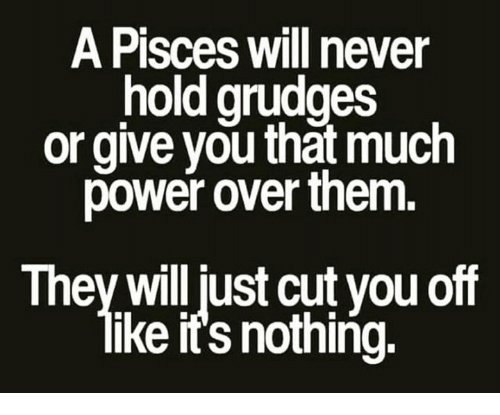
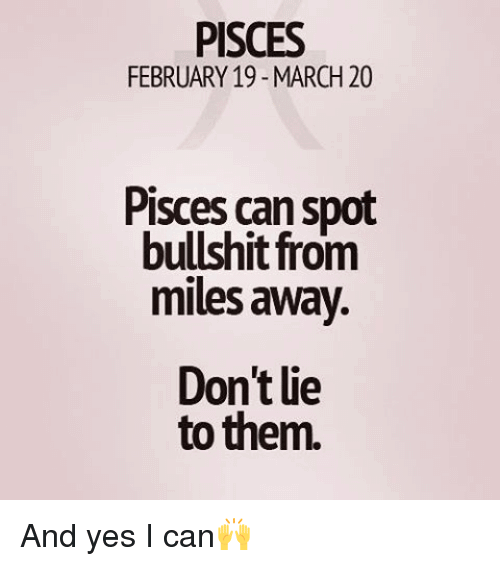
Pisces, the twelfth sign in the zodiac, belongs to those between the dates of February 19th and March 20th.
Pisces Zodiac Sign Traits
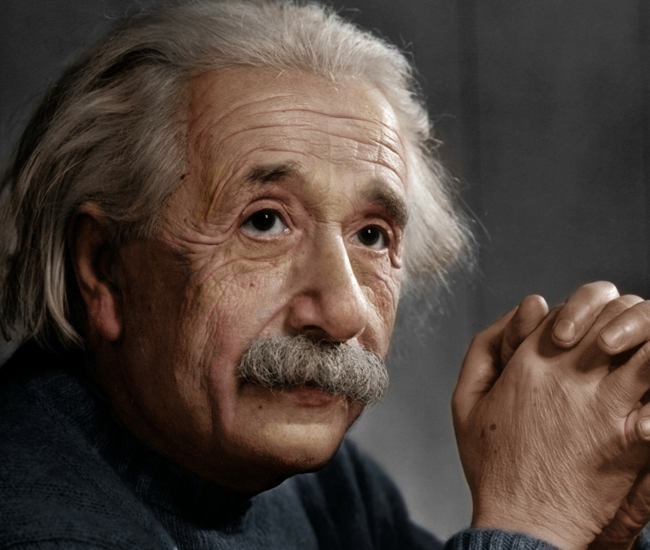
Smart, creative, and deeply intuitive, Pisces can be close to psychic. Pisces feel things deeply, and have incredibly strong gut reactions. A Pisces “knows” things from deep within, and can often judge whether a person or situation is good or bad. That doesn’t mean a Pisces ignores the logical part of their brain, though. Deeply intelligent, Pisces have a profound respect for the power of the human mind. Is it a surprise that Albert Einstein was a Pisces?
Pisces signs are sensitive, and get along well in small groups of people. Sometimes, a Pisces may feel like they have an internal and external self, and they may need to spend a lot of time solo to recalibrate those two halves of themselves. A Pisces is rarely lonely when they are by themselves, and have an active imagination. Creative, Pisces love spending time reading, exploring or creating art or music, and understanding their emotions through art.
Those with the Pisces sign may seem quiet but they are incredibly strong and have a very strong sense of right and wrong. Their moral compass, along with their gut, guides them well. When a Pisces speaks up, people listen. Pisces tend to take in everything around them, and they are great people to ask for advice on pretty much anything. While Pisces has strong convictions about the best way for them to live, they have a “live and let live” approach when it comes to others, and are accepting and nonjudgmental of all.
Pisces in Love
Pisces in love is passionate, intense, and singular. A relationship with a Pisces is a roller-coaster ride that will make you feel your feelings—even the bad ones—and help you emerge as a better, more honest person. Even if a relationship with a Pisces doesn’t last, the lessons you learn from a Pisces partner will.
Pisces Friendship Style
A Pisces can feel like a great friend—until you consider how much you actually know about them. While Pisces are natural therapists within the Zodiac, they can be cagey about who they are, never revealing their full selves until they trust you—and sometimes, they may never reveal who they truly are.
Pisces Career, Money & Success Traits
Pisces’s greatest career strength: Detachment. Pisces can care passionately about a project, but they also know that success and failure are temporary. Learning to let go, let things flow, and that nothing can be guaranteed can allow Pisces to change course mid-stream, try new avenues to success, and let go if a career doesn’t seem to be working.
Pisces’ Greatest Gifts
A Pisces has a great gut and great intuition, which can guide them well, and help them make creative or intellectual leaps other people might not be able to see or consider. Deeply imaginative, Pisces can happily spend hours daydreaming, and are often just as surprised as the rest of the world when the pieces come together in an amazing way. Pisces don’t necessarily work the same way as other people do, and they may be able to get things done incredibly quickly. But it’s not that they’re that much faster than other zodiac signs. It’s that the time they may have been caught staring into space are times that are deeply valuable to them, and necessary for any creative process. The more a Pisces understands how they work and respects that process, the better they are.
Pisces’ Greatest Challenges
Pisces signs can sometimes spend too much time in their heads, getting overly wrapped up in a problem and assuming there’s no solution. Pisces are always one of the first signs to lend an ear to others, but when it comes to asking for help—especially emotional help—Pisces can sometimes wall themselves off, assuming that nobody knows what they are feeling and not even giving anyone a chance to try. Learning how to open up can be a huge lesson for Pisces. Of course, the fact remains that no one can read a Pisces mind. Pisces sometimes feels frustrated that they are seen as “more complicated” than their peers, and that feeling can make them act or seem defensive. Pisces needs to learn to let down their guard, allow people to love them, and allow for mistakes to be made.
Pisces’ Secret Weapon
The realization that life is so much more than what we see. Pisces sign is in tune with the magic of everyday existence and can find beauty in all situations, even ones that may cause tears. Recognizing these moments of beauty and being able to share them with others is what makes Pisces a creative sign, and is also what makes Pisces a soulful sign.
It took a war, famine, and poultry to develop the technological breakthrough responsible for saving thousands of premature infants. The Franco-Prussian war in 1870-1871, along with a concomitant famine, had contributed to a significant population decline in France. To increase the growth rate, the French needed to start having more babies, as quickly as possible. But one obstetrician realized that if he could find a way to reduce infant mortality, then the population growth rate problem could be solved far sooner.
Dr. Etienne Stephane Tarnier
That French obstetrician was Dr. Étienne Stéphane Tarnier, who, having observed the benefits of warming chambers for poultry at the Paris Zoo, had similar chambers constructed for premature infants under his care. These warm air incubators, introduced at L’Hôpital Paris Maternité in 1880, were the first of their kind. Dr. Pierre Budin began publishing reports of the successes of these incubators in 1888. His incubators had solved the deadly problem of thermoregulation that many premature babies faced.
Dr. Budin wanted to share his innovation with the world, but few in the stubborn medical establishment would listen. Many doctors viewed the practice as pseudo-scientific and outside the realm of standard care. But Dr. Budin was convinced that the Tarnier incubators would save so many lives that he enlisted the help of an associate, Dr. Martin Couney, in exhibiting the new incubators at the World Exposition in Berlin in 1896.
Dr. Pierre Budin
Apparently blessed with skills in showmanship as well as medicine, Dr. Couney took the assignment perhaps a step farther than what Dr. Budin has originally anticipated; Couney asked the Berlin Charity Hospital to borrow some premature babies for this experiment, and they granted his request, thinking that the children had little chance of survival anyway. When he managed to hire a cadre of nurses to fully demonstrate the capabilities of the incubators, he was ready to take the show on the road.
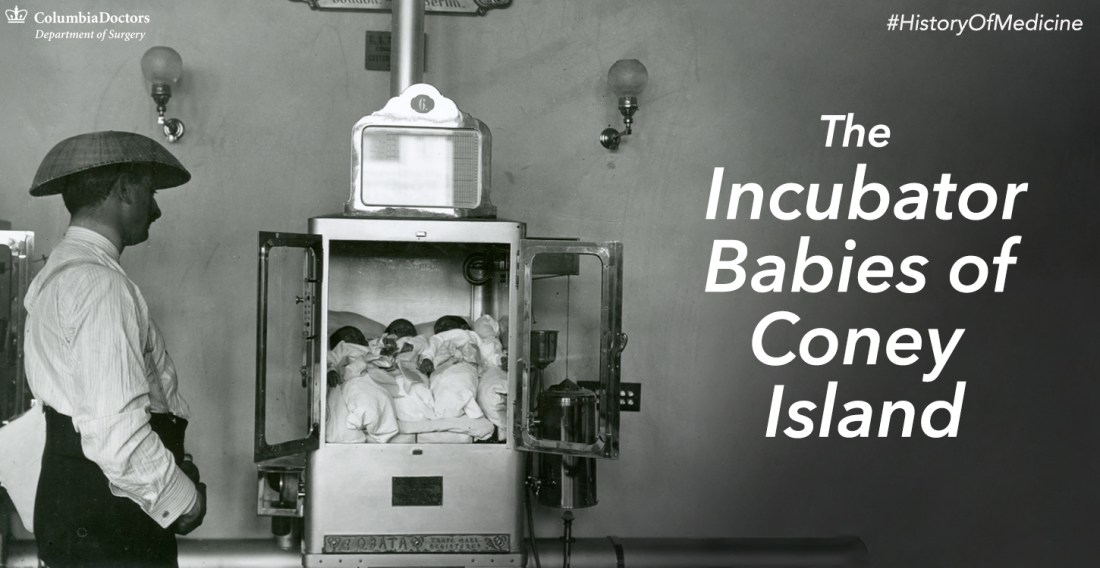
Nestled between exhibits of the Congo Village and the Tyrolean Yodelers, “Couney’s Kinderbrutanstalt,” or ‘Child Hatchery,’ became a wild success. Remarkably, all six babies in the Tarnier incubators survived. From there, Couney took his entourage to the United States where he went on to share his show at virtually every large exhibition and at the World’s Fair. He ultimately settled at New York City’s Coney Island amusement park and connected parents eager to save the lives of their premature newborns with circus sideshow visitors willing to pay 25¢ to view the uncannily tiny babies. It was an odd connection indeed, but a brilliant one that kept the warming glow of the incubator lights on for over 40 years, and saved thousands of babies in the process.
Modern Incubator
The babies were premature infants kept alive in incubators pioneered by Dr. Martin Couney. The medical establishment had rejected his incubators, but Couney didn’t give up on his aims. Each summer for 40 years, he funded his work by displaying the babies and charging admission — 25 cents to see the show.
In turn, parents didn’t have to pay for the medical care, and many children survived who never would’ve had a chance otherwise. Lucille Horn was one of them. Born in 1920, she, too, ended up in an incubator on Coney Island. “My father said I was so tiny, he could hold me in his hand,” she tells her own daughter, Barbara, on a visit with StoryCorps in Long Island, N.Y. “I think I was only about 2 pounds, and I couldn’t live on my own. I was too weak to survive.”
She’d been born a twin, but her twin died at birth. And the hospital didn’t show much hope for her, either: The staff said they didn’t have a place for her; they told her father that there wasn’t a chance in hell that she’d live. “They didn’t have any help for me at all,” Horn says. “It was just: You die because you didn’t belong in the world.”
But her father refused to accept that for a final answer. He grabbed a blanket to wrap her in, hailed a taxicab and took her to Coney Island — and to Dr. Couney’s infant exhibit.
(Dr. Martin Couney holds Beth Allen, one of his incubator babies, at Luna Park in Coney Island. This photo was taken in 1941. Courtesy of Beth Allen)
“How do you feel knowing that people paid to see you?” her daughter asks. “It’s strange, but as long as they saw me and I was alive, it was all right,” Horn says. “I think it was definitely more of a freak show. Something that they ordinarily did not see.”
Horn’s healing was on display for paying customers for quite a while. It was only after six months that she finally left the incubators.
Years later, Horn decided to return to see the babies — this time as a visitor. When she stopped in, Couney happened to be there, and she took the opportunity to introduce herself.
“And there was a man standing in front of one of the incubators looking at his baby,” Horn says, “and Dr. Couney went over to him and he tapped him on the shoulder.”
“Look at this young lady,” Couney told the man then. “She’s one of our babies. And that’s how your baby’s gonna grow up.” After all, Horn was just one of thousands of premature infants that Couney cared for and exhibited at world fairs, exhibits and amusement parks from 1896 until the 1940s. He died in 1950, shortly after incubators like his were introduced to most hospitals.
At the time, Couney’s efforts were still largely unknown — but there is at least one person who will never forget him. “You know,” she says, “there weren’t many doctors then that would have done anything for me. Ninety-four years later, here I am, all in one piece. And I’m thankful to be here.”
Lucille Horn and her daughter Barbara on a recent visit to StoryCorps in Long Beach, NY (StoryCorps)




























 Sew Colorful