(This post was bumped from it’s more timely spot, but it’s still interesting imo.)
As winter loses its grip on Pennsylvania, warmer days followed by cold nights signal the beginning of maple syrup season.
When spring conditions are right, sap in sugar maple trees begins to flow, and sugars made with last summer’s sun move from their storage sites into the tree’s trunk, according to Bob Hansen, Penn State Cooperative Extension forest resources educator based in Tioga County. Mid-February to early March normally heralds the arrival of the “right” conditions, and the season runs until early April most years.
“Maple sugar products are truly North American — native Americans were the first people to make maple sugar,” he said. “We speculate they used hot stones and bark vessels to ‘boil’ sap to concentrate the sugars. Early Europeans likely appreciated this source of sugar, and, with the advantage of iron pots, they soon developed this seasonal industry and converted sap into sugar cakes or blocks, which were easier to store.”
Before tropical sugar sources were easily accessible, maple sugar was the premier sweetener. As imported sugar became increasingly available, the maple industry switched to syrup production. Today, the maple industry produces a wide-range of quality products, Hansen noted. However, syrup is the most common, best known and considered by many the ultimate natural product.
“Many woodlot owners today look forward to the maple season as an important part of their family heritage,” Hansen said. “For some, it is a major cash crop. Among the state’s diverse farm products, it is one of the few to be produced, processed and often sold entirely on the farm.”
Quebec province leads North America in maple-syrup production, and the state of Vermont has successfully built an association with maple products. However, Pennsylvania is a major producer — ranked seventh in the United States in 2009. Other leading maple states include Connecticut, New York, New Hampshire, Massachusetts, Ohio, Wisconsin, Maine, Michigan, Minnesota, West Virginia, Indiana, Iowa and Virginia.
“Sugar maple is the species of choice for tapping to make maple sugar,” Hansen said. “Other maples such as black and red also yield sweet sap, but on average not as sweet as that flowing from sugar maple.”
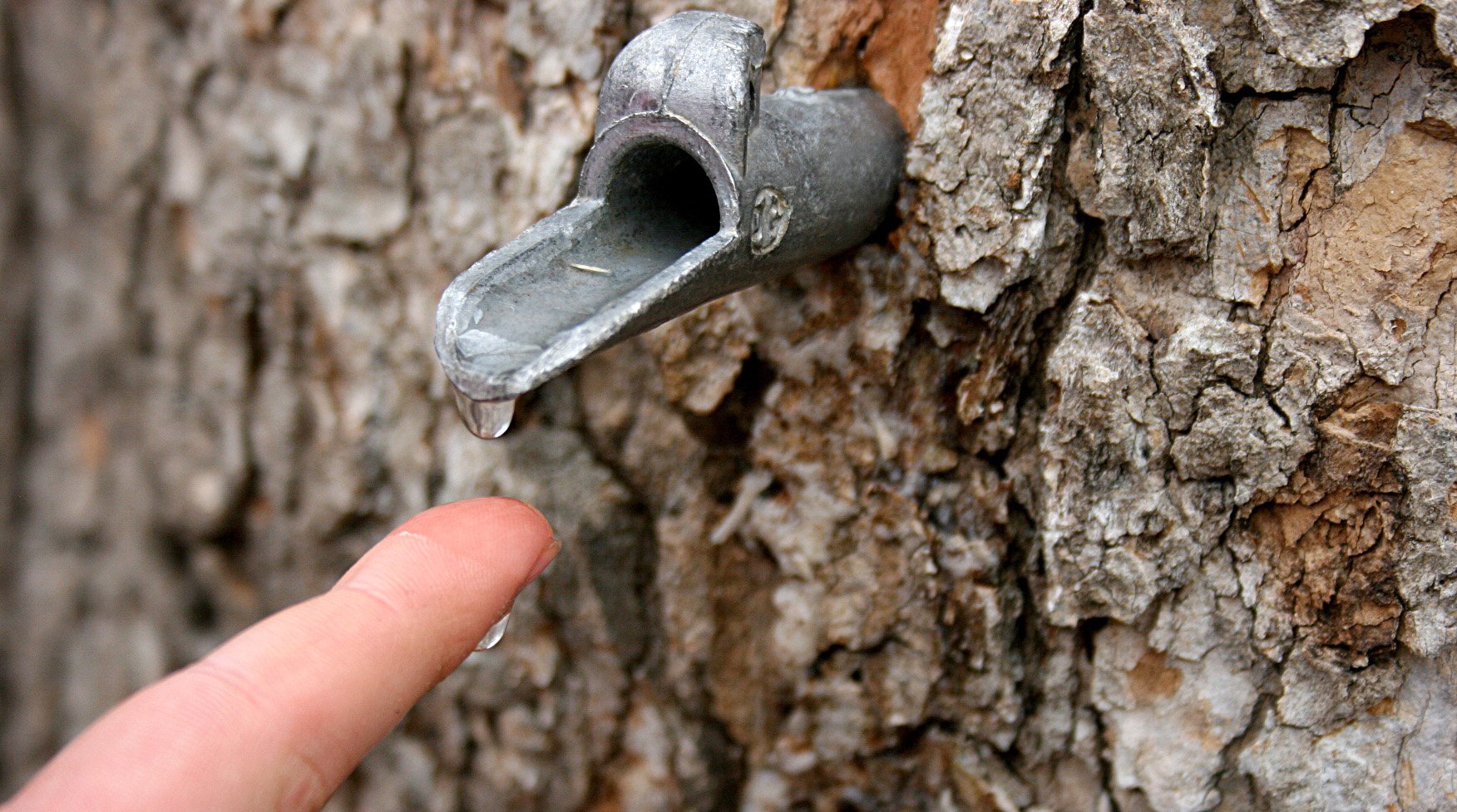
Tapping done properly generally does little harm to the tree, Hansen pointed out. Trees 10 to 18 inches in diameter at 4.5 feet above the ground receive one tap. Trees larger than 18 inches can have two. Tap holes are made by boring a 5/16 inch diameter hole at a slight upward angle into the tree to a depth of 1.5 to 2 inches. A hollow spout or spile is then gently tapped into the hole to fit snugly.
Commercial maple producers collect sap in stainless steel buckets or weave a web of plastic tubing to connect trees and move sap to a common collection point. Small producers, working with only a few trees, can collect sap in clean plastic jugs (e.g., milk cartons) suspended from the spile.
“Eventually sap is brought to the sugarhouse where an evaporator concentrates the sugar and turns the sap into the amber-colored syrup,” Hansen said. “After filtering to remove ‘sugar sand’ (mineral substances in sap concentrated in the boiling process), producers grade their product. Syrup grades depend on color — light, medium or dark amber — and flavor.”
Syrup by law has at least 66 percent sugar solids. The volume of sap needed to make a gallon of syrup varies with the concentration of sugar in the sap. Sap sugar content varies from tree to tree, from less than 1 percent to rarely 10 percent. Normally, it is about 1.5 to 3 percent. Approximately 43 gallons of sap with a 2 percent sugar content yield one gallon of syrup.
“People who are interested in maple-syrup production should consider visiting one of the state’s many maple festivals to learn more about this sweet industry,” said Hansen. “During these weekends, syrup makers open their operations and are available to answer questions.”
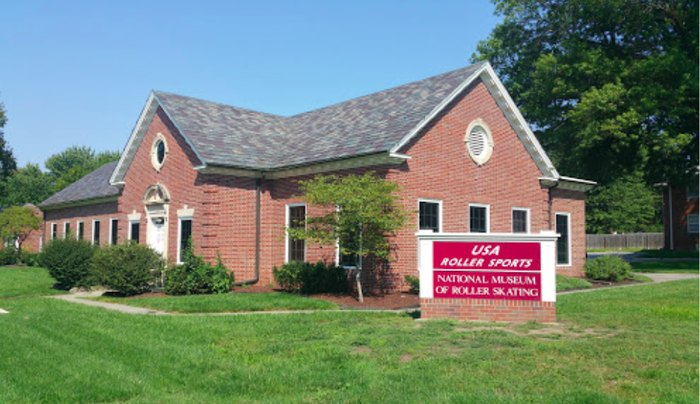
Since 1980, Lincoln, Nebraska has been the home of a one-of-a-kind museum that most people aren’t even aware of. The National Museum of Roller Skating sits in an unassuming little brick building that it shares with the headquarters of USA Roller Sports, the national governing body of roller sports. The next time you’re in the area, don’t pass by this hidden gem; step inside and get to know a fascinating part of American history.
The people behind the National Museum of Roller Skating believe that everyone should know about this delightful activity and its long history. What comes to mind when you think of roller skating? If you’re of a certain age, you probably picture couples gliding hand-in-hand around a hardwood floor as live music floats through the air from the on-site organist.
Younger people may picture a similar scene, but with a DJ and colorful flashing lights in place of a live organist. No matter what your personal experience is with roller skating, chances are you’ve got some positive associations with the activity.
Those fond memories – and much more – are all on display in this unique museum. The exhibits trace the history of roller skating back through the generations, all the way to the early 19th century.
When you visit, you’ll see some early versions of roller skates, beginning with the most primitive pieces of wood with wheels attached.
Some of the crowd-favorite exhibits are the rare and unusual types of roller skates. Would you ever try to race around the rink in these cowboy-boot skates?
Other exhibits tell little-known stories of roller skating as a sport, a hobby, and an all-around cultural phenomenon.
The museum houses the world’s largest collection of roller skating items, making it a must-visit for anyone who has ever felt a rush of excitement as they laced up a pair of skates.
The museum also contains the National Roller Skating Archives, a collection of publications and other information on all aspects of roller skating’s history.
Roller skating is explored here as a sport and an art form, as a diplomatic tool, and a unifying experience that just about everyone can enjoy. See old costumes and uniforms and read all about the surprising ways in which roller skating has influenced the world.
Whether your interest lies in leisurely rolls around the rink, dominating in a roller derby league, or even competitive speed-skating, you’ll find fascinating information at the museum about this underrated all-American activity.
Address: National Museum of Roller Skating, 4730 South St, Lincoln, NE 68506, USA
America’s history is a brief yet rich one. Relative to the rest of the world, we are still just a little baby of a country. We often forget that our founding fathers were humans just like the rest of us — they just happened to have lived some 300 odd years before we did, and, you know, wrote the Declaration of Independence. But these American heroes had their flaws and their secrets, too.
These secrets about the founding fathers are both surprising and eye-opening. There are myths about these men that we’ve all gone along believing our whole lives without a second thought. But in some cases, we may have been entirely wrong!
Thomas Jefferson
Thomas Jefferson Was A Terrible Public Speaker
The author of the Declaration of Independence and our third president only ever gave two speeches, one at each of his inaugurations. While he was elegant with words on paper, he didn’t like speaking out loud, much less in front of large crowds. The speeches he did give were delivered very quietly, too.
Thomas Jefferson was also addicted to learning. Born April 13 (April 2 on the pre-Gregorian calendar), 1743 at his father’s Shadwell plantation in Virginia, Jefferson was one of 10 children (eight of whom survived to adulthood). While he attended the College of William and Mary, he was said to have studied for 15 hours daily on top of violin practice. The hard work paid off: Jefferson moved into law studies before becoming a lawyer in 1767. Two years later, he became a member of Virginia’s House of Burgesses, the Virginia legislature. His autodidact ways continued throughout his life: Jefferson could speak four languages (English, Italian, French, Latin) and read two more (Greek and Spanish).
John Adams
John Adams And Jefferson Were Rivals
John Adams and Jefferson were the only two signers of the Declaration to become president, but they also hated each other’s guts. Before Jefferson passed away on July 4, 1826, he had finally made amends with John Adams, the president who preceded him in office and for whom Jefferson served as vice president. The two men, once on the same side, had grown to resent the other’s approach to diplomacy and politics, with Jefferson lamenting Adams’s preference for centralized and meddlesome government—though according to Jefferson, the major issue was the so-called “Midnight Judges,” appointments that Jefferson felt “were from among [his] most ardent political enemies.”
Strangely, Adams passed away the same day as Jefferson, just five hours later. The date, July 4, was also the 50th anniversary of the Declaration of Independence being adopted.
George Washington
George Washington Didn’t Have Wooden Teeth
This is a fun fact that lots of people like to pull out of their back pocket, but it isn’t even true. George Washington’s teeth were actually made of bone, hippopotamus ivory, human teeth, brass screws, lead, and gold metal wiring. That’s quite the mouthful right there. And his hair was all real but it looks white because he powdered it.
He was a very moral and virtuous man, and he watched carefully everything he did. But he certainly doesn’t fit into our conception of a Christian evangelical or somebody who read his Bible every day. He was not an atheist on the one hand, but on the other hand, he was not a devout Christian. But what about he story of him kneeling in the snow at Valley Forge to pray? “That’s a story that was made up by [early Washington biographer] Parson Weems.” Oh, and Parson Weems, who wrote a myth-filled biography of Washington shortly after he died, made up the cherry tree story. The Mount Vernon Digital Encyclopedia identifies that book, The Life of Washington, as “the point of origin for many long-held myths about Washington.”
Benjamin Franklin
Adams Was “Out Of His Senses”
Well, at least according to Benjamin Franklin. And it seems the feeling was mutual. The two were at the French court of Versailles together as ambassadors when Adams wrote that a statue in the court would make a better ambassador than Franklin. Harsh!
Adams thought Franklin uncouth, vulgar, pretentious…and those were his good qualities. Their poor relationship got off to a rocky start in the fall of 1776. Franklin and Adams had to share a room and a bed in Brunswick where Adams and Franklin went to parley with Adm. Lord Richard Howe over a possible end to hostilities. Adams wanted to sleep with the window closed. Franklin wanted it open. Adams thought it would cause him illness. Franklin thought it would cause good health. After much argument, Franklin prevailed.
Adams grew to dislike Franklin more in Paris. Franklin wore plain clothes for effect. Adams disapproved of his garb. Franklin was a particular favorite of French women. Adams could not understand why this was the case. Adams thought Franklin behaved disreputably and immorally. He did not see how Franklin was using his conduct to obtain contacts and access. What Adams could not understand was how Franklin used these idiosyncrasies to advance the nation.
Paul Revere Wasn’t The Only Midnight Rider
A 16-year-old girl named Sybil Ludington rode 40 miles, twice Revere’s distance, when the British took Danbury, CT. She may have even staved off a band of highway robbers on the way. On April 26, 1777, at age 16, Ludington, the daughter of a colonel in the Colonial militia, Henry Ludington, is said to have made an all-night horseback ride 40 miles (64 km) to rally militia forces in neighboring towns after the burning of Danbury, Connecticut by British forces.
Relatively unknown through the 1870s, Ludington became widely recognized around the time of World War II, after historic road markers were placed in locations she was speculated to have visited on her ride. Memorial statues honor her, and books have been written about her. She was honored on a United States Bicentennial postage stamp that was released on March 25, 1975, which depicts her on a horse.
Peggy Shippen
Benedict Arnold Had Help With His Famous Betrayal
Arnold’s wife, Peggy Shippen, was half his age when they met. She’d previously had a fling with a British spy, John André, and introduced her old lover to her new husband. Together, the three of them plotted to give West Point to the British, which would have squashed America’s independence entirely.
Benedict Arnold
Rumors Swirled Around Washington’s Lack Of Children
Many historians have speculated that perhaps George Washington struggled with infertility, as he had no children of his own. Experts say that tuberculosis often causes this extremely common condition in men. Throughout his life, Washington suffered from a laundry list of ailments: diphtheria, tuberculosis, smallpox, dysentery, malaria, quinsy (tonsillitis), carbuncle, pneumonia, and epiglottitis—to name a few.
“Classic studies of soldiers with tuberculous pleurisy during World War II demonstrated that two-thirds developed chronic organ tuberculosis within five years of their initial infection. Infection of the epididymis or testes is seen in 20 percent of these individuals and frequently results in infertility.”
James Madison
James Madison Used A Secret Code
Madison—like any good politician—was terrified by the idea that someone might intercept one of his private letters. Along with Jefferson and many mutual allies, Madison used complicated encryptions when relaying delicate info. “Having now the use of my cypher,” he informed Jefferson in 1784 after mastering a new system, “I can write without restraint.”
Said to be shy and reserved, Madison apparently had a counterbalance in wife Dolley, who entertained the whole of Washington. At the time, the city was not exactly a hotbed of partying, and her lavish affairs helped endear congressional members to the idea of Madison as president. To date, Madison remains our smallest president at 5 feet, 4 inches and 100 pounds.
Both of James Madison’s vice presidents died in office. George Clinton kicked the bucket in 1812. His short-lived replacement was former Massachusetts governor Elbridge Gerry, who’d redistricted that state to tip the political scales in his favor—a process we now call “Gerrymandering.” Gerry also died in office, and is the only signer of the Declaration of Independence to be buried in Washington, D.C.
He also had a sharp sense of humor. Politics is a pretty serious career, but that didn’t take away Madison’s sense of humor. Among friends, he was known for his quick wit, quippy banter, and well-timed personal anecdotes.
Franklin House
Skeletons Were Buried Under Franklin’s London Home
No, he didn’t murder the people. There was a human anatomy class being run from his basement, which was a very tricky subject at the time. The bones from 15 different bodies were found when, in 1998, work was being done on the historic home.
While all of the Founding Fathers are renowned for pushing the idea of liberty and independent choice, Benjamin Franklin apparently came to the idea a little late. In 1725, when he was just 19 years old, Franklin self-published a pamphlet titled ‘A Dissertation Upon Liberty and Necessity, Pleasure and Pain,’ which argued that humans didn’t actually have free will and weren’t responsible for their behavior. Maturity prevailed, however, and Franklin later burned almost every copy of the booklet he could find.
Ben Franklin’s eccentricity wasn’t limited to that strange philosophy. He once had a plan to rearrange the English alphabet by eliminating the letters C, J, Q, W, X, and Y, declaring them redundant. It didn’t katch on.
If you’re reading this while watching a sunrise, you might have Ben Franklin to thank. A more reasonable Franklin contribution: bifocals, which he invented in order to both see from a distance and read text up close without having to switch lenses.
In the center of Sante Fe, NM stands a former Roman Catholic Church, known as the Loretto chapel, that was constructed in the popular Gothic Revival style by French architect Antoine Mouly. To Bishop Jean-Baptiste Lamy’s dismay, Mouly didn’t live to see the chapel completed. The renowned architect passed away when the chapel was nearly done, leaving the chapel unfinished.
Despite the beauty and craftsmanship of the chapel, it lacked a critical component, a staircase. As the story goes, the chapel was completed in 1878, but there was no way to get to the choir loft, which is 20 feet off the ground. The Sisters believed this to be a test of faith and set out to find a new carpenter to finish the work promptly.
Legend of the Loretto Chapel Staircase Miracle
According to legend, which has since been made into a movie called “The Staircase” (1998), the nuns didn’t want the staircase to be big because it would take up too much space, so they went to get advice from the local carpenters.
Unfortunately, they met with many carpenters, none of whom could provide a solution that worked for the Sisters. Some said it couldn’t be done, while others quoted an outrageous price. The only option was to use a ladder, which was deemed inappropriate due to the sister’s attire.
In 1880, the Sisters started praying to the patron saint of carpenters, St. Joseph. They asked for a solution to their dilemma and prayed for over a week. According to the historical account, on the 9th day, a man arrived on his mule with some tools. He revealed to the Sisters that he was a carpenter by trade, and they eagerly invited him in.
This carpenter was unlike any who had come before him, and shortly after viewing the problem, he admitted that putting a staircase in was possible, even ones that wouldn’t take up too much space or be an eyesore.
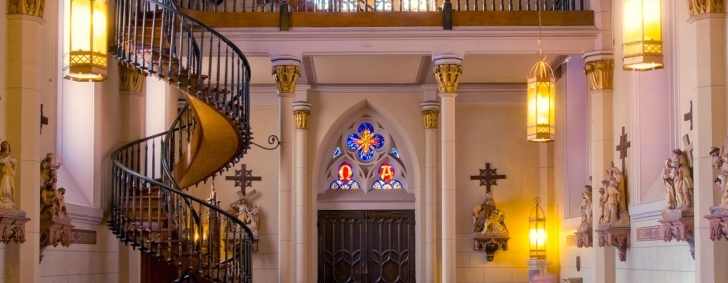
But he asked to be alone in the chapel for three months and, with only simple tools including a saw, T-square, and a hammer, he built the ‘miraculous’ staircase. It is a spiral staircase making two complete 360 degrees rotations but without using a central pole and without using any nails, only wooden pegs.
The bannister of the staircase is perfectly curved, a remarkable accomplishment considering the basic tools that were used. The shape of the helix is not a stable weight-supporting structure, and without the middle column it shouldn’t be able to withstand the weight of people using the staircase.
When the man finished the staircase, he left without asking for a cent. The nuns tried to find him but they could not. They did not know who he was or where he got the wood. Ten years later the railing was added to the staircase by Phillip August Heasch for safety reasons.
The order decided to honor the carpenter’s deed with a banquet, but when it was time to feast, they could not find him. He had disappeared without a trace; he did not identify himself during his time there or ask for payment. Because his identity remains a secret, the Sisters believed him to be St. Joseph, answering their prayers. The number of steps is of religious significance because it was Jesus’ age during his crucifixion. This realization only further convinced the Sisters and fueled the story that St. Joseph had come to their rescue.
With the staircase finished, the chapel was finally complete, but the mystery of its construction was impossible to ignore, and many pondered how the carpenter accomplished the job. The manager of the privately owned chapel (1991-2006), Richard Lindsley, took a piece of wood from the staircase and sent it for analysis. When the results came back, they showed that it was spruce, but of an unknown subspecies. This specific wood was very strong with dense and square molecules – which is something that you usually find in trees that grow very slowly in very cold places like Alaska.
However, there was no such wood in the area and no local trees grow in the Alpine tundra in the surrounding area. The closest place that he would find this density in trees was in Alaska, but of course back then transport was not the same as it is now and wood was not transported over such long distances.
Were the Stairs Created by a Man from a French Secret Society?
Santa Fe New Mexican offers an alternative explanation for the amazing staircase. It’s said that when historian Mary J. Straw Cook researched the stairs for a book she was writing, she “found information in an 1881 nun’s daybook that a man named Rochas was paid for wood.” Francois-Jean Rochas, an alleged “member of a French secret society of highly skilled craftsmen and artisans called the Compagnons, which had existed since the Middle Ages” has been named as the skilled woodworker who apparently “came to the U.S. with the purpose of building the staircase with wood shipped from France.”
When a group of stair-building professionals convened at the Loretto Chapel a few years ago to see the staircase they were shocked at the beauty, design, and engineering of the stairs. A couple of their comments on the workmanship after analyzing the stairs are:
“We all like to think we create creative stair designs and nice curved staircases, but to think how they did it that long ago and still attain the same quality is breathtaking” and
Later, Cook found a newspaper article mentioning Mr. Rochas and that he was a skilled woodworker who built the staircase. Rochas was a member of a secret French society of skilled artisans known as the Compagnons and had come to the U.S. to design the Santa Fe staircase specifically; the wood came from France.
Even with all the advances in technology and engineering, no one can determine how the staircase was built. The stairs are a beautiful and mysterious element of the Loretto Chapel, regardless of the facts around its construction.
Your skeletal system’s cells are constantly regenerating and, on average, the bones you have now will have completely regenerated in about a decade’s time. This does start to slow down as you age, however, with regeneration taking longer, causing bones to naturally become thinner.You’re taller in the morning than you are at night.It might seem like a tall tale, but when you wake up in the morning, you’re actually a tiny bit taller than you were when you went to bed. This is due to the pressure put on joints throughout the day.As you go about your activities, this pressure causes the cartilage in your spine to compress—just fractions of an inch, but enough to push everything down. As you relax in your sleep, it eases the pressure on your spinal disks, thus allowing you to return to your full height.Your sweat is actually odorless.If you think sweat stinks, you wouldn’t be alone—but you would be incorrect. Sweat itself doesn’t smell. It’s the interaction with bacteria on your skin that causes body odor. Don’t worry, this is perfectly normal. These bacteria occur naturally and just happen to thrive in the sweatiest regions of our body.You have over 60,000 miles of blood vessels.If it sounds overwhelming, that’s because it kind of is. While individual blood vessels are relatively small, the amount found within the average adult body tallies up in some pretty impressive ways. If laid out in a straight line, the entire network would stretch well over 60,000 miles. That’s including all arteries, capillaries, and veins, end-to-end.Like lizards, we also shed our skin.
OK, so it’s not quite as intense as when it happens to a lizard or to a snake but it is just as creepy. According to the American Chemical Society, humans shed their entire outer layer of skin every two to four weeks. That’s about 500 million skin cells a day!
Babies don’t have kneecaps.
You’d think that our kneecaps would be a necessary part of the human body. Not for babies, who aren’t born with them. Instead, their cartilage gradually turns into bone, as ossification begins between the ages of two and six years—and doesn’t fully finish until young adulthood.
Your stomach growls because it’s full of hot air.
Ever wonder why you experience those grumbly, growly sounds when hungry? It all circles back to the digestive system. More specifically, the intestines. These guys go through a series of contractions to help move food and liquid along when eating. But even after all the food is digested, the intestines continue to move air through the digestive tract. That’s what causes “borborygmus,” the scientific name assigned to those funny little rumbles.
Your bones are stronger than steel.
While many of us experience a broken bone at some point in life, the fact is that bone is an incredibly tough substance. So strong, in fact, that, as Discover puts it, “ounce for ounce, our bones are stronger than steel.” A bone has a greater pressure tolerance and bearing strength than a rod of steel of the same width. The strongest bone in the body is the femur, which can support 30 times the body weight of an average person.
Throughout your life, you will produce enough saliva to fill up two pools.
The average human produces over 20,000 liters of saliva throughout their lifetime. That’s enough to eventually fill up two swimming pools full of spit. If you think that sounds like a long time, just remember: Rome wasn’t built in a day, either.
Your feet contain a quarter of your bones.
Human feet contain 52 bones (26 for each foot). That’s nearly a quarter of all the bones in your whole body! Each also contains 33 joints and more than 100 muscles, tendons, and ligaments.
The smallest bone in your body is in your ear.
No named bone in your body is smaller (or lighter) than the stapes, a bone in the middle ear that’s actually shaped like a stirrup. It’s complete with a base and an oval window, which is covered with a membrane that measures sound vibrations.
You lose almost one-third of your bones as you age.
As it turns out, there are quite a few things you didn’t know about your body—including how many bones you have. According to the doctors over at the Cleveland Clinic, you’re born with about 300 bones, but as you grow, some fuse together as cartilage ossifies, eventually leaving you with 206 bones by the time you stop growing (once you’ve reached young adulthood).
There are no muscles in your fingers.
Your fingers do countless important things throughout the day, from opening jars to opening doors. But don’t chalk up those feats of strength to your fingers. Any movement that happens in your fingers is due to tendons and bones, with a lot of help from the muscles in the palms of your hands and at the base of each individual digit.
Half your hand strength is in your pinkie.
The pinkie seems unassuming, but it’s crucial for your hand strength—helping the thumb to pinch and giving more power to the ring, middle, and index fingers.
Laurie Rogers, hand therapist at National Rehabilitation Hospital in Washington, told The New York Times that losing your pinkie would mean, “You’d lose 50 percent of your hand strength, easily.”
Your tongue is the only muscle that doesn’t join two bones.
Every muscle in the human body connects to bones at both ends, allowing it to pull and create motion, with one notable exception: your tongue. On one end, it’s connected to your hyoid bone—part of your neck—but nothing else on the other side.
Your rear is your largest muscle.
While there is some debate about which of your muscles is the strongest, your gluteus maximus happens to be your largest, according to the Library of Congress. These muscles help keep your body upright, move your hips and thighs, and work against gravity when you’re walking uphill or upstairs. The fact that they make your jeans look great is just a bonus.
We’re as hairy per square inch as chimpanzees.
It turns out we’re just as hairy as chimps. According to a 2011 paper published in the International Journal of Trichology, we have the same number of hairs as chimps, even if the hair itself is much finer, making it harder to see and creating a lower volume of hair overall.
Roller coasters can “toss” your organs.
You know that sinking feeling you get when on a roller coaster? Turns out, it might be a little something more than the adrenalin. According to experts, these rides can achieve speeds fast enough to actually toss your internal organs around. We’re talking brain, heart, eyes, blood vessels, and more. Don’t worry, the acceleration isn’t enough to do any harm (unless you have a preexisting condition). It’s just enough to leave you feeling a little queasy.
Hair can “taste.”
Here’s a fun human body fact: Your nasal passages and lungs are lined with fine hairs, or cilia, that detect and sweep out impurities. How do they detect it? By sensing the bitter tastes of the things passing through them (such as, say, nicotine). When these hairs taste something bitter, they increase their rate of movement, attempting to sweep out the bad stuff, according to a 2009 study published by the American Association for the Advancement of Science.
Hair knows when you sleep.
Your hair helps the environment.
Dirty hair can be good for the atmosphere: According to a 2008 study published in Atmospheric Environment, hair absorbs the air pollutant ozone. Scalp oils were found to be a major contributor to this, so if you want to do your part to help your local air quality, skip the shampoo!
There have been many misconceptions, fallacies, falsehoods, and media inaccuracies about the beginnings of ‘420’, and even about The Waldos. Rogues and fogged burnouts turn up across the internet claiming they started ‘420’, fictionally making up dates that precede The Waldos’ creation date with their revisionist history. Unfortunately, as things grow in popularity, sometimes people “crawl out of the woodwork” to claim they were part of it.
The Waldos, from left, Mark Gravitch, Larry Schwartz, Dave Reddix, Steve Capper and Jeffrey Noel by the statue of Louis Pasteur at San Rafael High School in San Rafael, California in 2018. (Photo: Associated Press/Eric Risberg)
The Waldos are the only ones with multiple pieces of physical-evidence proof of the very earliest usage of the term ‘420’. In fact, The Waldos are the only ones in the world with any proof at all. The Waldos story/proof of ‘420’ origination has been investigated, and verified, by numerous credible journalistic news organizations. The Waldos are the real creators of the term 420.
This photo shows dried cannabidiol (CBD) flower buds on February 16, 2022 in Paris. April 20 or “4/20” is the event in the calendar that stoners look forward to every year, becoming a celebration of cannabis culture.
Meet The Waldos
“In the fall of ’71, Waldo Steve was given a treasure map to a patch of weed on the Point Reyes Peninsula. The map was given to him by a friend whose brother was in the U.S. Coast Guard and was growing cannabis. The coastguardsman was paranoid he would get busted so he granted permission to harvest. The Waldos™ all agreed to meet at 4:20 p.m. at the statue of chemist Louis Pasteur on the campus of San Rafael High. They met, got high, and drove out to search for the patch.
In the ensuing school days the Waldos would use the term ‘420 Louie™’ to remind each other of their after school quest. They eventually dropped the ‘Louie’ part and just said ‘420’ to refer to cannabis. Originally ‘420’ was nothing more than the Waldos’ secret slang–their own private joke–however, it was picked up by others and spread from generation to generation, city to city, country to country, across decades, and throughout all media around the globe. The Waldos have published multiple pieces of “evidence” to give credence to their theory, including letters from college and the original “420” flag from the 1970s.
Point Reyes Forest
Spreading the Word
Initially “420” began as private joke for their own meetups, but the phrase supposedly caught traction via the group’s connection with the rock band ‘The Grateful Dead,’ also based in Marin County Hills at that time, only blocks away from the high school the Waldos attended. One of the Waldos, Mark Gravitch, had a father who managed real estate for the band, while the brother of Dave Reddix (another Waldos member) managed a Grateful Dead side-band and was close friends with Grateful Dead bassist Phil Lesh.
Grateful Dead
The Grateful Dead practiced at a rehearsal hall in San Rafael, California and the Waldos used to hang out there at watch, Reddix said. His older brother Patrick spread the “420” phrase with the band through Lesh. “And me, too, because I was hanging out with Lesh and his band [as a roadie] when they were doing a summer tour my brother was managing,” Reddix added.
Capper added: “We’d go with [Gravitch’s] dad, who was a hip dad from the ’60s. There was a place called Winterland and we’d always be backstage running around or onstage and, of course, we’re using those phrases. “When somebody passes a joint or something, ‘Hey, 420.’ So it started spreading through that community.”
“Winterland Auditorium stage in 1976”
Capper said Marin County was “ground zero” for the California counterculture, which saw hippies smoke weed as a form of protest against government policies, such as the Vietnam War. Later, banners calling from 4:20 p.m. meetings on 4/20 were found circulating at gatherings ahead of Grateful Dead concerts.
Today, 4/20 can mean a whole host of different things to weed smokers, as well as the industry. Hundreds of sellers show off their marijuana products at 4/20 rallies each year. For example, the aptly-named California town Weed hosts its own 4/20 festival:
“The City of Weed, California, Threw Huge Blowout to Celebrate 420
Published April 21, 2022, by Chris Moore
“What better place to celebrate the year’s biggest cannabis holiday than a town named Weed? Yesterday, a tiny Northern California city called Weed hosted its fourth annual festival to celebrate 4/20, the official cannabis holiday. The event was held by La Florista Cannabis dispensary, which just happens to be the only weed shop in Weed. Organizers shut down a block of the city’s Main St. for a blowout featuring bands, a DJ, a taco truck, and – you guessed it – legal cannabis. The dispensary offered special “swag bags” for customers, plus promos on flower, pre-rolls, vape carts, edibles, and pretty much every other product they sell.
With all the hype surrounding California’s fabled cannabis industry, one might speculate that the town of Weed might have adopted this name just to cash in. But the town’s unique name actually comes from its founder, a pioneer named Abner Weed. In 1897, Weed bought a 280-acre lumber mill in the area that eventually became the current City of Weed.
Weed was initially quite reluctant to embrace its cannabis namesake. Residents and elected officials initially resisted attempts to capitalize on the town’s potential for pot tourism but did agree to allow La Florista to open in 2018. Since then, Weed has slowly been warming up to weed. Last January, the city council voted to impose a 3% local cannabis sales tax, which city officials predicted would bring them about $100,000 a year.”
Watch a marijuana documentary….Learn more about the history of cannabis and the controversies surrounding it today by watching a marijuana documentary, such as “Grass is Greener, High Country: The Future of Weed,” “The Culture High” and “The Legend of 420.”
Those are all movies that require payment. This one, however, is surprisingly honest, even tho it came via PBS. The FDA (i.e., HHS) consciously CHOSE to block ALL study on the efficacies of MJ for health purposes simply by refusing to take it off the list of dangerous drugs to free up research $$$. They want to control ALL of it!!!! Bayer/Monsanto has been locking up the medical MJ business for a very long time!!!
Try some cannabis recipes
Try a recipe or two from “The Official High Times Cannabis Cookbook,” which features more than 50 tasty recipes to get you high.
Listen to a marijuana podcast
Learn more about the ins and outs of the cannabis industry on ‘The Adam Dunn Show,’ ‘Brave New Weed’ and ‘Cannabis Cultivation and Science Podcast.’
Video of the effects of CBD on Parkinsons and Epilepsy:
Parkinson’s Sufferer Shows The Incredible Effect Marijuana Has On His Tremors
A Little Girl With Epilepsy Tries Cannabis Oil
Toddler’s seizures treated with medical marijuana
“20 Medical Studies That Show Cannabis Can Be A Potential Cure for Cancer”
EXCERPT: “Let’s take a look at the science behind cannabis and cancer. Although cannabis has been proven to be an effective treatment for a wide range of ailments, this article will focus mainly on its effects on cancer.
Cannabinoids, which refer to any of a group of related compounds that include cannabinol and the active constituents of cannabis, may very well be one of the best disease- and cancer-fighting treatments out there. They activate cannabinoid receptors in the body, and the body itself produces compounds called endocannabinoids that play a role in many processes within the body that help to create a healthy environment.
Cannabinoids are also involved in immune system generation and re-generation. The body regenerates best when it’s saturated with phyto-cannabinoids.”
This disappeared and I had to use the Wayback Machine:
A picture taken at the Archaeological Museum in Athens on September 14, 2014 shows a piece of the Antikythera Mechanism, a second-century B.C. device known as the world’s oldest computer which tracked astronomical phenomena and the cycles of the solar system.(Image credit: LOUISA GOULIAMAKI/AFP via Getty Images)
The Antikythera mechanism is an ancient shoebox-sized device that is sometimes called the world’s oldest computer for its ability to perform astronomical calculations. Discovered by sponge divers off the Greek island of Antikythera in 1901, the remains of the mechanism are now preserved in the National Archaeological Museum in Athens. Only 82 fragments, consisting of about one-third of the original mechanism, survive today, It was built around 2,200 years ago.
The mechanism was capable of performing different calculations, and it could help track the motions of the sun, moon and five of the planets; it could even tell when athletic competitions, such as the Olympics, were set to take place, the researchers wrote. Since the discovery of the Antikythera mechanism, scholars have been trying to understand the device. And although they have made considerable progress, many questions remain unanswered. For example, researchers still aren’t sure who made it. The inscriptions on the mechanism are written in Greek.
An engraving illustration of the last hour of Archimedes, the mathematician who died in 212 B.C. or 211 B.C. when the Romans captured Syracuse, Sicily. (Image credit: mikroman6 via Getty Images)
The recovered fragments of the mechanism contained writing and inscriptions, and over the past two decades, scientists have been able to read more of these Greek inscriptions using high-tech imaging methods, such as 3D X-ray scanning. This has enabled them to learn more about how the mechanism worked.
CT scans “revealed inscriptions describing the motions of the sun, moon and all five planets known in antiquity and how they were displayed at the front as an ancient Greek cosmos.” The mechanism used “cycles from Babylonian astronomy, mathematics from Plato’s Academy and ancient Greek astronomical theories.”
More pieces of the Antikythera Mechanism at the Archaeological Museum in Athens.(Image credit: LOUISA GOULIAMAKI/AFP via Getty Images)
Between the front and back of the mechanism were a vast array of gears, designed in such a way that all the dials would depict the correct timing of all the cycles. “Suppose a user of the Antikythera Mechanism wants to check eclipse predictions for a particular month some years ahead. The user winds the mechanism forwards to the desired date, as shown on one of its calendars,” Tony Freeth, a researcher with the Antikythera Mechanism Research Project, wrote in a paper published in 2014 in the journal “PLOS One.”
Though the ship that held the Antikythera mechanism was discovered more than a century ago, the wreck has not been fully excavated. Its location and depth make it hard to excavate. Despite these difficulties a new program of excavation is being carried out by a team of archaeologists and new artifacts continue to be found, shedding light on what the ship, which likely sank around 65 B.C. was like.
Marine archeologists also found a bronze arm from a sculpture in the same shipwreck. Credit: Greek Ministry of Culture
Researchers have noted that many of the artifacts were luxury goods intended for the wealthy. So far, the recent excavations have not uncovered any new remains of the mechanism.
Excavations in 2016 at the Antikythera shipwreck found a nearly intact skull, including the cranial parietal bones. (Image credit: Brett Seymour, EUA/WHOI/ARGO)
Antikythera Mechanism rewrote the history of science
In 2015, Kyriakos Efstathiou, a professor of mechanical engineering at the Aristotle University of Thessaloniki said: “All of our research has shown that our ancestors used their deep knowledge of astronomy and technology to construct such mechanisms, and based only on this conclusion, the history of technology should be re-written because it sets its start many centuries back.”
In 2016, yet another astounding discovery was made when an inscription on the device was revealed—something like a label or a user’s manual for the device. It included a discussion of the colors of eclipses, details used at the time in the making of astrological predictions, including the ability to see exact times of eclipses of the moon and the sun, as well as the correct movements of celestial bodies.
A model of the Antikythera Mechanism was made by Derek De Solla Price. Credit: Public Domain
Inscribed numbers 76, 19 and 223 show maker “was a Pythagorean”
On one side of the device lies a handle that begins the movement of the whole system. By turning the handle and rotating the gauges in the front and rear of the mechanism, the user could set a date that would reveal the astronomical phenomena that would potentially occur around the Earth. Physicist Yiannis Bitsakis has said that today the NASA website can detail all the eclipses of the past and those that are to occur in the future. However, “what we do with computers today, was done with the Antikythera Mechanism about 2000 years ago,” he said.
Making this incredible machine even more impressive is the fact that the movements of the planets are directly linked to specific observation sites around the known world at the time, suggesting that the creator of the Antikythera Mechanism had provided for the use of the machine in more than one location.
Bones found at the Antikythera Mechanism shipwreck site
Greece’s Ministry of Culture issued a statement in late 2019 informing the public that ”bones were collected, which now need to be analyzed, (as well as) olive kernels, and bronze nails from the ship as well as a bronze ring, whose use remains unknown.”
Among the findings which were discovered were sections of the bodies of ancient amphorae, as well as the bases and the necks from the main bodies of the vases. The types of amphorae are identified as those which were typically used on the island of Kos and in Southern Italy in ancient times.
The Greek Ministry noted ”this scientific mission of October 2019 completed the first five-year research program. Based on the results of the latest research, preparations for the new five-year program, starting in May 2020, will begin immediately with the continuation of excavation research in various areas of the wreck, where there are good indications that impressive new findings will come to light.”
“The mission was concluded with great success despite adverse weather conditions and the limited length of time for the rescue research,” the Ministry added.
A video titled “2017 Return to Antikythera Expedition” looks at the delicate and often hazardous work marine archeologists do in recovering ancient gems from the depth of the seas. That expedition, led by the Greek Ephorate of Underwater Antiquities, Lund University, and Woods Hole Oceanographic Institution, was conducted between September 4th to September 20th of that year, and as per previous trips to the wreck, the team did not leave disappointed.
With excellent weather conditions above them, the divers managed to recover an “orphaned” right arm of a bronze statue, pottery shards, nails, lead sheathing fragments, and an odd metal disc, among other artifacts. Prior to that expedition, the Return to Antikythera project team managed to recover glassware, luxury ceramics, anchors, counterweights, tools, and even an ancient skeleton, which is still undergoing DNA analysis.
Curiosity killed the cat is a well-known phrase that is found repeatedly in English literature. The meaning of ‘curiosity killed the cat’ is easy to summarise: don’t go poking your nose into other people’s affairs, and don’t be overly inquisitive about things which don’t concern you, as it will only cause trouble.
The phrase suggests that a cat that went nosing about in something it shouldn’t have came a-cropper and died as a result. However, the phrase began life quite differently. ‘Care killed the cat’ – a phrase with a subtle, but important, different meaning – has a much longer, and older, pedigree. ‘Care killed the cat’ is found as early as 1598, in Ben Jonson’s city comedy, “Every Man in His Humour.” In that play, we find the line: ‘Helter skelter, hang sorrow, care’ll kill a cat, up-tails all, and a louse for the hangman.’
So when did ‘curiosity killed the cat’ take over as the cat-killing expression or phrase of choice – and why? It had certainly come into being by the second half of the nineteenth century: James Allan Mair’s 1873 book, “A handbook of proverbs: English, Scottish, Irish, American, Shakesperean, and scriptural; and family mottoes” lists ‘curiosity killed the cat’ as a familiar phrase, with an ‘I.’ next to it to suggest that the phrase is Irish in origin.
This is perfectly possible, especially as the phrase seems to have really taken off in the United States, where it was perhaps introduced by Irish immigrants in the second half of the nineteenth century. The prolific short-story writer O. Henry, in his 1909 story ‘Schools and Schools,’ wrote: ‘Curiosity can do more things than kill a cat; and if emotions, well recognized as feminine, are inimical to feline life, then jealousy would soon leave the whole world catless.’
Turnabout is fair play is a proverb with its roots in the mid-1700s. A proverb is a short, common saying or phrase that particularly gives advice or shares a universal truth.
Turnabout is fair play is a proverb that means if someone has harmed you, it is permissible to retaliate in kind. Turnabout is fair play is used to justify paying back a real or perceived injury. The phrase turnabout is fair play originated in the mid-1700s in reference to gaming, meaning taking turns assures a fair game.
Today, the term has taken on the connotation of revenge or retaliation, in the sense of two parties taking equal advantage of each other. Occasionally, turnabout is fair play is used in a friendly, teasing manner as an admonishment to keep things fair and equal.
Beggar belief is not a phrase that means the beliefs of beggars. Instead, its true meaning as an idiomatic expression is to be undeserving of being believed or to become unbelievable. People also use the term as a verb meaning to defy belief. The idiom beggar belief comes from the verb to beggar, which means to make poor or impoverished.
In American English, the famous meaning of beggar is a noun that refers to an impoverished person. Some people believe that beggar as a verb was coined by William Shakespeare. He used the term in 1616 in Antony & Cleopatra: ‘For her owne person It beggerd all discription.’
However, it has been around since the early 16th century. Three centuries later, beggar as a verb was combined with belief to mean be unbelievable. The phrase was first found in John Whitley’s “Completion of Prophecy.” He used it in the 19th century to describe the “heathens” who didn’t believe in the Bible.
Catty-corner, kitty-corner, and cater-cornered all derive from the Middle English catre-corner, literally meaning four-cornered. All three forms are used throughout the English-speaking world. They usually mean positioned diagonally across a four-way intersection, but they can work in other contexts relating to one thing being diagonal from another.
Gobsmacked, a British colloquialism, means (1) surprised, (2) dumbfounded, or (3) awestruck. In parts of Britain, gob is slang for mouth, and to be gobsmacked (one word) is to be figuratively smacked in the mouth—that is, struck dumb by something. Gobsmacked is most common in British and Australian speech and writing. It appears occasionally in Canadian and U.S. publications, but it gives the impression that the writer is either British or affecting a British voice.
Another version of this adjective is gobsmacking. Usually things are gobsmacking while people are gobsmacked. The term’s origins are pretty literal. When people are shocked or in awe, they clap or smack their hands to their mouths or gobs. Another related term is a gobstopper, or a jawbreaker in the United States. The candy is round and hard, usually meant to be sucked on instead of chewed, effectively stopping one’s gob from other tasks such as talking.
To have another string in your bow can mean that you have a backup plan in case the current plan fails. This is analogous to an archer carrying an extra bowstring in the event that the first breaks. Alternatively, the phrase may mean to have two strings in one bow that may work together, or to have two methods of acquiring a goal. This would be similar to a bow having two or more strings to increase the force propelling the arrow forward. The arrow would hit the target faster.
A slight variation of this last definition is that by having an extra string in your bow, you have learned a new talent that will help in your career. Or in other words, you have more than one skill to rely on to accomplish your goals. This may refer to an archer having different kinds of strings, some of different materials and strengths.
It should be noted that all of the archer analogies have been used since the sixteenth century and some of them have morphed over time. It is unlikely that each phrase was coined with the explicit analogy in mind. This idiom is mostly found outside of the United States, and it is extremely changeable.
To be at a loose end is to have nothing to do. It is primarily used in British English. In the United States, there is a variant phrase to be at loose ends. This also means to have nothing to do, but it carries the connotation of nervousness, as in the situation of not being able to do anything about a stressful situation. The British phrase suggests only boredom.
The chart shows that the global popularity of the two versions has traded places over time, with the current favorite being ‘at loose ends’. A straight internet search finds ‘at a loose end’ slightly more popular. As with all informal phrases, research is somewhat unreliable about usage since most usage is verbal.
Boggle the mind and mind-boggling are terms that have their roots in the sixteenth century, though their current use only became popular in the 1950s. To boggle the mind means to baffle someone, to astonish or overwhelm someone. The term begins with the word boggle, which dates back to the sixteenth century. At that time, boggle was mostly used to describe the state of a startled horse.
The word boggle is most probably derived from the dialect word bogle, which meant an unseen specter. Presumably, these unseen specters were blamed for startled horses. Today, the word boggle is almost exclusively used in the phrase boggle the mind or the adjective form, mind-boggling. Note that when used as an adjective before a noun, the term is hyphenated. Related terms are boggles the mind, boggled the mind, boggling the mind.
The word cheapskate is a closed compound word made of the words cheap and skate. But it does not refer to affordable skates. The term describes a person who goes beyond frugal living. Cheapskate is a noun that refers to a miserly or stingy person. It’s usually someone who tries to avoid paying their share of expenses or costs. This scornful term describes someone with “short arms and long pockets.”
A cheapskate is not only a cheap person or someone who wants to save money and live debt-free. It’s also someone who does not want to spend money even though it’s necessary. Ebenezer Scrooge from A Christmas Carol is a clear example of a cheapskate. Despite being wealthy, he underpays his employee and hounds debtors relentlessly. He hates Christmas because he associates it with reckless spending.
The origin of cheapskate is not recorded. But it’s worth noting that skate is a slang word for a mean or contemptible person. It might have originated from skite, a Scottish slang with the same definition. Then, in the 20th century, skate and cheapskate became synonymous in the USA and UK. The earliest recorded use of cheapskate can be found in George Ade’s “Artie: A Story of the Streets and Town” (1896):
“Them sporty boys don’t last. They get in with a lot o’ cheap skates and chase around at nights and think they’re the real thing.”
Every few years, the small town of Troy in Miami County, Ohio celebrates an historic occasion that for a few giddy weeks puts it on the world map of the grocery trade. At the time, National Cash Register, which provided the checkout equipment, was based in Ohio and Troy was also the headquarters of the Hobart Corporation, which developed the weighing and pricing machines for loose items such as meat. It was here, at just after 8 a.m. on June 26, 1974, that the first item marked with the Universal Product Code (UPC) was scanned at the checkout of Troy’s Marsh Supermarket.
It was treated as a ceremonial occasion and involved a little bit of ritual. The night before, a team of Marsh staff had moved in to put bar codes on hundreds of items in the store while National Cash Register installed their scanners and computers. The first “shopper” was Clyde Dawson, who was head of research and development for Marsh Supermarket; the pioneer cashier who “served” him, Sharon Buchanan. Legend has it that Dawson dipped into his shopping basket and pulled out a multi-pack of Wrigley’s Juicy Fruit chewing gum. Dawson explained later that this was not a lucky dip: he chose it because nobody had been sure that a bar code could be printed on something as small as a pack of chewing gum, and Wrigley had found a solution to the problem. Their ample reward was a place in American history.
The first item marked with the Universal Product Code (UPC) was scanned at the checkout of Troy’s Marsh Supermarket. Courtesy of Yale University Press
Joe Woodland said himself it sounded like a fairy tale: he had gotten the inspiration for what became the bar code while sitting on Miami Beach. He drew it with his fingers in the sand. What he was after was a code of some sort that could be printed on groceries and scanned so that supermarket checkout queues would move more quickly and stocktaking would be simplified.
That such a technology was needed was not his idea: it came from a distraught supermarket manager who had pleaded with a dean at Drexel Institute of Technology in Philadelphia to come up with some way of getting shoppers through his store more quickly. The delays and the regular stocktaking were costing him his profits. The dean shrugged him off, but a junior postgraduate, Bernard “Bob” Silver, overheard and was intrigued. He mentioned it to Woodland, who had graduated from Drexel in 1947. Woodland was already an inventor, and he decided to take on the challenge.
So confident was he that he would come up with a solution to the supermarket dilemma, Woodland left graduate school in the winter of 1948 to live in an apartment owned by his grandfather in Miami Beach. He had cashed in some stocks to tide him over. It was in January 1949 that Woodland had his epiphany, though the brilliance of its simplicity and its far-reaching consequences for modern existence were not recognized until many years later.
Joe Woodland (here) and Bernard Silver filed a patent in 1949, which was granted in 1952. Courtesy of Yale University Press
It was Morse Code that gave him the idea. Woodland had learned it when he was in the Boy Scouts. As he was sitting in a beach chair and pondering the checkout dilemma, Morse came into his head: “I remember I was thinking about dots and dashes when I poked my four fingers into the sand and, for whatever reason—I didn’t know—I pulled my hand toward me and I had four lines. I said ‘Golly! Now I have four lines and they could be wide lines and narrow lines, instead of dots and dashes. Now I have a better chance of finding the doggone thing.’ Then, only seconds later, I took my four fingers—they were still in the sand—and I swept them round into a circle.”
The patent illustrates the basic concept of a bull’s-eye-shaped bar code.
Back in Philadelphia, Woodland and Silver decided to see if they could get a working system going with the technology to hand. They first filed a patent in 1949, which was finally granted in 1952. Woodland and Silver had the right idea, but they lacked the minicomputer and, critically, a very bright light with which to “read” the black and white bar code. On July 16, 1960, Hughes Aircraft Company made one of the most sensational announcements in the history of science. One of their research scientists, Theodore Maiman, had made an “atomic radio light brighter than the center of the sun.” Maiman produced for the newsmen his “laser,” an acronym for Light Amplification by Stimulated Emission of Radiation.
Theodore Maiman looks at the ruby used to create the first laser beam. Bettmann/Corbis
A booklet produced in 1966 by the Kroger Company, which ran one of the largest supermarket chains in North America, signed off with a despairing wish for a better future: “Just dreaming a little . . . could an optical scanner read the price and total the sale. . . . Faster service, more productive service is needed desperately. We solicit your help.”
A small research team at the powerful Radio Corporation of America (RCA) was looking at a few new projects, including the possibility of an automatic bank cash machine, which they decided would not go because “the customer would not buy the concept.” Finally, they lighted on the bar code. They soon found the Woodland and Silver patent. Printing the bull’s-eye bar code proved to be one of the greatest difficulties, because any imperfections would make the whole system unworkable.
The first real-life test of RCA’s bull’s-eye bar code was at the Kroger Kenwood Plaza store in Cincinnati. Courtesy of the ID History Museum
On July 3, 1972, the first automated checkstands were installed. More checkstands were installed and a comparison with other Kroger stores told an undeniable and very promising story: the bull’s-eye bar code hit the target, with superior sales figures. But this was just one store in a nationwide grocery and supermarket business worth billions. If the laser and bar code were to revolutionize the checkout counter, they would have to be near universal.
The goal of the Ad Hoc Committee of the Universal Product Identification Code could be stated very simply. The representatives of the grocery trade were charged with finding a way to introduce a Universal Product Code, a bar code of some description that would be common to all goods sold in supermarkets and imprinted by the manufacturers and retailers. The code would carry information about the nature of the product, the company that made it, and so on. In-store computers would “read” this information with scanners and introduce their own variations, which might involve special offers and reductions.
In the end, seven companies, all of them based in the United States, submitted systems to the Symbol Committee, a technical offshoot of the Ad Hoc Committee. International Business Machines (IBM) made a surprise bid. IBM’s George Laurer was handed the specifications for a bar code that had been determined by the Symbol Selection Committee: it had to be small and neat, maximum 1.5 square inches; to save money it had to be printable with existing technology used for standard labels; it had been calculated that only ten digits were needed; the bar code had to be readable from any direction and at speed; there must be fewer than one in 20,000 undetected errors.
Like so many inventions, the UPC was not an immediate success. It was when the mass merchandisers adopted the UPC that it took off, Kmart being the first. In fact, bar code technology was almost made for companies like Walmart, which deal in thousands of goods that need to be catalogued and tracked. The bar code took off in the grocery and retail business in the 1980s, and at the same time began to transform manufacturing. In 2004, Fortune magazine estimated that the bar code was used by 80 to 90 percent of the top 500 companies in the United States.
Test tubes with blood samples are marked with bar codes. AB Still LTD/Science Photo Library/Corbis
Though the inspiration for the bar code was the plea by supermarkets for technology that would speed up the checkout, its greatest value to business and industry is that it has provided hard, statistical evidence for what sells and what does not. It has transformed market research, providing a rich picture of people’s tastes, and it has made production lines more efficient.
After many years of anonymity, the man whose knowledge of Morse Code inspired the familiar black and white stripes finally got some recognition. In February 1992, President George H.W. Bush was photographed at a national grocery convention looking intently at a supermarket scanner and having a go at swiping a can with a bar code over it. The New York Times correspondent wrote this up as evidence that it was the first time Bush had seen a supermarket checkout. In other words, he was out of touch with everyday American life.
His aides insisted that he was not struck by the novelty of the technology but by the fact that it could read a damaged bar code. Apocryphal or not, the story stuck and was regarded as damaging to Bush. However, as Woodland’s local newspaper put it: “George Bush isn’t one to hold a grudge. No Sir.” A few months after the checkout incident, Bush presented Woodland with a National Medal of Technology.
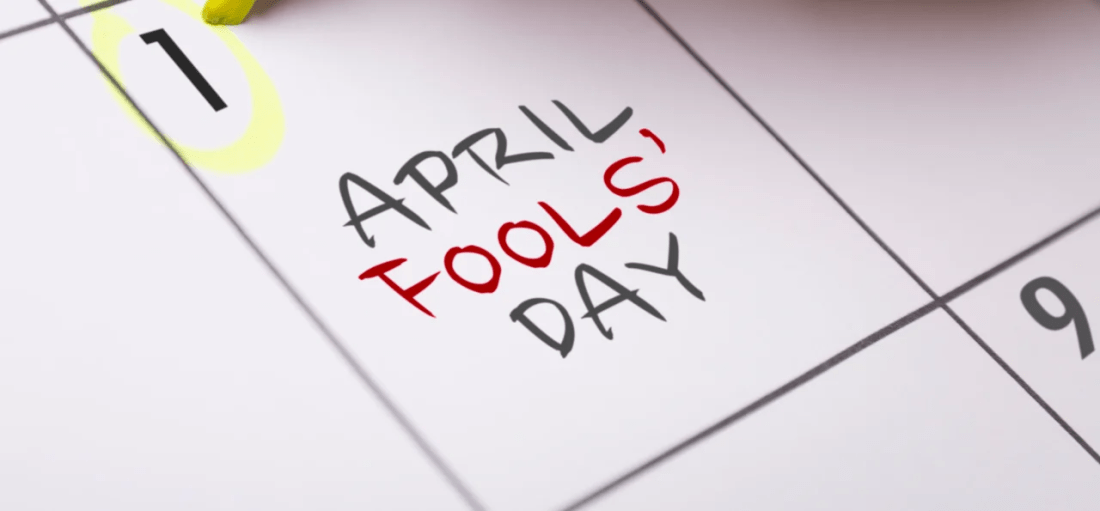
April Fools’ Day—celebrated on April 1 each year—has been celebrated for several centuries by different cultures, though the exact origins remain a mystery. April Fools’ Day traditions include playing hoaxes or practical jokes on others, often yelling “April Fools!” at the end to clue in the subject of the April Fools’ Day prank. The embrace of April Fools’ Day jokes by the media and major brands has ensured the unofficial holiday’s long life.
Some historians speculate that April Fools’ Day dates back to 1582, when France switched from the Julian calendar to the Gregorian calendar, as called for by the Council of Trent in 1563. In the Julian Calendar, as in the Hindu calendar, the new year began with the spring equinox around April 1.
Roman Julian Calendar
Gregorian Calendar
People who were slow to get the news or failed to recognize that the start of the new year had moved to January 1 and continued to celebrate it during the last week of March through April 1 became the butt of jokes and hoaxes and were called “April fools.” These pranks included having paper fish placed on their backs and being referred to as “poisson d’avril” (April fish), said to symbolize a young, easily caught fish and a gullible person.
Hilaria in Ancient Rome
Historians have also linked April Fools’ Day to festivals such as Hilaria (Latin for joyful), which was celebrated in ancient Rome at the end of March by followers of the cult of Cybele. It involved people dressing up in disguises and mocking fellow citizens and even magistrates and was said to be inspired by the Egyptian legend of Isis, Osiris and Seth.
Vernal Equinox and April Fools’
There’s also speculation that April Fools’ Day was tied to the vernal equinox, or first day of spring in the Northern Hemisphere, when Mother Nature fooled people with changing, unpredictable weather.
Gowk Day was a day of wild goose chases, pranks and set ups in Scotland for generations, starting with “hunting the gowk,” in which people were sent on phony errands (gowk is a word for cuckoo bird, a symbol for fool) and followed by Tailie Day, which involved pranks played on people’s derrieres, such as pinning fake tails or “kick me” signs on them.
The Gowk Day custom derives in part from young people being led from wood to wood to track the newly arrived Spring cuckoos, with the “hunt the gowk” always staged too early for the birds to be found. The traditional prank was to ask someone to deliver a sealed message requesting help of some sort.
When the note was opened on delivery, the nature of the errand was revealed. “Dinna laugh, dinna smile, hunt the gowk another mile,” was the message. The daft missions further evolved with reports of people being sent to the butcher for items such as a gill of pigeon milk. It is believed Gowk’s Day was marked in Scotland from at least 1700.
Accounts detail how it was usually the early milk boy or girl who would usher in Gowk month by falsely warning passers by that ‘yer lace is lowse’ or “ye’ve let something fa” More elaborate jokes were perpetrated by the older school children and apprentice boys. In the Western Isles, gowk cakes, made from milk, eggs and fruit, were eaten on April 1.
April Fools’ Day Pranks
In modern times, people have gone to great lengths to create elaborate April Fools’ Day hoaxes. Newspapers, radio and TV stations and websites have participated in the April 1 tradition of reporting outrageous fictional claims that have fooled their audiences.
1856: The Tower of London hosts a lion washing extravaganza
In the days leading up to April 1, 1856, London residents received an official-looking invitation printed on Tower of London stationery and bearing a crimson wax seal. Signed “Herbert de Grassen,” supposedly a “senior warden” at the popular tourist attraction and prison, the leaflet offered admission to “view the annual ceremony of washing the lions” on April 1.
Such an event could have indeed taken place two decades earlier, but the Tower’s famous menagerie—which for 600 years featured bears, leopards, lions and other dangerous beasts—had closed in 1835. Nevertheless, a certain number of would-be spectators showed up for the display, only to learn they’d fallen prey to an April Fools’ hoax.
1957: Spaghetti grows on trees
Leave it to the Brits to concoct one of history’s most memorable April Fools’ Day pranks. On April 1, 1957, the BBC aired a segment in which a Swiss farming family harvested long strands of pasta from their spaghetti trees. In England at that time, spaghetti was still an exotic delicacy with mysterious origins, so many viewers bought the report hook, line and sinker. Some even called in to ask how to grow spaghetti trees of their own. The BBC reportedly suggested, “Place a sprig of spaghetti in a tin of tomato sauce and hope for the best.”
1962: Swedish televisions don pantyhose
On April 1, 1962, a supposed technical expert for Sweden’s one and only television channel made an exciting announcement. By stretching out a pair of nylon stockings and taping it over their screens, he reported, viewers could watch the usual black-and-white broadcast in stunning color. Television owners rushed to implement the astonishingly simple hack, only to be disappointed when the hose did nothing but obscure the picture. Regular color programming would eventually debut in Sweden on April 1, 1970.
1972: The Loch Ness Monster surfaces
Very few April Fools’ Days go by without some Nessie-related hoax, but in 1972 a widely published photograph convinced many that Loch Ness’ elusive dweller had finally made an appearance—sadly, dead rather than alive. It turned out that a prankster from Yorkshire’s Flamingo Park Zoo had dumped the body of a bull elephant seal in the lake. He had only intended to play a joke on his coworkers, but the “news” quickly went viral.
1976: Gravity takes a hiatus
On April 1, 1976, the BBC pulled off yet another of its many April Fools’ Day pranks. Astronomer Sir Patrick Moore told listeners that at 9:47 a.m. that day, the temporary alignment of Pluto and Jupiter would cause a reduction in Earth’s gravity, allowing people to briefly levitate. Sure enough, at 9:48, hundreds of enthralled callers flooded the lines with reports that they had floated in the air.
1992: Richard Nixon makes a comeback
National Public Radio’s “Talk of the Nation” program reported that former-President Richard Nixon had declared his candidacy for the Republican presidential nomination. Accompanying the announcement were audio clips of Nixon delivering his candidacy speech and declaring “I never did anything wrong, and I won’t do it again.”
Harvard professor Laurence Tribe and Newsweek reporter Howard Fineman then came on the air to offer their analysis of Nixon’s decision and its possible impact on the 1992 presidential race. A clip from Torrie Clarke, press secretary of the Bush-Quayle campaign, was also played in which she said, “We are stunned and think it’s an obvious attempt by Nixon to upstage our foreign policy announcement today.”
Listeners reacted emotionally to the announcement, flooding NPR with calls expressing shock and outrage. Only during the second half of the program did host John Hockenberry reveal that the announcement had been an April Fool’s Day joke. Comedian Rich Little had impersonated Nixon’s voice.
1998: Lefties get their own burger
In a full-page advertisement in USA Today, Burger King unveiled a new menu item specifically engineered for southpaws: the Left-Handed Whopper. According to the fast food chain, the burger’s condiments were rotated 180 degrees to better suit the 1.4 million lefties who patronized its restaurants. Thousands of customers requested the new burger, swallowing an April Fools’ Day whopper as they ordered their Whopper.
2000: People Google with their minds
Now famous for its annual hoaxes, Google played its first April Fools’ Day prank in 2000. Visitors to the search engine’s website learned about a new “MentalPlex” technology that supposedly read people’s minds, thereby bypassing the need to type in a query. Google has orchestrated an increasing number of elaborate ruses in the years since, announcing such products and features as Google Nose, Gmail Motion and PigeonRank.
2013: Uncle Sam Wants Kitties
The U.S. Army jumped on the hoax bandwagon in 2013, when it sent out a seemingly official press release announcing the latest additions to the U.S. Armed Forces. Claiming that drafting cats to serve their country would cut down on military spending, officials went on to say that it was time these feckless felines got to work.
As Sgt. 1st Class Tyler Radmall wisely stated, “Not only will the Army have a more cost-effective working animal, but we will be doing our part in getting them off of the streets and finding them employment.” But while Army brass seemed bullish on the idea, they did note that the K-9 units weren’t taking too kindly to the new recruits, resulting in more than a little fighting like cats and dogs.
Of course, I can’t possibly let this day pass without acknowledging the birthday of my sweet girl! Happy Birthday, Heather Brianna!!!
HB at 3 months
HB dearly loved hats of all kinds!
After a night of sleeping on the beach in VA Beach






























 Sew Colorful