






On May 31, 1995, Governor Mel Carnahan signed a bill designating the Missouri Mule as the official state animal. The mule is a hybrid animal, the offspring of a mare (female horse) and a jack (male donkey). The mule was introduced to the state in the 1820s and quickly became popular with farmers and settlers because of its strength and hardy nature. It was an appropriate choice for state animal as it reflects Missouri’s history as a large rural community, and as the “gateway to the West” the state was frequently the location where immigrants bought and filled the wagons – often pulled by mules – that would take them westward.
The high demand for the hardy animal prompted Missouri breeders to develop a larger draft mule. For decades, Missouri was the nation’s premier mule producer. At one time forty-five percent of Missouri farmers were involved in the use or breeding of mules. The average farmer’s income at the turn of the century was around $700 a year. A pair of mule foals could be sold for $500 at this time so not only were they strong workers, but breeding mules was a lucrative side business for many farmers. Missourians marketed the mule to the Cotton Belt and to the lead, coal and logging industries. In addition, the Missouri mule played a critical role during both World Wars in moving troops and supplies. Eventually new technology diminished the mule’s importance and by 1940 the tractor had largely replaced the mule on the family farm.

The prestigious term, Missouri Mule, was said to have been coined at the 1904 World’s Fair in St. Louis when locally bred animals swept the competition in the six-mule wagon team. More than 1,000 mules were exhibited at the 1904 Fair from numerous states.
Associated with strength, endurance and honesty, the Missouri Mule is a symbol of the rich agricultural beginnings of the Show-me State. Today they are primarily used for recreation, although some are still used to work farms and forests.


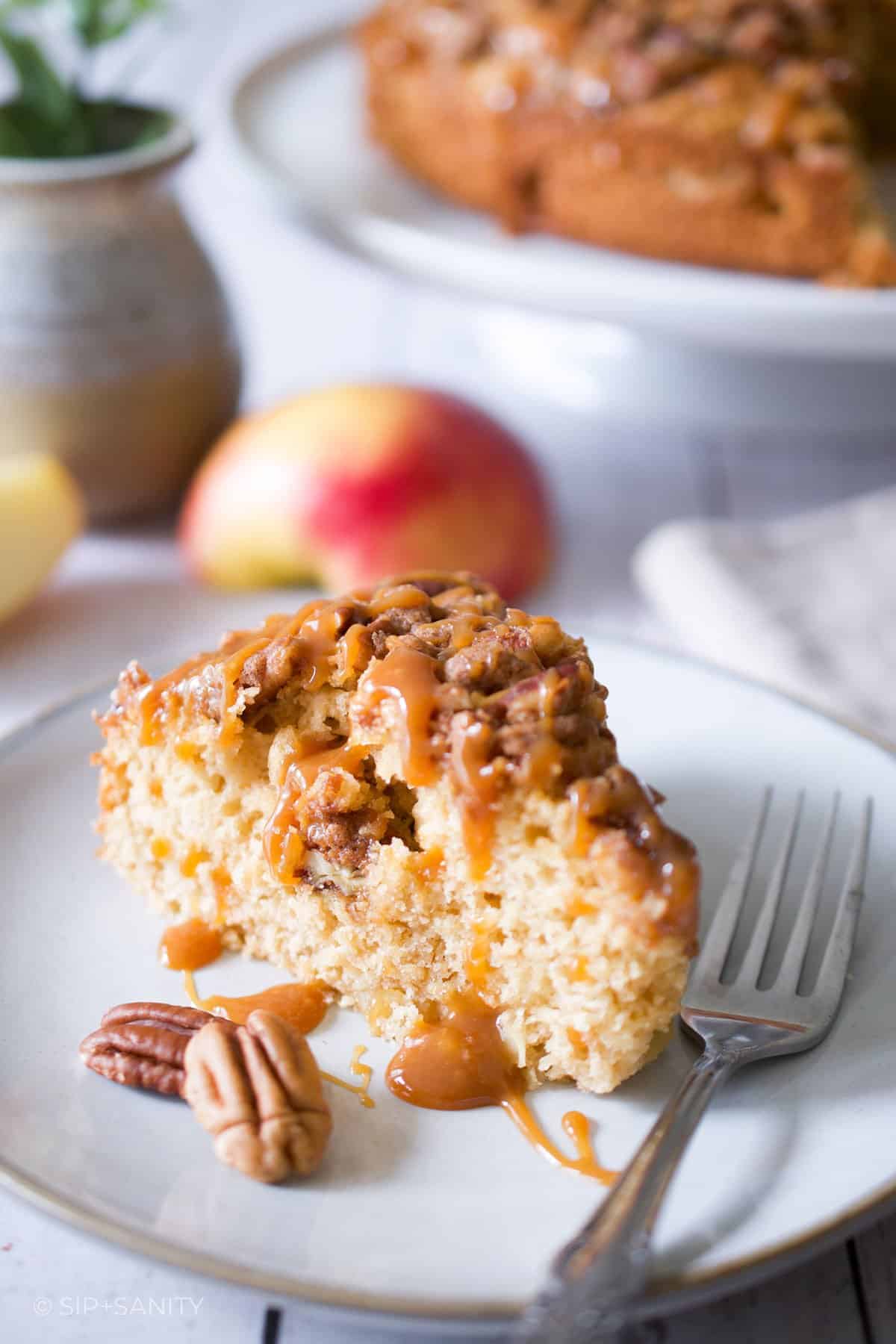
Today’s offering is Caramel Apple Pecan Coffeecake!

Ingredients
Caramel Apple Filling
1½ cups honeycrisp apples, peeled + diced
¼ cup brown sugar
2 tablespoon caramel sauce
½ teaspoon cinnamon
Cake Batter
2 cups flour
¾ cup brown sugar, lightly packed
1 tablespoon baking powder
½ teaspoon salt
⅔ cup milk
1 large egg
⅓ stick unsalted butter, melted
Pecan Topping
2 tablespoon brown sugar
2 tablespoon flour
1 teaspoon cinnamon
pinch salt
2 tablespoon unsalted butter, melted
½ cup pecans, chopped
To serve
¼ cup caramel sauce
Instructions
Preheat oven to 375°F. Line the bottom of a 9″ springform pan with parchment (to easily release the pan bottom away) and grease with cooking spray or butter.
Toss the apples with brown sugar, 2 tablespoons of caramel sauce and cinnamon. Set aside while you prepare the cake batter.
Combine the flour, brown sugar, baking powder and salt in a large mixing bowl. Create a well in the center.
In another bowl or measuring cup, combine the milk, egg and melted butter. Pour this into the well then stir everything together until just combined. Gently fold in the apples.
Pour the batter into the prepared baking pan.
In a bowl, combine all the ingredients for the pecan topping. Sprinkle over the cake.
Bake for 35 minutes or until a knife inserted near the center comes out clean.
Drizzle the remaining 1/4 cup of caramel sauce over the top of the cake and serve warm.
ENJOY!
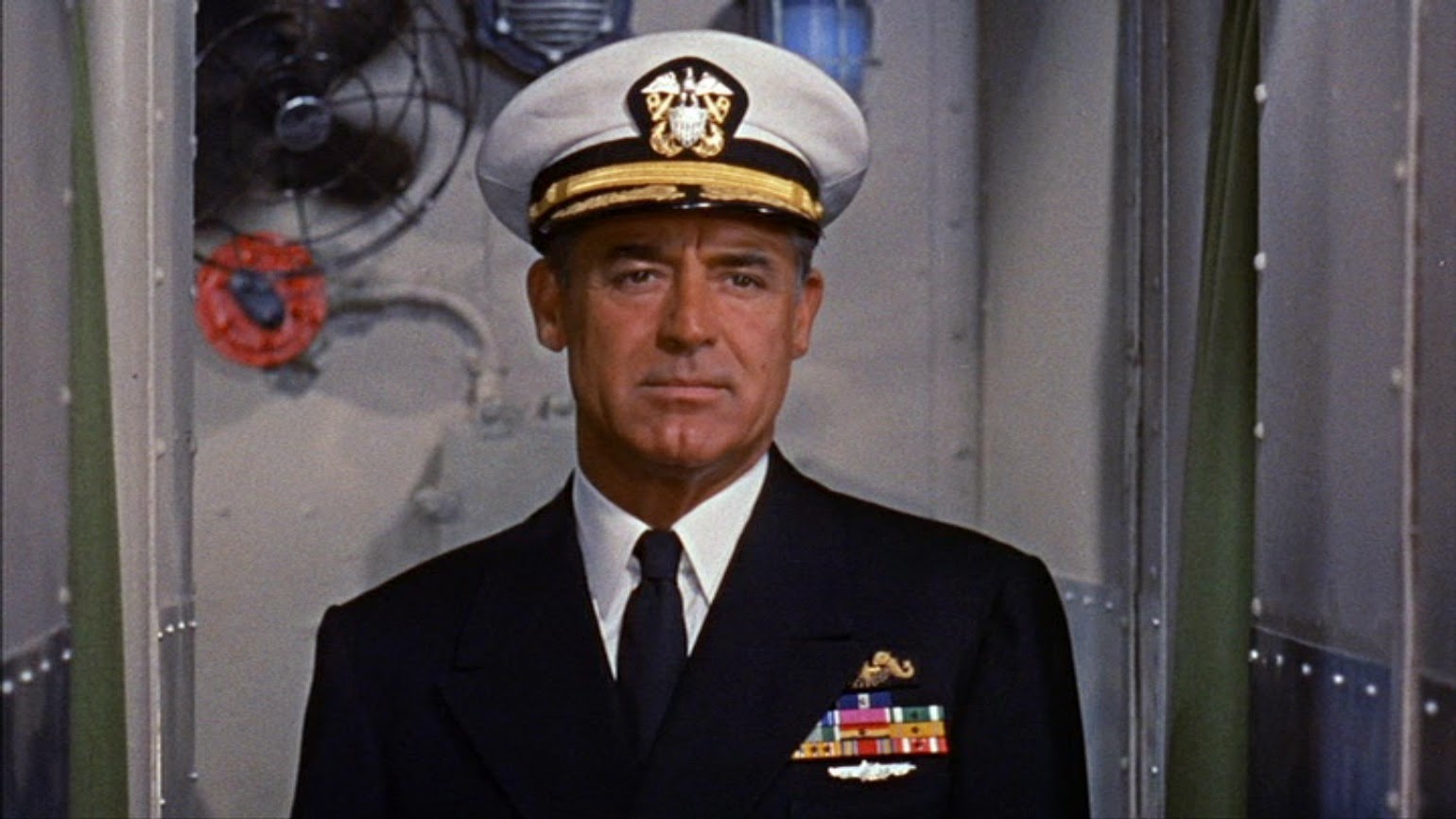
Today is Cary Grant’s birthday (born in 1904 and died 11/29/1986) and I went in search of interesting facts about my favorite Cary Grant movie—Operation Petticoat. I found out it was loosely based on the real rescue of civilians during World War II by a submarine called the Crevalle. I found this story about the rescue on the pacificwarmuseum.org website:

The island of Negros, located between the islands of Panay and Cebu in the Philippines, was a center of sugarcane production since Spanish colonial times, known for its sugar haciendas. The workers of these haciendas, or sugar mills, were notably not considered as property or segregated by race, and they were free to move about, not tied to mills or locations as many plantations bound slaves. After the Philippines was liberated from Spain, many Americans visited or went to live on Los Negros, often intermarrying with the locals and starting families. Some Americans came as missionaries, some came as entrepreneurs, and some as laborers. There were mothers and fathers, students, teachers, workers, businessmen, and missionaries living across the island throughout the early twentieth century. But the lives of the people of Negros changed when the Japanese invaded in 1941.
Once Japan attacked the United States at Pearl Harbor in Hawaii on 7 December 1941, it continued to attack territories and rapidly gained control of various islands in the Pacific. The struggle for the Philippines was prolonged, but it finally fell into Japanese hands in May 1942. The peaceful island of Negros became dangerous for those of American ancestry. Guerrilla fighters in the Philippines fought fiercely against occupation, and Japan finally ordered in November of 1943 that all Americans must give themselves up or be hunted down and killed. The United States’ response was to send the USS Crevalle, a Balao-class submarine, to Negros to evacuate American families from the island to Australia. In May 1944, Crevalle’s orders were to rescue twenty-five passengers and “important documents” awaiting them on Negros. They encountered forty-one people—men, women, and children who had risked their lives running from the Japanese and escaped to the beach for their chance of salvation.
The refugees came from all walks of life—missionaries, planters, former prisoners of war, sugar mill owners, businessmen, and even young children. Few of the refugees knew each other before meeting on the beach, but the one thing they had in common was that the Japanese were hunting them, and they were leaving their homes to survive. Colonel Abcede, leader of the guerillas and the organizer of the evacuation, was dismayed to find that they had far exceeded the promised 25 passengers for the Crevalle, but when the submarine arrived her captain, Francis D. Walker, Jr., assured him they would take them all.

Captain Walker assumed command of the Crevalle in March 1944 for her third war patrol and sunk two Japanese ships in less than two weeks. Walker’s command style was described as “aggressive,” and not always as a compliment, but he had twice earned the Silver Star for command decisions—once during his time aboard the USS Searaven and again as executive officer and navigator of the Crevalle in December 1943. Just after the Crevalle sank the second ship on her third war patrol, Walker received orders to terminate the patrol and head for Negros for this special mission. Walker was dismayed at having to call off what had been a rousingly-successful patrol, but he followed orders.
This was not Captain Walker’s first experience with a special rescue mission; while Walker was serving aboard the Searaven, their war patrol was called off to rescue thirty-three Australian aviators. Now, as captain of the Crevalle, he found himself with forty-one extra passengers and a mysterious box containing documents that the U.S. military was eager to receive. No one told Walker at the time, but these documents held the Japanese plans for a decisive, all-out battle against the Americans, called the “Z Plan.” The plane carrying this plan had crashed in the Bohol Strait off the island of Cebu, just east of Negros, and two native Filipinos found the box on the beach. The Allied Intelligence Bureau learned of the crash and requested, among other things, all the documents from the downed plane.
…SURFACE. AND RECIEVED FROM BOAT FLYING U.S. COLORS TWENTY-FIVE PASSENGERS AND IMPORTANT DOCUMENTS.
Top secret orders received by Captain Walker
Once everyone was aboard, the Crevalle got underway, headed back for Australia. Several families, including the Reals and the Lindholms, had young children who amused themselves as best they could, occasionally finding themselves underfoot of the Crevalle crew. There were also soldiers like 25-year-old Howard Chrisco, who had survived the Bataan Death March and now desperately awaited the return home. When the passengers from Negros boarded the submarine and got underway, they believed they had made it, that the worst was over. But there was more to come for the Crevalle.
Early the next morning, 12 May, a Japanese Betty bomber dropped out of the clouds when the submarine was on the surface. The submarine was ordered to dive, but the bombs fell close to the vessel. Everyone aboard heard and felt the explosion, which woke most of the boat. The Crevalle stayed submerged for over an hour before coming back to the surface. The bomber was soon sighted again, and the Crevalle would be bombed, submerged, and surface again multiple times throughout the morning. Later, while the vessel was still submerged, the crewman on watch sighted through the periscope a Japanese convoy. Since Captain Walker’s orders to retrieve the passengers and documents from Negros hadn’t forbidden attacking the enemy, he chose to engage the convoy. An enemy plane dropped a smoke signal above the submarine, marking the sub’s location. It wasn’t until the last moment that Captain realized they’d been spotted—just before the first depth charges went off.
The submarine was rocked as the charges exploded, sending loose equipment, belongings, and children’s toys flying. The attack only lasted about a minute, but managed to inflict heavy damage. The concussive blasts had slammed into the hull and caused leaks that the crewmen raced to slow or stop. Equipment had broken, including the sonar and both periscopes, leaving the Crevalle blind. The frightened children were hushed, and all forty-one passengers and eighty crew members stayed silent as they listened to the enemy sonar pinging as it looked for the submarine. For some of the passengers, like eight-year-old Berna Real, the experience was terrifying, but others, like Berna’s older brother Billy, found it quite exciting—until the second barrage hit suddenly and without warning.

Although the Crevalle managed to survive the second barrage, everyone aboard was shaken, and all aboard spontaneously agreed without orders to run silent, shutting down all equipment that could make noise and alert the Japanese to their position. This included the ventilation system, and the submarine quickly grew very hot. They stayed submerged in this way for hours, sweating profusely and waiting for whatever was coming next as they crept slowly along underwater. Finally, blinded by the smashed periscopes and not entirely sure what he might find at the surface, Captain Walker made the decision to surface. Luckily, there were no other ships or planes in sight. The worst had passed.
The Crevalle rendezvoused with the Chinampa, a trawler that took the Negros passengers aboard and brought them the rest of the way to Australia, and to safety. The documents carried by the Crevalle were transported immediately to American intelligence, who transcribed and decrypted the Z Plan and sent this new intelligence to Admiral Nimitz. This information on Japanese naval tactics enabled them to react and respond to Japanese strategy, gave them insights as to the strength of the present Japanese military, and informed the American naval strategies for the rest of World War Two.
The refugees were relocated to the United States, although many had never lived there before or had not been there in years. The Lindholms, a missionary family whose father Paul elected to stay behind on Negros, went to live with Paul’s brother until Paul himself rejoined them after the liberation of the Philippines in 1945. Bataan survivor Howard Chrisco returned to his parents in Salem, Missouri where he met and married his wife Elsie and eventually became a cattle farmer. The Real family landed in San Francisco and moved to the small town of Albany, just across the bay. None of the Real children had ever lived in the United States, and they regarded it as a fascinating new adventure, exploring their new home. Although the children were young when it happened, none ever forgot the experience of their tumultuous rescue from Negros.
In Fall 2024, the National Museum of the Pacific War will open its “submersive” experience, The Rescue, based on the escape from Negros alongside Berna Real, whose testimony contributed to the development of this experience.
SOURCE: PACIFICWARMUSEUM.ORG; Margaret Dudley
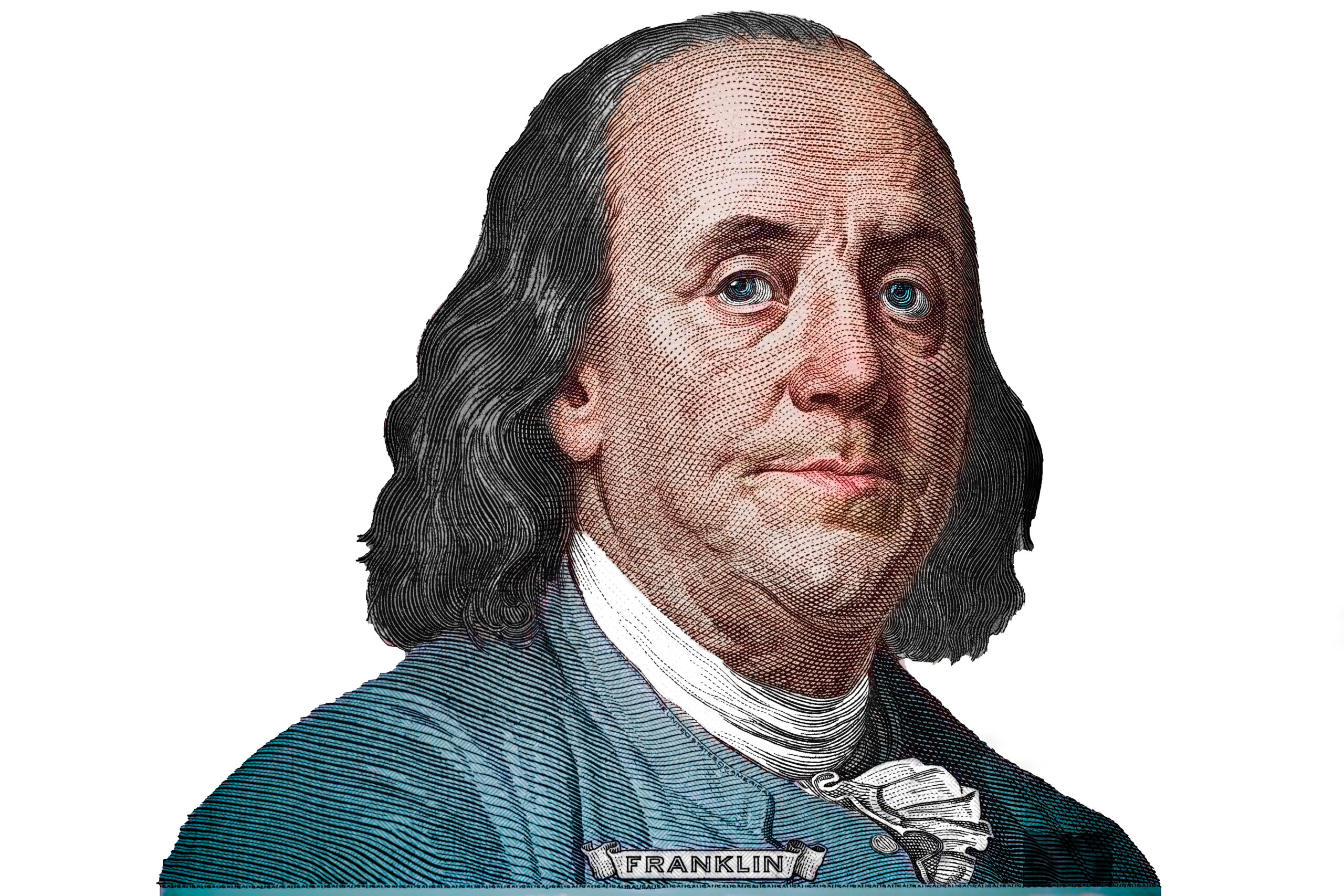
Today is Ben Franklin’s birthday ( born in 1706) so I decided to search for things we might not know about the $100 bill on which Franklin appears. This article from gobankingrates.com does just that!
From gobankingrates.com:
You probably know the $100 bill is the largest note currently produced by the U.S. Department of the Treasury. You’re also likely aware of which Founding Father is on the $100 bill — politician and inventor Benjamin Franklin. There’s a lot more history behind this bill, however.
The $100 bill is more than just a way to pay for bigger purchases — it contains a great deal of fascinating American history. Take a few minutes to discover these interesting facts about your money.
It’s the Highest-Circulated Bill
The $100 bill is the most circulated form of U.S. currency. As of Dec. 31, 2022, there were 18.5 billion Benjamins currently in circulation, according to the Federal Reserve Bank. The $1 bill is second with 14.3 billion, followed by the $20 bill with 11.5 billion. In 2017, there were only 12.7 billion $100 notes in circulation.
It’s the Second-Most Printed Currency …
The Federal Reserve gave approval to print up to 8.7 billion currency notes in 2023. Nearly 1.5 billion of them will be $100 bills, second only to the $1 denomination.
… But Most $100 Bills Aren’t in America
Our $100 bills are very popular internationally. In 2018, the Federal Reserve Bank of Chicago issued a paper that estimated that as many as 80% of the $100s in circulation were being held outside the country. The report attributed that to “economic and political instability” abroad.
The International Popularity Benefits the Economy
Thanks to that, up to 80% of the $100 bills being circulated reside overseas. They act almost like an interest-free loan for the economy since most of that currency won’t return stateside.
It Costs 8.6 Cents to Produce
Every $100 bill comes with a production cost of 8.6 cents, according to the Federal Reserve. Print costs cover essentials such as paper, ink, labor and overhead costs to print. The $100 bill is the most expensive U.S. currency to print because of its security features. Printing cost of a $1 bill is just 2.8 cents each. The $100 bill includes components such as a 3-D security ribbon that changes from bells to 100s when moved, and a bell that seems to appear and disappear within the inkwell.
The First $100 Bill Was Printed in 1914
Even though the first $100 “Interest-Bearing Notes” were issued in 1861, the first $100 Federal Reserve Notes — aka money as it’s currently known — were printed with Benjamin Franklin gracing the front, just like it is today.
Benjamin Franklin Has Been on It for Over 100 Years
Although many people think there is a $100 bill with a president’s face, the truth is that Benjamin Franklin’s face graces this note — and has since 1914. Since then, the currency has gone through several re-issues, but it has remained the Benjamin Franklin $100 bill.
The Franklin Association Is Uncertain
If you’re like many Americans, you might be wondering, “Why is Benjamin Franklin on the $100 bill?” After all, he was never president like George Washington or Abraham Lincoln. The truth is, there’s a lack of credible information for the reason his portrait graces the currency. It likely has something to do with Franklin being one of the Founding Fathers, alongside Washington, John Adams, Thomas Jefferson, James Madison, Alexander Hamilton and James Monroe.
It’s Had Three Major Redesigns

The $100 has featured Benjamin Franklin since its inception over a century ago, and there have been tweaks through the years. The note has had three major redesigns to incorporate updated security features, however, coming in 1990, 1996 and 2013.
“In God We Trust” Started Appearing in 1966
The phase “In God We Trust” was adopted as the official motto of the United States back in 1956 — beating out “E Pluribus Unum” — but it wasn’t always featured prominently on currency. The first record of the phrase appearing on paper currency (the one-dollar silver certificate to be exact) was in 1957, making its debut on the $100 bill nine years later.
The 1996 $100 Bill Was the First to Get a General Seal
Before new release of the $100 in 1996, each bill contained the seal of a specific Federal Reserve Bank. In 1996, individual seals were replaced with a general seal denoting the entire Federal Reserve System.
The 2013 Version Was Two Years Late
The most recent release of the $100 bill was originally planned for 2011 but was delayed two years because of new security features that caused the notes to crease during printing. The end result was that some of the bills were filled with blank spaces.
The Ink in the New $100 Can Change Color
Your mind isn’t playing tricks on you — the newest (2013) redesign of the $100 does, in fact, change color. The lower right corner has the capability to shift between copper tones to traditional green when in the light. According to Esquire, this is thanks to the ink containing microscopic metallic flakes that reflect various wavelengths of light.
The Time on the Clock Was Changed on the New Bill
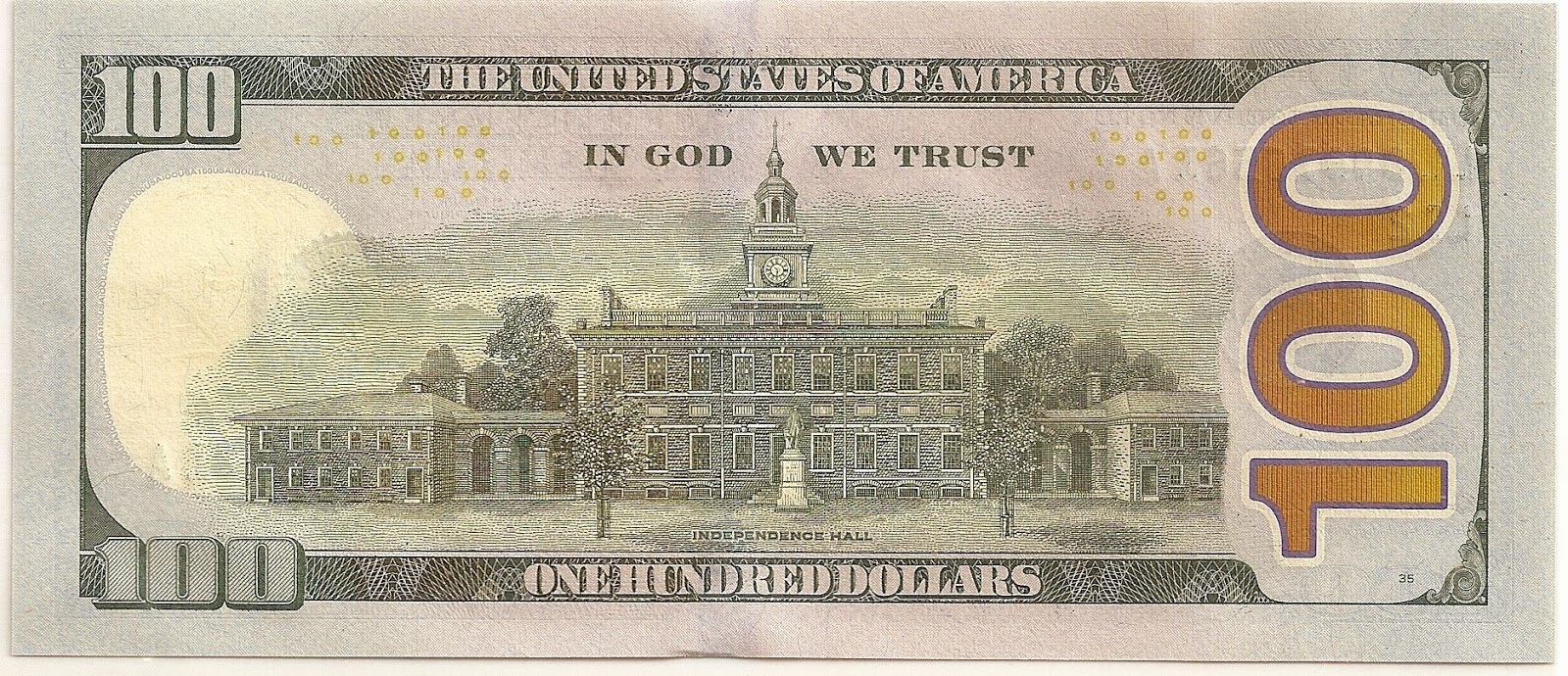
If you have an eye for detail, you might have noticed that the time on Independence Hall’s bell tower clock on the back of the old $100 bill read 4:10. It was changed to 10:30, however, on the newer ones. No one seems to know why either of these times was chosen, but both images — the north and south views — were engraved by J.C. Benzing in the 1920s. It is assumed that he took pictures of the building at different times of day, which would explain the clock discrepancy.
The Paper Is Unique
Though it might seem like it, our money isn’t printed on paper at all — at least not in the traditional sense. Whereas books and newspaper use wood pulp for their pages, Federal Reserve note paper is composed of 25 percent linen and 75 percent cotton, which gives it its trademark rich texture. It also has red and blue security fibers built in.
Crane & Co. Has Made the Paper Since 1879
Crane & Co., which got its start in Massachusetts, has been producing the paper for the $100 bill and all other American notes since 1879. In 1844, the company became the first to embed silk threads in banknote paper, according to its website. Crane & Co. has also created several anti-counterfeit measures, including advanced security threads, watermarks, planchettes, security fibers, special additives and fluorescent and phosphorescent elements. Spotting the fakes in distribution is a huge problem, but sometimes keeping your money away from criminals is just as hard.
It Has a Cue for the Visually Impaired
Chances are, you’ve noticed the large gold 100 on the back of the $100 bill, but it’s not a flashy design touch. The 100 was put in place to help people with visual impairments distinguish the bill from other denominations.
Benjamin Franklin’s Shoulder Is Rough to the Touch
If you’ve ever run your finger over Benjamin Franklin’s shoulder on the $100 bill, you might have noticed it’s rough to the touch on the left side. This is not a flaw unique to your particular bill; it’s actually caused by the enhanced intaglio printing process used to produce the portrait.
It Has a Longer Lifespan Than All Other American Bills
The $100 bill has an average lifespan of 15 years, according to the U.S. Currency Education Program. In comparison, the $1 bill lasts an average of 6.6 years, the $5 bill averages 4.7 years of use, the $10 bill gets 5.3 years, the $20 bill lasts 7.8 years and the $50 stays strong for about 12.2 years. The $100 bill is held more by its owners than lower-denomination bills, which pass from one hand to another frequently. Therefore, it will last longer before wearing out, per the program.
The Portrait of Ben Franklin is Off-Center
After the latest redesign of the currency in 2013, Benjamin Franklin was removed from his portrait frame and placed off to the side for the first time in the bill’s history.
There’s Two Ben Franklins (If You Look Hard Enough)
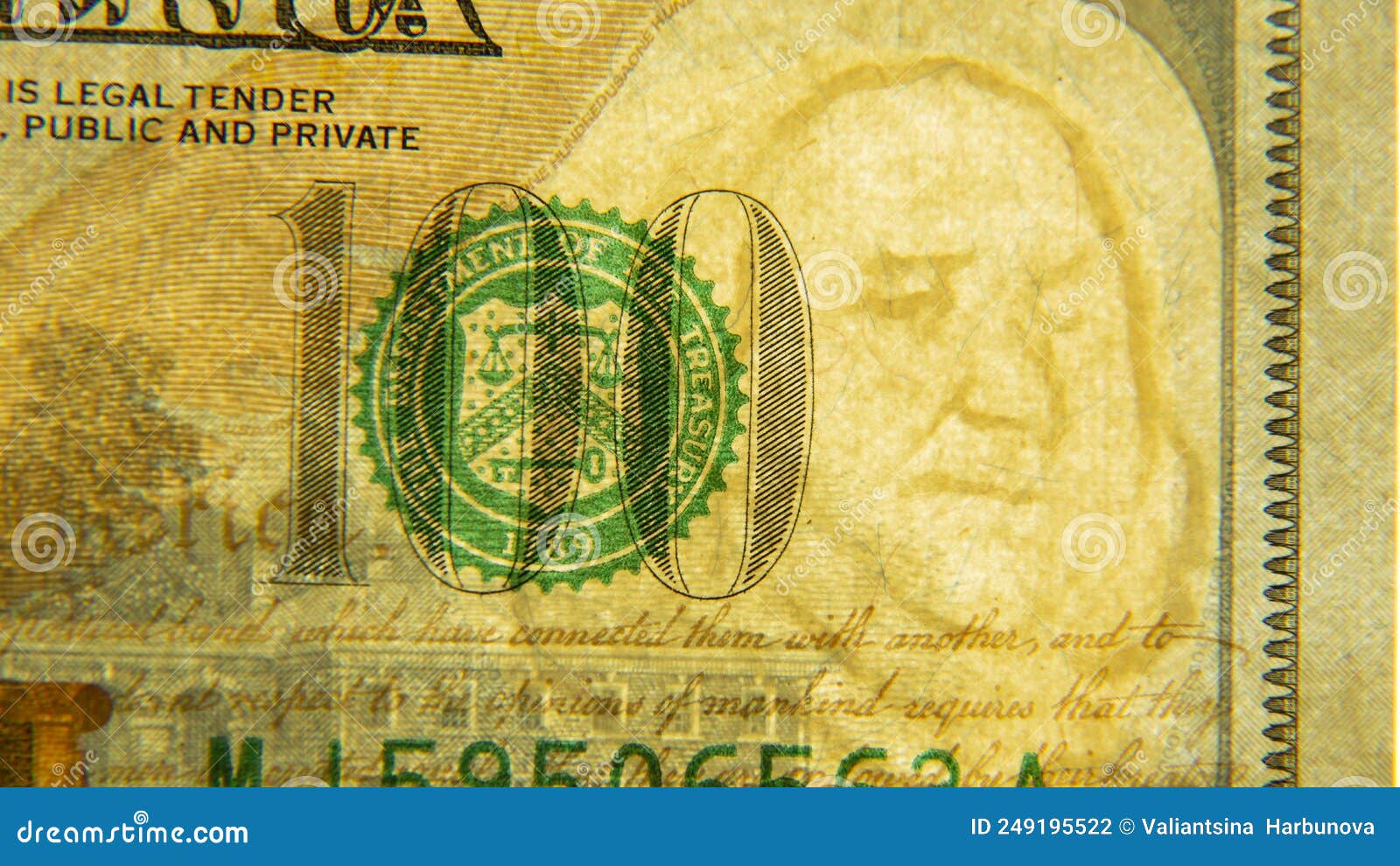
The 2013 redesign of the bill featured a plethora of new security features — one of which was a second portrait of Ben Franklin when held up to the light. The watermark of Franklin looks fuzzy, thanks to the linen content featured in American currency. If money was printed on all cotton, there wouldn’t be a bleed.
Same Building, New View
The $100 bill has long featured a depiction of Independence Hall, which is a huge factor in Franklin’s lore. The newest 2013 redesign also features a new engraving that shows the back of Independence Hall instead of the iconic front.
It Features a Top-Secret Ribbon
To improve security, the U.S. Department of Treasury rolled out new plastic ribbons as part of larger currency to help deter counterfeiting. Even though the most recent $100 bills look as though the plastic ribbon was interwoven into the very fabric of the bill, it wasn’t — according to Esquire, the bill is actually created around the ribbon itself in a top-secret process.
Be Sure to Check the Extremely Fine Print
If you check near Franklin’s collar, you’ll find an engraving present on the latest edition of the bill — and it harkens back to an original portrait painted of the Founding Father by Joseph Siffred Duplessis in the 1780s.
The 2013 Design Uses a Feather to Draw It Together
The newest redesign also features another icon that is integral to Franklin’s tale — a feather quill. The quill, along with its companion the inkwell, were drawn by artist Brian Thompson.
SOURCE: GOBANKINGRATES.COM

This month’s games are rebus puzzles. Try to decipher the word or phrase presented by the picture.
For example:

is ONE in a MILLION.
Try these:


We all love to hate Walmart, but they have some…uh…unusual products and gifts you can’t find anywhere else. I found this particular list at Reader’s Digest.
From Reader’s Digest:

Sometimes your baking creations look like crap, but this time it’ll be on purpose! Your kids will love these whimsical—and completely icky—poop emoji silicone molds, which can be used for cake, candy, ice cream, and more. The very thought of poop-shaped food might make you cringe, but at least the pan is well-made: It’s heat-resistant up to 500 degrees and also dishwasher safe. Do you truly need a poop-emoji cake pan? It’s debatable (to some people).
Pickle-Ice Freeze Pops

Move over, strawberry and grape—there’s new ice-pop flavor in town. These pickle-flavored freeze pops from Van Holten’s are supposedly good for athletes since they have added electrolytes. We’ve also heard they’re really good for hangovers. (Just saying…)
Shark Boxers

These “bite me” shark boxers are really funny…in a biting way. Perfect for any guy on a birthday or holiday, these undies will keep him laughing all year long.
Huggle Socks

Are they socks? Are they slippers? Who cares—they’re amazing! With a cable-knit exterior and a super soft fleecy interior, these socks will keep you warm and cozy on even the coldest nights. Plus, they have silicone grips on the soles, so you won’t slip and slide around your house.
Golden Garden

The girls have been immortalized! Sophia and the gang can hang in your kitchen and show off their wild, ever-growing “hair.” If you want to adorn your home with more pop-culture icons, Chia also offers Dustin from Stranger Things and the always-adorable Baby Groot from Guardians of the Galaxy.
Pink Animal Slippers

Why bother with regular old slippers when you can get fierce with a pair of pink, fluffy, ginormous animal slippers? They’re unisex, and they come in 11 styles—including traditional tiger, grizzly bear, and dinosaur—and a variety of sizes, so your whole pack can enjoy!
GoGo Pillow

We’re not sure why you need a pink leopard travel pillow that doubles as an iPad holder, but maybe we’re just not using our imaginations. This multitasking product is apparently good for at home or on the gogo, and you can plug in your headphones and kick back jungle-style.
Microwave Bacon Cooker

Think you know how to make bacon? Think again. Let us introduce you to the Bacon Wave, a microwave bacon tray that promises to cook your pork to crispy, juicy perfection. If that wasn’t all, this magical bacon holder cuts down on grease and calories, so you can pig out to your heart’s content.
Pink Octopus Coffee Mug

There’s so much to say about this bright pink octopus mug but so little time! After all, nothing says “good morning” like a tentacled, bright-eyed cephalopod filled with caffeine. Perhaps it’s just the pure shock of seeing the squid that helps wake you up. Whatever it takes, my friend, whatever it takes.
Aztec Secret Indian Healing Clay

This throwback beauty product has been around for decades and launched sometime in the ’80s. The packaging still looks from that era, but that might be part of its charm. Celebs and influencers, including Mindy Kaling, have shouted out love for this product, dubbed the “world’s most powerful facial.”
Beacon of Light Cremation Urn

So apparently, Walmart carries a whole line of caskets and urns. Who knew? The collection is reasonably priced, in true Walmart fashion, and we are really feeling this Beacon of Light cremation urn, which features a dreamy lighthouse set against a colorful sunset. We’ll pay our last respects by saying, “Groovy, man.”
Animal-Shaped Flower Pot

We don’t know why, but these animal-shaped flower pots just crack us up. From a snoozing polar bear to a playful panda to a funky chicken, these succulent flowerpots made from resin are sure to bring cheer to any room or office.
Dog Nail Polish

Pooches often get treated like royalty, but this kind of takes the doghouse. This puppy nail polish from Fancy Finish comes in 20 dynamic doggy colors like Poodle Pink and Shimmer Champagne, and it promises to be “paw safe.”
Pain in the Butt Diaper Rash Cream

Ouch! This diaper-rash cream has the BEST.NAME.EVER. Pediatrician-approved and made with all-natural ingredients like aloe and tea tree, this protective butt cream will help baby stay dry—and hopefully make mama laugh as she tries to get through her day. Even better? You might be able to borrow this diaper cream for yourself for a completely unrelated use.
Funny Graphic T-Shirt

This shirt is just saying what we’re thinking, right? It’s perfect for the gym, or better yet, for those days you skip your workout. Plus, it comes in eight colors, so you have lots of ways and styles to get your lazy point across. This shirt will make you laugh—and that’s a good thing.
Biker Gnomes

People have populated their backyards with garden gnomes for centuries. Many cite Germany as the inventor of the gartenzwerge —or “garden dwarf”—since it’s a country with a rich, mystical forest culture of trolls, gnomes, fairies, and the like. This modern biker version from Walmart might not quite be what the early gnome creators had in mind. But hey, to each his gnome! This could be the perfect housewarming gift for the right person.
SOURCE: READER’S DIGEST

The name cappuccino comes from:
The drink’s resemblance to the brown cowls worn by Capuchin monks
The similarity in color to the fur of Capuchin monkeys
The Italian puccino, meaning “light brown one”
The size of the cup in which it’s commonly served
Espresso literally means:
Speed it up
To go
Forced out
Black and intense
Coffee was the first food to be:
Shipped from Europe to the New World
Freeze-dried
Used in Aztec religious ceremonies
Roasted and ground for drinking

40% of the world’s coffee is produced by:
Africa
Brazil
Colombia
Southeast Asia
Kopi Luwak, the world’s most expensive coffee (up to $600 per pound), is:
Processed during a full moon
Brewed only with solid gold pots
Made from coffee beans eaten and then excreted by a Sumatran wild cat
Grown at a higher altitude than any other bean
Coffee beans grow on:
A low, spreading vine
A bush
A tree
The roots of a coffee plant
Most coffees are a blend of:
Light and dark roasts
Caffeine and essential oils
Arabica and robusta beans
African and South American beans
An ibrik is:
A South-American tool for grinding coffee beans
The Turkish word for barista
A Middle Eastern coffee house
A long-handled copper pot for making Turkish coffee
Arabica varieties such as Java and Mocha are named after:
The plantations where they’re grown
The coffee grower who developed that variety
Their predominant flavorings
Their ports of origin
Sixteenth-century Muslim rulers banned coffee because of:
Its stimulating effects
The gambling that took place in coffeehouses
The black market that sprang up in the coffee trade
Sufi mystics who wanted coffee limited to spiritual ceremonies
How old is instant coffee?
100 years old
150 years old
200 years old
250 years old
The country that drinks the most coffee is…
Finland
Sweden
Iceland
Norway
What was the most popular breakfast drink before coffee became widely available?
Tea
Beer
Water
Hot Chocolate
Which is NOT a benefit of drinking coffee?
Reduced risk of heart disease
Reduced risk of cancer
Reduced risk of Alzheimer’s
Reduced risk of anxiety
Which two states produce America’s coffee?
Hawaii and Florida
Arizona and Florida
Hawaii and California
California and Florida
How did you do?

ANSWERS
The word comes from the resemblance of the drink to the clothing of the Capuchin monks.
In Italian, the word espresso literally means “when something is forced out.”

Coffee was the first food to be freeze-dried.
Brazil!
Made from coffee beans eaten and then excreted by a Sumatran wild cat.
Coffee beans grow on a bush.
Arabica and robusta beans are the most common.

This Turkish pot makes quite the cup of joe.
These beans are named after their ports of origin.
Coffee was banned for its unusual stimulating effects.
Instant coffee is almost 250 years old!
The people of Finland consume the most coffee at 12.5 kilograms per person.

Before coffee became readily available, beer was the drink of choice at breakfast.
Luckily, studies show that coffee has corresponded with lower risks of diseases like heart disease, cancer, and Alzheimer’s, but unfortunately, caffeine may increase the possibility of anxiety.
Hawaii and California are the only two states that produce coffee.
Till next month…stay sharp!


Seems like there’s a day for EVERYTHING and today is National Rubber Ducky Day. With a day with such significance in our history (laugh, laugh), I wanted to reshare my rubber ducky story. When we put our pond in, my granddaughter was fairly young. She wanted to swim in it, until we told her there were fish in there. Then she decided she’d rather fish the pond.

I went on Amazon to see what kinds of fishing poles we could order for the both of us. She sat beside me and didn’t like any of the ones Amazon offered, so we searched for other water activities. She settled on rubber duckies. (She wanted to have races across the pond.)

The ones I picked out were really cool—they were actually for bath time. If the water is too hot, the rubber ducky shows this message on the bottom:

They came in a package of 12 and I ordered them right away. I knew they wouldn’t get to our house by the time my family left, but they would be there for the next visit. About a week later we were headed down the driveway to do some grocery shopping when I saw something strange at our delivery box. (We cannot have regular mail or packages delivered to our address by the postal service, but we could purchase a box to have those things delivered by delivery companies.)

The closer we got, the easier it was to see that no one had opened our box—the door was ripped off! The package was on the ground and ripped open on one corner. A rubber ducky was laying on the grass with teeth marks in it! Apparently, a bear smelled the box of duckies and thought they smelled scrumptious, but one attempted bite proved they were not edible.

I’m guessing the delivery driver had just eaten or something similar and he had the smell on his hands because we couldn’t detect any smells on the ducks or the plastic wrapping they came in.
Happy Rubber Ducky Day!
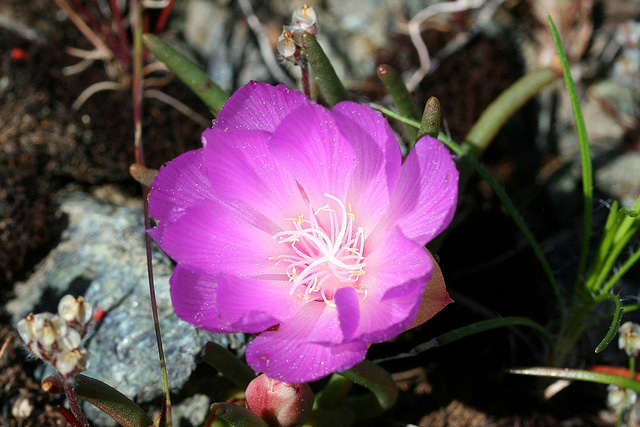
Official State Flower of Montana
Montana designated bitterroot (Lewisia rediviva) as the official state flower in 1895.
Bitterroot can be found during spring and summer, growing in the sagebrush plains and the foothills of the mountains in western and south central Montana.
Native Americans such as the Shoshone and Flathead Indians used the roots for food and trade. The bitter root of the low-growing perennial plant was cooked and usually mixed with berries or meat. The Lemhi Shoshone believed the small red core found in the upper taproot had special powers (notably being able to stop a bear attack).
Explorers Lewis and Clark wrote about the beautiful purplish-pink flower of the bitterroot. The Bitterroot Mountains (which form the divide between Idaho and Montana), the Bitterroot Valley, and the Bitterroot River all owe the origins of their names to this flower.

