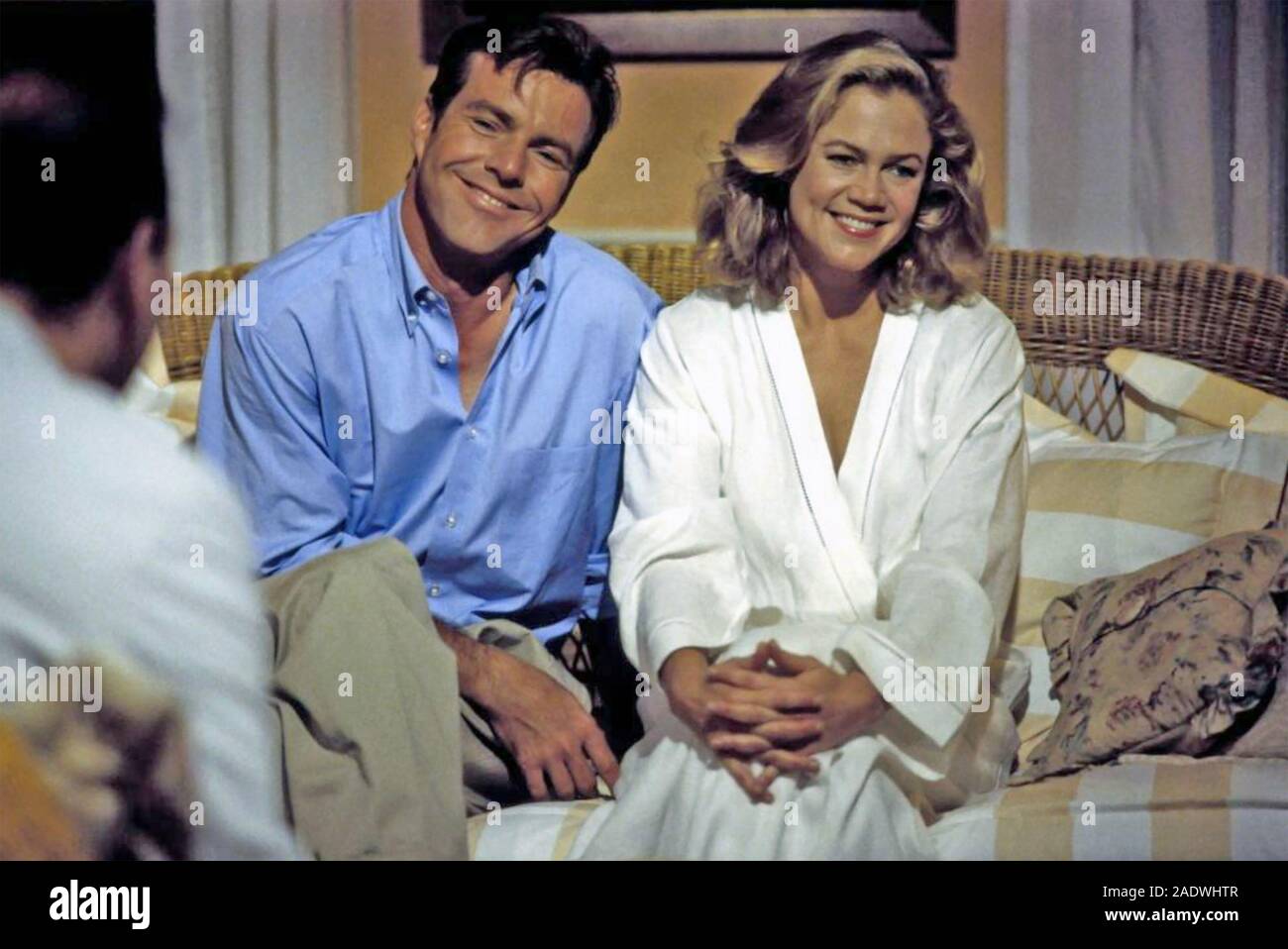
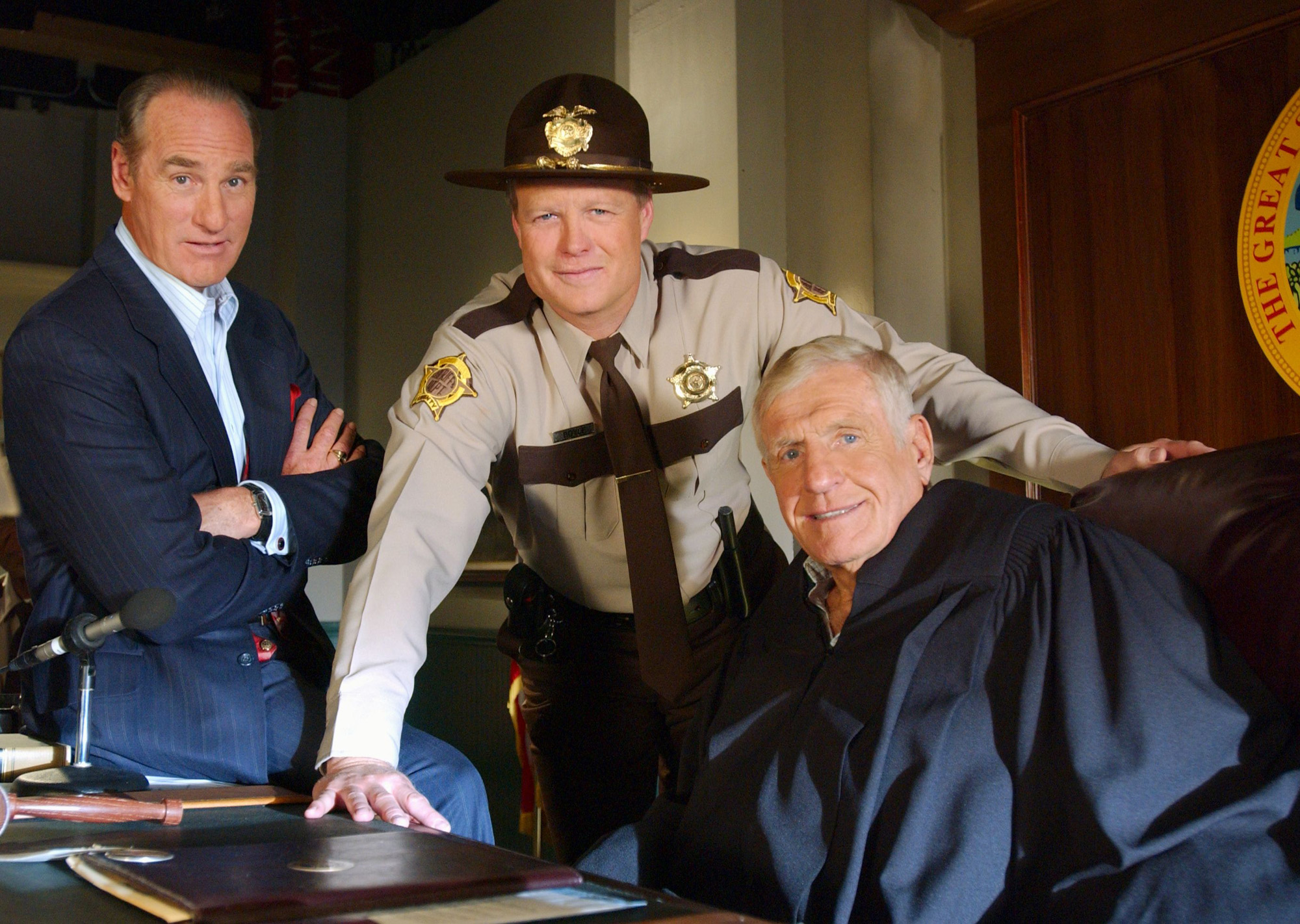
Today is Goldie Hawn’s birthday! She was born November 21, 1945 and has been in tons of movies. My favorite? Overboard! She co-stars with her long-time love Kurt Russell. I found an article on tvovermind.com that details 10 things we might not know about the movie.\
From tvovermind.com:
Forget all the glaring plot holes, that wasn’t the point of this movie. Overboard was all about showing the other half the simpler and in some cases downtrodden part of life that they didn’t realize was going on beyond their fancy lifestyles. Of course, it was also to show the supposedly downtrodden how to appreciate what they had and take care of it as well. As the wise butler in the film pointed out most people tend to go through life with blinders on, knowing just that one station to which they’ve been born. Yet when you take the blinders off and understand that life is in fact a great deal more than your own personal experience, then you have a choice to make. Do you embrace the wider world or stay put in your own little existence?
The movie showed that how you choose to live is not what defines you, it’s how you live with what you have.
10 Kurt Russell and Goldie Hawn’s kids were always on set.
Their youngest actually took his first steps on set. It was no doubt comforting to have them there at all times.
9 Russell’s pickup truck was used later on in Christmas Vacation.
Recall the old, beat-up truck that was tailgating the Griswold’s on their way to get a Christmas tree. This is the same truck.
8 The members of the crew on the yacht kept falling asleep.
The rocking motion of the yacht would continually lull them to sleep, making filming a bit difficult.
7 Everything in the film was authentic.
A good example was the bowling alley. Nothing in there was touched, everything is just the way it looks in real life.
6 The Pee Wee Herman voice was improvised.
The character of Joe made this up on the fly since the Pee Wee bit wasn’t in the script at all.
5 The director allowed his actors to improvise a lot.
It’s hard to know just what was improvised and what wasn’t without being told since everything seems to flow so smoothly.
4 Hawn and Russell hosted a BBQ for the whole cast and crew.
You get the feeling that even if they weren’t all close there was a good deal of respect between the crew and cast members.
3 John Candy was considered for the role of Billy.
At the time that he was considered for the role John was filming Planes, Trains, and Automobiles with Steve Martin.
2 One of the kids was so rowdy on the set that the director had to step in frequently.
It would seem that the actor playing Joey wasn’t just acting a lot of the time, he was actually this rowdy. The director had to get after him quite a bit to calm him down.
1 Hector Elizondo has a cameo in the film.
Hector played in the film Necessary Roughness as the head coach, and he’s been seen most recently as Ed on Last Man Standing up until it was cancelled.
This had to be one of the funniest movies ever made and yet it’s got such a great life lesson too.
I found this helpful article on the eatingwell.com website:
Gravy—you slather it on turkey and pool it on top of mashed potatoes. You let its rich and meaty flavor mingle a little with sweet potato casserole and sop up what’s left over with a dinner roll. No Thanksgiving dinner is complete without a good old-fashioned gravy. To give you the best shot at success, here are six common mistakes that make gravy less than perfect and how you can fix them.
Mistake to Avoid No. 1: Your Gravy Has Lumps
Nobody likes lumpy gravy. Reasons for lumpy gravy include using a spoon to stir instead of a whisk and dumping your thickener into the gravy without making a roux first. What’s a roux? A roux is a paste made from flour and fat that thickens sauces, and it’s essential to a good gravy. You can make it with fat from the bottom of the roasting pan, butter or oil. Aim for one part fat to one part flour. Heat the fat in a saucepan or directly in the roasting pan. Add the flour and cook, stirring, until the mixture begins to bubble (the longer you cook it, the nuttier the flavor—just don’t take it too far or it will burn). Once your roux is nice and bubbly, add your liquid and whisk (don’t stir!) until the mixture bubbles and thickens. Crisis averted. Now, just in case you ignored the whole roux-making step and you have a finished gravy (with lumps), all is not lost. Pouring the gravy through a fine mesh strainer should do the trick.
Mistake to Avoid No. 2: Your Gravy Is Too Thick
So you made a delicious gravy except it’s too thick. It’s gummy, in fact, and you’re not quite sure where you went wrong or how to fix it. No problem! One mistake that can result in gravy that’s too thick is adding too much thickener (or too little liquid). Another mistake is not taking into account the fact that gravy tends to thicken as it cools. When it’s hot, gravy should be thick enough to just coat the back of a spoon, but not so thick that it sticks to the spoon like glue. If your gravy is hot and still too thick, add broth a little at a time to thin it out. Remember to check the seasoning when you’re done and adjust if needed.
Mistake to Avoid No. 3: Your Gravy Is Too Thin
Gravy’s job is to coat mashed potatoes, turkey, stuffing (or everything) on your plate with a thin layer of meaty goodness, and it can’t do its job if it pools at the bottom of your plate like water. If you started with a roux and your gravy is just too thin, there are a few things you can do to correct it. If you’ve added too much liquid, you can try cooking it longer. Reducing the volume may be enough to thicken it up. However, if your gravy is thin and the seasoning is where you want it, cooking it down may make it too salty. Here is where you’ll have to make a slurry. A slurry is much like a roux with a less attractive name and a few other minor differences. Like the roux it thickens sauces, but unlike the roux, it uses a thickener (like flour) combined with a little bit of liquid like broth or water instead of fat. Simply whisk your thickener (a couple tablespoons of flour is a good place to start) into 1/2 cup or so of liquid and then whisk that mixture into your gravy. As it heats, it will thicken.
Mistake to Avoid No. 4: Your Gravy Is Greasy
Making gravy straight from the roasting pan is always best, but you’ll need to take some steps to prevent your roasting pan gravy from tasting like an oil slick. What we’re really after from the pan are those browned bits that form at the bottom. They’re a flavor powerhouse. You’ll want them in your gravy, but not the fat that they’re often swimming in. The solution? Deglaze the hot roasting pan with broth (or wine if you want to spare some) and pour the liquid into a fat separator or glass measuring cup. This will help loosen those tasty brown bits from the pan while getting rid of the fat that has also collected at the bottom. You can use the fat that floats to the top of your separator for your roux while saving the liquid for the gravy itself. If your finished gravy is oily, let it sit and try skimming any fat that rises to the top. Whisk any fat that’s left into the gravy and serve immediately.
Mistake to Avoid No. 5: Your Gravy Tastes Burnt
This is perhaps the worst-case scenario in the world of gravy-making. It happens when those deliciously concentrated pan drippings burn, and you decide to make gravy out of them anyway. Your choices are (A) Insist that the gravy tastes fine and everyone else must be mistaken, or (B) Have a backup plan. Let’s entertain Plan B…. If you’re fortuitous enough, you can work on Plan B even before disaster strikes, and here it is: Most turkeys come with a neck and a little packet of other pleasantries like the heart, gizzard and liver stuffed into the cavity. Hold onto these. If your pan is burnt, these will provide you with a much-needed flavor boost for your second attempt. You can sauté them in a separate pan with a bit of mirepoix (onion, carrot and celery) to create some new brown bits to work with, then simmer them in broth to add flavor.
Mistake to Avoid No. 6: Your Gravy Is a Salt Bomb
A well-seasoned gravy complements both sweet and savory elements on the plate, but a gravy that’s too salty can ruin everything it touches. As gravy cooks, it loses volume and concentrates the flavor (and hence the saltiness) of your end product. To avoid gravy that tastes like a salt lick, season it at the end of the cooking process, not the beginning. If you’ve got homemade broth or stock, use that as the body of your gravy. If you’re using broth or stock from a box, opt for a low-sodium option. If your gravy is finished and it’s just too salty, add some broth or water to tamp it down. That will also thin it out, so you may have to thicken it back up again.
What’s that weird wobbly thing on a turkey’s neck?
What Is a baby turkey called?
And what about adult turkeys?
Can turkeys fly?
How long do turkeys live?
Are turkeys named after turkey, the country?
Are turkeys native to the Americas?
How did you do?
Only male turkeys, or toms, can make a call known as a “gobble;” they mostly do it in the spring and fall. It is a mating call and attracts the hens. Wild turkeys gobble when they’re surprised by loud sounds and when they settle in for the night. The wild turkey can make at least 30 different calls!
The average person in the United States will eat 15 pounds of turkey this year.
The loose red skin attached to the underside of a turkey’s beak is called a wattle. When the male turkey is excited, especially during mating season, the wattle turns a scarlet red. The fleshy flap of skin hanging over the gobbler’s beak is called a snood and turns bright red when the bird is excited. The wobbly little thing on the turkey’s chest is the turkey’s beard, which is made of keratin bristles. Keratin is the same substance that forms hair and horns on other animals.
A baby turkey is called a poult, chick, or even turklette.
An adult male turkey is called a tom (an adolescent male is a jake), and a female is a hen.
The wild turkey can fly! (It does, however, prefer to walk or run.) The domestic turkey is not an agile flyer, although the bird will perch in trees to stay safe from predators.
The average life span of a wild turkey is three or four years. It generally feeds on seeds, nuts, insects, and berries. The average life span of a domestic turkey, from birth to freezer, is 26 weeks. During this period, it will eat about 75 pounds of turkey feed.
When Europeans first encountered the wild turkey in Mexico, they incorrectly classified the bird as a type of guinea fowl called a turkey fowl. Turkish traders originally sold guinea fowl from Africa to European markets; Turkey has no native turkeys!
Yes, turkeys originated in the “New World.” Specifically, wild turkeys are native to Mexico. It’s a funny history. European explorers brought wild turkeys home with them in the early 1500s. The birds were domesticated in Europe and later brought to North America by English colonists. Note that domesticated turkeys have white-tipped tails; wild turkeys have dark-tipped tails.
My husband loves Kentucky Fried Chicken bowls and I found a copycat recipe I wanted to share! The bowls contain popcorn chicken, mashed potatoes, corn, gravy and cheese. (I can do without the cheese personally.)
Ingredients
24-ounce bag of frozen popcorn chicken
homemade mashed potatoes kept warm
chicken gravy
1 cup frozen corn
1 cup shredded cheddar cheese
Salt and pepper to taste
Instructions
Cook popcorn chicken according to package directions.
Heat gravy.
Place the corn in a microwave safe bowl with a tablespoon of water and cover with plastic wrap or a microwave safe lid. Microwave for 1 – 1 ½ minutes, or until heated through, stirring once during cooking. Toss with a pinch of salt.*
To serve: spoon about 1 cup of mashed potatoes into the bottom of a bowl. Top with 6 oz of the chicken, a few tablespoons of shredded cheese, ¼ cup of corn and drizzle with gravy. Garnish with fresh chopped parsley if desired.
(*Pat’s note: if you prefer canned corn can be used. Simply heat as you normally would.)
Today is Gordon Lightfoot’s birthday—born November 17, 1938, died May 1, 2023. One of my most favorite songs is his Sundown. There are many interpretations of what the lyrics mean—a woman who won’t commit? a recovering drunk? Who really knows…but I love it.
I can see her lyin’ back in her satin dress
In a room where ya do what ya don’t confess
Sundown you better take care
If I find you been creepin’ ’round my back stairs
Sundown ya better take care
If I find you been creepin’ ’round my back stairs
She’s been lookin’ like a queen in a sailor’s dream
And she don’t always say what she really means
Sometimes I think it’s a shame
When I get feelin’ better when I’m feelin’ no pain
Sometimes I think it’s a shame
When I get feelin’ better when I’m feelin’ no pain
I can picture every move that a man could make
Getting lost in her lovin’ is your first mistake
Sundown you better take care
If I find you been creepin’ ’round my back stairs
Sometimes I think it’s a sin
When I feel like I’m winnin’ when I’m losin’ again
I can see her lookin’ fast in her faded jeans
She’s a hard lovin’ woman, got me feelin’ mean
Sometimes I think it’s a shame
When I get feelin’ better when I’m feelin’ no pain
Sundown you better take care
If I find you been creepin’ ’round my back stairs
Sundown you better take care
If I find you been creepin’ ’round my back stairs
Sometimes I think it’s a sin
When I feel like I’m winnin’ when I’m losin’ again
The mystery of Roanoke survives today. There are theories of course, but no answers. I found this article about the mystery on the historicmysteries website: (Thanks to Filly for introducing me to this awesome site!)
From historicmysteries.com:
The Roanoke Colony was the first English settlement in America. It vanished. The mystery of the lost colony of Roanoke Island has baffled society for hundreds of years. A group of settlers disappeared into North America with hardly a trace and no one has seen concrete evidence of their existence in centuries. Many theories have arisen over the years as to the fate of these settlers, but nothing is certain. Today, there is only speculation about the Roanoke Colony mystery.
Establishment of a Colony
After hearing news of a lush, beautiful area in the Americas Queen Elizabeth I, of England, decides to name this new place Virginia. Subsequently, she gives Sir Walter Raleigh permission to establish a colony in the area. He was to finance and plan the expedition to what is now North Carolina. Raleigh has 10 years to complete this mission.
In 1585, an expedition comprised only of around 77 men were sent to start the colony. They were led by Sir Richard Grenville. Shortly after the arrival, the men begin to suspect that local Indians have stolen a silver cup from them. In retaliation, they destroy their village and burn the chief alive. Despite the obvious discourse with the natives, Grenville decides to leave the men there to build the proposed colony. He vows to return in April of 1586.
When April passes and there is no sign of Grenville the men decide to hitch a ride home with Sir Francis Drake. Drake had stopped at the colony on his way back from a successful voyage to the Caribbean. Ironically Grenville arrived shortly thereafter. After finding the settlement empty, he decides to leave 15 men there to protect England’s claim.
John White and the Roanoke Settlement
The second group of settlers arrived at Roanoke Island on July 22, 1587. This group contains 117 people, both men and women. They are led by John White. John White’s daughter would give birth to the first English child born in America on August 18, 1587. The child’s name was Virginia Dare. These people would later become known as the Lost Colony of Roanoke Island.
The settlers built their colony and tried to make peace with the natives. They were successful in befriending the Croatoan tribe, but other tribes were openly hostile toward the colonists. A settler by the name of George Howe was murdered by natives while hunting crab on the beach. After this incident, the settlers became nervous about their new home and convinced John White to return to England and ask for help. John White reluctantly left. He would never see any of these people again.
When John White arrived in England, he was unable to secure passage back to the colony. He was unable to find a Captain that would sail the Atlantic in the dead of winter, so he was forced to wait. Then the opposing threat of the Spanish Armada forced all available ships to be called to war. Eventually, John was able to secure passage on two small boats. Unfortunately, the owners of these boats were greedy men and they tried to capture other ships during their voyage. They were then captured, in turn, and relieved of their cargo. John White was unable to attempt another crossing for three years.
Nothing Left to Return To
John White finally returned to Roanoke Island on August 18, 1590. His granddaughter’s third birthday. To his dismay, there was no sign of his friends and family. The Roanoke colony had been dismantled and deserted. The only clues to the whereabouts of the colonists were carvings in a remaining post and a tree. The carving on the post read “Croatoan” and the carving in the tree was even more cryptic, it simply said “Cro.”
John took these clues to mean that the Roanoke colony had moved to nearby “Croatoan Island.” Before White’s departure, they had agreed that if the settlers were forced to leave, they would carve a Maltese cross into a tree. In the absence of such a carving, John could only assume that they left of their own volition. John was compelled to search for the colonists but was forced to return to England due to inclement weather. He would never set foot on Roanoke Island again.
Theories
There are many theories concerning the Roanoke colony mystery. They could have left due to weather, food shortage or threat of attack by local tribes. One thing is for sure, nothing is certain. Future settlers and explorers would claim to have spotted natives with light hair and eyes or natives that spoke perfect English. These claims may explain where the settlers went. It is highly likely that they integrated into the Croatoan tribe, but there is no concrete evidence of this.
The Boston terrier is a small non-sporting dog breed from the United States bred to serve as a companion dog. Nicknamed the “American Gentleman,” these well-mannered, bright, affectionate canines make wonderful four-legged friends and family dogs. With their short, smooth, black and white coat that’s patterned to resemble a tuxedo jacket, the Boston terrier is undeniably adorable and can easily be described as dapper.
Boston terriers typically like to be around their humans as much as possible and are eager to please. They tend to get along with just about everyone, including young children who know not to be too rough, other household dogs, and dog-friendly cats. With their friendly, lively, and active personalities, it’s no wonder that the Boston terrier is such a popular breed.
Boston terriers typically have happy, friendly, and affectionate temperaments. Their love of play and comical nature also help to mold their personalities. They’re typically good around people, including kids and strangers, and they often get along well with other pets.
Despite their small size, Boston terriers are active, high-energy canines that tend to do well in dog sports such as flyball and agility. These intelligent dogs can easily be taught tricks, but are sometimes stubborn, so don’t expect your Boston terrier to obey every time you give a command.
This is a brachycephalic breed, meaning that the face is flat, with a somewhat “squashed” appearance. Keep in mind, however, that like other breeds with this facial structure, Bostons can overheat easily and should be allowed to rest when needed.
Surprisingly, the friendly, playful, and sometimes silly Boston terrier is a descendant of dogs that were originally bred for pit fighting and other “blood sports” popular in 19th-century England. However, the Boston terrier today is generally non-aggressive towards humans, nor prone to fighting or aggression with other dogs. Most are outgoing and well-mannered with just about everyone.
The Boston terrier’s story began in the 1860s when a Boston man named William O’Brien purchased a bulldog-white English terrier mix from England named Judge. O’Brien ended up selling Judge to another Bostonian named Robert C. Hooper. Records refer to “Hooper’s Judge” as the father of the Boston terrier breed from which all Bostons descend.
Judge was a muscular, tough, but fairly small dog, weighing in at around 30 pounds. His head was square, and his coat was dark brindle with a white stripe down his face. Judge was bred with a small, white, bulldog-type female, and that launched the selective breeding process. Breeders specifically were looking to create a small, friendly companion dog.
In 1891, the Boston Terrier Club of America was founded. And soon after in 1893, the American Kennel Club first recognized the breed. Since then, the Boston terrier has become quite popular throughout the United States. It’s Boston University’s official mascot, as well as the official dog for the state of Massachusetts.
For the most part, Bostons are a fairly low-maintenance breed. They do require regular exercise, grooming, and training, like any dog, but in amounts that are lower than many other breeds. If left alone too often, however, or not provided with enough mental and physical stimulation, they can become destructive or develop annoying behaviors. Remember that your Boston terrier was bred to be a companion dog and wants to be with you as much as possible.
Exercise
Boston terriers are relatively energetic and should receive about an hour of exercise per day. A couple of daily walks, games of fetch, playing with puzzle toys, and running around in a secure area should suffice. Dog sports, such as agility and rally, can help to burn their mental and physical energy. The key is that Bostons prefer to be active with their humans. If you leave them to their own devices, they might become bored and develop problem behaviors, such as unwanted chewing.
Moreover, due to the Boston’s flat face, the breed is prone to breathing issues. Discuss this with your vet, and know how to spot the signs of labored breathing during exercise.
Between 1485 and 1551, England suffered five outbreaks of a disease so virulent that it could kill an otherwise healthy person in a matter of hours. Its favorite targets seemed to be wealthy adult males; children and elderly people were generally spared, while the aristocracy, members of professional classes, and the clergy seemed particularly vulnerable. The epidemics were short-lived but brutal, and in all but at most a handful of instances the disease did not spread beyond England.
Symptoms came on quickly; according to one account it came with “a sudden great sweating and stinking with redness of the face and of all the body” along with fever, headaches, and delirium. As many as half of those afflicted died within 18 hours. Anyone who made it through the first day would probably recover, but there was always a chance of reinfection.
Whatever the disease was, it vanished as mysteriously as it appeared. The last outbreak was in 1551, and apart from some potential minor appearances in the following decades, we haven’t seen it since—though a similar affliction, known as the “Picardy sweat,” popped up in France a century and a half later, causing nearly 200 small outbreaks before it too disappeared in 1861.
Many theories have been floated over the centuries. It’s been suggested that the English sweating sickness could have been a strain of typhus or influenza, or even anthrax. A more likely answer emerged in 1993, when a similar outbreak occurred in the American Southwest. This disease was caused by a hantavirus, leading researchers to speculate that a hantavirus was also behind the English sweating sickness and the Picardy sweat. Since hantaviruses can be spread by rodents, this could explain why large households and academic institutions were hit so hard by the disease: Well-stocked kitchens and pantries would have attracted mice and rats, and household staff could have aerosolized the virus in their droppings while sweeping. This might be the best solution we get; according to a 2014 paper published in the journal Viruses, a conclusive answer will probably never come.
12 What were the Nazca Lines for?
The Nazca (or Nasca) Lines are an array of geoglyphs carved into the coastal plain of southern Peru. Some are simply straight lines running in all directions, while others depict animals or people.
The lines were studied by researchers traveling on foot in the 1920s, but it wasn’t until commercial pilots began flying over the area in the 1930s that their full scope and elaborate design was revealed. According to UNESCO, the Nazca Lines are “unmatched in [their] extent, magnitude, quantity, size, diversity and ancient tradition to any similar work in the world.” They were built over the course of 1000 years, mostly by removing darker stones to reveal the lighter colored sand underneath.
The question that still puzzles researchers is, why were the geoglyphs made? For decades, some archaeologists believed they served as giant astronomical calendars, possibly linked to constellations or other celestial bodies. Recent research suggests a more earthly purpose: It now appears that the Nazca Lines might have been connected to rituals meant to appeal to the gods for rain. It’s possible they marked processional routes used by pilgrims as they traveled to temples, or that rituals were performed at designated points along the lines themselves.
13 What does the Voynich Manuscript say?
We don’t know when, where, or by whom the Voynich Manuscript was written, but there’s an even larger mystery to solve: We have absolutely no idea what it even says. The text—which is accompanied by astrological charts, illustrations of strange plants and naked, possibly pregnant women emerging from tubes and funnels or wading in green fluid, and other bizarre images—is composed in a writing system that doesn’t appear on any other document or object we’ve discovered so far. Some, including the late U.S. Army cryptographer William Friedman, believe Voynich was written in a synthetic language. Others think the manuscript uses a dead language such as proto-Romance, a precursor of vulgar Latin (though that claim was highly controversial), or that it could be written in some form of code or cipher.
Whatever the case, the book is divided into six sections: one devoted to botanical studies; one that is apparently concerned with astrological and astronomical matters; one that contains elaborate (and super weird) biological drawings; a section containing what Yale University, the book’s keeper since 1969, identifies as “cosmological medallions”; a section dedicated to pharmaceutical sketches; and a text-only portion devoted to what appear to be recipes.
Since bookseller Wilfrid Voynich found the manuscript in 1912, secreted in a bundle of medieval manuscripts he’d purchased from a Jesuit college, the book and its complicated history have been obsessively studied and analyzed. Carbon dating tells us the manuscript’s vellum was sourced in the early 15th century; pigments are consistent with that date as well, so that’s presumably when it was written. We know (or at least we think we know) it’s been owned by a Holy Roman emperor, an alchemist, a famed Bohemian doctor, and possibly Elizabethan occultist and court astrologer John Dee. If any of its previous custodians figured out how to read it, they kept it to themselves, but you’re welcome to give it a go if you’re feeling froggy.
14 Who built Stonehenge?
Since the 17th century, the popular imagination has linked Stonehenge to the Druids, but the timeline doesn’t shake out—the earliest historical references to the Druids date to the 4th century BCE, while Stonehenge was most likely built sometime between 3000 and 2000 BCE. But if the Druids didn’t build it, who did?
There might not be one simple answer. Construction of Stonehenge is thought to have taken place in several phases over the course of about 1500 years. The first monument at Stonehenge simply consisted of a circular earthwork that enclosed dozens of pits and possibly some rocks. The iconic stone slabs were added a few hundred years later—around the same time the Egyptians were building the pyramids at Giza. It’s long been thought that Neolithic hunter-gatherers got the ball rolling, but new evidence suggests Stonehenge’s builders were the descendants of Mediterranean farmers who migrated to northwestern Europe 6000 years ago.
Whoever Stonehenge’s builders were, their accomplishments were astonishing. We’re still trying to figure out how Stonehenge was constructed; some of the stones came from nearby quarries, but others were sourced from a Welsh site 200 miles away. We have no idea how people who didn’t even have wheels were able to transport the stones and hoist them into place.
15 Who killed the Black Dahlia?
History is full of unsolved murders, from the disappearance and presumed assassinations of King Edward V and Prince Richard, Duke of York, in 1483 to the Zodiac killings that terrorized the Bay Area in the 1960s. But none has captivated American popular culture quite like the horrific murder of Elizabeth Short, the young woman who will forever be known by the sensational nickname given to her by the press: the Black Dahlia.
Short’s body was discovered on January 15, 1947, in a vacant lot in Los Angeles. The brutality that had been visited upon her, both pre- and post-mortem, is still shocking: Her face had been grotesquely disfigured, her body cut in half, and some of her organs removed, among other acts of torture and mutilation. No one was ever arrested for Short’s murder, and the case eventually went cold. Recent theories have blamed everyone from Orson Welles to Bugsy Siegel.
The Los Angeles Police Department investigated dozens of suspects, including George Hodel, a surgeon whose social circles included surrealist photographer Man Ray and The Maltese Falcon director John Huston. Upon learning his father had been investigated for the murder, George’s son, Steve, decided to clear his dad’s name after his dad’s death in 1999, only to become convinced that George was indeed Short’s killer. Steve published his findings in a well-received and fairly convincing 2003 book, but later lost some credibility when he also accused his father of being the Zodiac Killer.
In 2018, British author Piu Eatwell also claimed to have identified Short’s killer. In her book Black Dahlia, Red Rose, Eatwell maintains that the culprit wasn’t one murderer but a group of conspirators that included a bellhop and former mortician’s assistant named Leslie Dillon (who had been one of the LAPD’s favorite suspects decades ago), nightclub owner Mark Hansen, and a man named Jeff Connors. Eatwell thinks the police were involved in a cover-up due to their connections with at least one of those men, though she allows that the case will probably never be definitively solved.
This house can “change” appearances–The Chameleon House!
Anderson Architecture completed this home in 2006 atop a hill overlooking a cherry orchard and Lake Michigan. The striking structure took less than eight weeks to build thanks to the use of prefabricated materials. The steel frame of this house is wrapped in corrugated, translucent acrylic slats, allowing it to take on and reflect the changing colors of the landscape, like a chameleon blending into its habitat. Because it sits on a steep hill, the entrance of the home leads to the third floor, letting residents descend to the bedrooms or walk up to the living area.
From sah-archipedia.org:
Creativity in designing with twenty-first-century materials at a relatively low cost marks the Brondyk vacation house. The Brondyks needed a tall house for a small site, one that would afford a spectacular rooftop view spanning the surrounding farmland west to Lake Michigan, and one that would fit their modest budget. Anderson Anderson Architecture’s designs for original, finely crafted modern homes in the Pacific Northwest found in architectural publications attracted their attention. (The Chameleon House would appear in 100 More of the World’s Best Houses [2005].)
A steel-beamed frame supports the eighteen-hundred-square-foot building. Prefabricated sandwich insulation panel (SIP) walls rise nine stories in the towerlike house, covering the roof as well as the walls. The walls extend above the roof forming a railing for the open deck. Galvanized corrugated sheet metal resembling barn roofing clads the walls. Projecting two feet from the walls are aluminum frames that anchor recycled translucent polyethylene slats and serve as window-washing platforms and emergency exit structures. The panels reflect the light and seem to mimic the surroundings of the house, precipitating the choice of “Chameleon House” as the nickname for the dwelling.
The interior is arranged vertically and each level consists of one room; the rooms are linked by stairs and stair landings. Industrial tread and railings make up the stairs. A double-height window faces Lake Michigan in the common living spaces. Four-foot-wide maple-clad plywood panels are applied directly to the oriented strand board (OSB).
Some see the house as adventuresome and progressive, others as an intrusion on the pristine farmland and forests along the Leelanau Scenic Heritage Route that preservationists are trying to protect. The latter would have preferred that the house had been sited out of sight.
There are few shots of the home’s interior because it is a private home.
The delicate white and pink petals of apple blossoms are often associated with new beginnings, making them a popular symbol for hope and renewal.
Apple Blossoms Are Rich in Symbolism
In various cultures, apple blossoms are linked to love, fertility, and abundance, representing the promise of a fruitful harvest and a prosperous future.
Apple Blossoms Attract Pollinators
The sweet fragrance and nectar of apple blossoms attract bees and other pollinators, playing a vital role in the pollination process and the production of apples.
Apple Blossoms Herald the Arrival of Spring
The sight of apple blossoms in bloom signals the end of winter and the arrival of spring, bringing joy and a sense of rejuvenation to orchards and gardens.
Apple Blossoms Are the Precursor to Apples
After the blossoms fade, they give way to small, green apple fruits, signifying the successful pollination and the beginning of fruit development.
Apple Blossoms Have Five Petals
Each apple blossom typically consists of five delicate petals, creating a visually appealing and symmetrical floral display.
Apple Blossoms Are Part of the Rosaceae Family
Apple blossoms belong to the Rosaceae family, which includes a wide range of flowering plants such as roses, cherries, and strawberries.
Apple Blossoms Are Celebrated in Festivals
In many apple-growing regions, the blooming of apple blossoms is commemorated with festivals and events, showcasing the beauty and significance of these delicate flowers.
Apple Blossoms Are Used in Traditional Medicine
In some cultures, apple blossoms are utilized in herbal remedies for their purported medicinal properties, including soothing teas and tinctures.
Apple Blossoms Have Inspired Art and Literature
The enchanting beauty of apple blossoms has inspired numerous artists, poets, and writers, who have depicted their allure in paintings, poems, and prose.
Apple Blossoms Are Featured in Wedding Ceremonies
Apple blossoms are a popular choice for wedding bouquets and decorations, symbolizing love, purity, and the promise of a fruitful union.
Apple Blossoms Are a Source of Honey
The nectar from apple blossoms is gathered by bees to produce a light and flavorful apple blossom honey, prized for its delicate taste and aromatic notes.
Apple Blossoms Are Vulnerable to Frost
Late spring frosts can pose a threat to apple blossoms, potentially impacting the pollination process and leading to reduced fruit yield.
Apple Blossoms Are Cultivated Worldwide
Apple blossoms are admired globally and are cultivated in various climates, from temperate regions to subtropical areas, reflecting their widespread appeal.
Apple Blossoms Are the Focus of Photography
Photographers often capture the ethereal beauty of apple blossoms, showcasing their delicate petals and the mesmerizing sight of orchards in full bloom.
Apple Blossoms Are an Integral Part of Ecosystems
Beyond their aesthetic value, apple blossoms play a crucial role in supporting diverse ecosystems by providing nectar and pollen for a multitude of insect species.
Apple Blossoms Have Varieties with Different Colors
While white and pink are the most common hues, there are apple blossom varieties that exhibit shades of red, creating a captivating display of floral diversity.
Apple Blossoms Inspire Appreciation for Nature
The enchanting presence of apple blossoms serves as a reminder of the natural world’s beauty, fostering appreciation for the interconnectedness of plants, pollinators, and the environment.
Apple blossoms, with their captivating beauty and rich symbolism, continue to captivate the imagination and inspire a sense of wonder, marking the beginning of the apple tree’s annual cycle and symbolizing the promise of a bountiful harvest.