G’Day Mate!

On this date in 1986, the movie Crocodile Dundee premiered in Australia.  This article from Moviefone.com details some interesting things about Crocodile Dundee that you might not have known.

From moviefone.com:

15 Things You Never Knew About ‘Crocodile Dundee’

For better or worse, when many Americans think of Australia, they think of Paul Hogan and “Crocodile Dundee.” After all, the Australian travel pitchman cleverly designed the movie as part travelogue, part send-up of popular stereotypes. The comedy’s plot — about a fabled Australian outdoorsman and a New York newswoman who survive the challenges of each other’s jungles — and Hogan’s winning performance made “Crocodile Dundee” the most successful imported film in U.S. box office history. Still, as many times as you’ve watched Hogan cheerfully flash that giant Bowie knife, there’s plenty you may not know about “Crocodile Dundee.” Here’s the behind-the-scenes story, and it’s no croc(k).


1. Hogan came late to show business. He was a 32-year-old rigger and painter on the Sydney Harbor Bridge when his mates dared him to try out for an Australian TV talent show. He won and was soon writing and starring in his own sketch comedy show.

2. After a decade of small-screen success, Hogan and his behind-the-camera team decided to make a movie, something none of them had ever done before.

3. The real-life Crocodile Dundee was an Aussie named Rod Ansell, a hunter who, in 1977, famously survived seven weeks in the wild while stranded in a remote corner of Northern Australia. When he came to Sydney to talk about his adventure, he appeared on a TV interview barefoot and stayed in a luxury hotel, where he slept on the floor and was mystified by the bidet.

4. Hogan and his co-screenwriters clearly drew much of Mick Dundee’s character and exploits from Ansell. The character was also a canny brand extension of the character Hogan had played in Australian tourism commercials, the ones that had made him moderately famous on this side of the Pacific for his offer to “slip an extra shrimp on the barbie for you.”


5.Linda Kozlowski, the lone Yank during the Australian portion of the shoot, was a Juilliard classmate of Val Kilmer’s who’d appeared on Broadway with Dustin Hoffman in “Death of a Salesman.” Nonetheless, the 26-year-old was largely unknown on either side of the ocean before she landed the role of reporter Sue Charlton.

6. The wilderness section of the movie was shot in Kakadu, a national park roughly the size of Germany. The only crocodile Hogan and Kozlowski ever tangled with was the mechanical croc built for the film (above). Nonetheless, the animatronic prop was realistic-looking enough that someone reported the crew to the authorities as suspected poachers.

7. Hogan got a lot of comic mileage out of the bidets in the Plaza Hotel during the Manhattan section of the film. In real life, however, there are no bidets at the Plaza.

8. There were two versions of “Crocodile Dundee”: an Australian version, and an international version. In the latter, the incomprehensible Australian slang dialogue was snipped out, resulting in a cut 10 minutes shorter.


9. In America, distributor Paramount advertised the film as “‘Crocodile’ Dundee,” with extra quotation marks to make clear that it was a movie about a man nicknamed “Crocodile,” not a movie about a crocodile named Dundee.

10. The film cost about $10 million to make. Not only did it become the biggest domestic hit in Australian history, but it was a smash all over the world. In the U.S., it earned $175 million, making it the second-highest grossing film of 1986, behind only “Top Gun.”

11. Hogan, Ken Shadie, and John Cornell were nominated for an Oscar for Best Original Screenplay. They lost to Woody Allen (for “Hannah and Her Sisters”), but Hogan did win a Golden Globe for Best Actor in a Comedy Motion Picture.

12. “Crocodile Dundee” made Kakadu into a popular tourist attraction. The film’s success prompted developers to build a hotel there shaped like a crocodile.

13. Hogan and Kozlowski fell in love for real on the set. She continued to play love interest Sue in sequels “Crocodile Dundee II” (1988) and “Crocodile Dundee in Los Angeles” (2001). Unfortunately for the couple, Hogan was already married, to Noelene Edwards, whom he first wed in 1958, the year Kozlowski was born. They had five children together, divorced in 1981, and remarried in 1982. Their second split was considered one of the ugliest celebrity divorces in Australian history. Shortly after their second divorce became official in 1990, the 50-year-old Hogan married the 32-year-old Kozlowski. They had a child of their own, son Chance. They divorced in 2014.

14. At one time in the early 1990s, Paramount was considering a crossover sequel with one of its other big 1980s franchises: “Crocodile Dundee Meets Beverly Hills Cop.” Fortunately, Eddie Murphy nixed the idea.

15. Now 76, Hogan is the subject of a forthcoming small-screen bio, an Australian mini-series starring Josh Lawson (known to American audiences from “Anchorman 2”) as Hogan. The mini-series will be called “Hoges,” which is the nickname Hogan is known by Down Under.

SOURCE: MOVIEFONE.COM

Sleeping in Cupbards

(Note: This article is courtesy of Filly!)

The strange reasons medieval people slept in cupboards

22 January 2024

By Zaria Gorvett

These cozy, wardrobe-like pieces of furniture could reportedly sleep up to five people. Why did they fall out of fashion?

At a museum in Wick, in the far north of Scotland, is what looks like a particularly large pine wardrobe. With a pair of full-length double doors at the front, and suitcases stacked above it, it wouldn’t look out of place in a modern bedroom. It’s even assembled like regular flat-pack furniture – with each piece slotting together, so it can be easily moved and rebuilt. But this cupboard is not for storing shirts or jackets; there are no hangers or shelves inside. This is a box bed – and it’s designed to hold sleeping people.  

Otherwise known as a closet bed or close bed, the box bed was surprisingly popular across Europe from the medieval era to the early 20th Century. These heavy pieces of furniture involved exactly what you would expect – a box made of wood that contained a bed. Some were plain and humble, no more than basic wooden containers. Others were elaborately decorated, with carved, panelled or painted sides. Often the cupboards had doors that closed to impound the sleeper within the blackness of their cramped interiors, or a little curtained window. The fanciest had a variety of uses – with bonus drawers and a seat at their base. 

For centuries, drowsy farm-workers, fish-gutters, and even members of the nobility would crawl inside these cozy wooden dens each night, presumably being careful not to bash their elbows as they did so, and shut themselves in.

Box beds were versatile pieces of furniture. Often, they were used almost as miniature bedrooms – spillover places for people to sleep where there otherwise wouldn’t be enough space. In one case from 1890, a family living in the Scottish Highlands was too large for their single-room house – so some members slumbered in a box bed in the barn, among dogs and horses, according to the Wick Society. It was also common to use them for migrant workers in some areas, such as the overflow of herring-gutters who descended on the region of Wick during the fishing season – with up to five or six people required to share a bed.

In fact, sharing a box bed with family members or co-workers was not unusual. In the 1825 melodrama The Factory Lad, workers slept in stacks of box beds, with two or three people in each one. Some had holes for ventilation, but cramming too many people in may have carried a risk of suffocation – one tale from 13th-Century France involves a woman hiding three secret guests inside a bed, who then perish in its stuffy interior.  

Box beds were particularly common in Britain and on the continent in Europe. According to one account from 1840, most cottages in Brittany, France, included these pieces of furniture, which were typically made from oak and piled up to 4ft (1.2m) high with bedding. There might be several to a room, and each one would have a long wooden chest placed at their base. “This is always the seat of honor, and serves also as a step to assist mine hostess in mounting to her exalted couch,” wrote the author Thomas Adolphus Trollope.

But there was a further benefit to these sleeping-coffins: warmth. Without modern heating or insulation, in the winter bedrooms could be literally freezing – so cold that it was standard practice to go to bed wearing a hat, so that only your face was exposed. And it was significantly colder then.

Roger Ekirch, a university distinguished professor of history at Virginia Tech, Virginia, and the author of At Day’s Close: A History of Nighttime, explains that from the 14th to the 19th Century, Europe and portions of North America were experiencing the Little Ice Age. In London, the Thames froze over on eighteen occasions – an event that hasn’t happened since 1963. “Diaries spoke of sap from burning logs in fireplaces freezing as soon as it seeped from the bare ends… inkwells would freeze overnight,” he says.

This not only made bedmates an appealing prospect, but also the sheltered environment of a box bed, where warm air became trapped.

The box bed eventually became associated with poverty and country life, and fell out of fashion. By the mid-20th Century they were rare. However, now similar pieces of furniture are making a quiet comeback. Today it’s possible to buy bed tents, which turn sleeping areas into snug little caves with the added benefit of extra privacy, while wooden sleeping “nooks” that look suspiciously similar to box beds are being sold for aspirational “cottage style” homes.

SOURCE: BBC.COM

New Mexico State Mammal: Black Bear

The American black bear, more commonly known simply as the black bear, is the smallest of the 3 bear species found in America. The brown or grizzly bear and the polar bear are larger in size, however the black bear is still a huge mammal. They can measure up to 7 feet in length and males can weigh over 400kg. When standing on their hind legs, they can reach a height of around 7 feet, although females are usually smaller and shorter than males.

Black bears can be distinguished from brown bears by their smaller size, longer ears and lack of a shoulder hump. Black bears also have shorter, more curved claws and are generally more timid animals. Typically they are black in color but depending on their location, their fur can be dark or light brown. Black bears are found throughout North America but are more abundant in the northern states. Unlike brown bears, they prefer more densely forested habitats and rarely venture into open areas for long periods of time.

Interesting American Black Bear Facts

1. They are not always black in color

Some black bears can be a very light brown (or cinnamon) color and very rarely, completely white.

2. Black bears are shy and timid

Black bears will usually run away or climb up a tree rather than confront humans. This is mostly true but some individual black bears can be very aggressive, especially when threatened. They are however much less likely to attack compared to the brown or grizzly bears, which tend to be less weary and less approachable. Both these species, as well as the polar bear, will usually move on when left alone and black bears especially tend to flee when confronted by people.

3. They can eat over 10,000 berries in a day

When food is abundant, black bears will eat as much food as they possibly can, sometimes over 8kg of fruit and berries in a day. When berries and fruits are abundant, black bears will move to these areas and feed almost exclusively on these. They have an excellent sense of smell and this helps them locate ripening berries, nuts and fruits as well as bee hives, where they feed on the honey and bee larvae. 

4. Black bears are skilled climbers

Black bears are excellent climbers and can easily access nuts and fruits before they fall to the ground. They have sharp, curved claws and this not only helps them when climbing but also makes ripping into trees logs or upturning boulders when searching for insects much easier. As well as being expert climbers, black bears are great swimmers and will cross fast flowing rivers to reach food on the other side.

5. They are incredibly strong animals

Black bears are up to 5 times stronger than the average human being.

6. American black bears are highly dexterous

They are capable of opening screw-top jars and manipulating door latches.

7. Their diet is predominantly vegetarian

Although they do eat meat, almost 70% of their diet is made up of plant matter.

8. Their sense of smell is 7 times more sensitive than a domestic dog

While American black bears have extremely sensitive noses, their eyesight and hearing is more comparable to that of a human.

9. Black bears are fast runners

Sprinting at around 40-50km/h, black bears can easily outrun humans.

10 They are mostly quiet animals

Although they tongue-click and grunt to communicate with one another, black bears do not growl or roar. 

11. They den in spots that are well hidden

Black bear dens are usually made in caves, under tree roots or are dug into hillsides.

12. Females usually give birth during the hibernation period

During the breeding season, a male and female will remain together until just before the cubs are born. Females usually give birth in their den while in torpor; a similar state to hibernation. The cubs will then feed off their mother’s milk while she hibernates until spring arrives.

Usually two cubs are born and they leave the den for the first time when their mother comes out of hibernation. Female black bears teach their cubs how to find food and survive in the wild until the cubs are around 17 months old and become fully independent. The father of the cubs does not actively help in raising his offspring but does protect the territory from other males, who may attack the cubs.

13. Black bear cubs are playful animals

Cubs will regularly wrestle and play with each other as well as their mother. This helps them develop essential skills to survive in the wild.

14. Black bears are very intelligent

Black bears can memorize their whole territory, they can make scratching sticks out of twigs and can easily break into locked food storage containers.

15. There are black bear hybrids

American black bears can reproduce with other bear species and produce hybrid offspring. Black bear and grizzly bear hybrids have been reported in the wild.

16. They are a key contributer to the ecosystem

Black bears are important contributors to the ecosystems in which they inhabit. Due to their large size they create micro-ecosystems where they leave deep footprints or break small trees and plants. They are also key in controlling insect populations as well as important seed disbursers, encouraging new plant growth wherever the seeds in their stools germinate. Black bears also have very large home ranges which means they can increase plant diversity by travelling long distances and disbursing seeds which otherwise may not have reached or germinated in that area.  

SOURCE: FACTANIMAL.COM

What Shall We Bake Today?

Today’s offering is Cinnamon Raisin Bread and this recipe makes 3 loaves!

Ingredients

1 12 cups milk

1 cup warm water (must be between 110-115 degrees)

2 (1/4 ounce) packages active dry yeast

3 eggs

12 cup white sugar

1 teaspoon salt

12 cup unsalted butter, softened

1 cup raisins

8 cups all-purpose flour

2 tablespoons milk

1 cup white sugar

3 tablespoons ground cinnamon

2 tablespoons butter, melted

Directions

Warm the milk in a small sauce pan on the stove until it just starts to bubble, stirring occasionally.

Remove from heat.

Let cool until lukewarm, about 120-125 degrees.

Dissolve yeast in warm water and set aside until yeast is frothy, about 10 minutes or so (make sure your water is at the correct temperature or the yeast won’t activate.) Then mix in eggs, sugar, butter salt and raisins (stir in the cooled milk slowly so you don’t cook the eggs.) Add the flour gradually to make a stiff dough.

Knead the dough on a lightly floured surface for a few minutes until smooth.

Place in a large, buttered, mixing bowl and turn to grease the surface of the dough.

Cover with a warm, damp cloth and let rise (I like to let my bread rise in the oven with the light on. It has just the right amount of heat and keeps the bread out of drafts.) Allow to rise until doubled, usually about 1 1/2 hours.

Roll out on a lightly floured surface into a large rectangle 1/2 inch thick.

Moisten the dough with 2 tablespoons milk and rub all over the dough with your hands.

Mix together 1 cup of sugar and 3 tablespoons cinnamon and sprinkle mixture evenly on top of the moistened dough.

Roll up tightly (the long way).

The roll should be about 3 inches in diameter.

Cut into thirds, and tuck under ends and pinch bottom together.

Place loaves into well greased (you can use Crisco or butter for this) 9 x 5 inch pans and lightly grease tops of loaves.

Let rise in warm place, uncovered, again for about an hour.

Bake at 350 degrees for 45 minutes or until loaves are lightly browned and sound hollow when tapped.

Remove from oven and let cool on rack.

Take melted butter and spread over tops of loaves.

After about 20 minutes, lay loaves on their sides and remove from pans.

Allow to cool before slicing.

ENJOY!

The Oklahoma City Bombing

From History.com:

The Oklahoma City bombing occurred when a truck packed with explosives was detonated on April 19, 1995, outside the Alfred P. Murrah Federal Building in Oklahoma City, Oklahoma, killing 168 people and leaving hundreds more injured. The blast was set off by anti-government militant Timothy McVeigh, who in 2001 was executed for his crimes. His co-conspirator Terry Nichols was sentenced to life in prison.

Alfred P. Murrah Federal Building

Shortly after 9:00 a.m. on April 19, 1995, a Ryder rental truck exploded with terrifying force in front of the nine-story Alfred P. Murrah Federal Building in downtown Oklahoma City. The powerful explosion blew off the building’s entire north wall. Emergency crews raced to Oklahoma from across the country, and when the rescue effort finally ended two weeks later, the death toll stood at 168 people. The list of the deceased included 19 young children who were in the building’s day care center at the time of the blast. More than 650 other people were injured in the bombing, which damaged or destroyed over 300 buildings in the immediate area.

What Led to the Oklahoma City Bombing?

Timothy McVeigh

A massive hunt for the bombing suspects ensued, and on April 21 an eyewitness description led authorities to charge Timothy McVeigh, a former U.S. Army soldier, in the case. As it turned out, McVeigh was already in jail, having been stopped a little more than an hour after the bombing for a traffic violation and then arrested for unlawfully carrying a handgun. Shortly before he was scheduled to be released from jail, he was identified as a prime suspect in the bombing and charged.

That same day, Terry Nichols, an associate of McVeigh’s, surrendered in Herington, Kansas. Both men were found to be members of a radical right-wing survivalist group based in Michigan. On August 8, Michael Fortier, who knew of McVeigh’s plan to bomb the federal building, agreed to testify against McVeigh and Nichols in exchange for a reduced sentence. Two days later, McVeigh and Nichols were indicted on charges of murder and unlawful use of explosives.

Domestic Terrorists Behind the Oklahoma City Bombing

While still in his teens, McVeigh, who was raised in western New York, acquired a penchant for guns and began honing survivalist skills he believed would be necessary in the event of a Cold War showdown with the Soviet Union. He graduated from high school in 1986 and in 1988 enlisted in the Army, where he proved to be a disciplined and meticulous soldier. While in the military, McVeigh befriended fellow soldier Nichols, who was more than a dozen years his senior and shared his survivalist interests.

In early 1991, McVeigh served in the Persian Gulf War. He was decorated with several medals for his military service; however, after failing to qualify for the Special Forces program, McVeigh accepted the Army’s offer of an early discharge and left in the fall of 1991. At the time, the American military was downsizing after the collapse of the Soviet Union. Another result of the end of the Cold War was that McVeigh shifted his ideology from a hatred of foreign communist governments to a suspicion of the U.S. federal government, especially as its new leader Bill Clinton, elected in 1992, had successfully campaigned for the presidency on a platform of gun control.

McVeigh, Nichols and their associates were deeply radicalized by such events as the August 1992 shoot-out at Ruby Ridge, Idaho, between federal agents and survivalist Randy Weaver at his rural cabin, and the Waco siege of April, 1993, in which 75 members of a Branch Davidian religious sect died near Waco, Texas. McVeigh planned an attack on the Murrah Building, which housed regional offices of such federal agencies as the Drug Enforcement Administration, the Secret Service and the Bureau of Alcohol, Tobacco and Firearms and Explosives, the agency that had launched the initial raid on the Branch Davidian compound. On April 19, 1995, the two-year anniversary of the disastrous end to the Waco siege, McVeigh parked a Ryder rental truck loaded with a diesel-fuel-fertilizer bomb outside the Murrah Building and fled. Minutes later, the massive bomb exploded.

McVeigh and Nichols Sentenced

On June 2, 1997, McVeigh was convicted on all 11 counts against him, and on August 14 the death penalty was formally imposed. The following year, Fortier, who had met McVeigh in the Army, was sentenced to 12 years in prison for failing to warn authorities about the Oklahoma City bombing plan. Fortier was released from prison in 2007 and entered the witness protection program. In December 1997, Nichols was found guilty on one count of conspiracy and eight counts of involuntary manslaughter, for killing federal law enforcement personnel, and was sentenced to life in prison. In 2004, he was tried on state charges in Oklahoma and convicted of 161 counts of first-degree murder, including fetal homicide. He received 161 consecutive life terms in prison.

Oklahoma City National Memorial Museum

In December 2000, McVeigh asked a federal judge to stop all appeals of his convictions and to set a date for his execution. The request was granted, and on June 11, 2001, McVeigh, at age 33, died by lethal injection at the U.S. penitentiary in Terre Haute, Indiana. He was the first federal prisoner to be put to death since 1963. In May 1995, the Murrah Building was demolished for safety reasons, and the Oklahoma City National Memorial Museum later opened at the site.

SOURCE: HISTORY.COM

Pat’s Note: Filly brought a comment about the bombing and I wanted to include it here:

NebraskaFilly

April 10, 2025 at 9:44 am Edit

Yet another quagmire from history – why are they STILL hiding this???

EXCERPT: “After the April 19, 1995, Oklahoma City bombing, the FBI launched a massive manhunt for a mystery accomplice to Timothy McVeigh known as “John Doe 2”—only to later claim that he never existed, and that McVeigh acted largely alone.

Nearly 30 years later, an attorney in Utah named Jesse Trentadue is still working to unearth the truth through his ongoing Freedom of Information Act (FOIA) lawsuit for surveillance footage of the blast. According to FBI and Secret Service records, the footage shows McVeigh with another unidentified subject.

Since McVeigh’s other known accomplice, Terry Nichols, was confirmed to have been in Kansas on April 19, John Doe 2’s identity remains a subject of debate. Credible researchers have made the case that he may have been an undercover informant, or even an agent.

Trentadue’s nearly 17-year-old FOIA lawsuit hasn’t received much attention over the last decade, largely because it’s been litigated behind closed doors, with gag orders on all parties. That’s because a special master is continuing to investigate stunning allegations that the FBI intimidated an undercover informant involved in the case.

With the OKC bombing anniversary next week, Trentadue recently moved to unseal the deposition he took of the FBI informant—a retired Marine named John Matthews, who allegedly saw McVeigh months before the bombing. However, one of the top officials in the Justice Department, Principal Acting Assistant Attorney General Yaakov Roth, is opposing his motion, according to a letter Trentadue wrote to Attorney General Pam Bondi—a copy of which this reporter obtained.

“Mr. Roth appeared in that case in his official capacity and heads the Department of Justice’s vehement opposition to unsealing Matthews’ deposition,” Trentadue told Bondi in a March 26 letter. “Why is the Department of Justice fighting so hard to prevent the unsealing of that deposition when it is contrary to everything the current administration has publicly stated about exposing and cleaning up the FBI lawlessness?”

The contents of Matthews’s deposition are not publicly known. Trentadue said he wasn’t allowed to comment on the matter due to the court-imposed gag order……”

https://thefederalist.com/2025/04/10/why-is-trumps-doj-hiding-an-fbi-informants-deposition-on-the-oklahoma-bombing/

Hoatzin

The Hoatzin, pronounced ‘Hwat-zin”, is a peculiar tropical bird species found in South America, that has puzzled taxonomists for as long as it’s been observed. They are the only member of their genus Opisthocomus, which comes from Ancient Greek and translates to ‘wearing long hair behind’, in reference to their striking large crest. Hoatzin inhabit swamps, riparian forests, and mangroves of the Amazon and the Orinoco basins, where they spend their time eating leaves, as well as the occasional flower and fruit. They grow up to around 65cm in length, or roughly the size of a pheasant. They are sometimes referred to as the ‘Canje pheasant’, or the skunk bird, or reptile bird. They have some very primitive characteristics and isn’t the most agile for a flying bird up in the trees, but it does well with its loud voice and clever defense mechanisms. It also has a gut that resembles that of a farm animal. 

Interesting Hoatzin Facts

1. Nobody knows what it is

Hoatzin is quite clearly a rapper’s stage name, and this goes some way to obscuring the true lineage of its ancestors. While recent research has narrowed things down a lot more, this bird has been placed among chickens, cuckoos, and various other clades in an attempt to figure out just what’s going on here. 

2. This chick’s got claws

One thing that makes it peculiar is the claws present in the wing tips of the young birds. Hoatzins build their nests over water, and the young are clumsy little things. Having clawed hands helps them clamber through the branches and occasionally fight off eagles. 

3. And a serious set of pipes

These are loud birds. Their most common call is a huff that sounds somewhere between a gorilla and a wood saw, and it’s a grating, noisy affair that carries across the rainforest. They’re also capable of groans, croaks, hisses and grunts, which they use in different contexts. When threatened by a predator, adults will flap about making all manner of alarm calls, using their outstanding voices to overwhelm and confuse their foes as the young try to fend it off with their finger talons. Even when they’re not agitated, they seem to wander about loudly huffing.

4. They’re leaf-eaters

Even their diet is unusual. There are very few birds that eat exclusively leafy vegetation, and this is one of them. While it’ll go for some fruit on occasion, the diet of a hoatzin comprises almost entirely of leaves. One of the ways they make this work is by having an equally-uncommon digestive system. 

To help balance itself on the branches, the hoatzin uses a leathery bump on the bottom of its crop.

5. They’re ruminants

Most birders don’t spend a lot of time cutting into bird guts the way they might with a cow or a goat, and this may explain why it’s only recently been discovered that some birds are also ruminants. Ruminants are traditionally hooved animals with multiple stomachs, capable of extracting the majority of useful nutrients from roughage in a process that involves fermentation, chewing their own puke, and various stomach sacs and digestive stages.  But the Hoatzin has shown us that it’s not just a perk of certain mammalian digestive systems, birds can do this too. At least, the Hoatzin can, and at least two other species, discovered since this was found out. The necessary gut bacteria for foregut fermentation in hoatzins comes, as is often the case, via a gooey, bacteria-ridden parcel, regurgitated into its mouth by a parent. This discovery has further scrambled the bird’s possible taxonomic lineage. 

6. The are pretty stinky!

The hoatzin is also known as the ‘stink bird’ or ‘skunk bird’, as it’s said they smell like fresh cow manure. Due to their diet and digestive system similar to cows, their meals ferment in their stomachs. Its strong scent serves to deter predators as well as to attract mates.

7. They suck at flying

All this extra gut makes them a weighty bird. The crop alone can be 17% of its body weight, and to make space for this extra digestive stuff, the flying muscles are small and reduced. It can fly, but much like a chicken, it’s far more adept at flapping about loudly. When full of food, they rest their extended belly on the branch to take a load off.

8. It might be one of the most primitive flying birds in existence

Most people understand that birds descended from dinosaurs, but it’s a little-known fact that birds are dinosaurs. Of all the lineage of dinosaurs that existed 66 million years ago, only one survived: the therapods. By this time, dinosaurs had long had feathers, and many could probably fly. It’s thought archaeopteryx could get some serious air as far back as 150 million years ago, so avian dinosaurs had long been in the making by the time of the extinction. Of course, after the extinction event, about a gazillion new niches opened up for the survivors, so evolution quickly set to work modifying everyone to fill them. One hypothesis for the origin of Hoatzin was that it diverged around this time, with its ancestors showing up around 65 million years ago. This could make it one of the most ancient birds in existence. And the claws on its hands definitely corroborate this – ancient birds like archaeopteryx had these too! Though these may have disappeared and reappeared over the course of the animal’s evolution.

9. They can swim

If you thought dragging themselves around on dinosaur claws wasn’t weird enough, hoatzin chicks have another trick up their wing. While the claws can be used in defense, if that doesn’t go to plan, they can drop out of the nest and into the water below, a medium they’re quite comfortable swimming in, submerged, until the threat is gone. 

10. They’re doing ok for now, but populations are declining

The sheer size of the Hoatzin’s range gives it an ecological advantage, and population numbers look good; though there’s no set estimate for just how many there are. However, the population is decreasing, and though this doesn’t spark concerns in terms of conservation just yet, it’s possibly a sign of worse to come. Populations of animals will naturally fluctuate and can often bounce back or stabilize, but the hoatzin is projected to lose around 20% of its habitat over three generations, and the factors affecting this aren’t going away any time soon.  Locally, they’re eaten by humans, and internationally they’re subjects of illegal pet trading. Still, for now, they’re not close to becoming threatened.

11. The hoatzin is the national bird of Guyana

Guyana is a country on the northern mainland of South America. They can be found throughout the year in the country – along the Berbice River and its tributary, the Canje Creek, and to some extent, on the Abary, Mahaicony and Mahaica Rivers. 

SOURCE: FACTANIMAL.COM

Weird Wednesdays: Abandoned Mansions

We going to explore some abandoned mansions!! The first is the Lucy Murder House in Uniontown Alabama.  This article comes from Abandoned Alabama.

From Abandoned Alabama:

The Murder of Allan Lucy

13-year-old Allan Lucy went missing from his home in Uniontown in March 1985. His adoptive parents, Philip and Margaret Dayle Lucy reported he had run away to Florida to be with friends. Their biological son, Jason, told anyone who would listen from the beginning that he had seen his father in the kitchen strike Allan in the head with his fist, knocking him to the ground. Jason claimed he was ordered to go to his room and later saw Philip walking around outside covered in dirt and holding a shovel. No one believed him until his brother’s remains were found nine years later.

After it was damaged in a fire, Philip and Margaret Lucy sold their home to Kelly Kirby, a man from Washington who spent his free time restoring old homes. Despite the fire damage, the home was immediately purchased in October 1993 and a team of men was sent in to assess the state of the structure.

Two of the men decided to check the foundation for termite damage and crawled underneath the house. Approaching the front porch, Ron Adam’s rake got snagged on a large root sticking out of the ground. Ron had heard of stories of there being treasure or a body buried beneath the house, and so he started digging thinking he was about to hit pay dirt. Instead, the two men found a layer of red bricks with a plastic garbage bag buried beneath them. Inside the bag were human remains wrapped in a blanket adorned with Disney characters, which were later proved to be the bones of Allan Lucy.

Phillip Lucy Arrested

Coincidently, his adoptive parents were arrested just a week before the remains were discovered on an arson charge in connection to the fire that damaged the house. Police believed they torched the house to claim the $119,000 insurance policy which was purchased just a month prior. While the couple was in custody, authorities performed a thorough investigation of the property and questioned family members before charging Philip Lucy with his stepson’s murder.

During the case’s first hearing, Jason testified against his father who sat quietly, staring intently at his son who was painting him as a murderer. Judge Jack Meigs reduced Philip’s bail from $150,000 to $100,000 and turned the case over to the Perry County grand jury. His wife Margaret was implicated in the murder but not charged with as serious of a crime as she, at most, would have been an accessory. She was allowed to return to her home in Lemison to care for her children. Margaret Dayle Lucy divorced Phillip shortly after he was arrested in connection to Allan Lucy’s death and died of cancer in December 1998.

The Trial

For the next five years, Philip bounced around mental hospitals to determine if he was fit to stand trial while fabricating mental illnesses, firing his attorney on multiple occasions, and changing his story many times to prolong the case as long as possible. In an interview while in custody, Philip is quoted saying, “I’m not a mad dog. If anybody’s going to have angel wings one day, it’s going to be me.” He also added that Jason “made up that story,” because he had been forced by the Alabama Bureau of Investigation who wanted “to get me.

He claimed innocence throughout the trial insisting that Jason fabricated his story because both of them were down in Florida when Allan Lucy disappeared. Phillip’s defense also claimed that the skeletal remains probably didn’t belong to Allan, even though authorities had proven they were, that the skeleton was probably put there by neighborhood “pranksters” and that he found them playing croquet in his yard one day using a human skull as a mallet ball. It was also shown that Phillip had a history of violence, having been dishonorably discharged from the Army for beating a soldier during the Korean War.

In 1997, Philip Lucy was found guilty of murdering his adopted son. The verdict was appealed and then in 2001, the second verdict also found him guilty. The day after the second verdict, rather than facing the consequences, he cowardly took his own life by hanging himself with bedsheets in his jail cell.

Allan Lucy is Put to Rest

Born Allan Marvel to Willard D. Marvel and Ardella Mae Naragon in Lee County, Florida, Allan was removed from his home by Florida’s Child Services at the age of seven after his parents divorced. His biological mother was never told he was missing until his bones were found in 1994. She and her husband, Robert Leasure, attended every day of the second trial.

After Philip killed himself, residents of Perry County donated funds to give Allan Lucy a proper burial. Among those in attendance were the Perry County District Attorney, the County Asst. District Attorney, the former Perry County Police Chief, and the ABI Lead Investigator. 17 years after his death, Allan Lucy was finally put to rest at Rosemont Cemetery in Uniontown.

Hardie-Coleman House

Known as the Hardie-Coleman House by the National Park Service, the home was built in 1918 and is part of the Uniontown Historic District. It is currently owned by Elmendorf Air Force Base in Alaska and co-owned by the Raytheon/Cobra Dane Project, although it’s unknown as to why a military radar installation in Alaska would own an abandoned house in a small town in Alabama and only adds to the strangeness surrounding the property.

The Uniontown Historic District was added to the National Register of Historic Places on February 24, 2000. The historic district contains residential, religious, and commercial structures that reflect the early development of Uniontown dating back to the 1830s. The district also contains numerous homes that reflect the popular revival architectural styles of the 19th and 20th centuries. According to the National Register of Historic Places, the largest and most imposing examples of the Neo-Classical Revival styles are the Coleman-Brunson House, also known as Co-Nita Manor, and the Hardie-Coleman House, although residents would never forget the horrible events that unfolded there in 1985.

SOURCE: ABANDONEDALABAMA.COM

Bewitched

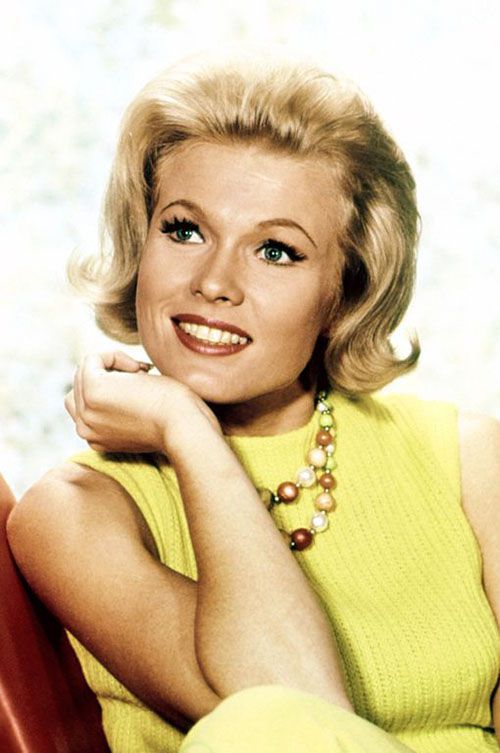
Elizabeth Montgomery, born April 15, 1933 and died May 18, 1995, captivated audiences with her portrayal of a witch– Samantha Stevens– on the tv series Bewitched. She tried to lead a normal “mortal” life as a housewife, and later mother, despite the constant intrusions by her magical family.  This article from Women’s World details some fascinating facts we might not know about the series.

From Woman’s World:

Bewitched outran other fantasy shows of the era

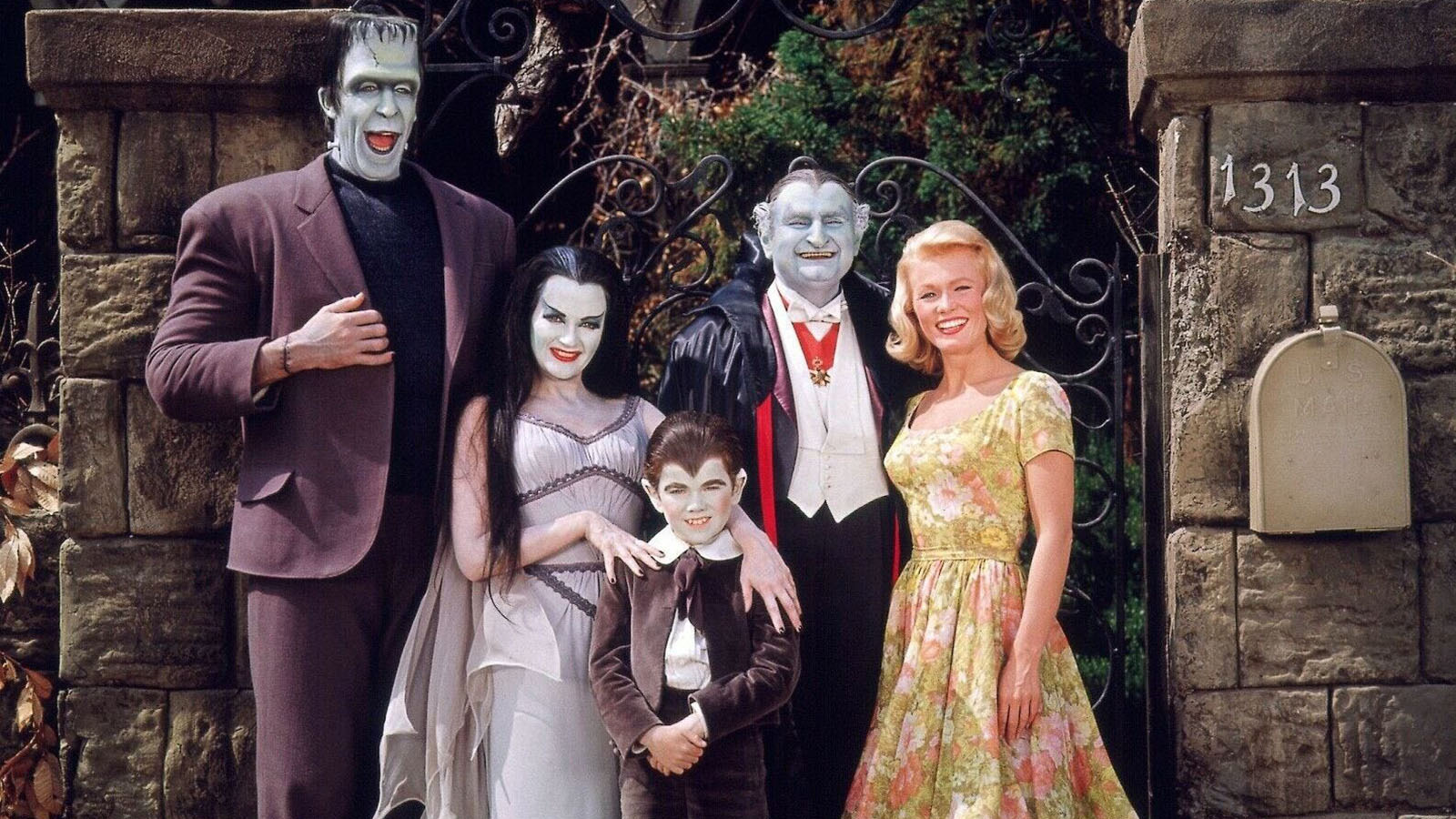
There was a boost in popularity throughout the 1960s for otherworldly shows like Bewitched, I Dream of Jeannie, The Addams Family and The Munsters. All of the shows premiered between 1964 and 1965, but the Addams and Munsters only lasted two seasons, while Jeannie gave her final blink in 1970. Even with the Darrin switcheroo, the Stephens stayed on air until 1972.

The original Darrin never wanted to leave

Five years before being cast in the series, Dick York suffered a massive back injury while filming They Came to Cordura in 1959. He never fully recovered, but put on a brave face throughout the series for five seasons. That came to an end after problems with his back came to the surface and a dependence on painkillers forced him to leave the role.  

Samantha and Endora’s names come from a Biblical story

In the First Book of Samuel, there’s a story about Saul consulting the Witch of Endor to use her powers to connect him with the deceased Samuel. Obviously, Samuel became Samantha and Endor became Endora. 

The ladies often wore their own clothes

The series didn’t have a huge budget for wardrobe, so many of the women simply brought in their own outfits to wear on screen. Allegedly, Elizabeth Montgomery frequently chose clothes from her own closet for Samantha’s outfits. 

The color green played a role

You might not have noticed while watching, but the color green is all over this show. Whether it’s the Stephens’ house carpet or emerald accents placed around a scene, the shade appears in every episode of the show that aired in color. Montgomery also wore the color quite frequently. Sure, it might have been because she wanted to bring out her beautiful green eyes, but the color also happens to be significant in witchy folklore. Think: Wicked Witch of the West from Wizard of Oz, countless Halloween decorations, and even the face paint kids often use while dressing up as the magical beings.

They never gave an on air explanation for Darrin’s “new look”

Thinking back on the magical show, you might have assumed they used their whimsical plot lines to come up with a creative reason for why Darrin suddenly looked so different. Instead, director and producer (and real-life husband of Montgomery) figured audiences would be able to separate the actor from the role and accept the new Mr. Stephens. Unfortunately, that wasn’t the case and ratings took a dip with the new Darrin.

Aunt Clara collected door knobs in real life too

Fans of the show remember Aunt Clara as one of the clumsy, bumbling, but kind-hearted witches close to Samantha throughout the series. Her spells never really worked quite right, but you couldn’t help but love her. That’s apparently due to actress Marion Lorne bringing her own charm to the role — including her personal penchant for collecting decorative door knobs.

Samantha’s alter ego got her own fan mail

Although Montgomery played both Samantha and Serena, her “twin cousin,” the role was credited to pseudonym Pandora Spocks (a play on “Pandora’s Box’). Fans of the quirky character were totally fooled and sent in letters to the studio addressed to the fake name.

Marcia Brady made two cameos

Before becoming the eldest daughter “with hair of gold” on The Brady Bunch, a young Maureen McCormick appeared in two separate episodes as different characters. First in a fantasy sequence as Darrin and Samantha’s future child (before the birth of Tabitha), then again as Endora under a spell that made her look like a child.

The Stephens’ home is still standing

You won’t find the house at 1164 Morning Glory Circle, but on the Warner Brother’s Ranch Studios. Unfortunately for fans, the ranch isn’t open to the public for tours. 

Elizabeth Montgomery was pregnant while filming the first season

To hide her stomach during this period, Montgomery wore looser clothing so viewers weren’t able to tell. 

Endora and Darrin’s feud didn’t translate to real life

Despite the characters of Endora and Darrin constantly being at odds with one another in the show, Dick York and Agnes Moorehead had a wonderful friendship off-screen, which left Moorehead extremely disappointed in his departure. 

SOURCE: WOMAN’SWORLD.COM